Home Blog Page 179

Bitter Power Struggle Erupts At Coimbatore CSI Church: Dalit Priests Blocked By Bouncers, Bishop Accused Of Swindling Provident Fund Money

Bouncers Stop Assistant Bishop from Entering CSI Church, Allegations Target CSI Coimbatore Zone Bishop Timothy Ravinder

A confrontation broke out on Sunday at the CSI Thirumandala Church Office on Race Course Road, Coimbatore, amid a long-standing dispute within the church’s administration.

According to reports, the church oversees 125 CSI congregations in Coimbatore, Erode, Tiruppur, and the Nilgiris, employing a large number of bishops and staff. Since 2014, two factions within the administrative committee have been at odds. One faction has accused CSI Coimbatore Zone Bishop Timothy Ravinder and others of misappropriating provident fund money meant for bishops and employees. The matter is currently before the court.

Assistant Bishop Rajesh, a member of the Pastoral Committee, has filed a case against Bishop Ravinder. On 10 August 2025, Rajesh and his supporters arrived to take part in the Sunday service but were allegedly blocked at the gate by members of the bishop’s faction.

Rajesh’s supporters claimed that hostility toward the Dalit community’s participation in church administration since 2014 has fueled continued acts of retaliation. They alleged that church zone had been divided to their disadvantage, and despite a High Court order to maintain the status quo, the current leadership had not complied.

They further alleged that when they attempted to enter the church in priestly attire, bouncers and hired men, allegedly at the bishop’s behest, prevented their entry.

The group has lodged a complaint with Race Course Police Station over the incident. Video footage of the altercation has circulated, causing a stir within the Coimbatore church community.

Subscribe to our channels on Telegram, WhatsApp, and Instagram and get the best stories of the day delivered to you personally. 

‘What Is Shameful Is Your Deceit’, Israeli Envoy Shuts Down Congress MP Priyanka Gandhi-Vadra’s “Genocide In Palestine”” Remark

israeli envoy priyanka gandhi congress genocide palestine

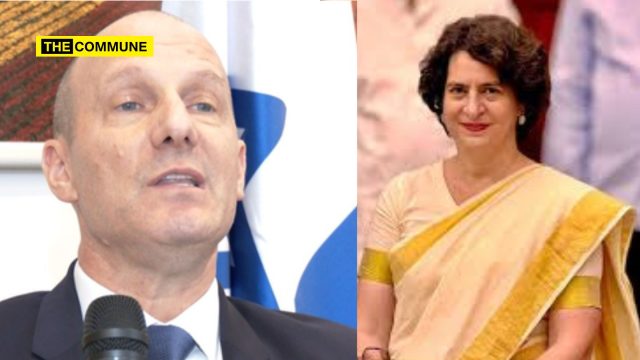
Israeli Ambassador to India Reuven Azar on Tuesday hit back at Congress MP Priyanka Gandhi for accusing Israel of committing “genocide” in Palestine and advised her not to buy claims by Hamas. This comes after Priyanka strongly criticised the Central government for remaining silent on Israel’s “genocide” in Palestine, asserting that such inaction amounts to complicity.

Reacting to this, the Israeli envoy posted on X, “What is shameful is your deceit. Israel killed 25,000 Hamas terrorists. The terrible cost in human lives derives from Hamas’s heinous tactics of hiding behind civilians, their shooting of people trying to evacuate or receive assistance and their rocket fire.”

Highlighting Hamas’s action in Palestine, Azar said, “Israel facilitated 2 million tonnes of food into Gaza while Hamas tries to sequestrate them, thereby creating hunger. Gaza population has grown 450 per cent in the last 50 years, no genocide there. Don’t buy Hamas numbers.”

Priyanka had criticised the Indian government in a post on X, where she wrote, “The Israeli state is committing genocide. It has murdered over 60,000 people, 18,430 of whom were children. It has starved hundreds to death, including many children, and is threatening to starve millions.” “Enabling these crimes by silence and inaction is a crime in itself. It is shameful that the Indian Government stands silent as Israel unleashes this devastation on the people of Palestine,” she said, slamming the Centre.

Israel has been fighting a war against Hamas in Gaza after the October 7 attack, during which over 3000 militants infiltrated Israel and killed approximately 1200 civilians and took 240 people, including women and children, hostage. Since then, the Israel Defense Forces (IDF) has launched a large-scale offensive against Hamas and its affiliated groups, which have carried out multiple attacks against Israel.

-IANS

Subscribe to our channels on TelegramWhatsApp, and Instagram and get the best stories of the day delivered to you personally.

India Expands Ban On Bangladesh Imports, Narrows Entry To Seaports Only

india bangladesh import ban sea port

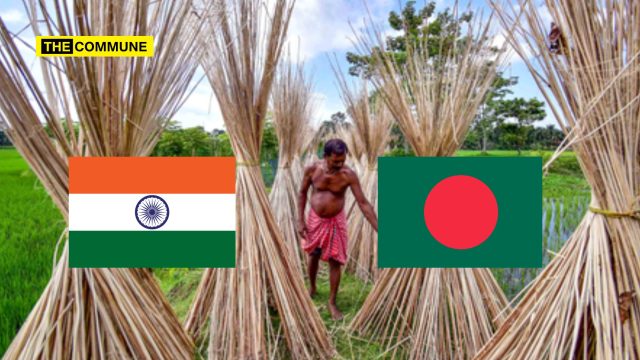
India bans imports of more goods from Bangladesh New Delhi, Aug 12 (IANS) India has expanded the list of imports from Bangladesh that are banned from entry through any land port on the border by including more jute products amid deteriorating relations with the neighbouring country.

These additional goods, which have been banned with immediate effect, include bleached and unbleached woven fabrics made of jute or other textile bast fibres; twine, cordage, and rope made of jute; twine, cordage, rope, and cables; as well as sacks and bags made of jute.

These items will not be allowed through any Land Customs Stations or Integrated Check Posts in Assam, Meghalaya, Tripura and Mizoram, as well as LCS Changrabandha and Fulbari in West Bengal. According to the notification issued by the Director General of Foreign Trade, the import of these goods is allowed only via Navi Mumbai’s Nhava Sheva Seaport.

The notification further said these restrictions wouldn’t apply to Bangladesh exports to Nepal or Bhutan, while noting, “Re-export of the aforesaid Bangladesh goods to India from Nepal or Bhutan shall not be allowed.” Earlier, in a notification dated June 27, the department listed several goods from Bangladesh that would be subject to regulation.

These include flax tow and waste (including yarn waste and garnetted stock); jute and other textile bast fibres, raw or retted; jute (excluding flax, true hemp, and ramie); single flax yarn; single yarn of jute or other textile bast fibres; multiple folded yarn; woven fabrics of flax; and unbleached woven fabrics of jute or other textile bast fibres. Besides, on May 17, India banned the import of goods, like readymade garments and processed food items, from Bangladesh to India through cross-border trade points with the neighbouring country.

This decision is expected to hit goods worth $770 million (Rs 6,600 crore) that flow in from Bangladesh. Readymade garments, valued at $618 million (Rs 5,290 crore), now face strict routing through only two Indian seaports. This severely limits Bangladesh’s most valuable export channel to India. The other goods that have been barred from entry into India through the land customs stations on the border include fruit-flavoured carbonated drinks, processed foods, cotton and cotton yarn waste, plastic and PVC finished goods, and wooden furniture. The total value of these items is pegged at around $153 million (Rs 1,310 crore).

According to the directive, “Import of all kinds of Ready-Made Garments from Bangladesh shall not be allowed from any land port; however, it is allowed only through Nhava Sheva and Kolkata seaports.” The Indian move came after the Bangladesh government in April banned the import of yarns from India to the country via land ports through a notification from the National Board of Revenue.

Earlier, India terminated the trans-shipment facility for Bangladesh, which allowed the latter to export its products to other countries through Indian seaports and airports. India is Bangladesh’s second-largest trading partner after China. In the fiscal 2022-23, Bangladesh-India trade amounted to around $16 billion. Bangladesh imported goods worth about $14 billion, while its exports to India stood at $2 billion, as per industry data.

-IANS

Subscribe to our channels on TelegramWhatsApp, and Instagram and get the best stories of the day delivered to you personally.

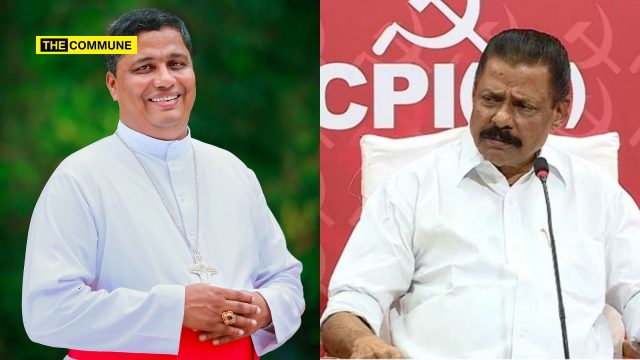
Church vs CPI(M): Kerala Catholic Congress Slams Govindan Over Attack on Archbishop

The Kerala Catholic Congress has launched a scathing attack on CPI(M) state secretary M.V. Govindan, condemning his recent remarks against Thalassery Archbishop Mar Joseph Pamplany as “thoughtless” and unworthy of a senior political leader.

Govindan was miffed at the Archbishop for praising Union Home Minister Amit Shah after he secured the release of two Christian nuns who had been arrested in Chhattisgarh on false charges. Speaking on behalf of the Kerala Catholic Congress, Fr. Philip Kaviyil reminded Govindan that he occupies a post once held by party stalwart Kodiyeri Balakrishnan.

“It’s up to Govindan to decide whether to retract his statement. But he should also reflect on whether the third Pinarayi Vijayan government should come to power,” Fr. Kaviyil said, adding that even the Chief Minister had earlier reprimanded the party secretary, urging him “not to speak like Govindan Chami.”

The controversy erupted after Govindan branded Pamplany “opportunistic,” claiming the Archbishop had criticised the BJP during the arrest of nuns in Chhattisgarh but later praised Union Home Minister Amit Shah once bail was granted. The Kerala Catholic Congress swiftly countered, accusing Govindan of using rhetoric akin to “fascist forces.”

The Thalassery Archdiocese had already issued a sharp response, questioning whether Bishops were expected to act only under directives from the CPI(M) headquarters at the AKG Centre in the state capital city. In its statement, the Archdiocese reiterated gratitude to the central government for intervening in the Chhattisgarh incident, while slamming the DYFI — the CPI(M)’s youth wing — for issuing “cheap statements.”

It further claimed that Govindan was more deserving of the “opportunistic” label he had used against the Archbishop, cautioning him against using personal shortcomings as a benchmark to judge others. The Archdiocese also warned that Govindan’s remarks were not only tarnishing his personal image but also putting his party and Chief Minister Pinarayi Vijayan in a politically-awkward position.

With both the Kerala Catholic Congress and the Thalassery Archdiocese openly challenging the CPI(M) state secretary, the row has escalated into a full-blown confrontation between the Church and the ruling Left in Kerala — adding fresh tension to an already charged political atmosphere.

-IANS

Subscribe to our channels on TelegramWhatsApp, and Instagram and get the best stories of the day delivered to you personally.

Dharmasthala Mass Grave Probe: SIT To Scan 13th Burial Site With Drone Radar, NHRC Joins Investigation

dharmasthala mass burial grave nhrc sit mass burial masked man soujanya murder case

The Special Investigation Team (SIT) probing the alleged Dharmasthala murders has begun preparations to start excavation work on Tuesday at the 13th burial site in the temple town in Mangaluru, using drone-mounted Ground Penetrating Radar (GPR) technology.

The development has gained significance as an unidentified complainant has claimed that he buried over a dozen bodies of women and girls who were allegedly sexually assaulted and murdered. SIT personnel arrived at the site and inspected the location before flying a drone equipped with GPR over the area.

Sources said the full-fledged operation will begin soon. In view of an earlier clash in Dharmasthala, heavy police security has been deployed at the site. The 13th burial site, located very close to the Kindi Dam and the Netravathi River, has been cleared of bushes and plants to facilitate the GPR search.

Sources added that tonnes of sand had been dumped at the location over the years for various reasons. Meanwhile, members of the National Human Rights Commission (NHRC), who arrived in Dharmasthala on Monday, continued their probe into the case on Tuesday as well.

The NHRC team has collected documents from the SIT and the Dharmasthala police station. They also visited the Dharmasthala Gram Panchayat office to gather information and inspected burial sites in the temple town. Sources confirmed that the NHRC team will remain in Dharmasthala for four days and carry out investigations at various locations in Belthangady taluk of Mangaluru district.

SIT Chief, DGP Pronab Mohanty, is expected to monitor today’s excavation operations. The completion of digging at the 13th burial site will mark the end of the first phase of the probe. In a major development on July 11, an unidentified complainant — who claimed he had been forced to bury the bodies of women and girls who were raped and murdered in Dharmasthala — appeared before a court in Mangaluru district and recorded his statement. He requested that the bodies be exhumed in his presence and alleged that the victims bore clear signs of sexual assault.

According to him, the bodies were found without clothing or undergarments and had injuries consistent with violent sexual abuse. These revelations have sent shockwaves across Karnataka. Following the claims, a retired Supreme Court judge and several activists have demanded a Supreme Court or High Court-monitored SIT probe into the alleged Dharmasthala murders, which may involve the deaths of multiple women, girls, and destitute men.

Earlier, SIT Chief Mohanty had stated that no significant material had been recovered from the previously excavated sites. However, later reports indicated that a torn red blouse and a PAN card belonging to a woman named Lakshmi were recovered from the first burial site.

In addition, the whistleblower reportedly submitted a skull — allegedly recovered from one of the burial sites —to the SIT. On August 7, Karnataka Home Minister G. Parameshwara had confirmed that the SIT probing the alleged mass grave case has recovered a male skeleton and other bones during the excavation and they have been sent to the Forensic Science Laboratory (FSL).

-IANS

Subscribe to our channels on TelegramWhatsApp, and Instagram and get the best stories of the day delivered to you personally.

Punjab Police Foil I-Day Terror Plot; Five Pak-Backed Terror Module, Babbar Khalsa International’s Operatives Nabbed

babbar khalsa international punjab police i-day foiled

In a major breakthrough against Pakistan’s ISI-backed terror network, Punjab Police’s Counter Intelligence of Jalandhar, in a joint operation with SBS Nagar Police, have busted a Babbar Khalsa International (BKI) terror network with the arrest of five operatives, Director General of Police Gaurav Yadav said on Tuesday.

He said it was operated by foreign-based handlers Mannu Agwan, Gopi Nawashehria and Zeeshan Akhtar on the directions of Pakistan-based BKI operative Harwinder Rinda. Five operatives were apprehended from Tonk and Jaipur districts of Rajasthan and averted further planned attacks, he said. The module had planned an attack inside a liquor store in Punjab’s SBS Nagar recently and was further tasked to attempt such attacks on Independence Day.

The arrested accused were receiving direct instructions from foreign-based Zeeshan Akhtar and BKI mastermind Mannu Agwan, who is working in close coordination with Pakistan-based BKI operative Rinda. The DGP said in a statement on X that one person was injured in an exchange of fire while being taken for recovery.

“He opened fire on the police and sustained injuries in retaliatory action, and is admitted to the Civil Hospital of SBS Nagar,” the DGP said. A first information report (FIR) has been registered at the police station of Nawanshahr in SBS Nagar district under relevant sections of the Bharatiya Nyaya Sanhita (BNS) and the Explosive Substances Act.

One 86P hand grenade, one .30 bore pistol, along with two cartridges and two empty shells of .30 bore were recovered. To ensure peaceful celebrations of Independence Day, DGP Yadav on Monday briefed the police force regarding the current security scenario and reviewed counter-terror strategies, besides issuing operational directives on inter-district coordination, high-visibility check-points, and round-the-clock surveillance to prevent any law and order breach in the border state.

The DGP was on a tour to chair law and order review meetings and outreach sessions with officers of Commissionerates — Amritsar, Jalandhar and Ludhiana, and Police Ranges — Border, Jalandhar, Ludhiana and Ropar. He also reviewed the ongoing anti-drugs campaign ‘Yudh Nashian Virudh’ and action against gangsters and organised crime.

An official statement quoting the DGP said he asked officers to conduct financial investigations against hawala operators to dismantle the entire ecosystem of drug trafficking.

-IANS

Subscribe to our channels on Telegram, WhatsApp, and Instagram and get the best stories of the day delivered to you personally.

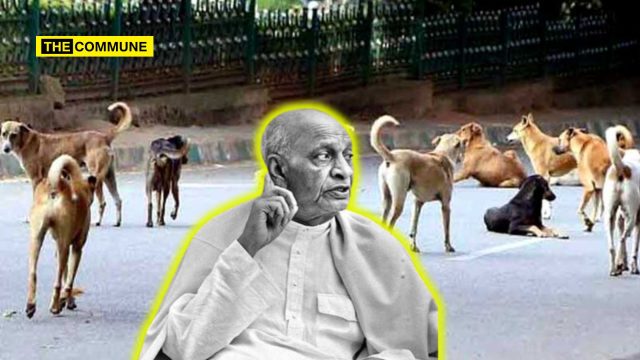
Supreme Court Stray Dog Ruling Brings Spotlight Back On Sardar Patel’s 1920s Municipal Drive Against Stray Dogs

sardar patel stray dog supreme court

Following the Supreme Court’s recent order to remove stray dogs from residential areas in Delhi-NCR, historical parallels have emerged from the tenure of Sardar Vallabhbhai Patel as municipal president of the Ahmedabad municipality in the 1920s.

According to “Patel: A Life” by Rajmohan Gandhi, Patel oversaw a civic campaign targeting rats, stray dogs, and decrepit cattle during his term. The measures drew objections from certain Jain groups, who opposed the capture of stray dogs, and from sections of the Hindu community, who wanted him to prevent Muslims from slaughtering old cattle.

Patel reportedly told the Jains that they could “show the dogs pity by keeping them in their homes” if they opposed municipal action. To Hindus objecting to cattle slaughter, his retort was that it was Hindus themselves who sold old cattle to Muslim butchers.

The Supreme Court, in its 11 August 2025 ruling, ordered the relocation of stray dogs away from residential localities in Delhi-NCR, warning that any obstruction to the exercise would invite strict action. The order followed a spate of dog bite incidents in the capital region.

Dog lovers have been going on an overdrive comparing dogs to rapists and voicing their views against the Supreme Court order.

Subscribe to our channels on Telegram, WhatsApp, and Instagram and get the best stories of the day delivered to you personally.

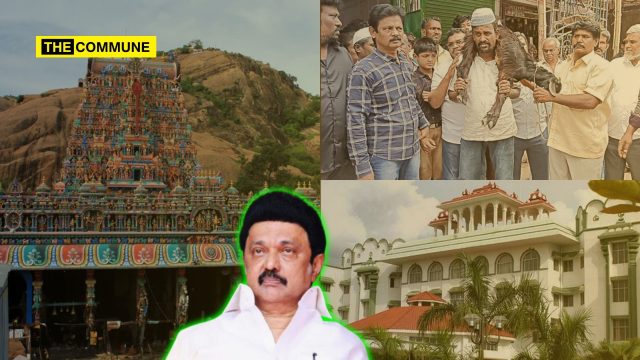
“Goat, Cock Sacrifices At Thiruparankundram Hill Part Of Tradition; Record Exists For Hill Being Called Sikandar Malai”, Says DMK Govt In Madras High Court

The DMK government of Tamil Nadu asserted in the Madurai Bench of the Madras High Court that the practice of sacrificing animals has long been followed at Thiruparankundram hill in Madurai.

The case originated from a Public Interest Litigation filed by Solai Kannan, the Madurai district president of the Hindu Makkal Katchi. He claimed that the ancient Subramaniya Swamy (Murugan) Temple holds ownership over Thiruparankundram hill. Referencing a ruling from the British era, he argued that key locations on the hill including the Sikandar Badusha Dargah, the flagpole in front of it, an eel tree grove, the steps leading to the Dargah, and a newly constructed mandapam are all under the temple’s jurisdiction.

Kannan further urged the court to prohibit individuals from performing animal sacrifices involving goats, cows, and chickens on the hill, and from attempting to rename or represent the hill as “Sikandar Hill.” Several other related petitions seeking various forms of relief were also submitted.

A division bench comprising Justices J. Nisha Banu and S. Srimathy considered the matter. On 24 June, Justice Nishabanu rejected all petitions, while Justice Srimati issued a separate judgment. As a result of the split verdict, the matter was escalated to a third judge, R. Vijayakumar, who took up the case on 11 August 2025.

During the hearing, the judge questioned whether there was historical or documented proof referring to the site as Sikandar Hill and if animal sacrifices were indeed a longstanding tradition there.

In response, Additional Chief Government Advocates Veera Kathiravan and Ravindran emphasized that religious practices should not be discriminated against based on caste, religion, or dietary customs. They presented records indicating that the location has been known as Sikandar Hill and that the practice of sacrificing goats and chickens has been ongoing. They also pointed to similar rituals carried out at the 18th Karupanaswamy Temple in Alagarkoil.

They concluded by stating that religious freedoms must be respected, and no one should obstruct another’s right to practice their faith. Following these arguments, the judge postponed the hearing.

(With inputs from Dinamalar)

Subscribe to our channels on TelegramWhatsApp, and Instagram and get the best stories of the day delivered to you personally.

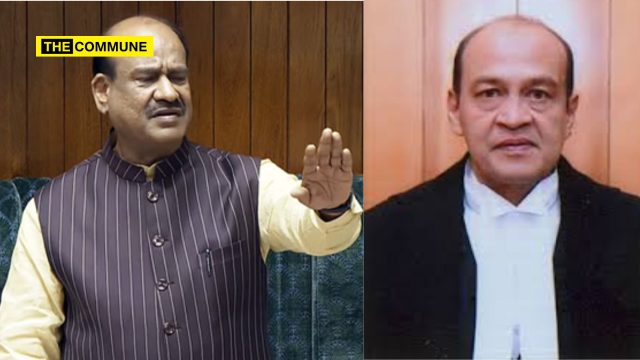
LS Speaker Om Birla Forms 3-Member Panel To Investigate Allegations Against Justice Yashwant Varma

ls speaker om birla justice yashwant varma allegations investigate lok sabha

Lok Sabha Speaker Om Birla on 12 August 2025 announced the constitution of a three-member committee to investigate corruption allegations against Allahabad High Court Judge Justice Yashwant Varma, following the recovery of burnt cash from his official residence in Delhi earlier this year.

Birla made the announcement after accepting a resolution signed by 146 MPs from both the ruling and Opposition benches seeking Justice Varma’s removal. The Speaker said the committee will submit its report “as soon as possible.”

The panel comprises Justice Aravind Kumar, Judge of the Supreme Court; Justice Manindra Mohan Shrivastava, Chief Justice of the Madras High Court; and B V Acharya, Senior Advocate at the Karnataka High Court.

On 15 March 2025, burnt currency notes were recovered from the debris after a fire broke out at Justice Varma’s official residence at 30, Tughlaq Crescent in New Delhi. At the time, the judge was serving with the Delhi High Court.

Announcing the decision when the House reassembled at noon, Birla said, “I have received notice of the following resolution dated 21st July, 2025 signed by a total of 146 members of the ruling and opposition parties including Ravi Shankar Prasad and the Leader of the Opposition in the House, proposing to present a representation to the President of India for removal of Justice Yashwant Varma, a sitting Judge of the Allahabad High Court, from the office of Judge of the High Court under Section 3 of the Judges (Inquiry) Act, 1968 read with Article 124(4) of the Constitution of India read with Article 217 and Article 218.”

Reading from the resolution, Birla stated, “This House resolves that a petition be presented to the President for the removal of Justice Yashwant Varma of the Allahabad High Court from his office for the following misconduct.”

The resolution referred to a Supreme Court statement on the recovery of unexplained cash from the judge’s residence, as well as a report submitted by a committee appointed by the then Chief Justice of India to President Droupadi Murmu.

Quoting the resolution, Birla said, “Having independently examined the facts mentioned above and the facts available in the public domain, the circumstances surrounding the recovery and removal of burnt cash from the official premises occupied and under the control of Justice Yashwant Varma, we also independently find that the removal process under Article 124 read with Article 217 and Article 218 of the Constitution of India must be initiated in accordance with the Judges [Inquiry] Act, 1968 and the Rules made thereunder.”

He added, “Impeccable character and financial/intellectual integrity are the foundation of the trust placed by a common man in the judiciary. And that the facts of the present case which point to corruption are violative of the tenets of Article 124, Articles 217 and 218 of the Constitution of India and deserve due process and scrutiny. The Parliament must speak with one voice on the subject and send a clear message to every citizen of the country about its resolve for (zero-tolerance) towards corruption in public life.”

Birla concluded, “Finding this proposal to be in accordance with the rules, I have approved it. In accordance with sub-section 2 of section 3 of the Judges (Judges) Act, 1968, I have constituted a committee consisting of the following 3 members to examine the grounds of request for removal of Justice Yashwant Varma from the post.”

(With inputs from Indian Express)

Subscribe to our channels on Telegram, WhatsApp, and Instagram and get the best stories of the day delivered to you personally.

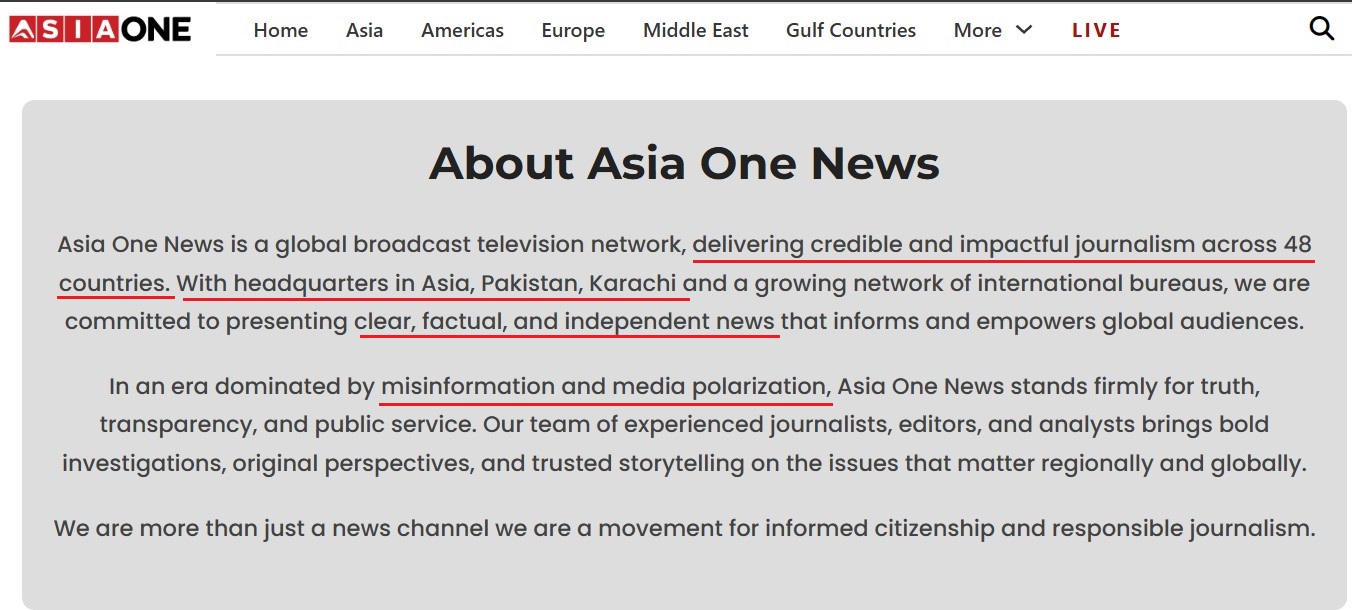
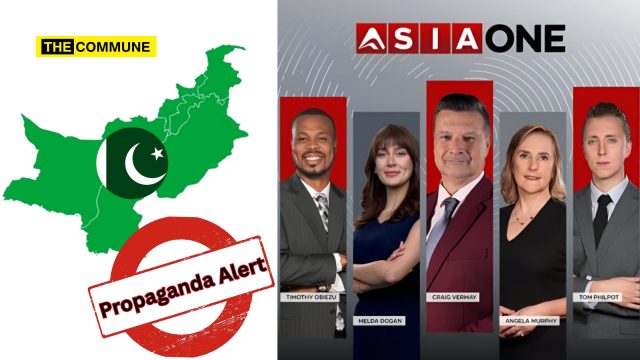
After Global Humiliation Following Operation Sindoor, Pakistan Launches Its First English International Channel ‘AsiaOne’ To Peddle Propaganda Against India

asiaone pakistan media

In the wake of setbacks on multiple fronts diplomatic, economic, and reputational – Pakistan appears to have intensified its propaganda strategy against India. Following Operation Sindoor, Pakistan has now ventured into international media with the launch of AsiaOne, a satellite-based English news channel, aimed at shaping global narratives in its favor.
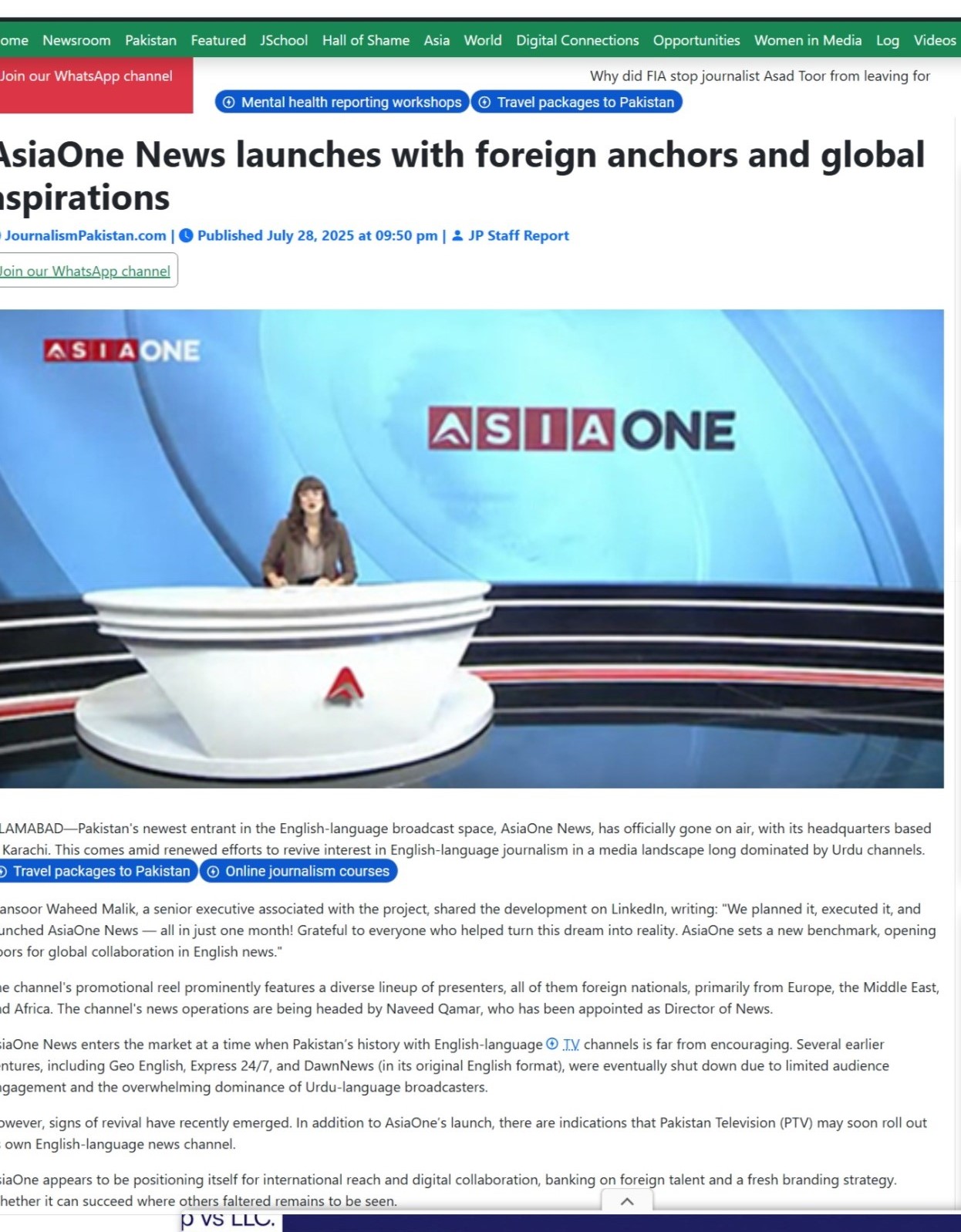
Rather than confronting the root of its global image problem terrorism originating from within its borders Pakistan seems intent on countering facts with fiction. The new channel, launched by Pakistan365 Media Group, is headquartered in Korangi, Karachi. Despite the scale of the project, mainstream Pakistani and international media have largely ignored the development. Coverage of the launch has been limited to a few digital blogs and third-party sources.

Inside the Launch of AsiaOne

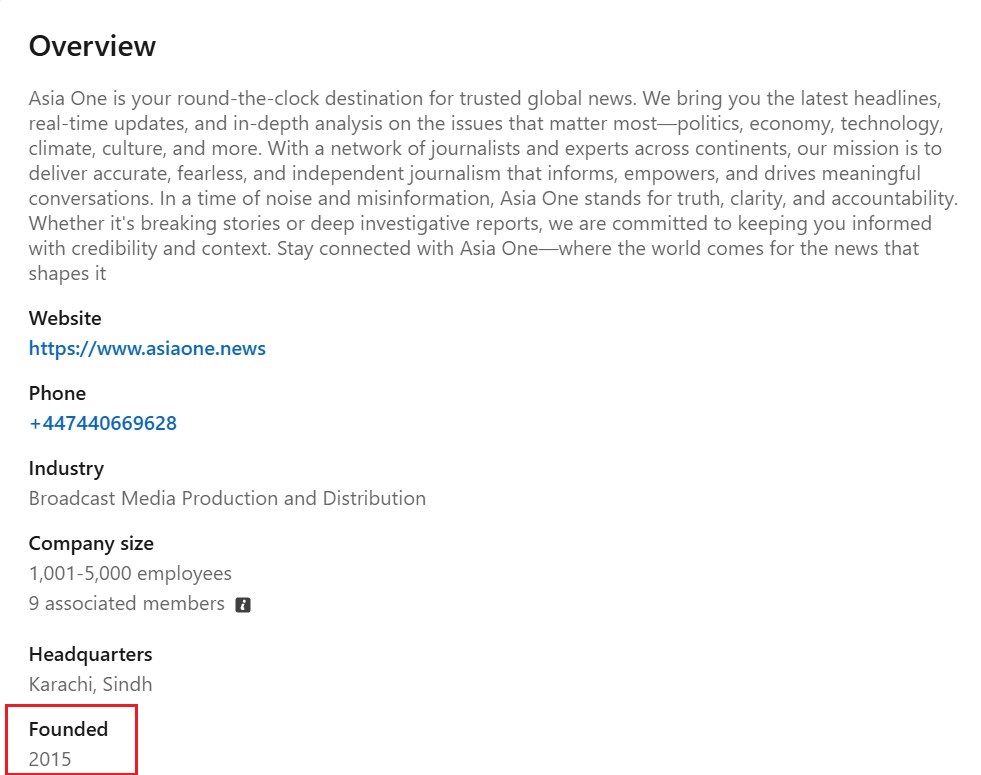
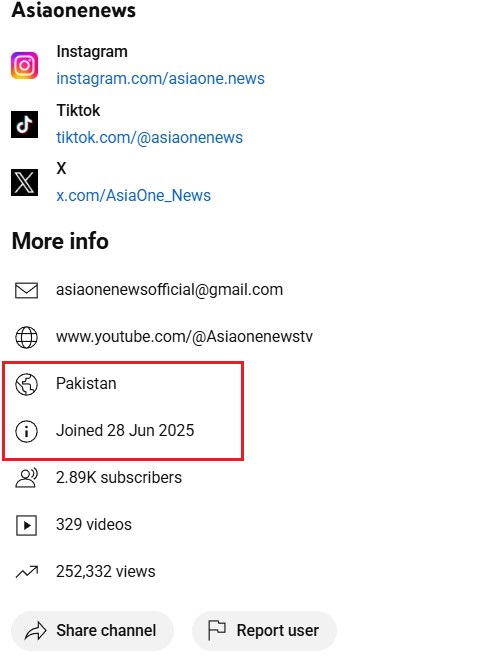
According to their LinkedIn page, AsiaOne was founded in 2015, though their YouTube bio lists the creation date as 28 June 2025.
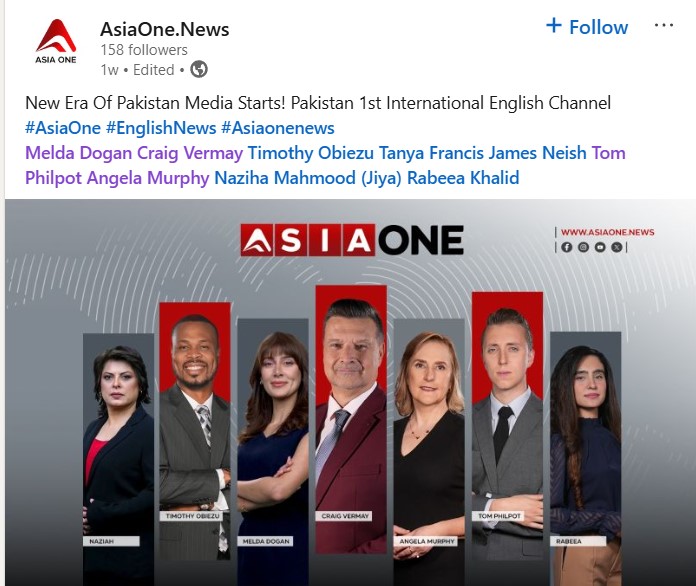
The channel claims to be Pakistan’s first English-language international satellite news outlet and is staffed by a mix of foreign presenters, mainly from Europe, the Middle East, and Africa.

Key personnel include:

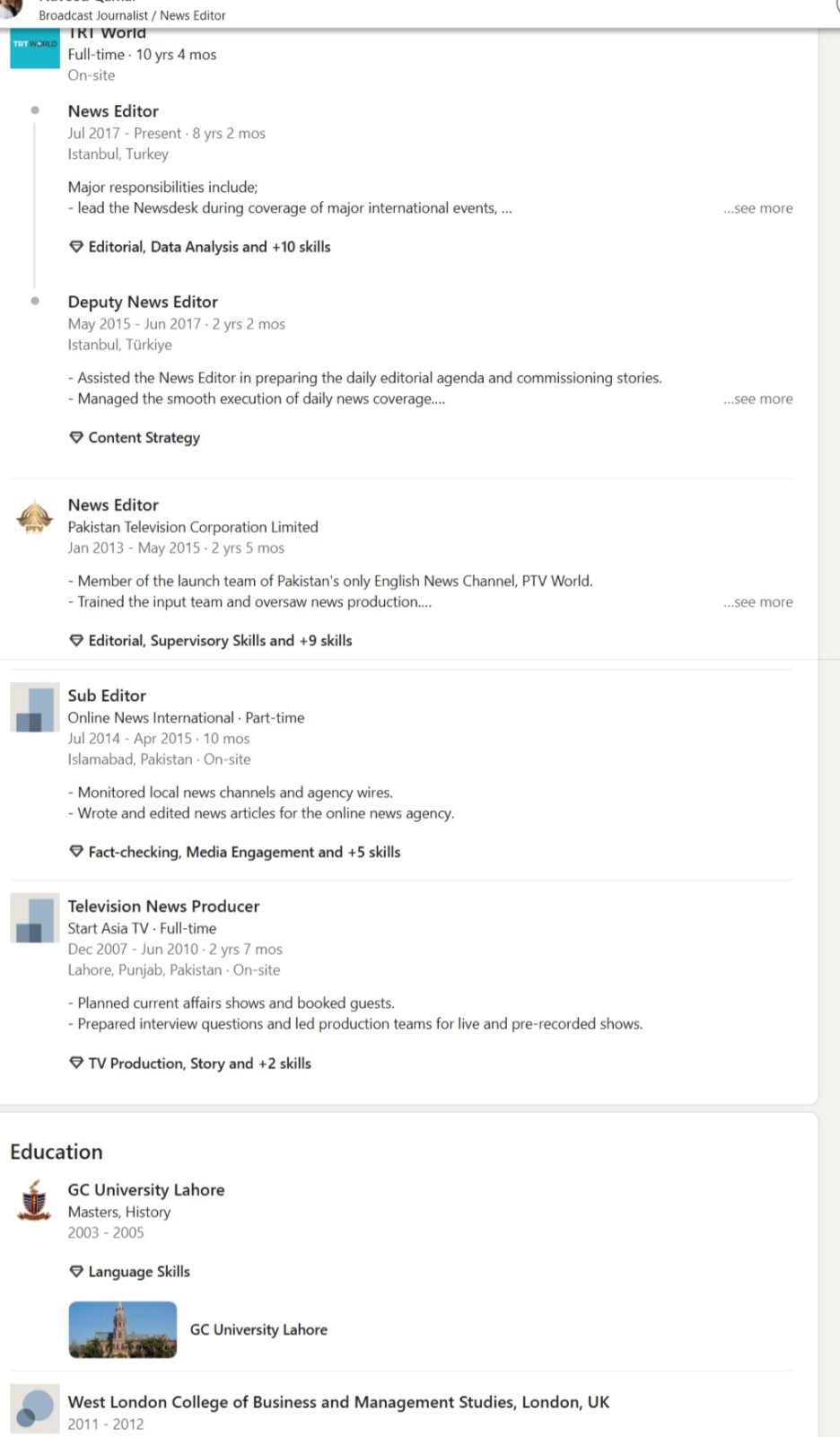
  • Naveed Qamar as News Director, formerly with TRT World

  • Mudassar Iqbal as Chief Technical Officer
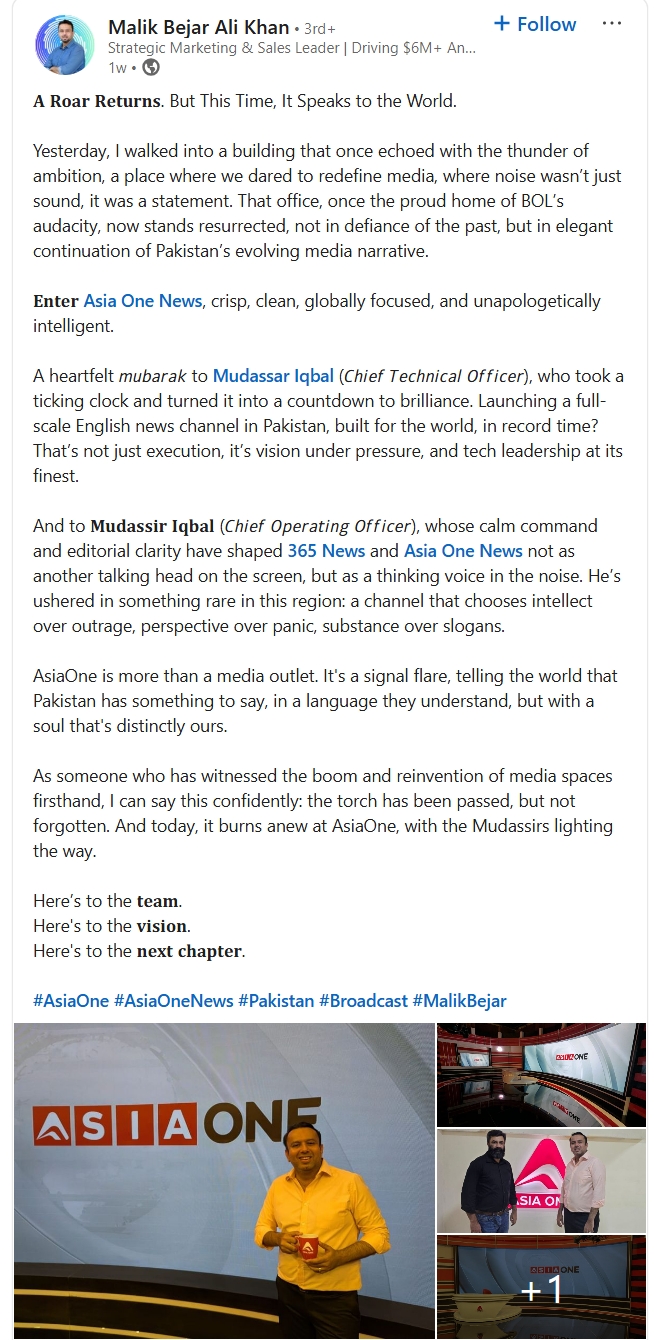
Currently, AsiaOne operates out of a single office in Karachi, with no immediate plans to expand. The emphasis, they claim, is on “quality journalism” within a tight budget.

Narrative Building Through Media

Media analyst Imran Malik, in an interview with Media Bites, candidly outlined the motivation behind the channel. Though not directly referencing Operation Sindoor, he implied that global media representation of Pakistan’s stance has been poor. He emphasized the lack of English-language news channels in the country that could deliver Pakistan’s viewpoint on international platforms.

Malik explained that previous attempts like Dawn News, Express 24/7, Indus News, and PTV World all failed due to poor planning, lack of funds, and unprofessionalism. With AsiaOne, he believes a fresh attempt is being made to challenge India’s dominance in the global English-language media space. He also suggested that the channel could benefit figures like Bilawal Bhutto Zardari, who are fluent in English and well-positioned to promote their narratives to a global audience. Malik praised the visual quality and international staffing of the new channel, calling it a step forward for Pakistan’s media ambitions.

He said, “Recently, in Pakistan and internationally, there have been some incidents where Pakistan’s narrative has not been presented in a very good light to the world. And there have always been complaints about it that all the news channels in Pakistan are Urdu news channels. There are no English news channels that can present Pakistan’s narrative on an international forum. In comparison, if we look at our neighboring country, there are many such channels that are in English and their narrative is easily accepted throughout the world. So, it was felt that there should be English channels in Pakistan because earlier too, English channels were launched in Pakistan. Dawn News, which is Pakistan’s biggest newspaper, launched a channel. We thought that it would be a successful model for an English news channel, but the channel that was launched in 2010 had to be shut down after only three years, and the series of English news channels once again came to an end. After that, an experiment was done by Express News, they launched a channel, and that channel also ran for about one and a half years, and after that, it was also shut down. After that, some circles tried to show Pakistan’s narrative internationally, and they tried Indus News, and PTV World, to show English transmission in other countries. There was a lack of professionalism, there were no budgets, and there was no proper planning, so they were not successful. Now, two days ago, we saw a new addition. 365 News, that channel is going to launch. Asia One English News channel has been launched, and its transmission also looks very good. Its picture is very good, and its anchors and news casters are not only from Pakistan but have also been brought from international forums. Overall, it’s a good presentation because 365 is said to be owned by a certain group, so that same group is also launching this English channel. Bilawal will benefit from this because it’s a channel of his own group, so for him, it will be a very good platform to use it because he presents his narrative in English very well throughout the world. We extend our congratulations to Asia News, Asia One.”

Anti-India Propaganda: A Common Thread

Since its launch, AsiaOne appears to have wasted no time pushing a biased, anti-India narrative under the guise of journalism. Several news segments broadcasted by the channel have been alarmingly slanted

Example 1: “Modi’s India Stands Isolated”

In one program, the channel alleged that Indian Prime Minister Narendra Modi is facing a major diplomatic crisis, claiming he has been “publicly sidelined” by former US President Donald Trump. The segment revisits historical India-China border tensions and criticizes Modi’s outreach to the US, portraying him as strategically stranded and internationally isolated. The report also distorts Trump’s past comments to suggest strained US-India ties and claims India is reverting to a policy of “strategic autonomy” after supposed diplomatic failures.

The news segment peddles, “Indian Prime Minister Narendra Modi finds himself navigating one of the toughest foreign policy tests of his tenure. Once quartered by both Beijing and Washington, Modi is now recalibrating in his position after being publicly sidelined by US President Donald Trump and cautiously reopening channels with China. It began with a warm embrace. In 2014, Modi personally hosted Chinese President Xi Jinping symbolizing hopes of economic partnership. But even as they smiled for the cameras, Chinese troops clashed with Indian forces at the border. A humiliation that left New Delhi reeling and heavily militarized in the Himalayas. Then came the United States. Modi put his political capital on the line, even campaigning alongside Donald Trump in Texas. But that bonhomie was short-lived. Now in his second term, President Trump has imposed a 50% tariff on Indian goods, citing India’s continued oil imports from Russia and calling India’s economy “dead”. He’s also equated India’s arch-rival Pakistan with New Delhi in his push for a South Asia ceasefire sparking backlash among Modi’s supporters. For Modi, the strategic gamble with the US has backfired, forcing India to look inward and once again revive an old foreign policy mantra: strategic autonomy. In other words, India is on its own. In the past week alone, Modi has spoken with Russian President Vladimir Putin, Brazil’s Lula, and is preparing for his first visit to China in 7 years. Officials say relations may never fully recover with Washington, and that India must learn to hedge its bets.” 

Example 2: “Air Crafts Shot Down”

Another segment attacked the credibility of the Indian Air Force, accusing it of fabricating claims about shooting down six Pakistani aircraft during a brief conflict in May. The report criticizes Indian Air Chief Marshal A.P. Singh for providing “no evidence” and paints Pakistan’s narrative as more credible, even alleging the downing of an Indian Rafale jet a claim India has never confirmed and no independent source has validated.

The news agency highlighted, “Three months after its brief but intense war with Pakistan, India has unveiled a new claim that it shot down six Pakistani military aircraft during the conflict in May this year. However, this statement, made by Indian Air Chief Marshall AP Singh, raises more questions on India’s military credibility and capability. India’s latest claims come exactly three months after the fighting ended, with no proof offered, no independent verification, and no answers about its own battlefield losses. The Air Chief stated, “We have at least five fighters confirmed kills and one large aircraft which could be either an elint aircraft or an AWNC aircraft which was taken out at a distance of about 300 km”. As usual and expected, Singh provided no proof of his claims. No independent source, not even India’s allies, has confirmed any aircraft loss on Pakistan’s side in the war between the two neighbors in May this year. Islamabad, for its part, has consistently rejected this claim. Conspicuously absent from the air chief’s speech was any mention of India’s own wartime losses, a topic the Indian government and senior commanders have repeatedly sidestepped. The discussion also touched upon the incident between Pakistan and India, specifically “whether or not Pakistan downed an Indian jet or in fact more than that”. A key point highlighted was “not the jet being down but why they were being down”, indicating an focus on understanding “tactical mistake which we made”. These tactical mistakes have been costly, and India’s losses in the war, including multiple fighters, have been reported by its own officials. Even Indian defense representatives have acknowledged the damage, with one stating, “India lost a lot of aircrafts. I may not agree with him that India lost so many aircrafts but I do agree that we did lose some aircraft”.Pakistan says it downed six Indian jets during the May clashes, including a French-made Rafale, a loss that was confirmed by the French air chief. India has never addressed this claim directly, even though many independent news outlets have confirmed it lost multiple aircraft during the war. For now, India’s late-breaking announcement appears to raise more questions than answers about what really happened in the skies over South Asia and what New Delhi doesn’t want to talk about.”

Example 3: “India Faces Tariffs”

A third report focuses on the economic front, alleging that steep U.S. tariffs on Indian goods imposed due to India’s oil trade with Russia are crippling key sectors like textiles and auto parts. The channel frames this as a failure of Indian diplomacy and manufacturing strategy, quoting unnamed industry insiders to paint a bleak picture of India’s economic prospects.

It went on to say, “Now Trump’s steep 50 tariffs on Indian imports threaten key sectors including textiles, jewelry and auto components. The move, aimed at penalizing India’s purchase of Russian oil, could severely disrupt India’s export growth and manufacturing ambitions. So nowadays tariff comes so is mainly affecting our manufacturing division because the tariff issue comes the cost is more than 50% increases. So the buyer demands to decrease the price and rough prices also increased. So they can mainly effect to survive the industry. It’s very difficult to run nowadays.”

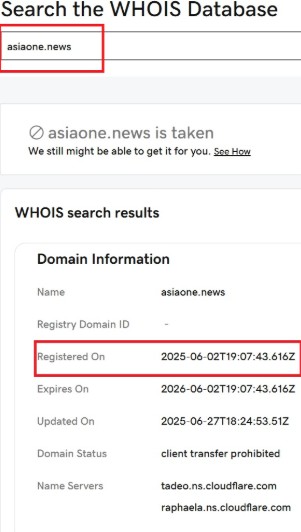
AsiaOne’s domain was registered on 2 June 2025. The media outlet has launched official social media accounts on platforms such as Facebook, Instagram, and TikTok, notably excluding YouTube. This digital push suggests an intent to engage younger and global audiences through viral, short-form content.
With its new English-language satellite channel, Pakistan is making a calculated entry into global media warfare. While the effort is being dressed up as an attempt to amplify underrepresented narratives, early indicators suggest AsiaOne is less about objective reporting and more about promoting state-friendly, anti-India propaganda.

By mixing polished visuals with unverified claims and selective storytelling, the channel risks becoming a mouthpiece for geopolitical narrative manipulation rather than a legitimate media voice. As disinformation continues to rise in global conflict zones, AsiaOne may become just another cog in Pakistan’s expanding propaganda machinery, replacing accountability with narrative warfare.

(This article is based on an X Thread By Sougat Chakraborty)

Subscribe to our channels on TelegramWhatsApp, and Instagram and get the best stories of the day delivered to you personally.