Home Blog Page 1725

14-year old hit and made to clear his faeces by owner of the land

A 14-year old boy of the Dalit community was made to clean up his faeces after he was found by the owner of the land defecating behind the bushes of the field in Pennagaram.

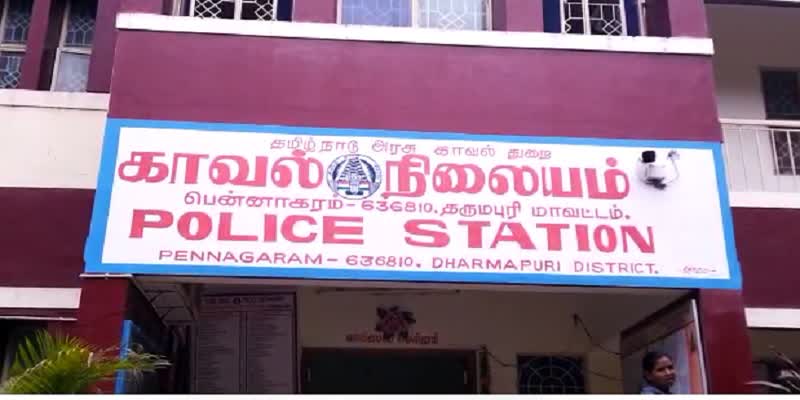
The boy’s father filed a complaint at the Pennagaram Police Station.

A case was registered after outrage and the Communist Party of India (Marxist) doomed this type of behaviour against the boy.

The boy was made to clear his faeces by his bare hands and was beaten up by the owner of the land, says the complaint.

The complaint also stated that the boy steeped into a nearby area under an umbrella to defecate amidst heavy rains on 15 July, 2020.

On 17 July, 2020, Rajashekar (owner) was registered under Section 323 of the Indian Penal Code and Section 3 (1) of Scheduled Castes and Scheduled Tribes (Prevention of Atrocities) Amendment Act, 2015.

Rajashekar is not yet arrested.


Image source: Indian Express

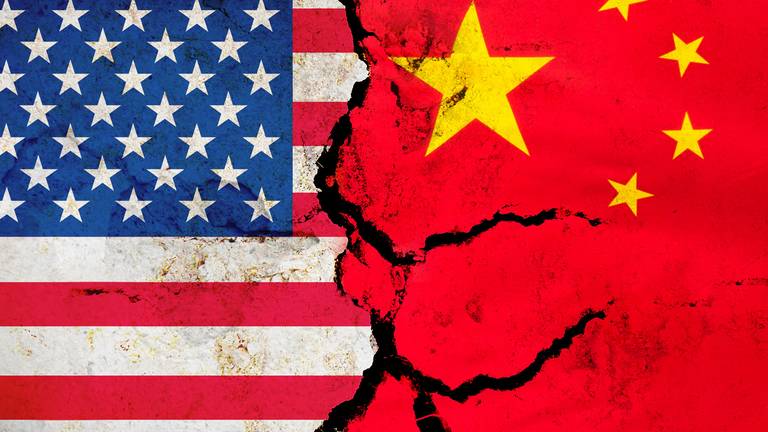
China responds to “kowtowing” accusations from the United States

Recent events have caused the ties between China and the United States to reach extreme lows, be it the ongoing pandemic or the National Security Law implemented by Hong Kong. 

Attorney General William Barr said in his speech that China has been putting pressure on American companies to please and promote pro-China policies in the United States of America.

He accused American companies who did so of “kowtowing” for the sake of gaining profits and alleged that China’s Communist Party has been pushing US companies to advocate their agendas.

He also said that corporations such as  Google, Microsoft, Yahoo, and Apple have “shown themselves all too willing to collaborate with the Chinese Communist Party,” Barr said.

He added that Hollywood has regularly fallen into pressure and censored their films “to appease the Chinese Communist Party.”

In response to these accusations, China’s Foreign Ministry Spokesperson Hua Chunying said that China is not seeking to replace the United States and will fight back against “malicious slanders” and accusations from the United States government.

Image source: Industryweek


“That’s how we roll”: Meghalaya Police turn sassy after seizing Marijuana

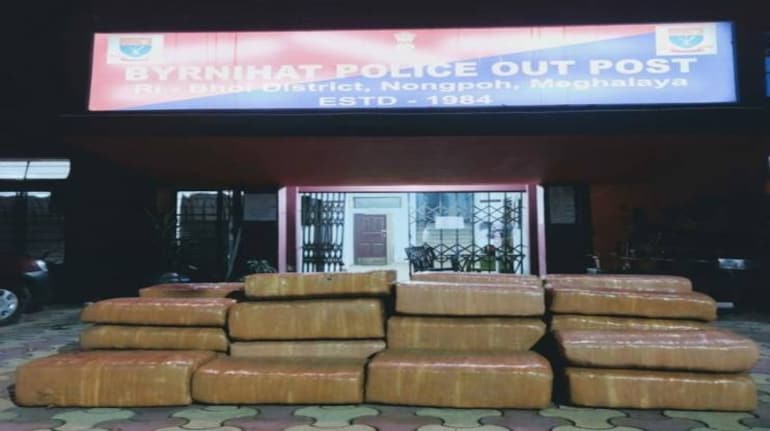
The Ri-Bhoi Police found and seized almost 500 kg of marijuana at Pahanmacoleiñ Toll Plaza in a district of Meghalaya. 

They found 17 packets that contained drugs, costing up to a lakh in a truck with the registration number – CG 04 JD 3183.

The Police arrested Pratosh Patel who was the driver of the truck along with his helper Rakesh Patel. Both hail from Chattisgarh.

The police team intercepted the drugs consignment and were led by Oliver Massar, Deputy Superintendent of Police, A N Sangma, Byrnihat Police outpost in-charge, and P S Marwein, inspector of Sardar Circle.

According to the Police team, the truck was heading towards West Bengal when it was intercepted.

The news grabbed public attention when Meghalaya Police released a “punny” tweet.

The interrogation is in process as a case under Narcotic Drugs and Psychotropic Substances (NDPS) Act has been registered.

Image source: moneycontrol

Madras HC permits schools and colleges to collect 40% of total fee amount as advance

The Chennai High Court orders spelt relief for schools all over Tamil Nadu as it lifted the ban over collection of fees by private schools/colleges and permitted them to collect 40% of the fees as advance. The schools can now collect this advance by August 31.

Since the fee fixed for some of these institutions had expired and fee fixation committees were yet to frame the new fee structure, the state government had provisionally fixed this year’s fee at 75% of the fee collected last year. The High court ordered that 40% of the fees can be collected as advance by August 31, while the rest 35% can be collected after the schools properly reopen and classes are started physically.

The directions were issued by Justice N Anand Venkatesh on a batch of petitions filed by associations of private educational institutions.

This order comes after the schools had challenged the order previously issued which prohibited educational institutions from demanding any kind of fee due to the lockdown situation. The order issued guidelines as to how the fee structuring should be made as well as instructions to the fee fixation committee to make arrangements accordingly. It also included the guidelines for the issuing of textbooks either free of cost or at a nominal cost so as to support parents. It prohibited any kind of increase in salary to be demanded by the faculty as the economic situation right now is an unprecedented crisis.

Source: ToI

Police file case against Madrasa teacher for raping a student continuously for 4 years

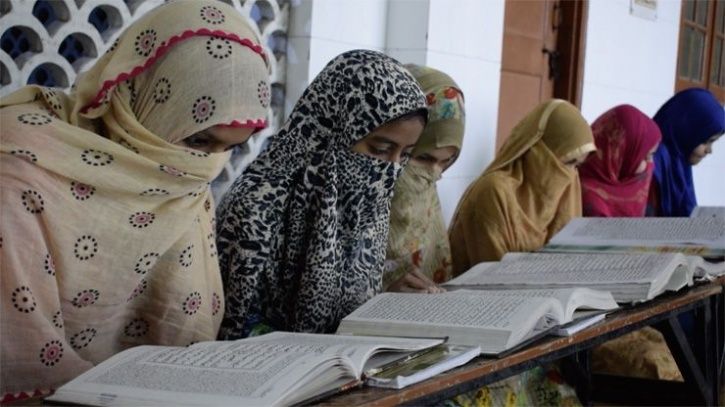
The Gujarat police have booked a Madarasa teacher identified as Samsuddin Haji Suleman after receiving a complaint from a 19 year old woman that he had raped her continuously for 4 years. The survivor had recently got married. After her husband came to know of it, he urged her to file a complaint against the Madrasa teacher.

The complaint was filed at Nara police station under Nakhatrana taluka of Kutch district.

Elaborating her ordeal in the complaint she said that she was sent to the Madrasa to learn Arabic and Urdu when she was 15 years old. One day in 2015, the accused maulana had given his clothes to wash and sent her to the bathroom after the class.

The maulana had immediately pounced on her from behind and raped her. The girl stated in her complaint that the maulana threatened her to not disclose about the incident to anyone and that he would tarnish her character if she did.

A similar incident happened in a madrasa in Uttar Pradesh’ Awas Vikas Hanspuram in 2019 when a maulana raped a minor. He had picked the student from her home under the pretext of filling application for scholarship and later raped her.

Source: Times Now News

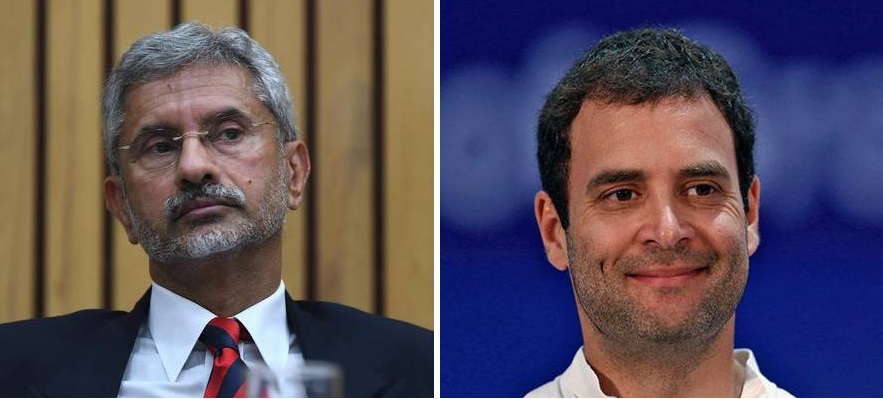
Rahul Gandhi gets schooled by Foreign Minister Jaishankar, again

On July 17, Congress leader Rahul Gandhi released a video of him explaining about why the Chinese chose to violate the LAC at this point of time.

https://twitter.com/RahulGandhi/status/1284002386806095872

He begins by saying that a country protected by its foreign relations, neighbourhood, economy and the vision that its people have. Rahul Gandhi says that India’s foreign policy, neighbourhood policy and economic policy for the last 6 years has failed which the Chinese have taken advantage of.

He notes that India which had a strategic partnership with USA now has a ‘transactional relationship’ with the USA. He makes the same observation about India’s relationship with Europe. He goes on to say that India has ‘disturbed the relationship with Russians’.

Coming to countries closer home, he says that India had friendly relations with countries other than Pakistan. He says that countries like Nepal, Bhutan, Sri Lanka, etc was working with India.

“Today Nepal is angry with us.. You speak to the Nepali people.. They are furious with what has happened. Sri Lanka has given a port to the Chinese. Maldives is disturbed. Bhutan is disturbed. So.. We have disrupted our foreign partners, we have disrupted our neighbourhood” he says.

He then goes on to make some observations about the economy saying that Indian economy which was once a pride has now turned into an absolute disaster.

“Our strengths have suddenly become our weaknesses”. He is said to have told the government to “inject money for God’s sake” to “fire” the economy and protect the small and medium businesses but the government refused to do it.

“Today you have a country which is economically in trouble, in trouble with its foreign policy and neighbours and that is why the Chinese decided that this is possibly the best time to act and that is why they acted.”, Rahul Gandhi says.

In a sharp and stinging rebuttal, Minister of External Affairs Dr. S. Jaishankar shot down the claims made by Rahul Gandhi armed with some facts on his side. At the end of every point, he asked Rahul Gandhi to ask the relevant stakeholder about the points made.

He said that India’s major partnerships with countries like USA, Russia, Europe and Japan have grown stronger and India’s international standing has gone higher with regular summits and informal meetings. He noted that India now engages China on more equal terms politically. To this point, Dr. Jaishankar asked Gandhi to ask the analysts about it.

In the next point, he said that India now speaks its mind more openly be it on issues like CPEC, BRI or on South China Sea and UN sanctioned terrorists. “Ask the media”, Dr. Jaishankar said to Rahul Gandhi.

Pointing out the border infrastructure imbalance legacy during the Congress regime, Dr. Jaishankar said that budget for development of border infrastructure from 2014 to 2020 has gone up by 280% with 32% more roads, 99% more bridges and 6 times the tunnels. “Ask the Jawans”, he said.

He also pointed out that the Hambantota port agreement between Sri Lanka and China concluded in 2008 (when Congress-led UPA was in power). “Ask those who dealt with it.”

About Maldives, Dr. Jaishankar said that difficult ties with Maldives was due to the India watching President Nasheed getting toppled in 2012 (when Congress-led UPA II was in power) which now stands transformed. “Ask our businesses”, Dr. Jaishankar said.

With respect to Bangladesh, Dr. Jaishankar said that land boundary settlement that was pending for decades saw it completion only 2015. He said that this has now led to more development and transit and terrorists no longer find safe haven there. “Ask our security”. Dr. Jaishankar said.

Nepal he said was getting Prime Ministerial visits after 17 years with a swathe of development projects on in full swing. “Ask their citizens”, said Dr. Jaishankar.

“Bhutan finds a stronger security and development partner. And unlike 2013, they don’t worry about their cooking gas.” Dr. Jaishankar told Rahul Gandhi to ask their households.

On Afghanistan, Dr. Jaishankar said that the country saw completion of several projects like Salma Dan, Afghan Parliament building, training to Afghan security forces and connectivity. “Ask the Afghan street”, Minister Jaishankar said.

“And Pakistan (that you skipped) surely notes the difference between Balakot & Uri on the one hand, and Sharm-el-Sheikh, Havana & 26/11 on the other. Ask yourself.” Dr. Jaishankar told Rahul Gandhi.

This is not the first time Dr. Jaishankar has given a rebuttal to Rahul Gandhi. Earlier in June, Dr. Jaishankar schooled Rahul Gandhi when he had put out a video with the caption “How dare China kill our UNARMED soldiers? Why were our soldiers sent UNARMED to martyrdom?”

Dr. Jaishankar told Rahul Gandhi to get his facts right saying “All troops on border duty always carry arms, especially when leaving post” and those at Galwan valley too did on June 15. He said that it had been a long standing practice as per the 1996 and 2005 agreements not to use firearms during faceoff.

News 7 Tamil journalist peddles fake news

Devendran Palanichamy is a journalist with the Tamil news channel News 7. Not only does he resort to spreading fake when news, he will not take it down or make changes to it even if the errors are pointed out.

On July 17, he had put out a tweet saying that a bridge in Bihar built over 8 years at a cost of ₹263 crores collapsed within a month of opening.

He added saying that they might have as well have just shown in record that it was built instead of actually building it.

However, the viral video of the incident of bridge collapse has been called out by Bihar’s Road Transport Minister Nand Kishore Yadav as false.

In his tweet the Minister clarified that an old 18 meter small bridge 2 km away from the newly built bridge had been washed away by the rains and no damage had been done to the new bridge built at a cost of ₹ 263 crore.

Despite this clarification the News 7 journalist has not taken it down his tweet or clarified the same.

Are We Building A Nation Of Losers?

The plight of young India is such, that if a stranger asked us to name the battles we won, we’d be at a loss for words. Surely the history classrooms we sat in as children have a thing or two to do with this unfortunate situation.

An under-developed sense of civilisational identity, which is a direct result of the above function, continues to confuse and distort the perceptions of otherwise smart Zoomers (Generation Z).

The indicators are all around us, pointing at the same conclusion – that learners today are growing up with a handicapped worldview of their own history.

The Battle of Hydapses, Battles of Panipat, Haldighati, Plassey, Buxar – all occasions when defending Indian forces were crushed by their invading counterparts – casually find their way to the sections we mark as ‘important’ and then learn by-heart for reproduction in exam papers. Instances when we won and pushed our greatest enemies back by centuries, if not decades, are simply excluded.

Yet, the thinker in us seldom stops to wonder – We are still around. We must have won something.

The point

First, we must see how history lessons on lost battles can impact a nation’s collective psyche.

If I had to put it in two crude words, I would use ‘slave mentality’. The phrase shows up whenever a discussion on different knowledge environments in India is triggered. For instance, the ailing education infrastructure, private investment in Research & Development, the puny number of patents filed, and so on.

In 2019, BusinessLine reported India’s Principal Scientific Advisor Prof. K VijayRaghavan admitting that our “R&D spend in percentage of GDP has been stagnant over the last two decades”. He also said that we lag far behind other nations like South Korea, China, Israel and the US.

India’s position on the Global Innovation Index, although steadily rising, is number 52. A comparison with China’s number 14 and Vietnam’s number 42 makes it clear that even the much-to-be-achieved argument is now an understatement. Data from World Intellectual Property Organisation shows the US filed around 597,000 patents in 2018 while China filed 1.4 million. India filed only around 50,000 and a little more than 13,500 of them received grants.

Statistics bear testimony to the fact that investment in knowledge has not been post-independent India’s top priority. This is peculiar for a country that has had a rich history of developing and leading world innovation. It is a different story that those parts of history are neither formally taught nor required to be learnt for exams.

Connecting the dots

India’s disinterest in investing in innovation and creation of indigenous technologies has been well established. But there’s a silver lining to it. Our history lessons may have injected ‘slave mentality’ into our minds but have not been able to dumb us down. India is still the country of ‘jugaad’ or quick fixes. Her penchant for innovation comes out in innumerable shades and colours, cutting across different variables like poverty or social exclusion.

However, the big question is – why do we restrict ourselves to little ‘jugaads’ instead of investing in scalable innovations?

Obviously, it is a behavioral problem. For decades our institutions of knowledge have been teaching children more about colonial masters and lost wars than India’s erstwhile position as the global leader in trade and innovation. Chapters on our resistance against invasions, and victories thereof, are shockingly (or not) missing.

Way forward

The solution, however, is of inclusion rather than exclusion. An immediate and urgent overhaul of the history curriculum, which is sucked dry of diversity, must include chapters from the period of resistance and from different parts of the country. Children must know that invaders did not casually stroll into India and start ruling. Our ancestors fought back with courage and valour and successfully protected their lands for a thousand years before falling. A thousand years that we know nothing of.

To put it in perspective, we don’t know who the Ahoms from Assam are – they ruled for six hundred years. We don’t know the terrific story of how King Marthanda Varma from Kerala defeated the Dutch East India Company, which was the most powerful colonising force of that time. Neither do we know of the Umayyad Raids, which the Gurjara-Pratiharas successfully doused. The valour of Rajputs remains shrouded in mystery. The tale of the great Tamil emperor Rajendra Chola, who sailed an entire army across the sea to Indonesia, defeated the ruler, and returned without conquering it is unknown even to modern Tamils.

The absence of diversity in mainstream history textbooks has never become a talking point among activists that jump at every opportunity to fight social injustice. The first step is to become aware of the existence of a history we didn’t think could possibly exist. The second is to start teaching it. The third is for education institutions to acknowledge the problem and revamp their curriculum. Deleting chapters on democracy will not help.

This is a ticking time bomb that went off long ago. For damage control to work, social will must take the front stage.

This article was republished from Standpoint India with permission. Read the original article here.

‘No power in the world can touch even one inch of India’s land’: says Rajnath Singh during his Ladakh visit

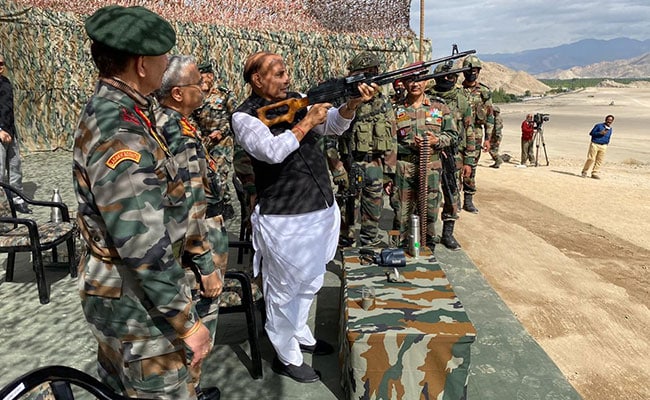
Union Defence Minister Rajnath Singh visited Pangong Tso in Ladakh on Friday to address the tensions between China and India. Addressing troops at Lukung near the Finger 4 area of Pangong Tso, he said, “Our character has been that we have never tried to hurt the self-respect of any country. If anyone tries to hurt the self-respect of India, we will not tolerate it and will give a befitting reply”. This comes one day after the Army and the Ministry of External Affairs described the ongoing talks as “intricate and complex”.

Addressing the issue between the two countries, Rajnath Singh said that he could not “guarantee” to what extent there would be a resolution, underlining that no power can take away an inch of Indian territory. He added that, “How far will it be solved cannot be guaranteed. But I definitely want to assure that no power in the world can touch even one inch of India’s land. No one can take possession of it”.

The Pangong region has been one of the main stand off areas between the two South Asian neighbours, ever since the Galwan valley attacks in May, and talks have been going on between the countries for quite some time now.

He was accompanied by Chief of Defence Staff General Bipin Rawat and Army Chief General M.M. Naravane. They also witnessed a battle drill exercise.

Source: The Print

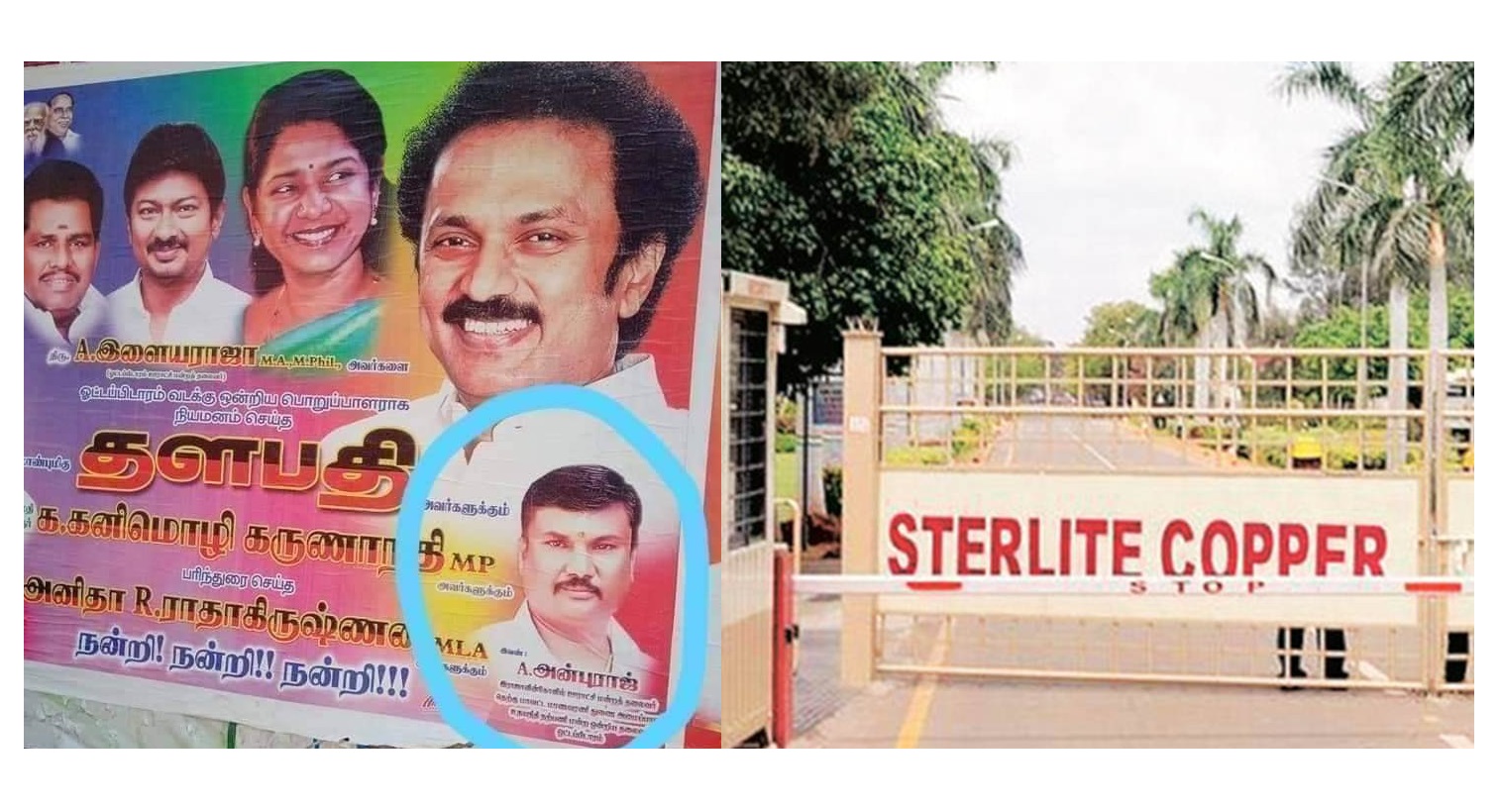
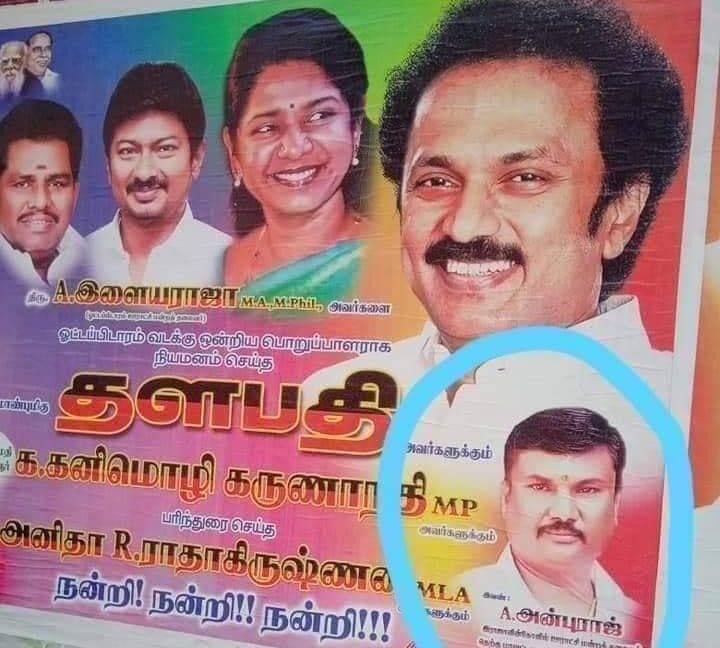
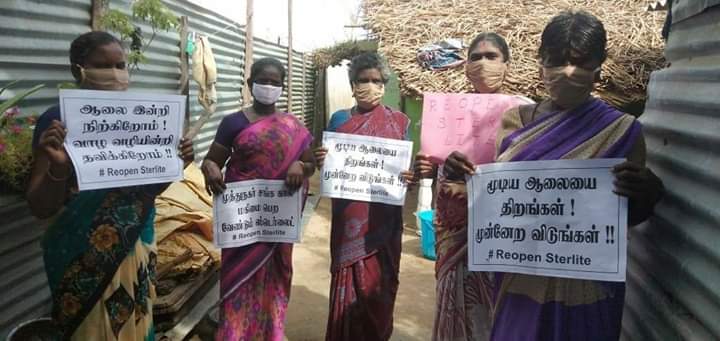
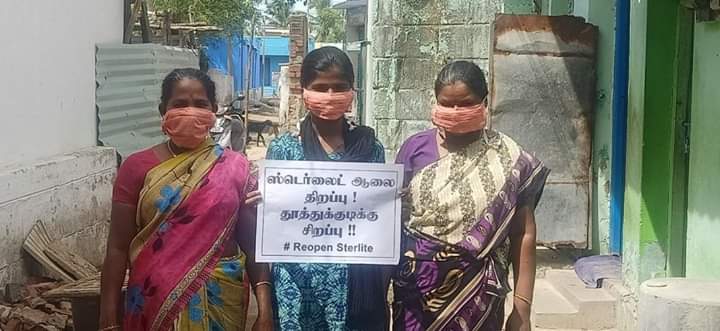
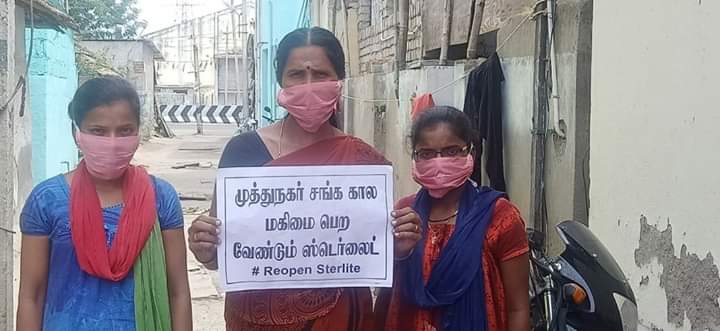
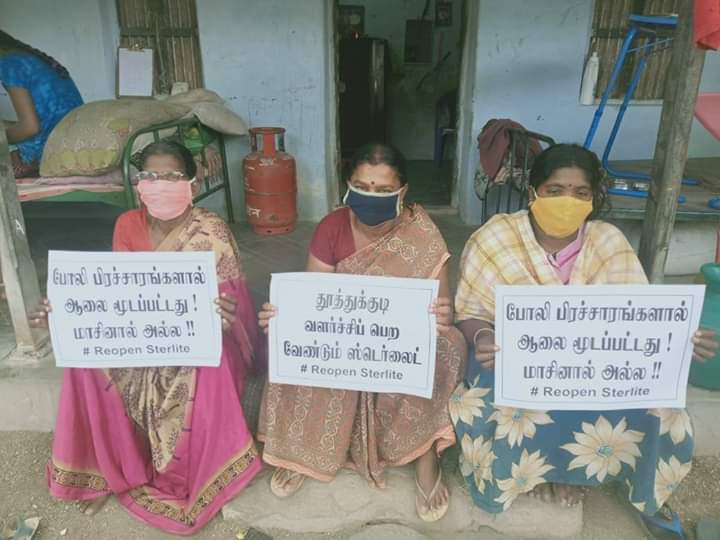
DMK Panchayat President from Thoothukudi asks for reopening of Sterlite Copper

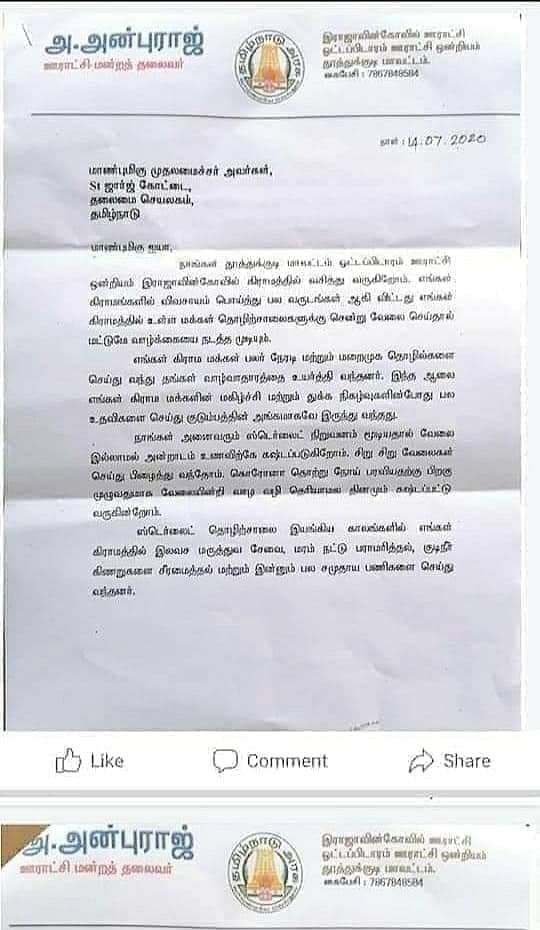
Anburaj, the Panchayat President belonging to DMK party from Thoothukudi district, has written to Chief Minister Edappadi K. Palaniswami requesting to take action for the reopening of Sterlite Copper factory at Thoothukudi.

In the letter dated 14th July 2020, the Rajavinkovil Panchayat President has written saying that the villagers of his panchayat gave up agriculture a long time back and that their lives were dependent on the industries surrounding the region.

Rajavinkovil Panchayat President letter to CM Palaniswami

He stated that the people of his panchayat earned their livelihood through the direct and indirect jobs generated by industries. He added that Sterlite Copper had become ‘an integral part of the people of his villages by staying with them through their thick and thin’.

He said that their lives and livelihoods had been hit hard due to the closure of Sterlite Copper Plant in Thoothukudi.

The letter said that people of the villages had to do odd jobs to sustain themselves and with the coming coronavirus, they have been left in lurch without any work.

Mr. Anburaj in his letter further stated that when Sterlite Copper factory was functional, they had provided free healthcare, drinking water facilities, education and tree planting activities in their villages.

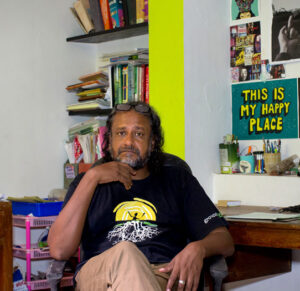
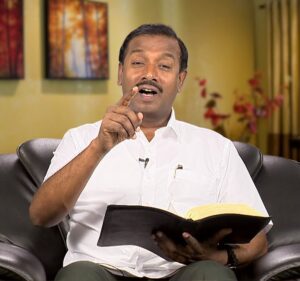
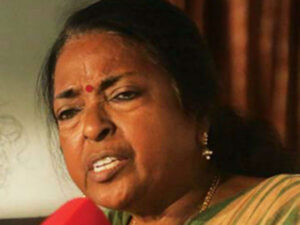
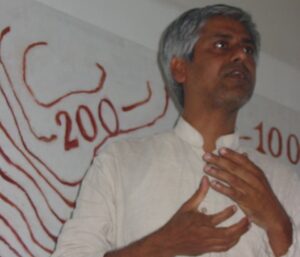
‘Environmental activist’ Nityanand Jayaraman, evangelist Mohan C. Lazarus, Fathima Babu and Samarendra Das of the London based Foil Vedanta group spearheaded the protests against Sterlite Copper.

Nityanand Jayaraman
Evangelist Mohan C Lazarus
Fathima Babu
Samarendra Das

The protests were supported by DMK and other opposition parties.

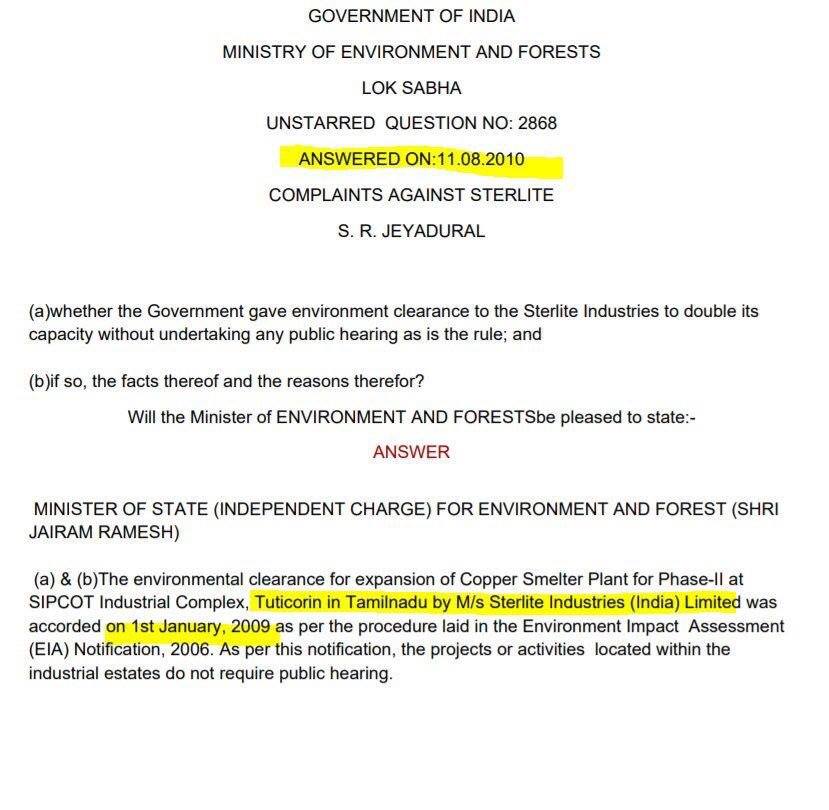
It is to be noted that it was the DMK government that had given a go ahead for the expansion of Sterlite Copper at Thoothukudi

https://twitter.com/badboybala_63/status/1215637711324794881

The Sterlite Copper plant in Thoothukudi was shut down in May 2018 following widespread violence in Thoothukudi that led to the loss of 13 lives.

Sterlite has an  an annual production capacity of 4 lakh tonnes per annum, accounted for 40% of the country’s total copper production. Since its closure, the domestic production and exports of refined copper declined drastically from 378,555 tonnes in 2017-18 to 47,917 tonnes in 2018-19. Other small scale industries dependent on the factory lost business. Jobs that were directly and indirectly dependent on the factory evaporated. Since then, there has been demand from the residents of Thoothukudi and those affected for the reopening of the plant.