Home Blog Page 172

“When Else Will I Buy A Rolls Royce Car?”: Manachanallur DMK MLA Kathiravan Boasts Of ₹7.5 Crore Kidney Trade Profits

In a shocking display of arrogance and complete lack of remorse, a viral video shows Manachanallur DMK MLA Kathiravan openly admitting to 252 kidney transplants conducted at his Trichy hospital each allegedly earning him ₹2 to ₹3 lakh in profit. Addressing a crowd in Thirupattur, the sitting MLA brazenly compares the money earned from these surgeries to the ₹14.5 crore Rolls Royce owned by his father, sarcastically remarking, “When will I ever buy a Rolls Royce car?” The remarks have sparked widespread outrage, with many accusing the MLA of trivializing a serious crime involving alleged illegal organ trade.

Far from showing any regret, the MLA tries to frame the racket as a humanitarian act, claiming, “I saved the lives of 252 people.” His comments have been widely condemned as both morally bankrupt and legally damning.

Amid the uproar, former Tamil Nadu BJP president K. Annamalai tore into the ruling DMK and its MLA, slamming the government’s inaction and silence on the scandal. Posting on X, Annamalai wrote, “Here is Manachanallur DMK MLA Thiru Kathiravan, boasting without shame. In a video, he compares the profit from illegal kidney operations at his Trichy hospital to the ₹14.5 crore price of his father’s Rolls-Royce, admitting he’d need to remove all the kidneys in Thirupattur to afford one. This is not a joke. Poor weavers from Namakkal were lured, their kidneys stolen, and the MLA himself admits in this video that his hospital made at least ₹7.5 crore from this trade. Yet, the DMK Govt has taken no concrete action. Has their functionary Dravida Anandan, the middleman in this kidney theft racket, even been arrested?”

In the viral video DMK MLA said, “After covering the medical expenses and doctor’s fees for each kidney operation, I am left with only 2 to 3 lakh rupees. Do you know the price of my father’s Rolls-Royce car? It is ₹14.5 crore. The total number of (kidney) operations that we have carried out is only 252. With a profit of just 2 lakh rupees per kidney operation, when can I ever buy a Rolls-Royce car? I could have bought it only if I had removed all the kidneys from people in Thirupattur. My only concern is that no one realized I saved the lives of 252 people.”

Despite the MLA’s public admission, there has been no visible action or arrest from the DMK government. Activists and opposition leaders are calling this a shameful cover-up, raising serious concerns about the political protection allegedly shielding those involved in this medical exploitation.

It is noteworthy that one of the hospitals mired in the TN kidney trafficking scandal is none other than the Dhanalakshmi Srinivasan Medical College and Hospital in Perambalur, run by the DMK MLA Kathiravan’s father.

The scandal, which has captured national attention, centers on the exploitation of more than 90 impoverished women, many of whom are daily wage workers. Investigators allege that these women were promised between ₹5 to ₹10 lakh in exchange for their kidneys. The traffickers allegedly used counterfeit Aadhaar cards and fabricated medical documents to facilitate the transplants. In some instances, the women were coerced under financial distress and social pressure into undergoing surgery.

The illicit operations were reportedly carried out at Dhanalakshmi Srinivasan Hospital in Perambalur and Cethar Hospital in Trichy. At the heart of the racket is M. Anandan, a 52-year-old DMK functionary from Anampalayam Perur, known locally as “Dravida Anandan.” He is accused of serving as a middleman, arranging deals, transporting donors, and forging official documents, seals, and even wearing fake government uniforms to aid the operation. Anandan is currently absconding. Authorities recovered forged documents, fake IDs, and official attire during a raid on his home.

Subscribe to our channels on TelegramWhatsApp, and Instagram and get the best stories of the day delivered to you personally.

Global Digital Sovereignty: Why Nations Must Break Free From American Social Media Hegemony

american social media digital sovereignty

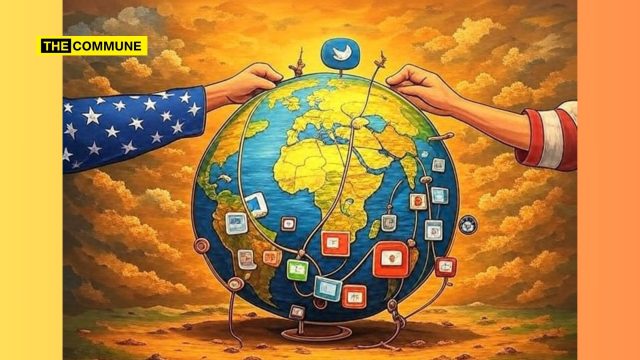
The current tension between Elon Musk’s X platform and governments worldwide, from India’s censorship orders to Brazil’s operational shutdowns, exposes a fundamental flaw in our global digital architecture. As nations increasingly recognize the vulnerabilities of depending on American-controlled social media platforms, we stand at a critical crossroads: either X transforms into a truly global platform with international governance, or countries must develop their own digital ecosystems to escape the specter of U.S. sanctions and political weaponization.

The American Platform Problem: A Global Dependency Crisis

The Illusion of Global Reach

X’s claim to be a “global” platform is fundamentally misleading. While the platform serves over 500 million users across 150+ countries, it remains entirely American-owned and American-controlled. Based in Bastrop, Texas, and operating under U.S. laws, X’s “global” nature extends only to its user base, not its governance structure. This creates a dangerous asymmetry where billions of users worldwide depend on a platform that can be weaponized by a single nation’s political objectives.

The recent conflicts illustrate this vulnerability starkly. X has blocked over 8,000 accounts following Indian government orders, including those of international news organizations like Reuters. In Brazil, the platform shut down operations entirely after legal disputes with Brazilian Supreme Court Justice Alexandre de Moraes. These incidents aren’t isolated, X faces restrictions in China, Iran, Myanmar, North Korea, Pakistan, Russia, Turkmenistan, and Uzbekistan, with Pakistan being the only country to ban the service after Musk’s takeover.

The Sanctions Weaponization

Perhaps most concerning is X’s vulnerability to U.S. sanctions policy. The platform has been accepting payments from sanctioned entities including Hezbollah, Houthi officials, and Iraq-Syria militia bosses, highlighting how American foreign policy directly impacts global digital discourse. When sanctioned individuals lose their verification status or platform access, it demonstrates how U.S. economic warfare extends into the digital realm, affecting users worldwide who have no voice in American policy decisions.

The recent case of U.N. Special Rapporteur Francesca Albanese, who lost her verification on X after U.S. sanctions were imposed on her, exemplifies this dynamic. Her observation that “it’s very serious to be on the list of people sanctioned by the U.S.” reveals how American economic power now extends into global communication infrastructure.

European Union’s Growing Resistance

The European Union has recognized this threat and is taking concrete action. The EU is preparing to fine X up to $1 billion for violating the Digital Services Act, marking the first major penalties under the DSA. European officials argue that X’s “freedom of speech” philosophy, implemented after Musk’s takeover, is incompatible with European legal requirements for content moderation and transparency.

More significantly, Canada is explicitly treating American social media platforms as national security threats. Canadian analysts warn that “American tech CEOs wield unprecedented power and influence over Canada’s political discourse on their social media platforms and could easily tilt the playing field in favour of their preferred candidate.” This recognition that American platforms pose sovereignty risks is spreading across the democratic world.

The Two Pathways Forward

Option 1: True Globalization of X

For X to continue as a genuinely global platform, it must undergo fundamental structural transformation:

International Governance Structure

X must transition from American corporate ownership to an international governance model. This could involve:

  • Multi-stakeholder ownership: Representatives from major economies holding equity stakes proportional to their user base or economic contribution
  • International board of directors: Ensuring no single nation controls platform policies
  • Distributed headquarters: Regional offices with autonomous decision-making authority for their jurisdictions
  • Treaty-based operations: Operating under international agreements rather than unilateral American law

Jurisdictional Decentralization

Rather than applying American legal standards globally, X must implement:

  • Regional content policies: Allowing different regions to establish their own community standards within broad international frameworks
  • Local data governance: Ensuring user data is stored and processed within their home jurisdictions
  • Autonomous moderation: Regional teams making content decisions based on local legal and cultural contexts
  • Appeal mechanisms: International arbitration panels for cross-border content disputes

Financial Independence from U.S. Systems

To escape sanctions vulnerabilities, X must:

Diversify payment systems: Integrate non-American payment processors and financial institutions
Multi-currency operations: Reduce dependence on U.S. dollar-denominated transactions
Distributed revenue streams: Prevent any single government from controlling platform finances
Sanction-resistant infrastructure: Technical and financial architecture that operates independently of American control

Transparency and Accountability

True global governance requires:

  • Public oversight: Regular reporting to international bodies on content moderation, data handling, and policy enforcement
  • Open algorithms: Transparency about how content is prioritized and distributed
  • Democratic participation: User representation in platform governance decisions
  • Independent auditing: Regular assessment by neutral international organizations

Option 2: National Digital Sovereignty

Given the complexity and political resistance to truly globalizing American platforms, the more realistic path may be national digital independence. Countries are increasingly recognizing that digital sovereignty is as crucial as traditional sovereignty.

The Strategic Imperative

Nations must develop indigenous social media platforms for several compelling reasons:

  • Economic Security: Dependence on American platforms means national digital economies are subject to U.S. policy whims. When platforms change algorithms, impose sanctions, or alter business models, entire national digital ecosystems can collapse overnight.
  • Political Independence: As we’ve seen with X’s content blocking in India and Brazil, American platforms can be pressured by their home government or foreign governments to suppress domestic discourse. National platforms ensure domestic political conversations remain under domestic control.
  • Data Sovereignty: American platforms collect vast amounts of data on foreign citizens, creating national security vulnerabilities. Indigenous platforms keep citizen data within national borders and under national privacy laws.
  • Cultural Preservation: American platforms often impose Western cultural values and English-language dominance. National platforms can prioritize local languages, cultural expressions, and social norms.

Successful Models and Emerging Examples

Several nations have already begun building digital independence:

China’s Ecosystem: Despite criticism of its censorship, China’s decision to develop WeChat, Weibo, and TikTok has created a $1 trillion digital economy independent of American control. Chinese platforms serve over 1 billion users and compete globally with American alternatives.

India’s Growing Initiative: India has launched several indigenous platforms including Koo (alternative for X) and Chingari (TikTok alternative). While still developing, these represent serious attempts at digital independence.

Russia’s Response: Following Western sanctions, Russia has accelerated development of VKontakte and other domestic platforms, demonstrating how geopolitical pressure drives digital sovereignty initiatives.

European Alternatives: The EU is supporting decentralized platforms like Mastodon and quasi-decentralized ones like BlueSky as alternatives to American-controlled social media.

Building National Platform Ecosystems

Countries seeking digital sovereignty must develop comprehensive strategies:

Technical Infrastructure: Nations need robust internet infrastructure, cloud computing capabilities, and cybersecurity systems to support domestic platforms. This requires significant investment in technical education and infrastructure development.

Legal Frameworks: Clear regulations protecting user privacy while ensuring platform accountability. This includes data protection laws, content moderation guidelines, and antitrust provisions to prevent domestic monopolies.

Economic Incentives: Government support for domestic tech companies through funding, tax incentives, and procurement preferences. Creating venture capital ecosystems that support indigenous innovation.

User Migration Strategies: Encouraging citizens and businesses to adopt national platforms through government use, integration with public services, and ensuring feature parity with international alternatives.

International Cooperation: Smaller nations can collaborate on shared platform development, creating regional alternatives that serve multiple countries while maintaining independence from superpower control.

The Geopolitical Implications

The New Digital Cold War

The battle over social media control represents a new form of digital cold war. Just as the original Cold War featured competing ideological systems, today’s digital conflict centers on competing models of internet governance. American platforms promote a market-driven, corporate-controlled model, while alternatives emphasize state sovereignty and democratic accountability.

China’s Belt and Road Initiative now includes digital infrastructure, offering developing nations alternatives to American tech platforms. Russia’s emphasis on digital sovereignty following Western sanctions provides a model for nations seeking independence from American digital hegemony. Even European Union’s Digital Services Act represents a middle path, maintaining American platforms but imposing European regulatory control.

The Sanctions Proliferation Risk

As digital platforms become increasingly important for economic and political activity, sanctions targeting platform access become more powerful weapons. The ability to deny individuals, organizations, or even entire nations access to global communication networks represents unprecedented power concentration.

This creates dangerous incentives for sanctions escalation. If X remains American-controlled, future U.S.-China tensions could result in blocking Chinese users. U.S.-Europe disputes could affect European access. Developing nations could find themselves cut off from global digital networks based on American foreign policy disagreements.

National platforms provide insurance against this vulnerability. Countries with indigenous digital ecosystems can maintain communication and commerce even under comprehensive international sanctions.

The Democratic Accountability Problem

American platforms operate with minimal democratic oversight even within the United States. For foreign users, there is essentially no democratic accountability – platform policies are set by American corporate executives and influenced by American government pressure, with no input from the billions of affected international users.

This democratic deficit is unsustainable in an interconnected world where social media platforms shape political discourse, economic activity, and cultural expression. Either platforms must become democratically accountable to their global user base, or nations must develop platforms accountable to their own citizens.

Economic and Technical Challenges

The Cost of Digital Independence

Building national social media ecosystems requires substantial investment. Technical infrastructure, content moderation systems, cybersecurity capabilities, and user interface development demand billions of dollars and years of development. Many smaller nations lack the resources for comprehensive digital independence.

However, the cost of continued dependence may be higher. Vulnerability to foreign sanctions, loss of domestic data sovereignty, and absence of indigenous digital economies represent long-term strategic risks that outweigh upfront development costs.

Regional cooperation offers a solution for smaller nations. African Union social media initiatives, ASEAN digital cooperation, and Latin American platform development can share costs while maintaining sovereignty. Multiple nations collaborating on shared platforms can achieve economies of scale while avoiding dependence on superpowers.

Technical Standards and Interoperability

National platforms risk creating digital fragmentation that reduces global communication and commerce efficiency. However, technical standards and interoperability protocols can maintain connectivity between national systems while preserving sovereignty.

Decentralized social media protocols like ActivityPub (used by Mastodon) demonstrate how multiple platforms can interconnect while remaining independently controlled. Blockchain-based social networks offer another model for maintaining global connectivity without central control.

International technical standards organizations must develop frameworks ensuring national platforms can communicate across borders while respecting domestic governance preferences. This requires diplomatic cooperation and technical innovation.

The Network Effect Challenge

Existing American platforms benefit from massive network – effects users join platforms where their friends, colleagues, and communities are already active. New national platforms face the challenge of attracting users away from established networks.
Government anchor usage provides one solution, requiring government agencies and officials to use national platforms creates initial user bases. Integration with public services makes national platforms essential for citizen interaction with government. Business incentives encourage companies to maintain presence on national platforms alongside international ones.

Content localization gives national platforms competitive advantages. Local language support, cultural relevance, and region-specific features can attract users despite smaller network sizes. Over time, as national platforms mature, network effects begin working in their favor.

The Path Forward: A Hybrid Approach

Short-term Tactical Measures

While building long-term alternatives, nations must implement immediate protective measures:

Regulatory Oversight: Imposing strict transparency requirements on American platforms operating domestically. Regular reporting on content moderation decisions, data handling practices, and foreign government requests creates accountability even without ownership control.

Data Localization Requirements: Mandating that platforms store citizen data within national borders and under national jurisdiction. This reduces surveillance vulnerabilities and ensures domestic law applies to citizen information.

Content Sovereignty: Establishing clear legal frameworks for content decisions that apply to all platforms operating domestically. Platforms must comply with domestic law rather than corporate policies or foreign government pressure.

Financial Oversight: Monitoring platform revenue streams and ensuring domestic advertising markets benefit national economies rather than only American corporations.

Medium-term Strategic Development

Regional Platform Initiatives: Countries with shared cultural or economic ties should collaborate on regional social media ecosystems. ASEAN, African Union, and Latin American initiatives can create viable alternatives to American platforms while sharing development costs.

Technical Capability Building: Massive investment in domestic technical education, research and development, and digital infrastructure. Nations must build the human capital and technical foundation for digital independence.

International Cooperation Frameworks: Developing treaty systems for digital governance that establish international rules for platform operation, content moderation, and cross-border data flows. This creates alternatives to American-dominated governance structures.

Economic Incentive Systems: Creating venture capital funds, tax incentives, and procurement preferences that support domestic digital platform development. Making indigenous alternatives economically competitive with American platforms.

Long-term Vision: Digital Multipolarity

The ultimate goal should be digital multipolarity: a world where multiple nations and regions maintain viable social media ecosystems that can interoperate while preserving sovereignty. This requires:

Technical Interoperability Standards: International agreements ensuring platforms can communicate across borders while maintaining independent governance. Email-like federated systems demonstrate how global communication can function without central control.

Economic Balance: Preventing any single nation or platform from dominating global digital commerce. Multiple currency systems, diverse payment networks, and distributed economic activity reduce single points of failure.

Cultural Diversity Protection: Ensuring global digital systems support linguistic diversity, cultural expression, and local community needs rather than imposing homogeneous American corporate culture.

Democratic Governance: Creating genuinely international oversight mechanisms for cross-border digital activity. This might involve UN-based systems, multilateral treaty organizations, or other frameworks that give all nations voice in global digital governance.

To Sum-up: The Sovereignty Imperative

The current crisis between X and various national governments represents more than content moderation disputes; it reveals the fundamental unsustainability of American digital hegemony in a multipolar world.

As digital platforms become essential infrastructure for economic, political, and social activity, national control over these systems becomes a sovereignty requirement.

X faces a clear choice: transform into a genuinely global platform with international governance, or accept that its American control makes it unsuitable for serving as global digital infrastructure. The platform’s recent conflicts with India, Brazil, the European Union, and other jurisdictions demonstrate that unilateral American control is increasingly unacceptable to the international community.

For nations worldwide, the message is equally clear: digital sovereignty requires indigenous alternatives to American-controlled platforms. While building national or regional social media ecosystems requires substantial investment and faces significant challenges, the alternative is permanent vulnerability to American sanctions and political manipulation.

The future of global digital communication will likely be multipolar rather than American-dominated. Whether this transition occurs through X’s transformation into a genuinely international platform or through the development of multiple national and regional alternatives, the era of American digital hegemony is ending.

Nations that recognize this reality and invest in digital sovereignty will be better positioned for the emerging multipolar digital order.
The choice is stark but clear: globalize digital governance or accept digital fragmentation.

Either path is preferable to the current system where billions of global citizens depend on platforms controlled by a single nation’s corporate and political interests. The time for decisive action is now, before digital dependence becomes digital subjugation.

Ganesh Kumar is a geo-political analyst.

Subscribe to our channels on TelegramWhatsApp, and Instagram and get the best stories of the day delivered to you personally.

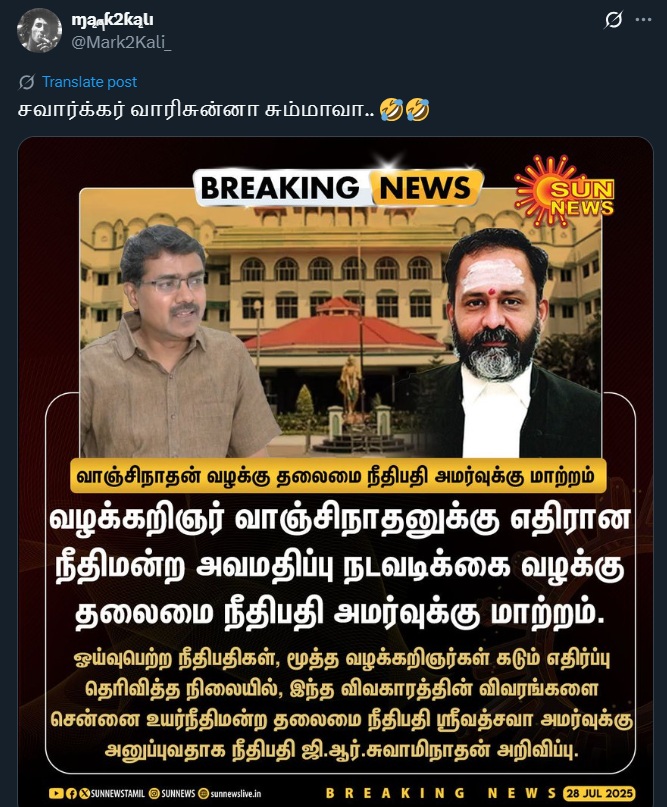
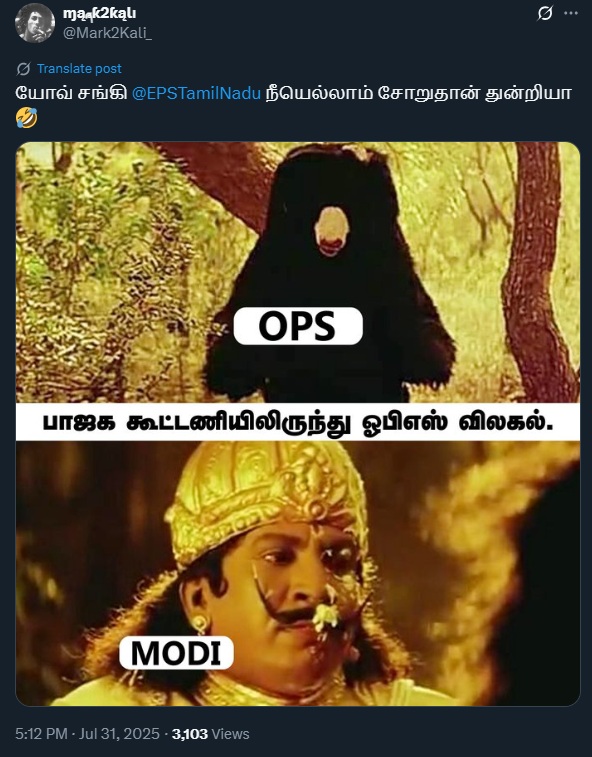
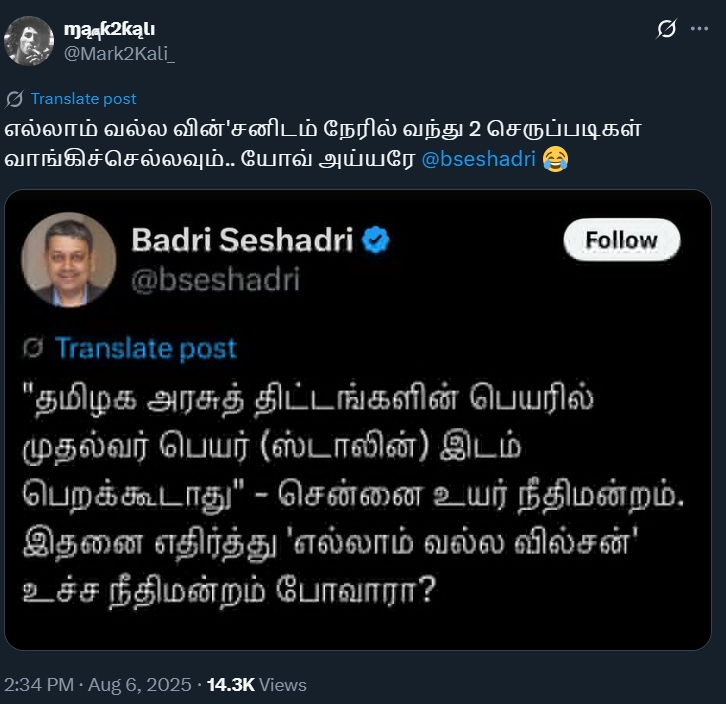
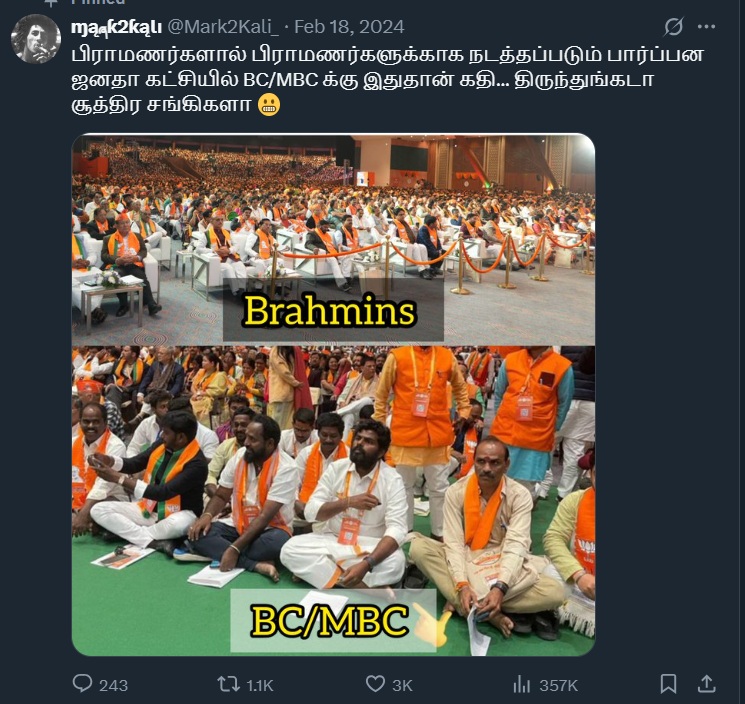
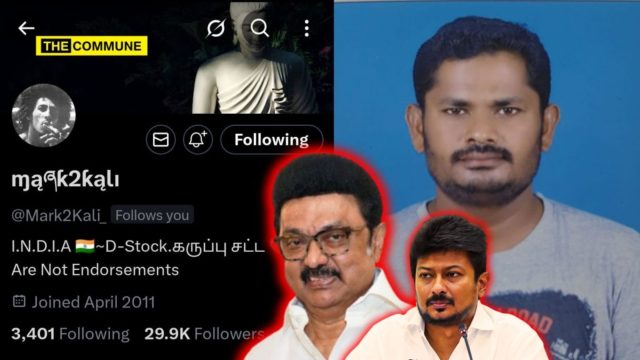
Tamil Nadu CM MK Stalin And His Deputy CM Son Udhayanidhi Condole Death Of Troll Known For Spewing Hate Against Brahmins And Hinduism

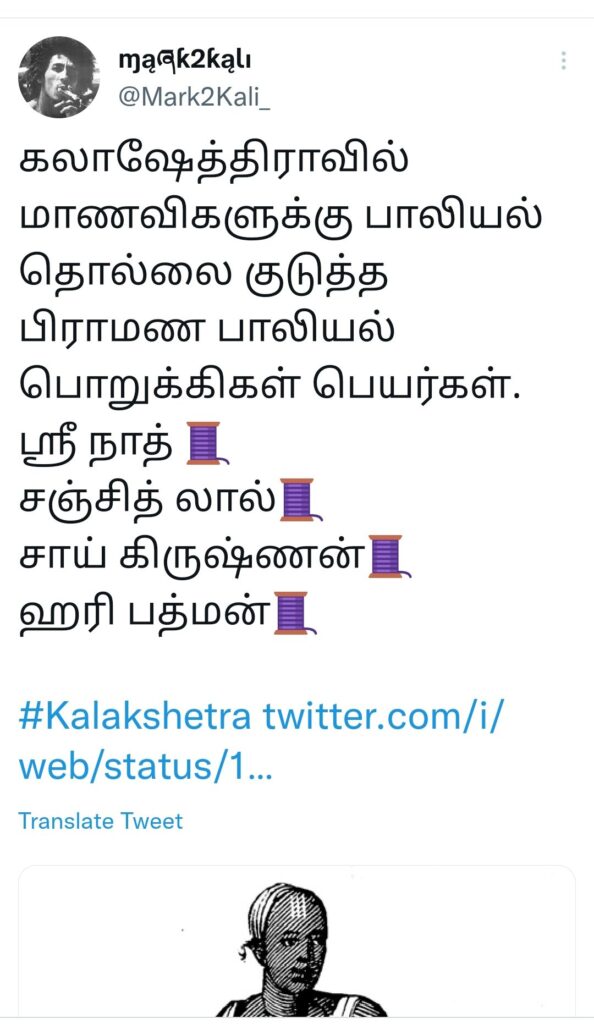
Tamil Nadu Chief Minister M.K. Stalin on 15 August 2025 issued a condolence message mourning the death of social media handle Kalimuthu, known on X as @Mark2Kali_ ,a DMK supporter widely known for his hate-filled posts and abusive campaigns.

In his message, Stalin wrote, Even though he held no official position in the party, through his black-and-red passion, he was known as one of the faces of the Kazhagam on the internet, and acted as if the Kazhagam itself was his identity—my dear brother @Mark2Kali_. The news of his passing has deeply shocked and pained me. To the family of the vibrant young comrade Mr. Kalimuthu, who we have lost, and to our Kazhagam family, I extend my deepest condolences…”

This was followed by Deputy CM Udhayanidhi Stalin, who called for the eradication of Sanatana Dharma, expressing condolence. He wrote, I was saddened to hear the news of the passing of our dear brother @Mark2Kali_ , who tirelessly wrote about the principles and achievements of the movement on social media platforms. The ideological work of Kali, a soldier of the movement who fought battles of ideas on the internet, is worthy of praise. Selfless black-and-red volunteers like him have been, and continue to be, the shield of the movement. I express my deep condolences on the passing of our brother. I extend my sympathies to his family, friends, and comrades.”

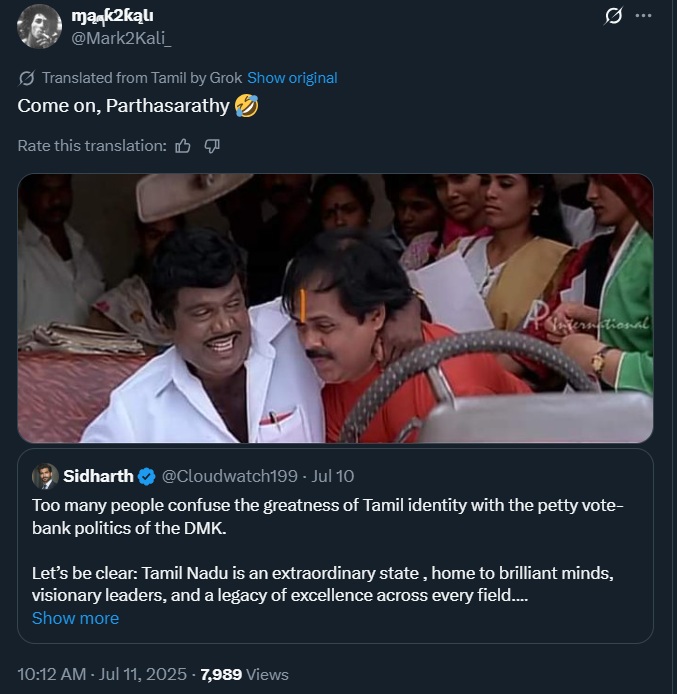
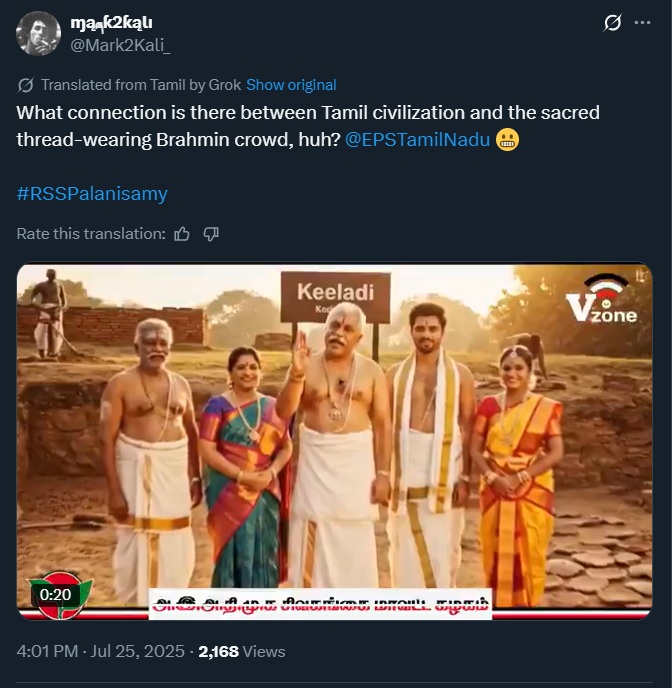
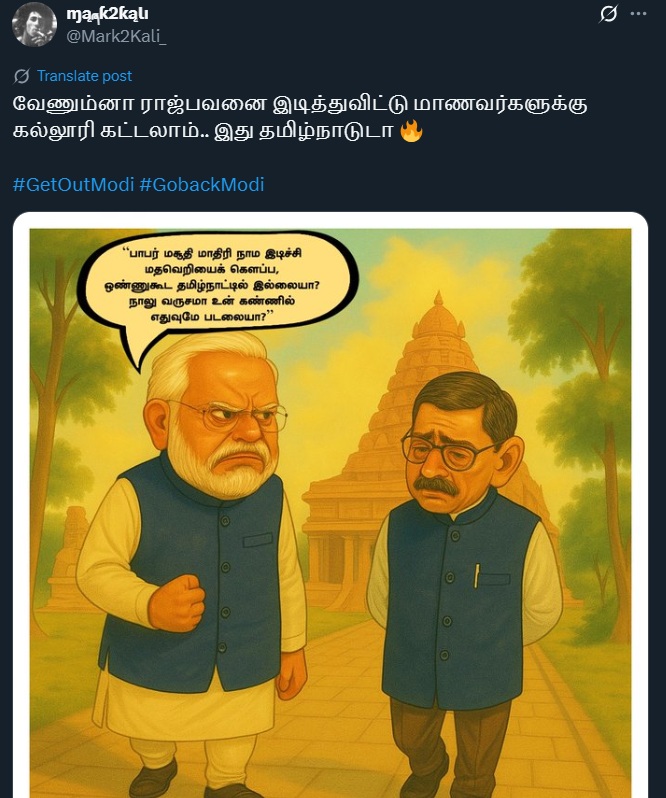
Let’s take a look at some of the rabid hatemonger’s posts.

During the Kalakshetra issue, he named the accused and referred to them as Brahmin thugs involved in sexual harassment.

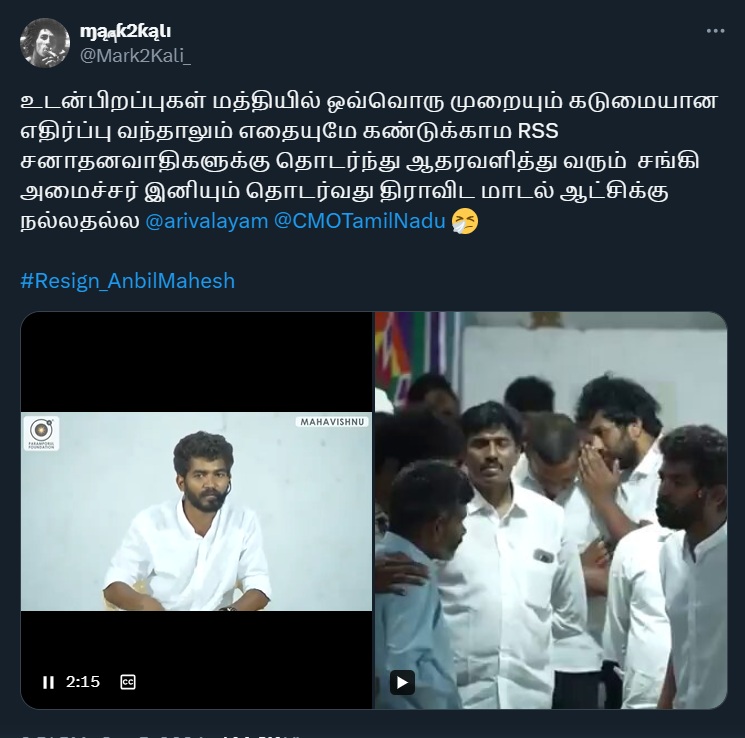
During the MahaVishnu controversy, he along with other Dravidoids broke bangles because Mahavishnu was seen in pictures with their leader Anbil Mahesh. He wrote, “It is not good for the Dravidian model of governance that the Sanghi Minister continues to support the RSS Sanatanists who have nothing to gain every time there is strong opposition among the siblings.”

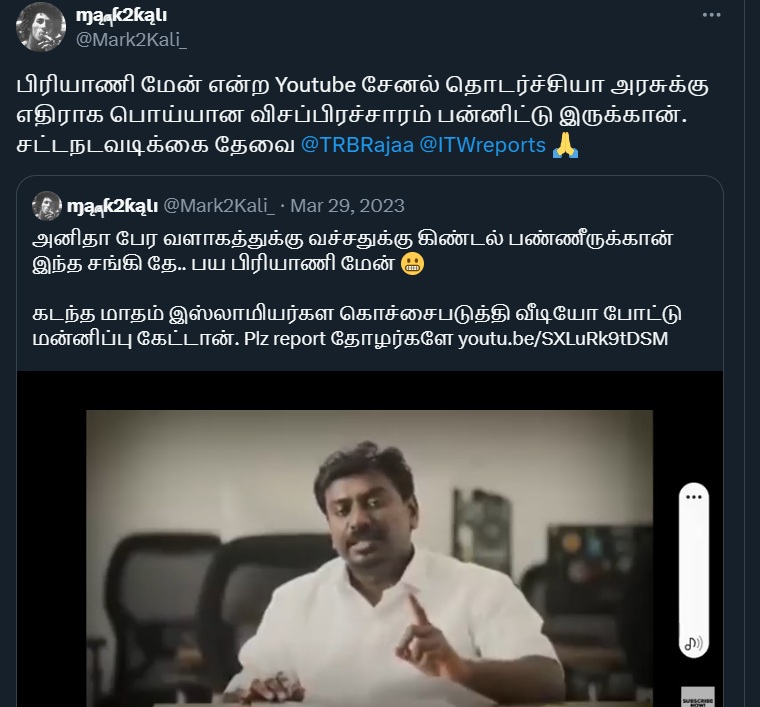
In 2023, he had alleged that the Biriyani Man channel is spreading malicious campaign about the DMK government and tagged DMK leader TRB Rajaa and ITW Reports handle.


Subscribe to our channels on Telegram, WhatsApp, and Instagram and get the best stories of the day delivered to you personally.


Kishtwar Cloudburst Disaster Claims 56 Lives, Hundreds Still Missing

kishtwar disaster cloudburst

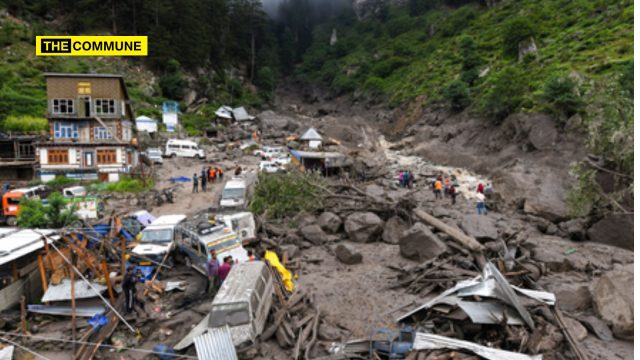
Fifty-six bodies have been recovered so far and over 300 were rescued as Prime Minister Narendra Modi spoke to J&K Lt Governor and Chief Minister, assuring all possible help to sufferers of the Kishtwar cloudburst tragedy.

At least 56 people, including two CISF personnel, have been confirmed dead after a massive cloudburst struck Chashoti village near the Machail Mata Shrine in Kishtwar district on Thursday. The resulting cloudburst debris and flash floods swept away makeshift structures, a community kitchen and a security post.

Officials said over 250 people are still missing while more than 300 have been rescued so far, several of them with serious injuries.

Chief Minister Omar Abdullah said on X today, “I just received a call from Hon PM @narendramodi Sb. I briefed him about the situation in Kishtwar & the steps being taken by the administration. My government & the people hit by this tragic cloudburst are grateful for his support & all the assistance provided by the Union Government”.

Union Minister Jitendra Singh said the disaster could result in substantial casualties and confirmed that the administration has swung into action, deploying rescue teams from the Civil Administration, Police, Army, NDRF, and SDRF. Adverse weather and washed-out roads have hampered air operations, forcing ground teams to lead much of the evacuation effort.

Witnesses said the cloudburst struck around 11.30 a.m. Thursday, when hundreds of pilgrims were present in the last motorable Chashoti village before the high altitude shrine. The sudden surge of water destroyed a community kitchen hosting nearly 200 pilgrims and also damaged nearby security installations.

Many tents and temporary shelters set up for pilgrims were washed away in the deluge. L-G Manoj Sinha has directed all agencies to strengthen rescue and relief operations and ensure all possible assistance to the affected.

Control rooms and helpline numbers have been activated to help locate missing persons. The Machail Mata Yatra, which draws thousands of devotees every August, has been suspended until further notice. Due to the scale of the tragedy, Independence Day celebrations in several parts of the Union Territory were scaled down, with only flag hoisting and the national anthem being observed.

Officials fear the casualty count may rise as many areas remain cut off. Rescuers, including volunteers from local organisations, are continuing their search along the riverbanks downstream from the disaster site. Critical health infrastructure was reinforced at Sub-District Hospital (SDH), Paddar, with an additional deployment of 13 doctors and 31 paramedics.

Senior officers of the health department are stationed at Paddar, overseeing rescue and medical operations. District Hospital (DH) Kishtwar has been augmented with the additional deployment of General Surgeons, Orthopaedic Surgeons, and Anaesthetists from Government Medical College (GMC) Doda.

Additionally, tertiary care institutions have been put in a state of full readiness. A team comprising specialists has been readied at Doda to manage patients being referred from DH Kishtwar. Government Medical College (GMC) hospital in Jammu is in full operational readiness with 50 dedicated disaster beds, 20 ventilator beds, and 5 operating theatres (OTs).

Specialist medical teams comprising Orthopaedicians, Neurosurgeons, Critical Care Anaesthetists, and Maxillo-facial consultants are on standby. The GMC Jammu Blood Bank has been augmented with 200-plus units of blood available for any exigency.

To assist in the response to the situation, PGIMER Chandigarh has dispatched a specialised team comprising Critical Care Specialists and Neurosurgeons to GMC Jammu to further enhance critical care patient care capabilities. Immediately following the incident, a large fleet of 65 ambulances from the Health department, NHPC, Army, CRPF and 108 Emergency Service of the J&K Health and Medical Education department was deployed for rescue and patient transfer.

-IANS

Subscribe to our channels on TelegramWhatsApp, and Instagram and get the best stories of the day delivered to you personally.

Karnataka Dy CM DK Shivakumar Says Govt Will Not Spare Those Spreading Misinformation On Dharmasthala

dharmasthala dk shivakumar deputy cm

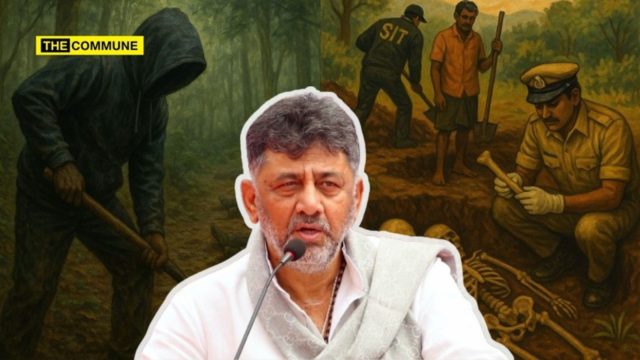
The Karnataka government stated on Friday that action will be initiated against those who carried out false propaganda against the pilgrimage centre Dharmasthala in the alleged mass grave case.

Responding to media questions near the KPCC office on Friday, Deputy Chief Minister D.K. Shivakumar stated, “The government is considering taking action against those who have lied and spread misinformation in connection with the Dharmasthala case.”

When Dy CM Shivakumar was asked about the case, he said, “This is not a matter for or against Dharmasthala. All procedures must be carried out lawfully. I have observed Dharmasthala very closely. I have faith and confidence in the devotion, reverence, and practices there. I believe that in the coming days, the investigation will reveal the conspiracy that took place. Regarding this matter, our Home Minister G. Parameshwara will present the facts before the state by responding in the Assembly.”

When asked whether there was a conspiracy angle, Dy CM Shivakumar replied, “The Home Minister will explain this matter. Chief Minister Siddaramaiah is also committed to this issue. In the Legislature Party meeting, CM Siddaramaiah told us that no one should engage in insults or spread misinformation through lies and conspiracies.”

“CM Siddaramaiah has instructed that strict action should be taken if false allegations are made. We will act accordingly. The law is the same for everyone, and we must uphold it. We will not protect anyone, nor will we allow unnecessary character assassination.”

“I have confidence personally that Home Minister G. Parameshwara, will convey the truth on the floor of the House on Monday (August 18). Our government’s stand is that no one should carry out a conspiracy, lie and cause insult, humiliation towards a religious centre or persons connected to them. If the allegations are untrue, our government is thinking of initiating stern action in the Dharmasthala case,” Dy CM Shivakumar emphasised.

“We have to protect the law. If someone has committed wrongs, they must be punished. There is no question of protection for anyone in this regard. No one should indulge in defaming,” he stated.

“I know about Dharmasthala. It has a long history of 800 years. It’s a highly sacred place. No one should misuse the name and no one should carry out a conspiracy. Since I know what things are, it’s a big conspiracy. The government will definitely take action against those who misused the name,” Dy CM Shivakumar stated.“I only know that whatever is being shown in the media is false,” he maintained while answering a question.

In a major development, on July 11, the unidentified complainant in the case, who is a lower caste Hindu, had claimed that he was forced to bury several bodies of women and girls who were raped and murdered in Dharmasthala village. He appeared before a court in Karnataka’s Mangaluru district and recorded his statement. The man gave his statement before Principal Civil Judge and First Class Judicial Magistrate.

The development has sparked a major controversy. He requested that the police exhume the bodies in his presence. Even as 17 burial sites were excavated, the authorities could not find any strong evidence.

Retired Supreme Court judges and activists demanded a Special Investigation Team probe monitored by the Supreme Court or the High Court into the shocking case, allegedly involving many women, girls and destitute men. While the state government has followed the rule of law and allowed a probe into the alleged mass murders, the Opposition BJP has accused it of giving in to anti-Hindu forces and demanded an interim report from the Home Minister.

-IANS

Subscribe to our channels on TelegramWhatsApp, and Instagram and get the best stories of the day delivered to you personally.


From Red Fort, PM Modi Pledges Crackdown On Infiltrators Changing India’s Demography

pm modi i-day speech viksit bharat rozgar yojana youth jobs demography

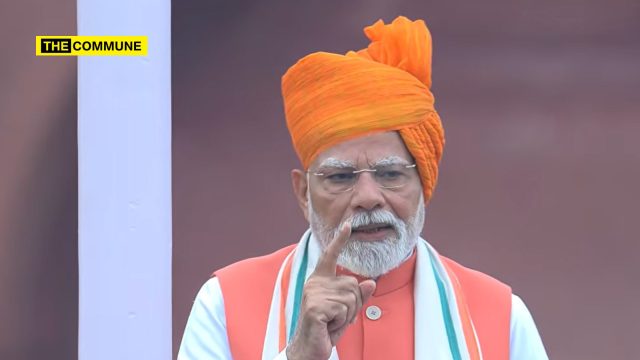
Prime Minister Narendra Modi, on Friday, during his address from the ramparts of Red Fort, warned against illegal immigration, which is threatening the country. He announced a demography mission to protect the country from the dangers posed by illegal immigrants.

PM Modi said he would like to alert the nation about the concern, which has now become a challenge. “Under a well-thought-out conspiracy, the country’s demography is being changed, and seeds of a new crisis are being sown,” the PM said. The Prime Minister said that the infiltrators are snatching the livelihood of the youth of the country.

“They are targeting our sisters and daughters. They are misleading the adivasis and grabbing their lands. This will not be tolerated,” said PM Modi.

The Prime Minister flagged the challenges caused due to demographic changes, especially in the border areas. He said that the demographic changes in border areas pose a threat to national security.

“It sows the seeds of conflict. No country can surrender before infiltrators. Then how can we?” he said. PM Modi announced the national mission to tackle what he referred to as a looming danger.

“Not to allow such activities is our duty to our ancestors who gifted us an Independent India. So I announce from the ramparts of Red Fort that we have decided to start a high-powered demography mission. This mission will tackle the danger that is looming over India,” said PM Modi.

The issue of illegal immigration has become a rising concern in the country. Authorities have been cracking down on illegal immigrants throughout the country, a majority of whom are from Bangladesh. The security apparatus has been identifying suspicious foreign nationals, especially those from Bangladesh, who have entered India illegally and are living under the guise of Indian citizens after making fake Indian documents.

-IANS

Subscribe to our channels on TelegramWhatsApp, and Instagram and get the best stories of the day delivered to you personally.

GST Overhaul By Diwali: Finance Ministry Proposes Two-Slab System After PM Modi’s Independence Day Push

gst registration rates pm modi insurance premium

The Finance Ministry on Friday put forth the proposal about a simplified, two-tier Goods and Services Tax (GST) system with a “standard” and “merit” slab, alongside special rates for select goods.

The proposal came after Prime Minister Narendra Modi said during his Independence Day address from the Red Fort that the next generation reforms in GST will be unveiled by Diwali, which will provide “substantial” tax relief to the common man and benefit small businesses.

The government has sent its proposal on GST rate rationalisation and reforms to the Group of Ministers (GoM) constituted by the GST Council to examine this issue. Key areas identified for next-generation reforms include the rationalisation of tax rates to benefit all sections of society, especially the common man, women, students, middle class, and farmers.

Among the proposals is the reduction of taxes on common man items and aspirational goods. This would enhance affordability, boost consumption, and make essential and aspirational goods more accessible to a wider population. The end of compensation cess has created fiscal space, providing greater flexibility to rationalise and align tax rates within the GST framework for long-term sustainability, according to the ministry.

The correction of inverted duty structures is aimed at aligning input and output tax rates so that there is a reduction in the accumulation of input tax credit. This would support domestic value addition.

Another key proposal is to resolve classification issues to streamline rate structures, minimise disputes, simplify compliance processes, and ensure greater equity and consistency across sectors. “The aim is also to provide long-term clarity on rates and policy direction to build industry confidence and support better business planning,” according to the ministry.

PM Modi, in a bold Independence Day declaration, announced the formation of a high-level task force to spearhead next-generation reforms across governance, taxation, and public service delivery. “This Diwali, I am going to celebrate a double Diwali for you. The countrymen are going to get a big gift, there will be a drastic cut on GST on common household items,” he said, signalling sweeping changes in the GST regime.

PM Modi emphasised the urgency of reviewing GST rates, calling it the “need of the hour”. “GST rates will be reduced drastically. Tax will be reduced for the common people,” he declared. The announcement comes as GST marks its eighth anniversary, having evolved into one of India’s most significant post-independence tax reforms.

Since its launch in 2017, GST has unified the country’s indirect tax structure and significantly improved the ease of doing business, especially for small and medium enterprises.

-IANS

Subscribe to our channels on TelegramWhatsApp, and Instagram and get the best stories of the day delivered to you personally.

Agniveers Make Historic Debut In Red Fort National Anthem Band

agniveer national anthem band debut

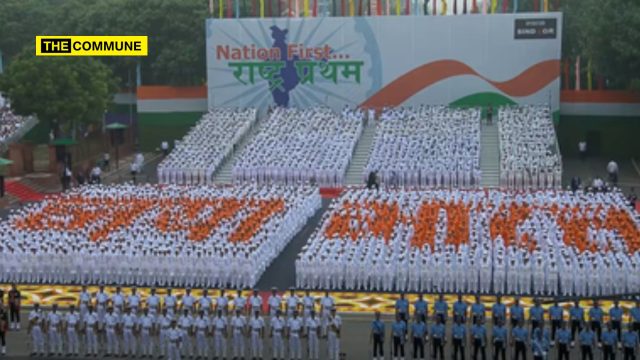
The 79th Independence Day celebrations on Friday at the historic Red Fort this year saw a grand tribute to the success of ‘Operation Sindoor’, marking a moment of pride and unity for the nation. For the first time, the ceremony included 11 Agniveer musicians who joined the Air Force band in playing the national anthem — a symbolic gesture highlighting the new generation’s role in national service.

As Prime Minister Narendra Modi hoisted the Tricolour from the ramparts of the Red Fort, two red Mi-17 helicopters of the Indian Air Force soared above the gathering. One proudly carried the national flag, while the other displayed the flag symbolising ‘Operation Sindoor.’

As they flew over the Red Fort, both helicopters showered flowers on the assembled crowd, igniting emotions of pride and patriotism among the thousands present. Adding to the grandeur, the logo of ‘Operation Sindoor’ was prominently featured throughout the venue — from the view cutter of Gyanpath in front of the Red Fort to the floral decorations and even on the official invitation cards for the event.

A 21-gun salute echoed through the grounds as the national flag was raised. This ceremonial salute was delivered using indigenous 105 mm light field guns, fired by the 1721 Field Battery (Ceremonial) — a significant nod to India’s self-reliance in Defence. The national flag was guarded by 128 personnel drawn from the Indian Army, Navy, Air Force, and Delhi Police, while a Guard of Honour comprising 96 soldiers and officers stood in formation, showcasing the discipline and unity of the armed forces.

During the hoisting of the flag and national salute, the Air Force band, led by a Junior Commissioned Officer and supported by 25 musicians, played the national anthem. The inclusion of the Agniveers in this prestigious performance marked a historic first. Approximately 5,000 special invitees attended the ceremony at the invitation of Prime Minister Modi.

These included members of India’s Special Olympics 2025 team, international sports champions, outstanding farmers, top-performing sarpanches, young writers, entrepreneurs, beneficiaries of government schemes, sanitation workers, Anganwadi workers, rehabilitated labourers, volunteers, and tribal children.

Adding to the colourful diversity, 1,500 attendees from across states and union territories arrived in traditional attire. In the lead-up to Independence Day, thousands across the country participated in essay competitions, painting contests, social media reels, and online quizzes related to ‘Operation Sindoor’ and national security — with 1,000 quiz winners also present at the ceremony.

For the first time ever, patriotic fervour will continue into the evening of August 15, as bands from the Army, Navy, Air Force, Coast Guard, NCC, and Assam Rifles perform across over 140 locations nationwide, filling the air with patriotic melodies.

-IANS

Subscribe to our channels on Telegram, WhatsApp, and Instagram and get the best stories of the day delivered to you personally.
Atmanirbhar In Action: This Scientist Left A High Paying Lucrative US Job To Empower Tribal Women In Anaikatti And Restore Their Dignity

dr soundararajan atmanirbhar tribal women anaikatti

In the quiet hills of Anaikatti, along the Tamil Nadu–Kerala border, lives a man who once chased molecular perfection in global laboratories. Today, at 67, Dr Soundararajan is chasing something infinitely more human: dignity, self-reliance, and hope for the tribal women of these hills.

“I am broke, but not broken,” he says, “What I do here gives me love. Sometimes, I wonder if I am helping them, or if they are helping me. Doing seva is not optional, it is the duty of the intellectuals, the intellectuals have failed this country.”

From Chennai To The World – And Back

Born in Tiruvannamalai, Dr Soundararajan’s life began like many others from middle-class Tamil Brahmin families with a strong emphasis on studies. His father was the sole breadwinner for a large family of five children. “We had several ‘one meal’ days,” he recalls. “But we always gave importance to learning.”

His brilliance carried him from first grade through PhD entirely within Chennai, specializing in metallic chemistry. In 1987, he boarded a flight to the U.S. for postdoctoral research at the University of Oklahoma, later moving to Washington State University. He published in top journals like the Journal of the American Chemical Society and even discovered a reaction deemed superior to one that had won a Nobel Prize.

He built a respected career, got his green card, married, welcomed two children, but then chose something rare. In 1996, he walked away. “I wanted my children to grow up knowing our people, our culture. I missed my relatives. I was feeling distanced from my roots.”

It was a costly choice. A corporate U.S. salary of $70,000 a year became ₹7,000 a month in Chennai. “I couldn’t even support the family,” he says. He took tuitions for school students, slowly working his way into industry again, heading R&D departments and working for global pharma companies in India. But something deeper was stirring within him.

The Spiritual Turning Point

Coming from a family deeply rooted in spirituality, his interest in Vedanta grew with time. The shift began in 1985, at a lecture that led him to his guru, Dayananda Saraswati – a connection that would anchor him through decades of corporate life. “Every year in the U.S., I would visit him in Pennsylvania,” he says. “By 2012, I had had enough of corporate life. I told him I wanted to do something more meaningful.”

Swami Dayananda Saraswati offered him land near his ashram and told him: You do something here for the people. That became the seed.

Dr Soundararajan started small – making yoga mats and fabrics out of banana fibre, eco-friendly plates from areca palm, paper from banana pulp. At one point, he employed 20–25 adivasis, men and women. But businesses faltered, partners left, and losses mounted. He persisted.

While all this happened, COVID-19 also affected him and the progress. But he persevered. It was his guru’s aagna

“My guru has said, “Aa sethu himachala vanagiri jana samrakshanaya kurusevamtwam, meaning from Rameswaram to the Himalayan mountains, we should serve the forest, mountain dwellers. I want everyone to think of have-nots more.”

Learning to Lead with Love

Working with tribal women at his Adivasi Penmanigal Vazhvadhara Maiyyam was unlike anything his corporate career had prepared him for. “They were too shy to even talk to me, face to face. They worked only for the money. My logical methods – log sheets, timing, accountability, these didn’t work.”

The breakthrough came when he stopped managing like an executive and started relating like a friend. “I had to understand them out of love and care. Then it worked miracles.” Women began opening up, taking on responsibility, and trusting him. Some of them who work with him have been there from the time he started in 2012. He says, “I primarily work with the adivasi women because the men are always indulging in alcohol, as you know how big a problem it is in Tamil Nadu. Some of them are widows, their husbands – victims of alcoholism. It is a male-dominated society here and since I employ only women, they feel safe working at our setup.” 

Some stories still choke him up. One young woman, abused daily by her paternal uncle, was so withdrawn she wouldn’t look anyone in the eye. Dr Soundararajan helped her open a bank account, encouraged her to lead small tasks. When her family tried to bargain her away for land, he intervened, rescued her, and gave her work. Today she is married, saving money, and living with hope.

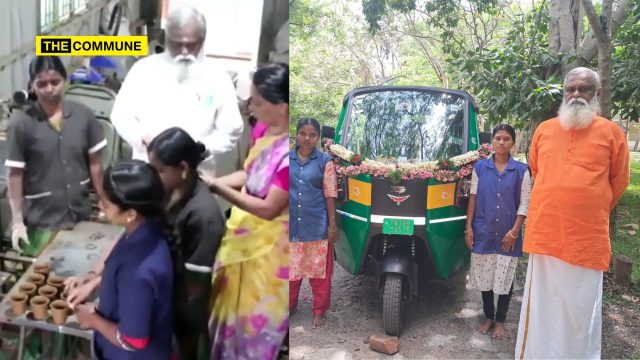
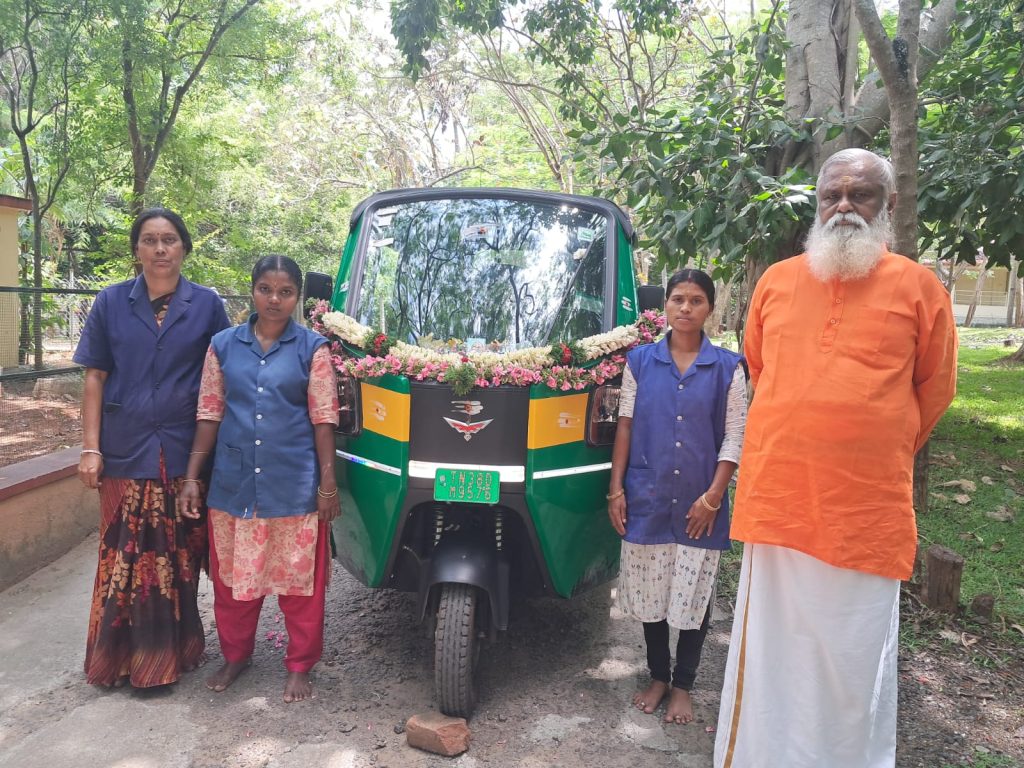
Another inspiring story is of women who barely knew to ride the cycle are today driving electric autos. Those who had refused to drive them started making a beeline for it seeing the other women taking it up. These women in the picture were trained and now drop off their colleagues and soon they will accept external passengers.

Why The Tribal “Infantry” Matters

Dr Soundararajan often uses a striking metaphor: “In a war, you may have air force and navy, but without infantry, you can’t win. Similarly in Ramayana also you can see the Vanaras, they play a crucial role. These people are at the bottom of the pyramid and they have national, cultural, societal integrity as well as their credentials are unique in those. We have left all that and moved into concrete buildings, they stayed back and are preservers of Indian culture. In society, the tribal communities are that infantry – the base. Without them, we are like a body without legs, without them we are motionless. We will sink without them.”

For him, helping the tribal people isn’t just charity; it’s civilization-preservation. “They keep alive old stories, old songs, and ways of living with nature. Even today, they will climb hills, live in stone homes, light fires the way our ancestors did. They may be poor in money, but they are rich in heritage.”

But their lives are hard: alcoholism is rampant, often both men and older women drink. Nutrition is poor; many don’t know how to cook a decent breakfast or read a thermometer. Government schemes often fail to reach them, siphoned off by middlemen. Many girls become mothers before 18.

He has seen entire villages with barely four men left because the rest drank themselves to death. “Sometimes, all they want is for me to come and sit with them for 10 minutes. That’s enough for them to feel cared for.”

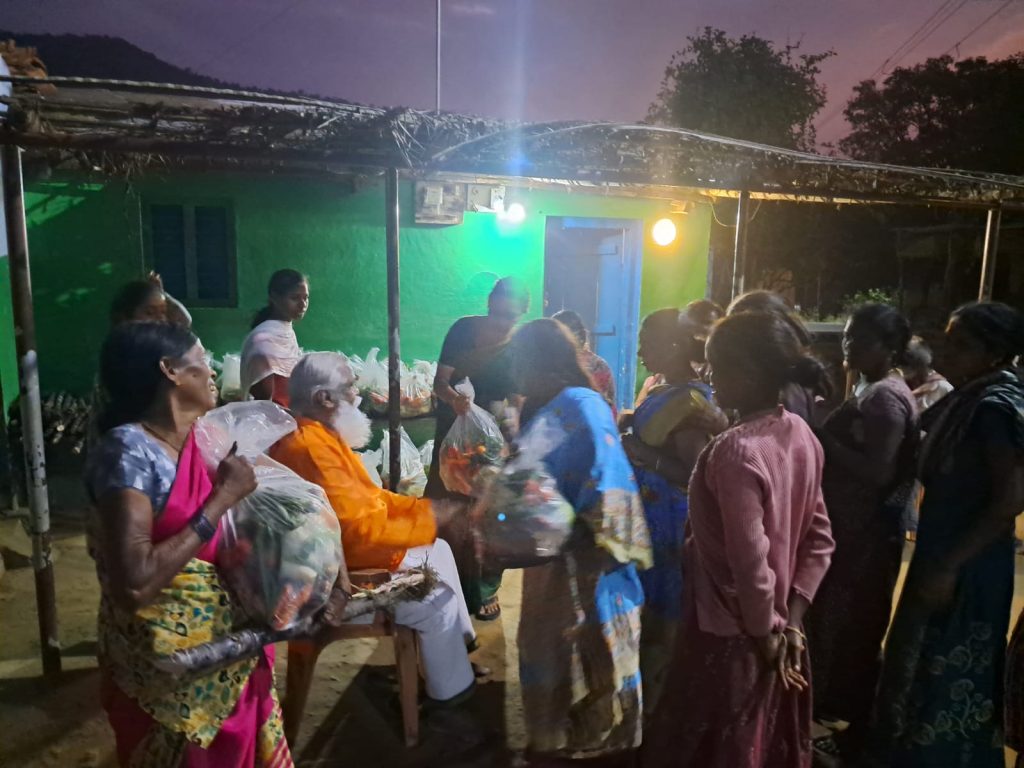
He continues, “I have adopted three villages. By ‘adopted,’ I mean I give them moral, emotional, and intellectual support – more than just monetary help. I celebrate the Pongal festival with them. Whenever I visit, I take vethala paaku (betel leaves and nuts) for all the elderly women, and chocolates for the children. Over the past three years, these small gestures have made a difference. I can see the change in them.”

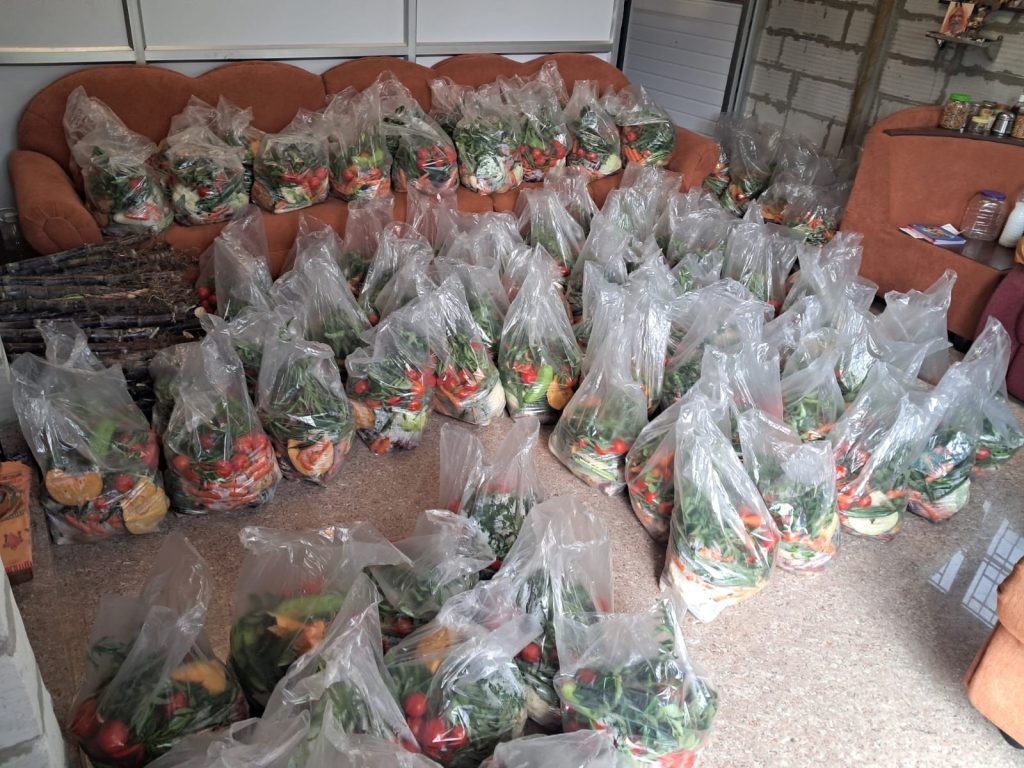
This year for Pongal, he gifted them a bunch of vegetables. Generally one ton of veggies are bought for distribution during Pongal at the adopted tribal villages.

Here are some videos of him giving gifts to the women and children during various festivals such as Karthigai deepam, Deepavali etc.

Explaining why people from cities need to build relationships with the indigenous people, he said, “They want, they need, yet they lack emotional connection with the mainstream. They still see themselves as separate from it—even the children. Society has not helped. People donate money and walk away, without building any real relationship. Even when funding is available, there is no genuine engagement. In many cases, middlemen siphon off most of the funds. That is why I am here—to bridge the gap and ensure real integration, not just token gestures.”

He further said, “By saying all this, I want to stress that any society becomes a true society—woven into a proper fabric—only when emotional and intellectual well-being are nurtured. Without that, it becomes a societal problem. In earlier times, kings took care of all aspects of their people’s well-being. Today, in our hurried society, emotional well-being is neglected. People themselves often lack it, so they cannot give it to others. How many of us pause to talk to a stranger on the road, in the park, or in the lift? Very few. Unless we interact, people—especially these communities—will never know they belong.”

Taking pride in his team, he said, “In July 2025, they achieved their highest sales of Rs 1,30,000 all by themselves – without my support. 

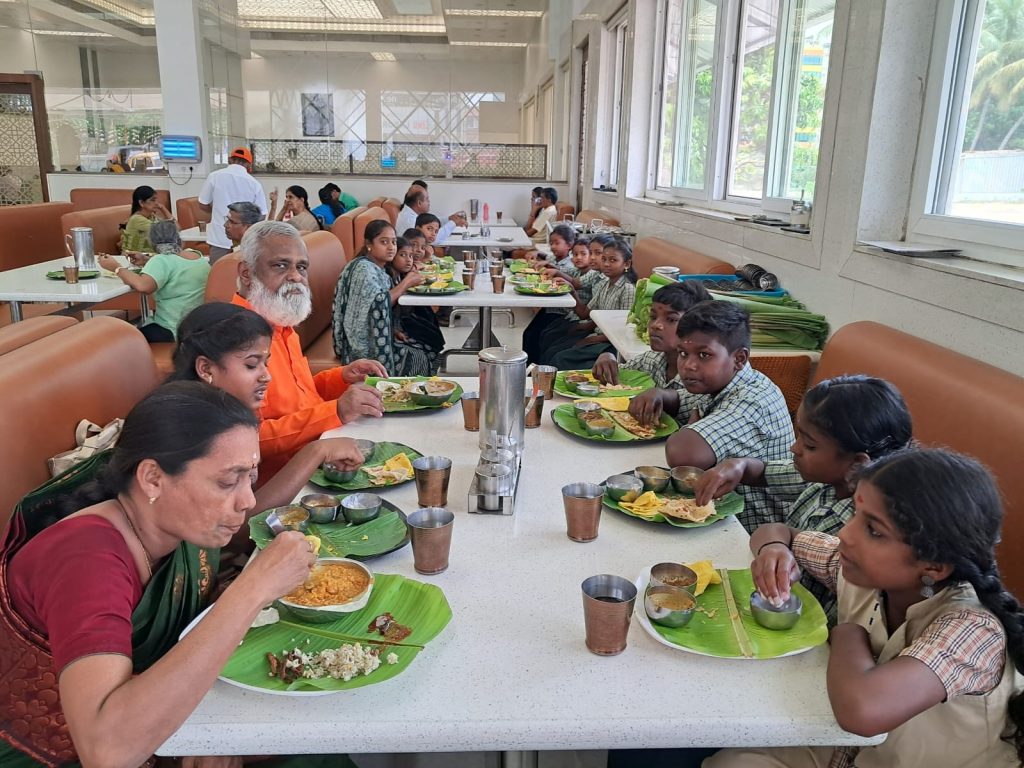
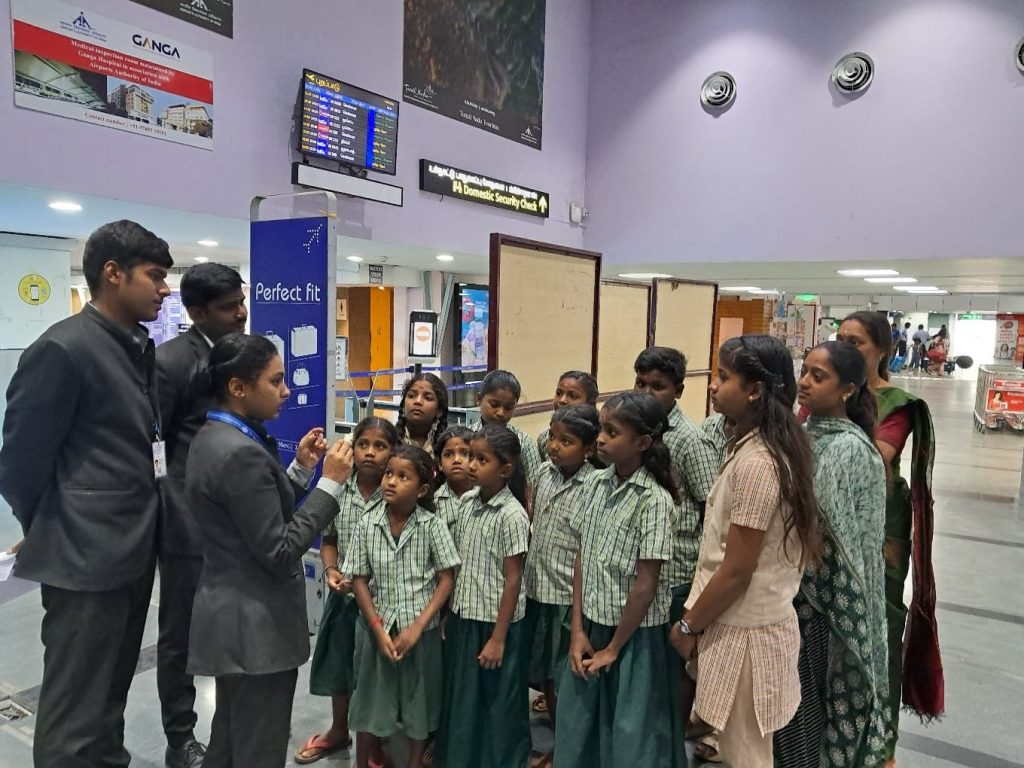
Some of the other gestures that Dr Soundararajan has indulged in include taking the tribal children to the airport, taking them for lunch in a city restaurant,

Practical Interventions, Cultural Preservation

Over the years, he has started cafeterias run by tribal women, trained them to make and sell herbal products, and introduced moringa soup to schoolchildren to fight anemia. He celebrates Pongal with sweets for the children and firewood for the elderly. He has taken tribal women on airplanes for the first time, changing how they see themselves forever.

He also urges them: Change your clothes, your house, your income… but don’t change the form of your heart, don’t change your ancestral feeling.

At weddings, he delights in their tradition: the groom in a hunter’s costume, bow and arrow in hand, facing east to shoot before being garlanded by the bride. “How many of us in cities remember such rituals?” he asks. Despite being in abject poverty, at one particular village he went to, the people asked him for a harmonium, dholak, ganjira so they could perform Harishchandra Katha. 

An Invitation to All of Us

Dr Soundararajan’s vision extends far beyond Anaikatti. He dreams of 52 families — from India and abroad — each “adopting” a set of villages, spending a week a year there, living with the people, building real relationships. “It’s not the money alone,” he insists. “It’s the presence.”

His plea is heartfelt: “Please spend at least one week with a tribal village. The knowledge you gain will never come from books.”

Speaking about how all humans on this land are interwoven, he said, “Everyone should look at society as a fabric. A fabric is made of fibres, and its sheen, shine, strength, design, and beauty all depend on the weaving. The weaving is important. In society, we too must be interwoven for the societal fabric to be strong and sustainable. We cannot leave out or isolate any part of society. Nature shows us this truth; it accommodates everything. There is value in everything: from piglets to mosquitoes, from honeybees to rockets, from trees to anything else you can think of. Everything has a meaning and a purpose. The world today is in a hurry. People may call it speed, but speed without control is just haste. Speed with control – that is true speed.”

Living Simply, Giving Fully

Dr Soundararajan lives by example. He has given his eight-bedroom home in Chennai to his family, sleeps on the floor in a small room, owns only a veshti and shirt for daily use, and keeps no health insurance. “I submit everything to the Lord. My needs are minimal.”

His work costs him — over ₹1.5 lakh a month in salaries, electricity, welfare and food for those he supports.  — but brings him immense returns in human affection. “They think of me more than I think of myself,” he says quietly. 

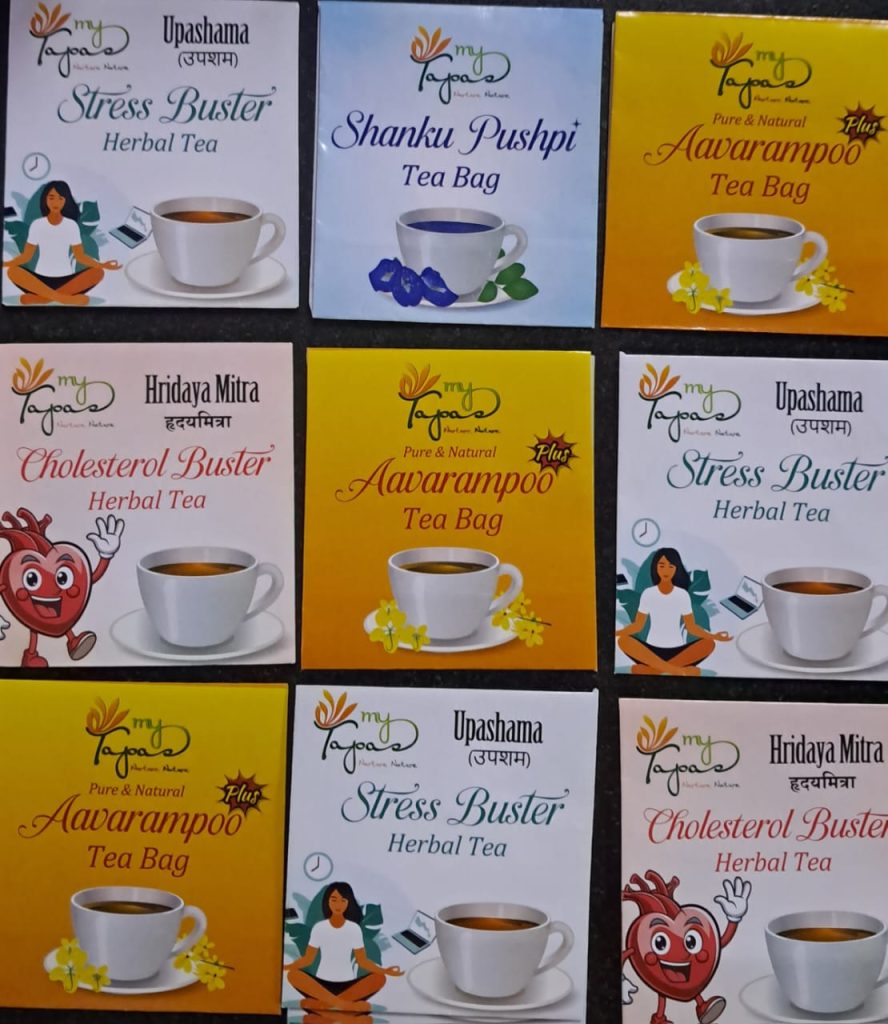
Today, the venture My Tapas sells everything organic, from jams to herbal soup mixes to organic pickles, organic honey, spices, and terracotta kitchenware. The most recent offering is herbal teas. (insert pic) Marketing is almost non-existent; products sell only if someone chooses to support.

This venture and the women working there was mentioned by PM Modi in his Mann Ki Baat episode in October 2022. PM Modi praised how the women do all the work in the terracotta factory – handling every step from processing to final packaging themselves.

The Hindu Civilizational Connect

He also pointed at how the indigenous people are truly rooted to our Hindu culture. He says, “In the setup, I placed a picture of Perumal (Vishnu), and they now perform all the pujas themselves. On Fridays and Saturdays, there is Rama Nama chanting—not mandatory, but it creates a sense of connection. If we consider our epics, even hunters and boatmen were brought into society through such traditions. Society and leadership are vital. Rama himself can be seen in many ways – as a king, as God, and more. But here, these tribal people lack basic skills; they don’t know how to cook on a gas stove, only on traditional stoves, and often won’t use a gas stove even if given one. We have failed them as a society and must buck up.”

He further says, “In one place, the villagers have a small temple. When I first went there, it was completely dark. Inside, bricks were stacked one on top of another without even a little cement or coating. Within stood a stone, a Nandi, and a Ganesha. When asked what they want, they said they want a light for that temple. Imagine, in that poverty, I thought of how they longed for just one light in the temple. Despite their poverty, their torn clothes, their leaking houses, and having no clean place to sleep during the rains, they still felt bad that there was no light in the temple. How can my devotion ever match theirs? Their faith is so deep, and it makes me reflect on myself and how much these people truly value what matters. People should understand and relate to this.”

Why You Should Care

Dr Soundarajan wants his team, the tribal women, to be self-dependent or rather atmanirbhar – self-reliant like PM Modi advocates. When asked how relevant it is to the country and the peoples, in his own words, he says, “Country is nothing but people. People’s vision makes the country. Without values and care for others, it’s just landmass.”

Meeting Dr Soundararajan is to be reminded that one life — lived simply, given fully — can restore hope in many others. His work in Anaikatti is not just about rescuing individuals from poverty’s grip; it’s about weaving them back into the fabric of a society that has too long overlooked them. He also adds, “I was able to change the perspective and empower a village, if I could do that, many more able people can do wonders and reach a lot of these indigenous people. All they need is someone to listen to them, talk to them, and show that we care. Only if you celebrate the relationship, it’s a relationship. Otherwise, it’s just a formal relationship.”

And that is why this story ends not with applause, but with an ask. If you are moved, help him. Visit, mentor, fund a project, or spend a week in a village. Buy their products, spread word and stand with the women of Anaikatti as they reclaim their dignity and dreams – because in lifting them, we lift ourselves. 

Subscribe to our channels on Telegram, WhatsApp, and Instagram and get the best stories of the day delivered to you personally.
BR Gets Roasted For Doing PR For Coolie Disaster

baddy baradwaj rangan br coolie review coolie disaster

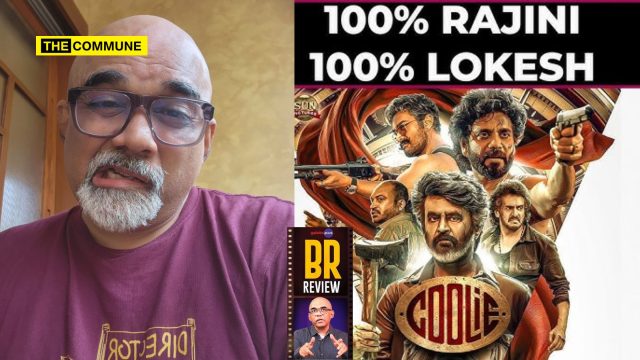
Renowned film critic Baradwaj Rangan, aka BR, known for his insightful and balanced reviews, has come under fire for his glowing assessment of Coolie, the latest Rajinikanth-starrer directed by Lokesh Kanagaraj. His review, which hailed the film as “100% Lokesh Kanagaraj, 100% Rajinikanth,” praising its “dignity” and “clean screenplay,” has been met with severe backlash from audiences who found the movie messy, illogical, and far from the cinematic masterpiece Rangan made it out to be.

The Controversial Review

Rangan’s review, posted on Galatta Plus, called Coolie a “perfect 50th-anniversary present” for Rajinikanth, applauding Lokesh for giving the superstar a “dignified” role. He praised the film’s restrained mass moments, strong screenplay, and Rajinikanth’s performance, even comparing certain sequences to Lokesh’s previous hits like Kaithi and Vikram. He claimed the film was “properly packaged mainstream masala” with “clean writing and making,” dismissing concerns about logic gaps as irrelevant in a star-driven spectacle.

However, audiences who watched the film found Rangan’s review shockingly disconnected from reality. Many pointed out glaring plot holes, underdeveloped characters, and a lack of emotional depth, issues that Rangan conveniently ignored.

It is worth noting that over the past few weeks, Rangan had been interviewing the Coolie team – Lokesh Kanagaraj, Shruti Haasan etc.

Audience Backlash: “BR Stands for Biased Rangan”

The comment section of Rangan’s review exploded with criticism, with viewers accusing him of being a “Lokesh fanboy,” a “PR mouthpiece,” or even worse, a paid promoter. Some of the most scathing reactions included:

“I was waiting for BR to say ‘Just kidding’ at the end.”

“This clearly seems a SunTV sponsored review.. Should have put the disclaimer at the start.”

“BR lost his Dignity by trying to save Superstar dignity.”

“14th August 2025, the day BR lost the respect he gathered over years.”

“This is exactly how you lose trusted subscribers. I think Bharadwaj saw a different movie altogether.”

Many pointed out the film’s numerous logical flaws, such as Shruti Haasan’s sudden connection to Satyaraj’s character, the abandoned smuggling subplot, and the baffling train sequence, that Rangan completely overlooked. One frustrated viewer wrote:

“What’s the bad blood between Satyaraj and Rajni that warranted Shruti throwing a fit at the funeral? Where’s the importance of the luxury watch/smuggling angle that was hyped in the first 10 minutes? WTF happened to that electric chair? All these questions are staring right into the audience, and you say this is a CLEAN screenplay. Ennada dark humour ithe?”

Accusations of Paid Promotion

Adding fuel to the fire was the YouTube tag on Rangan’s video stating, “This includes paid promotion.”

Viewers immediately questioned his credibility, with comments like:

“Dude, if you’re sponsored by the film, how will it be an unbiased & fair review?”

“How on earth a movie review can be sponsored by the movie itself? You have completely lost the respect here, sir.”
“Paid promotion, BR is slowly turning out to be the Taran Adarsh of Bollywood Hungama type reviewer. Epic fall.”

Some even joked about Rangan being held at gunpoint, with one user quipping: “Bro, blink twice if you’re at gunpoint.”

Fall from Grace?

For years, Baradwaj Rangan was considered one of the most trustworthy critics in Indian cinema, known for his nuanced takes. However, his Coolie review has left many questioning his impartiality. One disappointed fan lamented, “Genuinely didn’t expect this full-fledged biased review by the best reviewer of our country! I guess every reviewer nowadays is trying to please the makers & the fanboys! This review of yours is a huge disappointment for cinephiles, sir!”

Another added, “From my most favourite movie reviewer to my least favourite in one video.”

Final Verdict: A PR Disaster

While Coolie itself has divided audiences, the bigger disaster seems to be the erosion of trust in a once-respected critic. Whether Rangan’s review was genuine admiration or a compromised take, the backlash suggests that audiences are no longer willing to accept sugar-coated assessments, especially when they contradict their own viewing experience.

As one viewer aptly put it: “The fake BR review disappointed me more than watching Coolie did.”

For now, it seems Baradwaj Rangan’s reputation has taken a serious hit – one that might take more than a “dignified” defence to recover from.

Subscribe to our channels on Telegram, WhatsApp, and Instagram and get the best stories of the day delivered to you personally.