Home Blog Page 1707

Oz and Nz leading the fight against Chinese virus

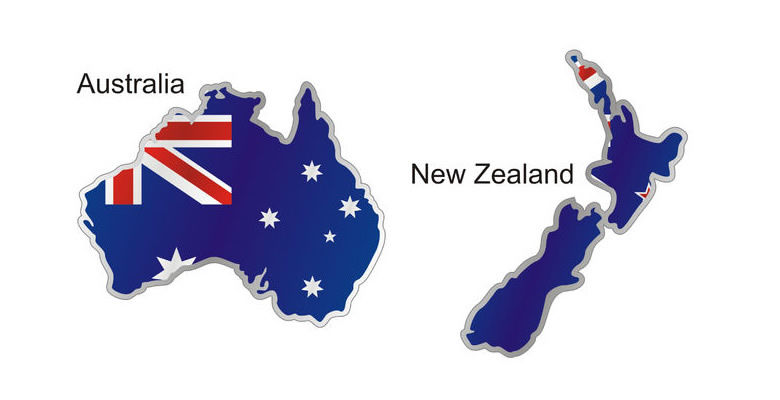
The 2 pacific nations had the advantage of time in taking early measures to contain the pandemic. Australian PM Scott Morrison called the situation a pandemic 2 week before WHO did.

While the US and other European countries are overwhelmed with huge number of COVID-19 cases, Australia and New Zealand have been successful in suppressing the outbreak. They have not just managed to flatten the curve but are looking towards eliminating the virus from their countries. On of Friday, New Zealand reported just 5 cases while Australia reported 14. The total number of confirmed cases as of 24th April stands at 1121 in New Zealand and 6703 in Australia.

Australia with its conservative Christian Prime Minister Scott Morrison and New Zealand’s Jacinda Ardern, a darling of the left, has done nothing extraordinary. They have just enforced the norms of social distancing through strict lockdown measures. Mr. Morrison banned travellers from China from February 1 and called the outbreak a pandemic 2 weeks before the World Health Organization (WHO) did. He had formed a special cabinet comprising of federal and state leaders to take measures and guide the response. On the other hand, New Zealand which has a centralised polity, went in for a total lockdown less than a month after the first case emerged in the country. Both countries had the advantage of time as the first case in Australia was reported on January 25 while New Zealand reported its first case on February 28.

The public in both the countries resisted initially against the tough lockdown measures. However, effective communication and information flow at all levels of the government ensured that the people complied.

TN develops app that allows home quarantined corona cases to consult docs

A team of young professionals headed by Kovai Sathyan have come up with a technology driven solution to fight corona. The app is currently under beta testing and is expected to be rolled in the next few days.

A team of professionals from Tamil Nadu have developed an app that allows home quarantined corona cases to stay in touch with doctors.

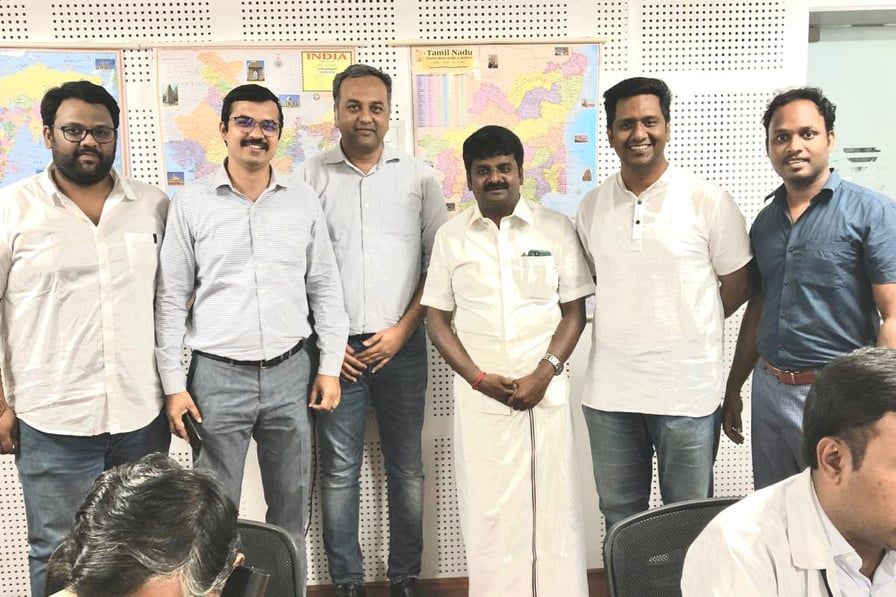
The team headed by AIADMK Spokesperson Mr. Kovai Sathyan and comprising of IT professionals who were earlier part of companies TCS, Cognizant and a few others have been working day and night for the past 8 days to come up with a technology driven solution to address the corona virus crisis in the state.

Mr. Sathyan who was also the former State Joint Secretary of the IT wing of the party mentioned that the app lets the home quarantined corona suspects to fix an appointment for a video call with a nearby doctor. Based on an ‘appointment-based framework’, the app enables a video call button 15 minutes prior to the appointment. There is a chat box that lets the patient to chat with the doctor. The app also has a SOS button that sends an immediate alert to the control centre in the district. Doctors can also prescribe medicines which will be delivered to the nearest pharmacy.

There is a control centre based in Chennai and control centres at all districts of Tamil Nadu has been set up to handle the efforts.

As of 21st March, there are 8950 persons under home quarantine for 28 days and are being monitored by the state government. Details of those under home quarantine have been fed to the app.Those who are kept under home quarantine cannot come outside due to the risk of community spread. It is also a risk for doctors to see them in person at their homes.

When asked why develop an app when there are already platforms that support video calling, Mr. Sathyan says that there are practical difficulties with using existing platforms like Whatsapp or Facebook as it requires maintaining a list of phone numbers and saving the number of the patient/doctor. He said that people in Jammu&Kashmir and Ladakh tried using Whatsapp video calling to contact doctors and encountered this problem. He also adds that tracking their data and analysing it also becomes difficult as such calls go unreported.

The app is currently under beta testing and is expected to be rolled out soon in the next few days. Mission Director K Senthil Raj has been coordinating the efforts between the team and the state government. Health Minister C. Vijayabaskar later in the day, examined the app in the presence of media.

Realizing that those under home quarantine also face psychological stress, Mr. Sathyan said that efforts are on to bring psychological counsellors on board as well.

Mr. Sathyan says that as soon as WHO declared COVID-19 a pandemic, Chief Minister Edappadi K Palaniswami and Health Minister C. Vijayabhaskar started looking for solutions that will contain the spread of the virus in the state. “Tamil Nadu government has been proactive and is working on a war-footing to fight corona”, he says. Mr. Sathyan urged people to stay indoors for the coming days, not panic, and help the government in its efforts to contain the spread.

Prime Minister Narendra Modi on March 16 urged people to share technology-driven solutions to mygov.in to combat corona virus in the country. The government has started the COVID-19 ‘Solution Challenge’ on the mygov.in platform, where individuals and companies can share their ideas for strengthening the fight against coronavirus, Winners stand a chance to win Rs 1 lakh.

As they say, necessity is the mother of invention!

With USFDA approval for generic Indian drugs, Indian pharma companies can now strengthen their presence in the US market

The COVID-19 has come as a blessing in disguise for Indian pharma companies that were earlier prohibited from entering US markets due to the stringent protective stance of US Food and Drug Administration.

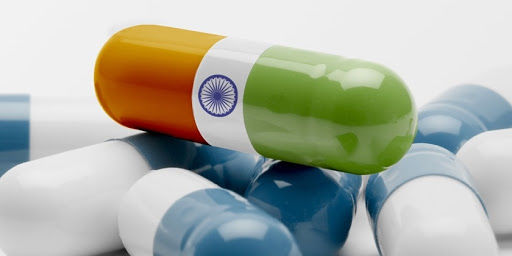
In a noteworthy sequence of events, the United States Food and Drug Administration (USFDA) has given the nod to Indian pharmaceutical companies to market their generic versions of essential and life-saving drugs in the United States of America. This comes after India’s decision to ease export restrictions on hydroxychloroquine to the US. Hydroxychloroquine is an antimalarial drug which, in combination with the antibiotic azithromycin, has shown some efficacy in treating the COVID-19 disease.

Cipla, a leading drug manufacturer in the respiratory-illness segment, said that it had received final approval from the USFDA for its product – Albuterol Sulfate inhalation aerosol – on Thursday. The product is the generic version of Merck Sharp & Dohme Corp’s Proventil HFA inhalation aerosol and is used in the treatment of bronchospasm and prevention of asthmatic symptoms. In a statement, Cipla said that it plans on shipping the product to the US in a staggered manner.

Lupin too has a filing for Albuterol pending with the US health regulator, and it is expected that the USFDA might prioritise the approval.

Granules India said, also on Thursday, that its foreign subsidiary had received approval from the USFDA for Butalbital, Acetaminophen and Caffeine capsules used to treat tension headaches. Granules India’s products are the bioequivalents of Butalbital, Acetaminophen and Caffeine capsules of Nexgen Pharma.

Zydus Cadila on Thursday said in a statement that it had received final approval from the US regulatory body to market generic Perphenazine tablets, used in the treatment of schizophrenia, and in controlling severe nausea and vomiting in adults. On Friday, the firm got a tentative approval from the USFDA to market generic Empagliflozin tablets, used along with diet and exercise in controlling Type-2 Diabetes Mellitus and reducing the risk of cardiovascular death among adults. The pharma major is also a manufacturer of hydroxychloroquine.

Aurobindo Pharma also received an approval from the USFDA on Thursday to market Fluoxetine tablets in the US, which are generic versions of Eli Lilly’s Prozac tablets. This anti-depressant medication is also used in the treatment of binge-eating and vomiting behaviours in adult patients with bulimia nervosa and obsessive-compulsive disorder (OCD) among pediatric patients.

US pharma sector dependent on China

The US pharmaceutical industry relies heavily on Chinese suppliers and manufacturers, and there were concerns that in the wake of the pandemic, China might seek to weaponize its dominance in the pharma supply chain.

Indian drug manufacturers now have a unique opportunity to become premier pharmaceutical suppliers to the US, the European Union and other nations. Will China’s chokehold over the world’s pharma sector be loosened? Will India play a part in this? Only Time will tell.

ISRO invites proposals for human space flight missions

Proposals in 17 potential areas of work for the human space flight mission are being invited from national research and academic institutions.

The Directorate of Human Space Programme of Indian Space Reseach Organization has called for proposals to develop indigenous technologies for its human space flight missions to happen in the future. The proposals can belong to any domain that make life easier for astronauts in space like food and medicines, inflatable habitats and other life support systems to robotic interfaces, anti-radiation and thermal protection technologies for space crafts.

There are totally 17 potential areas of work for national research and academic agencies, the announcement of opportunity (AO) issued says. The AO mentioned that there was a need for developing local technologies that will support humans in low earth orbits initially and in bigger missions later. The last date for submitting the proposals is July 15, 2020. The proposals would be scrutinized by a selection committee of Directorate of Human Space Programme.

“This opportunity will enable national and research/academic institutions to harness their expertise and capabilities towards development of technologies for space exploration”, the announcement read.

The ISRO in 2018, announced the Gaganyaan Mission – India’s maiden crewed orbital space craft programme. ₹The project costs 10000 crores. Three members of the Indian Air Force are undergoing their training in Russia for the mission.

Facebook to buy 9.9% stake in Jio Platforms

With Jio having a subscriber base of 388 million and Whatsapp having more than 400 million users in the country, their combined partnership is about to connect small business and consumers

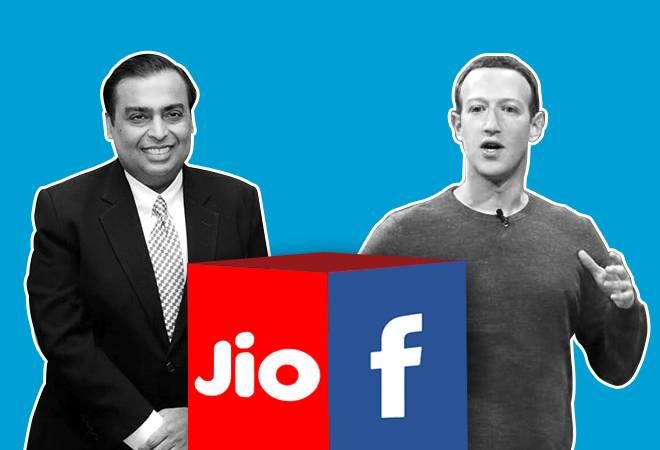
On Wednesday, the social media giant Facebook Inc. agreed to buy 9.9% stake in Mukesh Ambani’s Jio Platforms Limited for ₹43,574 crores. The buying would require regulatory approvals from Competition Commission of India. This deal is being touted as the biggest strategic deal by a technology company anywhere in the world.

With Jio having a subscriber base of 388 million and Whatsapp having more than 400 million users in the country, their combined partnership is about to connect small business and consumers.

The move is also set to give some elbow room for Reliance Industries that has a staggering debt pile.

Facebook’s move at a time when the global economy is under the “Great Lockdown” gives out a message that India is bound to emerge from the crisis and embrace digitization at a never seen before pace.

“At the core of our partnership is the commitment that Mark Zuckerberg and I share for the all-round digital transformation of India”, Mukesh Ambani said in a video message.

“The country is in the middle of a major digital transformation, and organizations like Jio have played a big part in getting hundreds of millions of Indian people and small businesses online,” Zuckerberg wrote in his Facebook post.

RSS to the rescue: More than 11 lakh food packets delivered so far to poor and vulnerable in Tamilnadu

With Tamil Nadu being affected by the spread of Corona virus, many people including Government, volunteers and philanthropists are doing their best to help the poor. The Rashtriya Swayamsevak Sangh (RSS) too has been extending its support in these tough times across the country and even in Tamil Nadu.

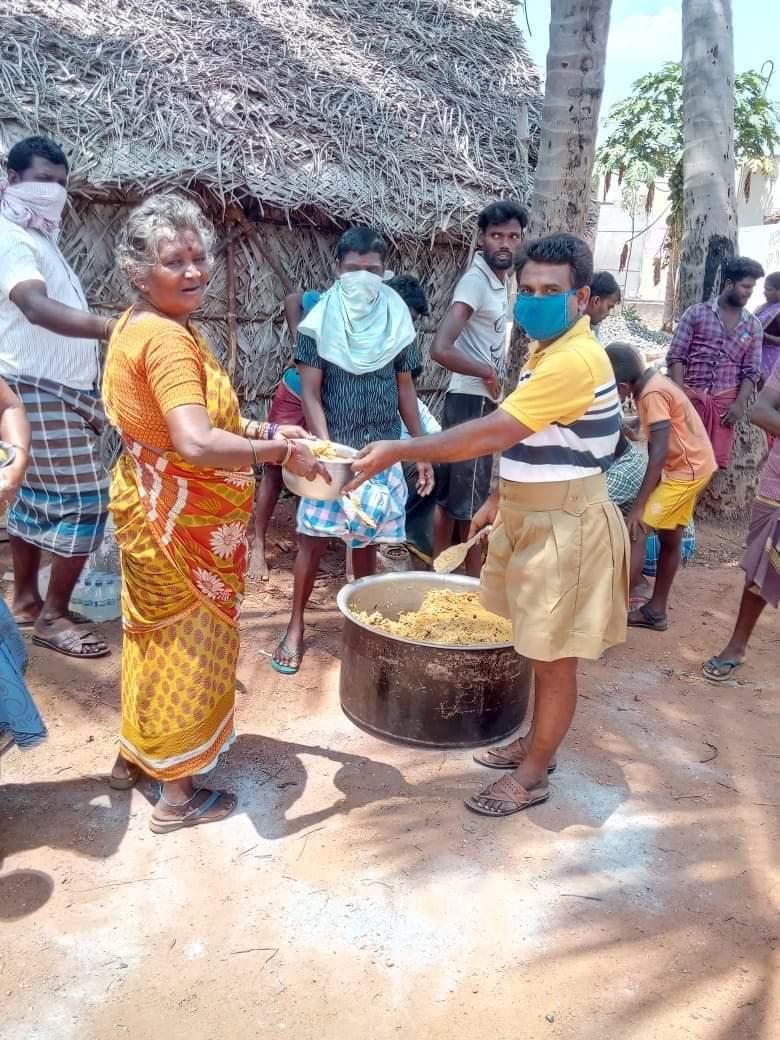
Thousands of Swayamsevaks are doing all kind of needed help in the rural areas of Tamilnadu. A collection of services rendered by RSS till April 24 has been released. Accordingly, 21,070 Swayamsevaks are doing field work in 4,652 locations of Tamil Nadu. So far, 4,26,665 ration kits have been issued. The RSS has provided 11,33,510 food packets for the poor and needy.

2,77,643 masks have been provided so far. Around 13,450 immigrant workers have been provided with various helps. So far 8,03,625 people have been provided with herbal drinks. 950 people have donated their blood. These are all the services done by the RSS and its branch organization in Tamil Nadu alone.

So far 55,725 locations has been served in India. 3,00,809 volunteers are doing field work all over the country. 33,75,664 ration kits have been issued and 2,16,82,540 food packets have been provided to the poor and needy across the country.

UP planning to bring migrant workers back to state in phases

The UP government is making detailed plans to receive and send migrant workers stuck in different parts of the country.

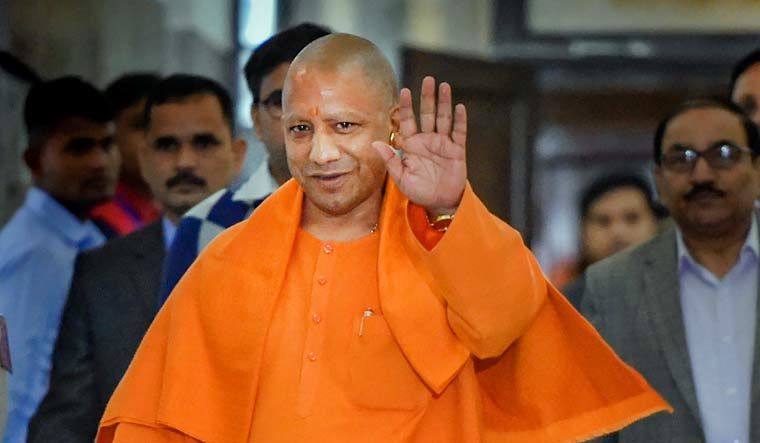
The Uttar Pradesh Government is making plans and arrangements to bring back the migrant workers stuck in other states who have completed the mandatory 14 days quarantined period. CM Yogi Adityanath on Friday ordered his officials to prepare a detailed plan to carry out the exercise in a high level meeting.

The government said that the concerned state government should screen and test such people and start the process of sending them to UP. They will be brought to Uttar Pradesh’s borders from where the state government would transport them to their respective districts. Mr. Adityanath asked his officials to make preparations for quarantining those returning to the districts for 14 days and sanitise their homes as well.

Parallely, the UP government is also making detailed plans to send back migrant workers working in UP to their home states having completed 14 days of quarantine in Uttar Pradesh.

Former scientist and ex-panchayat chief comes out with a low-cost disinfectant

Currently, he has designed the unit for two capacities – 25 litres and 210 litres

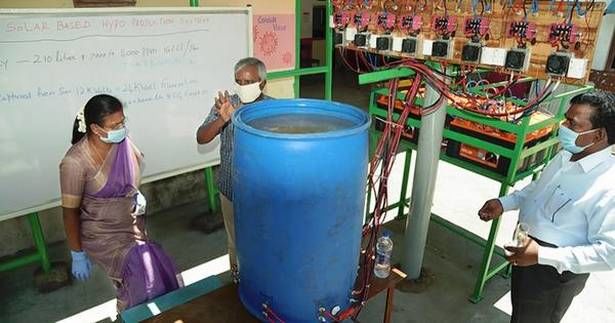
R. Elango, a chemical engineer by qualification, who was a former scientist at the Council of Scientific and Industrial Research and later served as the president of Kuthambakkam panchayat in Tiruvallur district has designed a unit that can manufacture sodium hypochlorite using solar power. Sodium Hypochlorite is the disinfectant used in various concentrations for different purposes.

Sodium Hypochlorite is usually manufactured in industries through the process of electrolysis in which electricity is passed through titanium electrodes immersed in salt solution. Mr. Elango says that his design can meet the increasing demand for the disinfectant.

Mr. Elango’s model consists of a barrel fitted with 2 electrodes is filled with salt water solutions of high concentration. Electric current generated through solar power is passed through the electrodes. In 8 hours, sodium hypochlorite solution can be obtained through the tap attached to the barrel.

Currently, he has designed the unit for two capacities – 25 litres and 210 litres. The input required is just 750 g of salt and 25 litres of water for one cycle.

What is hydroxychloroquine? Why was its export banned? Why lift the ban now? Is there more than what meets the eye?

It is being said that India has agreed to export the drug fearing ‘retaliation’ from the US. Read to know more.

Hydroxychloroquine (HCQ) is an anti-malarial drug which is used both as a preventive as well to treat acute attacks of malaria. It diminishes the immune system’s response over a viral infection. During a viral infection, the body’s white blood cells get into action to fight the virus and virus infected cells. Sometimes, the immune system gets triggered and starts attacking the good cells as well. This hyperactive response by the immune system is said to be the cause for pneumonia. What HCQ does is diminish this immune system’s response to the viral infection.

Research studies conducted in several countries like France showed that HCQ when taken alone or with azithromycin reduced the virus levels. This made drug regulators across the world (including the Drugs Controller General of India) to approve the drug in restricted settings.

The ban and its subsequent lift

On March 25, the Government of India placed put HCQ in the list of restricted items. Subsequently on April 4, it put a blanket ban on the export of HCQ. Usually, when the country is facing shortage or the demand for a commodity is more within the country, the government resorts to banning the export of the commodity and/or importing the same. An example of this was visible when there was a shortage of onions in Indian markets due to poor harvest. We banned the export of onions and also imported it from Egypt and Turkey. Meanwhile, the farmers came out with a good harvest in the next months which brought down the onion prices in the market. Once the demand and supply were stabilized, the ban on onions was lifted. Likewise, the drug manufacturers in India ramped up production to cater to the needs of the country. They say that they now have sufficient stockpiles of HCQ and have enough to export.

Reading between the lines

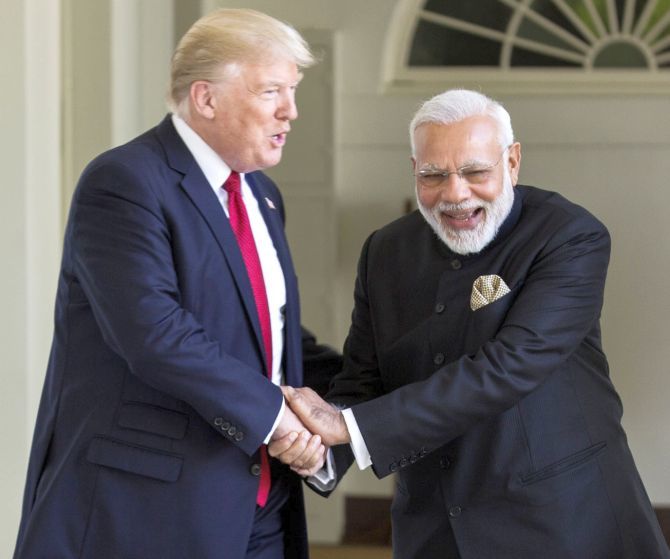
A moment of crisis is a moment of opportunity. For long, the US has been denying market access to Indian pharma companies. After the call between PM Modi and President Trump, the US Food and Drug Administration decided to lift the ban on Indian pharma products and companies. Now, Indian medicines would be available to American consumers which means more foreign trade and more money in Indian reserves.

This decision of India to export HCQ and paracetamol to not just United States but also to other neighbouring countries like Sri Lanka and Nepal is more than just a humanitarian gesture. From a strategic point of view, it secures India’s interests in these countries. A global pandemic caused by a Chinese virus and fought by Indian medicines would be an underlying message in strategic and geopolitical discourses.

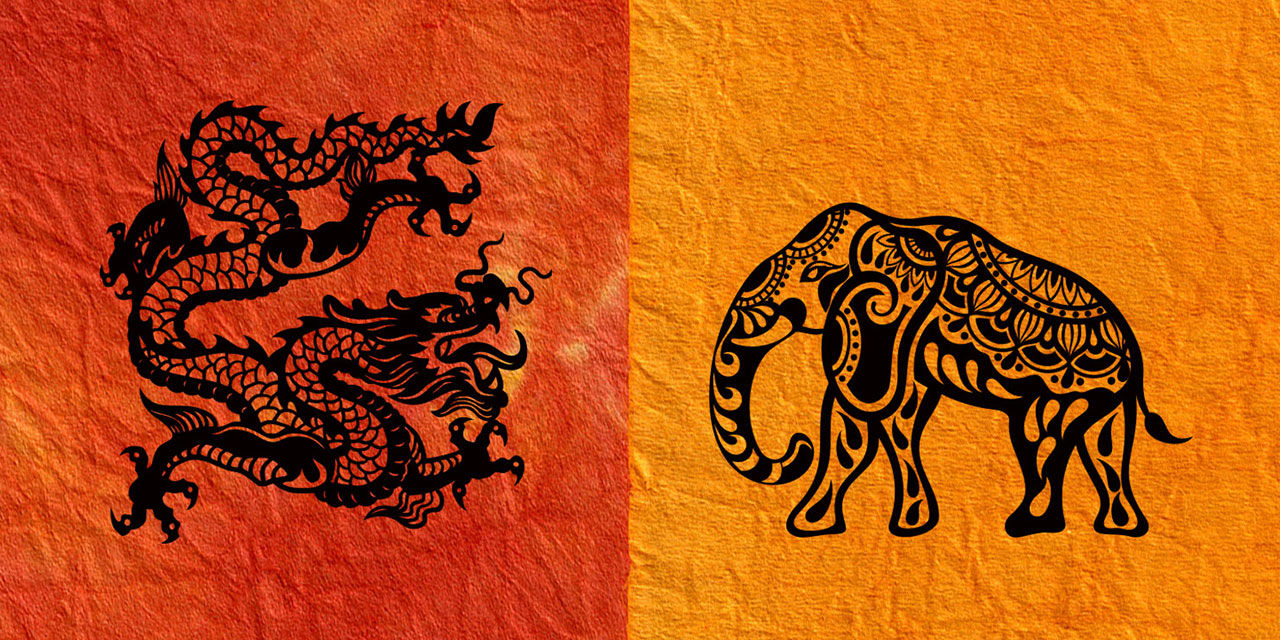
The Trojan Dragon and The Elephant

This is part 1 of the series of articles that will explore the long, twisted relationship between China and India. This is in the wake of the Dragon again coming bearing gifts, some of which may well turn out to be Trojan in the medium and long run.

The Dragon and the Elephant started as proverbial co-passengers in the late 1940s recovering after centuries of warfare, bloodshed and foreign occupations; but they both took divergent turns in History. One swung in the traditional way and experienced resurgence (after a massive purge) and the other took inspiration from what the Westerners preached (but didn’t practice) and is still trying to find its footing. Today the Dragon and the Elephant are overtly and covertly enemies, and this is their dance to the death.

China, under Jiang Zemin onwards (circa early 1990s), has achieved a near permanent strategic normalcy on its northern borders for the first time in over two millennia. In addition, it has had enormous economic growth for over four decades due to the quasi-alliance with the USA, which began in the late 1970s under the Nixon presidency and lasted till the end of the Obama presidency. The alliance and its perks were rewards for ending on the right side of the Cold War.

Today, we are entering the realm of fifth generation warfare, wherein the blur between public and private, war and peace, trade and gunboats has almost totally disappeared. A terrorist organisation is a weapon, and so is a media organisation or a social media organisation. It is here that China has taken a decisive lead vis-à-vis most nations. The genesis of this lies in the way the one-party dictatorship established by Mao, nurtured by Deng and now expanded by Xi behaves.

The Chinese Way

The Chinese students write an exam called The National College Entrance Examination (NCEE), informally called the Gaokao. This standardized test is a prerequisite for entrance into almost all higher education institutions at the undergraduate level and is the toughest exam in the world with maximum repercussions. It creates a chain of meritocratic leaderships dispersed liberally with CPC ideology and forms a formidable pyramid-hierarchy. Even if a few bricks crumble down now and then, the edifice remains strong as long as the majority of the constituents believe in the pyramid. Chinese hackers, who number around 100000 as per Foreign Policy magazine and human intelligence-gathering (HUMINT), have – as per the CIA and FBI itself – stolen almost all useful secrets in the last two decades out of the USA and smuggled them into China wherein they have used them to develop newer and better offensive & defensive weapons systems.

To paraphrase the Prussian general and military theorist Clausewitz, Cyber warfare is an extension of policy by actions taken in cyberspace by state actors (or quasi state actors) that constitute a serious threat to another state’s security.

The governments of USA, Canada, Australia, India as well as dozens of MNCs have witnessed first-hand the capabilities and prowess of the Chinese hacker army. Indians often wish our government also had the ability to retaliate online the way the Chinese or Russian hackers do, or even the ISI sponsored ones do, with their online anti-India propaganda using fake names and VPNs. Unfortunately, a democracy cannot attract or retain the talent needed to carry out such tasks unless it is a very wealthy one. Unlike India or even most other countries, the common applications such as Google, Facebook, Twitter etc which engage in data access and data mining are either downgraded or outright banned in China. Instead they have Baidu, Renren and Weibo. What this essentially means is that the “New-age Oil”, aka Data, is stored on Chinese servers located on mainland China and not farmed by servers in California. This results in a major advantage to the government at large and a minor disadvantage to law breaking citizens.

Modern China isn’t based on Communism or Maoism, to which it continues to pay lip service but on Han Ethno-Nationalism, Materialism and the promise to re-establish the semi-mythical Middle Kingdom.

The trade-off is that the ruling Oligarchy consistently delivers good economic growth with little inflation and very little turbulence. This in turn gives a massive advantage when it comes to information warfare, spying, technical espionage, hacking etc. Further, the Chinese communicating in Mandarin means even if the rivals are equipped with codes and hacks, they need to be equipped linguistically to decipher what they decode.

The nation that proudly claims that it’s the foremost IT hub and has revenues totalling nearly $200 Billion p.a. (over half of it from exports) has not managed to create even a single social or commercial APP which is even a national leader, leave alone world leader. The few like Flipkart have also been purchased by global cartels. The main reason why India lacks a homegrown internet ecosystem is due to lack of intent on part of the government, though the private sector is also to be blamed for resting too long on past laurels.

All economies and all major companies existing today have grown under the active protection of their national governments. So, the precedents exist for the Indian Government to create its own Internet based platforms and applications. The reason for the massive brain-drain of IT engineers is due to lack of home-grown opportunities for them, which is mainly due to lack of government support and private funding.

The Chinese Vassal Policy

In full blown laissez-faire capitalism, you get the piracy of the East India companies of Netherlands and England, which promptly is followed by Colonialism. The Chinese “vassal-policy” is just Colonialism with Chinese characteristics. Its usual modus operandi is giving a large loan to the “vassal” to build a colossal infrastructure project (which isn’t really required), then adding to the pomp and regalia of the ruling strongman with a few lollipops like a mansion or new weapons, and finally extracting usurious rates of interest from the “vassal” or taking over the said assets as military bases. This policy is rinsed and repeated at Gwadar of Pakistan, Coco Islands (formerly of India and now Myanmar’s), Hambantota of Sri Lanka (where a Rajapakse who is a China supporter is soon to return to power) and many others.

It is a well-known fact that the Chinese armed forces are the strongest in Asia and the second or third strongest in the world (after USA and maybe Russia). However, China’s strength lies in the fact that like Imperial Germany at the turn of the 20th Century, it has surpassed its two giant neighbours – Russia and India – in terms of manufacturing strength, industrial output and GDP. China is also a demographic powerhouse, unlike Imperial Germany which then feared Russia’s burgeoning demographics.

Western commentators often peddle two extremes, one that China will easily vanquish the USA and establish PAX SINA/PAX SINICA, and the other that China will collapse soon economically. Both these extreme opinions are just too farfetched. Even if we assume a Chinese economic collapse, the infrastructure is all state-built and state-controlled, as are most large manufacturing facilities. These will remain active, even if they become less profitable. But they can be potentially into weapons production centres quite easily.

A lot of commentators have paralleled the East Asian Scenario of the 21st Century as the repeat of the “Sleepwalkers of Europe” in the early 1900s, but they miss one key element – the modern reigning superpower doesn’t have a backup across the Atlantic to save itself if it lands in the soup. Furthermore, the USA itself is facing declining demographics and increasing chasms within due to the huge influx of migrants who have a different idea than the establishment’s idea of the PAX AMERICANA.

What lies in store

So, we come around to the key players of the upcoming potential conflict, on one side stands the resurgent Mr. Xi who has created a string of “vassals” and “puppets” in his quest to assure a secure supply of raw material for his country in times of conflict, and on the other side stand Mr. Trump who heads the world’s only Superpower and Mr. Modi. The undecided are the economic giant but militarily diminutive Europe, which is itself facing substantial demographic decline and potential economic disintegration, and the vast land power of Russia, which today has lesser citizens than the Tsar had in 1914. The swing players are the Islamist blocs of the Sunnis led by Saudi Arabia which mostly swings pro-USA and the Shia bloc led by Iran which mostly swings pro-Russia or pro-China. The unknown quantity is the African bloc. The tinder box is the Indo-Pacific region – the Indian Subcontinent, East Asia and South East Asia. All these factors are making for a very interesting and lively future ahead, though it may end up being terrifying.