Holy water and soil from the Srirangam Temple, Cauvery, Dhanushkodi and Kanyakumari sent for Ram Mandir Bhumi Pujan
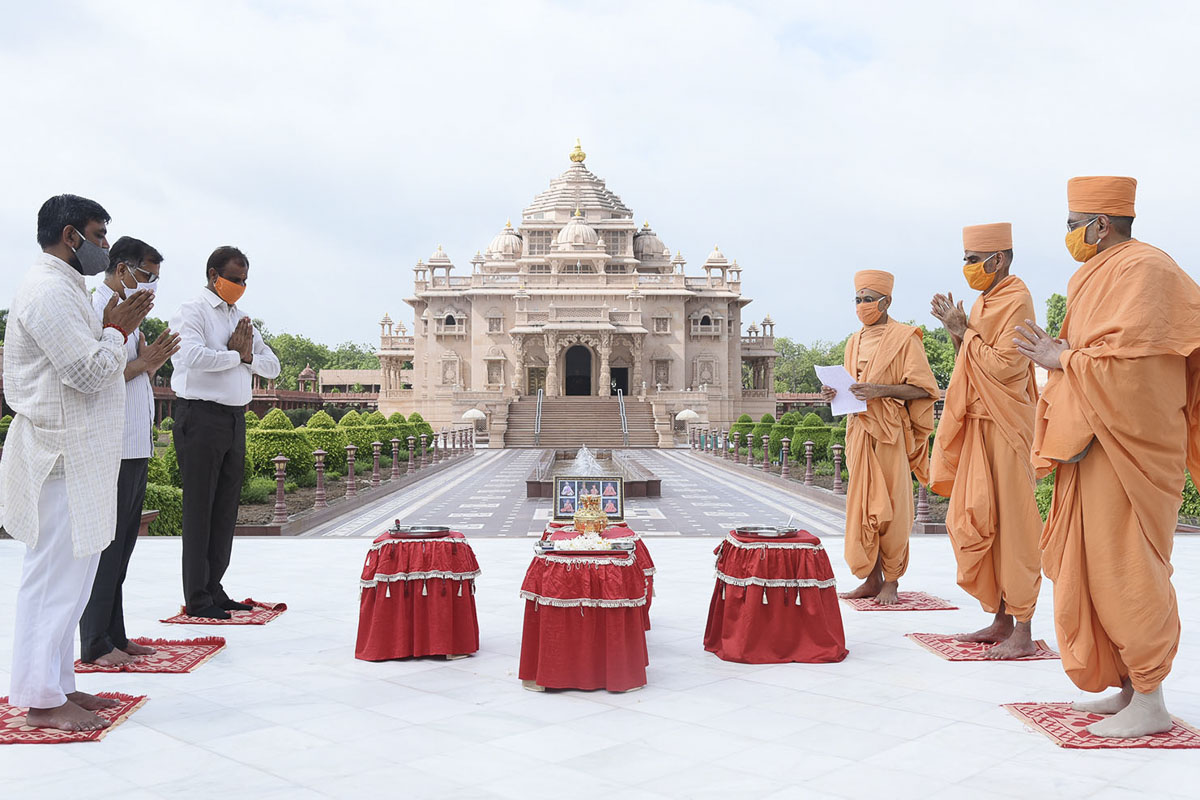
Holy water from the Triveni Sangam in Kanyakumari and water from Cauvery river as well as sacred soil from Srirangam’s Ranganathar Temple have been sent to Ayodhya’s for the Ram Mandir Bhumi Pujan to place on August 5. Special Prasad is also to be sent from Srirangam to Ayodhya.
As per legends, Dhanushkodi is the place where upon Vibhishana’s request, Lord Ram destroyed the Ram Setu with his bow after rescuing Goddess Sita, giving it the name Dhanushkodi. Rameshwaram is also a famous pilgrimage town for Hindus, where the Ramanathaswamy Temple is located. The presiding God here is Lord Shiva, where Lord Ram is believed to have prayed after slaying Ravana, a devotee of Lord Shiva.
Puranic stories mention that after the war, Lord Ram had presented Vibhishana an idol of Sri Ranganathaswamy to worship in Sri Lanka. Vibhishana had kept the deity of the Lord on the banks of river Kaveri on his way to Sri Lanka. It is believed that Vibhishana hadn’t been able to lift it back following which he had been blessed by an apparition of Lord Ram. The blessing had been that he would always be in a reclining posture, looking towards the South to bless Sri Lanka.
These geographical connects with Lord Ram are the reasons for sending soil and water from these holy places.
“Periyarist” and porn filmmaker Velu Prabhakarn arrested
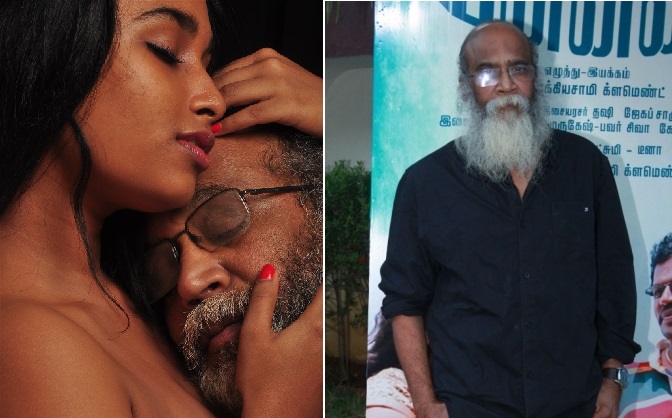
Adult filmmaker Velu Prabhakaran who is also an ardent follower of E.V. Ramaswamy Naicker (known as Periyar by his followers) was arrested by the Central Crime Branch on Friday for denigrating Kandha Sashti Kavasam and spewing venom against Hindus and Hinduism.
Velu Prabhakaran in an interview had slandered Hindus and Hinduism for following their faith and also spoke in support of Karuppar Koottam, the youtube channel that had put vile and abusive videos against Hindu Gods.
A case was registered after complaints were filed by members of BJP Tamil Nadu and Hindu Makkal Katchi at the Chennai Police Commissioner’s office. He was arrested on Friday morning from his residence in Maduravoyal.
He has been booked under sections 153 (Wantonly giving provocation with intent to trigger riot), 153 A(1)(a)(Promoting enmity between completely different teams), 295(A)(Deliberate and malicious acts, meant to outrage non secular emotions), 505(1)(b)(Whoever makes, publishes or circulates any assertion with intent to trigger, or which is more likely to trigger, concern or alarm to the general public) and other relevant provisions of the Indian Penal Code.
Mike Pompeo releases 2021 State Budget request for the US, lauds India’s move to ban Chinese apps
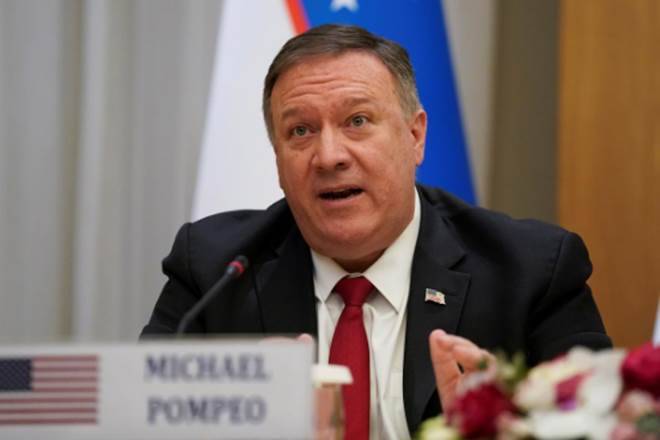
Michael Pompeo, the Secretary of State for the United States presented the Budget Request for the fiscal year 2021 before the Senate Foreign Relations Committee on Thursday. He had requested 41 billion dollars for the State Department and USAID, to protect US citizens, increase American prosperity, and advance the development of Democratic societies. He claimed that this reflected a commitment towards the strategic and efficient use of resources to provide better results for the American people.
Pompeo added that the Trump administration placed its founding principles in the core of American diplomacy. He said that they had done it by securing American people freedoms against authoritarian threats during the pandemic. He went on to say that the administration has also helped their friends across the world to secure their “unalienable rights”. Notably, the State Department’s FY 2021 request for the Global Engagement Centre is double its current level.
He made references to the Iran incident, the Crimea declaration and United States support to Ukraine in his speech. He mentioned how countries like India and its other allies have responded with the same diplomatic strategy as the United States to China, lauding India’s banning of 106 Chinese apps that had posed a threat to national security.
SoS Mike Pompeo minced no words and said that China’s claim for real estate in Bhutan and the incursions in India are indicative of Chinese intentions.
“They are testing, they are probing the world to see if we are going to stand up to their threats and their bullying.” Mr. Pompeo said.
He commented about the reinvigoration of the Quad, saying that these multilateral efforts have caused a crackdown on China’s threats to these countries. He concluded by saying that the proposed budget reflected all of these efforts, and hence, a 20% increase from the 2020 request for foreign assistance to the Indo Pacific region was also included in it.
Pompeo: China's claim for "real estate in Bhutan, the incursions that took place in India, these are indicative of Chinese intentions. And they are testing, they are probing the world to see if we are going to stand up to their threats and their bullying.” https://t.co/u9wMYI7G7P
— Brahma Chellaney (@Chellaney) July 31, 2020
NEP 2020: A roadmap to Shikshit Bharat Sakshat Bharat

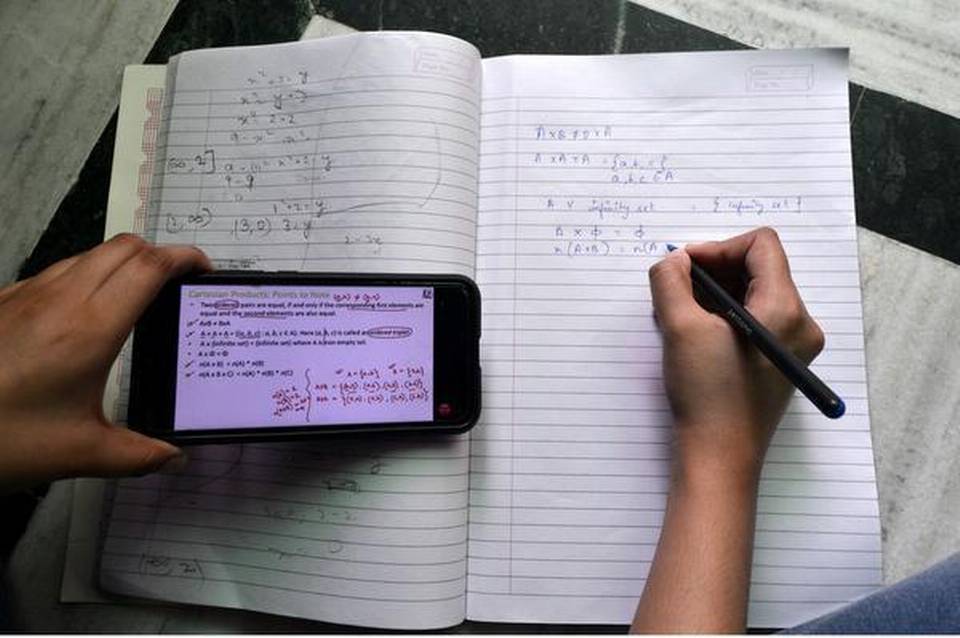
The Union Cabinet chaired by Prime Minister Narendra Modi gave its assent to the National Education Policy 2020 on July 29, 2020 paving way for the long awaited reforms in education sector. Congratulations are in order for TSR Subramaniam, Dr. K. Kasturirangan, Smt. Smriti Irani, Prakash Javdekar & Ramesh Nishank Pokhriyal and other experts for a comprehensive and forward looking National Education Policy that addresses some of the problems plaguing India’s education sector today. The policy outlines its key principles as ‘respecting diversity, localized curriculum, community participation, critical thinking, continuous review, conceptual understanding and extensive usage of technology. The NEP also puts a special focus on socially and economically disadvantaged groups (SEDGs. The policy as a whole comes out with different strategies to reduce differences category-wise in school education.
More Relevant School Education
NEP has transformed the curriculum and pedagogical structure, dropping the 10+2 model, and replacing it with 5+3+3+4, for foundational, preparatory, middle and secondary schools, respectively. In the new model, students can start taking vocational courses from class 6th onwards, and students from class 8th-12th will have an option to choose between subjects. Also, students of Grades 6th-8th will have a practice-based curriculum with internships with local vocational.
Elimination of single “high stakes” board examinations and a more regular formative assessment will relieve the students and their parents of the pressure associated with the board exams. High quality specialised content in multiple Indian languages and also curated from across the world to be made available for nominal fee in online repositories such as the National Digital Library will pave way for students to access content that hitherto remains expensive.
A New Dawn For Higher Education
NEP 2020 allows multiple entry and exit points in a higher education degree, enabling lifelong education, with an Academic Bank of Credit (ABC) for credits earned from various recognized institutions. By 2040, all higher education centres shall become multidisciplinary institutions and shall have thousands of student enrollments, for optimal use of infrastructure and resources. The abolition of hard separation of arts and science, as also curricular and extra-curricular activities is a welcome change that will allow students from different streams to pursue their interests without compromising. For example, a techie can also pursue their interest in music or history.
With the practice of setting up standalone universities for professional education set to be discontinued, the mushrooming of medical and engineering colleges at every nook and corner will be arrested.
Other elements like bilingual education (english and language) especially for lawyers and judges will of, common first two years for MBBS-BDS-Nursing, exit exams doubling up as PG entrance exam for medicine are some of the much needed reforms.
On the governance side, National Higher Education Regulatory Authority (NHERA) for governance, and the Higher Education Grants Commission (HEGC) for funding will be changing the ground for professional education.
Treating public and private institutions on par within regulatory regime and allowing world’s best universities to set up campuses in India and vice versa will be changing the higher education scene forever. Rashtriya Shiksha Aayog headed by the Prime Minister to oversee and implement the new education system shows the importance that the Prime Minister gives to education.
Promotes Multilingualism
Education in the home language/mother tongue, high quality textbooks in all languages is a suggestion that comes from research studies that shows that learning in a language that one is familiar with improves learning outcomes.
The three languages policy mooted in the NEP will further integrate the nation with students getting the opportunity to learn various Indian languages. Local language and dialects will also be rejuvenated.
Education in Accordance with Bharathiya Values
Study of Indian languages like Sanskrit, Tamil, Telugu, Malayalam, Odia, Pali, Kannada, Persian, Prakrit and its rich literature, inclusion of music and art, local folk music and instruments into pre-school and schools, taking up at least one art for deeper study, interaction with local artists and crafts persons will instill a sense appreciation for Indian arts and culture. These are vital for making our civilisational values vibrant and resurgent.
Course on critical issues facing the community, country and world for all students in grades 7-8 will help create a nation of aware citizens. Exposing students to basic human and constitutional values of satya, seva, ahimsa, nishkaam karma will create human capital with ethical values, much needed for the current world.
Need to put policy to practice
These dramatic changes will involve raising education budget to 6% which has been only a promise since 1948. The NEP 2020 includes a detailed with a 40-year timeframe for its implementation, with the initial years focusing on creating frameworks and preparing the field. What is needed is for the policy to be put effectively into practice.
Galwan heroes to honoured with their names inscribed on National War Memorial
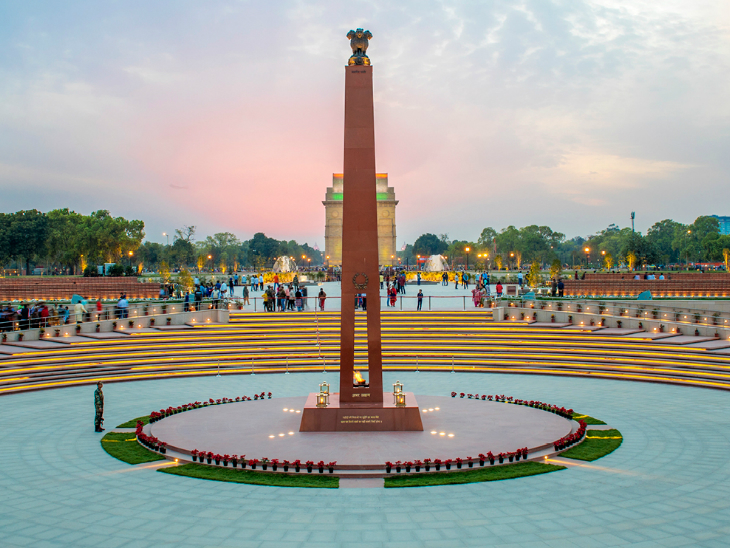
The names of “Galwan ke Balwaan, the 20 Indian Army personnel, who were killed after bravely fighting Chinese troops in Galwan Valley in eastern Ladakh on June 15, will forever be inscribed and enshrined on the National War Memorial, Times of India reported.
However, the process for inscribing the names of the 20 brave Army personnel on the memorial may take a few months.
On June 15, soldiers of the Peoples Liberation Army (PLA) ambushed and killed 20 Indian soldiers, including Colonel B Santosh Babu, the commanding officer of the 16 Bihar regiment.
The Indian Army fought with the Chinese army for hours in unarmed combat and inflected a very high death toll on the PLA. The incident significantly escalated the border tension in eastern Ladakh with India calling it “a premeditated and planned action by China”.
China is yet to disclose the number of its soldiers who were killed. According to American intelligence, at least 35 Chinese soldiers were killed in Galwan.
Also, the Chinese Ministry of Civil Affairs has told families of those who died at the hands of the Indian Army that they must not follow the traditional burial ceremonies and funeral services but should be conducted remotely.
Beijing is putting pressure on the families of fallen soldiers and has told them not to conduct burials and in-person funeral ceremonies.
However, The aggrieved families are not being silent and the Chinese government is struggling to silence social media platforms like Weibo.
But India has decided to honour its beaves and during his visit to Lukung forward post in eastern Ladakh on July 17, defence minister Rajnath Singh personally conveyed his appreciation and compliments to the troops from the Bihar regiment for displaying exemplary grit and courage in fighting the Chinese troops.
JUNE 15 INDIA-CHINA CLASHES: India, after honoring its 20 fallen soldiers as martyrs, revealed today that their names would be inscribed on the National War Memorial in New Delhi. Contrast this with China still refusing to divulge its losses after barring funerals for its fallen.
— Dr. Brahma Chellaney (@Chellaney) July 30, 2020
The Defence Minister told the soldiers that the entire nation is proud and the Indian soldiers who made the supreme sacrifice in the Galwan Valley clash not only showed exemplary courage in safeguarding the border but also protected the pride of 130 crore Indians.
Last month, five Indian soldiers were awarded ‘Commendation Cards’ by Army Chief Gen M M Naravane for bravery in dealing with Chinese troops during the Galwan Valley clash as well as confronting rival soldiers in Pangong Tso in May.
ISRO to offer its facilities for use by private sector either free or at a reasonable cost
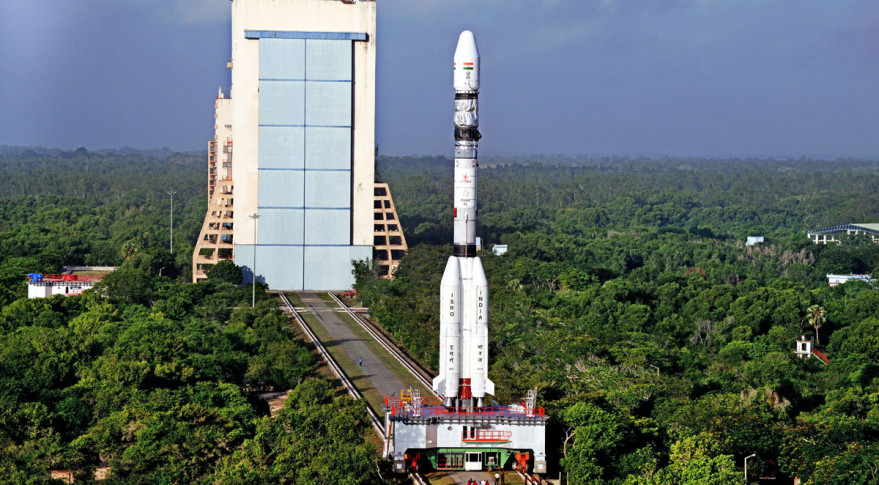
WIth private companies investing in space exploration, the Indian government has decided it will allow the private sector to use the facilities of Indian Space Research and Organisation (ISRO) either free or at a reasonable cost for carrying out various space sector related activities, the Times Of India reported.
Space exploration is expensive and it requires infrastructure and facilities for research and development, integration and testing, space launch, satellite operations and control. ISRO will be able to provide a platform for private companies working in space technology.
As per ISRO, “These facilities are already established and functional in ISRO. A mechanism is to be created for sharing of capital intensive Department of Space (DOS) owned facilities and premises by the private sector”.
ISRO has suggested that in order to encourage the participation of non-government private entities, a suitable mechanism will be worked out for promotion and hand-holding, sharing of technology and expertise.
“To encourage the active participation of the private sector, a national-level nodal agency is necessary to promote, handhold, permit, monitor and supervise space activities by private sector and accord necessary permissions as per the regulatory provisions, exemptions and statutory guidelines”, it added.
To accomplish this, an Indian National Space Promotion and Authorisation Centre (IN-SPACe) is being established. This will be an independent nodal agency under the Space Department and will allow space activities, exploration and usage of its facilities by the private sector.
India needs a lot more firepower in the seas
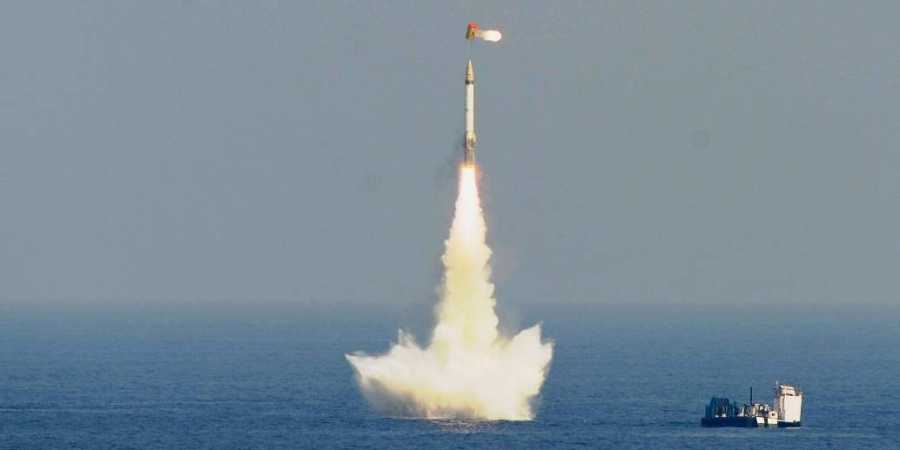
The Indian Navy is still very keen on acquiring a third aircraft carrier and two new fighter squadrons to counter the ever-expanding footprint and machinations of China in the Indian Ocean Region (IOR).
Due to the spread of the Covid-19 pandemic, the much-needed commissioning of India’s second aircraft carrier has been delayed till September next year.
The first indigenous aircraft carrier (IAC-I) being built at the Cochin Shipyard’s “basin trials” have been delayed by the pandemic.
INS Vikrant basin trials would have checked the 40,000-tonne warship propulsion, transmission and shafting systems.
In 2003, the government had approved the basin trials of IAC-I, followed by extensive sea trials. Now IAC-I will get commissioned in September 2020, and then the “flight trials” will be conducted to make the carrier fully operational by 2022-2023.
Aircraft carriers have been playing an important role since the Second World War because nothing projects raw combat power like an aircraft carrier strike group (CSG) that the US recently displayed in the South China Sea.
These massive floating airports are a force multiplier and as China has plans to operate more aircraft carriers, India is keen not to lose the edge when it comes to operating carrier battle groups.
The nuclear-powered aircraft carriers operated by the US navy are capable of moving over 500 nautical miles (900 km) in a single day, which helps in deploying them for any operations at a moments notice. At present, the United States Navy has 11 nuclear-powered fleet carriers—carrying around 80 fighter jets each.
The need for aircraft carriers for the Indian navy is very urgent because China is already operating two aircraft carriers, although they lack the operational experience and there are serious doubts about their capabilities.
At present, the Peoples Republic Army Navy (PLAN) has two combat-ready aircraft carriers, the Liaoning and Shandong, with the third under construction with plans for nuclear propulsion.
In theory, a nuclear-powered aircraft carrier could be at sea for twenty-five years or longer because it does not need any refuelling, and if China operates nuclear-powered aircraft carrier, it will be a giant leap to become a blue-water navy and it could also have an expeditionary force.
China with its vast economic powers at a feverish pace is constructing two more aircraft carriers and have plans to have 10-carrier Navy by 2050.
The recent freedom navigation patrols by the American navy was seen by China as an act of intimidation which also brought out in the open the “Malacca Dilemma”.
The phrase, the Malacca Dilemma was coined by former president Hu Jintao in 2003. In 2017, China became the world’s largest oil importer, surpassing the US. Approximately 80% of the country’s oil requirements have to come through the Malacca Stright.
China gets its oil from the Middle East and its oil tankers have to pass through the Strait of Malacca, a narrow stretch of water between the Indonesian island of Sumatra and the Malay Peninsula.
If China avoids Malacca Stright which is a shortcut, it would have to use the Lombok and Makassar Straits. But this change in route will come with a cost and according to S. Rajaratnam School of International Studies (RSIS), China will incur additional shipping costs estimated to be around $84 to $220 billion per year.
This is a natural strategic chokepoint which the Indian navy along with the US and other nations can implement. However, such a scenario would only happen in reality if there is a serious escalation of tension.
Right now India operated its only aircraft carrier, the 44,500-tonne INS Vikramaditya, the refurbished Admiral Gorshkov inducted from Russia for $2.33 billion in November 2013.
INS Vikramaditya operates the MiG-29K from its flight decks and some of these fighters have been deployed in the Eastern sector of Ladakh.
Right now the Navy wants the “acceptance of necessity (AoN)” for a third carrier, the 65,000-tonne IAC-II (tentatively christened INS Vishal), pending since May 2015.
As China plans to build a nuclear-powered aircraft carrier, India has dropped the idea of nuclear-propulsion for IAC-II due scales of economy. The Navy now has plans to build the carrier at a projected cost of ₹ 45,000 crore.
Modi government has fast-tracked several key defence procurements in light of the growing tension with China. Also, the prospect of a two-front war with Pakistan and China have strong possibilities.
That is why there is a strong possibility that the proposal could have smooth sailing and the government fast-tracking some long-pending defence projects due to the military confrontation with China.
The Navy has also cut down its requirement of 57 multi-role fighters capable of operating from carriers to about 36 (two squadrons) now. The contenders for supplying the multi-role fighters are the about to operationalised French Rafale, American F/A-18, Swedish Gripen and Russian MiG-29K which the navy already operates.
From a political and operational perspective, the Russian MiG-29 K could be chosen since the navy has years of operational experience.
If India chooses the French Rafale it would get its hands on a 4-plus generation fighter in its armoury and we will also have a lot of experience flying these plans. Indian navy pilots often fly combat sorties for the Indian Air Force (IAF) when there is a need to bolster squadron strength.
America for a long time have been trying to sell India its fighters and the BoeingF/A-18 are twin-engine, carrier-capable, multirole fighter aircraft with years of operational experience. However, if India chooses the American fighter, there will be a serious problem with interoperability of weapon system.
India is also trying to induct its indigenous twin-engine naval fighter but it is likely to be ready only by 2032 and twelve years is a long wait in the interest of national security.
India does enjoy one significant advantage over China because we have mastered the intricate art of operating aircraft carriers for six decades. The first aircraft carrier INS Vikrant was commissioned with its Sea Hawk jets operating from its flight deck playing one of the most crucial roles in the 1971 war against Pakistan.
Aircraft carriers play a very important role as a force equalizers and if India wants to maintain the edge over China in its own backyard, aircraft carriers will give her the strength to stand firm against the inequitable behaviour of China.
This article was republished from Aseema with permission. Only the headlines has been changed. Read the original article here.
“No such thing as symbolic Qurbani on Eid” laments Samajwadi Party leader Abu Azmi
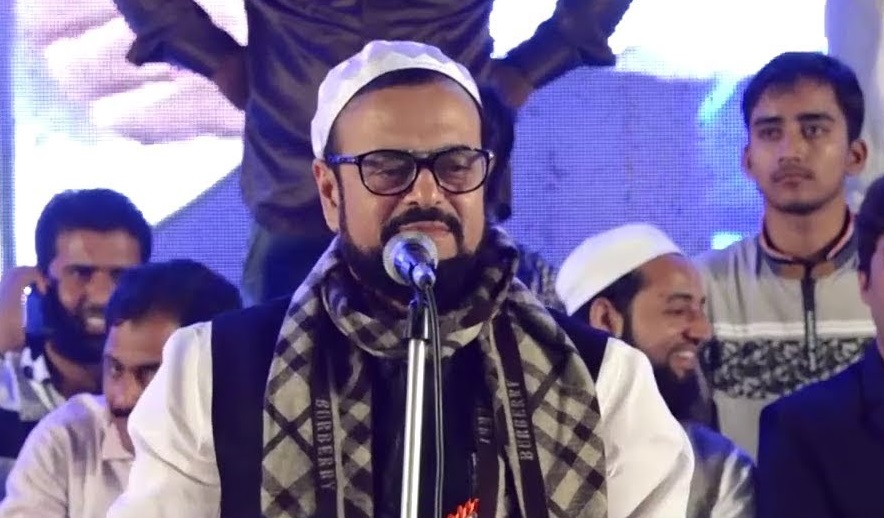
The Constitution is amendable, Islam is not, says Samajwadi Party leader Abu Azmi after the restriction was imposed over the celebration of Eid-ul-Azha (Bakrid) by Maharastra Chief Minister Uddhav Thackeray.
This decision has angered Muslim leaders in Maharashtra who are part of the Maha Aghadi. The Maharashtra CM had appealed to the Muslim community to celebrate Bakrid in a low-key and in a symbolic manner.
Thackeray had called on the people to perform a symbolic “Qurbani” (killing of animals) due to the prevailing conditions caused due to COVID-19 and considering the lockdown norms and containment zone restrictions.
“While COVID-19 cases are spreading daily, we are making all attempts to prevent the same. In the last four months, festivals of all religions were celebrated in a low-key manner. Similarly, Bakrid should also be celebrated in a low-key manner, symbolic if possible, by following all measures,” Thackeray said.
The above statement did not go well with Samajwadi Party leader Abu Azmi who said “Desh ka Samvidhan me hamesha amendment hota rehta hai lekin Islam ke samvidhan me amendment nahi hai…Qurbani symbolic nahi ho sakta (Indian Constitution can be amended, Islamic Constitution cannot. Qurbani can’t be symbolic)”.
It must be noted that the Maharastra state government had given directions to Hindus how to celebrate the Ganesh Chaturthi but the tone of Uddhav Thackeray was lot more conciliatory towards the Muslims. State observers believe that the Uddhav Thackeray led government is in the hands of Sharad Pawar.
Abu Asim Azmi has a history of making incendiary statements over the years and this time around he has threatened that his party will hold a protest in Mumbai against the guidelines by the State Government on restrictions imposed over the upcoming Bakrid festival.
The government of Maharashtra with prudence have asked Muslims to offer prayers at home and purchase sacrificial animals online or over the phone. The guidelines also called for the symbolic celebration of Bakri Eid.
Priest and 15 policemen test corona positive ahead of Ram Mandir Bhumi Pujan
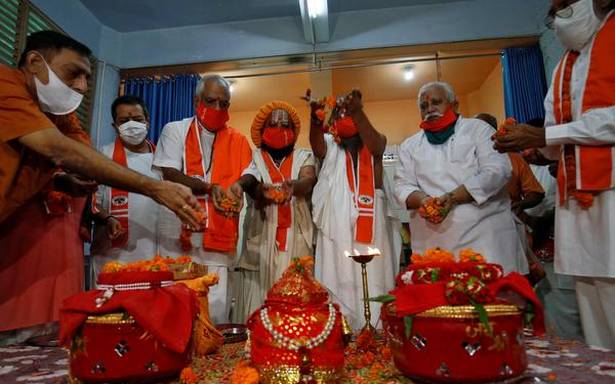
The priest and 15 policemen on duty at the Ram Mandir site in Ayodhya have tested positive for coronavirus. This comes at a time when there is only a week left for the Ram Mandir Bhumi Pujan ceremony. Pradeep Das, the assistant chief priest as well as the policemen who had been engaged in security duties at the Ram Janmabhoomi complex have tested positive for coronavirus.
Uttar Pradesh Chief Minister Yogi Adityanath had recently visited the Ram Janmabhoomi complex to review the preparations for the event. The pictures taken during his visit show Pradeep standing next to the Chief Minister.
Necessary precautions are slated to be taken following this. The Ram Janmabhoomi chief priest Satyendra Das, who will be performing the proceedings on the day of the Bhumi Pujan, is also seen standing next to him. The Ram Mandir Bhumi Pujan is scheduled to happen on August 5 for which Diwali like preparations are on full swing.
Meanwhile, Ayodhya has 375 active cases of coronavirus, while Uttar Pradesh has 29,997 cases. Since around 200 people are expected to attend the ceremony strict norms and testing measures are expected to be undertaken especially since Prime Minister Modi is to attend it.