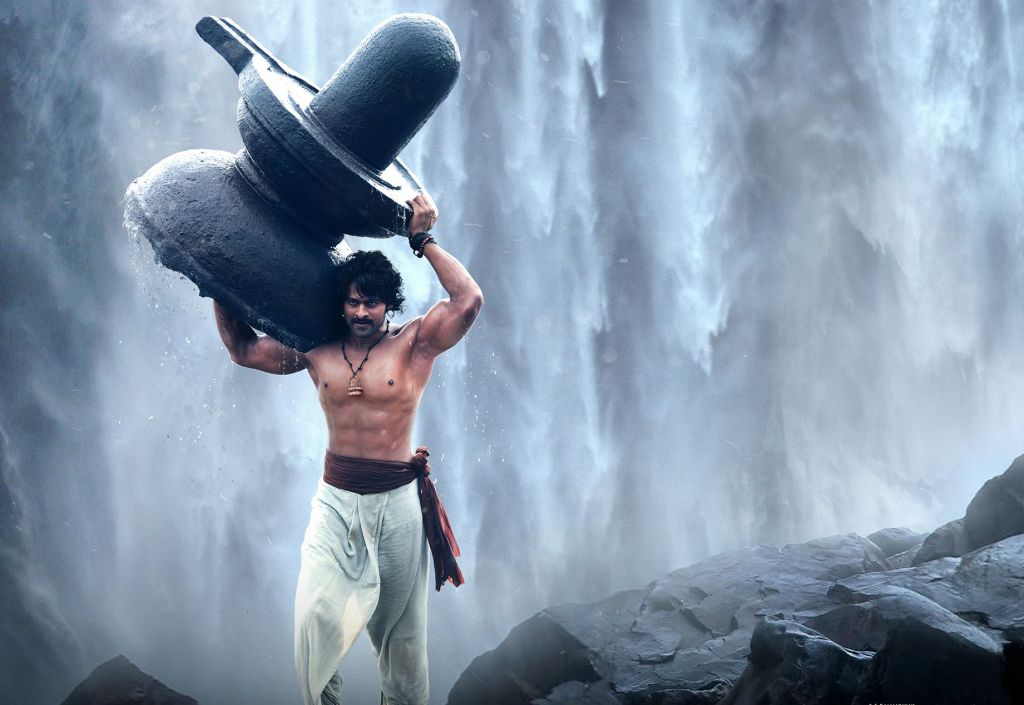
The Twitter account Russia in India, the official account of Embassy of Russian Federation tweeted a video of Bahubali: The Conclusion being aired in Russian TV. The film was being telecasted in Russia with the a Russian voiceover.
The Embassy in its tweet said “Indian cinema gains popularity in Russia. Look what Russian TV is broadcasting right now: the Bahubali with Russian voiceover.”
The Bahubali series was went on to become a blockbuster in India that earned several accolades and awards. Originally shot in Telugu and Tamil, it was dubbed into multiple languages Indian and foreign languages.
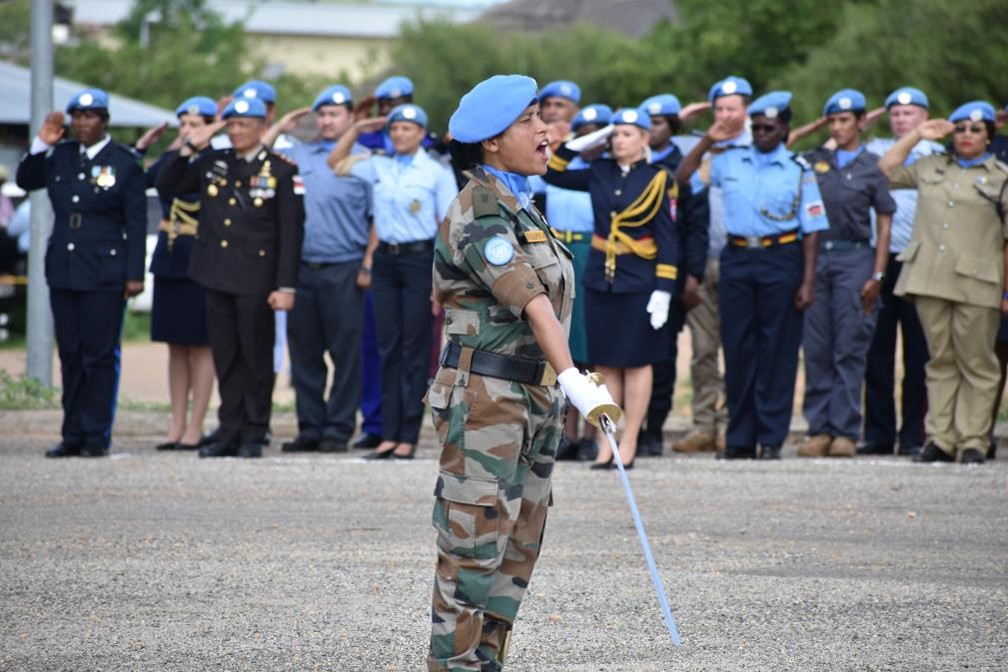
Two women deployed with the United Nations Peacekeeping force – Major Suman Gawani of the Indian army and Commander Carla Monteiro de Castro Araujo of the Brazil navy – have been jointly awarded the United Nations Military Gender Advocate of the Year 2019 Award. This is for the first time two peacekeepers will be awarded jointly.
The award will be presented by UN Secretary-General António Guterres in an online ceremony marking the International Day of UN Peacekeepers on 29 May.
The United Nations “Military Gender Advocate of the Year Award” was launched in the year 2016 to recognize the dedication of individual military peacekeepers promoting the UN Security Resolution 1325 on Women, Peace and Security in a peace operation context.
Major Suman Gawani was formerly deployed with the UN Mission in South Sudan (UNMISS). Since her deployment, she mentored over 230 UN Military Observers on conflict-related sexual violence and ensured the presence of women military observers in each of the Mission’s team sites.
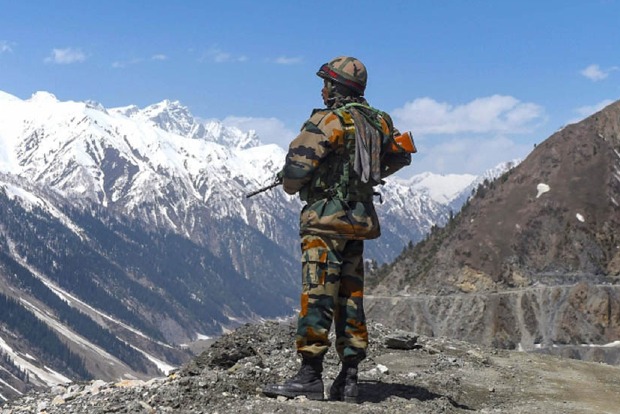
Ministry of External Affairs spokesperson Anurag Srivastava on Thursday, mentioned that India is currently engaged with China through diplomatic and military channels to resolve the issue along the boundaries of Sikkim and Ladakh.
Mr. Srivastava ruled out any role for a third party to mediate between the two countries indicating that India would not accept US President Trump’s offer. He added that the two countries are engaging to peacefully resolve the issue.
“India is committed to the objective of maintenance of peace and tranquillity in the border areas with China and our armed forces scrupulously follow the consensus reached by our leaders and the guidance provided. At the same time, we remain firm in our resolve to ensuring India’s sovereignty and national security.”, Mr. Srivastava said.
The MEA’s comments come against the backdrop of China’s Ambassador to India calling the situation as “stable and controllable”. Mr. Sun Weidong had said the two sides pose no threat to each other and should “never let the differences shadow the overall bilateral cooperation”.
Mr. Srivastava did not specifically address if the Chinese troops remained in Indian areas, particularly in the Galwan valley located in the Aksai China area. He said that the issue would be resolved according to the five agreements signed by India and China between 1993 and 2013.
Imagine jumping out of a ship only to be caught again and tortured. Imagine being sentenced to jail for 50 years. Imagine spending six months in solitary confinement, lying amidst your own urine and faeces. Imagine being tied to chains and doing hard labour on an oil mill. Imagine enduring all the hardships of the Cellular Jail in the Andamans – living in unimaginable conditions, gruelling work, scanty food and clothing, occasional thrashing, and yet being denigrated as a man who wrote clemency petitions.
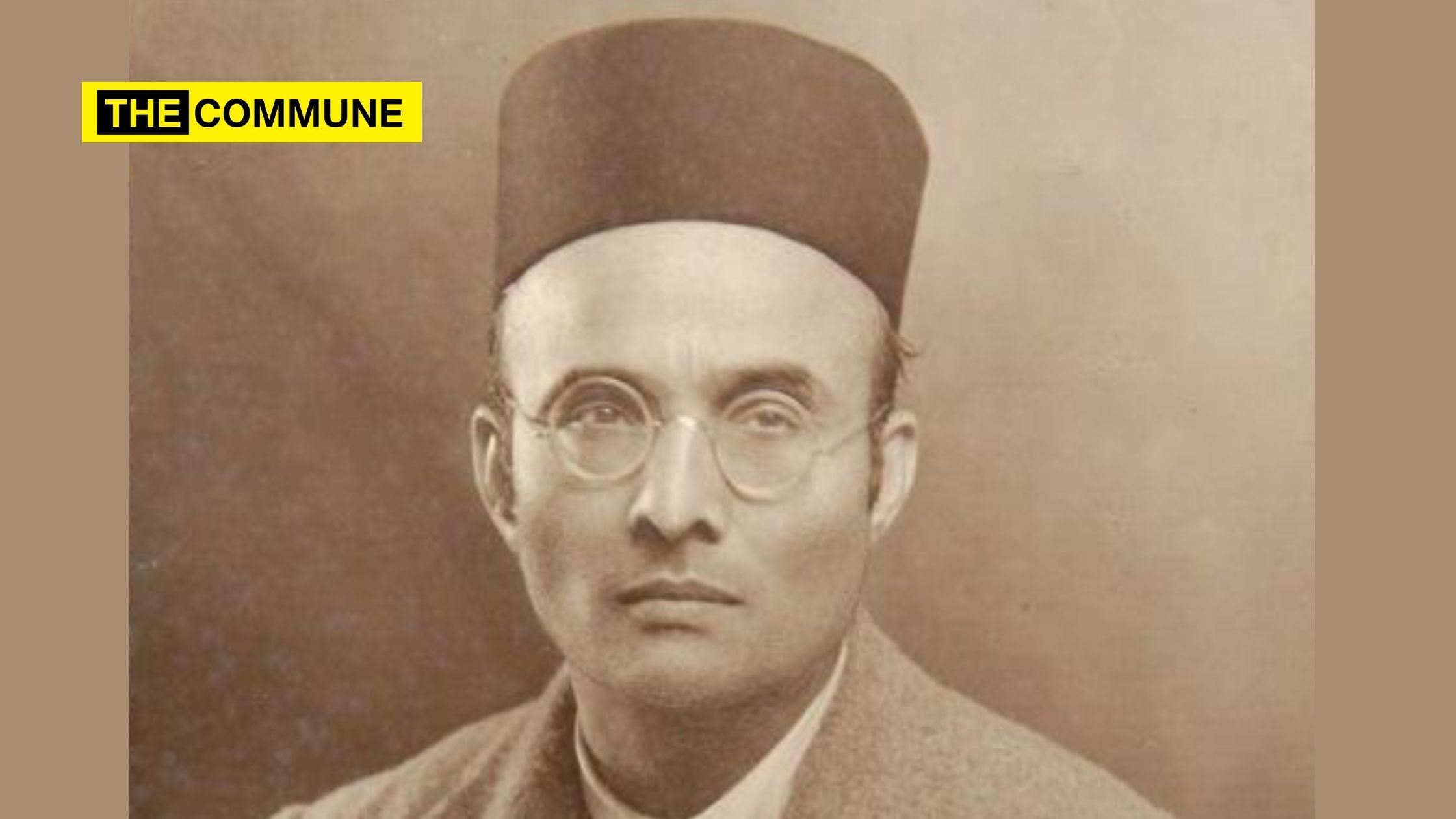
A lot has been said and written about Savarkar’s life, his heroic struggle and his brand of politics. Copious amounts of articles and commentaries have been written glorifying and vilifying the man. But rarely do we find references to the relationships he shared with some of the other leaders. This is an attempt to shed light on how Savarkar had been an influence in the works of other leaders.
Netaji Subhas Chandra Bose and Veer Savarkar
Quite often, Savarkar gets reduced to a stooge of the British or a traitor who opposed Quit India Movement. While nobody denies the fact that Savarkar was opposed to the movement called by the Congress leaders at the Bombay session in 1942, rarely does one delve into the reasons for which the movement was opposed not just by Savarkar but also by Communist Party of India, Muslim League and several princely states. The opposition to Quit India Movement was because of the fact that the Congress leaders leading the movement had no arrangements in place before launching the agitation. As a result, the movement itself turned out to be a leaderless movement with all leaders getting arrested and the common people facing the brunt of the British. Thousands were killed and injured.
Meanwhile, Subhas Chandra Bose who had escaped from British detention in Calcutta, was reaching out to the axis powers (Japan, Italy, Germany) and was raising the Azad Hind Fauj (Indian National Army) to overthrow the British from India. Vikram Sampath, who had recently written Savarkar: Echoes From A Forgotten Past, 1883-1924, notes that Savarkar encouraged young Indians to enlist in the British Army and get trained so that they can then defect over to Netaji’s INA.
On 21st June 1940, a meeting is said to have transpired between Savarkar and Netaji to “explore the possibilities of cooperation between Forward Bloc and Hindu Mahasabha”. This meeting which is reported to have taken place in Dadar at Savarkar’s residence, is said to have influenced Netaji. Savarkar had suggested Subhas “to not waste time organizing protests for the removal of British statues like Holwell Monument in Calcutta” but instead “smuggle himself out of the country”, reach out to the axis powers and raise an Indian Army of liberation out of Prisoner of Wars (PoWs).
The Times of India dated June 24, 1940 carried an article on this meeting. The police also noted a brief account of it:
Subhas Chandra Bose arrived in Bombay on June 22nd and had discussions with V D Savarkar with a view of exploring the possibilities of co-operation between the Forward Bloc and the Hindu Mahasabha respectively.” (MSA, Home Special Department, 1023, 1939-40, SA dated June 29, 1940, ‘Forward Bloc’).
The above incident is also elaborated in the book The Two Great Indians in Japan by Yukikazu Sakurasawa, a Japanese author and publisher. He mentions:
it was the private and personal meeting between Netaji Subhas Babu and Savarkar at Savarkar Sadan Bombay that a definite suggestion was made to Subhas Babu by Savarkar that he should try to leave India and undertake the risk of going over to Germany to organise the Indian forces there fallen in German hands as captives and then with the German help should proceed to Japan to join hands with Sri Rash Behari Bose. To impress this point Savarkarji showed to Subhas Babu a letter from Sri Rash Behari Bose to Savarkarji written just on the eve of Japanese declaration of war.
The cordial relationship shared by Netaji and Veer Savarkar and the admiration they shared for each other is evident from the following instances.
Savarkar, upon becoming a free man on June 25, 1937 after remaining confined within Ratnagiri following his release from the Cellular Jail, Subhas Chandra Bose said
I am extremely pleased with the release of Mr. Savarkar. He has a brilliant future. I wish he participates in National Congress and strengthens the freedom movement.
In a broadcast on 25 June 1944 on the Azad Hind Radio, Netaji said
When due to misguided political whims and lack of vision, almost all the leaders of the Congress party have been decrying the soldiers in the Indian army as mercenaries, it is heartening to know that Veer Savarkar is fearlessly exhorting the youths of India to enlist in the armed forces. These enlisted youths themselves provide us with trained men and soldiers for our INA.
In May 1952, during the dissolution celebration of Abhinav Bharat, Savarkar paid tribute to Netaji by having the bust of Netaji on stage for three days. Hailing Netaji, he said
Long live deathless Subhas. Victory to the Goddess of freedom.
Rash Behari Bose and Veer Savarkar
In the March-April 1939 edition of the Japanese magazine named Dai Ajia Shugi, Rash Behari Bose, the founder of the Azad Hind Sena (the precursor to Azad Hind Fauj) and a close aide of Subhas Chandra Bose called Savarkar “A Rising Leader of New India”. Introducing Savarkar he wrote Savarkar “is heroism, valor, adventure, and epitome of patriotism“. He further adds “To praise him is to praise the spirit of sacrifice”. He is the one who always kept the fire of India’s freedom burning; he is a patriot who risked his life for the freedom of India in the early 20th century and is a founder exponent of the doctrine of cultural independence in the current times“. He concludes the article by saying “If you agree with Savarkar, you will have political power, and he has a strong position in the Indian independence movement.”
When Savarkar was released from his internment at Ratnagiri in 1937, Rash Behari Bose in his radio talk addressed to Savarkar said “In saluting you I have the joy of doing my duty towards one of my elderly comrades in-arms. In saluting you, I am saluting the symbol of sacrifice itself“. He goes on to say “I can see God’s Divine hand clearly behind your unconditional release. You have once more proved your real greatness by propagating the theme that our politics must never depend upon the foreign policy of others. England’s enemy must be our friend. (Free Hindustan, 27th January 1946).
Not many know that Rash Behari Bose was also the president of the Hindu Mahasabha in Japan. The Hindu Mahasabha in Japan was started as a result of correspondence between the two leaders. During 1938-1940 when Savarkar presided over the All India Hindu Mahasabha, Rash Behari Bose presided over its Japan’s branch. The correspondence between the two leaders continued right up to the declaration of war by Japan and the formation of the Indian National Army in Singapore by Netaji.
As seen earlier from the book by Yukikazu Sakurasawa, it is evident how Savarkar was a crucial link between Netaji and Rash Behari Bose. It was on the advice of Savarkar that Rash Behari Bose wrote to Netaji who was the then Congress President, informing him of the activities of revolutionaries abroad who were working under the Indian Independence League (IIL).
Bhagat Singh and Veer Savarkar
Vikram Sampath in his biography on Savarkar notes that Bhagat Singh was influenced by Savarkar’s book on the Indian War of Independence. Infact, Bhagat Singh had used it as a criteria to recruit cadres into the Hindustan Socialist Republican Army. He would even go on to get the second edition of the book published, Vikram Sampath notes in his book.
Durga Das, the former Chair of the Punjab Legislative Council, in an interview in 1976 talks about his days as a revolutionary when he had worked with Bhagat Singh. He reminisces about how Bhagat Singh asked his fellow patriots to read a books that included Bukharin and Preobrazhensky’s The ABC of Communism (1920), Daniel Breen’s My Fight for Irish Freedom (1924) and Life of Barrister Savarkar, which was written by Savarkar under the pen name ‘Chitragupta’.
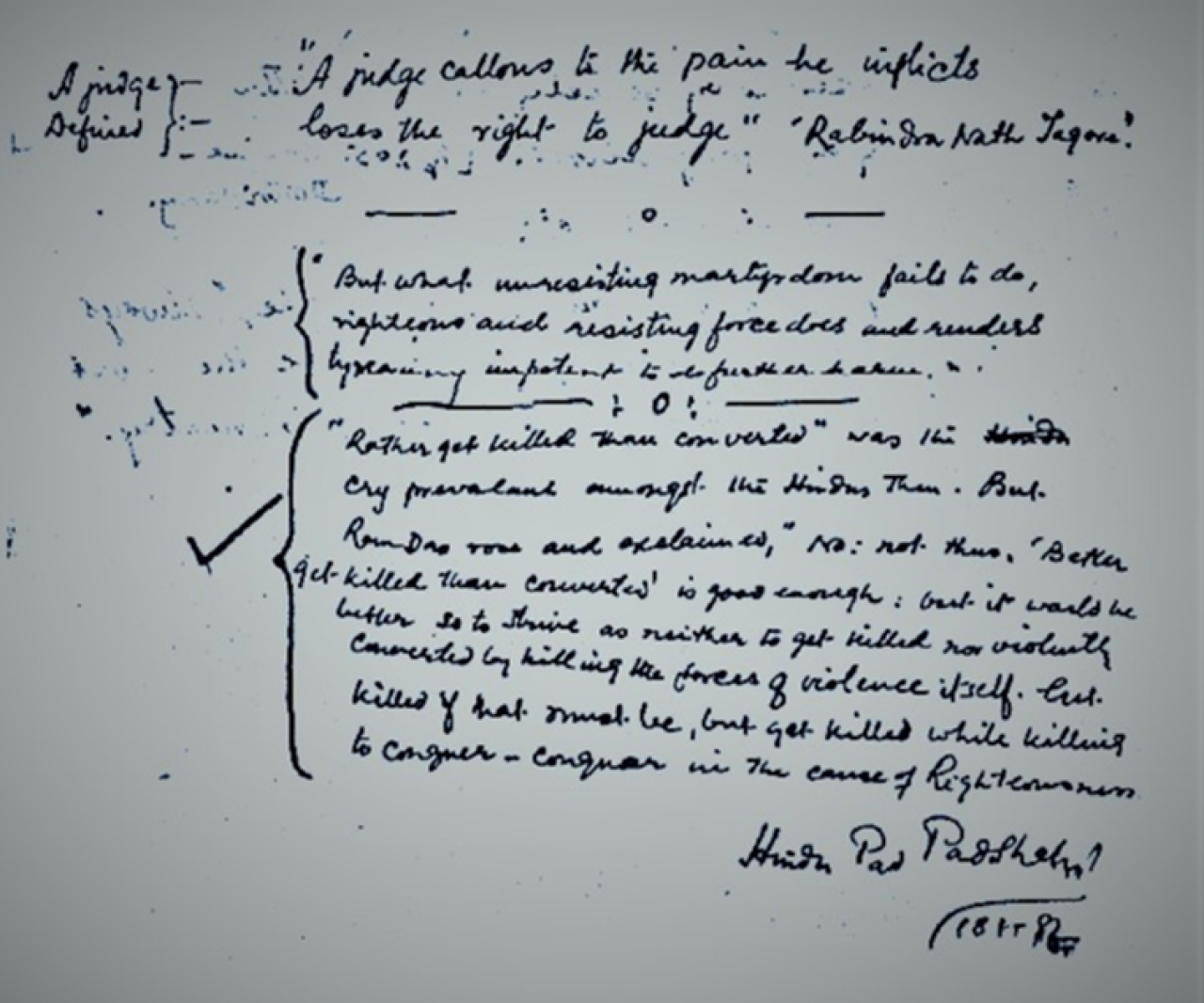
Savarkar’s another seminal work Hindu Pad Padshahi, a book that would be brandished as communal by today’s champions of communal harmony, was said to have had a great influence on Bhagat Singh. Historians Malwinder Jit Singh and Harish Jain state while discussing about the famous Jail Note Book of Bhagat Singh that
Hindu Pad Padshahi by Veer Savarkar is one book which I would list among those he read thoroughly. May be for him, it was a re-reading as it was also found among the books seized by the police during raids on their hideouts after Sukhdev’s arrest.
Image Courtesy: Swarajya
The above is a picture of Veer Savarkar’s quote in Bhagat Singh’s handwriting that reads ‘…but it would be better so to strive as neither to get killed nor violently converted by killing the forces of violence itself…’
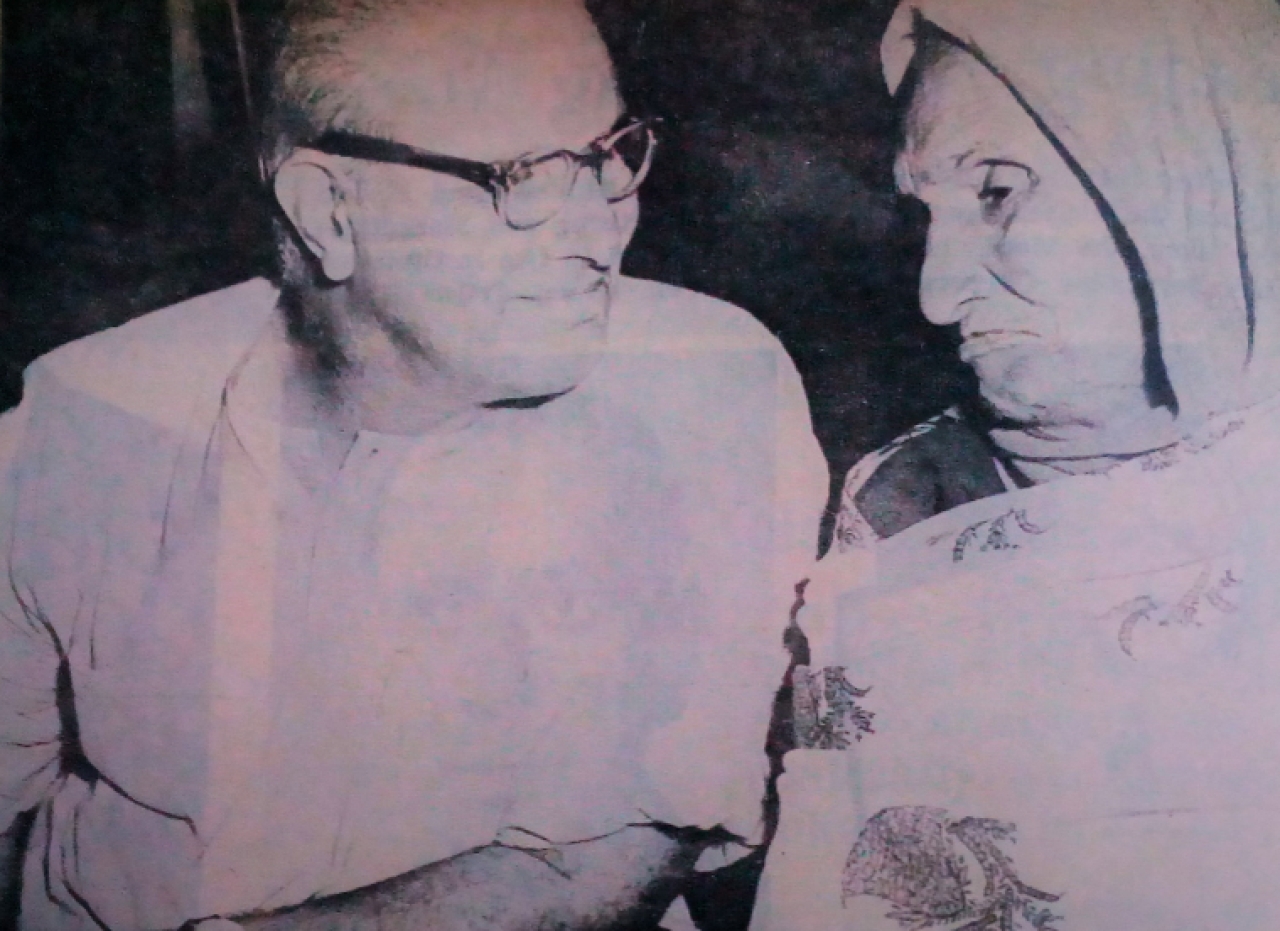
Another example that establishes the relationship that Bhagat Singh and Savarkar shared is the incident that happened four years after the latter’s death. Biography of Savarkar titled Atmahuti, written by Shivaramu was released by Mataji VIdyavati Devi, the mother of Bhagat Singh.
Image Courtesy: Swarajya
The above is a picture of Bhagat Singh’s mother and younger brother at the release function of Atmahuti, biography of Veer Savarkar (Illustrated Weekly of India, 1971).
M.N. Roy and Veer Savarkar
The founding father of Communism in India mentioned that
Mr. Savarkar is one of the few patriots who risked life for India’s freedom movement in the early 20th century.I differ with him on political standpoint, but cannot but respect his spirit of sacrifice mind and courage.
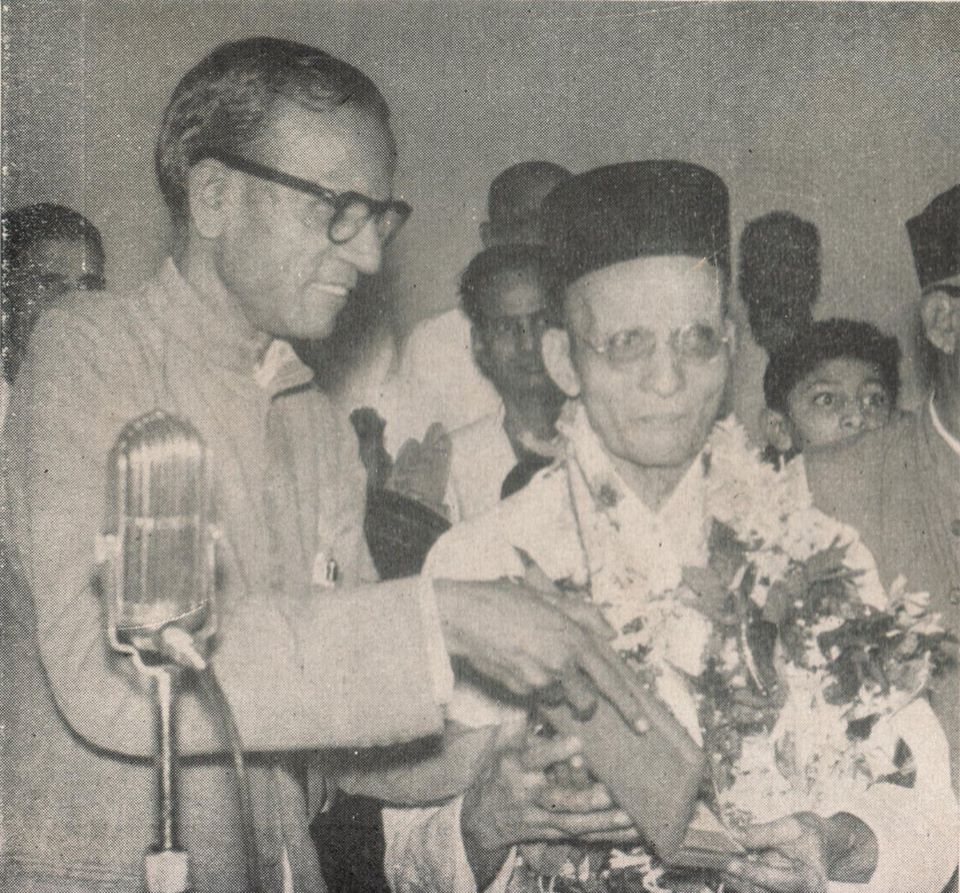
Savarkar with Communist leader Mirjakar
When Savarkar was released from prison, Roy is said to have touched his feet. Both of them frequently exchanged views and shared stages. Other Communist leaders like EMS Namboodripad, Hirendranath Mukherjee, SA Dange had shared great respects for the man.
Babasaheb Ambedkar and Veer Savarkar
To understand Ambedkar’s views on Savarkar, one has to read Babasaheb’s magnum opus Pakistan or Partition of India: The Indian Political What is What. Elaborating on Savarkar’s Hindutva and his ideas on Swaraj and pointing the flaws in his approach to the question of Pakistan, Babasaheb says that the alternative provided by Savarkar
has about it a frankness, boldness and definitiveness which distinguishes it from the irritating vagueness and indefiniteness which characterizes the Congress declarations about minority rights.
Infact, Ambedkar dedicates a whole section on Savarkar to understand where he is coming from and what he is saying and countering each and every point of the latter without mincing words yet without dishonoring the man.
Given these facts, it is clear that despite the similarities and differences in ideological and political affiliations, Savarkar was seen as someone with great intellectual prowess and commanded the respect of leaders cutting across the spectrum.
While one may or may not agree with Savarkar or his views, it is an indisputable fact that he is one of the greatest revolutionaries who ushered in a new spirit of nationalism in India’s freedom struggle.
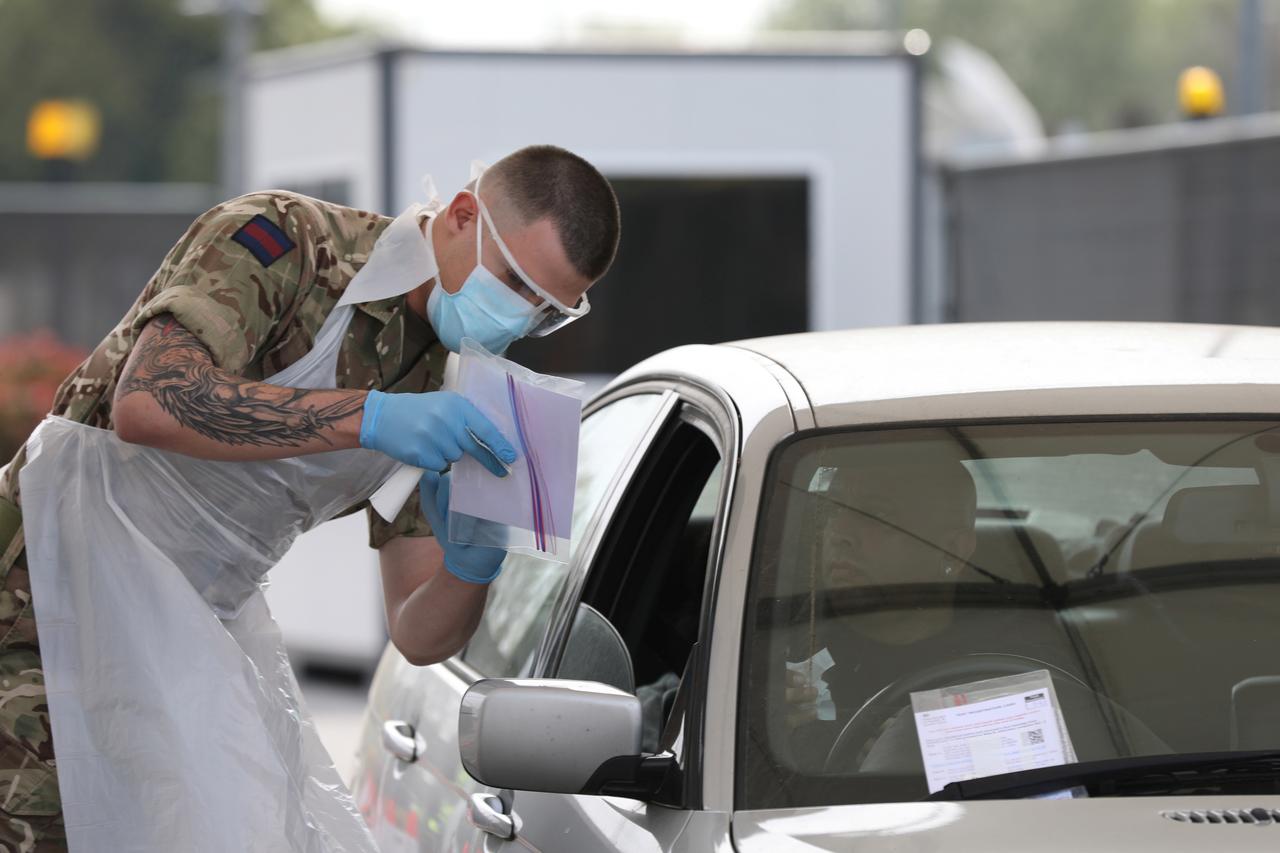
Britain is preparing to conduct massive testing for coronavirus, for anyone who is showing even mild symptoms of infection. Those testing positive will be made to stay in isolation for 14 days. Other persons who had been in close contact with the patient will also be isolated. The British government is pulling all stops to make sure that a second wave is prevented.
All around the world, countries like the UK are set to roll out such massive testing measures, for the fear of being affected with another wave of infection.
For example, the US, which is one of the world’s richest countries failed to ramp up testing earlier and had lost a whole month which led to it becoming a hotspot.
Further east, countries like Singapore and South Korea failed to test the lower rungs of the society, and a second wave started in the dormitories where hundreds of migrant labourers had been living.
Several other countries like Japan have resorted to tracing more than testing, although medical experts fear that this approach could cause a sudden explosion of cases. Surprisingly, Japan has one of the lowest mortality rates, among major nations, and its government never forced businesses to close, though many did by choice.
Elon Musk’s SpaceX’s landmark manned mission to the International Space Station was postponed due to bad weather. Thunder and lightning prevailed, hindering the launch, just as NASA astronauts Bob Behnken and Doug Hurley had gotten strapped in for take-off.
Falcon-9, the shuttle that was to be launched, is tentatively scheduled to be launched on Saturday by NASA and SpaceX if the weather improves. Saturday’s launch will take place slightly earlier, at 15.22 local time [20.22 BST].
It is astonishing to note that if the mission proves to be successful, SpaceX will be the first ever private-organisation in the world to achieve this milestone.
The US President Donald Trump who had come to witness the launch went back to the White House after it got cancelled. The astronauts have been kept in quarantine, since this mission is being carried out amidst the COVID-19 pandemic.
The rocket was set to be launched on 4:33 pm (2033 GMT) from the Kennedy Space Center’s Launch Pad 39A. Neil Armstrong and his Apollo 11 crewmates lifted off from the same spot on their historic journey to the Moon.
A saloon owner in Tirupur district was reported to have attacked by District Deputy Secretary of the DMK for removing the banner placed outside his shop.
Chidambaram, belonging to Malayampalayam in Palladam block of Tirupur district runs a hair-cutting and shaving saloon in Ganapathipalayam. It was reported that DMK cadres had placed a banner outside his shop.
Chidambaram had apparently removed the banner placed outside when he came to open his shop. Irked by Chidambaram’s act, it was reported that the DMK’s Tirupur District Deputy Secretary Somasundaram had called the former to his home and attacked him. A severely injured Chidambaram was admitted in the hospital.
A case has been filed on the DMK office bearer by the Tirupur police.
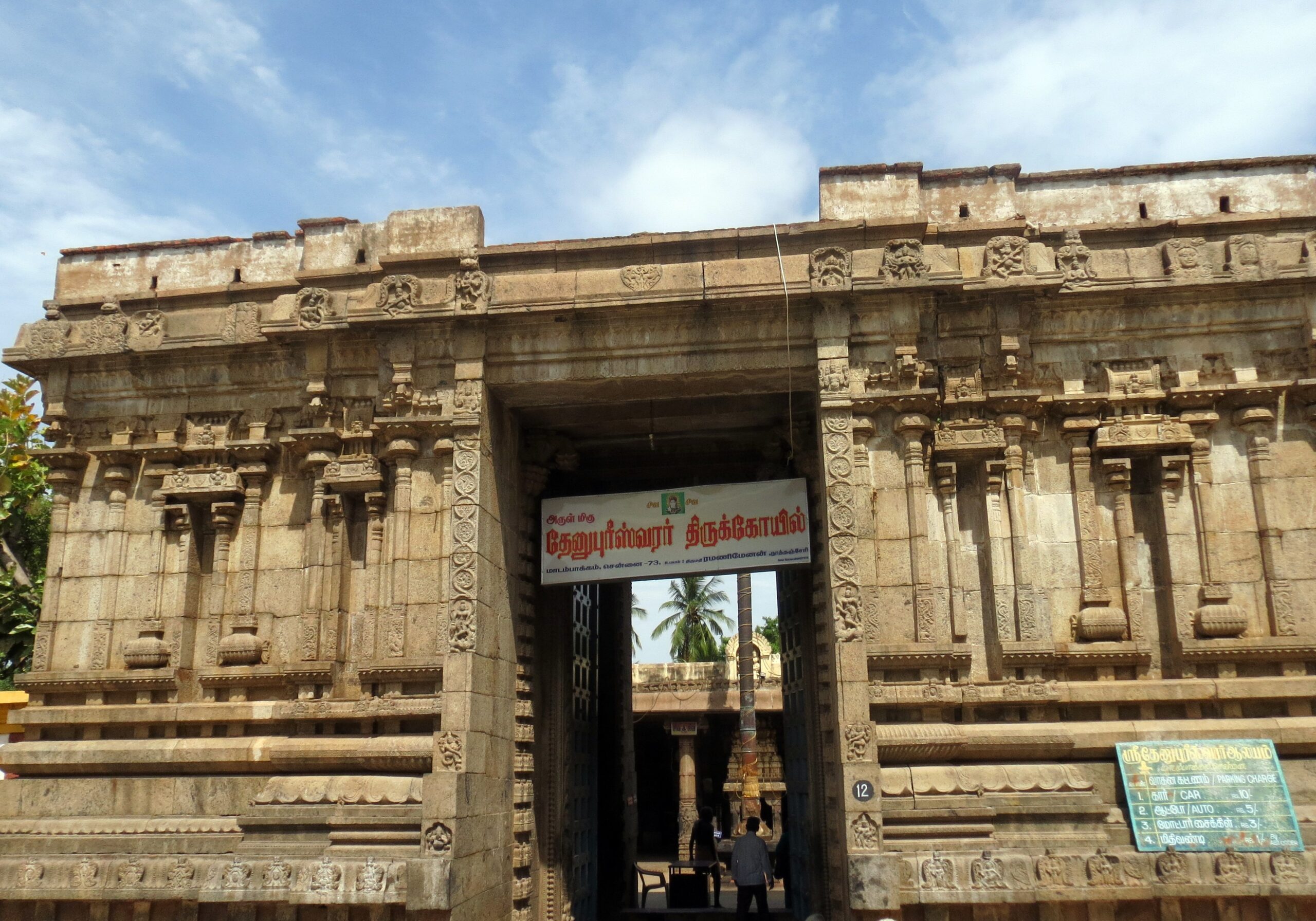
Land worth ₹140 crore belonging to the 1000 year old Dhenupureeswarar Temple located at Madambakkam in Chennai has been encroached, reported the Tamil daily Dinamalar.
7 acres and 57 cents land located at Rajakilpakkam – Madampakkam Main Road, belonging to the temple is being allegedly encroached to build a shopping complex. Locals say that 95 % of the land owned by the temple is already occupied and the remaining 7 acres of land is also being encroached.
Officials have confirmed that the land belongs to the temple. Quoting the Temple Officer, Dinamalar reported “On March 22, a complaint was lodged at the Selaiyur police station. We have also filed a case with the Chengalpattu Sessions Court. We have informed Tambaram Tehsildar about the encroachment and asked for permission to remove it. The encroachment will be removed in few days, the Tehsildar said”.
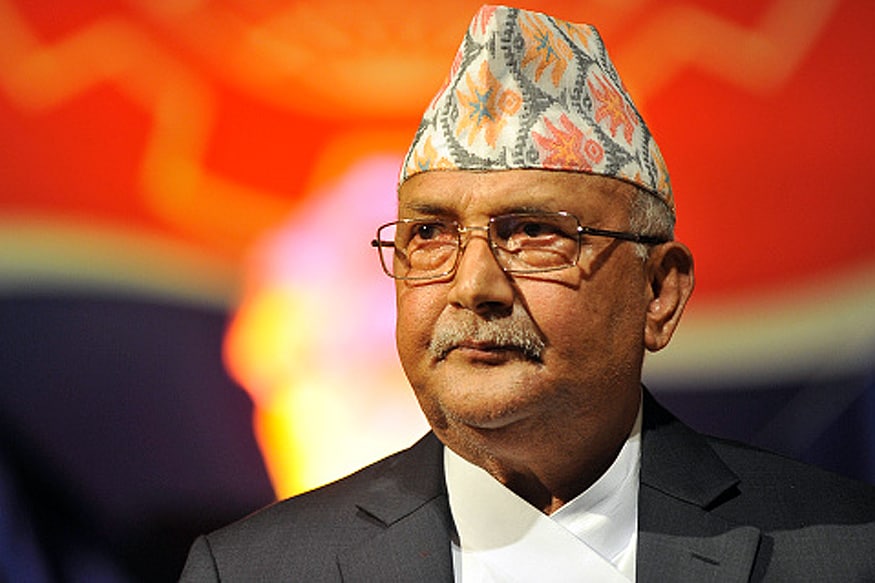
The Prime Minister of Nepal K.P. Sharma Oli from the Nepal Communist Party faced a setback over his plans to claim Indian territories of Kalapani, Limpiyadhura and Lipulekh as part of Nepal after he failed to bring consensus among Nepal’s political parties.
The new controversial map launched by Minister of Land Management Padma Kumari Aryal on May 20 set off a diplomatic row between India and Nepal.
Political parties in Nepal refused to back Oli’s proposal as it was seen as an attempt to whip up “Gorkha nationalism for personal gains.
The Nepali Congress had said that it could take stand on the new map proposal only after the Central Working Committee takes a decision.
The region came into focus after India inaugurated a new road from Dharchula to Lipulekh that would serves as a simpler route to Kailash-Mansarovar pilgrims.
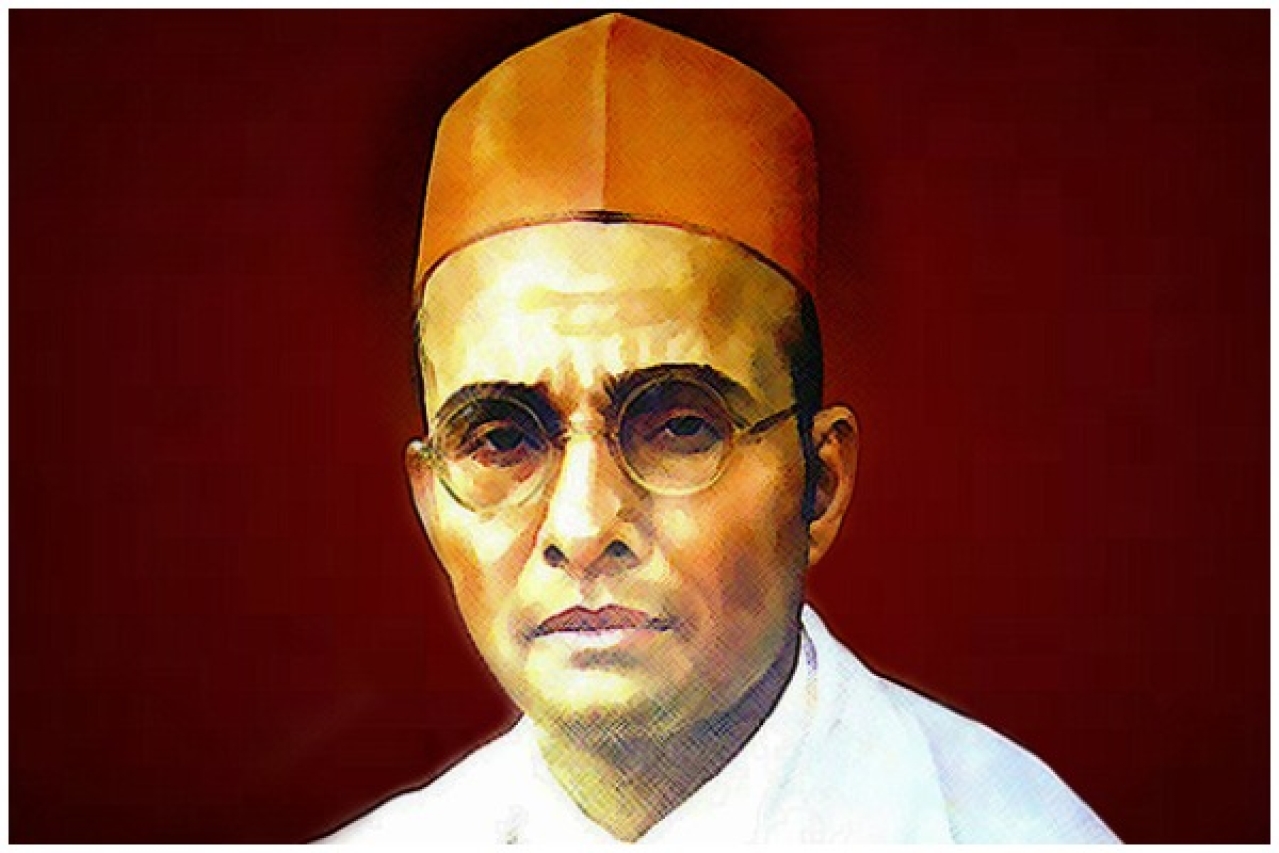
The newly built flyover in Yelahanka has been named after freedom fighter Veer Savarkar by the Yediyurappa led BJP government. Soon after the announcement, the Congress and Janata Dal (Secular) protested against the move.
Congress leader and former Chief Minister of Karnataka said that the flyover should be named after a freedom fighter from the state. Former CM H.D. Kumaraswamy also struck a similar note.
The BJP countered the criticism by asking “Why Indira Canteens? Why Rajiv Gandhi hospital? Savarkar is a giant among our freedom fighters. It is only a token of respect for such a great soul who sacrificed for the country.”
The 400 metre long flyover from built at a cost of ₹34 crore will be inaugurated by Chief Minister Yediyurappa on May 28, the 137th birth anniversary of Veer Savarkar.