Home Blog Page 1519

VHP calls for banning Indian National League Party for glorifying terrorists who carried out 1998 Coimbatore blasts

E Arumuga Kani, District Secretary of Vishwa Hindu Parishad (VHP) in a letter written to the Union Minister for Home Affairs Amit Shah, has demanded a ban on Indian National League Party (INLP).

VHP has also filed a complaint with the District Collector and Tamil Nadu Chief Minister to end the glorification of a terrorist responsible for killing innocent people.

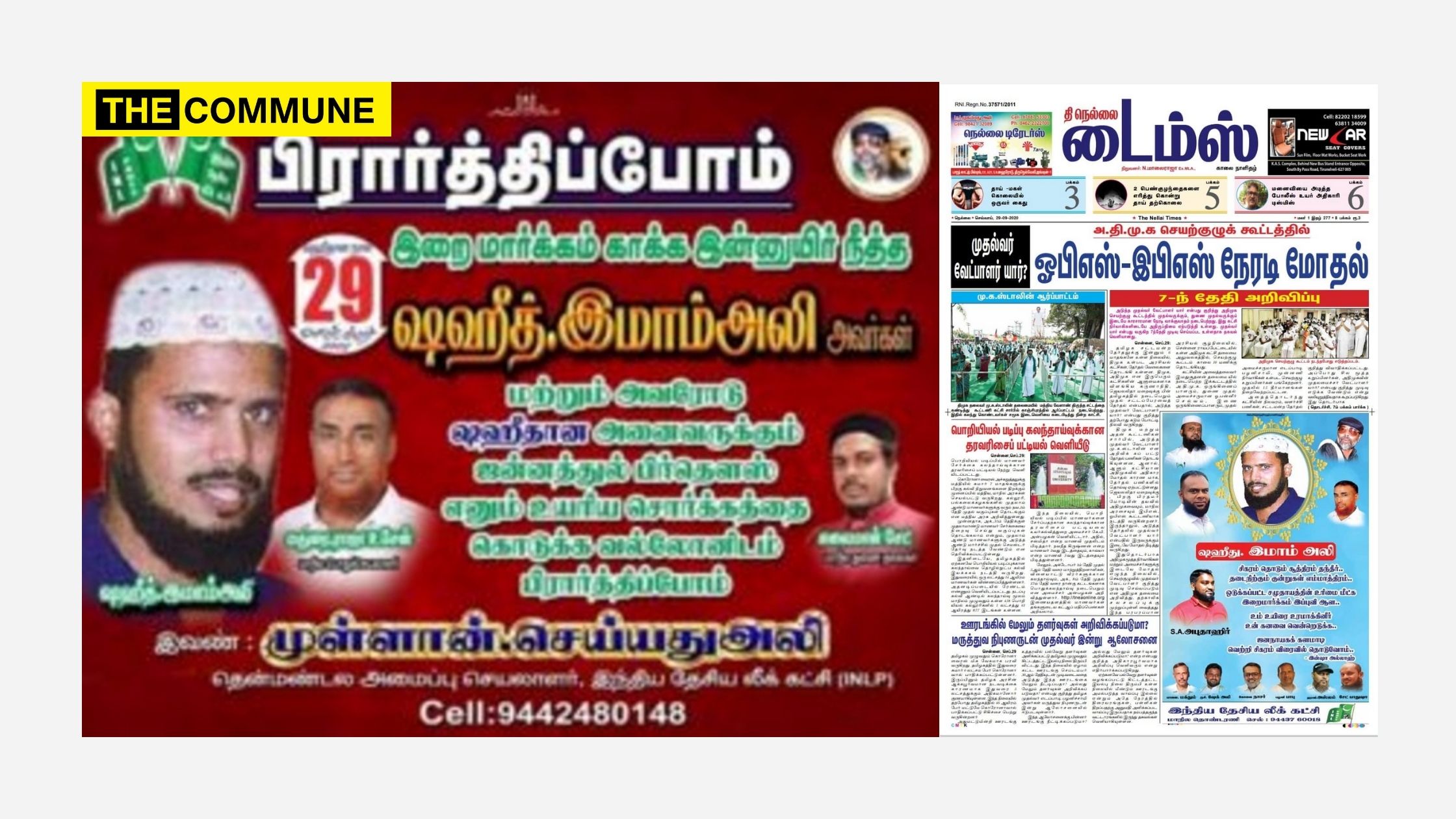
Recently, the INLP had commemorated the death anniversary of Imam Ali, the leader of the banned terror outfit Al-Umma, that is accused of bombing the RSS Chennai Karyalaya killing 11 persons. It was also responsible for the 1998 Coimbatore bombings when powerful bombs exploded in multiple parts of the city on 14th February 1998, threatening the security of the then Deputy Prime Minister and BJP veteran L K Advani and Union Minster Murli Manohar Joshi. Both the BJP leaders were to address election meeting for the 1998 Lok Sabha polls in Coimbatore. There were 12 serial high-intensity explosions in a different part of Coimbatore. This led to the killing of 58 people and 250 injured.

An investigation conducted revealed that, the banned Muslim fundamentalist outfit Al-Umma, headed by SA Basha was found to be responsible for the blasts. The aim was to assassinate LK Advani and Imam Ali, an expert in bomb making was involved in the blasts. 

Many security experts believe that Tamil Nadu could possibly emerge as the next place for Islamic terrorists to operate with impunity.

The INLP had earlier released advertisements in an English daily (The Hindu) in 2018 and 2019 marking the death anniversary of Imam Ali. This year, the ads were published in Nellai edition of Dinakaran (owned by Sun Group) and the local paper, ‘The Nellai Times’. 

Imam Ali had threatened to demolish Hindu temples like famous Madurai Meenakshi and the investigation revealed that he was trained by Pakistan’s Inter-Services Intelligence (ISI) and by the banned Hizbul Mujahideen.

Ali was shot dead in an encounter on 29 September 2002, in a joint operation by Tamil Nadu police and Bangalore city police led by then SP of STF, Ashok Kumar.

US to give advance weapons systems to India as hostile China threatens security in the region

As there seems to be no signs of de-escalation at the Line of Actual Control (LAC) where India Army and the Chinese People’s Librations Army (PLA) are at eye-t-eye, the US is helping India fulfil its substantial security challenges.

Washington has agreed to sell advanced weapons system according to a senior US State Department official.

“At a time when India is facing substantial security challenges, the growth in our defence partnership is exceptionally important. This partnership includes defence sales, particularly our offers of advanced US weapon systems as a demonstration of our commitment to Indian security and sovereignty,” the official told reporters on Wednesday.

“We view India as an emerging global power that shares our vision of an Indo-Pacific region that is peaceful, stable and prosperous for all in pursuit of that goal,” the official said.

The last six years have seen a significant evolution in the corporation between India-US defence in the Indo-Pacific region. This relationship is now being tested now by China’s aggressive behaviour who is being hostile to practically all its neighbours and also against its own citizens. 

“We know what a peaceful, open, successful and welcoming order looks like in the Indo-Pacific. And that’s something that we’re trying to advance in a scenario where the United States and India very much share a common objective, and evolution of our defence partnership is supporting and consistent with that,” the official said.

For the US, “the exercise of freedom of navigation of military and defence partnerships and cooperation with other states in the region is designed to reinforce the basic norms of peaceful solution of problems, resolution of disputes and a preservation of rule of law, freedom of navigation,” the official.

“The US-India defence relationship extends beyond arms transfers. Our partnership also includes our ongoing efforts to on defence industrial cooperation. Through the US-India Defence Technology and Trade Initiative, the United States and India work together on co-production and co-development of defence equipment, most recently through a US-Indian senior defence official meeting on September 15,” the official said.

“Interoperability between our military services has reached unprecedented levels as demonstrated by the Tiger Triumph exercise last year, and the Indian Navy’s recent passage exercise with the USS Nimitz Carrier Strike Group in the Indian Ocean,” the official said.

DMK MLA doles out cash to make people attend gram sabha meetings on Gandhi Jayanti

At a time when the Wuhan Virus cases that is getting reported has been showing signs of flattening, the Tamil Nadu government to prevent its spread in villages ordered for the cancellation of gram sabha meeting to be held on Gandhi Jayanti.

However, despite the Tamil Nadu government’s curb, the Dravida Munnetra Kazhagam (DMK) in many places flouted the government’s order with the party chief MK Stalin, DMK MP Kanimozhi, the party’s general secretary Duraimurugan and other MLAs, MPs and office bearers holding gram sabha meetings at various places.

In many places, people turned up in very few numbers with empty chairs strewn around. In order to ensure that the chairs are filled, the DMK resorted to enticing poor people with money to turn up to these gram sabha meetings.

In light of this, Aruppukottai MLA K.K.S.S.R Ramachandran had made arrangements for the gram sabha meeting in his constituency. In order to bring in crowd, the DMK MLA had doled out cash to women members of the household in the area. The video of cash distribution has been going viral.

The AIADMK launched a scathing attack on the DMK for putting people’s lives at risk and also for using people’s poverty and enticing them with cash.

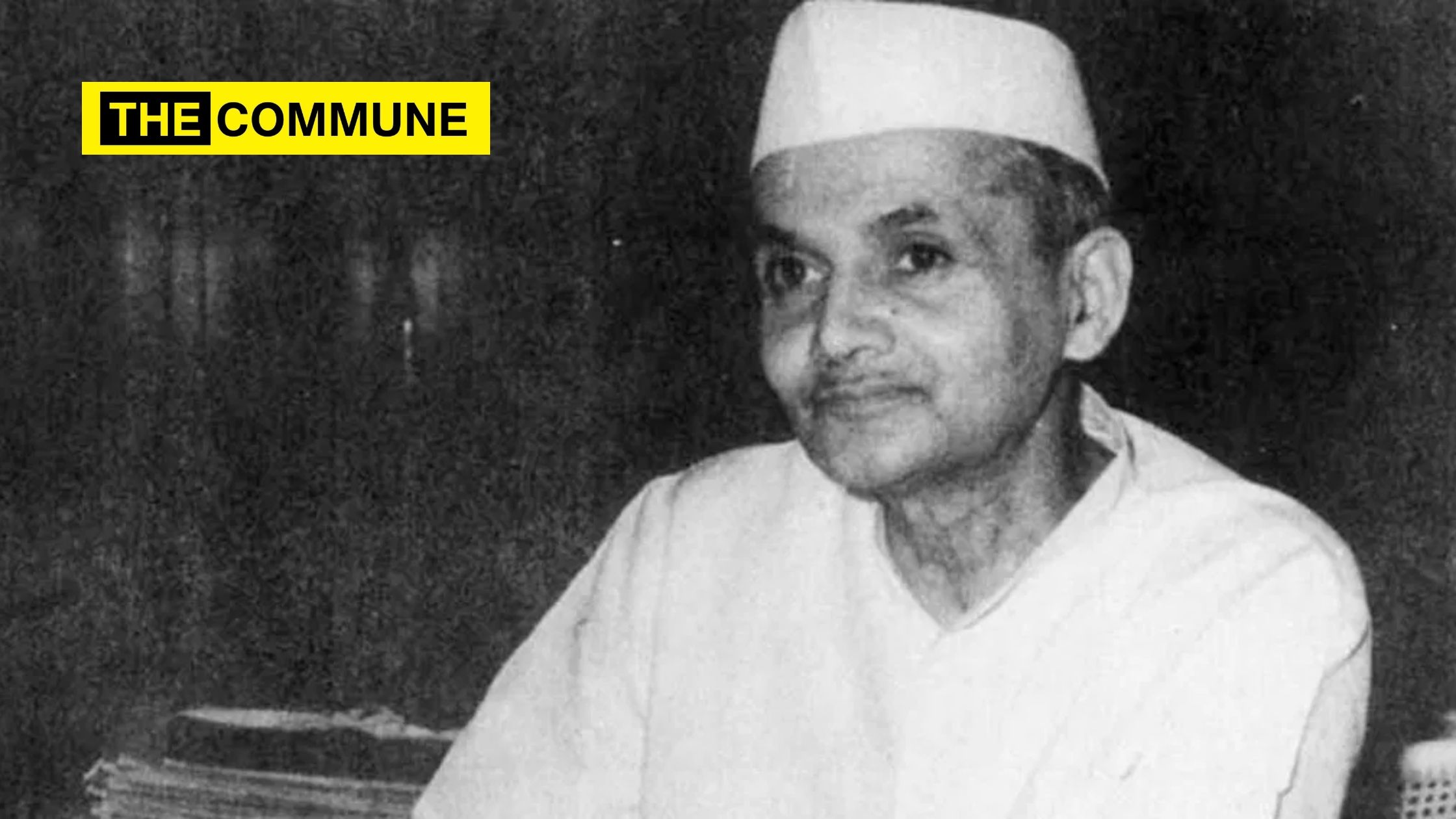
Lal Bahadur Shastri, the Prime Minister India owes its rise to

Lal Bahadur Shastri was the Indian statesman who rose to the occasion and held the top office at a time when riots were rife, famines were prevalent and the threat of war loomed large. The enormity of his character was visible even to the blind eye, for he was soft-spoken and simple in demeanour, but his voice reverberated in the hearts of fifty crore Indians whom he led by example.

Born in 1904, on 2nd of October in Mughalsarai, he acquired virtues like courage and patience at a noticeably young age. Why, after all he was a Kayastha, the legendary community who were sought by the Mughals in Delhi and Nizams in Hyderabad, by the British government and by independent India, for their administrative prowess, efficient recordkeeping and quick wit (even today, most Kayasthas serve as administrators in the Government of India and have risen to become Principal and Cabinet secretaries). Hence, the community followed a tradition of being educated in Urdu and Islamic scriptures from an early age. Lal Bahadur Srivastava, as he was known earlier, began his primary education under a maulvi, which came to a halt in sixth standard when his entire family moved to Varanasi. He joined seventh standard in Harish Chandra High School, where he dropped his surname to identify as casteless.

Such was young Shastri, short yet strong, subtle yet visible.

As fate would have it, Nishkameshwar Mishra was a teacher at Harish Chandra High School at the time when Shastri enrolled. Owing to his teaching, Shastri began taking a deep interest in Indian history and soon, in 1921, when he was in tenth standard, Mahatma Gandhi and Madan Mohan Malviya, in a public lecture attended by Shastri, called for the masses to quit government schools and jobs. Shastri quit the next day, marking the beginning of the Non-Cooperation Movement.

He became a full-time volunteer at the local branch of the Congress Party and began taking part in protests and demonstrations, for which he went to jail multiple times. He was given the title ‘Shastri’ as part of his degree at Kashi Vidyapeeth, which later stuck to his name and became part of his identity.

By 1928, Shastri had been jailed for two and a half years and by 1937, became the Organising Secretary of the Parliamentary Board of Uttar Pradesh. In 1940 he was again imprisoned for one year for supporting the independence movement. He was made the Minister of Police and Transport in Uttar Pradesh on 15th August 1947. Five years later in 1952, Nehru summoned him to Delhi and made him the Minister of Railways.

Twelve years later in 1964, Nehru died. The question in every India’s mind was the same – “after Nehru who?”

It was Shastri who answered the call.

As soon as he took office, when anti-Hindi riots flared up in the State of Madras; he pacified it by ensuring everyone that English would go on as the official language. Madras trusted him. Next, he discontinued Nehru’s socialist economic policies and created the National Dairy Development Board to help Amul grow. India was starving at the time and Shastri’s White Revolution was a boon. However, the situation was still tense and an immediate solution was required. So Shastri, the Prime Minister of India, started skipping a meal a week and distributing it to the hungry. He went on air and appealed to his countrymen to do the same. His words struck the right chord and the response was overwhelming. Restaurants and eateries began downing their shutters on Monday evenings and people started calling it the Shastri Vrat (Shastri Fast).

Then one day, by ploughing a patch of land in his Delhi residence all by himself, he sparked the Green Revolution of India. It had the desired response; farmers began to cultivate more crops and M.S Swaminathan was chosen to lead the team of scientists to deliver a long-term solution.

In 1962 under Nehru, India had been pushed back in the India-China war. Shastri had not forgotten the resulting humiliation and expanded India’s defence budget as soon as he came to power. He also chose to build closer relations with Russia.

It was then, in the 1965 Indo-Pak war, that Shastri showed the world what he was made of. In his speech to the Parliament, he stated:

In the utilization of our limited resources, we have always given primacy to plans and projects for economic development. It would, therefore, be obvious for anyone who is prepared to look at things objectively that India can have no possible interest in provoking border incidents or in building up an atmosphere of strife… In these circumstances, the duty of Government is quite clear and this duty will be discharged fully and effectively. We would prefer to live in poverty for as long as necessary but we shall not allow our freedom to be subverted.

India pushed back Islamic militants and Pakistani soldiers alike, captured Lahore, and brought it under direct mortar fire while major tank battles ensued in Punjab. When the war finally ended with a United Nations mandated ceasefire, India emerged victorious and Shastri the hero. He met Ayub Khan informally after that, and both formally signed the Tashkent Declaration on 11th January 1966.

It was on that tragic day, under mysterious circumstances, that India’s second Prime Minister was allegedly murdered on foreign land.

A grieving nation was not ready to believe that their beloved Prime Minister had died due to a heart-stroke and yet, a post-mortem was not performed.

And then, just like that, as swiftly as Shastri had settled in the hearts of fifty crore Indians, he was forgotten. History textbooks did not do justice to his achievements; his own government, led by Indira Gandhi, paid no heed to the man who started the White and the Green Revolutions of India. Like this, slowly and systematically, the memory of Lal Bahadur Shastri was wiped clean.

In a recent film called Tashkent Files, the circumstances of his death have been revisited.

This article was republished from Standpoint India with permission. Read the original article here.

The Print does a hitjob on woman journalist from Swarajya, apologises after being called out, removes apology tweet, apologises again

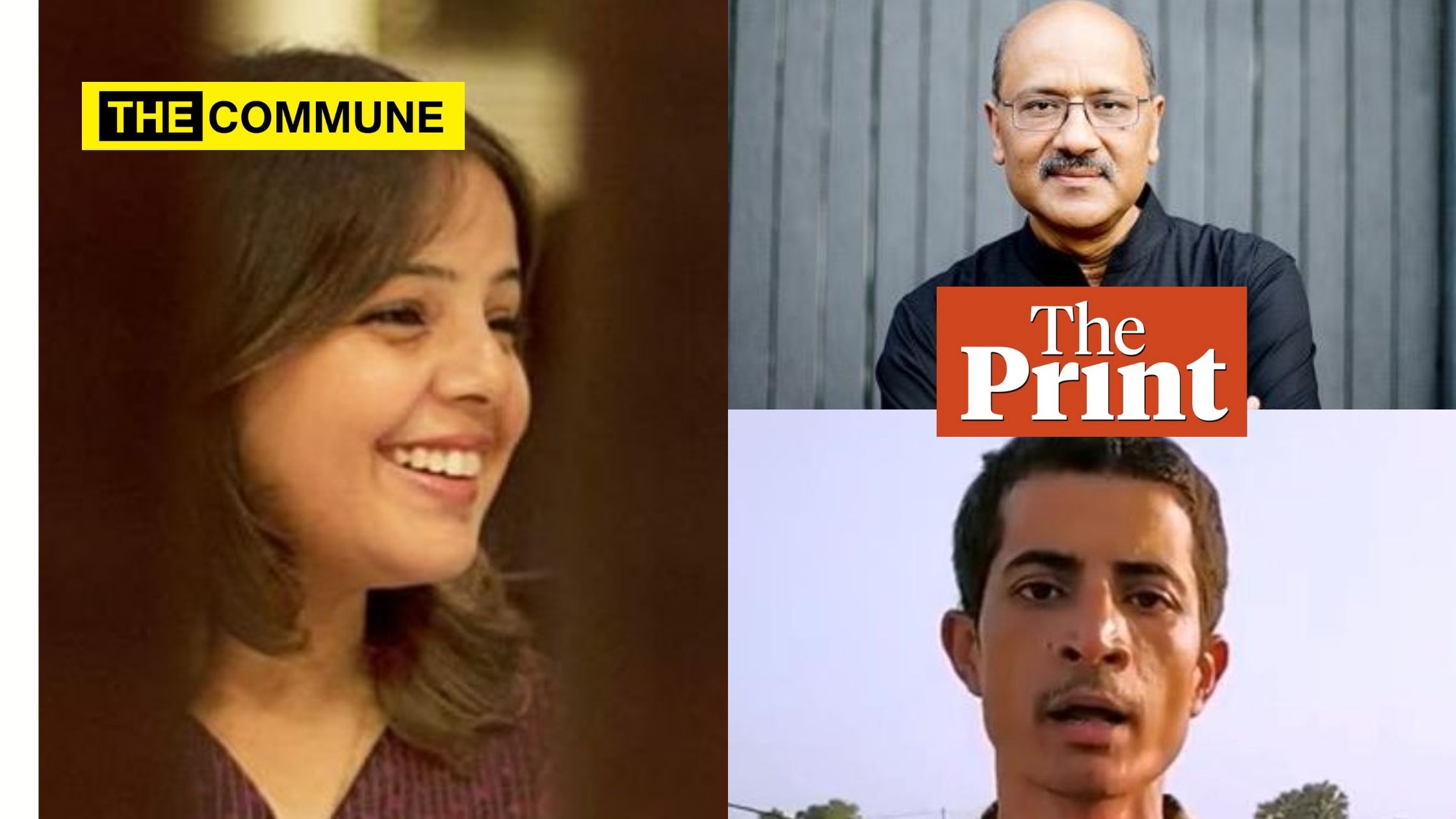
On October 1, online news portal ‘The Print’ run by Editor’s Guild chief Shekhar Gupta, carried an opinion piece written by one of its in-house correspondent who had belittled a woman journalist from Swarajya without even running a basic fact-check about the person.

This correspondent named Tarun Krishna, an alumnus of Indian Institute of Mass Communication had written an article titled “You can’t talk of Hathras rape without listing other rapes – thanks to IT cell whataboutery”, in which he had targeted Swati Goel Sharma, a senior editor at Swarajya saying that Sharma ‘ran a campaign’ on ‘love jihad’ while denying caste angle in the Hathras rape incident. He said ‘people like Sharma’ saw ‘jihad’ in love and went on to accuse her of ignoring ‘caste supremacy’ in the Hathras incident where four Thakur men allegedly raped a Scheduled Caste woman.

Upon coming to know of this, Swati Goel Sharma in a series of tweets called out The Print and Shekhar Gupta for the unwarranted slander against her and called the attack on her as ‘gutter level stuff’. She said that she never uses the term ‘love jihad’ while reporting on crimes committed on Hindu women by Muslim men. She added that the writing was ‘ill-informed’ writing and asked the writer of the article to provide proof of her denying caste angle in Hathras case.

Swati Goel Sharma is a ground reporter working for Swarajya who is known for bringing to light atrocities against Dalits that other mainstream media chooses to ignore. She along with Dalit activist Sanjeev Newar (aka Agniveer) runs a non-profit to support the lives of several downtrodden people.

She also came down heavy on the writer of the article by calling him a sick pervert.

Following the embarrassment, The Print quietly pulled down the article. Swati Goel Sharma attached the screenshot of her article being pulled down and thanked The Print and Shekhar Gupta for taking it down.

Realizing that they have been exposed naked, The Print apologized to Swati by replying to her thread. However this was taken down within minutes. They again posted a separate tweet apologizing to Swati but this time they did not quote her thread as they realized that doing so might bring the attention of the people in what they indulged in.

Many on Twitter came in support of Swati when she exposed The Print’s nefarious attempts to downgrade her.

https://twitter.com/anuraag_saxena/status/1311749452873441280

Indian Army to get secure communication system ASCON to be used in forward areas

The Cabinet Committee on Security (CCS) has given its approval to the much-needed requirement of a secure communication network for our troops deployed in forwarding areas like the Line of Actual Control LAC). 

Secure communication could mean the difference between life and death. At the LAC, China already has the leg-up on secure communication network as it has installed modern optical fibre cable links.

Which is why the CCS has agreed to a Rs 7,796 crore project to establish a secure communication network of modern optical fibre cable links in along with the use of satellites and microwave radios, reported in Economic Times.

The new advanced communication system is called “Army Static Switched Communication Network” or ASCON. The project will be implemented by the public sector undertaking ITI.

ASCON will revolutionise military communication systems, and our army will shift to internet protocol (IP) / multi-protocol label switching (MPLS) technology with high bandwidth communication to the remote operational areas.

Do You Know Why ‘Veera Thuravi’ Ramagopalan Wore A Saffron Cap Over His Head?

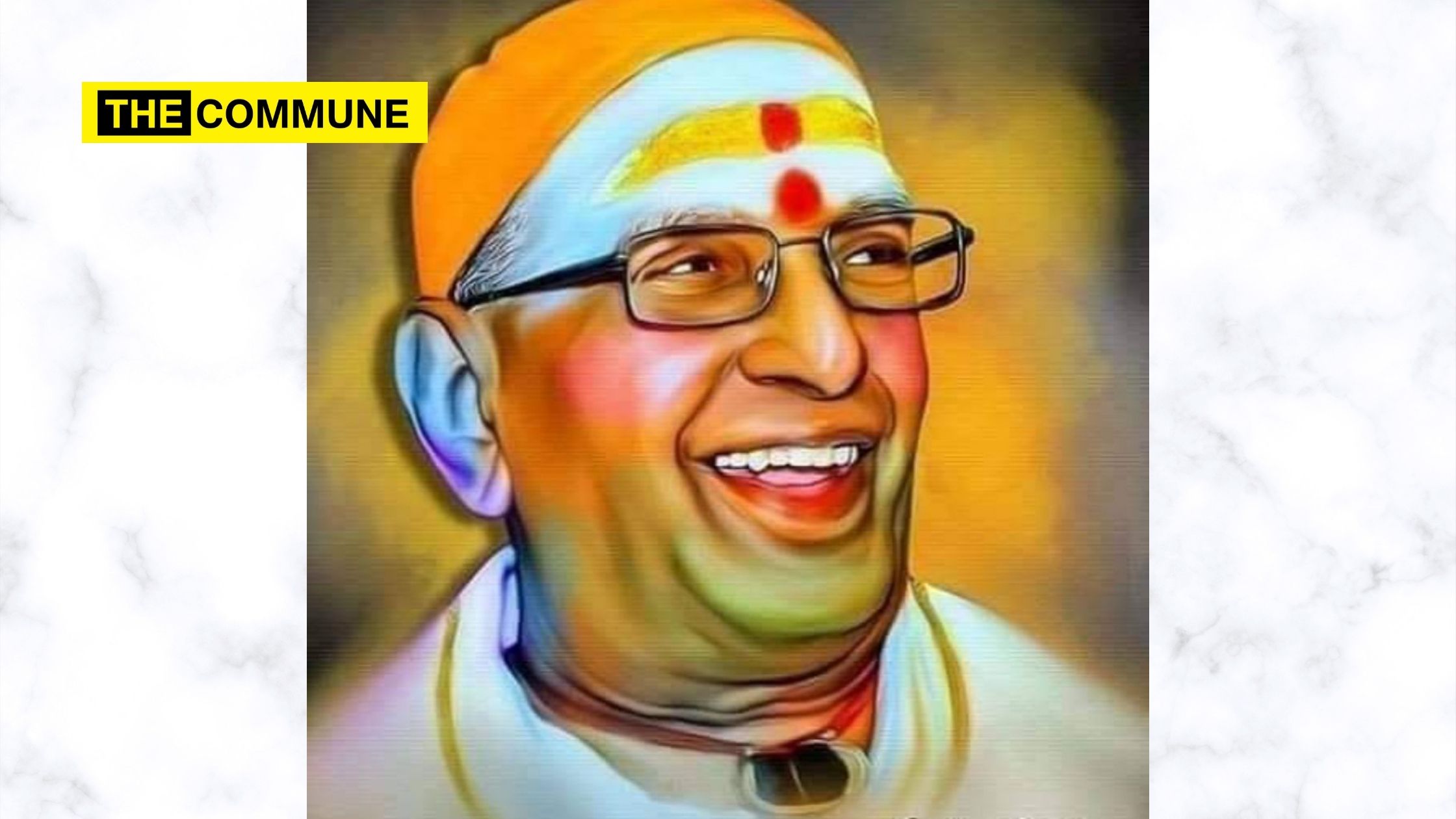
Senior RSS Pracharak and Founder President of Hindu Munnani Ramagopalan breathed his last on 30 September 2020 after testing positive for the Wuhan virus. The former Prant Pracharak of Tamil Nadu, who was elemental in fighting the menace of religious extremism of Islamic groups and religious conversion by Christian evangelists, is addressed as ‘Veera Thuravi’ (Brave Sage).

His characteristic saffron cap that is hard to miss anyone’s eye stands testimony to the sobriquet given to him.

The most powerful weapon in the world is, well, a sharp weapon itself. Anyone who has been threatened or has had an attempt on their life will surely change their behaviour or atleast tone it down once they go through a traumatic experience.

In today’s world, where a social media post on a particular religion can get one killed, it takes immense courage to be on the streets to stand up against the injustice while facing threats to life.

Back in November 1997, when traffic policeman Selvaraj had stopped a vehicle carrying weapons in the Ukkadam area of Coimbatore and detained the persons carrying it, he was stabbed to death in the middle of the road by Wahhabi terrorists within a few days. This had sent shivers down the spine of the force. Even today, lower rung forces think twice or thrice before engaging with a person wearing a skull cap and flouting rules.

That is what fear of death does. It even forbids from doing one’s duty.

But here was a man who fought with the same zeal throughout his life even after visiting death’s doorstep.

Just ten years before the brutal attack on Selvaraj by jihadis, they had plotted against several prominent RSS and BJP leaders of that time. Following the murderous attack on former BJP National President Jana Krishnamurthi, Syed Ahmad Basha who founded the Al-Ummah terrorist organization tried to assassinate Ramagopalan at the Madurai Railway Station in 1987. He was attacked with a billhook that cut off a portion of his skull. He survived following a long intensive treatment and had stayed in coma for more than a month.

The severely injured portion of his head was covered with a plate attached to a mesh. This arrangement had been done on his head because that portion of the head was covered with bare skin. If one were to press hard with a finger, it would get punctured.

This was the price he had to pay for trying to stop the en masse conversion of Meenakshipuram villagers to Islam in 1981.

Since then, the saffron cap that he adorned became a symbol of valour, survival and sacrifice that Ramagopalan made in his life.

Any person who had undergone such a life-threatening experience would either withdraw or lie low. But Ramagopalan instead of getting cowed down began functioning with even more rigour.

At a time when Tamil Nadu was falling prey to the plunder of Dravidianists, Christian evangelists and Islamic Sunni Wahabists, this man through Hindu Munnani offered the resistance needed to arrest these forces while fighting caste atrocities, untouchability and other social evils.

If there was a Tilak to Maharashtra, Thiru. Ramagopalan was a reincarnation of him in the south who infused a new spirit in the Hindu Renaissance in Tamil Nadu. Inspired by his commitment to the cause, the Indu Makkal Katchi under Tamil Thiru. Arjun Sampath is walking on the path laid by him.

The man was a living example of the Sanskrit shloka – Dharmo Rakshathi Rakshithaha – He remained a guardian of Dharma which protected him for 94 years!

He truly was a Veera Thuravi.

POTUS and FLOTUS test positive for Wuhan Virus

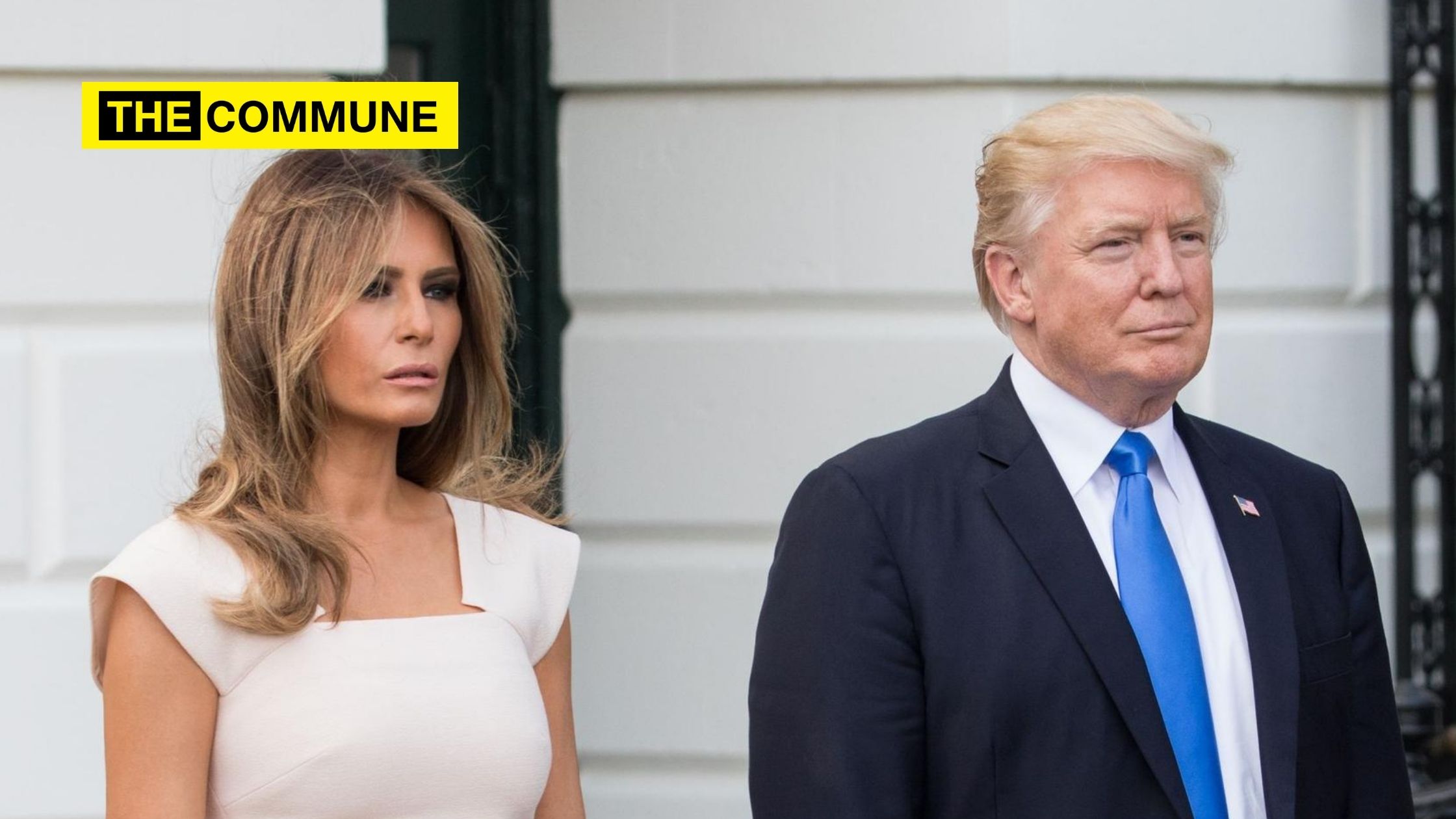
President of the United States Donald Trump took to social media and announced that he and the First Lady of the United States Melania Trump tested positive for the Chinese Virus.

The President has stated that he along with Melania Trump would go into quarantine and start the recovery process.

The total number of Wuhan Virus cases in the USA stands at 7.31 million with more than 208K deaths.

Meet the man from Tamil Nadu who quit a corporate job and is helping farmers double their yield with AI

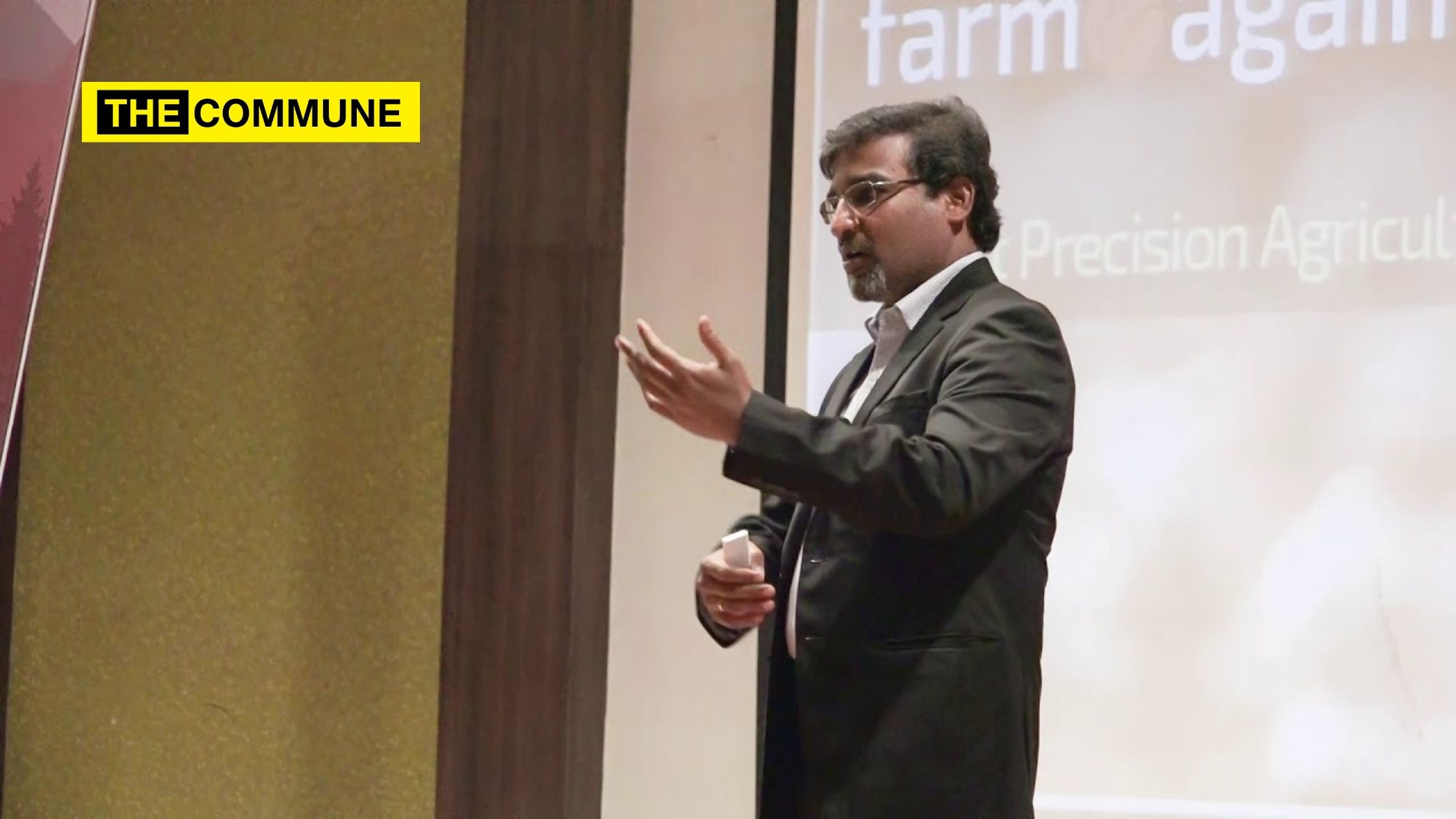
Benjamin Raja, a man from Tamil Nadu is making waves in agriculture after quitting his corporate job. His startup Farm Again is helping farmers have the best yield out of their land by making the perfect blend of elements like weather, geography and chemistry, with high precision and timing through the use of artificial intelligence.

He started the company in 2012 at Tirunelveli after quitting a high paying job. In an interview to The Better India, he was quoted saying that things changed for Benjamin when he met his school friend, John Augustin, a farmer from Salem, who was not happy with the yield and earning less than expected. John was using 1,000 litres of water for irrigation, while the requirement was only 100 litres which turned out to be the reason for the low yield and productivity.

Benjamin thought to increase the average yield in the country by five to ten times and help farmers make agriculture a viable.

He had then approached Rajaratnam Kanakarajan, a farmer who wanted to give away his 14-acre farmland for industrial or commercial use and provided him with farm precision techniques.  The farm management technique worked so well for Rajaratnam that he invested in the company and became the director.

The farm management technique monitors parameters like – moisture level in the soil, water quantity needed and amount of fertilizer to be used among others. There are sensors placed that uses sunlight as source of energy and injects the necessary inputs as and when required. These sensors are connected to the user through a mobile network.

Benjamin says that a land area of half an acre, up to 30 km from the hub (or farmer’s home), can be covered in his technology. About 3,500 farmers across Tamil Nadu, covering over 4,000 acres of land, are benefitting with the technology at present, the founder of the startup says.

Speaking about the cost factor, Benjamin says automating an acre of the area with imported technology costs around ₹ 25 lakh. But, with indigenous equipment produced in India, the investment cost drops to ₹ 2.5 lakh.

Woman from Kerala creates world record by completing 350 online courses in 90 days

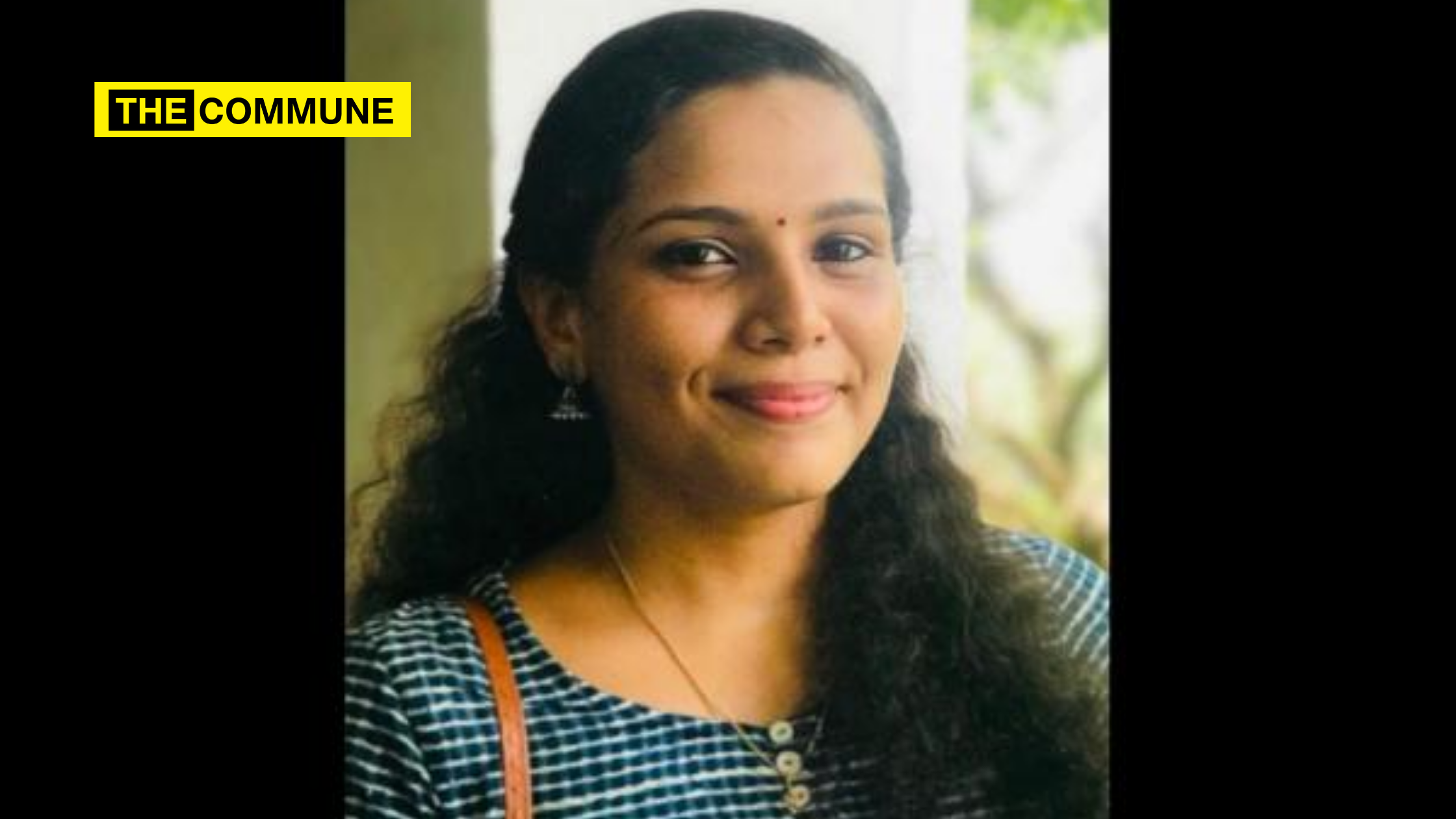
In an era where people are struggling to do everyday activities due to the COVID-19 pandemic, Arathi Raghunath from Kerala has made a world record for completing 350 courses in the last 3 months from Coursera platform. She has been awarded a world record from the Universal Record Forum (URF) for having accomplished this feat.

Daughter of Maliyekkal Madathil M R Reghunath and Kaladevi, Arathi, who is a Biochemistry student from MES College spends her free time during the lockdown studying and completed 350 courses in the last 3 months.

“It was my faculty at college who introduced me into the world of online courses. There is a range of courses online. All of them vary in duration and curriculum. With the support of my college principal Ajims P Muhammed, Coursera coordinator Haneefa KG, and class tutor Neelima T K, I managed to finish the courses I signed up for within a few weeks,” she was quoted saying in The New Indian Express.

Arathi has completed the courses offered by John Hawkins University, State University of New York, Technical University of Denmark (DTU), University of Virginia, Emory University, University of Colorado Boulder, University of Copenhagen, University of Rochester, and Coursera Project Network.