Home Blog Page 148

PM Modi’s Japan Visit To Deepen $13 Billion Investment Ties And Strategic MoUs

India Japan

As Prime Minister Narendra Modi’s two-day Japan visit is set to begin, both nations have accelerated trade and economic ties, with over 170 MoUs signed in two years representing more than $13 billion in committed investments.

PM Modi will travel to Japan from 29-30 August to take part in the 15th India-Japan Annual Summit at the invitation of his Japanese counterpart, Shigeru Ishiba. From steel plants in Gujarat to biogas projects in rural India, from Assam’s gateway role to Tokyo’s advanced Research and Development labs, from farmers in rural India to AI engineers in Bengaluru and Tokyo, from semiconductor fabs to academic exchanges, the India–Japan MoUs are building the bridge to a new era of cooperation.

With ‘Make in India, Make for the World’ as guiding vision, this partnership is set to reshape industrial, agricultural, and human capital landscapes, not only for the two nations but for the whole region and the world at large. Nippon Steel (AM/NS India) is expanding in Gujarat with ₹15 billion investments, along with ₹56 billion integrated steel plant in Andhra Pradesh. While Suzuki Motor has announced ₹350 billion for a new plant in Gujarat and ₹32 billion to expand production lines, Toyota Kirloskar has ₹33 billion expansion plans in Karnataka and a ₹200 billion new plant in Maharashtra.

Sumitomo Realty has invested $4.76 billion in real estate, while JFE Steel has ₹445 billion worth of investment to strengthen electrical steel production. Astroscale is the first Japanese commercial satellite launch using ISRO’s PSLV. This spread of investment across steel, automotive, renewables, semiconductors, real estate, and aerospace cements Japan’s confidence in India’s long-term economic potential.

Japanese industry partnerships are pulling Indian SMEs into global supply chains. Tokyo Electron and Fujifilm, and Tata Electronics are building a semiconductor ecosystem, with Indian SMEs becoming suppliers for high-value components. Toyota and Suzuki’s value chains will integrate hundreds of tier 2 and 3 Indian SMEs. Fujitsu is recruiting 9,000 Indian engineers in its Global Capability Centre, boosting IT-linked SMEs. With these initiatives, SMEs will gain global-standard practices, technology infusion, and market access, elevating India’s export competitiveness.

Japanese cooperation is also directly empowering India’s rural economy through green energy projects. Sojitz Corporation, in partnership with Indian Oil, is investing $395 million to establish 30 biogas plants that will produce 1.6 million tonnes annually. Farmers will supply crop residues and agri-waste, earning additional income while supporting India’s clean energy transition. Suzuki Motor Corporation, working with the National Dairy Development Board and local dairy cooperatives, is launching a biogas initiative adopted by UNIDO under its Industrial Cooperation Programme in the Global South (funded by Japan’s METI).

Starting operations in 2025, four biogas production plants in Banaskantha district in Gujarat were made with a total investment of Rs 2.3 billion. This project will convert cow dung into carbon-neutral biogas for CNG vehicles, which make up 20 per cent of India’s passenger car market. This will cut emissions, strengthen energy self-sufficiency, create rural jobs, and raise farmer incomes, while embedding Japanese technology into scalable clean-energy infrastructure.

Moreover, Nippon Steel’s projects will boost speciality steel exports to auto and energy markets. Toyota and Suzuki’s hybrid/EV ‘Made in India’ vehicles will be exported to Africa, the Middle East, and Southeast Asia. When it comes to human resources and knowledge exchange, the area is rapidly expanding under the India–Japan Talent Bridge programme and METI initiatives. As part of the ‘Talent Exchange Target’, 50,000 Indians and Japanese are part of the exchange programme in five years via study abroad, internships, and employment.

Professors and students are being invited for company visits, university roundtables, and networking with Japanese firms. A notable MoU was recently signed between the government of Assam and ASEAN Holdings, highlighting Japan’s commitment to India’s northeast. This also dovetails with Japan’s long-standing interest in the Act East Policy and the development of the northeast. At the Japan-India-Africa Forum and the recently held 9th TICAD Summit in Tokyo, India emerged as an anchor country for connectivity and industrial corridors. Priority areas are mineral security (rare earths, lithium, cobalt); supply chain resilience in semiconductors and EVs; and exploring export markets in Africa and the Middle East for Made-in-India goods with Japanese technology.

-IANS

Subscribe to our channels on TelegramWhatsApp, and Instagram and get the best stories of the day delivered to you personally.
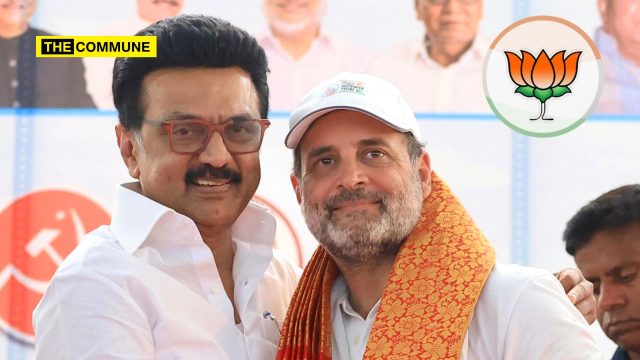
TN BJP Slams Rahul Gandhi’s Bihar Campaign As Political Gimmick

The Tamil Nadu unit of the BJP has strongly criticised Congress leader Rahul Gandhi’s ongoing campaign in Bihar, describing it as a “publicity stunt” aimed at reviving his political career and projecting himself as the Opposition’s Prime Ministerial candidate for 2029.

In a statement, BJP spokesperson A.N.S. Prasad said Rahul Gandhi’s “Vote Chori” allegations against Prime Minister Narendra Modi, Home Minister Amit Shah, the Election Commission of India (ECI), and the BJP were “baseless” and “anti-national”. He alleged the Vote Adhikar Rally by Rahul Gandhi was being orchestrated with the support of foreign political and media agencies to rebrand Gandhi’s image and pressure the INDIA bloc partners like M.K. Stalin and Mamata Banerjee into endorsing him as a national leader.

According to Prasad, the Congress scion has failed to produce any evidence to substantiate his claims despite repeated challenges by the ECI. “Deadlines have lapsed without proof. This is the same pattern we saw with earlier allegations of EVM tampering,” he noted, adding that the ECI, a “globally respected institution,” has already dismissed the accusations as baseless. Prasad further questioned why Congress leaders continue to accuse the ECI only when election results go in the BJP’s favour. “If vote theft was systemic, how did Congress win in Karnataka and Himachal Pradesh?” he asked.

The BJP spokesperson accused Gandhi of undermining public trust in democratic institutions for personal gain. “This selective outrage erodes confidence in the electoral process and could even invite legal consequences for defaming constitutional bodies,” he said. Citing comments from Union Minister Anurag Thakur, Prasad said Congress has developed a pattern of blaming EVMs, voter suppression, or now “vote chori” to cover up its “repeated electoral failures”.

He added that Gandhi’s reliance on foreign firms for political branding raises serious concerns about external influence in Indian politics. Prasad also targeted the INDIA bloc partners for supporting the Bihar campaign, pointing to alleged failures of the DMK government in Tamil Nadu, such as power tariff hikes and law-and-order issues, as “mirror images” of Congress misrule. “Rahul Gandhi’s agitation is an attempt to derail Prime Minister Modi’s vision of Viksit Bharat 2047, which has already put India on the path to global leadership,” Prasad said. He concluded that the people of Bihar have “rejected Rahul Gandhi’s divisive rhetoric”, and called the campaign a turning point toward a “Congress-free Bharat”.

-IANS

Subscribe to our channels on TelegramWhatsApp, and Instagram and get the best stories of the day delivered to you personally.

Cybercrime Police Launch Probe After Senior Citizen In Tiruvarur Duped Of ₹13.5 Lakh In WhatsApp Scam By Fake ED Officials

cyber fraud police tn cyber scammers

A massive hunt has been launched by cybercrime police in Tamil Nadu’s Tiruvarur after fraudsters posing as Enforcement Directorate (ED) officials conned an 81-year-old man of ₹13.50 lakh in a sophisticated WhatsApp scam.

According to police sources, the victim, identified as Kunjithapadam, a resident of Tiruvarur, received a WhatsApp call a few days ago from an unknown person who claimed to be an ED officer. The caller, speaking in an authoritative tone, demanded details of his bank account and alleged that the octogenarian had carried out “illegal financial transactions”. When the elderly man denied the allegations, the fraudster intensified the threats, warning that action would be taken against him unless he paid a penalty. The caller further threatened that the case would be escalated to the Central Bureau of Investigation (CBI).

To make the scam appear authentic, the gang also sent him bank account details, instructing him to transfer the “fine” immediately. Frightened and anxious about possible legal action, Kunjithapadam complied and transferred a total of Rs 13.50 lakh to the accounts provided. Once the money was received, the fraudsters switched off their phones, cutting off all contact. Realising he had been duped, the senior citizen informed his two sons, both working abroad, about the incident.

Alarmed, they filed a complaint with the Special Branch police. The case was subsequently forwarded to the district cybercrime police. Based on the complaint, the cybercrime wing registered a case and initiated a search to trace the culprits. Investigators are now analysing the phone numbers and bank account details used by the fraudsters, and efforts are on to track the money trail. Police officials have also urged the public to remain vigilant and avoid sharing personal or financial details over phone calls or WhatsApp messages, stressing that government agencies never demand payments or threaten individuals in this manner.

The incident has once again highlighted the growing menace of cyber fraud targeting senior citizens, who are often vulnerable to intimidation and deception. Authorities have appealed to families to educate elderly members about such scams and to report suspicious calls immediately.

-IANS

Subscribe to our channels on TelegramWhatsApp, and Instagram and get the best stories of the day delivered to you personally.
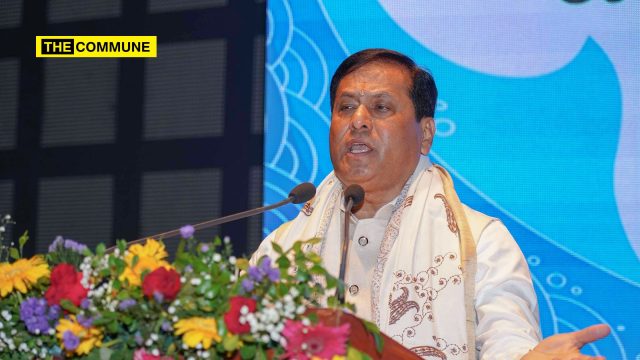
India Unveils $1 Trillion Maritime Investment Roadmap, Invites Global Investors

Union Minister for Ports, Shipping and Waterways Sarbananda Sonowal on 28 August urged global investors to view India as a hub for investment and innovation, highlighting the government’s $1 trillion maritime investment roadmap.

The new opportunities in India’s maritime sector “open up a $1 trillion maritime investment roadmap, with strong potential for joint ventures in developing ports and cargo terminal operations, multi-modal terminals, maritime services, shipbuilding, ship recycling and ship repairs, green hydrogen hubs, and sustainable shipping solutions,” the minister said at an event here.

Sonowal was speaking at the Ambassadors’ Roundtable Meet hosted by the Shipping Ministry, which brought together envoys from 28 countries to discuss cooperation for India Maritime Week (IMW) 2025 scheduled for 27 to 31 October  in Mumbai. India Maritime Week is the Shipping Ministry’s biennial flagship platform bringing together policymakers, investors, and thought leaders to shape the future of Indian ports and logistics. Further, the Union minister said that Maritime India Vision 2030 and Maritime Amrit Kaal Vision 2047 are shaping India’s ports, shipping and logistics ecosystem to be more resilient, sustainable and future-ready.

Key mega projects with investment opportunities are Vadhavan Port, Galathea Bay Transshipment Port, Tuna Tekra Terminal, LNG bunkering and green hydrogen hubs, an official release said. “Global players are joining hands with their Indian counterparts in shipbuilding, port modernisation, smart logistics, and green shipping. Technology is at the heart of this progress as AI-driven logistics, digital port operations, and automation are making our ports more efficient and globally competitive,” said Shantanu Thakur, Minister of State for Ports and Shipping.

The Centre has enacted five new pieces of legislation earlier this month the Bills of Lading Act, Carriage of Goods by Sea Act, Merchant Shipping Act, Coastal Shipping Act and the Indian Ports Act which replace colonial-era laws and align India’s framework with global best practices.

-IANS

Subscribe to our channels on TelegramWhatsApp, and Instagram and get the best stories of the day delivered to you personally.
Morgan Stanley: India’s Growth Outlook Solid, Debt Dynamics Improving

The starting point of India’s macro balance sheet is positively positioned, underpinned by a robust macro-stability framework (fiscal consolidation and flexible inflation targeting framework), productivity enhancing policy reforms, and favourable structural factors such as demographics, that lend support to the growth trajectory, a Morgan Stanley report said on 28 August 2025.

The report expects growth to average 6.5 per cent in the next 10 years, with inflation likely to align with the RBI’s target of 4 per cent, thus providing a favourable backdrop to the cost of capital and ensuring debt sustainability. “India’s overall indebtedness levels reflect an incipient inflexion with a rise in private sector leverage. We expect private sector debt to continue to see modest expansion while public sector debt decline keeps overall debt manageable and improves the productivity of incremental debt,” said the report.

The report further stated that the pace of expansion of overall debt levels is likely to remain modest, even as the mix changes more in favour of productivity-augmenting private sector debt. “As such, we expect overall debt levels to remain range-bound between 157-158 per cent of GDP over the next two years. A pickup in private sector capex may lead to a rise in corporate leverage, albeit at a modest level, while expansion in household leverage could continue. The reduction in public sector debt should be driven by gradual fiscal consolidation even as the quality of spending remains skewed towards capex,” it noted.

The share of private sector debt in overall debt levels is seeing incipient signs of pickup, offset by a commensurate decline in public sector leverage, indicating improved debt dynamics. Private sector debt has risen to 76 per cent of GDP as of FY2025 from 73.9 per cent of GDP at the trough in FY2024, while public sector debt has fallen to 82 per cent of GDP in FY2025 from 83.4 per cent of GDP in FY2024. In addition, the productivity of incremental debt has also improved in a broad-based manner across sectors, including the public sector, which has directed its funds towards infrastructure expansion, said the report.

-IANS

Subscribe to our channels on TelegramWhatsApp, and Instagram and get the best stories of the day delivered to you personally.
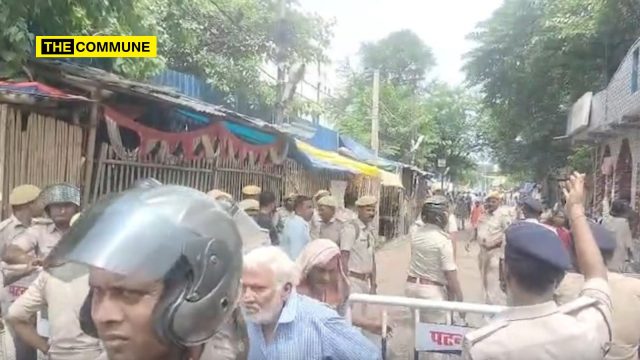
Fifth-Grade Student Dies After Mysterious Burn Injuries At Patna School; Police Launch Probe

A class 5 girl student, who was found with severe burns in a Patna school, died at Patna Medical College and Hospital (PMCH). The girl was found with severe burns inside the washroom of Amla Tola Kanya Vidyalaya in Gardanibagh. The incident has triggered outrage, with the victim’s family alleging foul play.

An FIR of murder has been lodged at the Gardanibagh Police Station against unknown persons, based on the statement of Zoya’s father.

According to police, Zoya was rushed to PMCH’s burn ward with severe injuries to her face, throat and eyes, but she could not survive and breathed her last on Wednesday night. The family, however, has made serious allegations. Zoya’s sister, Nargis, alleged that a teacher, identified as Anil Sir, and others from the school conspired to murder her. She said Zoya had confided a week earlier that she saw a teacher misbehaving with a girl and was later threatened with expulsion if she revealed the incident.

“By 10 a.m., school was over, but my sister did not return home. Later, we were told she was found unconscious in the toilet. This is a murder,” Nargis alleged. Zoya’s mother also accused the school staff of burning her daughter. The victim, in her dying declaration, has not named anyone responsible for the incident.

Police have begun scanning CCTV footage of the school and are questioning students and staff to determine how the girl accessed inflammable material inside the washroom. Officials said they are probing both angles – whether it was self-inflicted or a planned attack. The mysterious death of the 5th-grade student has created tension in the locality, with demands for strict action. Central SP Diksha said the matter is being probed from all angles.

“The family has raised concerns about a prior molestation incident. We are investigating that as well. So far, no arrests or detentions have been made. We have registered an FIR of murder against unknown persons in the Gardanibagh police station,” she said. The death of the young student has created shockwaves across Patna, with locals demanding strict action against those responsible.

-IANS

Subscribe to our channels on TelegramWhatsApp, and Instagram and get the best stories of the day delivered to you personally.
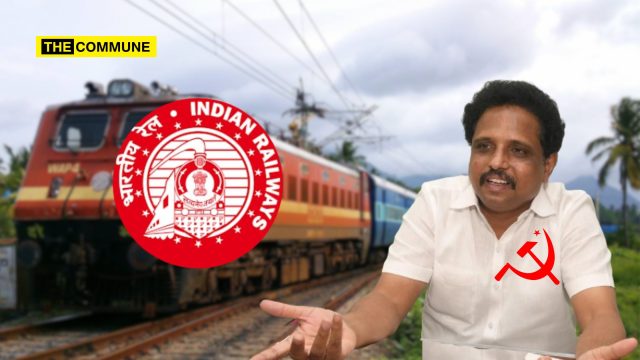
“Many Railway Accidents In TN Caused By Staff Unfamiliar With State Language”, Says DMK Ally CPI(M) MP Su Venkatesan

su venkatesan

Madurai CPI(M) MP Su Venkatesan, has stirred a fresh controversy by suggesting that a key factor behind several recent railway accidents is the deployment of other state staffs unfamiliar with the local language of the region have contributed to safety lapses.

The comments came during a review meeting held at the Madurai District Collector’s office, chaired by Collector Praveen Kumar, which focused on issues within the Public Distribution System. Su. Venkatesan, present at the meeting, also addressed reporters afterward.

He pointed out that the promotional examination conducted by Southern Railway last week violated a key guideline that question papers must be available in English, Hindi, and the local state language. However, the test reportedly included only English and Hindi, with Tamil omitted entirely.

“I have written to the Railway Minister urging that the exam be annulled and reconducted with the inclusion of Tamil,” Venkatesan stated, adding that he expects a decision on the matter soon.

He also criticized a new Southern Railway directive advising officers to improve their Hindi skills, calling it an unfair imposition. According to Venkatesan, such one-sided language policies not only marginalize regional languages but can also have serious operational consequences.

Citing safety concerns, he said, “Advise has been given to officials to train and develop their personality in Hindi. The language problem is not just related to the office. A major reason for many recent railway accidents is the employment of staff who do not know the state’s language.”

His remarks have drawn both support and criticism, with some viewing it as a necessary stand for linguistic inclusion, while others argue it could deepen regional divides.

(With inputs from Hindu Tamil)

Subscribe to our channels on TelegramWhatsApp, and Instagram and get the best stories of the day delivered to you personally.

Director Mohan G Unveils First Look Of ‘Draupathi 2’, Film Set Around Hoysala Emperor And Kadava Dynasty

mohan g draupathi 2

Filmmaker Mohan G, known for his bold and often controversial storytelling, is back with Draupathi 2, the sequel to his previous hit Draupathi. Reuniting once again with actor Richard Rishi, this marks their third collaboration. The film is expected to continue Mohan G’s tradition of tackling intense themes, with music composed by the acclaimed Ghibran.

The first poster of Draupathi 2 was unveiled in conjunction with Vinayaka Chaturthi, adding a festive spotlight to the film’s launch. Mohan G shared the poster on social media, hinting at a powerful historical narrative centered on the courage and sacrifices of South Indian rulers specifically, the Hoysala Emperor Veera Ballala III and the Kadavaraya kings of Senthamangalam.

In the poster, Richard Rishi is seen in a regal avatar, setting the tone to be a period drama infused with socio-political commentary. The film aims to explore a turbulent chapter in regional history, focusing on themes of valor, struggle, and identity.

The first look has sparked conversation among audiences, with many speculating on the film’s ideological undertones. Known for integrating social critique into his films, Mohan G once again appears to be using cinema as a platform for debate and reflection.

Despite often being labeled as a “caste-centric” filmmaker, Mohan G remains unapologetic in his approach. His previous works have stirred both praise and protest, and Draupathi 2 seems poised to follow the same path.

The director has faced legal and public backlash in the past from the leftist yet he continues to pursue his filmmaking vision without compromise.

While the official release date is yet to be announced, Draupathi 2 is expected to reignite discussions around identity, history, and caste in Tamil cinema. With its historical backdrop and modern implications, the film is shaping up to be both a cinematic and cultural statement.

(With inputs from TOI)

Subscribe to our channels on TelegramWhatsApp, and Instagram and get the best stories of the day delivered to you personally.
Vinayagar Chaturthi Procession Banned In Dindigul, Hindu Munnani Members Arrested For Defying

hindu munnani vinayagar chaturthi

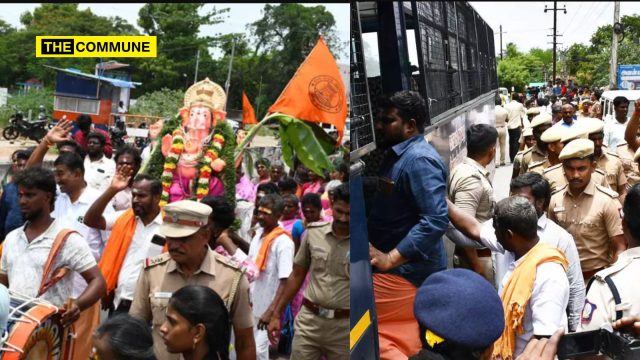
Members of the Hindu Munnani were arrested by the Dindigul police after they attempted to carry out a Vinayagar Chaturthi procession despite an official ban.

Traditionally, residents of Kudaiparaipatti organize a procession of Lord Ganesha idols every year to mark the festival. However, this year, authorities prohibited the procession on behalf of Hindu organizations, citing law and order concerns.

Refusing to comply with the police directive, Hindu Munnani announced that they would proceed with the event regardless of the restrictions. In anticipation of potential unrest, a heavy police force was deployed in the area under the supervision of Dindigul City Superintendent of Police, Karthik.

Led by Hindu Munnani’s city president Gnanasundaram, district vice presidents Ravichandran and Rajendran, and executive committee member Shankar Ganesh, the group loaded the idol into a van and moved forward with the procession. The group, accompanied by drum beats, transported the idol to temples including Vinayagar, Kaliamman, and Bhagavathiyamman in the area, where special poojas and offerings such as sundal, kozhukattai, pongal, and fruits were conducted.

Following this, the idol was brought to the Karupanaswamy temple, where additional rituals were performed before the procession continued. However, the procession was halted by the police at the Dindigul-Batlagundu road. Authorities seized the idol and stopped the event, citing violation of the imposed ban.

The Hindu Munnani protested the police action, leading to the arrest of 36 of its members, including 24 women. Meanwhile, under the supervision of West Tahsildar Jayaprakash, the police transported the confiscated Ganesha idol in a cargo vehicle and immersed it in the Kottaikulam pond. The sequence of events led to mild unrest and tension in Kudaiparaipatti.

(With inputs from Daily Thanthi)

Subscribe to our channels on TelegramWhatsApp, and Instagram and get the best stories of the day delivered to you personally.
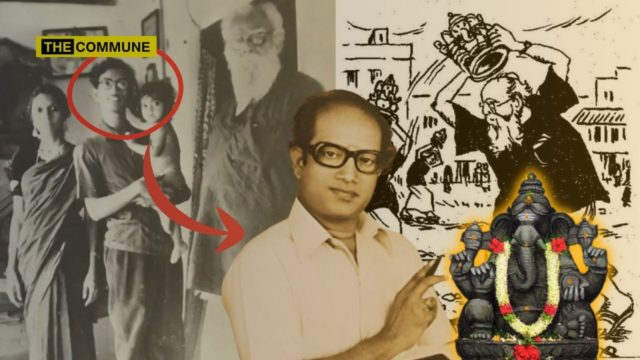
From Breaking Vinayagar Idols To Singing Bhakti Songs: How Ulundurpettai Shanmugam Transformed From An EVR Follower To Tamil Nadu’s Devotional Voice

Ulundurpettai Shanmugam

History is full of unexpected transformations, and Tamil Nadu a land steeped in spiritual tradition has witnessed many such profound personal journeys. One such story is that of Ulundurpettai Shanmugam, a name that might not ring as many bells as poet Kannadasan’s, but whose impact is no less significant.

While most people are familiar with Kannadasan’s famous shift from atheism to devout belief, fewer have heard of Ulundurpettai Shanmugam a committed rationalist who later became one of Tamil Nadu’s most celebrated devotional lyricists. Ironically, his lyrics now echo through streets and temples during Vinayagar Chaturthi, especially the beloved song “Vinayagane Vinai Theerpavane”, soulfully sung by Seerkazhi Govindarajan.

From Breaking Idols To Writing Bhakti Songs

In an old Doordarshan interview, poet Valli shared the fascinating story of Shanmugam’s ideological transformation. According to him, Shanmugam was once deeply involved in the rationalist movement spearheaded by E.V. Ramasamy Naicker (Periyar), even participating in protests where Ganesha idols were destroyed. In fact, during one such event led by Periyar, it was Shanmugam himself who reportedly smashed a Vinayagar idol.

Valli says, “Ulundurpettai Shanmugam is a respected Tamil scholar and poet. A special fact about him I know that many people don’t know is that he was once a great atheist who broke idols of Vinayagar (Ganesha). When Periyar led the protest to break Vinayagar idols, this very same Ulundurpettai Shanmugam was the one who broke them. Afterward, he became a theist and wrote a wonderful song, “Vinayagane Vinai Theerppavane”, which is sung by Sirkaali Govindarajan in a concert. That song was written by him.”

How His Life Turned?

It is believed that the life took a spiritual turn for Shanmugam. At some point, he underwent a major personal transformation, turning away from atheism and embracing belief. One pivotal moment, as accounts suggest, came during a serious health crisis in his middle age. Close to death and with little hope, Shanmugam experienced what he believed was divine intervention a miraculous recovery that he attributed to Lord Muruga.

This spiritual awakening led him to immerse himself in devotional writing. Over time, he composed more than 4,000 Bhakti songs, many of which are still sung today. Among his most famous are “Nee Allal Deivam Illai Muruga”, “Thirupathi Malai Vaazhum Venkatesa”, and “Madurai Arasaalum Meenakshi” — songs that remain widely cherished by Tamil devotees.

A Life Rich In Scholarship And Devotion

Dr. Ulundurpettai Shanmugam wasn’t just a lyricist; he was also a respected Tamil scholar and academic with a doctorate in Tamil. He came from a large family reportedly having fathered between 15 and 16 children and many of his descendants continue to contribute to Tamil arts and literature.

His talents extended beyond devotional music. He wrote lyrics for several Tamil films including Raja Raja Sozhan, Agathiyar, and Thirumalai Thenkumari. His collaborations with renowned singer Seerkazhi Govindarajan — who was also his co-brother — brought many of his compositions to life. Notably, Shanmugam authored the Murugan Suprabatham, and translated into Tamil both the Venkatesa Suprabatham (popularized by the Bombay Sisters), Bhaja Govindam, and Hanuman Chalisa.

His legacy extends through his children as well. One of his sons, Saravanan, is a film director and cinematographer, married to actress Sangeetha. Another son, Shankar, is known for the project Saadagaparavaigal.

In a twist of fate rich with poetic irony, the man who once destroyed Ganesha idols would go on to be celebrated for a song that now forms the spiritual soundtrack of Vinayagar Chaturthi across Tamil Nadu. His composition “Vinayagane Vinai Theerpavane” has become an integral part of the festival, sung with devotion and reverence each year.

Ulundurpettai Shanmugam passed away in 2003, but his story from fiery rationalist to revered spiritual poet  remains a compelling narrative of personal evolution, cultural integration, and the enduring power of belief.

(This article is based on an X Thread By K Bala Kumar)

Subscribe to our channels on TelegramWhatsApp, and Instagram and get the best stories of the day delivered to you personally.