Home Blog Page 137

Irony Died A Million Deaths: Mount Road Mao, The Hindu, Which Embeds Chinese Government Talking Points, Cries ‘Propaganda’ Over Dhurandhar

On 19 December 2025, The Hindu published a long, self-righteous critique of the Hindi film Dhurandhar by Nissim Mannathukkaren, branding it a “prime example of government-embedded filmmaking.”

The paper borrows a term from American writer Peter Maas to accuse the film of reproducing the ideological narrative of the present Indian government, even when it appears subtle, technically polished, and commercially driven.

On the surface, the argument sounds sophisticated. Look closer, and it collapses under the weight of The Hindu’s own record.

Because if “government-embedded narratives” are the standard, The Hindu is the master of it.

Embedded Filmmaking Vs Embedded Journalism

The newspaper’s critique rests on the claim that Dhurandhar normalises the worldview of the Indian security state: muscular counter-terrorism, Pakistan as a hostile adversary, internal enemies, and a decisive nationalist leadership. According to The Hindu, this becomes propaganda not because it lies blatantly, but because it aligns seamlessly with the political imagination of the ruling establishment.

But this raises an obvious question: Who audits the auditor?

For decades, The Hindu has functioned as one of India’s most consistent platforms for foreign-state-embedded narratives, particularly when it comes to China.

Here are instances when The Hindu propagated Chinese propaganda.

The Hindu Glorifies Communist China On CPC’s 100th Anniversary

On the centenary of the Communist Party of China (CPC), The Hindu, a known left-leaning outlet, published a piece that read more like praise for Beijing’s authoritarian regime than objective journalism.

The article, authored by Alka Acharya, a professor of Chinese Studies at JNU and often presented as a “China expert,” lauded the CPC under Xi Jinping, describing it as Qiang Qilai—a “rising power.” She credited the Party for effectively overcoming internal and external challenges and positioning China as a global force to reckon with.

In the piece, Acharya celebrated the CPC’s role in shedding China’s so-called “colonial mindset” and promoted the narrative of a ‘resurgent China’ ready to challenge global powers—a vision tightly aligned with Beijing’s propaganda.

That The Hindu chose to publish such a glowing endorsement of China’s totalitarian regime on a landmark occasion for the CPC raises serious concerns about the outlet’s editorial leanings and its willingness to amplify Chinese state narratives.

The Hindu Runs Full-Page Chinese Advertorial Celebrating 100 Years Of Communist Rule

On 1 July 2021, The Hindu published what can only be described as a glaring example of soft propaganda—a full-page advertorial paid for by the Chinese government, marking the 100th anniversary of the Communist Party of China (CPC).

This sponsored content appeared on Page 3 of the newspaper, blending seamlessly with regular editorial content, making it difficult for casual readers to recognize it as a paid promotion. However, a closer look revealed that it was clearly planted by Chinese interests, designed to celebrate the CPC’s rise and present it in a flattering light.

(Image Credit: OpIndia)

Adding to this coordinated media push, The Hindu also released a podcast discussing the CPC’s achievements, growth, and global influence—further amplifying China’s narrative through a platform widely seen as sympathetic to left-wing ideologies.

By offering its space and credibility to Beijing’s state-funded propaganda, The Hindu raised serious ethical concerns about its editorial independence and willingness to serve foreign influence under the guise of journalism.

The Hindu Glorifies China’s Political Evolution Under The Communist Regime

On 26 June 2021, The Hindu published an article titled “CPC Back to the Future for China’s Communists,” authored by Ananth Krishnan. The piece paints a glowing narrative of the Communist Party of China (CPC), portraying its political transformation as a sign of strength and adaptability.

The article highlighted how the CPC has shifted from the era of collective leadership under Deng Xiaoping to a centralized, authoritarian model under Xi Jinping, which the piece describes as a revival of Mao-style strongman rule. Rather than critiquing this consolidation of power, the article frames it as a natural and effective evolution of China’s political structure.

In simple terms, the article attempts to legitimize the CPC’s increasingly autocratic governance, presenting its journey from 1921 to the present as a model of resilience and strategic leadership—downplaying the lack of political freedom, human rights concerns, and international criticism surrounding China’s regime under Xi.

Once again, The Hindu appears to champion Beijing’s narrative, raising questions about its editorial intentions and alignment with Chinese interests.

The Hindu Publishes Distorted India Map Omitting Sikkim, Faces Backlash, Issues Apology Later

In a glaring and controversial oversight, The Hindu published a map of India that completely omitted the state of Sikkim in its 13 May 2025 edition. The map accompanied an article titled “With a New Pope, an Understanding of Catholicism in India” and appeared in the newspaper’s Data Point section. The state’s boundaries were missing, effectively erasing Sikkim from the national map.

Following a wave of public backlash and criticism over this “grave error,” The Hindu issued an official apology the next day, on 14 May 2025. The editorial team acknowledged the mistake and attempted to downplay the incident as a technical glitch. Their corrigendum read, “Due to a data input error, the India map in the article, ‘With a New Pope, an Understanding of Catholicism in India’, which appeared in the Data Point section on May 13, 2025, was incorrectly presented with the contours of Sikkim State being shaded out. We apologise for the error. The map and the references have been removed from the story online and corrected in our e-paper editions.” — The Editor.


Despite the correction, the incident added to growing concerns about The Hindu’s editorial integrity and its recurring tendency to mishandle sensitive national subjects, reinforcing its image as a publication pushing questionable narratives under the guise of journalism.

The Hindu Spreads False Report On Crash Of Three Indian Fighter Jets

On 7 May 2025, The Hindu published a misleading report falsely claiming that three Indian Air Force aircraft had crashed in different parts of Jammu and Kashmir — specifically in Akhnoor, Ramban, and Pampore. The report included photographs to support the claim, suggesting that the debris belonged to downed jets.

However, the images used by The Hindu were later revealed to be misleading — the so-called “crashed jets” were actually external fuel tanks, not aircraft wreckage. The publication failed to verify basic facts before running the story, leading to widespread confusion and panic.

Once the false claim was exposed, The Hindu quietly deleted the article from its platform and issued a weak clarification, merely expressing “regret” for the confusion caused.

This incident further solidified The Hindu’s growing reputation as a purveyor of unchecked and irresponsible journalism — a media house increasingly accused of spreading misinformation, especially when it involves India’s defense and security matters.

The Hindu Echoes Chinese Talking Points On BRI Deal With Nepal

On 4 December 2024, The Hindu published an article that openly praised China’s Belt and Road Initiative (BRI) following the signing of a cooperation framework between Nepal and China. Instead of offering a critical or balanced perspective, the piece amplified pro-China narratives, portraying the BRI as a game-changing opportunity for Nepal’s economic development.

The article highlighted supposed benefits of the BRI, including improved infrastructure and regional connectivity, while praising China’s influence in Nepal—particularly under the leadership of former Prime Minister KP Sharma Oli, known for his Beijing-friendly stance. It even echoed the Chinese propaganda line that BRI could help transform Nepal from a “landlocked” to a “land-linked” nation.

By uncritically promoting China’s strategic initiative—which many countries and experts have criticized as a debt-trap diplomacy tool—The Hindu once again demonstrated its inclination to align with China’s geopolitical agenda, further fueling concerns about its editorial loyalties and its role in shaping public opinion in favor of foreign interests.

These are just 3 instances; here is the entire list.

The N Ram Problem That The Hindu Never Resolves

Under the long stewardship of N. Ram, former Editor-in-Chief, current director, and an unapologetic, self-described communist, The Hindu cultivated editorial positions that routinely mirrored Chinese Communist Party talking points, has even been seen participating in events organized by communist-affiliated groups and political figures.

Comrades should stfu https://t.co/nDDF2RjEjn pic.twitter.com/9bYzS4By3p

This was not an occasional lapse. It was a pattern.

In its coverage of the deadly Galwan Valley clash, where 20 Indian soldiers were martyred in a brutal confrontation with Chinese troops, The Hindu appeared to amplify Beijing’s version of events rather than India’s official stance.

The article gave prominence to statements issued by the Chinese People’s Liberation Army (PLA) and the Chinese Ministry of Foreign Affairs (MFA), which accused India of breaching prior agreements and provoking the skirmish. It went so far as to reiterate China’s claim that “the sovereignty of the Galwan Valley has always belonged to China”—a position that India categorically denies.

Instead of fairly presenting India’s viewpoint or underlining the loss suffered by Indian forces, The Hindu seemed to minimize India’s position by focusing heavily on China’s diplomatic protests and its portrayal of the incident as a defensive response. This coverage reflected a pattern of favoring adversarial narratives over national interest, even in matters of national security and territorial integrity.

If Dhurandhar is accused of embedding the Indian government’s worldview, what exactly should we call a newspaper that spent years embedding a rival authoritarian state’s worldview into Indian elite discourse?

Selective Outrage Is Not Critique – It Is Politics

The Hindu’s review of Dhurandhar is not objectionable because it critiques nationalism. Criticism is legitimate. The problem is selective moral outrage.

The review objects to Pakistan being portrayed largely through terror networks, absence of “good Pakistani Muslims” in the film to counterbalance terrorists. It also feels that the film echoes slogans associated with the Modi government (meh) and has security officials resembling present-day power centres!

Yet the same paper has normalised Chinese state narratives without demanding “good CCP dissidents” in every report, treated an authoritarian one-party state with kid gloves while lecturing India on pluralism, shown no comparable anxiety about propaganda when it aligns with its ideological comfort zone.

You think this is media ethics? Naah, it is ideological policing.

Dhurandhar unsettles The Hindu not because it is propaganda, but because it is not their propaganda.

The Real Discomfort: Loss Of Narrative Monopoly

For decades, The Hindu enjoyed disproportionate influence over how India’s English-speaking elite interpreted national security, foreign policy, Pakistan, China, Kashmir and the Indian state itself.

Films like Dhurandhar, and the popular response to them, represent a loss of that monopoly. A cultural product is now shaping public memory and emotion outside the paper’s ideological frame.

Calling it “government-embedded filmmaking” is a way to delegitimise that loss.

Subscribe to our channels on WhatsAppTelegram, Instagram and YouTube to get the best stories of the day delivered to you personally.
Thirupparankundram Karthigai Deepam Row: After Madurai Bench Declines Repetition Of Rejected Submissions, Advocate Moves Chief Justice Alleging ‘Insult’

Advocate S. Arunachalam, with 29 years of standing at the Bar, has submitted a written representation to the Hon’ble Chief Justice of the Madras High Court, alleging that he was insulted and forcibly removed from court during the hearing of writ appeals connected to the Thirupparankundram Karthigai Deepam dispute.

The representation relates to proceedings arising from a common order dated 1 December 2025, passed by Justice GR Swaminathan, in a batch of writ petitions concerning the lighting of the Karthigai Deepam on 3 December 2025 at Arulmigu Subramania Swamy Thirukoil, one of the most sacred shrines of Lord Muruga in Tamil Nadu.

In his petition to the Chief Justice, Arunachalam stated that the learned single judge had disposed of the writ petitions in haste, allegedly in violation of rules governing writ proceedings under Article 226 of the Constitution and in breach of principles of natural justice. He further pointed out that Karthigai Deepam on the hill is an annual festival and that the next observance would only fall due on 29 November 2026, contending that there was no urgency warranting expedited appellate hearings.

He noted that multiple writ appeals arising from the common order including W.A.(MD) Nos. 3188, 3189, 3204, 3211, 3212, 3213, 3217, 3218, 3219, 3220, 3221, 3222, 3223, 3225, 3226, 3227, 3229, 3230, 3231 and 3232 of 2025 were being heard by a Division Bench of the Madurai Bench on a day-to-day basis. He further stated that certain writ appeals filed with leave applications were not being listed along with the other appeals.

According to Arunachalam, when he mentioned C.M.P.(MD) No. 20137 of 2025 on 16 October 2025, seeking leave to file a writ appeal, the presiding judge, Justice G Jayachandran, became angry, asked for his name and enrolment number, and subsequently directed the CISF personnel to remove him from the courtroom. He alleged that an order was also dictated to be addressed to the Bar Council.

In his representation, the advocate stated that judges enjoy immunity, but advocates are officers of the court and have a responsibility to espouse the cause of justice. He claimed that the incident had affected his dignity and professional reputation.

Arunachalam further outlined the credentials of his client, Dr. D. Senthilnathan, stating that he holds a Ph.D. in Quantum Chemistry, has worked as an R&D scientist at the Centre for Nuclear Energy Association in Grenoble, France, and at the University of Jerusalem, Israel, has published 14 research articles in reputed international journals, and is presently working as an R&D Professor at PRIST University, Thanjavur.

He stated that his client is a follower and scholar of Saiva Siddhanta and that the litigation was intended to bring to the court’s notice that the Thirupparankundram temple follows Saiva Siddhanta, and that its sacred tenets and rituals should not be sacrificed to satisfy the ego of certain individuals or to create communal disharmony for political reasons. He alleged that the impugned order had been passed without adequate consideration of the temple’s rites and ceremonies and would adversely affect the Hindu public.

Arunachalam requested the Chief Justice to transfer four writ appeals, W.A.(MD) SR Nos. 108684, 108550, 106983 and 107683 of 2025, along with connected miscellaneous petitions, to any other Division Bench.

Advocate S. Arunachalam, with 29 years of standing at the Bar, has complained to #MadrasHighCourt Chief Justice that he was insulted during the hearing of the writ appeals related to the Tirupparankundram Deepam issue. pic.twitter.com/EXBtpUa4Sg

However, legal sources familiar with the proceedings stated that, in substance, there was no material difference between the arguments Arunachalam sought to advance and the submissions already placed before the Division Bench by the Tamil Nadu government in the Tirupparankundram Deepam matter.

According to these sources, reiterating the same arguments would amount to a waste of judicial time. Once the Bench had expressed its unwillingness to entertain the petition, it was incumbent upon counsel to explore other legal remedies available in law. Persisting with the same submissions and continuing to argue with the Bench despite clear judicial disinclination, they said, could not be justified.

They further cautioned that permitting such conduct and allowing repeated arguments on identical grounds would set an unhealthy precedent and undermine orderly court proceedings.

In the #Tiruparankundram issue, there is no material difference between the arguments he seeks to advance before this court and those already placed by the government before the Division Bench. Reiterating the same submissions amounts to a waste of the court’s time. Once the… https://t.co/d92JfDkHcY

Subscribe to our channels on WhatsAppTelegram, Instagram and YouTube to get the best stories of the day delivered to you personally.
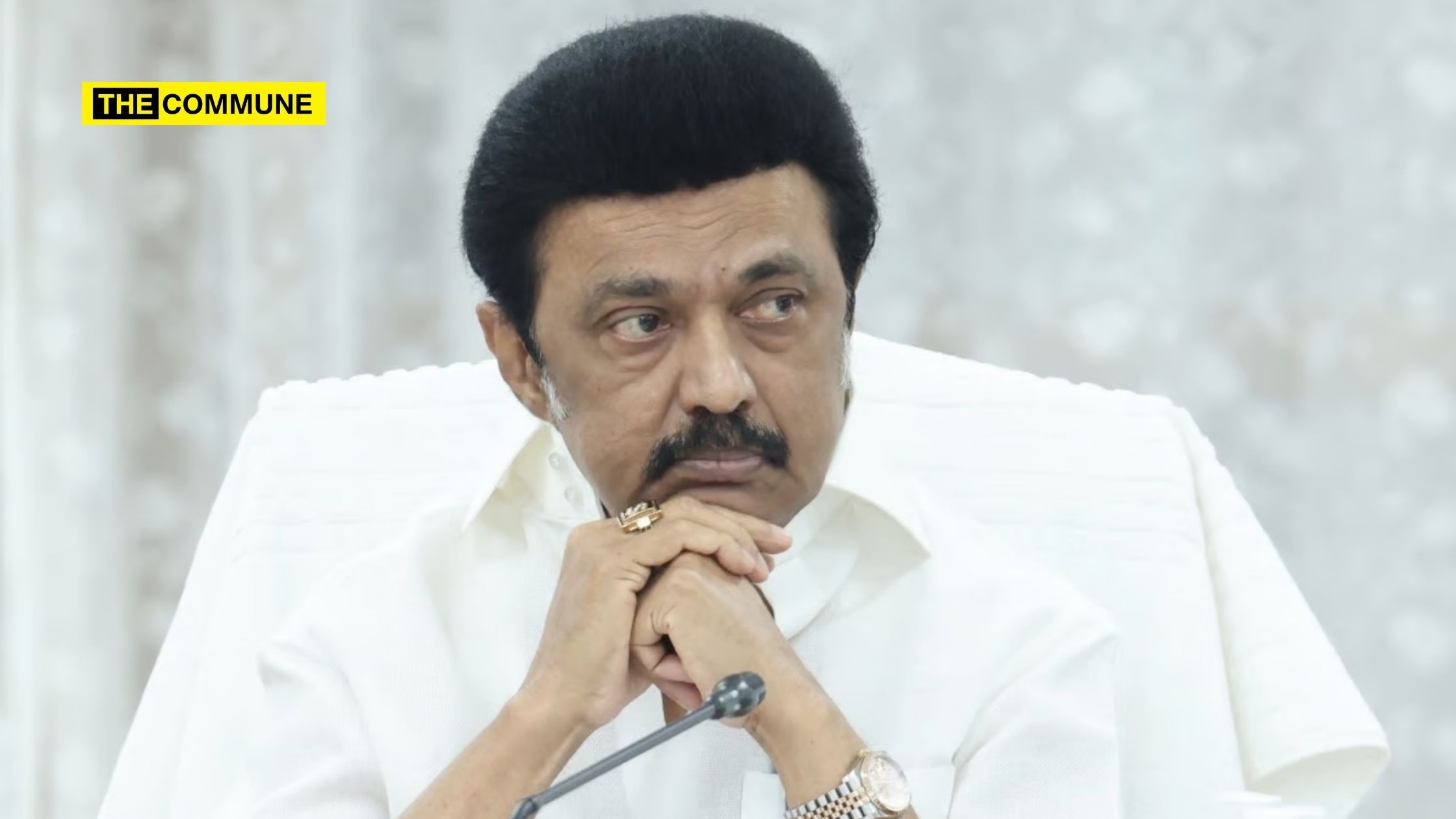
“Indian Muslim” Student In Qatar Says She Doesn’t Feel ‘Belonging To India’, Anti-India Propaganda Channel Al-Jazeera Laps It Up

Al-Jazeera

A short clip shared by Al Jazeera from its programme Doha Debates has triggered sharp reactions on social media after an Indian student, Hana Muneer, stated that she does not feel a sense of belonging to India as a Muslim and claimed that the Indian state had “stripped” her of agency.

In the clip, Muneer said, “Whether I feel belonging to India or not, I would say, a quite crisp no, because as a Muslim… I feel like the state has stripped me of my agency,” adding that she was interested in exploring a “universal moral order”.

Her remarks were responded to by Congress MP Shashi Tharoor, who expressed concern over her sense of alienation and said such exclusion ran contrary to the foundational idea of India.

Tharoor said that his understanding of India was one where no citizen should feel excluded on grounds of religion, language, ethnicity or region. He added that if she had been made to feel that way, it was regrettable. Pointing to recent events, Tharoor cited India’s military briefings during Operation Sindoor, which were led by two women officers, including a Muslim officer, as an example of India publicly asserting its pluralism and framing the conflict as one against terrorism rather than religion.

The clip has since drawn criticism from commentators who argue that such debates selectively amplify narratives of alienation while ignoring countervailing realities on the ground. Critics have pointed out that Muneer currently resides in Qatar, a country whose state-owned media is the same Al Jazeera that has been seen making biased regional political positioning, raising questions about the platform and framing of the debate.

Critics highlighted that during Operation Sindoor, Indian Muslim officers and personnel played visible and substantive roles across the armed forces. Muslim women officers addressed the nation from official podiums, and Muslim pilots flew combat missions alongside Hindu, Sikh and Christian colleagues, supported by the Army and Navy. They argue that these facts complicate claims that Indian Muslims are institutionally excluded or unrepresented by the state.

Observers have also criticised what they describe as a recurring pattern in certain international debate formats, where individual grievance narratives are presented without sufficient context or factual balance, potentially feeding into broader perception-shaping efforts rather than genuine dialogue.

While debates on identity and belonging remain legitimate and complex, critics argue that selective framing and omission of counter-examples risk turning nuanced discussions into oversimplified political messaging, particularly when broadcast on globally influential platforms.

Subscribe to our channels on WhatsAppTelegram, Instagram and YouTube to get the best stories of the day delivered to you personally.
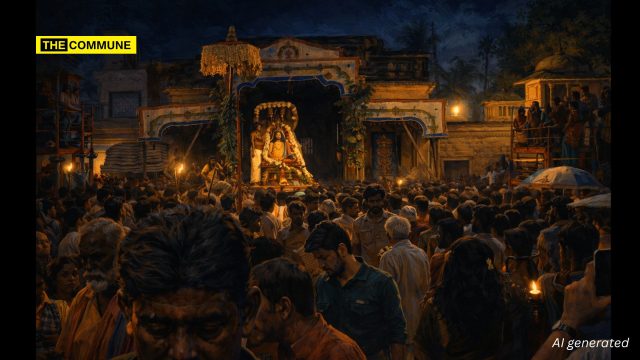
“Sar Tan Se Juda Slogan Challenges India’s Sovereignty, Rule of Law”: Allahabad High Court Says

‘Sar Tan Se Juda’ Slogan Challenges India’s Sovereignty, Legal System; Chant Incited People: Says Allahabad High Court

The Allahabad High Court on December 17, 2025 rejected the bail plea of Rihan, an accused in a violence case linked to a prohibited religious gathering in Bareilly, holding that raising the slogan “gustakh-e-nabi ki ek saja sar tan se juda” amounts to a challenge to the sovereignty and integrity of India and the authority of its legal system.

A Bench of Justice Arun Kumar Singh Deshwal declined to grant bail in a case involving allegations of large-scale violence, injuries to police personnel, and damage to public and private property following an unlawful assembly convened despite prohibitory orders being in force.

The case arises from an FIR registered on May 26, 2025 at Kotwali police station, Bareilly, alleging that the president of the Ittefaq Minnat Council, Maulana Taukir Raza, along with other leaders including Nadeem Khan, had called upon members of the Muslim community to assemble after namaz at the grounds of Islamia Inter College. The FIR was registered under Sections 109(1), 109(2), 118(2), 121(1), 189(5), 191(2), 191(3), 195(1), 196(1), 196(2), 223, 310(2), 324(5), 324(6), 61(2), 62 of the Bharatiya Nyaya Sanhita, Section 7 of the Criminal Law Amendment Act, and Sections 3/4 of the Prevention of Damage to Public Property Act.

According to the prosecution, police had prior information about the call for the gathering, and prohibitory orders under Section 163 of the Bharatiya Nagarik Suraksha Sanhita were in force, banning the assembly of more than five persons. Despite police warnings, a crowd of around 500 people allegedly gathered in the Biharipur area.

The FIR alleged that the crowd raised slogans against the State and repeatedly chanted “gustakh-e-nabi ki ek saja sar tan se juda. When police personnel attempted to stop the procession and enforce prohibitory orders, the situation allegedly escalated into violence, with the crowd resorting to stone pelting, firing, and throwing petrol bombs. Several police personnel were injured, and multiple police and private vehicles were damaged.

Seven persons, including Rihan, were arrested at the spot. Based on their statements, CCTV footage, and independent witnesses, police later named 25 accused and around 1,700 unknown persons in the FIR.

Seeking bail, Rihan contended that he had been falsely implicated and claimed that he was not arrested from the spot but from his home. He further argued that he had no prior criminal history and that there was no incriminating material linking him to the alleged violence.

The State strongly opposed the bail plea. The Additional Advocate General submitted that the acts attributed to Rihan were not merely law-and-order issues but offences against the State. It was argued that the slogan raised by the crowd advocated a form of punishment not recognised under Indian law and reflected a complete disregard for the constitutional and legal framework.

In its detailed order, the High Court examined the scheme of offences under the Bharatiya Nyaya Sanhita relating to religion and public order. The court observed that Indian criminal law already provides punishment for deliberate acts intended to outrage religious feelings or promote enmity between communities, and that advocating beheading as punishment amounted to incitement and a direct challenge to the rule of law.

The court noted that while religious slogans are common across faiths, they cross into criminality when used to intimidate, incite violence, or undermine constitutional authority. It held that the slogan in question was not rooted in religious texts but was used to provoke and threaten, thereby attracting penal consequences.

“Chanting the slogan ‘gustakh-e-nabi ki ek saja sar tan se juda, sar tan se juda’, which provides punishment of beheading for disrespecting the Nabi (Prophet) amounts to challenging the sovereignty and integrity of India and also the Indian legal system… If a person, instead of respecting the law framed under the Indian Constitution, attempts to challenge the law or promotes or incites people to commit an offence in the garb of providing punishment, (he) should be dealt with strictly,” Justice Deshwal observed.

The judge further emphasised that the slogan “gustakh-e-nabi ki ek saja sar tan se juda, sar tan se juda” “does not have any trace in the Quran or any other religious text belonging to Muslims, still this slogan is being used widely by several Muslim persons without knowing its correct meaning and effect.”

Finding sufficient material in the case diary to show that Rihan was part of the unlawful assembly that raised objectionable slogans, assaulted police personnel, and caused damage to property, the High Court concluded that no case for bail was made out and rejected the application.

Source: LawBeat

‘DMK Set Fire To Devotee’s Faith’: BJP Leader Calls For Putting An End To ‘Anti-Hindu Cruelty’ Of DMK Govt

‘DMK Set Fire To Devotee’s Faith’: BJP Leader H Raja Slams DMK Govt

Senior BJP leader H Raja on Friday, 19 December 2025, launched a sharp attack on the ruling DMK government over the continuing dispute surrounding the lighting of the Karthigai Deepam at Thirupparankundram Hill, alleging that the State was acting in defiance of judicial directions and suppressing the religious sentiments of devotees.

In a post on X, Raja accused the government of disregarding a court order and targeting Hindu religious practices. He shared an image with the caption, “Without respecting the court order as well, crushing the people’s spiritual beliefs, and burning and scorching the sentiments of devotees who wished to light the lamp, we will put an end to the anti-Hindu cruelty of the @arivalayam government..!!”

The text on the image read, “The evil force DMK government that set fire to a devotee who asked to light a lamp!”

நீதிமன்ற உத்தரவையும் மதிக்காமல், மக்களின் ஆன்மீக நம்பிக்கைகளை நசுக்கி,

Raja’s remarks come amid heightened tensions following the death of a devotee in Madurai, who died by self-immolation allegedly over distress linked to the denial of permission to light the traditional lamp at the Deepathoon atop Thirupparankundram Hill. The issue has triggered political reactions across parties and renewed debate over the State’s handling of religious practices, court orders, and law-and-order measures.

Subscribe to our channels on WhatsAppTelegram, Instagram and YouTube to get the best stories of the day delivered to you personally.
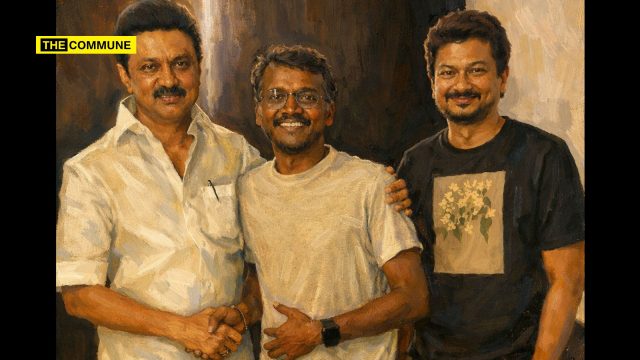
Lighting Himself Up For Thirupparankundram Deepam: What Murugan Devotee Poornachandran Said In His Audio Before Setting Himself Ablaze

Thirupparankundram Deepam Row Takes A Tragic Turn: Murugan Devotee Sets Himself Ablaze And Dies Reportedly Over DMK Govt’s Decision To Not Allow Lamp To Be Lit At Deepathoon kanda shashti kavacham condolence poster poornachandran

The city of Madurai and the entire state of Tamil Nadu is still recovering from the shocking news of a Murugan devotee Poornachandran having set himself ablaze reportedly in protest against the DMK government’s decision to disallow devotees from lighting the sacred Karthigai Deepam at the Deepathoon on the Thirupparankundram Murugan Temple hill.

Commuters in the area reportedly heard loud cries and noticed flames emerging from the booth, following which they alerted the Fire and Rescue Services. Fire personnel rushed to the spot and rescued Poornachandran with severe burn injuries. He was taken to the District Government Hospital, where he later succumbed to his injuries.

The body was sent for post-mortem examination by the Thallakulam Police, who have registered a case and said that further investigation is under way.

Audio Message

An audio clip, reportedly recorded by Poornachandran shortly before the incident, has since surfaced and is being examined by the police. In the recording, he identified himself and spoke at length about the dispute surrounding the lighting of the Karthigai Deepam at Thirupparankundram.

In the audio, Poornachandran said, “Greetings, greetings to all the people. I am Pooranachandran from Madurai speaking. On the Tirupparankundram issue, the decision taken by the government is a wrong decision.”

Referring to a recent judicial order, he stated, “In this Karthigai month, when a High Court judge has given an order that the deepam (sacred lamp) should be lit on the hill, without respecting that order, the Tamil Nadu government is behaving like this, which I consider a cruelty inflicted on the Hindu community that wants to live with dignity.”

He spoke about the religious significance of Thirupparankundram, saying, “For many, many hundreds of years, for thousands of years, in ancient times, in Thirupparankundram, people have been worshipping Lord Muruga. As a crown jewel for that, they have been lighting the lamp on that hill.”

Poornachandran also referred to the practice followed over the last century, “For about 100 years now, lighting the deepam on the hill has been banned, and they have been lighting it at the place called Moksha deepam instead. This itself cannot be called an Agama rule; it is wrong.”

Criticising the role of the Hindu Religious and Charitable Endowments (HR&CE) Department, he said, “This should have been taken up by the Hindu Religious & Charitable Endowments Department, which is under the control of the government, and that department is conducting it; so if it was so, I feel there was no necessity for Hindu organizations to be the ones fighting for this.”

Drawing a comparison with religious institutions of another faith, he stated, “If the same kind of ancient practice had been stopped in a mosque, then the Waqf Board and such bodies that control it, such organizations would definitely have implemented it again. Even if it had been banned for 100 years, 200 years, 300 years, they would have fought for it and restored it, which shows their unity.”

He added that Hindus lacked similar unity, “But today, when the great Hindu society, not only in Tamil Nadu but all over India, is remaining like a scattered herd, we do not stand in an organized way and fight for it, and that is why the government is acting like this.”

Reference to Periyar Statue and Intent

In the recording, Poornachandran referred to the Periyar statue near which the incident occurred and stated, “So what I am telling you is this: because of this, near the Periyar statue, I will light myself up and do that in front of the person who said ‘There is no God,’  for the sake of God, I am going to do something now.”

He also thanked the judge who passed the order permitting the lighting of the lamp, “My thanks to that judge.”

Calling upon others to circulate the message, he said, “Please share this video everywhere. Inform the media. Tell the media, tell all the media.”

Referring to future political developments, he stated, “In 2026 there will be an election. After that election is over, in the very next term of government, on Karthigai Deepam day in 2026, the deepam must be lit there on the hill. For that cause, without sparing even my life, I have decided to do this.”

Message to Family

Poornachandran also addressed his family in the audio, “I have two sons. My wife and my family members will suffer, grieving after losing me. When they feel that pain of separation from me, their hearts will be terribly wounded, because all these days I have lived with them in affection.”

He requested support for them, stating, “For that reason, please show them a good doctor or counselor here, show them someone who can console them. I express my deep regret to my family.”

He emphasised that the decision was his own, “Because of mental agony only I am taking this decision. It is entirely my own decision. So please accept that and close this matter. All of you, please remember me.”

Final Statement in Audio

In the concluding part of the message, Poornachandran said, “By lighting the deepam on my body, in front of the Periyar statue, inside this house, inside this police quarters house, I am going to sacrifice my life.”

He appealed for spiritual unity, “Through this, I ask that all the people of Tamil Nadu should unite spiritually.”

Referring to Madurai’s religious importance, he stated, “On the sacred soil of Madurai, there are two of the six battle abodes (Aru Padai Veedu) of Lord Muruga. Thirupparankundram and Pazhamudhircholai… There is the Meenakshi Amman Temple, and there is the Azhagar Temple.”

He concluded, “In such a spiritually rich land of Madurai, because they are not allowing a spiritual event to be conducted on the hill, out of that mental sorrow, I am going to light the deepam on my own body and give up my life right here in this police quarters. For that, I ask my family members to forgive me.”

Background

The issue relates to whether Hindu devotees should be permitted to light the traditional Karthigai Deepam lamp on the Deepathoon, a stone pillar located atop Thirupparankundram Hill near Madurai. The issue has been the subject of ongoing legal and administrative disputes.

Police said further investigation into the circumstances surrounding the incident is continuing.


View this post on Instagram


A post shared by Seithikalanjiyam (@seithikalanjiyam)

Subscribe to our channels on WhatsAppTelegram, Instagram and YouTube to get the best stories of the day delivered to you personally.

Condolence Posters For Murugan Devotee Poorna Chandran Reportedly Removed By Police In Madurai

Thirupparankundram Deepam Row Takes A Tragic Turn: Murugan Devotee Sets Himself Ablaze And Dies Reportedly Over DMK Govt’s Decision To Not Allow Lamp To Be Lit At Deepathoon kanda shashti kavacham condolence poster poornachandran

The removal of condolence posters bearing the photograph of Poorna Chandran, who died recently, has sparked controversy in Madurai district, with sharp criticism directed at the police and the Dravidian Model DMK government.

According to those associated with Hindu groups and right-wing organisations, condolence posters were put up across several parts of Tamil Nadu mourning Poorna Chandran’s death. In Madurai city, however, police personnel were seen removing the posters and detaining at least one individual who had pasted them, the speakers alleged.

Reacting to the action, devotees and supporters at the site questioned the police’s priorities, asking whether removing posters fell within the core responsibilities of law enforcement. They alleged that while serious crimes such as drug trafficking, illicit liquor sales, sexual offences, theft and murder required attention, the police had instead focused on tearing down condolence posters.

Critics described the action as an attempt to suppress even expressions of mourning and alleged that the government was intolerant of public displays connected to the Thirupparankundram hill issue and Sanatana Dharma. They claimed that volunteers, Murugan devotees, and members of various political parties and right-wing movements had participated in putting up the posters.

Allegations were also levelled directly at the Madurai city police leadership. One speaker demanded the suspension of the Madurai Police Commissioner, alleging that had earlier court orders been respected, Poorna Chandran’s death could have been avoided. Devotees referred to earlier deaths connected to the Thirupparankundram hill dispute, specifically naming Ramagopalan, AR Kalidas, and others, and claimed that Poorna Chandran was the latest in a series of such deaths.

The speakers further alleged that the removal of posters reflected a broader pattern of hostility towards Hindu religious expression by the ruling government and questioned what law-and-order issue was being addressed by detaining those involved in pasting condolence posters.

Subscribe to our channels on WhatsAppTelegram, Instagram and YouTube to get the best stories of the day delivered to you personally.
Gossip Posing As Journalism: The Wire’s ‘Invisible Man’ Story On Hiren Joshi By Hinduphobic Srishti Jaswal Collapses Even Before It Begins

An article published by The Wire titled “Modi’s Own Invisible Man: Hiren Joshi’s Rise and Retreat”, authored by Srishti Jaswal on 18 December 2025, reads more like a fiction that relies on gossip, anonymous quotes, off the record statements, rather than a piece of journalism.

The absence of documentary corroboration for a series of serious allegations made against Hiren Joshi, an officer on special duty in the Prime Minister’s Office (PMO), makes it just a gossip column or Jaswal, the author ‘mistakenly’ sent her tabloid (yellow journal) article to The Wire!

The article constructs a detailed account of Joshi’s alleged rise as a powerful media and digital strategist within the PMO and a subsequent “retreat” or curtailment of influence. However, a closer look at the sources and ‘logic’ of the piece raises concerns about evidentiary standards, narrative framing, and the conflation of verified facts with conjecture.

Heavy Reliance on Anonymous Sources and Political Gossip

A substantial portion of the article’s central claims is attributed to unnamed individuals described variously as a “politician,” “former journalist,” “senior editor,” or “senior political consultant.” These anonymous sources are cited for assertions including that

  • “things went south after Operation Sindoor”,
  • that Prime Minister Narendra Modi “blamed” Joshi for media handling failures,
  • that Joshi was to be sent back to Gujarat or accommodated in the Rajya Sabha,
  • that Navneet Sehgal resigned to signal availability for a larger PMO role,
  • that jealousy within the PMO drove internal factional conflict,
  • and that Joshi orchestrated media narratives around the Tablighi Jamaat episode and the Rhea Chakraborty case.

None of these claims are supported by documentary evidence such as official orders, internal communications, emails, or on-the-record confirmations. Toward the end of the article, the author acknowledges that “someone leaked information…to create pressure” and that Joshi may still be in position, undercutting earlier suggestions that his exit or demotion was imminent. This acknowledgment suggests that large portions of the narrative do rest on speculation rather than verified developments.

Use of Unverified Mahadev App Allegations

The article prominently references unverified viral claims linking Joshi to the Mahadev betting app network, an illegal online gambling operation under investigation by enforcement agencies. While noting that these claims are unverified, the article devotes considerable space to political statements by Congress spokesperson Pawan Khera and to questions raised about alleged proximity between the PMO and unnamed individuals.

No FIR, Enforcement Directorate document, Central Bureau of Investigation reference, financial trail, or official inquiry is cited linking Joshi to the betting app. The article also points out that The Print briefly reported Khera’s allegations before removing the story, suggesting media pressure, but does not consider the alternative explanation that the allegations lacked legal or factual substantiation.

As a result, a serious reputational allegation is introduced and sustained through political rhetoric and social-media chatter without independent verification.

Operation Sindoor and Causal Speculation

The article asserts that Joshi’s alleged decline stemmed from the handling of information during Operation Sindoor and former US President Donald Trump’s claim that he brokered peace between India and Pakistan. This causal link is based entirely on an anonymous political source and is not supported by:

  • any internal PMO communication,
  • any public assignment of responsibility,
  • or any evidence that Joshi formally handled wartime information strategy.

Jaswal, as expected of an India hater, assumes that India and the Modi government were ’embarassed’ by the narrative about the army having captured Karachi and Lahore. Any mildly educated person would know how such narratives help build pressure on the enemy – did it not have any impact on Pakistan during Op Sindoor? Well, Jaswal is clearly sleeping when things escalated and changed the way the enemy responded.

One-Sided Depiction of Alleged Media Control

Jaswal presents a wide-ranging portrait of Joshi as exercising control over television debate agendas, editorial decision-making, BJP IT Cell operations, troll networks, Big Tech personnel decisions, and coverage of sensitive communal and criminal cases.

These claims are primarily attributed to anonymous editors or commentators and to journalist Paranjoy Guha Thakurta – well, we know how credible his information is! To jog your memory, Thakurta’s website had received a gag order for publishing defamatory pieces on Adani. If he can write so on his website, surely he can write in his book too. And for Jaswal to rely on that as gospel truth, speaks more about her intelligence and researching abilities.

The article also does not include countervailing perspectives from editors or journalists who rejected such influence, nor does it present documentary proof such as messages, directives, or instructions. It also does not acknowledge the commercial incentives that drive sensational coverage independently of political influence.

Mixing Verified Facts With Conjecture

The article interweaves established facts, such as Joshi’s role in managing Modi’s social media presence, was OSD; has long‑standing relationships with tech strategists; is mentioned in books by Rajdeep Sardesai and others; that Tavleen Singh couldn’t get him to respond regarding Aatish Taseer with conjectural claims presented in a similar narrative tone. Assertions about dossier-keeping, troll-army control, and responsibility for geopolitical perception failures are not clearly distinguished from documented information, potentially leading readers to conflate speculation with fact.

Thin Sourcing on Military and International Claims

Descriptions of Operation Sindoor, casualty figures, claims of territorial capture, and the impact of Trump’s mediation statements are treated as settled background facts, despite being contested or requiring high evidentiary standards. The article does not cite independent defence sources or official military briefings to substantiate these elements, even as they form a foundation for evaluating Joshi’s alleged failures.

Srishti Jaswal & Her Past

The fact that Jaswal wrote such a piece is not surprising, given her past and her dislike for the non-left and anything Hindu.

In 2020, Srishti Jaswal made an explicitly derisive tweet about Lord Krishna as a “womanizer, fuckboi, commitment phobic maniac”, which led to a complaint and her suspension from Hindustan Times; her later apology insisted it referred to a Netflix character, despite the tweet explicitly invoking Krishna and “I’m a Hindu and I’ve read mythology.”

While past controversies do not automatically discredit subsequent reporting, media analysts note that when an article relies heavily on anonymous allegations and strong moral framing, an author’s record of inflammatory commentary becomes relevant to how readers assess tone, balance, and interpretive judgment.

Put together, The Wire article by Srishti Jaswal aggregates publicly available material about Hiren Joshi’s career and influence but blends it with extensive anonymous claims, speculative causation, and ideologically charged framing. The absence of clear demarcation between verified facts, political allegations, and narrative inference raises questions about evidentiary rigor. Combined with the author’s prior record of controversial public statements, the piece has prompted calls for heightened scepticism and demand for documentary proof before accepting its most serious claims.

Subscribe to our channels on WhatsAppTelegram, Instagram and YouTube to get the best stories of the day delivered to you personally.
 

Emerald Shiva Lingam Stolen From Ilaiyur Kasi Viswanathar Temple In Ariyalur; Police Launch Probe

Emerald Shiva Lingam Stolen From Ilaiyur Kasi Viswanathar Temple In Ariyalur; Police Launch Probe
Image Source: Hindu Tamil

Police have launched a search for unidentified persons who allegedly stole an emerald (maragatha) Shiva lingam from the ancient Kasi Viswanathar–Kasi Visalakshi Temple at Ilaiyur village near Jayankondam in Ariyalur district.

The temple, which comes under the control of the Hindu Religious and Charitable Endowments (HR&CE) Department, is known for housing a maragatha lingam as the presiding deity. The shrine attracts a large number of devotees, particularly on Pradosham days and other auspicious occasions dedicated to Lord Shiva.

According to police, special poojas were performed at the temple on Pradosham on the previous day. After the rituals, the temple priest Kaliyaperumal (81) locked the temple, placed the key near his head, and slept inside the premises. When he woke up the next morning, he found the key missing and noticed that the temple door had been opened. Upon checking, he discovered that the emerald lingam had been stolen.

On receiving information, Ariyalur Superintendent of Police Viswesh Balasubramaniam Sastri, Jayankondam DSP Ravichakravarthi, and HR&CE Jayankondam Executive Officer Sivaneyaselvan, along with other officials, visited the temple and conducted an inspection.

Police are examining CCTV footage from cameras installed at the temple and in nearby houses and have begun an investigation to identify and trace those involved in the theft.

Source: Hindu Tamil

Subscribe to our channels on WhatsAppTelegram, Instagram and YouTube to get the best stories of the day delivered to you personally.
ISI At Work? Deepfake AI Video Falsely Shows Former Indian Army Chief Ved Malik “Praising Pakistan” On Operation Sindoor

A viral video circulating on social media has falsely claimed to show former Indian Army chief General Ved Prakash Malik (Retd.) praising Pakistan and allegedly admitting that the neighbouring country possesses superior weapons and military equipment, including claims about the destruction of India’s Rafale fighter jets and S-400 air defence system. Multiple fact-checks and verification efforts have established that the video is digitally manipulated and the claims are false.

Fact-checking organisation Newschecker reported that it found no credible news coverage of General Malik making such remarks. Fact-checkers noted that if a former Army chief had indeed praised Pakistan’s military capabilities or admitted losses of Rafale jets or the S-400 system, it would have triggered widespread national and international attention.

To verify the claim, Newschecker analysed keyframes from the viral video using Google Lens, which led to an original video posted by news agency ANI on 14 December 2025. The ANI  video shows General Malik responding to a question about Operation Sindoor and the Kargil War.

In the original footage, General Malik is heard saying:
“As I said, human resources were used a lot during Operation Vijay. There was a physical fight. While during Operation Sindoor, we didn’t even cross each other’s border. Technological improvement is so immense. We now have standoff weapons; both nations have them now. So we can hit each other while being away from the border. So, there has been a great technological advancement which has been adopted by both countries…Pakistan also. But definitely, in India we have better weapons and equipment.”

Fact-checkers pointed out that the viral clip selectively edited out the portion where General Malik explicitly states that India has better weapons and equipment and instead overlaid manipulated audio to falsely portray him as praising Pakistan. There is no mention in the original video of the destruction of Rafale jets or the S-400 system.

General Malik called out the propaganda – “It is a deepfake. Pakistani ISI at work!”

This is not the first instance of such disinformation. In November 2025, Pakistani propaganda-linked social media accounts circulated a deepfake video based on an NDTV interview conducted by Shiv Aroor, making General Malik appear to make communal remarks that he never said.

Fact-check website D-Intent Data had debunked that video as well, stating in a post on X: “FACT: Pakistani propaganda accounts are circulating a digitally altered video of former Indian Army Chief Gen. V.P. Malik, falsely claiming that he endorsed an alleged RSS plan to remove 50 per cent ‘non-caste Hindus’ from the Army within the next three years.”

“These claims are entirely fake and fabricated. The video has been digitally manipulated. Gen. V.P. Malik has made no such statement in the original footage. Furthermore, narratives about the saffronisation of the Indian Army or reducing non-caste Hindu soldiers are baseless, and stem from ongoing Pakistani misinformation propaganda against India,” the fact-check organisation said.

D-Intent Data added that the intent behind such content was to circulate “digitally altered videos of former Indian Army Chief V.P. Malik with self-invented claims to push a false narrative against India.”

Security analysts note that such misinformation campaigns have intensified since Operation Sindoor, in which India carried out precision strikes on Pakistani airbases and terror infrastructure following the Pahalgam terror attack.

Source: Newschecker

Subscribe to our channels on WhatsAppTelegram, Instagram and YouTube to get the best stories of the day delivered to you personally.