Home Blog Page 134

DMK Govt Issues G.O For ₹3.6 Cr Scholarship Scheme Exclusively For Muslim Students Studying Abroad

On 4 September 2025, the Tamil Nadu government issued a Government Order (G.O.) announcing a new scholarship scheme aimed at supporting Muslim students pursuing higher education abroad.

As part of this initiative, a total of ₹3.60 crore has been earmarked to fund scholarships for 10 eligible students each year, with each recipient receiving up to ₹36 lakh. The scheme, which was previously announced in the Legislative Assembly, is now set to be implemented following this formal allocation of funds.

However, the decision has sparked criticism from some quarters, with opponents alleging that the move is politically motivated and intended to appeal to the Muslim community ahead of the 2026 state elections. Critics have described the announcement as an act of minority appeasement, questioning the timing and exclusivity of the scheme.

Subscribe to our channels on TelegramWhatsApp, and Instagram and get the best stories of the day delivered to you personally.

DMK Women’s Panchayat President Arrested For Jewellery Theft At Koyambedu Bus Stand

Police have taken Bharathi, the DMK women’s panchayat president from Tirupattur district, into custody after CCTV footage linked her to a jewellery theft at the Koyambedu bus stand. The incident comes amid rising concerns over a surge in chain snatching and jewelry thefts across Tamil Nadu, prompting authorities to intensify preventive efforts.

As part of these ongoing operations, several offenders have been apprehended and jailed. One such case emerged involving Bharathi, who was caught on camera allegedly stealing jewelry. The incident occurred on 14 July, when a 50-year-old woman named Varalakshmi from the Nerkundram area traveled by bus from Kanchipuram and got off at the Vengaya Mandi bus stand in Koyambedu. Upon reaching home, she discovered that four sovereigns of gold jewelry were missing from her bag.

Despite searching the nearby area, Varalakshmi was unable to locate the missing items and subsequently lodged a complaint at the Koyambedu police station. During the investigation, police reviewed CCTV footage and identified 56-year-old Bharathi as the suspect involved in the theft.

Bharathi was arrested shortly afterward, and further inquiries revealed that she has over 10 pending theft-related cases registered against her in various police stations, including those in Vellore and Ambur. Following her arrest, Bharathi was brought before the court and has since been remanded in judicial custody.

(With Inputs From Asianet News Tamil)

Subscribe to our channels on TelegramWhatsApp, and Instagram and get the best stories of the day delivered to you personally.

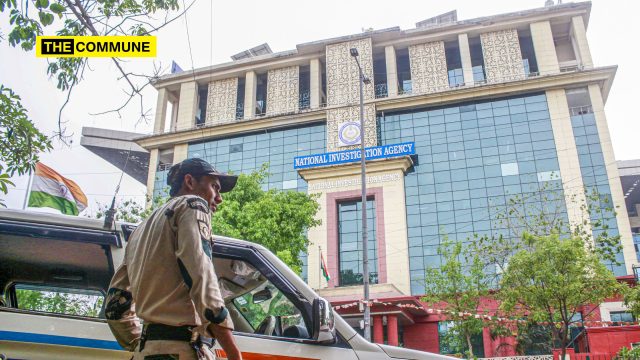
Amritsar Grenade Attack: NIA Nabs Main Accused Sharanjit Kumar In Bihar

The National Investigation Agency (NIA) arrested a key wanted terror accused in connection with the March 2025 Amritsar temple grenade attack, late on 6 September night.

The accused, identified as Sharanjit Kumar alias Sunny, a resident of Bhaini Bangar, Qadian in Batala of Gurdaspur district, Punjab, was nabbed late on 5 September night from Gaya in Bihar.

On 15 March 2025, two bike-borne assailants Gursidak Singh and Vishal Gill carried out the grenade attack under the directions of foreign-based handlers operating from Europe, the US and Canada.

According to NIA investigations, the handlers provided funds, terror hardware, logistical support and target details to operatives in India. Sharanjit played a crucial role by receiving a consignment of four grenades in Batala on 1 March 2025. He handed over one of these grenades to Gursidak and Vishal just two days before the attack. After the attack, Sharanjit absconded from Batala during NIA raids and managed to evade authorities for months. Based on human and technical Intelligence, he was finally traced to Gopalpur village on the Delhi-Kolkata National Highway 2 in the Sherghati block of Gaya district.

The NIA team, with assistance from Sherghati police, conducted a late-night raid, surrounded him, and made the arrest. “Sharanjit was very clever, often disguising himself as a truck driver and using fake identities. He had set up a hideout in a roadside lodge on GT Road and was running operations from there,” said Ajit Kumar, Station Incharge, Sherghati Police Station.

The NIA registered cases under the Explosives Act and the Unlawful Activities (Prevention) Act (UAPA). Sharanjit was immediately taken to Chandigarh for interrogation. Further investigations are underway to unravel the full extent of the transnational terror network involved in the Amritsar attack. NIA and Bihar police have jointly arrested many accused of the Popular Front of India (PFI) from various districts of the state in the past.

-IANS

Subscribe to our channels on TelegramWhatsApp, and Instagram and get the best stories of the day delivered to you personally.

Canada Flags Hezbollah, Hamas As Well-Funded Extremist Groups Exploiting Crypto, Charities, And State Support

Hamas and Hezbollah are “well-established and resourceful organisations” that fall under the ‘Politically Motivated Violent Extremism’ (PMVE) category and sustain their activities through diverse funding channels, according to a report by the Canadian government.

The National Risk Assessment report by the Canadian government defines PMVE as the encouragement of violence to create new political systems or alter existing structures and norms. While it may include religious aspects, the core focus of actors under this category is political self-determination or representation rather than ethnic or racial supremacy.

“Hamas and Hezbollah are established and well-resourced groups that fall under the PMVE category. These groups use diverse funding methods to sustain their operations, including the abuse of the MSB and banking sectors; use of cryptocurrencies; state financing; abuse of the charitable and NPO sector; and criminal activity,” the report stated.

Canadian authorities observed that several terrorist entities listed under the Criminal Code including Hamas, Hezbollah, and Khalistani extremist outfits Babbar Khalsa International and the International Sikh Youth Federation have historically relied on financial support from Canada. The report noted that although once supported by an extensive fundraising network, these groups now operate with smaller clusters of individuals aligned with their causes, without formal organisational ties.

“Both Hamas and Hezbollah are known to use MSBs, especially IVTS, such as hawalas, to move money across borders. Hezbollah, in particular, is known to use Lebanon’s banking sector to maintain their account holdings,” the report said.

Citing the lawsuit Lelchook v. Societe Generale de Banque au Liban SAL in a New York court, the document highlighted how a now-defunct Lebanese bank provided Hezbollah with financial services, including correspondent banking links in the US. “Canada’s financial sector may also be exposed to risks emanating from correspondent banking relationships with institutions known or suspected of servicing Hezbollah in Lebanon,” it warned.

Cryptocurrencies have also emerged as a tool for these organisations, though contributions remain relatively low in value, according to the report. “Both Hamas and Hezbollah use online platforms and social media to solicit donations in the form of cryptocurrencies. Hamas in particular has been an early adapter of cryptocurrencies to raise and move funds, with the group reportedly first beginning to solicit Bitcoin donations in 2019,” it noted.

To liquidate digital assets, Hamas has allegedly turned to exchanges, MSBs, and informal transfer systems in Lebanon, Turkey, and Syria. However, the report admitted that the “full scale and effectiveness” of such crypto fundraising efforts remain unclear.

Another major revenue stream highlighted by the report was state sponsorship, particularly from Iran. “State sponsorship, particularly from Iran, is a significant source of revenue for Hamas and Hezbollah, which enables them to maintain their activities,” the assessment stated.

It cited a May 2024 advisory by the US Financial Crimes Enforcement Network (FinCEN) that outlined methods used by Iran to evade sanctions and funnel funds to its allies, including the sale of oil and weapons, shell companies, correspondent banking ties, and crypto. Canada said it has detected similar “Iranian patterns” aiding Hezbollah and Hamas. The report also pointed out that these groups exploit charitable and non-profit organisations for fundraising.

Despite these observations, it is estimated that revenue generation through NPO abuse represents a relatively small percentage of operational budgets of terrorist groups overall,” it added, referring to the 2024 Egmont Group overview on typologies of NPO abuse and global financial intelligence cooperation.

The report also mentions that criminal activities, especially drug trafficking, play a major role in Hezbollah’s finances. “Criminal activity is also a means of financing for PMVE purposes, particularly for Hezbollah, which has strong partnerships with international and domestic OCGs. Hezbollah remains a highly active global player in the cocaine, heroin, fentanyl, and captagon trades, with trafficking networks spanning Latin America, Canada, and the US,” the report revealed.

It added that Hezbollah has also turned to trade-based money laundering. “FINTRAC has reported that funds suspected of supporting Hezbollah were sent or received related to the used car trade,” the document said. US officials have documented Hezbollah’s involvement in buying used cars in North America and reselling them in countries such as the UAE, South Africa, Angola, Belgium, the UK, Hong Kong, Tanzania, Kenya, and Yemen, with profits ultimately funnelled back to Lebanon through couriers. The report specifically flagged the Port of Montreal as a known hub where luxury vehicles are shipped to Lebanon, financially sustaining Hezbollah.

-IANS

Subscribe to our channels on TelegramWhatsApp, and Instagram and get the best stories of the day delivered to you personally.
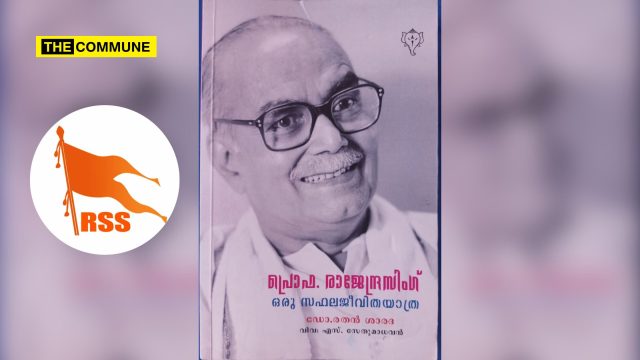
Malayalam Biography Of Former RSS Chief Rajju Bhaiya Released On Sangh’s Centenary

As the Rashtriya Swayamsevak Sangh (RSS) celebrates its centenary, the life story of former RSS chief Prof. Rajendra Singh, popularly known as Rajju Bhaiya, has been brought out in Malayalam for the first time. The book, seen as a guide for swayamsevaks, reflects on his vision and principles that shaped the Sangh’s expansion across India.

Originally authored in Hindi by noted writer Dr Ratan Sharda under the title ‘Prof. Rajendra Singh: A Successful Journey of Life’, the work has been translated into Malayalam by senior RSS pracharak S. Sethumadhavan.

The first copy was released by RSS Sahsarkaryavah C.R. Mukunda, who handed it to Dakshina Kerala Pranth Sanghchalak Prof. M.S. Ramesan. The edition has been published by Kurukshetra Prakashan. Kerala, which is among the states with the highest number of RSS shakhas, has been chosen as the launch pad for the Malayalam edition.

A chapter in the book focuses on strengthening the shakha system and attracting more participants, underscoring the organisation’s centenary goal of reaching villages yet untouched by the Sangh’s influence. The book highlights five key principles that Rajju Bhaiya consistently emphasised for shakha functioning ensuring strong attendance, nurturing a disciplined cadre, imparting cultural values to the youth, maintaining direct contact with households, and fostering selfless affection through collective activities.

These, he believed, were the foundation of effective nation-building. Beyond organisational matters, Rajju Bhaiya’s thoughts on the economy and politics found space in the book. He cautioned against over-reliance on multinational corporations, urging Indian entrepreneurs to maintain quality and affordability to win public support. Politically, he encouraged leaders to work across ideological lines for national interest, while personally maintaining a distance from active politics.

Rajju Bhaiya was also the first RSS chief to travel abroad, visiting nearly 40 countries to strengthen overseas Indian organisations. His final trip to Japan focused on building Hindu-Buddhist cooperation, which he argued could benefit not only India and Japan but the wider world. With personal insights from current RSS chief Mohan Bhagwat, who worked closely with Rajju Bhaiya during the Emergency, the book offers both – historical perspective and a vision for the Sangh’s role in a changing global order.

-IANS

Subscribe to our channels on TelegramWhatsApp, and Instagram and get the best stories of the day delivered to you personally.

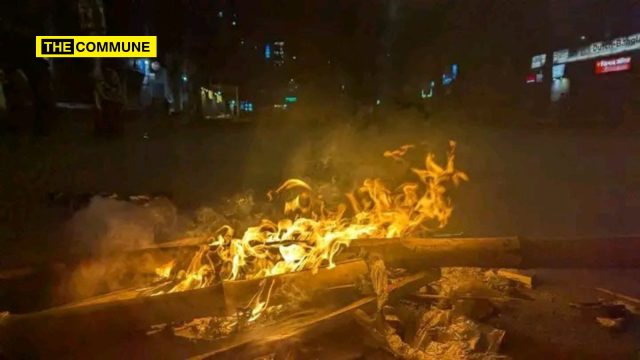
Jatiya Party Office Torched For Second Time In 10 Days Under Yunus-Led Interim Government In Bangladesh

Bangladesh’s Jatiya Party (JaPa) central office in Dhaka has once again been vandalised and set ablaze by miscreants for the second time in ten days, local media reported on 6 September 2025.

The incident occurred late 5 September evening, hours after leaders of another political party, the Gono Odhikar Parishad, held a rally at Shahbagh in the capital, demanding a ban on JaPa.

Confirming the development, Rozina Akhter, duty officer at the control room of the Fire Service and Civil Defence headquarters, said, “We were informed around 7:00 p.m. that some people hurled bricks and stones at the Jatiya Party office and then set it on fire.”

This marked the second such attack within a week amid a growing political violence across Bangladesh under the Muhammad Yunus-led interim government. “Suddenly, a few miscreants launched an attack on the Jatiya Party office. They vandalised some furniture inside and set fire,” Bangladesh’s leading newspaper, Dhaka Tribune, quoted Ramna police station Sub-Inspector (SI) Sajjad Hossain as saying. JaPa Secretary General Shameem Haider Patwary strongly condemned the attack and said the party holds Gono Odhikar Parishad responsible for it.

“The government should launch a judicial inquiry into the incident. If found guilty, Gono Odhikar’s party registration should be cancelled,” he stated. Addressing reporters, JaPa Praesidium Member Rezaul Karim took an indirect dig at Gono Odhikar Parishad, stating that those who organised the rally at Shahbagh were behind the attack.

He also alleged that the interim government has failed to provide security and prevent mob attacks. “Jatiya Party was here in Bangladesh, and it will remain in the future,” he added. However, Gono Odhikar Parishad has refuted the allegations. Reports suggest that in a similar attack, JaPa’s central office was vandalised and set on fire on 30 August, a day after violent clashes broke out between its activists and those of Gono Odhikar Parishad in Kakrail.

Following that attack, the Awami League strongly condemned the vandalism, looting, and arson at the JaPa office. It also alleged that the incident took place with the direct support of the Yunus regime, under which, mob terrorism is running rampant in Bangladesh. Since the ouster of the democratically elected government of Awami League led by Sheikh Hasina, Bangladesh has been gripped by violence and extreme lawlessness under the Yunus–led interim government.

-IANS

Subscribe to our channels on TelegramWhatsApp, and Instagram and get the best stories of the day delivered to you personally.
Canada Formally Acknowledges Khalistani Extremist Fundraising on Its Soil, Cites Terror Links In Official Report

The Canadian government has officially flagged concerns over terror financing linked to Khalistani extremists and admitted for the first time that such groups have been operating from its soil and receiving financial support an issue repeatedly raised by India for years.  The admission has come through a fresh assessment by Canada’s Department of Finance on money laundering and terrorist financing risks.

According to the report, several terrorist entities, including Khalistani violent extremist groups, continue to receive financial backing from within Canada for activities tied to politically motivated violence.

Canada has long been considered a base for Khalistani outfits such as Babbar Khalsa, the International Sikh Youth Federation, and Sikhs for Justice. For the first time, Ottawa has formally acknowledged the extremist group’s presence and the financial activities linked to it.

The report titled ‘2025 Assessment of Money Laundering and Terrorist Financing Risks in Canada’, released by its Finance Department, observed that these groups continue to attract funds for “activities linked to politically motivated violence.” It further stated that the Khalistani group is “suspected of raising funds in a number of countries, including Canada.” “These groups previously had an extensive fundraising network in Canada but now appear to consist of smaller pockets of individuals with allegiance to the cause but seemingly no particular affiliation to a specific group,” the assessment said.

It also underlined that “several terrorist entities listed under the Criminal Code in Canada that fall under the Politically Motivated Violent Extremism (PMVE) category, such as Hamas, Hezbollah, and the Khalistani violent extremist groups Babbar Khalsa International and the International Sikh Youth Federation, have been observed by law enforcement and intelligence agencies to receive financial support originating from Canada.”

The report further emphasised that Canadian law enforcement and intelligence agencies have documented financial backing for these extremist groups, including Hamas and Hezbollah, from sources within the country. This formal acknowledgement is being seen as a major development, especially in light of India’s repeated warnings that Canada has become a safe haven for anti-India elements. Former Prime Minister Justin Trudeau faced strong criticism for his perceived inaction on the matter, which also contributed to strained relations with New Delhi.

The report also pointed out that beyond Hamas and Hezbollah, “Khalistani violent extremist groups have also been known to use networks to solicit donations from diaspora communities to raise and move funds, including through NPOs.” The findings mark the first time Canada has formally admitted to the scale of fundraising activities by Khalistani extremist groups on its soil, a matter that has long been a point of contention between Ottawa and New Delhi.

-IANS

Subscribe to our channels on TelegramWhatsApp, and Instagram and get the best stories of the day delivered to you personally.
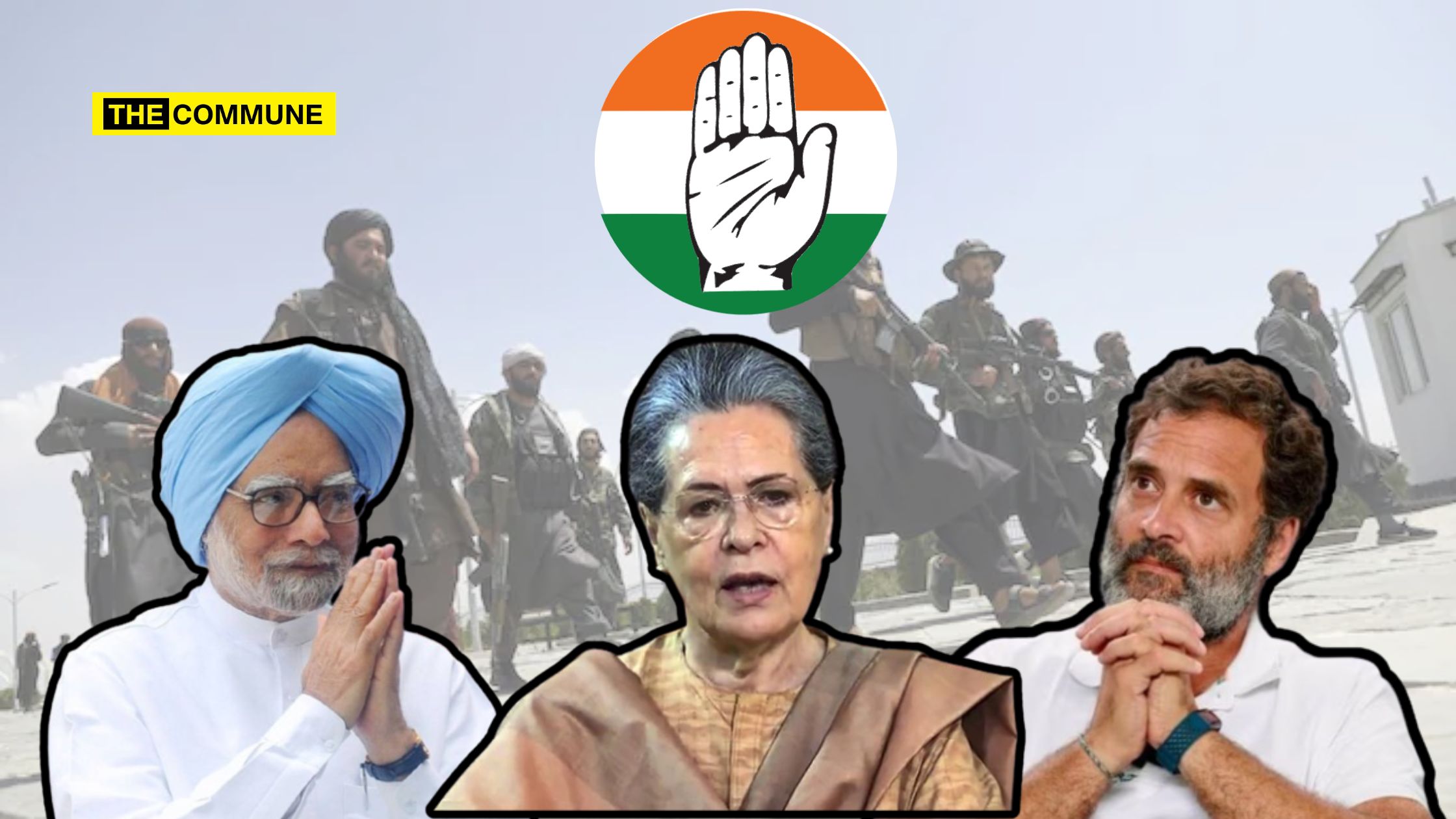
Hubballi Riot Case Withdrawal Lays Bare Congress’s Long Record Of Going Soft On Terror

manmohan singh sonia gandhi upa surgical strikes rti congress terror

The Congress party has often been criticized for supporting extremist ideologies and offering sympathetic leniency a pattern that recent developments in Karnataka seem to reinforce. Reports indicate that the Congress-led state government has withdrawn 60 criminal cases, many of which involve party affiliates, individuals tied to communal unrest, and activists associated with Ambedkarite movements.

On 4 September 2025, Karnataka officially approved the dismissal of cases related to the 2019 Chittapur stone-pelting incident, as well as protests that followed the Enforcement Directorate’s arrest of Deputy Chief Minister D.K. Shivakumar. Similarly, cases stemming from violence during Ganesh Chaturthi festivities and recent demonstrations in Shivamogga were also dropped.

This sweeping action has sparked controversy, principally because it was undertaken despite pronounced objections from the Home Department, senior police leadership, and legal advisors. Authorities including the Director General of Police, the Director of Prosecutions, and the Law Department warned that many of these cases lacked sufficient grounds for dismissal and served no public interest. Nevertheless, the government proceeded.

One particularly contentious case involved a 2019 Chittapur incident in which young men allegedly attacked police after Hindu activists tipped them off regarding illegal cattle transport this case was reportedly withdrawn at the request of IT and BT Minister Priyank Kharge. Charges were also dropped against Shivakumar’s supporters who damaged public property in Kanakapura during protests against his arrest, as well as accusations against his brother D.K. Suresh’s supporters, who had protested their exclusion from a ceremony honoring Dr. B.R. Ambedkar in 2012.

The pattern of leniency extended to dismissals of cases linked to disruptions during Ganesh Chaturthi processions in districts like Ramanagara and Koppal, where accusations included disorderly conduct and organization of unauthorized ram fights. Former Home Minister Araga Jnanendra is believed to have played a role in advocating these withdrawals. Further removals involved cases from Shivamogga’s Shikaripura region related to 2023 protests over a BJP government’s reservation policy triggered by petitions from Home Minister Dr. G. Parameshwara and Assembly Chief Whip Ashok Pattan.

Law and Parliamentary Affairs Minister H.K. Patil confirmed that approximately 60 government-initiated cases including those against farmers, students, and Kannada activists were annulled across different police jurisdictions.

This is not an isolated instance. In October 2024, under Siddaramaiah’s leadership, the Karnataka government attempted to withdraw cases against AIMIM leaders and others implicated in the 2022 Hubballi riots. Mass rioting had reportedly occurred, involving an attack on the Old Hubballi police station and nearby property destruction. Yet, following a PIL by advocate Girish Bhardwaj, the Karnataka High Court overturned the proposed withdrawals.

This is not the first time; there are additional episodes where the Congress has been “soft on terror.” Notably:

  • In 2010, the UPA government released 25 terrorists some affiliated with Lashkar-e-Taiba, Hizb-ul-Mujahideen, and JeM as a “goodwill gesture” toward Pakistan. Included was JeM operative Shahid Latif, previously sought by the IC814 hijackers; he later orchestrated the 2016 Pathankot airbase attack.
  • In 2013, state-led governments dropped numerous cases against terrorist organizations such PFI and SDPI members tied to communal flare-ups, allowing these organizations to strengthen their influence in Karnataka.
  • Post-2008 Mumbai terror attacks, reports claim that the UPA failed to authorize retaliatory airstrikes against terror camps in Pakistan, despite such proposals from the IAF.
  • There were notable efforts to dilute key anti-terror laws TADA and POTA due to political considerations, as described by late Arun Jaitley.
  • High-profile incidents, like the Batla House operation, were cast in a controversial light by senior Congress figures, undermining public confidence in anti-terror efforts.

In sum, the recent case withdrawals in Karnataka reflect a broader pattern of leniency and political expediency in handling serious criminal and terror-related matters, reinforcing the narrative that Congress, at times, adopts a permissive stance toward extremist elements.

Subscribe to our channels on TelegramWhatsApp, and Instagram and get the best stories of the day delivered to you personally.
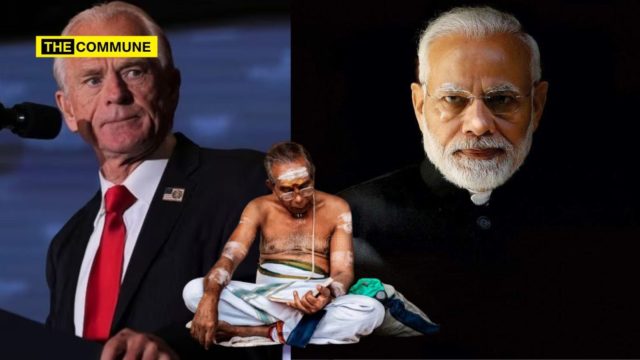
MEA Slams White House Advisor Navarro Over ‘Brahmins Profiting’ Comment

navarro brahmins russian oil

The Ministry of External Affairs (MEA) on Friday rejected the White House Senior Advisor Peter Navarro’s continuous tirade against India, terming his remarks as “inaccurate and misleading statements”.

“We have seen the inaccurate and misleading statements made by Mr. (Peter) Navarro and obviously, we reject them”, MEA Spokesperson Randhir Jaiswal said during a weekly media briefing while responding to a question on Navarro’s “Brahmins profiting” remarks.

The trade advisor’s controversial remarks, made while defending US President Donald Trump’s 50 per cent tariff on Indian goods, were labelled as “casteist” and “sinister” by analysts and caused a massive outrage in India. The MEA spokesperson, however, reiterated that the relationship between India and the United States remains “very important” for New Delhi.

“India and the United States share a comprehensive global strategic partnership which is anchored in our shared interests, democratic values, and robust people-to-people ties. This partnership has weathered several transitions and challenges before. We remain focused on the substantive agenda that the two countries have committed to, and we hope that the relationship will continue to move forward based on mutual respect, and shared interests,” said Jaiswal.

Earlier this week, Navarro had criticised India’s foreign policy, questioning Prime Minister Narendra Modi’s recent engagements with the Russian and Chinese leaders at the Shanghai Cooperation Organisation (SCO) Summit in Tianjin, and declaring that “India needs to be with us, not Russia”.

In an interview with IANS, Edward Price, a political economist and former head of Economic Policy in the British Consulate General in New York, had slammed Navarro’s continuous tirade against India, calling it a “shame”.

Price asserted that Navarro’s attempt to “instruct” a sovereign nation like India entirely misses the point of diplomacy. “It is also historically illiterate. India has always gone its own way, culturally, politically and otherwise. It is a unique country with a unique statecraft. We shouldn’t be telling India what to do. We should be making it a fair and friendly offer,” he added.

-IANS

Subscribe to our channels on TelegramWhatsApp, and Instagram and get the best stories of the day delivered to you personally.
Modi Govt Greenlights Nuclear Warships, Stealth Drones, Space Warfare Tech In Defence Overhaul

modi defence

Four months after Operation Sindoor, which showcased the Indian Security forces apt planning and measured targets, the Modi government has now prepared a 15-year roadmap during which India’s armed forces will be transformed through the infusion of billions of dollars and cutting-edge technology.

According to a report by NDTV, the roadmap includes the “addition of nuclear-powered warships, next-generation battle tanks, hypersonic missiles, stealth bomber drones, AI-powered weapons, and space-based warfare technology to India’s arsenal.”

As per this report, the Indian Army will induct nearly 1,800 future tanks to replace the Soviet era T-72 fleet, 400 light tanks for mountain warfare, 50,000 tank-mounted anti-tank guided missiles, and over 700 robotic counter-IED systems. Similarly, the Navy will get a new aircraft carrier, 10 next-generation frigates, 7 advanced corvettes, and 4 landing dock platforms.

“Nuclear propulsion for warships has been greenlit, as well as electromagnetic aircraft launch systems,” the report claimed. The Air Force will also acquire 75 high-altitude pseudo-satellites, 150 stealth bomber drones, hundreds of precision-guided munitions, and over 100 remotely piloted aircraft.

This roadmap is being seen as a major and bold step to enhance India’s security warfare apparatus, which includes AI, space warfare and other critical domains which have become a necessary tool in the present context, given the lessons being learnt from the ongoing wars between Russia-Ukraine, Israel-Gaza and the concluded war between Israel-Iran-America.

In the past few years, notably after Operation Sindoor, the debates in the Indian security apparatus have gathered pace on the changing structures of warfare tactics and on how India should prepare herself for the 21st-century threats. Notably, CDS Anil Chauhan, on Friday, delivered a speech in Gorakhpur, highlighting six security challenges that India faces.

Amongst them were the unresolved border dispute with China, which he termed as India’s “biggest challenge,” recalling that such conflicts have sparked wars in 1947, 1962 and 1965, and the other challenge stems from Pakistan’s proxy war strategy of “bleeding India by a thousand cuts.”

-IANS

Subscribe to our channels on TelegramWhatsApp, and Instagram and get the best stories of the day delivered to you personally.