Home Blog Page 127

Insurance Premiums Set To Drop As Govt Removes GST On Life, Health Cover

gst registration rates pm modi insurance premium

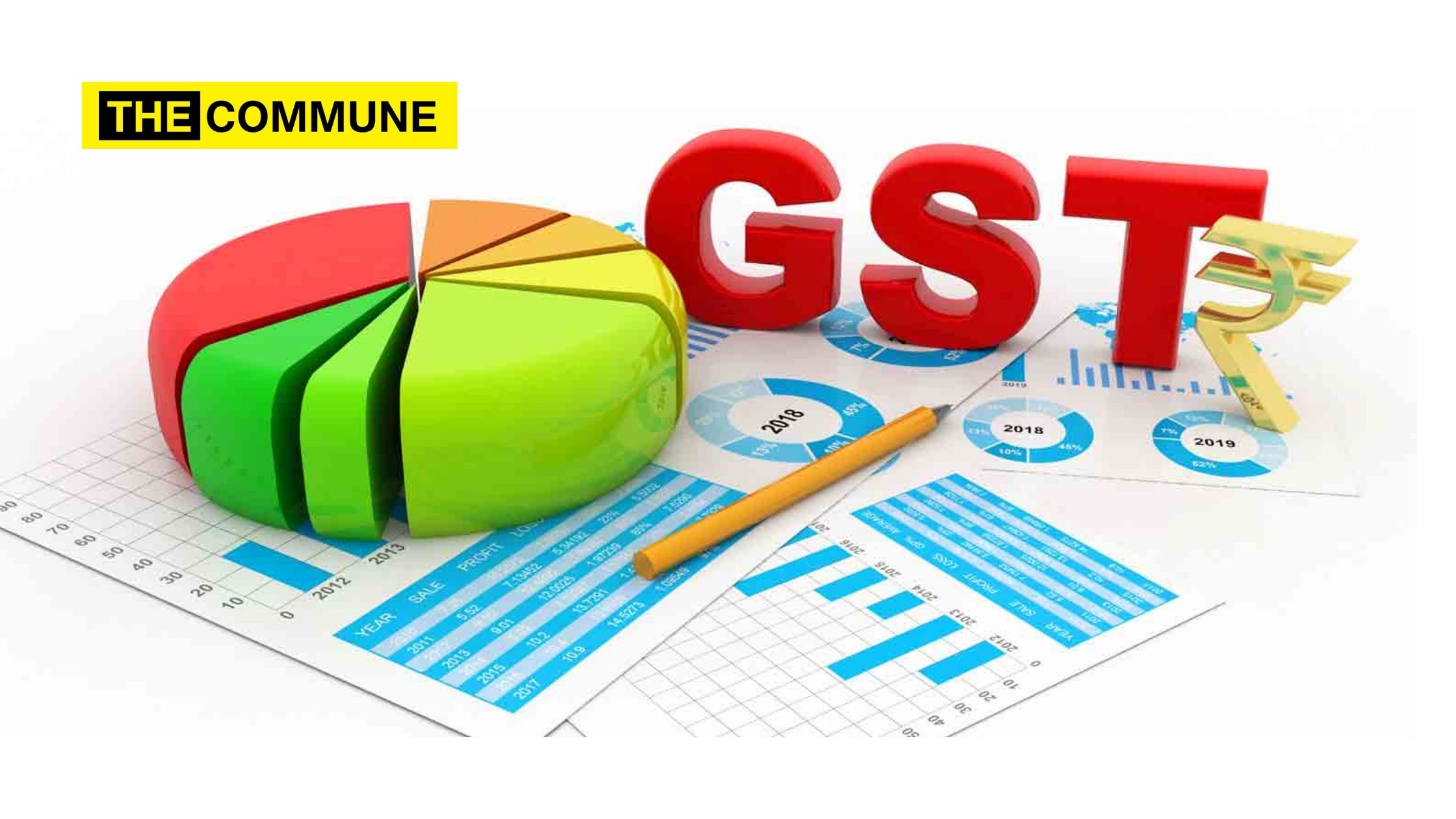
The GST rationalisation on life and health insurance premiums will significantly improve affordability, strengthen penetration and provide a boost to consumption ahead of the festive season, experts said on Monday. The move comes as part of the broader GST rationalisation, which merged the 12 per cent slab with 5 per cent and subsumed the 28 per cent into 18 per cent.

Health and life insurance, which earlier attracted 18 per cent GST, have now been moved to the nil tax category. According to ICRA, while policyholders will benefit from lower premiums, insurers may face a short-term hit as input tax credit (ITC) will no longer be available.

This could flatten margins, particularly in life insurance, though affordability gains are expected to drive higher sales and improve long-term penetration. In general insurance, the retail health segment which accounted for 16 per cent of the industry’s gross direct premium income (GDPI) in FY25, will see premiums come down, though profitability of standalone health insurers may be under pressure if the full benefit is passed on.

“The nil rate for health insurance premiums is poised to enhance affordability and accessibility for patients. As health insurance penetration further improves, it will, in turn, benefit the hospitals sector, which has already been witnessing increasing demand on the back of higher insurance penetration over the past few years,” said Jitin Makkar, Senior Vice President and Group Head, Corporate Sector Ratings, ICRA Limited.

In the long run, this step aligns with the government’s vision of making healthcare more inclusive and affordable, he added. Experts said the step will make life protection and healthcare coverage more affordable, particularly for senior citizens, while encouraging wider adoption of insurance products and strengthening India’s financial safety net.

“Exemption of GST on all individual life insurance policies, including term life, ULIP, or endowment policies, will boost insurance penetration, especially among first-time buyers and middle-income families,” said Balachander Sekhar, CEO and Co-founder of RenewBuy.

—IANS

Subscribe to our channels on Telegram, WhatsApp, and Instagram and get the best stories of the day delivered to you personally.

Baloch Family Holds Protest For 34Th Day Over Son’s Enforced Disappearance By Pakistani Forces

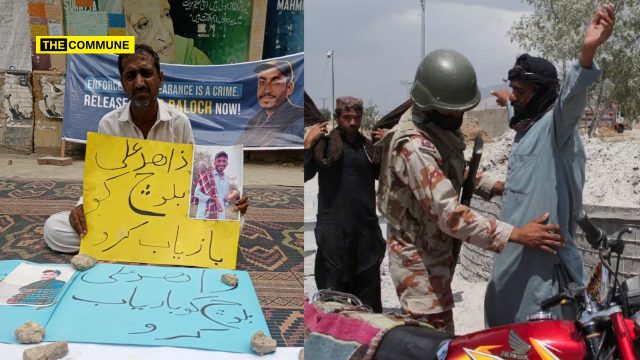
A Baloch family protesting the enforced disappearance of their son by Pakistani forces continued their sit-in at Karachi Press Club for the 34th consecutive day, Baloch Yakjehti Committee (BYC) said on Sunday. BYC stated that Zahid Ali’s family, demanding his safe release, continues to hold the protest despite his father Abdul Hameed’s worsening health condition.

According to BYC, Ali, 25, a student of Karachi University, was “forcibly disappeared” on July 17. “Day 34: Zahid Ali’s Protest Camp Continues at Karachi Press Club. Today marks the 34th consecutive day of the sit-in camp by the family of Zahid Ali, a 25-year-old IR student of Karachi University, who was forcibly disappeared along with his rickshaw on 17 July 2025. Despite his father Abdul Hameed’s worsening health condition, the family continues their protest with steadfast determination, demanding Zahid’s immediate and safe release.

Their struggle is a painful reminder of the ongoing wave of enforced disappearances that continues to tear apart families in Karachi and Balochistan,” BYC posted on X. On Saturday, BYC condemned the extrajudicial killing of Mullah Bahram, a resident of Kech district’s Koh Dagar, who was shot dead by “state-backed death squads” on Saturday.

The rights body stated that the incident showcased a pattern of consecutive targeted killings in the area. In a statement shared on Saturday on X, BYC stated: “Mullah Bahram, son of Abdul Ghafoor and a resident of Koh Dagar, sub-tehsil Mand, district Kech, was shot dead by state-backed death squads on the afternoon of September 6, 2025. This incident occurred within hours of the killing of Izhar, another youth resident of Mand, underscoring a pattern of consecutive targeted killings in the area.

According to eyewitnesses, the perpetrators were members of state-backed death squads operating under the command of the Pakistani forces and law enforcement agencies.” The rights group also condemned the extrajudicial killing of a Baloch teenager by Pakistan Army-backed death squads in Balochistan, which continue to target students, activists, and political opponents across the province. It mentioned that Izhar Mujeeb, a resident of Kech district, was shot dead by the Pakistan army’s death squads in Mand on Saturday.

Citing reports, the rights body stated that death squads opened fire on Izhar while he was at his shop in the morning. He was rushed to the hospital after sustaining critical injuries, but succumbed due to excessive bleeding. “Izhar, son of Mullah Mujeeb and a resident of Lebanon sub-tehsil, Mand (district Kech), was shot dead by state-backed death squads in the Soro area of Mand on September 6, 2025. According to reports, state-backed death squads opened fire on Izhar while he was at his shop earlier in the morning. He was rushed to the hospital after sustaining critical injuries, but succumbed due to excessive bleeding. Local sources confirm that the perpetrators were state-backed death squads operating under the command of Pakistani forces,” BYC posted on X.

–IANS

Subscribe to our channels on TelegramWhatsApp, and Instagram and get the best stories of the day delivered to you personally.
BJP MPs Urge Manufactures, Traders To Pass On GST Rate Cut To Consumers

gst registration rates pm modi insurance premium

The BJP Parliamentary Party on Sunday unanimously approved a resolution calling upon manufacturers, traders, big and small, to ensure that the GST reductions announced by the Narendra Modi-led government flow directly to the consumer.

“By passing on every saving and every relief, we honour the Prime Minister’s vision while strengthening the trust between shopkeeper and customer, trader and citizen. Lower prices will fuel higher demand, higher demand will boost prosperity for businesses and prosperity will reinforce the strength of the nation,” the resolution introduced by Commerce Minister Piyush Goyal at the meeting stated.

“Let us ensure that the GST reforms under Prime Minister Narendra Modi are remembered as a triumph of governance and a promise kept to the people of India. These far-reaching changes embody our unity, fairness and shared growth. Now it is the duty of every trader to pass on each rupee of relief to the consumer, turning reforms into ease of living, greater demand and a more prosperous economy. This is the Modi government’s call. It is a call for fairness, for growth and for every family in India to feel the benefit. It is a call for an Aatmanirbhar Bharat,” it added.

The resolution highlights that the new reforms in the GST promote production, encourage consumption and yet significantly add to the coffers of the nation. The reforms have further simplified the system and placed the citizen at its heart. Rates on essentials like food and medicines, as well as prices of electronic goods, have been significantly reduced, distortions such as inverted duties are being corrected, and procedures for small businesses, exporters and startups are being streamlined, it pointed out. These reforms reflect the goal of our government to bring ease in the lives of our citizens, empower traders and reinforce India’s path to self-reliance.

Steady growth in monthly collection touching Rs 2 lakh crore is a certain indication of greater compliance. It is also indicative of buoyancy in our economy, the resolution further stated. The resolution also states that eight years ago, under the decisive leadership of Prime Minister Narendra Modi, India embraced the Goods and Services Tax, fulfilling the vision of “One Nation, One Tax.” What once was a cumbersome tax regime of VAT and multiple taxes, due to which our country struggled with a slow and fragmented economy, endless queues at inter-state toll booths, is now replaced by a unified market that has brought fairness, simplicity and strength to our economy, it said.

Before 2014, while the governments failed to bring in GST, Prime Minister Narendra Modi not only brought in GST but also brought it in with consensus from across the country, the resolution further stated. In just eight years, the GST taxpayer base has more than doubled from 66 lakh in 2017 to over 1.5 crore today, and annual collections have surged to more than Rs 22 lakh crore in FY 2024–25, growing at a CAGR of over 18 per cent. GST collections have now reached close to Rs 2 lakh crore a month, much higher than when this historic reform was implemented, the resolution added.

–IANS

Subscribe to our channels on TelegramWhatsApp, and Instagram and get the best stories of the day delivered to you personally.
EPS To Launch Fifth Phase Of ‘Makkalai Kappom Thamizhagathai Meetpom’ On Sep 17

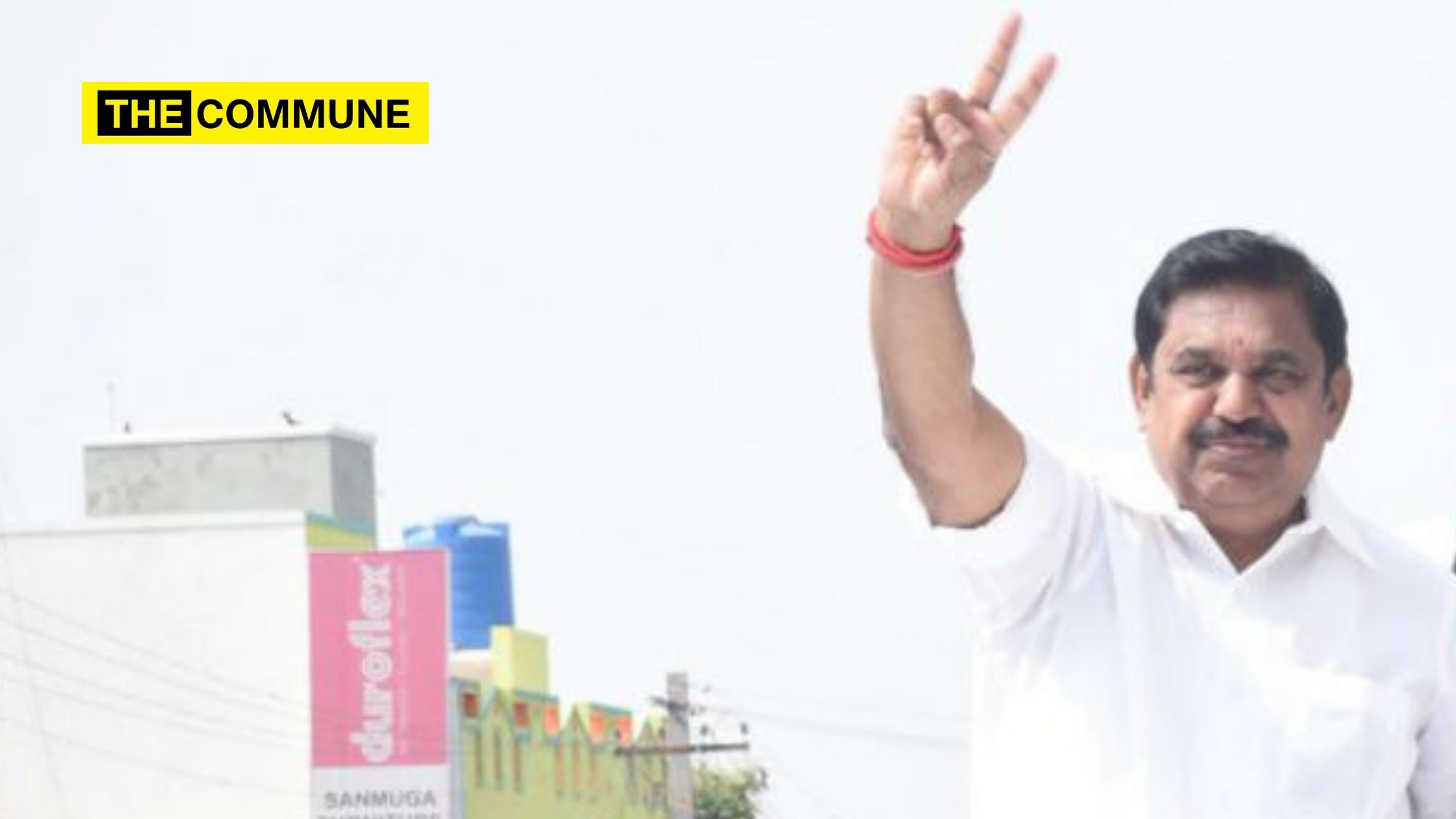
AIADMK general secretary Edappadi K. Palaniswami is set to roll out the fifth phase of his state-wide yatra, ‘Makkalai Kappom Thamizhagathai Meetpom’, on September 17 from Tamil Nadu’s Dharmapuri. The 10-day campaign will wind its way through several districts before drawing to a close on September 26 at Kulithalai in Karur district. In this leg of the yatra, Palaniswami will hold 19 public meetings from his campaign vehicle, covering Dharmapuri, Namakkal, The Nilgiris, Dindigul, and Karur districts.

Party cadres and senior leaders in these regions have been directed to mobilise supporters and ensure smooth conduct of the programmes, according to an announcement from the AIADMK headquarters. Since launching the campaign earlier this year, Palaniswami has already covered nearly 150 Assembly constituencies across Tamil Nadu. His rallies have consistently drawn large gatherings, reflecting his attempt to position the AIADMK as a formidable alternative to the ruling DMK.

The yatra began with its first phase in February from his home turf Salem, where Palaniswami promised to “protect the people and retrieve Tamil Nadu from DMK’s misrule”. That phase took him across western districts including Erode, Tiruppur, and Coimbatore. The second phase, launched in March, covered the delta belt of Thanjavur, Tiruvarur, and Nagapattinam, where he highlighted farmers’ grievances and criticised the state’s handling of agriculture and water management. In the third phase, Palaniswami campaigned across northern districts such as Vellore, Tiruvannamalai and Kancheepuram, accusing the DMK of failing to deliver on electoral promises and calling upon voters to “restore AIADMK’s governance of development and welfare”.

The fourth phase focused on southern Tamil Nadu, where Palaniswami travelled through Madurai, Theni, Virudhunagar and Tirunelveli districts, reiterating his pledge to bring back pro-people schemes launched under the previous AIADMK government. With each phase, Palaniswami has sought to energise party workers, consolidate AIADMK’s support base and project himself as the unquestioned leader of the party. He has repeatedly stressed that the 2026 polls will be a turning point for Tamil Nadu, vowing to return the AIADMK to power and steer the state “towards prosperity and development”. The fifth phase beginning September 17 will be closely watched, as it will test AIADMK’s organisational strength in Dharmapuri, Namakkal, and the western belt, regions considered crucial for the party’s revival.

–IANS

Subscribe to our channels on TelegramWhatsApp, and Instagram and get the best stories of the day delivered to you personally.
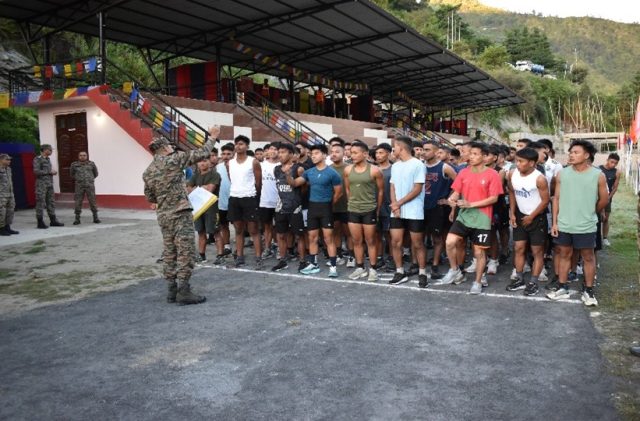
Arunachal Youth Motivated To Don Uniform, Serve Nation As Agniveers: Army

The Indian Army, under the aegis of Army Recruiting Office, Jorhat (Assam), successfully conducted the Agniveer recruitment Rally at Gyaptong Regional Stadium, Rupa in Arunachal Pradesh, officials said on Sunday. Defence spokesman Lt Col Mahendra Rawat said that the event evoked a highly motivated response among the local youths, reinforcing their aspirations to don the uniform and serve the nation with pride as Agniveers.

Over 380 aspirants from various districts of Arunachal Pradesh reported and underwent physical fitness tests, physical measurement test, documentation, and medical examination as per the standards of the Indian Army, he said. In the three day (September 3-5) rally shortlisted candidates of Arunachal Pradesh had earlier qualified in the online common entrance examination.

The rally was flagged off by the Director Recruiting (North East States) and witnessed the gracious presence of senior Army officers and civil dignitaries, who extended encouragement and support to the youth participating in the event, the spokesman said. He said that the recruitment process was conducted in a transparent and fair manner, ensuring equal opportunity for all eligible candidates. The wholehearted support of the civil administration and local military authorities enabled the smooth and efficient conduct of the rally.

Lt Col Rawat said that the final merit list of successful candidates would be published in due course, after completion of all stages of the recruitment process. The Indian Army extends its appreciation to the people and administration of Arunachal Pradesh for their cooperation and congratulates all aspirants who participated with zeal and determination, the spokesman added. In a separate event, at the picturesque Lhalung village in Menchuka Valley in Arunachal Pradesh’s Shi-Yomi district, the annual worship of the 500-year-old Chandan tree was held on Sunday with deep devotion and cultural fervor.

The sacred tree is revered by the local Buddhist community and symbolizes not only faith but also the enduring heritage of the region. The defence spokesman said that the monks from local monasteries, along with a large number of devotees, gathered at the site to offer prayers, light lamps, and perform rituals seeking peace, prosperity, and collective well-being. Elders of the village narrated the legends and history associated with the tree, passing on valuable cultural knowledge to the younger generation and reinforcing the community’s spiritual roots.

Troops assisted in organising the event and ensured seamless arrangements for the gathering. Beyond the ceremony, the Army has been actively engaged in the upkeep and preservation of this centuries-old heritage site through year-round stewardship, cleanliness drives, and maintenance of pathways leading to the sacred tree. The participation of local military authorities reflects the strong bond between the armed forces and the people of the region. Such initiatives not only safeguard cultural and religious traditions but also strengthen the spirit of civil–military harmony in remote border areas. The event concluded with a collective prayer for peace, unity, and prosperity in the valley. The annual worship of the Chandan tree continues to stand as a timeless reminder of Arunachal Pradesh’s spiritual richness and the shared commitment of the people and the Army to preserve it for future generations, Lt Col Rawat added.

–IANS

Subscribe to our channels on TelegramWhatsApp, and Instagram and get the best stories of the day delivered to you personally.
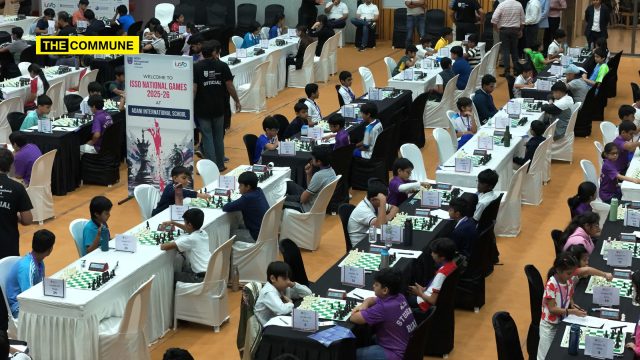
Adani International School Hosts ISSO National Games Chess; Chatrabhuj Narsee School, Mumbai Crowned Overall Champ

Adani International School, Shantigram, successfully hosted the ISSO National Games Chess Competition 2025, a two-day event that brought together more than 370 student players from 80+ schools across 10 states. The tournament turned the campus into a hub of strategy and sporting spirit, drawing over 650 attendees including parents, coaches, and supporters.

The competition featured four categories—Under-11, Under-14, Under-17, and Under-19—providing a platform for young players to test their skills in high-pressure games. The opening ceremony was graced by Namrata Adani, Promoter of Adani International School, who encouraged participants with her interaction.

Chess stalwarts Bhavesh Patel, former Secretary of the Gujarat State Chess Association and Vice-President of the All India Chess Federation, and Grandmaster Ankit Rajpara also addressed the gathering, inspiring players with insights from their own journeys. After two days of intense competition, Chatrabhuj Narsee School, Mumbai emerged as the Overall Champion, while Indus International School, Hyderabad secured the Runners-Up title.

Speaking about the significance of such tournaments, school officials emphasised India’s rising stature in global chess, propelled by young stars like R Praggnanandhaa and D Gukesh, and underscored how grassroots competitions at the school level are shaping the next generation of champions. The closing ceremony celebrated outstanding performances across categories, with medals awarded to the winners.

Results: Under-11 Winners: Boys: 1. Ayaanraj Kottapally (Shreenidhi International School); 2. Anay Agarwal (Indus International School, Hyderabad); 3. Ahaan Kataruka (Nita Mukesh Ambani Junior School) Girls: 1. Amaya Agarwal (Indus International School, Hyderabad); 2. Teesha Byadwal (Jayshree Periwal Global School); 3. Mrunmayee Daware (HVB Global Academy) Under-14 Winners: Boys: 1. Nirvaan Nirav Shah (Don Bosco International School); 2. Amay Jain (Rockwoods International School); 3. Udbhav Sharma (Neerja Modi School) Girls: 1. Naisha Khandelwal (Neerja Modi School); 2. Aadya Reddy Konda (The Gaudium School); 3. Shreya Tirthani (Bharati Vidyapeeth Rabindranath Tagore School of Excellence) Under-17 Winners: Boys: 1. Aman George Thomas (Vidyashilp Academy); 2. Aditya Kunal Patil (Dhirubhai Ambani International School); 3. Devansh Khandelwal (Scottish High International School) Girls: 1. Hasitha Reddy Patelu (Manchester Global School); 2. Ananya Khandelwal (JBCN International School, Parel); 3. Suhaani Lohia (Dhirubhai Ambani International School) Under-19 Winners: Boys: 1. Sparsh Sarawogi (Indus International School, Bangalore); 2. Aayan Singhvi (Jayshree Periwal International School); 3. Kabir Tandon (Indus International School, Bangalore) Girls: 1. Jhalak Byadwal (Jayshree Periwal Global School); 2. Dhyana Doshi (Aditya Birla World Academy); 3. Nibha Manchal (Sanjay Ghodawat International School).

–IANS

Subscribe to our channels on TelegramWhatsApp, and Instagram and get the best stories of the day delivered to you personally.
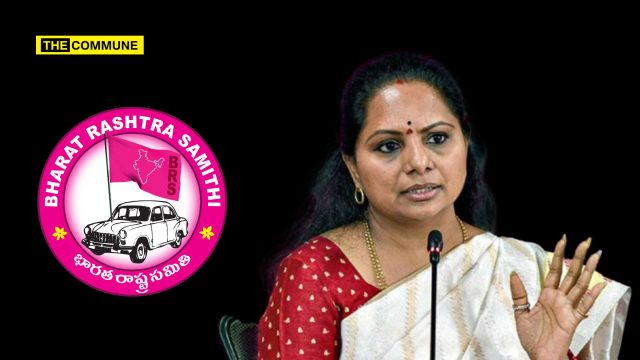
Kavitha Faces Uncertain Political Future After Exit From BRS

brs kavitha rift attack

Kalvakuntla Kavitha, who quit the BRS after being suspended by party President and her father K. Chandrasekhar Rao (KCR), is likely to float a new party but faces an uncertain future in the crowded political space in Telangana.

With hardly any support from Bharat Rashtra Samithi (BRS) cadres, and the lack of a clear agenda makes it a daunting task for the 47-year-old to create her own identity. While her revolt and sensational allegations against her cousins – former minister T. Harish Rao and former MP J. Santosh Kumar – dealt a blow to the BRS, the lack of support from any known face in the party makes her fight a lonely battle.

Though she is yet to announce her future course of action, those close to her believe that she will turn Telangana Jagruthi, the cultural and social group she has been heading since 2008, into a political party. Kavitha’s revolt and her allegations of corruption against Harish Rao, one of the most powerful leaders of the party and a close confidante of KCR, have embarrassed the first family of BRS at a time when it was gearing up to bounce back in the state after a series of reverses since losing power in 2023.

The timing of Kavitha’s attack also raised eyebrows in the political circles. Her onslaught against the cousins came hours after Chief Minister A. Revanth Reddy ordered a probe by the Central Bureau of Investigation (CBI) into the alleged corruption in the Kaleshwaram irrigation project constructed during the BRS rule. The Chief Minister announced the CBI probe in the Assembly after a marathon debate on the report of the P. C. Ghose Commission, which indicted KCR and Harish Rao for their alleged role in the irregularities.

Though she tried to blame Harish Rao for the corruption tag to her father, it was seen by many as a confession when the two leaders had approached the High Court to quash the Ghose Commission report. Hence, KCR lost no time in acting against Kavitha. While both KCR and Kavitha’s brother and BRS Working President K. T. Rama Rao (KTR) have refrained from reacting to Kavitha’s allegations, they let senior BRS leaders, including women leaders, justify the action taken against her.

The BRS leaders praised KCR for what they called not sparing his own daughter to enforce discipline in the party. None of the key leaders of BRS came out in support of Kavitha, who not only quit as Member of Legislative Council (MLC) but also resigned from the primary membership of the party. Continuing her outbursts against Harish Rao and Santosh, she even alleged that they were trying to take over the party. She also cautioned her father and brother against their conspiracies.

Kavitha’s episode gave the ruling Congress and the opposition party, the BJP, more ammunition to attack the KCR family over alleged corruption during the 10-year BRS rule. Leaders of both Congress and BJP attributed Kavitha’s revolt to what they call a rift in the KCR family over the sharing of “ill-gotten” money. Political analysts believe that no one will come out in support of Kavitha, who has no mass base, unlike KCR, KTR, and Harish Rao. Even the cadres of Telangana Jagruthi are the BRS workers. In addition, Kavitha’s agenda itself is not clear. “There is no clarity on what Kavitha is demanding and what her complaint is when the party is in the hands of her father and brother,” analyst Palwai Raghavendra Reddy told IANS.

He believes that the stand taken by Kavitha in accusing Harish Rao and Santosh Kumar of being corrupt while giving a clean chit to KCR and KTR will not cut ice with people. Leaders of the ruling Congress and the other opposition are already demanding she speak out on the alleged corruption of her father and brother. By suspending Kavitha, KCR sent a strong message that he will not tolerate allegations against his nephew, who had a crucial role in building the TRS (now BRS).

“Harish Rao was in the party even before his brother and sister joined it. People who know the contribution of Harish Rao to the party will not believe what Kavitha is saying,” said Raghavendra Redy. He is also of the view that Kavitha would not be able to make any political impact. At the most, she can be a nuisance factor to the BRS and its leadership. The analyst draws a parallel with the rift between Sharmila and her brother Y.S. Jagan Mohan Reddy in the YSR Congress Party. Sharmila had played a key role in keeping the YSRCP afloat with her padyatra in the then united Andhra Pradesh when Jagan was in jail in the disproportionate assets case.

She also had a significant role in the party’s election campaign in the 2019 elections. After YSRCP came to power with a landslide win, and Sharmila wanted her pie, Jagan Mohan Reddy sidelined her. When she came out and floated the YSR Telangana Party, nobody came in her support. Sharmila merged her party with Congress, which made her the President of the party’s Andhra Pradesh unit. She claims to be the true successor of her father, Y. S. Rajasekhara Reddy’s political legacy. Unlike Sharmila, who was not made an MP or MLA, Kavitha had a political space in Telangana. She founded Telangana Jagruthi in 2009 to give cultural thrust to the Telangana movement when it was at its peak.

After the formation of Telangana State in 2014, she was elected to the Lok Sabha from Nizamabad. Though she failed to retain the seat in 2019, KCR made her a member of the Legislative Council. However, she was not given any role in the government or the party. After TRS retained power in 2018, KCR made his son KTR the heir-apparent by appointing him as the Working President of the party. As a minister holding key portfolios, KTR was the number two in both the government and the party. Some people see this patriarchal approach as the cause of family rift. Kavitha’s arrest by the Enforcement Directorate (ED) and the CBI in March 2024 in the Delhi liquor case dented her image. The political rivals dubbed her “liquor queen”.

She was the first member of KCR’s family to be arrested on allegations of corruption. After her release on bail five months later, KCR apparently wanted her to lie low due to her tainted image, which was seen as one of the factors for the party drawing a blank in the Lok Sabha elections. She, however, started reviving her political activity by taking up various issues, especially the issue of an increase in reservation for backward classes. Kavitha was apparently feeling sidelined in the party. The internal rift came out in the open in May 2025 — a few days after BRS held a massive show of strength in Warangal to celebrate its silver jubilee — when a letter written by Kavitha to KCR was leaked. This exposed the rift in the family and ultimately led to her exit from the party.

–IANS

Subscribe to our channels on TelegramWhatsApp, and Instagram and get the best stories of the day delivered to you personally.
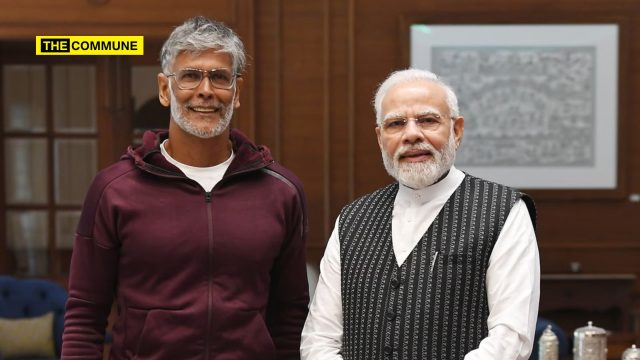
I’m An Admirer Of PM Modi’s Fitness: Milind Soman

Actor and fitness icon Milind Soman on Sunday said he is not only a big fan of Prime Minister Narendra Modi but also an admirer of his commitment to fitness, as he launched the Bharatiya Janata Yuva Morcha’s (BJYM) ambitious ‘Namo Yuva Run’ campaign in the national capital to mark PM Modi 75th birthday.

The event, held at the BJP headquarters, was attended by Union Minister Mansukh Mandaviya, BJYM President and MP Tejasvi Surya, along with others. Speaking at the launch, Soman underlined the broader meaning of fitness.

“Fitness means—in the midst of all the pressure in life—staying active. If you are able to do what you need to do, what you are meant to do, that is a true measure of fitness. Only building biceps or six-pack abs is not fitness,” he said. Calling the initiative “amazing”, Soman highlighted the uniqueness of bringing together 10 lakh people across India to run simultaneously. “I think, not only in India but across the world, this is the first-of-its-kind run at such a scale. I hope we do more such initiatives, because doing it once is not enough. Consistency is the key to change,” he added.

The actor, who has long been associated with fitness campaigns, also linked the run to a broader social cause. “The country and the world are united in the fight against drugs,” Soman said, stressing the role of physical activity in leading a positive life. BJYM chief and MP Tejasvi Surya announced that the ‘Namo Yuva Run’ will be held on September 21 to mark PM Modi’s 75th birthday. “Runs will take place at 75 locations, with 10,000–15,000 youth participating at each venue. This means nearly one million young people will run together at the same time. It will be recorded as the biggest and most participative run in the country,” he said.

The campaign, positioned as both a tribute to PM Modi and a call for youth fitness, will mobilise young Indians on an unprecedented scale.

–IANS

Subscribe to our channels on TelegramWhatsApp, and Instagram and get the best stories of the day delivered to you personally.
PIL In Supreme Court Seeks National Committee To Oversee Governance Of Temples Across India

The Akhil Bhartiya Mandir Parishad, a trust dedicated to the welfare of the Hindu community, has filed a public interest litigation (PIL) before the Supreme Court seeking the constitution of an All-India Management Committee to oversee the governance of temples across the country. As per the plea, temples—whether managed by the Centre, state governments, or private committees—are “severely plagued by mismanagement, maladministration of funds, and poor upkeep.”

It added that negligence in financial allocation and utilisation has undermined “the sanctity and proper functioning of these sacred institutions” and has hurt the sentiments of devotees who visit temples regularly in devotion to the Hindu Gods and Goddesses. The PIL, filed through advocate Rakesh Dahiya, claimed that safeguarding the religious identity and ensuring the welfare of the Hindu community is not merely an individual responsibility but “a constitutional obligation upon the government in power.”

Citing Articles 25 and 26 of the Constitution, the petitioner argued that the government is bound to ensure that “the religious sentiments of Hindus shall not be infringed upon, whether by the State or by individuals from other religious groups.” As per the PIL, the existing statutory frameworks “have failed miserably in managing and maintaining our temples.” It prayed for the establishment of an All-India Management Committee with the mandate to oversee administration, finances, and devotee welfare at all temples across the country. “Its goal would be to ensure transparency, accountability, and the welfare of temples, while preserving their sanctity and religious significance,” the PIL stated.

It added that the “committee’s aim should be to deliver a hassle-free and spiritually fulfilling experience for every devotee, regardless of their social or economic background.” The PIL referred to a legal notice issued by the Akhil Bhartiya Mandir Parishad on October 3, 2023, to the Mahakaleshwar Jyotirlinga Management Committee in Ujjain, after learning that “the aforesaid committee is charging hefty amounts from devotees who visit the Shree Mahakaleshwar Temple, Ujjain, for Temple Visit and Aarti. As a consequence, these high charges have effectively restricted access to the temple’s religious services for the economically weaker sections of society.”

The petition also listed past tragedies, including the 2022 Vaishno Devi stampede and the fire incident during Holi celebrations at Ujjain’s Mahakaleshwar temple, as evidence of “gross negligence” by temple committees. It pointed to the Tirupati Laddu controversy as another instance of “maladministration by the State Government which ultimately infringes the sentiments of followers and pilgrims”. The plea asserted that the formation of such a central committee would “provide much-needed relief to temples and ensure their governance is consistent with the ethos of Hinduism, free from external interference, and protected from mismanagement.” As per the causelist published on the website of the apex court, a Bench of Chief Justice of India (CJI) BR Gavai and Justices K. Vinod Chandran and Atul S. Chandurkar will take up the matter for hearing on Monday (September 8).

–IANS

Subscribe to our channels on TelegramWhatsApp, and Instagram and get the best stories of the day delivered to you personally.
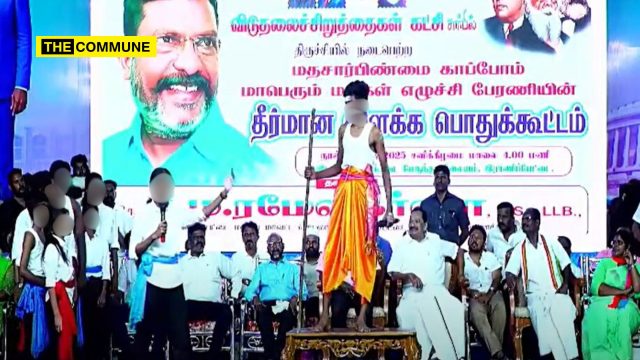
DMK-Congress Ally VCK Uses Children In A Skit Mocking Hindu Traditions And Targeting Brahmins, Veiled Digs Made At President Murmu And Union Minister L. Murugan

In yet another controversial move targeting the Brahmin community and Hindu religious traditions, the Viduthalai Chiruthaigal Katchi (VCK) has come under fire for featuring children in a politically charged skit at the recent Ranipet Resolution Public Meeting. Critics have condemned the act as a blatant use of minors in political and religious propaganda, raising serious ethical and legal questions.

The skit, presented under the theme “Hindu Religion Is Our Own Religion”, sought to promote a Dravidianist reinterpretation of Hindu deities by portraying them as rebranded forms of the Buddha. It began with children chanting Buddhist mantras such as “Buddham Saranam Gachhami”, followed by Islamic slogans declaring religious and linguistic identity, “My mother and father are not from an Arab country. We are not strangers. Allah is formless to us. Tamil is our mother tongue, and we are Indians. Allahu Akbar.”

The skit then shifted to a dramatized depiction of Hindu caste discrimination. A saffron-clad child, adorned with sacred ash (vibhuti), a janeu (sacred thread), and portraying a Brahmin priest, was shown addressing others with derogatory remarks, “Hey, abhishtu get lost, go away! Come near me only when I call you. Don’t rush forward like a cashew nut!”

Other children were showcased asking, “Saamy! aren’t we Hindus?” claiming to represent the various varna groups Shudra, Vaishya, Kshatriya, and Panchama (Dalits) asserting that they too are Hindus. Then a scene builds a narrative to depict resistance against Brahminical authority, as Dalits. One child portraying a Dalit character challenges the priest’s authority, saying, “Why swamy should we always be at the back? Why should we always stand at back? Test our devotion if you must!”

The priest responds, “What? You want me to test your devotion? Fine, now you’ll understand why I told you to stand at the back. Repeat after me—Om Namo Narayana! Om Namo Narayana! Jai Shri Ram!” All the other varna groups depicted as following his lead and chant as instructed. However, when he turns to the Panchamar girl and asks her to repeat “Om Namo Narayana,” she instead chants, “Namo Tassa Bhagavato Arahato Samma Sambuddhasa,” a Buddhist mantra.

The priest, taken aback, shouts, “Stop! What are you saying? I told you to chant something else. Fine, repeat this instead Jai Shri Ram!” She firmly replies, “Jai Bhim! Jai Bhim!”

The priest then tries to explain that chanting “Namo Narayana” grants one a place in Vaikuntha (the Hindu heavenly abode) and chanting “Jai Shri Ram” grants moksha. But she responds, “Making me stand at the front or back depends on my actions and character, not your permission. Rather than live as a submissive slave just for a place in Vaikuntha, we choose to live freely, even if poor, as the original people of this land as Buddhists! Jai Bhim! Jai Bhim! Jai Bhim! Jai Bhim!”

The skit goes further, making a veiled reference to Union Minister L. Murugan and President Droupadi Murmu, both from marginalized communities, stating that while someone from their background may become a minister or even the president, they can never become a Shankaracharya.

One child asks, “Swamy, we are also Hindus, right? Can we also become Shankaracharyas?” the priest replies, “What a mess! Everyone wants to become a Shankaracharya. Hey, you can even become the President of India, but don’t even dream of becoming a Shankaracharya.” Another asks, “Swamy, what kind of justice is this? Can’t we become Shankaracharyas? Are we not Hindus?” the priest mocks, “Hey Muruga, you can even become a Union Minister, but don’t even think about becoming a Shankaracharya.”

This narrative distorts Hindu traditions. Being born a Brahmin does not automatically grant access to temple sanctums (garbha griha) or ritual authority—such roles are governed by temple Agamas (scriptural codes). Even senior religious figures like Shankaracharyas are not permitted to enter certain temples based on traditional rules.

Observers view the skit as an attempt to reinforce long-debunked Dravidianist propaganda aimed at vilifying Hindu practices and customs, while emotionally manipulating young minds to serve political ends.

Subscribe to our channels on TelegramWhatsApp, and Instagram and get the best stories of the day delivered to you personally.