Home Blog Page 1102

Milords! The Rush For Justice Should Not Be Just Confined To Protecting A Select Few 

In a late-night hearing on Saturday, 1 July 2023, the Supreme Court prevented ‘social activist’ Teesta Setalvad from surrendering after the Gujarat High Court rejected her bail earlier in the day. Setalvad is accused of falsifying evidence, coaching eyewitnesses, and disparaging the government of Gujarat in relation to the Gujarat Riots of 2002. A three-judge panel of the Supreme Court granted temporary release to controversial campaigner Teesta Setalvad in a sensational late-night hearing. This ruling granted Teesta Setalvad one week of temporary bail, extending the Gujarat High Court’s order to surrender promptly by one week. The case was being heard by a panel of Justices BR Gavai, AS Bopanna, and Dipankar Datta.

The bigger three-judge panel was established after a two-judge bench comprising judges Abhay S Oka and Prashant Kumar Mishra failed to reach an agreement on the appeal challenging the Gujarat High Court ruling denying regular bail. The bench of two judges had asked the CJI to assemble a bigger bench the same evening, and the larger bench was constituted promptly, with the hearing scheduled for 9.15 PM that day. The hurry to get justice for self-proclaimed activist Setalvad has raised many eyebrows. While the Supreme Court is beset by delays in bringing justice to the ordinary man, it has shown remarkable vigour in safeguarding an activist whom the Gujarat High Court described as a lady who ‘used victims as a ladder to earn Padma Shri, damage image of then CM Narendra Modi.’ 

What Is The Case Against Setalvad?

Setalvad is suspected of participating in a bigger conspiracy concerning the 2002 Gujarat riots and attempting to incriminate Prime Minister Modi and others in the outbreak of violence. The prosecution said that she got thirty lakh rupees through late Congress leader Ahmed Patel with the intention of influencing the Gujarat administration led by Modi in the aftermath of the 2002 post-Godhra riot cases. On 25 June 2022, the activist-journalist was taken into custody along with two others for forging evidence in order to incriminate “innocent people” in the cases.

After the Supreme Court dismissed the petition brought by Zakia Jafri, widow of late Congress MP Ehsan Jafri, who contested the SIT’s clean chit awarded to Modi and others, an FIR was filed against her, former Gujarat Director General of Police RB Sreekumar, and ex-IPS officer Sanjiv Bhatt. Jafri said there was a “larger conspiracy” behind the post-Godhra violence. The SIT in the Supreme Court had challenged the plea underlining that her complaint was guided by Teesta Setalvad, who levied allegations only to “keep the pot boiling.” Setalvad was given the Padma Shri, one of the highest civilian honours in the country, in 2007 under the Congress-led UPA govt. She was also a former member of the erstwhile Planning Commission, maintaining strong relations with the Congress leadership.

The Larger Picture

Aside from stoking communal fires during the Gujarat riots, Teesta has been intimately associated with Congress leadership and other phoney activists associated with George Soros and his anti-India campaign. Sunita Viswanath is one such individual. Sunita claims to have worked on women’s issues in Afghanistan, although her work makes no mention of Afghanistan’s minority Hindus and Sikhs. A unifying thread that binds these persons, Congress, Teesta, and Sunita, is their conviction in demeaning Hindus and India’s underlying religious system.

The same gang recently organised a three-day virtual conference called India on the Brink: Preventing Genocide. According to Teesta Setalvad, hate speeches and hate crimes facilitated the genocide in Gujarat in 2002, which murdered over 2,000 people, the majority of whom were Muslims. Muslims were not permitted to return to their communities for three months, she claimed, describing the effects of the horrific violence carried out by so-called Hindu radicals under Mr. Modi’s administration. Sunita has also expressed concern over the impending Muslim genocide in India.

It is interesting to note that the Gujarat High Court rejected her bail citing her role in spreading false rumours about the riots in Gujarat in a disinformation campaign. So, what were their intentions? Fanning communal disharmony? Sunita had already met Rahul Gandhi during his visit to the US in June 2023. 

Not just that. Rahul Gandhi’s appearance in New York on June 4th was organised by members of Pakistan’s Jamaat-e-Islami. Tanzeem Ansari, the Amir of the Muslim Communities of New Jersey’s (MCNJ) Outreach Committee, was a notable figure.


MCNJ is led by Imaam Jawad Ahmed, a Pakistan-born native who is well-known in US Islamist circles. He attended Jamaat front Islamic Circle of North America (ICNA) events which promoted Pakistani propaganda against India in the pretext of human rights. ICNA is a significant Jamaat front with multiple chapters and connections to extreme and terrorist organisations. The organisation is renowned for supporting and celebrating Pakistani state-sponsored terrorists. 

And Teesta, whom the court protected zealously, is closely affiliated with these organisations. It is also said that Teesta has close ties to the judiciary.

Her great-grandfather, lawyer Chimanlal Setalvaad, was a member of the infamous Hunter panel, which cleared General Dyer. He was Motilal Nehru’s close buddy. Her grandfather, M.C. Setalwaad, was a prominent lawyer and close companion of Jawaharlal Nehru and Sheikh Abdullah. From 1950 through 1962, he was the longest-serving Attorney General. He was the head of the Bar Council before becoming a Congress MLA. Atul Setalvaad, her father, served as a High Court lawyer. His close buddy Sam Bharucha was appointed CJI. Indira Jaisingh is another close buddy of his.

The Mighty Judiciary To Her Rescue

Despite all the available evidence, the court deemed it necessary to come to Teesta’s aid in an unorthodox method late at night on a Saturday. It was revealed that at the time the Chief Justice of India DY Chandrachud got word about the two-judge bench’s decision to refer the case to a bigger court because they could not reach a unanimous judgement on prolonging Setalvad’s bail, he was attending a Bharatnatyam performance. Sources indicate that the CJI exited the chamber many times in order to facilitate the setting up of a bench of three judges to hear the petition promptly. According to NDTV, the CJI was at Chinmaya Mission to witness Suvarna Vishvanathan’s Bharatanatyam performance (Suvarna is the daughter of the supreme court judge KV Vishvanathan).

The majority of those involved in the hearing were present, notably Solicitor General Tushar Mehta. After the dance performance began around 6 PM, Setalvad’s counsel appealed to the Supreme Court against the Gujarat High Court’s order for surrendering immediately. The argument was set to begin at 6:30 PM in front of Justices AS Oka and Prashant Kumar Mishra. After being told, SG Mehta left the show to appear for the Gujarat government. After the bench of two judges failed to reach a majority verdict, the case was sent to the CJI, who remained at the event. CJI was observed exiting the hall at about 7 PM.

In the meantime, SG Mehta reappeared at the event. CJI then departed for 10 minutes before returning to watch the show. After the dance performance, he alerted Justices BR Gavai and AS Bopanna about the situation. They consented to join the bigger bench, which also included two of the judges and Justice Deepankar Datta. The hearing started at 9:15 PM. The judge provided Setalvad with interim protection from arrest at about 10 PM. The way the top court reacted to the situation even when justice has been denied to millions of common people makes one question the hypocrisy of the judiciary. 

Following a special night session in which the Supreme Court of India granted interim bail to notorious ‘activist’ Teesta Setalvad, the Chief Justice of India (CJI) DY Chandrachud has since warned litigants and attorneys not to rush to the supreme court for ‘everything and everything.’ These patterns are being repeated, leaving the average man befuddled. Previously, Chief Justice of India Dipak Misra, who urged for the use of arrest authority judiciously in the case of alleged fact-checker Mohammed Zubair’s detention, refused to intervene in the Tamil Nadu government’s application of the National Securities Act against Bihar YouTuber Manish Kashyap.

Judiciary Embroiled In Controversies

The immediate bail granted to Teesta has turned heads, but it will be even more chilling to learn that conflicts involving the judiciary have become on the rise recently. Judge Ranjan Gogoi assumed the position of the 46th Chief Justice of India in October 2018. However, in April 2019, he was accused of sexual harassment by a former female Supreme Court employee. The lady had filed a complaint with the Supreme Court’s Secretary General, which was later heard by a three-member in-house committee comprising justices S.A. Bobde, Indu Malhotra, and Indira Banerjee. However, Justice Gogoi ruled over the committee as its head, prompting complaints that he had been sitting over his own case and that this violated natural justice norms.

A person cannot serve as a judge in his or her own case, according to the concept of natural justice. This concept holds that a judge must be unbiased and impartial, and it is impossible for someone to be neutral in a situation in which they are personally interested. Critics suggested that Justice Gogoi ought to have removed himself from the committee to guarantee that the charges concerning him were investigated impartially. However, Justice Gogoi justified his choice to chair the committee, claiming that it was vital to protect the judiciary’s credibility. The case triggered a debate regarding the judiciary’s independence and impartiality, as well as the need for stronger methods to manage workplace sexual harassment complaints.

N.V. Ramana was another Chief Justice who was entangled in scandal. Justice Kalyan Jyoti Sengupta, then Chief Justice of the Andhra Pradesh High Court, wrote to the Chief Justice of India in 2014, claiming that Justice Ramana was implicated in a land fraud in Andhra Pradesh. Another scandal arose in 2020 when Andhra Pradesh Chief Minister Y.S. Jagan Mohan Reddy’s letter was released to the public. The letter claimed that Justice Ramana was attempting to influence the operation of the Andhra Pradesh High Court in order to preserve specific interests and that he had strong ties with a former judge who was involved in a corruption case. Despite the charges, Justice Ramana was appointed as India’s Chief Justice in April 2021. There have also been other incidents of contempt of court over the past few years in India, demonstrating the ‘thin-skinned’ nature of the Indian courts, and the author believes that if the author continues, he may be one of them.

One of the most notorious recent examples demonstrating this thin-skinned attitude was the conviction of eminent lawyer Prashant Bhushan for contempt of court for tweets criticising the judiciary. However, the judiciary’s attempt to bring him to his knees failed when he sought a review on top of simply paying a one-rupee fine.

Another example was stand-up comedian Kunal Kamra, who was indicted with contempt for tweeting against the Supreme Court. The Delhi High Court has filed contempt charges against television caster Amish Devgan for making disparaging statements about a Sufi saint. These incidents demonstrate that the Indian judiciary is intolerant of criticism and dissent. The only place where the Hon’ble Court appears to tolerate disagreement appears to be in decisions. 

Top Court Needs To Introspect

The court system has been chastised for failing to address the issue of judge vacancies and for its lack of diversity as a result of its opaque functioning. There were over 400 vacancies in the higher judiciary as of January 2022, contributing to the mounting backlog of cases in the Indian court system. According to data from the National Judicial Data Grid, 93 crore cases were pending in the subordinate courts, 49 lakhs in High Courts, and 57,987 cases in the Supreme Court as of December 2022. Critics have claimed that the collegium system is unprepared to deal with vacancies and that a more organized approach is required.

Instead of removing this stumbling block, the present Chief Justice of India is more concerned with why the Supreme Court’s restrooms only have male and female signage and not a universal toilet where “gender non-confirming” persons may relieve themselves.

Then there is the matter of the judiciary’s lack of diversity. A study conducted by the Vidhi Centre for Legal Policy in 2019 revealed that only 11.3% of judges serving in High Courts belonged to the Scheduled Castes (SC) and Scheduled Tribes (ST) communities. This statistic is disproportionately low considering that these communities make up approximately 25% of India’s total population. The representation of SC/ST justices in the Supreme Court has historically been low, with only 6 of the 247 judges appointed to September 2021 belonging to these communities. Other Backward Classes (OBCs) have a low representation in the court as well.

According to the same Vidhi research, just 12.5% of judges in High Courts were from the OBC community in 2019, although accounting for 41% of India’s population. There have only been a handful of OBC justices on the Supreme Court yet. The same is true for the representation of Christians and Muslims. According to the same Vidhi research, as of 2019, just 6% of High Court judges were Muslims, although constituting around 14% of India’s population.

Christians have considerably less representation, with only 0.7% of High Court judges being Christians, although accounting for around 2.3% of India’s population. Women are likewise underrepresented in the upper judiciary in terms of gender. As of 2021, there are only 11 women judges in the Supreme Court of India out of a total of 34 judges, and women are underrepresented in the high courts. While the judiciary has campaigned for reservation and equal representation in other sectors, it has fallen short of guaranteeing diversity in the judiciary.

The moment has come for the judges to reflect. The Indian judiciary would embrace the revisions in order to ease citizens’ anxieties and concerns about its functioning. If citizens’ concerns are ignored, the court will lose the faith of those whose rights it is supposed to safeguard. 

(Anand Krishna is a Kerala-based lawyer and a columnist.)

Click here to subscribe to The Commune on Telegram and get the best stories of the day delivered to you personally.
Khalistanis Target Indian Consulate In San Francisco, Release Posters Threatening Indian Diplomats In Canada, USA, & Australia

It has been reported that in the early hours of Sunday, 2 July 2023, an arson attack was carried out on the Indian consulate located in San Francisco, United States, allegedly by Khalistani extremists. Although reports indicate that the building sustained limited damage, the swift response from the San Francisco Fire Department prevented further escalation. Thankfully, all consulate staff members escaped unharmed.
The incident, which occurred between 1:30 AM and 2:30 AM local time, was captured on video and has since gone viral on social media platforms.

In light of this, Matthew Miller, the official spokesperson of the US State Department, released a statement strongly condemning the vandalism and attempted arson against the Indian Consulate in San Francisco.

Miller underscored that engaging in acts of vandalism or violence against diplomatic facilities or foreign diplomats in the United States constitutes a criminal offence.

This is not the first time that Khalistan supporters have targeted the Indian consulate in San Francisco. In March of this year, another attack occurred, during which Khalistani elements damaged the property and waved Khalistan flags.

The recent attack involved extremists breaking through makeshift security barriers set up by local authorities. They managed to enter the consulate, where they placed two Khalistani flags and caused significant damage to the building. However, two consulate personnel later removed the flags.

In response to these acts of violence and the circulation of threatening posters against Indian diplomats in Canada, India’s External Affairs Minister, S Jaishankar, announced that the issue of Khalistani activities would be raised with the government of Canada. During a media interaction, Minister Jaishankar highlighted that India has urged partner countries such as Canada, the United States, the UK, and Australia not to provide space for Khalistani elements.

He further emphasized that failure to address this issue could impact diplomatic relations between India and the concerned nations.
In the mean time, a Khalistan poster has surfaced, openly threatening and targeting Indian diplomats from the Indian High Commission, announcing a rally scheduled to take place in Toronto on 8 July 2023. The poster carries a disturbing message of “Kill India,” indicating a direct threat towards India and its diplomatic representatives.

These posters contained warnings about a Khalistan freedom rally scheduled for 8 July 2023 in the name of deceased Khalistani terrorist Harjit Singh Nijjar. The posters announced that the rally would commence from the Great Punjab Business Centre in Maltan and proceed to the Indian Embassy in Toronto. They also featured images of India’s high commissioner to Ottawa, Sanjay Kumar Verma, and the consulate general in Toronto, Apoorva Srivastava, with a caption referring to them as “killers” of Nijjar.
The circulation of these posters in Canada bearing threats to Indian diplomats has raised concerns, prompting India to take a strong stance against Khalistani activities. Minister Jaishankar affirmed that the poster issue would be addressed with the Canadian government, seeking appropriate action to counter such threats.

In response to the circulation of posters, the Canadian Minister of Foreign Affairs, Mélanie Joly, acknowledged the existence of threatening posters circulated in Canada by Khalistanis, targeting Indian diplomats, and condemned them as unacceptable. She tweeted, “Canada takes its obligations under the Vienna Conventions regarding the safety of diplomats very seriously. Canada remains in close contact with Indian officials in light of some of the promotional material circulating online regarding a protest planned for July 8th, which are unacceptable. We know that the actions of a few do not speak for an entire community, or Canada.” 

Minister Joly emphasized Canada’s commitment to upholding its obligations under the Vienna Conventions, which prioritize the safety and security of diplomats. Following this, the Canadian High Commissioner to India, Cameron MacKay, was summoned by the Ministry of External Affairs (MEA) in India.

The posters included the phone numbers of the protest rally organizers along with pictures of their targeted Indian diplomats. The Toronto poster identified Indian High Commissioner Saurav Kumar Sharma and Counsellor Apurva Srivastava, while a separate poster in Vancouver mentioned the High Commissioner and Counsel General of Vancouver, Manish. The Vancouver rally was stated to begin at Guru Nanak Sikh Gurudwara, which had reportedly been taken over by Nijjar and his associates, and conclude at the Indian Consulate in Vancouver.
Previous reports have indicated that Khalistanis hold India responsible for the murder of Khalistani terrorist Hardeep Singh Nijjar, who was shot dead on June 18 within the premises of a Gurdwara in Surrey, Canada. Nijjar, aged 46 and hailing from Bhar Singhpura village in Jalandhar, was recently designated as a terrorist by the Indian government. In 2022, the National Investigation Agency (NIA) had offered a reward of ₹ 10 lakh for information on Nijjar after he was linked to a conspiracy to assassinate a Hindu priest in Jalandhar, Punjab.

Subsequently, a few more posters circulating online came to light announcing the Khalistan Freedom Rally in 3 countries – US, Canada, and Australia.

These posters displayed photographs and names of senior Indian diplomats, including India’s Ambassador to the United States, Taranjeet Singh, and India’s Ambassador to Australia, Manpreet Vohra. This development follows a similar poster release in Canada.

Click here to subscribe to The Commune on Telegram and get the best stories of the day delivered to you personally.
Supreme Court Rejects PIL For National Commission For Men Citing One-Sided Perspective On Suicides Among Married Men

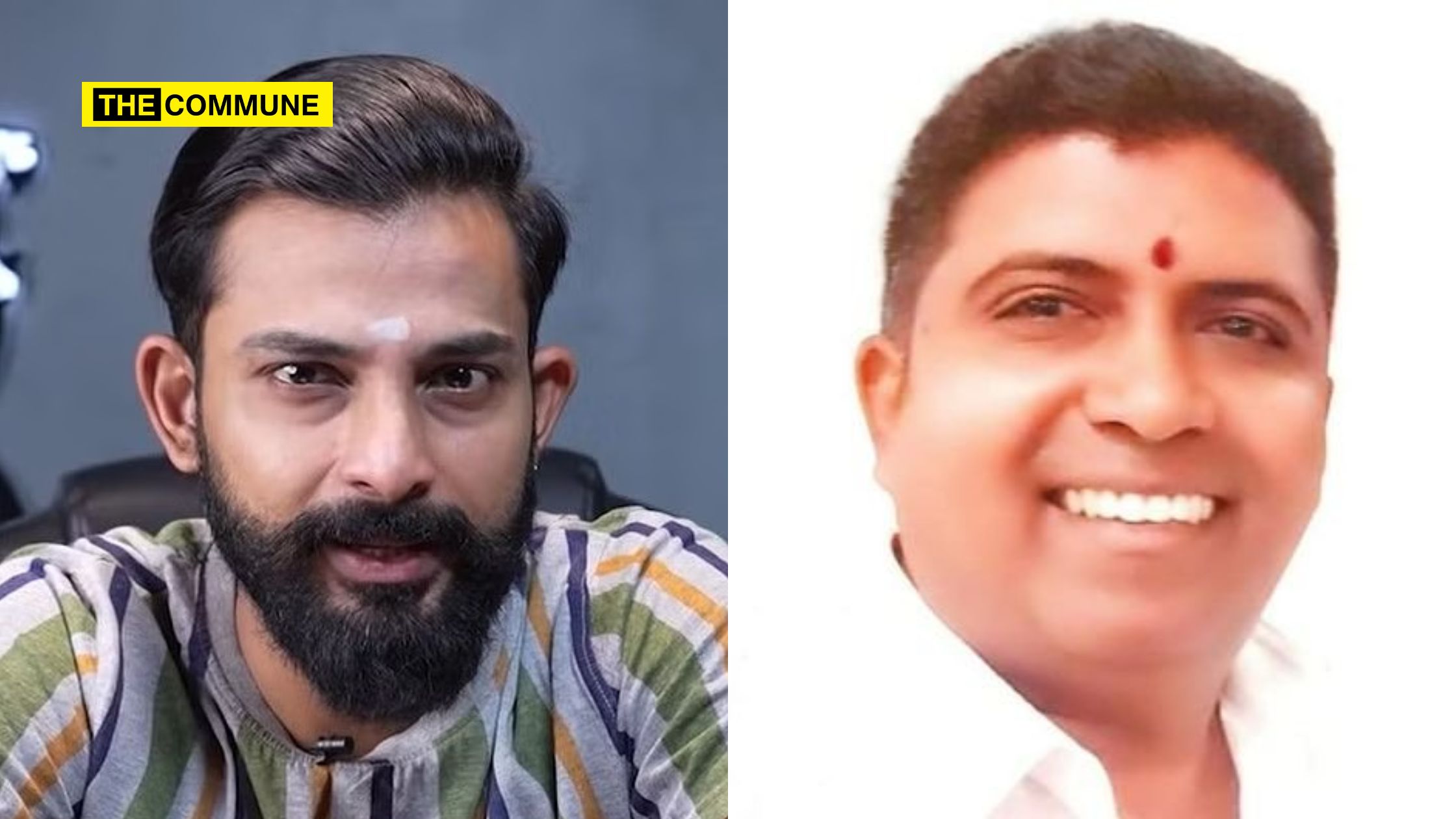
The Supreme Court declined to hear a Public Interest Litigation (PIL) that called for the establishment of a National Commission for Men to address the issue of suicides among married men on Monday, 3 July 2023. The Bench, comprising Justices Surya Kant and Dipankar Datta, expressed the view that the petition presented a one-sided perspective and questioned whether similar data was available regarding young girls dying soon after marriage. 

The court emphasized that criminal law already addresses such situations and individuals are not without recourse. They stated that nobody wishes to commit suicide, and the circumstances surrounding each case are unique. 

The court also highlighted that criminal law provides remedies for such cases.

The Public Interest Litigation (PIL) requested the creation of guidelines to support married men who could contemplate suicide as a consequence of domestic violence. Advocate Mahesh Kumar Tiwari, who represented himself in the case, requested the creation of a National Commission for Men by the central government. The petitioner also urged the National Human Rights Commission to investigate suicides and domestic violence against married men. 

Tiwari further requested the Law Commission of India to study the matter and prepare a report for the establishment of the proposed Commission.

Referring to the 2021 data from the National Crime Records Bureau (NCRB), the petitioner highlighted that around 33.2% of men took their own lives as a result of family problems, while 4.8% were attributed to marriage-related issues. The plea noted that out of the total number of suicides recorded, approximately 72%, amounting to 118,979 cases, involved men, whereas 27%, or 45,026 cases, involved women.

Consequently, the plea argued that the police should accept complaints lodged by men in such cases and refer them to State Human Rights Commissions until specific legislation is enacted.

Click here to subscribe to The Commune on Telegram and get the best stories of the day delivered to you personally.
Was Maamannan Based On This Politician’s Story?

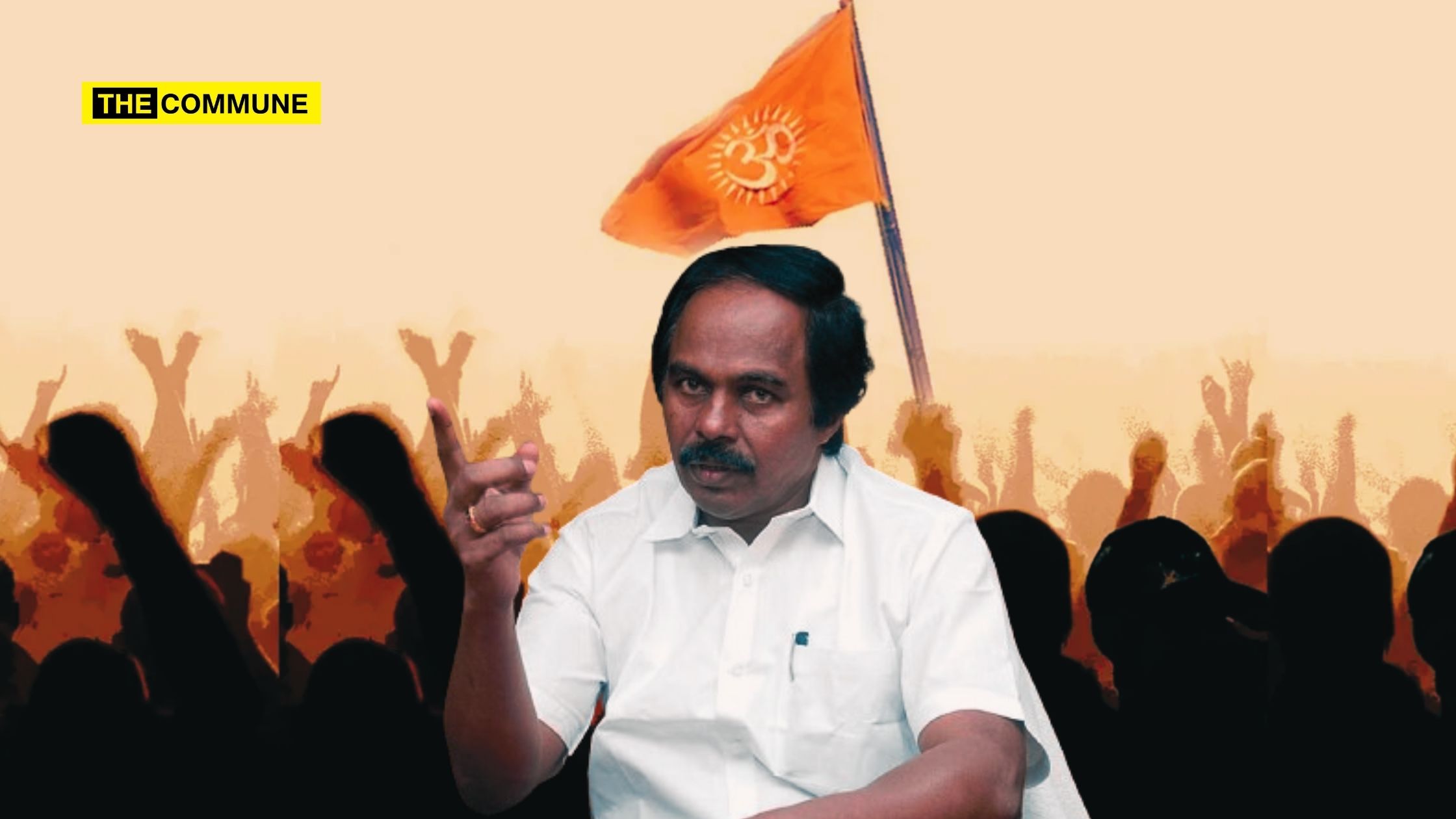
In a recent film titled “Maamannan,” Tamil actor Vadivelu portrays the character of a politician from an oppressed caste who rises to become the speaker of the legislative assembly. The movie is said to be inspired by true events, drawing parallels to the life of P. Dhanapal, a prominent political figure from Tamil Nadu.

Who Is Dhanapal?

Hailing from Karuvappur village in Salem district, Dhanapal was a staunch follower of the legendary Tamil Nadu Chief Minister M.G. Ramachandran (MGR). After completing his education in Chennai, he joined MGR’s newly formed political party, the All India Anna Dravida Munnetra Kazhagam (AIADMK), in 1972. Dhanapal made his political debut in the 1977 elections, contesting on an AIADMK ticket from the Sangagiri constituency. He emerged victorious, marking his first term as a Member of the Legislative Assembly (MLA). Dhanapal went on to win the subsequent elections in 1980 and 1984, solidifying his position as a three-time MLA from Sangagiri.

However, tragedy struck when Dhanapal met with a near-fatal accident while expressing his gratitude to the voters. He miraculously survived the ordeal but bore a scar on his cheek as a reminder of the harrowing incident. During the tumultuous period following MGR’s demise, AIADMK split into two factions. Dhanapal remained loyal to J. Jayalalithaa, who later became the party’s supremo. Despite his commitment, he faced disqualification along with several other MLAs during that time.

In 2001, an intriguing incident took place when Jayalalithaa summoned Dhanapal to her Poes Garden residence. Apprehensive about the reason behind the call, Dhanapal promptly visited her.

Upon his arrival, she inquired, “Dhanapal, why aren’t you providing food to our hardworking party workers during the elections? I’ve heard that you remain distant and don’t engage or communicate with them.”

These words brought tears to Dhanapal’s eyes as he pleaded, “Amma, please forgive me. Why would I do such a thing? Whenever I serve food, no party worker shows interest in eating it. Even when I invited them to a function at my home, no one attended, and the food went to waste. Being from an oppressed community, even our own party workers seem to avoid me.” With a heavy heart, he explained the situation to Jayalalithaa.

After a moment of silence, Jayalalithaa assured him to focus on his election-related responsibilities while promising to address the matter herself.

To everyone’s astonishment, Jayalalithaa took an unexpected approach. Rather than reprimanding the District Secretary or other influential party members for their conduct, she devised a remarkable plan when the ADMK regained power with a majority in 2001. She appointed Dhanapal as the minister responsible for food. This decision sent a clear message to all, emphasizing the importance of treating him with respect and equality. It was a surprising move that showcased Jayalalithaa’s determination to ensure Dhanapal’s fair treatment within the party.

During this period, Jayalalithaa became aware once again of the differential treatment faced by Dhanapal due to his community background. In a move that caught everyone off guard, when the ADMK returned to power in 2011, she made an astonishing decision: appointing Dhanapal as the Deputy Speaker, and later in 2012, as a consequence of the resignation of D Jayakumar, the Speaker of the Assembly, Dhanapal took charge as the Speaker in his place. This unexpected move served as a powerful statement, with Jayalalithaa and others paying homage to Dhanapal as the Speaker, effectively demonstrating their belief in the equality of all individuals, regardless of caste or social standing.

This was a historic milestone in the Tamil Nadu Assembly, marking the first time someone from his community held this position. He further cemented his legacy in 2012 when he was appointed as the Speaker, becoming the first person from the Arundhatiyar community to hold the prestigious position.

Known for his calm demeanor, Dhanapal faced numerous challenges during his tenure as the Speaker. In 2011, he suspended six MLAs from the Desiya Murpokku Dravida Kazhagam (DMDK) for a year and several others for six months for the chaos they created in the Assembly.
Controversy ensued when Dhanapal disqualified 18 MLAs who switched allegiance from the ruling AIADMK to T.T.V. Dinakaran’s faction. The disqualified MLAs challenged the decision in court, but it was ultimately upheld.
The Speaker’s decisions continued to spark debates and legal battles, including accusations of favoritism and selective disqualification. Opposition leader M.K. Stalin accused Dhanapal of suppressing dissent during a no-confidence motion, leading to further tensions in the Assembly.

After Jayalalithaa’s passing, Edappadi K. Palaniswami (EPS) assumed leadership. During this time, the opposition leader, MK Stalin, requested that the no-confidence motion be conducted through a secret ballot, but his request was denied by Speaker Dhanapal. The assembly session witnessed significant chaos as DMK MLAs raised slogans against Speaker Dhanapal. MK Selvam and P. Ranganathan approached the Speaker’s chair and engaged in inappropriate behavior, which was captured on camera and broadcasted by the media. In response, MK Stalin submitted a petition to Speaker Dhanapal, alleging that a DMK MLA had been assaulted during the commotion. Speaker Dhanapal, in turn, claimed that DMK MLAs had assaulted him and torn his clothes. Amidst these turbulent events, the no-confidence motion against the EPS government proceeded, with OPS and 10 MLAs voting against the motion.

Following the protest by DMK MLAs in the Assembly, they also accused the Speaker of tearing their clothes and expelling them from the premises. Amidst this chaotic situation, the no-confidence motion against the EPS government proceeded, and OPS along with 10 MLAs voted against the motion. Subsequently, the ADMK MLAs requested the disqualification of the 11 MLAs who did not adhere to the chief whip’s instructions, but Speaker Dhanapal did not act upon their request.

Subsequent to this, in a surprising turn of events, EPS and OPS joined forces to form the government, causing the disqualification proceedings against the 11 MLAs to lose momentum. However, the TTV Dinakaran faction raised concerns about the 11 MLAs who had disregarded the chief whip’s order, questioning why they were not disqualified while the 18 MLAs who followed the order faced disqualification. This issue sparked a prolonged and contentious debate. There were rumors in the media suggesting that Ratnasabapathy, Kalaichelvan, and Prabhu, who were supporters of the TTV faction, would also face disqualification. The Speaker requested these three MLAs to provide an explanatory notice regarding the matter.

During the 2019 by-elections in Tamil Nadu, it was crucial for the ADMK to secure victory in 22 constituencies to maintain their majority in the Assembly. Failure to do so would have put the DMK in a favorable position to form the government. To prevent this outcome, the Speaker of the Assembly, Dhanapal, allegedly devised a strategy to disqualify MLAs, thereby reducing the number of votes required for a majority by three. This move was seen as a means to assist EPS in retaining his position as Chief Minister. The TTV Dinakaran faction accused the Speaker of orchestrating this plan.

Dhanapal’s tenure was also marred by criticisms from the opposition accused him of neglecting the needs of a physically challenged M. Karunanidhi, the former Chief Minister who required a suitable seat in the Assembly. Despite multiple requests, the Speaker of the Assembly denied providing a suitable seat for DMK leader Karunanidhi, who used a wheelchair. Karunanidhi expressed his disappointment, stating that physically disabled individuals like him were being disregarded and that he was saddened by those who were working towards his removal from the assembly. Despite his remarks, no appropriate seating arrangement was made for Karunanidhi.

Nevertheless, Dhanapal’s political journey persisted, with victories in 2011, 2016, and 2021 elections. His controversial decisions and silent demeanor have cemented his place as a significant figure within the AIADMK. The recent release of the movie “Maamannan” has reignited discussions surrounding Dhanapal’s life events. The film draws inspiration from his experiences, shedding light on the challenges he faced as a politician from an oppressed caste.

Click here to subscribe to The Commune on Telegram and get the best stories of the day delivered to you personally.
 

“He Spoke Quite Negatively About His Country,” White House Official Singer Mary Millben Slams Rahul Gandhi

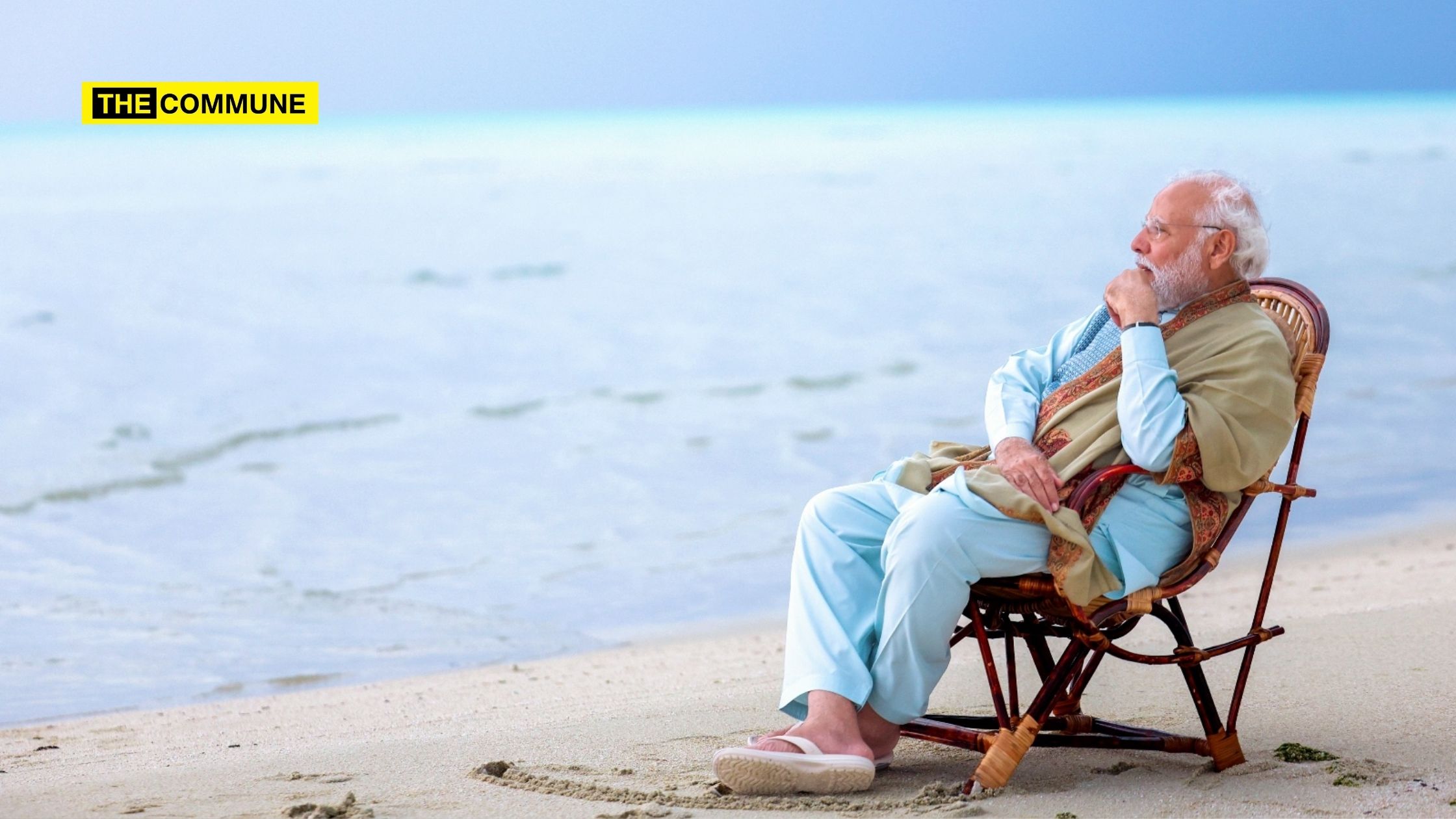
On 21 June 2023, Mary Millben sang the Indian National Anthem at Ronald Reagan Building at Washington DC and her subsequent action of touching Prime Minister Modi’s feet went viral all over the internet and also touched the hearts of Indians across the world. Mary Millben is the official singer for White House events and ceremonies and she has had the privilege of performing for several US presidents, including George W. Bush, Barack Obama, Donald Trump, and now Joe Biden.

In an interview with Rohan Dua of The New Indian, Mary Millben slammed former MP, Rahul Gandhi for “speaking negatively about his country”

She said, “I don’t know Mr. Rahul so I certainly do not want to say any comments that would be unkind. But in listening to some of his speeches and his thoughts as it relates to his ambitions, I think it is very hard for any country, any citizens to sign up or vote for a leader who doesn’t speak well of his country/her country. And I found that a lot of the comments that this gentleman would make, he spoke quite negatively about his country. And I think the mark of a great leader is to recognise the value of your heritage, to recognise the value of your country and so I would just say I believe that is why Prime Minister Modi is so beloved in India and why he is so beloved across the world.”

Congress leader Rahul Gandhi has received flak from all corners for speaking ill about India on global platforms on a regular basis. Even his recent trip to the US was mired in controversy especially his meeting with people like Sunita Vishwanath who runs organisations like Hindus For Human Rights in the US.

Mary Millben also went on to talk about how much she admired the Indian Prime Minister and said it was an honour to finally meet him. She said, “I have great respect, great admiration for the Prime Minister so I was honoured to be a part of that (event)”. She also said that India had become a family to her.

Ms Millben also stated that Obama’s comments about India and her minorities were “arrogant”. She said, ” I thought it was quite arrogant to be very honest for the former president to up stage the current president of the United States who happened to be his vice president in his party and upstage a very important week for the United States both for the president and for the prime minister”

Click here to subscribe to The Commune on Telegram and get the best stories of the day delivered to you personally.
First Batch Of Gaganyaan Mission Crew Module Recovery Divers Complete Training

The first batch of crew recovery team of Mission Gaganyaan completed Phase-1 of training at Indian Navy’s Water Survival Training Facility (WSTF) at Kochi.

Utilising the state of the art facility, the team comprising of Indian Naval Divers and Marine Commandos underwent recovery training of crew module in varied sea conditions.

The two weeks training capsule covered a brief on the conduct of the mission, actions to be taken during medical exigencies and familiarisation with different aircraft and their rescue equipment. The training also validated the SOPs formulated jointly by the Indian Navy and ISRO. On the concluding day, Dr. Mohan M, Director of Human Space Flight Centre, ISRO witnessed the recovery demonstration and interacted with the team.

The team trained at WSTF will now be involved in recovery of test launches planned by ISRO in the forthcoming months.

The Gaganyaan project aims to showcase the ability to send a crew of three members into space, orbiting at an altitude of 400 km for a duration of three days, and safely returning them to Earth by landing in the waters of the Indian Ocean.

This ambitious project relies on a comprehensive approach that combines the expertise and experience of Indian industry, the intellectual capabilities of academic and research institutions in India, and the advanced technologies available from international agencies. Several critical technologies need to be developed as prerequisites for the Gaganyaan mission.

These technologies include a launch vehicle capable of carrying crew safely to space, a Life Support System to maintain a habitable environment for the crew in space, provisions for emergency crew escape, and the development of crew management aspects for training, recovery, and rehabilitation of the crew.

Prior to the actual Human Space Flight mission, several precursor missions are planned to demonstrate the preparedness of the technology involved. These precursor missions include the Integrated Air Drop Test (IADT), Pad Abort Test (PAT), and Test Vehicle (TV) flights. Unmanned missions will be carried out before the manned mission to ensure the safety and reliability of all systems.

(With inputs from PIB)

Click here to subscribe to The Commune on Telegram and get the best stories of the day delivered to you personally.
Police Officials Deny Claims Of Deekshitar Being Assaulted And Poonool Being Cut

The Chidambaram Nataraja Temple has been embroiled in controversy due to the recent incidents that have taken place.

At the center of the controversy is the decision to restrict public access to the Kanakasabhai (Golden Hall) in the Chidambaram Nataraja Temple for four days following the annual Aani Thirumanjanam festival. This restriction has been a longstanding tradition at the temple during this festival.

The Tamil Nadu Government in May 2022 had issued a GO permitted the devotees of Chidambaram Natarajar temple to stand atop ‘Kanagasabai’ (golden platform) and offer prayer within the temple premises. However, during the Aani Thirumanjanam ceremony, when the temple jewels are adorned by Thillai Nataraja, access to the Kanakasabhai is restricted to ensure security.

The HR&CE officials removed the board placed by the Deekshitars announcing these restrictions. This led to an argument between the Deekshitars and the officials.

Based on information available in public domain and the comments given to the press by the wife of a Deekshitar and the advocate representing the Deekshitars, The Commune had reported that HR&CE officials had forcefully entered the kanakasabai and assaulted the Deekshitars. It was alleged that the Deekshitar was pushed and his poonool got cut off in the episode.

However, Chidambaram police officials have denied that such an incident happened. They say that officials had entered the platform to allow worship as per the government order.

Further clarity on the issue is awaited.

The Myth Of “Opposition Unity”: Can A Congress-Led Grand Alliance Oust BJP?

This is part 2 of the series on Opposition Unity. Read part 1 here.

The much-hyped Opposition unity meeting at Patna on 23 June 2023 turned out to be a damp squib and nothing more than a photo opportunity of heads of several parties coming together.

As expected Arvind Kejriwal wanted to hijack the meeting with his one-point agenda of extracting guarantee from Congress party in opposing the ordinance on services in Rajya Sabha.

Congress party was smart enough to duck away from giving any guarantee to AAP lest their local units at Punjab and Delhi would be up on arms against their high command.

As usual Lalu tried to bring humor into the meeting by asking Rahul to get married soon. The only conclusion that the meeting arrived at was that the next meeting would be held at Shimla in July 2023 which is now changed to Bengaluru.

Let us also recall the fact that this concept of Grand Alliance was tried and tested in 1971 Lok Sabha elections. The idea of putting one common Opposition candidate is an ‘old wine in a new bottle’. The then opposition parties namely Congress (Organization), Praja Socialist Party, Bharatiya Jan Sangh, Swatantra Party and several regional parties came together to oust the then Prime Minister Indira Gandhi and it was a failed attempt. Refer to the picture below of the performance of the parties which were part of the ‘Grand Alliance’ then. It would meet the same fate again in 2024 for the reasons listed below.

In 1971 the one-point agenda of the opposition was Indira Hatao (Remove Indira) and it failed miserably since India voted for a strong leader and the same agenda is being pursued to remove Narendra Modi from the Prime Minister post which would not cut ice with the public in 2024.

An average Indian voter is aware that these political parties are bereft of any developmental agenda or vision. It is for their own survival and their dynasty to flourish that they are uniting to fight against a man who has the vision to make India a vibrant $5 trillion economy and a global super power.

It is also important to understand the fact that for any Government to be stable in Delhi one of the two national parties need to have a minimum of 140 seats in the Lok Sabha. While the BJP under the leadership of Modi had crossed the magic number of 272+ on its own in the last 2 general elections the Grand Old Party could not even cross 10% of Lok Sabha seats in both the elections.

For the Congress to have any dream of unseating Modi from the Prime Minister’s chair its first focus needs to be on the states where it is in direct contest with BJP. There are 137 seats in states like Gujarat, Rajasthan, Madhya Pradesh & others where Congress cannot outsource its fight to any other party. While BJP won 121 out of these 137 seats in 2014 it increased its tally to 125 in 2019 pushing the fringe players like INLD at Haryana, CPIM in Tripura into oblivion.

Congress won just 8 seats in successive elections even after contesting all the 137 seats while BJP contested only in 132 seats in 2019. The reason for the free downfall of Congress party is its inability to set a narrative in these direct contests in spite of having a decent party infrastructure. The primary reason behind the Congress party’s victory in 2009 was the fact that it won 72 out of the 137 seats in 2009. There are no signs for the Congress Party to regain the lost ground in these seats.

The revival of Congress party in these 137 constituencies would also be directly impacting the saffron party and hence this should be the first focal point. As long as Congress party is unable to revive itself in this set of seats the dream of stopping Modi from occupying the PM chair for the 3rd consecutive time would only remain a dream.

While the 3rd forces are on the wane it is also significant to note that AAP is eyeing growth in these seats. Having achieved the national party status recently AAP would not leave the field open for Congress party in states like that of Gujarat & Goa where it has positioned itself as a 3rd entity. It is also important to note that AAP is dreaming to make inroads into states like Haryana, Madhya Pradesh & Rajasthan. It would be foolish to expect AAP to give a walkover for Congress since any revival of the Congress Party would shut the doors for AAP forever in these states.  

Also, the infographics below showing the vote share in 8 states would indicate the Himalayan task ahead of the Congress party since it would need a swing of over 20% in many states to unseat BJP in 2024 which at the moment looks next to impossible.

The 8 charts that we have shared are for 124 seats and it clearly indicates that when BJP contests under the leadership of Narendra Modi the party is able to pull humungous support in comparison to the assembly elections. Even in states like Rajasthan where BJP lost in December 2018 it polled a mammoth 61.13% in the Lok Sabha elections held just 5 months later. Hence as we head into the 2024 Lok Sabha polls it would be BJP & the Prime Minister Narendra Modi who would proactively set the narrative against Congress in the states where it is in head on contest. Modi also knows that it is in these states that Congress would indulge in personal attacks targeting the Prime Minister which he would use to his own advantage. 

The victory for Congress in states like Himachal Pradesh and Karnataka have become the talking point for revival of Congress party in the national scene but the reality is the fact that both these states have always voted for a change every 5 years. It is pertinent to remember that ever since 2019 Lok Sabha polls there have been 21 states which had gone for assembly elections. Out of these 21 polls, 13 states have been won by BJP led NDA and in 12 states the Saffron party is running its Government either by itself or in alliance. Congress had won in just 2 states while it is a junior partner at Jharkhand. While regional parties like Trinamool had won in West Bengal and DMK in alliance with Congress had emerged victorious in Tamizh Nadu, it is AAP which had won at Punjab & Delhi and Left alliance triumphed Congress at Kerala. Hence there is nothing much to write home about the victories of Congress party.

To stay specific to states where Congress and BJP are in direct fights there have been assembly elections to 7 states post the 2019 Lok Sabha elections and out of these 7 states Congress had been able to win only at Himachal Pradesh while BJP could score a resounding victory in 5 states. It was in Haryana that BJP needed the support of JJP to form the Government after a hung verdict. 

I am pretty sanguine that when the heads of Opposition parties meet there would be an informal discussion about these direct contests and how the Congress party performs miserably in these seats. They would also be aware that all the data points indicate that Congress is in dire straits in this set of 137 seats and only a magical revival would put BJP in backfoot which simply looks impossible and improbable.

Till such time opposition parties have the license to day dream.

JVC Sreeram is a political strategist and author and is the founder of Winning Elections.

Click here to subscribe to The Commune on Telegram and get the best stories of the day delivered to you personally.
“No Harm In Allowing Namaz For 30 Mins”: Madras HC Refuses To Stay Namaz At Dargah Near Thiruparankundram Murugan Temple

thirupparankundram karthigai deepam sikandar murugan dargah

The Madras High Court has declined to prohibit the act of offering Namaz along a pathway leading to the Kasi Viswanathar Temple in Thirupparankundram, located in Madurai District.

Justices R Subramanian and L Victoria Gowri of the bench decided against issuing a temporary halt on the prayers at Nellithopu and requested the Hindu Religious & Charitable Endowment to present their response to the petition within a four-week period.

The court also expressed that there would be no harm caused by allowing 30 minutes of Namaz and assured that it would not inconvenience anyone.

The petition was initiated by Ramalingam, the State Organization Secretary of Aghila Bharatha Hanuman Sena. In his appeal, Ramalingam asserted that devotees who visited the Kasi Viswanathar Temple at the top of Thirupparakundram often took breaks and had their meals in the Nellithoppu area.

Furthermore, Ramalingam highlighted that the Jamath members usually performed their prayers at the Pallivasal Mosque, an incident that had never occurred before. He also pointed out the availability of other vacant lands in close proximity for conducting prayers.

According to Ramalingam’s submission, the Jamath members’ act of offering Namaz in Nellithopu caused disturbances and inconveniences to the public. He alleged that after the prayers, they left behind food waste and plastic, littering the pathway. Additionally, the Jamath members laid claim to the Thirupparakundram Arulmighu Subramania Swamy Thirukoil Mountain, referring to it as the “Sikkandar Mountain,” and he accused them of attempting to encroach on the land and create law and order issues.

However, despite the plea, the court was not inclined to grant an interim injunction and postponed the matter for further consideration.

About Thirupparankundram 

Thiruparankundram holds great significance as one of the six sacred abodes of Hindu God Murugan. Alongside the Subramanya Swamy temple, the hill is home to rock-cut temples from the Pandya era, as well as historically important inscriptions and rock paintings.

During the oppressive rule of the Madurai Sultanate, many prominent temples in and around Madurai were deprived of regular rituals until Kumara Kampanna defeated the Sultanate. It is believed that Muslims constructed a dargah on Thiruparankundram hill during the Sultanate’s reign.

Muslims claim that Sikandar Zulqarnain, mentioned in the Quran, arrived in Madurai to preach, aid Muslim invaders, and establish their rule. They assert that he built a mosque on Thirupparankundram hill and died there while under attack. Consequently, they consider the hill their own and refer to it as ‘Sikkandar hill.’

History Of The Dispute

Hindu groups allege that under the pretext of celebrating festivals, Muslims have gradually encroached on other parts of the hill. These Hindu groups have long opposed these actions and have demanded that the government address the encroachment. The Subramanya Swamy temple, being under the control of Tamil Nadu HR&CE Department, has been accused of playing appeasement politics.

A Vijaya Bharatham article narrates the experience of a Hindu activist involved in reclaiming Hindu rights. It states that in the past, the Karthigai deepam (a ceremonial lighting of lamps) used to be lit at the stupa in the Kashi Vishwanath temple atop the hill. However, during World War II, the British banned this practice in Thiruparankundram, and it was never resumed even after India gained independence.

During this time, Muslims began encroaching on parts of the hill. They apparently buried the body of someone named Sikkandar and built a dargah. They also started referring to the hill as ‘Sikkandar hill’ and placed Islamic green crescent flags atop it. Chinna Karuppa Thevar, a Congress MLA at the time, gathered the public and removed those flags, replacing them with the national flag. He also initiated a hunger strike, resulting in the arrest of 700 protestors.

The then Chief Minister of the Madras presidency, T Prakasam, met with Chinna Karuppa Thevar and convinced him to end the strike, fearing potential law and order issues. Muslims claimed ownership of the hill’s area where the dargah is located and took the matter to court. The London Privy Council heard the case and ruled that the entire hill belongs to Subramanya Swamy and that the dargah should not be expanded in any way.

Subsequently, Madurai Rajagopal, the former President of Hindu Munnani, took steps to revive the tradition of lighting Karthigai Deepam at the stupa near the Kashi Vishwanath temple. He undertook a padayatra (foot march) to highlight this cause. When Muslims opposed the Vinayagar Chathurthi visarjan (immersion of Ganesha idols) in Keezhaarai, Ramanathapuram, Rajagopal led the procession. Enraged by his actions, Muslims murdered Rajagopal at his doorstep.

Petitions were filed in the Supreme Court to allow Hindus to light the Karthigai deepam on the hilltop and restore the tradition. The court ruled that the temple could light the deepam anywhere, as long as it was 15 meters away from the dargah. The stupa where the deepam is usually lit is located 100 meters from the dargah.

Although the Tamil Nadu government could have allowed the deepam to be lit at the same stupa, they chose to appease Muslims by lighting it at a spot 150 meters high near the Uchi Pillayar temple. This location is typically used for lighting moksha deepam for the deceased. To this day, Hindus continue to light moksha deepam at that spot. It is said that lighting the Karthigai deepam at a location reserved for moksha deepam goes against Agama rules.

Hindu Munnani has made efforts every year to revive the tradition. However, the government refuses permission, citing concerns over law and order. In 2020, a group of Hindu Munnani activists defied the government’s ban and lit the Karthigai deepam at the traditional spot. Two individuals were arrested for this act. A Times of India Tamil report confirms that the deepam was lit near the Kashi Vishwanath temple until 1967 and that the police consistently deny permission, providing various reasons.

It is alleged that Muslims have taken advantage of this situation and expanded their influence by performing Namaz on the pathway leading to the Kashi Vishwanath temple. In August 2021, a decision was taken at a meeting chaired by the District Collector to immediately remove the flagpole illegally erected by Sikandar Shah Dargah

(With inputs from Hindu Post and Live Law)

Click here to subscribe to The Commune on Telegram and get the best stories of the day delivered to you personally.
Ayodhya Airport To Be Ready By Sep 2023

The construction of the Ayodhya Airport is expected to be completed by September 2023. The new airport will be suitable for operating A-320/B-737 type of aircraft and is being developed at an approximate cost of ₹350 crores.

The development work involves extending the existing runway from 1500m X 30m to 2200m x 45m for the operation of Code-C type of aircraft under IFR conditions. It also includes constructing an Interim Terminal Building, an ATC Tower, a Fire Station, car parking, and a new Apron for parking three Code ‘C’ type of aircraft, along with the necessary city-side and airside infrastructure. The New Interim Terminal Building covers an area of 6250 sqm and can accommodate 300 passengers during peak hours. Passenger facilities comprise eight check-in counters, three conveyor belts (one in the Departure Hall and two in the Arrival Hall), parking space for seventy-five cars and two buses. The Airport will be PRM (Passenger with reduced mobility) compliant.

The Terminal Building incorporates various sustainability features such as a Double Insulated Roofing System, Canopies for energy-saving purposes, LED Lighting, Low Heat Gain Double Glazing Unit, Rainwater Harvesting for groundwater recharge, Landscaping with fountains, HVAC, Water treatment plant, Sewage treatment plant, and the utilization of recycled water for landscaping. A solar power plant with a capacity of 250 KWP has been installed to achieve GRIHA –V ratings. The Terminal has been designed to showcase the culture and heritage of Ayodhya and the state of Uttar Pradesh, creating a sense of place for visitors.

The façade of the Terminal Building, both on the city side and airside, displays the architectural style of the upcoming Ram temple of Ayodhya. The Proposed Terminal Building reflects the magnificent Ram Mandir, offering a spiritual ambiance to visitors. The Terminal’s design incorporates varying heights of Shikhars (spires) to convey a sense of grandeur, along with decorative columns to enhance the fascia of the Terminal Building. The decorative colonnade provides an immersive experience for passengers and visitors, with the interiors adorned with local art, paintings, and murals depicting the life cycle of Lord Ram.

Regarding the development work, Jyotiraditya M. Scindia, Union Minister of Civil Aviation and Steel, expressed his thoughts, highlighting Prime Minister Narendra Modi’s visionary approach to driving infrastructure progress in India. He mentioned that the development of Ayodhya Airport exemplifies the commitment to improve air connectivity and promote tourism in the holy city. Under PM Modi’s leadership, the project aims to boost regional development and honor the rich cultural heritage associated with Lord Ram, the Minister said.

Click here to subscribe to The Commune on Telegram and get the best stories of the day delivered to you personally.