Home Blog Page 1072

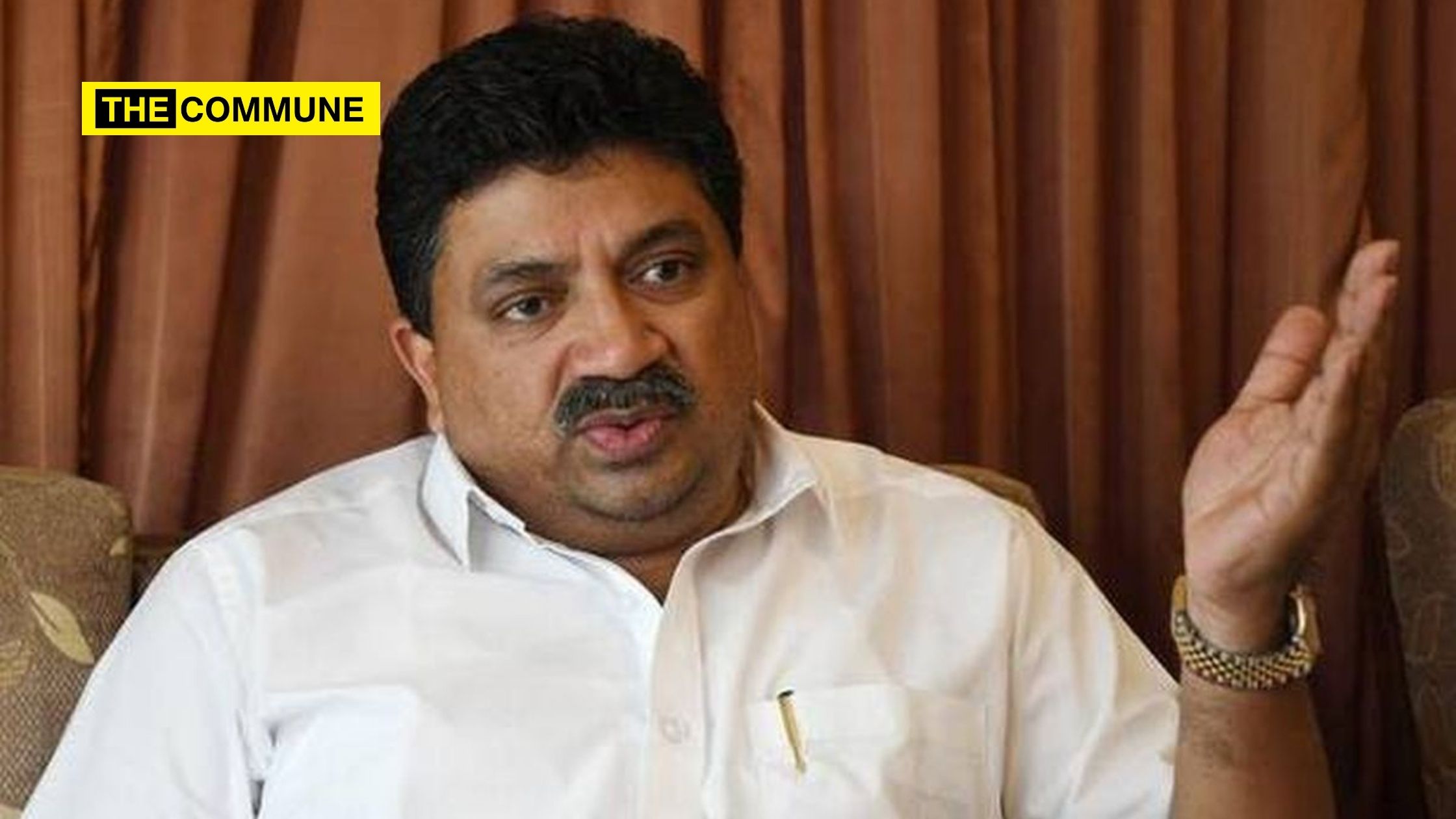
TN Fin Min makes casteist remarks against woman journalist

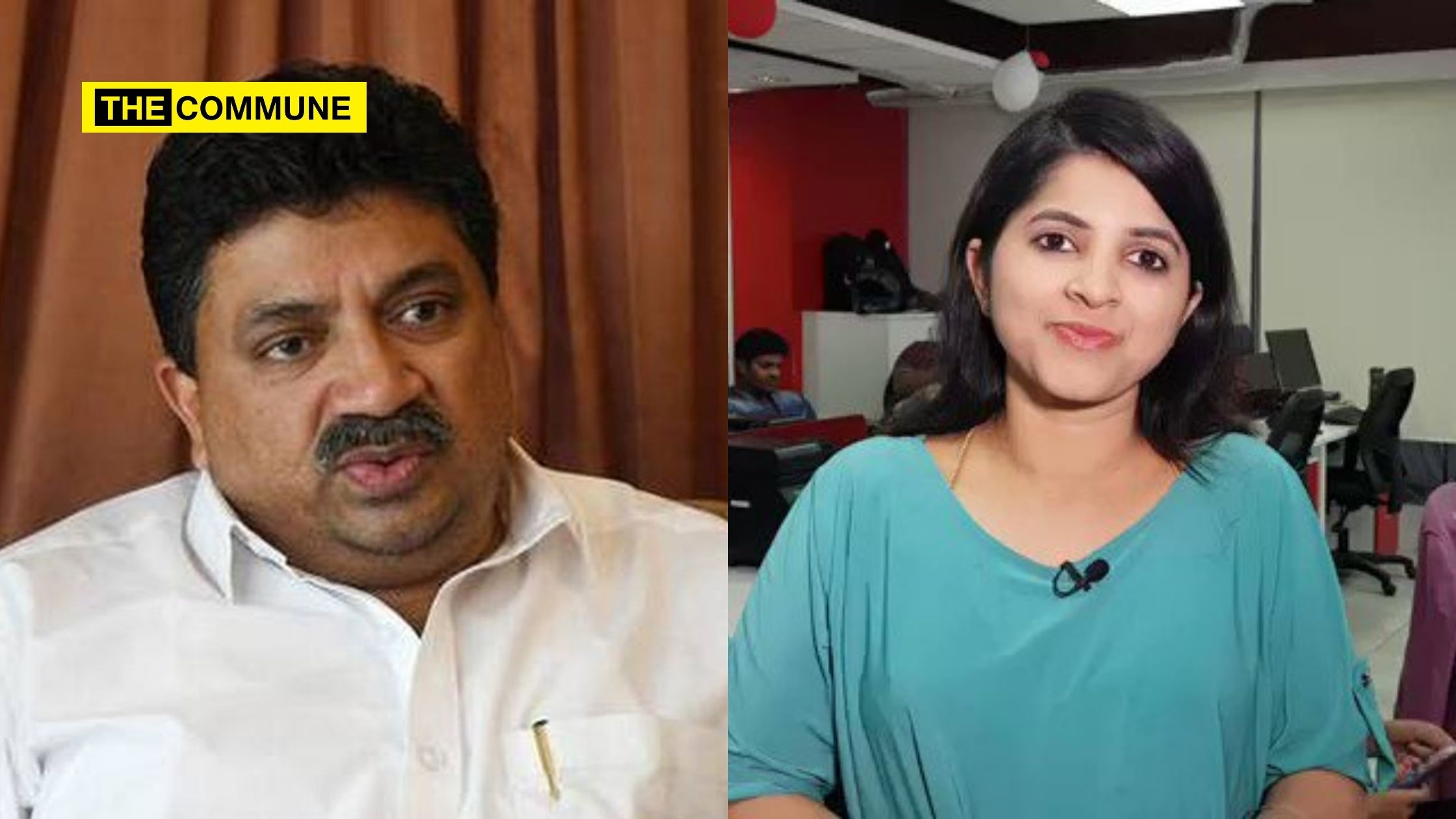
Tamil Nadu Finance Minister PTR Palanivel Thiagarajan has once again spewed venom on social media, this time on a woman journalist.

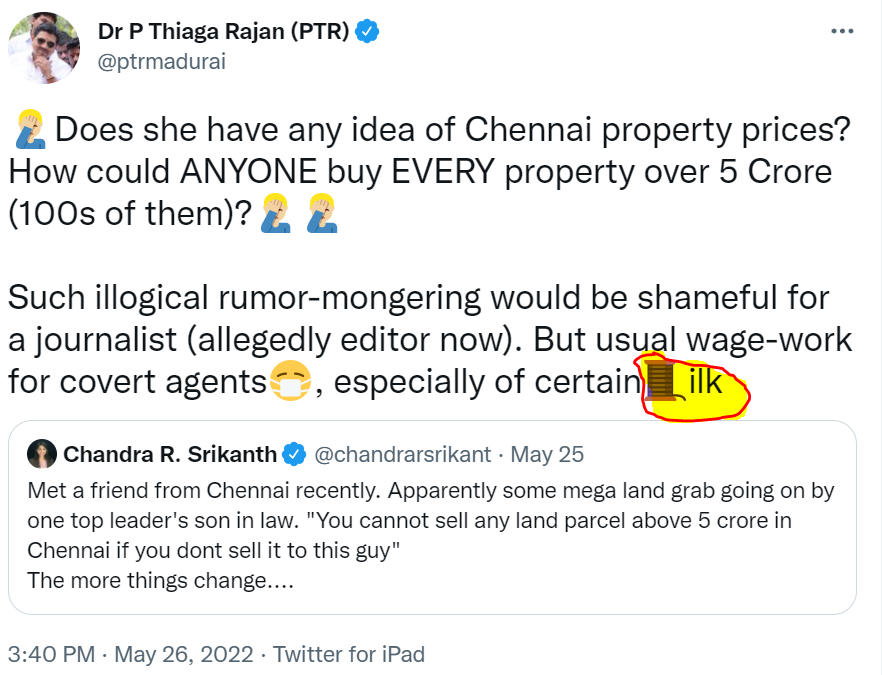
Chandra R Srikanth, an Editor with the financial and business news website Moneycontrol, had put out a tweet on Wednesday (May 25) saying that a top leader’s son is involved in a mega land grab.

“Met a friend from Chennai recently. Apparently some mega land grab going on by one top leader’s son in law. “You cannot sell any land parcel above 5 crore in Chennai if you dont sell it to this guy” The more things change….”, the woman journalist wrote.

Responding to this tweet, Tamil Nadu Finance Minister PTR Palanivel Thiagarajan abused the woman journalist by invoking her caste identity.

He called her tweet as ‘illogical rumor-mongering’ and insinuated that her tweet was ‘usual wage-work for covert agents, especially of certain (thread) ilk’.

Many have pointed out that the ‘thread ilk’ in Palanivel Thiagarajan’s tweet is a vile reference to Brahmins.

The DMK Finance Minister is now being called out by people on social media for the casteist remark.

This is not the first time that Palanivel Thiagarajan who often boasts of coming from an illustrious family, having studied and worked abroad, has resorted to abusing woman journalists. He had earlier attacked Malini Parthasarathy, The Hindu Publishing Group’s Chairperson saying that she needed ‘counselling’. This attack came after Malini Parthasarathy shared an article of The Hindu which carried Isha Foundation’s response to Palanivel Thiagarajan’s abuses on Sadhguru Jaggi Vasudev.

In another instance, Palanivel Thiagarajan when he was the DMK IT Wing head indulged in denigrating a Ramnath Goenka Award Winning journalist Sandhya Ravishankar who had exposed some of the false rhetoric of the Pollachi Sexual Abuse case.

Palanivel Thiagarajan had also unleashed abuses and made personal attacks on Coimbatore South MLA Vanathi Srinivasan who had called out the former for insulting Goa during the 43rd GST Council meeting.

Click here to subscribe to The Commune on Telegram and get the best stories of the day delivered to you personally.

Conversion Of Mizoram To Christianity

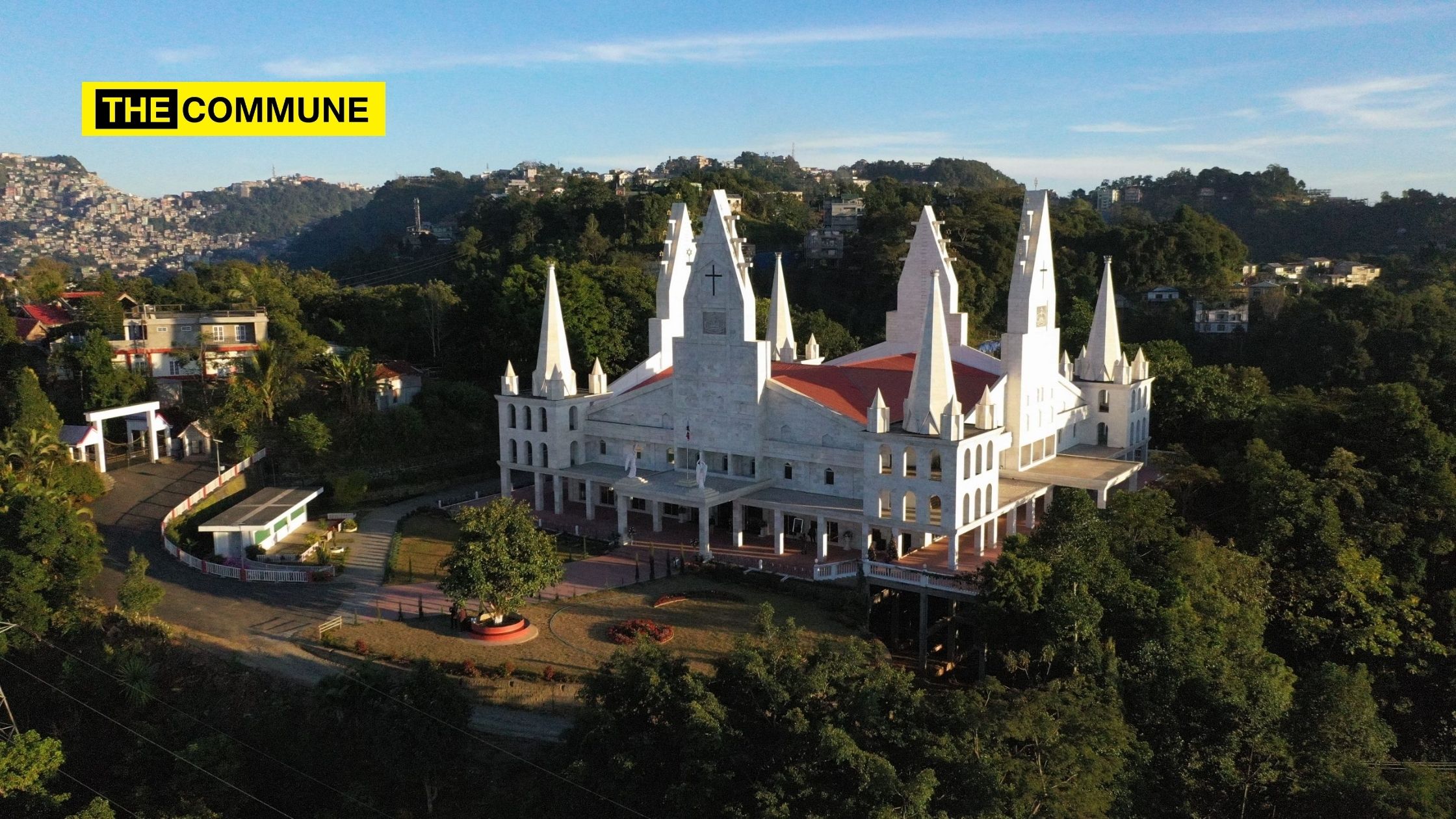
The Battle of Plassey in 1757 firmly established the British in India and they became undisputed rulers of Bengal, one of the largest provinces in India. It comprised present Bihar, Orissa, Bengal, Bangladesh and Assam. With due course of time, they also added Chittagong, the thriving south-eastern port in the province which did wonders for their trade. This also brought them to the immediate vicinity of North-Eastern hill tribes like Lushai, Chakma and Kumi, to name a few. These tribes inhabited the area of present Tripura, Mizoram and Manipur. These were aborigine people and occasionally raided the neighbouring tribes to collect the taxes and even heads of the people who refused. In the process, they also used to loot the items which they could not afford.

The habit of carrying off the heads of their victims had a reason behind it. A long time back, when these warriors used to raid the enemy territory, many enemies used to get killed. When they returned only with booty, nobody back home believed the stories of their bravery. They then started carrying some parts of their victims’ bodies to make them believe. Sometimes legs and sometimes arms were collected but later, heads were considered the most authentic proof of their valour. Though it sounds barbaric, the world over it was standard practice, especially in the Abrahamic world. Muslim soldiers of Pakistan had cut the heads of many of our soldiers as recently as during Kargil in 1999.

After the arrival of the British, people started paying taxes to the British, instead of Lushais. This dried their revenues and brought them on a collision course with the British. The latter named them head-hunters but adopted the policy of leaving the tribes on their own. One day, however, everything changed.

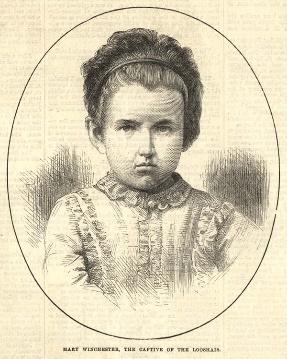
The British also occupied the Cachar hills in southern Assam where the city of Silchar is located. With time, they established the tea gardens in the area, which proved to be highly profitable. Soon a mania swept the region where tea planters began to start new gardens, expand their existing gardens and thus encroached upon the Lushai territory. One such tea garden was in Alexandrapur near Silchar which was owned by one George Seller. One day, he invited one of his close friends James Winchester and his 6 years old daughter Mary Winchester in 1870 as she was going to Britain for further studies. Mary was the illegitimate child of James and his Meitei (Manipuri) worker who died soon after the child’s birth.

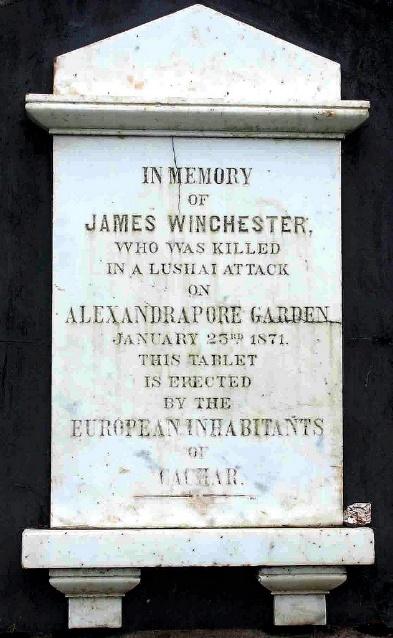
Severely angered with the British, Lushais were looking for a chance to teach them a lesson. They got the wind of such celebration and swooped down on the tea garden in a pre-dawn raid. During the confrontation, a few people including James were killed but Seller somehow managed to escape. Mary was kidnapped and taken to Lushai headquarters. This created a media furore in London, a few days later. Mary was, however, treated like a queen by the tribal women. In one year of captivity, she became used to the Mizo lifestyle and forgot English completely.

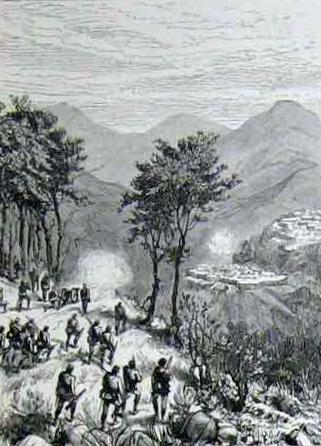
On 8th October 1871, after more than a year passed, the British attacked the Lushai hamlet and killed  everyone found resisting. Mary had to be dragged against her will by the British soldiers. She was then sent to Scotland to her grandparents.

However, the story has not finished for hapless Lushais and other tribes in the North-East. The missionaries saw their chance and dubbed the kidnapping and head-hunting barbaric. It did not matter to them that they killed every tribal in retaliation. It also did not matter that they carried out much more barbarity during the crusades and inquisitions. In 1857, the British unleashed savage punishment on the freedom fighters after the first war of independence. Many were tied in front of the canon and then fired upon. Their distant cousins, the Turks were even in the habit of making grotesque towers of heads. By 1898, the British captured the whole Lushai territory and missionaries started to have a field day. Arthington Mission and Welsh Presbyterian missionaries were the foremost in converting and within a decade they converted more than 1 lakh tribals.


British forces attacking a Lushai hamlet

A story was deliberately spread that tribals had fallen into a trance after converting and they saw amazing visions of two brilliant lights that would shine in the land, one in the north and the other in the south. A plaque of James were made in the tea garden and they were routinely taken to Alexanderpur on an annual yatra to remind them of their savage past and how they were now the civilized people and they were now the children of only one true God. This further propelled the conversion after they were made to be ashamed of their ancestors, however, it is another matter that they were now converted from head hunters to soul hunters and church planters.

This is the missionaries’ standard template and they use it effectively to convert the people, the world over. Mizoram is consequently now a Christian state with 87% majority. Mary was deified as a Christian messiah and her photos with Jesus on her side are now in most Mizo households. Everyone was told that it was prophesied in the Christian texts like Isaiah 60:22 which stated, “A little one shall become a thousand and a small one a strong nation.”

 Mary was projected as a little one.

(This article written by Amit Agarwal was originally published in Bharat Voice and has been republished here with permission.)

Amit Agarwal, author of the bestseller on Indian history titled “Swift horses Sharp Swords”. 

Click here to subscribe to The Commune on Telegram and get the best stories of the day delivered to you personally.
Dalit BJP leader hacked to death in Udhayanidhi Stalin’s constituency in Chennai

Balachandar (30), the head of BJP’s SC/ST wing for Central Chennai was hacked to death at the heart of the city on Tuesday (May 24, 2022).

Balachandar was at Saminayakan street in Chintadripet talking to his friends. His Personal Security Officer (PSO) had stepped away to have tea nearby. At that time, four men surrounded Balachandar and started confronting him.

Sensing threat to his life, he started running from the spot. However, the men chased Balachandar on two-wheelers and brutally hacked him to death in full public view on a busy road at around 7:50 PM. The killers fled the spot in their bikes immmediately.

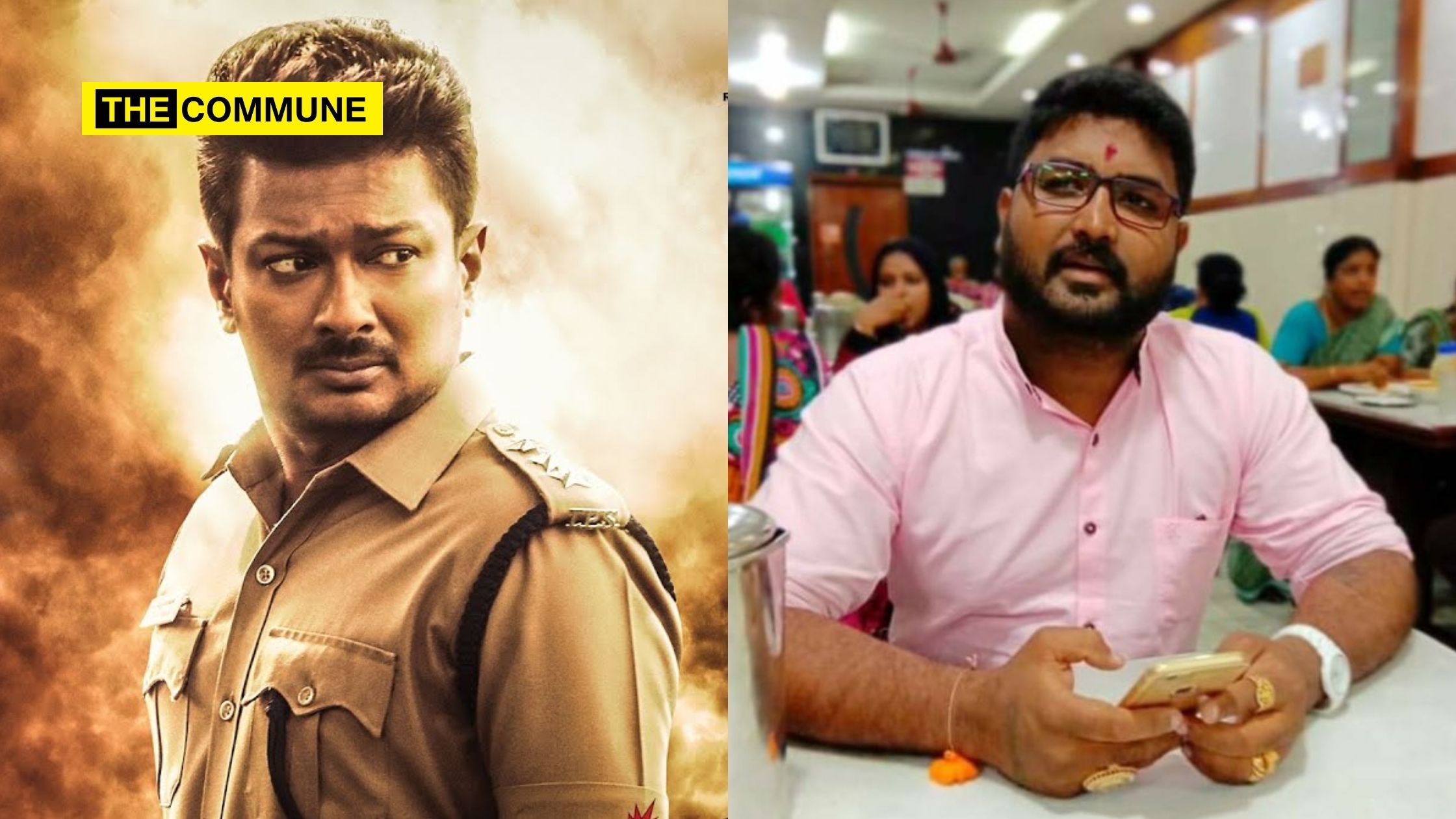
The area in which the cold-blooded murder happened falls under Chepauk-Tiruvallikeni, the constituency of DMK MLA and Chief Minister MK Stalin’s son Udhayanidhi Stalin, who recently had acted in a film in which he ironically plays the role of a police officer solving the murder case of two Dalit women.

The brutal murder of the BJP functionary has raised concerns over the law and order situation in the city which has of late seen a spurt in murders. Reportedly, 18 murders have occurred in just the last 20 days.

Click here to subscribe to The Commune on Telegram and get the best stories of the day delivered to you personally.
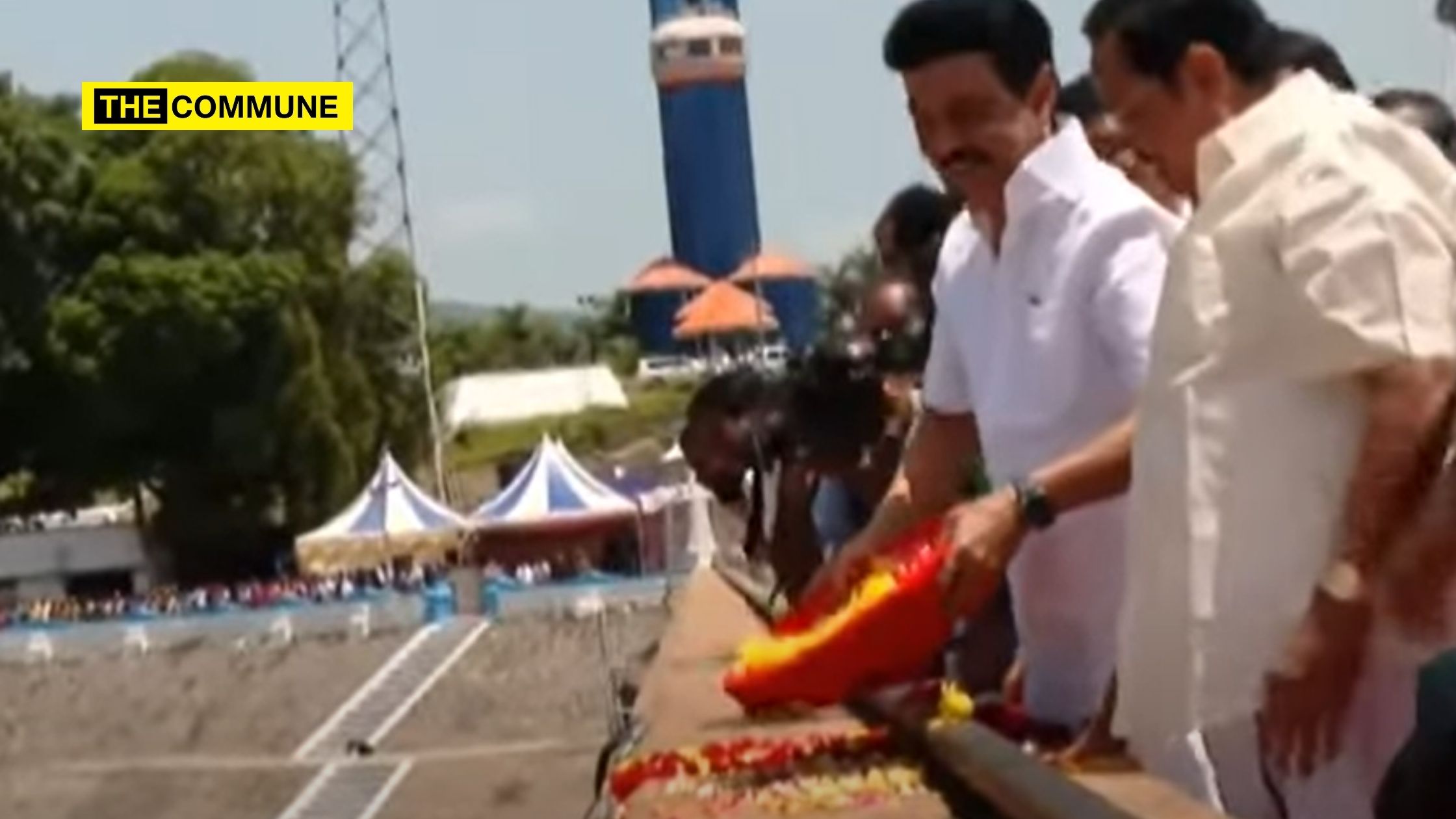
CM Stalin throws off plate instead of flowers in Mettur Dam, triggers meme-fest

Tamil Nadu Chief Minister MK Stalin was at the Mettur Dam on Tuesday (May 24, 2022) to release water ahead of the kuruvai crop cultivation.

The Mettur Dam has been seeing a copious inflow of water due to good rains in the catchment areas.

In light of this, CM Stalin had ordered for opening the Mettur Dam on May 24, three weeks ahead of the usual water release date of June 12.

During the event, CM Stalin was accompanied by the state Minister for Water Resources Durai Murugan, Local Body Minister K.N. Nehru, District Collector S Karmegam and several others.

It is a convention that the Chief Minister while releasing the floodgates showers flowers from the top of the dam to mark the occassion.

CM Stalin instead of showering flowers, threw off the plate.

This video has now gone viral on social media with CM Stalin becoming the butt of all jokes.

Click here to subscribe to The Commune on Telegram and get the best stories of the day delivered to you personally.
Audi goes full woke, features hijab-clad woman holding LGBTQ pride flag in its new ad

Marking the occcassion of European Diversity Month, luxury car-maker Audi has come out with a new commercial in which it has gone full woke.

In an attempt to show Audi as an inclusive entity, the commercial features a hijab-clad woman holding a pride flag.

“The four rings stands for being colourful. The Four Rings stands for being diverse. The Four Rings stands for individuality. We live diversity. Audi together”, the 45-second commerical says.

This commercial has now triggered debate with many on social media lashing out at Audi saying that the company has succumbed to ‘wokism’.

A French Twitter user said “This is how @AudiOfficial shamefully participates in such absurd and incoherent propaganda. Left-wing, woke, and humanist propaganda.”

https://twitter.com/adriendrk/status/1528334225958703105

A few others pointed out the inherent incongruence in showing a hijab-clad woman holding a gay pride flag as Islam forbids homosexuality.

“Wokism believes a little too much that Muslims and LGBT are friends.”, wrote a French Twitter user.

Click here to subscribe to The Commune on Telegram and get the best stories of the day delivered to you personally.
First-Ever Private Defence Expo To Be Held In Chennai

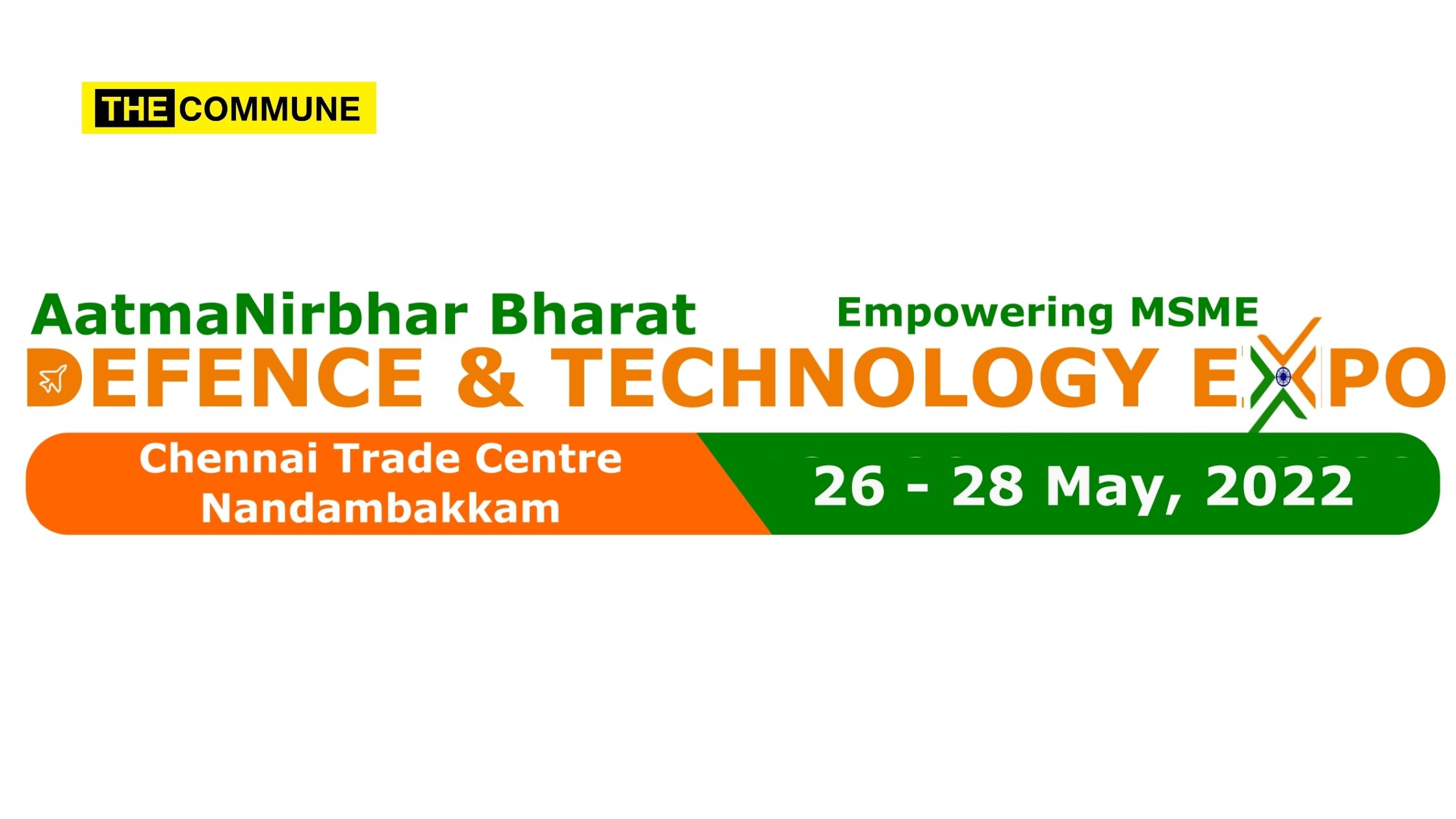
“Defence & Technology Expo Empowering MSME”, the first ever Defence related Expo by the Private Sector in the country is scheduled to take place at Chennai Trade Centre between 26-28 May 2022.

Hon’ble Defence Minister Rajnath Singh will be the Chief Guest for the valedictory function on 28th May 2022 and the event will be inaugurated by Hon’ble Minister of State for Defence Ajay Bhatt on 26th May 2022. The event is being organized by Swatantra Foundation, a Chennai based think tank along with TIDCO & Lagu Udyog Bharati as co-hosts. Department of Defence Production is lending logo support for this event. Several other organisations are supporting this event.

S Ramasubramanian, Founder & President of Swatantra Foundation which is organizing this event said, “Swatantra Foundation is proud to have obtained the consent for organising this Defence Expo and honoured to have the Defence Minister and Minister of State for Defence to attend this event as Guests of Honour. Our focus for this event is to connect MSMEs with  large Defence manufacturers through B2B meetings to create business opportunities”.

President of Swatantra Foundation further added, “The event stalls have been fully booked with over 250 stalls by MSMEs and more than 50 stalls by Defence PSUs and large corporates, which shows the huge interest among the companies in participating in the fast growing defence production industry.  We expect over 4,000 B2B visitors to attend the 3-day Expo to gain keen insights on the fast paced developments in this sector.”

Speaking about the event, S Seetharaman, Chairman of the Steering Committee for the event said, “This is the first ever private sector held Defence Expo in the country, conceived with the aim of accelerating the “Atmanirbhar Bharat” vision of the Government through indigenisation of components for defence equipment. The event will be a great platform for MSMEs to showcase their capabilities and for large Defence PSUs and Corporates to display their indigenisation requirements”.

R Hariharan, National Vice President, Lagu Udyog Bharati added “Govt of India has announced several defence equipment components for positive indigenisation in the recent months, which augurs well for the MSMEs to enter the Defence Production sector as suppliers to large corporates and Defence PSUs.  Large off-set requirement obligations on foreign defence manufacturers for recent defence imports also opens up the sector for private players significantly. This expo is being conducted at this opportune time to connect all the players in a common platform”

Key participants at the event include HAL, BEML, Bharat Dynamics, Heavy Vehicles Factory, Engine Factory, Ordnance Factory Medak, Indian Navy Indigenisation, Indian Navy procurement, Indian Air force BRDs, Indian Air force Indigenisation, Indian Air force procurement, ISRO, DRDO, Dassault Systemes, Super Auto Forge, Munition India Group, Advanced Weapons Group, Bharat Forge and many more.

The event will have 3 key components viz. the Exhibition, Day-long seminars and pre-booked B2B interactions.  The event is meant for only business visitors and is not open for the general public, as the event is structured as a serious B2B and B2G interaction opportunity.  Business visitors can register at https://defenceexpotn.in/visitor-schedule/  and can also walk in with a valid business card and ID proof to spot register at the venue on all the 3 days.

Click here to subscribe to The Commune on Telegram and get the best stories of the day delivered to you personally.
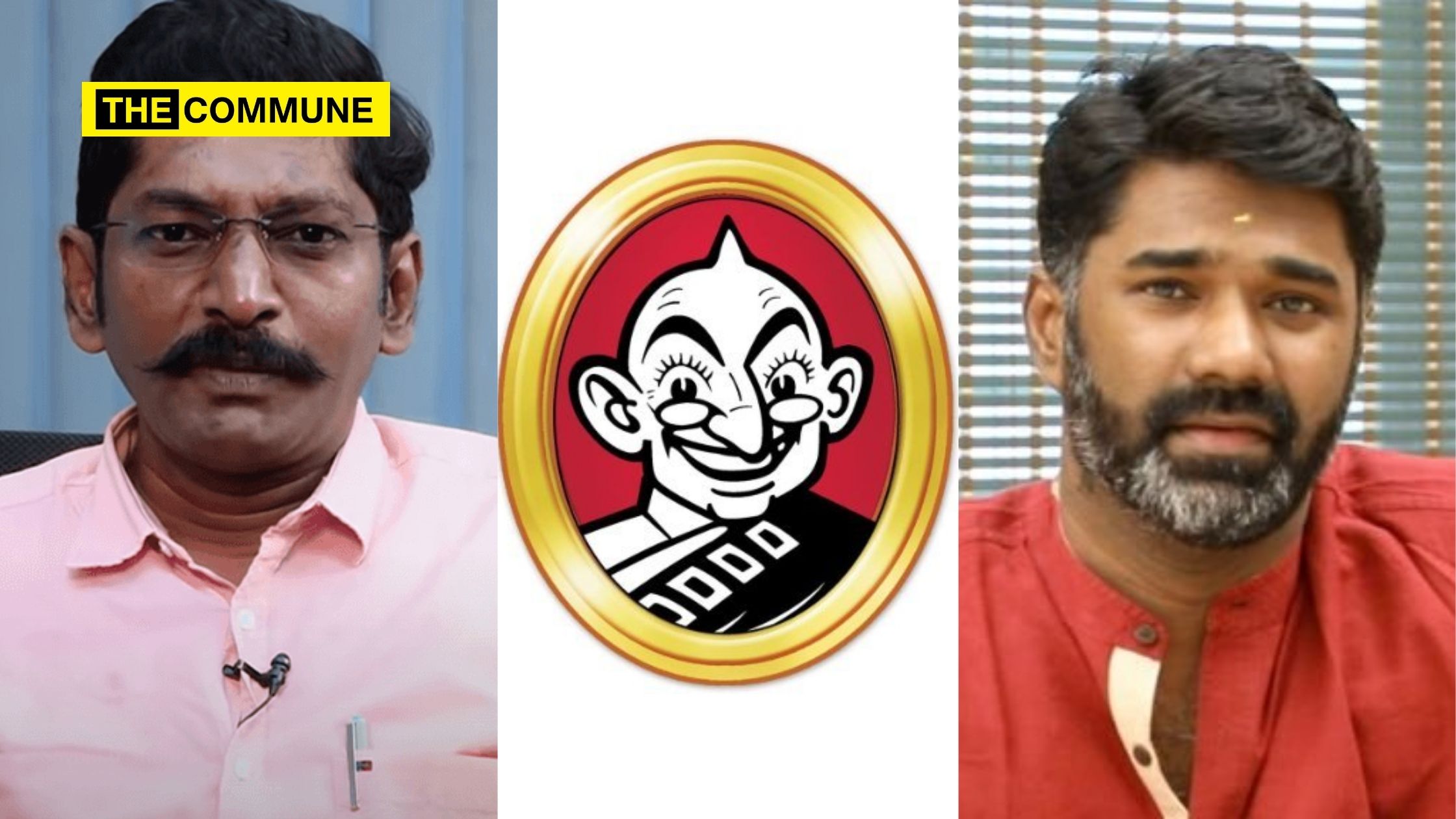
Case filed against Vikatan, Maridhas & ‘Savukku’ Shankar for speaking against G Square Realtors and DMK Govt

The Chennai police on Monday (May 24) filed an FIR against Tamil magazine Vikatan, YouTuber Maridhas and political commentator ‘Savukku’ Shankar for speaking against G Square Realtors, a real estate company reportedly close to the DMK family.

The complaint was filed by real estate firm G Square Realtors, after Vikatan published an article in which it exposed how the company was receiving favours owing to its proximity to the DMK and MK Stalin’s family.

The complaint stated that a Chennai-based businessman named Kevin, along with Vikatan, Maridhas and ‘Savukku’ Shankar, conspired to tarnish the reputation of their founder and managing director Bala Ramajayam.

It also claimed that Kevin had threatened to publish false news against the real estate company if they did not pay a bribe of ₹50 lakhs per month.

According to the complaint, Ramajayam allegedly received a phone call from Kevin on January 18, 2022 where he claimed to be a close associate of Vikatan Group’s Directors and threatened to publish false news if payment is not made. Vikatan has denied any ties with Kevin. The magazine has said that when the real estate company sent them a defamation notice on on March 3, 2022, they had asked for Kevin’s details, but received no response.

The Chennai Police arrested Kevin on Sunday (May 22) based on the same complaint.

The complaint mentioning Maridhas’ name states that the YouTube on May 15, 2022 posted a video “containing malicious and slanderous baseless allegations”.

G Square Realtors is a real estate company which aggregates land parcels for selling to big corporates and setting up IT parks. It also has several luxury housing projects to its name. The company has come under focus over allegations that it has seen a meteoric rise owing to its close ties with the family members of DMK chief MK Stalin.

In April 2021, the Income Tax department officials raided the residence of G Square Realtor’s Managing Director Bala Ramajayam and the company’s premises. As per media reports, IT raids at G-Square premises were part of an investigation against MK Stalin’s son-in-law Sabareesan. During the same day, IT officials also conducted raids at premises of Senthamarai Sabareesan, daughter of Stalin and Karthik Mohan, a close associate of Sabareesan and son of Annanagar DMK MLA Mohan.

Opposition parties in Tamil Nadu like the AIADMK and BJP have condemned the DMK government calling it an attempt to crack down on critics.

Leader of Opposition Edappadi K. Palaniswami called the action a shameful attack on media freedom.

K.Annamalai, the state BJP president, also condemned the police’s attempt to stifle media voices for ‘exposing the dubious dealings of DMK family’.

Click here to subscribe to The Commune on Telegram and get the best stories of the day delivered to you personally.
Impact Of COVID On Temple Priests Of Tamil Nadu

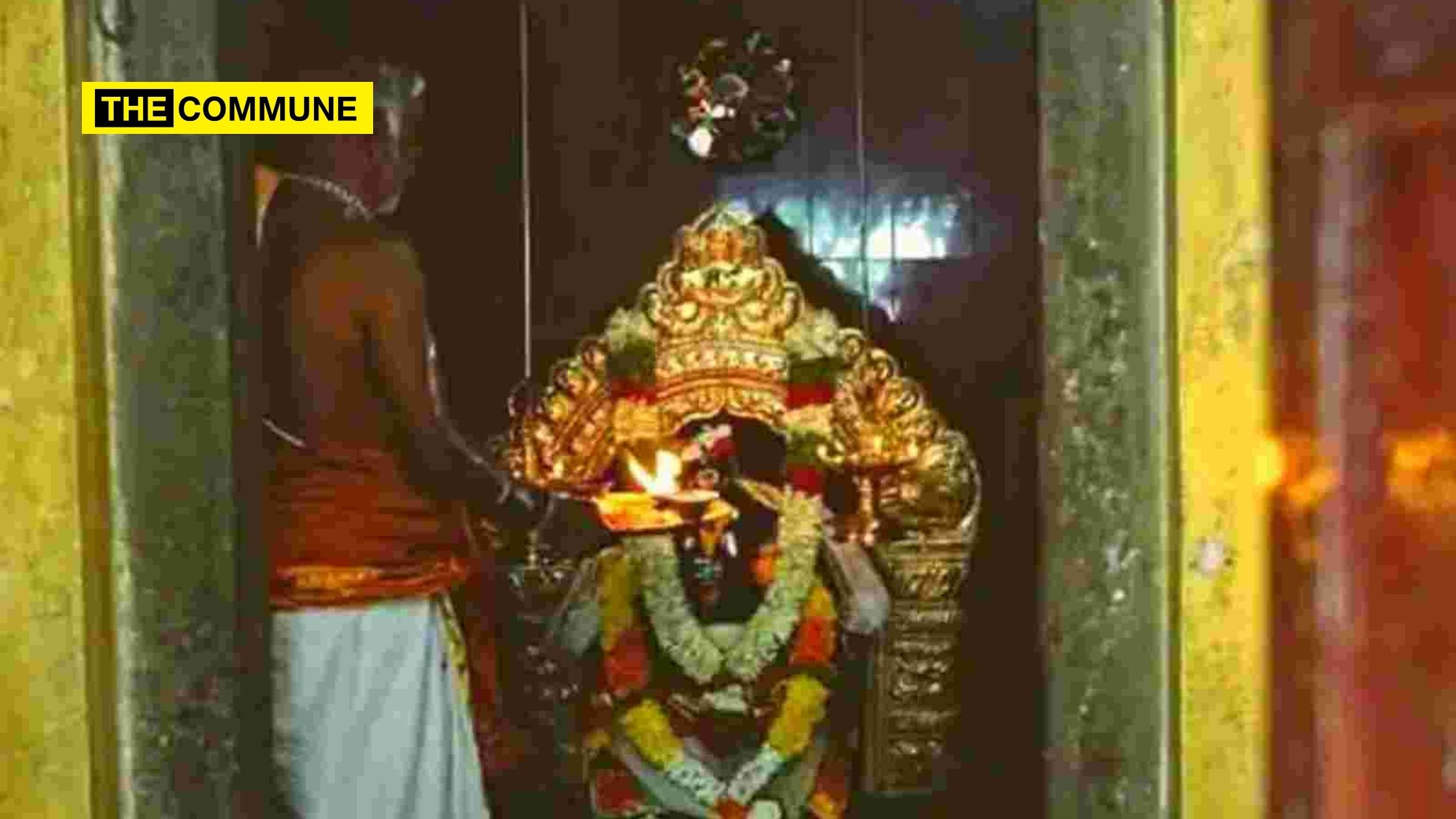
The COVID-19 pandemic had various implications on the economy and society, and temple priests in Tamil Nadu were among the most severely affected. Temple priests largely depend upon the donations made by devotees as their source of revenue. With temples closed for almost more than a year, these priests struggled for a livelihood.

Priests across temples in Tamil Nadu continued to carry out the daily rituals meant for the deity, both morning and evening, even without the presence of the devotees. For example, for the very first time in April 2020, the Chithirai Thiruvizha in Madurai, a month-long festival of the Meenakshi Sundareshwarar temple, was conducted without any devotees at all. A research paper showed that due to the cancellation of scheduled festivals during the lockdown, almost 50% of 27,000 temple priests in Tamil Nadu under the Tamil Nadu Poosarigal Peramaipu, who were aged above 50 were struggling to meet their day-to-day expenses.

When the lockdown was imposed in 2020, the AIADMK was ruling the state. Keeping the livelihood of priests in mind, the HR&CE department of the Edappadi K. Palaniswami government first brought in monetary assistance of ₹1000, in April 2020, for all village temple priests, who were registered under the Village Temple Poosarigal Welfare Board of the HR&CE. The amount was to be deposited in the account of the priests by the government. However, the problem with this scheme was that only priests from remote village temples were covered under it. Priests from bigger temples, especially in cities, were not eligible for this allowance.

Further in May, many temples also started requesting a power bill waiver because they could not afford to pay electricity bills. “Our monthly income heavily relied upon the contributions made by well-wishers as well as some Chief of Mutts and other trusts. They gave us what they could afford. It was indeed a very tough time for us,” said Prasanna, Dikshithar (priest) of Mannargudi Rajagopalaswamy temple.

When the DMK government came to power in May 2021, HR&CE Minister P. Sekarbabu, announced a scheme that was to provide the priests with ₹4000 one-time relief assistance, along with a 10 kgs rice bag and 15 other grocery items. When asked if this relief reached the priests, Prasanna said, ” I heard from my contacts in Kumbakonam Vaishnavite temples that they were given this assistance. Mannargudi is somewhat considered a village, but our priests did not receive the allowance both under DMK and AIADMK rule. This is because the government makes an announcement of such a scheme and then asks the respective temples to pay the priests from the revenue that they receive. How will the temple management pay us, when the temple itself has been closed for a year, and they have not been having any revenue? This is the lapse between what the government announces, and what we receive in reality.”

In September 2021, CM Stalin announced another relief assistance of ₹1000 for all priests who were performing at least “One Kala Pooja” at temples. Many priests from temples in Chennai received this allowance from the CM’s himself, but it is still a question whether priests across Tamil Nadu received the same. When asked whether the priests came together to petition the government to provide for their livelihood, Prasanna replied, “What is the use of asking any government? Whichever government we ask, we are not going to get much help. We will continue to do our service at temples, no matter what, because we are serving the deity, and nobody else.”

While this is the case for temples that come under the government itself, temples that are privately owned had nowhere to go and request financial support. For example, the Chidambaram Nataraja temple is one such important temple, where daily festivities continued to take place despite the lockdown. Nataraja Deekshithar, a priest at Chidamabaram temple, said, “As we are a privately owned temple, we cannot go and petition the government to support us. Our support majorly came from Saivaite devotees who were well-wishers and philanthropists,  who decided to help us priests out. Apart from that, our Lord Nataraja took complete care of us.”

Spiritual tourism is another major source of revenue for temples in Tamil Nadu. The donations made by foreign tourists to temples acted as a huge source of income, with which the temple management could afford to pay the temple priests. However, due to the travel ban during the pandemic, this source of income was also curtailed. This affected even the livelihood of petty shop owners who sold pooja items and temple souvenirs near the temple.

When asked about how he managed for a livelihood during the lockdown, Ganapathy, a retail shopkeeper who owns two correspondent shops next to Parthasarathy temple, said, “We had no income at all, and yet, we were asked to pay rent for our shops. How is it fair to ask us to pay the rent for our shops, while they haven’t been functioning for nearly half a year? We had no source of income whatsoever because the temples were closed and there was no influx of devotees. Mine is a joint family. We had to compromise on certain necessities to pay the rent. But this wasn’t the case for most of the small shopkeepers as they were pushed to worse conditions during these times.”

While priests and shopkeepers are the two most relevant parties when it comes to temples, the third most relevant would be the chefs who prepare Naivedyam (offering) for the deity in temples. The sale of Prasadam often acts as a major source of income for big temples. The Madapalli (temple kitchen) chefs continued to do their service during the lockdown, as no pooja for the deity concluded without an offering. But, just like the priests who had a little source of income during the lockdown, many Madapalli chefs also suffered.

When asked about the income of Madapalli cooks during the pandemic, Srivatsan, head of Madapalli, Sri Ranganathaswamy Temple, Srirangam, said, “Generally, the pay for all those working in temples under the HR&CE including Madapalli chefs and priests receive a stable income. However, this is not the case for smaller temples, especially those in villages. Even during COVID, the madapalli cooks of Srirangam temple did not face much trouble, because they come under the HR&CE and are therefore government servants with steady pay. However, smaller temples and Madapallis in villages would have been affected the most.”

“There is no relation between the Prasada stall at Srirangam temple and the Madapalli kitchen. There is a different kitchen that prepares the food items for the stall. The Madapalli is only used for preparing Naivedyam for the deity. So, the proceeds of the sale of Prasadam do not reach the Madapalli cooks, whatsoever. However, there are some Temples, like the Thiruvellarai Divya Desam temple, where there is no separate stall for the sale of Prasadam. There, the Madapalli cooks or priests distribute the Prasadam to the devotees, as soon as the offering is made to the deity,” he added.

Most temples have returned back to normalcy with the reduction in COVID cases. Now that temples are fully opened, devotees have started flocking temples in masses, catching up on what they missed in the past two years. The financial situation has largely improved for priests across Tamil Nadu now. However, what they largely dread is the lockdown time, as they all wish that the government could have been more efficient and helpful in providing the priests with financial assistance.

Click here to subscribe to The Commune on Telegram and get the best stories of the day delivered to you personally.
How UPI has revolutionized the way we transact

Indian economy was largely dependant on cash and other conventional mode of payments, until 2016 when the UPI was introduced.

From the barter system, to trade through gold and silver coins, we are now in an era where we can transfer money in a few seconds, at the tip of our fingers.

UPI- The Unified Payment Interface is a single-interface payment system, developed by the National Payment Corporation of India (NPCI). The UPI is an instant real-time payment system developed by National Payments Corporation of India through which payments can be made directly to a person or merchant’s bank account.

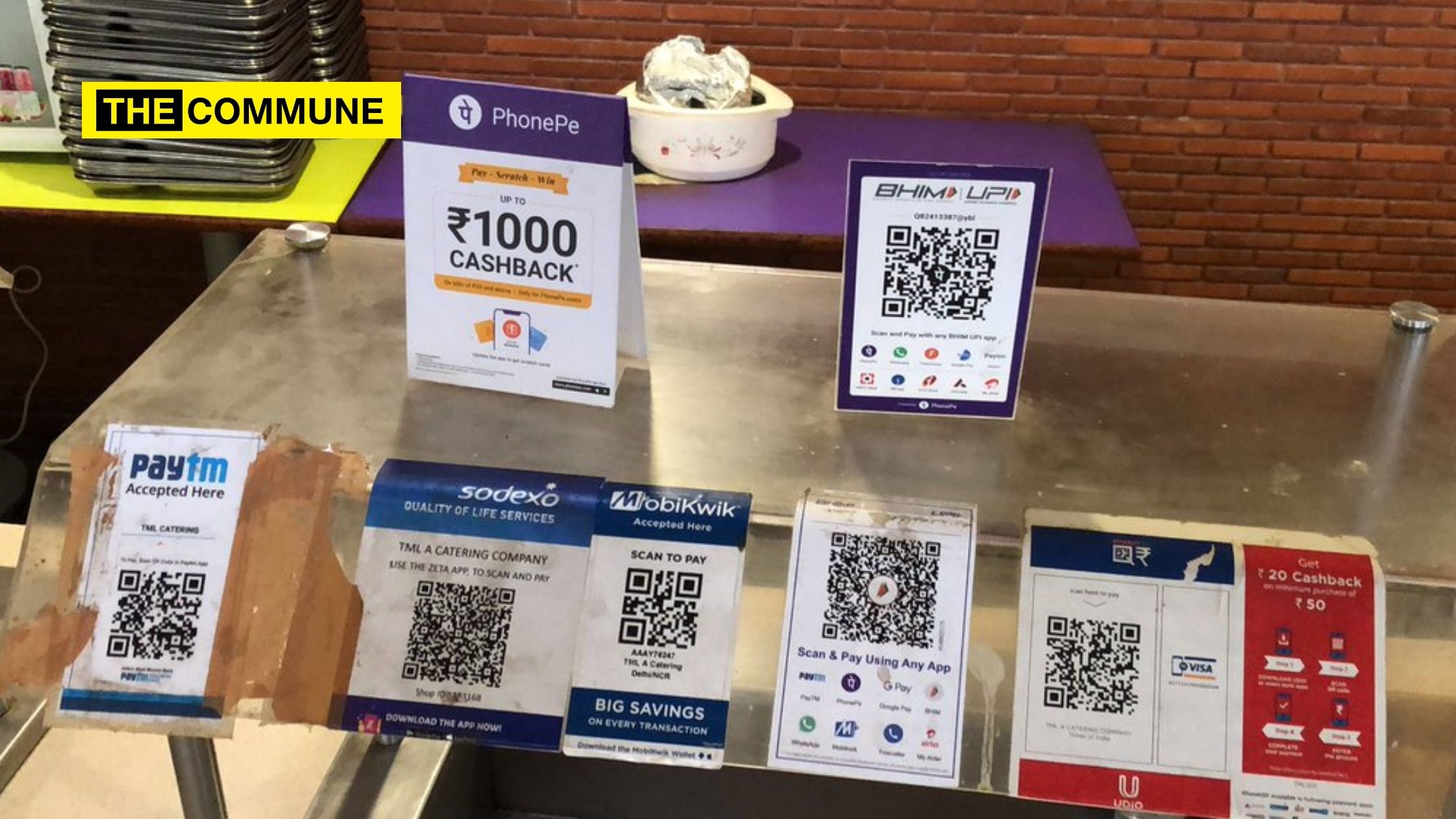
Today, every small vendor, auto driver, and taxi driver has a scan code stuck on their windshield, making it easier for them to receive payments and for their customers to make payments. Payments can be made by just scanning the QR code or by entering the phone number linked to the recipient’s bank account.

“Small vendors and auto drivers will be missing out on so much income if they fail to have a UPI ID. Many customers today prefer paying via UPI than via cash. We should start using UPI for our convenience and betterment of livelihood,” says Shekar G, 34 – An auto driver in Chennai.

Today, India is moving towards becoming a cashless economy and people do not prefer carrying cash anymore. There is no hassle of getting change, waiting for change, or any of that. Even during the pandemic, when social distancing was a norm to be followed, UPI transactions through apps like GooglePay, PhonePe, and PayTM were a blessing in disguise. It’s almost become a natural inclination for people to move towards UPI transactions.

All you need is a mobile number and a bank account and you can transfer money to anyone with a bank account.

“UPI makes it easier for people to keep track of their transactions. They make it easy to manage your finances, and you can also link your UPI app to apps like Walnut that help analyze your monthly transactions,” says Ashwanth Sajith, a Private Equity Analyst from Mumbai.

India has a bad reputation for black money in its economy and UPI ensures that all transactions are banked for, which means that they are all white. If more people use UPI, then more money is accounted for, which will help the Indian economy, he adds.

In 2017, Paytm became India’s first payment app to cross over 100 million app downloads.  Every UPI app today is not just a portal for digital payments, but also works as a platform where you can buy a variety of goods, book tickets, pay your bills, and even buy gold on it!

‘UPI has taken us from ‘do you have change’ to ‘Can I gpay it to you?’ The fact that small vendors have now embraced UPI shows how powerful this one change has been in regularising the economy, says Anish Nandalike, a digital influencer specializing in personal finance and financial literacy.

Since the introduction of UPI, there has been an exponential growth in the use of digital payments in India.

According to the latest data compiled by the National Payments Corporation of India (NPCI), which manages UPI, it has reported a threefold increase during the last fiscal (2020-21) in both the number of transactions and the value and the number of banks that are live on UPI has gone up to 216 from 153 in April 2020. When the platform began operations in April 2016, there were only 21 banks on board. “It is important for national banks to create much safer inbuilt UPI methods for their customers to access. It would be much safer in terms of digital payments and if something goes wrong, you will know who to question, unlike the private apps, whose headquarters are not in our closest vicinity,” says Senthil Kumar, a Chennai-based Canara Bank employee.

“UPI has several pros-convenience, accessibility, and so on, but the cons lie in the user’s hands. If the user doesn’t use the app properly, it might lead to cons, but there are no significant cons from the UPI sector as of now,” he adds.

Digital Payments in India are already at a boom and peak especially with the pandemic, without a doubt, it is now clear that this industry is surely set for explosive growth soon!

While even developed economies like the US and European countries are finding it difficult to make the digital shift, India has emerged as a pioneer in digital payments with its own payment interface.

Centre cuts fuel prices, TN Fin Min issues long statement ruling out reduction from state side

The Central Government on Saturday (May 21, 2022) cut the excise duties on petrol and diesel by ₹9.5 per litre and  ₹7 per litre respectively.

“We are reducing the Central excise duty on Petrol by Rs 8 per litre and on Diesel by Rs 6 per litre. This will reduce the price of petrol by Rs 9.5 per litre and of Diesel by Rs 7 per litre,” the Finance Minister said.

This move is said to have revenue implication of around ₹1 lakh crore per year for the government, the Union Finance Minister said.

The Centre will also provide subsidy on LPG cylinders – 200 per cylinder – to around 9 crore beneficiaries of the Pradhan Mantri Ujjwala Yojana scheme, subject to a maximum of 12 cylinders per year.

Finance Minister Nirmala Sitharaman also urged the states to reduce the taxes on fuel to ease the burden on common man.

Following this, a number of states including BJP and non-BJP ruled states have reduced the taxes.

Congress-rule Rajasthan, Communist-ruled Kerala and Biju Janata Dal ruled-Odisha have cut State taxes on petrol and diesel.

However, the DMK government in Tamil Nadu has refused to oblige to Centre’s request.

In a lengthy statement running to 3 pages, Tamil Nadu Finance Minister Palanivel Thiagarajan said that it was ‘neither fair nor reasonable to expect States to reduce their taxes’, indicating that the DMK government will not cut the taxes on fuel.

Palanivel Thiagarajan took to comparing present fuel prices with that of 2014 stating that the Union Government ‘egregriously increased taxes from 2014 to 2021’.

“Though the revenue to the Union Government has increased manifold, there has not been a matching increased in the revenues to States. This is because the Union Government has increased the cess and surcharges on petrol and diesel while reducing the basic excise duty that is shareable with States”, he said in his statement.

He said that though the Union Government has reduced taxes now, it is still higher than the rate of 2014 by ₹10.14 per litre for petrol and ₹12.23 per litre for diesel.

It is pertinent to note that the DMK had promised to reduce petrol and diesel prices by ₹5 and ₹4 respectively.

Click here to subscribe to The Commune on Telegram and get the best stories of the day delivered to you personally.