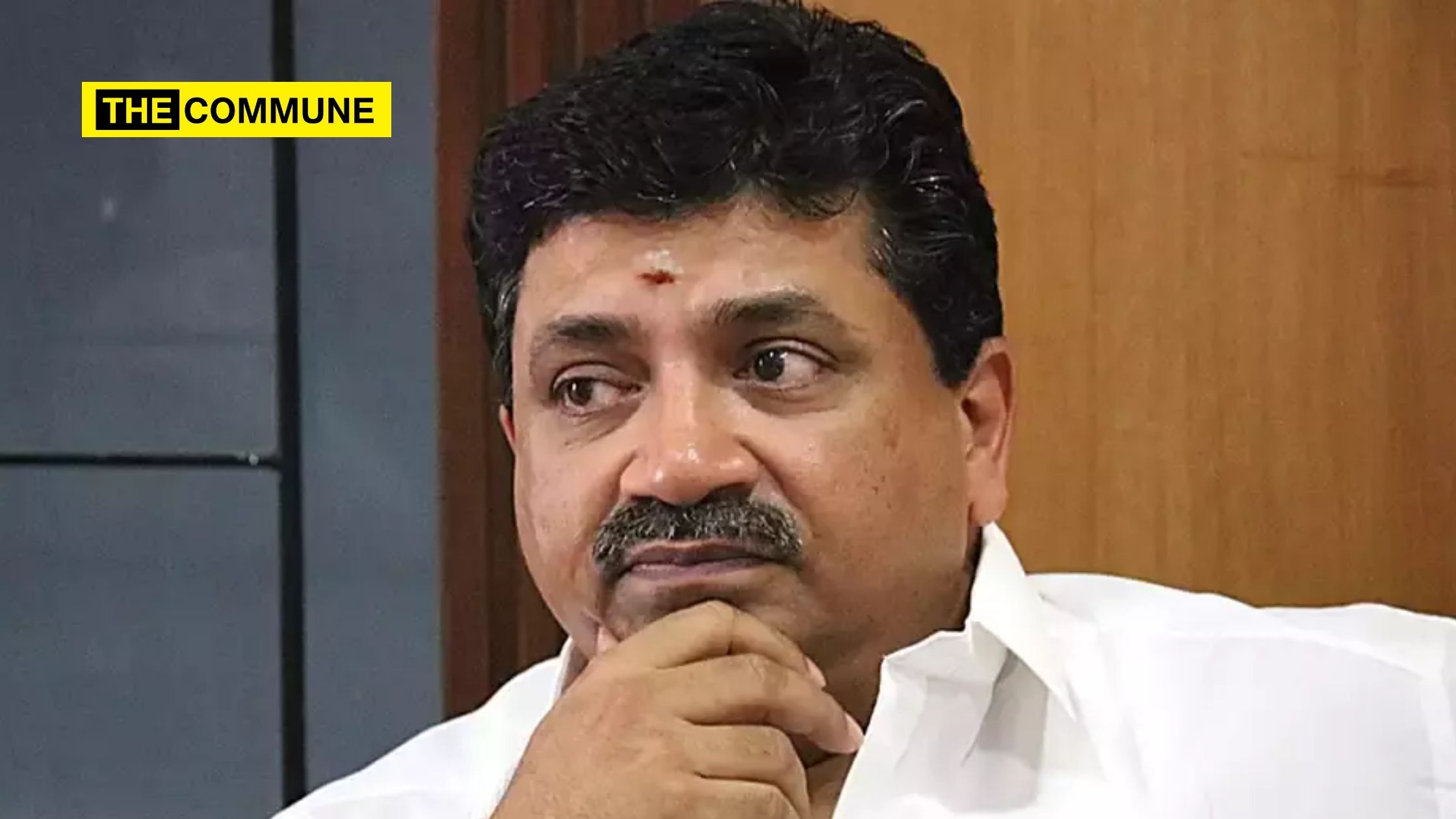
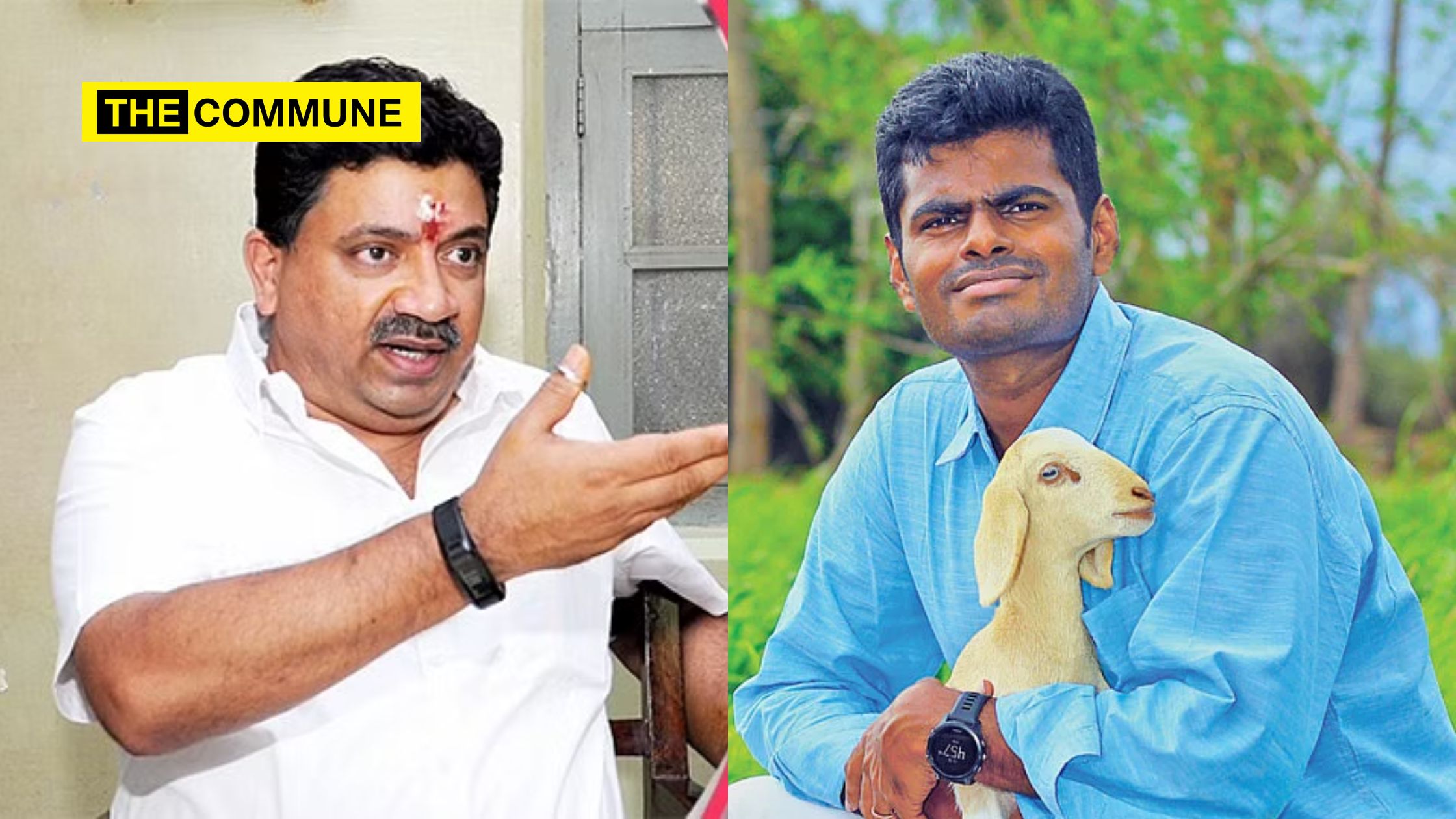
DMK leader PTR Palanivel Thiagarajan aka PTR, who happens to be the Finance Minister of Tamil Nadu through his dynastic privilege, is known for making headlines with his bloated ego and arrogance. He is at it once again.
In a recent television debate on freebies, PTR went on a rant asking if those in the Central government are economic experts having double Ph.Ds or Nobel Prize, and whether they’ve shown any economic progress to listen to them.
As usual, the man started blowing his own trumpet saying that he was doing a better job than the Union Government.
But here is his track record.
Big Talk, Small Work
As soon as the DMK government came to power, the first thing that this ‘rockstar’ Finance Minister did was to take long-term loans from the Reserve Bank of India (RBI) by issuing bonds.
According to data from the RBI, Tamil Nadu raised ₹72,500 crore during the fiscal 2021-22 through market borrowings.
Well, even if one were to give the leeway that the state was recovering from the aftermath of pandemic-induced lockdown, it is not as if the Finance Minister propelled the state towards a V-shaped recovery months later turning Tamil Nadu into a revenue surplus state.
In fact, the Tamil Nadu government has been the top borrower among States in the fiscal 2021-22 and PTR has said that he plans to borrow ₹90,116.52 in FY 2022-23.
The state’s debt has increased by over 34% in just over a year. Before PTR came to power, Tamil Nadu’s debt was ₹4.85 lakh crore. The motor-mouth Finance Minister himself has stated in Budget 2022-23 that the state is going to close 2023 year at ₹6.54 lakh crore debt.
Tamil Nadu’s borrowing last year was ₹1,08,175 crores and this year, it is expected to be ₹1,20,979 crores. The debt to GSDP ratio of Tamil Nadu was 25.84% and is projected to rise to 26.29% in 2022-23.
In May 2021, PTR in an interview had said that he would restructure debts to reduce the interest burden. When he took over as Finance Minister the state’s debt was ₹2,63,976 (₹2.63 lakh) per family. 15 months later, the burden on every family in Tamil Nadu has increased to ₹3,02,300 (₹3.02 lakh). That’s a whopping ₹38,324 increase per family.
The net public debt for the year 2021-22 was ₹88,451.23 crore which is ₹1812 crore more than the previous year. For the year, 2022-23, the net public debt is going to shoot up to ₹93,851.33 (the 2022-23 Budget speech of PTR says ₹90,116.52 crore).
Dravidian Model – TASMAC Model Of Growth
Gujarat and Uttar Pradesh, the two states which the Dravidian Stockists loath, detest and discredit, have projected a revenue surplus of ₹1,006 crore, (0.05% of the GSDP) and ₹43,124 crore (2.11% of the GSDP) respectively for 2022-23.
However, Tamil Nadu’s is projected to have a staggering revenue deficit of ₹52,781 crore (2.12% of the GSDP) according to Budget 2022-23. This has been the achievement of the much-hyped Dravidian Model.
On the other hand, 17 states following the non-Dravidian Model have outperformed Tamil Nadu when we compare the revenue deficits of 2020-21 (pandemic year) and 2021-22 (recovery year).
A bulk of the revenue for Tamil Nadu comes through liquor sales through the state-owned Tamil Nadu State Marketing Corporation Limited (TASMAC).
The state’s economy basically runs on liquor and both the two major Dravidian parties have to be blamed for this.
But credit should be given where due. After PTR took over, the Tamil Nadu government earned a whopping ₹36,013 crore from liquor sales in FY 2021-22, the highest ever and an increase of ₹2,201.99 crore from the previous year. For this tremendous achievement, the DMK government announced a hike of ₹500 for TASMAC employess earmarking ₹16.67 crore for the purpose.
Hail the Dravidian Model!
How ‘Free Power’ Is Coming Back To Haunt
Tamil Nadu is a power surplus state yet it owes several thousand crore rupees to power discoms which are languishing in debt.
The recent risk analysis published by RBI notes that Tamil Nadu’s TANGEDCO (Tamil Nadu Generation and Distribution Corporation Limited) owed a third of the money (₹1.24 lakh crore) to be paid to power distribution companies.
A government dashboard shows Tamil Nadu as the state with the highest dues to be paid to power generation companies. Tamil Nadu has the second highest overdue of ₹21,299 crore in the country.
The RBI risk analysis report notest that Tamil Nadu, will have to shell out 5.2% of its GSDP to clear 75% of the dues to the discoms.
This is a doing of both the AIADMK and DMK in equal measures. Both the AIADMK and DMK governments have mindlessly given ‘free power’ for farmers which has been exploited through multiple connections and power theft.
The erstwhile AIADMK regime failed to increase power tariffs for domestic consumers over the years for want of votebank politics.
Realizing that the free power for farmers was being misused, the AIADMK tried to roll out metering for all connections. However, the DMK which was in opposition had strongly opposed bringing farmers under metering. It had peddled lies that metering would lead to farmers paying electricity bills who have been enjoying free power. Today, PTR is strongly batting for bringing farmers under metering and is struggling to proceed with it thanks to the myopic votebank politics done by his party.
The state is struggling to find its feet in fixing this problem. In 2021, power subsidy alone cost the state exchequer more than ₹21,300 crore or 1.1% of GSDP. As of June 2022, TANGEDCO’s debt has climbed to ₹1.40 lakh crore.
Even amidst the burgeoning debt, the MK Stalin-led DMK government has provided 1 lakh free power connections to farmers in April 2022.
Quality Of Revenue Expenditure – Gujarat Vs Tamil Nadu
While the “highly intellectual”, american-educated, Ph.D holding, former investment banker – turned- rockstar Finance Minister has extraordinary brains to compare the finances of a state with the Union Government, let us ordinary mortals having pea-sized brain compare apples with apples and oranges with oranges.
Take the case of Gujarat which shares a lot of similarities with Tamil Nadu. Gujarat has an area of 196,024 sq.km and Tamil Nadu has an area of 130,0558 sq.km. Tamil Nadu has a population of around 7 crore and Gujarat has around 6.3 crore. Both the states have a coastline and are a base for a lot of industries.
Yet, Gujarat manages a revenue surplus every year while Tamil Nadu has a revenue deficit.
Let’s take a look at the quality of revenue spending for both the states.
68% of Tamil Nadu’s revenue receipts goes towards committed expenditure items like salaries (31%), pension (17%), and interest payments (20%).
On the other hand, only 45% of Gujarat’s revenue receipts goes towards salaries (21%), pension (10%), and interest payments (15%).
In fact, Tamil Nadu has a very high Interest Payements – Revenue Receipts (IP-RR) ratio of 21% which is the second-highest in the country after Punjab.
Tamil Nadu’s budgeted capital outlay (expenditure towards creation of assets like school buildings, hospitals, and roads and bridges) for the year 2021-22 was ₹42,181 crore. However, as per the revised estimates, only ₹37,936 crore went as capital outlay, a 10% decrease from the budget estimates. The different between the budgeted and revised estimates of capital outlay for Gujarat is just 5.8%.
For a party that claims social justice as its core ideology, the DMK government has cut down the “social welfare and nutrition” budget by 34% this year. The expenditure on agriculture and health has been decreased by 2% and 12% respectively.
By adjusting the capital outlay and cutting down on crucial expenditures, the foreign-educated highly intellectual Finance Minister claims to have reduced the fiscal deficit.
A Mohammad-bin-Tughlaq At Best
Two months after coming to power, when people started demanding for the promises to be fulfilled, Palanivel Thiagarajan released a white paper in order to absolve the DMK government’s inability to fulfill the many unfulfillable promises and to shift the blame on the previous AIADMK regime. And this white paper became the premise for taxing citizens more.
The minimum fare in Metropolitan Transport Corporation (MTC) buses was increased from ₹5 to ₹10.
Property tax has been increased to the tune of 50-150%. It is pertinent to mention that the DMK in its manifesto had promised to not increase property tax.
State-owned Aavin has increased the prices of milk powder, curd, ghee, and other milk products.
Electricity fare is set to rise by 12% to 52% from September 2022 as the DMK government has proposed a tariff hike for all consumers. Tamil Nadu’s industrial power tariff is already higher than many states and this increase will make it even more expensive.
The DMK in its manifesto had promised to reduce petrol and diesel prices by ₹5 and ₹4 respectively. After much grilling, it was announced that the price of petrol would be reduced by ₹3. Nothing has been to reduce the prices of diesel and LPG cylinder. When PTR was asked in a press meet whether the government will reduce fuel prices, he retorted saying “Have we put any date on fulfilling the promise?”
That is when it ‘dawned’ on the people – none of the promises made by the DMK have any dates mentioned!
The Central government however, has reduced taxes on petrol twice so far without even announcing in their manifesto.
Tamil Nadu Gets As Good As It Gives
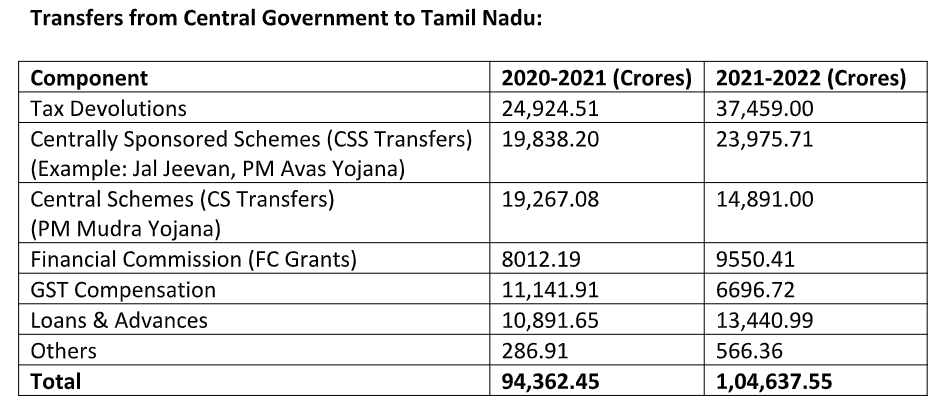
The oft repeated rhetoric about Tamil Nadu getting only 35 paisa for every ₹1 rupee that it contributes has been busted in this article.
In the FY 2021-2022 the tax devolution has increased by 50.2% and grants has increased by 19% compared to the previous financial year.
PTR – A Non-Perfoming Asset For The DMK
PTR is good at two things – self-trumpeting about his dynastic privilege and cyber-bullying those who disagree with him like a third-grade troll.
The man has no qualms in flaunting his dynastic privilege boasting about it time and again in every medium, every platform and every tweet. If one were to see any interview, press meet or even a tweet of Palanivel Thiagarajan, it would be more about him blowing his own trumpet than about the issue. Just like it happened in the India Today debate where he turned the tables saying he was doing a better job with his minions going gaga over his condescending attitude.
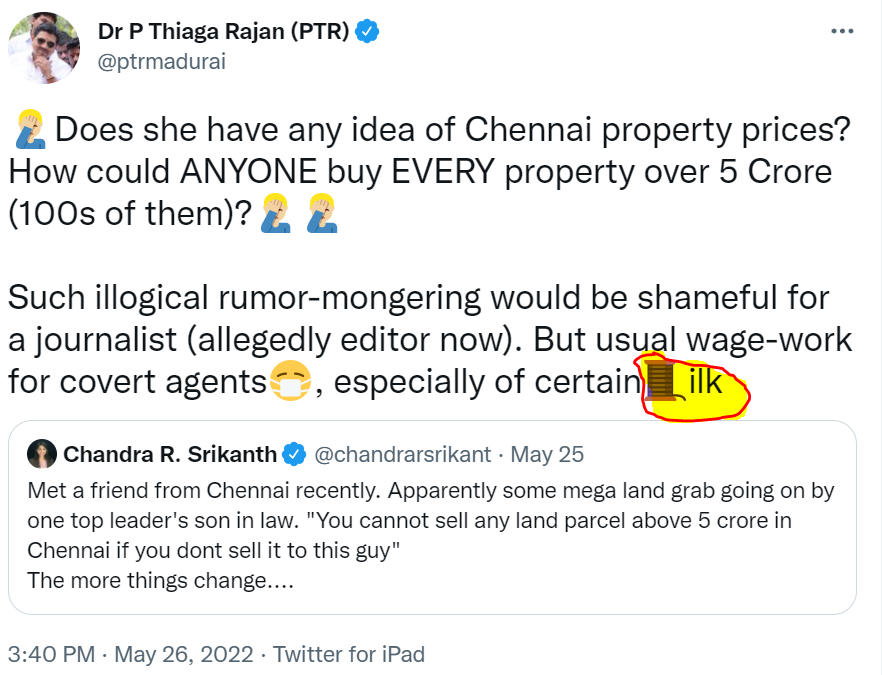
PTR is known for picking fights with anybody who he disagrees with. From abusing woman journalists to making personal attacks on political opponents and public personalities, the man has gained the reputation of a foul-mouthed, uncouth person unfit to be in public life. He calls anybody who admires PM Modi for his leadership as ‘cultists’ but it is PTR who is part of a cult that has to swear allegiance to one family. In fact, PTR comes from a legacy of being in servitude. His grandfather was at the servitude of the British, his father for Karunanidhi and now he is at the servitude for MK Stalin.
So, instead of covering up his non-performance with false bravado, it would do good for himself and the state if PTR disciplines his tongue and focuses on fiscal discipline.
Click here to subscribe to The Commune on Telegram and get the best stories of the day delivered to you personally.


PTR: A Non-Performing Asset
DMK leader PTR Palanivel Thiagarajan aka PTR, who happens to be the Finance Minister of Tamil Nadu through his dynastic privilege, is known for making headlines with his bloated ego and arrogance. He is at it once again.
In a recent television debate on freebies, PTR went on a rant asking if those in the Central government are economic experts having double Ph.Ds or Nobel Prize, and whether they’ve shown any economic progress to listen to them.
As usual, the man started blowing his own trumpet saying that he was doing a better job than the Union Government.
But here is his track record.
Big Talk, Small Work
As soon as the DMK government came to power, the first thing that this ‘rockstar’ Finance Minister did was to take long-term loans from the Reserve Bank of India (RBI) by issuing bonds.
According to data from the RBI, Tamil Nadu raised ₹72,500 crore during the fiscal 2021-22 through market borrowings.
Well, even if one were to give the leeway that the state was recovering from the aftermath of pandemic-induced lockdown, it is not as if the Finance Minister propelled the state towards a V-shaped recovery months later turning Tamil Nadu into a revenue surplus state.
In fact, the Tamil Nadu government has been the top borrower among States in the fiscal 2021-22 and PTR has said that he plans to borrow ₹90,116.52 in FY 2022-23.
The state’s debt has increased by over 34% in just over a year. Before PTR came to power, Tamil Nadu’s debt was ₹4.85 lakh crore. The motor-mouth Finance Minister himself has stated in Budget 2022-23 that the state is going to close 2023 year at ₹6.54 lakh crore debt.
Tamil Nadu’s borrowing last year was ₹1,08,175 crores and this year, it is expected to be ₹1,20,979 crores. The debt to GSDP ratio of Tamil Nadu was 25.84% and is projected to rise to 26.29% in 2022-23.
In May 2021, PTR in an interview had said that he would restructure debts to reduce the interest burden. When he took over as Finance Minister the state’s debt was ₹2,63,976 (₹2.63 lakh) per family. 15 months later, the burden on every family in Tamil Nadu has increased to ₹3,02,300 (₹3.02 lakh). That’s a whopping ₹38,324 increase per family.
The net public debt for the year 2021-22 was ₹88,451.23 crore which is ₹1812 crore more than the previous year. For the year, 2022-23, the net public debt is going to shoot up to ₹93,851.33 (the 2022-23 Budget speech of PTR says ₹90,116.52 crore).
Dravidian Model – TASMAC Model Of Growth
Gujarat and Uttar Pradesh, the two states which the Dravidian Stockists loath, detest and discredit, have projected a revenue surplus of ₹1,006 crore, (0.05% of the GSDP) and ₹43,124 crore (2.11% of the GSDP) respectively for 2022-23.
However, Tamil Nadu’s is projected to have a staggering revenue deficit of ₹52,781 crore (2.12% of the GSDP) according to Budget 2022-23. This has been the achievement of the much-hyped Dravidian Model.
On the other hand, 17 states following the non-Dravidian Model have outperformed Tamil Nadu when we compare the revenue deficits of 2020-21 (pandemic year) and 2021-22 (recovery year).
A bulk of the revenue for Tamil Nadu comes through liquor sales through the state-owned Tamil Nadu State Marketing Corporation Limited (TASMAC).
The state’s economy basically runs on liquor and both the two major Dravidian parties have to be blamed for this.
But credit should be given where due. After PTR took over, the Tamil Nadu government earned a whopping ₹36,013 crore from liquor sales in FY 2021-22, the highest ever and an increase of ₹2,201.99 crore from the previous year. For this tremendous achievement, the DMK government announced a hike of ₹500 for TASMAC employess earmarking ₹16.67 crore for the purpose.
Hail the Dravidian Model!
How ‘Free Power’ Is Coming Back To Haunt
Tamil Nadu is a power surplus state yet it owes several thousand crore rupees to power discoms which are languishing in debt.
The recent risk analysis published by RBI notes that Tamil Nadu’s TANGEDCO (Tamil Nadu Generation and Distribution Corporation Limited) owed a third of the money (₹1.24 lakh crore) to be paid to power distribution companies.
A government dashboard shows Tamil Nadu as the state with the highest dues to be paid to power generation companies. Tamil Nadu has the second highest overdue of ₹21,299 crore in the country.
The RBI risk analysis report notest that Tamil Nadu, will have to shell out 5.2% of its GSDP to clear 75% of the dues to the discoms.
This is a doing of both the AIADMK and DMK in equal measures. Both the AIADMK and DMK governments have mindlessly given ‘free power’ for farmers which has been exploited through multiple connections and power theft.
The erstwhile AIADMK regime failed to increase power tariffs for domestic consumers over the years for want of votebank politics.
Realizing that the free power for farmers was being misused, the AIADMK tried to roll out metering for all connections. However, the DMK which was in opposition had strongly opposed bringing farmers under metering. It had peddled lies that metering would lead to farmers paying electricity bills who have been enjoying free power. Today, PTR is strongly batting for bringing farmers under metering and is struggling to proceed with it thanks to the myopic votebank politics done by his party.
The state is struggling to find its feet in fixing this problem. In 2021, power subsidy alone cost the state exchequer more than ₹21,300 crore or 1.1% of GSDP. As of June 2022, TANGEDCO’s debt has climbed to ₹1.40 lakh crore.
Even amidst the burgeoning debt, the MK Stalin-led DMK government has provided 1 lakh free power connections to farmers in April 2022.
Quality Of Revenue Expenditure – Gujarat Vs Tamil Nadu
While the “highly intellectual”, american-educated, Ph.D holding, former investment banker – turned- rockstar Finance Minister has extraordinary brains to compare the finances of a state with the Union Government, let us ordinary mortals having pea-sized brain compare apples with apples and oranges with oranges.
Take the case of Gujarat which shares a lot of similarities with Tamil Nadu. Gujarat has an area of 196,024 sq.km and Tamil Nadu has an area of 130,0558 sq.km. Tamil Nadu has a population of around 7 crore and Gujarat has around 6.3 crore. Both the states have a coastline and are a base for a lot of industries.
Yet, Gujarat manages a revenue surplus every year while Tamil Nadu has a revenue deficit.
Let’s take a look at the quality of revenue spending for both the states.
68% of Tamil Nadu’s revenue receipts goes towards committed expenditure items like salaries (31%), pension (17%), and interest payments (20%).
On the other hand, only 45% of Gujarat’s revenue receipts goes towards salaries (21%), pension (10%), and interest payments (15%).
In fact, Tamil Nadu has a very high Interest Payements – Revenue Receipts (IP-RR) ratio of 21% which is the second-highest in the country after Punjab.
Tamil Nadu’s budgeted capital outlay (expenditure towards creation of assets like school buildings, hospitals, and roads and bridges) for the year 2021-22 was ₹42,181 crore. However, as per the revised estimates, only ₹37,936 crore went as capital outlay, a 10% decrease from the budget estimates. The different between the budgeted and revised estimates of capital outlay for Gujarat is just 5.8%.
For a party that claims social justice as its core ideology, the DMK government has cut down the “social welfare and nutrition” budget by 34% this year. The expenditure on agriculture and health has been decreased by 2% and 12% respectively.
By adjusting the capital outlay and cutting down on crucial expenditures, the foreign-educated highly intellectual Finance Minister claims to have reduced the fiscal deficit.
A Mohammad-bin-Tughlaq At Best
Two months after coming to power, when people started demanding for the promises to be fulfilled, Palanivel Thiagarajan released a white paper in order to absolve the DMK government’s inability to fulfill the many unfulfillable promises and to shift the blame on the previous AIADMK regime. And this white paper became the premise for taxing citizens more.
The minimum fare in Metropolitan Transport Corporation (MTC) buses was increased from ₹5 to ₹10.
Property tax has been increased to the tune of 50-150%. It is pertinent to mention that the DMK in its manifesto had promised to not increase property tax.
State-owned Aavin has increased the prices of milk powder, curd, ghee, and other milk products.
Electricity fare is set to rise by 12% to 52% from September 2022 as the DMK government has proposed a tariff hike for all consumers. Tamil Nadu’s industrial power tariff is already higher than many states and this increase will make it even more expensive.
The DMK in its manifesto had promised to reduce petrol and diesel prices by ₹5 and ₹4 respectively. After much grilling, it was announced that the price of petrol would be reduced by ₹3. Nothing has been to reduce the prices of diesel and LPG cylinder. When PTR was asked in a press meet whether the government will reduce fuel prices, he retorted saying “Have we put any date on fulfilling the promise?”
That is when it ‘dawned’ on the people – none of the promises made by the DMK have any dates mentioned!
The Central government however, has reduced taxes on petrol twice so far without even announcing in their manifesto.
Tamil Nadu Gets As Good As It Gives
The oft repeated rhetoric about Tamil Nadu getting only 35 paisa for every ₹1 rupee that it contributes has been busted in this article.
In the FY 2021-2022 the tax devolution has increased by 50.2% and grants has increased by 19% compared to the previous financial year.
PTR – A Non-Perfoming Asset For The DMK
PTR is good at two things – self-trumpeting about his dynastic privilege and cyber-bullying those who disagree with him like a third-grade troll.
The man has no qualms in flaunting his dynastic privilege boasting about it time and again in every medium, every platform and every tweet. If one were to see any interview, press meet or even a tweet of Palanivel Thiagarajan, it would be more about him blowing his own trumpet than about the issue. Just like it happened in the India Today debate where he turned the tables saying he was doing a better job with his minions going gaga over his condescending attitude.
PTR is known for picking fights with anybody who he disagrees with. From abusing woman journalists to making personal attacks on political opponents and public personalities, the man has gained the reputation of a foul-mouthed, uncouth person unfit to be in public life. He calls anybody who admires PM Modi for his leadership as ‘cultists’ but it is PTR who is part of a cult that has to swear allegiance to one family. In fact, PTR comes from a legacy of being in servitude. His grandfather was at the servitude of the British, his father for Karunanidhi and now he is at the servitude for MK Stalin.
So, instead of covering up his non-performance with false bravado, it would do good for himself and the state if PTR disciplines his tongue and focuses on fiscal discipline.
Click here to subscribe to The Commune on Telegram and get the best stories of the day delivered to you personally.