Home Blog Page 1021

“Won’t Enter Politics”: Old Tweets And Videos Of Udhayanidhi Surface As He Gets Coronated As Minister

Old Tweets And Videos Of Udhayanidhi Surface

After months of deliberation, Udhayanidhi, the son of Tamil Nadu Chief Minister MK Stalin, will join his father’s cabinet on 14 December 2022, the auspicious day when the Parthasarathy Perumal Temple at Tiruvallikeni will undergo Thirumanjana Sevai (sacred bath ceremony). The swearing-in ceremony will take place at Raj Bhavan in Chennai at 09:30 a.m.

The date, the penultimate day of the Tamil month of Karthigai, and the time are significant because they are considered auspicious according to the Hindu calendar, even though the DMK claims to profess rationalism. The ceremony is taking place in Karthigai month because the upcoming Margazhi is considered inauspicious.

In this scenario, old tweets and videos of Udhayanidhi Stalin were circulated on the internet with the hashtag #சின்னதத்தி_எனும்_நான், in which Udhayanidhi can be seen saying that he will not enter politics.

In an interview with actress Sangeetha for Puthuyugam on March 6, 2014, Udhayanidhi stated that he is not interested in politics and that it is not mandatory to enter politics if born into a political family. He also stated, “There are many people in the DMK who have worked hard for the party, and I believe they should be given prominent positions.”

On August 6, 2017, during the press meet for his mega-flop movie Pothuvaga En Manasu Thangam, Udhayanidhi stated that no one in his family or friends had asked him to enter politics and that he is not interested in doing so.

On May 26, 2011, Udhayanithi stated that he will never enter politics in response to a fan who wished him good luck for his first film Oru Kal Oru Kannadi and asked him to enter politics.

In another such instance on Jul 23, 2011, he replied to a user named @robotag that he will not enter politics.

Click here to subscribe to The Commune on Telegram and get the best stories of the day delivered to you personally.

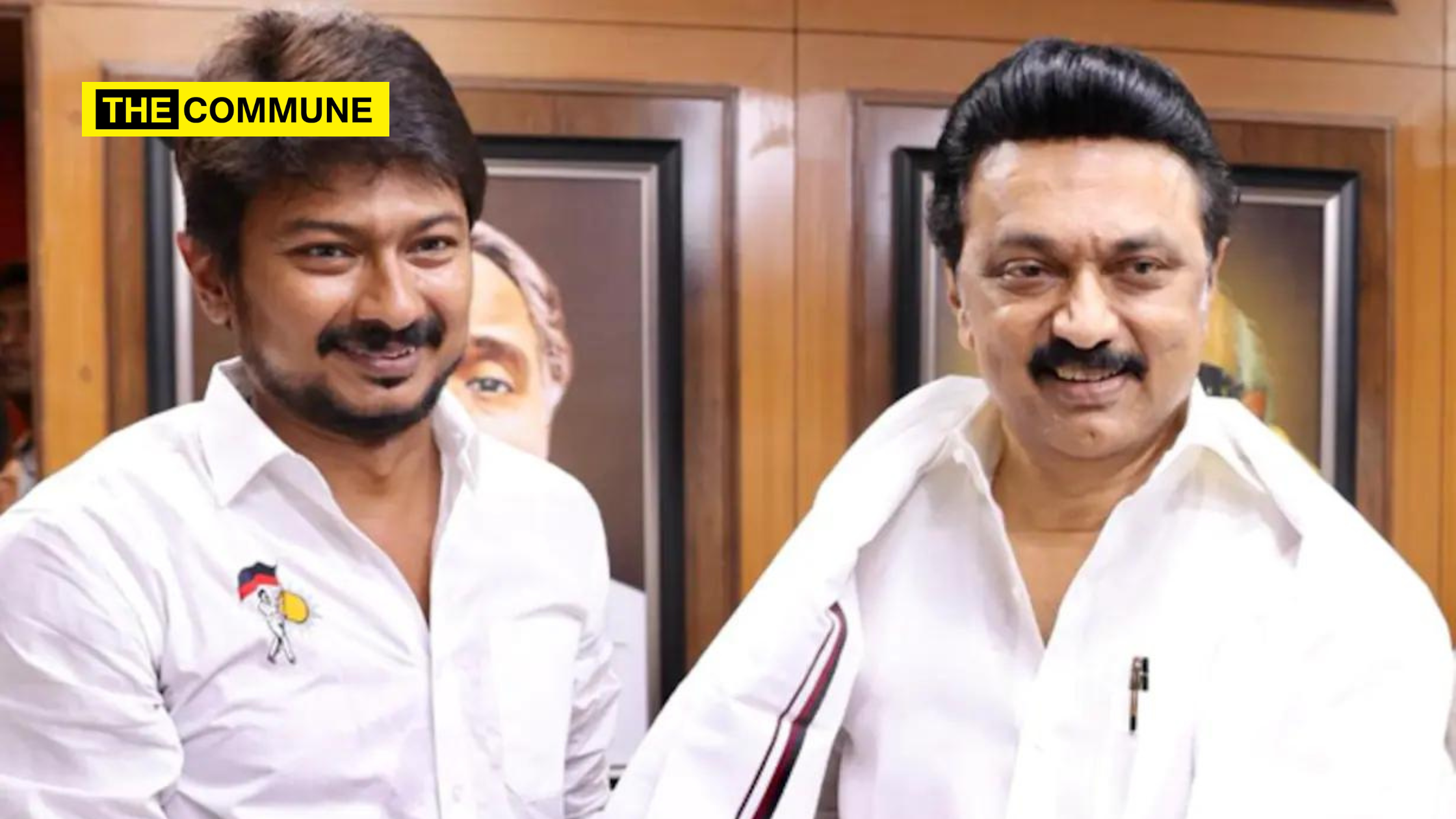
DMK’s Rationalism Goes For A Toss, Auspicious Timing As Per Hindu Calendar Chosen For Udhay’s Swearing-In

DMK’s crown prince Udhayanidhi Stalin is set to be sworn in as a Minister in his father MK Stalin’s government.

While Udhayanidhi’s coronation shouldn’t come across as surprising as the DMK is a dynastic party, the timing of his coronation has become a talking point.

Udhayanidhi Stalin is being sworn in as a Minister on 14 December 2022 at 09:30 AM at the Raj Bhavan premises in Chennai.

The date and time is very auspicious as per the Hindu calendar. First of all, it is a ‘Subha Muhurtham’ day, which is the day chosen by Hindus to commence any important work. The swearing-in time 9:30 AM falls between the auspicious time of 09:15 AM to 10:15 AM. Incidentally, it is also the day when Thirumanjan Sevai (sacred bath ceremony) is going to be done for the Parthasarathy Perumal Temple at Tiruvallikeni. It is noteworthy to mention that Udhyanidhi is the MLA of Chepauk-Tiruvallikeni.

Many on social media have said that this auspicious date and time have been chosen by his mother Durga Stalin after consulting a number of astrologers.

The DMK which claims to be a ‘rationalistic’ party is now facing flak on social media for its hypocrisy.

Udhayanidhi’s coronation as a Minister was much awaited and has been in the pipeline for quite some time. He was being touted as the successor to his father Stalin ever since the DMK government came to power.

Be it positioning the camera in the Assembly showing Udhayanidhi Stain right behind his father, or the flurry of advertisements given in newspapers and magazines for Udhayanidhi’s birthday, it was only a matter of time before Stalin was seen handing over the DMK’s baton to his son.

Click here to subscribe to The Commune on Telegram and get the best stories of the day delivered to you personally.
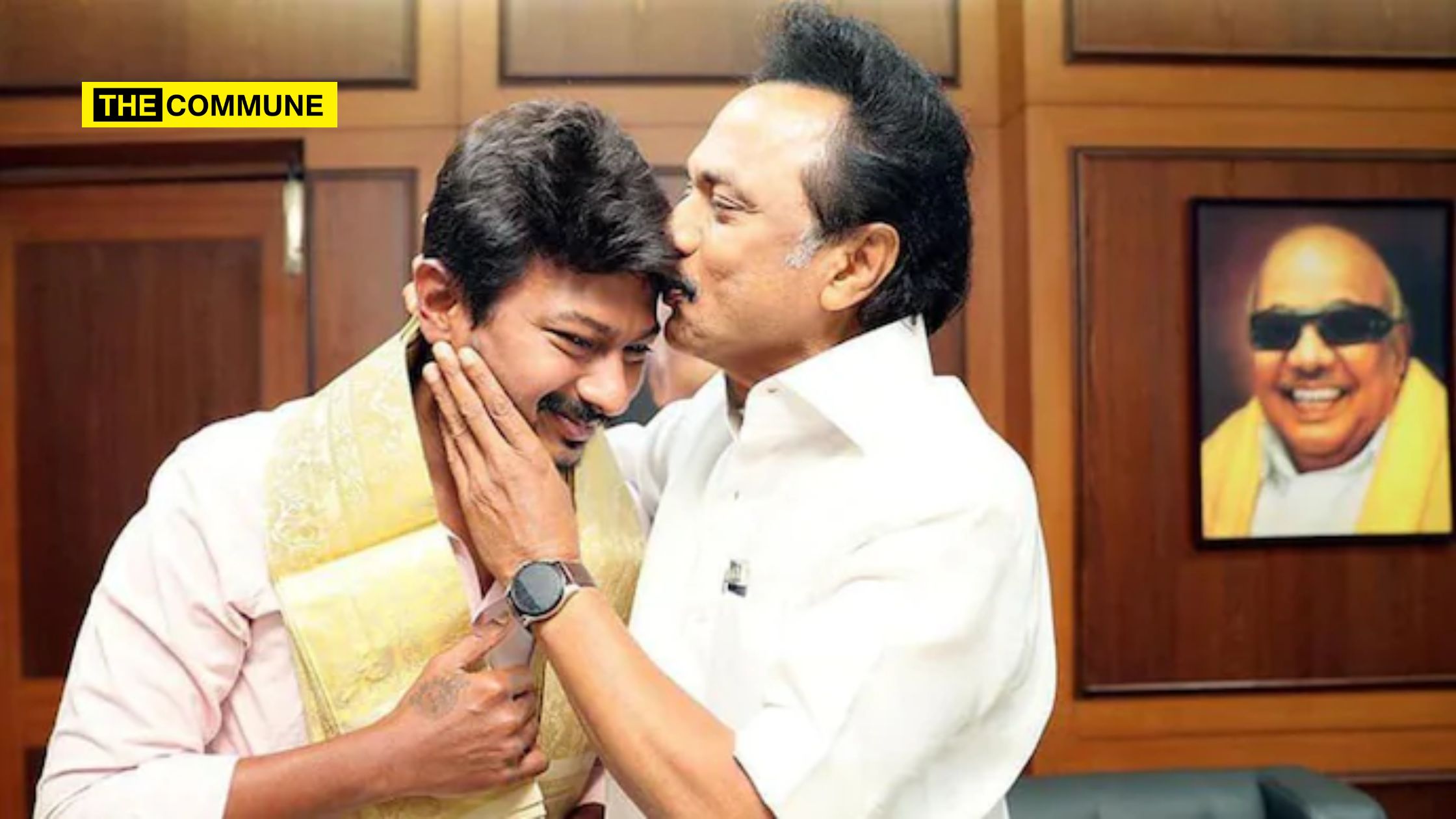
Rejoinder To Murasoli: Jittered By BJP’s Performance, DMK Mouthpiece Peddles Lies About Gujarat Election Results

The BJP secured a historic victory in the 2022 Gujarat Assembly elections. The party has won for the 7th consecutive term and has decimated the opposition by making them lose their status as the opposition party.

The party has won a whooping 156 seats of the 182 seat legislative assembly, the highest ever secured by a party till date. This is the first time in the electoral history of Gujarat that the BJP has crossed the majority mark in terms of vote share with 52.5% votes.

The last time that a party got such a huge mandate was when Congress chief minister Madhavsinh Solanki secured 149 seats in 1985 elections that were held against the backdrop of former prime minister Indira Gandhi’s assasination.

However, the DMK in its editorial today tried to peddle half-truths claiming that it’s not that big a victory for the BJP.

Let’s counter the claims one by one.

Number 1

The DMK mouthpiece claimed that while the BJP polled only 1,67,07,957 votes there were 3,23,81,808 votes that were polled against the BJP.

But the number quoted as anti-BJP votes by Murasoli is outrightly false and misleading. Here are the real numbers from the Election Commission.

Total votes polled – 3,14,79,134.

BJP – 1,67,07,957

INC – 86,83,966

AAP – 4,112,055

Others – 13,81,739

NOTA – 5,01,202

SP – 92,215

NCP – 76,949

Total non-BJP votes (INC+AAP+SP+NCP+NOTA+Others) – 1,48,48,126

So, the votes polled for BJP is 18.59 lakh votes more than the non-BJP votes combined.

The inability to do even basic addition and subtraction by DMK folks at Murasoli is a testimony to their Dravidian Model of education.

Number 2

Murasoli claimed in its editorial that the BJP was able to win because the party had announced ‘freebies’. The mouthpiece had tried to spin a narrative that the BJP is hypocritical in its stance on ‘freebies’ saying that while the Centre attacks ‘revdi culture’, it is implementing the same to fetch votes in Gujarat.

However, the people of Gujarat were not wooed by freebies but by good governance. The standard of living of a Gujrati has seen improvement without the state having to dole out freebies.

The BJP won 80 out of 98 rural assembly seats with a strike rate of 82 per cent. This is a testimony to the developmental politics and good governance track record of the BJP.

The successful raising of the Sardar Sarovar dam and the fact that water has reached the dry parts of Gujarat through the SAUNI Yojana has led the people of Gujarat to bequeath their trust on the BJP.

The Jyotigram Yojana, commissioned in 2006, has ensured eight hours of electricity supply for irrigation for all of Gujarat’s 18,000 villages and 24×7 uninterrupted domestic power supply at a nominal charge.

The uniterrupted electriciy and water supply has allowed farmers to increase their agricultural productivity thereby an increase in their income. This has led to the BJP sweep the agrarian regions like Saurashtra.

The BJP has also managed to gain the trust and goodwill of the tribal communities by ensuring holistic development of tribal communities through the Vanbandhu Kalyan Yojana. This has helped the party win 24 out of 40 SC/ST seats in Gujarat.

This is the trackrecord of the consecutive BJP governments in the previous years.

Now, let’s take a look at the visionary manifesto document of the BJP for this election.

  • Make Gujarat a $1 trillion economy by maintaining its position in manufacturing, focusing on services and building capacity for new-age industries.
  • 1 lakh Government jobs to women.
  • Set up two seafood parks in South Gujarat and Saurashtra and build India’s first Blue Economy Industrial corridor around this region.
  • Creating anti-radicalization cells to identify and eliminate potential threats, and sleeper cells of the terrorist organizations and anti-India forces.
  • Create world-class sports infrastructure to host the 2036 Olympics Games in Gujarat.
  • The family card yojana will enable every family to avail benefits of all state government-run welfare schemes.
  • Shramik credit cards for labourers with collateral-free loans up to ₹2 Lakhs, Every citizen is to be ensured with a house under AWAS Yojana.
  • Develop a Saurashtra Express Highway grid to connect important economic hubs and national highways.
  • Spend ₹1 lakh crore under the Vanbandhu Kalyan Yojana 2.0 for the all-around socio-economic development of tribal.
  • 20 lakh new jobs generation in the state.
  • The ruling party has assured ₹10,000 crores for farmer infrastructure, ₹25,000 crores for irrigation facilities, two seafood parks in South Gujarat and Saurashtra, etc.

There is a difference between the ‘freebies’ of the ‘Dravidian Model’ and the welfare schemes of the Gujarat Model. The Dravidian Model of freebies is a wasteful expenditure of taxpayer’s money in providing substandard services – the case in point being the free bus for women scheme of the DMK government. Other example of freebie promises include providing ₹1000 for women which is yet to be implemented by the DMK government.

Whereas in the Gujarat Model, welfare schemes are oriented in improving the quality of life for the poor. Be it the free LPG scheme or the Ayushman Bharat scheme, these have resulted in the empowerment of the people.

The Dravidian Model of freebie keeps the poor perpetually poor for want of political gain while the Gujarat Model of welfare ultimately results in the empowerment of the individual and the community.

Number 3

Murasoli claims that this victory for the BJP isn’t a big deal as it it banked on son-of-the-soil strategy and communal politics coupled with freebies.

The son-of-the-soil strategy part may be true but the other two are just humbug. The fact that the state has remained peaceful which was earlier marred by frequent communal riots has made the people of Gujarat trust the BJP in maintaining law and order.

But here is a bitter truth that the DMK will find it difficult to digest. The DMK in 2021 won by a wafer-thin margin of 5.66%. The DMK itself polled only 37.7%. On the other hand, the BJP in Gujarat has polled a whopping 52.5% and has secure victory by a huge margin.

The BJP has managed to win Gujarat back-to-back and this time it has won without any major alliance. History is testimony to the fact that the DMK has never managed to win an election without an alliance with major parties.

So, dear DMK folks at Murasoli, please educate yourself and rotate your cane within the four walls of Arvialayam.

Click here to subscribe to The Commune on Telegram and get the best stories of the day delivered to you personally.
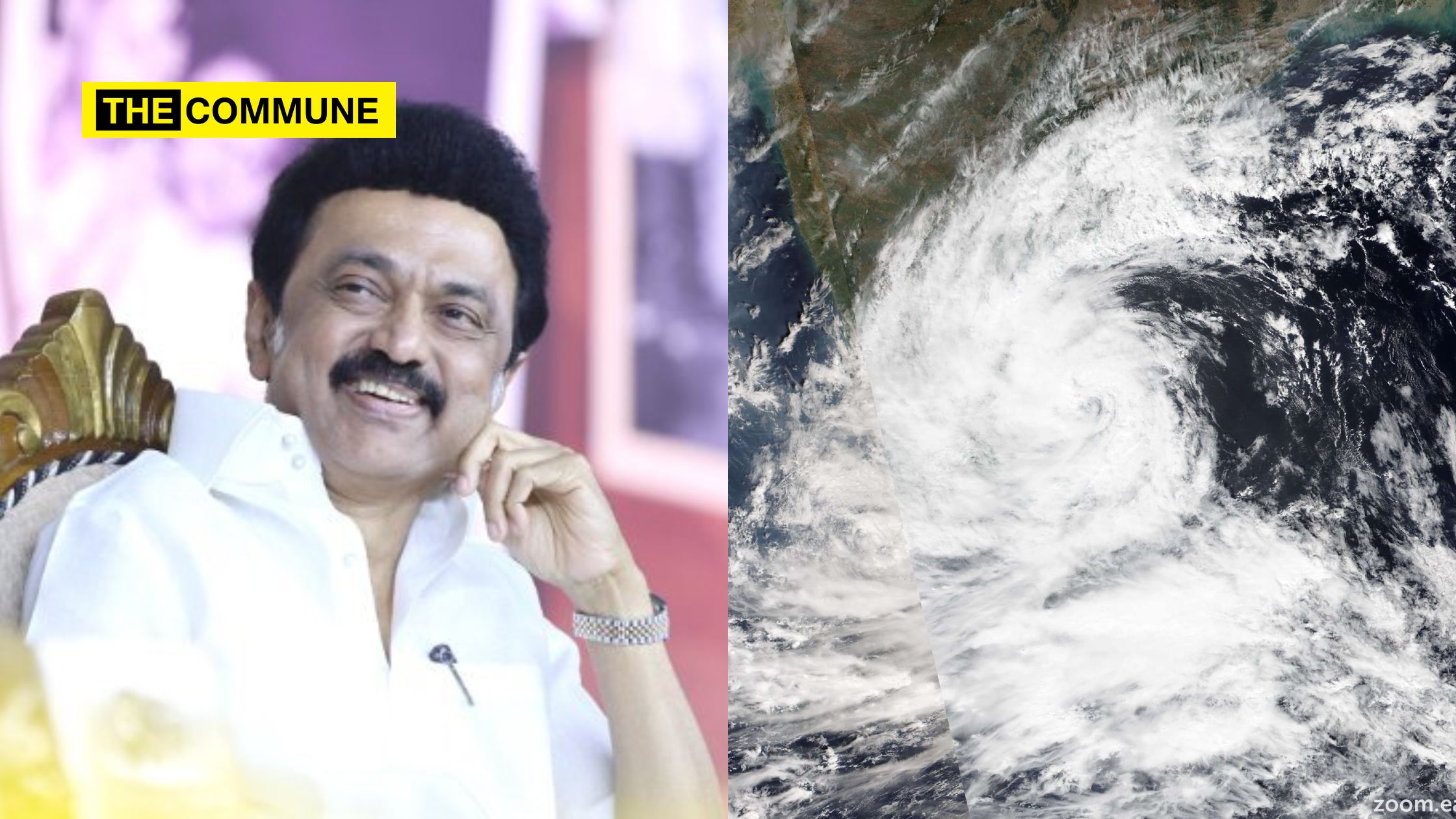
Busting The Rhetoric Of Dravidian Stockists On DMK Govt’s Handling Of Cyclone Mandous

Mandous, which began as a “Severe Cyclonic Storm”, weakened as it approached the coast of Tamil Nadu near Chennai. It had weakened into a deep depression and lay 70 km North-West of Mamallapuram and 50 km West of Chennai.

Cyclone Mandous made landfall off the coast of Mamallapuram on Friday (9 December 2022), causing heavy rain and strong winds in several parts of Chennai. But it wasn’t as severe as Vardah or Thane cyclones.

The Tamil Nadu government officials have stated that there was no “large-scale damage” in the state.

However, the DMK IT Wing, a section of Tamil journalists and other Dravidian Stockists have attempted to portray cyclone Mandous as disastrous as the 2015 Chennai flood, and it was only due to the efforts of DMK Chief Minister MK Stalin that Tamil Nadu was spared.

TRB Rajaa, son of DMK MP TR Baalu and head of the party’s IT Wing collected all the congratulatory tweets in praise of MK Stalin and said “Mandous will be remembered as the first cyclone to pass through Chennai and leave no trace!!! People from all walks of life had nothing but positive things to say about the Hon’ble DMK CM MK Stalin.’

Similarly, DMK IT wing deputy secretary Isai gathered other congratulatory tweets (missed by TRB Rajaa) praising CM MK Stalin and said, “Metropolitan like Chennai always have a kind of fear and allergy when it comes to rain. Tamil Nadu people feared rain because of the unruly growing structure and complacency of incompetent rulers( referred to ADMK). However, MK Stalin has changed that thinking! The rain is sweet”

Other journalists and Dravidian Stockists congratulated Tamil Nadu CM MK Stalin, saying they had never seen Chennai without waterlogging like this before during a cyclone.

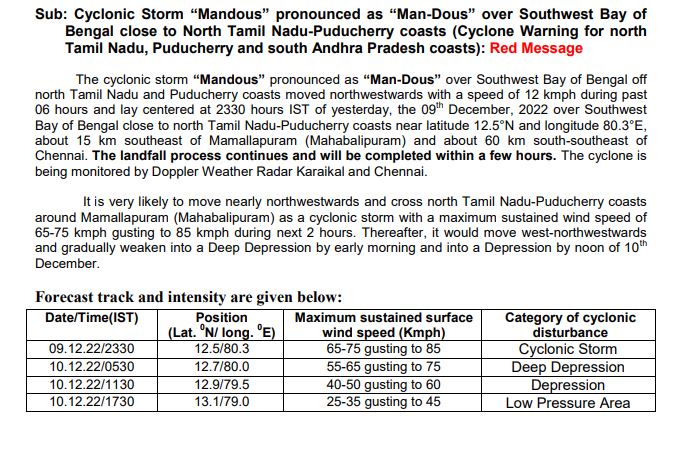
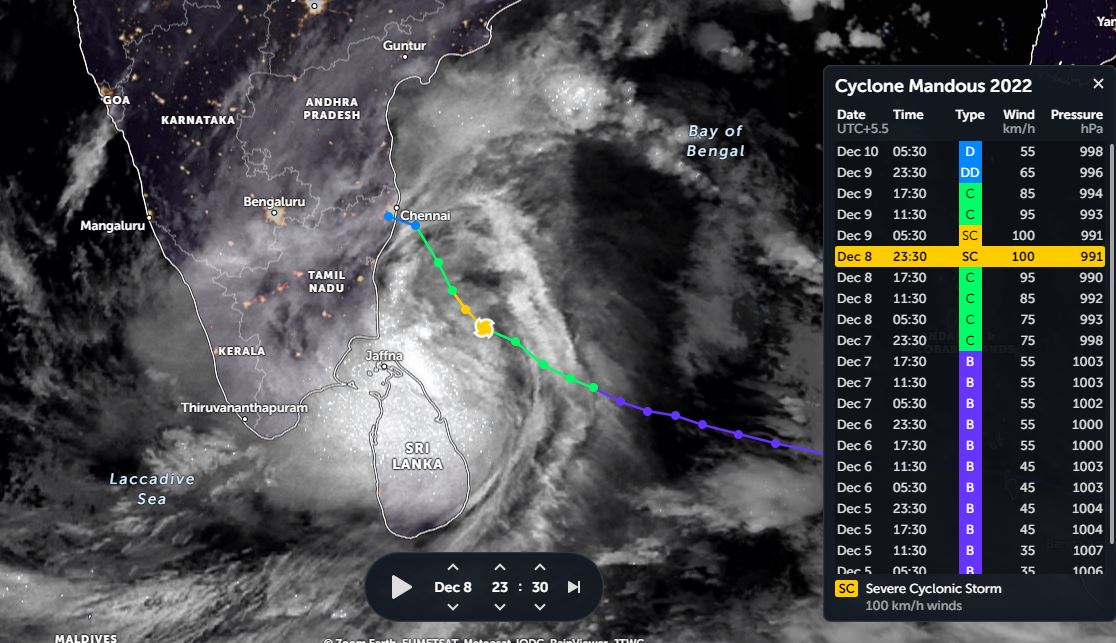
However, the data from Indian Meteorological Department shows that cyclone Mandous is one of the weakest cyclones Chennai has witnessed in recent years. The IMD bulletin issued on December 10, 2022, said “It is very likely to move nearly northwestwards and cross north Tamil Nadu-Puducherry coasts around Mamallapuram (Mahabalipuram) as a cyclonic storm with a maximum sustained wind speed of 65-75 kmph gusting to 85 kmph during next 2 hours. Thereafter, it would move west-northwestwards and gradually weaken into a Deep Depression by early morning and into a Depression by noon of 10th December.”

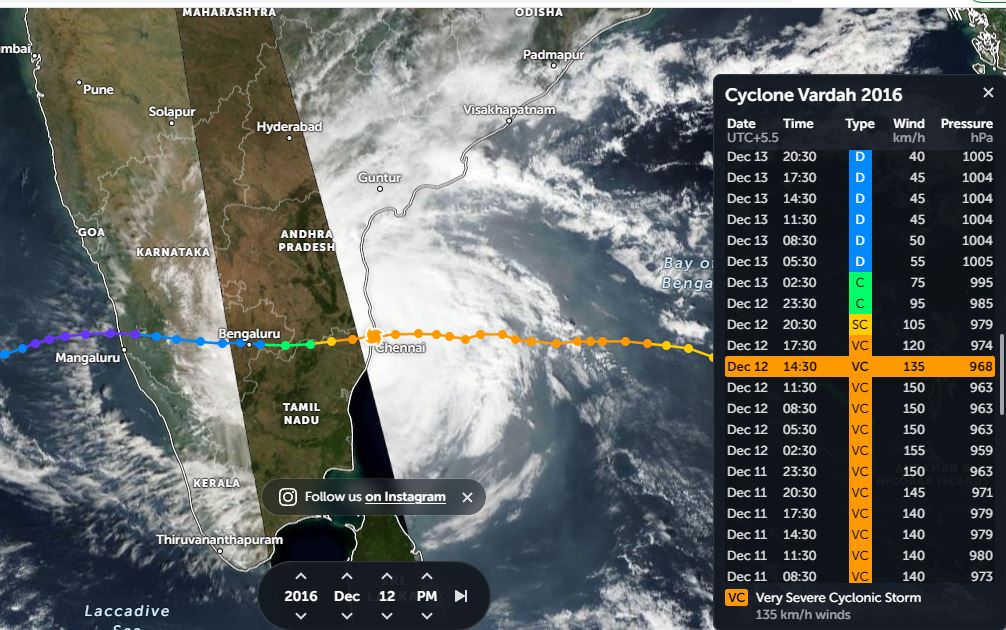
According to IMD data the sustained wind speeds of recent cyclones to cross the Tamil Nadu coast are Vardah (130 km/hr), Thane (140 km/hr) and Nilam (85 km/hr). The average wind speed during Mandous landfall was 65-70 km/hr.

According to the cyclone tracker image, cyclone Mandous had the highest windspeed of 100 kmph when it was about 300 kilometers away from Chennai, and it gradually decreased to 55 kmph as it approached Chennai.

The cyclone tracker image of Vardah (2016) shows that Vardah had the highest windspeed of 155 kmph when it was about 300 kilometers away from Chennai, and when it reached Chennai it had a windspeed of 135 kmph, causing widespread devastations.

As per the data, cyclone Mandous is the weakest cyclone to have crossed Chennai in recent years. However, the Dravidian stocks and Tamil media journalists have been on an overdrive to project as if the DMK government under MK Stalin had done a terrific job in containing the damages caused by cyclone when the damage itself was minimal compared to the other devastating cyclones.

Click here to subscribe to The Commune on Telegram and get the best stories of the day delivered to you personally.
Dravidian Model Enters Temple: Ritual Umbrella For MK Stalin’s Wife, Normal Umbrella For The Lord

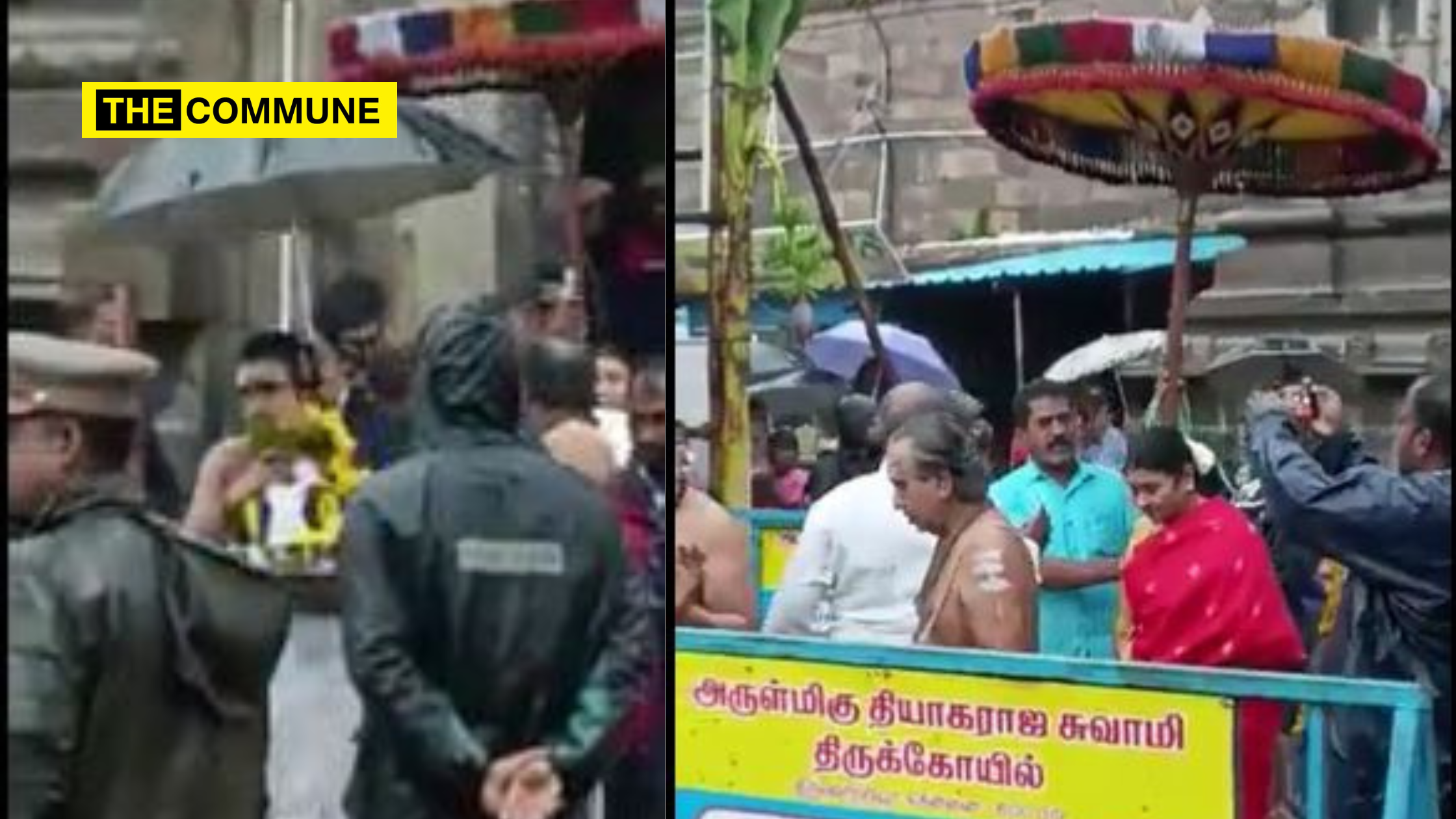
A video of Tamil Nadu Chief Minister MK Stalin’s wife taking cover from rain by using the temple deity’s umbrella has gone viral on social media.

On 9 December 2022, Chief Minister Stalin’s wife Durga visited the Vadivudai Amman Temple in Thiruvottiyur, Chennai, for having darshan. The temple administration honored her with special treatment.

As it was raining on that day, the temple officials covered Durga Stalin with the umbrella normally used for the procession of the temple deity. The temple’s deity Vadivudai Amman was, however, covered with a normal black colored umbrella.

This video of Durga Stalin using the temple deity’s umbrella has drawn flak from the devotees and general public, who criticized Durga Stalin for abusing power as CM’s wife and acting against the “Agamas” of the temple.

It should be noted that a sizable number of HR&CE officials and police officers were present at the temple as a result of her visit.

The Vadivudai Amman temple lies in northern Chennai in Tiruvottiyur. It is also called the Thyagaraja Temple and is dedicated to Shiva. The presiding deity is in the form of Swayambhu (self-manifested) Shiva Lingam called Sri Aadhi Pureeswarar. The Goddess is Vadivudai Amman, a very powerful Goddess in the form of Gnana Shakthi (wisdom and knowledge). The temple has been praised in Tevaram hymns by the Saiva Nayanars (7th-century Tamil poets) and has been categorized as a Paadal Petra Sthalam. There are 276 Shaivite temples or Punyasthalas selected as Paadal Petra Sthalams based on their antiquity, the rich culture, and the reverence attached to the temple.

All three Thevaram Moovars (Appar, Samandar, and Sundarar) have rendered Thevaram songs in the temple. This is one among the 44 Paadal Petra Sthalams, where all the Moovars have rendered their Pathigams. The temple is one of the 51 Shakti Peetams in the country. Great poets and scholars have eulogized the temple, affirming the splendor of India’s rich tradition and spirituality. The temple is managed by the Hindu Religious and Endowment Board of the Government of Tamil Nadu.

Click here to subscribe to The Commune on Telegram and get the best stories of the day delivered to you personally.
 

‘Halal Jihad’ Book Launch Event Cancelled In Hyderabad

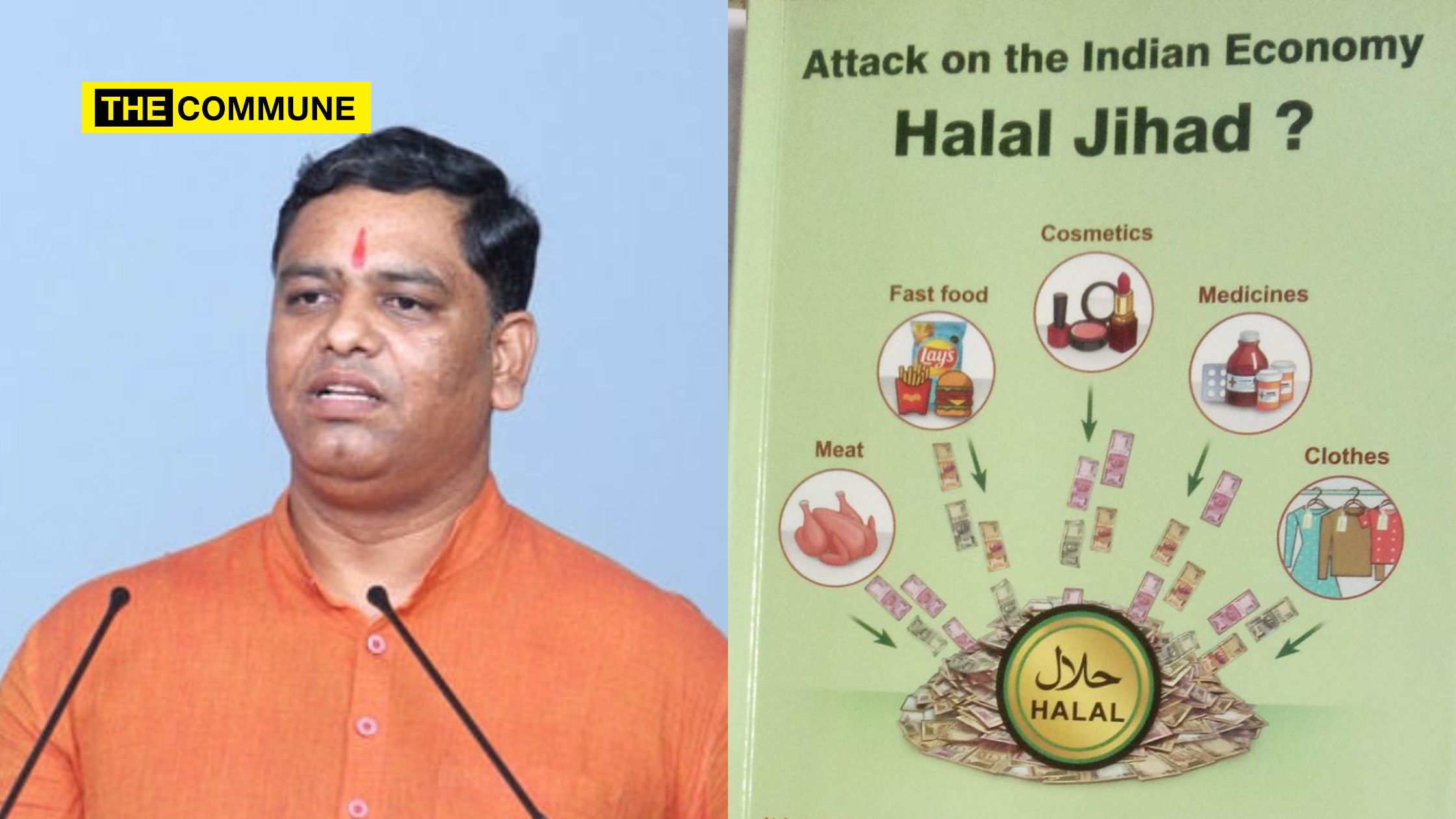
The Hyderabad city police forced the cancellation of book launch on “Halal Jihad” (Telugu Edition) by not granting permission for the said event scheduled on 11 December 2022 at Badruka college auditorium, Kachiguda.

The book is authored by Ramesh Shinde, the national spokesperson of Hindu Jan Jagruti Samiti who has been vocal advocate against Halal for over 15 years.

The Hyderabad police under TRS government headed by K Chandrasekhara Rao refused the permission of book launch on Halal Jihad on the grounds of being a “law and order” issue.

However, it is worth noting that the same KCR government allowed a comedy show by controversial ‘standup comedian’ Munawar Faruqui under police protection despite huge protests against the event by Hindu organisations. Munawar Faruqui is known for his notorious and rabid abuse of Hindu deities in his “comedy” shows.

The TRS government with great fanfare facilitated hosting of the first edition of International Halal Expo in a grand scale with over 15000 people attending the event.

This book by Ramesh Shinde sheds light on the serious societal and cultural damage caused by promoting Halal and also offers solutions to the problem that can be executed at the individual and community level. The book highlights that the money generated through Halal economy is used in funding terrorist organizations worldwide. In India, the Jamat Ulema e Hind Halal Trust is the primary organization which issues Halal certification, which reportedly funds and supports all terror accused by providing them free legal support including getting them the services of best senior advocates for their acquittal. It is presently supporting 700 accused Islamist terrorists belonging to LeT, Indian Mujahideen, Islamic State, etc.

Apart from the Telugu edition, the book is available in Marathi, Hindi, English and Kannada.

(With inputs from Bharat Voice)

Click here to subscribe to The Commune on Telegram and get the best stories of the day delivered to you personally.
The Indian Influence In China

Few weeks back Chinese ambassador to Bangladesh Li Jiming’s assertion “I am a big fan of China” reminded one of Hu Shih. Hu Shih once quoted, “India conquered and dominated China culturally for 20 centuries without ever having to send a single soldier across her border.” A similar statement was made by  defence minister Rajnath Singh in 2017 on the occasion of Paryatan Parv, a nationwide tourism festival, which was promptly opposed by the Chinese communist state and its mouthpiece the Global Times.

Who Was Hu Shish?

Hu Shih (17 December 1891 – 24 February 1962), also known as Hu Suh in early references, was a Chinese diplomat, essayist, literary scholar, philosopher, and politician. Hu is widely recognized today as a key contributor to Chinese liberalism and language reform in his advocacy for the use of written vernacular Chinese. He was influential in the May Fourth Movement, one of the leaders of China’s New Culture Movement, was a president of Peking University, and in 1939 was nominated for a Nobel Prize in literature. He had a wide range of interests such as literature, philosophy, history, textual criticism, and pedagogy. He was also an influential redology scholar and held the famous Jiaxu manuscript for many years until his death.

Now let us explore some of the facets & personalities pivotal in Indian-isation of China.

Ancient Chinese Education System

Ancient Chinese education served the needs of a simple agricultural society with the family as the basic social organization. Paper and the writing brush had not been invented, and the “bamboo books” then recorded to be in existence were of limited use at best. Oral instruction and teaching by example were the chief methods of education.

The moulding of character was a primary aim of education. Ethical teachings stressed the importance of human relations and the family as the foundation of society. Filial piety, especially emphasizing respect for the elderly, was considered to be the most important virtue. It was the responsibility of the government to provide instruction so that the talented would be able to enter government service and thus perpetuate the moral and ethical foundation of society.

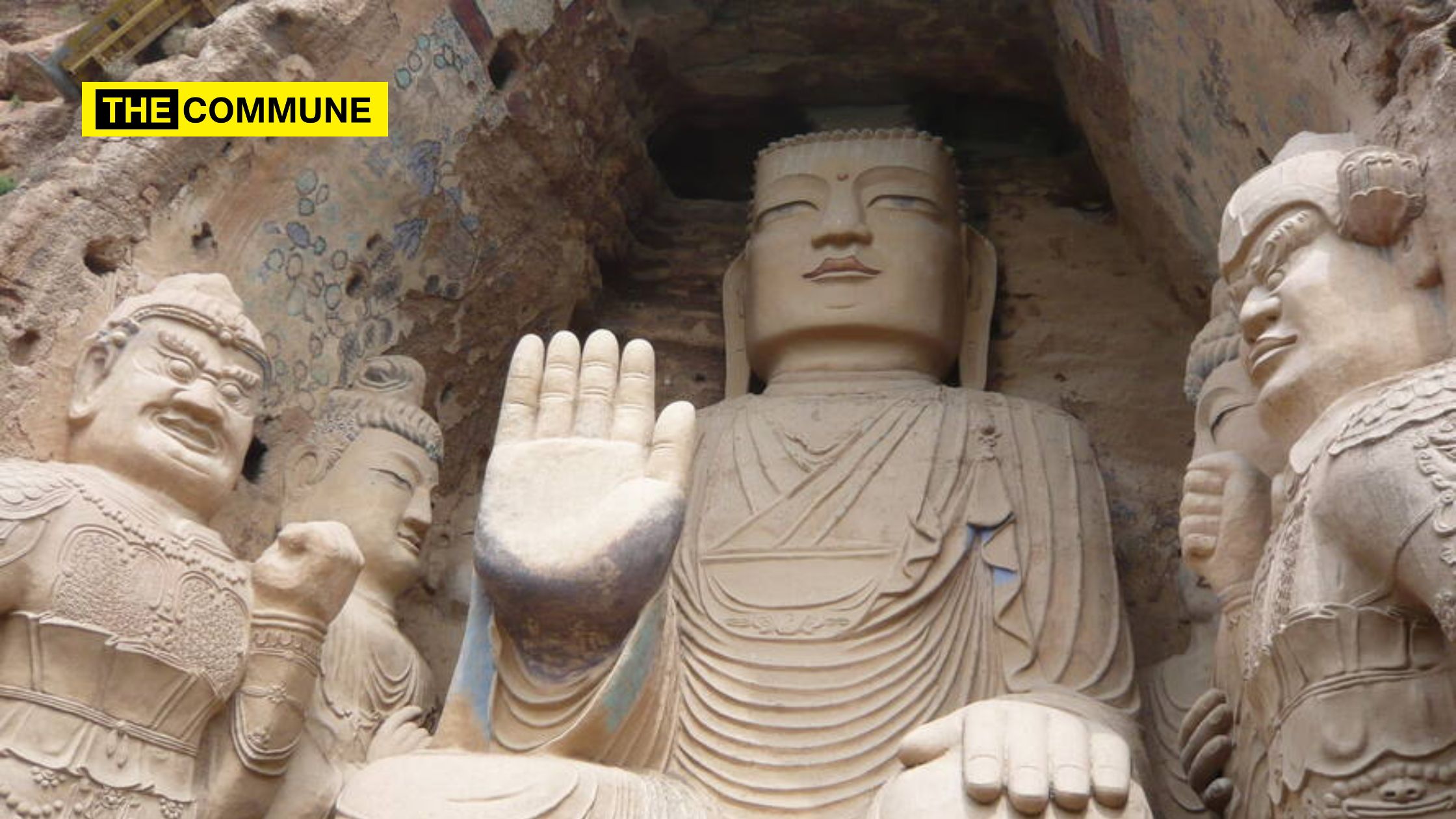
Buddhism

The Han dynasty was a period of territorial expansion and growth in trade and cultural relations. Buddhism was introduced during this time. Early information about Buddhism was probably brought into China by traders, envoys, and monks. By the 1st century CE an emperor became personally interested and sent a mission to India to seek more knowledge and bring back Buddhist literature. Thereafter Indian Buddhists as well as Chinese scholars translated Buddhist scriptures and other writings into Chinese.

Indian Buddhists not only preached a new faith but also brought in new cultural influences. Indian mathematics and astronomical ideas enriched Chinese knowledge in these fields. Chinese medicine also benefited. Architecture and art forms reflected Buddhist and Indian influence. Hindu chants became a part of Chinese music.

For a couple of centuries after its introduction, however, Buddhism showed no signs of popular appeal. Han scholarship was engrossed in the study of ancient classics and was dominated by Confucian scholars who had scant interest in Buddhist teachings that were unconcerned with the practical issues of moral and political life. Moreover, the Buddhist view of evil and the Buddhist espousal of celibacy and escape from earthly existence were alien to China’s traditions. Daoist scholars, finding in Buddhism much that seemed not too remote from their own spiritual message, were more inclined to study the new philosophy. Some of them aided in the translation of Buddhist texts, but they were not in the centre of the Han stage.

The fall of the Han dynasty was followed by a few hundred years of division, strife, and foreign invasions. China was not united again until the end of the 6th century. It was during this period that Buddhism gained a foothold in China. The literary efforts of Chinese monks produced Chinese Buddhist literature, and this marked the beginning of a process that transformed an alien importation into a Chinese religion and system of thought.

The White Horse Temple

The most famous account regarding the introduction of Buddhism to China comes from the Han Dynasty Emperor Ming who saw in a dream a flying God whose body had the brilliance of a sun (Maspero, 1981:402). When he asked what God is this, he was told that there was a man in India who had achieved the Tao or ‘the way’, as understood in Taosim. The Emperor sent envoys to India to make inquiries about this God and sutras were returned on the backs of white horses to the then capital of Luoyang. In short order, the first dedicated Buddhist site in China, known as the White Horse Temple, was constructed. Two Indian monks named Dharmaratna and Kasyapa Matanga returned with the entourage.

Bodhidharma

Bodhidharma was a semi-legendary Buddhist monk who lived during the 5th or 6th century CE. He is traditionally credited as the transmitter of Chan Buddhism to China, and regarded as its first Chinese patriarch. According to a 17th century apocryphal story found in a manual called Yijin Jing, he began the physical training of the monks of Shaolin Monastery that led to the creation of Shaolin kungfu. He is known as Dámó in China and as Daruma in Japan. His name means “dharma of awakening (bodhi)” in Sanskrit.

Bodhidharma was born a prince in the Pallava Kingdom in South India. He was the third son of the king Sugandha of Kanchipuram in late 5th century, but at an early age, he left his kingdom and princehood and became a monk. At the age of twenty-two he was fully enlightened, and that was when he was sent as a messenger to China. Bodhidharma was the second Indian Buddhist monk to travel to Southern China.

According to traditions, he was the founder of Zen, or Ch’an Buddhism.Gautama the Buddha taught Dhyan or meditation. Hundreds of years later, Bodhidharma transported Dhyan to China where it became Chan. This Chan went further down to Indonesia, Japan, and other far east Asian countries, where it became Zen.

Bodhidharma was both a pilgrim and a missionary, sent to China by the famous monk Prajnatara to spread Buddhism, as predicted by the Buddha himself according to Hsuan Hua (1999:7). Places in China associated with Bodhidharma have become major pilgrimage sites, including the cave on Bear’s Ear Mountain where he meditated for nine years.

While Bodhidharma is virtually unknown in India, apart from the controversial 2011 film, 7am Arivu, his legacy in China, Japan and Vietnam is very considerable. As mentioned, he is honoured for bringing ‘Chan’ (pronounced ‘Chen’) Buddhism to China, and ‘Zen’ thereafter – in succession to Japan. It is also claimed on the website of the US

Shaolin Temple and numerous other sources that Bodhidharma, the author of such memorable meditations as the ‘Bloodstream sermon’, also brought Kung Fu to China’s Shaolin monks , but again there are no substantiating records. The Shaolin headquarters that sits on Mt Song, one of China’s holy mountains – which was built to honour an earlier Indian monk – is a major pilgrimage destination for devotees of Bodhidharma, and for Zen Buddhists as a whole.

XuanZong

Xuanzang was born in central China in 602 CE and he is the most well-known of the monks who headed west to India, to the centre of the Buddhist world, in search of deeper understandings and better translations of the sutras (or ‘seeds’) – the ancient Buddhist texts or scriptures. He was a self-described pilgrim and was motivated by the fact that his people were in need of relief from their suffering. In his journey he would visit all the great Buddha pilgrimage sites in Indu (Yin-tu )or India, including what is now Afghanistan, Pakistan,

Nepal and Bhutan. He did not go to Ceylon (Sri Lanka) like some of his predecessors including the noted monk-traveller Faxian, but from the Indian coastline he claimed in his report Xiyou-Ji (Great Tang Records on the Western Regions) to have seen across the waters the glittering rays of the precious gem that sits atop the Temple of Buddha’s Tooth. Its appearance was described by him as being like that of a shining star in the midst of space.After a journey of 19 years, Xuanzang returned as a hero to China’s royal court in Xian bearing sutras, sacred statues of the Buddha, and over 100 Buddha relics. Several years later, the Great Wild Goose pagoda was commissioned by the Tang Emperor to house these sacred objects and it became a great centre of Buddhist learning, with pilgrims coming from all over East Asia to study.

Kumarajiva

Another Indian monk named Kumarajiva achieved acclaim throughout China as one of the four great translators of the Buddhist sutras. His father, also a monk, had come from Kashmir as a missionary with the goal of leading every human of China to Buddhism. Kumarajiva lived about 200 years before Bodhidharma.

Other Sacred Journeys

•Hiuen-Tsang, a Chinese traveller, visited India during the reign of Harsha. His object was to secure authentic Buddhist scriptures and visit places of Buddhist interest. Hiuen Tsang stayed for almost 15 years in India.

•Faxian, also referred to as Fa-Hien, Fa-hsien and Sehi, also was a Chinese Buddhist monk and translator who travelled by foot from China to India to acquire Buddhist texts. Fa-Hien/ Faxian’s visit to India occurred during the reign of Chandragupta II (Vikramaditya).

•Yijing, formerly Romanized as I-Ching or I-Tsing, born Zhang Wenming, was a Tang-era Chinese Buddhist monk famed as a traveller and translator. His account of his travels is an important source for the history of the Medieval kingdoms along the sea route between China and India, especially Srivijaya in Indonesia. I-Tsing left for India from Canton by sea in 671, arriving in India in 673. After visiting the sacred Buddhist sites in Magadha, he resided at the great Nalanda monastery for ten years (676-685), devoting himself to the study of the Vinya.

Sources:

1. Chinese Philosophy & Intellectual History ( Volume 2) – Hu Shih

2 .Ferguson, A (2012) Tracking Bodhidharma: A Journey to

the Heart of Chinese Culture.

3.Kieschnick J & Shahar M (2014) India in the Chinese

Imagination. Myth, Religion, and Thought. Philadelphia:

University of Philadelphia Press.

4.Grousset, R (1932) In the Footsteps of the Buddha.

(This article was originally published in Bharat Voice and has been republished here with permission.)

Click here to subscribe to The Commune on Telegram and get the best stories of the day delivered to you personally.
Isha Conducts Special Yoga Class For 5000 Jail Inmates

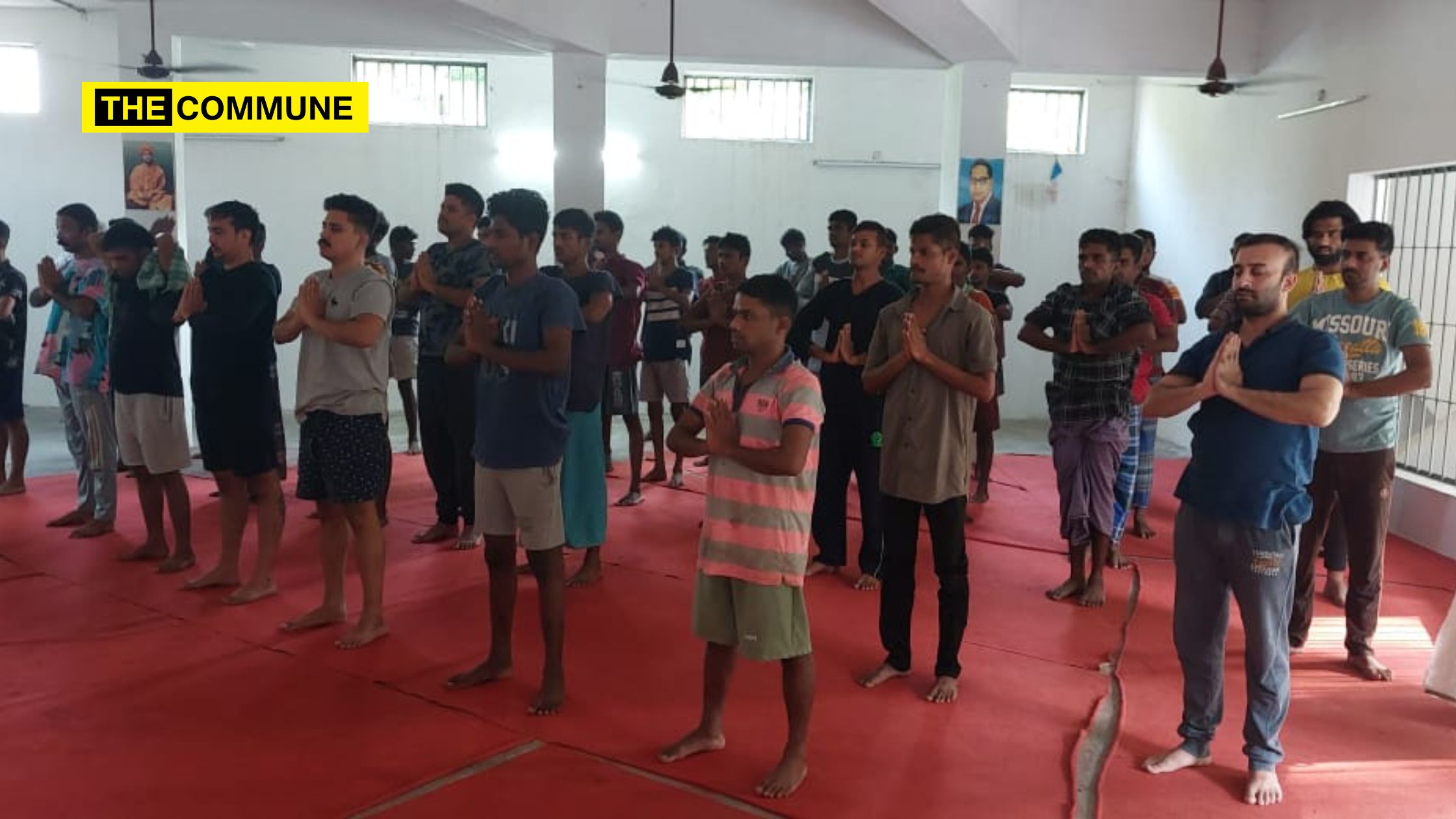
In order to improve the physical and mental well-being of prison inmates, special yoga classes were conducted by Isha for about 5,000 prison inmates across Tamil Nadu in the last 3 months. These classes were conducted in all Central, District jails, and sub-jails of Tamil Nadu including Chennai, Coimbatore, Madurai, Trichy, Vellore, and Cuddalore.

​​​​​​Yoga teachers trained by Sadhguru visited the prisons and taught Yoga practices like ‘Life Purpose’, ‘Surya Shakti’, and ‘Upa Yoga’. By doing these practices daily, the inmates can get rid of stress and improve their physical health.

The impact of these classes was apparent in the startling experiences of the inmates. Sharing one such instance, an Isha Yoga teacher who took the class in prisons said, “When conducting yoga classes in Cuddalore prison, some 19-20-year-old youths joined the class on the first day against their will. However, after the 3rd day of class, their experiences were the opposite. They felt had they attended such a yoga class earlier, they would not have ended up in jail. They were glad to get the opportunity.”  

“This class will help us not to engage in any criminal activities again after we go out,” confided one of the inmates to the teacher.

The eagerness to fully received what was offered even made one of the inmates desire not to come out on bail. “I had applied for bail and all of these days I would be longing to get out on bail. However, after the first day of the class, I prayed to God to not get the bail before the end of the class. I did not get the bail as requested and now I am happy that I completed the 3-day class.”

Isha Foundation has been conducting Prison Programs in various prisons across Tamil Nadu for about 30 years since 1992. These life-transforming programs have touched the very core of the prisoners and have helped them bloom into their natural state of love, freedom, and joy – free from anger and hatred. So far around 40,000 inmates have benefited from these programs.

(This is an official press release from Isha Foundation. The Commune was not involved in creating this content.)

Click here to subscribe to The Commune on Telegram and get the best stories of the day delivered to you personally.
Ariyalur Farmer Dies Days After Alleged Brutal Attack By Police

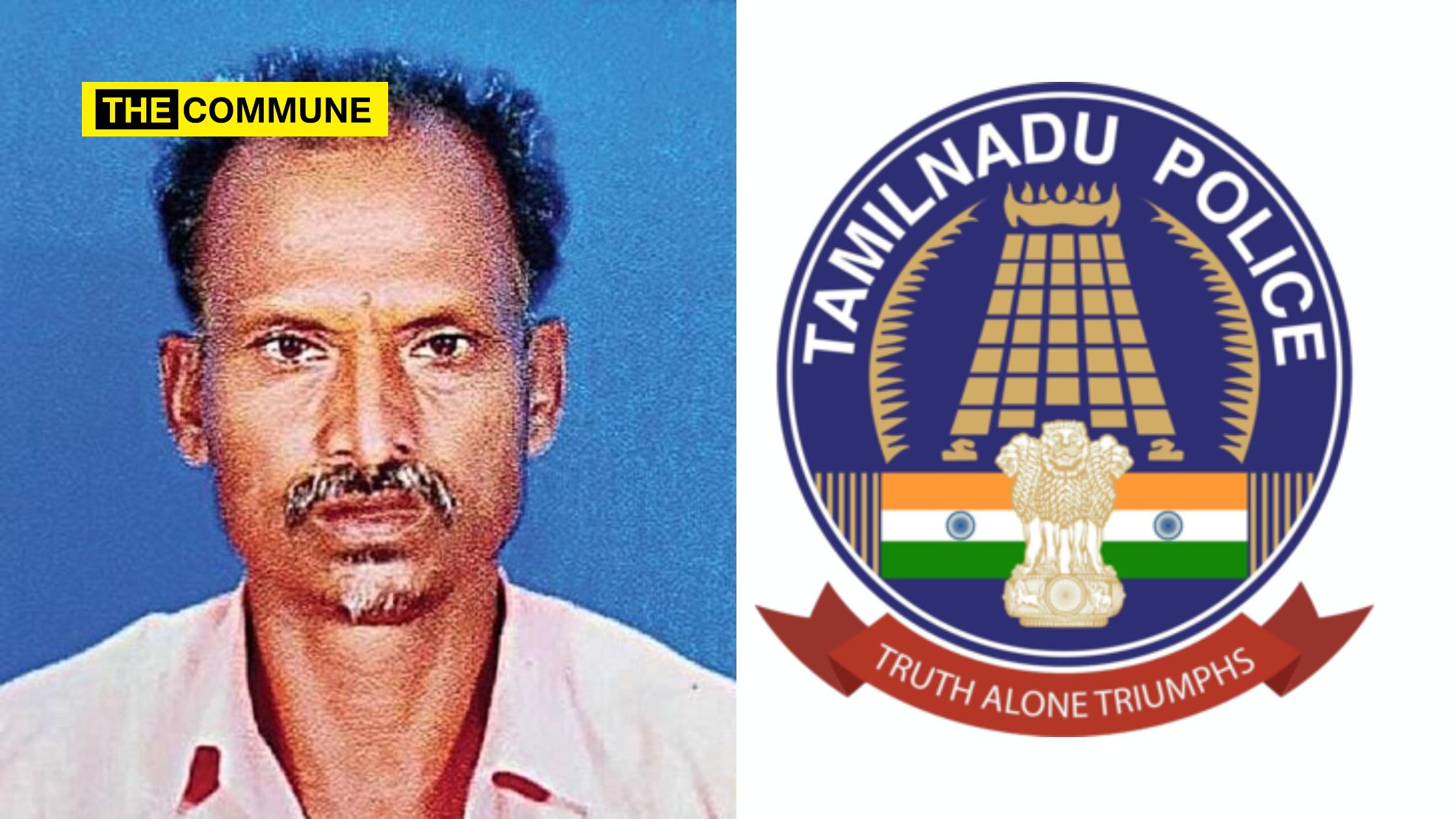
Sembulingam, a farmer from Kasankottai village in Ariyalur district who is also a cadre of the BJP Tamil Nadu has died days after he was brutally attacked by the Tamil Nadu police.

According to reports, on 25 November 2022, around 8 policemen stormed into the house of Sembulingam in connection with a case against his son-in-law Arun Kumar.

As Arun Kumar was not available, the police personnel abused and attacked Sembulingam, his daughter and wife.

Sembulingam and two other members of the family who were injured in the attack were admitted in a government hospital and later shifted to a private hospital in Trichy.

Sembulingam reportedly sustained serious internal injuries in the abdomen region allegedly because of the attack. Despite treatment, Sembulingam died on 8 December 2022.

M Karthikeyan, a relative of the deceased had filed a petition at the Madras High Court seeking directions to constitute a doctors’ team as per the willingness of the family members and further demaded that the probe into the death be transferred to some other agency that doesn’t come under the control of Tamil Nadu police.

In his petition, Karthikeyan said that Vikkiramangalam police station Inspector Veluchamy, Sub-Inspector Balakrishnan, Special Sub-Inspector Pazhanivel and five other cops trespassed into Sembulingam’s house and vandalised the properties.

“The police kicked Sembulingam and then the team of police attacked my aged paternal aunt Sudha and her son Manikandan. The cops used abusive and unprintable language and then they threatened that the police would kill the three,” he added.

Karthikeyan also claimed in his petition that when the trio were admitted to the government hospital, one SSI visited the hospital and obtained a fake statement from Sembulingam. He further made others agree with the statement and get their signatures, Karthikeyan has alleged.

“However, Sembulingam died in this attack on December 8. Therefore, we want to conduct the post-mortem to bring out the truth with the doctors of our choice. Since the case is against the state police, it should be transferred to other agencies like CBI for a fair probe,” the petitioner’s counsel K Balu argued.

On 10 December 2022, the Madras High Court in a special sitting under Justice G Chandrasekharan passed direction to Thanjavur, Tiruchy and Madurai medical colleges’ deans to constitute a team of doctors to conduct an autopsy.

The judge directed the deans of the medical colleges to each name a doctor of their choice for conducting the postmortem on Sunday before 12 pm.

The judge further asked the kin of Sembulingam to conduct the final rites peacefully.

With respect to the demand for probe by other agencies, the judge has asked the Tamil Nadu police to file a response within two weeks.

Meanwhile, BJP Tamil Nadu President K. Annamalai came down heavy on the Tamil Nadu police and the DMK government and has announced a protest seeking justice for the farmer’s death.

PMK President Dr. Anbumani Ramadoss has demanded the arrest of the 8 errant police personnel. The PMK has also sent a fact-finding committee to document the facts of the case.

It is to be noted that Sembulingam was neither arrested nor brought to the police station for enquiry. That being the case, the police have threatened to take action against anyone who attempt to ‘tarnish’ the reputation of police.

Click here to subscribe to The Commune on Telegram and get the best stories of the day delivered to you personally.
MS, A Voice That Continues To Reverberate

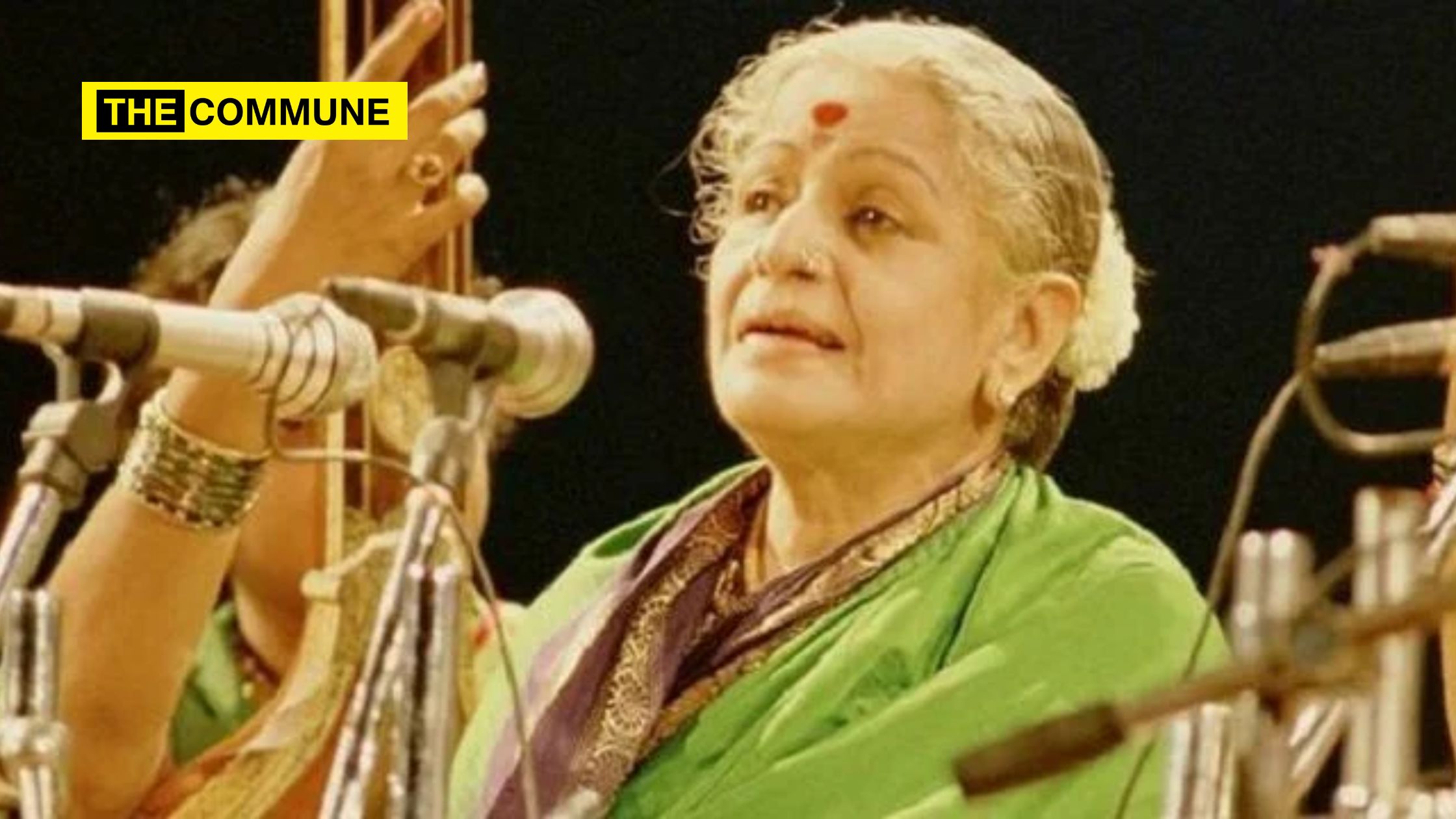
At the crack of dawn across lakhs and lakhs of Bharatiya households every day, a divine voice gently rouses Mahavishnu with her rendering of Suprabhatam. The sublime voice belonged to the immensely popular and much-loved M. S. Subbulakshmi.

Kunjamma, as she was fondly called by her family, was born on 16 September 1916 in Madurai to Shanmugavadivu Ammal and Subramanya Iyer. Born in a family belonging to the Devadasi tradition, her mother being a veena player and her maternal grandmother a violinist, music came very naturally for Kunjamma. Above this, interacted and involved in discussing music with such greats such as Karaikudi Sambasiva Iyer, Mazhavarayanendal Subbarama Bhagavatar and Ariyakudi Ramanuja Iyengar that contributed immensely to her profundity of musical knowledge. From a tender age she began learning Carnatic music from her mother. A prodigy, she was soon training under Semmangudi Sreenivasa Iyer who is known as the Pitamaha of Carnatic music. Later, she would train in Hindustani classical music under Pandit Narayanrao Vyas.

She gave her first performance at the age of 11 at Trichy Rockfort temple with well-established seniors such as Mysore Chowdiah on the violin and Dakshinamurthy Pillai on Mridangam as accompanists. Having moved to Chennai, she performed at Music Academy, which is still considered among the most prestigious places to perform, at the age of 13. This was a breakthrough performance, the bhajans that she sang were rendered in such high calibre that reviewers and critics called her a genius. By the time she turned 17 she was performing regularly with senior artists. Her popularity soared and soon was referred to as ‘MS’ by her adoring fans.

In 1936 she starred in her first film, Sevasadanam, which went on to become a critical as well as a commercial success. She later acted in a few movies including Sakuntalai, Savitri (in which she played the role of sage Narada), Meera (Tamil, 1945), Meerabai (Hindi, 1947) and 1000 Thalai Vaangi Apoorva Chintamani. Her role of Meera is iconic to say the least. Those who have watched her films or listened to the songs sung be Meera in the film, find it impossible to separate Meera and MS – such is her depth of performance and singing while bringing alive on screen the life of the Krishna bhakta who lived centuries before. She wound up her acting career afterwards to focus entirely on singing.

In 1940 she married T. Sadasivan becoming his second wife and mother to his two daughters – Radha and Vijaya – by his first wife who had passed away. She had earlier met Sadasivan – who had co-founded the popular Tamil journal ‘Kalki along with Krishnamurti – and was much in agreement with his nationalistic views. Daughter Radha, who matured into a lovely musician, would sing with MS in practically all the concerts.

MS represented our country as its cultural ambassador. In 1963, she performed at the Edinburgh International Festival and, after this, she was repeatedly invited to tour many parts of the US and Canada, Europe and Asia to perform. She performed at Carnegie Hall, New Yord, Royal Albert Hall, London and at Festival of India in Moscow apart from the UN General Assembly.

This writer senses that MS is perhaps more associated with bhakti than she is for technicality of Carnatic rendering. Her singing had something beyond technicality, something that captured the soul of the words that she sang rather than merely their sounds, it was this ethereal something that drew everyone spontaneously to her singing, this something that still makes people search for her rendering of bhajans despite there being several others who might have also sung them! It was this same something that was in play when she sang ‘Maitreem Bhajata’ written by Kanchi Mahaperiyavar Jagadguru Sri Chandrasekhara Saraswati at the UN in 1966 on the occasion of UN Day. The Sanskrit song was a benediction that called for Universal Wellbeing which underlies the ethos of Sanatana Dharma and received a standing ovation for her soul-lifting rendition. Earlier, when U-Thant invited MS to perform, she and her husband accepted and immediately went to seek the blessings of Mahaperiyavar at Kanchi, whose ardent devotees they were. Mahaperiyava asked MS to sing Maitreem Bhajata as an anthem for universal friendship.

MS was a deeply pious person and highly dedicated to study of music. She would not sing any song unless she had learnt the song thoroughly, including the meaning of the song. She spent months to learn the accurate pronunciation to be used from Sanskrit scholars before she recorded the Suprabhatam which has since become a common morning ritual in crores of Hindu households all over the globe. A few of the popular songs that she sang such as Bhaja Govindam, Kurai Ondrum Illai, Hanuman Chalisa, Vishnu Sahasranamam and Vaishnava Jana To and immensely popular to this day! A less-known fact is that she sang an English hymn, ‘May the Lord forgive’ written by Rajagopalachari and set to music by Manuel Handel at Russia; this song is set to western music! She considered herself a learner all her life. Daughter Radha was her only student.

MS was also extremely charitable and quietly gave away big parts of her performance earnings to serve several causes. She raised money to build the Tamil Isai Sangam to promote ancient Tamil as a musical language which had been side-lined by Telugu. Music Academy which held on to puritan ideas was against MS and threatened to boycott her but, in a few years, MS was raising funds for Music Academy to help build their auditorium! It was while inaugurating this auditorium that Jawaharlal Nehru said, “Who am I? A mere Prime Minister in front of this Queen of song!” Lata Mangeswar would call her ‘tapaswini’ and Ustad Bade Ghulam Ali called her ‘Suswaralakshmi’.

MS continued to sing for charitable causes despite the Sadasivams’ dwindling savings. The money earned from the recordings of Venkateswara Suprabhatam, Bhaja Govindam, Vishnu Sahasranamam and many other songs went for charity. She also sang to raise money for Memorial Funds in honour of Kasturba Gandhi. She would perform to packed auditoriums and open amphitheatres where tickets were sold for very small amounts – so that nobody was denied the joy of listening to her – to raise the amount for public causes of which Education and Healthcare were her favourite. The list of her charity concerts is very long, Indira Menon, the author of Women In Karnatak Music lists at least 200 at the end of her book!

In the year 1997, Sadasivam passed away and MS did not give public performances after this. MS died on 11 December 2004 at the age of 88.

MS received many prestigious awards. In 1968, the Music Academy that had once threatened to boycott her gave here the Sangeeta Kalanidhi Award, an honour that was hitherto reserved exclusively for males and yet, she was unanimously chosen to become the first woman to receive this award.

In 1974, she received the Ramon Magsasay Award for Charity, the first Indian musician to get it.

The Government of India honoured her with the Padma Bhushan in 1954, the Padma Vibhushan in 1975 and with Bharat Ratna in 1998. She was the first musician to receive the Bharat Ratna.

In 1956, she received the Sangeet Natak Akademi Award, the highest recognition the academy gives for people in the field of performing arts. She received the Sangeeta Kalasikhamani instituted by the Indian Fine Arts Society, Chennai in 1975. The govt of Madhya Pradesh honoured her with the Kalidas Samman award in 1988.

She was honoured as the asthana vidwan (artist who is attached to the temple) of Tirumala Tirupati Devasthanams. Tirumala Urban Development Authority has installed a bronze statue of M. S. Subbulakshmi at the Pornakumbha circle at the temple town which was unveiled on 28 May 2006 by the CM Y. S. Rajashekhara Reddy.

A commemorative stamp was issued by the Government of India in December 2005. On her birth centenary, the UN issued a stamp in her honour.

In addition to her divine music, MS remains an idol of tradition carried in the most beauteous manner, grace, humility and utmost surrender. She was a gem of a queen indeed!

Click here to subscribe to The Commune on Telegram and get the best stories of the day delivered to you personally.