Home Blog Page 1009

Complaint Filed Against Foreign-Funded Islamic NGO Rahbar Foundation For Alleged FCRA Violations

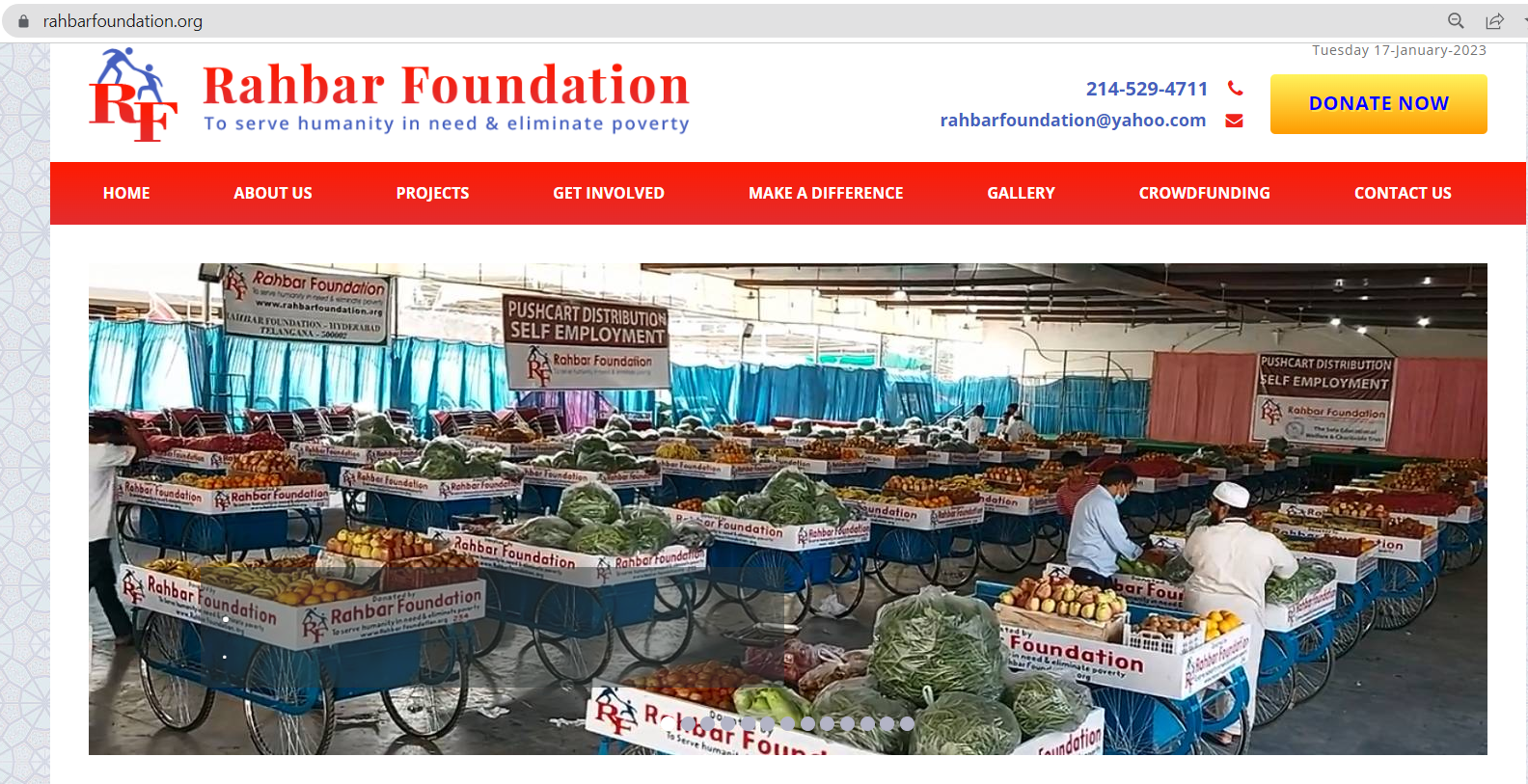
A frequent sight on the roads of Hyderabad is push cart vendors going about their business with the banner ‘Donated by Rahbar Foundation’ mentioning the foundation’s  website address. As per the foundation’s website (www.rahbarfoundation.org), it is located in the USA at the following address –  2436 KENT DR, Irving, Texas, 75062. The foundation is USA 501 (C)(3) approved non-profit charitable organization with Tax-exempt ID: 47-3151781.

Website of Rahbar Foundation; Image Credits: Nijam Today

As per the profile of the organisation available in Guidestar USA website (a leading NGO information repository), the objective of Rahbar Foundation reads as follows:

The Rahbar Foundation is USA based 501 (C) (3) approved non-profit charitable organization & established to serve humanity regardless of race, gender, ethnicity, class, location, religion, color, cultural diversity and social background, with a special focus on the majority of the population living below the poverty line. We are dedicated to providing charitable assistance in the field of education, healthcare, hunger, emergency relief and other social welfare services to alleviate the poverty of underprivileged people around the globe with major focus on India. Every dollar contributed by donors is used as efficiently as possible to maximize the impact on the beneficiary.

While the organisation claims to serve humanity irrespective of religion, it is observed that the organisation’s board is made up entirely of Muslims. The chief functionaries of the organization, as mentioned in its Form-990 submitted US Internal Revenue System (IRS), are Azhar Pasha Khaja, Ahmed Siddiqui and Nasim A Sheik. Per the website of the Rahbar Foundation, the charity programmes being implemented are ‘Sharia-compliant’ programmes, and almost all the beneficiaries are from the Muslim community only. In addition to the following programmes, the foundation, through its partner NGOs in India, also runs ‘Self-Employment’ projects, and training programmes and provides ‘Micro-Finance for Business’.

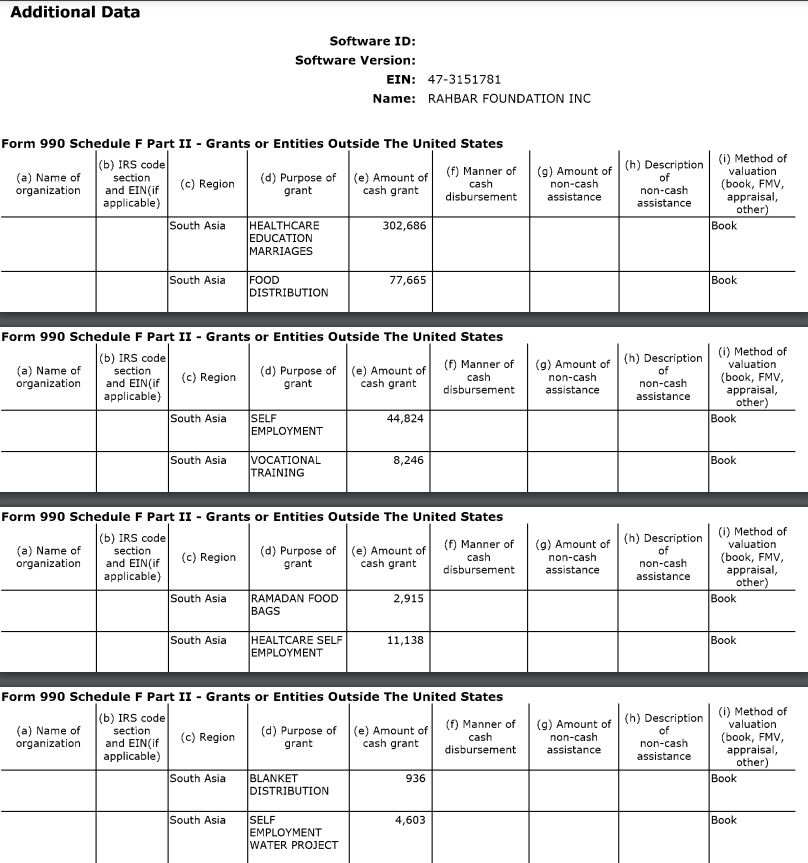
The annual financial reports also mention that Rahbar Foundation has been donating to individuals in India through a network of local organisations in various parts of India. The following is the list of various programmes being implemented.

It is important to note that Zakat, in particular, can be collected from Muslims only and utilised only for the welfare of Muslims. Thus there is a clear divergence between objectives as recorded with USA tax authorities for claiming charity status & tax exemption and programmes delivered on the ground.

The Financials Of Rahbar Foundation

The following is the snapshot of the organisation’s financial data for the year 2019 as per the CauseIQ website:

Image Credits: Nijam Today

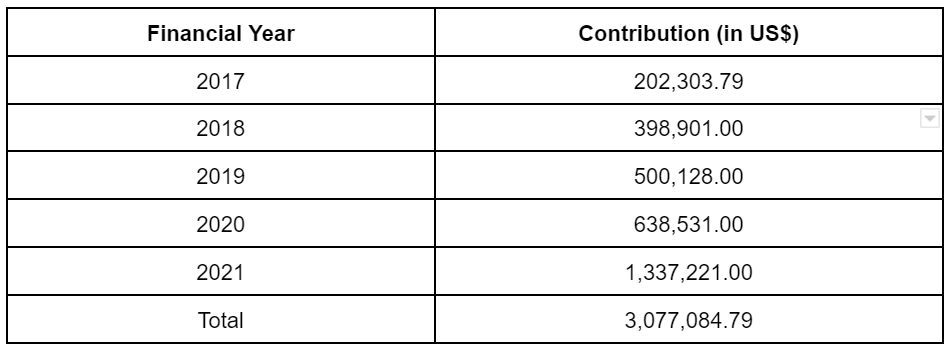
As per the Rahbar Foundation’s 2017 to 2021 Annual Financial Statements made available on its official website for public view, it has transferred more than US $ 3 Million to India in the name of financial aid.

Data Credits: Nijam Today

The Irregularities

Funds are transferred by the foundation from the USA to NGOs set up by Muslims in India and functioning for the welfare of Muslims in various parts of India. While the foundation’s website mentions India as its area of operation, the tax returns filed with US tax authorities camouflage the actual name of the country by mentioning ‘SOUTH ASIA’ as the area where funds have been utilised.


Rahbar Foundation has established its Indian unit in Hyderabad with a vast network spread across the country by partnering with local NGOs. Further study of the Indian entities receiving aid from the Foundation revealed that most of the recipient NGOs in India do not have FCRA permission to receive funds from abroad. This is a severe violation of the Foreign Contribution Regulation Act 2010.

Apart from direct financial contributions to Indian entities and individuals, Rahbar Foundation (US), as per its website, is also partnered with several Global Corporate companies, including Amazon (under the ‘Amazon Smile’ programme), for running a welfare activity under its ‘Corporate Matching Gift & Volunteer Grant Program’. The official website defines corporate matching gift programs as charitable giving programs created by corporations in which the company matches donations made by employees of partnering corporates. It also says that ‘one can double the impact of one’s donation by utilizing the matching gift programs that are in place at thousands of employers.

For the year 2019 and 2020, the Rahbar Foundation received funds from the following foundations and non-profits in the USA.

Grantmaker Grantmaker tax period Description Amount
American Online Giving Foundation 2020-03 General Support $76,220
United Way Worldwide 2019-12 General Charitable Operation $5,313

Annual Financial Statements provided by the Rahbar Foundation (US) on its website for 2017 to 2021, respectively, have listed some Indian entities across several states. Nijam Today’s investigation is based on NGO Darpan’s official website (run by the NITI Ayog), and the FCRA Database maintained by the Ministry of Home Affairs, Government of India.

It is important to note that on 4th October 2017, MHA issued a notice making it mandate for all the FCRA registered associations and those who are seeking registrations under the FCRA Act and prior permissions to accept foreign contributions to register with DARPAN Portal with all details such as names of chief functionaries, addresses etc.

After careful examination by cross-checking the Indian entities listed in the annual reports of the Rahbar Foundation with the information available on Darpan’s website www.ngodarpan.gov.in and FCRA Database open to the general public on https://fcraonline.nic.in/fc8_statewise.aspx, it is found that except a few, none of them is registered with the Ministry of Home Affairs under the provisions of the Foreign Contribution Regulation Act, 2010 which is mandatory for NGOs to receive foreign funds.

Here is the list of Indian entities mentioned in the annual reports of the Rahbar Foundation, which are said to have been funded by the said US-based Islamic charity NGO.

Name of the Indian Entity Address (as per NGO Darpan Website) Registered under FCRA Act? Official Website
Organization For Management And Development Center (OMDC) 638/2377, Rajarani, Suryavihar, Gadamahavir Road, Garrage Chhack, Old Town, Khordha District, Odisha -751002 No http://www.omdc.in/
Care for All Trust 167/5 J Ext Close, Firdos Mosque, Laxmi Nagar, Delhi No http://www.careforalltrust.org/
Rahbar Foundation (Hyderabad)  H No. 21-4-1139,1ST, FLOOR, Moosa Bowli, Hyderabad No Not Found
Hidaya Foundation Not Found No Not Found
MadrasaJame Ul Uloom Furqania Meston Ganj, Rampur – 244901, Uttar Pradesh No http://www.madrasafurqania.com/
Musthafa  Sabiya Educational Trust No: 97/1, L.K.A.Jeyaram Nagar, Ambathurai – 624 302, Dindigul District, Tamilnadu 75890443 http://msetindia.org/
Raviverma Rural & Urban Development Services (RUDS) Charitable Trust Santhi Nagar, NCC Colony, Kottur, Nellore, Andhra Pradesh – 524004 No Not Found
SOCH Sanstha 4/1095-A, Sir Syed Nagar,Civil Lines, Aligarh, U.P. INDIA 202002 No http://soch4u.com/
Jamiah Darul Ehsan (Wakf) Near Makki Masjid, Surat Jakat Naka, Bardoli, Gujarat 42100179 Not Found
Safa Baitul Maal Religious & Welfare Turst 16-9-408/P/57, Al Safa Masjid, Wahid Nagar, Old Malakpet, Hyderabad – 500036 No https://www.safabaitulmaal.org/
Tayyab Trust (US) Local Address with Exact Name is Not Found Not Found https://tayyabtrust.org/
Global Health Pvt Ltd, India Local Address with Exact Name is Not Found Not Found Not Found
Rahbar Education & Welfare Society Local Address with Exact Name is Not Found Not Found Not Found
Hidaya Educational Welfare Foundation Local Address with Exact Name is Not Found Not Found Not Found
Muslim Educational Social & Cultural Organization (MESCO) 22-1-1037/1, Darul Shifa, Hyderabad 500024 10230110 https://mescoeducation.com/
Darul Uloom Qasdus Sabeel Educational & Welfare Trust H.No: 2-12-14-14/1, SBI Main Branch Road, Mahbubnagar, Telangana 509001 10280062 www.sabeeltrust.org
Idara-E-Faize Rahman Madrasa 18-7-423/A/262, Aman Nagar B Colony, Talab Katta, Hyderabad, Telangana 500002 No Not Found
Alpasith Tamil Nadu Local Address with Exact Name is Not Found Not Found Not Found
Farah High School, Hyderabad Exact Location Not Found – Multiple Schools Existed with Same Name Not Found Not Found
Asian High School, Hyderabad Exact Location Not Found – Multiple Schools Existed with Same Name Not Found Not Found
Mohsin Bharmal Welfare Trust Exact Location Not Found – Multiple Schools Existed with Same Name Not Found Not Found

It is found that except for the Musthafa Sabiya Educational Trust, Darul Uloom Qasdus Sabeel Educational & Welfare Trust, and Muslim Educational Social & Cultural Organization (MESCO), none of the above Indian entities mentioned in the annual reports of the Rahabar Foundation has either listed in NGO Darpan’s site or the ‘List of FCRA Registered Associations’ section under www.fcraonline.nic.in. Most entities don’t even have websites, and the addresses of a few NGOs are not traceable through online searches. Details of prior approval under FCRA, if any of Rahabar Foundation registered in Hyderabad, are not found in the FCRA Database of the Ministry of Home Affairs. The bulk of Rahbar Foundation USA’s funds is remitted to its namesake entity in Hyderabad, India.

In India, NGOs such as trusts, societies, non-profit business entities (section 25/8 Companies) or individuals that intend to receive foreign contributions or donations from foreign sources are required to obtain registration under Section 6(1) of the Foreign Contribution Regulation Act, 2010. In its recent judgement, even the Supreme Court of India held that receiving foreign funds is not an absolute or fundamental right of the citizens of the Nation.

One of the objectives of the National Policy on the Voluntary Sector is to ‘encourage NGOs to adopt a transparent and accountable system of governance and management’. While it is not proper to make sweeping generalizations, it is necessary to note that the NGO sector in India is vulnerable to the risks of money laundering and terrorist financing.

Though Rahbar Foundation’s US operations seem noble and laudable on paper, there is a clear violation of the Foreign Contribution Regulation Act by recipients of its aid in India. Contrary to lofty ideals of serving humanity irrespective of race, religion etc., there is a clear-cut intention to serve only the Muslim community, and its aid projects are Sharia-compliant and exclude non-Muslims. Under these circumstances, can Rahbar Foundation claim charity status and tax exemption under US laws?

Can charity, however noble, be allowed in contravention of India’s laws? Helping the needy is a noble act, but if it is done by breaking the law, then something wrong can be suspected. One such case is the operations of Rahbar Foundation, a US-based charity organisation, funding a particular section of the society in India by violating FCRA and Money Laundering Acts invites suspicion and needs further investigation by the Government of India.

Based on the above facts, a complaint has been filed with MHA against Rahbar Foundation by NGO-watch Legal Rights Protection Forum (LRPF).

(This article was originally published in Nijam Today based on their investigation and has been republished here with permission.)

Click here to subscribe to The Commune on Telegram and get the best stories of the day delivered to you personally.

How ‘Liberal Hindu’ Shashi Tharoor Is Turning Communal In His Lust For Power

Recently, series of comments directed at Shashi Tharoor by Congress leaders in Kerala indicated what has been brewing for a while: a serious and well-planned campaign by the Thiruvananthapuram MP to emerge as the prime face of the Congress in the state, and the party’s growing dismay at being reduced to a spectator in this power play. Coming fresh off from his failed party national presidency Mr. Tharoor seems determined to make an impact in his home state of Kerala but one should examine at what cost he will attain his success in this endeavour. In this context, this article will look in to the bid by Tharoor to become face of Congress in Kerala and also why he is playing with communal and caste fire in his effort to attain the same?

Appeasing Radical Islamists

Shashi Tharoor has been busy meeting several religious leaders in Kerala recently and is now getting wider support from the Muslim community after his recent meetings. On the 14 January 2023, Shashi Tharoor tweeted about his meeting with leaders of the “liberal” Salafi organisation Nadvathul Mujahideen.

In another tweet, Shashi Tharoor spoke about meeting Sayyid Muhammed Jifri Muthukkoya Thangal, President of the Samastha Kerala Jem’iyyathul Ulema, a major body of Sunni scholars. 

Shashi Tharoor has, rather openly, voiced his wishes to become to Chief Minister of Kerala, ruffling feathers within the Congress ranks in the state. AICC General Secretary has taken strong opposition to Shashi Tharoor saying he would be willing to become the Kerala Chief  Minister. KC Venugopal said “Congress is the most democratic party. Series of meetings happen in the party every month. Leaders can raise any issues in meetings and have discussions. All leaders have the responsibility to ensure that open debates do not spoil the dreams of party workers to come back to power”. While Shashi Tharoor has maintained that he was only responding to queries by journalists and since the Assembly election is far away, there is no point of such a discussion at this point of time, it is clear that Tharoor is trying to consolidate his base in the state by reaching out to specifically the Muslim population of the state. After Tharoor’s meeting with the “sunni scholar”, Samastha president Jifri Muthukoya Thangal hailed Tharoor stating that he is the leader who is trying to achieve a cordial relationship with the Muslim community, something which has been ignored by other leaders in the state of Kerala. He said that Tharoor’s endeavours would strengthen Congress. While Tharoor is trying to win brownie points in Kerala with the Muslim community, what is far more concerning is what this “liberal” politician seems to have endorsed during this endeavour.

Meeting leaders of Kerala Nadvathul Mujahideen (KNM) at the Mujahid Centre, Tharoor told them that the renaissance movement in Kerala is an example for all communities. He hailed the renaissance efforts of the Mujahid movement and opined that effective steps should be taken to counter the efforts to divide people communally, according to a report by The New Indian Express.

Interestingly, what Shashi Tharoor seems to have hailed is the further Islamisation of the Muslims of Kerala. The Mujahid renaissance movement propagated against Sufism, calling it corrupt, polytheism etc, and called for the revival of true Islamic practices in the Muslim community in Kerala. The Mujahids consider themselves proponents of authentic Islamic reform. They believe in the principle of Tawhid, which refers to the belief that there is no God other than Allah and that Muhammad was his Prophet. While hailing this effort which is a campaign against every religion other than Islam, one wonders how Shashi Tharoor wanted these very Islamic scholars to counter “efforts to divide people communally”.

Interestingly, KNM Markazudawa leaders also raised concerns with Shashi Tharoor about the BJP government contemplating the implementation of Uniform Civil Code and said that all “secular” parties must stand with the “Muslims” (Oh, the irony!) and their organisations in oppositing this movie.

Dangerously, Shashi Tharoor seems to have voiced his opinion against UCC and said that the intention to implement UCC was merely an “election propaganda” by the government. Speaking at Wisdom Islamic Organisation (WIO), Tharoor further urged that “secular” votes (secular means all non-Hindu votes) must not be split across states.

Playing His Caste Card

Shashi Tharoor not only bought the communal weapon to the fight but also indulged in caste politics in order to secure his future in Kerala’s politics. Recently, Shashi Tharoor flaunted his caste identity at a community event. The so-called liberal leader flaunted that he is a proud Nair. Tharoor is a Nair, as are leaders who have been chafing at his rise, including AICC general secretary K C Venugopal, Kerala Leader of the Opposition V D Satheesan, and former Opposition leader Ramesh Chennithala. Tharoor was inaugurating the 146th Mannam Jayanti, which is held to celebrate the birth anniversary of the founder of the Nair Service Society (NSS), Mannath Padmanabhan, at the organisation’s headquarters in Changanassery in Kottayam. Referring to the founding days of the NSS, Tharoor said: “Things were not easy those days. Mannam used to say that it is difficult to organise Nairs. He observed that one Nair cannot acknowledge another Nair. He stated it 100 years back. But in politics, I often see that.” The NSS invitation to Tharoor as the chief guest is significant as the community outfit has been a powerful supporter of the Congress.

At the function, NSS general secretary G Sukumaran Nair praised Tharoor as “a global citizen” and “Kerala’s son”. “There is no one as eligible as Tharoor to inaugurate the Mannam Jayanti. This is in stark contrast to the position took by NSS back in 2009. In 2009, the NSS refused to accept Tharoor’s candidature from Thiruvananthapuram, which has a sizeable chunk of Nair votes. At the time the NSS assistant secretary, Sukumaran Nair had said: “Tharoor is a Nair, but he should not be seen as part of the NSS. He is a Delhi Nair.” But now we can see that Tharoor and NSS are both cosying up to each other for political benefits. 

It is a known fact that Kerala is a literate state leading in all metrics which makes a place champion in Human Development Index (HDI). But at the same time, it is disheartening to see caste and communal tendencies playing a major role in deciding who comes to power in Kerala and Tharoor, the flag bearer of liberalism forgot his identity in pursuit of power and is now heralding an era of communal and caste politics in Kerala for his own benefit.

Scratch a Congressman who claims to be a ‘liberal Hindu’, you will see the typical communal Congressman indulging in Muslim appeasement and caste politics.

So, all the liberal wokes and champagne socialists out there who are going gaga over his flamboyant hair and English, Shashi Tharoor is no different brand of politician!

Click here to subscribe to The Commune on Telegram and get the best stories of the day delivered to you personally.
All You Need To Know About Waqf

Maharashtra government will soon be geo-mapping Waqf properties to clarify discrepancies in property data.

A few headlines and articles ignited this writer’s interest in waqf. One was the statement that “India has the largest Waqf land in the world. As per estimation by Sachar Committee Report, 2006 there are about 4.9 lakhs registered Waqf properties comprising of about 6 lakh acres of land, the approximate market value of these properties is Rs. 1.20 lakh crore.” Maharashtra alone has 92,000 acres of land as Waqf properties.

Bar & Bench story said, “The Supreme Court recently held that in the absence of any proof of dedication or user, a dilapidated wall or a platform cannot be conferred a status of a religious place for the purpose of offering prayers or Namaaz (Waqf Board Rajasthan vs Jindal Saw Limited).”

Another recent Supreme Court order stated that “Land dedicated to religious and pious purpose is not immune from being vested in the state. Waqf Board is part of the State under Article 12. The Board had the power to declare land as Wakf property but any such exercise required a thorough enquiry and hearing from the other side. In the present case, no such enquiry was conducted as required under Section 40 of the Act and hence the notification was termed bad in law.”

(All through the essay Hindus, Buddhists, Jains and Sikhs are referred to as ‘Followers of Dharma’. Wherever section numbers are given it means unless stated, it is a reference to The Waqt Act, 1995).

At the outset must state that I am a Chartered Accountant, not a lawyer and subject expert. Errors if any are unintended and without malafide intent. The format of the FAQ is the question, answer and observations in blue. In case of any error please mail with references. The purpose of this FAQ is to provoke thought. One does not claim to know all.

Q1. What is the concept of Waqf?

A1.Section 3(r) of The Waqf Act, 1995 defines ‘waqf’ as the permanent dedication by any person of any movable or immovable property for any purpose recognised by Muslim Law as pious, religious or charitable.” 3

This Indiatimes report explains, “In simple words, waqf is a property which is used for religious and charitable purposes. In Islamic law, a waqf property is permanently dedicated to Allah, and once a property is dedicated as waqf, it remains as waqf forever signifying that a waqf is perpetual, inalienable and irrevocable in nature.”

According to the Madhya Pradesh Waqf Board site, “Waqf is a Voluntary, permanent, irrevocable dedication of a portion of one’s wealth-in cash or kind- to Allah. Once a waqf, it never gets gifted, inherited, or sold. It belongs to Allah and the corpus of the waqf always remains intact. The fruits of the waqf may be utilised for any shari’ah-compliant purpose.”

According to an Indian Express report, “The waqf is similar to a trust established under the Indian Trusts Act, 1882, but trusts can be set up for a broader purpose than religious and charitable uses. 2 (See Q23/24 for more on this).

Comment: Is this concept of Waqf property being dedicated to The Almighty appropriate in a Constitution-driven state? Do state and Central governments work on the basis of the Constitution or compliance with shariah?

Q2. How is Waqf created?

A2. A waqf can be formed through a deed or instrument, or a property can be deemed waqf if it has been used for religious or charitable purposes for a long period of time.

A non-Muslim can also create a waqf but the individual must profess Islam and the objective of creating the waqf has to be Islamic.

Section 3 (s) states, “Waqf deed” means any deed or instrument by which a Waqf has been created and includes any valid subsequent deed or instrument by which any of the terms of the original dedication have been varied.”

According to Section 36, it is mandatory to register all waqf at the office of the board. The application for registration shall be made by the mutawalli. 3

Q3. Can a piece of land (public or private) be declared Waqf property just because it is used for praying purposes for say 3 years?

A3. No, a piece of land (public or private) used for praying purposes for say three years cannot be construed as Waqf property.

Q4. Who is a Waqif?

A4. Waqif is a person who creates a waqf for the beneficiary. Section 3 (a) of the 1995 Act states, “beneficiary means a person or object for whose benefit a (waqf) is created and includes religious, pious and charitable objects and any other objects of public utility sanctioned by the Muslim law.”

Q5 How are Waqf properties managed?

A5. Properties are managed by Waqf (the equivalent of a Trust) and State Waqf Boards.

According to section 13 (3), “The Board shall be a body corporate having perpetual succession and a common seal with power to acquire and hold property and to transfer any such property subject to such conditions and restrictions as may be prescribed and shall by the said name sue and be sued.”

If conditions prescribed under the Act are fulfilled the state shall have separate boards for Shia and Sunnis. For e.g. West Bengal board site say it is a body corporate.

Q6. Is the Waqf Board a Section 8 company under the Companies Act or a Trust?

A6. Do legal sources indicate it is neither a Section 8 company nor a trust? Was it then created by a special statute? Also, see Q37.

Comment/Question: What type of legal entity is the Waqf Board?

Q7. Who can be Members of the state-level Waqf Board?

A7. According to section 14, members of the Waqf Board must be Muslims be they an MP, MLA, Member of the Bar Council, Expert in Town Planning or Management, scholar in Islamic Theology and not below the rank of the joint secretary. Simply put, being a Muslim is a prerequisite. The State Boards shall have a Chief Executive Officer (only Muslim) appointed by the State government. A mutawalli will look after individual properties.

Comment/question: Does any Law allow only Hindu framework in the management of their religious institutions or heritage sites? If only Muslims are by law allowed to become CEOs of the State Waqf Boards then Hindu Temples are well within their rights to let only Hindus have shops on their temple premises.

Q8. Can Waqf Board accept donations and issue receipts under section 80 (G) of the Income-Tax Act 1961?

A8. Legal sources say Yes.

Comment: Experts believe that Waqf can issue receipts provided it is registered as a non-religious charity. If their activities are partly religious, it would be interesting to know the basis of the exemption. Also, see Q40.

Q9. Does the CEO of the State Waqf Boards have to be Muslim?

A9. Yes according to the Zakat India site. (Section 23 states the CEO has to be a Muslim). Members of the board also have to be Muslim. Of the 32 State Waqf Boards, 27 of the Chief Executive Officers are Muslims with 5 posts being vacant (accessed on 29.5.22 at 1.15 pm)

Question: Charitable trusts created by Hindus cannot state under a law that the Managing Trustee shall only be a Hindu.

Q10. What is the Central Waqf Council?

A10. State Waqf Boards are also responsible to the Central Waqf Council of which a Union Minister is ex-officio Chairman. The Central Waqf Council presently has 8 members, all Muslims. See here. Also see Q16 The Council’s expenses are paid for by the Waqf Board.

Comment/question: In case of a shortfall in contributions by the Waqf Board, it is not clear who funds the Council’s expenses.

Is there a similar Central Council for managing Hindu temples and heritage properties?

Must a Union Minister be the Chairperson of a religious body in a so-called secular (whatever that means) state?

Q11. When was the law on Waqf introduced?

A11.The Mussulman Wakf Act, of 1923 was introduced by the British.

Note that the British first introduced The Madras Religious and Charitable Endowments Act in 1925. It drew large protests from Muslims and Christians. Thus, it was redrafted to exclude them, made applicable to Hindus only and renamed the Madras Hindu Religious and Endowments Act 1927. In 1925, the Sikh Gurudwaras Act was passed that bringing gurdwaras under the control of an elected body of Sikhs. Independent India continued with these laws.

So the British had one set of laws for Hindus and another for the rest.

The Indiatimes report adds, “The Waqf Act, 1954 was the first of its kind. It underwent many amendments. Finally, The Waqf Act 1995 was enacted. This Act established the Central Waqf Council and State Waqf Boards.” The reformist Hindu Succession Act 1956 was passed for the Followers of Dharma.

Comment: Nehru and Ambedkar were at the forefront of introducing reforms for Hindus, why did they leave the Muslims out?

Q12. Does the Waqf Act 1995 apply all over India?

A12. The 1995 Act states it is not applicable to the state of Jammu and Kashmir and Durgah Khawaja Saheb, Ajmer to which the Durgah Khawaja Saheb Act, 1955 applies. (Section 2)

Post abrogation of Article 370 the Act is applicable to the Union Territory of Jammu and Kashmir. However, there is a request for certain changes.

Comment: It would be interesting to know why the Ajmer Durgah was not covered by the 1995 Act and how the provisions of the 1955 Act are different from the Act it is governed by.

Q13. What is the origin of Waqf Land?

A13. Author Praful Goradia wrote in Daily Pioneer, “The institution began with a place called Khaybar in Arabia. It was the genius for turning a conquered property into an inalienable ownership. Another commentator, Ahmedullah Khan has recalled several properties which were brought under Waqf much earlier. For example, the dargah of Moinuddin Chishti at Ajmer Sharief as well as Nagaur in Rajputana.” 1

The Survey Commissioner (who undertakes a preliminary survey of Auqaf) shall, while making any inquiry, have the same powers as are vested in a civil court. (Section 4 of 1995 Act).

Question: Does a surveyor of a Mutt, Temple, or Gurudwara have similar powers?

According to Section 8, “The total cost of making a survey including the cost of publication of the list or lists of auqaf under this Chapter shall be borne by the State Government.”

Question: Should tax payer’s money be used for what is purely private property?

Q14. Can land and heritage structures owned by Muslim Rulers before Independence become Waqf property?

A14. Legal sources say both can become waqf property!

Comment/question: This is a tool for concerned Indian Muslims to see themselves as inheritors of foreign invaders. Is such a facility given to Christians since the British were Christian?

Q15. 200 acres of land were given by King Achyuta Deva Raya, younger brother of Krishna Deva Raya to Shahul Hameed Auwliya for the Nagore Dargah. 

A15.Legal sources state, “As far as time is considered, for a land to be ascertained as waqf, it can be since the Islamic Law comes into the picture.” This matter needs to be examined further.

Questions: Is India governed by Islamic Law or the Constitution? Is it correct to include under Waqf today, property that was acquired when the Muslims ruled India?

Q16. What is the source of income of the Waqf Board and Central Waqf Council?

A16. Under Section 72 mutawallis are liable to pay to the State Waqf Board 7% of the net annual income derived from waqf properties of which the net annual income is not less than 5000 rupees.

Section 10 (1) of the 1995 act states that every state waqf board should pay from its waqf fund annually to the council 1 % of the aggregate of the net annual income of the waqf.

Q17. All the funds received by the council from the state waqf boards and all the funds received as donations, benefactions and grants will be deposited in the Central Waqf Fund (section 10 (3).  Is surplus of income over expenditure chargeable to income tax?

A17. Legal sources state that a surplus of income over expenditure of the Waqf Board or Central Waqf Council is liable to income tax.

Q18. How can Waqf Board income be used?

A18. The proceeds are typically used to finance educational institutions, graveyards, mosques and shelter homes.

Q19. Do educational institutions mean those providing secular or religious (madrassas) education?

A19. Legal sources say covers both.

Question: Are Hindu trusts permitted to fund religious education?

Q20. Who is a Mutawalli?

A20. “A ‘mutawalli’ is appointed by a waqif, or by a competent authority, to manage or administer a waqf.”

According to Section 71 of the 1995 Act, the mutawalli of every waqf, whose net annual income exceeds Rs 5,000/ shall out of such income pay the Waqf Board a sum not more than 7% of such annual income.

Q21. Who pays the salaries of Mutawalli and other Waqf Boards employees?

A21. According to section 77 (4) of the Act, the monies received by the Waqf Board and kept in the Waqf Fund shall be paid salaries and allowances of the officers and staff of the board.

Notwithstanding the above, whether Mutawallis; are paid by the state government or waqf board is not clear and may vary from state to state. For e.g. in Rajasthan, the Waqf board asked the state government for funds to pay employee salaries.

Comment: When paid by a state government note that the government does not collect even one rupee from any Mosque, Mazar, or Dargah, unlike the case of temples where collections go to the state government (esp. in Southern states) directly or indirectly.

Q22. Can a Waqf Board give up its claim to any disputed site?

A22. Since waqf cannot be alienated unilaterally, any unilateral claims by the chairperson of the waqf will have no legal value or bind the Muslim community. Alienating waqf property without prior approval of state Waqf boards is an offence and special tribunals established under the Waqf Act have jurisdiction to deal with such disputes.

Q23. Does the Charity Commissioner have jurisdiction over Muslim Trusts?

A23. According to the Maharashtra Waqf Board site, “Now Charity Commissioner has no jurisdiction to Register and decide any issue of Muslim Wakfs or Collect fund or taxes etc. after 1-1-1996. No Muslim Trust/Wakf should approach Charity Commissioner Office, nor they are supposed to pay any Taxes to them. All the issues of Wakfs will now be decided by Wakf Board.”

Comment: Is national integration promoted by having different systems for the management of Trusts worth pondering over?

Q24. Comparing Trust vs Waqf!

A24. According to this article in Corpbiz.io, some differences are-

Trusts: Religious intention is not obligatory for a trust. It must have a lawful object.

Waqf: Must be a religious motive behind generating a waqf. The purpose must be charitable, pious, or religious according to Muslim belief. Property is inalienable, irrevocable, and perpetual.

Q25. Review of Telangana Waqf Board website (accessed on 30.5.22 at 4.15 pm)

A25. “In the erstwhile Hyderabad state, all religious matters including Endowments and Waqf Institutions were being administered and controlled by the Department of Ecclesiastical Affairs known as Umoore-Mazhabi. Under the provisions of the Wakf Act 1995, the Waqf Board is a corporate body having perpetual succession.”

“Its objectives are Protection of Waqf Properties, Construction and repairs to Masjids & Waqf Institutions and Maintenance of Haj House.”

The site has sections for the issue of a Marriage and Divorce Certificate. According to a June 2022 report in Livelaw the Supreme Court opined, “Arya Samaj has no business giving marriage certificate. This is the work of authorities. Show the real certificate.”

Comment/Question: So is it the business of the Waqf Council to issue marriage certificates?

Total income as reported is Rs 6 crores. Of this 1% goes to the Central Waqf Council and 6% to the payment of salaries to staff and expenditures. E.g. of expenditure – facilities for devotees, ITI at Mahboobnagar, School at Nizamabad and in a number of mosques morning shift schools to enable Muslims to get acquainted with Islamic studies.

Question: Conversely, Hindu Temples are controlled by the government. Does the law allow Hindu temples to teach Vedic studies?

Q26. Review of Madhya Pradesh Waqf Board site (accessed on 30.5.22 at 4.49 pm)

A26.Total Income in 2019-20 Rs 4.14 crores (previous year Rs 2.73 crores). Income includes government grants of Rs 2.58 crores and Rs 1.08 crores (an increase of Rs 1.5 crores in 2019-20 is due to government grants).

The board owns hundreds of hectares of agricultural land across districts and invites proposals for the commercial development of waqf land.

Question: Can Hindu Temples in M.P. invite proposals for commercial development of land owned by them?

The West Bengal Waqf Board site shows objectives: registration/enrolment of waqf properties, distribution of scholarships to poor and worthy students, honorarium to Imams and Muazzins and development of Auqaf properties. It is a corporate body.

Question: Are the salaries of priests of Hindu temples paid by the state government esp. when the government receives no corresponding revenue from the temples?

The Uttar Pradesh Waqf Vikas Nigam was set up in 1987, “with the main objective of strengthening the economic condition of the Waqfs located in the state as well as working as a departmental construction agency.”

Comment: A reading of the above indicates that Equality before the Law is a myth.

Q27. Who decides if a property is Waqf property?

A27. According to Section 40 when the board has reason to believe that certain property is waqf property it may, after making such inquiry as it may deem fit declare it to be a waqf property. Its decision is final unless revoked or modified by the Waqf Tribunal.

Where the Board has any reason to believe that any property of any trust or society is waqf property (section 40 (3)), “and if after such inquiry the Board is satisfied that such property is waqf property, it may ask the trust or society either to register such property under this Act as waqf property or show cause why the such property should not be so registered. Provided that in all such cases, a notice of the action proposed to be taken under this subsection shall be given to the authority by whom the trust or society had been registered.” Thereafter, the Board may issue such orders as it may deem fit, which is final unless modified or revoked by the Tribunal.

Question: Should the Waqf Board be conferred with the jurisdiction to decide the question of title of the property possessed by Followers of Dharma?

Q28. Does the Waqf Board have to give notice to the general public and conduct an open hearing to enable the affected persons or the persons having interest or title over the property to present their case?

A28. Legal sources state apparently NO. Appears rather unusual.

Comment: If no, then such an approach could be construed as against the principles of natural justice.

Q29. Implementation of decisions of Waqf Boards?

A29.According to Section 28 of the 1995 Act, “Subject to the provisions of this Act and the rules made thereunder, the District Magistrate or in his absence an Additional District Magistrate or Sub-Divisional Magistrate of a District in the State shall be responsible for the implementation of the decisions of the Board which may be conveyed through the Chief Executive Officer and the Board may, wherever considers necessary, seek directions from the Tribunal for the implementation of its decisions.”

Question: Does this imply that the District Magistrate has to implement the decisions of the Waqf Board, without asking any questions? This too seems rather usual and contrary to basic tenets of law, at least in a democratic nation.

Are Followers of Dharma allowed this privilege?

Q30. Do Civil Courts have jurisdiction over the Waqf Board?

A30.The Madras High Court came to the conclusion that the civil court has no jurisdiction as per Section 85 of The Waqf Act, 1995 and all the issues related to waqf and waqf properties ought to be presented before the waqf Tribunals. Read Controversies associated with the 1995 Act.

Comment: This seems rather strange. One can argue that the law recognises an exclusive and parallel judicial system, which is perhaps contrary to the Constitution?Q31. Where can one appeal against the decision of the Waqf Tribunal?

A31. Anyone who is unhappy with the decision of the Waqf Board can appeal to the Waqf Tribunal relating to waqf or waqf property (Section 83).

Section 83 (5) states that “The Tribunal shall be deemed to be a civil court and shall have the same powers as may be exercised by a civil court.” Section 83 (7) states, “The decision of the Tribunal shall be final and binding and it shall have the force of a decree made by a civil court.”

Question: Is there a similar Tribunal structure for Followers of Dharma?

Section 83 (9) states, “No appeal shall lie against any decision or order whether interim or otherwise, given or made by the Tribunal.” However, a High Court may under certain conditions review the Tribunal’s decision.

Q32. According to the Waqf Act 1995, does income received from Waqf properties to be used for the benefit of Muslims only or benefit of all Indians?

A32.Legal sources state both (even foreigners).

Question: Should Indian Charities spend only for benefit of Indian Citizens, at best add Persons of Indian Origin?

Q33. Applicability of Limitation Act?

A33. Section 107 provides that the 1963 Limitation Act shall not apply to suit for possession of immovable property comprised in Waqf or possession of an interest in such property.

Simply put, this section gives unlimited power to the Waqf Board to recover any property in the name of Waqf after any number of years. However, this Act includes of recovery of property belonging to Hindus Jains Buddhists and Sikhs. 4

Comment/Question: Do Mutts and Churches run by non-Muslims in India have such a concession?

What section 107 does is that Waqf Boards have been given free hand to recover any property even after 50 years but Hindus cannot recover their properties after the lapse of the limitation period.

Q34. Before 2013, in S. 8, there was a provision that the cost of making survey publication of the list of Waqf shall be borne by all the mutawalli of the Waqf.

A34. But now Section 10 of the 2013 amendment reads: “The total cost of making a survey including the cost of publication of the list or lists of AUQAF under this Chapter shall be borne by the State Government.”

Question: Why should the cost of the survey and publication of private property be funded by taxpayers’ money?

Q35. What is National Waqf Development Corporation Limited (NAWADCO)?

A35. To fill the gap development deficit NAWADCO was established with an authorized capital of Rs 500 crore and paid up share capital of Rs.100 crore, on 31st December 2013 with a specific mandate to develop invaluable Waqf properties across India and to enhance the income of State Waqf Boards/ Waqf institutions for socio-economic empowerment of the minorities.

NAWADCO’s Board of Directors (accessed on 29.5.22 at 1.14 pm) consists of 3 IAS Officers, 1 IRS officer and two Independent Directors, 1 of whom is a CA and another a Muslim.

Its objectives are “To act as a specialized financial and developmental institution for the development of Waqf properties, To provide consultancy i.e. managerial, financial and engineering to the Waqf Boards/ Waqf Institutions and Mutawalli, To arrange financial assistance based on Islamic Shariah Principle, Guiding Waqf Boards/ Waqf Institutions and Mutawalli for the management and utilization of surplus income based on Shariah Principles.”

According to the NAWACO site, “Agreement has been executed by and between NAWADCO & Haryana Waqf Board to develop a land parcel at Panipat.”

Questions: Must a secular government arrange financial assistance based on Shariah principles? Does the government make such exceptions for non-Muslim communities?

Q36. Are Hindus denied the Right to Equality because of Waqf Act?

A36. The special status given to Waqf properties violates Articles 14 and 15 of the Constitution. Article 14 guarantees equality before the law and equal protection of the law whilst Article 15 prohibits discrimination on grounds of religion, race, caste, sex or place of birth.

Trust and religious endowments of all communities are governed by the “Religious Endowment Act 1863, Indian Trustees Act 1866, Indian Trust Act 1882, Charitable Endowment Act 1890, Official Trustees Act 1913 and Charitable and Religious Act 1920.” 4

Question: Should there be a separate law for Waqf properties?

Q37. What is a Section 8 Company under the Companies Act, 2013?

A37. The Telangana and West Bengal Waqf Board sites say it is a corporate body. Thus, it can be a Section 8 company or a company created by a statute.

According to an Institute of Company Secretaries of India, booklet objects of a section 8 company must include, “promotion of commerce, art, science, sports, education, research, social welfare, religion, charity, protection of environment or any such other object.” Its profits have to be used for these objects and it cannot pay dividends.” For income-tax read on.

Comment: Need clarity on what is the legal status of a Waqf Board.

Q38. Do the activities of the Waqf Board fall within section 2 (15) of the Income-tax Act 1961, which defines ‘charitable purpose’?

A38. Legal sources say Yes provided their work is covered under 2(15).

Q39. What is the Charitable Purpose under the Income Tax Act 1961?

A39. Under Section 2(15), “Charitable Purpose includes relief of the poor, education, medical relief, preservation of the environment (including watersheds, forests and wildlife) and preservation of monuments or places or objects of artistic or historic interest, and the advancement of any other object of general public utility.”

Q40. Can the Waqf Board issue receipts, for donations received under section 80G of the Income-Tax Act?

A40. Legal sources say Yes.

Comment: However, it needs to be examined if Waqf/Board are registered as a religious charity and if its charitable purpose is covered by section 2(15) stated above.

However, the word religious purpose is not defined in the Act so not clear if the work is considered religious or charitable.

In comparison, any trust that engages in religious preaching, or works for a particular caste or creed, is not eligible for 80G certification. According to a research paper prepared by CA Sunil Talati, “Normally the religious trusts are not allowed to be approved under section 80G. However, Section 80G (5B) allows for a charitable organisation to have a religious activity not exceeding 5% of the total income in that previous year.”

Comment: So, the basis on which Waqf Boards issue 80G certificates needs to be ascertained.

Q41. Do section 8 companies have to comply with Section 11 of the Income-tax Act 1961 i.e. income from property held for charitable or religious purposes?

A41. According to Section 11, income received from property under a trust or voluntary contributions with a specific direction that they shall form part of the corpus of the trust shall not be included in the total income provided the trust spends, for charitable or religious purposes, 85% of the amounts so received in the year of receipt. If such 85% is not spent, it can be accumulated or set apart, provided certain conditions are fulfilled, which shall in no case exceed five years.

Question: Does such a provision apply to Waqf income?

Closing observations:

1Clearly, there is no equality before the law on Trust vs. Waqf matter!

2Should the law provide circumstances under which waqf property can be alienated?

3In a Constitution-driven state can dedication of any property, waqf or otherwise i.e. part of India, be perpetual, inalienable and irrevocable in nature?

4. Should India have a “Uniform Law for Trust and Trustees, Charities and Charitable Institutions, and Religious Endowments and Institutions?”

References:

  1. A Historical perspective on Waqfs in India
  2. How is a Waqf created and what laws govern such properties
  3. Understanding Essential Provisions of the Waqf Act 1995
  4. Petition in Delhi High Court dated 18.4.2022
  5. No proof of the existence of mosque: SC dismisses Rajasthan Waqf Board plea
  6. Big Jolt to Waqf – Talk on May 1, 2022
  7. FAQ on Section 8 Companies by The Institute of Company Secretaries dated August 5, 2016.
  8. Mohammaden Trusts under Muslim Law (includes a comparison of Trust vs Waqf)
  9. NGO registration and legal procedure
  10. Section 11 of the Income-Tax Act 1961
  11. Section 12 of the Income-Tax Act 1961
  12. Section 12A of the Income-Tax Act 1961

(This article was originally published in eSamskriti and has been republished here with permission.)

Click here to subscribe to The Commune on Telegram and get the best stories of the day delivered to you personally.

Annamalai: A Godsend To Reclaim Tamil Nadu From The Grip Of Dravidianists

It’s an ideological war in Tamil Nadu as suggested by one of vociferous but sane political analyst Sundar Raja Cholan.

But the battle was always present in Tamil Nadu, since the advent of Dravidian party. Then why is it making big headlines now?

The change in the lead of one party has turned the state’s politics on its head and the change in the political milieu has become even more evident.

Nationalist voters, people who abhor the secessionist attitude and propaganda of DMK, had little choice earlier and sometimes grudgingly had to choose AIADMK, just to keep DMK at bay.

Though the party had it’s own voter base, the votes of neutral voters and nationalists tipped the balance in AIADMK’s favour.

After 1996, the phenomenal rise of BJP at the Centre gave hopes to nationalists across India that finally the country is getting a party which is aligned with aspirations of a common Indian.

The joy was short lived as nefarious agents representing different parties came together for a colossal country heist. Unfortunate for the country, they were successful in their plan, so much so they developed an audacity to coin the never existing ‘Hindu Terror’. Meanwhile in Tamil Nadu each and every election have been yearningly watched and aspired by nationalist to see BJP taking a major chunk of votes and seats.

BJP’s second coming in 2014 with a mandate of single majority party, sent shivers down the spine of many secessionists, anti-social, anti-national groups. They sniffed the change in tide towards nationalism even before the party and people can comprehend. They didn’t waste any time in demonizing BJP and PM Modi in particular with these groups turning into clowns with big black balloons in their hands.

Slowly but gradually, the state was slipping out of the country’s grip, when all urban naxals came together to hijack a movement turning it into a movement against Centre instead of PETA and the Congres which brought the anti-Jallikattu laws in the first place. This protest became the breeding ground for anti nationals who were promoted by the DMK.

As a result of this targeted and meticulously cultivated rhetoric, NDA had a drubbing in parliamentary election and also lost in assembly election that followed. Sensing the urgency to align the state with national stream, BJP found an ideal candidate to lead the party in the state. Since his arrival, not just the party but common public have found renaissance and a hope of defeating secessionist elements and weeding out anti-nationals from the ancient spiritual land of Tamils. It’s about time for Annamalai to deliver to fulfill the aspiration of 8 crore people of Tamil Nadu. He is here to stay for a long innings, both for the state and the Centre.

So, no matter what, Annamalai is the future of Tamil Nadu aka Thamizhagam.

Click here to subscribe to The Commune on Telegram and get the best stories of the day delivered to you personally.
Rabid Andhra Christian Missionary Preacher Arrested For Inflamattory Speech, Released On Bail Later

On January 15, “Nijam Today” reported that it had learnt through reliable sources, of the arrest and subsequent release on conditional-bail, of a fanatic christian missionary priest named “Pastor” Kuntam Edward Williams.

The Hyderabad police arrested christian “Pastor” Kuntam Edward Williams, at Paderu in Andhra Pradesh for his fear-mongering New Year speech, predicting a “Christian genocide” in India in the year 2023 at the behest of the Indian government and Prime Minister Modi. A video recording of his hate filled New Year speech went viral – Netizens were outraged at the sheer madness, prejudice and lies of the christian fundamentalist priest, comparing Mr. Modi to a biblical king, Nebuchadnezzar and Adolf Hitler and falsely claiming large scale atrocities “planned” against christians under the BJP.

Pastor Kuntam Edward Williams claims to have read a “American Top Secret Report” and made extreme comments saying that the BJP government at the centre would create ‘genocide’ in 2023 and lakhs of Christians would be killed by stab wounds and gunshots in that horrific massacre. The extremist priest went as far as to point fingers at the people in the church and said that almost half of them would not be seen in 2024 because they would be murdered in India by stabbing, shooting and severe beating, without seeing the new year 2024!

The man claimed “While the whole world is looking at India, the ruling BJP is planning to separate Hyderabad from Telangana and make Hyderabad a union territory to steal the revenue generated from that city. He said this is a beautiful opportunity for the Christians of India to either become a ‘hero or zero’, ” in a clear attempt to incite christians and bring politics into what is meant to be a religious dialogue in a church.

Mr A Gopal Rao of Hyderabad had filed a complaint with the Cyber Crime police, alleging that Pastor Edward William’s New Year Hate speech at a Hyderabad church, could trigger communal violence.

In his formal complaint, Mr Gopal Rao cited a widely circulated Youtube Video of the man’s irrational, hate filled speech – the Church was quick to make the youtube video link of Pastor’s speech “private”.

Based on the complaint, Cyber Crime Police, Hyderabad, registered an FIR against Pastor Edward Williams under sections 153(A), 295(A), and 505(1)b of the IPC.

However, the arrested man has now been released on bail with a notice to appear before the concerned Hyderabad police department, within one week of his release.

Back on September 25, 2019, the same man, Christian Pastor Kuntam Edward William, while speaking at an annual church function said that PM Modi had created the critical CDS post (Chief of Defence Staff) so that “he could bring in a presidential form of government and declare himself ‘President for life’.”

About Pastor Kuntam Edward Williams

The christian priest, Kuntam Edward Williams and his wife appear to run a profitable christian preaching and conversion venture in Andhra, Telangana and parts of Karnataka including Bengaluru, aside from their christian television and you-tube/ blogging revenues from a primarily Telugu christian base. His online biography proudly states that Kuntam Edward Williams has done extensive christian preaching among youth in churches and camps, as well as on various college campuses in India.

A careful scrutiny of the man called, Pastor Kuntam Edward Williams reveals that he is attached to many churches and “ministries” or evangelical/ missionary organizations and targets all sections of Hindu society for his religious conversion attempts including the emotionally vulnerable LGBT community. It appears that kuntam Williams is associated with the infamous Ravi Zacharias International Ministries (RZIM), founded by the late Frederick Antony Ravi Kumar Zacharias, an Indian-born Canadian-American Christian evangelical minister and apologist. There were severe sexual abuse allegations levelled against Frederick Antony Ravi Kumar Zacharias by multiple women that he had engaged in habitual sexual misconduct and/or abuse. Ruth Malhotra, a former member of RZIM, claims that suspicions regarding Zacharias’ behaviour had existed during his lifetime but that RZIM employees were not allowed to investigate.

Pastor Kuntam Edward Williams has been the host of Nireekshana television since 2000, which was sponsored by CBN (Christian Broadcasting Network) Multimedia Pvt Ltd and is aired on TV9 every Sunday evening at 5.30. He is a blogger and interactive web manager for an IPTV called “tipritv’ which reaches the Indian diaspora converted-Christian population. His programs are also a part of Sakshi TV’s network. Sakshi newspaper and television network is a media house owned by the current Andhra Pradesh chief minister, YS Jagan Mohan Reddy, whose family are converted christians. In fact, it was during the leadership of Andhra’s first christian chief minister of the Congress party, YS Rajeshekar Reddy back in 2004, that the state saw the launch of a significant number of christian organizations of all types and sizes along with various organizations and fanatic christian priests, who openly preach the “superiority” of Christianity and indulge in aggressive religious conversion activities by lies about Hinduism and Hindu gods and by offering financial incentives to poor, gullible people from through large foreign donations received by the missionary preachers for the purpose of promoting Christianity in any manner possible.

(With inputs from Nijam Today and Hindu Post)

Tamil Nadu Vs Tamizhagam: DMK Trying To Satiate Its Separatist Itch Results In Burns

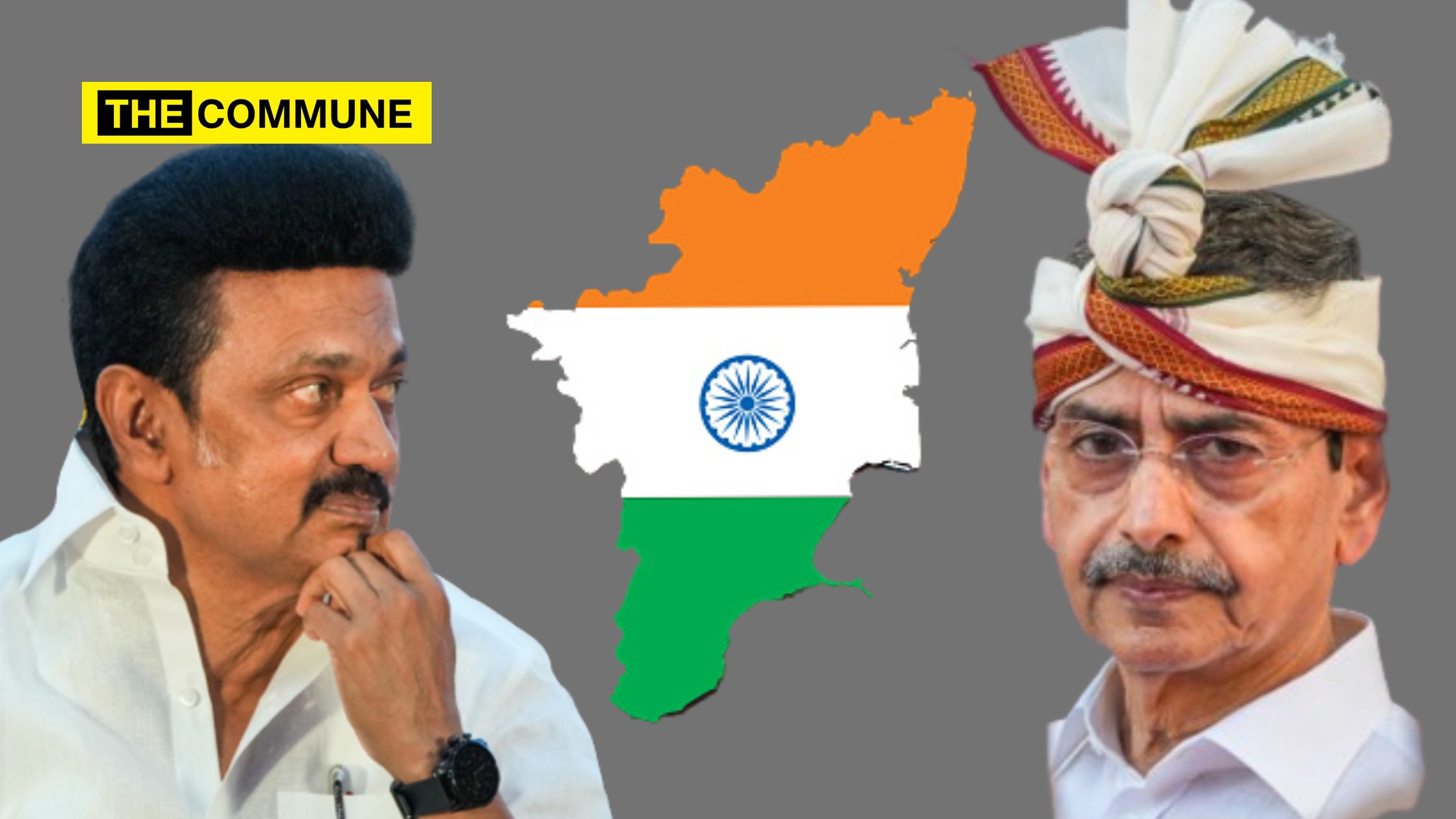
Recently, Tamil Nadu Governor RN Ravi drew fresh controversy over the reference to Tamizhagam in the invitation card issued on his behalf for Pongal celebrations a day after he skipped key portions of the speech at the inauguration of the Assembly session. He later walked out of the Assembly when Chief Minister MK Stalin moved a resolution against the deviation from government’s draft for the address. Ravi has been described as Tamizhagam governor in the invitation, which carries the national emblem this year in place of that of Tamil Nadu. He last week suggested Tamil Nadu should be renamed Tamizhagam and triggering a sharp response from the ruling Dravida Munnetra Kazhagam (DMK). The Bharatiya Janata Party (BJP) justified the suggestion, saying the landmass of the state has been referred to as both Tamizhagam and Tamil Nadu in Tamil literature. This has reignited the debate on ‘Aryan-Dravidian’ divide particularly on political lines stirring dangerous regional tendencies. In this context, this article will analyse the recently emerged ‘Tamil-Tamizhagam’ debate and understand why it is high time that we look past the concept of ‘Aryan vs Dravidian debate in interest of the nation?

‘Tamil Vs Tamizhagam’ Debate

Tamil Nadu originally means Tamil ‘land’, now also read as ‘Tamil country’. ‘Tamizhagam’, on the other hand, means the ‘abode’ or ‘land’ of the Tamil people and was the name of the ancient Tamil country.

RN Ravi while speaking on the topic said that, “Here in Tamil Nadu, a different kind of narrative has been created. Everything applicable for the whole of the country, Tamil Nadu will say no. It has become a habit. So many theses have been written – all false and poor fiction. This must be broken. Truth must prevail,” …. “Thamizhagam would be a more appropriate word to call it,”. Further he stated that the word ‘Nadu’ in the Tamil language means ‘land’, but has come to mean ‘country’ at times, viewed through the lens of Tamil nationalism. Ravi seems to have suggested the word ‘Thamizhagam’ instead to distance from the interpretation of the term ‘Tamil Nadu’ as more of an autonomous region, than one that is part of India. According to a press release by Raj Bhavan, he also said, “There has been regressive politics with the wrong habit of refusing everything that benefits all sections of people including academicians blindly for their own interests, claiming that the state is not integrally part of India,” the release said. Speaking on the politics over the issue the Governor reportedly said that for over 50 years, efforts had been made to reinforce the narrative that Tamil Nadu is not an integral part of India. “Tamil Nadu is soul, an idea and an identity of Nation and we should keep it alive to erase some falsehood and fiction of negative approach prevailing in the state,” he said.

The Knee-Jerk Reaction Of DMK

Soon after Ravi’s speech, there were strong reactions from several political leaders and celebrities. Members and supporters of Dravidian parties registered their protest by trending #TamilNadu on Twitter. Pushing back on the Governor’s remarks, the DMK mouthpiece Murasoli wrote, “He says the name Tamil Nadu indicates a sovereign nation. Does the name Rajasthan sound like Pakistan, Afghanistan, Uzbekistan, or Turkmenistan to you? Isn’t Maharashtra a secessionist name for its name indicates the land of Marathas? Kerala’s tourism slogan, ‘God’s own country’, may also be a demand for a nation-state status. Isn’t it problematic for you to find a ‘Desam (land)’ in Telugu Desam Party?”Writing that “India is a British creation”, the DMK mouthpiece asked Ravi to thank the British for creating India, instead of feeling proud of an imaginary “Akhand Bharat”.

The sharp reaction to seemingly unharmful remarks by the Governor is surprising but it also reveals the insecurities shrouding the Dravidian parties. The Governor’s intention is clear behind the statement. Governor is opposing politics shrouded in regionalism which pits one state, in this case, Tamil Nadu against rest of India on basis of political brownie points. It is a fact that ‘Dravidian politics’ is used as a tool for political consolidation by so called Dravidian parties shrouding it in regionalism. The overwhelming reaction by regional parties in the state is due to realisation of the fact that this reality is slowly being realised by people of Tamil Nadu.

‘Aryan Vs Dravidan’: A Colonial Construct To Divide People

The ‘Aryan vs Dravidian’ debate assumes significance as it has been the launching pad for divisive ‘Dravidian’ politics being practiced in Tamil Nadu. The claim about “Aryans” — that the similarities between Sanskrit, Persian, Greek, and Latin were due to a common origin — was a colonial claim initiated by William Jones in 1786 during his 2nd anniversary discourse to the Royal Asiatic Society which he founded. Later, the claim of a common origin of the languages morphed into the belief in a common group of people called Aryans. The British political motive was to divide India by caste (Brahmin vs non-Brahmin), and region (Northern Aryans vs Southern Dravidian) apart from religion. They needed these divisions to weaken and be able to rule India. Recall that this was at the beginning of the British rule when they were both militarily insecure and technologically backward, and sought ways to trick and dominate Indians psychologically with the church strategy of evoking fantasies for political gains. This church-state nexus of colonialism has been little discussed in this case. Indeed, a racist “intellectual” Count Gobineau, explicitly connected the Aryans to White supremacy. This connection of Aryans to race was vigorously propagated as a “scientific” defence of slavery in the US at this time in the 1850s just before the American Civil War. In the Indian context, Gobineau also conflated the Aryan race with caste while speaking of “the white conquerors of India (now, forming the caste of the Brahmins)”, but these has been debunked by other intellectuals.

The well-known African race-theorist Cheikh Anta Diop needed only two sentences to dismiss this “Aryan conquest” belief: “It has often been maintained without production of any conclusive historical documents, that it was the Aryans who created the caste system after having subjugated the black aboriginal Dravidian populace. Had this been the case, the criterion of color should have been at its foundation; there should have been at most three castes” [White, Black, mixed].Two Sanskrit words “Arya” and “Dasa” in the Vedas were mistranslated by/for Europeans, and conflated with the prevailing racist prejudices (prior to colonialism, British wealth was based on the slave trade). The (White) Aryas, the supposed authors of the Vedas, were depicted as the conquering heroes, and their enemies the (Black) Dasas were depicted as the conquered. Ambedkar refuted this quite conclusively by an exhaustive analysis of the occurrence of the two words “Arya” and “Dasa” in the Vedas.

Last month, the chair of the 81st Indian History Congress stated that those (Brahmins) who composed the Vedas were Aryans from outside India. That makes the Aryan vs Dravidian issue also a Brahmin versus Dalit issue. Hence, the TN government included references to two Dalit icons, Ambedkar and Periyarin the governor’s speech and Governor duly skipped this portion in interest of preserving neutrality in his annual address. Ambedkar points out “How leaky is the Aryan theory expounded by the Western scholars” by noting six cases in the Rigveda where bothAryas and Dasas are depicted as the enemies of whosoever composed the Vedas! For example, Rigveda praises Indra as a hero for destroying both “our enemies” the Dasas and the Aryas. The whole silly myth of invading “Aryans” who composed the Vedas and conquered the Dasas falls flat. But, Periyar who was the forerunner of Dravidian politics became the strongest effective supporter of the Aryan race conjecture. Dravidian politics is an undeniable political reality today; this is the concrete political form in which that old fantasy about Aryans still exists.

Conclusion

The above stated are facts and without going in to substantiating any of these we must look in to why looking past this divisive rhetoric is important! ‘Aryan vs Dravidian’, ‘Brahmins vs Dalit’, ‘Tamil vs Tamizhagam’ are all fictions created to divide people of India. The British and ‘Max Mullerians’ clanged on to the invasion theory to ‘divide and rule’ the people of India, the ultimate aim of the invaders was to ‘Balkanize’ India. As Indians we should’ve realised it on 1947 itself but now also it is not too late to brush aside divisive rhetoric in interest of the nation.

Through this “Tamizhagam Vs Tamil Nadu” debate, the DMK is only beating a dead horse and trying to satiate its separatist itch with false bravado.

Click here to subscribe to The Commune on Telegram and get the best stories of the day delivered to you personally.
 

‘Youth Festival’ Or ‘Beef Festival’?: Radical Left Wages War On Hindus In Kerala

The recently concluded Kerala School Kalolsavam would be remembered for the controversy surrounding communalisation of food. Famous cook Pazhayidam Namboothiri was targeted by left liberals for providing vegetarian food to thousands of artists performing in Kalolsavam (Youth festival). The incident was a disgrace due to multiple reasons as it stood to testify to the radicalized trend of the left to crook up issues just to target the Hindu community in the state. The simmering communal situation also coincides with multiple deaths after eating ‘Halal foods’ in Kerala that put the state government in a tricky spot. In this context this article will look into the incident surrounding the ‘youth festival’ in Kerala and why the trend of communalising food is just another act by the left targeting the Hindu community in the state.

The Hindu phobia and the communal angle

Mohanan Namboothiri, popularly known as Pazhaiydam, who has been the caterer for the festival for the past 16 years, announced Sunday that he would no longer take up the task assigned by the state Education Department. He also said he was withdrawing from the contract for catering for the Southern India Science Fair slated for the last week of January. Speaking on controversy surrounding serving of non-veg food for youth festival he stated that, “When the food of school students is sprinkled with seeds of communalism, I am afraid to take up the assignment next time. The kitchen of the school festival has been close to my heart over the years. It has been considered a treasure. Communal allegations perturb me and it is not right on my part to take up the task any more’’.  This is in fact sad as it was a tight slap on the face of ‘Namboothiri’ who has been a regular feature of youth festival for many years, who had provided food to lakhs of student. It becomes equally disheartening to note that non veg food has never been served at the State School Arts Festival since its beginning in 1956. Only vegetarian meals are served every year.  The situation spiralled when people of ‘communist’ moorings created unnecessary trouble by stating that serving of non veg food is symbol of ‘Brahmanical Hegemony’ and these people wanted non-vegetarian food (halal meat) to be served in the festival. This controversy is happening at the same time when left is silent on numerous deaths across the state which is related to ‘Halal foods’ prepared in unsanitary conditions in Kerala.

As soon as ‘Namboothiri’ faced backlash for serving vegetarian food many organisations as well as politicians rallied behind him. Some even cited the recent deaths blamed on food poisoning after consumption of Arabian non-vegetarian dishes to bolster their logical arguments. Senior BJP leader Kummanam Rajasekharan said the LDF government in Kerala “has surrendered before religious extremists, who go by the dictates of terrorists”. “The government should withdraw from the move to keep Pazhayidam out over his caste. The Chief Minister should make clear whether extremists shape his government policy,” Rajasekharan said. Opposition leader V D Satheesan accused the government of creating “a dangerous communal environment” around the school festival. “If the government wanted to introduce non-veg, why did it create a situation insulting the caterer over his caste? This issue has eclipsed the beauty of the festival. At any cost, we cannot agree with the food controversy which has polarised society,’’ the Congress leader said. Realising the dangers of ‘beef festival’ turning to ‘pork festival’ really soon even Indian Union Muslim League (IUML) had to criticise the left for mixing politics with youth festival. A campaign against the caste of caterer Namboothiri, criticising “Brahminical hegemony” over the school festival – seen as mainly led by pro-Left circles – was a first for the gathering, whose 61st edition. The rise of the BJP and apprehensions over the party on ‘Hindus uniting for common cause’ in the state with its high minority population was seen as one reason for politicisation of the issue. The other was the venue of the festival, Kozhikode, considered the capital of non-vegetarian food in the state. Sivankutty added fuel to the fire when he said that he would have liked to serve biryani to the children at the festival. This entire incident tells a tale about radical left catering to demands by ‘Islamic-Communists’ in Kerala while at the same time trying to divide Hindu community on basis of caste for electoral benefits.

Left has done it again

The left in Kerala has a dangerous trend of associating anything Hindu as something to be fought and hated. The left takes the direct opposite stance if the situation is related to minorities in the state. This is not the first-time left is waging war against the Hindus in the state. The left in the state is remaining silent when ‘Halal foods’ are killing people and becoming revolutionaries when vegetarian food is served. When did vegetarian food become ‘pro-Hindu’ and when did eating Cow (a sacred animal for Hindus) becoming a tool to fight BJP? The actions by the left are absurd and the consequences of these actions will be immense. One wonders and asks, if the left want to fight communalism why don’t they serve pork in youth festival to hoist the banner of ‘secularization of food’ and why don’t they ban ‘Halal food’ for the same purpose as ‘Halal food’ is religiously prepared food and is against secularism. But the left won’t act, they showed their character in case of ‘Sabarimala’ and they did it by killing Cows just to prove their point (even PETA were missing then). Now, they target the Hindus again to further their war on the majority to appease minority. It is now or never and Hindu’s must realise that.

Hinduism is the world’s oldest religion and it should be protected to help its followers to protect its existence and heritage. Hinduism as a religion has survived since time immemorial, it has survived from the days of Islamic invasion of the sub-continent (destruction of temples and forceful conversions) to colonial subjugation of Indian culture by the European colonists (example of Christian inquisition in Goa to Lex Loci Act by the British). It has survived the forceful conversion of its religious places to the wrongful narration of its history. Thus, it’s high time we must understand this evil trend and fight against false propaganda by observing the truth behind these events. The qualities of the Hindu community in maintaining tolerance and acceptance in this land making this a plural nation must be cherished. This indeed is vital for the long and sustained existence of this beautiful republic of ours in a world of religious autocracies and unhindered religious violence.

Click here to subscribe to The Commune on Telegram and get the best stories of the day delivered to you personally.

After DMK Leader’s Abusive Speech, TN CM MK Stalin Refers Guv Ravi In Singular

As the controversy surrounding DMK leader Shivaji Krishnamoorthy’s call for the killing of Tamil Nadu Governor RN Ravi by terrorists persists, Tamil Nadu Chief Minister caused a new controversy by referring to the Governor in a singular and derogatory manner.

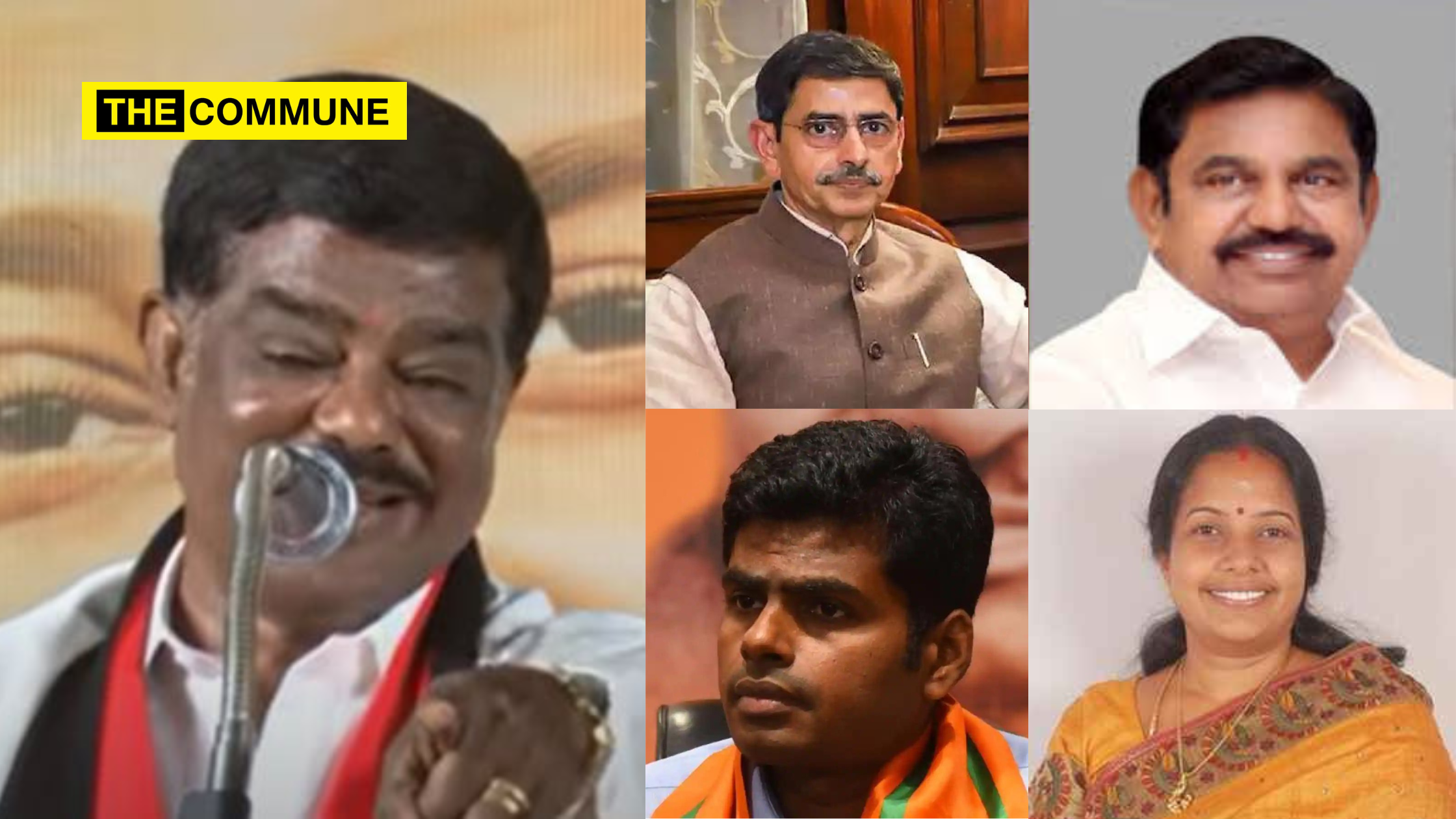
DMK leader Shivaji Krishnamoorthy, while talking at a stage celebrating the 100th birth anniversary of former MLA and general secretary of DMK Anbazhagan, used derogatory terms like ‘Gotha’, ‘Gomma’, ‘Echa Soru’, ‘Lavade Ka Baal’ that refer to a mother derogatorily to call Tamil Nadu leaders like TN BJP President Annamalai, Leader of Opposition party Edappadi Palanisamy, Governor RN Ravi, and BJP MLA Vanathi Srinivasan.

He even called for the killing of TN Governor RN Ravi, saying, “CM is asking us not to scold the Governor. Had he read the speech properly, I would have placed flowers on his feet and thanked him with folded hands. But don’t I have the right to slap him with a slipper if he denies saying Ambedkar’s name? If you deny saying his name, you go to Kashmir. We’ll send a terrorist to shoot and kill you.”

While the controversy was still raging, Tamil Nadu Chief Minister MK Stalin sparked a new one by referring to Governor RN Ravi in the singular.

MK Stalin while speaking at the launch of DMK Youth Wing App and Dravida Model training camp 2.0 at the Anna Arivalayam in Chennai said, “When the late Chief Minister of Tamil Nadu Mr. Anna Durai was sick, many including his family members, doctors, and senior party leader told him to not attend the public meeting after naming erstwhile Madras state as Tamil Nadu. But Anna questioned what was the point of his life if he couldn’t attend the meeting that named Madras state as Tamil Nadu.”

He then referred to Tamil Nadu Governor RN Ravi indirectly, amid huge applause from the DMK crowd, that there is a person (‘oruthan’ – singular and without respect in Tamil) lamenting here that we should not use the word Tamil Nadu. Chief Minister then added, “I don’t want to give that person any more publicity. I am saying this because we should be aware of our history.”

Stalin’s derogatory reference to Governor Ravi has led many to question if DMK leader Shivaji Krishnamurthy made the abusive remarks at the behest of Stalin.

Click here to subscribe to The Commune on Telegram and get the best stories of the day delivered to you personally.
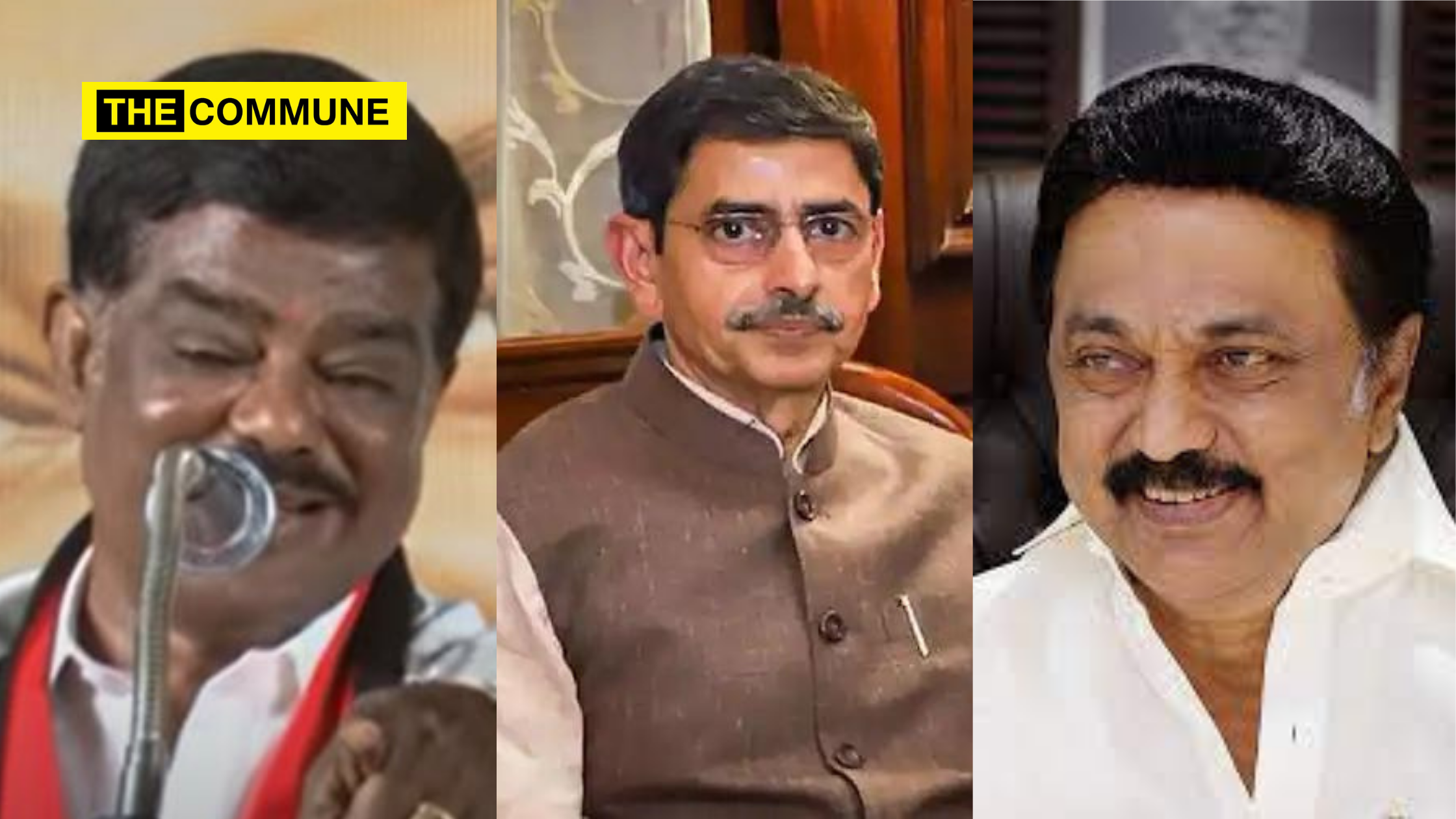
La*de Ka Baal, Ng*tha, P*tta: DMK Leader Abuses TN Guv, Palaniswami & Annamalai, Threatens To Kill Guv Ravi Using Terrorists

DMK stage speaker Shivaji Krishnamoorthy has again stoked controversy by talking derogatorily about Tamil Nadu Governor RN Ravi, Tamil Nadu BJP President Annamalai, BJP MLA Vanathi Srinivasan and Leader of Opposition Edappadi K. Palaniswami.

The DMK has been commemorating the centenary of the birth of former minister and party general secretary ‘Perasiriyar’ K Anbazhagan. DMK’s Shivaji Krishnamoorthy stated at one such meeting, “We greeted Tamil Nadu Governor RN Ravi with a red carpet and a band. But looking at his jacket, we predicted that he was going to do something shady. Does his face look like he belongs to Tamil Nadu? We gave him the speech on December 7th and told him that this is what he had to read in the Assembly, to which he agreed and signed. We have a practice in Tamil Nadu of asking if a person is born to one person or not if he is breaking the promise. What should I ask the Governor now that he hasn’t read what he agreed to?”

He continued, “Now the CM Stalin has ordered us not to scold the Governor. I would have placed flowers on his feet and thanked him with folded hands if that ‘mayirandi‘ (cuss word in Tamil) had read the speech correctly. But, since that ‘La*ade Ka Bal‘ (cuss word in Hindi meaning pubic hair) refused to read what was given to him and refused to say Ambedkar’s name, don’t I have the right to slap him with a slipper?”

He added, “You (Governor) have taken an oath on the constitution written by Ambedkar. If you are not mentioning his name in your speech, then you go to Kashmir. We’ll send a terrorist to shoot and kill you, Lavade Ka Bal. You have previously served as the Governor of Nagaland. Do you not understand the procedure, or do you intend to become India’s Vice President like Jagadeesh Dhankar who was troubling Mamta Bannerjee? But that will not be possible here, as it is the reign of MK Stalin, son of Kalaignar who is known for bringing Indira Gandhi to Tamil Nadu and made her apologize for declaring emergency. ‘Otha’ (cuss word to refer one’s mother),  if we can make a great leader like Indira Gandhi apologise, you are nothing to us.”

He stated, “Be it Governor or any representative of President of India, Stalin will make him run like he made Ravi in the Assembly. Have you seen any Indian Chief Minister do this? As the governor did not read what was given to him, we insulted the Governor by expunging his speech while he was on the floor of the assembly.”

He further stated, “In the Tamil Nadu BJP, there is one person named Annamalai. He claims he gave up his prestigious IPS position to serve people. However, the government had made significant investments in your training. But you wasted all of that money. After wasting all of the government’s money, you, ‘Echa Soru‘ (cuss word referring to leftover food eaten by others), ‘Pottai‘ (a derogatory term for women), are criticizing Thalapathy Stalin?”

He went on, “Thalapathy Stalin took over the government when COVID was at its peak. Before that Palaniswami was the Chief Minister. Take a look at his teeth. ‘Echa Soru’. If we cut him into pieces, people in eight towns can eat his flesh. He is looking like a fat frog. When Edappadi and the entire world were saying to maintain social distance during COVID, our leader Stalin was the only one who asked us to gather together through ‘Ondrinaivom Vaa’. Our leader, MK Stalin, is not like Edappadi Palaniswami, a fat pig, or O Panneerselvam, who can’t walk, or former Speaker Dhanabal, who looks like he has piles.”

He added, “When Stalin took power, he faced numerous challenges. When we looked at the government treasury, ‘Otha Oliga‘ (cuss word referring to mother) had taken all of the money and it was empty.”

He further added, “They are accusing us of family politics (Varisu Arasiyal). Shouldn’t a person have potency if he is born as a man? Karunanidhi had potency, Stalin was born. Stalin has potency, Udhayanidhi was born. Udhayanidhi has potency, Inbanidhi was born. We are potent and hence we do family politics. If you do not have potency, then go to a sex doctor. There are numerous fertility centers. If you cannot afford it, then ask Nayanthara for ideas on cheaper treatment.”

He claimed, “These ADMK people were calling Jayalalithaa as ‘Amma’. But did Edappadi Palaniswami have the courage to announce the death of his ‘Gomma‘ (a derogatory term for mother)? You mentioned that your ‘Ngomma‘ died on December 5th. However, it takes someone like Stalin to find that your ‘Ngotha‘ died on December 4th.”

He ended by saying, “That ‘Echa Soru‘ Annamalai is saying wearing Rafale watch is patriotism. ‘Otha, did your ‘Ngomma‘ (mother) give birth to you or did you come from the mouth of an elephant? How can you lie like this? Should we have to respond to your questions? In this scenario, MLA Vanathi Srinivasan is questioning us. ‘Adinga….’ I should not use those words as women are sitting here.”

The Tamil Nadu BJP has strongly condemned the DMK speaker’s speech in which the DMK leader has threatened the Governor’s life with terrorists and has demanded that DMK leader Krishnamoorthy be arrested.

Click here to subscribe to The Commune on Telegram and get the best stories of the day delivered to you personally.
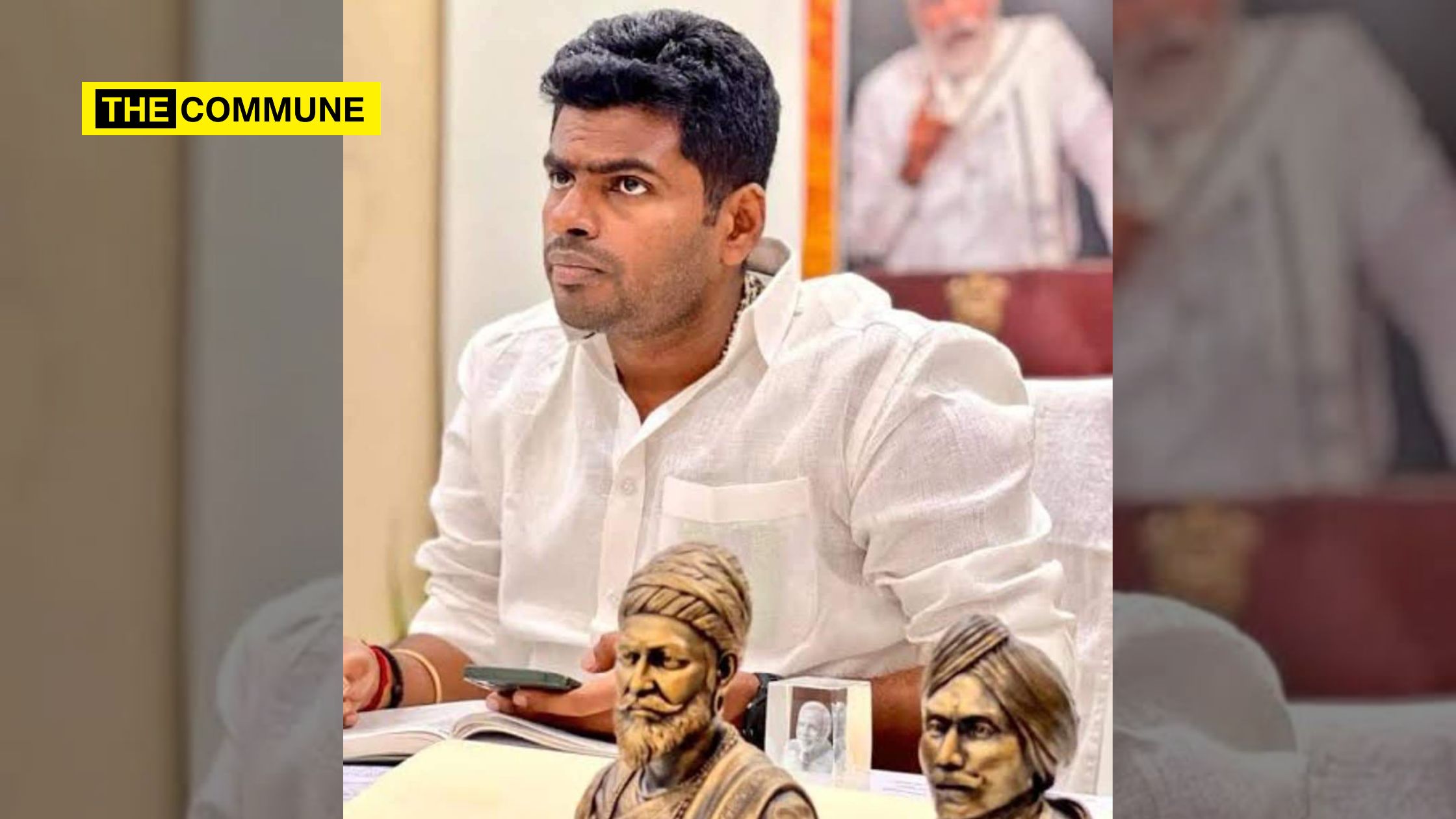
Human Faeces In Dalit Water Tank Issue: Pa. Ranjith Condemns DMK Govt Alleging Apathy

Tamil film director Pa. Ranjith called out the MK Stalin-led DMK government’s inaction and apathy in arresting the culprits behind the incident where human excreta was found dumped in water tank used by Dalits of the Vengaivayal village in Pudukottai district.

He also alleged that the Tamil Nadu police is threatening the victims (Dalits who had to consume the excreta-mixed water) to confess to the crime under the garb of investigation.

“Social injustice continues (angry imoji)!Stern reprimands to the Tamil Nadu police department for threatening the victims to confess the crime in the name of investigation without trying to identify the culprits in the case of contamination of water tank of Venkaival in Pudukottai district.”, Pa. Ranjith said in a tweet.

Pa. Ranjith, without naming the concerned Minister and region’s MLAs, condemned them for not visiting the village to address the issue.

N. Kayalvizhi Selvaraj, the Minister for Adi Dravidar Welfare, Hill Tribes and Bonded Labour Welfare is the concnerned minister and M. Chinnadurai, is the elected CPI-M MLA elected on the DMK symbol from Gandarvakottai reserved constituency.

Leader of Opposition Edappadi K. Palaniswami too had condemned the DMK government over its inaction. The Tamil Nadu BJP and other social and political activists too have called out the MK Stalin government in the handling of the issue.

Tamil Nadu Chief Minister MK Stalin while speaking about the issue in the Assembly said that the incident was “condemnable” and “regrettable”. He added that the special investigation team (SIT) constituted by the government has so far question 70 people and promised “strict action” against the culprits.

However, many have questioned on why Stalin and his Minister and MLAs have not visited the village so far.

Airport Moorthy while speaking at a roadside meeting lambasted the DMK and the Pudukottai Collector alleging that the issue was handled in a shoddy manner. When Moorthy along with a few villagers had requested for the water pipe to be replaced with new ones, Pudukottai Collector allegedly told him that the pipe has been cleaned with chemical and there was no need for replacing the pipe networks.

He also alleged that the DMK government has been hesitant in bringing the culprits to books in order to not antagonize the votebank of Valayars who are the dominant community in the village.

Moorthy and a few others from the villaege later put their own money and got the old pipes replaced.

Click here to subscribe to The Commune on Telegram and get the best stories of the day delivered to you personall