Home Blog Page 1006

Hindenburg Vs Adani: A Dispassionate Unclouded Analysis

Disclaimer: I have no interest in any of Adani’s stocks and I do not hold them in personal capacity

US-based investment research firm Hindenburg Research, had recently published a report alleging stock manipulation and accounting fraud by Adani Group.

In its recent report on Adani conglomerate, Hindenburg Research said “We have uncovered evidence of brazen accounting fraud, stock manipulation and money laundering at Adani, taking place over the course of decades. Adani has pulled off this gargantuan feat with the help of enablers in government and a cottage industry of international companies that facilitate these activities,”.

The entire Hindenburg report comes to a 100 pages when saved as a pdf. On going through the report, one wonders why would this take two full years to publish unless the Hindenburg guys had multiple other projects to work on in parallel. A similar type of research on any conglomerate in the world would yield similar results. SEBI investigations and other charges against Adani is all known to the markets. So, there’s nothing unique in the Hindenburg’s findings to go gaga about. 

The phrase “stock manipulation” is used frequently and we do not know in which category this “manipulation” come under. There is very little reason to believe that this is some anti-India propaganda. People can spin whatever they want but this is purely driven by earnings money through the “short” trade no matter. As simple as that.

The allegation that Adani has been using offshore investment vehicles/funds to buy his companies and inflate his stock prices is nothing new in companies with hard physical assets. Rio Tinto, Shell, Samsung can be called out for the same. Not sure what is illegal with respect to Adani though!

Also, the timing of the release seems dubious, especially when Adani is looking to raise capital. The Hindenburg Research report came just two days before Adani Enterprises’ Follow-on Public Offer (FPO) of ₹20,000 crore, the biggest ever FPO in India, was scheduled to open for subscription on 27 January 2023.

Consider this – Company A run the largest port chain in India and makes enough cash to pay dividends. Company A legally takes the money outside the country and start a company in a tax haven and invest in a fund which in turn buys the shares of the port chain. If there is a law that prevents this, then the owner of Company A need to be behind the bars. If the money is somehow linked to owner of Company A and accusing him of holding 75%+ stake in the company, then yes he should pay for it. But, when neither of this is established, then there simply is no issue. “Anonymous” person’s scoop is all hogwash, anyone can say anything and say “anonymous” person. Moving assets between these shell companies is something that all conglomerates do. Violations are what we need to focus on: “related party transaction disclosure” being the most obvious one. But, if there are “unrelated” entities not sure how they might be related parties.

Issues regarding the auditors seems genuine in terms of capability but then there are no regulations that say that auditors who are in their 20s cannot sign off on financials or there isn’t any stipulation by the CA institute on these lines.

The true intentions of of Hindenburg can be found in its disclaimer. Hindenberg has a reputation for specializing in ‘short-selling’. Short-sellers are those investors who bet against a certain stock and borrow them from a party, ‘short’ them and later sell it at other exchanges to buy them back at a lower price to return to the lender, pocketing a profit in the process.

Lastly, India’s economy is not held back by broken capital markets. This is a low resolution argument.If Indian economy were held back by broken capital markets then neither FIIs would’ve come to India nor would you have a domestic mutual fund industry that has approxiimately ₹40 lakh crores of Assets Under Management.

The only thing that definitely makes some sense is the valuation argument. Yes, the stocks trade a high multiples. But, the onus is on the investor, they can buy or stay away. The promoter pledges are no big deal and won’t create any issue.

The trope that “Adani is silencing journos/analysts” is just an insurance policy for Hindenburg to escape in case no one buys these findings.

Perhaps, the general public is hearing all of this for the first time and is getting swayed by all the hullaballoo generated by media. The common investor, public, citizens aren’t scared of Adani.

For them, they just want to invest in a stock and make money. It could be Adani or Tata or Ambani. The only ones who have issues are a few “activist-journalists”, “activist-analysts” like Hindenburg and ofcourse Opposition politicians.

This article is based on the Twitter thread of Kishore Iyer.

Click here to subscribe to The Commune on Telegram and get the best stories of the day delivered to you personally.
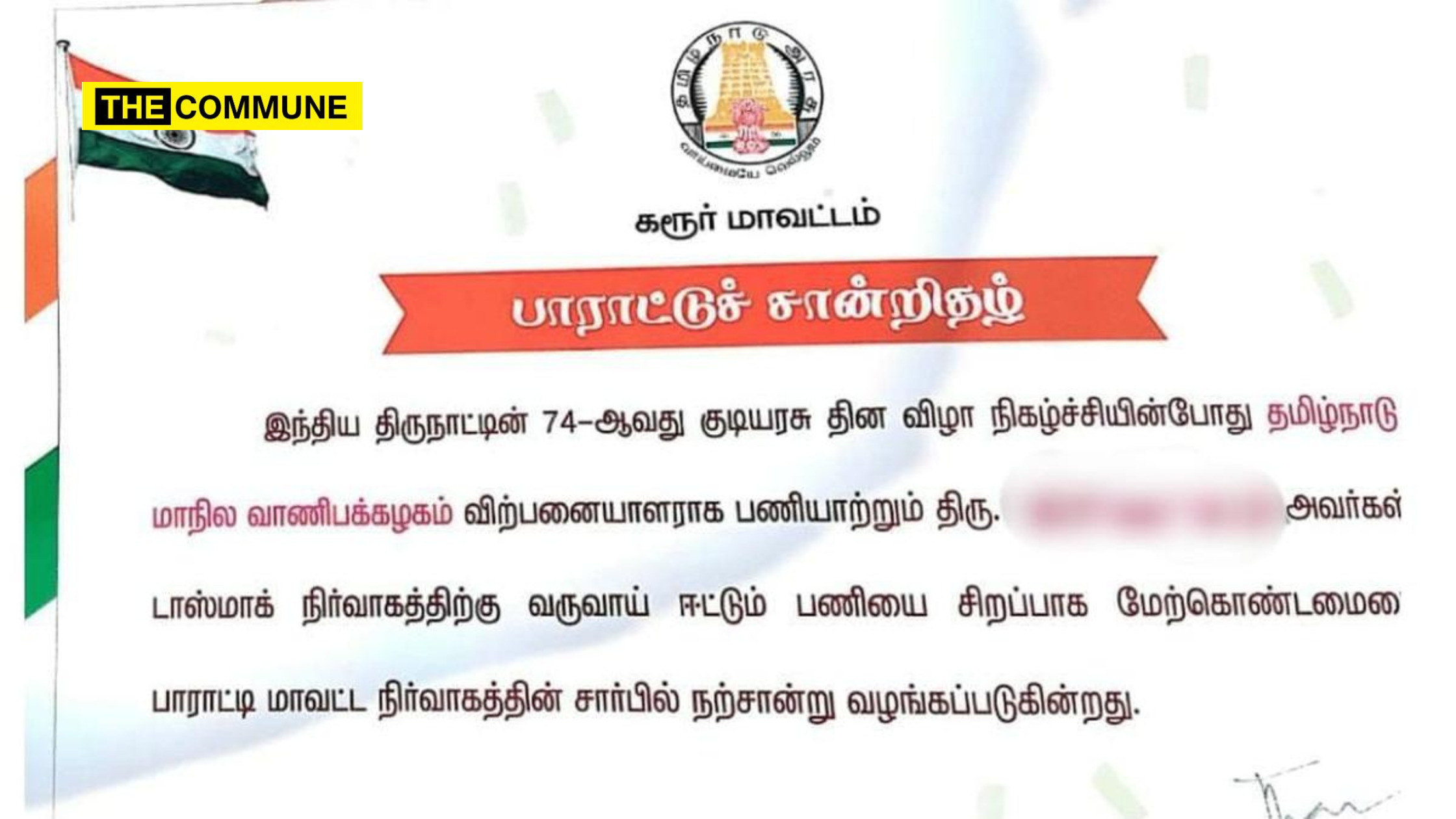
Appreciation Certificate Issued To Karur TASMAC Officials Withdrawn, Text Changed And Returned

The recognition of Tamil Nadu State Marketing Corporation (Tasmac) officials for revenue-generating activities in Karur during the Republic Day celebrations on Thursday sparked a row. However, following social media backlash, the DMK government rescinded the certificate.

Collector T. Prabhushankar presented appreciation certificates to P. Shanmugavel, District Manager, Tasmac, Sivakumar and Arumugam, supervisors, and Krishnamurthy, salesman, on Thursday.

The Tasmac employees were recognised for their exemplary work in generating revenue for the State-owned Tasmac, which operates Indian-Made Foreign Liquor (IMFL) outlets throughout the state, according to the certificates.

The appreciation certificates were widely shared on social media, primarily by those expressing their dissatisfaction with the State government setting targets for increasing revenue by selling liquor through Tasmac outlets.

Social activists and opposition parties claimed that it was inappropriate to honour TASMAC employees during the Republic Day celebration for increasing TASMAC sales. After receiving backlash, the DMK government withdrew the certificates of appreciation given to four TASMAC employees.

It has now been reported that the phrase “cretificate for generating more revenues for TASMAC” was replaced with “certificate of appreciation for excellent work in TASMAC administration” and the certificates have been returned to the four TASMAC employees.

(with inputs from DailyThanthi)

Click here to subscribe to The Commune on Telegram and get the best stories of the day delivered to you personally.
India And Egypt: The Historical Ties And The Strategic Calculations

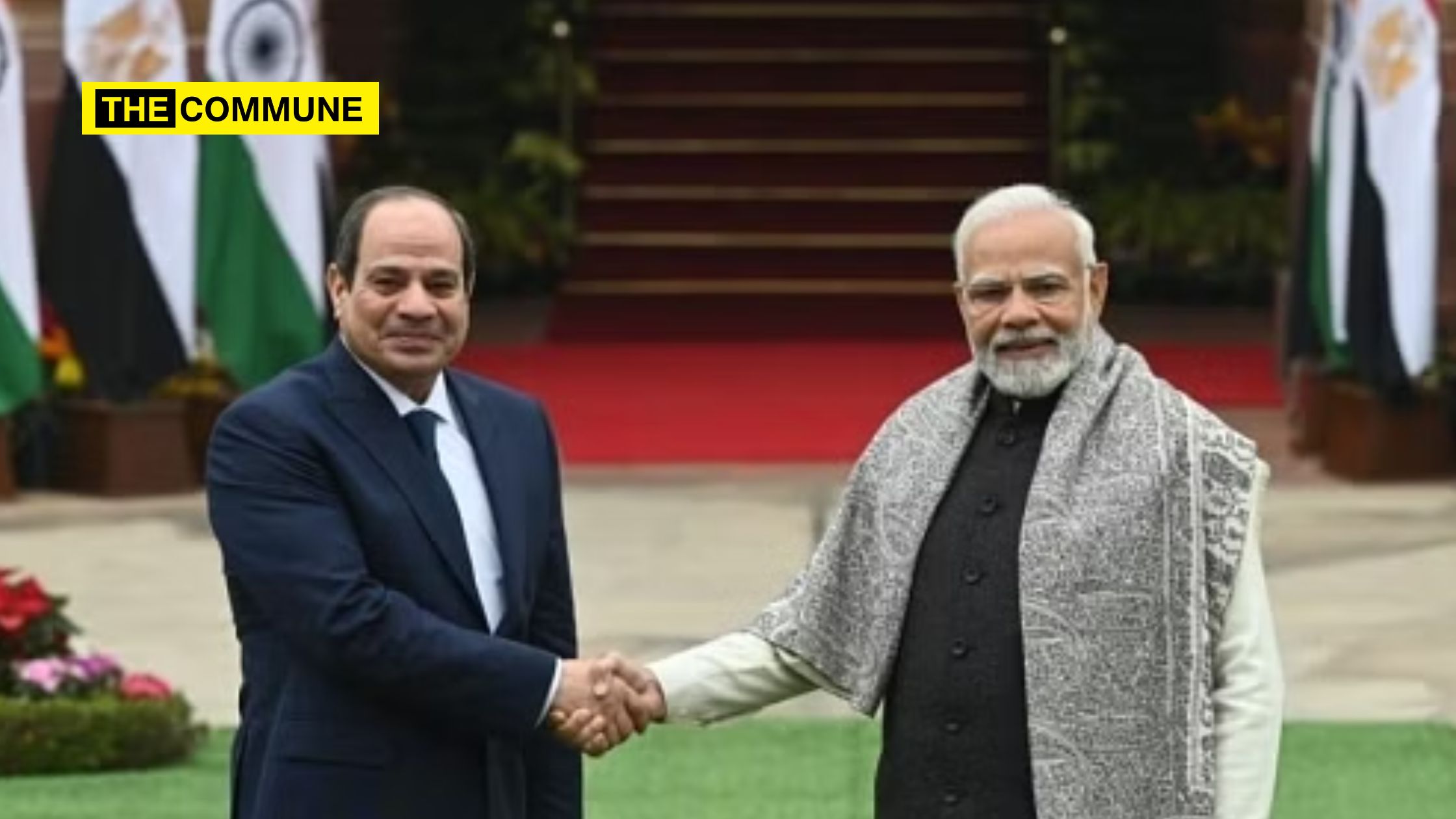
Three-day visit of President of Egypt, Gen Abdel Fattah el-Sisi concluded recently scripting a fresh chapter for both India and Egypt in elevating their ties to a ‘strategic level’. The two sides also decided that under the strategic partnership, they will combat extremist ideology by joining hands in areas such as de-radicalisation and also come down hard on terrorism. India and Egypt have a long-standing and friendly relationship, with deep historical, cultural and economic ties but the recent visit was unlike anything in the past as it provided both the nations to engage further for prosperity of the region. Let’s take a look at the key highlights of the recent visit and also understand as to why the recent signifies India’s renewed foray in to the Arab world.

The Visit

During the Egypt’s President Sisi’s visit the two countries signed several agreements in areas such as defence, trade, and culture. The visit was seen as an opportunity to strengthen the bilateral relations between Egypt and India, as well as to discuss regional and international issues of mutual concern. The two countries signed several agreements to strengthen their bilateral relations. The President was also the Chief Guest during the 74th Republic Day parade, an invitation to be Chief Guest is an important honour that is very high on symbolism. New Delhi’s choice of Chief Guest every year is dictated by a number of reasons — strategic and diplomatic, business interest, and geopolitics. It is worth noting that a military contingent from Egypt also participated in the parade. 

A Historical Connect

The history of contact between India and Egypt, two of the world’s oldest civilisations, can be traced back to at least the time of Ashoka, even prior to it if we take in to accounts of archaeological evidences. Ashoka’s edicts refer to his relations with Egypt under Ptolemy-II. Soon after India’s independence the joint announcement of establishment of diplomatic relations at Ambassadorial level was made on 18 August 1947. India and Egypt signed a friendship treaty in 1955. In 1961, India and Egypt along with Yugoslavia, Indonesia and Ghana established the Non-Alignment Movement (NAM). The ties between India and Egypt have always been strong but it is post 2014 we could see momentum building up between two nations with mutual desire to enhance partnership. In 2016, the joint statement between India and Egypt identified political-security cooperation, economic engagement and scientific collaboration, and cultural and people-people ties as the basis of a new partnership for a new era.

Strategic Partnership

During this year’s meeting, both India and Egypt agreed to elevate the bilateral relationship to a “strategic partnership”. The strategic partnership will have broadly four elements: political, defence, and security; economic engagement; scientific and academic collaboration; cultural and people-to-people contacts. India and Egypt have also signed a MOU for three years to facilitate content exchange, capacity building, and co-productions between Prasar Bharati and the National Media Authority of Egypt. Under the pact, both broadcasters will exchange their programmes of different genres like sports, news, culture, entertainment on bilateral basis. India views Egypt as a moderate Islamic voice among Muslim-majority countries, and as a partner within the Organization for Islamic Cooperation. During this Republic Day meeting, India and Egypt expressed concerns about the spread of terrorism around the world as it is the most serious security threat to humanity. Consequently, the two countries agreed that concerted action is necessary to end cross-border terrorism.  The two countries are also looking at deepening defence and security cooperation. Moreover, the two Air Forces collaborated on the development of fighter aircraft in the 1960s, and Indian pilots trained their Egyptian counterparts from the 1960s until the mid-1980s. Plus, Both the Indian Air Force and Egyptian air force fly the French Rafael Jets In 2022, a pact was signed between the two countries that have decided to also participate in exercises and cooperate in training. The first joint special forces exercise between the Indian Army and the Egyptian Army, “Exercise Cyclone-I” has been underway since 14 January 2023 in Jaisalmer, Rajasthan.

India Is A Friend In Need For Egypt

Egypt’s economy has been in chaos over the past few years due to the pandemic and the Russia-Ukraine war which impacted its supply of food as almost 80% of Egypt’s grain imported from Russia and Ukraine and impacted Egypt’s foreign exchange reserves. The Egypt was reeling from food shortages and inflation. On the other side of the globe India was also witnessing challenges, on top of the impact from war, 2022’s rabi crop was struck by heatwave which almost cutdown 30% wheat yield in India. India had to impose restriction on wheat exports. Despite restrictions on export of wheat, India stepped up for Egypt and allowed shipments of 61,500 metric tonnes to Egypt. The reliability of India is increasing in the world. From India, Egypt is seeking investments in infrastructure including Metro projects, a Suez Canal economic zone, a second channel of the Suez Canal, and a new administrative capital in Egypt. More than 50 Indian companies have invested more than USD 3.15 billion in Egypt. India has been able to showcase that the nation is in fact a friend in need for Egypt.

Strategic Significance

India’s decision to elevate bilateral ties to the strategic level is rooted in a recognition of the enduring salience of Egypt as a pivotal state sitting at the crossroads of the Middle East, Africa and Europe, with the capacity to influence political outcomes on multiple fronts.

Beyond bilateral ties, the renewed engagement with Egypt is also about expanding and consolidating India’s new coalition with moderate Sunni states in the Middle East, including Egypt, Jordan, Saudi Arabia and the United Arab Emirates, which are eager to counter violent religious extremism and also the influence of states which influences extremism such as Pakistan, Qatar and Turkey. Delhi’s strategic partnership with Cairo also opens the door for a larger Indian role in the region which is trying to diversify its partnerships, as the US begins to turn its attention to the Pacific after prolonged and costly military interventions in Iraq and Afghanistan. Meanwhile, China is rapidly raising its regional profile in the Middle East. The Indian foreign policy discourse, with its deepening anti-Western rhetoric and empathy for radical Arab States in the 1970s, was not empathetic to the concerns and interests of Egypt as it made brave moves to rethink its regional policies.

India’s new outreach to Egypt now brings greater balance to India’s engagement with the Middle East as a whole. As it turns out, Egypt is an important strategic partner for the Gulf Arabs. Emirati and Saudi capital today have a major role in the economic transformation of Egypt and its neighbourhood. Another major factor in India-Egypt relation is India’s concern towards growing Chinese influence in the region. China’s bilateral trade with Egypt is currently at USD 15 billion, double that of India’s USD 7.26 billion in 2021-22. During the past eight years, the President of Egypt has travelled to China seven times to lure Chinese investments. Apart from that Egypt, the most populous country in West Asia, occupies a crucial geo-strategic location- 12% of global trade passes through the Suez Canal and is a key player in the region. It is a major market for India and can act as a gateway to both Europe and Africa. However, it also has bilateral trade pacts with important West Asian and African nations which is a cause of concern for India. Thus, the current visit gives valuable reorientation to India in the Arab world to posture itself better amidst rising challenges in the international order.

Click here to subscribe to The Commune on Telegram and get the best stories of the day delivered to you personally.
DMK Min KN Nehru Hits Party Worker In Salem, Thanthi TV Calls It ‘Streamlining’ Of Queue By Min

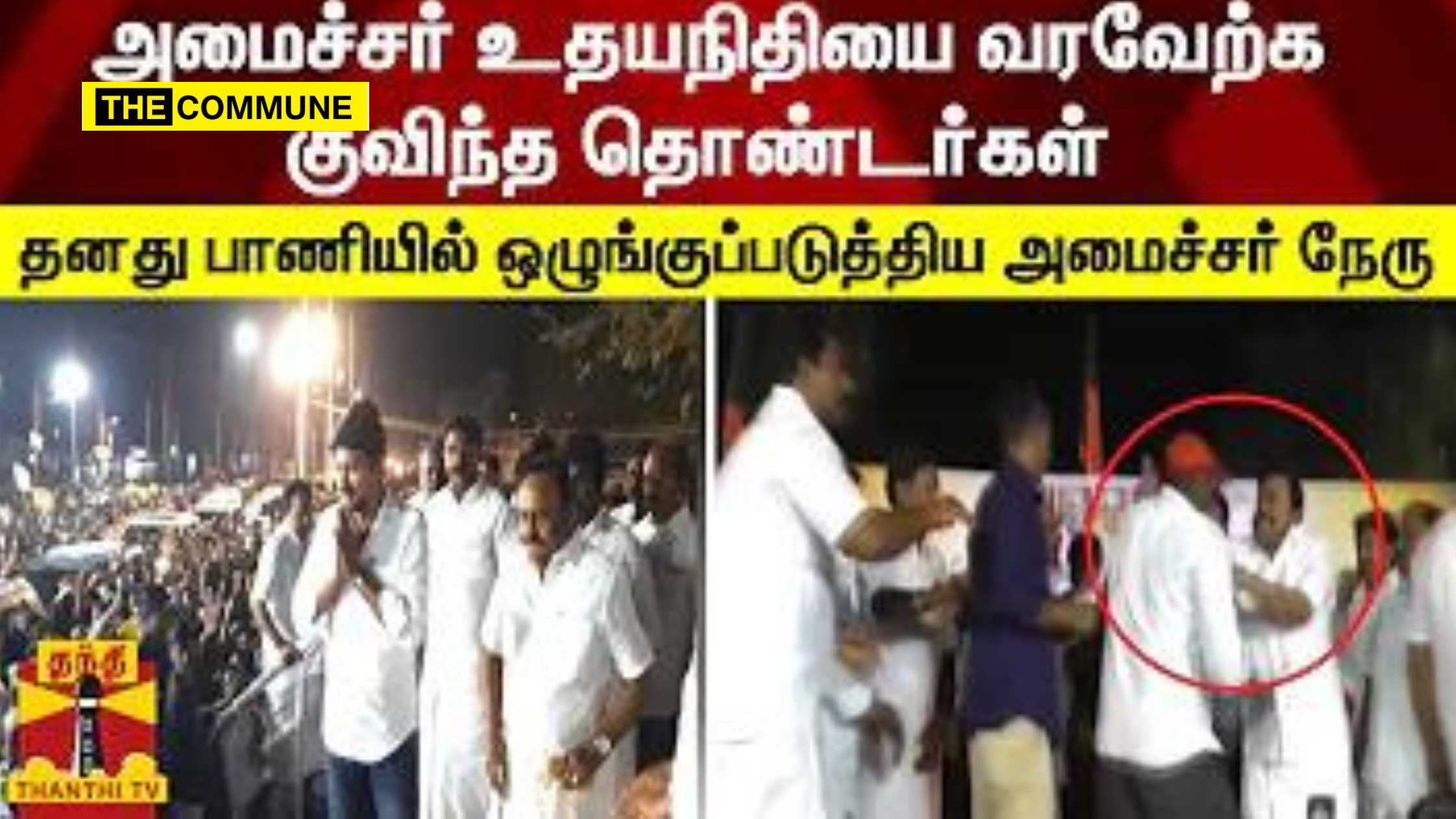
Tamil Nadu Minister for Municipal Administration KN Nehru was seen hitting a party worker on stage in yet another display of DMK high-handedness. The incident was reported from Salem, Tamil Nadu, where DMK workers had gathered to welcome Udhayanidhi Stalin, the newly appointed sports minister.

DMK minister KN Nehru was caught on camera hitting a party worker for the second time in a matter of weeks. During an event in Salem, DMK cadres had queued up to welcome the Tamil Nadu Chief Minister MK Stalin’s son Udhayanidhi Stalin. The line was so long that there was pushing and pulling on the stage, and leaders such as KN Nehru took on crowd control duties.

When a DMK cadre attempted to shake hands with Udhayanidhi Stalin’s, DMK minister KN Nehru became enraged. He grabbed the party worker’s hands first, then hit him behind the head.

A few other DMK cadres also received blows from the DMK minister KN Nehru when they attempted to get close to Udhayanithi Stalin.

Earlier on January 10, a video surfaced on social media showing DMK Minister KN Nehru slapping a DMK ward councillor on the head during a government welfare programme in Trichy.

On Tuesday, DMK Minister for Milk and Dairy Development SM Nasar was caught on camera losing his cool and throwing a stone at a party worker, allegedly over a delay in bringing chairs for him at a Tiruvallur event.

These incidents of DMK ministers publicly hitting DMK cadres have become a common occurance. However, Tamil media and certain journalists attempt to trivialise these incidents by either making absurd interpretations or failing to publish the news itself. When similar incidents occurred during the previous ADMK regime, they made it a point of discussion during prime time debates.

Thanthi TV, a mainstream news channel, reported KN Nehru hitting DMK cadres as “the streamlining of queues by KN Nehru in his own style”, attempting to trivialise the matter. Thanthi TV never stated that DMK Minister Nehru attempted to hit the cadre and downplayed the incident throughout the one-minute video.

Dravidar Kazhagam, an organisation that claims to be a self-respect movement, or its sister organisations led by Subha Veerapandian, Kolathur Mani, or K Ramakrishnan, have not responded to a series of events in which DMK cadres’ self-respect has been insulted, as they fear losing material support from the ruling DMK government.

Click here to subscribe to The Commune on Telegram and get the best stories of the day delivered to you personally.
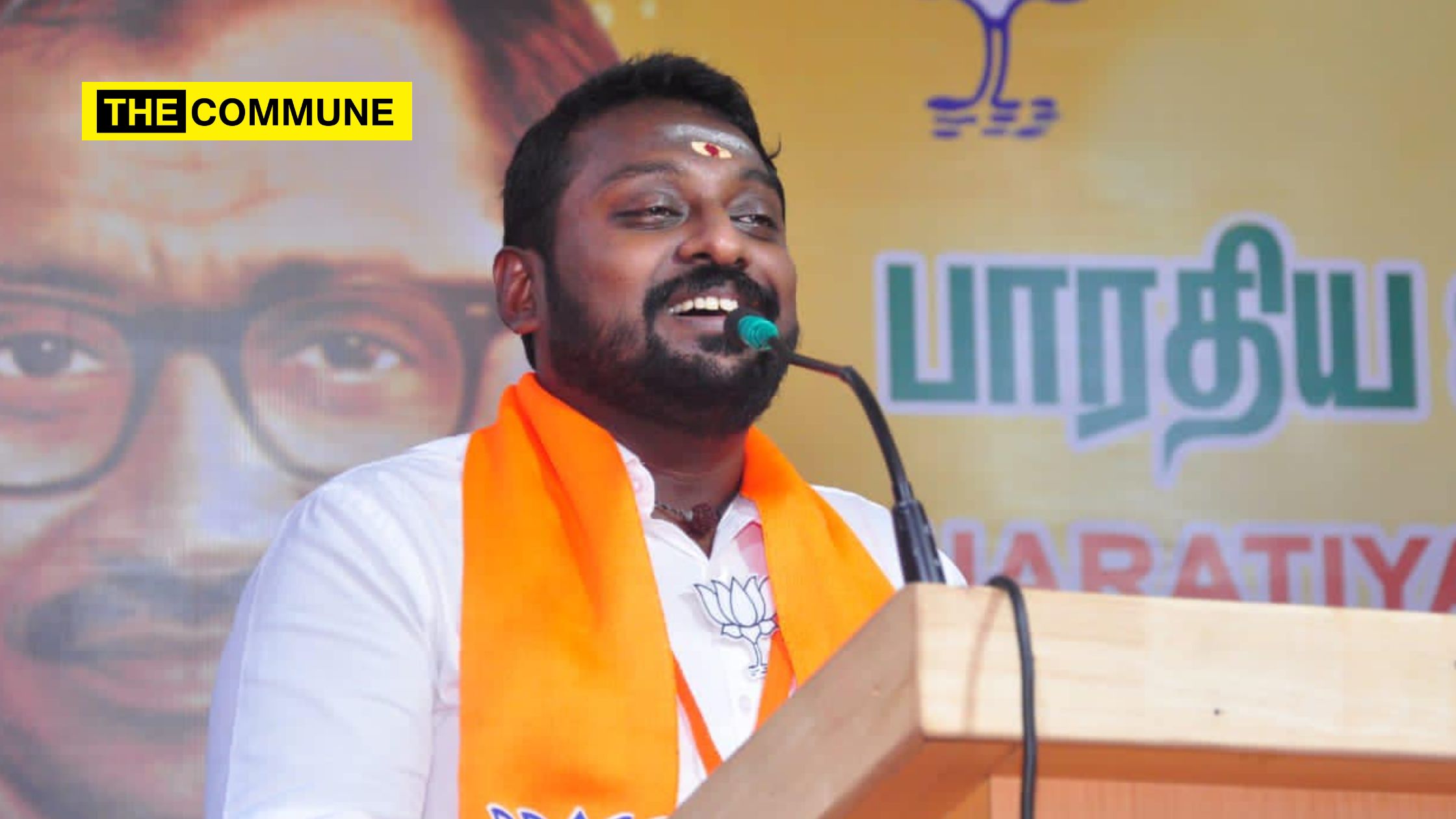
TN BJP Leader SG Suryah Follows Footsteps Of Modi, Vajpayee; Goes On Prestigious IVLP Fellowship

The International Visitor Leadership Program is a flagship program of the United State of America’s State Department that invites current or potential leaders in government, politics and other fields.

The participants are selected by American Foreign Service Officers overseas. IVLP boasts of a rich alumni club that includes more than 290 current and former Chiefs of State and Heads of Government, 2,000 cabinet-level ministers, and many other distinguished leaders from the public and private sectors according to IVLP’s official website.

SG Suryah, a promising young BJP leader from Tamil Nadu has been extended an invitation from India on this year’s quota to attend the program which is titled “Young Politicians – The Future of Indian Democracy in the United States”.

BJP Tamil Nadu State President K. Annamalai declared this news through his tweet which reads “Very happy to announce that our young dynamic BJP State Secretary SG Suryah is selected for the internationally renowned #IVLP Fellowship by the Department of State, Government of United States of America. He will be travelling around the USA for a month starting tomorrow. I wish him the best for a great Fellowship!”

It is worth noting that former Prime Minister Vajpayee and current Prime Minister Narendra Modi were the participants of IVLP in the years 1960 and 1993.

SG Suryah is a notable youth leader in BJP and was earlier invited to Israel by Govt. of Israel in 2018 as one of the Emerging Young Political Leaders in India for a 10-day Youth Exchange Program. Subsequently, in 2019, Suryah was part of the Govt. of India’s Youth Leaders Delegation to South Korea for 12 days. 

Apart from being active in politics, Suryah is also a well-known columnist and author with 7 books to his credit all published before he turned 30 years. His biography of internationally renowned social worker Palam Kalyanasundaram and his Tamil book on BJP sweeping the polls in North East India in which he explains its strategy and hard work are bestsellers. His Tamil translation of Veer Savarkar’s Mazi Janmathep and Yogi Adityanath’s Biography are critically acclaimed and bestsellers too.

Suryah currently serves as the State Secretary of BJP in the state of Tamil Nadu and is the youngest to hold this position in the history of BJP.

Click here to subscribe to The Commune on Telegram and get the best stories of the day delivered to you personally.
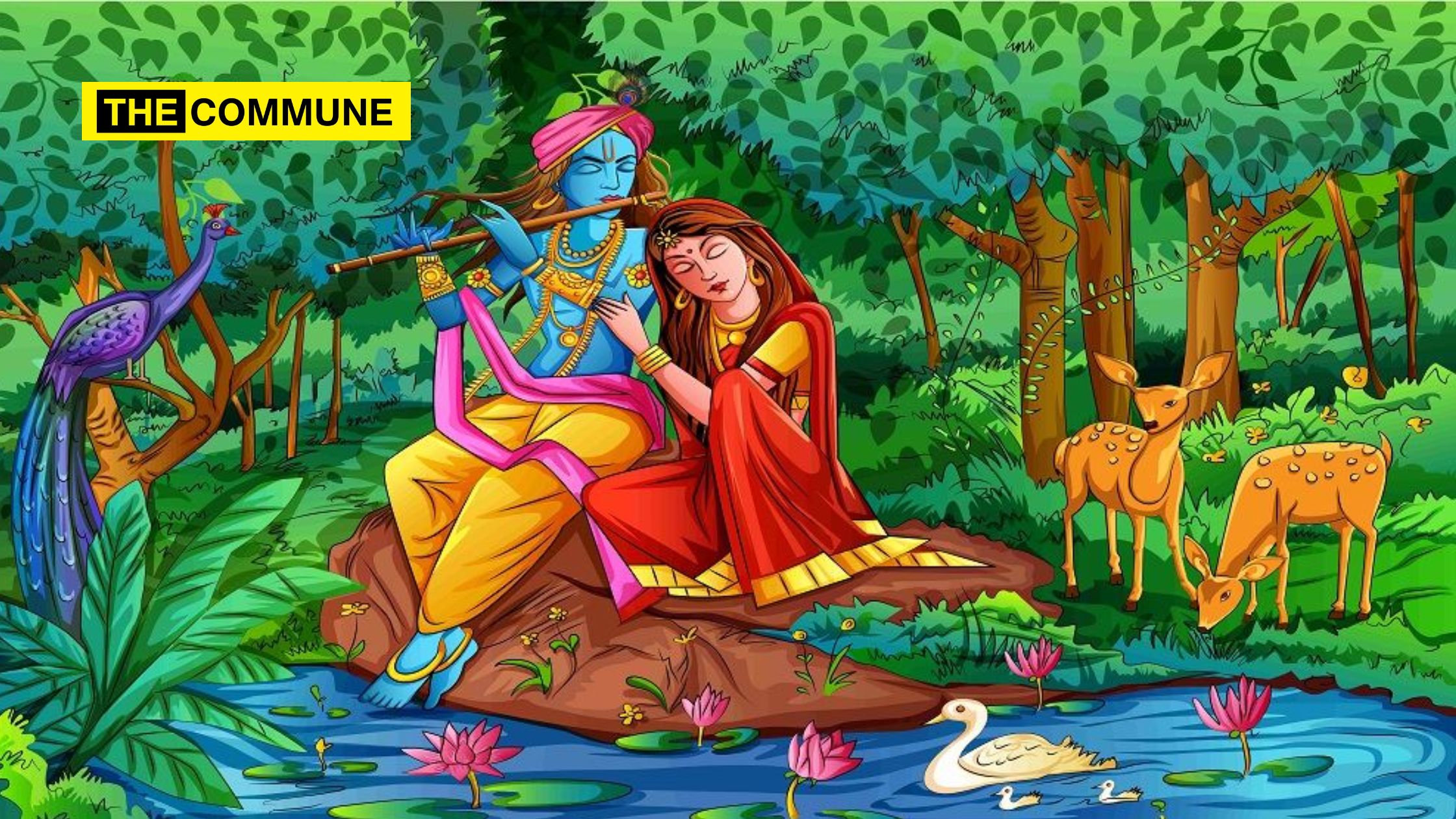
The Songs Of Spring

India is the land of Shad Ritus or six seasons: Vasant (spring), Greeshm (summer), Varsha (monsoon), Sharad (autumn), Hemant (early winter) and Shishir (deep winter). Most festivals of India are deeply connected to these seasons as each of them holds significance in the nation’s agrarian way of life. Each season is a unique experience and brings along natural gifts. It is these seasonal abundances that are celebrated in the art and culture of the subcontinent.

Two seasons that are celebrated the most in Indic literature, music, dance and folklore are Vasant or spring and Varsha or monsoon.

In Hindi literature, Vasant is called Rituraaj or the king of seasons and Varsha is considered the queen.

In Uttar Pradesh and parts of Bihar, special seasonal songs in semi-classical and folk style, are sung during both. Baramasi, Kajari, Saawani and Jhoola are songs of monsoon, sung particularly during the month of Shravan or SaavanPhaag, Hori, Ullara and Chaiti are the songs of spring, sung during the months of Phaalgun and Chaitra (called Phaagun and Chait, colloquially).

Vasant Panchami (fifth day of the bright half of the month of Magha) marks the onset of spring. However, it takes a month and a half after Vasant (colloquially called Basant) Panchami for winter to leave completely. Ten days of Magha and the entire month ofPhaalgun form a period of change from Shishir (extreme winter) to Vasant.

According to the Panchang (Indic calendar), Phalgun is a Shishir month but in popular culture, it is considered a Vasant month. It is spent witnessing the magical transition of winter to spring : the thick winter fog of northern India lifts, gentle breeze or Basanti byaar blows, days become longer, sunrays become warmer, leaves fall, new shoots take their place and flowers bloom.

In Phalgun, cheery yellow marigolds and mustard fields gradually make way for the passionate reds of Semal (Silk cotton), Tesu/Palash (Flame of the forest) and Mahua blossoms. The Asian Koels break their silence after many months and Bumblebees or Bhanwrey buzz around the gardens. This natural celebration peaks on Holi when humans join in, smear colour made from Tesu flowers on each other’s faces and throw scented water on one another to mark a complete riddance from winter. The Phaag and Hori songs describe the beauty of this seasonal transformation.

In the Awadh region of Uttar Pradesh, the birth place of Ram, the songs speak of ‘Ram ji’ playing Holi. While in the Braj region, birth place of Krishna, they retell stories of the epic holi ‘Kanhaiyya ji’ used to play with Radha and Gopikas. However, this doesn’t mean that songs in praise of Krishna are not sung in Awadh.

A popular Awadhi Hori – Hori khelen Raghuveera awadh maa (Ram plays Holi in Awadh) was adapted for Amitabh Bachhan’s film Baaghban in 2003. An authentic version of this Hori, rendered by Malini Awasthi can be heard by clicking here.

These songs are mostly in languages like Awadhi, Brajbhasha and Bhojpuri.

All these languages are different from each other. Most people, including some natives of North India, tend to think that the entire Uttar Pradesh and Bihar speaks Bhojpuri. This is an unfortunate misconception.

The fact is that the region popularly called the Hindi heartland or Hindi belt (Bihar, Chhattisgarh, Haryana, Himachal Pradesh, Jharkhand, Madhya Pradesh, Rajasthan, Uttarakhand, Uttar Pradesh and the National Capital Territory of Delhi) has multiple languages.

Both Bihar and Uttar Pradesh have five to six local languages and not all of them are merely dialects of Hindi. They share an affinity with Hindi and Urdu but they are distinct in character. It is believed that some of them were spoken even before Hindi and Urdu came into existence. These languages play an important role in folk traditions.

It is worth mentioning that the classical Holi compositions are different from folk and semi-classical songs. Phaag, Hori and Ullara songs are based on ragas but don’t strictly adhere to the raga structures. They are simplified, fluid and more ornamental in nature.

After Holi, the month of Chaitra or Chaita begins. Songs called Chaiti are sung during this month. Mostly, they can be identified by the leitmotif ‘Ho Rama’ that is repeated throughout the composition. A beautiful Awadhi Chaiti by Girija Devi – Chait maase chunri rangaibe ho rama! piya ghar aiye hain (I will get my scarf dyed in bright colours during the Chait month, my beloved will come home then) can be heard by clicking here.

Pt. Chhannulal Mishra has also rendered a melodic Benarasi Chaiti – Sejia se saiyan ruth gaile ho rama! koel tori boliya (My beloved is upset and refuses to make love while the Koel calls incessantly), it can be heard by clicking on the link below. In the recording ‘Pandit ji’ also speaks about Chaitaa and Ghato, two other forms of Chait songs. To hear click here

Given below are the links to a Hori Aaj biraj mein Hori re rasiya (Holi is being celebrated in Braj today) and a Chaiti Piya milan hum jaibe (I shall go to meet my beloved) rendered by Shobha Gurtu.

One –https://www.youtube.com/watch?v=Bx4DxKTLzHU

Two –https://www.youtube.com/watch?v=NDEAVqqegmk

Vasant and Varsha are considered seasons of love. Therefore, their songs are predominantly romantic or Shringaar rasa-pradhan in their themes. The intense pangs of Viyog (separation) shringaar and the pleasures of Sanyog (union) shringaar are expressed in them. These songs also have a spiritual meaning. Piya or Saiyyan (beloved) is a metaphor for Parmatma or the supreme soul and the Jeevatma or living being yearns to unite with Parmatma.

Synchronising one’s lifestyle with the seasons is a way of becoming one with nature, the purest manifestation of Parmatma. Songs of the seasons facilitate this process of living in harmony with nature. Spring is a season that invigorates the senses and stimulates the mind.

Phaag, Hori and Chaiti songs make one appreciate the beauty of this season even more.

P.S. The words Phaag, Phaagun and Phalgun are pronounced with a Phsound created by pressing both lips together. The sound of Ph has no equivalent in English. Fa is pronounced by touching lower lip and upper teeth. Fa and Ph are distinct sounds and both are present in Indian languages. Faag, Faagun and Falgun are incorrect pronunciations and spellings as words of Sanskrit origin have no Fa sound, it is present in words of Arabic and Persian origin.

Acknowledgement: Special thanks to Shivangini Yeashu Yuvraj, Hindustani vocalist and expert on seasonal songs, for her inputs.

This article was originally published in e-Samsrikriti and has been republished here with permission.

Click here to subscribe to The Commune on Telegram and get the best stories of the day delivered to you personally.
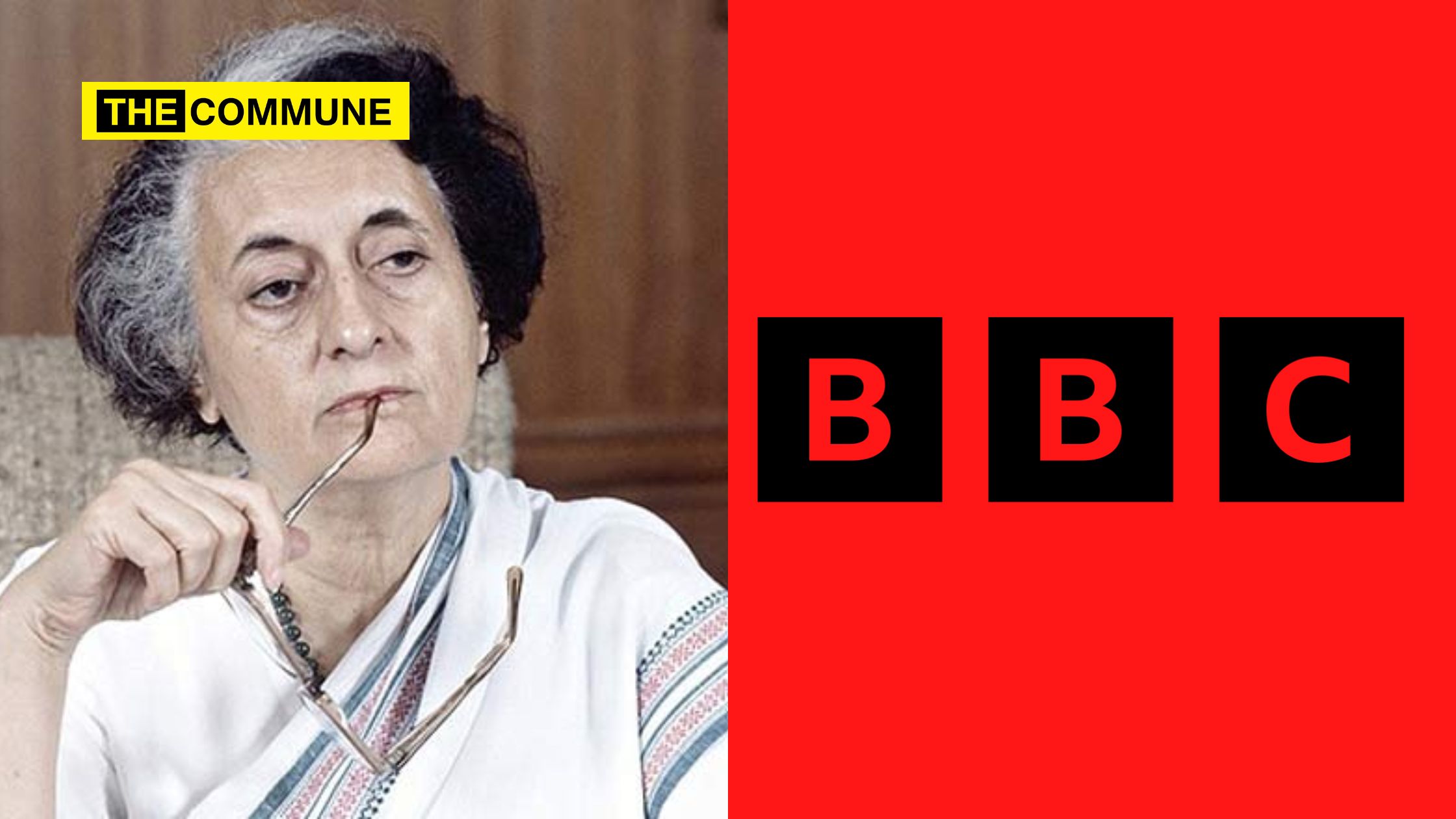
When Indira Gandhi Banned BBC For ‘Biased’ And ‘Derogatory’ Coverage

The central government recently invoked its emergency powers to direct YouTube and Twitter to remove links to the BBC documentary which has been “selective” with the truth about Prime Minister Narendra Modi’s role in the 2002 Gujarat riots.

But this isn’t the first time that BBC has earned the wrath of the Indian government.

Indira Gandhi when she was Prime Minister too cracked down on BBC for peddling propaganda.

The story behind Indira Gandhi banning the BBC for two years during the 1970s is quite interesting!

The BBC broadcast the UK premiere of Calcutta, a documentary film by acclaimed French director Louis Malle, on British television. The film, shot in and around Calcutta between 1968 and 1969, was by all accounts a visually rich, ‘impressionistic portrait’ of India’s second most populous city, and one of the world’s most intriguing socio-cultural centres.

Following a brief visit to Calcutta in 1967, Malle—who is now perhaps best remembered for films such as Pretty Baby (1978), the critically acclaimed Au revoir les enfants (1987) and Damage (1992)—had returned to India in 1968 and immersed himself ‘and his camera’ in the life of the intensely sprawling city. He concentrated on uncovering hidden existences within Calcutta; creating a sinuous visual narrative of the city in which people and street events became the subjects of the filmmaker’s attention.

Basically, he focused more on poverty than on the “working classes”. Of course, the Indira Gandhi government was not happy with this.

So, the Indian High Commission (HC) received complaints about the documentary being highly biased against India. It reached out to the UK Foreign Office (FO), which indirectly said they couldn’t interfere with BBC. The Indian HC asked the BBC to pull the documentary series from their schedule, and warned that their role would become superfluous if they continued to “vitiate the minds of the British people against India”.

Therefore, according to a research paper, on 29 August 1970, “the BBC was expelled from India by order of Indira Gandhi’s socialist government, under a hail of neo-imperialist criticism.” The BBC representative in New Delhi, Mark Tully, and correspondent Ronnie Robson were informed of the GoI’s decision to close the BBC office in the capital within the next 15 days.

Unlike now, there was near-unanimous political support for “taking the BBC to task” over their “anti-India sentiments”. A long series of biased coverage for years after Independence culminated in this ban.

The BBC had shown Dom Moraes burning his Indian passport (not surprised at all) during the 1961 Goa liberation movement. Similarly, their coverage of the 1965 war and the 1969 Ahmedabad riots (surprised there were riots before 2002) was “neither forgotten nor forgiven.”

In the 1950s while India had become a key player in the Non-Aligned Movement (NAM) Pakistan signed the CENTO pact with Britain, the US, and others. This defined how the BBC would approach India, and their relationship with All India Radio (AIR), on which they depended a lot, soured.

In 1954, Stanford Univ. surveyed 42 exchange students from India out of which 41 listened to BBC (and obviously AIR). So Stanford concluded that the BBC was popular in India for its objectivity, truth-telling, and authority. Sample size, or a bad sample, is not a new issue. It was this reach of the BBC, even through regional languages such as Hindi and Bengali, that made the GoI monitor its content.

With the Cold War causing a geopolitical alignment between Britain, the US, and Pakistan, the coverage in the 60s was especially biased against India. The opposition to the ban on the BBC came not much from political opponents, but from the print media.

The Statesman, The Hindustan Times, Indian Express, and The Hindu all opposed the government move in what they considered as selective censorship and a blow to media freedom. Of course, there was the Soviet angle – for India was quite close to the Soviets.

The BBC re-entered only in late 1971, and its reporting of the 1971 war was one of the reasons. And then came the 1975 Emergency imposed by our former Prime Minister Indira Gandhi. Of course, it had to find ways to come to India

Besides, a statement was also signed in the year 1975 by 41 Congress MPs accused the BBC of broadcasting “notoriously anti-India stories” and asked the government “not to allow the BBC to report again from Indian soil”. The BBC never missed an opportunity to malign India and willfully misrepresent the country, the statement said.

(This article was originally published in News Bharati and has been republished here with permission.)

Click here to subscribe to The Commune on Telegram and get the best stories of the day delivered to you personally.
Jagannatha Iyer: The Unsung Hero Of Indian Freedom Struggle Who Survived A 1000 Lashes

Countless people have given their lives in the struggle for India’s independence. We are all familiar with the histories of King Kattabomman, Oomaithurai, King Gopala Nayakar, Rani Velu Nachiyar, King Muthuvadukanathar, King Marudu Pandyars, King Theeran Chinnamalai, King Shakkanti Venkai Udeenanthevar, and King Muthuramalinga Sethupathi in Tamil Nadu.

During the time when King Muthuramalinga Sethupathi was imprisoned in Chennai by the British, there were other glorious leaders who fought the British in the Ramanathapuram region who rarely find a mention in history.

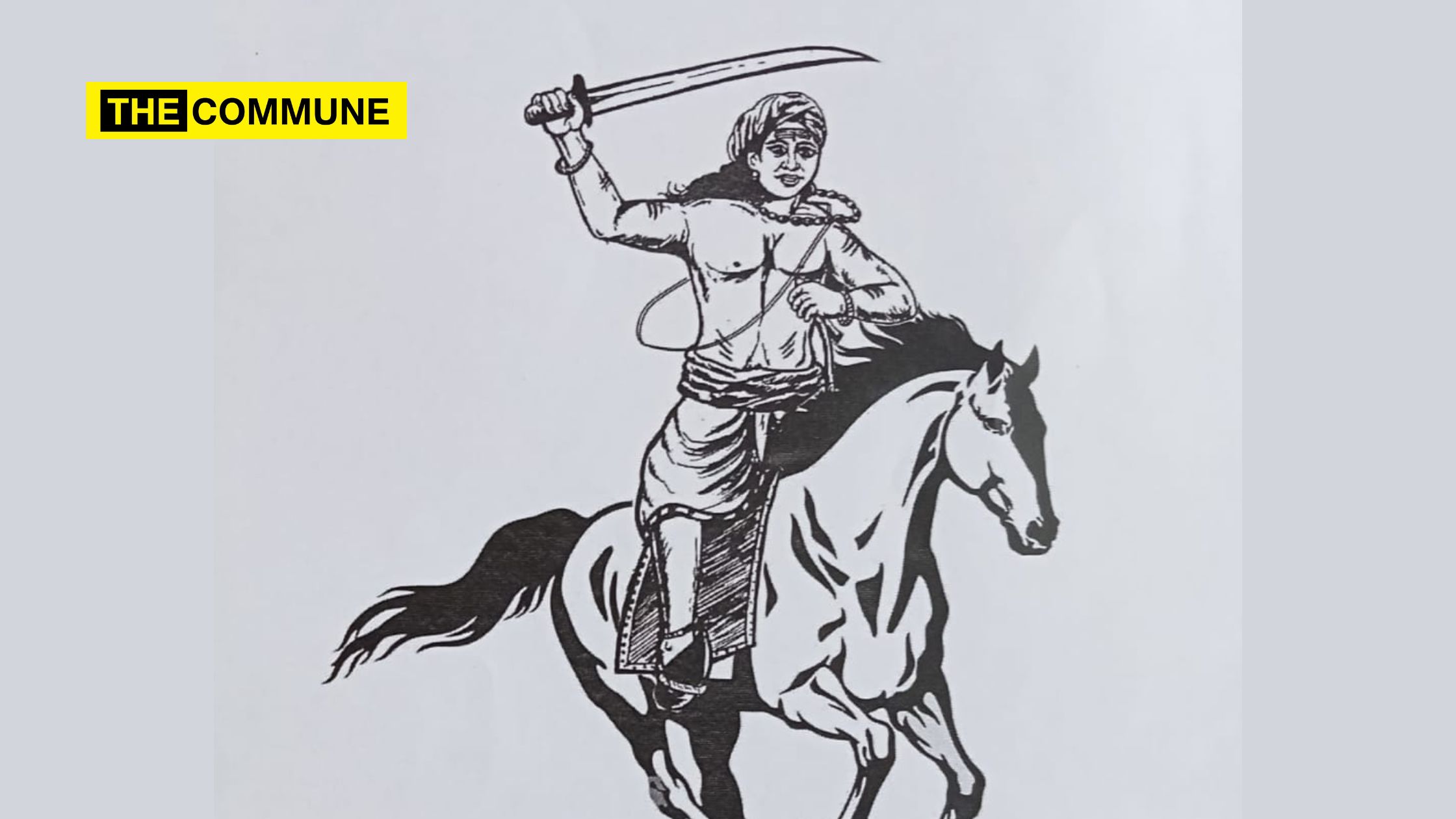
Rameswaram is considered to be one of the most sacred place for Hindus in the world. Sethupathi kings had been protecting the temples in Rameshwaram for years. One such king who protected Hindu Dharma was Vijaya Raghunatha Sethupathi alias Rebel Muthuramalingam, who came from that lineage.

On February 8, 1795, the British East India Company (EIC) which was gaining political power and opportunity in Tamil Nadu at the time, entered Ramanathapuram Fort for the second time and arrested the king. He was then sent back to Trichy Fort and imprisoned there.

Enter Jagannatha Iyer

Not much is known about the early life of Jagannatha Iyer. Recorded history tells that Muthu Karupappathevar and Maveerar Mayilappan along with Jagannatha Iyer and his friends Kumarathevar and Kannathevar took it upon themselves to protect the people of Ramanathapuram from foreign imperialism. They were worthy companions of Chithirangudi Mayilappan Servaikkaarar and were very brave and patriotic during the people’s revolt that began on 24 July 1799. Their ancestors were loyal to King Muthuramalinga Sethupathi. The trio of Jagannatha Iyer, Karuppathevar and Maveerar Mayilappan became household names because of their valour.

According to the request of Meenangudi Muthu Karupappathevar, through the efforts of Rajasingha Mangalam, Anju Kottai Oriyur, Khuththagainadu, a hundred carts bought from the money collected from the people of this area, were loaded with medicine (Karu Marunthu) and sent to Panchalankurichi in the South West. Along with the medicines, fifteen thousand Maravars were sent there to fight in the Paanchai War. They used to get their arms and ammunition from the Dutch in Sri Lanka during those times.

Paddy looted by the EIC army from Rajasingha Mangalam and Anumanthakudi areas was worth several lakhs. But Jagannatha Iyer and his friends weren’t spectators to the loot. They ensured that they raided and inflicted damages on the company’s forces. A few records of EIC note that the main reasons for the losses of the company’s forces were Jagannatha Iyer and Kumarathevar.

The Capture Of Jagannatha Iyer

The first task of General Miller, who came from Mudukulathur to Ramanathapuram was to capture Jagannatha Iyer and his associates. They raided the lanes of Rajasinghamangalam to look for the rebels.

After three months, one Vanniyathevan betrayed Jagganatha Iyer and disclosed the latter’s hideout and the British imprisoned him at the Ramanathapuram fort in Kamuthi. He was tied with huge chains and an order was passed to give him a thousand lashes with a whip. Kumaran and Kannanthevar, who were with him, were killed instantly. Despite all the blows, Jagannatha Iyer survived. His house and other properties were confiscated and was ordered to be banished to Penang Island.

British tortured Maravar land revolutionaries like Singam Chetty, Pottur Muthukaruppaillai, Thirukannath Devar, Kanaka Sabapathithevar, and Kumara Devan, and buried them alive.

When the British asked Jagannatha Iyer during the interrogation, ‘Did you try to kill Lusington?’ Jagannatha Iyer arrogantly stated that he had escaped from his hands.

Colonel Agnew recorded that he had no fear of being caught. Jagannath Iyer was imprisoned in the Tirumayam hill fort as a prisoner. After that they took him to Thoothukudi along with 72 others including Periya Udayanathevar, Jagannatha Iyer, and Sheikh Usain.

On 11 February 1802, he was transferred through Tuticorin port with King Maruthupandyar’s son Duraichami and 72 prisoners. Three of the prisoners, Panjalangurichi Chinnapichaithevar, Adanur Subramania Nayakar, and Viruppachi Appa Nayakar, died on the deck during the voyage.  After a difficult seventy-five-day voyage, they arrived on the distant island of Penang and were lodged in a prison near the Cornwallis Fort.

Ten people died within a few days of their arrival on Penang Island on 26 April 1802. Jagannatha Iyer, the Amaldar of Ramanathapuram, was the first to die on the day he arrived.

Jagannatha Iyer survived the 1000 lashes he received in Ramanathapuram, as well as a difficult journey in which the freedom fighters were only given one meal a day. He did this for the sake of India’s independence.

Today, Jagannatha Iyer remains buried in the pages of history.

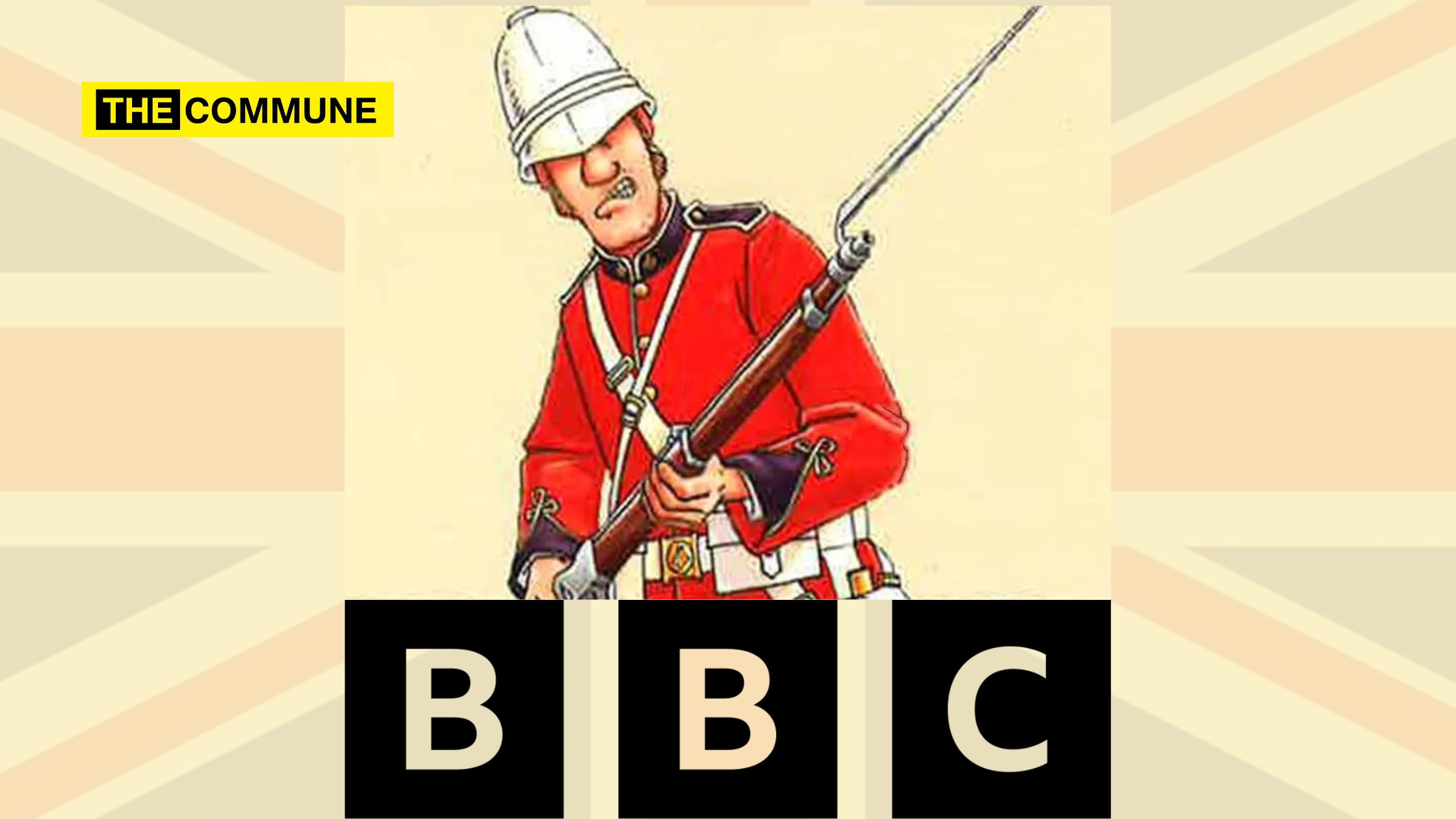
BBC: Bunch Of Banal Colonialists With A History Of Faking

Recently, an online petition has demanded an independent probe into a “serious breach” by the BBC in its duties as a public broadcaster in the UK over the controversial documentary series on Prime Minister Narendra Modi. The petition stated, ‘Call for an Independent Investigation into the BBC over Modi documentary’ on Change.Org, which “strongly” condemns the British Broadcasting Corporation (BBC) for failing to meet the “highest standards of editorial impartiality”, has attracted over 2,500 signatures within a day since it went online. In this context this article will look in to this allegation of breach of media ethics by BBC and also analyses as to why this is not a first instance for BBC in its long existence.

What The Petition Revealed?

The recent petition has sought an independent probe against British Broadcasting Corporation (BBC), terming the documentary a “serious breach”. It also called out the BBC for “breaching” its duties as a public broadcaster. Condemning the documentary, the petition termed the two-part series a “sinister propaganda journalism that deliberately misinforms its viewers”. The petition further stated that, “We strongly condemn the BBC for failing to meet the highest standards of editorial impartiality in its two-part documentary ‘India: The Modi Question’. The timing for airing, some 21 years later, a so-called investigative report that has nothing new in it, but only shoehorns old allegations to fit the producers clearly predetermined conclusions in itself speaks volumes,”. The petition further states that, “Inexplicably, it comes at a time when India’s Supreme Court has, after a lengthy investigation and due process, completely absolved Prime Minister Modi from the very same allegations of complicity in the 2002 riots that the BBC now seeks to rake up after more than two decades,”. The petition has since gone viral and caught the eye of truth seekers who are keen to expose the propaganda machine of BBC.

Bunch Of Banal Colonialists Peddling Propaganda

This is not the first time BBC has indulged in cheap piece of propaganda to further its agenda. BBC has a history of making fake documentaries based on lies and getting caught and the latest Modi documentary follows a similar path. Let’s have a look at instances in which BBC has adopted a similar path.

For example, a documentary series put out by the BBC’s Turkish language news site about low-income households in Turkey has drawn intense criticism after a woman featured in its most recent episode who claimed to live below the poverty line has turned out to be living in the lap of luxury.

In another instance BBC was accused of faking a documentary on wild life. It was alleged that scenes shown on Sir David Attenborough’s acclaimed series Frozen Planet were filmed in a Dutch animal park and not in the wild. Even though BBC jumped to defend content of the series the faking of the work was apparent from the part of BBC.

It is apparent that faking scenes for views is an indulgence for BBC. In another instance BBC was caught faking a scene and in embarrassment the BBC has admitted that a scene from a television documentary series showing tribal people living high up in treehouses was faked by the makers of the programme.

In all these instances the ability of BBC to fake scenes just for ‘media minutes’ is very apparent and this pattern has been adopted in case of documentary on Modi also.

Colonialist And Hindumisic

BBC has an history of taking colonial and Hindu phobic attitude and with the latest ‘Modi documentary’ this attitude has again resurfaced. With its bigoted agenda, the BBC, which has all along attempted to isolate Hindus by selectively reporting crimes in which the alleged accused were reportedly Hindus and referred to it as a ‘hate crime’ has come up with a series that discusses PM Modi’s role in 2002 Gujarat riots.

 As British Indian Adit Kothari, founding member of the Indic Society, who recently organised a protest outside the BBC in London over its anti-India bias puts it, part of the purpose of the series seems to be to influence pockets of urban population in India in relation to the upcoming 2024 elections.

“Although the consumption of the BBC is very limited in India, it will nonetheless provide ammunition to the media and opposition to use BBC’s previous credibility to spin a narrative,”, he further stated that adding that “BBC is known for anti-India, anti-Modi campaigns. Domestically, this should be viewed as a direct assault on the Tory party and on Rishi Sunak by the Left-leaning liberal intelligentsia in the UK,”. 

Apart from colonial mentality of imposing the ‘western righteousness’ on Indians, BBC also has an history of taking anti-Hindu/anti-India stance more often than not. A Twitter user Darshan Pathak has collated a thread of BBC English, and BBC Hindi reports that show the standard of reporting it does. Varying from the ‘Sanatani way of peeing’ to ‘why men wear dirty underwear’.

To look at these instances, back in September 2015, BBC Hindi questioned people if they followed the Sanatani way of peeing. In August 2019, soon after the abrogation of Article 370 in Kashmir, BBC came up with a fake report claiming the Indian Army beat up and tortured the locals in the valley. The report’s title was “‘Beaten and tortured’ by the Indian army”. In September 2021, irked by the growth of the Indian economy, BBC published a report suggesting the jump in India’s GDP is problematic. In October 2022, BBC Hindi claimed that Diwali cleaning increased the burden on Indian women. In almost all the cases BBC has adopted blatant title hunting and click bait tactics by adopting ‘anti-Hindu’ and ‘anti-India’ stance. 

Neo-Colonialists Should Be Dealt With A Left Hand

BBC has a long history of mocking, shaming, conspiring and propagating anti-India especially anti-Hindu sentiments. They must be called out and face the consequences as required. BBC has also indulged in spreading ‘Hindumisic’ and ‘anti-India’ narrative. As citizens of the new India who won’t take beating lying down from colonialist publication, we must expose the agenda of this shameful and unethical publication in order to protect people from being misled.

BBC should instead look back in history and make a documentary on Bengal Famine called “UK: The Churchill Question”.

Click here to subscribe to The Commune on Telegram and get the best stories of the day delivered to you personally.
Without Economic Strength Nothing Can Be Preserved In The Country: Sadhguru At Isha’s Republic Day Ceremony

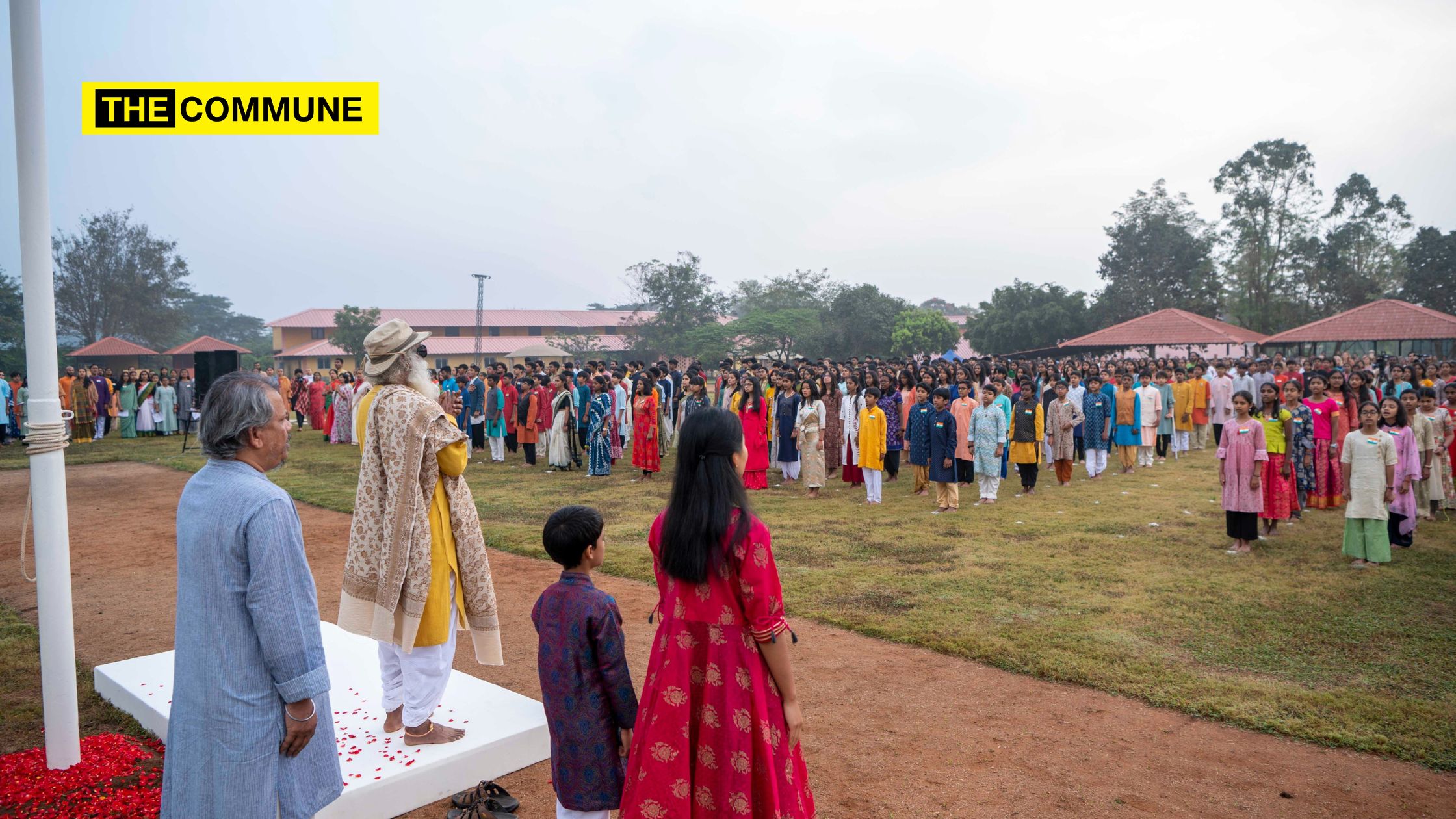
“If we are not economically strong, we cannot protect our culture and spirituality in our country,” said Sadhguru at the Republic Day celebrations held today (January 26) in Isha.

“Till 300 years ago our country India was the most economically prosperous country in the world. We are once again striving to regain that status. Without economic resilience nothing else can be preserved, whether it is culture, our values, or our very deep-rooted spiritual process, ”said Sadhguru.

Observing the common threat that existed in the country despite its apparent diversity, Sadhguru remarked, “We living in India are different in many ways like caste, religion, language, ethnicity, food habits and culture. Despite our differences, we have all lived together for hundreds of years. Before independence, our country was ruled by more than 600 feudal lords. However, all the outsiders called us by the single name of Hindustan or Bharat,”

Tweeting on Republic Day, Sadhguru said, “#RepublicDay – A reminder of the wonderful journey of our beloved Bharat, which has not only become a great democracy but also a symbol of a vibrant, diverse and united nation. Every citizen should continue to contribute to building a strong, inclusive and compassionate #Bharat,” he said.

The occasion was marked by beautiful cultural performances by students of Isha Samskriti and Isha Home School capturing the cultural depth, patriotic fervor, and diversity of the country. In another Republic Day celebration at Isha, Ikkarai Poluvambatti Panchayat Chairman Mr. Sadhanandham hoisted the national flag. Hundreds of local villagers including tribal people participated in the event.

Click here to subscribe to The Commune on Telegram and get the best stories of the day delivered to you personally.