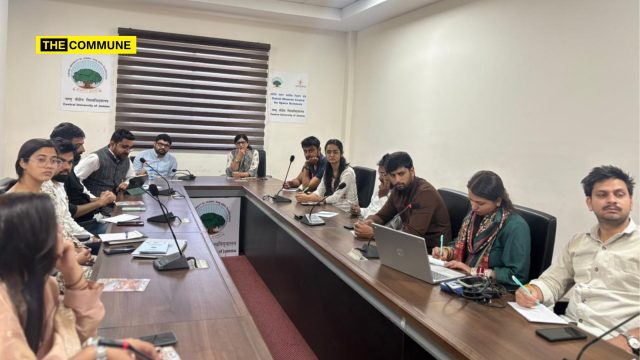
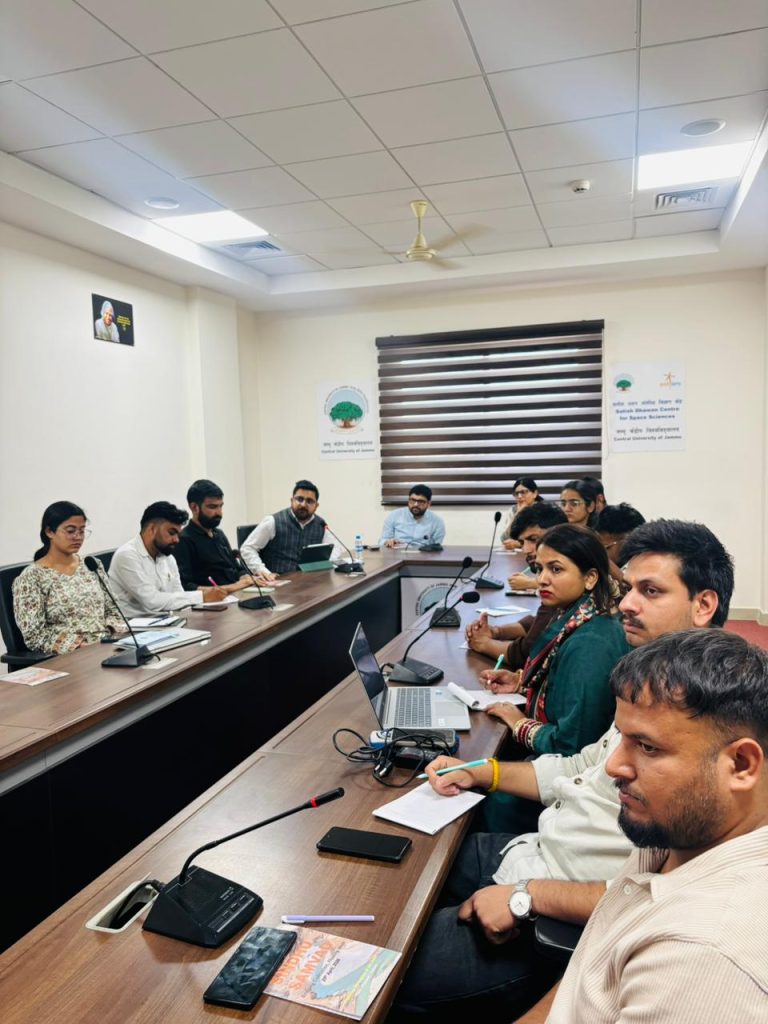
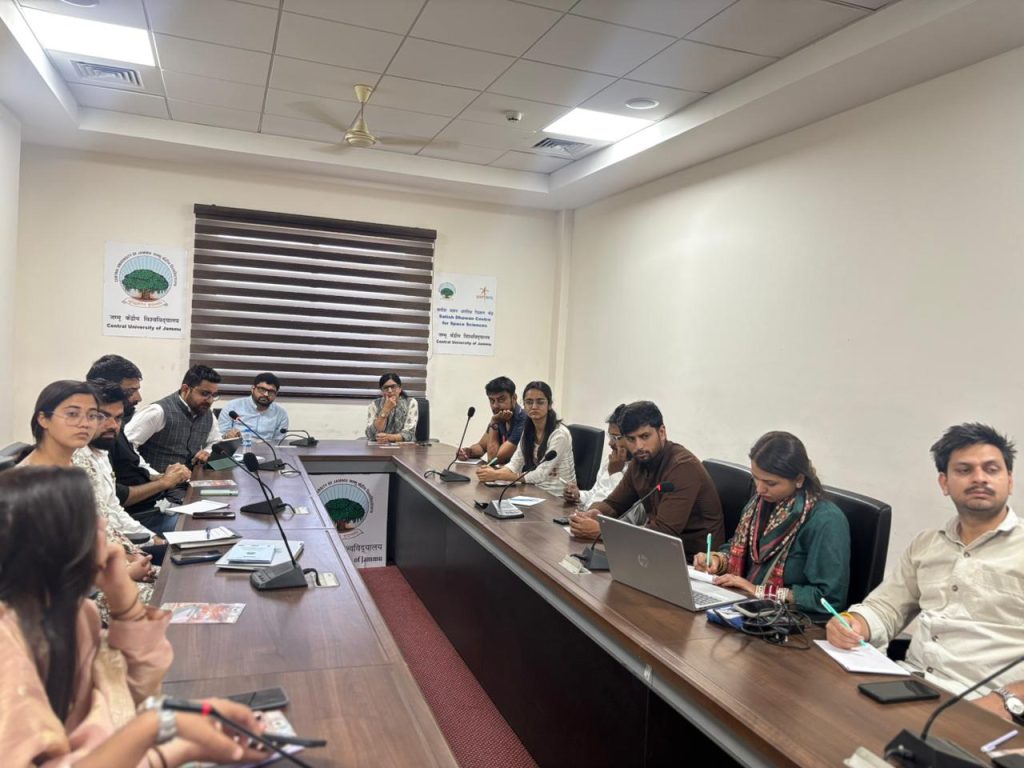
The inaugural edition of Sindhu Samvad, a flagship interdisciplinary dialogue series centered on the civilizational, ecological, and geopolitical significance of the Sindhu (Indus) river system, was successfully conducted at the Central University of Jammu (CUJ) on Sunday.
Organized by the Jammu & Kashmir-based Paramrshniti Foundation, with CUJ and Sindhu Central University as co-host institutions, the event marked the launch of what organizers describe as a nationwide project aimed at fostering structured, cross-disciplinary discourse spanning history, policy, and geopolitics.
The program opened with an address by Prof. Ritu Bakshi, Dean of Students’ Welfare at CUJ, who commended the Paramrshniti Foundation for pioneering the initiative and called Sindhu Samvad “a historic stride forward” in India’s intellectual and cultural dialogue. The event was held with the blessings of CUJ Vice-Chancellor Prof. Sanjeev Jain, who reaffirmed the university’s commitment to knowledge and heritage.
“The Central University of Jammu has remained committed to promoting knowledge, research, and cultural dialogue,” Prof. Jain stated. “We must carry forward the continuity of Indian knowledge and culture, much like the flowing stream of the Indus.”
Civilizational and Ecological Dimensions
Dr. Ajay Singh delivered a detailed presentation on the civilizational significance of the Sindhu River, tracing its role as the lifeline of the ancient Sapta Sindhu civilization, known for its advanced urban planning, extensive trade networks, and rich cultural heritage. He argued that the river was not merely a source of sustenance but a conduit for cultural exchange, agricultural development, and artistic expression whose legacy remains visible in contemporary Indian culture.
Dr. Singh also engaged in an interactive exchange with scholars from multiple disciplines, drawing on recent archaeological findings along the river to illustrate how the Sindhu has shaped successive human societies across millennia.
Dr. Shweta Yadav complemented this perspective by focusing on the ecological dimensions of the Indus river system, stressing the importance of institutional collaboration, particularly with Sindhu Central University, in addressing the river’s environmental challenges.
Strategic Significance Amid IWT Suspension
Dr. Tilak Raj Sharma brought a timely policy dimension to the proceedings, underlining the dual strategic and ecological importance of the Indus River’s tributaries, especially within the context of Jammu & Kashmir. He noted that these watercourses are indispensable for regional biodiversity, water security, and the livelihoods of local communities.
His remarks carried particular weight given the current suspension of the Indus Waters Treaty (IWT). The treaty, which has governed India-Pakistan water-sharing arrangements since 1960, has been placed in abeyance following the terrorist attack in Pahalgam last year, making dialogues such as Sindhu Samvad all the more urgent and relevant in shaping India’s forward policy on the river system.
The first session of the day was moderated by Siddharth Mahajan and Shubham Raina, who guided the discussion across its historical, ecological, and strategic threads.
Organizers indicated that Sindhu Samvad will continue as a recurring national-level forum, with future editions expected to deepen engagement on the culture, climate, and civilizational significance of the Indus, particularly as India navigates the evolving geopolitical and hydrological stakes surrounding one of the subcontinent’s most consequential river systems.
Subscribe to our channels on WhatsApp, Telegram, Instagram and YouTube to get the best stories of the day delivered to you personally.