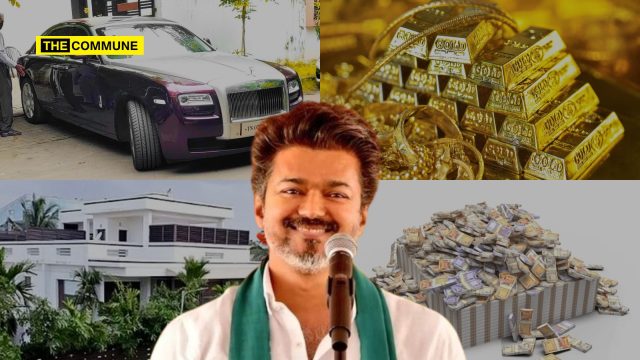
A visible mismatch between crowd enthusiasm and ground-level mobilisation is emerging as a key challenge for actor-politician Vijay’s party, Tamilaga Vettri Kazhagam (TVK), as it attempts to convert popularity into votes in the Tamil Nadu Assembly elections, as reported in The New Indian Express. This comes amid the fact that Vijay who himself declared ₹640 crore in his affidavit submitted in his nomination form.
While Vijay’s rallies continue to draw massive, high-energy crowds, the party’s limited on-ground presence, weak organisational depth, funding shortages, and reliance on inexperienced candidates are hindering campaign effectiveness across multiple constituencies.
During a recent roadshow in Trichy West, the scale of mobilisation appeared starkly modest. The TVK candidate’s convoy was accompanied only by a campaign van, two autorickshaws, a handful of children blowing whistles, a few women, and some men on motorcycles. In nearby Woraiyur, door-to-door campaigning was carried out by small groups of students and women. Even party loyalists acknowledged that such efforts fall far short of the crowds seen at Vijay’s large public meetings.
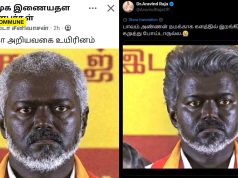
With Vijay restricting himself to select appearances, the party has been forced to depend on surrogate campaign strategies. In Kumbakonam, an AI-generated hologram of the actor-politician was deployed to attract crowds. Elsewhere, large cut-outs were used in Thiruverumbur, and lookalikes appeared in Kolathur to maintain visibility. However, party insiders concede that these methods have limited impact when it comes to building voter connection at the constituency level.
A functionary from Manapparai told TNIE that unlike other parties, where senior leaders share the stage with candidates and introduce them to voters, TVK candidates are often left unrecognised even during Vijay’s high-attendance events. He pointed out that despite large gatherings during Vijay’s visits, candidates were not introduced to the electorate.
Across districts, candidates, many of them first-time entrants into politics, reported that their campaigns are largely self-funded. With no substantial financial support from the party headquarters, local functionaries and part-time workers are contributing small amounts, typically between ₹300 and ₹500 per day, to sustain campaign activities. A functionary in Karur stated that the party does not have the financial muscle of established political players and is relying heavily on Vijay’s personal popularity to secure at least one vote per household.
In Sengulam, Trichy, local workers said they are pooling funds to cover basic expenses such as event arrangements and music systems, adding that there is no structured funding mechanism in place. In Karur, only about 10 to 15 individuals are consistently engaged in campaign work. Sources indicated that a small group of volunteers has been canvassing for nearly 15 days for candidate V P Mathiyalagan using pre-planned routes, reflecting the limited manpower available.
Functionaries admitted that most of those involved in the campaign are new to politics and are still learning the basics of electoral mobilisation. Several expressed hope that the party would perform better in future elections after gaining experience.
The logistical difficulty of managing large crowds and ensuring security has also restricted Vijay’s ability to conduct widespread physical campaigning. At the same time, allegations of favouritism in ticket allocation have reportedly affected morale among party workers.
In Madurai, functionary S R Thangapandi highlighted the lack of clarity regarding Vijay’s campaign schedule in the region, a concern echoed in several central and delta districts. Similarly, Krishnagiri candidate P Mukundhan acknowledged that Vijay would not be able to visit every constituency.
In Coimbatore, candidates said their campaigns gathered momentum only in the final phase, citing weak coordination, limited funding, and the inexperience of candidates as reasons for the delayed push.
Party sources in Villupuram and Vellore also reported funding constraints affecting outreach efforts. A resident of Kamban Nagar in Villupuram, M Hemavarshini, said that while she follows Vijay’s campaign on social media, she is unfamiliar with the local candidate.
Even in Trichy East, where Vijay himself is contesting, issues of coordination persist, including gaps in district-level leadership. Party leader Aadhav Arjuna has announced cadre training initiatives, but their impact is yet to be seen.
Former TVK functionary A R Basha, who recently defected to the Dravida Munnetra Kazhagam (DMK), attributed his departure to what he described as the party’s lack of preparedness. He said that the absence of cadre training and a structured booth-level organisation has left TVK struggling to mount an effective campaign.
Overall, five key issues define TVK’s current campaign landscape: absence of central funding support, a sharp disconnect between rally crowds and local mobilisation, low voter familiarity with candidates, widespread inexperience among cadres and candidates, and an organisational structure that remains underdeveloped at the booth and district levels.
Subscribe to our channels on WhatsApp, Telegram, Instagram and YouTube to get the best stories of the day delivered to you personally.