In a significant development that underscores the dominance of the Dravida Munnetra Kazhagam (DMK) in Tamil Nadu’s political landscape, the Indian National Congress has finally accepted a seat-sharing deal that falls well short of its initial aggressive demands. After days of high-stakes drama, public posturing, and behind-the-scenes interventions, the Congress has agreed to contest only 28 Assembly seats in the upcoming 2026 Tamil Nadu elections—three more than the 25 it fought in 2021 but far below the 35–41 seats it had pushed for.
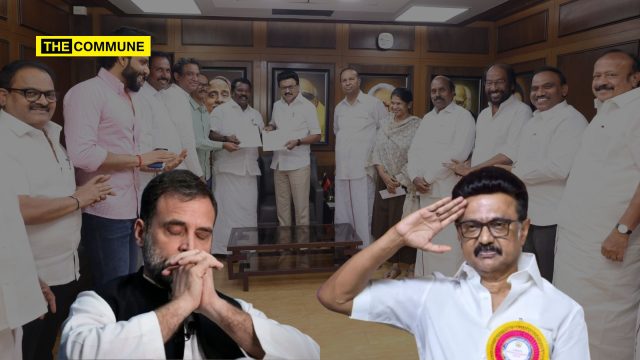
The agreement, sealed on March 4, 2026, between DMK president and Chief Minister M.K. Stalin and Tamil Nadu Congress Committee (TNCC) president K. Selvaperunthagai, also includes one Rajya Sabha berth for the Congress. This comes as a compromise after prolonged stalemate, where the DMK held firm on limiting concessions to accommodate its broader alliance partners, including smaller parties like the IUML, MMK, VCK, and others.
பத்திரிகைச் செய்தி
மதச்சார்பற்ற முற்போக்குக் கூட்டணியில் இடம்பெற்றுள்ள தமிழ்நாடு காங்கிரஸ் கட்சியுடன் தொகுதி பங்கீடு pic.twitter.com/4X0gCohqOB
— DMK (@arivalayam) March 4, 2026
The Build-Up to the Drama
Seat-sharing talks between the long-time allies had been fraught with tension since early 2026. The Congress, buoyed by its national role in the INDIA alliance and its performance in recent Lok Sabha elections, entered negotiations with high expectations. Party leaders initially demanded around 40–41 Assembly seats—roughly one per Lok Sabha constituency in Tamil Nadu—along with multiple Rajya Sabha seats and even a share in power if the alliance wins.
The DMK, riding high after its sweeping victory in 2021 and strong showings in subsequent polls, rebuffed these demands. Sources indicated the DMK was unwilling to dilute its control, emphasizing that Tamil Nadu has never had a coalition government and that Chief Minister Stalin opposed power-sharing arrangements. The DMK initially offered 25 seats—the same as in 2021—plus one Rajya Sabha seat, framing it as a “take it or leave it” proposal at points.
Negotiations hit a deadlock, with Congress leaders like AICC in-charge for Tamil Nadu Girish Chodankar publicly declaring the 25-seat offer “not acceptable.” Reports highlighted Congress’s push for at least 33–35 seats as a minimum, while the DMK signaled flexibility for only marginal increases, citing the need to allocate seats to other allies.
Intervention and Compromise
The breakthrough came through high-level intervention. Senior Congress leader P. Chidambaram, a key Tamil Nadu figure, met Stalin to bridge the gap. Backchannel diplomacy, combined with pressure from the Congress high command—including Mallikarjun Kharge—helped thaw the impasse.
The DMK gradually raised its offer: from 25 to 27 seats in some reports, then to 28 (or possibly 29 in varying accounts), plus the promised Rajya Sabha seat. The Congress, recognizing the risks of breaking the alliance—potentially weakening both parties against rivals like the AIADMK-BJP combine or emerging players like TVK—chose to accept rather than escalate.
This outcome represents a clear “surrender” for the Congress in the eyes of many observers. Despite the “big drama” of public statements, threats of hard bargaining, and demands for power-sharing (which the DMK firmly rejected), the national party settled for a modest increase over its 2021 allocation.
Implications for the Alliance and Elections
The deal ensures the continuation of the DMK-led Secular Progressive Alliance (SPA), which has delivered consistent wins in recent elections.
For the DMK, it reinforces its position as the big brother in the alliance. For the Congress, the lower seat count limits its direct electoral footprint and influence in the state Assembly. Given the soured relationship between the two, political observers suspect DMK to play spoilsport in Congress seats to cut it to size.
As Tamil Nadu heads toward polls expected in April–May 2026, this resolution removes a major uncertainty for the ruling alliance. However, it also highlights the asymmetric power dynamic: the DMK’s regional strength allows it to dictate terms, even to a national heavyweight like Congress.
In the end, after all the posturing and high drama, the Congress has blinked first – accepting fewer seats to preserve the partnership that has been electorally rewarding, if not always equitable.
Subscribe to our channels on Telegram, WhatsApp, and Instagram and get the best stories of the day delivered to you personally.