Changing ground realities, identity politics, and governance narratives could redefine West Bengal’s most decisive vote bank.
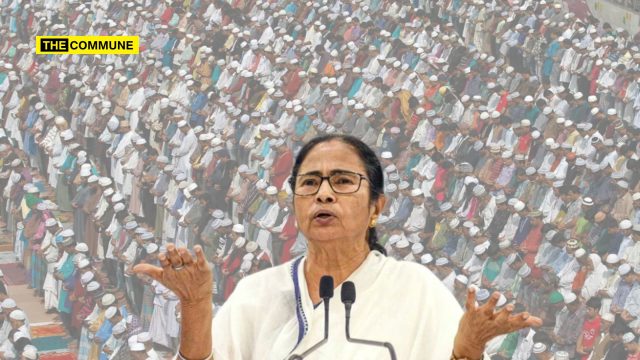
As Mamata Banerjee prepares for the crucial 2026 West Bengal Assembly elections, a question that once seemed almost rhetorical has now acquired real political weight: will Muslim voters continue their steadfast support for her, or is a shift underway?
In 2021, despite loud predictions of fragmentation, the Muslim vote consolidated behind Banerjee and her party, the All India Trinamool Congress. The result was decisive she overcame a formidable challenge from the Bharatiya Janata Party and secured a sweeping mandate. But 2026 is shaping up to be a different battlefield altogether.
The first major disruptor is the Special Intensive Revision (SIR) of electoral rolls. While officially an administrative exercise, it has become politically charged. The BJP has long alleged that illegal immigrants from Bangladesh were systematically added to voter lists and became a reliable vote bank for the TMC an accusation Banerjee has consistently denied. Now, with increased scrutiny and potential deletions, the BJP believes the electoral arithmetic could shift, especially in Muslim-dominated districts like Murshidabad, Malda, and Uttar Dinajpur.
Whether these claims are exaggerated or grounded in reality, the perception itself is politically potent. If even a fraction of the alleged “inflated” voter base is corrected, it could narrow Banerjee’s margins in constituencies where she has traditionally enjoyed overwhelming support.
However, the electoral equation in West Bengal cannot be reduced to procedural revisions alone. The demographic factor remains central. Muslims constitute nearly 30 percent of the state’s population, giving Banerjee a structural advantage that few regional leaders enjoy. Out of 294 Assembly seats, around 174 have a significant Muslim presence. This has historically translated into a built-in cushion, allowing the TMC to begin elections from a position of strength.
But demographics do not automatically guarantee loyalty especially when political alternatives begin to emerge, however fragmented they may be.
Enter the new alliance involving Humayun Kabir and Asaduddin Owaisi. Kabir, once part of the TMC, has repositioned himself as a vocal critic of Banerjee’s outreach to Muslims. His alignment with Owaisi’s All India Majlis-e-Ittehadul Muslimeen introduces a fresh variable one that the BJP hopes will fracture the consolidated Muslim vote.
Kabir’s rhetoric has been unapologetically identity-driven, from advocating for a Muslim Chief Minister to invoking symbolic religious issues. Meanwhile, Owaisi, despite a poor showing in 2021, is betting on a more receptive electorate this time one that may be willing to experiment beyond the TMC if dissatisfaction has set in.
Yet, history offers a cautionary tale. In 2021, Abbas Siddiqui attempted a similar intervention by aligning with the Left and Congress. Despite his religious influence and initial buzz, the alliance was comprehensively rejected by Muslim voters. The reason was simple: the lack of a credible pathway to power. Faced with the prospect of a BJP government, Muslim voters chose pragmatism over experimentation and rallied behind Banerjee.
The question now is whether that calculus will change.
One emerging trend across Indian states, from Uttar Pradesh to Bihar, is that Muslim voters like all voters are increasingly factoring in governance and development alongside identity. Employment, infrastructure, law and order, and welfare delivery are no longer secondary concerns. This shift complicates Banerjee’s strategy, which has traditionally relied on a mix of welfare schemes and minority outreach.
At the same time, Banerjee is not unaware of these shifting sands. Her political response to the SIR exercise framing it as a potential tool of exclusion targeting Muslims indicates a recalibration. By invoking fears of disenfranchisement under a BJP-influenced system, she is attempting to reinforce the psychological bond that has held her vote base together for over a decade.
This fear-versus-development narrative could well define the 2026 contest.
The BJP, on its part, is pushing the idea of a “double-engine sarkar” a government aligned with the Centre that promises faster development and better coordination. While this pitch has found traction in several states, its appeal among Muslim voters in West Bengal remains uncertain. Trust deficits, ideological differences, and concerns over representation continue to act as barriers.
Ultimately, the 2026 election may not witness a dramatic abandonment of Mamata Banerjee by Muslim voters but it does not need to. Even a modest shift, or a slight fragmentation, could be enough to alter outcomes in tightly contested seats.
For Banerjee, the challenge is no longer just consolidation it is retention under pressure. For her opponents, the goal is not necessarily conversion, but division.
The fortress may not fall but for the first time in years, it is being tested from within as much as from outside.
Dr. Prosenjit Nath is a techie, political analyst, and author.
Subscribe to our channels on WhatsApp, Telegram, Instagram and YouTube to get the best stories of the day delivered to you personally.