


India’s post-independence history is marked by pivotal decisions, some of which have had long-lasting consequences. Among the most debated are the choices made during the early years of the Indian Republic, especially under the leadership of its first Prime Minister, Jawaharlal Nehru.
While Nehru is remembered as a founding architect of modern India, critics argue that his ideological commitment to global moralism often eclipsed pragmatic national interests. Two decisions, in particular, are viewed as costly strategic missteps: declining a permanent seat at the United Nations Security Council (UNSC) and refusing an offer from the United States to become the first Asian nuclear power ahead of China.
Educated in elite Western institutions, many early Congress leaders, including Nehru, imbibed liberal and internationalist ideals. However, this worldview often underestimated the realpolitik motivations of global powers. Nehru, inspired by concepts of disarmament and peaceful coexistence, envisioned India as a moral leader rather than a strategic player. While noble in principle, this approach at times left India vulnerable on the global stage.
The Nuclear Test Offer from JFK
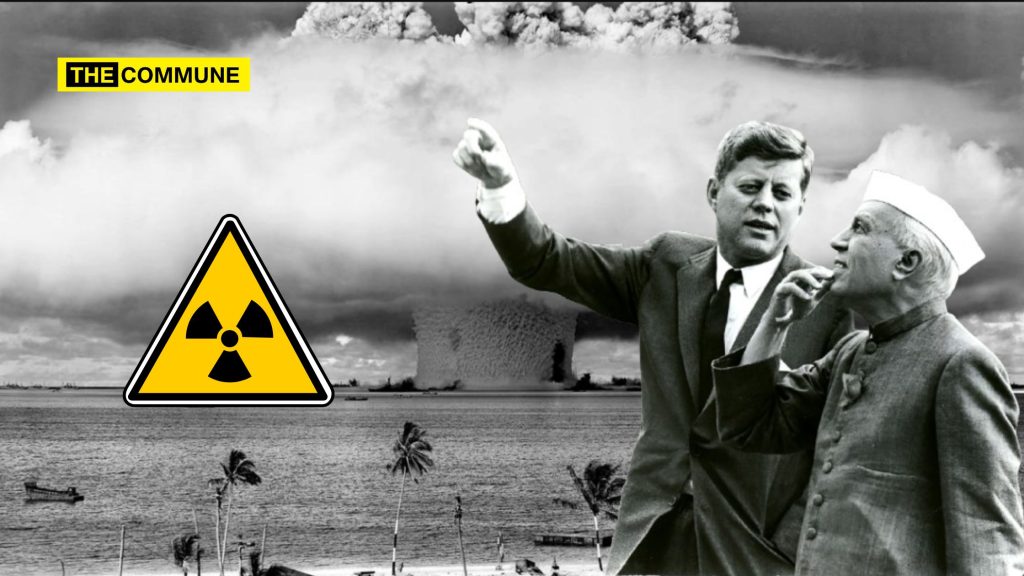
Another historic episode involves an alleged proposal from U.S. President John F. Kennedy in the early 1960s. As tensions mounted over China’s rapidly advancing nuclear program, Kennedy reportedly offered India technical and logistical support to become the first Asian country to conduct a nuclear test—before China’s successful detonation in 1964.
According to former Indian diplomat M.K. Rasgotra and scientist Ashok Parthasarathi, Nehru received a personal letter from Kennedy outlining this unprecedented offer. While Nehru was known for his strong opposition to nuclear weapons and advocacy for global disarmament, he did not dismiss the proposal outright. He reportedly discussed it with key advisors including diplomat G. Parthasarathi and scientist Dr. Homi Bhabha. While Bhabha was inclined to proceed, the decision was eventually shelved, influenced in part by GP’s caution and Nehru’s own convictions.
Rasgotra later suggested that accepting Kennedy’s offer could have significantly altered India’s strategic posture. A preemptive Indian nuclear test might have discouraged China from its aggressive actions, including the 1962 war, and sent a powerful signal to adversaries like Pakistan.
Rasgotra contends that accepting Kennedy’s proposal could have altered the strategic balance in Asia, potentially deterring China’s 1962 aggression and dissuading Pakistan from launching the 1965 war. Moreover, an early nuclear test might have placed India among the original architects of the Nuclear Suppliers Group (NSG), instead of being a latecomer seeking membership decades later.
The UNSC Seat That Never Was
Another pivotal decision that remains a subject of historical debate is Nehru’s rejection of a purported U.S. offer in the early 1950s to back India’s claim for a permanent seat on the United Nations Security Council (UNSC). According to diplomatic correspondence, including letters from Nehru’s sister and Indian envoy Vijaya Lakshmi Pandit, the U.S. State Department considered replacing the People’s Republic of China with India at the UNSC. However, Nehru rejected the idea, believing it would be unjust to China and disruptive to global diplomacy.
In 1955, Soviet Premier Nikolai Bulganin proposed that India be granted a permanent seat on the United Nations Security Council, independently of China’s status. However, Prime Minister Jawaharlal Nehru declined the offer, perceiving it as a diplomatic overture intended to gauge India’s position. He maintained that India should not ascend to such a role by displacing China, whose rightful representation in the UN he strongly supported.
Nehru firmly believed that recognizing China’s legitimate place in the international order was essential for ensuring long-term peace and stability in Asia. He regarded any attempt to elevate India at China’s expense as ethically unacceptable and potentially damaging to regional diplomacy. In correspondence with his sister, Nehru made it clear that India would not consider such an offer, as it risked alienating China and deepening Cold War divisions.
Critics of this decision contend that Nehru missed a rare opportunity to establish India as a global power. By prioritizing ideological principles over realpolitik, they argue, he may have set India back in the international hierarchy.
Jawaharlal Nehru remains a towering figure in Indian history, lauded for his role in shaping a democratic, secular, and scientifically inclined nation. Yet, some of his international decisions invite scrutiny—not for lack of patriotism, but perhaps for excessive idealism.
The controversies surrounding the UNSC seat and the nuclear test offer illustrate the tension between values and interests that define foreign policy. Nehru’s choices reflected a commitment to a global moral order, but in retrospect, they may have cost India valuable strategic ground.
Subscribe to our channels on Telegram, WhatsApp, and Instagram and get the best stories of the day delivered to you personally.