There are many ways to measure a community’s contribution to society. One of the most enduring is the institutions they leave behind – schools, colleges, hospitals, and charitable endowments that outlive their founders by generations and serve people far beyond their own community. In Tamil Nadu, Tamil Brahmins built many such institutions, often at great personal cost, and often for the benefit of communities very different from their own. And yet, the community gets blamed for ‘oppressing’ and ‘suppressing’ backward communities.
In this article, we will take a look at some of those contributions made by these silent builders from the Tamil Brahmin community.
PS Higher Secondary School, Mylapore (1905)
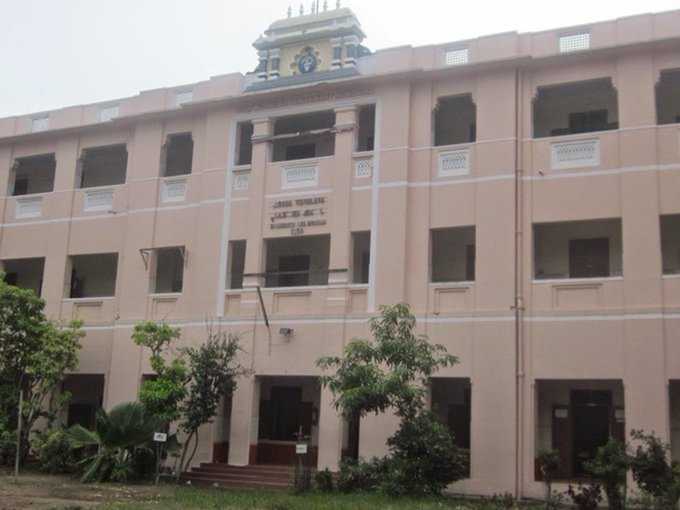
PS Higher Secondary School is a 119-year-old iconic institution in Mylapore, Chennai. The school was founded on January 13, 1905, owing its origin to the munificence of Brahmasri Pennathur Subramania Iyer (1830–1901), Attorney-at-Law and a farsighted philanthropist of Mylapore who had bequeathed his entire property in 1899 for the founding of PS Charities, with the object of providing national education that would inspire youth with high ideals of patriotism and reverence for ancient national culture.
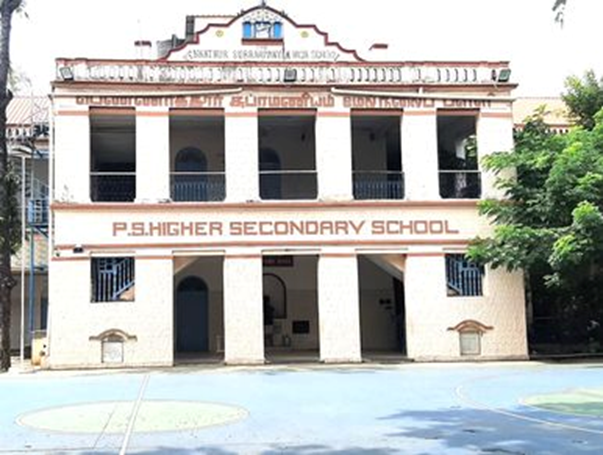
In 1916, PS High School (North) was founded to serve the educational needs of underprivileged children. It functioned as a middle school till 1962 and as a high school, thereafter, operating as a government-aided school under the PS Educational Society. It celebrated its centenary in 2016 and was merged with PS Higher Secondary School in 2018.
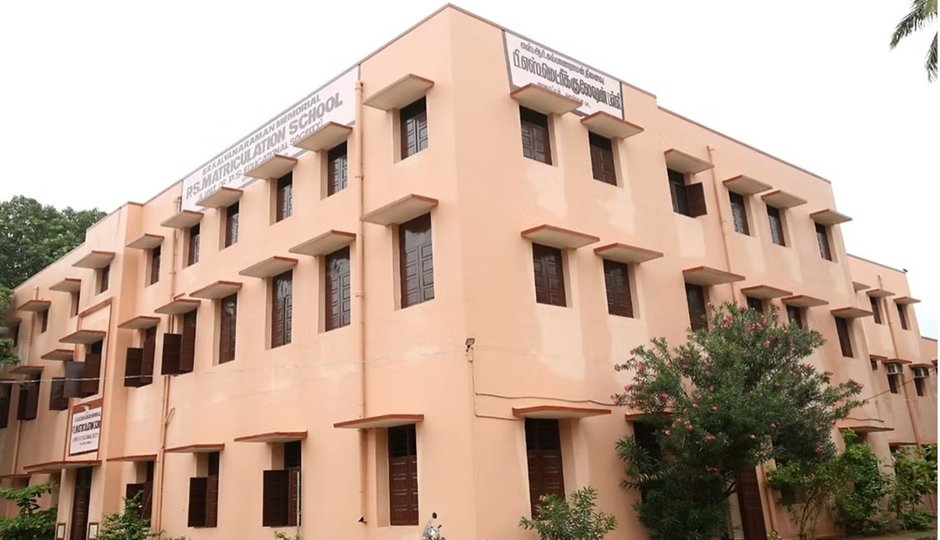
In 2003, a primary school was established within the institution, and in 2007 it was renamed S.R. Kalyanaraman Memorial P.S. Nursery Primary School, honouring an institutional donor. By 2018–19, classes up to Standard VIII were introduced, and the school was formally redesignated as S.R. Kalyanaraman Memorial P.S. Matriculation School.
Lady Sivaswami Iyer Girls Higher Secondary School, Mylapore (1869)
One of the oldest and most prominent girls’ schools in South India, this institution began in 1869 as the Vizianagaram Maharajah’s Hindu Girls School, founded by Sri Gajapathi Raja Vijayarama III of Vizianagaram.

By 1904, it had become the Mylapore Girls School consolidated and strengthened through the financial support of noted lawyer and public figure V. Krishnaswami Aiyar, who helped stabilise its finances and infrastructure.
In 1946, the institution was formally renamed Lady Sivaswami Iyer Girls Higher Secondary School in memory of Sir P.S. Sivaswami Iyer and his wife, whose sustained contributions saved and nurtured the school across decades. On his death in 1946, Sir Sivaswami Iyer bequeathed the bulk of his estate to the institution – an act of extraordinary philanthropic generosity that secured its future.
Sister R.S. Subbalakshmi Iyer: A Life of Service (1886–1969)
Perhaps no single figure in Tamil Nadu’s educational history embodies selfless service more completely than Sister R.S. Subbalakshmi Iyer. Born in 1886 and widowed at the age of twelve, she went on to graduate with honours in B.A. and obtain the Licentiate of Teaching – achievements made possible by the remarkable support of her family. In her aunt Vaalambal, another child widow, she found a partner of towering strength.
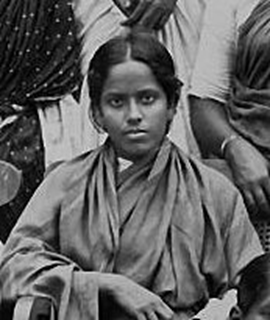
In 1910, she established a Widows’ Home – an institution that transformed the lives of countless women who emerged from its portals as teachers, nurses, doctors, and school principals.
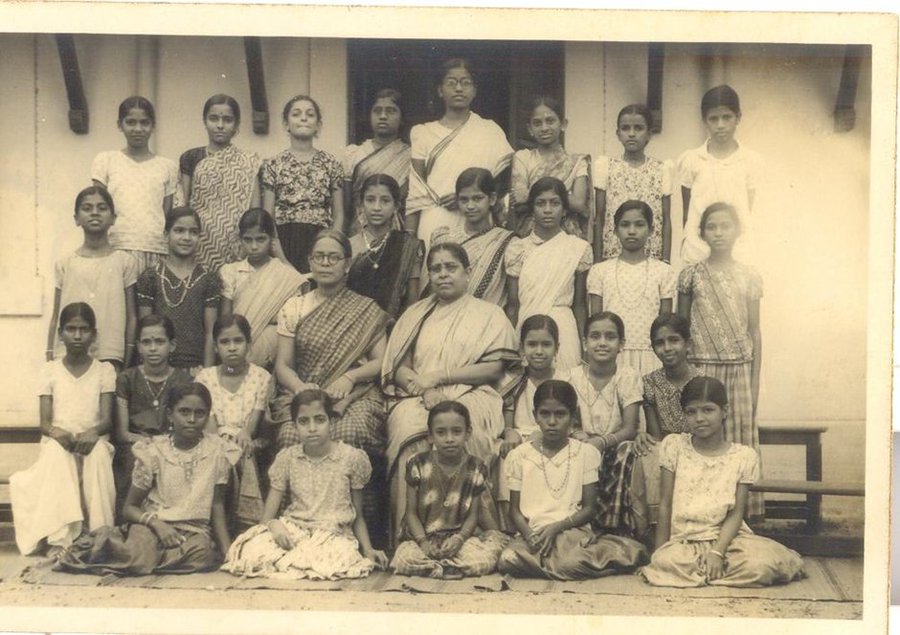
The home was unable to admit all who sought refuge due to funding constraints, which led Sister Subbalakshmi to found a series of schools catering to different and often marginalised sections of society:
Kuppam School, Madras (1920) – started for the children of fisherfolk living near the beach. Later renamed Lady Willingdon High School after the Governor’s wife, it moved to its current premises in 1922 and continues to function from there.
Sarada Vidyalaya, Mylapore (1927) – handed over to the Ramakrishna Mission in 1938, which later shifted it to Mambalam and subsequently to T. Nagar.
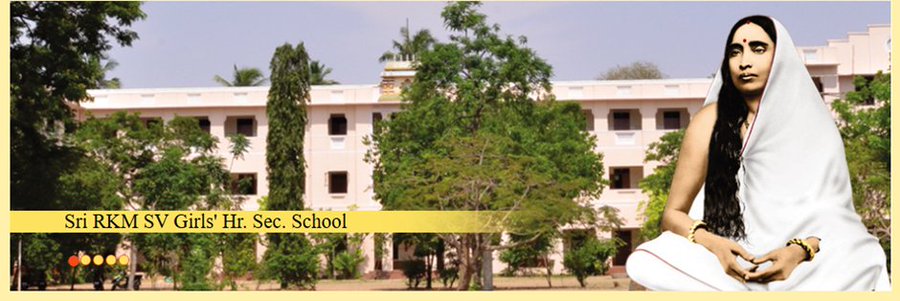
Sarada Cheri School, Cuddalore (1933) – for children of fishermen, potters, and toddy-tappers.
Sri Vidya Kalanilayam (1942) – for adult women seeking to complete their matriculation examination.
Mudurantakam School (1944) and Mangalamabikam School, Vaigalatour (1947) – for girls in rural villages.
Vidya Mandir School, Mylapore (1956) – her last creation, a co-educational school established under the Mylapore Ladies’ Club School Society.
The Government of India recognised her extraordinary life of service with the Padma Shri in 1958.
Vidya Mandir Matriculation School (1956–1960)
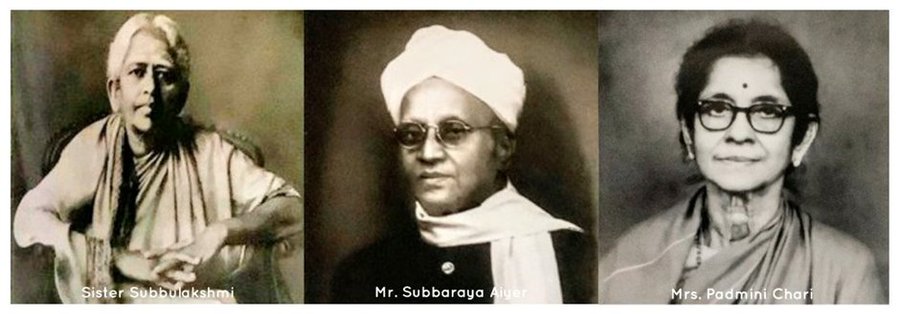
The MLC School Society (Mylapore Ladies’ Club) established a Kindergarten in February 1956. Its founding trio was Sister Subbalakshmi as President, Shri M. Subbaraya Aiyar, a leading lawyer of his time, as Secretary, and Mrs. Padmini Chari, educationist and organisational force, as Correspondent.
Vidya Mandir Matriculation School was formally opened in 1960. The MLC School Society was registered in 1957, with the club’s properties transferred to it.
Mrs. Chari was devoted to Vidya Mandir’s growth for decades, contributing considerable organisational skill in securing both financial and human resources. Shri Subbaraya Aiyar’s association with the school became a lifelong commitment.
M. Subbaraya Aiyar (1885–1963): The Quiet Architect of Three Institutions
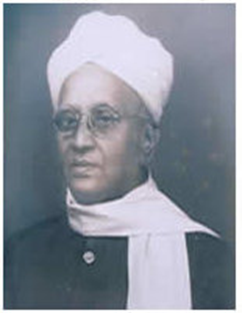
M. Subbaraya Aiyar was a prominent income tax lawyer and philanthropist born in Marayur, Tanjore District.
After a distinguished legal career, he co-founded three major educational institutions that continue to shape Tamil Nadu:
- Vivekananda College
- Vidya Mandir
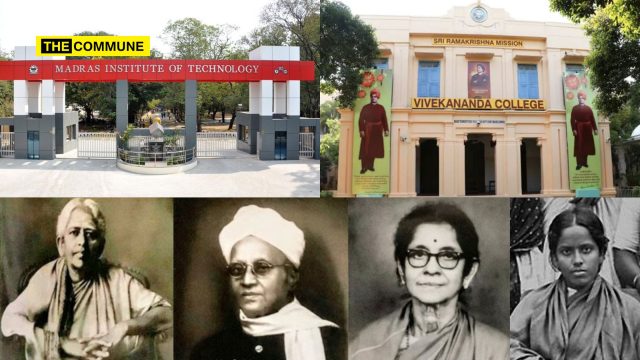
- Madras Institute of Technology (MIT), Chromepet
Vivekananda College (1948)
Vivekananda College was the product of the collective resolve of several public-spirited legal luminaries – Sir C.P. Ramaswamy Iyer, T.R. Venkatarama Sastri, Sir V.T. Krishnamachariar, Sir N. Gopalaswamy Iyengar, and M. Subbaraya Aiyar. Their founding vision was unambiguous: a college where admission would be open to all, based solely on merit, without any distinction of caste or community.
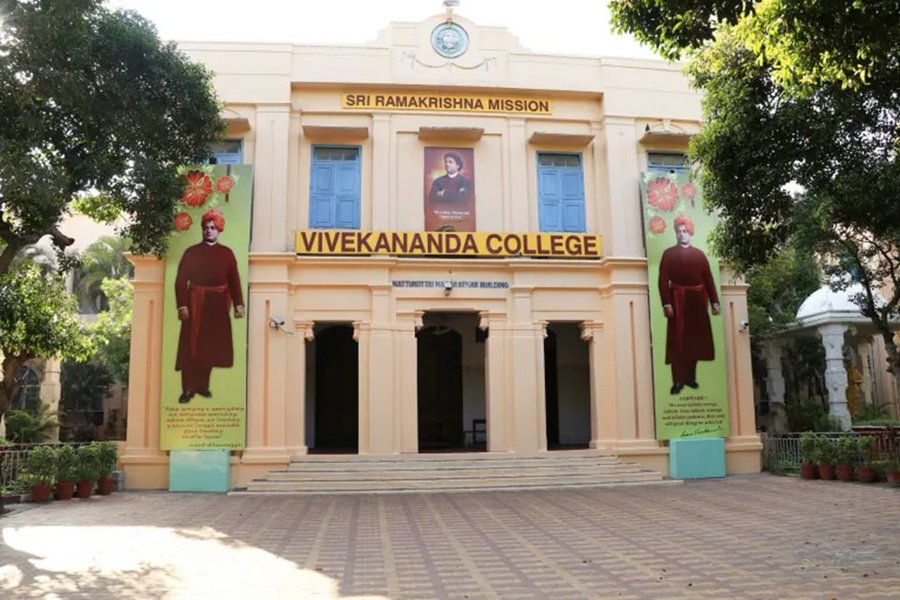
After several public meetings in August and September 1945, they decided to appeal for public donations and hand over management to the Ramakrishna Mission – already an established name in education and social service. The Mission readily agreed.
Madras Institute of Technology (1949)
With India’s independence came the urgent need to build a technological foundation for industrial advancement. It was at this juncture that Mr. C. Rajam Iyer, with characteristic pioneering spirit and patriotic fervour, made a munificent donation of Rs. 5 lakhs, raised through the sale of his own house, to found the Madras Institute of Technology in Chromepet in July 1949, with the blessings of the Sage of Kanchi, the Jagadguru Sankaracharya Swamigal.
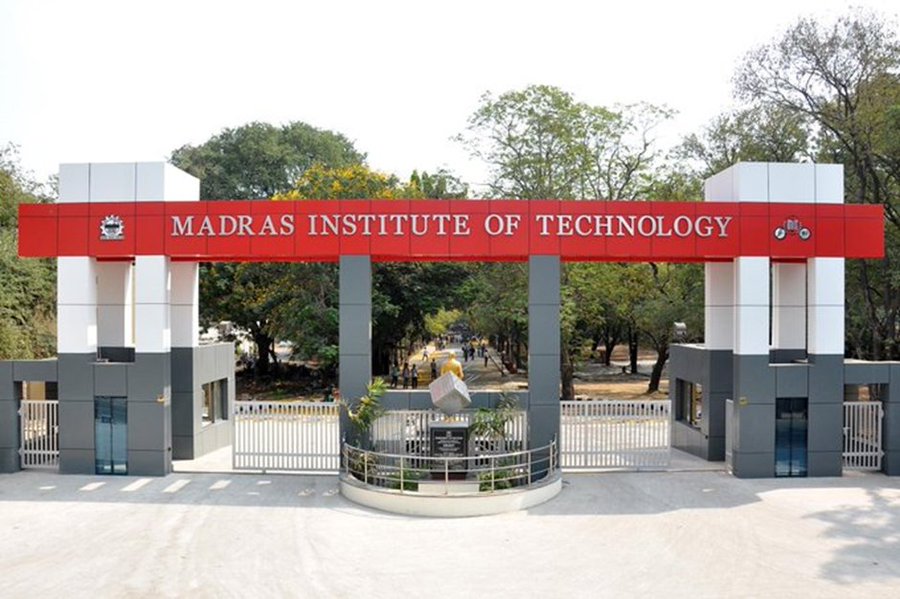
In this endeavour, Rajam Iyer was supported by Subbaraya Aiyar, M.K. Ranganathan, L. Venkatakrishna Iyer, K. Srinivasan, and C.R. Srinivasan, along with generous public and industrial donations. MIT was established as an All India Technological Institution – one of the earliest in the country.
Sir C.P. Ramaswami Aiyar Memorial School, Kumbakonam
Sir C.P. Ramaswami Aiyar donated a house property in Kumbakonam to the municipal authorities in 1941 for educational purposes. The Kumbakonam Municipality ran the Sir C.P. Ramaswami Aiyar Nursery and Primary School until it was closed in 1999–2000. After years of effort, the C.P. Ramaswami Aiyar Foundation, Chennai, secured temporary possession of the building from the Municipal Administration Department and reopened the school on Vijayadashami day in 2005.
Today, the school is a completely free English medium school – its children drawn from the poorest levels of society: fruit sellers, vegetable sellers, lorry loaders, and daily wage workers. The building’s ownership remains with the municipality; the Foundation runs it as a public service.
A Debt That Goes Unacknowledged
The institutions documented above represent only a fraction of the educational legacy Tamil Brahmins built across Tamil Nadu. Schools for widows. Schools for fishing communities. Colleges open to all by explicit founding charter. Engineering institutions funded by the sale of personal property. These were not acts of charity to one’s own community. They were acts of nation-building and the founders did not ask what caste a child belonged to before opening their gates.
The Dravidianist movement cannot explain and has never tried to why its supposed oppressor class was simultaneously building free schools for fisherfolk, founding colleges open to all castes, and donating personal property for the education of widows and village girls. Tamil Nadu’s debt to these men and women is concrete and still standing, in every school that bears their names, in every engineer and doctor who passed through doors they opened. That debt has gone too long unacknowledged, buried under decades of political noise from those who benefited from it most.
Baskar is a finance professional having keen interest in current affairs and Indian culture.
Subscribe to our channels on Telegram, WhatsApp, and Instagram and get the best stories of the day delivered to you personally.