A water shortage at the historic Brihadisvara Temple in Gangaikonda Cholapuram in Ariyalur district that is jointly maintained by the HR&CE & ASI has affected the daily Abhishekam rituals, with the temple priest reporting that the traditional temple well has dried up and that there is no adequate alternative water supply.
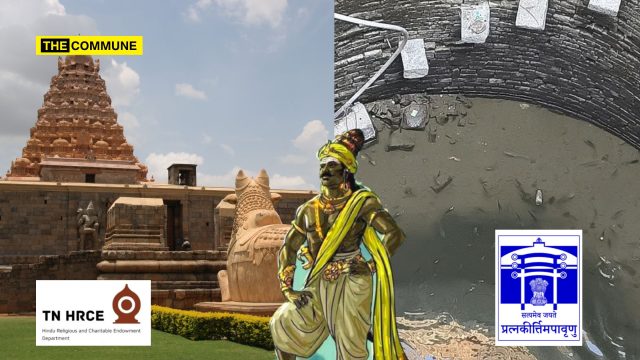
The Brihadisvara Temple at Gangaikonda Cholapuram, located near Jayankondam, was built by Chola emperor Rajendra Chola and is regarded as an important example of Chola architecture. The temple is also associated with the traditional practice of drawing water from the Simhamuga Kinaru (Lion-faced well) on the temple premises for performing Abhishekam to Lord Brihadisvara in the morning and evening.
According to the temple priest, Thyagarajan Gurukkal, the well has recently gone completely dry due to drought conditions, creating difficulties in conducting even the daily rituals.
He said that water from the Simhamuga Kinaru was traditionally used for the Abhishekam, but the well no longer has sufficient water. Although water had earlier been fetched from a nearby source maintained by the Archaeological Survey of India (ASI), he said that even this alternative was not available on Saturday, 26 September 2026.
As a result, the Pournami Abhishekam scheduled for Saturday evening was delayed while devotees waited at the temple. The priest eventually managed to obtain a limited quantity of water from the neighbourhood and proceeded with the ritual.
The priest said that the full-moon Pournami Abhishekam would ordinarily be conducted using 14 varieties of perfumes and other ritual materials. However, he alleged that funds for such rituals had been stopped by the Hindu Religious and Charitable Endowments (HR&CE) Department, and the ritual was therefore being conducted only with water, milk and curd, as reported in DT Next.
He said that repeated requests had been made to the department for funds required for conducting the rituals, but the requests had often gone unheard.
The priest also said that the shortage was not limited to the Pournami Abhishekam. According to him, there was currently not enough water even for the regular morning Abhishekam, leaving the temple staff in a situation where they had to perform the rituals with only a token quantity of water or, where necessary, manage without it.
He said he had been serving as a Shivacharya at the temple for around 25 years and highlighted the religious significance of the temple. He also recalled that Maha Periyava had performed Abhishekam at the temple.
The priest further raised concerns over the supply of oil for the temple lamps. He said that during the previous administration, oil was supplied regularly and in sufficient quantities, whereas the present arrangements were inadequate.
According to him, oil tins that were previously supplied for lighting the lamps were no longer being provided properly. He said that temple worship was at times being conducted without even lighting the lamps.
He pointed out that the temple was now facing multiple basic shortages, saying there was no proper arrangement for lamps, insufficient water for Abhishekam, and inadequate facilities for conducting the daily rituals.
The priest also alleged that his payment for performing the Aadi Thiruvathirai ritual as part of a government-assigned duty was still pending.
He said he had spent around ₹50,000 for the government function conducted during Aadi Thiruvathirai, but had not received the amount back, as reported in Dina Mani. Although he had reportedly been told that the payment had already been made, he said the money had not reached him.
He also raised the issue of his monthly salary. According to him, the sanctioned monthly wage of ₹6,000 had not been paid for the past three to four months.
He said that whenever he raised the issue, he was told that the salary would be paid, but the payment continued to remain pending. He described the wage as already being very low and said that even this amount was not being paid on time, leaving temple personnel struggling with their basic needs.
The priest contrasted the current situation with the previous administration, saying that the temple’s functioning had been better earlier. He alleged that arrangements for ritual requirements, including lamp oil, were more regular under the previous administration, while the current management had failed to address these basic requirements adequately.
He urged the authorities to intervene immediately and make proper arrangements for a reliable water supply so that the temple’s daily Abhishekam and other rituals could be conducted without interruption. He also called for the release of his pending salary and the payment due for the Aadi Thiruvathirai duty.
Subscribe to our channels on WhatsApp, Telegram, Instagram and YouTube to get the best stories of the day delivered to you personally.