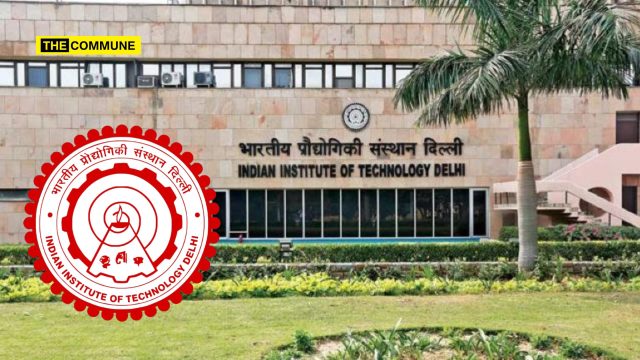
The IITs have been in the news for all the wrong reasons over the past year, especially the Humanities departments in their institution. Earlier it was IIT Bombay and IIT Gandhinagar, along with a couple of other woke instances in other IITs. But now IIT Delhi’s Humanities department has gained the spotlight.
Recently, the institution was in the news for the woke caste conference conducted in mid-January 2026.
Caste Conference
The conference titled Critical Philosophy of Caste and Race (CPCR3), held at IIT Delhi from January 16 to 18, 2026, has triggered controversy and prompted the institute to initiate a formal fact-finding inquiry. The event, organised by the Humanities and Social Sciences department, came under criticism after its agenda and speakers were publicly circulated, drawing allegations that it promoted a one-sided ideological perspective under the guise of academic scholarship.
The conference featured sessions comparing caste in India with racial conflicts elsewhere, including a presentation linking Dalits and Palestinians, discussions framed around the 2001 Durban conference on racism, and events such as a book launch and film screening focused on caste and power structures. Critics alleged that the programme relied heavily on Western critical theory frameworks and lacked diverse or dissenting academic viewpoints.
Wow. IIT Delhi’s humanities department is going full woke.
Invites radical activists to perpetrate single-sided view on caste.
Sessions on comparisons of Dalits and Palestinians.
Shri @dpradhanbjp and @EduMinOfIndia, are you aware of this? https://t.co/SwRw9Hp1A9 pic.twitter.com/tv7t1N9pCN
— Harshil (હર્ષિલ) (@MehHarshil) January 25, 2026
Interesting conference agenda.
IIT Delhi Humanities and Social Sciences Department.
Critical Philosophy of Caste and Race (CPCR3) Conference
Towards a Critical Philosophy of Caste and Race – Divya Dwivedi, IIT Delhi
Aarushi Punia, Independent Researcher: “What’s common…
— Halley (@halleyji) January 25, 2026
Interestingly, the speakers include Thenmozhi Soundararajan – a US-based activist and the founder of Equality Labs, an organization that claims to advocate for Dalit and marginalized community rights.
Dear @iitdelhi
Is the institute aware that by inviting Thenmozhi Soundararajan, it is providing a platform to an individual with alleged ties to MHA-designated terrorist Gurpatwant Singh Pannun and the unlawful Sikhs for Justice (SFJ)?
Is it the institute’s policy to overlook… https://t.co/VPErumL8P0 pic.twitter.com/ahFDZcMU7q
— Sougat Chakraborty (@sougat18) January 27, 2026
Her work, however, places her at the center of a complex web of controversy, linking her to anti-India propaganda, Khalistani extremism, and alleged foreign intelligence networks.
Did you know!
-Gurpatwant Singh Pannun-a designated terrorist by Indian govt, who has openly issued threats to govt officials/leaders, is a close associate of DalitDiva (@EqualityLabs ) founder Thenmozhi Soundararajan!!On May 22, 2019, Thenmozhi Soundararajan hosted an event… https://t.co/wxK5hRMRdm pic.twitter.com/fNKN72wok9
— Dr. Neha Das (@neha_laldas) December 24, 2024
Soundararajan positions herself as a Dalit rights activist, but her methodology and alliances have drawn widespread criticism for promoting division and Hinduphobia. Her organization, Equality Labs, is known for its aggressive push for caste-based legislation in the United States, such as the California SB403 bill. A study by the Network Contagion Research Institute found that Equality Labs’ “Diversity, Equity, and Inclusion” training materials often used dehumanizing rhetoric against Brahmins, increasing anti-Hindu sentiment among participants.
Her affiliations extend far beyond caste advocacy. Soundararajan has documented ties to designated Khalistani terrorist Gurpatwant Singh Pannun, having shared a stage with him at a 2019 event hosted by his organization, Sikhs for Justice (SFJ). This collaboration connected her to a group openly supporting Pakistan-sponsored terrorism.
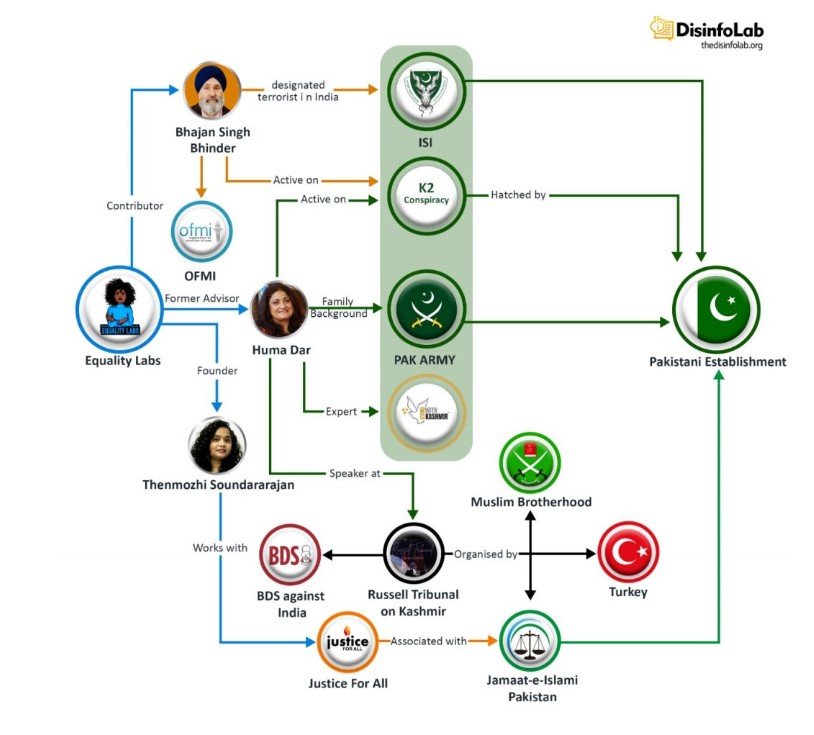
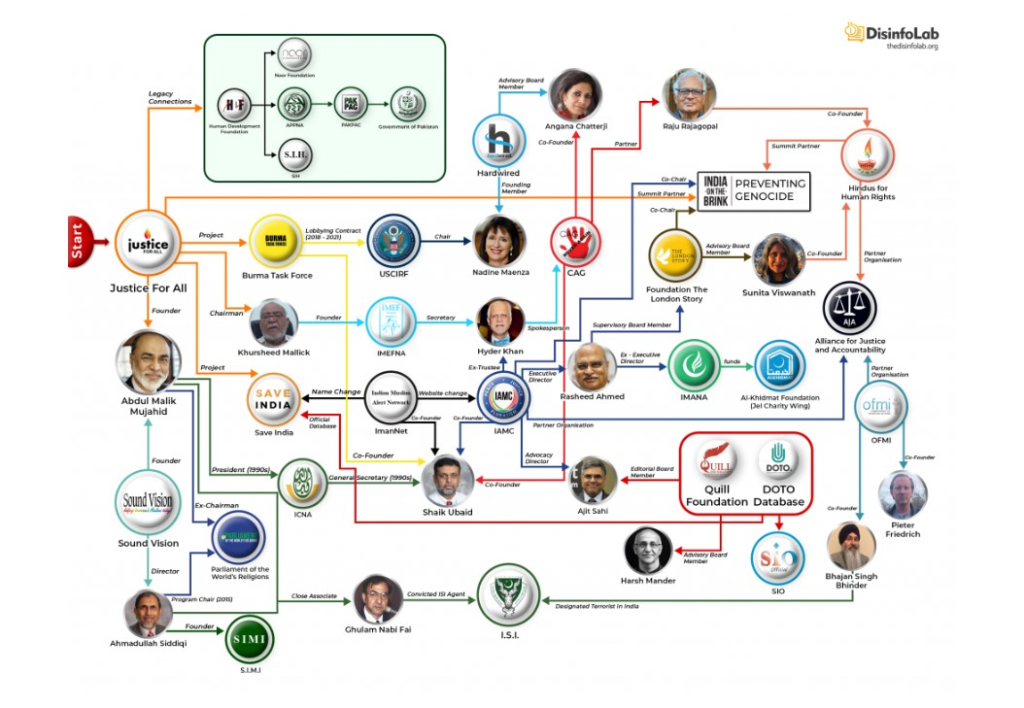
Further scrutiny reveals deeper, more alarming connections. Equality Labs is a key member of the Alliance for Justice and Accountability (AJA), a coalition that includes the Organization for Minorities of India (OFMI)—founded by ISI-linked operative Bhajan Singh Bhinder—and the Indian American Muslim Council (IAMC). Investigations have suggested that Equality Labs has received funding from sources linked to both George Soros and Pakistan’s Inter-Services Intelligence (ISI), with Pakistani citizen Huma Dar, a reported link to the Pakistani Army, serving on its board.
Soundararajan’s public statements consistently reveal a strong anti-Hindu bias. She has labeled the Hindu pilgrimage Maha Kumbh Mela as “Islamophobic,” called for the “de-Brahminization” of Yoga, and launched virulent social media attacks, including one targeting former Twitter CEO Parag Agrawal based on his assumed caste. In 2018, she designed the “Smash Brahminical Patriarchy” poster held by then-Twitter CEO Jack Dorsey, a incident that sparked international controversy.
The Architect and a Pattern of Activism – Divya Dwivedi?
At the centre of the storm is Dr. Divya Dwivedi, a faculty member in the HSS department and a primary organiser of CPCR3. Dwivedi’s active online presence is noteworthy – this includes a dedicated YouTube channel and a special journal promoting “critical philosophy of caste and race,” as evidence of a sustained campaign beyond pure academia. Dwivedi advocates for an “India’s future without Hinduism”. During the G20 Summit in New Delhi in September 2023, Divya Dwivedi courted controversy with remarks made to French broadcaster France 24, sharply criticising Hinduism, Prime Minister Narendra Modi, and India’s social structure. Dwivedi said she envisioned an “India of the future without Hinduism,” arguing that caste-based oppression continued to dominate the country. She dismissed positive accounts of development, including a rickshaw puller’s experience with Digital India, as “mediatised anecdotes.” Claiming that a small upper-caste minority still controlled most positions of power, she also described the RSS as a “fascist” organisation representing upper-caste supremacy, drawing strong reactions for portraying India negatively on a global platform.
🔴🇮🇳 Philosopher and author Divya Dwivedi says there are two Indias:
➖ Past India of racialized caste order oppressing the majority population.
➖ The idea of a future egalitarian India without caste oppression and Hinduism.Watch her analysis here on the @F24Debate 👇 pic.twitter.com/Q5J0CHL0uQ
— FRANCE 24 English (@France24_en) September 8, 2023
Additionally, in a 2019 NDTV debate, Dwivedi claimed Hinduism was “invented” in the early 20th century to mask caste realities and called the Hindu majority a “false majority.” She alleged that Gandhi helped construct a new Hindu identity that marginalised minorities and lower castes. Dwivedi further argued that upper-caste leaders created Hinduism as a political umbrella and that this legacy should be “discarded.”
Divya Dwivedi is back in the news
Here she is from 2019
She said that Hindu religion was created by Gandhi in the 20th century in order to oppress backward castes
Liberals hate Hinduism
And liberals also hate Mahatma Gandhi, the world’s most fondly remembered Hindu pic.twitter.com/Vqzi9WgnZg
— Abhishek (@AbhishBanerj) September 9, 2023
Paper Published Portrays Indian Nationalism As ‘Tyrannical’, Advances Separatist Narrative
An academic paper published in 2023 came under renewed scrutiny after circulating widely on social media. The paper, titled “Tyranny of Indian Nationalism and Resistance in Kashmir: Reading a Kashmiri Narrative with Iqbal and Freud,” was published in March 2023 in the journal Psychoanalysis, Culture & Society by Springer Nature. It was authored by Nazia Amin, who was affiliated with IIT Delhi’s Department of Humanities and Social Sciences at the time and is now an Assistant Professor at BML Munjal University.
IIT Delhi’s Humanities Department is also promoting separatist viewpoints on Kashmir.
“Tyranny of Indian Nationalism in Kashmir”- A Research Paper from IIT Delhi@EduMinOfIndia @dpradhanbjp pic.twitter.com/534DbBmF60
— Harshil (હર્ષિલ) (@MehHarshil) January 26, 2026
The paper characterises Indian nationalism in Kashmir as “tyrannical,” employing Freudian psychoanalytic concepts such as the “primal horde” to depict the Indian state as a coercive authority demanding submission from Kashmiri subjects. Drawing on Muhammad Iqbal, it frames Kashmiri resistance as a psychological and existential rejection of Indian national identity.
The paper’s language and framing moves beyond scholarly critique into normative advocacy while omitting key aspects of the conflict, including terrorism, the exodus of Kashmiri Pandits, and national security concerns.
‘Woke’ Electives In IIT-D’s Classrooms
Recent course offerings and faculty-linked activism indicate how ideological “wokeness” is increasingly entering IIT Delhi’s humanities ecosystem, raising questions about balance in a publicly funded technical institution. One example is the MA-level elective “Queering Gender and Sexuality: Debates and Issues from India” (HSL684), a 3-credit, multidisciplinary course listed on IIT Delhi’s Humanities and Social Sciences portal, whose stated content includes critiques of the gender binary, politics of identity and sexuality, genealogy of LGBTQIA+ movements, and gender and citizenship.
I applaud @iitdelhi for this elective course for engineering students.
These fascists should learn about politics of identity and sexuality, and queer engagement with gender and sexuality.
Why this course is not made mandatory? @EduMinOfIndia @dpradhanbjp pic.twitter.com/2DLxsvsY2l
— Harshil (હર્ષિલ) (@MehHarshil) September 16, 2025
Screenshots circulating online show the course being publicly celebrated by Vaivab Das, a contributor to The Wire, who stated that he designed the course and explicitly argued for “more trans-queer students in departments to broaden the dialogue,” framing curriculum design in activist terms rather than neutral pedagogy. The same individual has published investigative articles critiquing India’s Transgender Welfare Boards as a “trap,” reinforcing perceptions of a consistent ideological position.
.@iitdelhi an IITD scholar with activist leanings, how can you ensure a syllabus isn’t just a platform for his agenda, not education? Doubtful of impartiality and highly questionable. Also this person is involved with The Wire which makes even more suspicious. pic.twitter.com/oxg3F2eH4g
— Harshita🇮🇳 (@hinduharshita9) September 17, 2025
When courses are openly championed as vehicles for activism and promoted by authors associated with overtly ideological media platforms, the line between academic inquiry and agenda-setting blurs. Taken together, these materials have intensified concerns that IIT Delhi’s humanities courses are increasingly shaped by activist frameworks rooted in Western identity politics, with limited visible engagement with alternative intellectual, constitutional, or civilisational perspectives.
QS Rankings or DEI Optics?
It is alleged that IIT Delhi’s recent jump in the QS World University Rankings had less to do with research breakthroughs or technological innovation and more with aligning to fashionable global metrics such as Diversity, Equity and Inclusion (DEI). Instead of being driven by path-breaking science, nation-building research, or major inventions, the improvement coincided with the opening of a dedicated DEI office – an indicator increasingly favoured by international ranking frameworks and Western academic journals.
Academia is doomed!!!
International rankings & foreign journals are now just deep state tools. Recently IIT Delhi jumped in QS world ranking and everyone is praising them.
But do you know HOW the ranking improved? For submitting to deep state agenda and opening DEI office 😂… pic.twitter.com/At4xaiilQ6
— Eminent Intellectual (@total_woke_) June 20, 2025
Ideology Over Institution?
Taken together, the caste conference, controversial faculty activism, separatist-leaning scholarship, ideologically driven electives, it all points to a deeper crisis within IIT Delhi’s ecosystem. What is being questioned is not the legitimacy of debate or academic freedom, but the steady drift towards ideological homogeneity in a taxpayer-funded technical institution meant to prioritise balance, rigour, and national responsibility. When activism, selective narratives, and imported identity frameworks dominate classrooms and conferences, the line between scholarship and advocacy collapses. The IIT brand was built on intellectual excellence and public trust, allowing it to become a battleground for partisan ideology risks eroding both.
Subscribe to our channels on Telegram, WhatsApp, and Instagram and get the best stories of the day delivered to you personally.