


On 21 November 2025, the Indian rupee slipped to a new all-time low of 89.46 against the US dollar during afternoon trade, amid strong dollar demand and limited intervention from the Reserve Bank of India, currency analysts said. At 3:05 PM, the rupee was trading at 89.46, compared with an opening level of 88.6787 and a previous close of 88.7075.
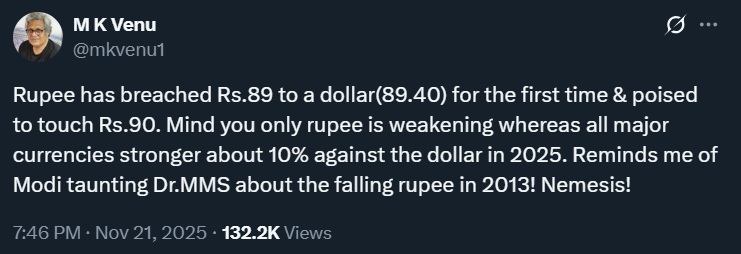
Following this, MK Venu, founding editor of leftist rag The Wire, made a post on his X handle, claiming the Indian rupee is the “only” major currency weakening against the US dollar, has gone viral. While the rupee’s record-breaking slump is real, a detailed fact-check reveals the claim is economically misleading, omitting key global contexts and India-specific drivers behind the currency’s movement.
He wrote, “Rupee has breached Rs.89 to a dollar (89.40) for the first time & poised to touch Rs.90. Mind you only rupee is weakening whereas all major currencies stronger about 10% against the dollar in 2025. Reminds me of Modi taunting Dr. MMS about the falling rupee in 2013! Nemesis!”

Debunking the “Only Weakening Currency” Myth
The rupee has indeed breached the 89 mark against the dollar for the first time in history. The currency has depreciated roughly 6% over the past 12 months, confirming that the decline is a genuine economic concern.
The core of the viral claim, that the rupee is alone in its decline, is false. Market data from 2025 shows that several major currencies have actually appreciated against the dollar. The Euro has gained about 10%, the British Pound approximately 6%, and the Japanese Yen around 8%.

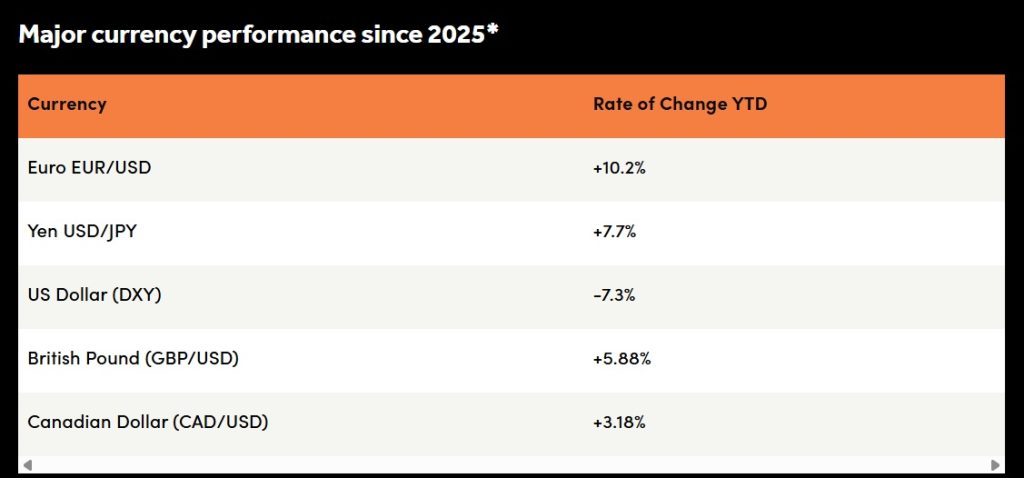
This reflects a phase of broad-based dollar softness, not a unique failure of the rupee. While the rupee has underperformed these major currencies, the situation in emerging markets is mixed, with many facing similar pressures from trade shocks and US policy.
Why is the Rupee Actually Weakening? A Multi-Factor Analysis
The rupee’s fall is not due to a single policy failure but a combination of domestic and external shocks:
Trade Deficit & Imports: India’s trade deficit has widened sharply, driven by high imports of crude oil and gold. This structural dependence creates constant dollar demand, pressuring the rupee.
US-India Trade Shock: A key 2025 event was a steep escalation of US tariffs on Indian exports to 50%, linked to diplomatic disputes over Russian oil imports. This has hurt export sentiment and triggered foreign portfolio outflows.
RBI’s Strategic Shift: The Reserve Bank of India has adopted a more flexible approach, intervening less aggressively to defend a specific rupee level. This policy choice, aimed at conserving foreign reserves, allows for more short-term depreciation.
Imported Inflation: A weaker rupee makes imported fuel, electronics, and medicines costlier, feeding into domestic inflation and complicating the RBI’s policy decisions.
False Equivalence: 2025 is Not a Repeat of the 2013 Crisis
The viral post’s attempt to draw a “nemesis” parallel between the current situation and the 2013-rupee crash is an oversimplification. The 2013 crisis was part of a global “taper tantrum,” with India plagued by a large current account deficit, weak growth, and low reserves, earning it a place among the “Fragile Five” economies.
India in 2013
- Part of the “Fragile Five” economies
- Large current account deficit
- High inflation
- Weak growth
- Low foreign exchange reserves
- “Taper tantrum” spooked markets
In contrast, India’s foreign reserves in 2025 are substantial, growth is relatively stronger, and the current pressure stems from specific geopolitical trade conflicts and a deliberate policy recalibration by the RBI, not a sudden loss of macroeconomic credibility.
India in 2025
- Significantly higher forex reserves
- Stronger growth fundamentals
- External shock driven mainly by:
- US tariff escalation
- oil import dependence
- global tensions
- RBI’s deliberate shift toward flexibility
- Not a sudden collapse in macro credibility
Thus, the comparison is superficial and politically convenient, not economically valid.
A Mixed Bag for the Indian Economy
The impact of a weaker rupee is dual-edged. It benefits exporters in IT and manufacturing and increases the value of remittances. However, it significantly increases the nation’s oil import bill, worsens the trade deficit, fuels imported inflation, and makes servicing external debt more expensive.
MK Venu – Liar of The Wire
MK Venu’s post on the rupee is a textbook example of how ideological zeal can overpower basic economic understanding. His claim that the rupee is the “only major currency weakening” is not just wrong, it is embarrassingly ignorant for someone who calls himself a founding editor. A simple glance at global currency data would have shown him that multiple advanced-economy currencies have strengthened for region-specific reasons, emerging-market currencies are moving in mixed directions, and India’s depreciation is driven by identifiable trade, tariff, and policy shocks.
Instead of presenting facts, Venu chose to manufacture a political narrative by cherry-picking numbers, exaggerating trends, and invoking a recycled 2013 comparison that has zero economic relevance to 2025.
If Venu genuinely understood macroeconomics, he would know that the rupee’s movement this year has been shaped by so many different factors given the changing geopolitical situation and not by some imagined collapse unique to India. But accuracy has never been his priority; creating a convenient narrative has.
In the end, the data exposes Venu’s claim for what it is: a baseless assertion, pushed without context, and designed to mislead. If this is the standard of economic commentary from a “founding editor,” it says far more about him and the publication he represents than it does about the Indian rupee.
Subscribe to our channels on WhatsApp, Telegram, Instagram and YouTube to get the best stories of the day delivered to you personally.