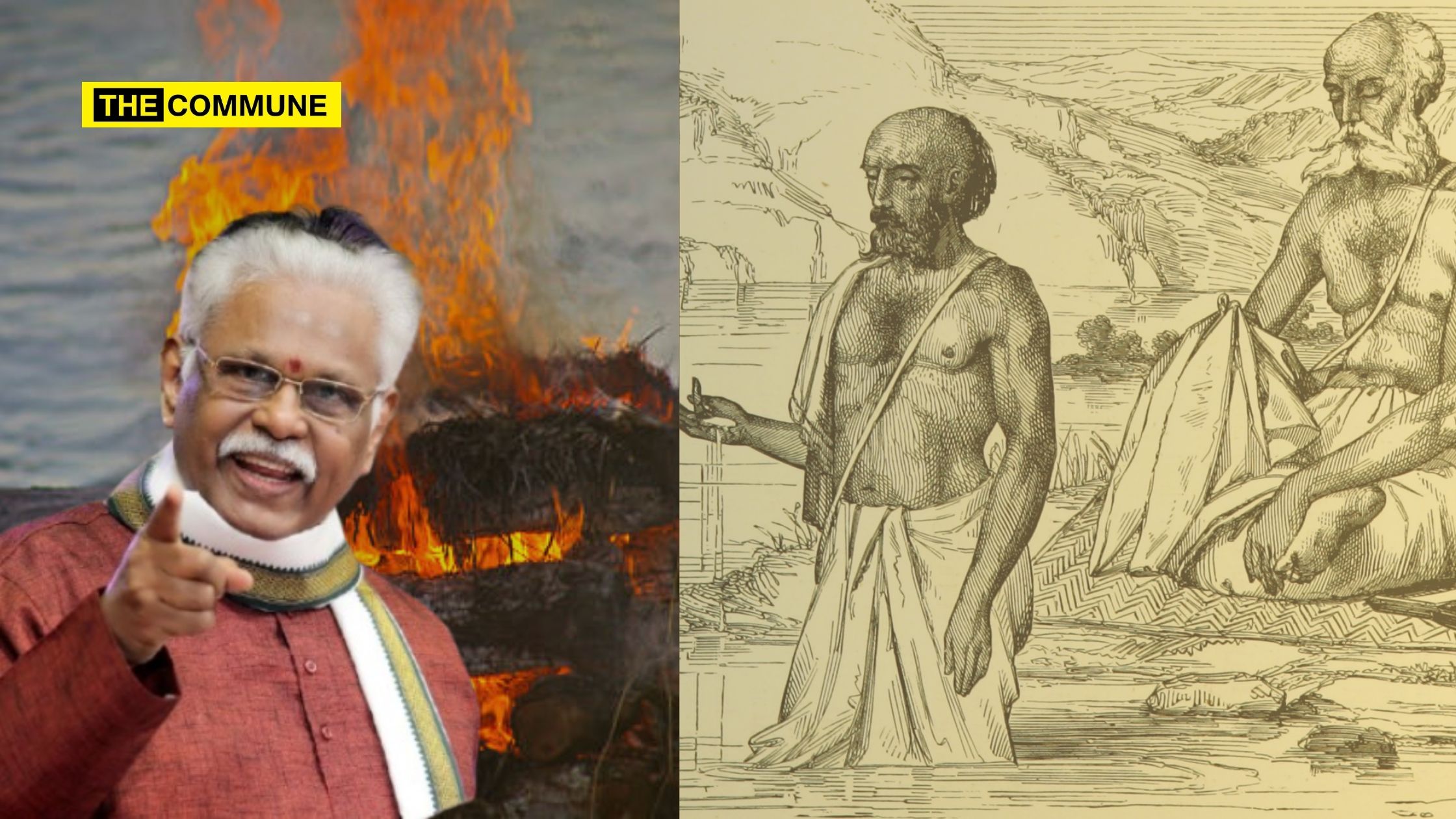
Suki Sivam, a self-styled Tamil orator, writer, and self-proclaimed scholar known for subtly intertwining Dravidianist ideology into his spiritual talks, has once again peddled lies furthering the Dravidian propaganda of the Aryan Invasion Theory. At an event that took place a few days ago, Suki Sivam “pointed out” the differences between Aryans and Tamilians based on the manner in which both parties say farewell to the dead.
Speaking at the event where he praised Tamil Nadu CM Stalin as an “effective” leader, he also propagated lies about the Aryan Invasion Theory and indirectly stated Brahmins were the Aryans and it could be proved by the way they cremated the dead.
He said, “I am not praising our CM as a person. The events that are happening around us – the CM has the responsibility to protect the identity, race, honour of the Tamil people. It is our duty that we strengthen him. That is why I am praising him today.”
Referencing a previous speaker he said, “Manivannan very beautifully spoke about it. If you are a history student, you can Google “India from 900 or Indian from 1500”. You can take a look at the various kingdoms and their regimes. No king ruled the whole of India at one point in time. Everyone would stop above Andhra, they could never come down south, and even if they did, the maximum they could conquer was Andhra. Just check Babar, Akbar, and Aurangzeb’s regime and every single time you will see the south was never conquered. If you wonder why, it is because it is a fact that it is impossible to enslave the people of this region. Our people will even go hungry but will not be emotionless. If they do not serve Annadanam in temples, they will throw it in the face. They are such short-tempered people. That is their natural tendency.
Adding further, he made a comment that borderline stokes separatism saying “Some people do not realize this and are playing with fire, it is not a good thing. We think it is the best thing to live in India. We are okay to be part of the structure that is India. That is because of the generosity of Tamilians. This must be understood by the people who need to.”
Speaking on Hinduism, he said, “Many people do not know about the history of Hinduism. They think it is the mode of worship that is depicted on the outside. This stage has the past and the present HR&CE ministers. But I have always been a part of the HR&CE department. Here’s what I am coming at. We must study history closely. A group comes from outside. They settle on the other side of River Sindhu (Indus). On this side of the Sindhu, several types of people exist – they follow different modes of worship, rituals, etc. They are very happy and prosperous. The ones who have come from outside are sitting on the banks of the river and watching these people and addressed these people as “Sindhus”. The outsiders were the ones who used the word Sindhus. Later they entered our place. We are very gullible people, we welcomed them. Let me give you an example. Tamilians have the ritual of burying the dead in graves. But the outsiders cremated their dead. Do you know why? It is because Tamilians owned the land, and they could bury. The ones who did not own land cremated the dead. How can a nomad own land? So, if someone died, they would cremate and leave the ashes by the riverbanks. The habit of leaving the remains by the riverbanks is now considered pure. You people did not own any land, so you cremated somewhere and left the remains there and moved on. We owned fields and we buried our dead in the fields. How can someone who does not own land bury in our land? They have hidden this historical truth, and the outsiders are trying to compromise because the actual residents are fighting among themselves. He grabbed a little bit of everything from everyone and our people were unaware and naive. They adopted the religion, and rituals from this land and gave it their name.”
Here’s why Suki Sivam is wrong. There is historical proof from Sangam era texts that prove that the early people of this land carried out burials as well as cremations. More importantly, people in Tamizhagam during the Sangam era itself carried out cremations. Here are some references.
The Purananooru, one of the most celebrated classical Tamil poetic works in Sangam literature, contains references to cremation. One verse in this context says “பெருங் காட்டுப் பண்ணிய கருங் கோட்டு ஈமம்…. நள் இரும் பொய்கையும் தீயும் ஓரற்றே”
This verse talks about Sati performed by the Pandya queen Perumkoppendu and she says that her husband’s funeral pyre is equivalent to a cold pond.
A poem called “Smoke-filled ground” in Purananooru talks about the cremation ground rather than the king himself.
View this post on Instagram
Another epic Manimekalai from the Sangam period also describes the fate of those burned in fire. A verse in the epic says, “சுடுவோர் இடுவோர் தொடுகுழிப் படுப்போர் தாழ்வயி னடைப்போர் தாழியிற் கவிப்போர்”. This verse speaks about various ways of the last rites and cities cremation as well.
இன்றைய தத்துப்பித்து உளறல்
தமிழர்கள் (திராவிடர்கள்னு யாரும் இல்லை) இறந்தவர்களை எரியூட்டினார்கள்
பெருங் காட்டுப் பண்ணிய கருங் கோட்டு ஈமம்….
நள் இரும் பொய்கையும் தீயும் ஓரற்றே (புறநானூறு)சுடுவோர் இடுவோர் தொடுகுழிப் படுப்போர்
தாழ்வயி னடைப்போர் தாழியிற் கவிப்போர் (மணிமேகலை)… https://t.co/drAoPYCAXh— 𑀓𑀺𑀭𑀼𑀱𑁆𑀡𑀷𑁆 🇮🇳 (@tskrishnan) February 25, 2025
Archaeological evidence from ancient South Indian sites suggests that burial was a common practice, as burial urns from BCE-era settlements have been discovered in significant numbers. However, this does not necessarily mean that cremation was absent, as cremated remains do not leave lasting evidence unless stored, which was not a norm in most cultures that practiced cremation. The absence of written records from that era further complicates our understanding of pre-Vedic funerary practices. Sangam literature, which dates from the 2nd century BCE to the 5th century CE, mentions cremation, but by this time, Vedic, Jain, and Buddhist influences had already reached South India.
However, the burial sites found in earlier settlements suggest a culture that predates these influences, leaving open the possibility that cremation may have coexisted. Beyond South India, the Indus Valley Civilization provides strong evidence of cremation, making it likely that the practice was present in the region. Rigveda Mandala 10, Hymns 18.11-13, describe placing the deceased in the earth with prayers for protection. However, later hymns in the same Mandala, such as RV 10.15.14 and RV 10.16.1, reference cremation, suggesting that the practice became more common over time. This shift may have been influenced by interactions with the Indus Valley Civilization, which already cremated its dead. Therefore, both burial and cremation existed in this region, with cremation gaining prominence later.
Given that the Aryan Invasion Theory has been debunked by the Rakhigarhi findings, speaking about outsiders, Aryans, Brahmins etc does not make any sense in today’s context.
Subscribe to our channels on Telegram, WhatsApp, and Instagram and get the best stories of the day delivered to you personally.