


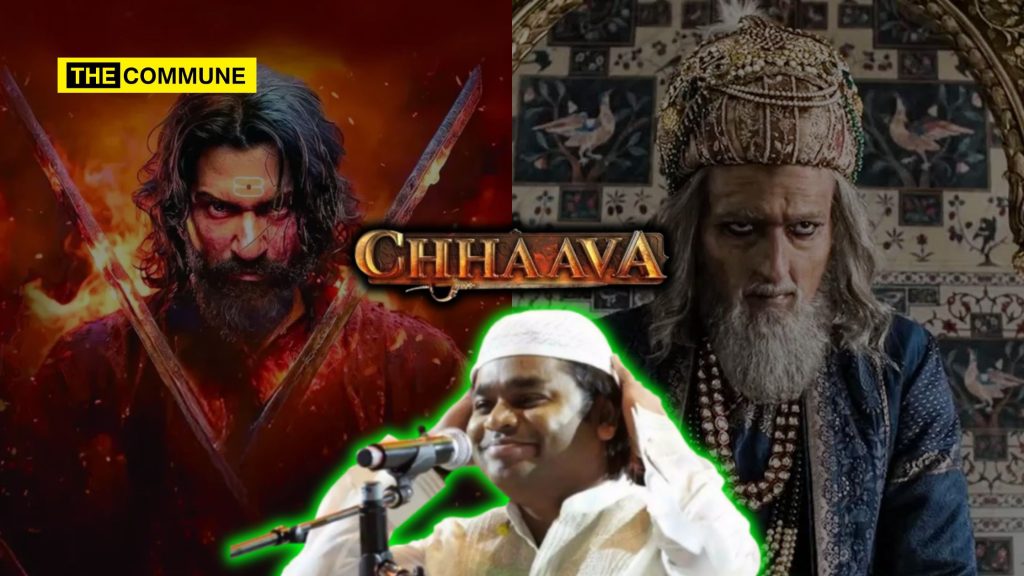
AR Rahman, the ‘celebrated music composer’, an Oscar winner, has been in the news for all the wrong reasons for the past couple of years.
The disastrous Marakkuma Nenjam concert, the rumours of divorce with his wife, playing second fiddle to the Dravidianist regime in Tamil Nadu – these are the news that Rahman was associated with in the recent past.
Unable to command attention through music anymore, he has now resurfaced via a long-winded interview with BBC Asian Network, to peddle Muslim victimhood in India narrative. Across nearly 90 minutes, Rahman abandons introspection in favour of insinuation, repeatedly hinting at bias, “communal” forces, and power shifts – all while carefully avoiding specifics.
What emerges is not a misunderstood genius, but a man desperate to stay relevant, playing the familiar victim card and wrapping professional stagnation in ideological and identity politics language. The interview does not revive Rahman’s legacy; it only exposes how far he has drifted from the music that once spoke for itself.
Less Work Because ‘Communal Environment’
AR Rahman claims less work is coming his way for the past 8 years. He says, “You know people who are not creative have the power now to decide things and this might have been a communal thing also but not in my face but I’ve hear you know like Chinese whispers that this happened and they they booked you and the other company the music company went and funded the movie and got their five composers and I said ‘Oh that’s great! Rest for me I can chill out with my family.'”
He also said, “Any person who has realized religion will never talk about divisive stuff because I think beyond religion is where the real truth is, right, these are just parts where those who are near the destination will never argue and they would find it foolish to even try anything negative.”
Chhaava – A Divisive Film
The interviewer asks him about Chhaava, says AR Rahman was ‘very proud of its soundtrack’. He goes on to say, “It is divisive. I think it cashed in on divisiveness and but I think the core of it is to show the bravery, because the director, I told him like why do you need me for this, he said we need only you for this, so I think had a very and it is a enjoyable finish but definitely I think people are smarter than that whatever do you think people are going to get influenced by movies? They have something called internal conscience which knows what the truth is and what manipulation is.”
Here’s how the music of Chaava really was – deplorable. If Aurangzeb tortured and killed Shambhu Raje in real life, it was “legendary music composer” AR Rahman who killed the film and the majestic hero in reel. AR Rahman was the biggest misfit in the film, and he destroyed what could have been an epic that would have remained in public memory for a long time.
Chhaava: How AR Rahman Reduced A Maratha Epic To Sonic Ruins
Rahman’s music for Chhaava was a shockingly below-average and out-of-tune soundtrack for a period film that deserved so much more. Rahman’s work here isn’t just disappointing; it’s downright pathetic, and it single-handedly kills the soul of what could have been a powerful historical epic.
For a film rooted in the life of Chhatrapati Sambhaji Maharaj, Chhaava demanded music steeped in Marathi ethos, historical weight, and warrior fury. What it received from AR Rahman was the exact opposite, a soundtrack so culturally misplaced that it actively sabotages the film.
There is virtually no Marathi soul in the music. Instead of grounding the score in regional rhythm or folk intensity, Rahman delivers a confused jumble of Arabic motifs, Middle Eastern flourishes, electronic clutter, and ambient fillers that feel ripped from a modern lounge playlist. The result is jarring, distracting, and utterly alien to a 17th-century Maratha setting. One wonders if Rahman was composing for Sambhaji Maharaj or Aurangzeb.
“Aaya Re Toofan,” meant to be a battle anthem, collapses into a lifeless exercise. Rahman singing it himself is baffling, especially when voices like Sukhwinder Singh exist for precisely this kind of raw power. Compared to “Malhari,” the track is anemic and instantly forgettable. “Jaane Tu,” placed in a moment of devotion and longing, sounds like a discarded rom-com song, emotionally hollow and historically absurd. A rap track in a Maratha epic only underlines how disconnected the composer was from the film’s soul.
The background score fares no better. It perks up for Mughal scenes, sinks during Maratha suffering, and remains silent where rage and grief were essential. This was stark negligence.
Composers like Ajay-Atul could have elevated Chhaava into something timeless. Rahman instead delivered lazy, tone-deaf music that disrespects history and memory. For a composer of his stature, this failure is not just disappointing; it is shameful.
Cliche For Muslim Characters, None For Hindus
In the subsequent part of the interview, the interviewer says, “My problem with a film like that is that when every time a negative act is taking place on screen and the character is chanting subhan allah mashallah alhamdulillah…”, Rahman butts in and says, “That’s such a cliche no? I’m just saying I’m not I have great respect for people. People are that foolish to get influenced by false information.”
What Rahman’s comments expose is a staggering double standard. When Islamic invocations on screen are paired with villainy, he instantly spots a “cliché” and feels compelled to correct it, but when a film about a Maratha king who was tortured to death for refusing conversion is dismissed as “divisive,” suddenly concern for sentiment vanishes.
One stereotype troubles him; the other is waved away with lofty platitudes about how “people are not that foolish.” In other words, Muslim portrayal must be handled with infinite sensitivity, while Hindu history asserting itself can be casually reduced to politics. What is repeatedly framed as sacred, civilisational memory for Hindus is treated as an inconvenience, even suspect; what touches Islamic representation is treated as delicate and deserving protection. That imbalance is not subtle, and it is not accidental. It suggests a worldview where one community’s sensitivities are non-negotiable clichés to be challenged, while another’s are inconveniences to be scolded into silence.
Calling audiences “not that foolish” is not reassurance – it is condescension, especially when the same courtesy is never extended to those who feel a historical and emotional stake in a figure like Sambhaji Maharaj.
Faith, Selective Sensitivity, And A Pattern That Can’t Be Ignored
For many longtime admirers of AR Rahman, the discomfort does not begin with interviews or recent controversies alone – it has existed quietly for years. Multiple anecdotes from within the Tamil film industry point to a pattern where Rahman’s personal religious beliefs appear to intrude into professional spaces, often at the expense of others’ faith.
Lyricist Piraisoodan has publicly recalled being asked to remove Hindu religious marks before entering Rahman’s home, a request he refused.
Veteran lyricist Vaali recorded an incident where Rahman objected to equating a mother with God in a song, forcing a lyric change even after filming was completed.

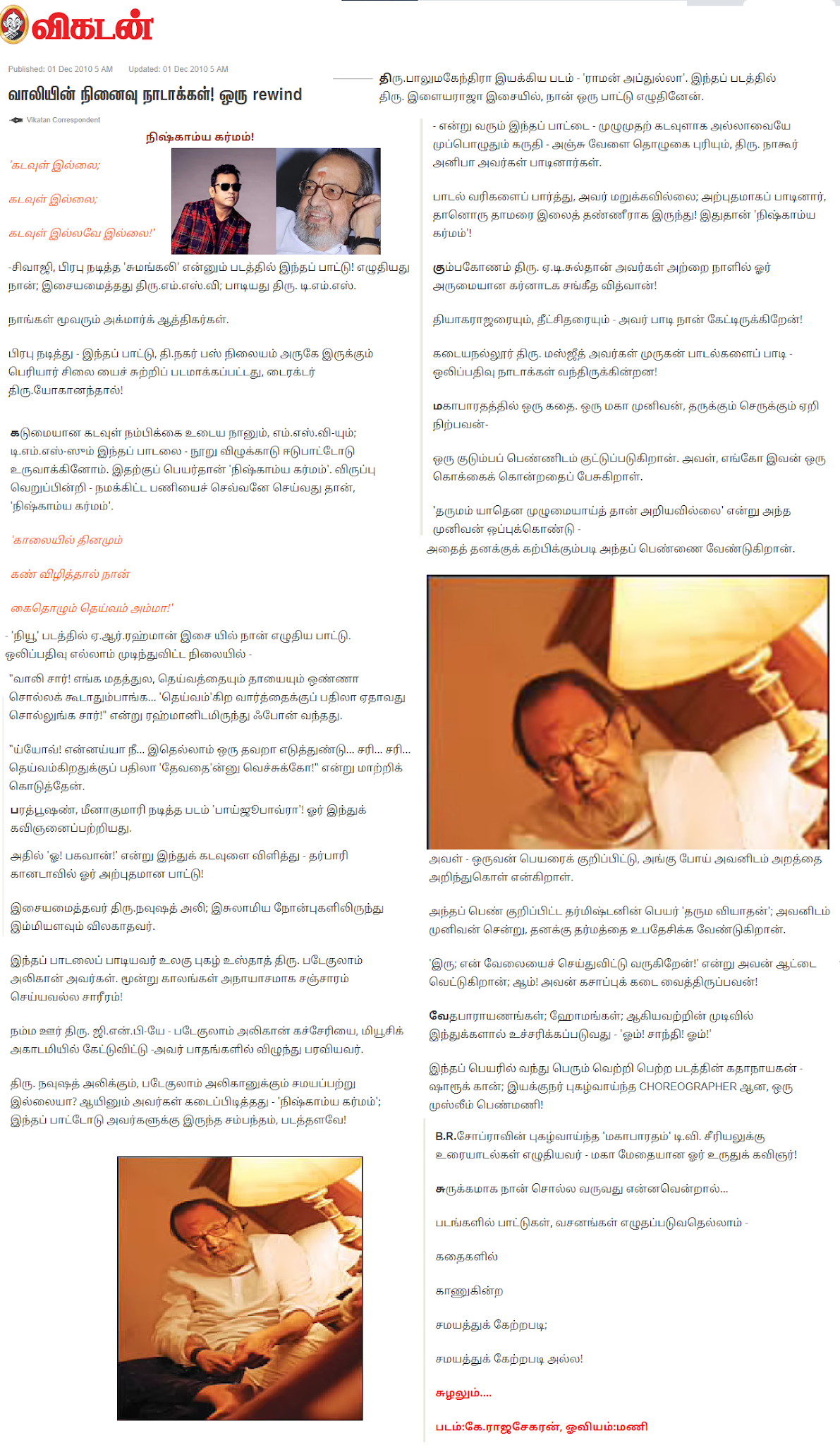
In another instance, Rahman reportedly distanced himself from composing an Ayyappa devotional song in Boys, while having no such hesitation in composing songs venerating Jesus in earlier films.


Individually, these incidents may be explained away. Taken together, they raise an uncomfortable question: why does religious sensitivity seem selective? Respect for one’s faith is legitimate but repeatedly pushing it onto collaborators, while showing openness to other religious themes, inevitably invites scrutiny.
For fans who once saw Rahman as a unifying cultural force beyond religion and politics, this perceived imbalance is deeply unsettling. It suggests not quiet faith, but a recurring tendency to draw lines where art once dissolved them – a shift that clashes sharply with the inclusive legacy that made Rahman a national icon in the first place.
Given this pattern and his firm belief as a Muslim in “La Ilaha Illallah Muhammadur Rasulullah”, it is only natural for Hindus to feel uneasy about whether a composer with such Islamist outlook can approach an epic like the Ramayan and the reverence it demands.
Rahman, You Are No Victim, Just Out of Tune
AR Rahman, the 59-year-old musician, is unwilling to confront the simple truth: new voices eventually replace old ones. That is exactly how he himself rose – by outpacing and outgrowing the composers before him. The wheel has turned again, and this time, he is on the other side of it.
Instead of acknowledging that audiences and filmmakers are moving on, he chooses to cloak professional stagnation in insinuations of bias. Dressing up a fading dominance as a consequence of “communal” forces is deflection. No artist, however celebrated, enjoys permanent supremacy. Decline is not persecution, it is inevitability.
To hint at discrimination rather than admit loss of relevance reflects bitterness, not bravery. It diminishes the very legacy he claims to defend and makes his grievances sound less like critique and more like sour resentment at being overtaken.
In the end, this is not about censorship, conspiracies, or communal pressure, it is about decline and denial. A.R. Rahman is not being sidelined; he is being outpaced. Audiences have moved on, tastes have changed, and his once-revolutionary sound now feels repetitive and dated. Instead of accepting that reality, he chooses to complain, insinuate bias, and lecture people on how they should respond to history and culture.
What makes this harder to ignore is that this selective sensitivity is not new. When Muslim portrayal needs care, he cries “cliché.” When Hindu history demands respect, he dismisses it as “divisive” and tells audiences they are “not that foolish.”
Legends earn respect by rising above excuses, not by playing victim when the spotlight shifts. Rahman’s problem today isn’t the industry or the times – it’s that the music no longer speaks, and no interview, however long, can tune that out.
Hydra is a political writer.
Subscribe to our channels on Telegram, WhatsApp, and Instagram and get the best stories of the day delivered to you personally.