


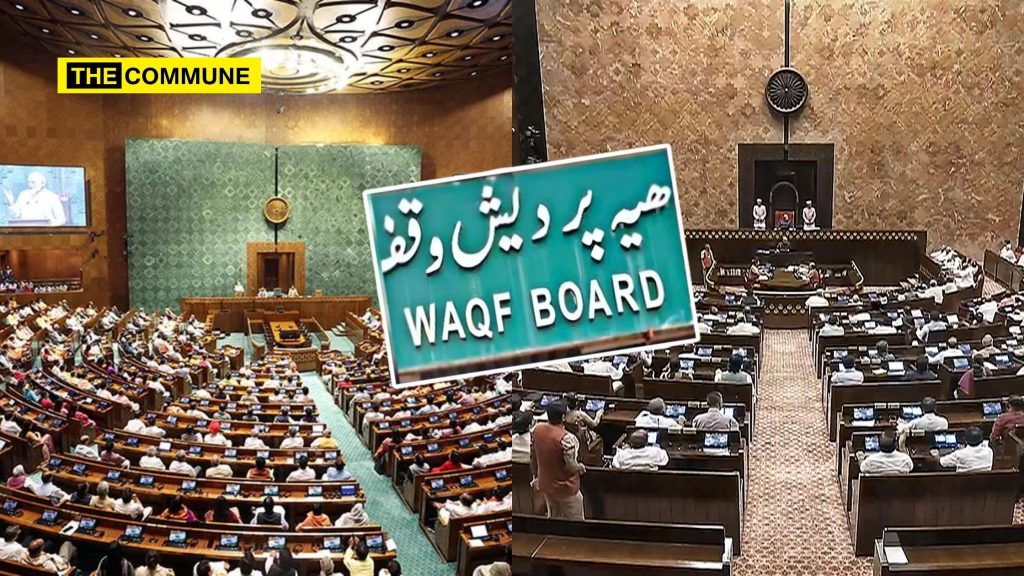
With Parliament passing the Waqf (Amendment) Bill with solid majorities in both the Lok Sabha and Rajya Sabha, social media has seen a wave of misinformation spread by those looking to discredit the central government. Some are attempting to stir unrest by falsely claiming that the bill will strip Muslims of their property rights. However, once the bill becomes an act, following the president’s assent, it will not take away any Muslim’s rights to own property. Instead, the bill is designed to strengthen the Waqf Board by promoting transparency, improving management, and giving a voice to Muslim women through representation on the Waqf Board.
Below are some myths circulating on social media about the Waqf Amendment Bill 2025, along with the factual clarifications:
Myth 1: Will Waqf properties be revoked?
Fact: No, properties registered under the Waqf Act of 1995 prior to its commencement will not be revoked.
Explanation: Once a property is declared waqf, it remains permanently so. The bill clarifies rules for better management and transparency. It allows the District Collector to review properties potentially misclassified as waqf, especially those that might actually belong to the government. Legitimate waqf properties will remain protected.
Myth 2: Will there be no survey of Waqf properties?
Fact: There will still be a survey.
Explanation: The bill replaces the role of the Survey Commissioner with the District Collector, who will carry out surveys using existing revenue procedures. This change is designed to enhance the accuracy of property records without halting the survey process.
Myth 3: Will non-Muslims become the majority on Waqf Boards?
Fact: No, non-Muslims will not form a majority on Waqf Boards.
Explanation: The bill mandates the inclusion of two non-Muslim members (excluding ex-officio members) on the Central Waqf Council and State Waqf Boards. This allows a maximum of four non-Muslim members in the Council and three on the Waqf Board, but Muslims will still form the majority. The inclusion of non-Muslims is intended to bring expertise and promote transparency, not diminish Muslim representation.
Myth 4: Will Muslims’ personal land be acquired under the new amendment?
Fact: No personal land will be acquired.
Explanation: The bill only applies to properties declared as waqf. It does not affect private or personal land that has not been designated as waqf. Only assets voluntarily and legally declared as waqf are impacted by the new regulations.
Myth 5: Will the government use this bill to take over Waqf properties?
Fact: No, the bill does not allow for the seizure of legitimate Waqf properties.
Explanation: The bill grants an officer above the rank of District Collector the authority to review whether a property has been wrongly classified as waqf, particularly if it may be government property. However, it does not authorize the government to seize legitimately declared waqf properties.
Myth 6: Does the bill allow non-Muslims to control or manage the wealth of the Muslim community?
Fact: Non-Muslims will not control the wealth of the Muslim community.
Explanation: While the amendment requires the inclusion of two non-Muslim members on the Central Waqf Council and State Waqf Boards, the majority of members will still be from the Muslim community. The intent is to bring additional expertise and oversight while preserving Muslim control over religious affairs.
Myth 7: Will the traditional status of historic Waqf sites (like mosques, dargahs, and graveyards) be affected?
Fact: The bill will not alter the religious or historical status of Waqf properties.
Explanation: The bill’s purpose is to improve administrative transparency and prevent fraudulent claims, not to change the sacred nature of historic Waqf sites.
Myth 8: Does the removal of the ‘waqf by user’ provision mean that long-established traditions will be lost?
Fact: No, traditional Waqf properties will remain protected.
Explanation: The removal of the ‘waqf by user’ provision aims to prevent unauthorized claims over properties. However, Waqf by user properties, such as mosques, dargahs, and graveyards, will remain protected unless there is a dispute or the property is government-owned. The bill streamlines the registration process to ensure only formally declared Waqf properties are recognized.
Myth 9: Is the bill intended to interfere with the community’s right to manage its own religious affairs?
Fact: No, the bill does not interfere with the community’s right to manage its religious affairs.
Explanation: The main goal of the bill is to improve record-keeping, reduce mismanagement, and ensure accountability. It does not take away the Muslim community’s right to manage its own religious endowments; instead, it introduces a framework for transparent and efficient property management.
This clarification aims to dispel the misinformation being spread about the Waqf Amendment Bill and highlight its purpose of enhancing transparency and accountability in the management of Waqf properties while preserving the rights of the Muslim community.
Subscribe to our channels on Telegram, WhatsApp, and Instagram and get the best stories of the day delivered to you personally.