In a phone call with Nitish Kumar on Saturday, Tamil Nadu Chief Minister MK Stalin reassured his Bihar counterpart about the safety of migrant workers, amid reports of alleged attacks on people from Bihar.
According to a statement released by the chief minister’s office, as some fake videos were circulated alongside real incidents of North Indian labourers being attacked in Tamil Nadu, such as the one that occurred in a train in Tamil Nadu where a Vizhuppuram man assaulted migrant workers, Chief Minister Stalin said that those indulging in rumour-mongering were acting against the country and its integrity.
“Tamil Nadu Government and People will always stand by our migrant brothers,” Stalin told Bihar Chief Minister, according to the statement.
Stalin was quoted in the press release as saying, “Migrant workers should not be concerned. If there is a threat, you can contact the police department’s helpline numbers, which have been announced by the police.”
In this situation, the Tamil Nadu police have provided helpline numbers for migrant workers to call if there is an untoward incident. Migrant workers can contact police at 0421-2203313, 9498101300, or 9498101320.
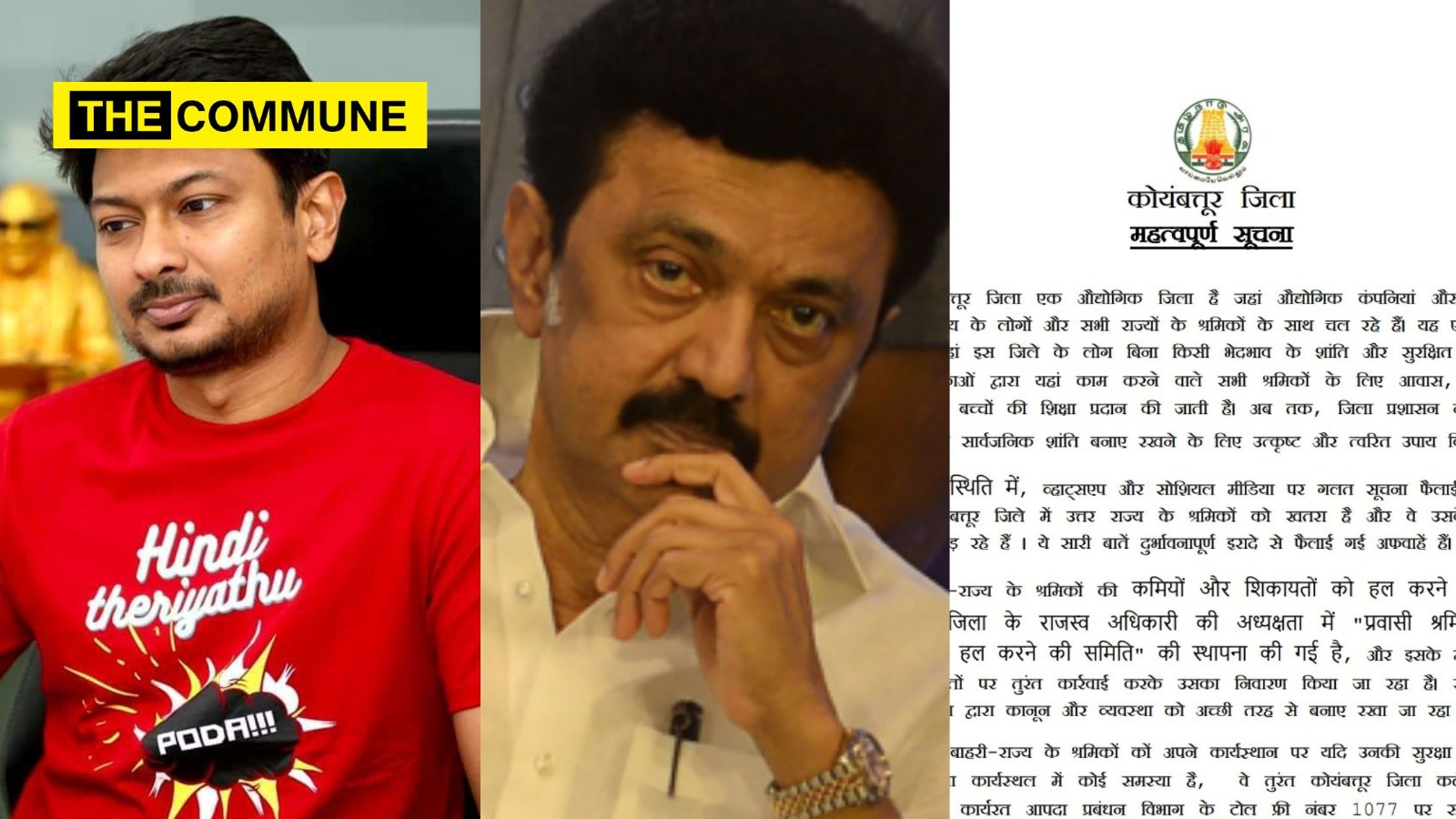
However, the police announcement drew criticism for the DMK government because it was written in Hindi as well. Netizens pointed out that the party (DMK), which resorted to erasing Hindi sign boards with black ink, is now forced to provide assurances to migrant workers in Hindi.
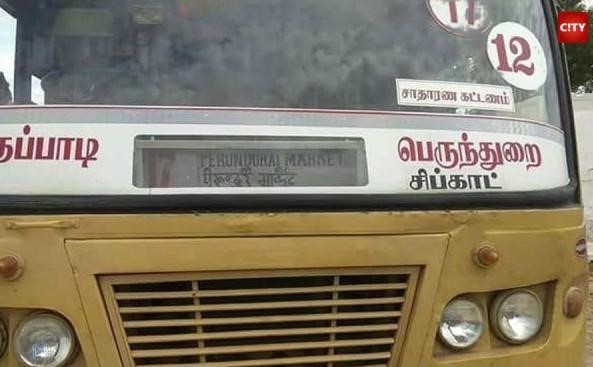
It should be noted that a bus conductor of the TNSTC bus from Kavindpadi bus stand to SIPCOT industrial estate at Perundurai was placed under suspension for one day for putting up a route board in Hindi and English.
The alleged incident occurred in June 2018. Following the opposition and social media campaign by the DMK, DK, and other Dravidian parties, the ruling ADMK government was forced to suspend the conductor. Srinivasan, the bus conductor has put a route board on the bus in English and Hindi to help the migrant workers from Northern and Eastern states in the area.
The Coimbatore district administration has also been forced to issue a circular ensuring the safety of migrant workers. It is worth noting that the press release is also written in Hindi. In a statement, Coimbatore district Collector said,” Coimbatore district is an industrial district with people and workers from all over the country working in industrial companies and various industries. It is a district where the people live peacefully and safely without discrimination. All employers provide housing, food, wages, and educational opportunities for their employees. So far, the district administration has taken excellent and timely steps to maintain law and order. Misinformation is spreading on WhatsApp and social media that workers from the north state are in danger in the Coimbatore district and are fleeing the city. All of these things are rumours spread with malicious intent.”
The press release added,” To resolve the grievances and grievances of out-of-state workers, a “Committee to Redress the grievances of Migrant Workers” has been set up under the chairmanship of the Revenue Officer of Coimbatore District, and to promptly act upon the grievances received through it. So, if there is any threat to their safety or a problem at their workplace, out-of-state workers can immediately contact the Disaster Management Department at the Coimbatore District Collector’s Office at toll free number 1077.”
They further said,” You can also contact Coimbatore Municipal Commissioner of Police Office Control Room Phone / Mobile No. 0422-2300970 / 9498181213, 8190000100, 9443808277 and Coimbatore District Superintendent of Police Office Control Room Mobile No. 9498181212, 7708100100.”
Problem will be created by ruling party & administration has to step in to control the damage. Migrant workers in Coimbatore & Tirupur are in fear & leaving for home. Unnecessary toxic violent rhetoric against North Indian labourers & now this appeal in Hindi! Wah! (1/n) pic.twitter.com/BJznelZGuV
— Sandhya Ravishankar (@sandhyaravishan) March 3, 2023
Click here to subscribe to The Commune on Telegram and get the best stories of the day delivered to you personally.
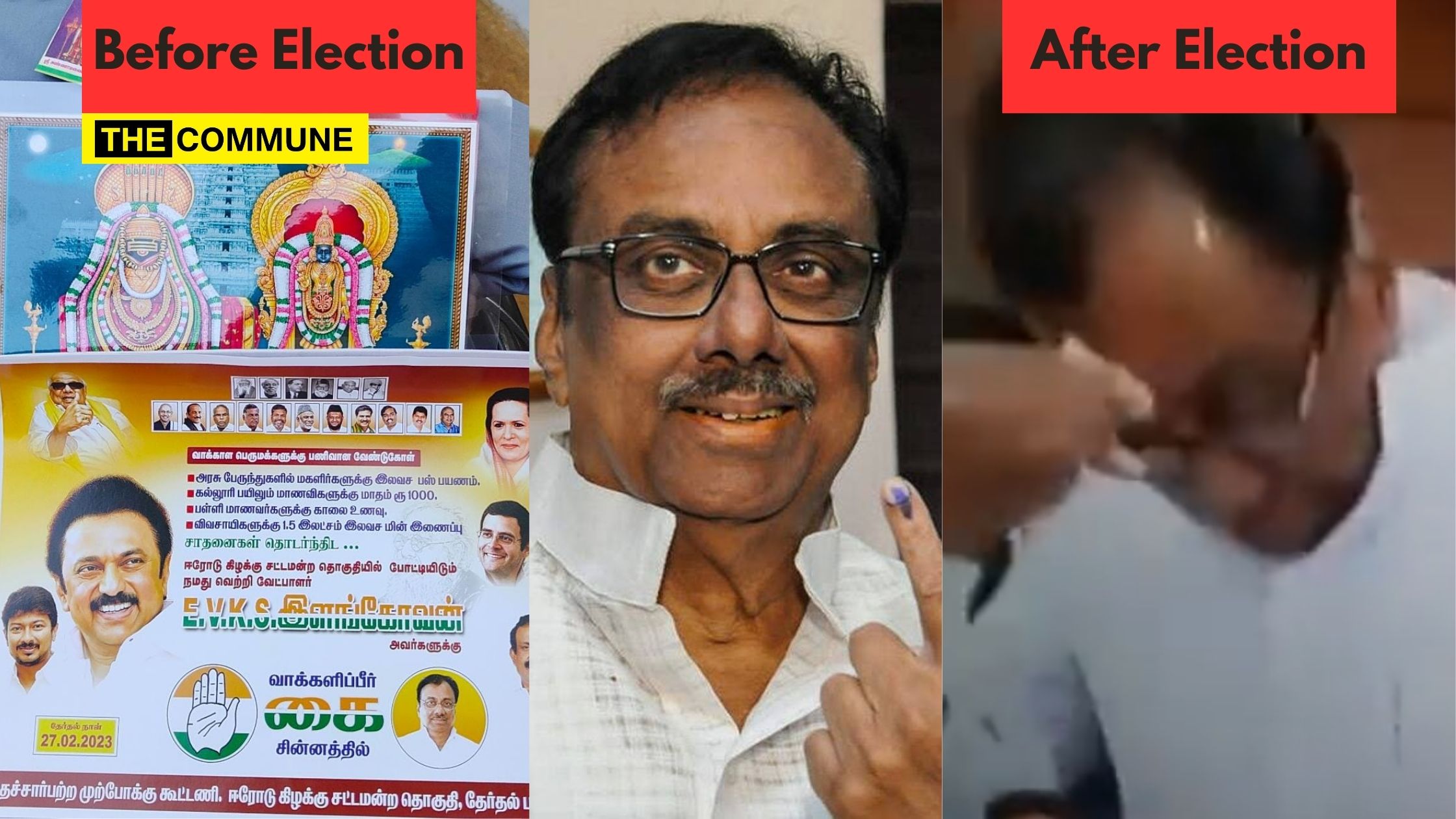
Tamil Nadu Congress leader EVKS Elangovan, was declared as the winner of the Erode East by-election, securing 1,09,906 votes winning with a margin of 66,087 votes. The by-election to the constituency came due to the until me death of his son Thirumahan Ee Ve Raa.
The by-election in Erode East had turned into a high stakes affair with the DMK luring voters with cash, watches, pressure cooker, anklets, silver lamps, etc to vote for its ally Congress’ candidate EVKS Elangovan. Voters were also given dhoti, saree along with pictures of Lord Annamalaiyar (Lord Shiva) and Goddess Unnamalai Amman (Goddess Parvati).
It is worth mentioning that the DMK is a party known for its anti-Hindu tirade. EVKS Elangovan is the grandson of EV Ramasamy Naicker (known as Periyar by his followers) who in his lifetime had abused Hindus and Hinduism day in and day out.
With the elections getting over, EVKS Elangovan who was spotted wearing the vibhuti (sacred ash) on his forehead, rubbed it off as he saw media reporters waiting.
ஜெயிச்சாச்சு இனி எதுக்கு திருநீர்
இனி இது ஈவேரா மண்.
PS: ஈரோடு கிழக்கு வாக்காளர்களுக்கு பல பரிசுகள் தாண்டி பழனி பஞ்சாமிருதமும் கொடுக்க பட்டதாமே
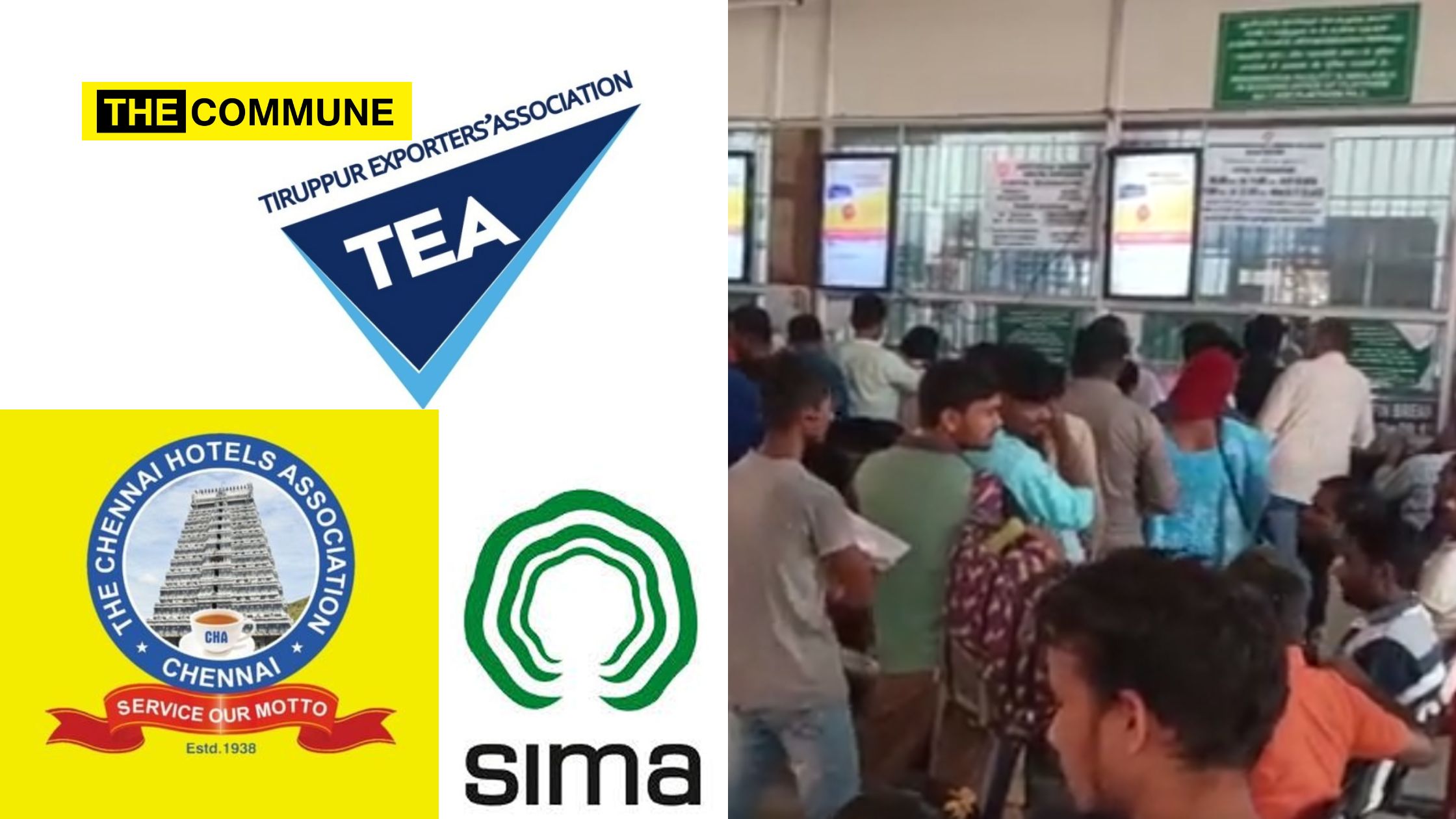
With news of migrant workers in Tamil Nadu fleeing the state, organisations such as the South Indian Mills Association (SIMA), the Chennai Hotel Association, and the Tiruppur Exporter Associations have come forward to offer assistance to the migrant workers.
It has been reported that North Indian migrant labourers, primarily from Tiruppur and surrounding areas, were fleeing the state fearing attacks against them.
— Sandhya Ravishankar (@sandhyaravishan) March 4, 2023
The opposition BJP in Bihar created a ruckus in the state Assembly before staging a walkout on Friday, demanding that a team of House members be sent to Tamil Nadu to investigate reports of attacks on Bihari migrants working in Tamil Nadu. Misreporting by a few Hindi media outlets has unleashed s political slugfest with migrant workers in Tamil Nadu facing the brunt.
Nevertheless, there have been several incidents of violence reported against workers from other states.
North Indian labourers were attacked in Chennai by a Vizhupuram man who claimed that their jobs were taken by Hindi speakers, and a Bengali construction worker who was stranded near Kelambakkam in Chengalpattu district was blindly attacked by local youths who mistook him for a thief, to name a few such incidents in Tamil Nadu where migrant labourers are attacked in last few days.
Because of increasing hostility against them, many migrant workers in and around Tirupur who form the backbone of the thriving textile industry, have been thronging railway stations. In this situation, the Southern India Mills Association (SIMA) issued a press release urging North Indian workers not to leave Tamil Nadu, claiming that if they do, the entire textile industry in Tamil Nadu will collapse.
In a statement, SIMA said,” Tamil Nadu produces 45 percent of all cotton yarn in India. After agriculture, the textile industry in Tamil Nadu provides the most job opportunities for illiterate and less educated men and women in the country. Tamil Nadu began to face labour shortages as a result of rapid industrial growth. To address this, migrant workers from Bihar, Odisha, Chhattisgarh, Uttarakhand, Assam, and West Bengal have come forward to work, and we have employed them for the past ten years. Migrant workers are employed not only in the textile industry, but also in other industrial and service sectors.”
The press release added, “Mr. T. Rajkumar, President of the Textile Federation of India, and Mr. Ravi Sam, President of the South Indian Cotton Association, addressed the media at a press conference held today in Coimbatore. They stated that there is no wage discrimination between local and migrant workers, and that the industry treats both workers equally. In fact, industrialists provide migrant workers with food and lodging based on their requirements. However, in recent weeks, some groups and political organisations have created unnecessary controversies surrounding the recruitment of migrant workers, arguing that migrant workers from North India should not be allowed to work in Tamil Nadu.”
SIMA further added, “They (Raj Kumar and Ravi Sam) went on to say that such organisations are sowing seeds of hatred in the minds of Tamil Nadu people and workers against the use of migrant labour. Such attitudes and demands of such groups will have an impact not only on the industrially developed state of Tamil Nadu, but also on the overall performance of the Textile industry. Furthermore, they stated that if this problem is not addressed at an early stage, the state’s industrial development will suffer.”
SIMA further said, “They (Raj Kumar and Ravi Sam) also pointed out that the Tamil Nadu government is trying to attract substantial investments to the state. They claimed that there was no conflict between migrant workers and local workers, and that social media reports were false and did not accurately reflect the situation. Tamil Nadu Police Superintendent Mr. Shailendra Babu revealed this in a video.”
The press release stated, “Mr. Rajkumar and Mr. Ravi Sam stated that on March 2, a video meeting was held in Coimbatore under the leadership of the District Collector of Coimbatore to discuss the situation, and the reality was explained.”
At the same time, steps are being taken to instill confidence in migrant workers to work in Tamil Nadu without any fear, they said. They urged the Tamil Nadu government to take serious action against the troublemakers through the appropriate departments, to protect industry and the working class, and to restore industrial peace in the state.
Tiruppur Exporters Association Chairman “Padmashree” Dr A Sakthivel too issued a statement in this regard. He assured the migrant labourers that the exporters are with them and that they should not be concerned about the situation. He also stated that he and his team will provide all types of assistance to migrant workers.
In a similar statement, the Chennai Hotel Association expressed concern that North Indians leaving the state would negatively impact their business.
Chennai Hotel Association said, “Attacking northern state labourers who work in Tamilnadu on various tasks is an inhuman act because these people are doing work that our people do not want to do.”
They also stated that the government must ensure the safety of migrant workers and that all attacks on migrant workers must cease immediately. They also stated that if the attacks continue, the food industry will be paralysed. They urged the Tamil Nadu government to take strict action in this regard.
However, the DMK IT wing and unofficial DMK mouthpieces like Behindwoods and The News Minute, including their journalists, who were referring to North Indian labourers as ‘Vadakkans’ until now, having realised the gravity of the situation are now attempting to portray it as migrant labourers going to their homes for celebrating Holi festival.
The Tamil Nadu police has launched a help line to reach out to migrant worker who are in distress.
While condemning the spread of fake videos about migrant workers being attacked in Tamil Nadu, BJP Tamil Nadu President also condemned the vile comments of DMK ministers who referred to them as Panipuri walas and Vadakkans, claiming that these irresponsible statements by DMK leaders triggered this exodus.
DMK’s MPs' vile comments on North Indians, DMK minister calling them Panipuri wala, and their alliance partners demanding their exodus have triggered what we see today.
The people, the Government & the Police, do not endorse the views of DMK & their alliance partners. (4/5)
On Tuesday, 21 February, outgoing Seattle City Council member Kshama Sawant, a member of the Trotskyist Socialist Alternative political party, succeeded in passing a bill adding the category of ‘caste’ to the city’s non-discrimination statute. Many supported it and many opposed it. Those who oppose it do so, not because they disagree on whether caste discrimination should be addressed, rather their point of contention was about how it should be addressed. Thus, first time in the history of the United States a city passed in effect a ‘discriminatory’ legislation targeting a specific community based on their ethnicity or national origin and on basis of prejudiced dogma that they have such a unique form of bigotry that a special policy shall be bought in just to monitor them. The bill does not even consider the repercussions it can have on the harmony of Hindu communities in Western nations. In this context this article will understand why anti-caste legislation by a city in the USA represents the rising trend of Hindu phobia in the West?
“For the First time in the history of the United States a city passed in effect a ‘discriminatory’ legislation targeting a specific community based on their ethnicity or national origin and on basis of prejudiced dogma that they have such unique form of bigotry that a special policy shall be brought in just to monitor them. The bill does not even consider the repercussions it can have on the harmony of Hindu community in Western nations.”
As soon as these incidents unravelled, Hindu American Foundation (HAF) co-founder and Executive Director Suhag Shukla said in an official statement, “Throughout our two decades of existence, HAF has maintained that caste discrimination is wrong, violating core Hindu principles of the divine oneness of all beings. At the same time, we maintain that the singling out of South Asians and the addition of ‘caste’ to the non-discrimination policy violates the policies it now amends. The City of Seattle has voted to treat South Asians so that no other ethnic or racial community is treated under the guise of non-discrimination. It has voted yes to discriminating against ethnic minorities, repeating the ugliness of nativists in the state nearly a century ago.” To put it into perspective, it is the US we are talking about. A progressive nation that is open to freedom of speech and expression, but the parameters in the bill makes it blatantly violative of US constitutional guarantees.
HAF Managing Director Samir Kalra said, “Seattle has taken a dangerous misstep here, institutionalising bias against all residents of Indian and South Asian origin, all in the name of preventing bias. When Seattle should be protecting the civil rights of all its residents, it is actually violating them by running roughshod over the most basic and fundamental rights in US law, all people being treated equally.” HAF further noted that Councilmember Sawant claimed caste discrimination is “rampant” in the US. However, only the Carnegie Endowment has done the only authoritative survey on discrimination against the Indian and South Asian communities in the country that noted that caste-based discrimination is rare in the US. The survey specifically debunked the methodology and findings of the dubious organisation Equality Labs, which was the base of Sawant’s resolution. First Hindu and Indian State Senator of Ohio, Niraj Antani, criticised the ordinance passed by Seattle. He said, “I condemn in the strongest terms the ordinance passed by the Seattle City Council. Caste discrimination simply doesn’t exist now. Adding it to their non-discrimination policy is Hindu phobic and is a tool for those who are anti-Hindu use to discriminate against Hindus in America, India, and around the world. Instead of passing this racist policy, Seattle should be passing policies to protect Hindus from discrimination.” The mainstream media is mostly silent on the issue. HAF added that by passing the resolution, Seattle had violated the equal protection and due process guaranteed to every person by the United States Constitution. Notably, as per the constitution, the state is prohibited from treating people disparately on the basis of their national origin, religion or ethnicity. The Foundation’s attorneys contended that the resolution would implement a vague, facially discriminatory and arbitrary category against the Hindus.
Sawant has described the bill as “historic.” That’s true. But for different reasons than she’s touting. Sawant’s wordings of the bill specifically defines caste discrimination as something found in the “South Asian region” and then goes on to falsely tie caste to Hinduism, by writing that “its existence is linked to the religiously sanctioned social structure of Hinduism.” The bill also added immigrants and diasporic communities from Japan, certain African countries and the Middle East. These wordings made the situation even worse by targeting Hindu diaspora abroad. The bill is a true representation of Western misunderstanding of Hindu culture and civilization and it is an act of targeting Hindu’s rather than addressing the violence committed against the community. But politicians and mainstream media are silent on the issue. Whatever their agenda may be, the facts on the ground are crystal clear for anyone to inspect. The ground report from the west reflects the true picture of rising extremism in the west against the Hindus. Let me paint a clearer picture from recent examples.
Hindu phobia or anti-Hindu hatred have a tragically long history which continues to this day across the globe. They are fuelled by a range of factors, including religious intolerance, religious exclusivism, a lack of religious literacy, misrepresentation in the media, academic bias still rooted in oftentimes racist, colonial-era mis portrayals and, in the diaspora, generalised anti-immigrant xenophobia and hatred. This has been professed by colonisers of the Indian subcontinent in form of control over temple wealth and enactment of acts such as Lex Loci Act, 1850 which was one of the root causes for 1857 first war of Indian Independence. Presently, this is being done in Islamic countries and western nations which are being ignored by mainstream media. In Pakistan for example, 1,000 girls between the ages of 12-25 from minorities are forcibly converted to Islam every year and married to their abductors, which described the situation as a “human-rights catastrophe” and in Bangladesh, these incidents are being considered as a part of daily life for Hindus. For example, a mob of 200 perpetrators desecrated ISKCON Radhakanta Temple in Bangladesh’s Dhaka which was part of incidents targeting Hindu’s in Bangladesh and surprisingly this incident happened on March 17th which came right after the United Nations (UN) declared March 15th as International Day to combat Islamophobia.
India had risen to this occasion and rightly questioned the existing bias during the passage of the UN resolution. During the passage, India along with France gave an explanation of ‘Vote of concern’ stating that combatting the hatred against one specific religion was being elevated to an international day for the first time. In fact, this also marked the instance where in atrocities against other religions, specifically, non-Abrahamic religions are being ignored. The political ambivalence to concerns of Hindu community is also an issue in the West. Recent attacks and the lack of credible condemnation against vandalization of 3 Hindu temples in Australia, Vandalization of temples in Canada and general violence against Hindu’s in the Subcontinent speaks volumes on this issue. The US, leader of human rights enforcing its ambit via military measures across the world had never recognized slaughter of Hindu Bangladeshis during 1971 war but US administration was happy to recognise Armenian genocide by Turkey which fits their propaganda of being human rights champions perfectly.
Now, let us come back to what is happening in the US. Attacks against the Hindu community in the USA has become a persistent theme now. In a briefing hosted by the Coalition of Hindus of North America, Joel Finkelstein, the project’s lead researcher, pointed to memes and online social cyber signals referring to perceived “dirty” and “scamming” qualities of Hindus, as well as depictions of Hindus being brutalised. Many of the memes, he said, were manufactured out of commonly used tropes against Jewish people, using tilaks, swastikas and bindis to signify Hindu culture. Because the verbiage and tropes surrounding Hindu phobia are not yet recognized by social media platforms like Twitter, this kind of targeted hatred, which “reliably precedes real-world violence,” largely goes unchecked, Finkelstein said. Because the verbiage and tropes surrounding Hindu phobia are not yet recognized by social media platforms like Twitter, this kind of targeted hatred, which “reliably precedes real-world violence,” largely goes unchecked, Finkelstein said. “Unfortunately, these incidents are evidence of the unhindered Hindu phobia that refuses to be given mainstream acknowledgement,” said Pushpita Prasad, of the Coalition of Hindus of North America. She said COHNA (Coalition of Hindus of North America) often battles with academics, activists and “blue-check” journalists to acknowledge the existence of anti-Hindu hate.
The violence against Hindus and scathing attacks in the form of discriminatory legislation in western nations are resulting in a wave of anti-Hindu climate in Western nations. It is high time that these progressive regions acknowledge rampant anti-Hindu hate and take measures against it without discriminating against the victim itself.
(This article was originally published in The Pulse and has been republished here with permission.)
Click here to subscribe to The Commune on Telegram and get the best stories of the day delivered to you personally.
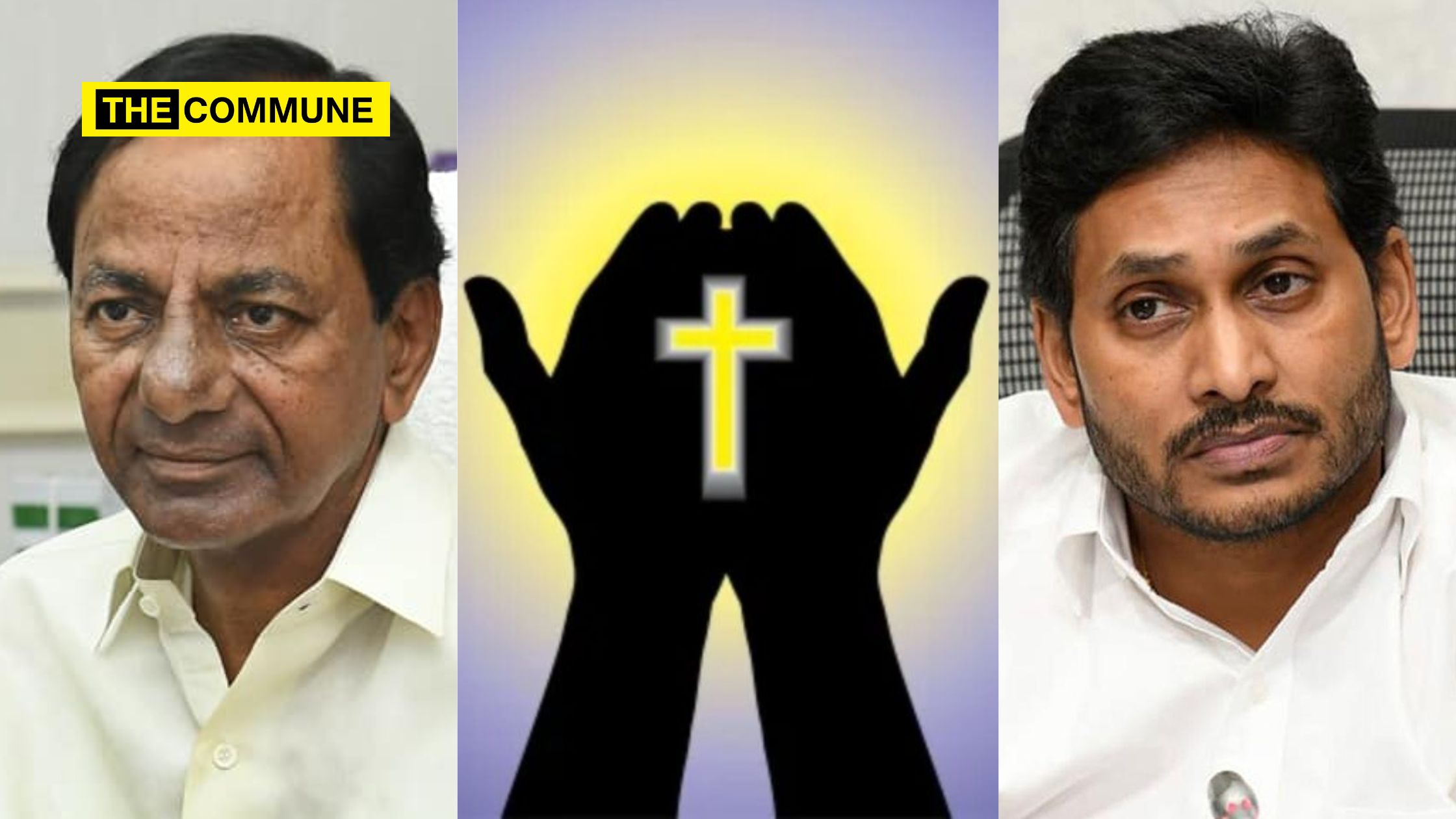
Well-funded Christian organisations with an agenda, are aggressively lobbying (one could call it, bullying) the state governments of Andhra and Telangana for the extension of Scheduled Caste (SC) benefits to persons even after converting to Christianity. The two Telugu states are scheduled for elections within a year – Telangana’s elections are to be held before the end of this year and Andhra Pradesh’s is expected to take place in the first half of next year.
A powerful, well-organised network of Christian organisations and church leaders many of whom receive questionable foreign funding, have chosen the pre-election time frame for demanding the repeal of a current state directive (A.P 1998 circular memo) seeking verification of religion and questioning the eligibility of SC converts to Christianity for making use of their previous Hindu caste-based government benefits such as reservations, economic and financial schemes and other special privileges granted at the Central and State level.
Back in 1977, when the impending dangers of a well-oiled Christian-evangelist-conversion-machine were relatively unknown, the Andhra Pradesh government had circulated a General Order (GO) that sought to give consent for extending special SC benefits meant for Hindu SC members, to those members that converted to Christianity or Buddhism. This state proposal had its share of challenges and two decades later in 1998, the Andhra Pradesh government indirectly tried to address this vote bank sensitive issue by releasing a 1998 memo in favour of conducting local, on-the-spot religious identification and verification by local government officials in order to ascertain eligibility for SC government benefits primarily meant for members of Hindu SC community as stated in the Indian Constitution.
Now, just in time for elections, the Christian organisations are lobbying for the disregard and scrapping of the circular memo issued in 1998 by the erstwhile unified Andhra Pradesh state Social Welfare Department with regard to the verification of an individual’s religion when in doubt and thereafter confirmation of the individual’s eligibility for utilisation of their previous or current Hindu caste status for availing government subsidies and privileges.
Current Indian law and census surveys require a citizen to state their caste only if the citizen belongs to any of the Indic religions – Hinduism, Buddhism, Sikhism, or Jainism. If you state your religion to be an Abrahamic one (Islam, Christianity) “caste” becomes irrelevant; the presumption is that the ‘caste’ question does not arise based on the understanding that the religions of Christianity and Islam do not recognise, include or practise any type of discrimination based on caste, which is an alien concept to them.
Caste provisions, protections, and special considerations were included in the Indian Constitution because of caste-based discrimination experienced by the lower castes within the Indic religions. The concept of a specific caste that one is born into, which carries forth into future generations, does not exist in the non-Indic religions (although many have argued that various types of race and class distinctions have always existed around the world), hence the logical assumption is that caste does not and should not play a role in the rights and standing of an individual that chooses to convert to Christianity or Islam.
The premise and presumption for those designated ‘Scheduled Tribe’ are different. While a scheduled caste grouping is based on specific Indic religions, a scheduled tribe grouping is based on indigenous tribal customs and beliefs unique to each tribe, their geographical locations, their socio-economic status, and the need to provide tribal people with access to means of health, education, overall well-being and other indicators of modernization. A scheduled tribe (ST) status is not linked solely to the religion practised while a scheduled caste (SC) status is based on the religion practised. For 2-3 decades now, it has been observed and controversial remarks have been made about Christian missionaries targeting tribal populations because their special “ST” status would not be impacted by religion and tribals would continue to enjoy the Indian government’s special privileges while the Christians could continue with their goal of increasing the numbers of Christian converts in India.
The tribal-Christian scenario appears to get the best of both worlds, while many Hindu leaders worry that the primary purpose of an accorded special status for tribals is being misused, at the expense of the larger nation and ancient indigenous cultures. Christian zealots would like the scheduled tribe scenario for scheduled castes as well. The Christian organisations are demanding the scrapping of the 1998 Andhra government memo, recommending a process of verifying the religion of SC beneficiaries first and thereafter determining their eligibility for Hindu SC government benefits, because a majority of the converted SC Christians practise the dual-identity principle whereby they are Christian in faith and belief but retain their Hindu names and backward caste certificates to continue using specially allocated government benefits meant for so-called ‘backward caste” Hindus.
Conversions from SCs into Christianity have taken place on a massive scale in Andhra Pradesh and Telangana (formerly, the larger combined state of Andhra Pradesh). Per the 2011 Census, there are officially 6.82 lakh Christians in Andhra Pradesh, while the actual number is estimated to be between 80-90 lakhs.
Many complaints and PILs in the recent past argue that converted Christians from Hindu scheduled caste status have already misused their special rights and protections under Indian Law by continuing to use their Hindu names and scheduled caste status, thus taking up a large share of the privileges meant for their fellow SC Hindu brethren. Who’s checking their application forms and their census inputs?
The law states that those converted to Christianity should apply for an OBC -C or BC -C category certificate (based on their state of residence) and quit utilising their previous Hindu SC or BC status. The OBC/BC -Ccategory status offers far fewer economic, educational, employment, and financial benefits compared to the SC category which is why a majority of Christian converts continue to lie about their religion on Census forms and other important government forms that ask for caste information. The converted SC Christians are encouraged by their church organisations to continue deceiving the Indian government and State governments by misrepresenting their religion on government forms in order to pursue the misuse of government benefits and special privileges/protections specifically meant for Hindu members of the disadvantaged community. In fact, there have been instances where SC caste certificates have been cancelled by the appropriate District authorities when the potent SC/ST Atrocities Act was invoked but the complainant was found to be a converted Christian who can no longer use his SC/ST legal status.
Citizens have also argued that Christians and Muslims often use the caste argument to denigrate Hinduism while incentivising lower-caste Hindus to convert. Hindus rarely point fingers at any of the odd, unreasonable, illogical, or fanatic beliefs embedded in the Christian and Islamic doctrines. Hence, Hindus wonder why converted, ex-Hindus should be permitted to benefit from their previous Hindu caste status for free or subsidised economic, educational, or monetary benefits at the expense of the Hindus of the nation.
Click here to subscribe to The Commune on Telegram and get the best stories of the day delivered to you personally.
Prime Minister Narendra Modi, addressed a Post Budget Webinar on the subject of ‘Developing Tourism in Mission Mode’. It is the seventh of a series of 12 post-budget webinars organized by the government to seek ideas and suggestions for effectively implementing the initiatives announced in the Union Budget 2023.
Addressing the gathering, the Prime Minister remarked that the new India of today is moving forward with a new work culture. He expressed delight at the appreciation shown towards this year’s Budget by the people of India. Reflecting on the previous work culture, the Prime Minister said that something as innovative as the post-budget webinars would not have existed if not for the present government’s spirit of discussions with all the stakeholders before and after the budget. The Prime Minister underlined that the main objective of these webinars is to maximize the output of the budget as well as its timely implementation. “These webinars work as a catalyst in achieving the goals set during the budget”, PM Modi said. Speaking from the experience of working as the head of the government for more than 20 years, the Prime Minister emphasized that the desired results are achieved within the stipulated time when all stakeholders align themselves with any strategic decisions taken by the government. He expressed happiness at the suggestions received through the post-budget webinars that have been conducted so far.
The Prime Minister underlined the need to think out of the box and plan ahead to take tourism in India to new heights. Throwing light on the parameters before a tourist destination is developed, the Prime Minister listed out the potential of the place, ease of travelling to the destination, and new ways to promote the destination. He further added that emphasizing these parameters helps in preparing a roadmap for the future. The Prime Minister highlighted the huge scope of tourism in the country and listed out coastal tourism, beach tourism, mangrove tourism, Himalayan tourism, adventure tourism, wildlife tourism, eco-tourism, heritage tourism, spiritual tourism, wedding destinations, tourism via conferences and sports tourism. He also gave the example of Ramayan Circuit, Buddha Circuit, Krishna Circuit, Northeast Circuit, Gandhi Circuit, and pilgrimages of all saints, and stressed the need to work together collectively on this. The Prime Minister informed that several places in India have been identified through the route of competitive spirit and challenge in this year’s Budget while also focusing on the holistic development of the destinations. PM Modi asked for a detailed discussion on how different stakeholders can be engaged.
The Prime Minister busted the myth that tourism is a fancy word associated only with the high-income groups of the country. He noted that yatras have been a part of India’s cultural and social life for centuries and people used to go on pilgrimages even when there were no resources available to them. He gave the example of Char Dham Yatra, Dwadash Jyotirling Yatra, 51 Shaktipeeth Yatra and said that it is used to connect the places of our faith while also strengthening the unity of the country. Observing that the entire economy of many big cities of the country was dependent on these yatras, the Prime Minister lamented the lack of development to enhance facilities suited to the times despite the age-old tradition of yatras. He pointed out that hundreds of years of slavery and the political neglect of these places in the decades after independence were the root cause that inflicted damage to the country. “The India of today is changing this situation”, the Prime Minister interjected as he noted that the increase in the facilities leads to an increase in the attraction among the tourists. He gave the example of Kashi Vishwanath Dham in Varanasi and informed that around 80 lakh people used to visit the temple in a year before it was rebuilt, but the tourist footfall crossed 7 crores last year after the renovation. He also informed that 15 lakh devotees have gone to see Baba Kedar compared to only 4-5 lakhs before the completion of reconstruction work in Kedarghati. Similarly, in Pavagadh of Gujarat, the Prime Minister informed that 80 thousand pilgrims go for the darshan of Maa Kalika compared to only 4 to 5 thousand people before the renovation. The Prime Minister noted that the increase in facilities has a direct impact on the number of tourists and the increasing numbers mean more opportunities for employment and self-employment. The Prime Minister also touched upon the Statue of Unity, the tallest statue in the world and informed that 27 lakh tourists visited the place within a year of its completion. He underlined that India’s tourism sector can increase manifold with growing civic amenities, good digital connectivity, good hotels and hospitals, no trace of filth, and excellent infrastructure.
The Prime Minister also mentioned the Kankaria lake project in Ahmedabad, Gujarat and informed that skill development for those working in the food stalls was carried out apart from the redevelopment of the lake. He emphasized on cleanliness along with modern infrastructure and informed that about 10,000 people visit the place every day despite the applicable entry fees. “Every tourist destination can also develop its own revenue model”, the Prime Minister said.
“Our villages are becoming centers of tourism”, the Prime Minister remarked as he underlined that remote villages are now coming up on the tourism map due to their improving infrastructure. He informed that the Central Government has started the Vibrant Village Scheme for the villages situated along the border and emphasized the need to support businesses such as homestays, small hotels and restaurants.
Throwing the spotlight on the increasing number of foreign tourists in India, the Prime Minister noted the growing attraction towards India and informed that 8 lakh foreign tourists have come to India in January this year compared to only 2 lakhs in January last year. The Prime Minister also underlined the need to profile such tourists and create a special strategy to attract them to the country who have the maximum spending capacity. He informed that foreign tourists who come to India spend an average of $1700, while international travelers spend an average of $2500 in America and around $5000 in Australia. “India has a lot to offer to high-spending tourists”, he pointed out. The Prime Minister stressed that every state needs to change its tourism policy to align with this thought. He gave the example of bird watchers who camp in the country for months and underlined that policies should be made to target such potential tourists.
Highlighting the basic challenge of the tourism sector, the Prime Minister pointed out the lack of professional tourist guides here and stressed the need for certificate courses in local colleges for guides. He suggested that guides working in a particular tourist destination should also have a specific dress or uniform so that tourists will come to know at first glance. The Prime Minister noted that a tourist’s mind is full of questions and guides can help them find answers to all those questions.
The Prime Minister also stressed promoting school and college trips to the northeast so that more people become aware and start developing infrastructure and facilities for tourists. He also emphasized promoting wedding destinations as well as sports destinations. The Prime Minister insisted on developing 50 such tourist destinations that every tourist from around the globe is bound to visit on his trip to India. He also mentioned developing apps for tourist destinations in all languages listed in the United Nations.
Concluding the address, the Prime Minister expressed confidence that this webinar will seriously consider every aspect related to tourism and come up with better solutions. “Tourism has the same potential in the country as agriculture, real estate development, infrastructure and textile”, the Prime Minister concluded.
Rahul Gandhi, a Visiting Fellow at Cambridge Judge Business School, delivered a lecture on the topic ‘Learning to Listen in the Twenty-First Century’ at Cambridge University. His speech, as usual, was riddled with outright lies and half-truths.
Rahul Gandhi began his speech by saying, “Everybody knows and its been in news a lot that Indian democracy in under attack. I am the opposition leader in India and we are navigating that space.”
The truth is that democracy is not under attack; however, the Congress is failing to win elections. Rahul attempted to portray his failure as an attack on democracy. Since 2014, the BJP has lost several elections to state parties and the Congress. Congress along with Siva Sena in Maharashtra and Kumarasamy in Karnataka murdered the democracy by preventing a single largest party from forming government. In Maharashtra, they played dirty politics by forming an alliance with the Shiva Sena, which was in a pre-election alliance with the BJP. Isn’t this Congress murdering democracy?
He also claims to be the opposition leader in India. To gain the status of Opposition party in the Indian parliament, a party must secure one-tenth of the seats, or 55 seats. However, in the 2019 elections, Congress won only 52 seats. Even if he meant that he is the leader of the second-largest party, this is not correct because Mallikarjuna Karghe is the president of the Congress and Rahul is only one of 52 Congress members in Parliament.
Rahul added, “Here you can see that picture. This picture was taken in front of the parliament house. That’s where a whole bunch of opposition parliamentarians were just standing there and talking about certain issues. We were just locked up and put in jail. It happened relatively violently. It has happened 3-4 times.”
This is a blatant lie spread by Rahul Gandhi, as no member of Parliament in India has ever been imprisoned for speaking in Parliament .
Rahul cites five reasons why Indian democracy is under attack. Capture and control of the media and the judiciary, surveillance and intimidation using software such as Pegasus, coercion by federal law enforcement agencies, attacks on minorities and Dalits, and dissent suppression are among them.
Claiming that the Indian judiciary is under the control of the BJP is a direct attack on the judiciary’s functioning, for which a criminal contempt of court charge can be filed. It is the same courts which acquitted Congress and DMK leaders in the 2G case. Did it become a good judiciary then? Is Rahul Gandhi implying that a non-biased judiciary exists only when it rules in favour of the Congress?
Rahul claimed that his phone was hacked using Pegasus and that BJP surveillance is undermining democracy. “I myself had Pegasus on my phone. A large number of politicians had Pegasus on their phones. I have been called by intelligence officers who told me, ‘please be careful about what you are saying on the phone because we are sort of recording the stuff,” he said. The Supreme Court said that its technical committee found no conclusive proof that the Pegasus spyware was used in the 29 phones it examined. Rahul Gandhi believes that a lie repeated many times becomes the truth.
According to Rahul Gandhi, the BJP uses federal law enforcement agencies to coerce opposition leaders, proving that democracy is under attack. It is worth noting that Congress MPs caused a commotion in parliament and prevented it from functioning because the Enforcement Directorate summoned Congress president Sonia Gandhi and former party chief Rahul Gandhi in connection with its investigation into alleged money laundering in the National Herald case. The Congress MPs attempted to demonstrate that the Nehru family is above the law by blocking the parliament for a summons from the ED.
The attack on minorities and Dalits in India, he claims, is the fourth reason why Indian democracy is under attack. “Minorities and Dalits are under attack in India” is a piece of propaganda used by the Congress to portray Modi and the BJP as anti-Dalits and anti-minorities. It is worth noting that the BJP is the first government in independent India to give 25% of its cabinet seats to Scheduled Castes and Scheduled Tribes Members of Parliament.
Rahul also refers the incident in which he and her sister Priyanka were denied entry into Uttar Pradesh’s Hathras district. The truth is that the atmosphere in the district was not conducive as a result of the rape incident, and a curfew was also imposed in the district.
The fifth reason he cites to demonstrate that democracy is under attack in India is that the BJP is suppressing dissent. One should remind Rahul that the Congress government in Rajasthan hounded News18 journalist Aman Chopra and arrested him despite a restraining order from the Rajasthan High Court.
The Editor Guild, which previously condemned the arrest of journalists such as Siddique Kappan by BJP government police, has remained silent when journalists are arrested by the Congress government. This shows how Congress despite not being in power for 9 years is able to control institutions.
Rahul also recalled incidents from his recent 4,000-kilometer Bharat Jodo Yatra across 12 states. He described a “face-to-face encounter with terrorists in Jammu and Kashmir” to demonstrate the power of listening and nonviolence. Despite security personnel’s warnings about terrorist attacks, he continued his walk. An unidentified man approached Rahul and asked if he had come to listen to the people of the valley, pointing to a group of militants standing nearby.
“I looked at them and thought I was in big trouble… Nothing happened; we just kept going… They didn’t have the power to do anything, even if they wanted to, because I came into that environment to listen, with no violence in me at all,” he said, as he displayed photographs from the Congress-led yatra.
Click here to subscribe to The Commune on Telegram and get the best stories of the day delivered to you personally.
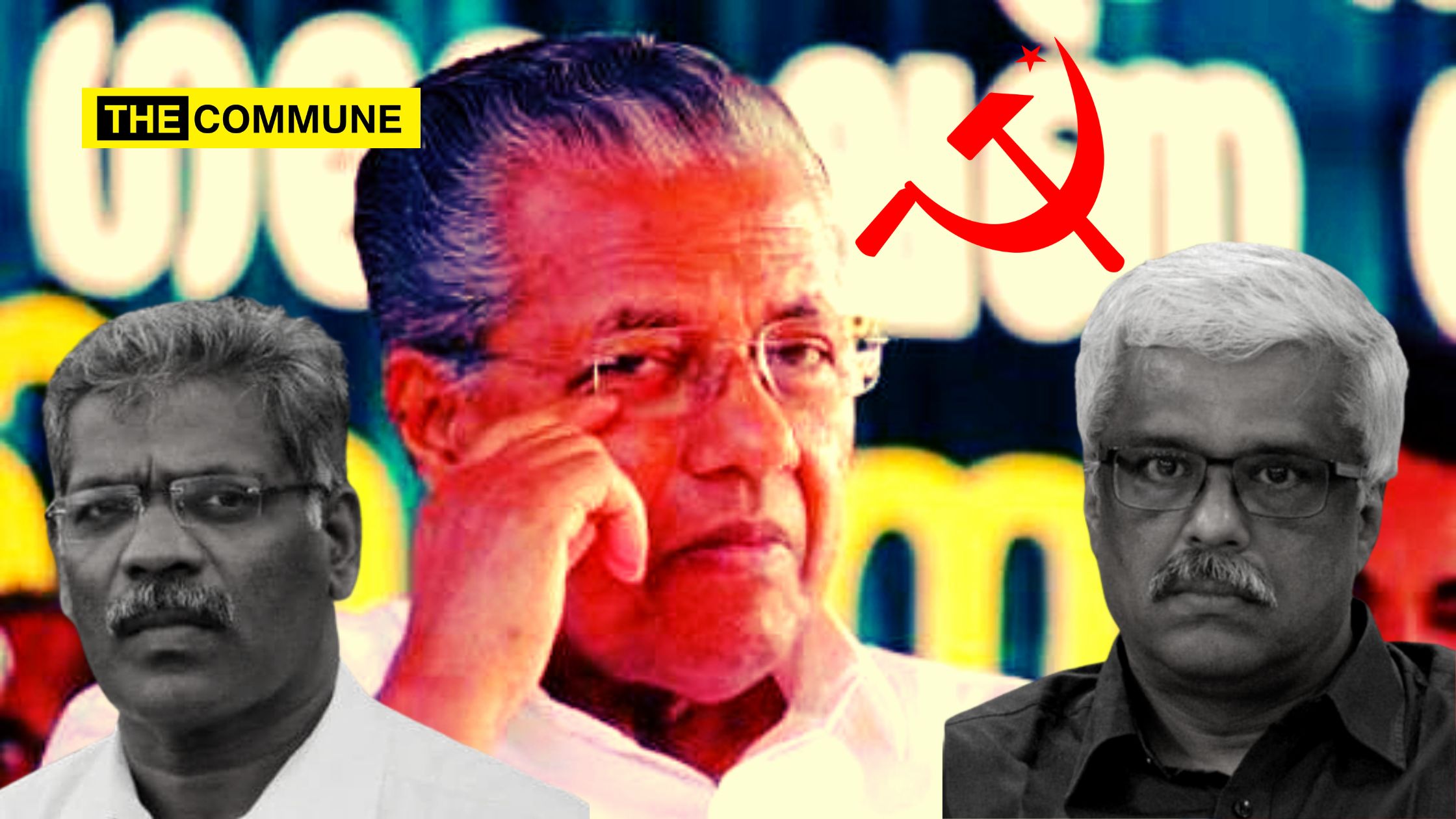
C.M. Raveendran, Additional Private Secretary to Kerala Chief Minister Pinarayi Vijayan, did not turn up before the Enforcement Directorate (ED) recently. The ED had issued a notice to Mr. Raveendran to appear before it to seek information regarding the alleged pay-off in awarding the contract for the LIFE Mission project at Wadakkanchery. Mr. Raveendran was in Thiruvananthapuram on that day. The agency had booked a case against the accused for money laundering under the Prevention of Money Laundering Act.
And in another turn of events a Kerala court refused to grant bail to Chief Minister Pinarayi Vijayan’s former Principal Secretary M Sivasankar who was arrested by the Enforcement Directorate (ED) in connection with the probe into the LIFE Mission case. All these instances point to the existence of a corrupt network of bureaucratic cronies surrounding the Chief Minister. There is a pertinent need to investigate and examine these corruptions in Kerala and understand how the communists are fattening up using public money.
LIFE Mission was a government project to provide free housing for the homeless and victims of the Kerala floods in 2018. The project aimed to build houses for 140 families in Thrissur’s Wadakkanchery region through the LIFE Mission scheme by spending Rs 14.50 crore out of Rs 20 crore granted by the Red Crescent via the UAE consulate. The contract also said the remaining amount would be used for the construction of a hospital. The Red Crescent is said to be a non-profit organisation supporting humanitarian work but has aquestionable background. UNITAC Builders were given the construction contract. UNITAC managing director Santhosh Eapen said that all the accused had received a bribe worth Rs 4.48 crore for the project. Later, the government ordered a probe into the case. The LIFE mission complex at Thrissur came under suspicion after allegations of bribery. The other accused in the case are Swapna Suresh and Sandeep Nair. Accused in the case, Swapna Suresh and Sarith PS made allegations against Sivasankar that he had a role in this.
Irregularities in the scheme came to light when the ED was probing the gold smuggling case. The ED had reportedly got ₹2 crores in cash, and 2 kgs of gold from Swapna Suresh’s bank locker in October 2020. Swapna Suresh, the prime accused in the gold smuggling case, had told the ED that the money came from the commissions Sivasankar got from clinching a deal with The Red Crescent, an international aid group, for providing housing for 2018 flood victims in Wadakkanchery of Thrissur district. The investigation agency had earlier arrested M. Sivasankar, the former Principal Secretary to the Kerala Chief Minister, in connection with the case. Mr. Sivasankar is currently in judicial custody. Sivasankar had allegedly asked Swapna to keep the cash in her locker. The case, according to the investigation agency, is that a huge amount was syphoned off by the accused as commission from the funds released by an overseas organisation for the housing project.
The agency contended that the money found in the bank locker of Swapna Suresh, another accused in the money-laundering case booked earlier, was part of the commission the accused had received. In the meantime, leaked chats between these secretaries and Swapna Suresh had causedembarrassment not only to the CM or the ruling party but also to the people of Kerala. As per the chats, M Sivasankar, the then-principal secretary to the CM, assured Swapna, who was about to resign from her job at the UAE Consulate in Thiruvananthapuram, that she would be assured a job at the NORKA, which is the Department of Non-Resident Keralites Affairs. The chats also mention that Pinarayi’s additional private secretary CM Raveendran informed Sivasankar that Swapna met the CM.
According to the transcripts, Swapna met Pinarayi right before her resignation from the Consulate, and that Raveendran was shocked to hear about her exit. Earlier, photos of Swapna and Pinarayi clicked before the scam was revealed, were out at various points.
Also, the issue has spilled over into the Kerala Legislative Assembly. One MLA in the assembly ensures to hold a mirror to the CM. If there is anything that could provoke Chief Minister Pinarayi Vijayan more than the sight of black flags, it would be Congress’s Muvattupuzha MLA Mathew Kuzhalnadan. In fact, at a recent session, Kuzhalnadan was at his provocative best. He moved an adjournment motion on the Wadakkanchery LIFE Mission issue and dragged the Chief Minister right to the middle of the bribery scandal. Not only did he place Pinarayi at the centre of the scandal but he also kept hurling direct questions at him. His posers were derived from the remand report of the Enforcement Directorate, which had reproduced certain WhatsApp chats the Chief Minister’s former principal secretary M Sivasankar had with some of the key actors involved in the scandal.
One, Kuzhalnadan wanted to know whether the Chief Minister had endorsed a letter that appointed Unitac as the contractor of the Wadakkanchery LIFE Mission project. Two, he wanted to know whether the Chief Minister, along with Sivasankar, had met with the UAE Consul General, and his then-secretary Swapna Suresh. “Do you have the courage to deny this,” Kuzhalnadan dared Pinarayi. The Chief Minister was quick to react and in quite a provoked fashion. “This is an absolute lie. There was no such meeting,” the Chief Minister said in rage. Kuzhalnadan responded with another dare, couched in the sly language of concern. “If this is the case, then you should approach the court. How can an agency (ED) be allowed to spread falsehoods against the Chief Minister? The UDF will be with you,” Kuzhalnadan said. This provoked the Chief Minister more. “I don’t need your advice on what I should do,” Pinarayi said. Stepping up the provocation, Kuzhalnadan said the Chief Minister now would have to deny more things. He flung his third poser, quoting from Sivasankar’s WhatsApp chat with Swapna Suresh. “Did you ask Sivasankar to get Swapna a plum posting in Space Park (under the IT Department)?”
Faced with tough questioning from the opposition, Minister for Law P Rajeeve intervened to ask whether Kuzhalnadan was willing to table the WhatsApp evidence of chats before the House. Kuzhalnadan was more than willing. “I am all for it. I will gladly table the ED remand report before the House,” he said. But Rajeeve said that he was asking about the WhatsApp chats and not the remand report. Kuzhalnadan replied that he read out the WhatsApp chats from the remand report. Now, Rajeeve argued that a document that was under the consideration of courts could not be mentioned in the House. He cited rule 52(7) of the Assembly Rules of Procedure to back his claim. By now, the ruling party members massed themselves right at the edge of the well of the House and shouted down Kuzhalnadan. Even though the ruling government tried to contain the situation it seems to be out spilling into the daily talking point. The people of Kerala are disgruntled by this recurring theme of corruption.
How the saga of corruption that is being unravelled in Kerala relates to each other is still a mystery but on close examination, we can find a common thread that binds them all. The common thread which connects them runs through Swapna Suresh and the secretaries of the Chief Minister, but the big question is about the role of the CM. Even though that mystery continues, as leader of a democratic state, he should explain what his role is in all these allegations.
Click here to subscribe to The Commune on Telegram and get the best stories of the day delivered to you personally.
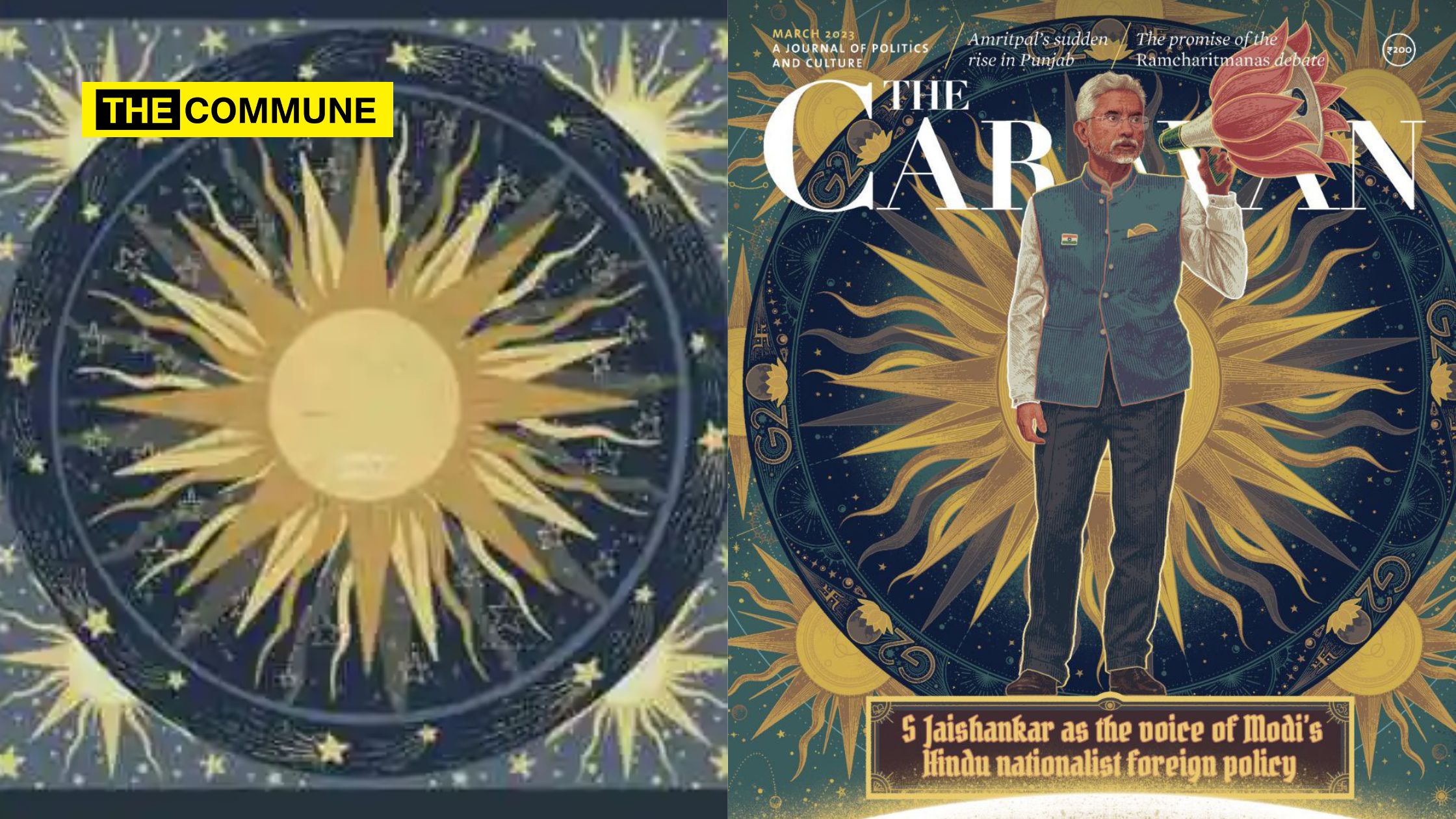
The Caravan, a monthly magazine known for its far left-leaning views, has landed in a controversy for allegedly plagiarising the artwork of a Netherlands-based artist on the cover of its March 2023 issue. The cover features an illustration of External Affairs Minister S Jaishankar with the words “S Jaishankar as the voice of Modi’s Hindu nationalist foreign policy” as the caption.
The artist, a mixed media artist who goes by the name Ghostly_t on Instagram, claimed that The Caravan stole their artwork without giving credit or having taken prior permission.
The artist shared a story with a screenshot of the magazine’s cover and the original artwork with the words “@thecaravanmagasine YOU STOLE MY ARTWORK FOR THE COVER. GIVE CREDIT, DON’T STEAL ARTISTS WORKS.” in their Instagram stories.
On March 1, the magazine’s Twitter handle gave credit to one Samyak Prajapati for the cover design. After multiple people pointed out the plagiarism, The Caravan responded via a series of tweets saying, “It was brought to our attention that an element in the artwork for the March 2023 issue cover bears strong resemblance to a work created by the artist Tijana Barna.” They claimed that “the concept of the cover image was devised by the publication’s creative department, its execution was commissioned to Samyak Prajapati, an independent visual artist.”
The magazine has washed its hands off the issue by stating that at the time of finalising the cover, “they were not aware that the background design of the piece referred to Tijana’s existing work.”
They also tweeted that “This inclusion to the over-all piece was also made without Tijana’s knowledge. To rectify the error, we have added Tijana’s credit with their consent. We extend our apologies to them and regret the mistake.”
The March issue of The Caravan magazine features articles critical of Jaishankar and his role in shaping India’s foreign policy under Prime Minister Narendra Modi’s government. The EAM has been in the news for responding to billionaire George Soros’s comments on India and that democracy was under threat. The EAM called Soros old, rich, opinionated, and dangerous.
Click here to subscribe to The Commune on Telegram and get the best stories of the day delivered to you personally.
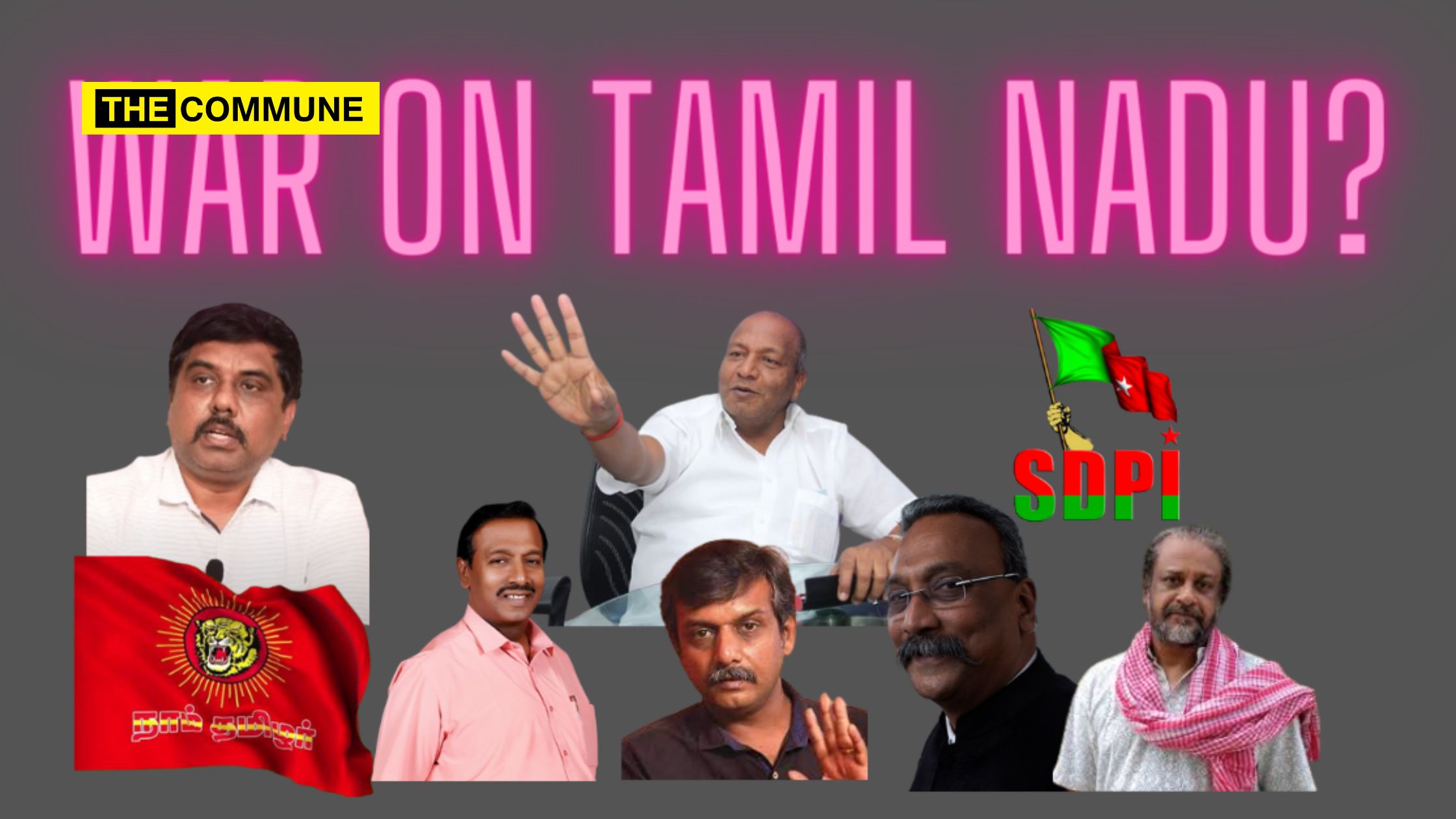
An asymmetrical war is being waged on the Tamil Nadu populace since 2017 with large-scale protests being funded by international vested interests as organised and executed by local activist groups and NGOs.
This sounds like the usual conspiracy theory that is bandied about in the aftermath of such protests and violence. But there is a method to the madness and we, at The Lede, have pored over countless documents publicly available online, read through financial documents of various organisations and have cracked the funding of each activist group or NGO that has spearheaded these protests.
For those of you who prefer video, there are explanations in English and Tamil below.
Those of you who prefer text, well, read on.
What is Asymmetrical or Psychological Warfare?
A Short Backgrounder of FCRA
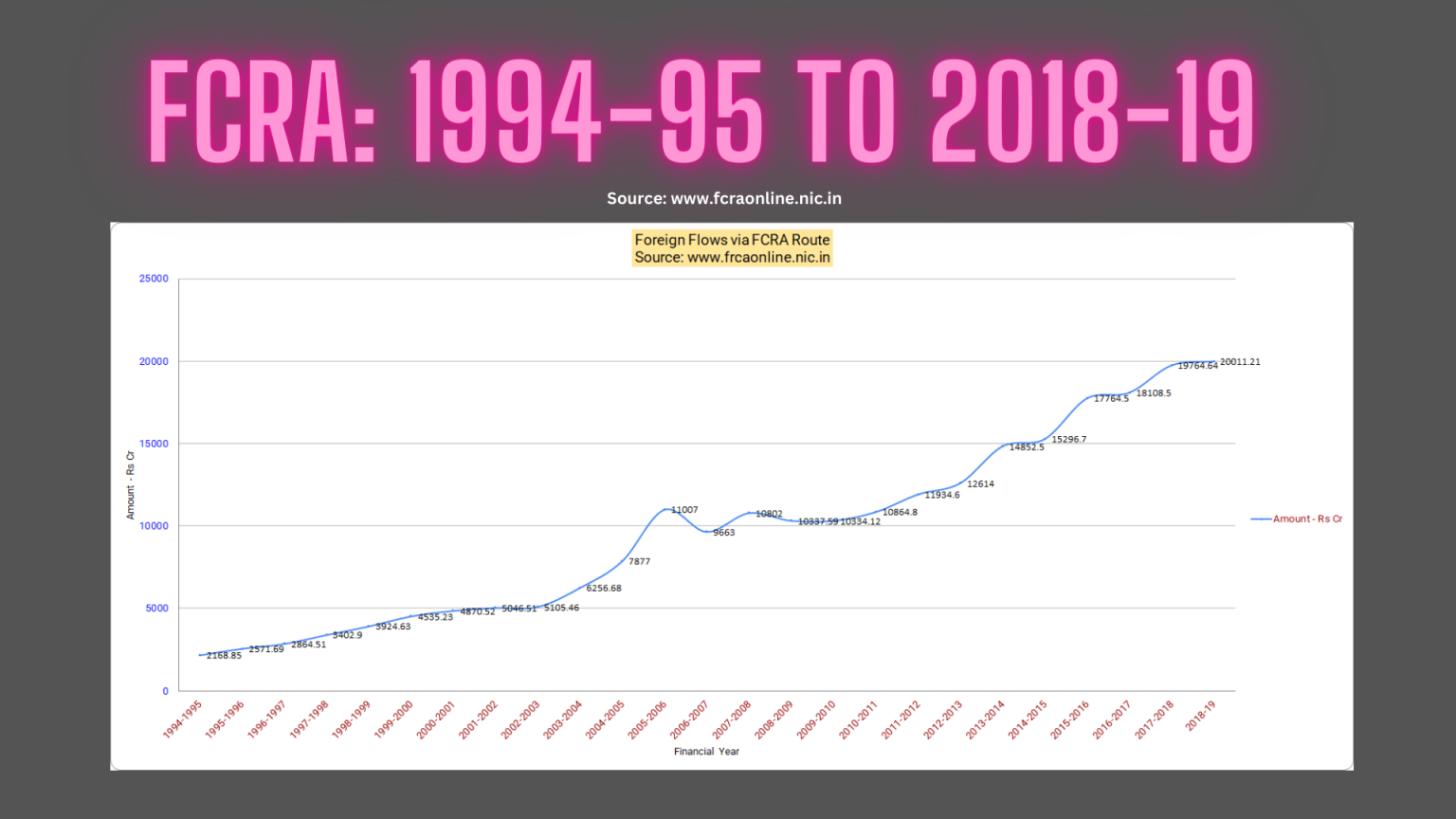
From the financial year 1994-95 upto 2018-19, the Indian government had made available FCRA donor details on its site www.fcraonline.nic.in. However, since 2018-19, the details have been made private. The data available shows that upto 2018-19, Rs 20,000 crore worth of foreign funding has flown into India via the FCRA route. That’s more than what many government departments in India call budgets.
In 2016, the Indian government cracked down heavily on NGOs and foreign entities like Open Society Foundations (owned by billionaire hedge fund investor George Soros), the Ford Foundation and Omidyar were put onto a prior permission list – which meant that if they wanted to donate to any Indian organisation, they had to first get the approval of the Ministry of Home Affairs. 19,000 NGOs were denied FCRA licences by the end of this exercise for various reasons ranging from not submitting their annual returns to misappropriation of funds.
Asymmetrical Warfare On Tamil Nadu
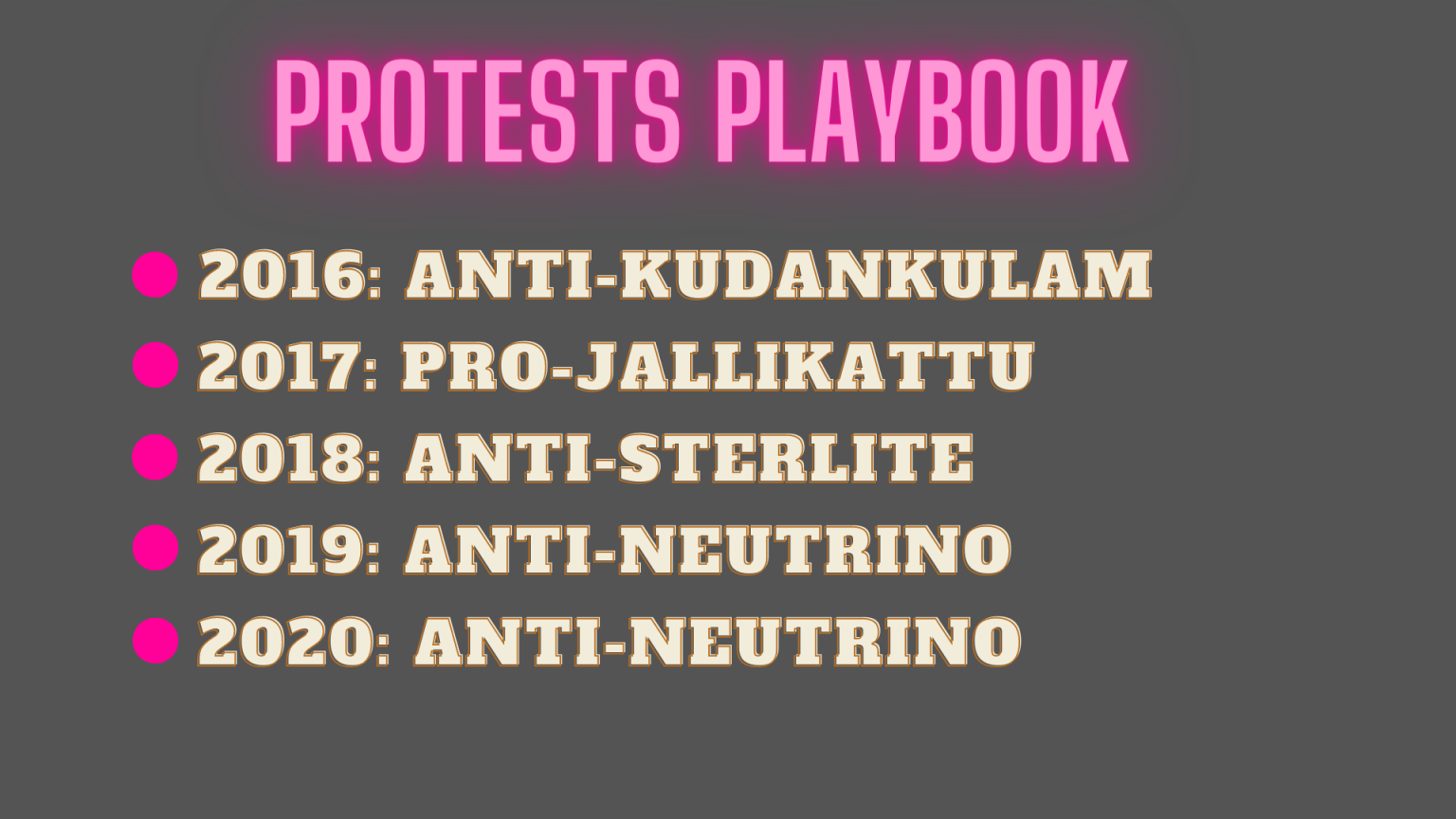
From the anti-nuclear protests in Kudankulam circa 2012 to the pro-Jallikattu protests, the anti-Sterlite protests, the anti-Neutrino protests and the protests against the 8-lane expressway from Chennai to Salem – a series of large-scale violent clashes have thrown life and law and order out of gear in the past 5-6 years.
We will look at the Jallikattu protests separately since that has a different playbook. The other protests are all similar. They have the same key actors, the same modus operandi and the same funding route.
2017: Pro-Jallikattu Protests
Barely a few months after then Chief Minister J Jayalalithaa passed away, the pro-Jallikattu protests brought the state to a standstill and was covered even by the international media.
It had all the makings of a spontaneous protest but it was cleverly instigated and guided by a group of people.
The protests began over the ban on Jallikattu, a traditional bull-taming sport practiced in some parts of Tamil Nadu. The Animal Welfare Board of India had moved the Supreme Court and got a ban on the sport, citing animal cruelty.
What started out as a few voices of dissent soon turned into close to one lakh people visiting the Marina Beach in Chennai and occupying it in the name of protests.
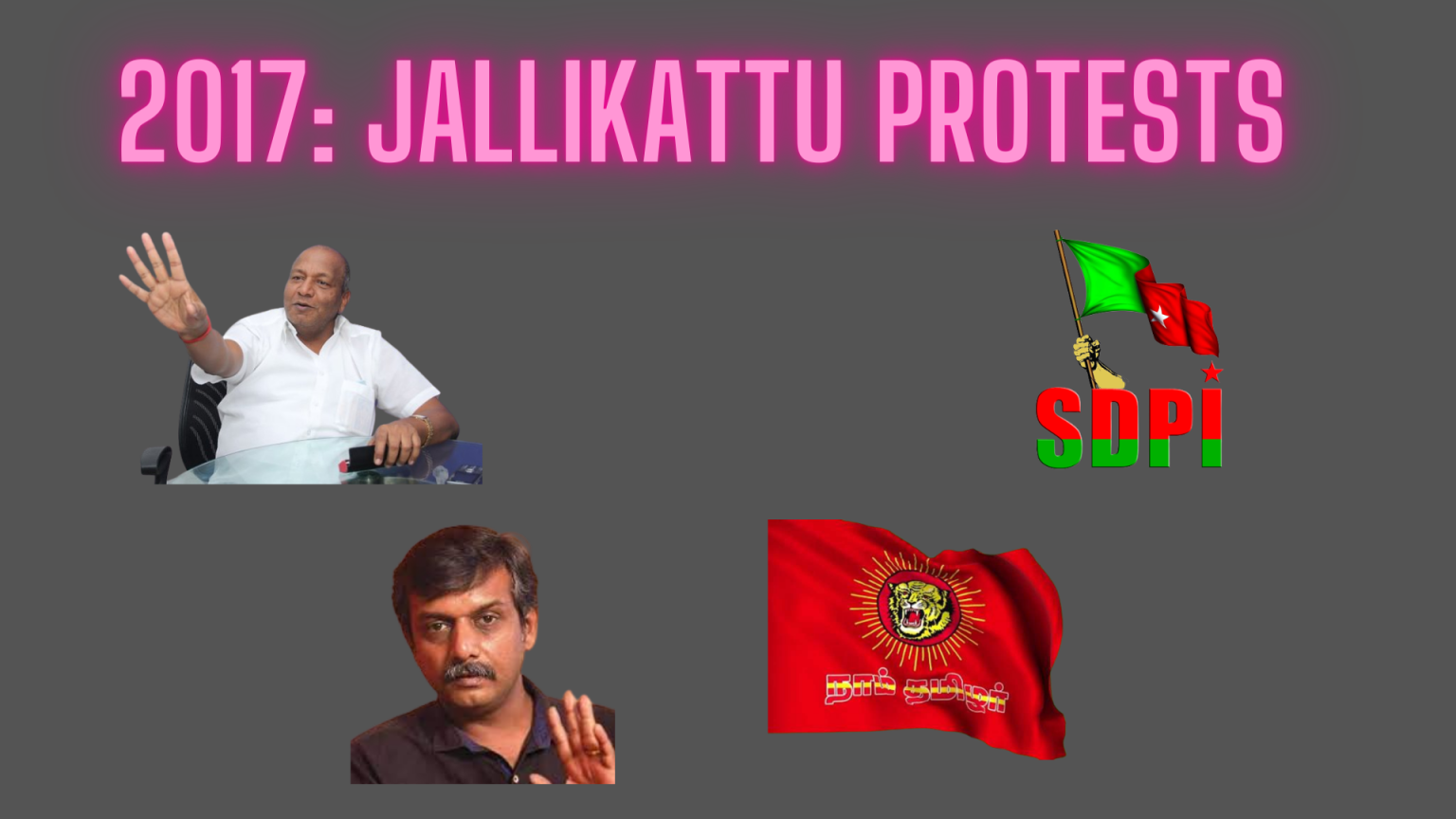
The first external force which entered the fray and began to canvass people to join the protests was S Vaikundarajan, owner of VV Mineral. He has been exposed by this reporter of large-scale illegal beach sand mining and exports and the case is currently being heard in the Madras High Court.
Vasanta Bhavan, a popular restaurant chain, was the first to begin distributing food to protesters in the Marina. Whether the owners did this as a humanitarian gesture or whether someone placed large orders is unclear.
Vaikundarajan’s son Subramanian’s News7 Tamil channel took a firm stance in support of the protesters and set up a large LED TV on the beach, airing the protests continuously. Closer to the end of the protests, a hostile crowd forced all other television channels out. Only News7 was allowed to remain inside the protest zone.
Soon after, the SDPI, a Muslim political outfit, joined the fray. They brought in men and food and water and joined the frenzy.
May 17 Movement’s Thirumurugan Gandhi, Naam Tamilar Katchi cadre and a bunch of other rabble rousers arrived a few days later. The protest was changing shape.
Police officers who handled the protests say that towards the end, violence was pre-planned by the SDPI, the May 17 Movement, NTK as well as by the late DMK MLA J Anbazhagan. “Anbazhagan’s people went to the nearby slum areas and instigated everyone to violence,” said the office on condition of anonymity. The officer also stated that the church had mobilised protesters and sent people in droves, along with funding for them, to join the mayhem.
In Madurai, reporters found out that Vaikundarajan had sent his men to all the villages surrounding Alanganallur and other areas, to offer black t-shirts to young men and promise cooked food and water for the women and children in the area to join the protests.
The Other Protests
All of the other large-scale protests in Tamil Nadu have only about 3-4 people at the forefront. The Lede analysed the companies or NGOs they are affiliated with and also their local annual returns.
We also looked into who the funders of the donors were – some of them yielded crucial material but some of them led nowhere.
We now look into the funding behind the following Usual Suspects, as we will call them.
Nithyanand Jayaraman, The Other Media
G Sundarrajan, Poovulagin Nanbargal
Henri Tiphagne, People’s Watch
Mohan Lazarus
Peoples’ Action for Education NGO
The Other Media
Nithyanand Jayaraman is a member of The Other Media, a Delhi-based non-profit that has FCRA clearance. A look at the details of donors to The Other Media is illuminating. 30% of its funding comes from organisations affiliated to various churches internationally.
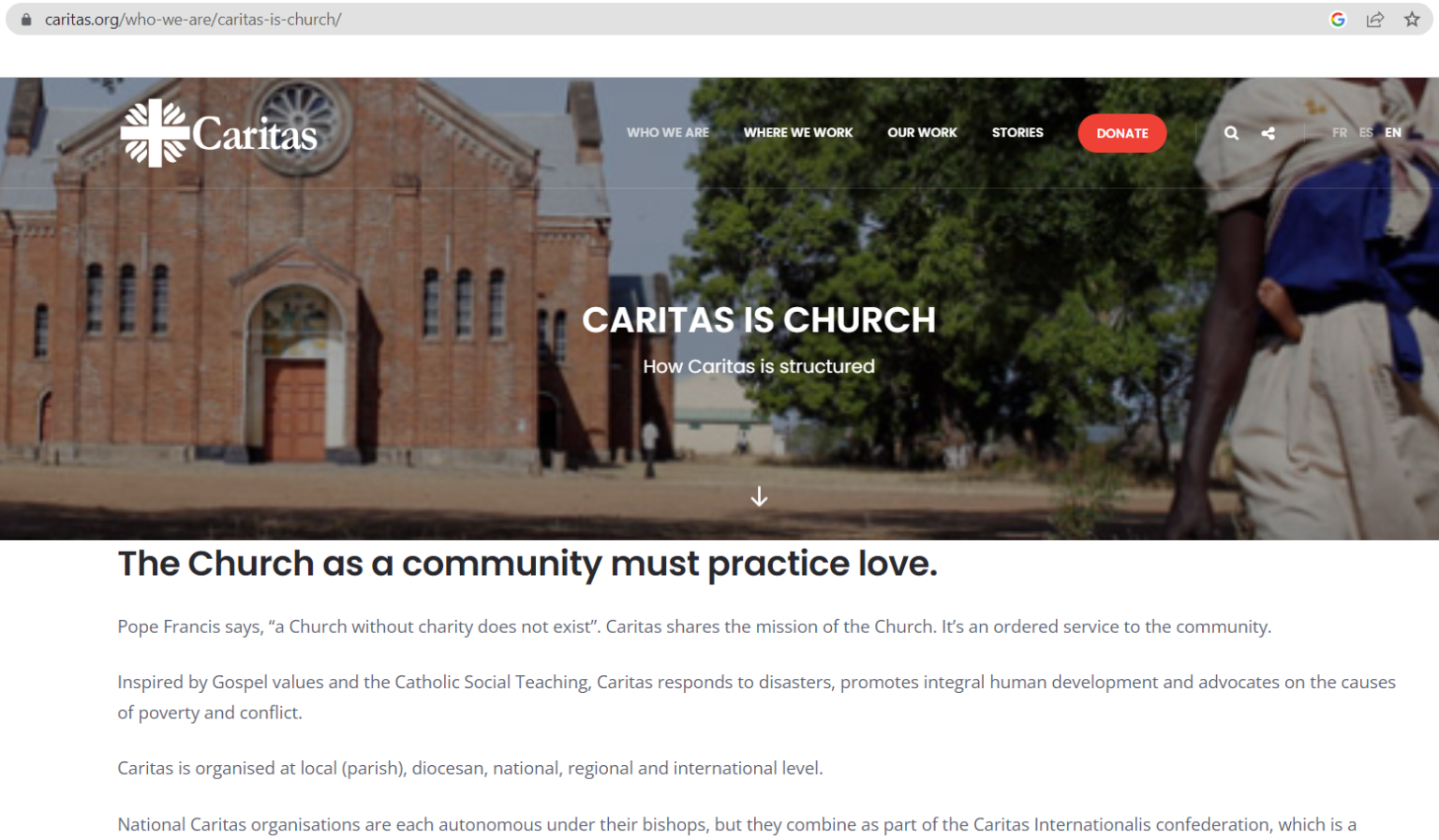
We also looked into the donors who fund the donors of The Other Media. An astonishing milieu appears – Caritas Internationalis, one of the largest church-funded organisations in the world, with 160 similar member organisations in its network, has funded The Other Media.
Caritas also funds Trocaire, founded by the Irish Bishops of the Catholic Church as well as Cordaid, founded and funded by the Netherlands Catholic Church. Caritas has been criticised in the Western world for funding radical groups that aim to topple regimes. The work of Caritas-funded activists and NGOs has raised red flags in countries like Israel.
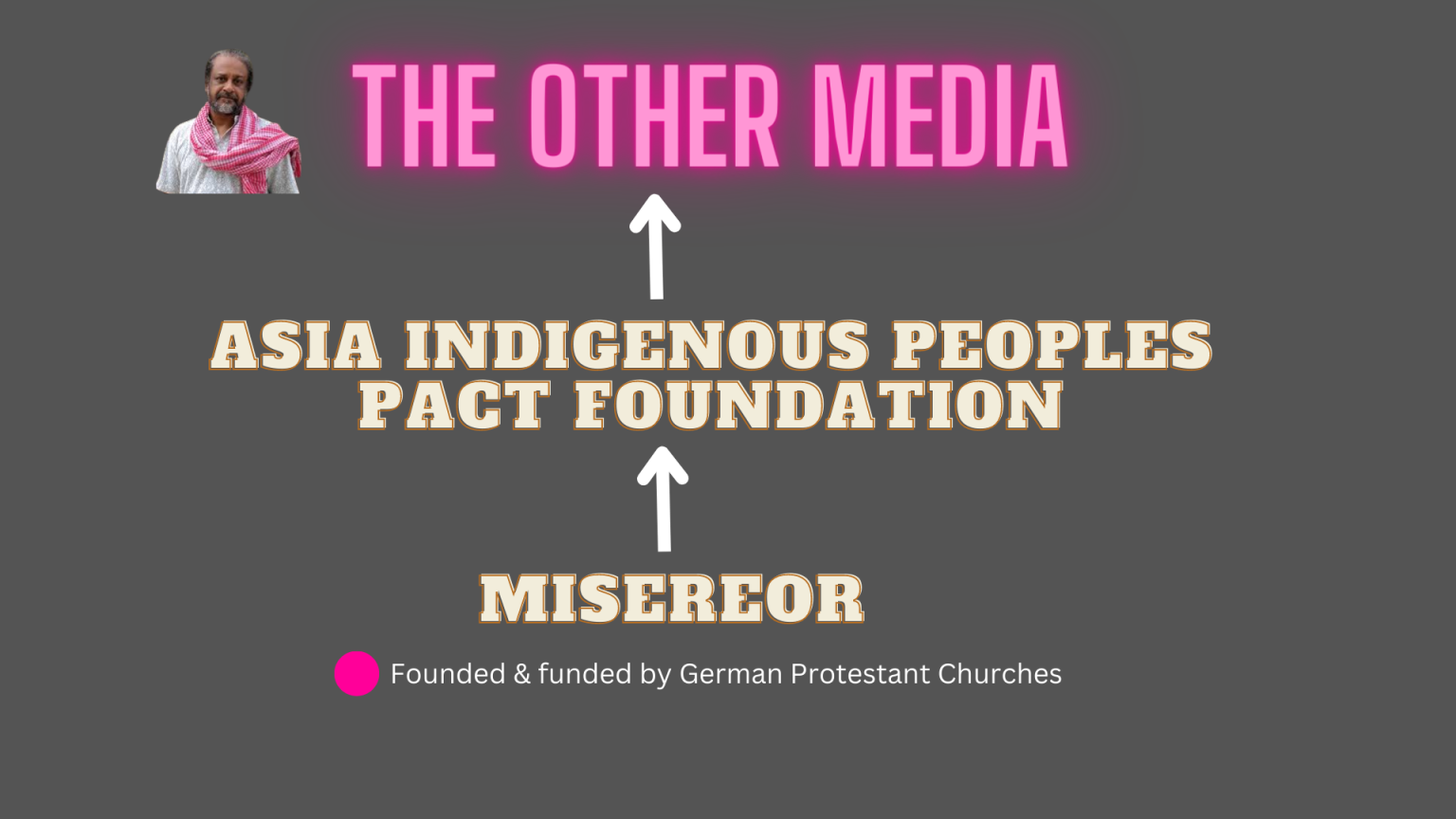
Trocaire and Cordaid directly fund The Other Media as well. Another controversial NGO, Misereor, founded by the Catholic Bishops of Germany, has indirectly funded The Other Media – through an organisation called Asia Indigenous Peoples Pact Foundation.
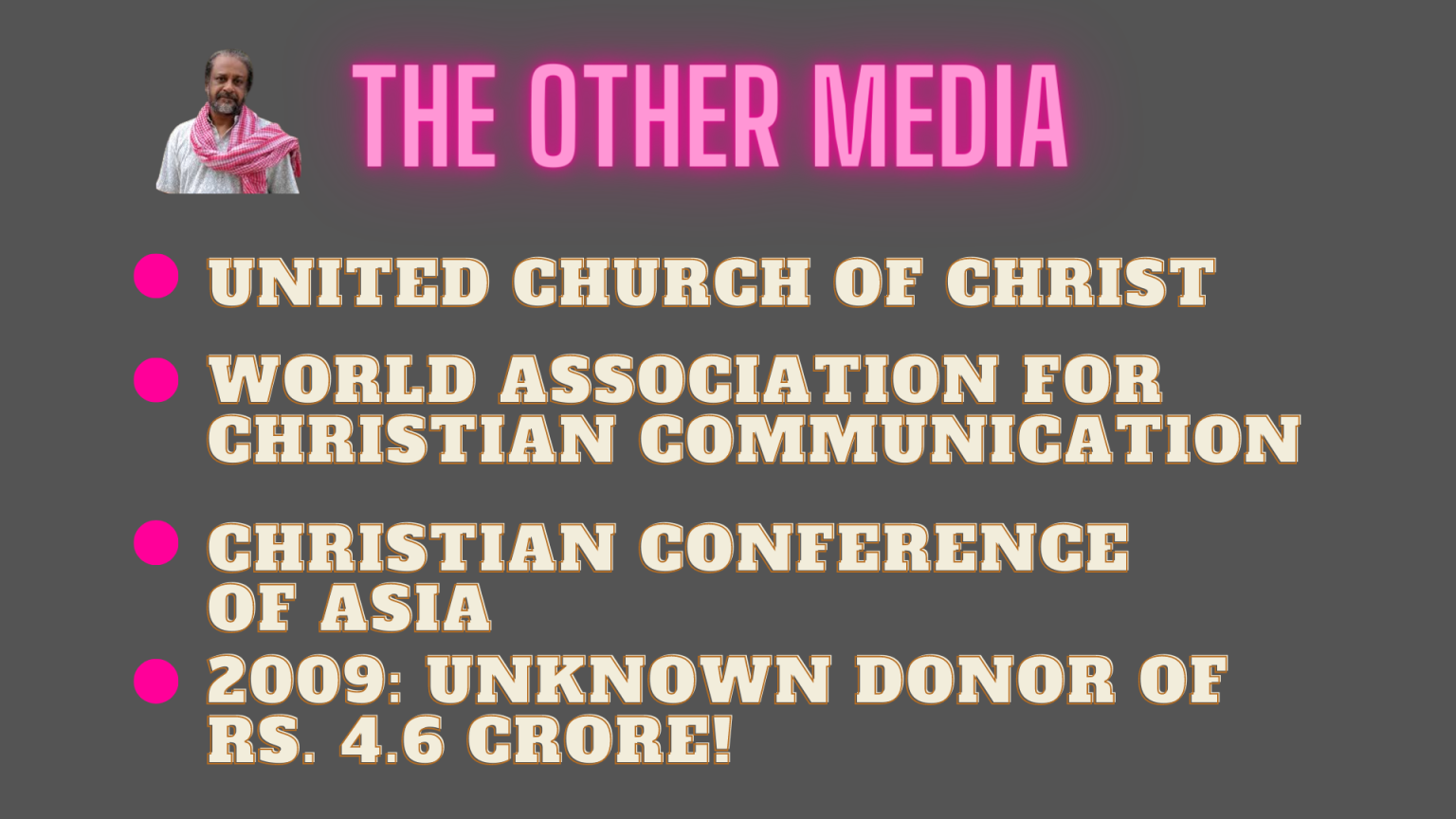
Apart from these, other church affiliated organisations have funded The Other Media – United Church of Christ, World Association for Christian Communication and Christian Conference of Asia.
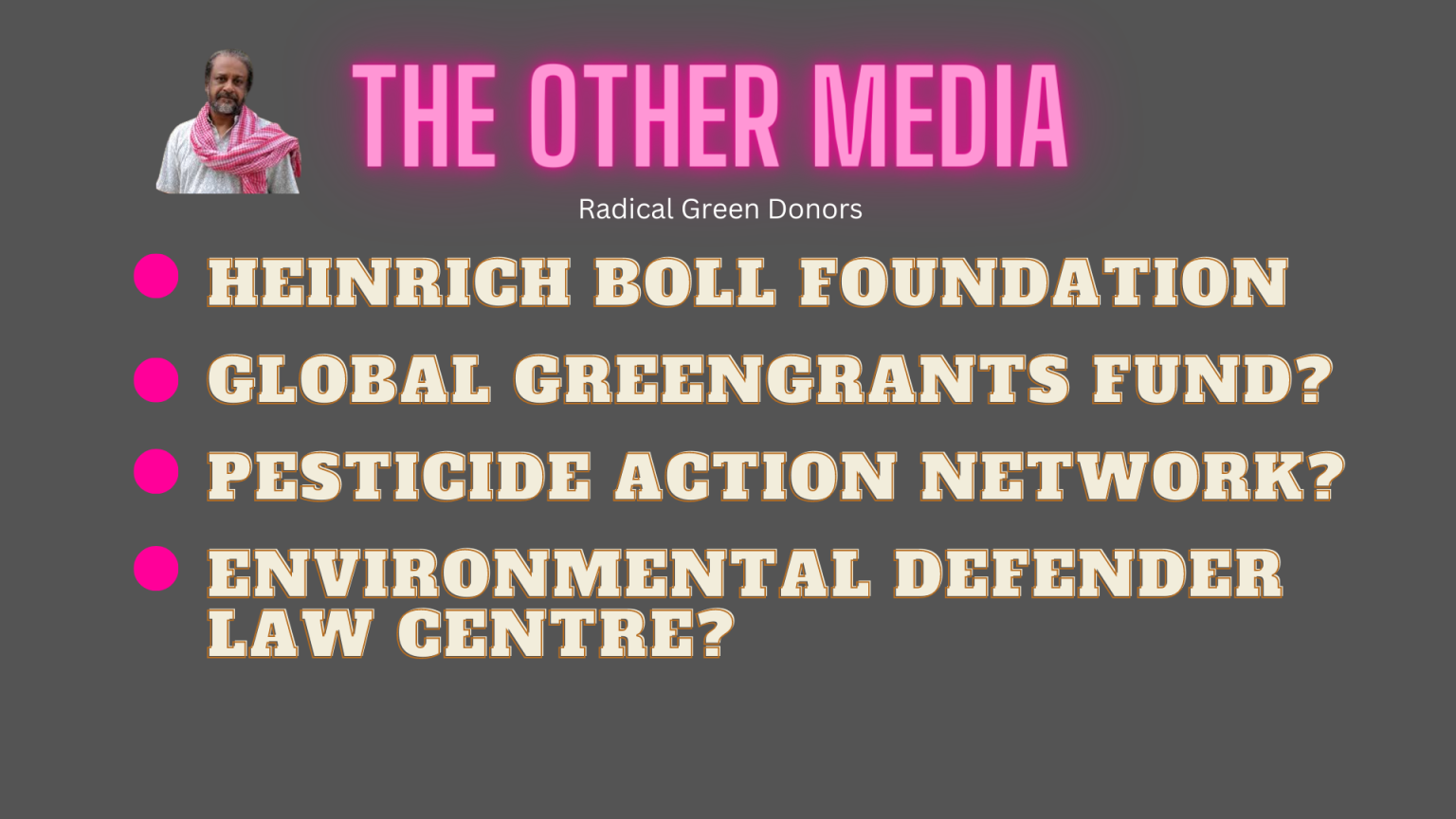
In 2006, The Other Media received Rs 4.6 crore from an unknown donor in the USA! Radical Green Groups from abroad also appear to have funded The Other Media. For instance the Heinrich Boell Foundation in Germany is one such. There are also organisations like the Global Greengrants Fund, Pesticide Action Network and Environmental Defender Law Centre which do not disclose their sources of funding but appear to be radical green groups.
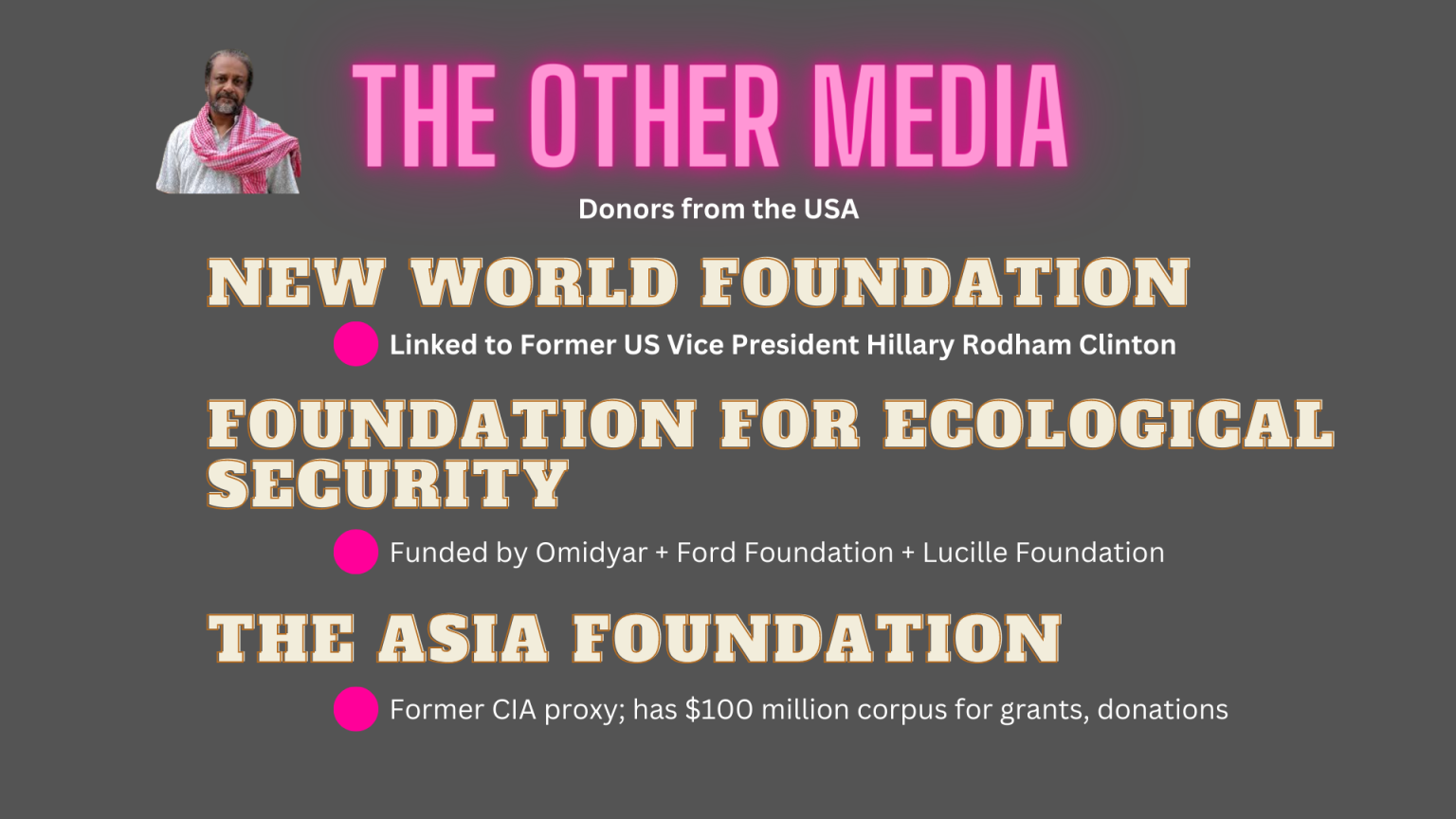
The Other Media also has an interesting set of donors from the USA – the New World Foundation, which is headed by Colin Greer, an aide of former American Vice President Hillary Rodham Clinton. Clinton herself was on the board of New World Foundation a few years ago.
The Foundation for Ecological Security is also a donor – this organisation is funded by the Ford Foundation, Omidyar network as well as the Lucille Foundation.
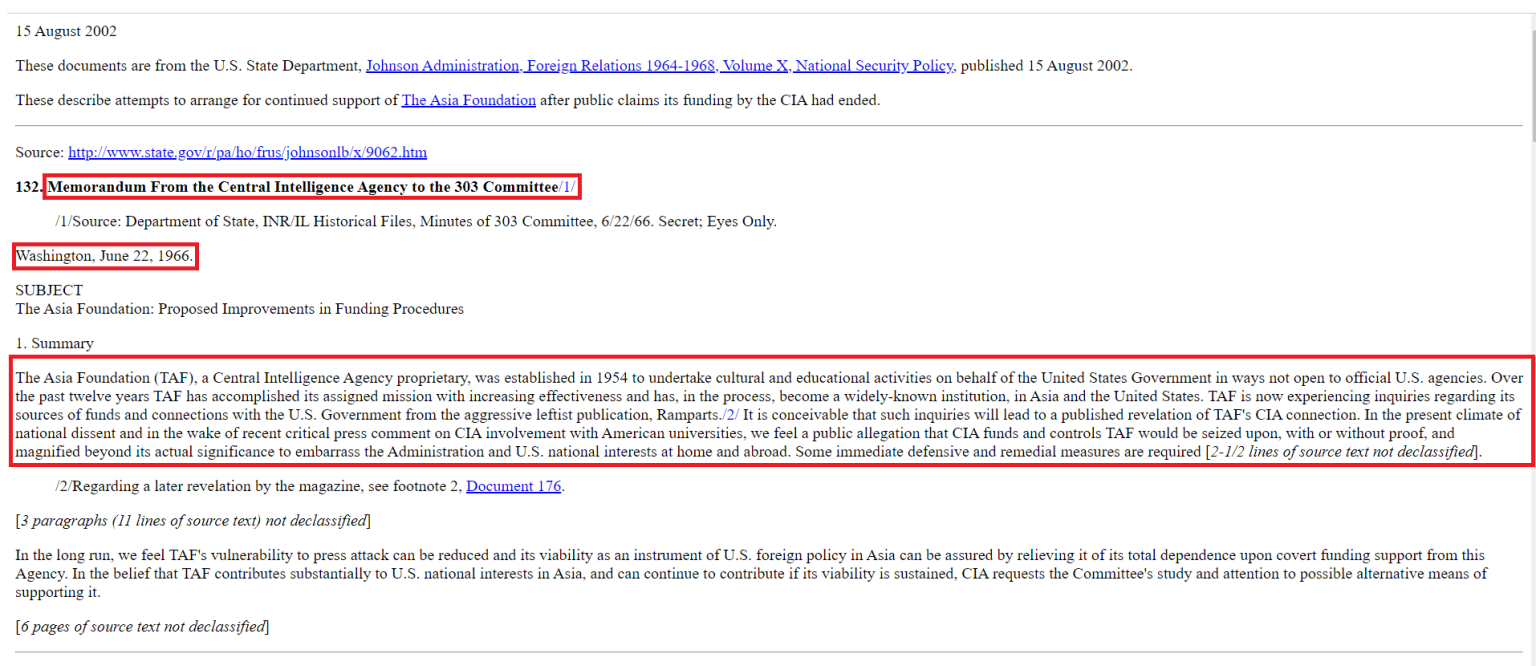
And finally the most delightful donor of the lot – The Asia Foundation. Declassified CIA documents show that the Asia Foundation was set up by the spooks to carry out covert operations in India. However, in 1966, the CIA decided to cut funding for and ties with The Asia Foundation. However it is not clear as to how the Foundation continues to have a large corpus of USD 100 million at its disposal.
There are other strange opaque donors who have covered their tracks well. For instance, AID or Association for India’s Development, has a branch in the USA which has lost its non-profit status twice and got it restored last year. They are one of the largest donors to The Other Media. But their source of funding is not declared and is dubious.
Similarly the Global Community Monitor and the Woka Foundation show no affiliation with any other group but they are funding many NGOs in India. Are they conduits set up to funnel in money discreetly? An investigation into these firms should reveal who they are backed by.
Poovulagin Nanbargal
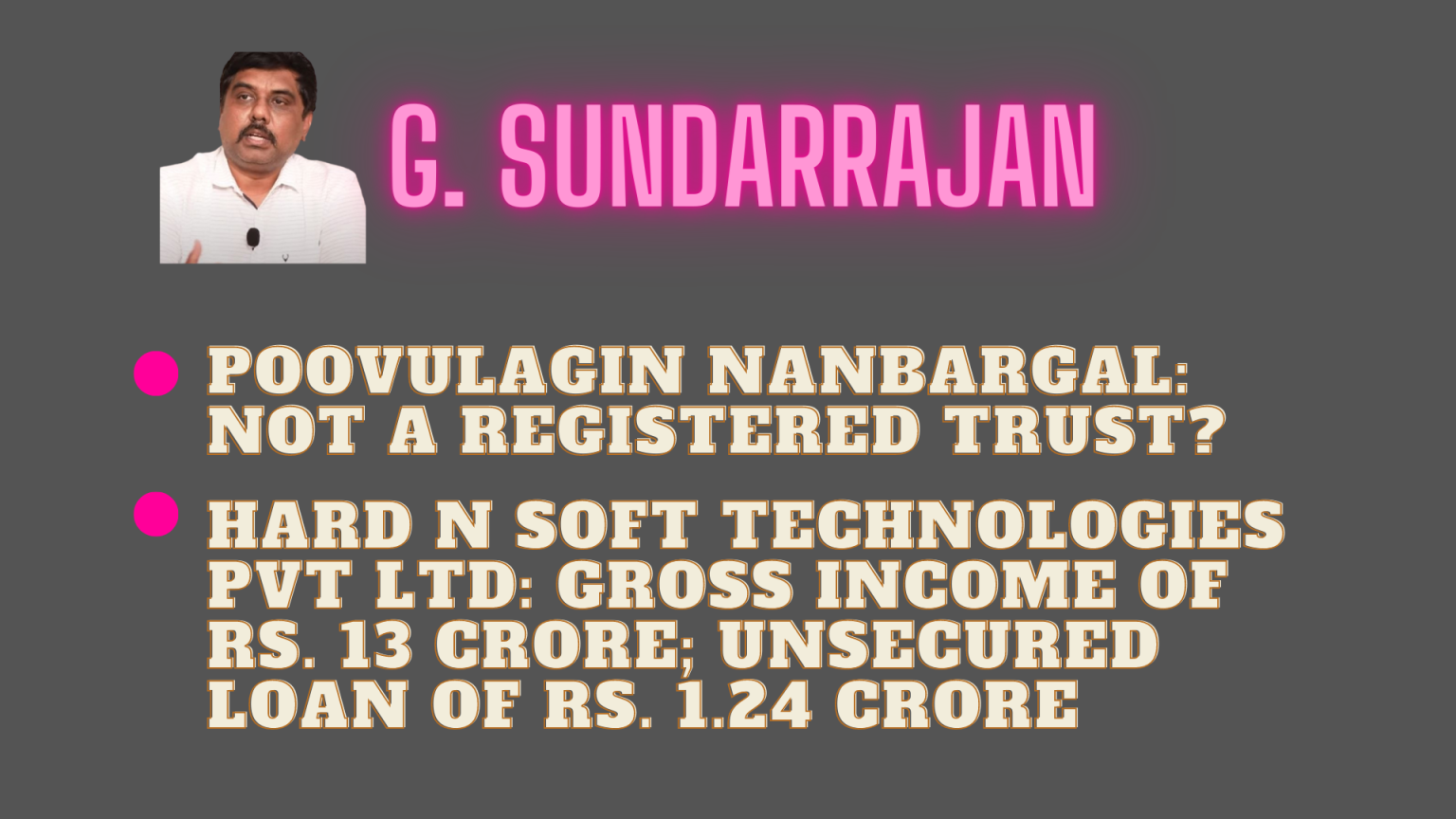
The next usual suspect on the list is G Sundarrajan of Poovulagin Nanbargal. Those in Tamil Nadu would have watched him on television or social media at least once. He is a self professed environmental activist, political analyst and was even briefly a Covid specialist.
Sundarrajan is attached only to one firm – an IT firm called Hard N Soft Technologies Pvt Ltd. He and R Sivaraman are partners in what seems to be a very successful venture. The Lede went over his financials in the past year. For the financial year ending March 2022, the company’s gross income was Rs 13 crore and expenses were Rs 12 crore. An Innova Crysta and a BMW have been purchased on the company account.
Having gone through some of the petitions filed by Sundarrajan in court, it is evident that he has filed them in his individual name but by referring to himself as a Trustee of a public trust called Poovulagin Nanbargal.
However upon searching for the registration details of the trust, it can be seen that there are no records of any such trust being registered either in Chennai or elsewhere. It is unclear as to whether it has been registered in some other name.
It is also alleged that Sundarrajan avails of money from the local churches for his protests and movements. The Lede is investigating this and will update our readers once we get documented confirmation of the same.
People’s Watch
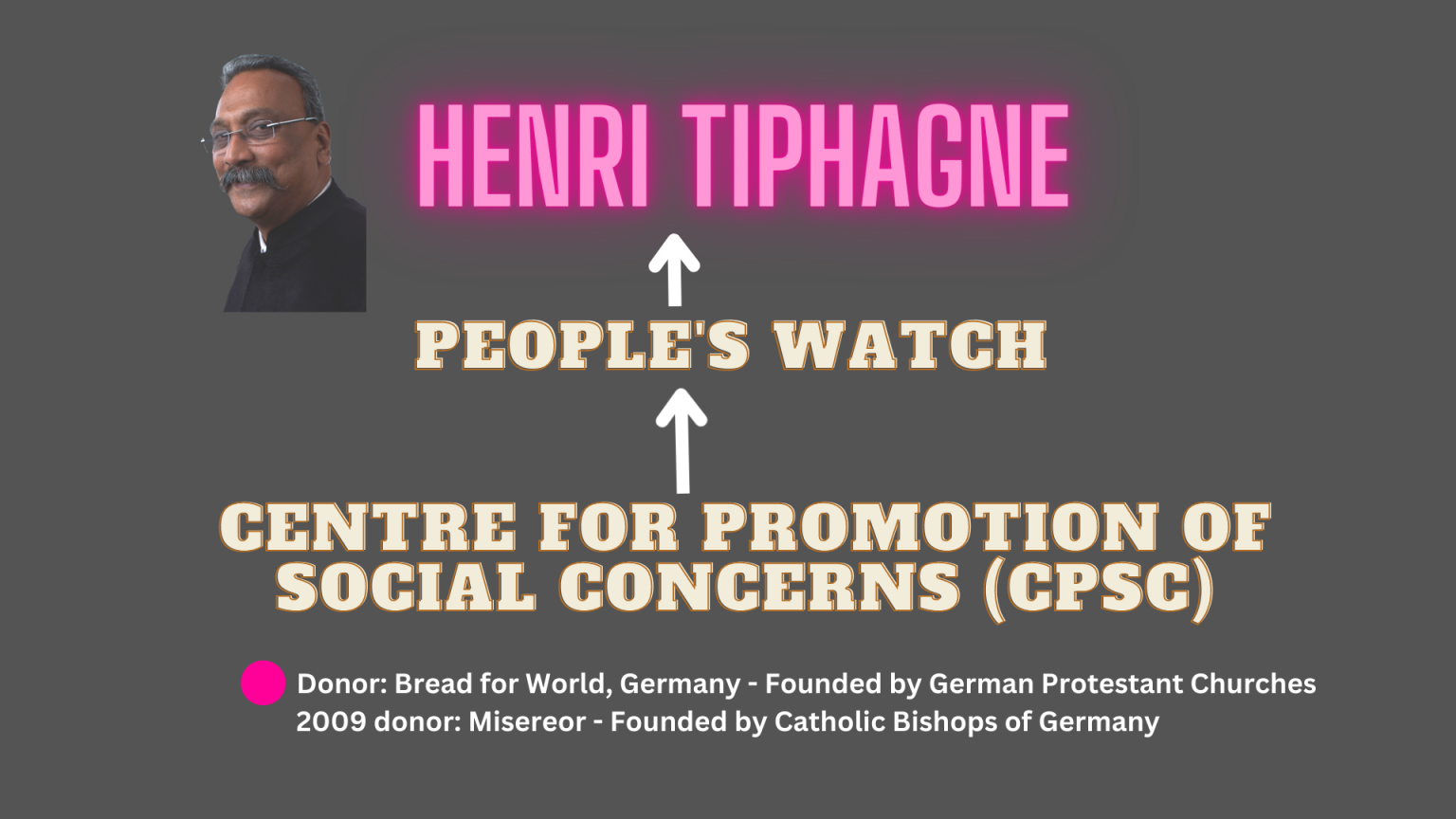
Henri Tiphagne of The People’s Watch is the third person to watch out for. The People’s Watch is not actually an NGO. It is a project by the Centre for Promotion of Social Concerns (CPSC), Madurai, and has received close to Rs 70 lakh from Bread for the World between 2009-2015.
Bread for the World “is the globally active development and relief agency of the Protestant Churches in Germany”. In its website, it says “Key issues of our work are food security, the promotion of health and education, the access to water, the strengthening of democracy, respecting human rights, keeping peace and the integrity of creation.” It adds “Bread for the World considers itself part of the global Christian Community.“
CPSC received Rs 1.65 crore from Misereor in 2009 which was about 30% of its total foreign fund receipts in that year. In 2015-16, CPSC received Rs 2.9 Crore from Misereor. As we saw earlier, Misereor is an organisation run by the Catholic Bishops of Germany which pursues secular work.
Jesus Redeems Ministries
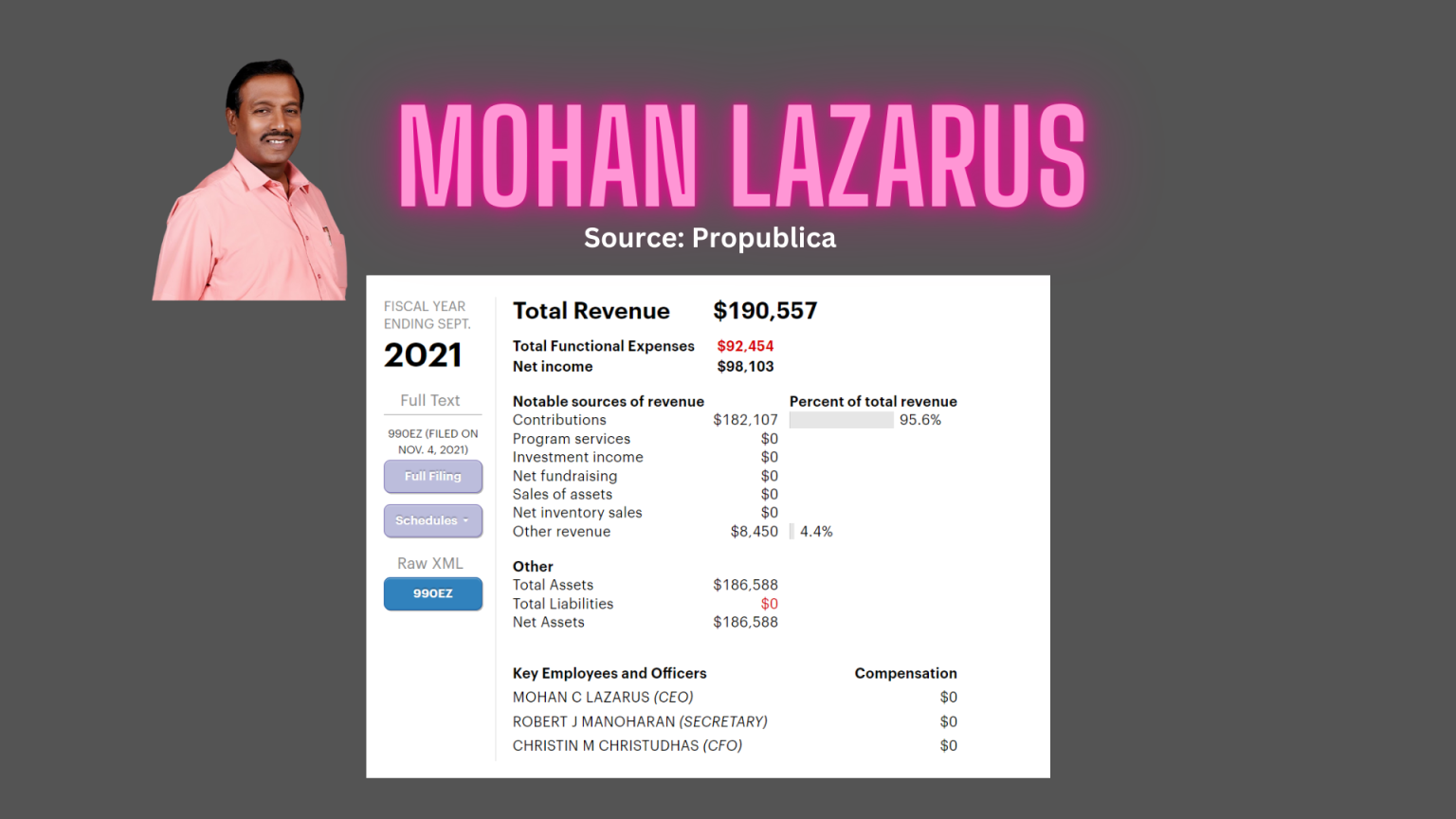
Mohan Lazarus, preacher, had endorsed many such protests vehemently and he had exhorted his followers to join the anti-Sterlite protests in Thoothukudi.
CPSC received Rs 1.65 crore from Misereor in 2009 which was about 30% of its total foreign fund receipts in that year. In 2015-16, CPSC received Rs 2.9 Crore from Misereor. As we saw earlier, Misereor is an organisation run by the Catholic Bishops of Germany which pursues secular work.
Jesus Redeems Ministries
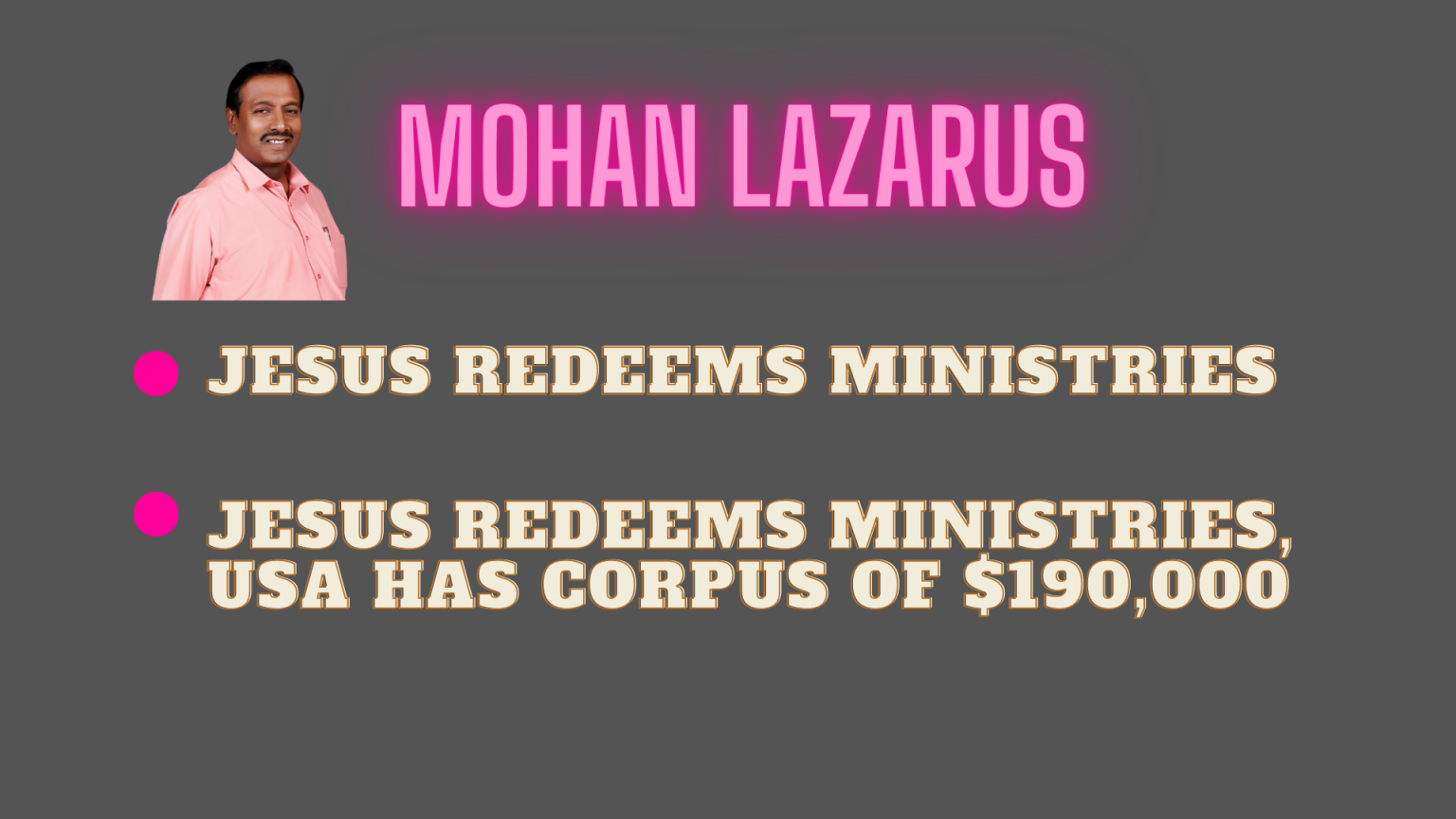
Mohan Lazarus, preacher, had endorsed many such protests vehemently and he had exhorted his followers to join the anti-Sterlite protests in Thoothukudi.
Upon researching Lazarus’ funding, The Lede found that he has a similar non-profit registered in the USA under the same name – Jesus Redeems Ministries. This organisation has about USD 190,000 in its account.
Again, it is not clear who the donors are.
Peoples’ Action For Education
This is yet another NGO whose name crops up in relation to various protests. This organisation received initial seed funding from Siemenpuu Foundation based in Finland, which appears to be funded by the government of Finland.
LIFE
Ritwick Dutta, a well known lawyer who represented anti-Sterlite protester Fatima Babu in court, is the founder of an NGO called LIFE or Legal Initiative for Forest and Environment.
Among other donors, LIFE has been funded by The Asia Foundation, Global Greengrants Fund, World Resources Institute which is in turn funded by the Ford Foundation as well as Oak Foundation.
The Oak Foundation is currently headed by Douglas Griffiths who was a Foreign Service Officer and served as the US representative to the UN Human Rights Council in Geneva by former President Barack Obama. The Oak Foundation was founded by industrialists Alan and Jette Parker.
Tamil Nadu, and indeed India, needs to be aware that there are many forces within and without which are attempting to destabilise the nation. And to prevent that from happening, a questioning and open minded, well informed public is the need of the hour.
(This article was originally published in The Lede and has been republished here with permission.)
Click here to subscribe to The Commune on Telegram and get the best stories of the day delivered to you personally.







The Lies Peddled By Rahul Gandhi At Cambridge
Rahul Gandhi, a Visiting Fellow at Cambridge Judge Business School, delivered a lecture on the topic ‘Learning to Listen in the Twenty-First Century’ at Cambridge University. His speech, as usual, was riddled with outright lies and half-truths.
Rahul Gandhi began his speech by saying, “Everybody knows and its been in news a lot that Indian democracy in under attack. I am the opposition leader in India and we are navigating that space.”
The truth is that democracy is not under attack; however, the Congress is failing to win elections. Rahul attempted to portray his failure as an attack on democracy. Since 2014, the BJP has lost several elections to state parties and the Congress. Congress along with Siva Sena in Maharashtra and Kumarasamy in Karnataka murdered the democracy by preventing a single largest party from forming government. In Maharashtra, they played dirty politics by forming an alliance with the Shiva Sena, which was in a pre-election alliance with the BJP. Isn’t this Congress murdering democracy?
He also claims to be the opposition leader in India. To gain the status of Opposition party in the Indian parliament, a party must secure one-tenth of the seats, or 55 seats. However, in the 2019 elections, Congress won only 52 seats. Even if he meant that he is the leader of the second-largest party, this is not correct because Mallikarjuna Karghe is the president of the Congress and Rahul is only one of 52 Congress members in Parliament.
Rahul added, “Here you can see that picture. This picture was taken in front of the parliament house. That’s where a whole bunch of opposition parliamentarians were just standing there and talking about certain issues. We were just locked up and put in jail. It happened relatively violently. It has happened 3-4 times.”
This is a blatant lie spread by Rahul Gandhi, as no member of Parliament in India has ever been imprisoned for speaking in Parliament .
Rahul cites five reasons why Indian democracy is under attack. Capture and control of the media and the judiciary, surveillance and intimidation using software such as Pegasus, coercion by federal law enforcement agencies, attacks on minorities and Dalits, and dissent suppression are among them.
Claiming that the Indian judiciary is under the control of the BJP is a direct attack on the judiciary’s functioning, for which a criminal contempt of court charge can be filed. It is the same courts which acquitted Congress and DMK leaders in the 2G case. Did it become a good judiciary then? Is Rahul Gandhi implying that a non-biased judiciary exists only when it rules in favour of the Congress?
Rahul claimed that his phone was hacked using Pegasus and that BJP surveillance is undermining democracy. “I myself had Pegasus on my phone. A large number of politicians had Pegasus on their phones. I have been called by intelligence officers who told me, ‘please be careful about what you are saying on the phone because we are sort of recording the stuff,” he said. The Supreme Court said that its technical committee found no conclusive proof that the Pegasus spyware was used in the 29 phones it examined. Rahul Gandhi believes that a lie repeated many times becomes the truth.
According to Rahul Gandhi, the BJP uses federal law enforcement agencies to coerce opposition leaders, proving that democracy is under attack. It is worth noting that Congress MPs caused a commotion in parliament and prevented it from functioning because the Enforcement Directorate summoned Congress president Sonia Gandhi and former party chief Rahul Gandhi in connection with its investigation into alleged money laundering in the National Herald case. The Congress MPs attempted to demonstrate that the Nehru family is above the law by blocking the parliament for a summons from the ED.
The attack on minorities and Dalits in India, he claims, is the fourth reason why Indian democracy is under attack. “Minorities and Dalits are under attack in India” is a piece of propaganda used by the Congress to portray Modi and the BJP as anti-Dalits and anti-minorities. It is worth noting that the BJP is the first government in independent India to give 25% of its cabinet seats to Scheduled Castes and Scheduled Tribes Members of Parliament.
Rahul also refers the incident in which he and her sister Priyanka were denied entry into Uttar Pradesh’s Hathras district. The truth is that the atmosphere in the district was not conducive as a result of the rape incident, and a curfew was also imposed in the district.
The fifth reason he cites to demonstrate that democracy is under attack in India is that the BJP is suppressing dissent. One should remind Rahul that the Congress government in Rajasthan hounded News18 journalist Aman Chopra and arrested him despite a restraining order from the Rajasthan High Court.
The Editor Guild, which previously condemned the arrest of journalists such as Siddique Kappan by BJP government police, has remained silent when journalists are arrested by the Congress government. This shows how Congress despite not being in power for 9 years is able to control institutions.
Rahul also recalled incidents from his recent 4,000-kilometer Bharat Jodo Yatra across 12 states. He described a “face-to-face encounter with terrorists in Jammu and Kashmir” to demonstrate the power of listening and nonviolence. Despite security personnel’s warnings about terrorist attacks, he continued his walk. An unidentified man approached Rahul and asked if he had come to listen to the people of the valley, pointing to a group of militants standing nearby.
“I looked at them and thought I was in big trouble… Nothing happened; we just kept going… They didn’t have the power to do anything, even if they wanted to, because I came into that environment to listen, with no violence in me at all,” he said, as he displayed photographs from the Congress-led yatra.
Click here to subscribe to The Commune on Telegram and get the best stories of the day delivered to you personally.