
Home Blog Page 946

Jack Dorsey’s Dubious Track-Record On Democracy Comes Under Scanner As He Spreads Misinformation About Indian Govt

In an interview to American podcast channel Breaking Points, former CEO of Twitter, Jack Dorsey, accused the Indian government of pressurizing them claiming they received numerous appeals urging them to block accounts that covered the farmers’ protest and those critical of the government.

He also alleged that the government raided homes of Twitter employees and was also threatened with a shut down in the country if they didn’t follow suit.

“India is a country that had many request of us around the farmers protest, around particular journalists that were critical of the government, and it manifested in ways such as ‘we will shut Twitter down in India,’ which is a very large market for us; ‘we will raid the homes of your employees,’ which they did; ‘we will shut down your offices, if you don’t follow suit,’ and this is India, a democratic country.”, Dorsey said.

In response to these allegations, Union Minister of State for Electronics & Technology, Rajeev Chandrasekhar refuted them saying the team under Dorsey was repeatedly violating Indian laws and that they were in non-compliance from 2020 to 2022 and it was only in June 2022 that they finally complied (after Elon Musk took over).

One of the key incidents that drew attention to Twitter’s behaviour occurred during the protests in January 2021. The platform was filled with misinformation, including reports of genocide that were later proven to be false. The Indian government took action to remove such misinformation from Twitter, as it had the potential to exacerbate the situation based on fabricated news.

Did Jack’s Twitter Comply Better Or Did Musk Do?

Under Jack Dorsey’s leadership, Twitter’s compliance rate for information requests by Indian authorities stood at a mere 5.6%, while in the United States, the rate was 69%. Similarly, for legal demands, Twitter’s compliance rate in India was only 19.5%. This discrepancy in compliance rates has raised concerns about Twitter’s willingness to cooperate with Indian authorities.

During this period, there were allegations that Vijaya Gadde, Twitter’s Legal, Policy, and Trust & Safety Lead, and Jack Dorsey engaged in arm-twisting tactics and retaliatory actions. These actions allegedly involved manipulating the timeline of right-leaning accounts, as evidenced by leaked documents known as the Twitter Files. The leaked information suggested a deliberate effort to target and suppress the voices of right-wing users.

We are sure our readers remember this image of Jack Dorsey holding a poster saying “Smash Brahminical Patriarchy” in a picture with Vijaya Gadde and Barkha Dutt during his India visit in 2018 when he met with participated in a closed-door meeting with a group of women journalists, activists, and writers. This sparked a backlash and accusations of promoting casteist sentiments.

The poster was criticized for its generalization of the term “Brahminical” and its perceived attack on an entire community. Many individuals, particularly from the Brahmin community, condemned the use of the phrase and demanded an apology from Dorsey and Twitter.
Twitter responded by stating that the poster was a gift from a Dalit activist and that Dorsey was unaware of its contents when he held it.

Partisan Behaviour

It was also seen that under Jack Dorsey’s leadership, Twitter exhibited partisan behaviour and struggled to remove misinformation from its platform in India, despite taking action in similar circumstances within the United States. This inconsistency raised concerns about the platform’s arbitrary and discriminatory conduct, as well as its misuse of power to “deamplify” and deplatform certain individuals, potentially violating Articles 14 and 19 of the Indian Constitution.

The social media platform has been criticised in India and across the world for its alleged biases, partisan behavior, and controversial practices. Accusations of left-leaning bias, appointing critics of the Indian government in key positions, and interfering in elections have drawn attention from political actors.

Twitter’s Alleged Biases And Appointments

Jack Dorsey, the CEO of Twitter, has acknowledged the platform’s left-leaning bias. Critics argue that this bias was evident in the appointment of Raheel Khursheed as Head of News, Politics, and Government, and Mahima Kaul as Head of Public Policy, for Twitter India.

Both individuals were known for their visceral hate for Prime Minister Narendra Modi and allegedly operated Twitter by suspending right-leaning accounts and allowing hate speech from left-leaning users.

Mahima Kaul in fact used uncouth and obscene words unbefitting of her position.

Interference In Elections And Content Moderation

Accusations against Dorsey and Twitter extend beyond biases and appointments. There are allegations that Twitter under Jack Dorsey interfered in both the US elections by suppressing news unfavorable to Joe Biden while permitting similar news against Donald Trump.


Critics argue that Twitter leveraged the COVID-19 pandemic to generate revenue by allowing misleading or false information related to the virus to circulate on its platform, despite claims of prioritising accuracy.

The controversies surrounding Twitter sparked debates about freedom of expression and the responsibilities of tech companies in ensuring impartiality and fairness. The allegations against Twitter’s fact-checking process and biased content moderation have raised questions about the platform’s role in shaping public discourse and its impact on political narratives.

Twitter under Jack Dorsey had  silenced, shadow-banned and de-platformed several accounts in India that did not subscribe to its “left-leaning bias” while giving a free run to those who peddled propaganda against India and the ruling Modi government.

Not just in India, Twitter under Jack Dorsey even faced flak for arbitrary censorship.

The platform censored COVID-19 vaccine information from Harvard and Stanford educated doctors as well as the Centers for Disease Control and Prevention. In fact, Donald Trump, the President of the United States himself was de-platformed by Twitter. 

So, it is an open secret that Jack Dorsey made Twitter not as a common digital public good but as a platform to peddle his political ideology by interfering in elections.

Allowing Child Pornography To Be Freely Available On Twitter

Elon Musk took action to address the issue of child pornography on Twitter, which was reportedly neglected by Yoel Roth, who had been responsible for it. Musk criticized Twitter for its failure to combat child exploitation and stated that he prioritized this matter as soon as Ella Irwin, the current head of Trust & Safety, raised concerns about the lack of resources dedicated to child safety. Musk’s efforts have garnered appreciation from victims of sexual abuse for his proactive approach to tackling the issue of child pornography on the platform.

A lawsuit alleges that Twitter declined to remove extensively shared images and videos of a teenage trafficking victim, citing “a lack of violation of the company’s policies as per their investigation.” This is despite the nature of the content and the fact that it was extensively shared.

In addition, it is noteworthy that Twitter not only de-platformed numerous Indian pro-Modi, pro-Hindu accounts but also suspended the account of former US President Donald Trump.

Allegations have surfaced suggesting that the decision to remove Trump from the platform was influenced by internal pressure from “activist employees.” This raises concerns about the potential impact of employee activism on Twitter’s content moderation policies.

It is ironic and oxymoronic that he is talking about ‘freedom of expression’ and democracy today.

Jack Dorsey’s latest comments come against the backdrop of Rahul Gandhi’s visit to the US where once again he has been peddling the “Indian democracy under threat” rhetoric.

This has led many in India wonder whether Jack Dorsey is once again trying to meddle in Indian elections albeit behind a veil?

(Hridya is a freelance writer and columnist.)

Click here to subscribe to The Commune on Telegram and get the best stories of the day delivered to you personally.
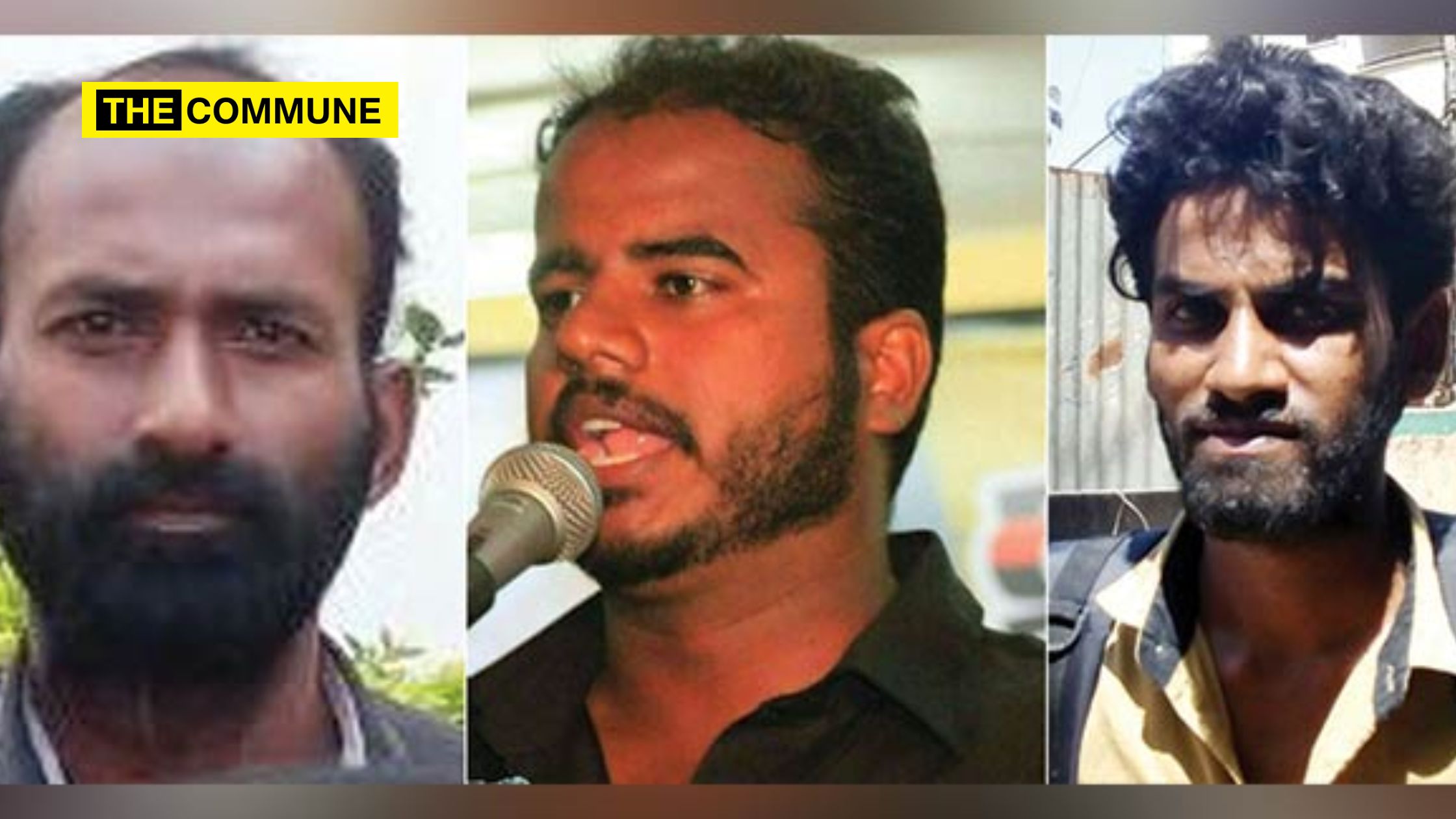
Thanthai Periyar Dravidar Kazhagam Terrorists Sentenced To 7 Years Jail For Hurling Petrol Bombs At BJP Office In CBE

Image courtesy: DT Next

Three members of the Thanthai Periyar Dravidar Kazhagam (TPDK) have been sentenced to seven years of imprisonment by the Special Court for the trial of Bomb Blast Cases in Coimbatore. The individuals, identified as P. Balan alias Gopal, M. Jeevanantham alias Jeeva, and B. Gowtham, were convicted by Sessions Judge S. Sashirekha. They were found guilty of hurling Molotov cocktails (petrol bombs) at the Bharatiya Janata Party (BJP) office in Coimbatore on 7 March 2018. The attack was allegedly motivated by comments made by BJP leader H. Raja on Facebook, targeting alleged “social reformer” E.V. Ramasamy Naicker (hailed as ‘Periyar’). Jeevanantham held a prominent position as the TPDK’s urban district organizing secretary.

Investigations revealed that the trio threw the homemade explosive at the BJP office, which is a two-storey building located on VKK Menon Road near Gandhipuram, around 3:20 AM on 7 March 2018. One of the Molotov cocktails exploded on the sunshade of the ground floor, while the second one hit the name board of a nearby travel agency, falling on the road and causing an explosion. The BJP office operated on the first floor. To carry out the attack, the three individuals had rented a two-wheeler from a mechanic. In addition to the prison sentence, the court imposed a fine of ₹1,000 on each of the convicted individuals.

It is also suspected that the TPDK is connected to the SDPI in some way.

TPDK is a splinter outfit of Periyar Dravidar Kazhagam which itself had split from the Dravida Kazhagam headed by K. Veeramani. All the three are rabid anti-Hindu and anti-India outfits. Their leaders often share stage with DMK and are part of the extended Dravidian ecosystem.

TDPK is headed by BG Anur Jegatheesan and Kovai Ramakrittinan is its General Secretary.

Kovai Ramakrishnan is known for his vitriolic and genocidal speeches against Hindus particularly Brahmins. It is noteworthy to mention that this rabid hate mongering bigot was platformed by The Caravan, a leftist magazine with links to the Congress party.


(With inputs from The Hindu)

Click here to subscribe to The Commune on Telegram and get the best stories of the day delivered to you personally.
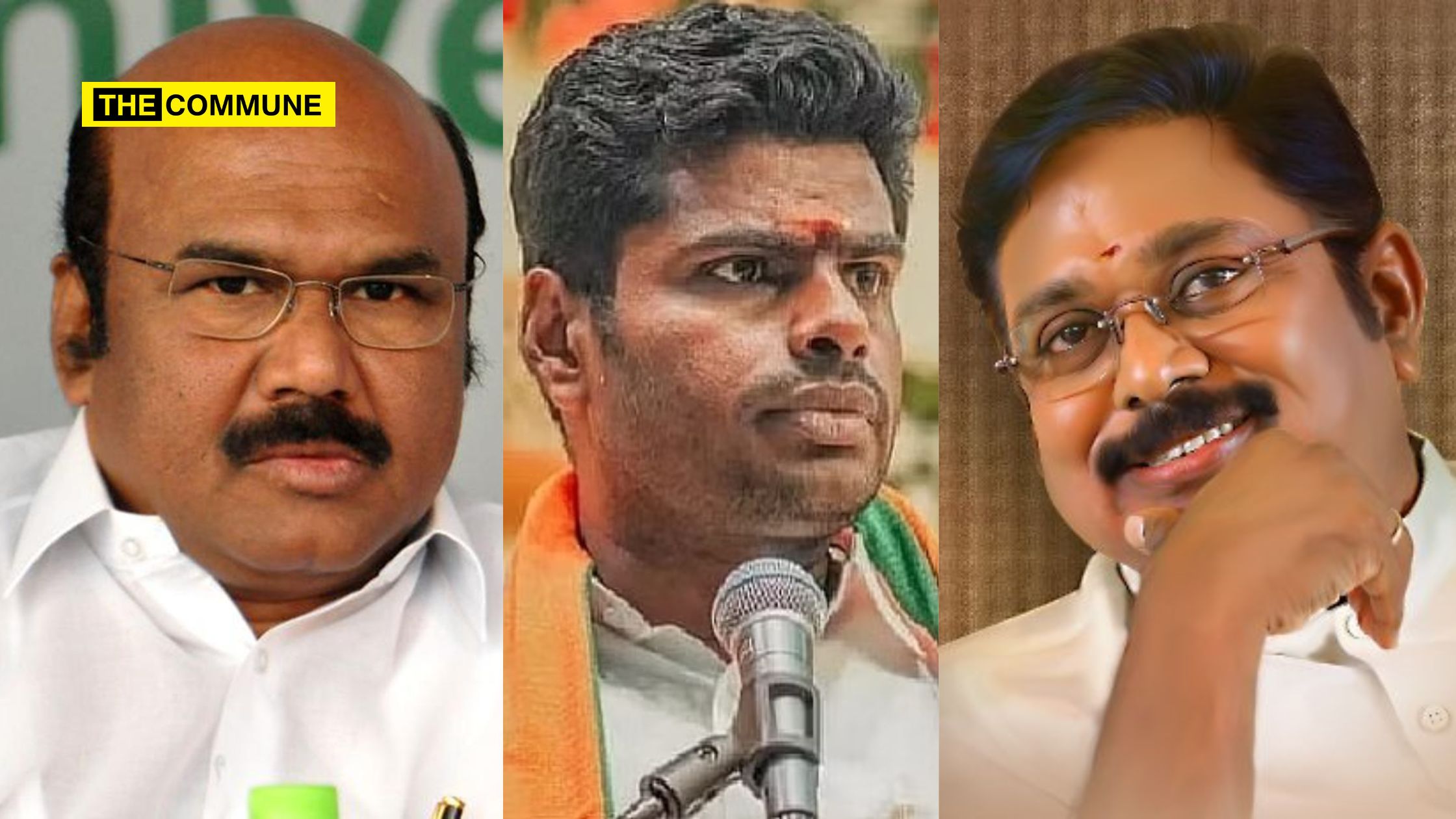
Annamalai Stirs Hornet’s Nest With Corruption Remarks About Jaya, AIADMK And AMMK Condemns

BJP Tamil Nadu President K. Annamalai has stirred a political controversy with his indirect jibe at late AIADMK supremo J. Jayalalithaa. This has led to further straining of relationship between the BJP and AIADMK with the question of alliance hanging by a single thread.

In an interview to Times of India, Annamalai had conveyed that he and his party would question any government that swindled public money. Though Annamalai did not take any names, the comment that hasn’t gone well with AIADMK as well as TTV Dhinakaran’s AMMK is the line where he mentioned about former Chief Ministers getting convicted by a court of law, an indirect reference to Jayalalithaa.

“Many administrations in Tamil Nadu were corrupt, and former Chief Ministers have been convicted in courts of law. That is why Tamil Nadu has become one of the most corrupt states. I would say it holds the number one position in terms of corruption,” replied Annamalai when asked for his agreement on whether the period between 1991-96, when Jayalalithaa’s AIADMK was in power, was one of the worst periods in terms of corruption.

With this comment, Annamalai has stirred a hornet’s nest antagonizing both the AIADMK as well as TTV Dhinakaran’s AMMK which is considered as a potential ally for the 2024 Lok Sabha elections.

AIADMK leader D. Jayakumar said “Instead of criticising the DMK… passing comments against an alliance partner is not acceptable. We strongly condemn his statement. AIADMK workers wish to see Prime Minister Narendra Modi get elected again (in the 2024 Lok Sabha polls). But Annamalai’s action just implies that he does not want the AIADMK and the BJP alliance to continue and Modi to become the prime minister again.”

Jayakumar stated that if elections were to be held today, the AIADMK-led alliance could win around 30 Lok Sabha seats, and they have a chance to secure all 40 seats, including Puducherry, with six to eight months left before the polls.

He called on Union Home Minister Amit Shah and BJP National President J.P. Nadda to reign in Annamalai, warning that the party will decide on the alliance if no action is taken.

TTV Dhinakaran too condemned Annamalai for his indirect reference to Jayalalithaa saying that Annamalai is an inexperienced leader who is ignorant of the political history of Tamil Nadu. He pointed out that late former Prime Minister Atal Bihari Vajpayee and LK Advani forged an alliance with Jayalalithaa for the 1998 Lok Sabha elections. He said that at a public meeting held in Marina Beach, Vajpayee hailed Jayalalithaa. It is another matter that Jayalalithaa brought down the Vajpayee government by 1 vote in just 13 months.

TTV Dhinakaran also mentioned that Prime Minister Narendra Modi too shared a cordial relationship with her. “It is condemnable that Annamalai is talking without any political nuance.”, Dhinakaran said in his statement.

He also questioned about the action taken by Central Government agencies against AIADMK leaders accused of corruption during the Edappadi K Palaniswami regime.

“Annamalai who has been releasing asset list of DMK leaders and their families for the past two years, can he mention what steps he has taken through the Central Government to take action against them? Just raiding them cannot be a solution. Annamalai who talks about elimination corruption should think about taking proper steps as well. Annamalai who has no maturity and talks as he wish should introspect whether he is fit to to be the State President of a national party.”, Dhinakaran said.

Click here to subscribe to The Commune on Telegram and get the best stories of the day delivered to you personally.
Dravidian Model Of Beating The Same Batter: Stalin Rakes Up Hindi Imposition Again, Gets Fact-Checked By New India Assurance Co

Tamil Nadu Chief Minister MK Stalin has once again stirred controversy by alleging that the New India Assurance Company, a central government institution, is imposing Hindi within its organization. However, it is important to note that promoting Hindi and English, the official languages mandated by the Official Language Act of 1963, is a regular practice in all central government institutions, even during the Congress-DMK regime at the Center.

A circular issued by the New India Assurance Company stated that guidelines were issued to ensure the implementation of the “Official Language” in all offices, in accordance with the annual program issued by the Department of Official Language, Government of India. The circular clearly indicated that it is the Official Language Act of 1963 that mandates the promotion of both English and Hindi as the official languages of the union.

Despite the circular emphasizing the promotion of both languages, the DMK and its allies projected it as an imposition of only Hindi. In multiple instances within the circular, it was clearly stated to promote both the official language and regional languages in specific areas. For instance, point 17 underscored the importance of bilingual email signatures for all employees, while point 25 mandated that advertisements, tender notices, and press releases published in newspapers should be in Hindi, English, and the regional language.

MK Stalin, in a tweet, criticized the circular and accused the central government of giving undue advantage to Hindi over other Indian languages. He demanded the withdrawal of the circular and an apology from the Chairperson of the New India Assurance Company.

In a lengthy tweet, Mr Stalin said, “While each and every citizen of India is contributing to its development, the Union Government and its institutions continue to give an undue and unfair advantage to Hindi, over other Indian languages in every possible way. The latest in this list is the unjust circular issued by @NewIndAssurance. It must be withdrawn with immediate effect and its Chairperson Neerja Kapur needs to apologize for the disrespect shown towards non-Hindi speakers of India and non-Hindi speaking employees of @NewIndAssurance.”

Stalin added, “Tamil Nadu and DMK will do everything under our power to #StopHindiImposition, as we have always strived in our history. We will remove the undeserving special status that Hindi enjoys everywhere in the Union Government, like Railways, Postal Department, Banking, and Parliament that affects us and our people on a day-to-day basis. We pay our taxes, contribute to progress, and believe in our rich heritage and this nation’s diversity. Our languages deserve to be treated equally. We will resist any attempt to replace Tamil with Hindi in our land.”

In response to MK Stalin’s allegations, the New India Assurance Company clarified that they respect all regional languages and specifically mentioned in their circular that advertisements, tenders, and press releases should be published in newspapers in English, Hindi, and regional languages, similar to other public sector organizations in India.

It is worth noting that the DMK has a history of using anti-Hindi sentiments as a political tool, particularly when facing challenges in state politics. Critics argue that such allegations are often raised to divert attention from other pressing issues or controversies involving the party and its leaders.

In recent weeks, several incidents, including income tax raids on the houses of Minister V Senthil Balaji’s relatives and the raid on the alleged Binami company of MK Stalin’s son-in-law Sabareesan, have put the DMK on the defensive. Some believe that the party’s focus on the Hindi imposition issue is an attempt to shift public attention away from these issues and regain political leverage.

Notably, the propagation of Hindi imposition by New India Assurance Company is initiated by Su Venkatesan MP, who has a history of spreading misinformation by misinterpreting the central government circular, falsely claiming that the central government is imposing Hindi on the Tamil community.

Click here to subscribe to The Commune on Telegram and get the best stories of the day delivered to you personally.

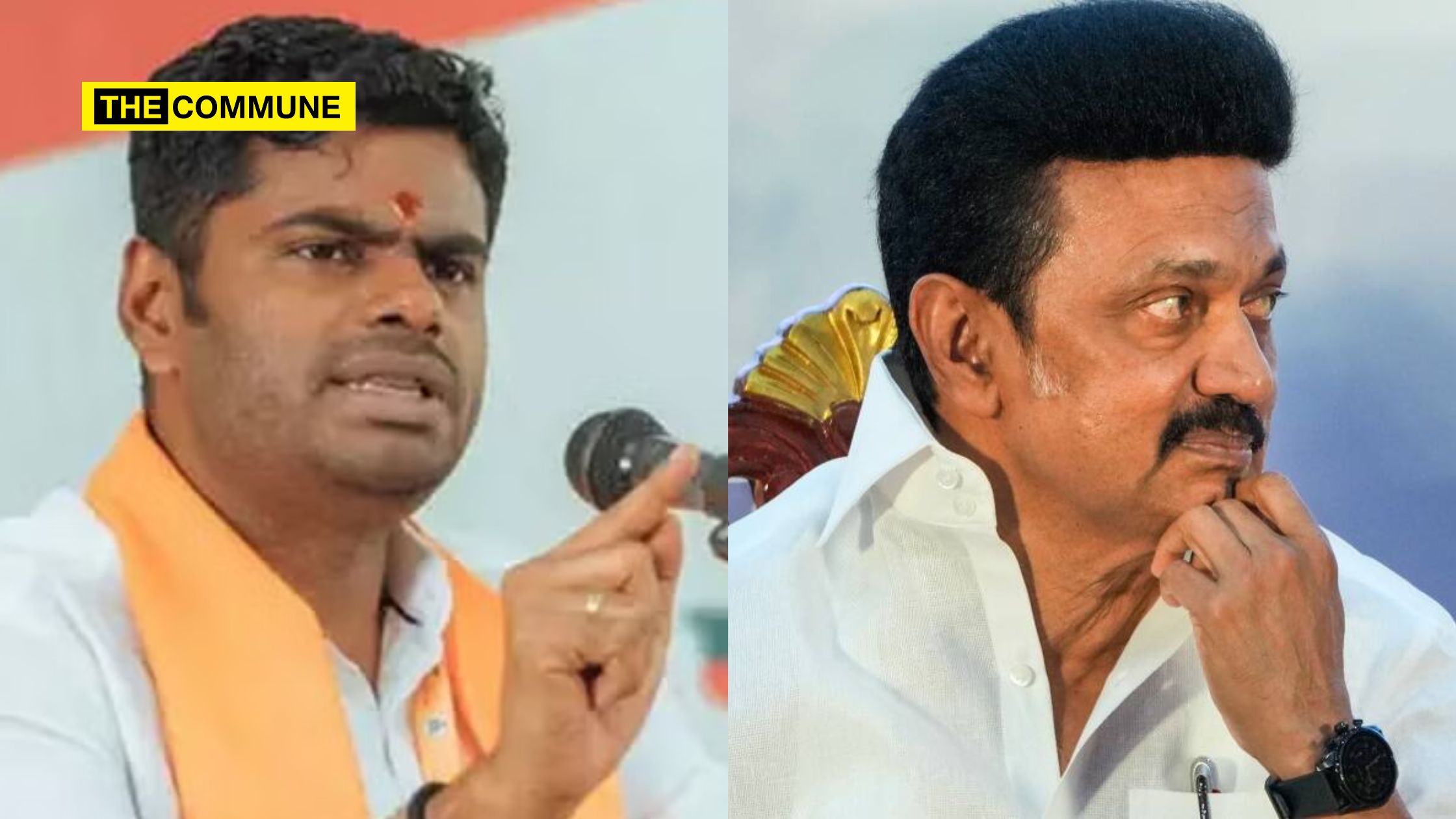
“A Foreign Name Attached To You, Should Be The Last Person To Talk About Tamil”: Annamalai Slams Stalin

In a stinging rebuttal to Tamil Nadu Chief Minister MK Stalin, BJP Tamil Nadu President K. Annamalai came down heavy on the DMK’s dynastic politics and also the injustice meted out to Tamil and Tamil people.

His comments came after CM Stalin responded to Union Home Minister Amit Shah’s blistering attack on the DMK during the latter’s trip to Chennai.

Union Home Minister Amit Shah while speaking at a public meeting near Vellore, Tamil Nadu had criticized the Congress and DMK for their involvement in dynasty politics and alleged corruption.

He called for a change in leadership, highlighting the achievements of the Modi government and emphasizing the need for a local leader in Tamil Nadu. Shah also addressed the DMK’s failure to establish AIIMS Madurai despite their previous tenure at the Centre.

“Congress and DMK are 2G, 3G, 4G parties. I am not talking about the 2G (spectrum allocation scam). 2G means two generations, 3G means three generations and 4G means four generations,” he said.

“The Maran family (of the DMK) is doing corruption for two generations. The Karunanidhi family is doing corruption for three generations. The Gandhi family is 4G. Rahul Gandhi is fourth generation and for four generations they are enjoying power,” Amit Shah said attacking the two parties.

He said the time has come to “throw out 2G, 3G, 4G and give the power in Tamil Nadu to a son of the soil.”. Amit Shah also said that the DMK had prevented two Tamilians when they had a chance to become the PM adding that in future, a Prime Minister for the country should come from Tamil Nadu.

Taking a swipe at Stalin’s comments regarding AIIMS Madurai, Amit Shah pointed out that despite the DMK being in power at the Centre for 18 years, they had not taken steps to establish the premier medical facility in Tamil Nadu. He contrasted this with the central government’s efforts in the state.

MK Stalin in response to this speech of Amit Shah said that the Union Home Minister did not answer any of his questions. He also took a jibe at Amit Shah’s comments about a Tamilian becoming Prime Minister in future saying “I don’t know if Amit Shah is angry with Modi. If there is a chance for a Tamilian to become the Prime Minister, Union Minister of State L. Murugan and Governor Tamilisai will get that chance.”

In response to Stalin’s remarks on Amit Shah’s speech, Annamalai took MK Stalin head with no punches pulled .

“You are in this position because of the word ‘Dynasty’ and your surname ‘Karunanidhi’. Pls, don’t lecture us on democracy.”, Annamalai said unlike the DMK the BJP has a culture where even a booth president can one day become the Prime Minister of the country.

In your DMK party, the basic criteria are that they have to be born in your Gopalapuram home, that’s why Hon HM mentioned your family as 3G (3 Generation Dynast) and your partner Congress as 4G (4 Generation Dynast).”, Annamalai said. 

Annamalai also pointed out the Tamil genocide in Sri Lanka that happened when Karunanidhi was Chief Minister and Manmohan Singh was Prime Minister of the country.

“Please don’t even talk about 2004-2014; your party was responsible for the killing of 1.5 Lakh Tamil brothers & sisters in Sri Lanka, ‘corruption to the core’ is a word that perfectly suits your party’s ministers who served in UPA 1 & 2.”, Annamalai said.

About DMK’s contribution to Tamil, Annamalai said “Your party had made sure Tamil language & culture never crossed the borders of TN & that we believe is the greatest disservice to the world’s oldest language, our Tamil.”

Our PM Thiru Narendra Modi avl has taken it across the whole globe. Finally, our language is getting the attention & richness it truly deserves. If somebody can talk about ‘Tamil’, you should probably be the last person talking about it with a ‘foreign name’ attached to you!”, Annamalai said.

Click here to subscribe to The Commune on Telegram and get the best stories of the day delivered to you personally.
“If India Breaks Up Linguistically, Brahmins Have No Place To Go”: VCK MP Thiruma’s Latest Tirade Against Brahmins, Abuses Vanniyars As Well

thirumavalavan antibrahmin rss hindutva hindurashtra sanatana dharma brahmin honour killing

Protesting the denial of entry to Dalits by Vanniyars at the Melpathi Draupathi Amman temple in Villupuram, VCK leader Thirumavalavan gave an hour-long speech at a meeting organized in Valluvar Kottam, Chennai. However, the VCK leader left no stone unturned and used the opportunity to spew venom on Brahmins.

The Sri Dharmaraja Draupadi Amman Temple in Melpathi village, Tamil Nadu’s Villupuram district, has been sealed by the District administration after ongoing tensions between Vanniyars and Dalits regarding temple entry. Vanniyars protested against Dalit entry, claiming it violated temple customs.

According to a report in The Hindu, Vanniyars have said that the deity is their kuladeivam (clan deity) and so the HRCE department had no right over the temple.

The temple closure was ordered under Section 145(1) of the CrPC due to potential law and order issues. In April 2023, Vanniyars allegedly assaulted three Dalit youths attempting to enter the temple, triggering protests and road blockades. MP D. Ravikumar and district officials held discussions, but the situation remained unresolved. Despite initial reports of a resolution, tensions escalated, leading to the temple’s closure. Security personnel have been stationed to ensure law and order in the village.

While this is an issue between Vanniyars and Dalits, Thirumavalavan went on to denounce Brahmins. During his hour-long speech, Thirumavalavan expressed his apprehension regarding the “growing reverence” for Veer Savarkar, stating that portraying him as a great leader could be dangerous.

He further argued that what is being labelled as a Hindu Rashtra is essentially a Brahmin Rashtra, highlighting the alleged desire of Brahmins to create a nation exclusively for their community. He emphasized that India, with its diverse linguistic groups, already has separate regions like Tamil Nadu for Tamil speakers and Hindi-speaking regions for those who speak Hindi.

Thirumavalavan suggested that if the country were to be divided along linguistic lines, each native language group would have its own nation, ensuring the safety and representation of its people.

However, he claimed that Brahmins face a predicament in identifying their “own” country, as their spoken language, Sanskrit, does not have a corresponding land like Tamil Nadu or a Hindi-speaking region. He alleged that Brahmins aspire to claim the entire nation as their own, and the political strategy of Hindutva is being employed to fulfill their objectives.

The VCK leader also said that Prime Minister Narendra Modi and Home Minister Amit Shah had fallen into the trap of Hindutva and doing so merely for political gain. Thirumavalavan claimed that they have been ensnared in the illusion created by Hindutva, compromising their positions and authority in the process.

This is not the first time that Thirumavalavan has spoken against Brahmins; a few months ago, at a protest rally in Chennai, he threatened to chase Brahmins, BJP, and RSS out of Tamil Nadu.

Abusing Vanniyar Community

The Viduthalai Siruthaigal Katchi leader went on to abuse the Vanniyar community in the most derogatory way. He criticised the members of the Vanniyar community and demeaned them by saying the community members as fools, adding “your caste intelligence, nothing will enter your head. You don’t even understand the law”.

He goes on to speak in a derogatory manner further saying, “Now that the court has locked the temples, will you “shake” the lock that is hanging?”. He calls them “people of low intelligence (tharkuri) who are rooted in ignorance”. He also calls the Vanniyar community leaders “மோசடி பேர்வழிகள்”/”frauds who cheat their own community members”.

He points out their “untouchability” by saying you lick the pickle when drinking alcohol, the rice you eat is pounded by women of the Dalit community, so where did the untouchability go then? He accuses the Vanniyar community of practicing untouchability only in areas where Dalits ask for their rights.

It is interesting to note that the Draupathi Amman temple is the Kuladevatha of the Vanniyar community and has been exclusively worshipped by the community for generations. Why the sudden interest in praying at this temple, one wonders.

Click here to subscribe to The Commune on Telegram and get the best stories of the day delivered to you personally.

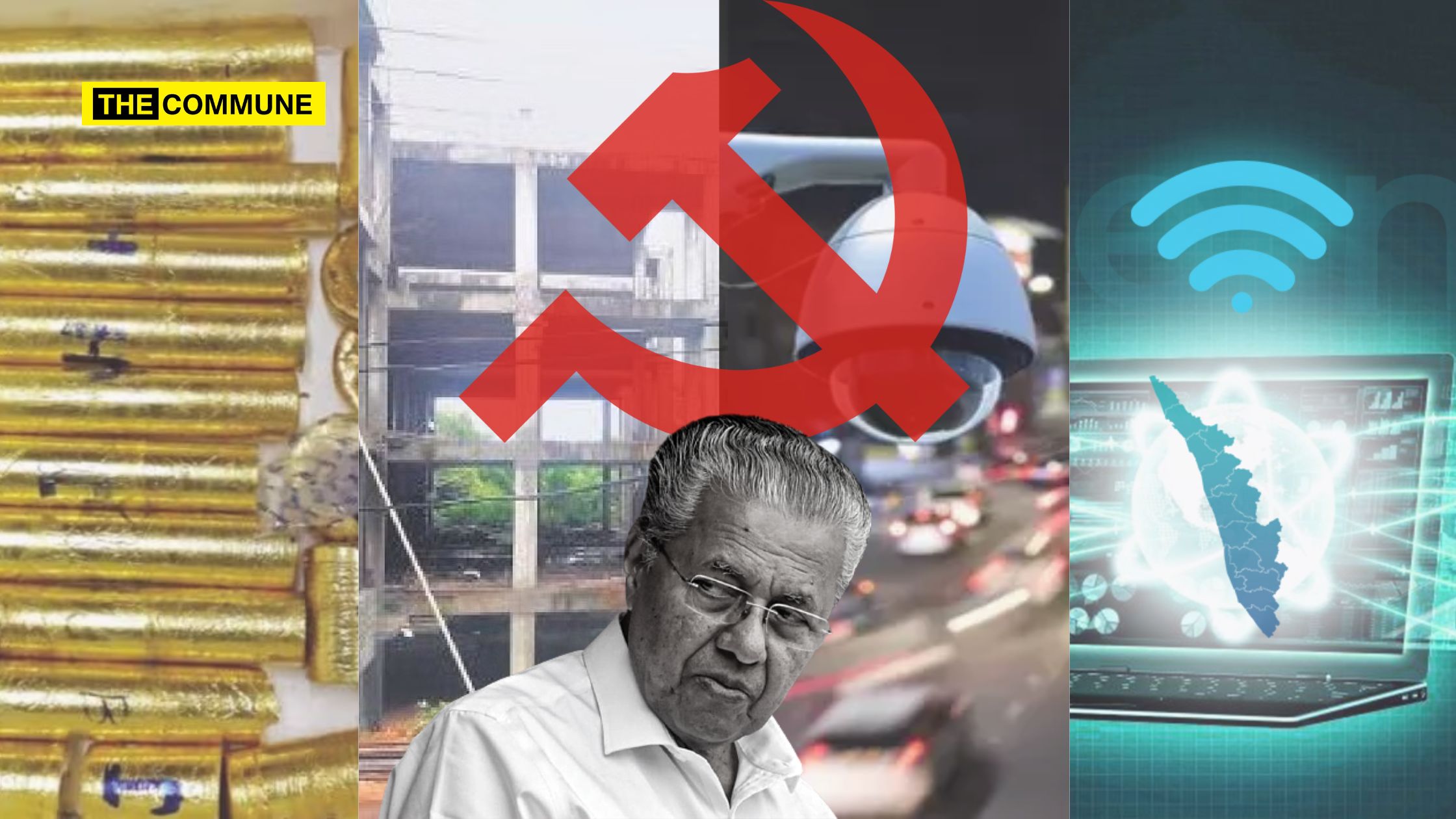
Kerala’s K-FON Scam: The Latest Feather In The Cap Of Communist Govt’s Crown Of Corruption

The Kerala government formally launched the Kerala Fibre Optical Network (KFON) on 5 June 2023, one of its major projects envisioned under Chief Minister Pinarayi Vijayan’s first term.

Kerala, the first state to recognise the right to the internet as a basic right, aspires to bridge the digital gap with KFON by providing high-speed broadband internet access to all residences and government buildings.

But if one looks deeply through the smoke and mirrors, one could easily notice puzzles that do not fit properly.

The communist regime under Pinarayi Vijayan is deeply embroiled in corruption scandals and the latest K-FON announcement has raised eyebrows of the public again.

Considering these allegations let us look at corruption allegations behind the K-FON project and understand why it might be another stain for the corrupt communist government of Kerala.

K-FON Scam

The BJP had accused the LDF administration of large-scale corruption and nepotism in the Kerala fibre optic network (KFON) project, one of the LDF government’s flagship projects aimed at offering quality internet services at an affordable rate to the state’s public and government institutions. According to BJP spokesman Sandeep Vachaspathi, the CPM and Uralungal Labour Contract Cooperative Society were making money off chief minister Pinarayi Vijayan’s pet project. “The government has awarded a contract to a private company controlled by Uralungal society to lay optical fibre cable for KFON.” The contract is for ₹48,000 per kilometre, although cable installation costs just ₹8,000 to ₹10,000 per km. This financial syphoning is taking place with CPM’s knowledge and assistance. The agency that obtained the contract subleased the job to another business, which was against the rules,” he stated. According to Vachaspathi, the chief minister should conduct a thorough investigation into the claim. The BJP spokesperson said that multiple procedural irregularities occurred during the development of the KFON project after the government nominated a Tamil Nadu-cadre IAS officer who worked for Kamal Haasan’s political party as the head of KSITIL.

It is not only the BJP that has raised doubts. Opposition leader VD Satheeshan has also made some significant claims that call for accountability. Even before the controversy over the installation of artificial intelligence (AI) traffic cameras had subsided, Opposition Leader V. D. Satheeshan accused the State government of serious corruption in carrying out the KFON (Kerala Fibre Optic Network) project, which was announced with the promise of providing free internet to 20 lakh families. Mr. Satheeshan told the reporters in Kasaragod that ₹520 crores, more than the estimate was added to the bidding money and sanctioned to a consortium that included Bharat Electronics Limited and SRIT firm, which is also involved in the installation of AI cameras. According to the Congress lawmaker, ₹1028.8 crore have been sanctioned for the KFON project’s implementation. The consortium, on the other hand, was given a 9-year contract that included two years of building work and seven years of operation and maintenance. Even before the controversy over the installation of artificial intelligence (AI) traffic cameras had subsided, Opposition Leader V. D. Satheeshan accused the State government of serious corruption in carrying out the KFON (Kerala Fibre Optic Network) project, which was announced with the promise of providing free internet to 20 lakh families. Mr. Satheeshan told the reporters in Kasaragod that ₹520 crores more than the estimate was added to the bidding money and sanctioned to a consortium that included Bharat Electronics Limited and SRIT firm, which is also involved in the installation of AI cameras.

According to the Congress lawmaker, ₹1028.8 crore have been sanctioned for the KFON project’s implementation. The consortium, on the other hand, was given a 9-year contract that included two years of building work and seven years of operation and maintenance. This deal is worth ₹1531 crore. This includes ₹1.168 billion for construction and ₹363 billion for operation and maintenance. That equates to a tender for more than ₹500 crores, he claims. According to the Congress lawmaker, the KFON project, which was established in 2017, claimed that within 18 months, 20 lakh homes will get free internet access, and 30,000 government offices would have access to an internet network. Even though 90 percent of the work has been completed, only approximately 16000 offices have been connected, according to authorities. Recognising that providing free internet access to the population would be impossible, the government first said that only 14,000 individuals would have free internet access. The assembly constituency link was similarly restricted to 100 underprivileged persons in one assembly constituency. Mr. Satheesan stated that BEL is exclusively responsible for the operation and maintenance of 30,000 government institutions’ optical network terminals. However, in order to monetize the KFON scheme and serve additional clients, they need the services of a managed service provider. Surprisingly, SRIT also received this tender. He stated that, like the AI camera tender, the SRIT secured this contract by creating a cartel, with three businesses participating. Surprisingly, all three companies are Managed Service Providers (MSP) for RailTel’s subsidiary Railwayware. According to the Congress leader, SRIT will receive a 10% revenue share of the firm under the MSP deal. If more enterprises are bought outside of the scheme’s target area, they will get an extra incentive of up to 2%. In summary, SRIT is carrying the whole budget of the project, for which the government has allocated ₹1500 crore. SRIT has joined the KFON project as a commercial partner with no cash input. He wondered how this was possible.

He said that a similar fraud to the AI camera scam had occurred in KFON. In addition, the subcontract was awarded in KFON in contravention of the norms. M. Sivasankar, former principal secretary to Chief Minister Pinarayi Vijayan, sent the letter, requesting an increase in the projected sum. He stated that further details about the KFON fraud would be disclosed in the following days. He also stated that the Industries Department’s inquiry into the AI camera scandal is irrelevant. The industries minister was supporting the strategy when he questioned how the probe would go. Even the Chief Minister is keeping quiet. Everything is corruption for the good of their people, according to the opposition leader.

From Life Mission To K-FON- The Many Scams Of Pinarayi Government

The Life Mission to K-FON scandal demonstrates the presence of a crooked network of bureaucratic cronies circling the Chief Minister.

There is an urgent need to analyse and study these corruptions in Kerala in order to understand how the communists are enriching themselves with public funds. LIFE Mission was a government programme that provided free shelter to the homeless and flood victims in Kerala in 2018.

Through the LIFE Mission plan, the project sought to build dwellings for 140 people in Thrissur’s Wadakkanchery area, spending ₹14.50 crore of the ₹20 crores provided by the Red Crescent via the UAE consulate.

The deal also stated that the leftover funds would be utilised to build a hospital. The Red Crescent is described as a non-profit institution that supports humanitarian operations, although its history is murky. The building contract was awarded to UNITAC Builders. As reported by UNITAC managing director Santhosh Eapen, each of the accused was given a ₹4.48 crore bribe for the project.

The government afterward authorised an investigation into the matter. Swapna Suresh and Sandeep Nair are the other defendants in the case. Swapna Suresh and Sarith PS, the accused in the case, made claims against Sivasankar claiming he played a role in this. When the ED started investigating the gold smuggling case, irregularities in the plan were discovered.

In October 2020, the ED allegedly seized ₹2 crores in cash and 2 kgs of gold from Swapna Suresh’s bank vault. Swapna Suresh, the main accused in the gold smuggling case, informed the ED that the money originated from commissions Sivasankar received from an agreement with The Red Crescent, an international humanitarian organisation, to provide houses for 2018 flood victims in Wadakkanchery, Thrissur district. In connection with the matter, the investigating agency had already detained M. Sivasankar, the former Principal Secretary to the Kerala Chief Minister. Mr. Sivasankar is presently incarcerated.

Sivasankar reportedly instructed Swapna to store the money in her locker. According to the investigating agency, the accused syphoned off a large sum as commission from money granted by an international entity for the housing project. The agency said that the money discovered in Swapna Suresh’s bank locker, another accused in the preceding money-laundering investigation, was part of the commission the accused had earned. Meanwhile, leaked conversations between the aforementioned secretaries and Swapna Suresh had embarrassed not just the CM or the governing party, but also the people of Kerala.

According to the conversations, M Sivasankar, the then-principal secretary to the chief minister, informed Swapna, who was ready to retire from her employment at the UAE Consulate in Thiruvananthapuram, that she would be guaranteed a job at the NORKA or the Department of Non-Resident Keralites Affairs. The chats also mention that Pinarayi’s additional private secretary CM Raveendran informed Sivasankar that Swapna met the CM. Apart from these the AI Camera scam which unravelled right before the current allegations also points the fingers toward the CM.

How the corruption drama unfolding in Kerala links to each other remains a mystery, but upon closer inspection, we may uncover a common thread that binds them all. The unifying thread that binds them is the Chief Minister and his secretaries, but the key question is the degree of the CM’s responsibility. Even though the mystery remains, as the head of a democratic state, he should explain his participation in all of these claims.

(Anand Krishna is a lawyer from Kerala and a columnist)

Click here to subscribe to The Commune on Telegram and get the best stories of the day delivered to you personally.
Is DMK Govt Abetting Illegal Sand Mining In TN? Shocking Audio Of DMK MLA And Police Surfaces

In a shocking development, a leaked telephone call recording on Twitter indicates in the direction of the alleged complicity of the ruling DMK (Dravida Munnetra Kazhagam) government in aiding and abetting illegal sand mining activities in the state. The conversation reportedly took place between Annadurai, the DMK MLA of Pattukottai, and DSP Balaji, sparking widespread controversy and calls for investigation.

It has been reported that DSP Balaji had received confidential information regarding the illegal extraction of excess soil from Otteri lake in Thitakudi village near Pattukottai, Thanjavur district. Acting on this information, the taluk police seized several vehicles, including JCPs and tractors, involved in the unlawful operation. Similarly, vehicles engaged in excessive sand mining in Nasuvan Pond in Karambayam were also confiscated.

Subsequently, the leaked audio conversation between DMK MLA Annadurai and DSP Balaji surfaced on social media platforms, further intensifying the controversy. In the recording, MLA Annadurai is heard arguing in support of individuals who are said to have dumped soil in the lake area with alleged permission from the Tahsildar (revenue official). He claims that the Tahsildar had visited the site, informed him about the activities, and agreed to halt the digging.

DSP Balaji, on the other hand, expresses his concerns over the violation of prescribed limits and informs the DMK MLA that the allotted time for soil dumping has expired. Despite the DSP’s intentions to take appropriate legal action, the MLA asserts that the Tahsildar holds the authority in this matter and implies that the police should obey the Tahsildar’s instructions.

Following the leak, the DMK MLA’s alleged threatening tone in the conversation has attracted significant attention and raised serious questions about the DMK government’s commitment to curbing illegal sand mining.

In response to the leaked audio, the police promptly took action, seizing four JCPs and apprehending Matharasan (25), Kalaiyarasan (20), Sridhar (26), and Kumar (30) on charges related to illegal sand mining.

The authenticity of the leaked audio and its implications are now under investigation, as concerned citizens and opposition parties demand a thorough probe into the alleged involvement of the DMK MLA and potential corruption within the ruling government.

This development has once again highlighted the critical issue of illegal sand mining, which poses significant environmental hazards and threatens the sustainability of natural resources in the state and it also calls for appropriate action against those found guilty, irrespective of their political affiliations.

It is noteworthy to mention that in the run up to the 2021 Assembly elections, now DMK Liquor Minister Senthil Balaji had courted controversy when he said at a public meeting in Karur that there would be no ban on sand mining in the river beds after the DMK comes to power.

“Once Thalapathy (Stalin) takes oath as Chief Minister – if he takes oath at 11 AM, then at 11.05 AM – you all can directly take your bullock carts into the river for sand mining. No officials will stop you. If someone stops you call me immediately, he will be removed.”, Senthil Balaji had said.

(With inputs from Dinamalar)

Click here to subscribe to The Commune on Telegram and get the best stories of the day delivered to you personally.
Dravidian Model: After Cooum, Now Thamirabarani Water Unfit For Drinking Or Bathing Say Reports

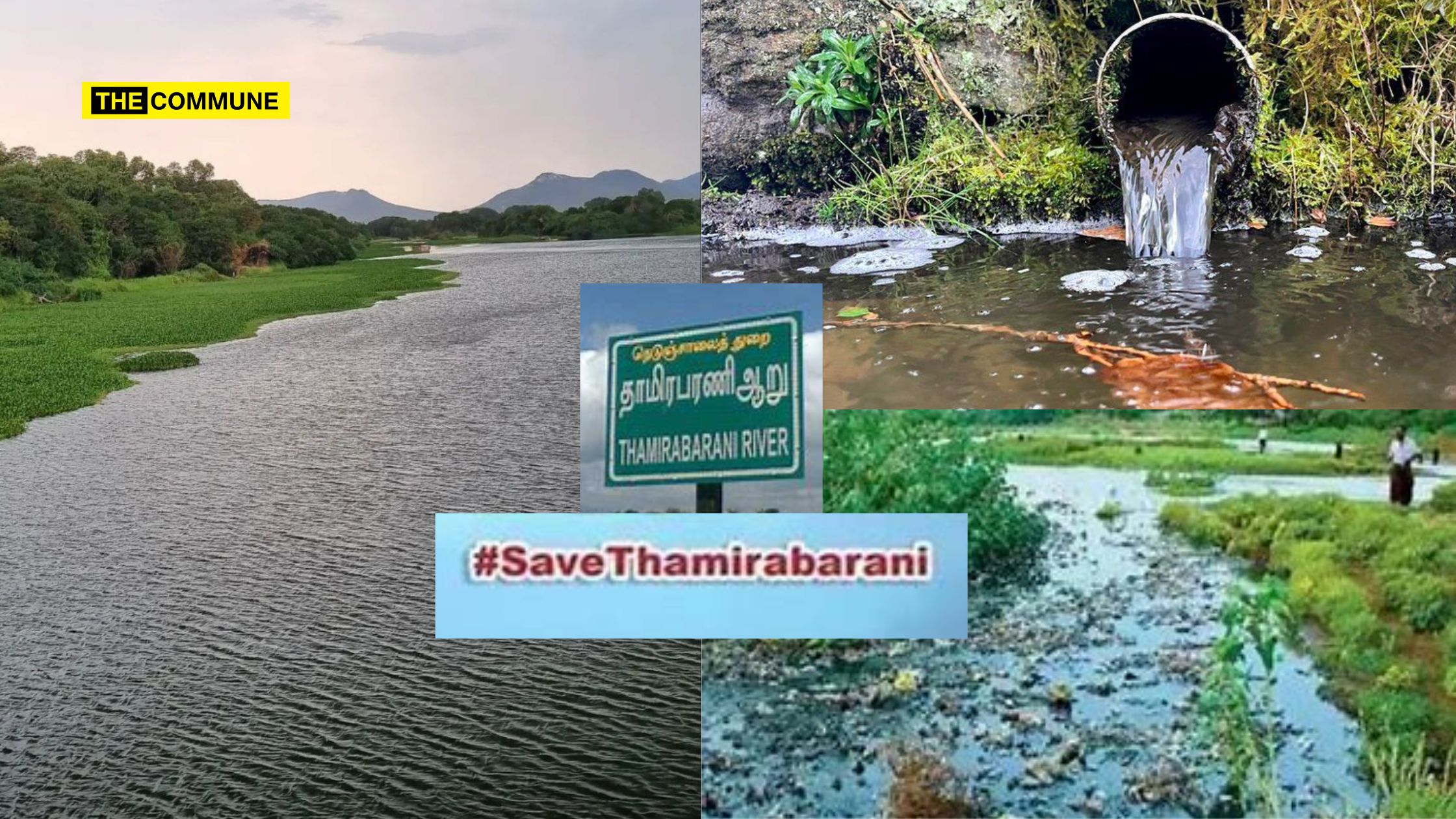
The recent study conducted by a private news organization has unearthed startling revelations about the suitability of Thamirabarani River water for human consumption.

According to the findings by News 18 Tamil Nadu, the water of the Thamirabarani River has been deemed unsuitable for drinking, raising serious concerns among the public of Tirunelveli and surrounding regions.

According to the ancient Thamirabarani Mahatmyam, the story of the river’s origin is intertwined with the legendary sage Agastyamuni. It is believed that a sequence of red lotus flowers, originating from Agastya at the Pothigai hills, miraculously transformed into a beautiful woman upon encountering Lord Shiva. This divine transformation resulted in the birth of the river, which was bestowed with the sacred name Thamirabarani.

The Thamirabarani River, known by different names such as Podhigai and Tambaraparani, is renowned for its unique characteristics. It is believed to possess traces of copper, as reflected in its Tamil name “Thamiram” which translates to copper. This copper content lends the river a distinct reddish hue, adding to its visual appeal and mystique. Flowing through the Tirunelveli and Tuticorin districts, the river meanders eastward until it eventually merges with the Gulf of Mannar.

The ancient river, with a history dating back 3200 years, spanning 130 kilometers in length, originates from the summit of Podhigai hills and flows through a basin area of 4400 square kilometers. It is the one and only perennial river in Tamil Nadu as of now. Along its course, it encounters seven dams before finally reaching the Gulf of Mannar near Punnaikayal in Tiruchendur. Unfortunately, this revered waterway is currently facing imminent danger as a result of government and human negligence. The neglect and disregard shown towards the river’s well-being pose a significant threat to its ecological health and overall survival. Immediate attention and action are required to address these pressing concerns and ensure the preservation of this invaluable natural resource.

The Thamirabarani River and its tributaries have suffered from pollution caused by the direct discharge of sewage, domestic waste, and solid waste by local authorities along their banks. During 2021, this concerning issue prompted the Central Pollution Control Board (CPCB) to officially designate the stretch between Pappankulam to Arumuganeri, spanning over 80 kilometers, as polluted. The CPCB has categorized this section as Priority-V, highlighting the need for consistent monitoring of areas where the water quality exceeds the desired limit of 3mg/l of BOD (biochemical oxygen demand). This classification underscores the urgency of addressing and improving the deteriorating water quality in the affected region.

According to the recent study by News 18 Tamil Nadu, it was discovered that the elevated calcium levels found in the Tamirabarani River render it unsuitable for both drinking and bathing purposes. The elevated calcium levels will cause disturbances in not only human life but also affects the aquatic ecosystem.

According to hydrology expert Prof. Arunachalam, the water has more harmful bacteria than the good bacteria required for human consumption. He said that people will get rashes and young children will see their hair turn grey earlier if they bathe in Thamirabarani.

During 2022, research conducted by the Society For Action against Environment (SAAE), an environmental organization, has revealed alarming findings. For instance, Marappanadu village, located on the river’s banks, is directly discharging approximately 54 kilolitres of untreated sewage into the river, endangering the water source near the drinking water pump house. The study further indicates that local bodies collectively discharge around 44.313 million litres of sewage water daily into the river. Tests conducted on water samples from the river indicate that the mineral content fails to meet the required standards. These findings highlight the urgent need for measures to address the pollution issue and restore the water quality of the Tamirabarani River.

As per the recently published action plan by the Tamil Nadu Pollution Control Board (TNPCB), the village of Murappanadu, with a population of 1,556 residents, directly releases 54 kilolitres per day (KLD) of untreated sewage into the Tamirabarani River, specifically in close proximity to the drinking water pump house.

The report also reveals that a substantial amount of sewage water, totaling at least 44.313 million litres per day (MLD), flows into the river. Out of this amount, 31.91 MLD is discharged by the Tirunelveli Corporation. According to the report, the Tirunelveli Corporation treats 24.2 MLD of sewage waste. At the point where the Thamirabarani River merges with the sea, specifically in Punnakayal village, water samples were collected and analyzed. The findings revealed an alarming level of biochemical oxygen demand (BOD), with a recorded value of 18.35 mg/l. This measurement is six times higher than the permissible level, highlighting the severe pollution and degradation of the river in that particular area.

It is important to note that a case concerning the restriction of untreated sewage discharge into the Thamirabarani River by local authorities has been pending with the South Zone of the National Green Tribunal (NGT) since 2015. The case highlights the ongoing legal proceedings and the pressing need for regulatory action to address the issue of sewage pollution in the river. Despite the passage of time, a resolution regarding this matter has yet to be reached, emphasizing the importance of expediting the legal process to protect the Thamirabarani River from further environmental harm.

Reviving the sacred Thamirabarani River requires more than just government initiatives. It necessitates the collective efforts of the residents of Tirunelveli and Thoothukudi, whose lives are intricately intertwined with the river. Restoring the health and vitality of the Thamirabarani can only be achieved through the active participation and commitment of the local communities who depend on the river for their livelihoods and well-being. It is imperative for the people to join hands and work together towards sustainable solutions, implementing measures to protect and rejuvenate this essential natural resource.

Efforts must be taken to prevent the Tamirabarani River from facing a fate similar to that of the Koovam (Cooum) River. The pollution and degradation experienced by the Koovam River serve as a cautionary tale, highlighting the urgent need to safeguard the Thamirabarani River from similar threats. It is essential to implement effective measures to mitigate pollution, prevent encroachment, and promote sustainable practices along the banks of the Thamirabarani. By learning from the past mistakes and proactively addressing environmental concerns, we can ensure that the Thamirabarani River remains a pristine and vital water resource for generations to come.

Click here to subscribe to The Commune on Telegram and get the best stories of the day delivered to you personally.

Kerala Model Of Fascism: Communist Govt Faces Backlash As It Books Asianet News Reporter For Reporting Malpractice By Comrades

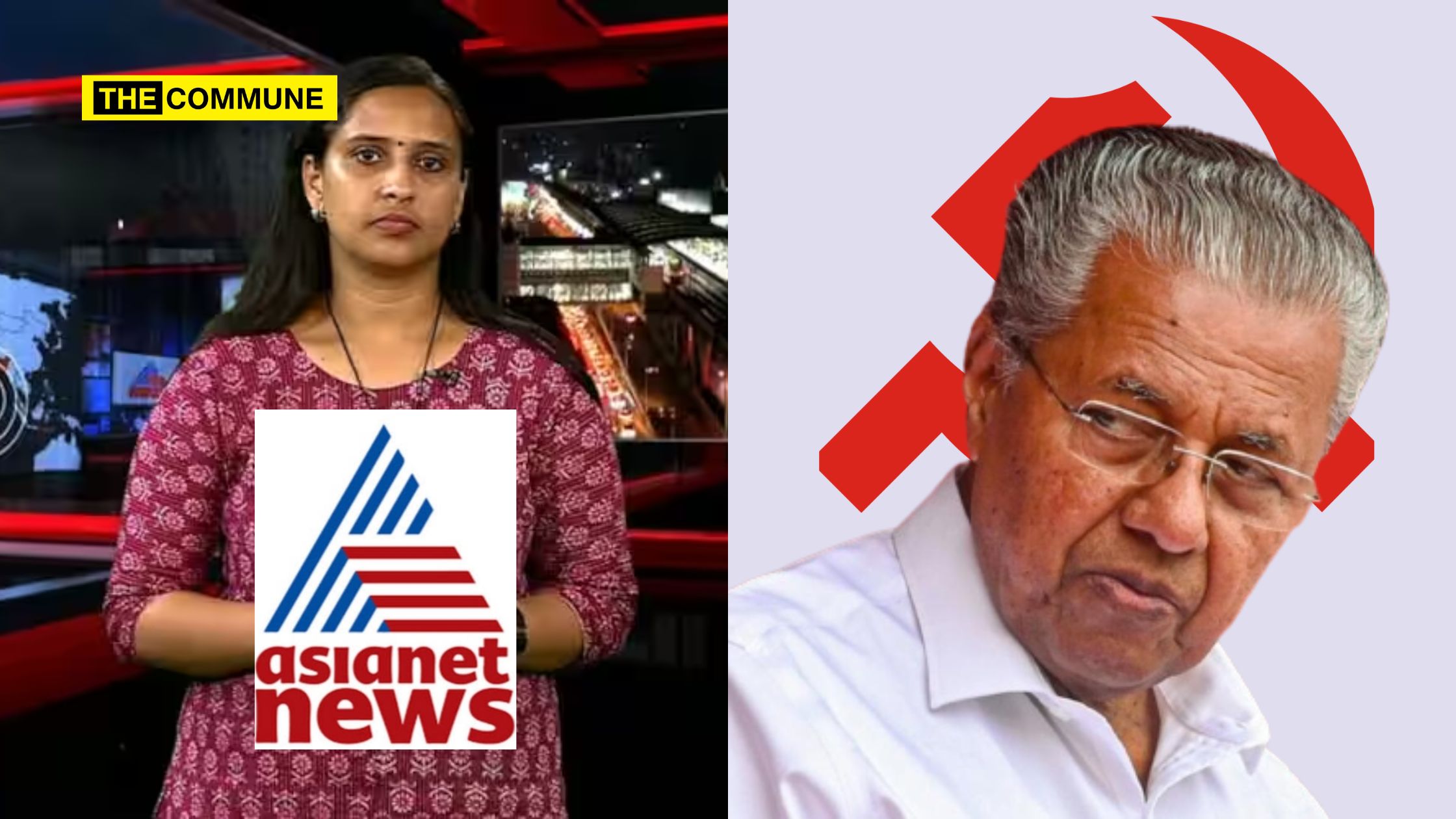
In a concerning incident, Akhila Nandakumar, the chief reporter of Asianet News, has been booked by the Kerala Police for merely reporting on alleged malpractices involving members of the Left-backed Students’ Federation of India (SFI) at Maharaja’s College. This move by the communist government in Kerala has drawn widespread criticism, especially since the government had positioned itself as a champion of freedom of speech on a global scale.

The controversy unfolded when two members affiliated with the Communist Party of India (CPI) in Kerala, ‘Comrade’ Divya and ‘Comrade’ Arsho, became embroiled in serious allegations.

Divya, an SFI activist, has been accused of fabricating documents. One document falsely claimed that she served as a temporary teacher at Maharaja’s College in Ernakulam from 2018 to 2021. However, investigations revealed that the document contained a forged signature and seal of the college principal.

In the case of Arsho, a leader of SFI in Kerala, he stands accused of passing a university examination without actually appearing for it. It is worth noting that during the examination period, he was in custody for his involvement in an attempted murder case. These allegations against Comrade Arsho raise concerns about the ethical conduct of CPI-affiliated individuals holding positions of influence.

Critics argue that such cases expose the party’s willingness to go to great lengths to support its members, even resorting to fraudulent practices. The misuse of government influence is a significant cause for alarm, as it undermines the fundamental principles of fairness and transparency necessary for a healthy democracy. While the cases involving Comrade Divya and Comrade Arsho have garnered attention, they may only scratch the surface of a broader issue.

In a recent development that further adds to the controversy, Kochi City Police, in a blatant violation of press freedom, has implicated Akhila Nandakumar, the chief reporter of Asianet News, in a conspiracy case. This action was based on a complaint lodged by SFI State Secretary PM Arsho. Shockingly, the complaint was taken at face value, and Akhila Nandakumar was booked without even conducting a preliminary investigation.

The police have leveled conspiracy charges against the journalist, who had visited the college campus to bring information regarding the forgery case to the public’s attention. The swift registration of the case and the involvement of a special investigation team by the state home department, prompted by the complaint of the SFI state secretary, have raised concerns about the impartiality and fairness of the investigation.

This incident serves as a stark reminder of the importance of press freedom and the need to protect journalists’ rights to report on matters of public interest without fear of reprisal. The booking of Akhila Nandakumar not only raises questions about the credibility of the charges but also reinforces the critical role of a free press in holding those in power accountable. The incident demands a thorough examination and calls for safeguarding the principles of democracy, transparency, and freedom of speech.

Click here to subscribe to The Commune on Telegram and get the best stories of the day delivered to you personally.