Home Blog Page 897

‘Lesson On Sanathana Dharma In Textbooks Will Be Revised Next Year’, Says Anbil Mahesh, TN Education Min
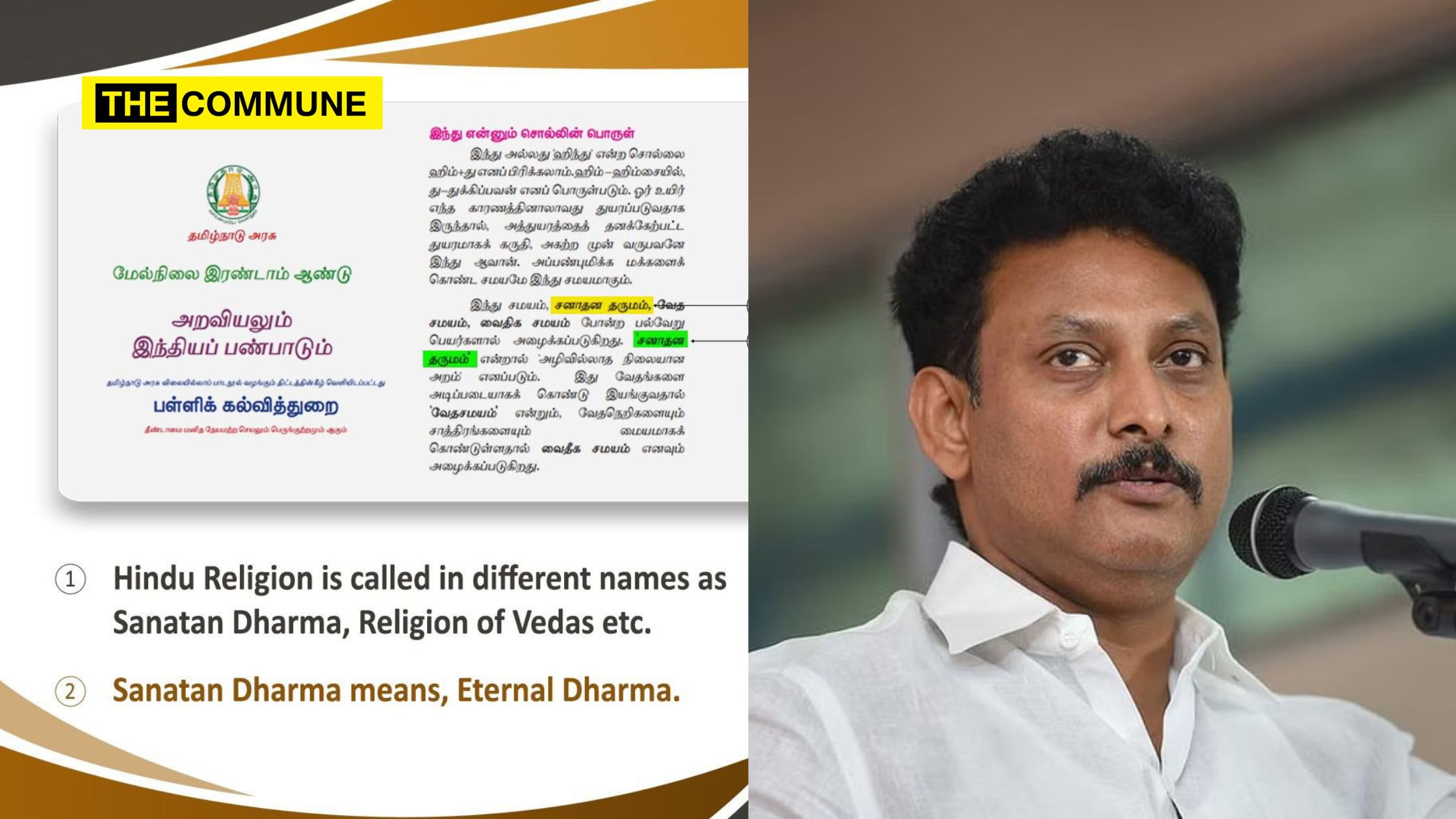
The onslaught on Sanathana Dharma just seems to never end in Tamil Nadu, as the ruling party, the Dravida Munnetra Kazhagam (DMK) has announced that the mention of Sanathana Dharma in school textbooks will be removed soon according to DMK education minister Anbil Mahesh Poyyamozhi.

According to the DMK, the mention of Sanathana Dharma should be removed from textbooks as it is against “scientific temper” after many pointed out that the textbook says Sanathana Dharma and Hindu Dharma are one and the same following Udhayanidhi Stalin’s call to “eradicate Sanathana Dharma” comments. 

Udhayanidhi Stalin, son of Chief Minster MK Stalin in one of his speeches had called for the “eradicating Sanathana” and since then any attempt even by his own party members to tone down his rhetoric has fallen on deaf ears. However, what stung the DMK was when BJP leader K Annamalai pointed out from his official X handle that, “The Class 12 textbook released by TN Govt says that Sanatana Dharma & Hinduism are the same. It also mentions that Sanatana Dharma is the Eternal Dharma. We advise PK Sekar Babu & Udhayanidhi Stalin to enrol in this class to get enlightened.” 

It all started when someone pointed out that the 12th standard textbook published by the Tamil Nadu Textbook and Educational Services Corporation mentions that “Sanathana Dharma and Hinduism are one and the same”. BJP TN President K Annamalai also shared it and questioned Udhayanidhi’s and HRCE Mminister Sekar Babu’s stance.

This revelation had put the Dravidianists on a spot, who had been fooling Tamils that Sanathana Dharma is a different religion and they were not attacking Hindu Dharma and Hindus by calling for the former’s eradication. Once this was pointed out Dravidianists on social media called on the DMK government to remove the specific content from the textbook.

Senior Dravidar Kazhagam leader K Veeramani made the same demand saying, “It was a result of an unclear thought process of the previous regime. Unnecessary things should be found based on rationality and removed. One of the basic duties of the Indian constitution is to spread the scientific temper. As this is an obstacle to spreading the scientific temper, it should be removed”.


It has been alleged that the sudden outbursts by the DMK scion are the result of leaders like K Veeramani and Suba Veerapandian who seem to have more access to CM Stalin’s son’s thought process and the things Udhayanidhi Stalin has said recently.

As per the growing discourse within the DMK, the School Education Minister Anbil Mahesh has assured that content that says Sanathana Dharma and Hindu Dharma is the same and will be removed from textbooks in the next academic year. Also, any mention of  “Sanathana is a Dharma and there is no discrimination in Varnashrama,” which is the exact opposite of what Udhayanidhi had said will be changed.

As per a Hindu Tamil report, so-called ‘social activists’ have taken exception and sought the removal of this content and blamed the AIADMK for bringing such changes to the curriculum in 2018. The education minister said, “The part about Sanathana is found in the textbook printed in 2018. As the syllabus is changed every five years, textbooks will be altered next year. We have appointed a committee to look into the issue.”

In Tamil Nadu, the DMK has always used education as a platform to further its ideology and indoctrinate people. Dravidian outfits often distribute anti-Hindu and pro-Periyarist materials in schools and colleges to influence young minds and at the same time give a lot of support to Christian educational institutions.

Subscribe to our channels on Telegram and WhatsApp and get the best stories of the day delivered to you personally.
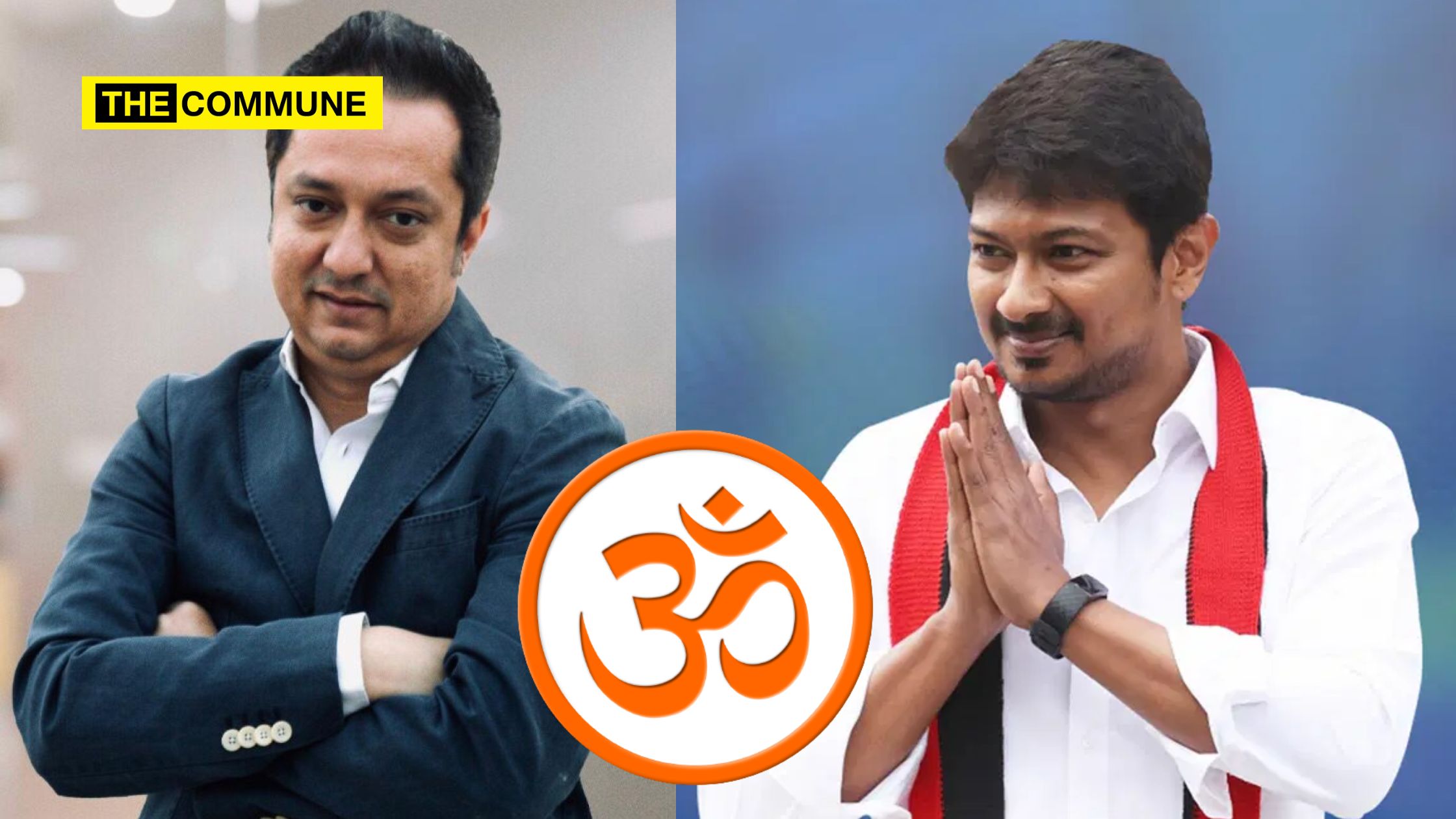
TN Police Land Up At Journalist Abhijit Majumder’s Workplace For Criticising Udhayanidhi Stalin’s Comments On Sanathana Dharma

In a shocking turn of events, journalist Abhijit Majumder, has found himself in the Tamil Nadu Police’s crosshairs. The police went all the way to Noida-based media house looking for Abhijit without issuing any summons. 

In the early hours of 30 September 2023, Abhijit Majumder took to his social media handle, X, to share a troubling incident. He revealed, “Got a call from the media house I write and do TV for that 4 Tamil Nadu cops came looking for me for a piece I had written criticizing Udhayanidhi Stalin’s call to eradicate Sanatan Dharma. Apparently, an FIR has been filed. Then lawyers, cops. They say Modi is fascist.”

This incident stems from a piece Abhijit had written earlier in September 2023 for FirstPost, where he analysed the political ramifications of a controversial speech delivered by Udhayanidhi Stalin, the son of Tamil Nadu Chief Minister MK Stalin.

What Did Udhayanidhi Stalin Say?

To provide context, in September 2023, Udhayanidhi Stalin addressed the Tamil Nadu Progressive Writers and Artists’ Association’s conference titled “Eradicate Sanathana Dharma Conference.” During his speech, he made incendiary remarks, stating, “The title of this conference has been excellently coined. You’ve named it ‘Abolish Sanatanam Conference’ and not ‘Oppose Sanatanam Conference’, so my best wishes to that.” He compared Hinduism to mosquitoes and diseases like dengue, flu, malaria, and coronavirus, asserting that these aspects should not be opposed but entirely eradicated. Udhayanidhi Stalin further criticised the concept of Sanatan Dharma, describing it as being opposed to equality and social justice. He questioned the meaning of “Sanatanam” and labelled it as something that cannot be changed or questioned. 

He said, “Mosquitoes, dengue, flu, malaria, corona – we should not oppose these things. They’ve to be eradicated completely. The same is the case with Santanam (Hinduism). Our first work should be to abolish/eradicate Sanatanam instead of opposing it. So, my appreciation to you all for giving an apt title to the meeting“. DMK Minister Udhayanidhi Stalin said.

He also further went on to say, “What is Sanathanam? The name Sanatanam itself comes from Sanskrit. Sanathanam is opposed to equality and social justice. What is the meaning of Sanatanam? Eternal or something that can’t be changed. Something that can’t be questioned. That is the meaning of Sanatanam.

Abhijit’s Article

In his article for FirstPost, Abhijit Majumder discussed how Udhayanidhi Stalin’s controversial speech may have inadvertently benefitted the Bharatiya Janata Party (BJP) in Tamil Nadu. This critical analysis appears to have drawn the ire of the Tamil Nadu government. The article was titled, “Udhayanidhi Stalin’s call for Hindu genocide does BJP a big favour in Tamil Nadu” and it appears that the word “genocide” is the problem here. 

This incident underscores concerns about the state of freedom of expression in Tamil Nadu under the DMK regime. While freedom of speech is a fundamental right in the country, incidents like these raise questions about its practical application, particularly when critical viewpoints are targeted. In fact, there have been a spate of arrests in the last few weeks. BJP IT cell chief Amit Malviya was booked in a similar case for his tweet in which he had accused the DMK Minister of calling for genocide. 

Here are some other recent instances where the Tamil Nadu police have been actively pursuing individuals critical of the ruling DMK:

  • The Commune and its directors faced legal action for reporting on the confrontation between Podu Deekshitars of the Chidambaram Nataraja Temple and HR&CE officials.
  • Tamil Nadu BJP State Secretary SG Suryah was taken into custody under non-bailable sections for his comments regarding Madurai CPI-M MP Su Venkatesan concerning a sanitation worker’s tragic death during drain cleaning in Pennadam town, Cuddalore district.
  • An AIADMK IT wing member was apprehended under non-bailable sections for sharing a video meme that humorously referenced MK Stalin’s video statement on Senthilbalaji’s arrest. The meme did not contain derogatory content.
  • A Pro-BJP Twitter user was arrested for sharing an old article and allegedly misattributing DMK to an illegal liquor-producing gang in Tiruppur, following the recent hooch tragedy in Marakkanam.
  • Vice President of Tamil Nadu BJP’s Industrial Cell, Selva Kumar, was arrested for criticizing DMK Minister Senthilbalaji.
  • The admin of Voice of Savukku Shankar X handle was arrested for a video meme targeting CM MK Stalin and DMK Minister PTR Palanivel Thiagarajan regarding the “eligible household” clause in the monthly assistance scheme for women.
  • The DMK government traveled to Gujarat to arrest BJP cadre John Ravi, who had made satirical social media posts about CM MK Stalin and his late father, Karunanidhi.
  • A member of TTV Dhinakaran’s AMMK was arrested for posting a meme mocking the Tamil Nadu sports ministry led by Udhayanidhi Stalin.
  • Political commentator Kishore K Swamy was detained for posts critical of MK Stalin related to monsoon preparations. Previously, he had been subjected to the Goondas Act for criticizing DMK leaders Karunandhi, Stalin, and Annadurai.
  • DMK critic YouTuber-turned-BJP cadre Karthik Gopinath was arrested for raising funds for temples in Siruvachur, Perambalur district, which had been vandalized by miscreants.
  • BJP supporter and political analyst Krishna Kumar Murugan was arrested in connection with alleged ‘defamatory’ posters caricaturing MK Stalin.
  • YouTuber Maridhas was taken into custody for a video discussing Tablighi Jamaat and a tweet related to the late Chief of Defence Staff Bipin Rawat.
  • Naam Tamilar functionary Ganesh Kumar alias Nila Kannan was apprehended for posting an image of the late DMK leader Karunanidhi being served food by three different women.
  • Critic of the DMK, Badri Seshadri, was arrested for his comments in an interview on a YouTube channel regarding the Manipur issue, during which he made remarks about the Chief Justice of India.

This is a developing story, and further details are awaited in the coming days. 

Subscribe to our channels on Telegram and WhatsApp and get the best stories of the day delivered to you personally.
Identity, Monuments, And Nationhood: Unravelling the Threads of ‘India,’ ‘Bharat,’ and ‘Hindustan’

In a philosophical journey spanning centuries, we ponder over a question that humankind has asked itself throughout its recorded oral and written history – the significance of a life event called Death and, by extension, the rituals for it, the monuments we build to those that we have lost, the continuing memory and impact that such monuments have, on society at large. 

The Dead And Their Mausoleums 

In the Indian architectural landscape, there is an abundance of Islamic monuments of fairly elaborate design and large size versus the lack of such monuments in both number and size for the native Hindu religion and culture. This casual observation highlights the differences in cultural and religious thought on ‘Death’ between the native Indic faiths and the Abrahamic faiths of Islam and Christianity. To people of Hinduism and other Indic faiths, death is not a dark, desolate place of no return. The soul takes on a different life and continues its onward journey based on the principles of karma and re-birth till it reaches its ultimate destination – a merging or union with the Divine, the source of Creation, the Universal Consciousness, and the all-encompassing Truth. Hindu kings and those of other Indic faiths (Buddhist, Sikh, Jain, etc.) were not obsessed with building monuments of death and remembrances for themselves because they understood they would either be reborn or would attain moksha/ nirvana by merging back into Creation. 

On the other hand, both the Abrahamic religions of Christianity and Islam obsess over the finality and gloom of death as an event that brings a total, non-negotiable end to the only birth or life a soul and body would ever know, with no further chance for experiencing their loved ones on Earth or setting right their wrongs and regrets. There is an imagined heaven or hell for the body and soul, based on the deeds of a person in the only life they would ever know. This solemn, grim concept of death and its stark and irretrievable finality makes them obsessed with the idea of mortality and yearning to “live” beyond death if possible. One way to extend the memories or legacy of a once-lived life is by erecting memorials as a reminder for future generations. 

The Sheer Distinction

The stark contrast between the abundance of Islamic monuments commemorating death and the scarcity of those representing the indigenous faiths, which the majority of this nation once practiced, serves as a poignant reminder of a history marred by the appropriation of conquered riches and resources by victorious invaders. This history also bears the painful testament to the coerced conversion of native people to a foreign religion with differing moral principles, the subjugation of those who resisted religious conversion, and enduring significant economic hardship. Moreover, it carries the collective and somber memory of countless battles lost over the past millennium. All of these unfortunate events could have been potentially averted through the establishment of a strong regional religious and cultural unity – 

A united, cross-national indigenous identity rooted in a common history, shared religious beliefs, moral values, and cultural traditions, historically known as Bharat, before the periods of Islamic and Christian conquests and looting.

There are gigantic, space-occupying tombs of Mughal kings and monuments for their loved ones too, including one of the cruelest Muslim rulers of India, Aurangzeb, yet memorials or “samadhis” of great, brave, visionary native Indian emperors like the Chola kings, the Mauryas, the Guptas or kings of the stature of Rana Prathap Singh, Privithiraj Chauhan, Chhatrapati Shivaji, and various Buddhist, Sikh, Jain, Tribal military and spiritual leaders are either non-existent, small and insignificant or forgotten and in dire need of upkeep and maintenance! Even after the dominance of Muslim and Christian (mainly British) rule came to an end, a “secular” India chose to grandly display and even pay for the maintenance of monuments built by invaders instead of undertaking to build and maintain monuments dedicated to courageous native leaders. Do “secular Indians” still carry, albeit unconsciously, the shame and stigma of an inferiority complex imprinted on millions of native minds over several generations by successive invaders intending to conquer both the lands and minds of the native inhabitants and erase their culture?  

So, How Is This Relevant To A Nation’s Name?

What’s in a name, and does it matter? Is this vast, ancient land of historical, cultural, and internationally renowned philosophical significance Bharat, Hindustan, or India? 

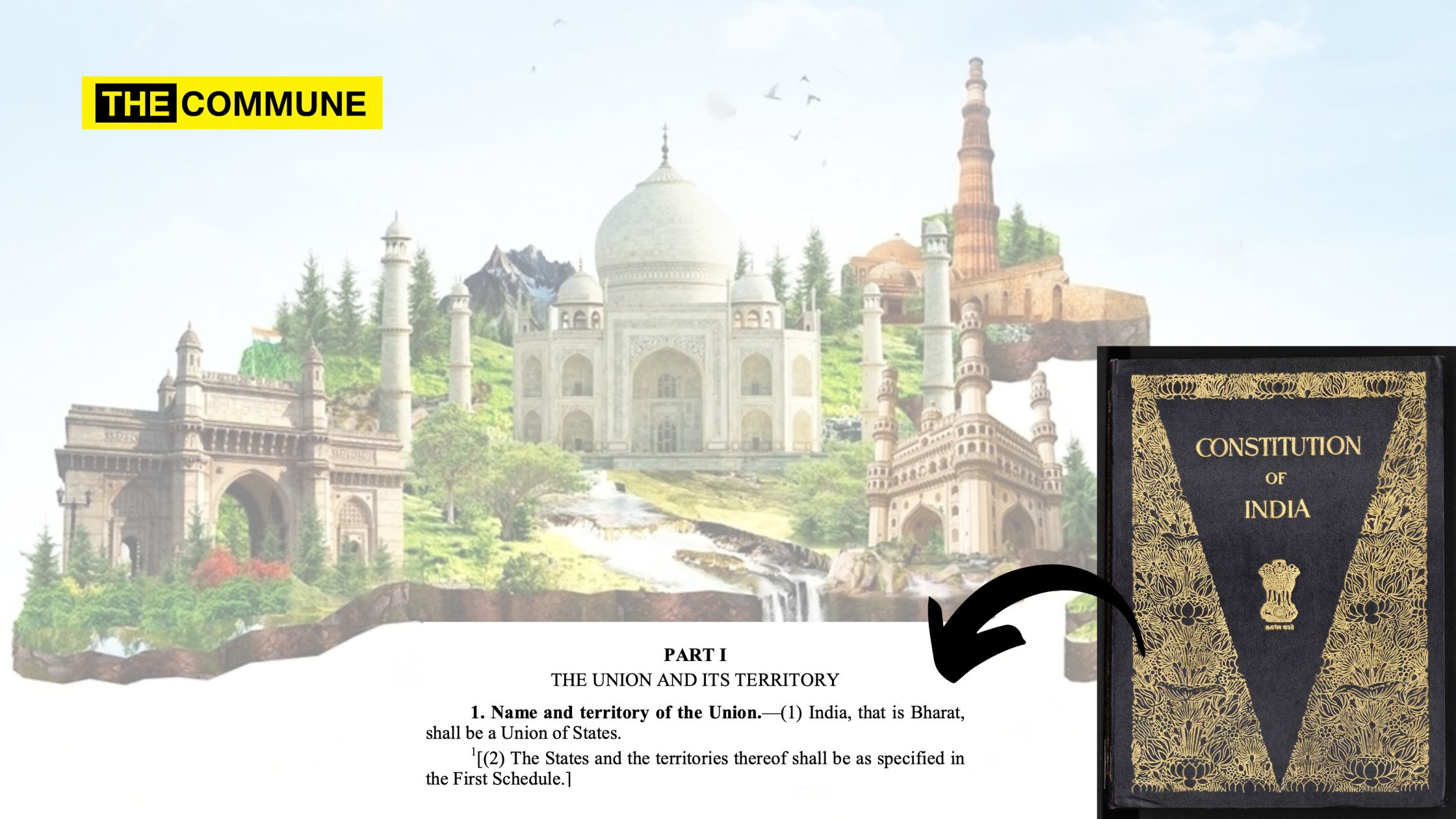
The BJP central government’s decision to interchangeably use ‘India’ and ‘Bharat’ at the recently concluded G20 summit has sparked a national conversation about the everyday use of both these names for our nation in casual discussions among its citizens and within literature across all vernacular languages. This debate is further fueled by the reference in the Constitution, which outlines “an India that is also Bharat.” A nation is only as strong as its people’s pride in its history, culture, traditions, and way of life and an honest acknowledgement of its past victories and regrettable losses and mistakes.

‘Bharat’ reflects a dignified and proud acknowledgement of a local, regional, and national ethos coming together in unity, despite the differences in geography, language, beliefs, traditions, customs, and faith. ‘Hindustan’ was a name given to the vast lands of the original Vedic ‘Bharat,’ a diverse fertile geography with a rich tapestry of rivers like the Indus with reference to the Hindu natives, mentioned by Persian and Middle Eastern historians and conquerors, predominantly of the Islamic faith. ‘India’ is a derivative of the Hindu-Sindhu-Indus naming convention used first by the Greeks and later by the other nations of the West. It is a stark reminder of the anglicised ‘Hindustan’ under exploitative Christian British rule. Which of these names reflects the long, rich, original, native history of this land’s indigenous cultural and belief systems while simultaneously infusing renewed pride in a nation that has stood its ground against numerous attempts to change its very ethos and erase its illustrious past? 

Excessive use of the name ‘India’ is arguably leading to a slow but steady erosion of the usage of the term ”Bharat’ in casual conversations among the country’s younger generations. Does this reflect our attitude towards the civilisational and cultural pride we take in our nation, our motherland? It’s a good time for a re-think on the subject. It’s a good time to collectively and consciously decide to use ‘Bharat’ and perhaps ‘Hindustan’ in both the written and spoken formats as much as we use ‘India.’

(Shivani is a freelance writer based in Vijayawada)

Subscribe to our channels on Telegram and WhatsApp and get the best stories of the day delivered to you personally.
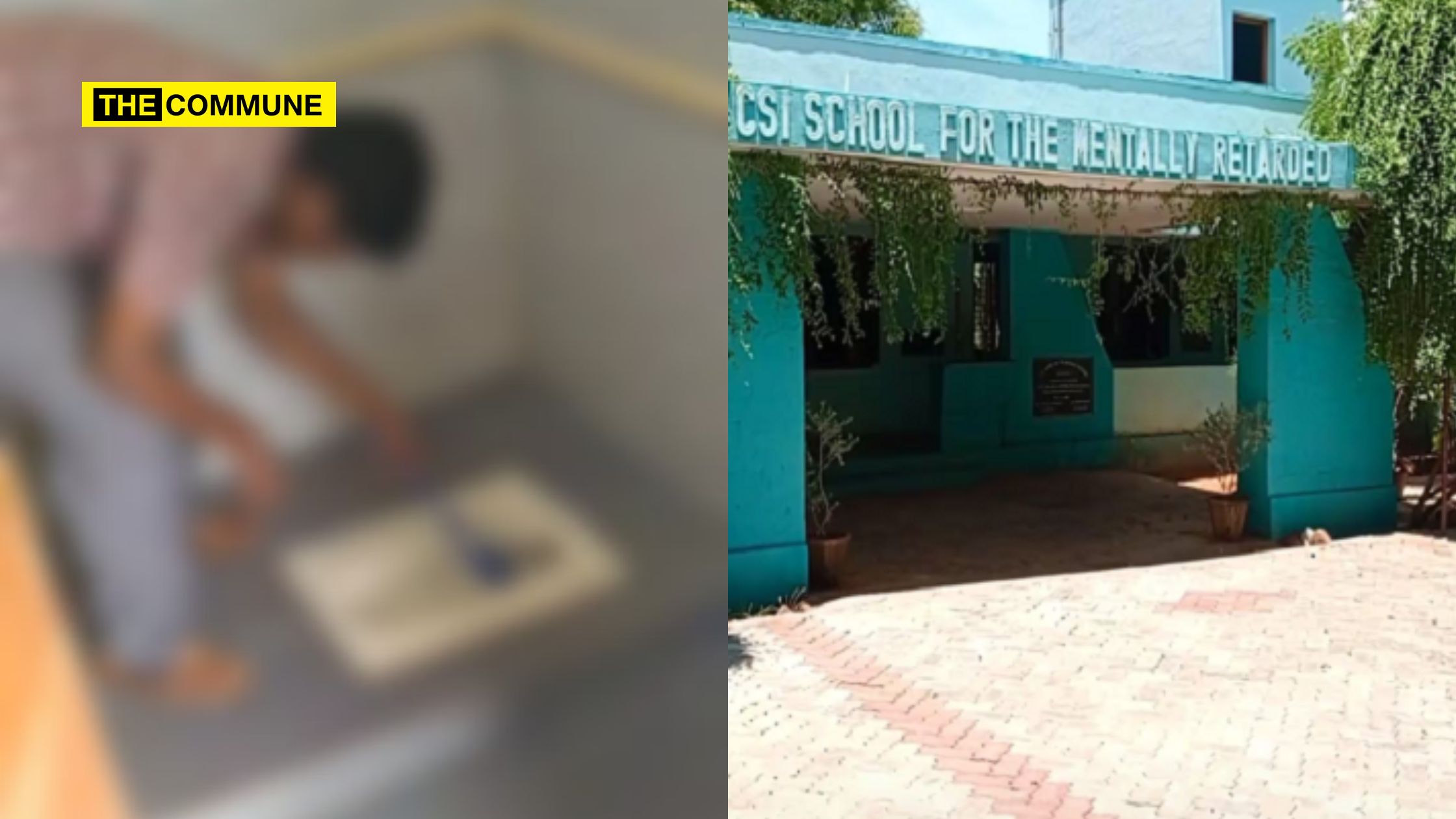
Mentally Challenged Children At TN Govt-Aided CSI School Made To Clean Toilets, Teacher Emmanuel Found Guilty

A few weeks ago, a shocking video emerged in which mentally challenged students, at a Tamil Nadu-government aided school run by Church of South India (CSI) institution, were forced to clean toilets. The video had gone viral on social media, as reported by the Hindu Post.

The students featured in the video attend the CSI School for the mentally challenged in Sivakasi, Tamil Nadu. More than 100 mentally challenged children reportedly study at this school, and some of them were made to clean the toilets.

In the video, innocent mentally challenged children can be seen cleaning toilets under the direction of a teacher from the school. The principal of the school alleges that the teacher responsible for this action forced these special needs children to clean toilets because his demand to be appointed as the school’s head master was not met.

According to Joseph Dinakaran, the Principal, the teacher named Emmanuel, who teaches the primary class, made the children clean toilets while filming the act, with the motive of tarnishing the school’s reputation, as he knew the video would likely go viral.

Officials from the Department of Social Justice, who visited the school to investigate the incident, stated, “Upon questioning teachers and students, it is evident that Immanuel instructed the students to clean toilets. He has been taken to the police station for further investigation.”

When police officials were inquired about the matter, they stated, “Shortly after the video showing students cleaning the restroom was made public, a team comprising the disabled welfare officer Brahmanayagam and law enforcement officers promptly visited the school to initiate an inquiry. Following interviews with the school’s teachers, students, and staff, it became evident that it was indeed the teacher Emmanuel who instructed the students to perform the cleaning task. This account was further validated by the students themselves. Consequently, teacher Emmanuel has been brought in for questioning at the police station, and an ongoing investigation is underway.”

Subscribe to our channels on Telegram and WhatsApp and get the best stories of the day delivered to you personally.
Kerala: Man Detained For Saying “Ganapathy Is Not A Myth” In Front Of Assembly Speaker Shamseer

In Kerala, a man was reportedly detained after he said Bhagavan Ganapathy is not a myth in front of Communist MLA and Kerala Assembly speaker AS Shamseer. 

Many have condemned this incident saying that his right to freedom of speech & expression and freedom of religion guaranteed under Article 19 and 25 of the Constitution was violated.

It all started when Kerala Assembly Speaker and member of the ruling communist party AN Shamseer was inaugurating the new office of a local Cooperative Bank in Kannur.

A member from the audience can be heard saying “Bhagwan Ganapathy is not a myth” and Shamseer can be seen giving a sly smile. 

Following the incident, the police took the young man into custody as he was protesting against Shamseer’s recent statement that insulted Bhagwan Ganesha and Sanatana Dharma.

Kerala Assembly Speaker Shamseer courted controversy recently for demeaning the Hindu God as a myth. 

Shamseer while speaking at the inauguration of the ‘Vidya Jyothi project’ in Kunnathunad constituency, Ernakulam district referred to Hindu gods like ‘Ganapati’ and the ‘Pushpaka vimana’ associated with Ravana as mythical concepts lacking scientific evidence. Shamseer also suggested that in the era of artificial intelligence, such ideas should be discarded as myths.

He said “Plastic surgery is a new invention in medical science. But what is being taught is that plastic surgery had existed in ancient times… The example was Ganapati, with a man’s body and an elephant’s face. Instead of science, such myths are being promoted”.

MV Govindan, Kerala State Secretary of the CPI (M) held a press conference on 2 August 2023 regarding the controversial statements made by Assembly Speaker AN Shamsheer

When asked if Shamseer will apologise or retract his statements, Govindan said, “Shamseer will not apologise nor will he retract/rephrase his statements because there is nothing wrong in what he said. When the country is progressing forward in this day and age, their ideologies are bringing it backward and we are against it.” 

When a reporter asked whether he thought Lord Ganapati was a myth, he replied saying, “Is ganapati science then? Let us look at myths as myths only. The formation of Kerala is also a myth, right? We are not against believers.”

When another reporter asked if Allah was a myth, he replied saying, “What I said was that all beliefs of believers are not a myth. There are plenty of myths, like I said, the formation of Kerala is also one. Believers can follow their beliefs. They could consider things divine that are presented as divine. We don’t question it. There are myths and those that are not,” he added.

Subscribe to our channels on Telegram and WhatsApp and get the best stories of the day delivered to you personally.
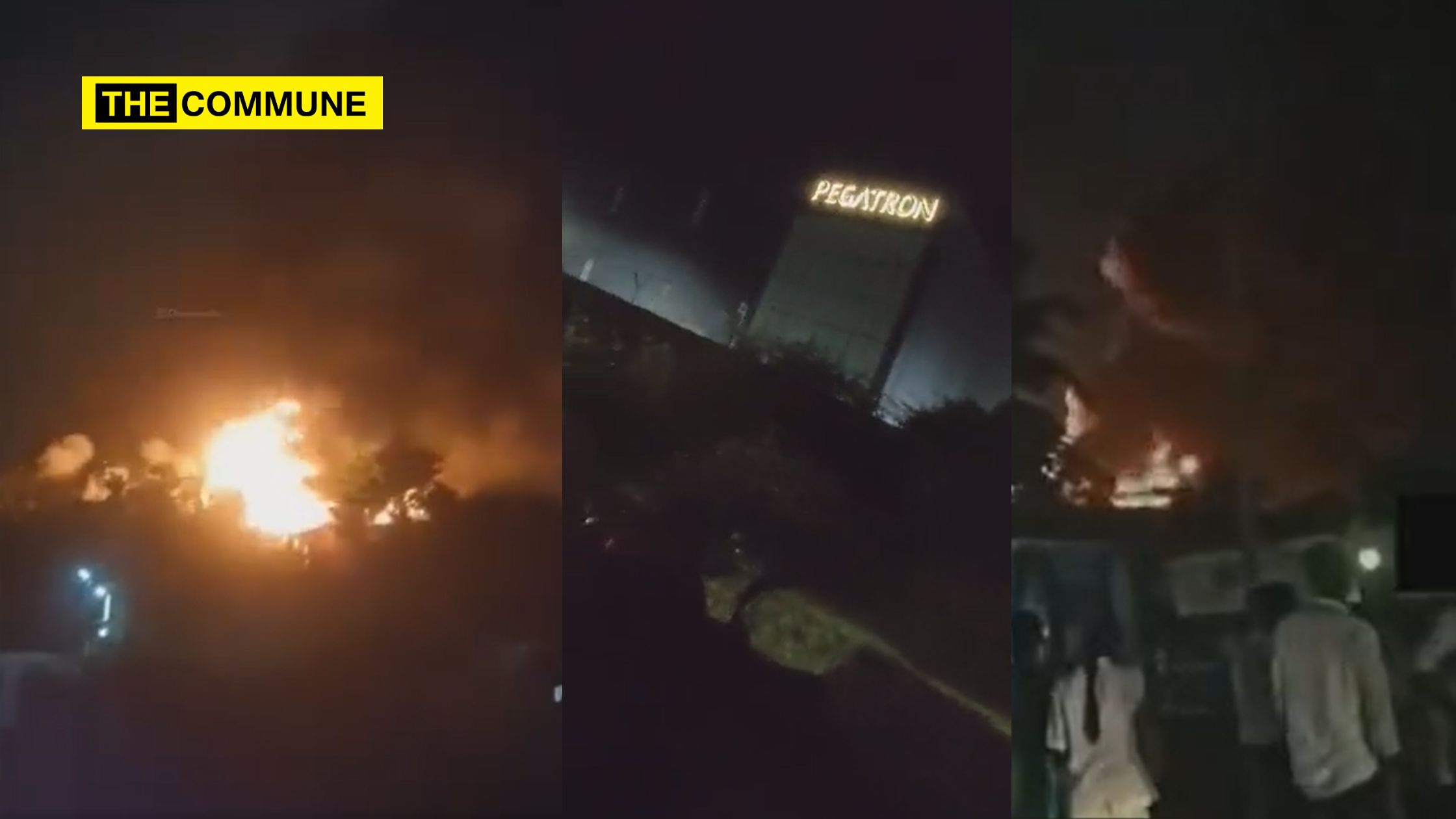
Two Big Fire Accidents At Chennai’s Major Manufacturing Units Raises Concerns About Industrial Safety, Muted Response From DMK Govt

Over the course of three days, two separate fire incidents have impacted major manufacturing facilities in the southern Indian metropolis of Chennai, causing concerns about safety and the potential implications for the region’s industrial ambitions.

The Affected Facilities

The incidents occurred at the Apple iPhone assembly unit operated by Taiwanese company Pegatron and the Japanese firm Yazaki, which specializes in automobile wirings. Both facilities are located approximately 60 kilometers from Chennai, in Tamil Nadu’s Chengalpattu district. These incidents were unrelated but shared a common cause – suspected electric short circuits.

Yazaki Fire Accident

The fire at the Yazaki factory began around 8:30 pm on a Wednesday night and raged for two hours before firefighters managed to extinguish it. The blaze was severe, as depicted in videos from the scene, but fortunately, all personnel on duty escaped unharmed. The Yazaki fire is believed to have caused more operational and financial damage.

Pegatron Incident

The Pegatron fire occurred on a Sunday night, which happened to be the factory’s weekly holiday. It was extinguished after a few hours, but the company had to temporarily halt its iPhone assembly operations until Thursday. Pegatron intends to gradually resume production on a limited scale for the iPhone 14Plus models. However, it’s uncertain when production for the latest 15Plus model will resume. While Pegatron officially downplayed the impact, some high-tech equipment in the iPhone 15Plus assembly line was reportedly damaged.

Safety Concerns

These successive accidents have raised several questions about safety standards in Tamil Nadu’s industrial sector. Questions include whether these industries are adequately prepared to handle such incidents, whether government authorities conduct thorough safety inspections, and whether the factory personnel are adequately trained to respond promptly to emergencies. There are also concerns about whether factories supplying global corporations compromise on safety while operating in India.

Government Response

Despite the seriousness of these incidents and the potential impact on the state’s economic goals, the Tamil Nadu government has not issued a public statement or reacted to the accidents. This lack of response is worrisome, considering the state’s aspirations to attract investors and achieve a $1 trillion state economy by 2030. Frequent industrial accidents could undermine these ambitions and the state’s economic potential.

In December 2021, another incident near Chennai involved over 150 workers falling ill due to food poisoning at a Foxconn facility assembling iPhones. The subsequent protests led Apple to place the factory on probation, and corrective actions were taken after government inspections, highlighting the importance of safety in the region’s industrial operations.

(With inputs from Wion News)

Subscribe to our channels on Telegram and WhatsApp and get the best stories of the day delivered to you personally.
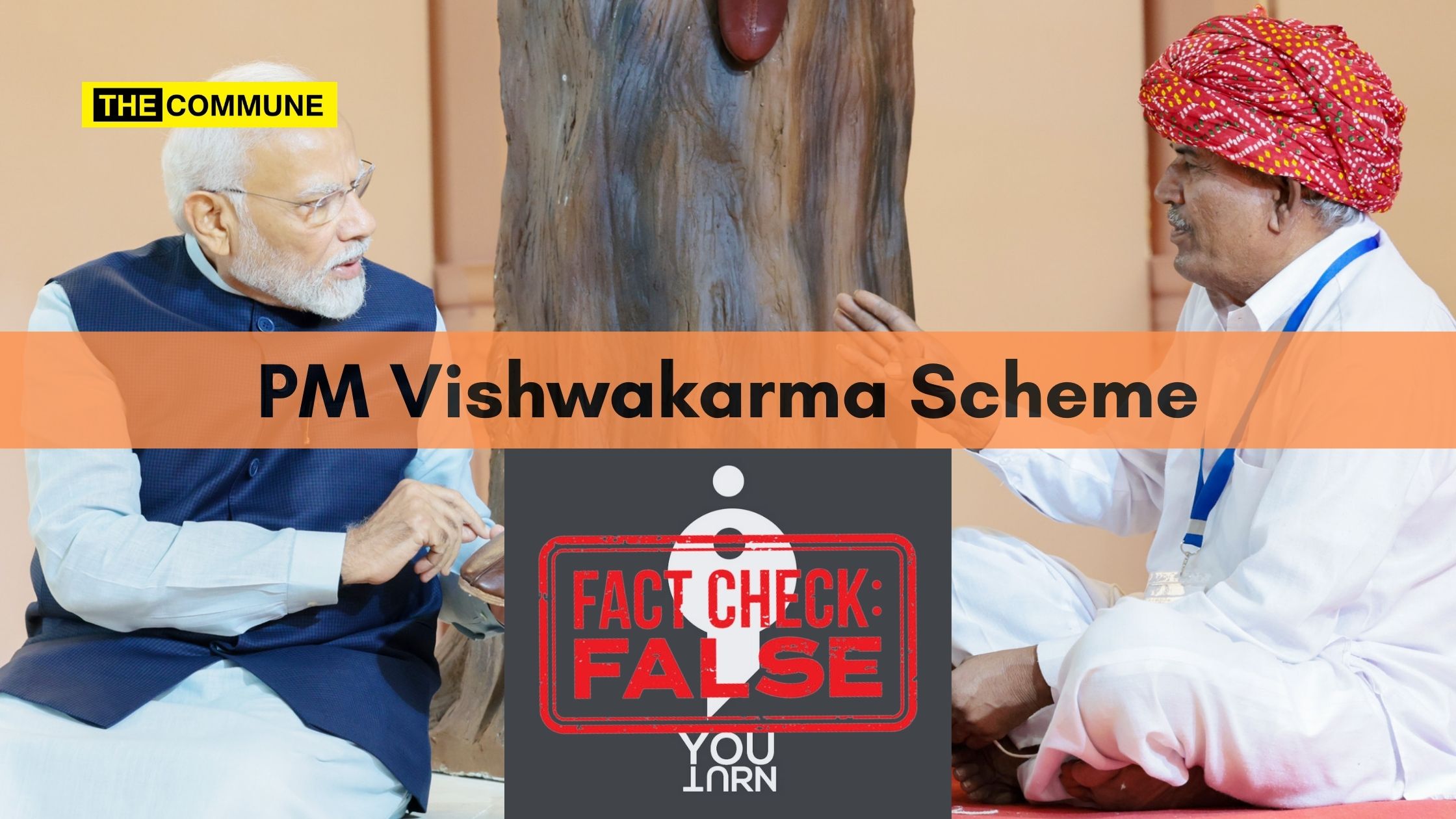
Debunking Claims Made By Alleged “Fact-Checking” Portal YouTurn On Pradhan Mantri Vishwakarma Yojana

In a video posted on Twitter/X by the alleged fact-checking portal YouTurn, claims were made regarding the Pradhan Mantri Vishwakarma Yojana, suggesting that the scheme promotes ancestral/clan-based or family occupation.

YouTurn run by one Dravidianist Iyan Karthikeyan is certified by an “international fact network” – Poynter Institute which in turn is a beneficiary of Pierre Omidyar’s Omidyar Network and Open Society Foundation run by notorious billionaire George Soros. 

The video posted by YouTurn raised several specific claims about the scheme, which we will address and debunk.

Claim 1: Those who have been following their ancestral occupation, which is allegedly based on caste, are the only eligible beneficiaries of this scheme.

Fact: There is no provision in the Pradhan Mantri Vishwakarma Yojana that selects beneficiaries based on their caste. This claim is entirely untrue. The scheme does not discriminate based on caste or require individuals to adhere to any specific caste-based occupation.

Claim 2: The occupation designated for a particular caste should be given preference under the scheme.

Fact: The scheme does not prioritize any particular occupation based on caste. It is designed to support individuals in the unorganized sector, helping them with training, incentives, loans, equipment purchases, and marketing assistance. The scheme is open to those who wish to acquire training and funding for self-employment, irrespective of their caste.

Claim 3: Families must practice the designated trade to benefit from the scheme.

Fact: It is not a requirement for parents or family members to have practiced a specific trade for an individual to benefit from the scheme. The scheme aims to assist those who want to establish or expand their own businesses in the unorganised sector.

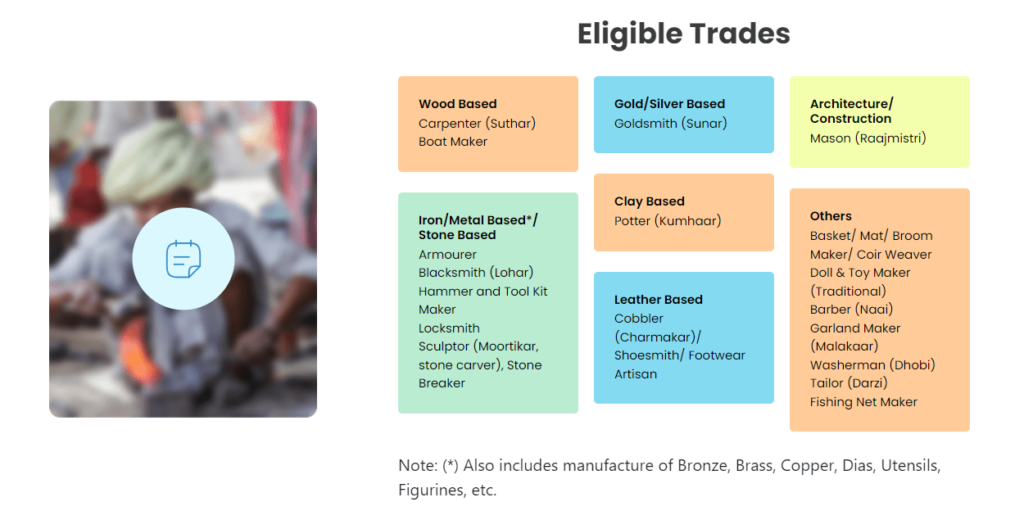
There is no mention that the person must have been practicing this trade in their family. The scheme aims to develop traditional crafts and techniques. Some of the eligible trades include:

Image Source: PM Vishwakarma website

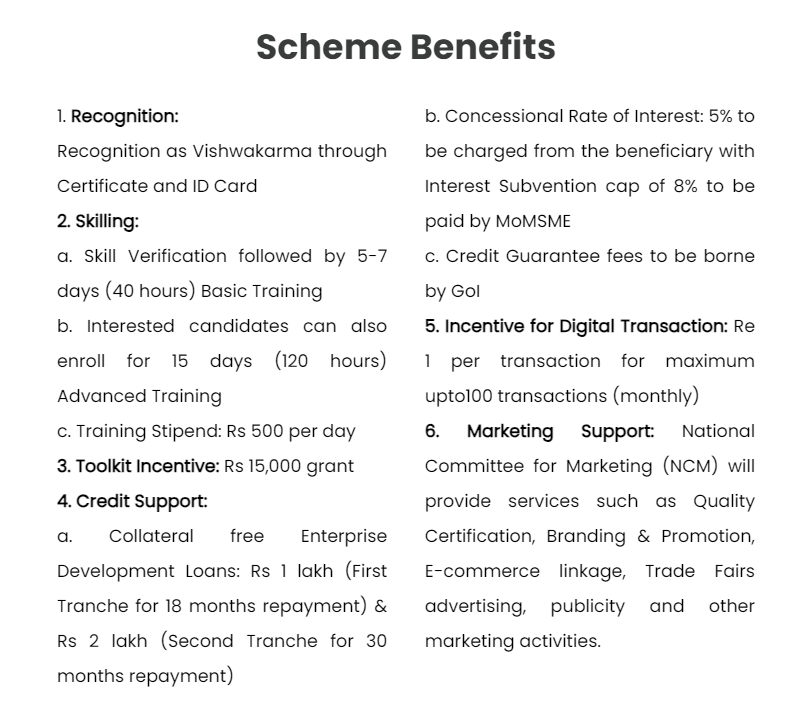
Benefits of the Pradhan Mantri Vishwakarma Yojana:

  1. Free training opportunities.
  2. Incentives during training, with a daily allowance of ₹500.
  3. Loan assistance at a 5% interest rate, initially up to ₹1 lakh and later up to ₹2 lakhs.
  4. A subsidy of ₹15,000 for the purchase of necessary equipment.
  5. Support in marketing initiatives.
  6. Incentives for conducting digital transactions.

Image Source: PM Vishwakarma website

The DMK has also introduced subsidies for farmers to acquire electric motors and extended support to auto drivers for purchasing autos. When viewed through this lens, it appears that the DMK is also encouraging self-employment initiatives, akin to the concept of promoting traditional/family businesses.


The YouTurn video criticised the scheme without providing substantial evidence to support its claims. Instead of fact-checking, the anchor in the video appeared to focus on caste-related issues for approximately 20 minutes.

The claims made in the YouTurn video regarding the Pradhan Mantri Vishwakarma Yojana promoting caste-based ancestral/clan businesses are baseless. The scheme does not discriminate based on caste and aims to support individuals in the unorganised sector who wish to establish or expand their own businesses. The video’s focus on caste-related issues lacks substantial evidence to corroborate its claims.

Subscribe to our channels on Telegram and WhatsApp and get the best stories of the day delivered to you personally.
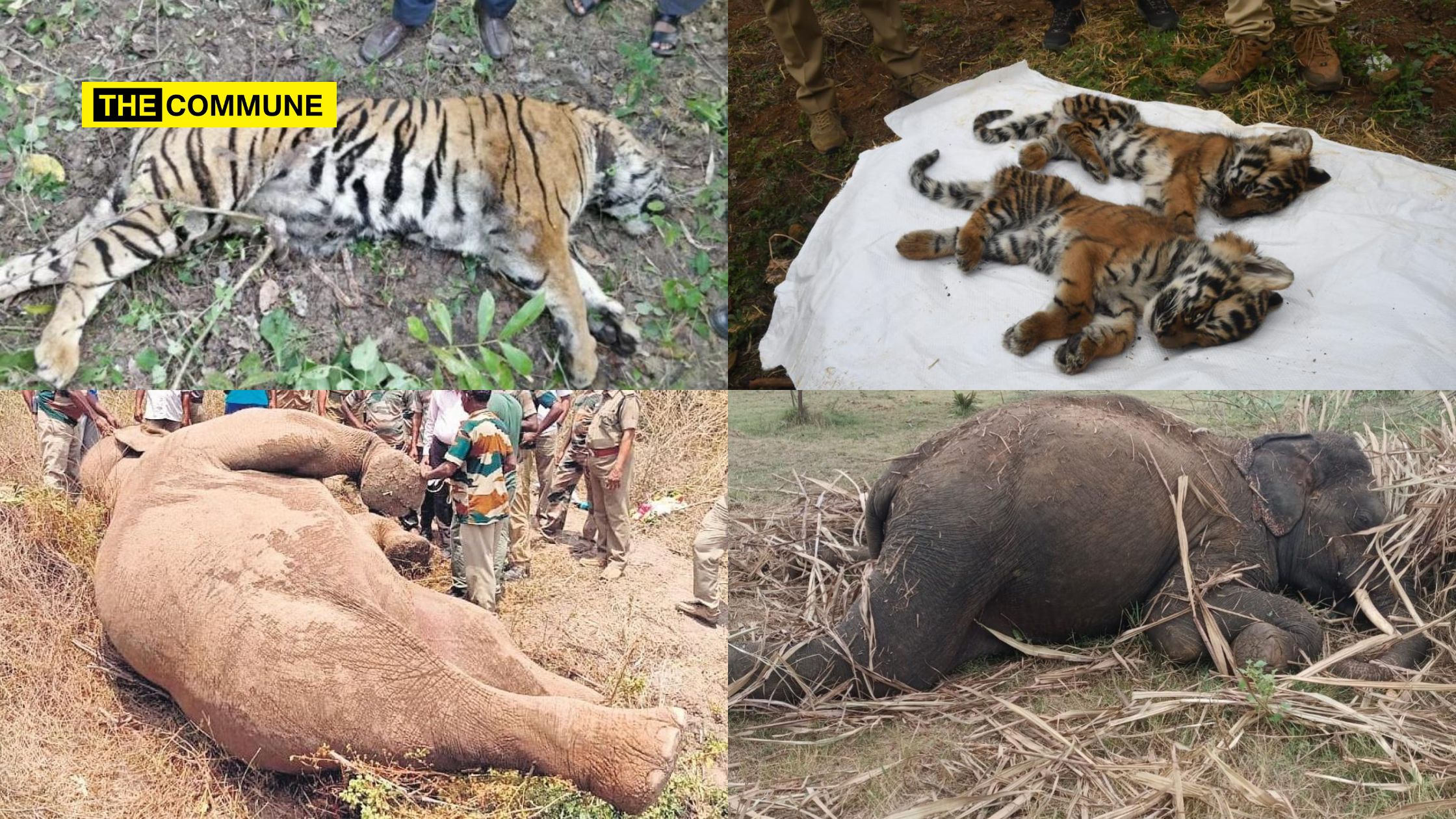
Alarming Rate Of Tiger And Elephant Deaths In Tamil Nadu That No Dravidianist Media Is Talking About

Feature Image Courtesy: The Hindu, The New Indian Express, India Times

In an alarming revelation, the Tamil Nadu Forest Department is under scrutiny following a spate of wildlife deaths, including tigers and elephants. The situation has raised concerns about the effectiveness of the department’s conservation efforts and management.
The distressing statistics tell a grim story.

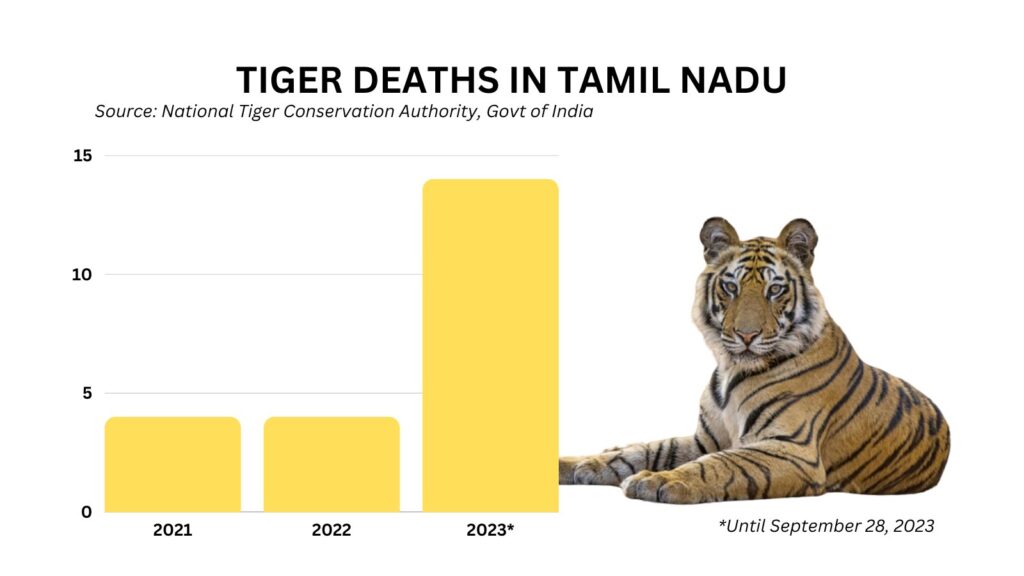
Within just over a month, ten tigers, including cubs, have lost their lives in Tamil Nadu. In September 2023, four tiger cubs in a Coimbatore reserve forest in India tragically perished due to starvation, following their mother’s abandonment. This year, Mudumalai Tiger Reserve reported 11 tiger fatalities, while Sathymangalam Tiger Reserve (STR) documented 2, and Srivilliputhur Megamalai Tiger Reserve in Tamil Nadu recorded 1.

Wildlife experts have said that there has been a surge in poaching incidents and said that experienced wildlife professionals have to be posted in vulnerable areas.

“Of late we find that newly appointed officers don’t have wildlife expertise and in the landscape. The protection of wildlife has gone down in these areas, especially in Nilgiris. We found alarming rate of poaching and poisoning in the last 3-4 months. The government has to take strict action against the errant officials and appoint new officials.”, an officer was quoted saying in a PTI report.

This alarming trend serves as a wake-up call to the state’s Chief Minister and policymakers. If the increasing instances of poaching, wildlife deaths, and electrocutions of protected animals continue unchecked, the state’s conservation strategy may suffer irreparable damage.

To put these numbers into perspective, 2023 alone has witnessed 14 recorded tiger deaths, a disturbing surge in recent times.

Image Source: Sandhya Ravishankar X (Twitter)

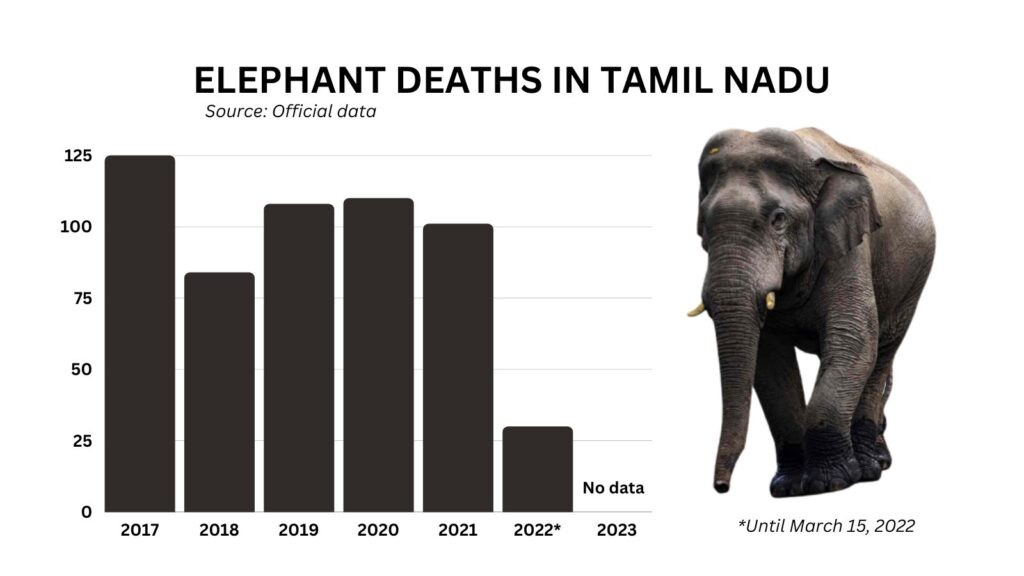
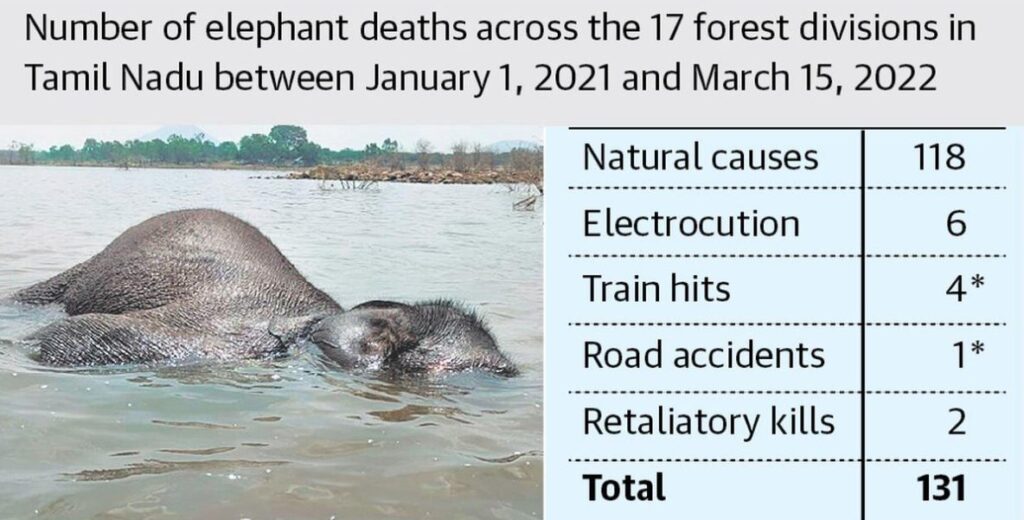
Furthermore, in the months of March and April, a staggering 13 elephants perished within a mere month, marking a new and troubling record. Many of these deaths were attributed to electrocutions.

Image Source: Sandhya Ravishankar X (Twitter)

Image Source: Sandhya Ravishankar X (Twitter)

Although data on elephant deaths is available only up to March 15, 2023, a clear pattern emerges. Over the past four years, Tamil Nadu has been witnessing an average of about 100 elephant deaths annually. The question that looms large is why this surge is happening now. While open discussions within the Tamil Nadu Forest Department on this matter are rare, it appears that a combination of hubris and inefficient management may be at the core of the problem.

The critical science of conservation seems to have taken a backseat as the department’s leadership is seemingly more focused on generating publicity material and launching propaganda campaigns. While a lack of expertise in the field can be forgiven, it is imperative that the department’s leadership actively consults with experts and implements best practices in conservation. Unfortunately, this does not appear to be the norm. Over the past three years, committees have been populated with individuals lacking domain expertise, sycophantic behavior has been encouraged, grand announcements about projects that never materialise have been made, and decision-making has become centralised, often resulting in poor choices.

One surprising achievement of the Tamil Nadu Forest Department was the tracking and apprehension of the notorious Bawariya gangs, nomadic tribes from the Madhya Pradesh-Rajasthan border, who entered Tamil Nadu’s forests for poaching wildlife in 2018. However, during the COVID-19 lockdown and the subsequent leadership change in the state, conservation activities waned, and forest officer inspections declined significantly which is said to be one of the reasons for surging poaching incidents.

The repercussions of these developments are evident in 2023, with at least one tiger and one leopard falling victim to the Bawariyas’ poaching activities. Also, elephants have been targeted by the Varusanadu tribes of Theni. Notably, the electrocution of several elephants due to overhead wires and illegal electric fences has gone largely unnoticed, often receiving quiet burials due to the influence of important voter constituencies.

It is imperative that the Chief Minister takes immediate action to address the concerning situation within the Tamil Nadu Forest Department. An independent review of the department’s apathy and policy paralysis is essential to safeguard decades of hard-fought conservation goals, which are now at risk due to the department’s apparent prioritisation of self-aggrandisement.

Disturbingly, news channels and media in the state have either covered it up or have not reported/downplayed these government shortcomings, thanks to agenda-driven reporting.

The National Tiger Conservation Authority (NTCA) officials visited Nilgiris on 25 September 2023 and conducted an investigation.

Subscribe to our channels on Telegram and WhatsApp and get the best stories of the day delivered to you personally.
Bangladesh Foreign Minister Tells Canada To Stop Sheltering Murderers

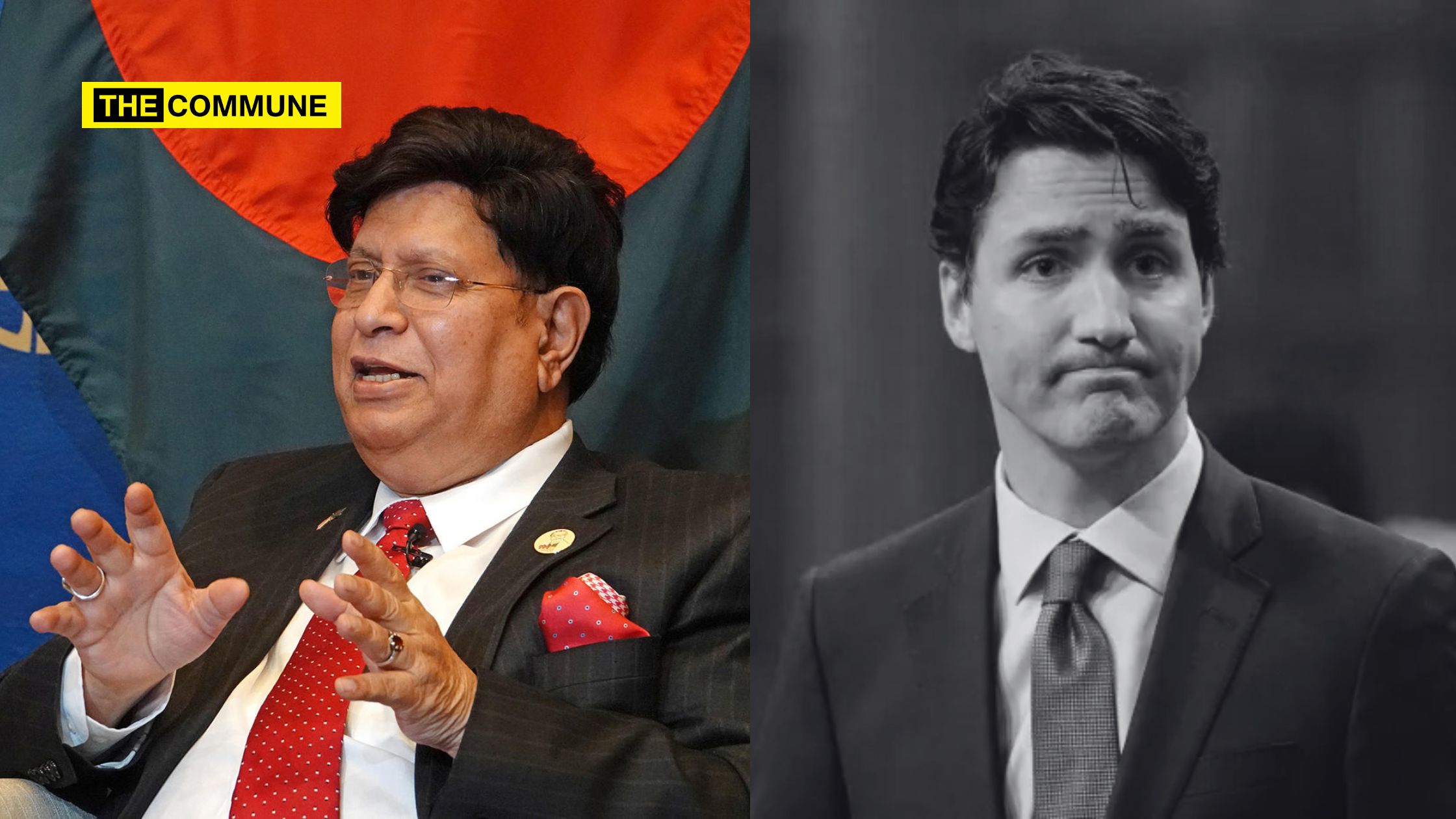
In another setback for Canadian Prime Minister Justin Trudeau, Bangladesh’s Foreign Minister, AK Abdul Momen, stated in an exclusive interview with India Today that Canada should cease sheltering murderers. Just a few days ago, Sri Lanka extended its support to India in light of the ongoing tensions between India and Canada, following Trudeau’s unsubstantiated allegations concerning the killing of Khalistani narco-terrorist Hardeep Singh Nijjar.

AK Abdul Momen was quoted as saying, “Canada must not become a haven for murderers. Murderers can find refuge in Canada, leading comfortable lives while the families of their victims suffer. We share positive relationships with both India and Canada. Although I am not privy to the details of the India-Canada issue, I am aware of the concerns we have with Canada.”

For Bangladesh, Canada’s refusal to extradite Noor Chowdhury, who openly admitted to killing Sheikh Mujibur Rahman, the founding father of Bangladesh, is a non-negotiable matter. Previously, Sri Lanka accused Canada of shielding members of the LTTE, which is involved in fundraising activities.

However, Canada has consistently defended its refusal to extradite war criminals, terrorists, and murderers, citing its commitment to opposing capital punishment. On the subject of capital punishment, Momen stated, “Our judiciary is entirely independent, and the government cannot interfere in judicial matters. However, [Noor Chowdhury] has the opportunity to receive a life sentence. If he returns to Bangladesh, both Noor Chowdhury and Rashid Chowdhury can appeal for clemency from the country’s president. The President may grant their appeal, changing their sentence from execution to life imprisonment.”

On September 26, Sri Lanka also expressed support for India, with Sri Lankan Foreign Minister Ali Sabry stating that terrorists have found a safe haven in North America. He said, “Some terrorists have found refuge in Canada. The Canadian PM has a tendency to make outrageous allegations without providing supporting evidence. They did the same regarding Sri Lanka, falsely claiming there was a genocide. It is widely known that there was no genocide in our country.”

“The Ministry of Global Affairs has unequivocally stated that Sri Lanka did not experience genocide, whereas PM Trudeau, as a politician, asserts that genocide did occur. This contradiction does not help,” added the Sri Lankan minister.

Subscribe to our channels on Telegram and WhatsApp and get the best stories of the day delivered to you personally.
Is This The Dravidian Model Of Healthcare? Spike In Medical Negligence Cases Exposes Sorry State Of Tamil Nadu Govt Healthcare System

Ma Subramanian, the Health Minister of the DMK government in Tamil Nadu expressed that the growing number of outpatients and inpatients in state-run medical colleges reflects the public’s confidence in government healthcare institutions.

This statement from the DMK Minister comes against the backdrop of a shocking incident where a woman who went to the Rajiv Gandhi Government Hospital for an angio treatment had to get her arm amputated allegedly due to medical negligence of the doctors.

Jyoti, a 32-year-old woman from Chennai, underwent angio treatment at Rajiv Gandhi Hospital, was initially in good health. Following the procedure, her treated arm became swollen, and blood clots developed. Allegations of negligent treatment surfaced, with her husband, Zeenath, a physically challenged person, claiming the doctors provided no explanation and removed flesh from her limbs.

Doctors initially cited a blood clot as the issue but later indicated the need for amputations. Zeenath expressed distress over the situation, stating that the hospital’s carelessness had jeopardized Jyoti’s life, with talks of amputating both her arms and legs.

But this is not the only incident of medical negligence that made it to the news.

Here are few other instances of alleged medical negligence that have been recurrent in Tamil Nadu in the past eight months, some involving women and children. 

Policeman’s Daughter’s Leg Amputated 

Head Constable Kothandapani’s daughter had fallen into a coma due to alleged medical negligence while being treated at Egmore Children’s Hospital. The daughter, aged 10, had received government-prescribed medications since she was three, and Kothandapani claimed that incorrect diagnosis and treatment led to severe complications. He demanded action against responsible doctors and questioned the hospital’s lack of explanation. Instead of a response, the child was given a disability certificate from the National Children’s Commission.

Woman Dies After Caesarean Operation

In August 2023, at the Virudhachalam government hospital in Tamil Nadu, Kalpana, a pregnant woman, underwent a caesarean operation but tragically passed away. Her family was denied access to her initially, and when they finally saw her, she was unresponsive. Despite their efforts, Kalpana could not be revived, and the family accused the medical staff of negligence. 

Football Player Dies After Botched Surgery 

In November 2022, a tragic incident occurred involving Priya R, a 17-year-old football player who underwent knee surgery to address a ligament tear. Unfortunately, on the morning of November 15, 2022, she lost her life due to medical negligence, resulting in multiple organ failures. The negligence involved the use of a tightly bound band on her right leg following the surgery, which obstructed blood flow. Subsequently, doctors at Rajiv Gandhi Hospital recommended amputation of the leg due to severe muscle rot. Tragically, Priya succumbed to her deteriorating health, passing away at Rajiv Gandhi Government Hospital in Chennai.

Toddler Dies After Amputation

In July 2023, a one-and-a-half-year-old toddler, whose right hand was amputated following a medical procedure, tragically passed away at the Government Institute of Child Health in Egmore. The child had been battling for life in the ICU and succumbed to his condition at around 5.40 a.m. The amputation had sparked allegations of medical negligence by the parents against doctors and nurses at the Rajiv Gandhi Government General Hospital. However, an internal committee formed by the Health Department cleared the hospital staff, suggesting that a bacterial infection called Pseudomonas might have caused Ischaemia leading to limb amputation. The parents were dissatisfied with this explanation, as they claimed that the improper insertion of an IV cannula had caused gangrene.

Infant Dies After Vaccination

In July 2023, a 10-month-old girl tragically died after receiving a vaccination at an Anganwadi centre in Tanjore, Tamil Nadu. The parents, Geetha and Satish Kumar were called to the centre for their daughter Taranika’s vaccination. Shortly after receiving the vaccine, the child suffered an allergic reaction and lost consciousness. They rushed her to a local primary health centre where she received four more injections, which worsened her condition. Subsequently, they were transferred to Thanjavur Government Rasamirasudhar Hospital, where doctors declared the child dead. The parents suspected the vaccination was the cause of death and demanded a thorough investigation and appropriate action against those responsible. 

These are just a few instances that has managed to make it to the news. It is possible that many more such cases either go unreported or gets deliberately buried.

Earlier in 2022, there were reports of medicine shortage in Tamil Nadu government hospitals across the state. These claims of medicine shortages were made by the doctors themselves. According to doctors, the drugs experiencing significant shortages include Ciprofloxacin, Furosemide, Omeprazole, Clopidogrel, and Cefotaxime. Primary Health Centres had a shortage of medicines for snake bite. In addition to these medications, hospitals in Tamil Nadu were grappling with a scarcity of antibiotics and intravenous fluids, which had severely hampered the operations of medical institutions, including medical college hospitals. Injections including Paracetamol, Diclofenac, Cefotaxime, Ceftriaxone and IV Infusion fluids were in acute shortage in the state. But, the DMK Health Minister Ma Subramanian rubbished the reports saying that there was no shortage of medicines and instead asked people to register a complaint with the helpline number 104 in case there was shortage.

The healthcare system in Tamil Nadu is grappling with serious problems with the poor becoming victims. It is high time the DMK government which thumps its chest about the “Dravidian Model” and Tamil Nadu being a forerunner in healthcare gets its act together.

Subscribe to our channels on Telegram and WhatsApp and get the best stories of the day delivered to you personally.