Home Blog Page 848

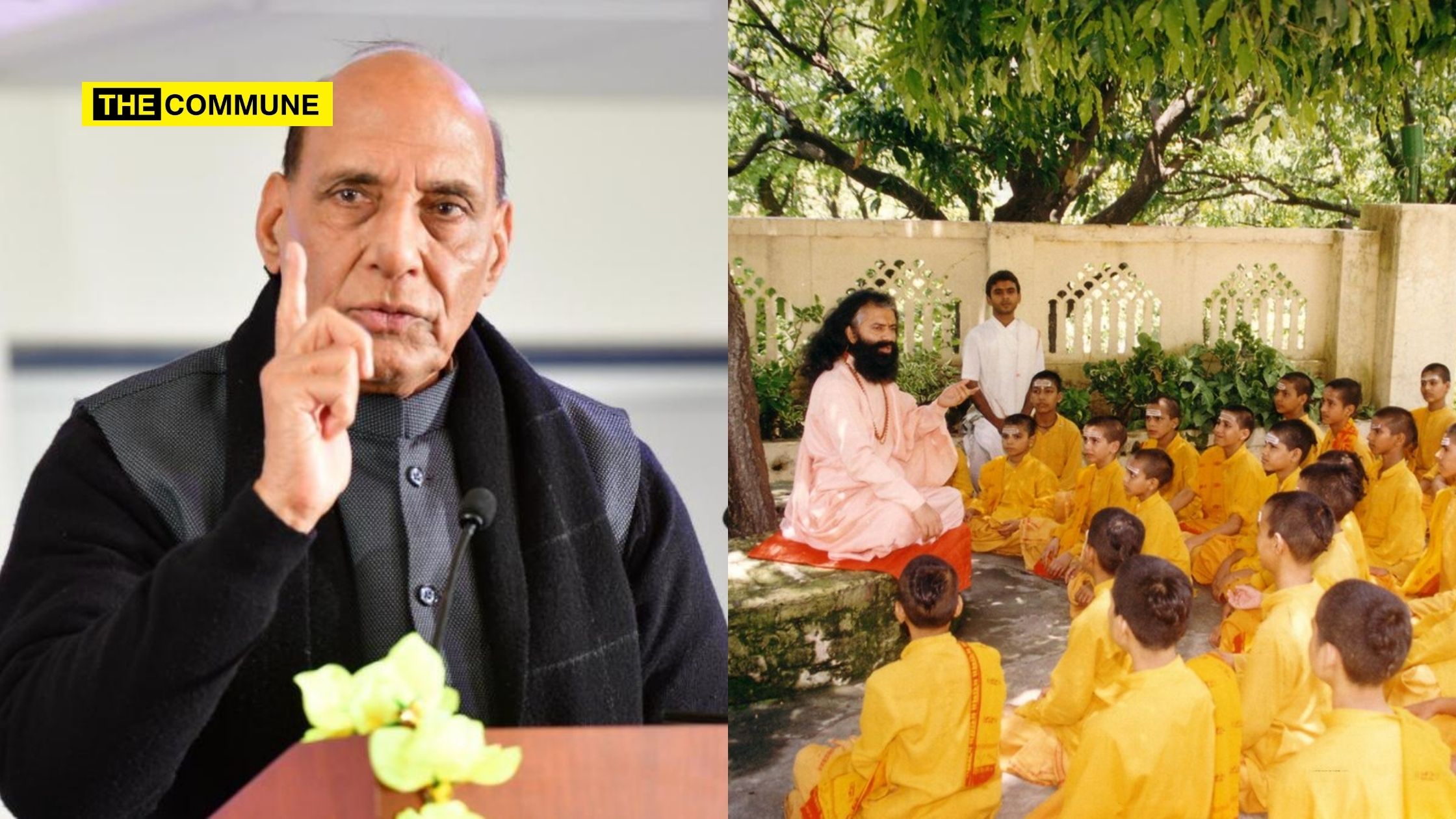
Defence Minister Rajnath Singh Calls For More Gurukuls To Be Established In The Country To Preserve Moral And Cultural Heritage

Defence Minister Rajnath Singh emphasized the establishment of more Gurukuls in India to provide modern education while safeguarding the country’s moral and cultural heritage. During the inauguration of ‘Gurukulam Evam Acharyakulam’ at Swami Darshanand Gurukul Mahavidyalay in Haridwar, Uttarakhand, on Raksha Mantri Shri Rajnath Singh emphasized the establishment of more Gurukuls in India. He emphasized the importance of providing modern education while safeguarding the country’s moral and cultural heritage. During the inauguration of ‘Gurukulam Evam Acharyakulam’ at Swami Darshanand Gurukul Mahavidyalay in Haridwar, Uttarakhand, on 06 January 2024, Defence Minister Rajnath Singh expressed concern about the decline in moral values due to the influence of foreign culture. He acknowledged the historical significance of Gurukuls and their role in preserving Indian culture, dating back to the time when foreign invaders disrupted the traditional educational system.

Defence Minister Rajnath Singh linked his call for more Gurukuls to the National Education Policy 2020, highlighting the government’s commitment to instil moral values from primary education onward. He acknowledged the ongoing implementation of the policy across various educational institutions in the country, emphasizing Gurukuls’ potential to contribute significantly to this educational transformation. Contrary to the perception that Gurukuls solely adhere to ancient teaching methods, Singh urged them to embrace modern advancements, including Artificial Intelligence and quantum technology, while continuing to provide traditional education.

The Defence Minister’s speech reflected India’s commitment to cultural preservation, with Gurukuls envisioned as key contributors to this endeavour. He emphasized the broader goal of cultural upliftment beyond mere preservation, aiming for future generations to take pride in the rich cultural heritage of the nation. He concluded by recognizing the global impact of Yoga, citing its celebration as the International Day of Yoga by the United Nations. Furthermore, he urged a similar promotion of Sanskrit to ensure its accessibility and relevance on a global scale.

(With inputs from PIB)

Subscribe to our channels on TelegramWhatsApp, and Instagram and get the best stories of the day delivered to you personally.

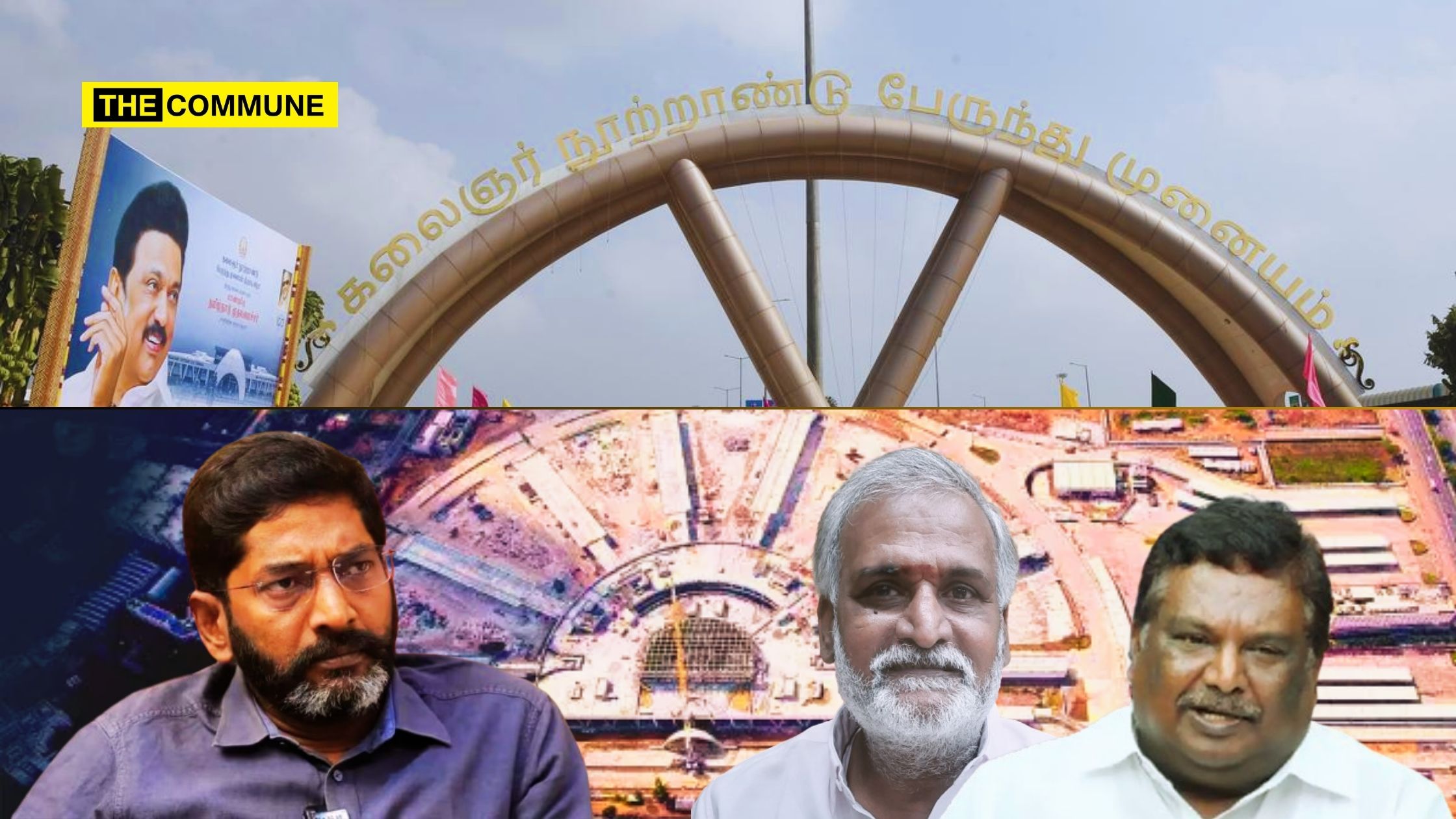
Political Commentator ‘Savukku’ Shankar Files Complaint With DVAC Against DMK Ministers And Officials Alleging Corruption In Kilambakkam Bus Terminus Tender Process

Political commentator A. Shankar, also known as ‘Savukku’ Shankar, recently lodged a formal complaint with the Directorate of Vigilance and Anti-Corruption (DVAC) levelling substantial corruption allegations implicating the DMK government and BVG Limited, the recipient of the tender for the operation and maintenance of the Kilambakkam Bus Terminus.

The Chennai Metropolitan Development Authority (CMDA) has entrusted the maintenance and operation of the Kilambakam Bus Stand to BVG India Limited, a private company hailing from Maharashtra. The new bus terminus was constructed by CMDA in Kilambakkam, around 35 kms away from the Chennai city with a total cost of around ₹400 crores.

The complaint alleges a mega scam involving corruption and illegal accumulation of public funds by DMK Ministers in the award of the tender for the Operation and Maintenance of Kilambakkam Bus Terminus. 

The complaint delves into highlighting various irregularities, emphasizing that BVG India Limited, based in Pune, Maharashtra, emerged as the sole participant in the tender process conducted by the Chennai Metropolitan Development Authority (CMDA).

He states “A tender was floated by the CMDA authorities to Operate & Maintain the New Bus Terminus vide tender notice in No.12/23-24 dated 14.08.2023. A company by name and style M/s. BVG India Limited, Pune, Maharashtra submitted bids vide No.865765 dated 19.10.2023 and finance rebids dated 09.11.2023. For whatever reasons, BVG India emerged as the sole participant in the above tender

Despite the absence of other bidders, CMDA allegedly proceeded to award BVG the contract for a 15-year term. He questioned “As there were no bidders apart from BVG India, the CMDA ought to have canceled the tender and called for fresh bids. Surprisingly, the operation and maintenance contract has been given to BVG group for a period of 15 years! Instead of cancelling the tender and calling for a fresh tender, the CMDA on its part chose to award the contract to M/s BVG India Limited, Pune.”

The complaint further notes that there was confusion regarding the formation of a Tender Scrutiny Committee and the legitimacy of negotiations with BVG, especially considering that the committee was not established until later stages. The complaint underscores potential violations of Tamil Nadu Tender Transparency Rules, 2000, and expresses concerns about the rushed inauguration of the bus terminal before completing the necessary formalities.

On 19.12.2023, TN Finance Department, addressed a letter to the CMDA through which CMDA nominated one Thiru. Saravanan, Joint Secretary, Finance as “Member of the External Committee” for evaluation of the tender for operation and maintenance of Kilambakkam Bus Terminal. A question that begs answer is, under what grounds CMDA chose to award the tender to BVG on 23.11.2023 when a tender committee in this regard was not even formed till 19.12.2023. Further, when a Tender Committee was not even formed why was the CMDA conducting negotiations with BVG?” He added.

The delay in registering the Special Purpose Vehicle (SPV) and the Bank Guarantee is highlighted, with CMDA permitting BVG to furnish the Bank Guarantee in its name instead of the SPV’s. Financial aspects are scrutinized, revealing a significant imbalance where BVG stands to earn substantially more than CMDA, leading to a substantial loss for the Government of Tamil Nadu over the next fifteen years.

The entry fee, as fixed by CMDA for private and government buses is as follows :

Omni bus – per bus per day — Rs.150/-

Govt buses – Rs. 25/-

It is mandatory that, a minimum of 1100 buses should enter Kilambakkam terminus. 400 Omni buses are estimated to use Kilambakkam per day. On a rough estimate, entry fee from government and private buses alone comes to 3.20 crores. Further, BVG can rent out the shops in the terminus. A total of 105 shops at an extent of 45,790 sq. Ft is available for BVG to rent out. As per our enquiries, the rate the shops are let out is Rs.500/- per square feet. This works out to 27.47 crores per year. The income from dormitories which is constructed in 21,190 square feet is expected to fetch 2 crores per year. 1,67,680 square feet is allotted for two and four wheeler parking. This is likely to fetch 6 crores per year. Advertisements will fetch 10 crore a year. To sum up, BVG is likely to earn, 48.60 crores per year. In lieu of this, CMDA will get just 2.40 crores. The loss suffered by the government of Tamil Nadu for the next fifteen years runs into hundreds of crores”.

The complaint further details financial estimations, including entry fees, shop rentals, dormitory income, and revenue from parking and advertisements, emphasizing the considerable earnings anticipated by BVG compared to CMDA’s meager share. The complaint accuses specific individuals, including PK Sekar Babu (Minister for HR&CE and CMDA), SS Sivasankar (Minister for Transport Departmen), Anshul Mishra (IAS, Member Secretary of CMDA), Prashant M Wadnere (IAS, Additional Secretary of Finance Ministry), and BVG India, of engaging in a conspiracy to benefit BVG financially at the state exchequer’s expense. The complainant urges the registration of a case under relevant sections of the Prevention of Corruption Act and the Indian Penal Code against the mentioned individuals and the company.

Subscribe to our channels on TelegramWhatsApp, and Instagram and get the best stories of the day delivered to you personally.
Dravidian Stock Govt Doctor Laments About Salary Non-Payment Due To Bureaucratic Delays In Getting Last Pay Certificate

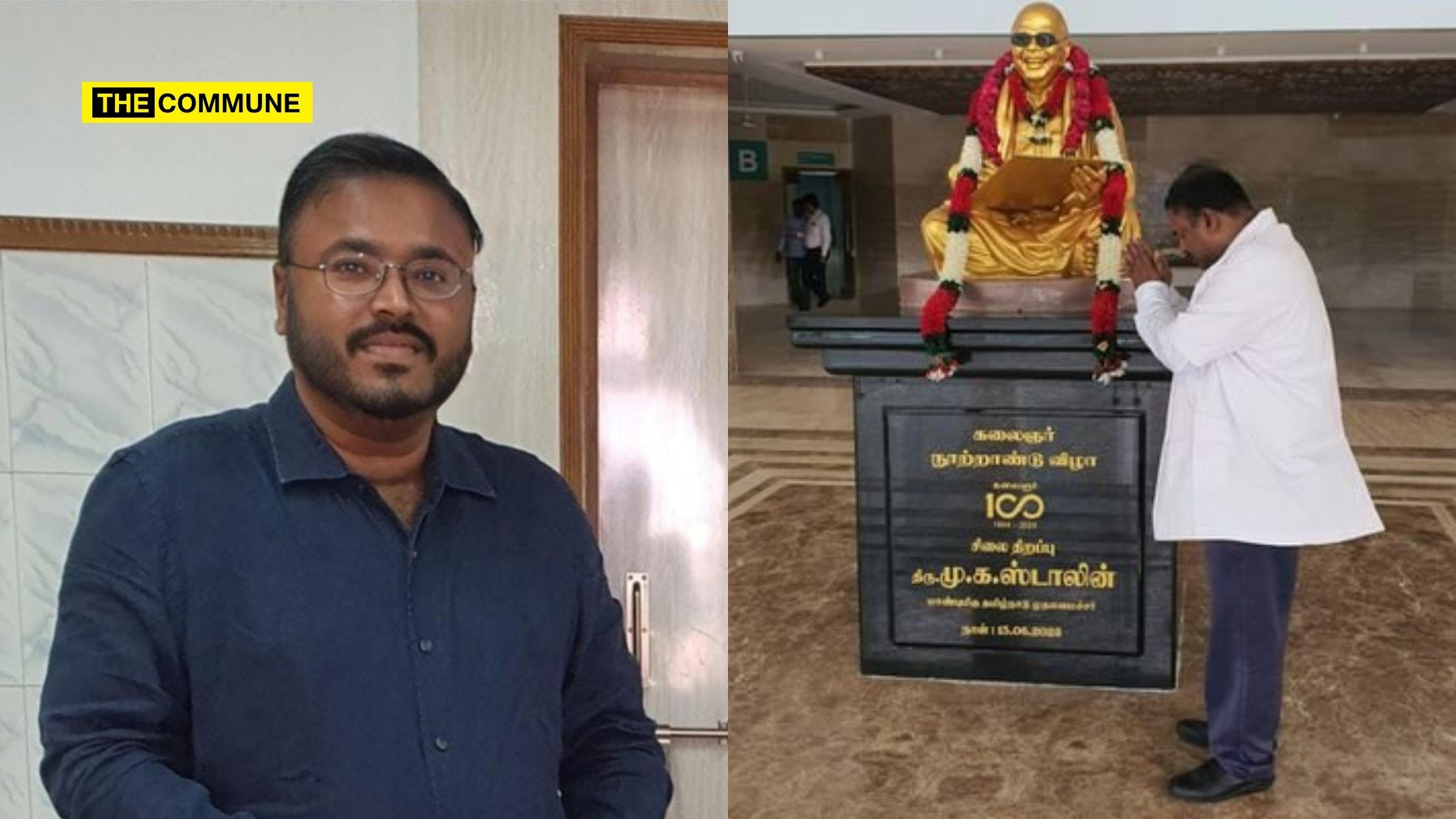
In a revealing account of bureaucratic inefficiencies, a DMK-supporting Dravidian Stock medical professional has expressed significant distress over the administrative hurdles faced by him in getting his salary after being relieved from the post as Urologist at the Government Kalaignar Centenary Superspecialty Hospital in Guindy, Chennai on December 6, 2023.

Despite taking up immediate duties at the new station in Chennai the following day, the doctor has been left without income for a month due to the non-issuance of their Last Pay Certificate (LPC). The LPC, a critical document for government servants during job transitions, is mandated to be sent on the same day as the relieving order. This delay has resulted in the urologist not receiving the salary for December 2023 with grim prospects for January 2024.

A Last Pay Certificate ( LPC), as per govt rules shd be sent on the SAME day, that the relieving order is sent(6.12.23), so that the govt servant is not deprived of his source of income. Yet, even after a month of relief, the clerks who prepare/send the LPC hv still not sent it to my current station inside Chennai.“, the Dravidian Stock doctor wrote on his social media page.

He further added “Without an LPC, I can’t be issued a salary at my new station. I have not received any pay for December, and I am certain I will not receive my January salary either, since it is too late (LPC not arrived). As a govt doctor, if I delay a life saving surgery by even one hour, hell will be (correctly) let loose on me. What is the punishment for dereliction of duty by the clerk at Kalaignar Hospital?

Recalling a past incident at Government Medical College, Salem, the doctor narrated how a refusal to succumb to a bribe led to the LPC being destroyed right before his eyes, with no subsequent action taken against the clerk in question despite a formal complaint.

“When I once joined Govt Salem Medical College as a urologist, the 25 yr old clerk (I was around 40) demanded a bribe of Rs 3000, to issue my first salary. Since I refused to pay a bribe, he simply tore up my LPC in my presence,& calmly said “Do what u can do.” I gave a complaint to the then Dean, but nothing happened since it seems this alcoholic clerk was the chief bribe-collector for that Dean.”, he said.

With no private practice due to health issues, the doctor apparently relies solely on the government salary, emphasizing the gravity of the situation where delayed justice feels like denied justice.

Because of health issues, I don’t hv a private practice . So, don’t have any other income from a medical source. Isn’t delayed justice -buried justice? I have done my doctor’s duty. Has the clerk done his? Kalaignar Hospital is very well staffed by clerks. So they can’t claim shortage of hands, for dereliction of duty. Will govt clerks start working properly atleast after my death (I am certain it will not happen in my lifetime), so that atleast the next gen of doctors, will not suffer?“, he said.

The doctor further observed that the hospital’s clerical staff are heavily unionized, a factor that seems to instill a degree of apprehension in the authorities when it comes to initiating disciplinary action against them.

Even IAS officers can be sacked, but in reality, govt clerks are never dismissed/suspended. Such is the power of their unionised strength.“, he said.

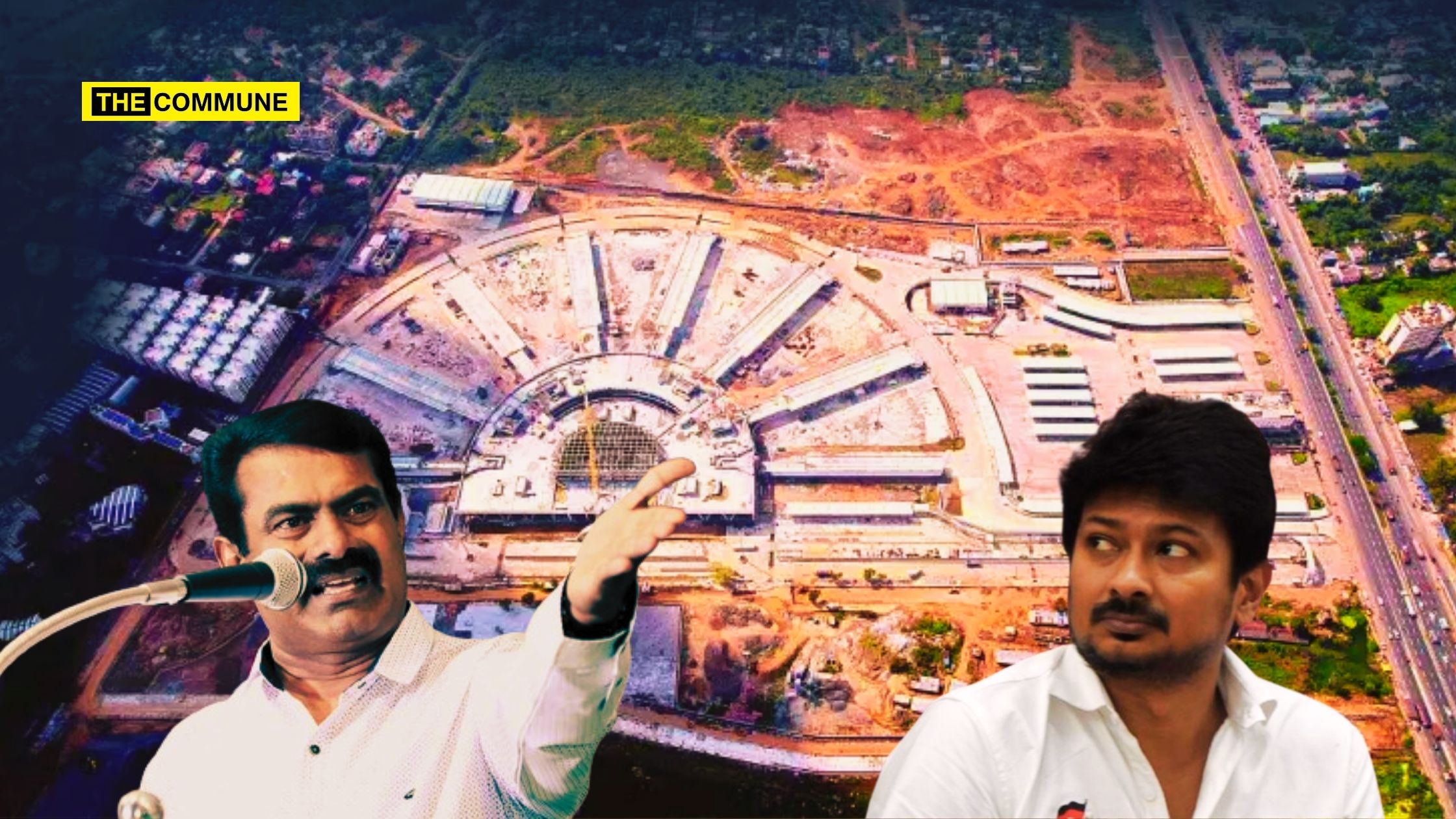
“Is It Your Dad’s Money?” NTK Head Seeman Slams Udhayanidhi Stalin On Kilambakkam Bus Terminus Fiasco And DMK Symbol-Shaped Construction

In a recent press conference, Naam Tamilar Katchi party chief Seeman expressed his dismay over the newly constructed bus stand in Kilambakkam.

Highlighting the distance of Kilambakkam from Chennai which is approximately 40 kilometres, Seeman questioned the rationale behind not having a bus stand in the city itself. He voiced concerns about the inconvenience faced by commuters who would need to travel additional 40 kilometers after disembarking at Kilambakkam to enter the city.

Drawing attention to the proximity of schools to the bus stand, Seeman expressed worry about the safety of students crossing the busy roads amidst the traffic generated by buses. He challenged the DMK government’s long-term vision, accusing them of haphazard planning and sudden decisions such as the proposed demolition of a wall.

Seeman also criticised the DMK for imprinting the party’s symbol. He said, “Who asked for this bus station? ADMK completed 70% of the construction work. You spent 18 or 20 crores and why are you using the “Udayasuriyan” (rising sun) symbol for that? Udhayanidhi is asking, is it your father’s money? I am asking Udhayanidhi, is this your father’s money? Or your grandfather’s money? Why did you name it after your grandfather? Are there no leaders in the country apart from Karunanidhi? Is there no one? If something was written, it was him and for that you want to erect a pen (statue).”

Seeman’s “Ngoppan ootu kaasa?” (Is it your dad’s money?) comes in light of Udhayanidhi Stalin’s disrespectful comments on Union Finance Minister Nirmala Sitharaman when he said “Are we asking for her dad’s money?” when asking for Centre to give relief.

Expressing his discontent, Seeman questioned the DMK’s choice of naming public properties after Karunanidhi. He said, “Coming to hospitals, why are you not considering naming a hospital after Dr. Muthulakshmi Reddy, who was the first to study medicine? Similarly, if a library is being constructed, why not honour Pandithurai Devar, who played a significant role in the growth of the Tamil language during the 4th Tamil Sangam? Did I ask a gallery for Jallikattu? We will build an arena, allow the bulls to run and watch it and dismantle it. Why spend so many crores for that and will you keep your father’s name for that? Why did you name it Tamil Nadu, let it be Karunanidhi Nadu.”

When a reporter asked about the money that was spent for the construction, Seeman said, “400 crores is what they spent. Why are you demolishing the wall now? You completed it so you placed the DMK symbol (rising sun). If ADMK had completed the project, will they keep the twin leaves symbol? Is that your money, your party’s money? It is my money, people’s money. How can you keep the party symbol there? Why is the bus station 40 kilometres outside the city? If I have to come to Chennai, I have to travel 40 kilometres, and if I have to go there, another 40 kilometres, how is this possible? If they had some vision, they will work on finding out where water will stagnate, can we encroach a water body or should we make the water body into a garbage dump, you didn’t know that?”

Subscribe to our channels on TelegramWhatsApp, and Instagram and get the best stories of the day delivered to you personally.
A New Era For Brand Bharat

Under the leadership of Prime Minister Narendra Modi, India has embarked on a transformative journey, redefining its global image and enhancing its brand value. From diplomatic masterstrokes to economic reforms, the Modi government has left no stone unturned in promoting ‘Brand India.’ This comprehensive article delves into the various facets of these efforts, painting a vivid picture of a nation on the rise.

The Pre-Modi Landscape: A Time Of Untapped Potential

Prior to Modi’s administration, bureaucratic inefficiency, corruption, and a lack of assertiveness in international affairs damaged India’s reputation abroad. The country’s potential was recognised but not fully realised. The world saw India as a land of opportunity, but the barriers to entry were high, and the nation’s voice on the global stage was often subdued.

Diplomacy Reimagined: Modi’s Personal Touch

Modi’s personal diplomacy has been a hallmark of his foreign policy. His unique style of building personal relationships with world leaders has brought India closer to key global players. From promoting Indian languages and culture to taking a hard stance against Pakistan’s support for terrorism, Modi has redefined India’s approach to diplomacy. His personal rapport with leaders of the UAE and Saudi Arabia has strengthened India’s position in the Middle East, while his firm handling of situations with China has asserted India’s position in the region.

The G20 Presidency: A Momentous Achievement In Global Leadership

In a historic move, India has embarked on its maiden G20 presidency, marking a significant milestone in its quest for global leadership. With its diverse economy, technological prowess, and unwavering dedication to sustainability, the country is strategically utilising these strengths to shape discussions among the global economic powerhouses. The presidency has outlined several key focus areas, which encompass inclusive growth, digital innovation, climate resilience, and equitable access to healthcare. India, with its unwavering commitment to the principle of ‘Vasudhaiva Kutumbakam’ or ‘the world is one family,’ is determined to cultivate solutions that not only cater to its own citizens but also have a positive impact on the global community.

Economic Reforms: A Magnet For Global Brands

Under Modi’s leadership, India has become an attractive destination for global brands. Structural reforms and a business-friendly environment have led to the entry of companies like H&M, Netflix, Jeep, Ikea, and MG Motor. These brands have not only brought investment but also jobs and technological advancements, contributing to India’s economic growth.

Make In India: A Vision For Manufacturing

One of the flagship initiatives of the Modi government, “Make in India,” aims to transform India into a global manufacturing hub. From easing business regulations to enhancing the investment ecosystem and focusing on micro, small, and medium enterprises (MSMEs), the initiative has been a game-changer. The “Atmanirbhar Bharat Abhiyaan,” or self-reliant India, campaign further promotes local products and reduces dependence on imports. Together, these efforts are reshaping India’s industrial landscape.

Tourism: A Flourishing Industry

India’s tourism sector has seen a remarkable transformation under the Modi government. With its rich heritage, multicultural experiences, and diverse landscapes, India has always been a preferred tourist destination. However, the government’s efforts to promote tourism have brought the country to the forefront of global tourism.

The “Incredible India” campaign has been revitalised, showcasing the country’s picturesque landscapes, spectacular waterfalls, and warm hospitality. From the snow-covered Himalayan heights to the tropical rain forests of the south, India’s tourism offerings are vast and varied.

Iconic destinations like the Statue of Unity have become symbols of national pride, attracting tourists from around the world. The government’s focus on promoting heritage, adventure, art, food, and luxury tourism has created immersive experiences for travellers.

The development of tourist circuits, promotion of adventure tourism, and emphasis on sustainable practises have further enhanced India’s appeal. Festivals and cultural events are being celebrated on a grand scale, inviting tourists to be part of India’s rich cultural heritage.

Education: A Hub Of Knowledge

Under the Modi government, India’s education sector has also seen significant growth. The introduction of the National Education Policy (NEP) aims to transform India into a vibrant knowledge hub. Emphasising quality education, research, innovation, and skill development, the NEP aligns India’s education system with global standards.

International collaborations, research initiatives, and the promotion of Indian languages and culture are part of this comprehensive approach. The focus on digital education, especially during the COVID-19 pandemic, has ensured the continuity and accessibility of education for all.

Healthcare: A Commitment To Well-Being

In the realm of healthcare, the Modi government has launched ambitious programmes like Ayushman Bharat, providing health coverage to millions of underprivileged citizens. The emphasis on traditional Indian medicine, promotion of wellness tourism, and investment in healthcare infrastructure have strengthened India’s healthcare system.

The government’s handling of the COVID-19 pandemic, including the vaccination drive, has been lauded globally. India’s role as the “pharmacy of the world” has been reinforced, with the country supplying essential medicines and vaccines to various nations.

 The Way Forward: A Promising Future

India’s path under Prime Minister Modi is not merely promising; it’s a beacon of global leadership. The G20 presidency adds another feather to India’s cap, emphasizing its role in crafting solutions for complex global challenges. The presidency’s focus on inclusive growth, digital innovation, and climate resilience aligns perfectly with India’s domestic priorities, making its role in global governance even more significant. As India continues to forge personal relationships with world leaders and promote ‘Brand India,’ its G20 presidency stands as a testament to its growing influence and responsibility in global matters. The nation’s brand value has been significantly elevated, reflecting a country that is not just on the path of progress but also a key player in shaping the world’s future.

The Modi government has significantly enhanced India’s brand value on the global stage. Through proactive diplomacy, promotion of Indian culture, economic reforms, and initiatives like “Make in India,” India has gained a rightful place in the international order. The feeling of being a proud Indian has been reignited, and India’s voice is now heard and respected worldwide. The Modi government’s efforts in promoting tourism, education, and healthcare have significantly boosted Brand India. The country’s global image has been uplifted, reflecting a nation committed to growth, innovation, well-being, and cultural richness. The transformation is evident, and the future looks promising as India continues to stride forward on the path of progress.

S Sundar Raman is a Chartered Accountant and the Vice President of BJP Tamil Nadu’s Thinker’s Cell

Subscribe to our channels on TelegramWhatsApp, and Instagram and get the best stories of the day delivered to you personally.
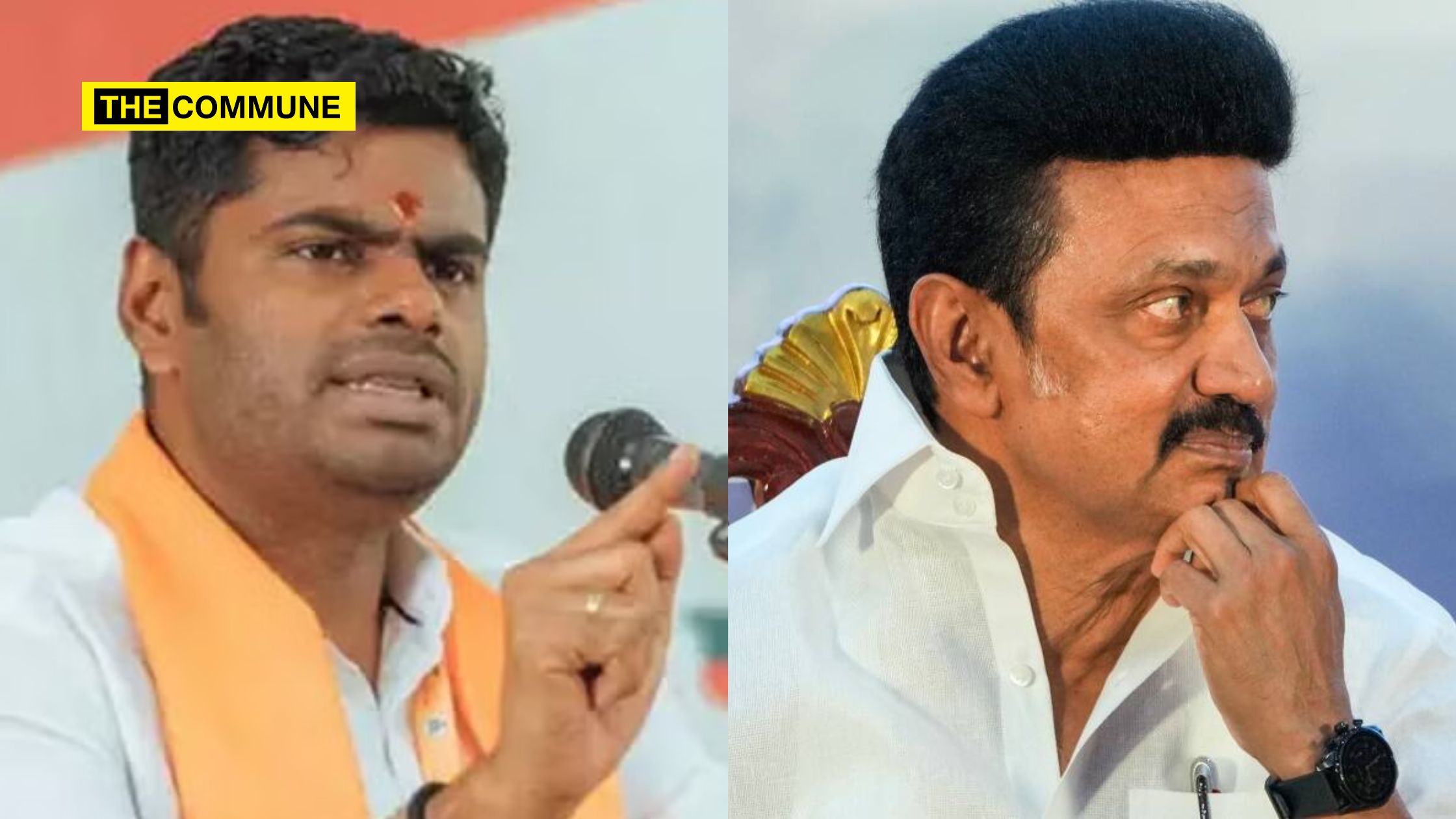
War Of Words Continue As CM Stalin Questions The Central Government On Fund Allocations And Annamalai Retorts With Data Points

The Tamil Nadu CM MK Stalin in his X post on 05 January 2024 has listed out all the achievements that his government has accomplished so far since assuming office and has questioned what the Union government has done so far for the state. In his post, he has also attached a rebuttal video by the Finance Minister Thangam Thennarasu to the various accusations and data points made by the Union government Finance Minister Nirmala Seetharaman during her recent visit to the state.

Answering this allegation, Tamil Nadu BJP chief K. Annamalai posted on X strongly answering the CM, calling the allegations of the CM as ‘hallmark of the DMK’s ecosystem is lies & deceit’. He also posted that the state has received more than ₹10.76 Lakh Crore during the past 9 years of PM Modi’s leadership. He has also asked the CM, ‘What did DMK get TN during the UPA regime except putting our state in a bad light due to rampant corruption?’.

Has The BJP Government Gontributed Anything To Tamil Nadu?

The document shared by the Tamil Nadu BJP Chief K. Annamalai states a few points which draw attention. The document shows how much the state connectivity has improved. We have recently seen improvements to the Chennai and Trichy airports, while other districts such as Neyveli, Ramanathapuram, Thanjavur and Vellore will be connected under the UDAN scheme. Railways connectivity has been improvised with measures such as gauge conversion, electrification and introduction of new Vande Bharat rail routes. Ports have been modernised under the Sagarmala projects. Apart from these measures such as new medical colleges, PMSVANidhi, BIMA Yojana, increasing the number of PM Jan Aushadi Kendras, MSME loans, Smart Cities development, water supply through the Jal Jeevan mission, and Antyodhaya Anna Yojana are to name a few. However, if the CM asks what the centre has contributed to the state, this can mean that the CM is unaware of the developments in his own state or does not like to credit the centre for any achievements in the state. It has been proven time and again that state development is inherently dependent on the cooperation between the state and central administrations. Antagonistic attitudes between the administrators can only cause trouble for the common man.

Subscribe to our channels on TelegramWhatsApp, and Instagram and get the best stories of the day delivered to you personally.
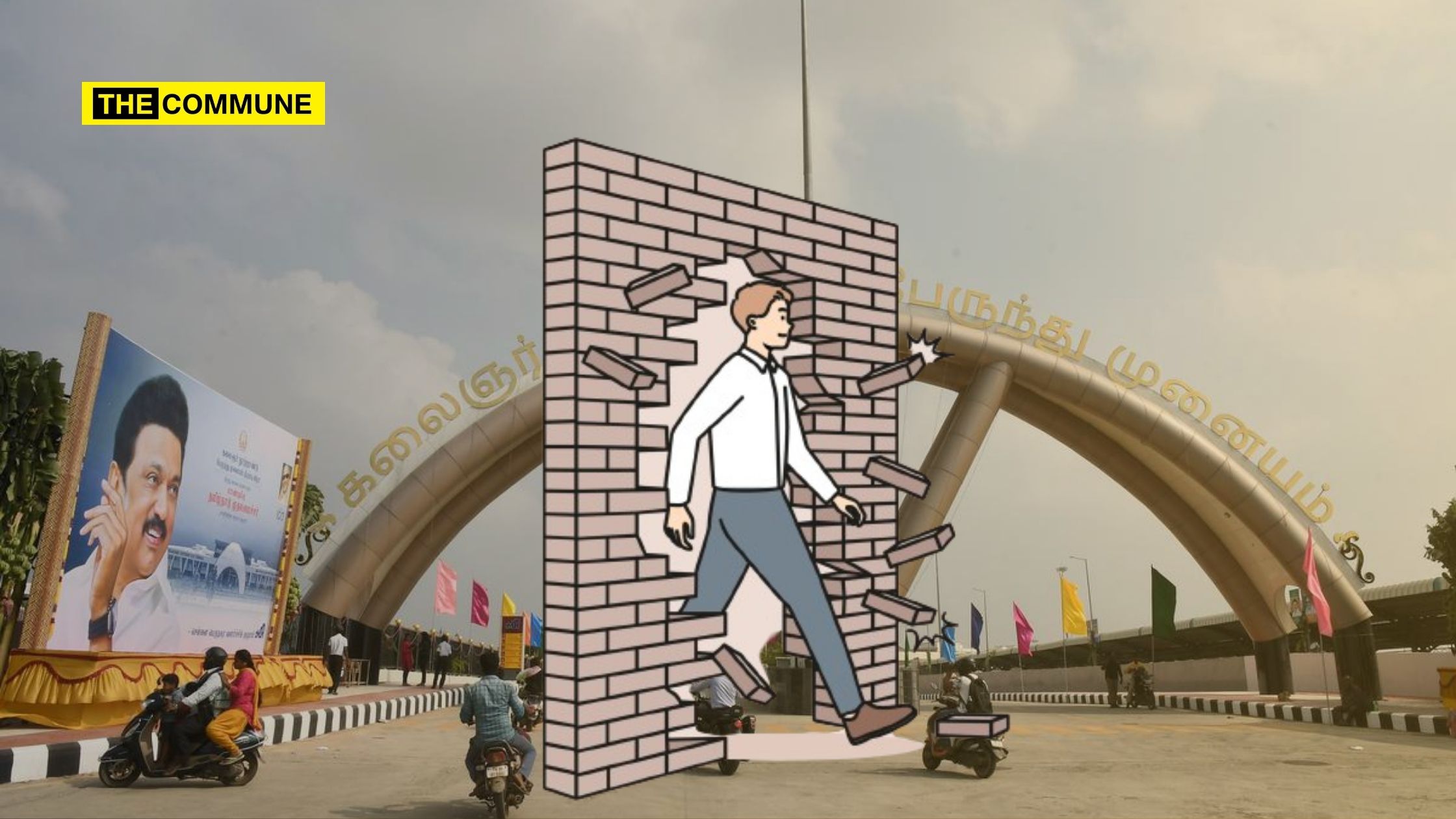
Wall Causing Inconvenience To Passengers At Kilambakkam Bus Stand Demolished Days After Inauguration

Just three days after the opening of the Kalaignar Centenary Bus Terminus in Kilambakkam, Chennai Metropolitan Development Authority (CMDA) took down a section of the wall separating the MTC terminus and the outstation terminus due to complaints from passengers regarding accessibility issues. Although there was a mini-subway equipped with escalators and lifts connecting the two termini, passengers, especially those who were elderly or had physical disabilities, encountered difficulties when carrying luggage through it.

Following this, a meeting was held by the CMDA with officials and consultants involved and the wall causing inconvenience to passengers was demolished.

With the removal of a portion of the wall, passengers can now enter and exit the MTC terminus without the inconvenience of using the “mini subway” and climbing stairs as previously required.

One local resident who had come to Kilambakkam to catch a bus to Madurai mentioned that passengers had to cover a considerable distance from the MTC bus stop to reach the new terminus. She expressed that people would find it much more convenient to access and leave the terminus without the presence of the wall.

A CMDA official explained that the decision to demolish part of the wall was made in response to passengers’ feedback. The official noted, “Initially, we provided access through the pathway using a lift and escalator leading into MTC. During the first two days, we observed that passengers were struggling to reach the escalators. Although the distance is only 350 meters from the outstation terminus, passengers raised complaints.”

Now, DMK Minister Sekar Babu had declared the immediate demolition of another wall that has been causing considerable inconvenience to passengers.

The minister defended the decision, emphasizing that the demolition was essential to alleviate difficulties faced by passengers navigating around the obstructive wall. However, this move has attracted criticism for the lapse in careful planning and lack of precision in the execution of the project by the DMK government.

The bus stand, inaugurated by Tamil Nadu Chief Minister M K Stalin, aimed to enhance connectivity for residents of the southern districts.

The Kilambakkam Bus Terminus (KCBT) is touted to be the beacon of modern transportation infrastructure, conceived during the AIADMK regime in February 2019 and officially inaugurated on 30 December 2023 by the Dravida Munnetra Kazhagam-led Tamil Nadu government. However, this ambitious project has not been without its share of controversies, stirring debates and raising concerns among the public.

Reports emerged that inadequate transport facilities to reach the Kilambakkam bus stand and challenges posed by the use of the service road were hampering the intended convenience for commuters in the area.

Residents of Kilambakkam expressed their discontent through a protest. They raised concerns about the inconvenience caused by government buses using the service road, preventing them from utilizing it. DMK Minister Sekar Babu has said that buses won’t ply during school timings.

Subscribe to our channels on TelegramWhatsApp, and Instagram and get the best stories of the day delivered to you personally.
As Other States Ride On The Success Of PM SHRI School Initiative, Tamil Nadu Educational System Struggles With Language Politics

On 04 January 2024, Uttar Pradesh CM Yogi Adityanath launched 928 PM SHRI (PM School for Rising India) Schools in Lucknow. In the event, CM Adiyanath mentioned that 1753 schools have been selected to be upgraded as PM SHRI schools throughout the state. Various improvements such as smart classrooms, science labs, digital libraries and sports facilities will be introduced in these schools.

What is PM SHRI school?

The PM SHRI School is a scheme sponsored by the Government of India, centrally designed to establish over 14500 schools under its purview. These schools will be overseen by various entities such as the Central Government, State/UT Governments, local bodies, as well as KVS (Kendriya Vidyalaya Sangathan) and NVS (Navodaya Vidyalaya Samiti). The primary aim is to create an inclusive and nurturing environment for students, ensuring their sense of welcome and care. The initiative seeks to provide a secure and stimulating learning atmosphere, a diverse array of learning opportunities, and adequate physical infrastructure and resources conducive to learning for all students. The goal is to foster students’ development into engaged, productive, and contributing citizens, aligning with the vision outlined in the National Education Policy 2020.

Where Does Tamil Nadu Stand?

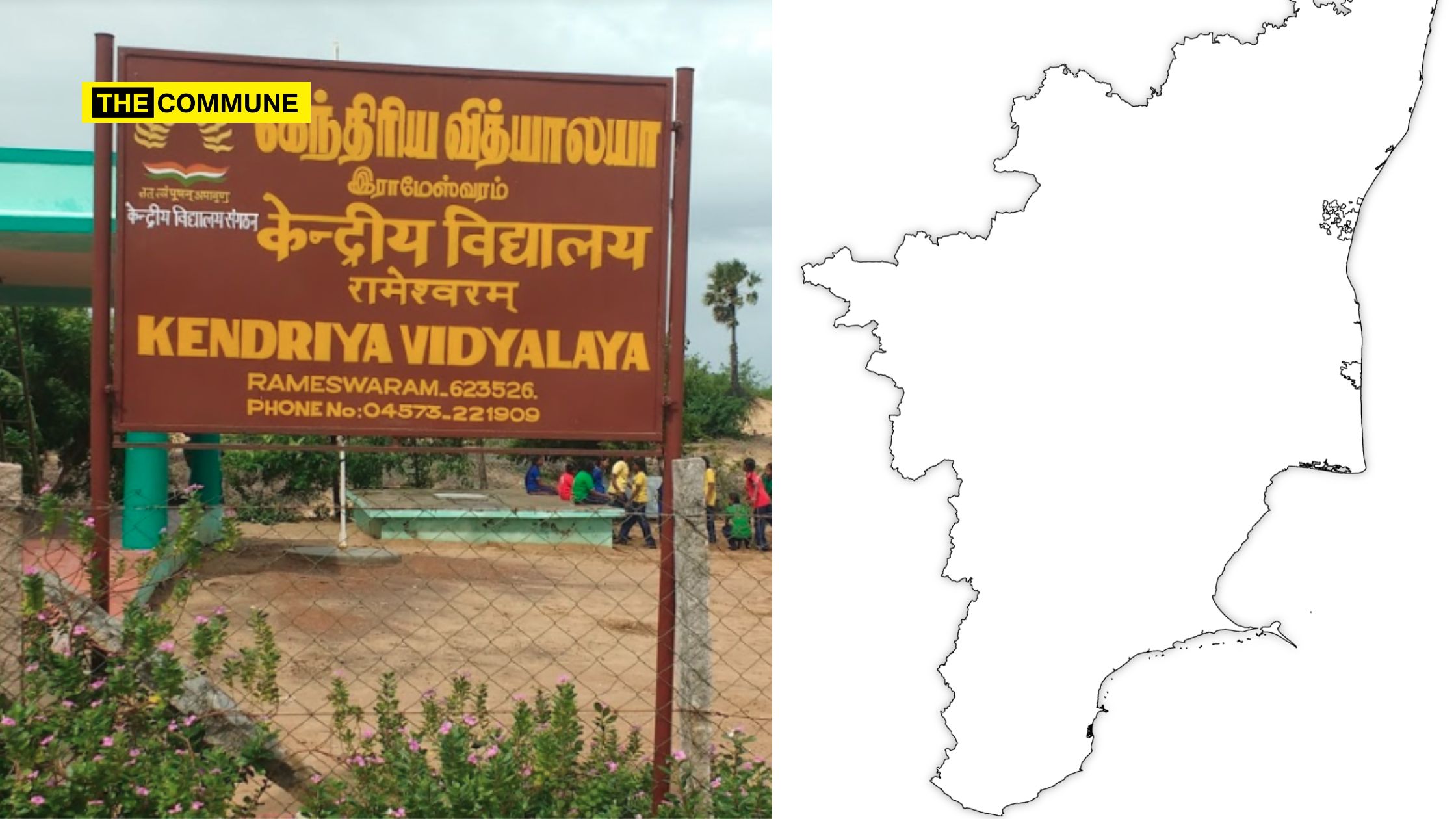
Among the southern states, Tamil Nadu is one of the states with the lowest number of PM SHRI schools. There are 24 PM SHRI schools in the state, all of which are Kendriya Vidyalayas. Kerala has 31 PM SHRI schools and all of them are Kendriya Vidyalayas. Karnataka has 176, Andhra Pradesh has 697, Telangana has 566 and Puducherry has 12 schools under the PM SHRI initiative.

Tamil Nadu And Language Politics

Tamil Nadu has always been in the centre of language politics in the modern times. There has been stiff resistance to the establishment of KVS and NVS in the state due to the accusation that Hindi will be “imposed” on students. Whenever there is a question of establishment of Jawahar Navodaya schools, they have been rejected stating “Hindi imposition” and until today, Tamil Nadu remains the only state in the country to not have any Navodaya schools. However, data shows many of the private matriculation schools in the state got converted into CBSE schools. There was nearly more than a 4-fold growth in the number of private CBSE schools during a decade from 2010-2020 in the state. The irony is that DMK, which opposed to Kendriya Vidyalaya stating that Tamil is not mandatorily taught in Kendriya Vidyalaya schools, is opposing the National Education Policy 2020 which mandates mothertongue education until class 8. These double standards of the ruling parties of Tamil Nadu have historically deprived the Tamil Nadu students of their right to learn Hindi for so long. Changing their stance about Hindi and welcoming KVS and NVS into the state will be beneficial for the future generations.

With inputs from PIB

Subscribe to our channels on TelegramWhatsApp, and Instagram and get the best stories of the day delivered to you personally.
HR&CE Allegedly Prohibits Traditional Drums As Part Of Celebrations At Palani Murugan Temple, Hindu Munnani Condemns

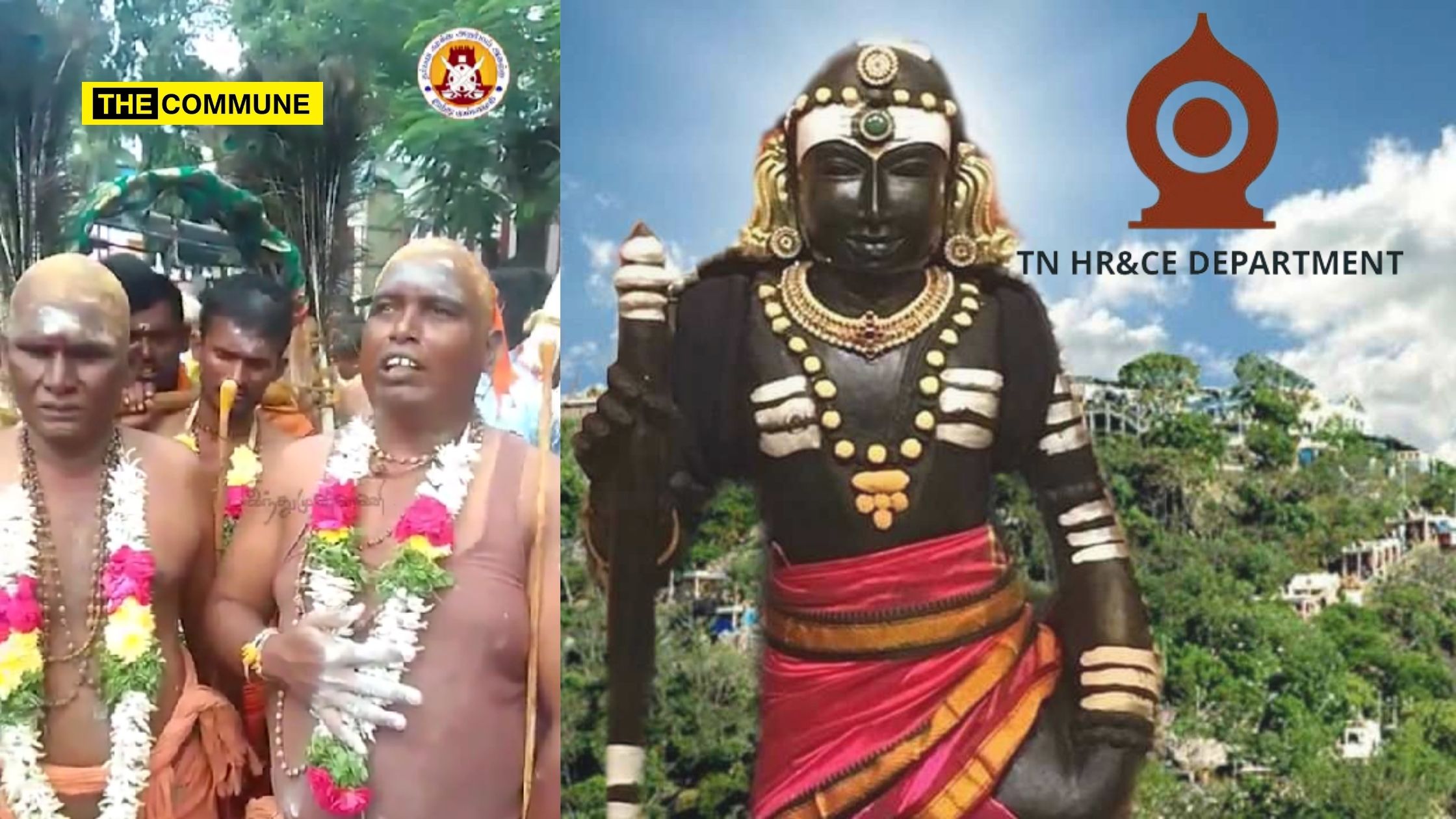
Devotees eagerly anticipate the upcoming celebrations of Pongal on 15 January 2024, and Thaipoosam on 25 January  2024, as they prepare to worship their beloved deity, Murugan, also known as “Dandayudhapani Swamy,” in Palani. Particularly during Thaipoosam, adherents adorn themselves with malas and adhere to strict moral codes, including fasting from the month of Karthigai in a practice known as ‘kaavadi eduthal.’

However, a recent development has caused dismay among the worshippers, as the Hindu Religious & Charitable Endowment Department (HR&CE) of Palani has allegedly denied permission to play drums as part of the celebration. Assistant Commissioner of the HR&CE department Lakshmi allegedly clarified that drumming is not permitted on top of the hill in the Arulmigu Dandayuthapani Swami Temple in Palani.

In a widely circulated Twitter video, a devotee expressed his dissatisfaction, stating, “I’ve been undertaking the sacred journey (Paadha yathirai) for the past five days, providing food along the paths from Thogai malai, karur. Every year, we ascend the Palani hills with drums and beats, but this year, the AC madam is preventing us, causing us distress. I’m unsure why they are prohibiting drums and beats. Please intervene and facilitate a smoother resolution.

Yet another devotee conveyed, “This event has been a tradition for many years, and I have been participating for 42 years. I’m 56 years old now, and since the age of 19, I have been coming here every January. After worshiping from Thiru Avinankudi Temple we perform a ritual walk around the hills and then ascend the hills with drums and beats to worship Palani Andavar deity up in the hills. We have been fasting for 48 days in preparation for this spiritual journey. Please assist us; our spiritual hearts yearn for a solution. Your intervention would bring joy and contentment as we eagerly anticipate encountering the divine presence of Palani Andavar. Kindly take necessary steps in this matter and allow us to celebrate with drums and beats.” he said.

In response to this decision, Hindu Munani has announced that a significant demonstration will be organized to condemn the restriction, emphasizing the potential impact on the livelihoods of many families and devotees involved in the celebrations.

Subscribe to our channels on TelegramWhatsApp, and Instagram and get the best stories of the day delivered to you personally.
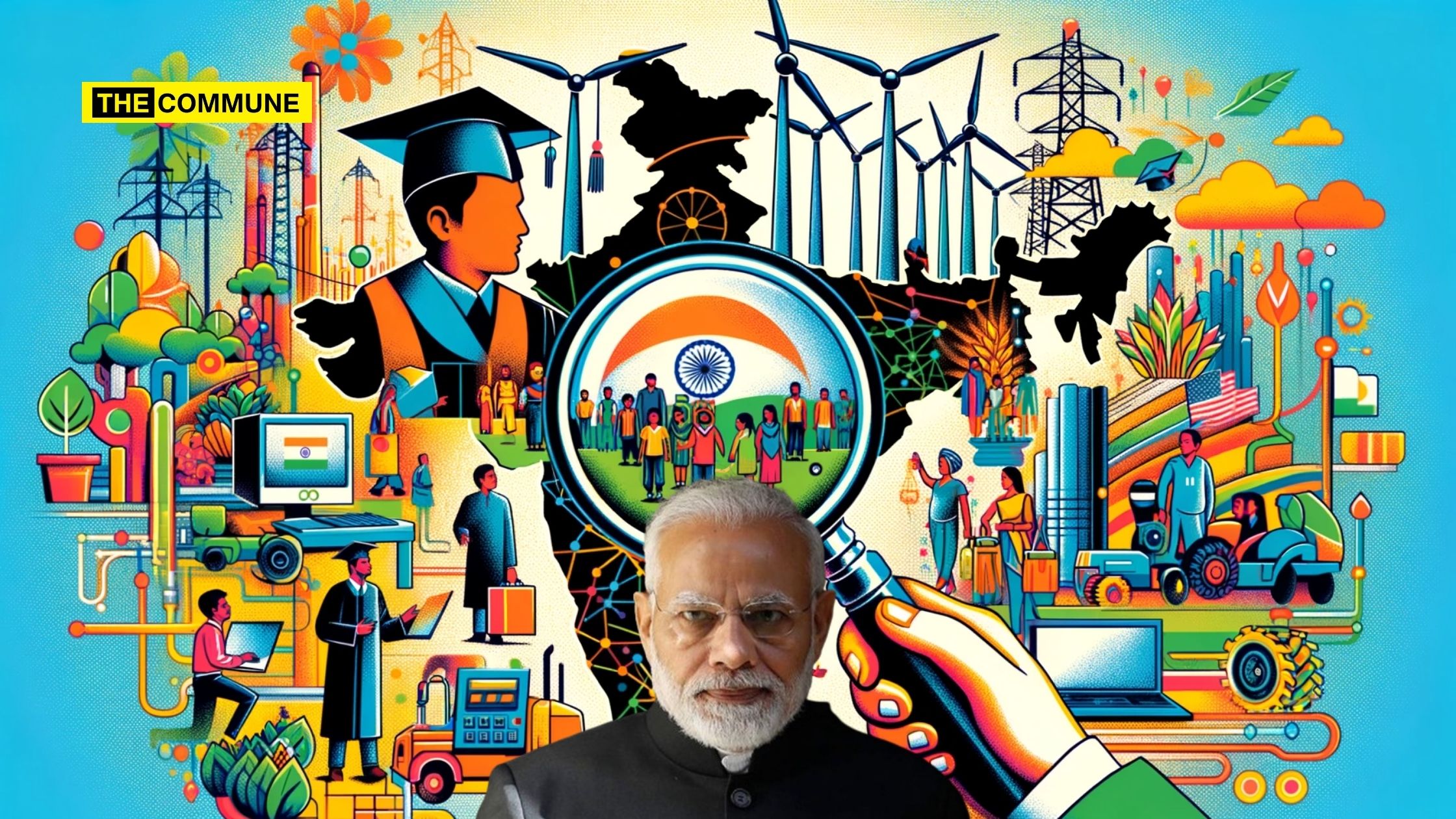
“Stronger Assertive India A New Geopolitical Factor”: China’s State-Owned Media Heaps Praises On India Becoming Bharat Under PM Modi

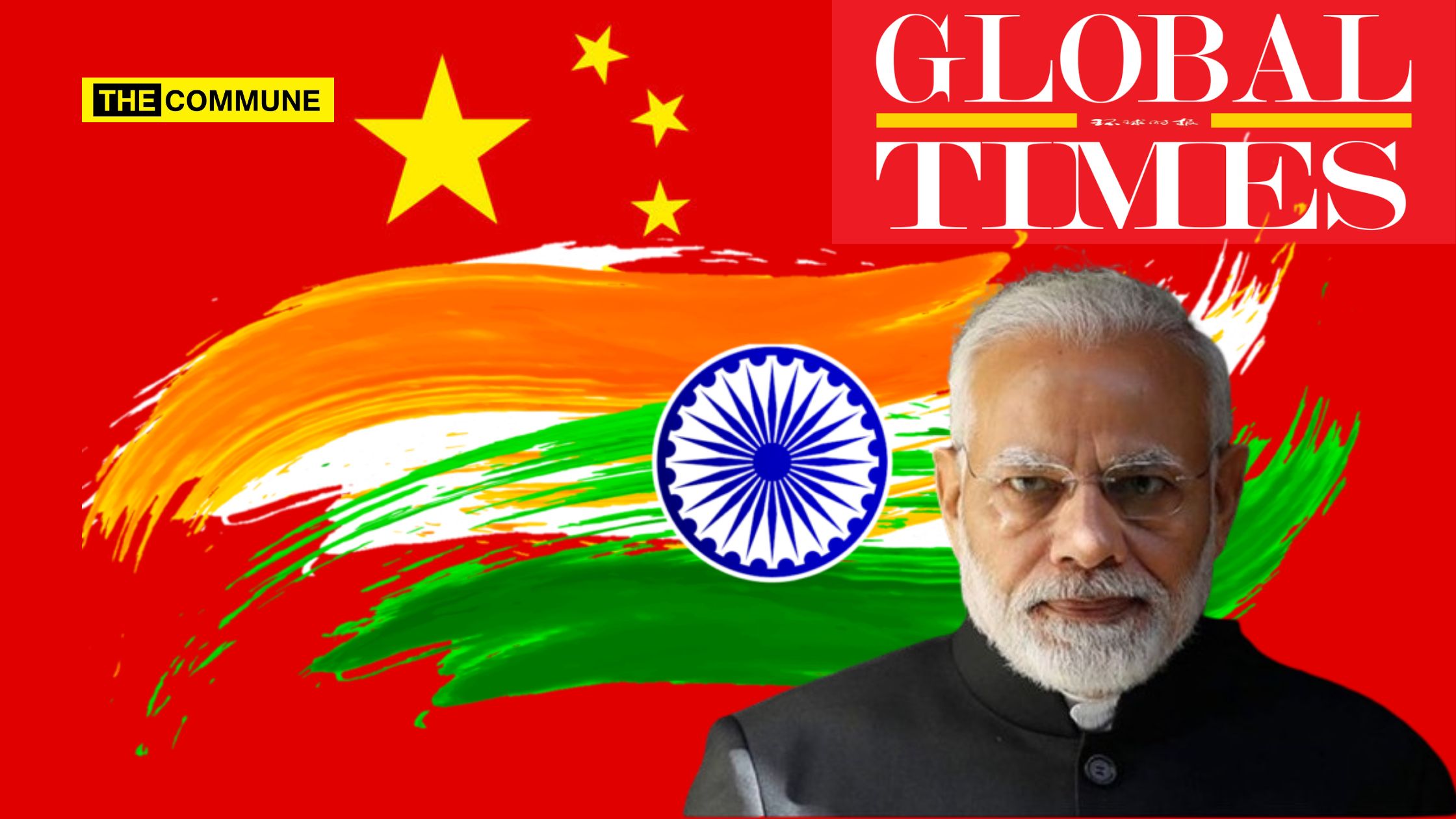
A recent commentary penned by Zhang Jiadong, Director of the Center for South Asian Studies at Fudan University, featured in China’s Global Times, hails Indian Prime Minister Narendra Modi for his exceptional achievements over the past years. The opinion acknowledges India’s economic growth, advancements in urban governance, and a notable shift in its international relations and trade.

Economic And Social Milestones:

Zhang commends India’s significant strides in economic development, positioning it among the world’s fastest-growing major economies. This success extends beyond the economic realm, with marked improvements in urban governance evident in enhanced public environmental conditions, particularly in New Delhi.

He states “New Delhi has made progress in urban governance. Although the haze is still serious, the distinctive smell that hit you as soon as you stepped off the plane four years ago has generally disappeared. This suggests that the public environment in New Delhi has improved”.

Diplomatic Landscape Transformation

The article states that engaging with Indian representatives revealed a more open and moderate stance towards Chinese scholars, departing from previous rigid positions. It states that the focus has shifted from criticizing China’s measures to reduce trade imbalances to actively exploring India’s export potential and initiatives to decrease the trade deficit.

India’s Strategic Confidence

India’s rapid economic and social development has bolstered its strategic confidence, leading to a proactive approach to shaping a unique “Bharat narrative.”, the article says. Modi’s multi-alignment strategy has evolved into a great power strategy, fostering ties with the US, Japan, Russia, and other nations. India’s stance on the Russia-Ukraine conflict was also commended noting how the country positioned itself more closely with the developing world instead of succumbing to Western pressure.

Political And Cultural Emphasis

The author notes how India has shifted from emphasizing democratic consensus with the West to highlighting the “Indian feature” of democratic politics, aiming to establish an “India’s version of democracy.” This move seeks to shed historical perceptions of India as a “political dwarf” and position it as a global political and cultural mentor, says the author.

Global Cultural Influence

India’s efforts to build a robust “Bharat narrative” extend beyond its borders, as seen in initiatives like the “Knowledge India Visitors Programme.” External Affairs Minister Subrahmanyam Jaishankar’s emphasis on economics, development, politics, and culture underscores India’s ambition to be recognized as a great power with cultural traditions at its core.

He points out “Indian External Affairs Minister Subrahmanyam Jaishankar emphasized the importance of building a strong “Bharat narrative” and explained the “Bharat narrative” in terms of economics, development, politics, and culture. Obviously, India no longer only regards cultural tradition as a channel to achieve its own interests or as a symbol to attract foreign tourists, but also sees it as one of the pillars of India’s status as a great power“.

Strategic Policy Adjustments

India’s recent policy adjustments align with its consistent approach, transitioning from multi-balancing to multi-alignment less than a decade ago. Presently, the nation is swiftly transforming towards positioning itself as a pole in the multipolar world, a rarity in the history of international relations.

He lauded the Modi government that “it has only been less than 10 years since India shifted from multi-balancing to multi-alignment, and now it is rapidly transforming toward a strategy of becoming a pole in the multipolar world. The speed of such changes is rarely seen in the history of international relations“.

As India emerges as a major geopolitical factor, both the nation and the international community must navigate the challenges and opportunities associated with a transformed, stronger, and more assertive India, the article concludes. 

Even the adversaries are in awe of India emerging as a strong and assertive ‘Bharat’ under PM Modi.

(With inputs from Global Times)

Subscribe to our channels on TelegramWhatsApp, and Instagram and get the best stories of the day delivered to you personally.