Home Blog Page 790

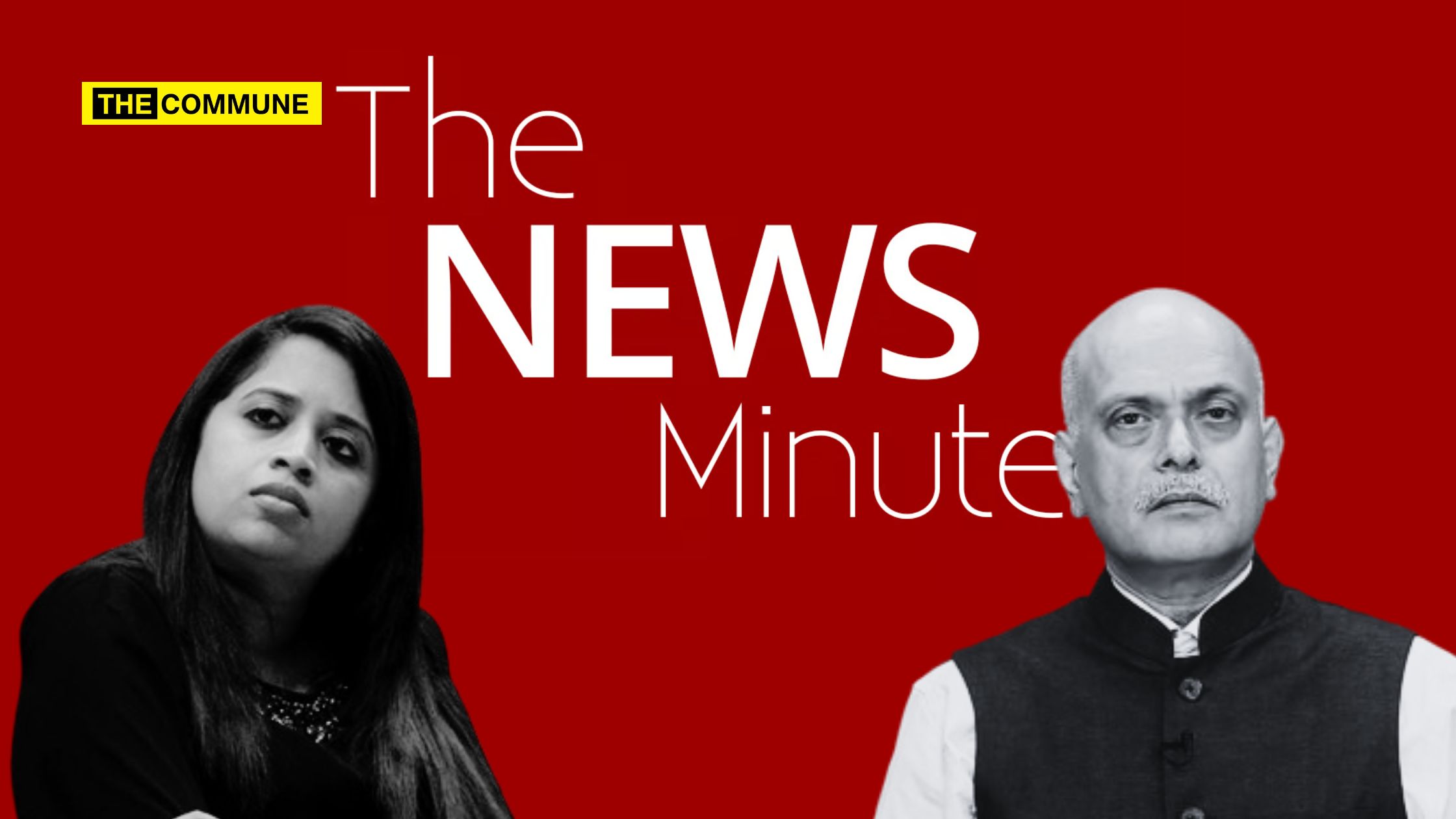
Hypocrisy Much? TNM Which Raised ‘Undisclosed Sum’ From Money Laundering-Accused Raghav Bahl Gives Sermons On Electoral Bonds
Ever since the details of Electoral Bonds have been made public, it appears that the detractors of the Bharatiya Janata Party are ensuring that the narrative of a “scam” is somehow set.

Fingers are being pointed out at the BJP alone while conveniently ignoring the fact that the party has the largest number of MPs in the country and is in power in 12 states, with 4 states as coalition partners. 

The Commune analyzed how regional parties had actually received more donations in comparison with the number of MPs they had. Union Minister Amit Shah speaking at the India Today Conclave 2024 refuted all the allegations made by these media houses as well as political parties. 

Despite all this, detractors such as political commentators and leftist-communist news portals are ensuring that the narrative of a “scam” goes mainstream. 

Political commentator Sumanth Raman is convinced (by what measure, it is not clear) that it is a scam.

Despite asking for evidence (and providing proof that it isn’t), such individuals are seemingly agreeing to the fact that donations and corporate donations to political parties are scams. 

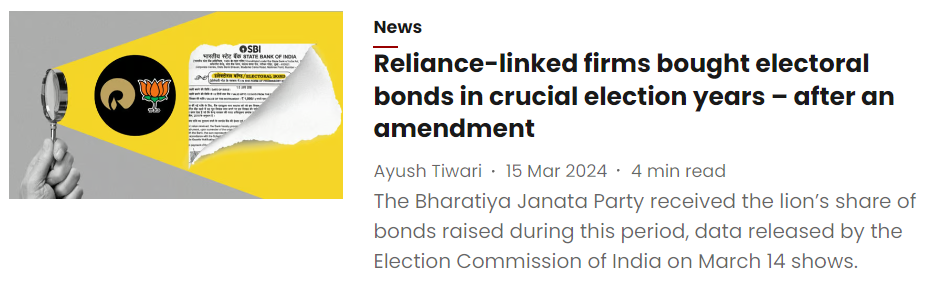
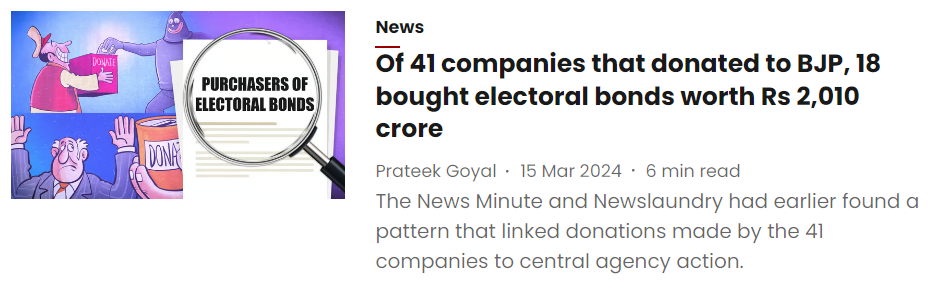
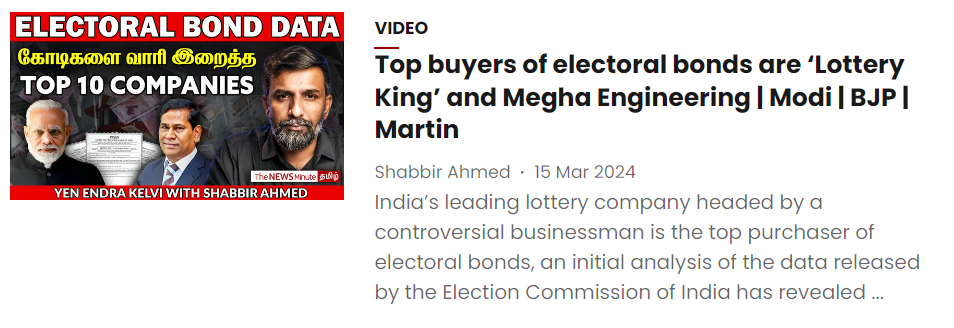
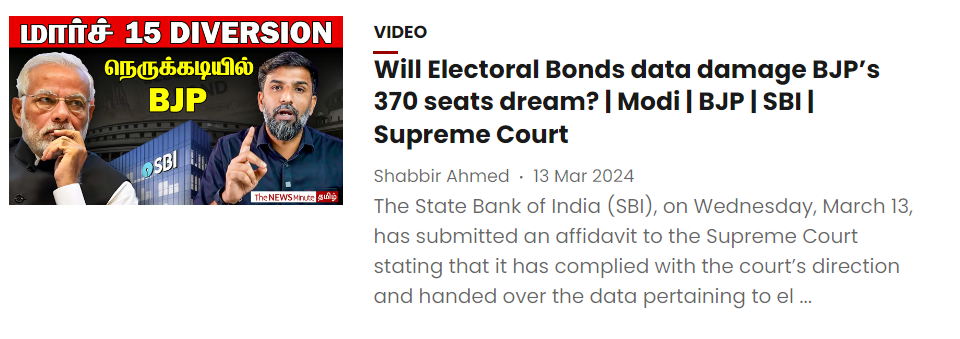
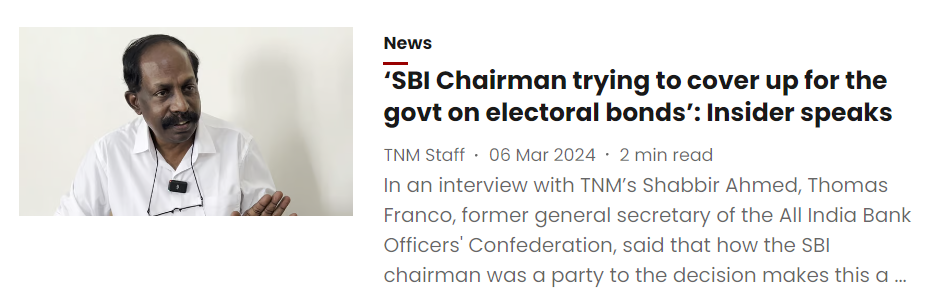
Now, The News Minute itching to be a part of the narrative setting jumps into action. The portal has been publishing articles after articles on electoral bonds trying to implicate the BJP while looking the other way on donations received by Congress and other Opposition parties. 

Here’s a sample:
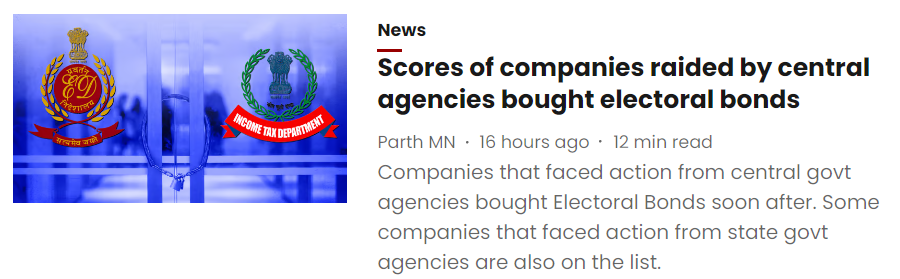
Responding to political observer BR Sreenivasan’s post which questioned how electoral bonds are being seen as a scam, Dhanya Rajendran, the Editor-in-chief wrote, “Simple. Party against corruption aka BJP comes to power. Makes changes in many laws, allows companies to donate as much as they want, removes caps, allows Indian subsidiaries of foreign companies to donate. Also increases action by ED, IT, etc. Who benefits the most? BJP.”

However, it is pertinent to mention that The News Minute received an ‘undisclosed’ amounts as funding from its investor Quintillion Media whose founders Raghav Bahl and Ritu Kapoor have been accused of corruption and money laundering.

Yes, it is true that some start-ups do not disclose the amount raised as capital. However, since The News Minute portrays itself to be a transparency champion and claims itself to be doing journalism for public good asking readers to pay for ‘good journalism’, shouldn’t the ‘undisclosed amount’ of funding it received be disclosed, is a question to be asked. 

Who Is Raghav Bahl?

Raghav Bahl, an Indian businessman and serial entrepreneur, founded Network18 Group in 1993, which grew into a major media conglomerate. After financial challenges, Reliance Industries took over in 2014. Bahl then co-founded Quintillion Media Pvt Ltd and currently promotes Quint Digital Media Limited, controlling Thequint.com. He also collaborated with Bloomberg for BloombergQuint.

The Quint is part of “independent internet-based media platforms” which also includes the likes of The News Minute, Newslaundry, The Wire, Scroll.in, and ScoopWhoop. Wikipedia says that they are “challenging” traditional Indian news outlets. It is noteworthy that The Quint is “certified” by the Poynter Institute’s International Fact-Checking Network for its WebQoof division. It must be remembered here that in 2017, the Poynter Institute was granted $1.3 million by the Omidyar Network and the Open Society Foundation to “support new projects in three main areas: fact-checking technology, impact tracking, and financial awards through innovation grants and crowdfunding matches.”

In October 2018, the Income Tax Department of India raided The Quint’s offices and Raghav Bahl’s residence as part of an investigation into an alleged case of tax evasion. The raid was officially referred to as a survey by the Income Tax officers.

In 2019, media owner Raghav Bahl (founder of ‘The Quint’) faced money laundering accusations by the Enforcement Directorate for allegedly understating a London property’s investment value by GBP 2.73 lakh (around ₹2.45 crore) and failing to explain the source of funds. Bahl’s properties were raided previously, prompting him to release details. His assets, including a London flat, were declared in income tax filings under the Liberalised Remittance Scheme.

In August 2023, the Delhi High Court temporarily lifted a lookout circular (LOC) against Raghav Bahl and his wife Ritu Kapur, allowing them to travel abroad for business meetings amidst the Enforcement Directorate’s (ED) money laundering probe. The High Court had earlier dismissed Bahl’s plea to quash the ED’s complaint, deeming it premature, and rejected his request to annul the LOC, granting only conditional travel permissions. Kapur’s plea against the ED probe is pending, asserting her non-involvement under the Black Money Act. The Income Tax Department initiated proceedings against Bahl under the Black Money Act, followed by the ED’s complaint under the Prevention of Money Laundering Act.

Subscribe to our channels on TelegramWhatsApp, and Instagram and get the best stories of the day delivered to you personally.
HM Amit Shah Busts The False Rhetoric Surrounding Electoral Bonds

Union Home Minister Amit Shah stated on 15 March 2023 that the discontinued electoral bond scheme was implemented with the aim of “eradicating black money” from the political funding system. 

A few days ago, the Election Commission posted the details of the Electoral Bonds on its website and what followed was a load of fake news and misinformation spread. Addressing the India Today Conclave 2024, Union Home Minister Amit Shah busted the false rhetoric surrounding electoral bonds. 

He expressed apprehension that with the scheme now defunct, there is a concern that “black money” may resurface within the funding process.

Union Home Minister Amit Shah, speaking at India Today conclave, when asked about the controversy surrounding electoral bonds, particularly in light of the recent revelation that many of the top 30 donors have ongoing CBI or ED cases against them, with opposition leaders alleging it has become a mechanism of extortion, Amit Shah replied, “Electoral bonds were brought in to end the dominance of black money in Indian politics. Can someone explain to me that before electoral bonds were in place how the donations used to be made? How they come through bonds is that a company’s cheque is given to the RBI and bonds are purchased, there is a question of confidentiality in it. What happened to the donations earlier that used to come in cash? Whose name has been revealed? Tell me, has it happened to anyone to date? It did not happen to anyone, but I would like to answer the political things in more detail. The perception is being spread that the Bharatiya Janata Party has got a big benefit from the electoral bonds, that the BJP is in power blah blah blah, and now Rahul Gandhi has made a statement that electoral bonds are the means of biggest extortion in the world. I don’t know who writes all this to them.”

Amit Shah criticized opposition parties for their scrutiny of the BJP’s electoral bond receipts, highlighting what he deemed disproportionate amounts received by various parties relative to their seats in the Lok Sabha. He cited examples, noting that the Trinamool Congress encashed bonds amounting to ₹1,600 crore, Congress received ₹1,400 crore, Bharat Rashtra Samithi received ₹1,200 crore, BJD received ₹775 crore, and DMK received ₹649 crore. He also added, “I assure you that when the accounts are opened, these people will not be able to face you.”

Amit Shah countered accusations of industrialists contributing by questioning the historical transparency of political donations. He argued that before the existence of electoral bonds, political funding origins were obscured, raising suspicions of black money. He defended the electoral bond system as a means to eliminate such opacity, highlighting its reflection in the balance sheets of both parties and companies involved. He attributed the confidentiality of the process to fears of reprisal from opposing parties depending on the political landscape. Additionally, Amit Shah criticized the Congress Party’s historical practices of accepting cash donations, alleging a tendency to underreport funds. He emphasized that electoral bonds ensure transparency by directly depositing the entire sum into the party’s account. 

Amit Shah emphasized the absence of secrecy following the implementation of the electoral bonds scheme, stating, “The amount is reflected in the bank accounts of both the parties and the donors.” He criticized the Congress Party, alleging, “When donations were made through cash transactions, they deposit ₹100 in the party and keep ₹1,000 in their homes.” Shah added that the Congress had done this for years.

When asked about the concerns about information asymmetry with the electoral bond scheme, where it’s alleged that government officials could potentially access information on who donated to opposition parties, Amit Shah clarified that they never sought such information from the State Bank of India, emphasizing that the donation amounts are transparently reflected in the balance sheets of political parties, including the Congress Party and their own. 

Shah noted that the Election Commission of India makes these balance sheets public, ensuring transparency for all. When asked about potential solutions following the Supreme Court’s ruling, he expressed uncertainty, suggesting that finding a viable solution might be challenging. Despite acknowledging the imperfections of the electoral bond scheme, Amit Shah believed it was a step in the right direction and should have been improved rather than scrapped. However, he also said he respected the decision of the Supreme Court on the matter.

Subscribe to our channels on TelegramWhatsApp, and Instagram and get the best stories of the day delivered to you personally.
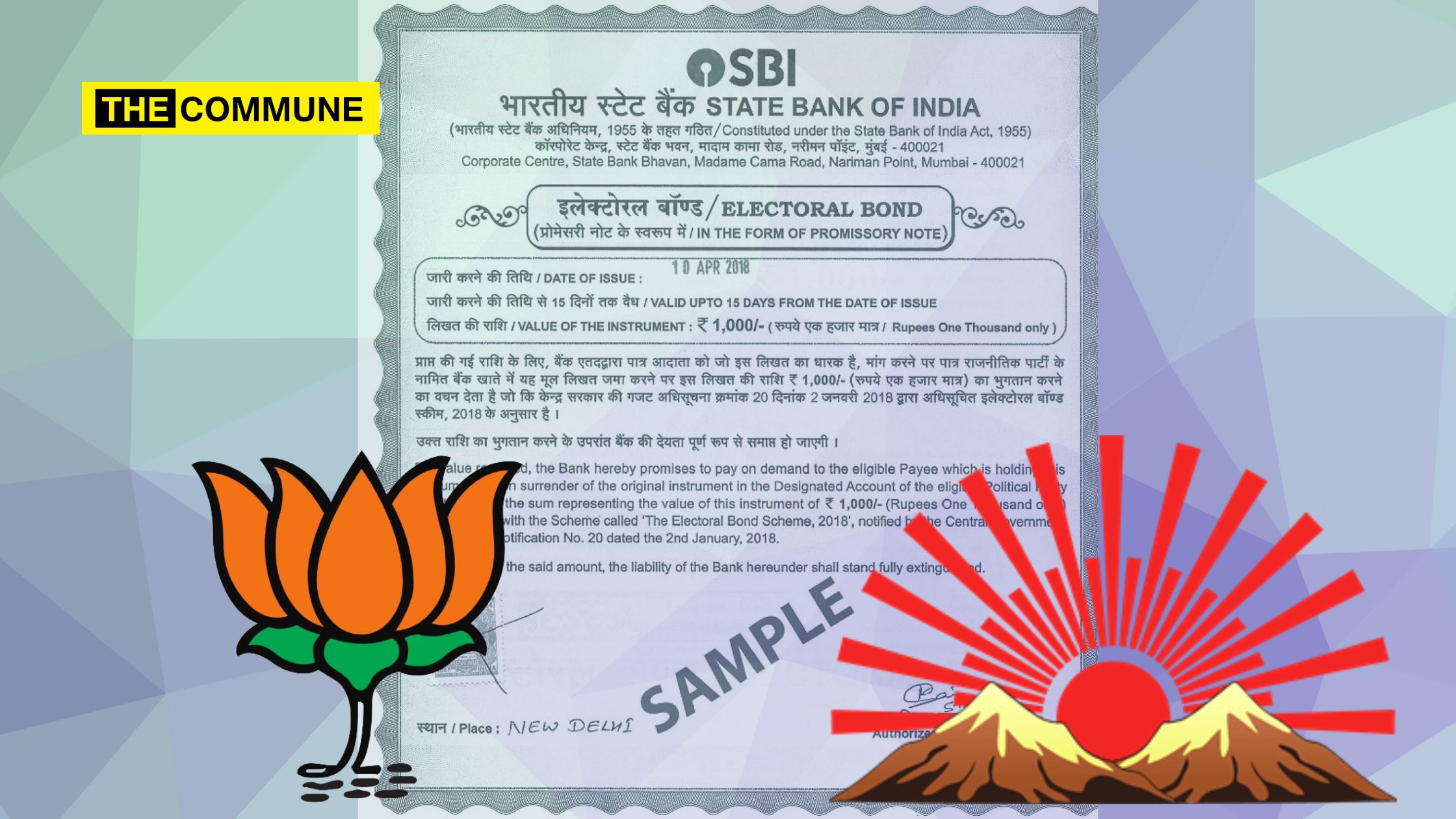
Did A Regional Party Like The DMK Get More Donations Through Electoral Bonds Than A National Party Like The BJP?

The electoral bonds have created a lot of buzz in social media for the past couple of days. News channels, web portals, alleged fact-checkers, and political party IT wing handles alike are posting that it is the Bharatiya Janata Party that received maximum donations from donors. 

Before we delve deeper into this, it is important to understand that political parties have historically received donations in various forms from companies and individuals. These donations used to be done as cash in briefcases and these would most often go unaccounted. The Tatas set an example by sending a cheque to Chief Minister Mamata Banerjee in 2013. This was rejected by Mamata then. 

The data uploaded by the Election Commission on its website is segmented into two sections: the initial portion, spanning 337 pages, contains details about the entities acquiring electoral bonds, including purchase dates. The subsequent section, spanning 426 pages, provides information about political parties, their associated dates, and the respective bond amounts. However, it is important to note that the data does not explicitly indicate which entities purchased bonds for specific political parties.

In the six financial years since its inception in 2018, electoral bonds have supplanted conventional funding channels for at least three political entities — TMC, DMK, and BJD — which now exclusively rely on this method for all donations exceeding ₹20,000.

Of all donations facilitated by electoral bonds, over half, approximately ₹6,500 crore, has been directed to the BJP. Notably, electoral bonds began to significantly dominate funding sources and entirely eclipse others for the ruling regional parties TMC, BJD, and DMK in the fiscal year 2022-23.

The DMK, currently ruling in Tamil Nadu, initially received no funding through bonds in the first two years. However, since then, the proportion of bonds in its total contributions (above ₹20,000) has surged to nearly 100%. Starting at 94.18% in 2019-2020, when it garnered ₹45 crore through this avenue, the share of bonds in the DMK’s donations dipped to 70.17% in 2020-21 before rebounding to 99.3% in 2021-22 and 99.26% in 2022-23. It received ₹306 crore and ₹185 crore in the last two financial years via bonds.

In the election year of 2019-20, BRS received 99.54% of its donations in Electoral Bonds (EBs), which dropped to zero in 2020-21, then surged to 79% and 77% in 2021-22 and 2022-23, respectively. The YSRCP received 99.99% of its donations in the form of EBs in 2020-21.

The BJP leads as the top recipient, securing over ₹6,061 crore through electoral bonds, while the TMC received ₹1,610 crore. The Congress received ₹1,422 crore through this funding mechanism.

Next in line is the Bharat Rashtra Samithi (BRS) with a total of ₹1,215 crore received via electoral bonds. The Biju Janta Dal (BJD) obtained funding of ₹776 crore through this channel.

There are several factors one must consider. The BJP currently holds power in 12 out of India’s 28 states and is part of the ruling coalition in four additional states. That makes it a part of the ruling government in 16 states (for convenience’s sake). In contrast, the Congress party now rules over only three states: Telangana, Karnataka, and Himachal Pradesh.

The TMC, DMK, BJP, and TRS (BRS) rule in just one state each. 

So is the comparison valid, is it right to say that the BJP gained more from electoral bonds considering that they are the largest party in the country with 12 states where they are in power and 4 where they are in a coalition? 

If we compare on a per MP basis, the results are shockingly different. 


Here is a comparison of a regional party getting more than a national party.


A netizen Anand explains how people think it is a scam without understanding what electoral bonds are and forgetting history. 

It is noteworthy that the DMK received 3 times more money through Electoral Bonds than the BJP compared to the Ratio of States ruled. Even though BJP is ruling 166+ states, they only received ₹400 crore (PS). While the DMK received an astounding 1300 crore.

Here is an example where the DMK received more donations than the BJP in just 6 months.

In 2020, the DMK received more donations than the BJP. 

This post shows a comparison of donations through Electoral Bond as % of their total donation.

This “scam” is similar to the “Rafale scam” and is a plain narrative setting by opposition parties. It is important that people, the general public understand that making such donations legal and reducing black money in the country. 

Subscribe to our channels on TelegramWhatsApp, and Instagram and get the best stories of the day delivered to you personally.
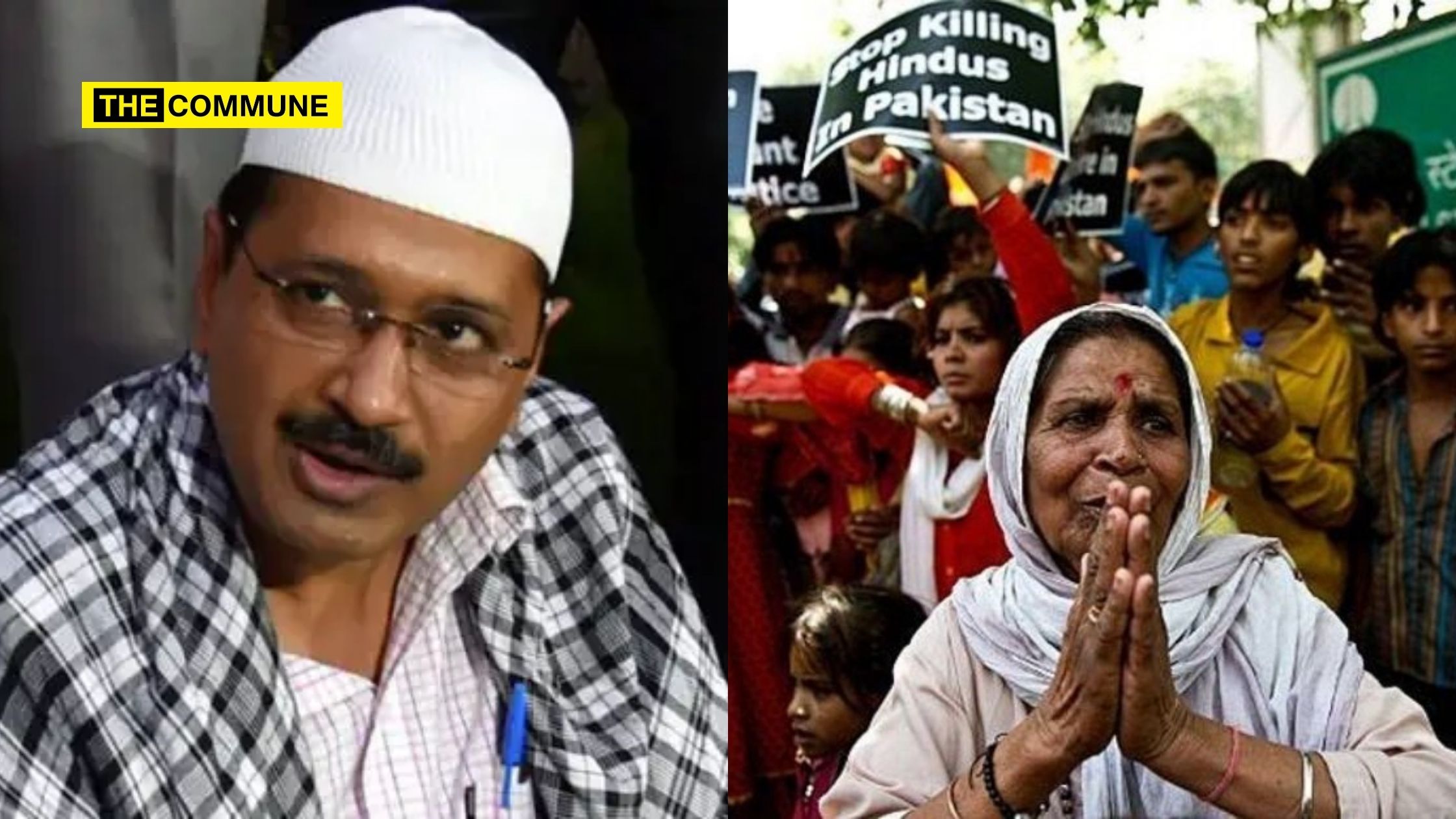
Calling Out The Xenophobia And Hate Spewed By Arvind Kejriwal Against Persecuted Hindu Refugees

Arvind Kejriwal, Chief Minister of Delhi and party chief of the Aam Aadmi Party (AAP)  has been engaging in serious of disparaging comments against Hindu and Sikh refugees from Pakistan, Afghanistan, and Bangladesh who are seeking asylum. He has been continuously labeling them as ‘Pakistanis’, ‘infiltrators’, ‘harassers’, ‘thieves’, and perpetrators of sexual assault.

This controversy arises against the backdrop of Kejriwal’s opposition to the Citizenship Amendment Act (CAA), which officially came into effect on 11 March 2024. With Kejriwal issuing a press statement that, “There are approximately 2.5-3 crore people put together who are minorities in Pakistan, Afghanistan and Bangladesh. These are poor countries. Out of these 2.5-3 crore people, if even 1-1.5 crore people come to India, where will we settle them? How will we give them jobs? The jobs meant for our people will go to them. The whole law & order situation will crumble. There will be a rise in cases of robberies, rapes. There will be riots all around. What will happen to the security situation in the country?”


In response, Hindu and Sikh refugees staged a protest near Kejriwal’s residence, demanding an apology for his remarks against the implementation of the CAA. Following the protest, the Delhi CM responded by labeling the protesters as “Pakistanis” on his official social media account, and accused both the BJP and Delhi police of supporting them, thereby betraying India. Subsequently, he postulated a theory suggesting that these refugees, upon arrival, would disperse across the nation, potentially causing disturbance and inconvenience among citizens. With the BJP convert them as a Vote bank.

Kejriwal stated, “Today some Pakistanis demonstrated and created ruckus in front of my house. Delhi Police gave him full respect and protection. BJP fully supported him. Have they got so much courage that they are asking the CM elected by the people of Delhi with an overwhelming majority to enter our country and apologise? And BJP is supporting them? While hating me, BJP stood with Pakistanis and started betraying India? After this CAA, these Pakistanis will spread all over the country and will harass and create ruckus among the people of our own country. BJP wants to make them its vote bank.”


The following day, he continued to stir controversy by criticizing, and provoking refugees via his official social media account X. “The audacity of these Pakistanis? First, they infiltrated our country illegally and broke the laws of our country. They should have been in jail. Have they got so much courage that they are protesting and creating ruckus in our country? After CAA, Pakistanis and Bangladeshis will spread across the country and harass people. In the selfish interest of making them their vote bank, BJP is pushing the entire country into trouble.” Kejriwal post read  further exacerbating tensions.

Arvind Kejriwal and his party appear to have a contrasting stance on migration. While they oppose the Citizenship Amendment Act (CAA), they support the immigration of Rohingya Muslims. This perceived inconsistency in their approach, labeled as minority-centric and pseudo-secularist, has drawn significant criticism from social media users.

The Aam Aadmi Party staunchly supported addressing refugee crises, particularly advocating for the resettlement and protection of Rohingya Muslims. However, their support did not extend equally to refugees of  Hindus, Sikhs, Buddhists etc who were persecuted as minorities from Pakistan, Afghanistan, and Bangladesh.

In a widely circulated video gaining traction on social media, the spokesperson for AAP elaborates on the party’s position regarding Rohingya crisis that, “Rohingyas are refugees, the responsibility of settling refugees lies with the government, to give them place is the responsibility of central governmnet , if the central government gives them place, they will leave from here. we have not settled them there , how they are living in slums, in heat they dont have anything to eat , its just a matter of humanity.”.

When questioned about the admission of CAA refugees, specifically those from religiously persecuted minorities, into India, AAP’s Arvind Kejriwal raised concerns regarding their integration. He queried, “Who will provide them with employment opportunities? Where will they be accommodated? How will housing be arranged for them? Will they be settled in Delhi, Mumbai, Gujarat, Assam, Tripura, or elsewhere?”

Subscribe to our channels on TelegramWhatsApp, and Instagram and get the best stories of the day delivered to you personally.
 

DMK’s Official Mouthpiece Peddles False Info That Pak Firm Donated To BJP

Following the Supreme Court’s ruling on 11 February 2024, demanding that the State Bank of India (SBI) disclose all details regarding electoral bonds purchases and mandating the Election Commission to reveal information about donors, amounts donated, and recipients, SBI requested an extension until 30 June 2024. However, the Supreme Court rejected this request and instructed SBI to provide the necessary information to the Election Commission by the end of working hours on 12 March 2024.

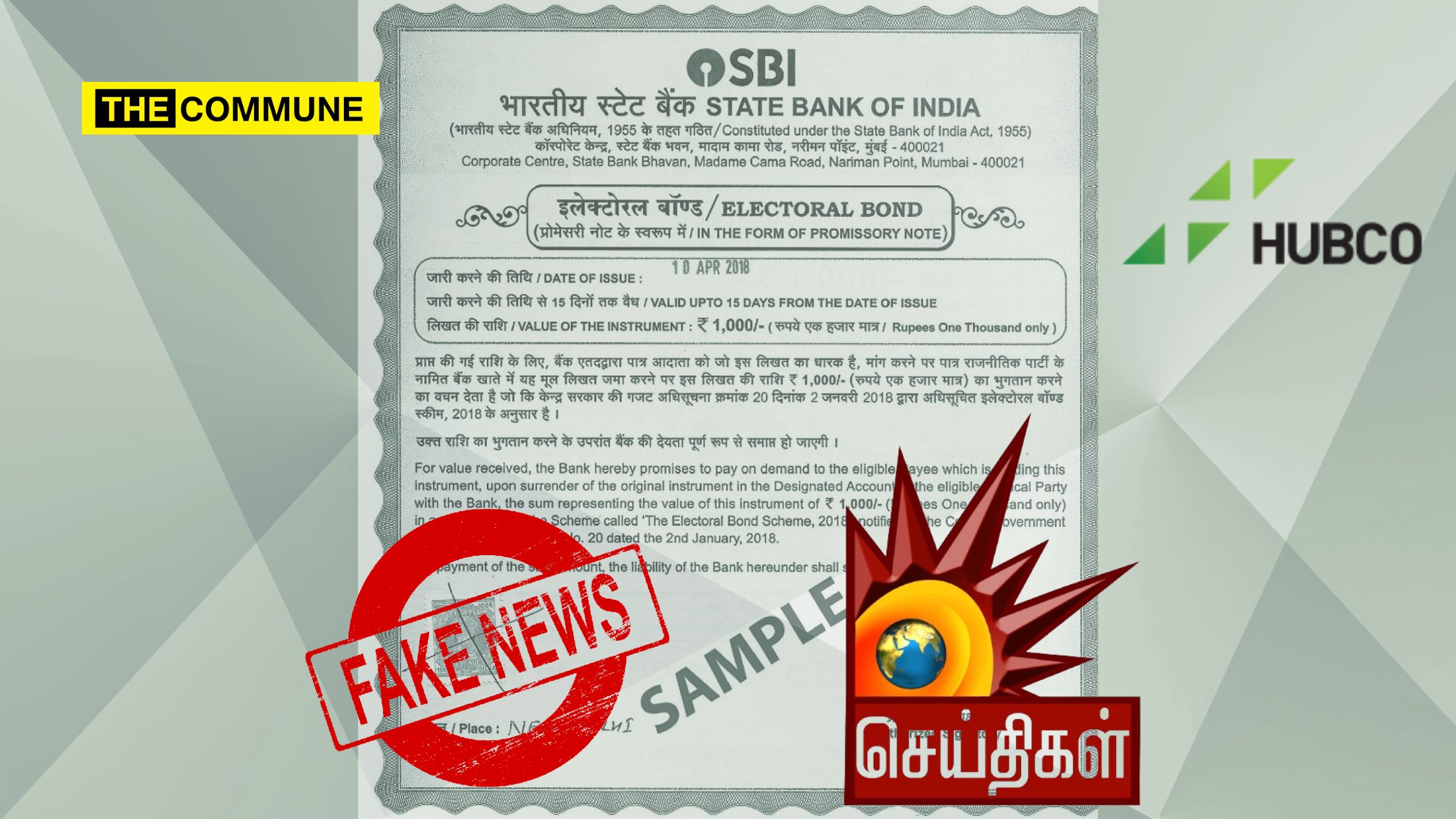
Subsequently, SBI submitted its data, and on 15 March 2024, the Election Commission complied with the court order by uploading the electoral bond details on its website. Following this disclosure, numerous individuals began analyzing the information, leading to the proliferation of fake news. One particularly perplexing piece of misinformation circulated by news channel alleging that a Pakistani company had purchased electoral bonds, particularly concerning given the context of the Pulwama attack in 2019.

Amidst this spread of fake news, DMK’s Official Mouthpiece, Kalaigar News, posted a news card on its official X handle, adding to the ongoing controversy that, “BJP received funding from a Pakistani company! After the Pulwama terror attack on 14 February 2019, it was revealed that on April 18,  the BJP had received donations from a Pakistani company called “HUB Power Company” in Karachi through electoral bonds! The BJP received the donation just days after 40 CRPF personnel were killed in the Pulwama bomb attack.”

Here’s The Reality

Electoral bonds that was introduced in March 2018, were devised as a substitute for cash donations to political parties with the aim of enhancing transparency in political funding. These bonds were designated to be redeemed exclusively by eligible political parties through authorized bank accounts, with the State Bank of India (SBI) being the sole authorized bank for their issuance.

Looking into the qualifications for individuals who can purchase these electoral bonds, the Press Information Bureau website explicitly states, “As per provisions of the Scheme, electoral Bonds may be purchased by a person (as defined in item No. 2 (d) of Gazette Notification), who is a citizen of India or incorporated or established in India. A person being an individual can buy Electoral Bonds, either singly or jointly with other individuals.”

As the misinformation peddled rapidly, the independent fact-checking unit “Only Truth” swiftly provided clarification and debunked the false narrative through its official X handle stating, “Did @BJP4India receive a donation from a Pakistani organization? What is the truth? Hub Power company was started in 2008 in Delhi. This company is an all-India company that manufactures LED bulbs and Diwali decorative lights. Details in the link…👇 What is the purpose of lying that the company that donated to BJP is from Pakistan?”

https://twitter.com/OnlyTruth2024/status/1768456713768980710

Tamil Nadu BJP State Secretary SG Suryah elucidated the electoral bonds scheme, emphasizing its exclusivity to Indian citizens denouncing purveyors of misinformation through his official platform X that, “Hub Power Company is a proprietorship business entity registered in #Delhi ! Journos spreading #FakeNews it as a Pakistani Company should be ashamed to do so. Be educated that #ElectoralBonds can only be bought by either a citizen of India or a company incorporated in India.

Despite the reports of independent fact-checking unit ‘Only Truth’, along with concise explanations and evidence provided by SG Suryah, the Tamil Nadu BJP state secretary, an inundation of comments from internet users, including DMK’s preferred fact-checkers Mohammed Zubair and D-Stock Youturn Iyan Karthikeyan, have refuted these stories as fake news. The channel continues to maintain its news card intact.

Subscribe to our channels on TelegramWhatsApp, and Instagram and get the best stories of the day delivered to you personally.
What The Likes Of TNM, Zubair, And Other Dravidianist Media Won’t Tell You About Lottery Martin

The name Lottery Martin or Santiago Martin and Future Gaming and Hotel Services has been making the news ever since the Election Commission uploaded details of the Electoral Bonds on its website on 14 March 2024. 

It has been revealed that the entity made political contributions amounting to ₹1,368 crore between 12 April 2019, and 24 January 2024. Martin maintains close affiliations with various political parties, including the Communist Party of India (Marxist) in Kerala, Dravida Munnetra Kazagham (DMK) in Tamil Nadu, Trinamool Congress (TMC) in West Bengal, and the Congress party.

But not many seem to know who this Lottery Martin is nor will the likes of The News Minute or alleged fact-checker Mohammed Zubair or other Dravidianist media tell you about him. 

Reporting By Fact-Checkers & Dravidianist Media

Fact-checkers like Zubair or The News Minute have been reporting scantily on the connection of Lottery Martin with the DMK. They are more keen on establishing all links to the BJP only. Be it The News Minute or Zubair, they are very much interested in all things irrelevant rather than focusing on how Lottery Martin had been close with the TMC, the DMK, the Congress or the Communists.

In an article by The News Minute on Lottery Martin, they wrote just one paragraph about one of the biggest donor when it came to electoral bonds.

It seems that the likes of them are in a hurry to establish the BJP connection with each one of the donors.

Since they will not tell you the truth, we present to you the rise of Santiago Martin or Lottery Martin.

The story of Santiago Martin and Future Gaming and Hotel Services is a rags to “riches” story. Martin’s journey started as a humble labourer in Myanmar to become known as the ‘Lottery King’. 

The Pre-2000s

In 1988, Santiago Martin began his “entrepreneurial” journey upon returning from Myanmar. Establishing Martin Lottery Agencies Ltd in Coimbatore, Tamil Nadu, he ventured into the world of lotteries. Swiftly gaining recognition as ‘Lottery Martin,’ he rode the wave of the lottery frenzy that swept through South India during this era. This meteoric rise to fame solidified his position as a household name, synonymous with the allure of lottery dreams. Expanding his operations beyond Tamil Nadu’s borders, Martin strategically extended his reach into neighbouring states like Karnataka and Kerala, laying the foundation for what would soon become a sprawling lottery empire across the region. Through shrewd business acumen and strategic expansion, Martin set the stage for his eventual dominance in the South Indian lottery market.

2000s

In 2003, his business encountered a significant setback when the Jayalalithaa government in Tamil Nadu imposed a ban on lotteries, forcing Martin to seek alternative avenues for expansion. With this hurdle in front of him, he redirected his focus towards the northeastern regions of India, where he swiftly established a stronghold by venturing into government lottery schemes. By now, he had become a dominant player in the lottery sector in the north-east region, with Martin Lottery Agencies Limited reportedly boasting a net worth exceeding ₹7,000 crore.

To launder this money, he started a music channel called SS Music. He also produced a film called Ilaignan for about ₹2050 crores. The film was in limbo and he came forward to have it up and running. Incidentally, the film was also Karunanidhi’s 75th film as a scriptwriter and it is alleged he was paid ₹45 lakh as a fee. According to a report in India Today, it is claimed that Karunanidhi’s involvement in Martin’s film projects may be linked to his leniency towards Martin’s illegal lottery business.

Capitalizing on emerging opportunities, Martin expanded his footprint beyond national borders, allegedly securing “exclusive distributorship” of lottery tickets in countries like Bhutan and Nepal. This move not only diversified his revenue streams but also solidified his position as a major player in the international lottery arena. He further explored new markets within India, obtaining permission to operate in various states such as Sikkim, Meghalaya, Arunachal Pradesh, Punjab, and Maharashtra. 

2011

The year 2011 marked a tumultuous chapter in Santiago Martin’s saga as allegations of fraudulent activities surfaced, casting a shadow over the empire he constructed. The Central Bureau of Investigation (CBI) launched legal proceedings against Martin, registering over 30 cases accusing him of orchestrating a massive scam that defrauded the Sikkim government. The charges stemmed from accusations of withholding substantial sums derived from the sale of lottery tickets in Kerala on behalf of the Sikkim government. The CBI’s investigations unveiled a staggering figure of ₹4,500 crore allegedly siphoned off through this illicit scheme. 

2012

In 2012, the long arm of the law tightened its grip around him. Under the stern administration of the AIADMK regime led by former Chief Minister J Jayalalithaa, Martin’s fortunes took a sharp downward spiral as he faced the full brunt of the state’s legal apparatus. He was arrested and incarcerated in Vellore on charges of land grabbing. During this time, his wife, Leema Rose, claimed this was a concerted effort by individuals with ties to the DMK to frame her husband in a fabricated lottery scam. 

2015

In a coordinated effort to root out alleged financial irregularities, the Income Tax Department orchestrated raids on Martin’s premises spanning across multiple states, including Tamil Nadu, Kerala, and Karnataka. These raids, conducted on allegations of tax evasion, sent shockwaves through Martin’s sprawling network. Concurrently, the Kerala police launched their own investigation into Martin’s activities, specifically targeting his involvement in illegal lottery operations within the state. 

In 2016, the Enforcement Directorate conducted raids on Santiago Martin’s properties concerning money laundering investigations linked to his lottery enterprises. Subsequently, in 2018, the CBI conducted searches at Martin’s residences and offices across several states as part of a wider probe into illegal lottery operations and suspected financial offenses.

2023

The Enforcement Directorate (ED) took decisive action by attaching ₹457 crore under the Prevention of Money Laundering Act. This move came in connection with a case linked to the alleged misappropriation of over ₹900 crore intended for the Sikkim government. 

You can listen to the entire story here:

His Business Ventures

Martin’s business ventures transcended lotteries and branched out into diverse sectors such as healthcare, real estate, and media. His conglomerate spanned Martin Homeopathy Medical College and Hospital, SS Music television channel, M and C Property Development, Martin Nanthavanam apartments, and Leema Real Estate Private Limited, reflecting his multifaceted interests and entrepreneurial pursuits.

Politically Well Connected

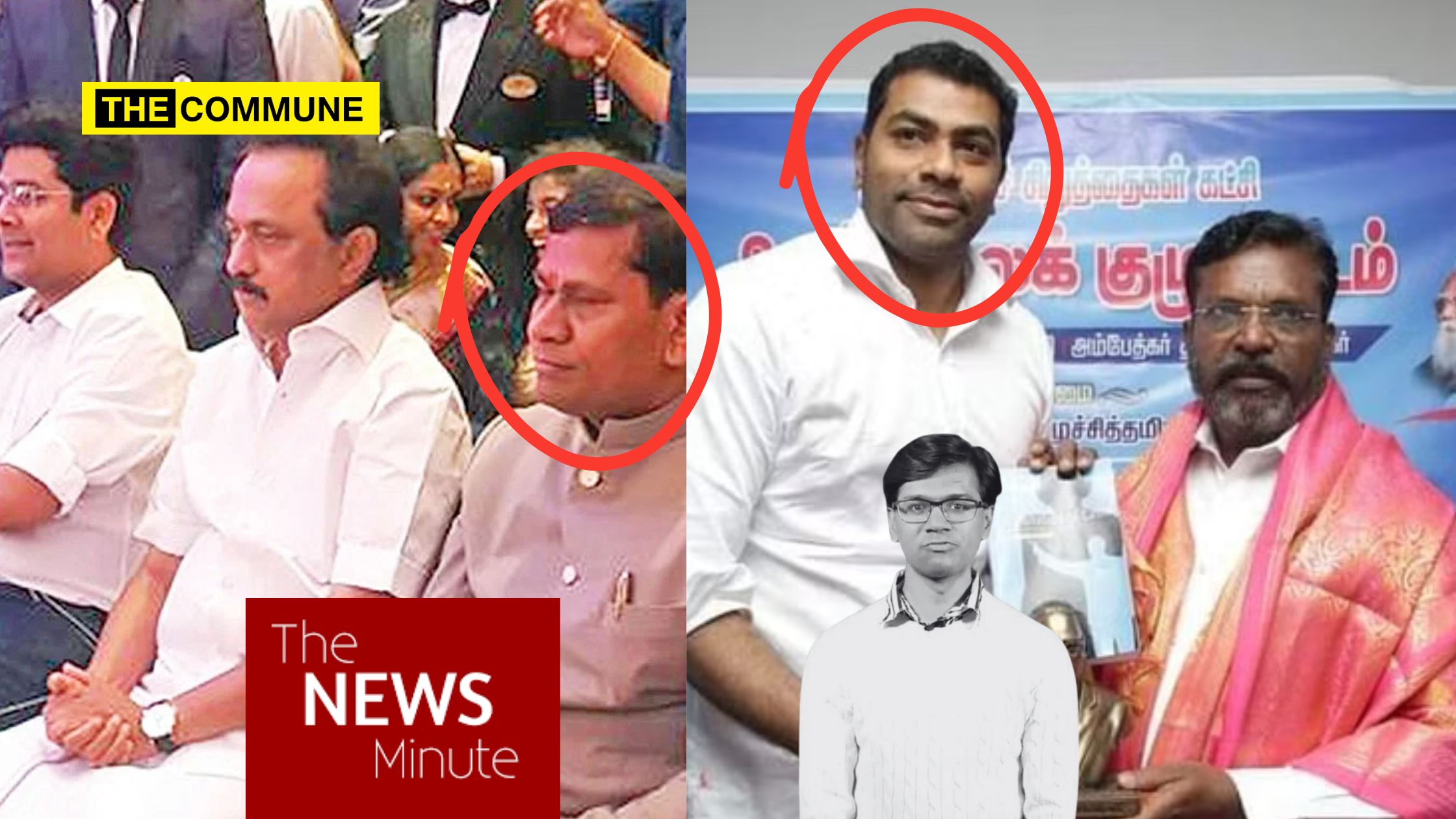
The involvement of Martin’s son-in-law, Aadhav Arjuna, in politics further underscored the family’s political entanglements. Arjuna assumed the role of deputy general secretary in the Dalit political outfit and DMK ally, Viduthalai Chiruthaigal Katchi (VCK), signaling the family’s deep-rooted ties within political circles.

Martin made substantial donations, including ₹2 crore to Deshabhimani, the CPI(M) mouthpiece, and contributions to disaster relief funds

Martin hired Congress leader and senior advocate Abhishek Manu Singhvi for legal representation. Tamil Nadu’s then Advocate General PS Raman appeared for Martin in the Kerala High Court.

For a considerable period, the Santanio Martin-owned company has been conducting the ‘Dear Lottery’ in West Bengal. In November 2022, the Central Bureau of Investigation (CBI) disclosed that Trinamool Congress (TMC) Minister Anubrata Mondal and his daughter had won the lottery five times within three years.

He is said to have made contributions to disaster relief funds, including ₹5 crores for Cyclone Gaja relief in 2018, donations towards the Vardah cyclone in 2016, and the 2015 Chennai floods. It was observed that Martin had good relations with whoever was in power, irrespective of the political party. 

He also claimed that he was very prompt in paying income tax and that he was one of the highest taxpayers in the country.

Subscribe to our channels on TelegramWhatsApp, and Instagram and get the best stories of the day delivered to you personally.

“The Former CM Must Not Give Half-Baked Answers,” Annamalai Slams EPS Over The Liquor & Drug Row In TN

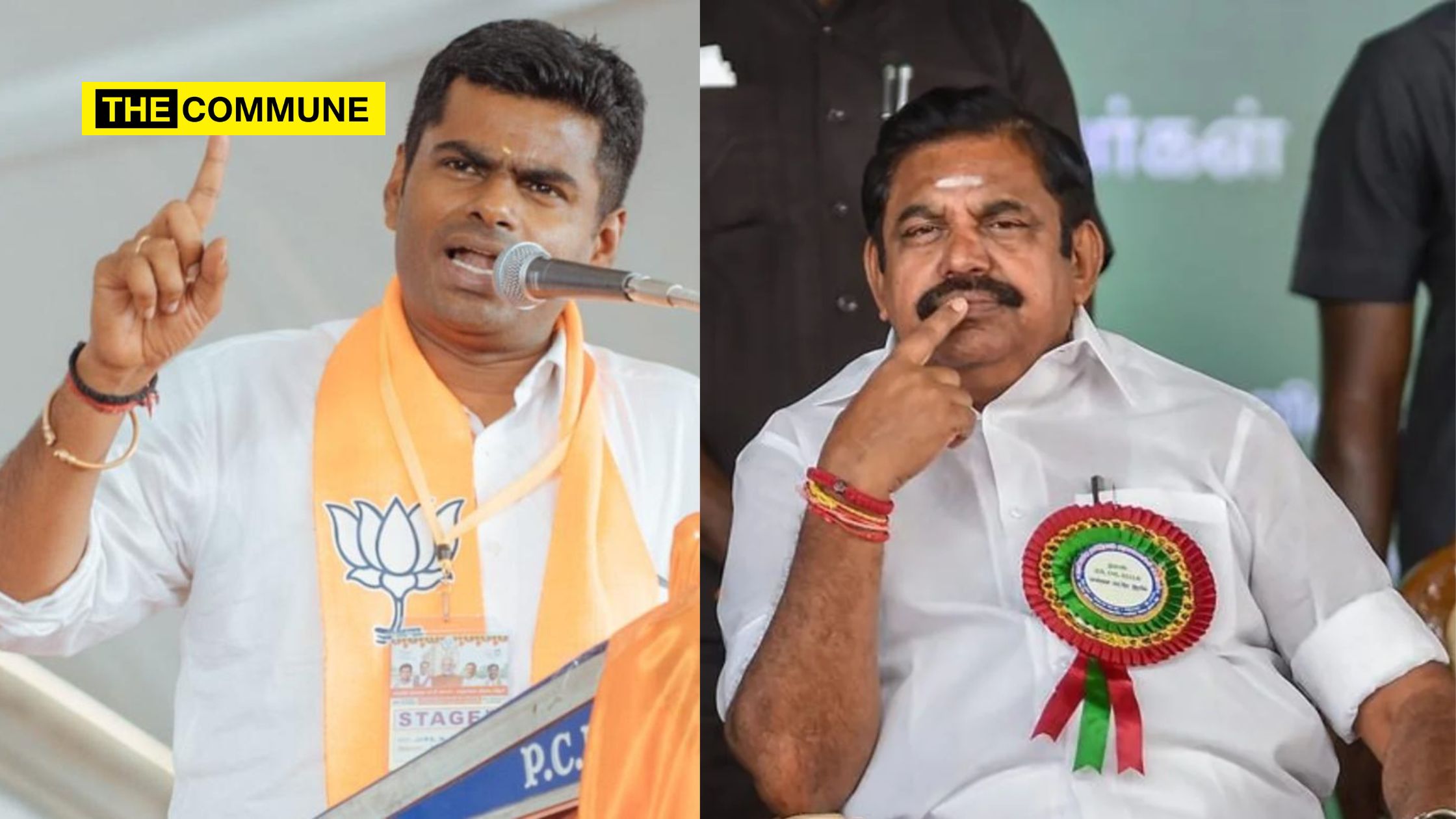
The rift between former allies BJP and AIADMK has intensified, with the leaders of both parties harshly criticizing each other during their respective press conferences. The latest point of contention was the issue of drugs, which prompted the Tamil Nadu BJP, along with its supporters, to stage a protest against drug prevalence in the state. In their criticism, they targeted both the DMK and AIADMK, citing recent drug busts and the sale of alcohol by TASMAC, respectively.

In response, Edappadi K Palaniswami (EPS), the former Chief Minister of Tamil Nadu, retorted by pointing out that BJP-ruled states have a higher incidence of drug-related issues, citing the example of a drug bust on the Gujarat coast. However, this statement was met with skepticism from news reporters, who questioned its validity. Annamalai, in turn, responded by accusing the former Chief Minister Edappadi Palaniswami of speaking in an ambiguous or incomplete manner.

On 12 March 2024 , Tamil Nadu BJP President K Annamalai, accompanied by party members, staged a protest against the DMK following a recent drug bust involving expelled DMK member Jaffer Sadiq and the increasing drug seizures in the state. During the protest, Annamalai criticized both the DMK and AIADMK, highlighted the issue by wearing a T-shirt that read “Save our children. Say no 2 drugs and DMK. Save our youth”. He urged people to reject both drugs and Dravidian parties, indicating the ‘D’ in DMK stood for both Drugs and Dravidian. Annamalai also criticized the AIADMK, led by Edappadi K. Palaniswami, for their previous governance, accusing them of neglecting public welfare while focusing on TASMAC revenue. He questioned the sincerity of the AIADMK’s recent protest against the drug menace, given their history of profiting from TASMAC liquor sales.

On March 13, Edappadi Palaniswami , the Leader of the Opposition, attended an Iftar event representing AIADMK in Chennai and later held a press briefing. During the session, journalists inquired about BJP state president Annamalai’s remarks concerning the drug trade in Tamil Nadu and his criticism of AIADMK’s management of Tasmac shops.

In response, Edappadi Palaniswami addressed the queries by stating, “TASMAC has not received such a complaint, if it had, we would have known. That way, it is the same in all BJP-ruled states. Even today, they have seized ₹450 crore worth of drugs in the BJP-ruled state. What is he (Annamalai) going to answer to that? Law and order in Tamil Nadu was protected only under AIADMK rule, Whoever it is they are equal before law”.

On 14 March 2024, journalists questioned Edappadi Palaniswami’s criticism of Annamalai, the BJP state president, who had addressed the press at Chennai airport responded by expressing surprise and disappointment at Palaniswami’s remarks, stating that it was both unfortunate and amusing that the former Chief Minister would comment without any understanding of the situation. He likened it to a joke. Annamalai emphasized the significance of border states in intercepting drugs, suggesting that catching drugs in such states should be applauded as an achievement. He cited the recent instance in Gujarat where a boat carrying drugs from Iran destined for Tamil Nadu was intercepted in Mundra. This, he argued, underscored the crucial role of border states in curbing the flow of drugs into the country.

“If the border states control drugs, their efficiency is based on their drug seizure. Therefore today the former chief minister (EPS) should understand this. They have been in charge as Chief Minister and should not give half-baked answers like this. If the police seize drugs that comes out in states like Nagaland, Uttarakhand, Himachal and Gujarat, it shows their efficiency. If you see today, they have confirmed once again that they are “relatives” (DMK & ADMK). If you accuse them (DMK) they wont speak, the former chief minister (EPS) is answering instead.

There is a difference between seizing ganja at a port in a border state and seizing synthetic drugs worth thousands of crores of rupees in areas like Tamil Nadu where there was no ganja circulation. Who does this? Central Government itself is doing this. Did the state Police go to the Mundra port and catch them or did the Tamil Nadu Police Department get a search warrant to Mundra port and caught it? Who caught it? All central government departments, NCB is seizing it. So, the former chief minister (EPS) is giving press statement to save whom? Is he confirming that DMK & ADMK are “relatives”?”, he said.

Subscribe to our channels on TelegramWhatsApp, and Instagram and get the best stories of the day delivered to you personally.
Union Railway Minister Ashwini Vaishnaw Fulfills TN BJP’s Railway Stop Requests In Tamil Nadu

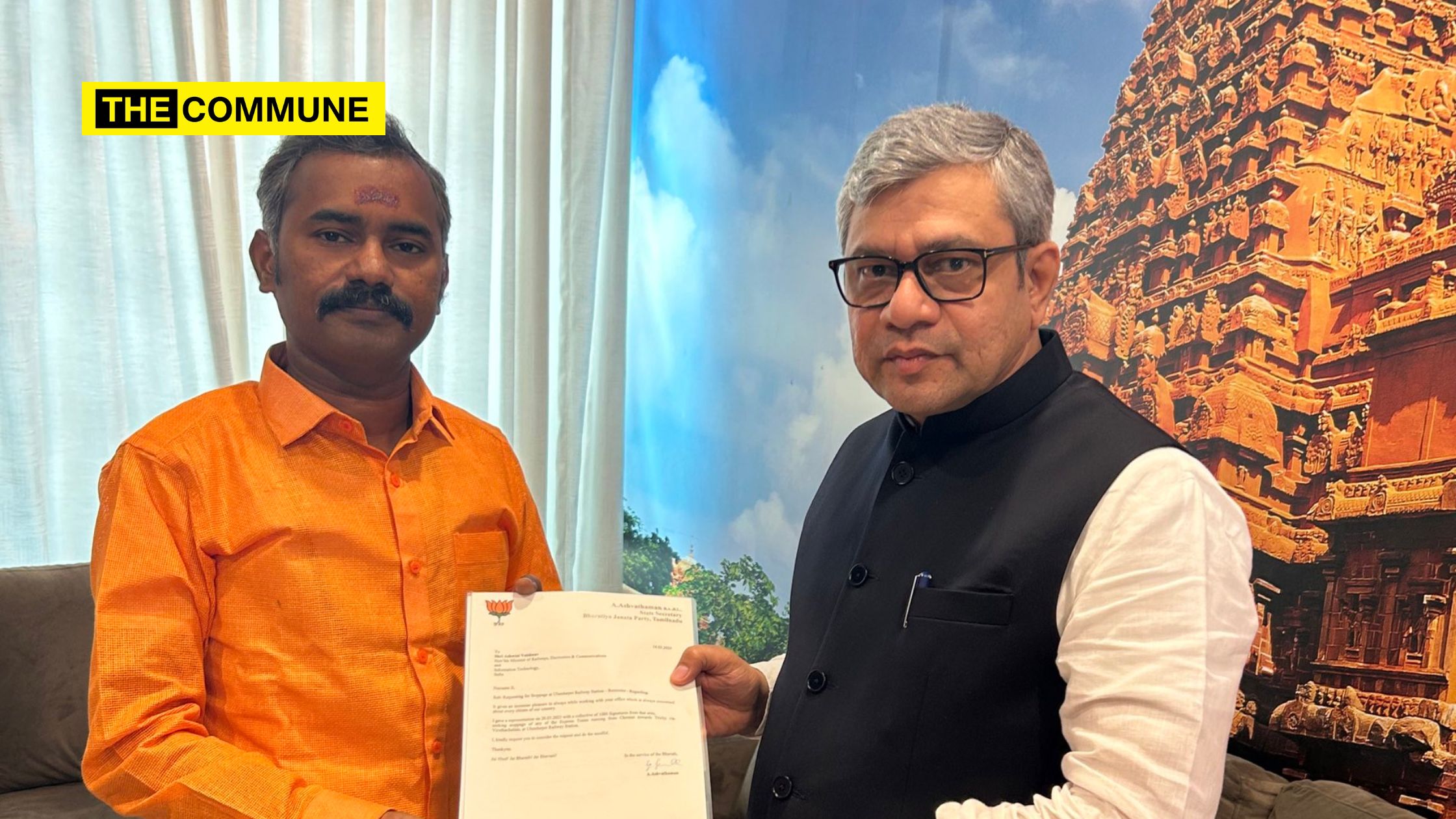
Tamil Nadu BJP State Secretary, A Ashvathaman, delivered a petition endorsed by 1,000 individuals to Railway Minister Ashwini Vaishnaw, urging for the halt of express train services at specific stations.

The Union Minister fulfilled two of BJP’s requests for train stops in a single day. On the morning of 14 March, 2024, Tamil Nadu BJP State Secretary Ashvathaman requested the Union Minister Railways Ashwini Vaishnaw, during his visit to Chennai, to implement the demands for express trains to halt at Ulundurpettai in Kallakurichi district and for the Tiruchendur express train to stop at Kuthalam in Mayiladuthurai district.

Minister Vaishnaw promptly instructed railway officials present to ensure the immediate fulfillment of these demands. Later that night, the Railway Board issued a report confirming that the Kollam Express would halt at Ulundurpet and the Tiruchendur Express at Kuthalam. The specific commencement dates for these halts is expected to be announced subsequently. The expeditious fulfillment of these longstanding requests by BJP State Secretary Ashvathaman has brought considerable satisfaction to the residents of Ulundurpet and Kuthalam.

Additionally, Ashvathaman submitted another petition to Minister Ashwini Vaishnaw, this time concerning the cessation of express trains at Panruti in Cuddalore district. Minister Vaishnaw pledged to address both petitions.

(with inputs from Dinamalar)

Subscribe to our channels on TelegramWhatsApp, and Instagram and get the best stories of the day delivered to you personally.
Alleged Fact-Checker Zubair Peddles Wrong Data About BJP’s Electoral Bond Money And Deletes Post After Getting Caught; DMK IT Wing Amplifies Zubair’s False Claims

As soon as the details of the electoral bonds were made available to the public via the Election Commission website, a large part of the population turned into data analysts and number crunchers. Among them was self-styled fact-checker Mohammed Zubair. 

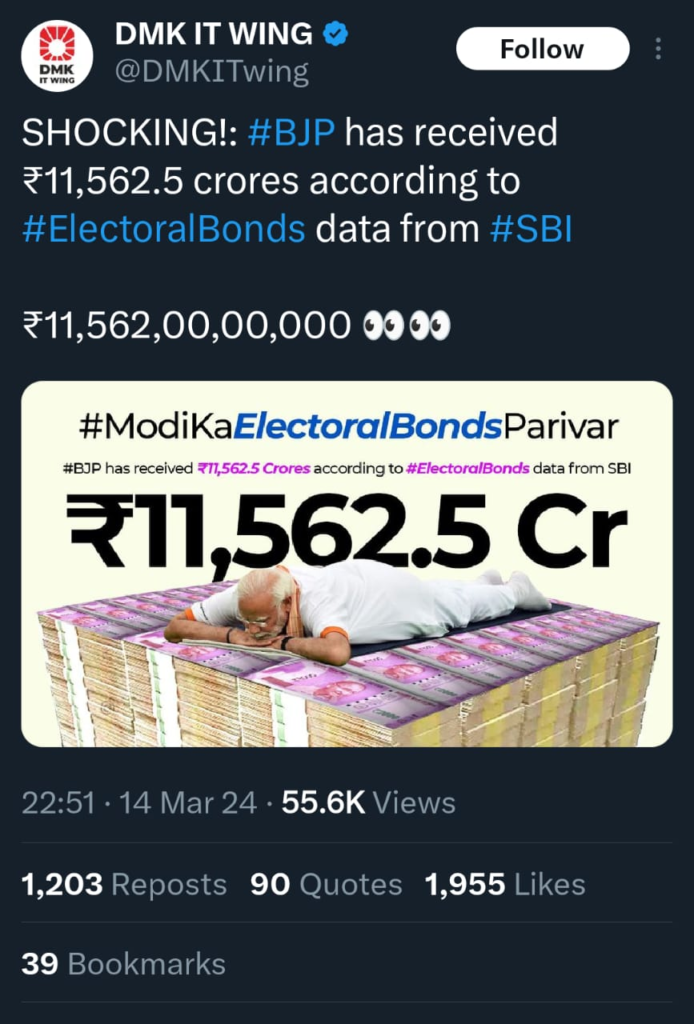
In what seemed to be a hurried post which he left on his X timeline for a good amount of time, he claimed the Bharatiya Janata Party received ₹11562 crores through electoral bonds. 

He later deleted this post stating, “There were a few double entries. Will share it again with corrections.”

And followed it up with this post where he claimed “Update: BREAKING! BJP RECEIVED ₹6061 (47.46%) CRORE! Electoral bonds data received from SBI, Here is the summary of the amount received by the political parties. Also included top donors.”

Netizens called out his hypocrisy stating he was happily sharing false information and trying to set an anti-BJP narrative with respect to the electoral bonds. 

Ironically, DMK IT Wing shared the same data that was first shared by the alleged fact-checker and quoted the incorrect amount of 11562 crores. They still have not deleted the post making the false claim.

The DMK IT Wing continues to make posts that are irrelevant, and false and peddles misinformation hoodwinking a large part of the public. However, the IT Wing handle has not posted anything on the donations received by the DMK itself. 

Subscribe to our channels on TelegramWhatsApp, and Instagram and get the best stories of the day delivered to you personally.
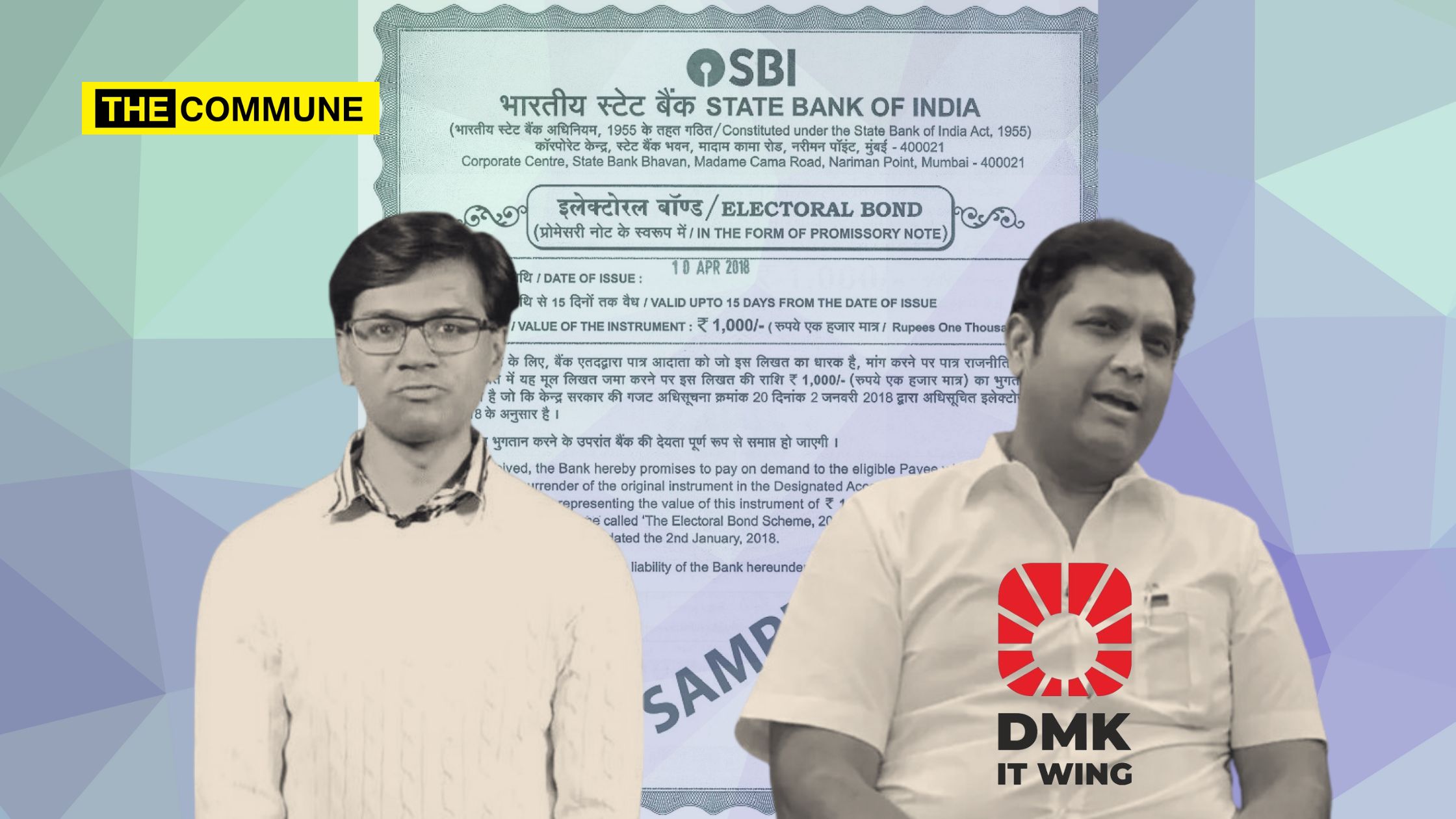
Thanthi TV & Dravidianist Journo Peddle Fake News That Pak Firm Bought Electoral Bonds At The Heels Of Pulwama Attack

The Supreme Court on 15 February 2024 ruled that SBI had to furnish all the details of the electoral bonds purchased by 15 March 2024. 

The court mandated disclosure by the Election Commission of donors, the donated amounts, and recipients. Despite the State Bank of India (SBI) requesting an extension until 30 June 2024 to reveal the details, the Supreme Court rejected their plea. Instead, it instructed the bank to furnish all relevant information to the Election Commission by the end of working hours on 12 March 2024.

On 14 March 2024, the Election Commission uploaded the details of the electoral bonds on its website as per court order.

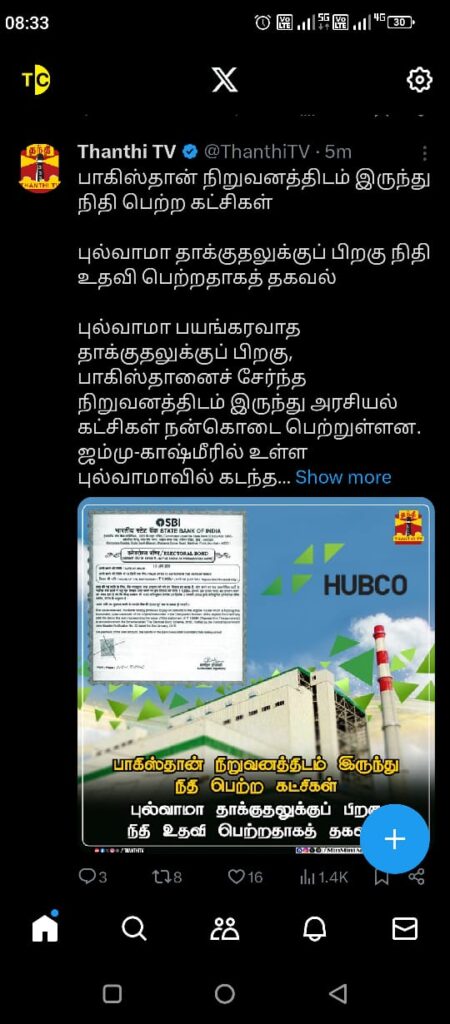
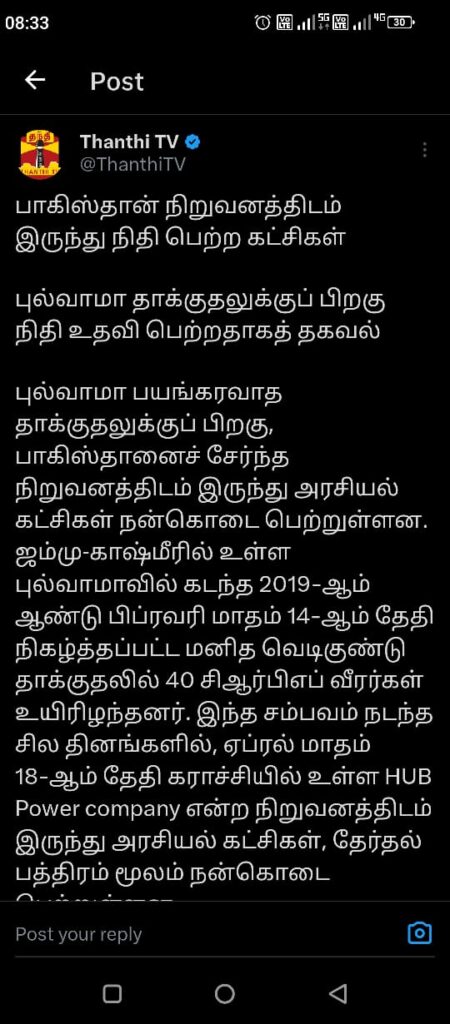
With the details out, every Tom, Dick, and Harry started “crunching numbers” and shared one fake news after another. One of the most baffling ones peddled by a news channel was that of claiming a Pakistani company had purchased the electoral bonds, that too at the heels of the Pulwama attack of 2019. 

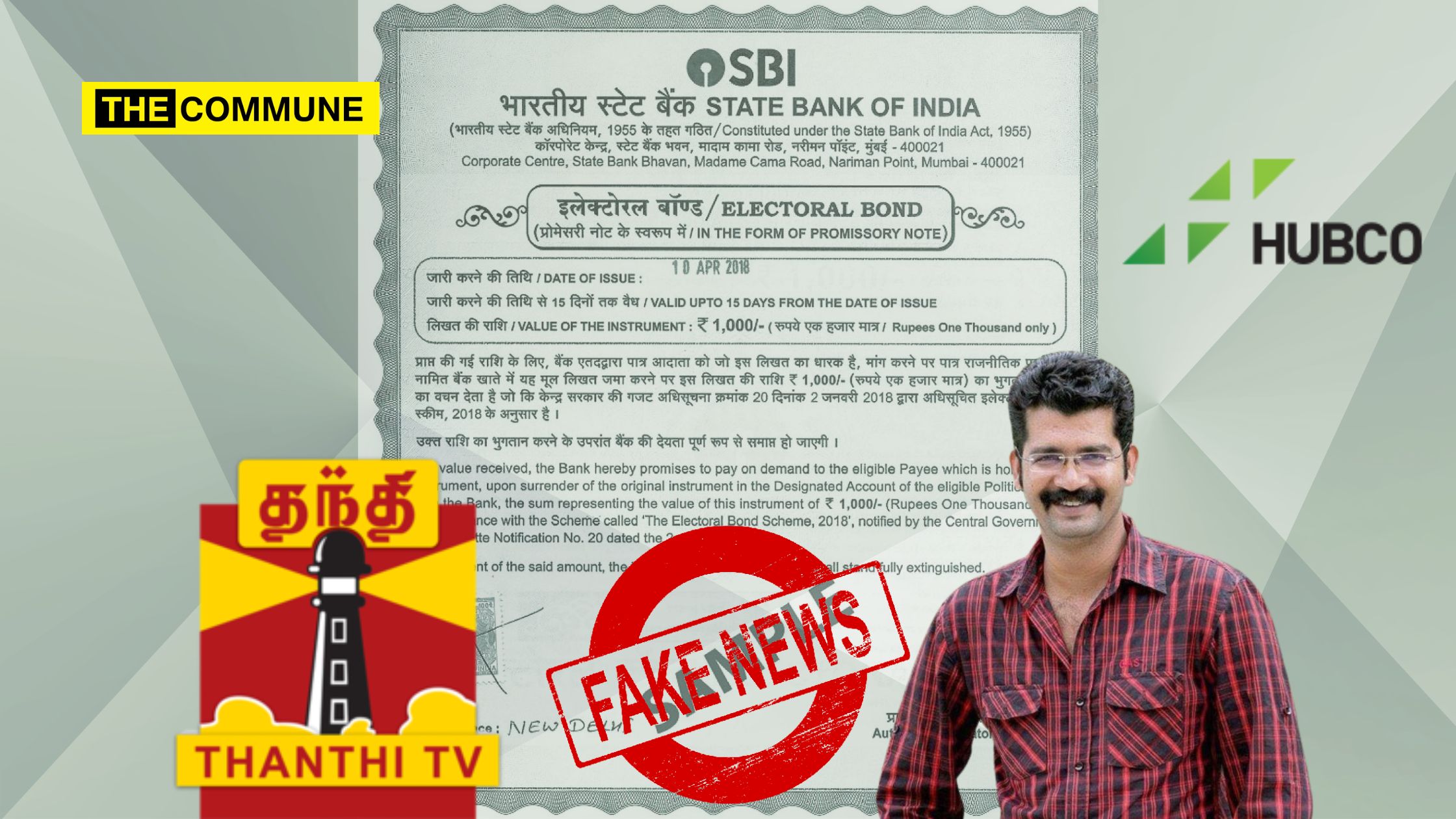
Thanthi TV claimed in its report that a Pakistani company named HUBCO Power had purchased electoral bonds. They wrote, “Parties receiving funding from Pakistani institutions. Reportedly received financial assistance after the Pulwama attack. After the Pulwama terror attack, political parties have received donations from a Pakistan-based company. On February 14, 2019, 40 CRPF personnel were killed in a bomb attack in Pulwama, Jammu and Kashmir. A few days after the incident, on April 18, political parties received donations from the HUB Power company in Karachi through election bonds.”

https://twitter.com/ThanthiTV/status/1768471622946869564


Thanthi TV deleted the post after being fact-checked.

Self-styled “journalists” like Aravindakshan also peddled the same misinformation. In a post on social media platform X, he wrote, “Collection of donations from the largest company in Pakistan within days of the Pulwama attack. After 2 years, a Lakshar-e-Toiba terrorist, who is wanted in connection with the Pulwama attack, was given a party post. During a meeting attended by the Home Minister, a terrorist wanted by both the Jammu and Kashmir Police and the NIA was present and posed for pictures. Will this happen in any country in the world?”

https://twitter.com/RealAravind36/status/1768368755917422978

Aravindakshan connected unrelated things and tried to set a narrative against the BJP.

Here is what the truth is:

If we look into the eligibility criteria for who can purchase these electoral bonds, the Press Information Bureau website clearly states “As per provisions of the Scheme, Electoral Bonds may be purchased by a person (as defined in item No. 2 (d) of Gazette Notification), who is a citizen of India or incorporated or established in India. A person being an individual can buy Electoral Bonds, either singly or jointly with other individuals.”

Now coming back to who or what this HUBCO Power is – first of all, Thanthi TV got the name itself wrong. The name of the company mentioned in the files on the EC website indicates a HUB Power Company. This company was established in 2008 in Delhi. This company is an all-India company that manufactures LED bulbs and Diwali decorative lights. 

https://twitter.com/OnlyTruth2024/status/1768456713768980710

Aravindakshan’s claim of the terrorist being a BJP member is also a flawed one. Jammu and Kashmir BJP chief Ravinder Raina back in 2022 responded to the reports of this news and stated“Talib Hussain is neither an active member of the BJP nor a primary member. There was a letter circular, on the basis of which it is believed that Sheikh Bashir, who is the President of BJP Minority Front of Jammu and Kashmir had appointed Talib Hussain on May 9.”

Addressing ANI, Raina clarified, “A couple of years ago, Talib Hussain along with his three colleagues used to come to the BJP office as a media person. He had also interviewed me many times, he used to call himself a reporter for a YouTube channel named ‘New Sehar India.'” Raina continued, emphasizing the security concerns, “As a journalist, Hussain clicked photos with us many times in the BJP office. Pakistan terror outfit wanted to target the head office of the BJP of Jammu and Kashmir. It has been done through the targeted medium and carried out such incidents.”

On both fronts, Aravindakshan’s claims fall flat and the narrative that he tried to set did not even cause a ripple.

Electoral bonds were introduced in March 2018 as a replacement for cash donations to political parties, aiming to bolster transparency in political funding. These bonds were to be exclusively redeemed by eligible political parties through authorized bank accounts, with SBI being the sole authorized bank for issuance.

Subscribe to our channels on TelegramWhatsApp, and Instagram and get the best stories of the day delivered to you personally.