Home Blog Page 744

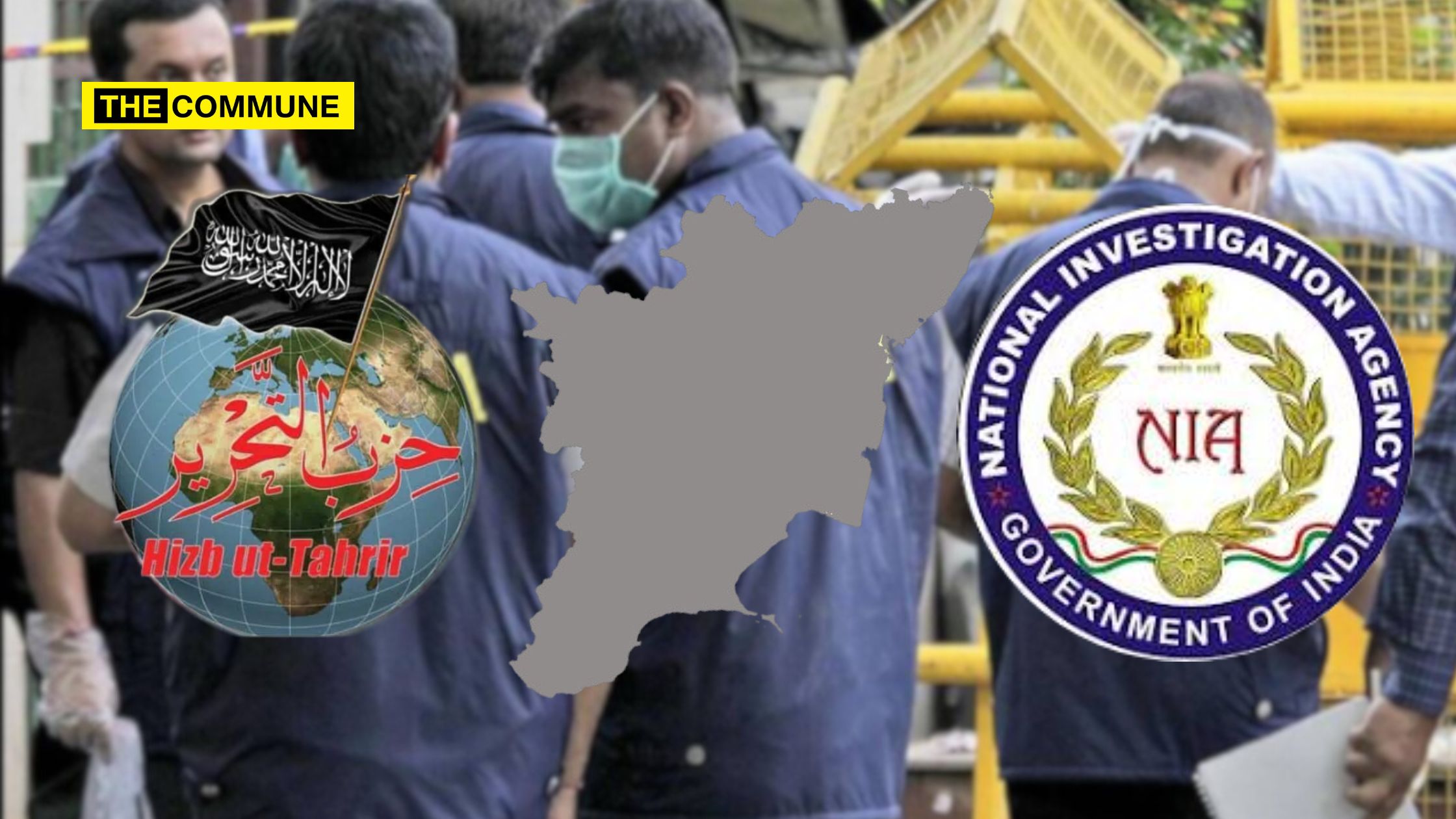
Secret Meetings Held In Chennai, Karur And Kanyakumari By Men Associated With Hizb-ut-Tahrir Reveals NIA Probe

Police Arrest Six Men Recruiting For Hizb ut-Tahrir

National Investigation Agency (NIA) officials have initiated a probe into the terror recruitment activities linked to the proscribed extremist group Hizb-ut-Tahrir.

Dr. Hameedu Hussain, a resident of Royapettah, Chennai, and a Petroleum Chemical Engineer who served as an Honorary Professor at Anna University, has been detained under UAPA (Unlawful Activities (Prevention) Act) along with his father, Ahmed Mansoor, and sibling, Abdul Rahman. The trio was apprehended by the Cyber Crime division of the Chennai Central Crime Branch on charges of associating with Hizb-ut-Tahrir, which is outlawed in numerous nations. Subsequently, Mohammad Maurice, a 36-year-old Chennai local, Qader Nawaz Sharif, aged 35, and 46-year-old Ahmed Ali Umari were taken into custody for their connections with the aforementioned individuals.

The scope of the inquiry has since expanded, with NIA officials undertaking a comprehensive investigation under a Deputy Superintendent of Police’s supervision.

NIA representatives have disclosed that the gravity of the offenses has necessitated their involvement. Dr. Hameed Hussain is suspected of actively engaging in the recruitment for terrorist groups and has a history of international travel, which is currently under scrutiny.

It has come to light that four individuals closely associated with Hussain have deactivated their mobile phones and are now fugitives.

Investigations reveal that Hussain has orchestrated training sessions and secret meetings on extremist ideologies not just in Chennai but also in Karur and Kanyakumari. Efforts are underway to gather information about the ‘Modern Essential Educational Trust,’ established for similar purposes, and to track the individuals involved with this entity. They have utilized platforms like YouTube for their recruitment and radicalization of youths in Tamil Nadu.

In February 2024, the National Investigation Agency (NIA) conducted a series of raids across 21 sites in Tamil Nadu, resulting in the arrest of four individuals. The operations targeted 11 venues linked to an educational institution implicated in the indoctrination of youth with Islamic State (IS) ideologies under the guise of Arabic language instruction, with the intent of inciting them to commit terrorist acts.

These actions were related to two investigations: one concerning IS cells inspired by Zahran Hashim, the mastermind behind the 2019 Sri Lanka Easter bombings, and the other involving the 2022 Coimbatore car explosion and the broader issue of IS indoctrination and recruitment within Tamil Nadu.

The authorities confiscated a variety of items, including six laptops, 25 mobile phones, 34 SIM cards, six SD cards, three hard drives, and numerous documents and material evidence.

The NIA’s scrutiny extended to eleven sites associated with either Madras Arabic College or Kovai Arabic College, where covert radicalization efforts were underway. These efforts involved the dissemination of extremist ideologies and the promotion of violent jihad to unsuspecting students enrolled in Arabic courses at various local study centers throughout Tamil Nadu.

The radicalization campaign also unfolded online, utilizing social media platforms and messaging apps like WhatsApp and Telegram. IS affiliates exploited these digital channels and the educational classes to deliver extremist lectures aimed at advancing the Khilafat and IS doctrines, which stand in opposition to India’s foundational values of secularism and democracy, as per the NIA’s Sunday announcement.

Simultaneously, NIA units raided an additional ten locations linked to the Coimbatore car bombing incident. These searches encompassed areas associated with suspects who were members of a secure mobile communication group, alongside other detainees. Investigations revealed that these individuals praised Zahran Hashim and utilized the group to deliberate on IS activities and the potential for establishing the group’s presence in India.

The NIA’s findings indicate that susceptible youths were being groomed to execute terrorist deeds and engage in illegal activities, such as the Coimbatore car bombing. It was discovered that ten individuals apprehended in connection with the bombing had ties to Kovai Arabic College in Coimbatore.

Among those arrested following the raids, three were connected to Madras Arabic College. This includes Jameel Basha Umari, the founder of the college, known for advocating fundamentalism, extremism, and radicalization. He openly supported the Khilafat ideology and endorsed the notion of sacrificing oneself for violent jihad. Two other detainees, Maulvi Hussain Faizy and Irshath, both alumni of Jameel and Madras Arabic College, were instrumental in renaming Madras Arabic College to Kovai Arabic College. The fourth individual apprehended, Syed Abdur Rahman Umari, was found in possession of incriminating IS-related materials and was actively involved in disseminating ISIS principles to those implicated in the Coimbatore car bomb case through clandestine gatherings and sermons.

(With Inputs From Dinamalar)

Subscribe to our channels on TelegramWhatsApp, and Instagram and get the best stories of the day delivered to you personally. 

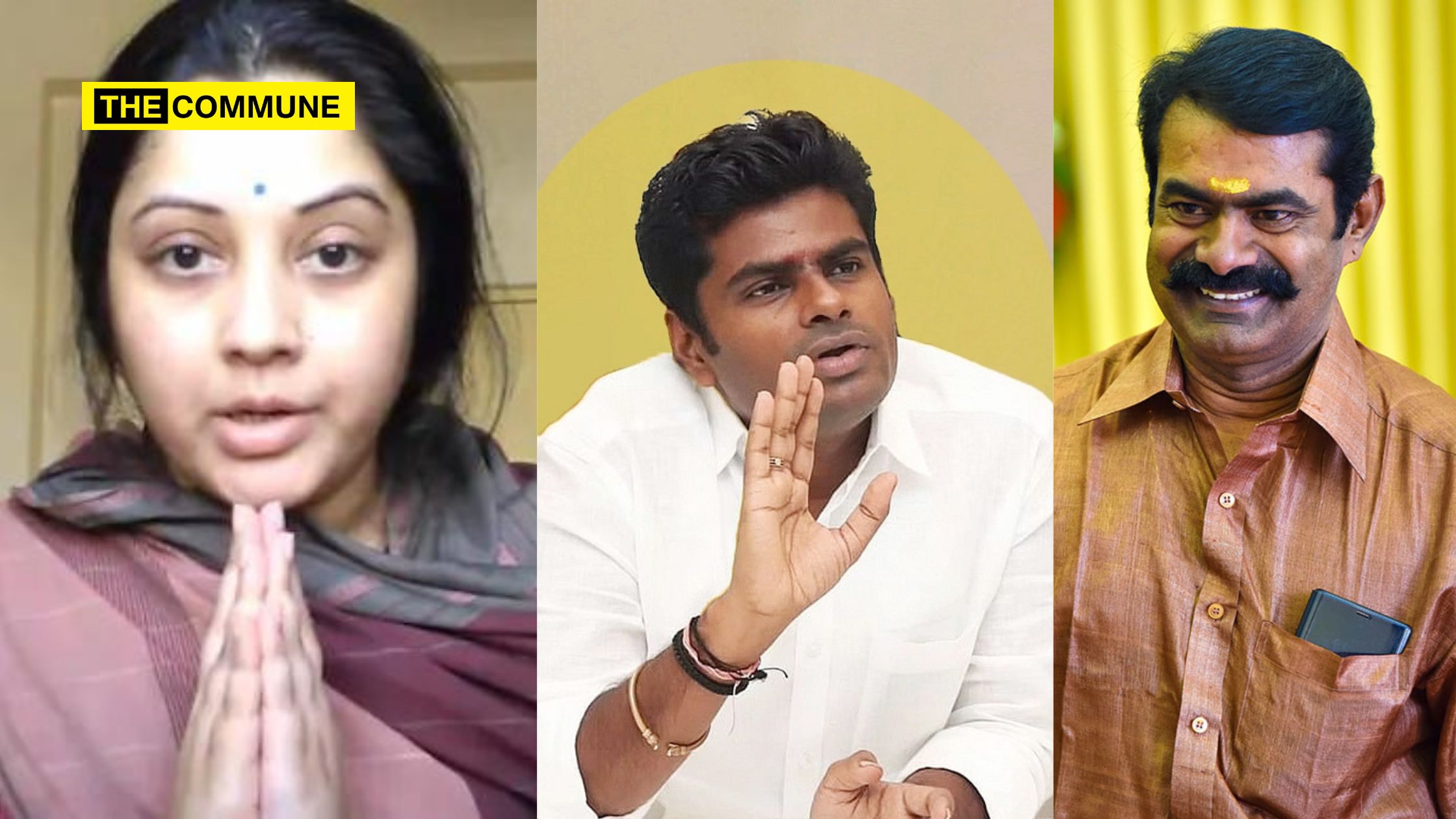
“Whenever Vijayalakshmi Talks, Seeman Will Attack BJP”: Annamalai Responds To Seeman

Tamil Nadu BJP President K Annamalai has roasted Naam Tamilar Katchi (NTK) chief Seeman amidst a debate over which party holds the position of the third largest in Tamil Nadu in terms of vote percentage. Annamalai accused Seeman of involving the BJP in unnecessary controversies to distract from the allegations made by actress Vijayalakshmi against Seeman.

When asked about Annamalai’s comments about BJP’s significant growth in Tamil Nadu, Seeman, the NTK coordinator, responded by challenging the BJP to contest elections independently. He asserted that a party’s strength should be measured by its standalone performance, questioning how many votes the BJP could secure on its own. Seeman declared that if his party failed to prove its strength, he would dissolve it and leave politics.

Speaking to the reporters, NTK chief Seeman stated, “Stand alone in elections and show that you are a man. How many individual votes did you get after the June 4th election? If it is beyond me, I will dissolve my party. You will know who is the biggest party right? You should not join the alliances (votes), standalone face to face like a lion, fight alone, Then he is a man, he is a fighter.”

In a subsequent press conference in Chennai, Annamalai addressing Seeman’s challenge remarked that Seeman tends to target him whenever Vijayalakshmi raises her voice. Annamalai emphasized that Seeman should respond to Vijayalakshmi’s allegations directly, rather than diverting attention to the BJP.

Annamalai highlighted that the BJP contested in 19 constituencies in Tamil Nadu independently, with party-affiliated independents standing in 4 additional seats. He suggested comparing the BJP’s total votes to those of the NTK, subtracting any votes allegedly bought by the NTK, to determine the true standing of each party.

Referring to Seeman’s previous statements about dissolving his party if it did not surpass the votes of the People’s Welfare Alliance, Annamalai noted that Seeman evaded the issue when the results came out. Annamalai expressed respect for Seeman, emphasizing that he did not wish to engage in irrelevant disputes but maintained that the BJP would perform strongly in upcoming elections, both in Tamil Nadu and nationally.

Annamalai stated, “Let go of brother Seeman, whenever sister Vijayalakshmi talks, brother (Seeman) comes on top of me. Sister Vijayalakshmi will attack from there, and Seeman brother will immediately attack me without any connection. Did I make a fuss on Seeman? He should reply to sister Vijayalakshmi, why is he talking to me, did I make a fuss?”

“I am saying this generously and you are going to see the result on 4th June. Today, Bharatiya Janata Party is standing alone without Dravidian parties, we are standing in nineteen places and symbol is standing in four places. You ask brother Seeman to compare BJP’s 23 seats. I didn’t even say closely and would give minus thirty percent. Let them minus thirty percent of the votes we got, let’s see if he comes closely.”, he added.

“Well, you seem like a good person, so I’ll give you another minus 20 percent discount, so I’ll give you a 50 percent discount. He is running a political party, let he be good, I don’t want to tell him to shut the party down. What did he say earlier? I will buy one vote more than the People’s Welfare Alliance (Makkal Nala Kootani)… The editor has caught him right that the party will dissolve the party. Right after the 2016 election someone asked and he said, ‘I told you but …what’.” He further added

“So, I do not want to leave brother Seeman in this embarrassment, let him run the party, Seeman’s voice is an important voice in Tamil Nadu, and it should be there. I don’t want to get into an argument or debate. I am a person who has respect for Seeman. I am saying not to leave it upon us to divert something without connection. If this is done then on 4th of June, I want to see your face and you have to see our face, I don’t know why he is coming to this match without needing Aga. So, I don’t know why he is unnecessarily coming to this competition.” He finally said

Annamalai concluded by expressing confidence that the BJP would secure more than 400 seats in India and return to power for a third term, referencing Prakash Raj’s unsuccessful bid in the Karnataka elections as an example of the BJP’s competitive edge.

Subscribe to our channels on TelegramWhatsApp, and Instagram and get the best stories of the day delivered to you personally. 

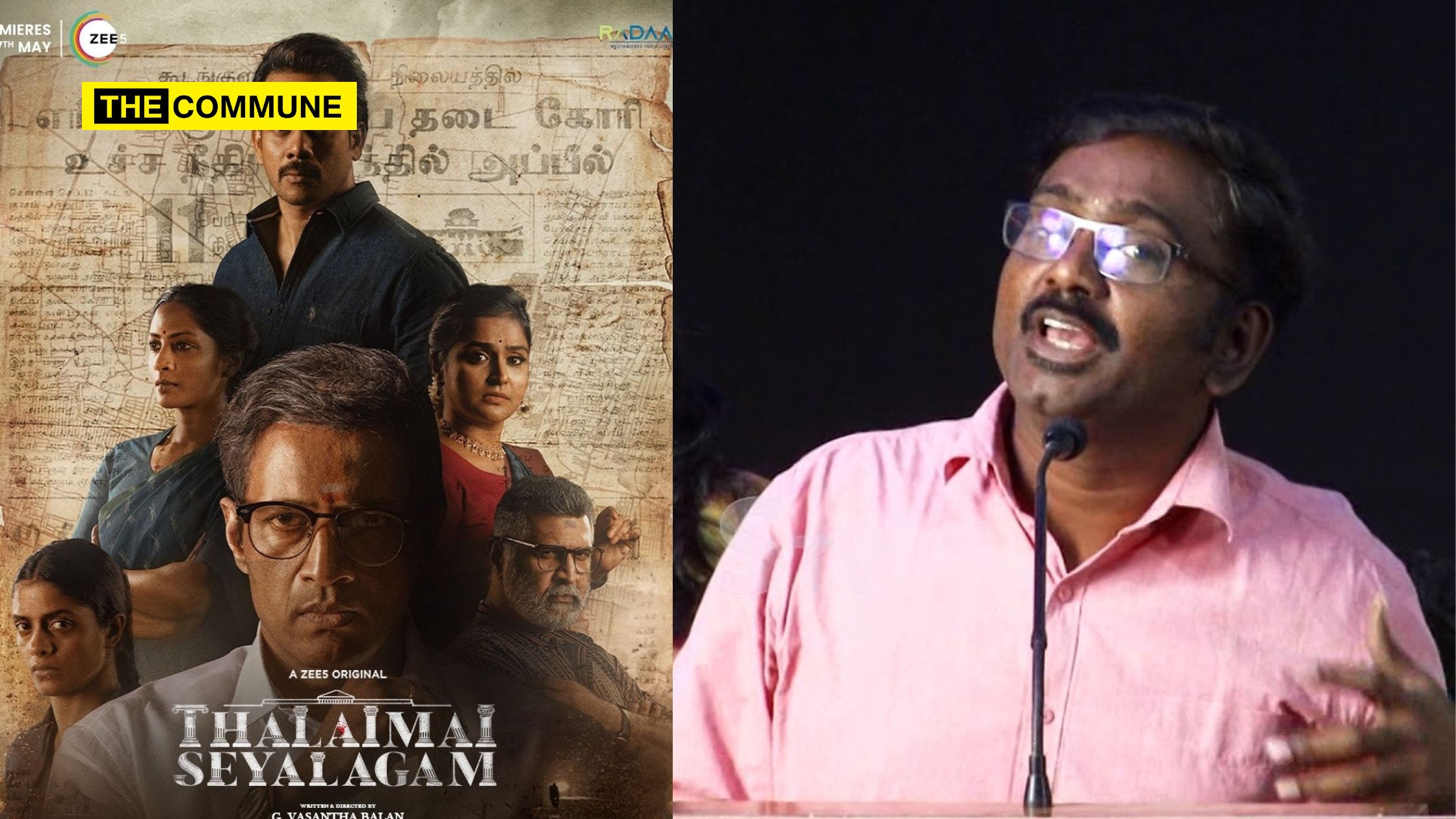
Dravidianist Film Director Vasanthabalan Justifies And Normalizes Corruption

Dravidianists in Kollywood using cinema as a tool to vilify Hindus, glorify Dravidian ideologues and propagate Dravidian propaganda of so-called ‘social justice’, ‘rationalism’ and what not, is nothing new. However, this time, a DMK sympathizing filmmaker Vasanthabalan has gone on to justify political corruption.

Vasanthabalan shot to fame with his debut film Veyil, produced by Shankar’s S production. His other film Angadi Theru, based on the lives of people working in textile showrooms in Ranganathan Street too became a hit. His other film Kaaviya Thalaivan, a period drama starring Siddharth and Prithviraj Sukumaran received critical acclaim but didn’t perform well in box office. There after his cinematic graph has been downhil. After a long hiatus, he’s now come with his latest series titled “Thalaimai Seyalagam” on Zee5 which is nothing but a boring Dravidian propaganda with no nuance.

Vasanthabalan’s narrative justifying corruption occurs against the backdrop of the BJP government going after corrupt dynastic parties. In Tamil Nadu prominent DMK politician Senthil Balaji is behind bars for corruption and action is awaited on many other bigwigs.

Now, with a DMK sympathizer like Vasanthabalan attempting to normalize corruption through cinema, it becomes alarming. As these films reach people’s homes, they may spread the notion that political corruption and profiteering shouldn’t be considered a big deal and must be normalized and made acceptable.

In a recent interview to the ‘Take Left’ YouTube channel Vasanthabalan has opened up his views and acknowledged that his ideas emerge from inspiration from communism and related figures. One of the anchors who interviewed him was ‘Minor’ who runs the rabid anti-Hindu YouTube channel U2 Brutus which had abused Lord Nataraja.

The interview began with a question about why the series was named “Thalaimai Seyalagam” (Secretariat). Vasanthabalan explained that the series focuses on the chief minister’s office, depicting the power struggles associated with the position. He described the legislative process of passing bills in parliament and questioned how a councilor, earning a mere 5000 rupees, can fulfill their duties after spending significant amounts of money to win the election.

Most of the interview centered on his reasons for choosing this series and the plot. As usual, he subtly reinforced the Dravidian ideology in Tamil Nadu, highlighting how it provided opportunities for everyone to study, in contrast to North India, where his mindset often revolved around same Dravidianists thought of hardworking but low-skilled labor. However, what was concerning in the interview was that both the YouTube channel and the host appeared to be promoting the idea of ignoring the issue of corruption.

The host praised Vasanthabalan, expressing admiration for a particular line in his series: “In the name of abolishing corruption, they will demolish democracy.” The host noted that even the leftist parties wouldn’t make such a statement and asked how Vasanthabalan arrived at this conclusion, suggesting that he believes corruption isn’t the main issue here.

Vasanthabalan replied, “I pay close attention to politics, not as much as you, and I pay attention to it whenever I get time. The way I see it is,  free rice comes to someone who doesn’t deserve it. They give that rice to their maid, who also sells it outside without using it. An idli vendor buys that rice on the road and sells the idli for 50 paisa. So the fund given by a government gets stolen somewhere, it benefits someone, and finally it reaches me as an idli for 50 paisa. Jeyaranjan (Dravidian Stock economist who is currently Vice-Chairperson of the State Development Policy Council) expressed this view in an interview. I really liked this idea.”

He added, “Let’s take a member from a particular community, he comes to a position, he commits a corruption of five crore rupees. But what he will do with those five crores is that he will marry his daughter, give that money to the ten people in that community, this money will be used for the emergence of that community… This will be a way for that community to study, to raise the standard of living or to improve the community. But he has done corruption, I am not saying no. But how I see is, it will take nearly 50 years for that community to advance. But somehow this money reaches the people.”

Vasanthabalan later remarked that while he was aware of the widespread agreement on the need to eliminate corruption, he went a step further to investigate the “red coin” and uncover its propagators, leading him to some insightful discoveries. He then praised Director Vetrimaaran for positively shaping the perception of the name “Asuran,” Director Ranjith for presenting Ravanan in a favorable light, and Director Maari Selvaraj for depicting a pig beautifully. Inspired by these examples, Vasanthabalan incorporated the concept of the “red coin” into his series to showcase its hidden aspects, he said.

Subscribe to our channels on TelegramWhatsApp, and Instagram and get the best stories of the day delivered to you personally. 

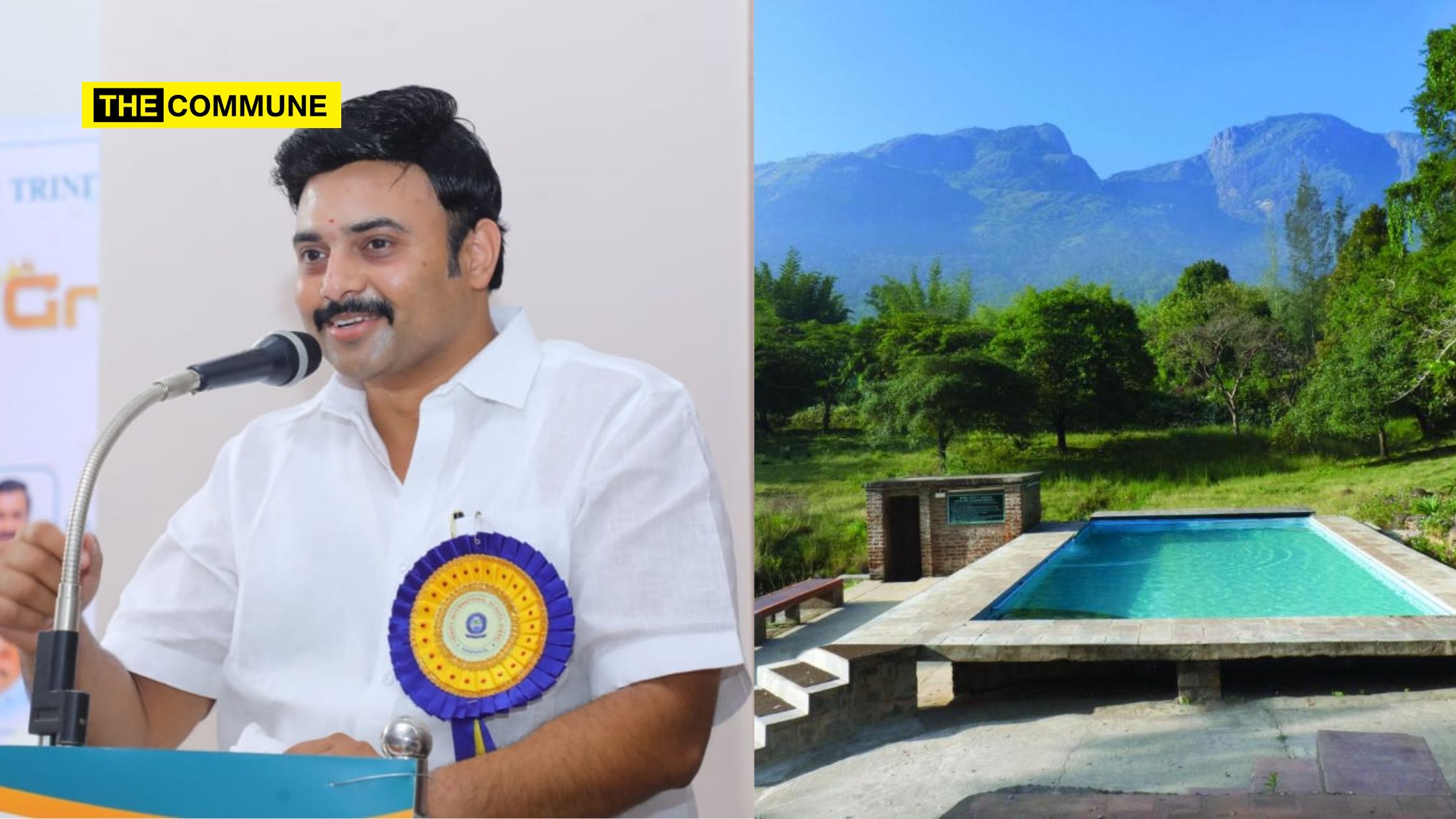
DMK Forest Minister Stays At Partially-Closed Illegal Resort Located In Elephant Corridor Of Mudumalai Tiger Reserve

The vacation of DMK Forest Minister M. Mathiventhan at the Mudumalai Tiger Reserve has sparked controversy among conservationists. Mr. Mathiventhan was reportedly staying at ‘Jungle Hut’, a resort located within the notified elephant corridor in Sigur, which has been a subject of scrutiny and legal action due to its location and construction.

The ‘Jungle Hut’ is among 12 resorts flagged by the Supreme Court-appointed Segur Plateau Elephant Corridor Inquiry Committee in 2023. The committee highlighted that these resorts, including De Rock, Rolling Stones, Forest Hills Farm and Guest House, Jungle Retreat, and Gordon Jungle Properties, collectively house 74 buildings. These constructions were noted as being large commercial establishments, not small residential buildings, and were built without all the necessary approvals. The committee directed the Nilgiris district administration to take “necessary action” against the owners and called for the demolition or voluntary dismantling of these illegal structures.

Despite these orders, no substantial action has been taken to remove the buildings along the elephant corridor. This inaction has raised suspicions among conservationists that government officials may be colluding with resort owners to maintain the status quo.

K. Mohanraj, a noted conservationist from Tamil Nadu, criticized the Minister’s choice of accommodation. “There are forest department-run guest houses in Mudumalai. There is no need for the Forest Minister to stay in a resort, part of which has been deemed to have been functioning illegally,” he was quoted saying in a report by The Hindu. Mohanraj further suggested that the Minister’s decision to stay at the resort indicates a possible alignment with big businesses, questioning the government’s commitment to protecting the elephant corridor.

Responding to the concerns, Mr. Mathiventhan told The Hindu that his stay at the resort was purely for convenience. “I am here on vacation with my family. We found it challenging to manage children while staying in forest guest houses, so we opted for a private property,” he explained.

(With inputs from The Hindu)

Subscribe to our channels on TelegramWhatsApp, and Instagram and get the best stories of the day delivered to you personally. 

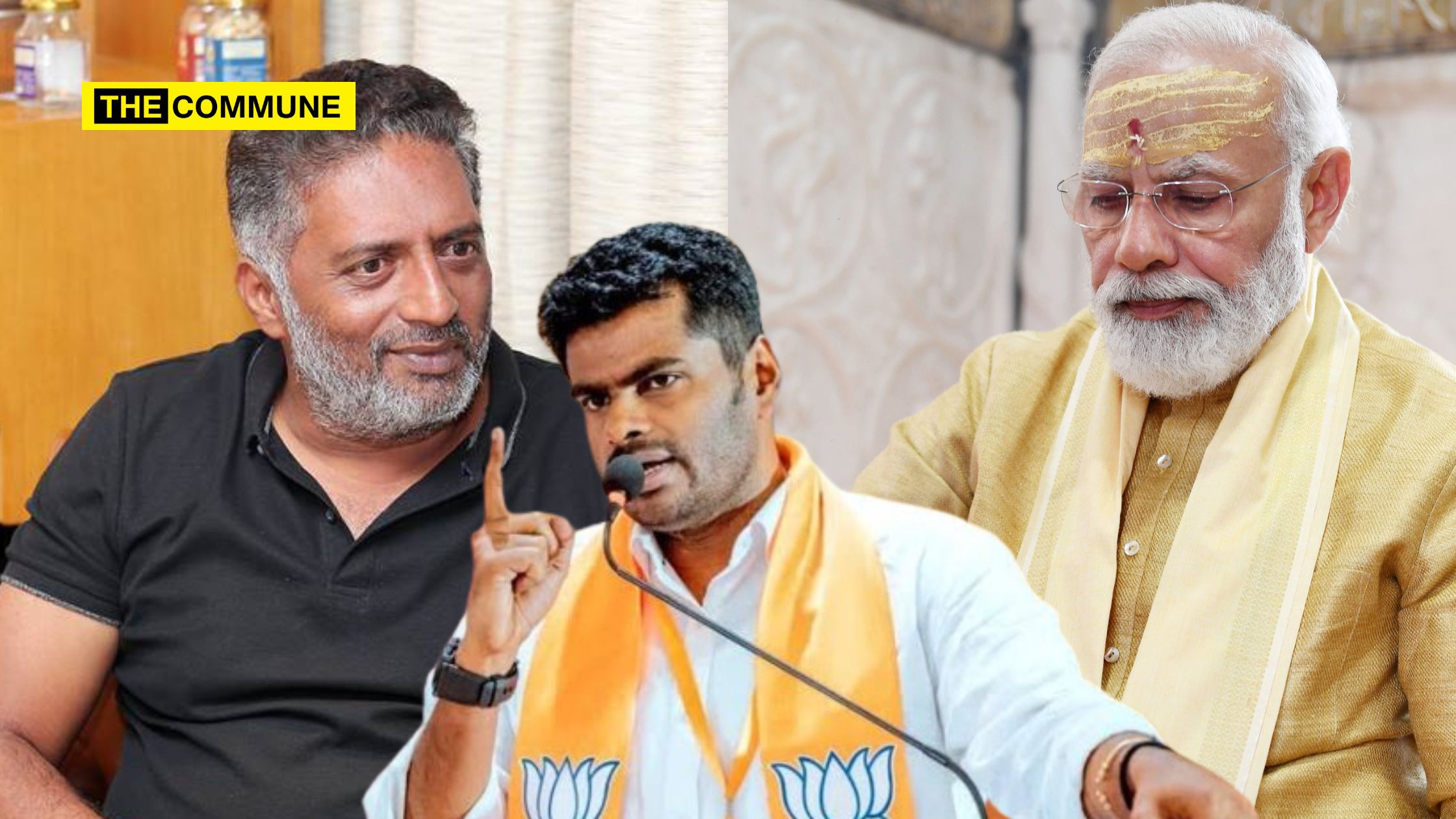
“He’s A Test Tube Baby”: Alleged ‘Actor’ Prakashraj Goes On A Tirade Against PM Modi, Annamalai Hits Back

Actor Prakash Raj’s recent remarks about Prime Minister Modi, which he made during the Viduthalai Chiruthaigal Katchi (VCK) award ceremony, have stirred up significant controversy. He referred to the Prime Minister as a “test tube baby,” a comment that has been widely viewed as derogatory.

On 25 May 2024, the annual ‘Ambedkar Sudar’ award, instituted by the VCK, was presented to actor Prakash Raj by the party’s chief, Thirumvalavan. The ceremony took place at the Kamarajar Arena in Teynampet, Chennai. Prakash Raj accepted the award, citing ideological alignment with Thirumavalavan.

During his speech at the event, Prakash Raj acknowledged that his political journey and policy struggles were not as extensive as those of Thirumavalavan. He expressed uncertainty about his future after the departure of godson (Modi). He also voiced his fears about the country’s future had Ambedkar not written the constitution, attributing Ambedkar’s thought process to the shame he had experienced.

Prakash Raj recounted his visit to a town called Wadi in Karnataka during the election. He described how Ambedkar had arrived there by train many years ago and how a platform had been set up for him. Prakash Raj shared his experience of walking down the market street in an open jeep, meeting people who wanted to touch and talk to him. He spoke of the different people he met, from the curry shopkeeper to the ironmonger, and the children who watched him with interest.

He then criticized the Prime Minister’s approach, suggesting that he was out of touch with the people’s hunger and pain. He ended his speech by stating that the Prime Minister was not a god’s son, but a “test tube baby.” This comment has since sparked significant controversy.

“Look at him, a fascist, a dictator, He will arrive in a Pushpaka vimana, stand on a chariot, everyone will shower flowers… People will stand on other side of the fence. When will he understand our hunger. He who does not know the touch of people, who does not know that scent, who does not touch that sweat, will he understand anything? He’s not a god’s son, he’s a test tube baby

I have no fear of king arrival. I am the one who says ‘no fear, no fear’, there is nothing to be afraid of. Our fear is his strength. And there is a dictator and a giant (Rakshas) right. He who thinks that there is no one to oppose me, there will be a tiny man in him. At that time, when he feels that he is going to lose, he becomes a giant. Now, he is in that situation. So that we should have to prepare for that. It’s not like that we have won, victory is nothing, In these ten years he has sown seeds everywhere right. Today, a Supreme court judge says that he is proud that he have come from RSS on his retirement date, then don’t we understand how his judgments given till now? there is a constant struggle.“, he further said.

Prakash Raj then stated that Modi is a product of Hitler and there is no living history for such people. Humanity or nature will not tolerate such individuals. They will come and go, but the wounds they leave behind will take time to heal. Therefore, we must take steps to ensure he (Modi) does not return.

Prakash Raj then swiftly shifted his focus, first criticizing the Hindus, then advocating for the minorities, “Their education beyond that humiliation, those horizons they have glanced… we have to see that, only then, we can root out this sanathan and fascism. If an individual’s thumb is severed, it is an individual’s pain. If Ekalayvan’s thumb is amputated, it is a pain of the society. They are saying majority, majority right. It is the responsibility of the majority to look after the minority.“,

However, towards the end of his speech, it seemed Prakash Raj criticized his own platform. After narrating a story that elections are not about selecting the PM or the CM but about electing a representative who will speak for the voters, he lamented that politicians and influencers want him to deliver such social messages but never allow him into politics. He then started to promote himself on the stage.

In response to the controversial actor Prakash Raj, Tamil Nadu BJP President K Annamalai remarked, “I don’t respect Prakash Raj’s voice in politics. His political experience consists of losing his deposit in the Bengaluru Central constituency.”

At a press conference in Chennai, Annamalai elaborated, “Actor Prakash Raj lost his deposit in the Bengaluru Central constituency. While I respect him as an actor, I don’t respect his political opinions. His political experience is limited to losing his deposit. He has made it his full-time job to insult Modi, so we don’t take him seriously. Some people are twisting PM Modi’s words as divine. If Prime Minister Modi speaks without understanding what he is saying in Hindi, what will be the result?”

Annamalai continued, “Thirumavalavan is an MP and should speak responsibly. I urge Annan Thirumavalavan to remember his position as a Member of Parliament when he speaks. Modi has noted that anti-Modi sentiment has reached new levels. As long as we are in power, there will be no threat to opposition parties. Unlike Stalin, we won’t arrest anyone at two o’clock in the morning. It’s ironic that Thirumavalavan, who is in the DMK alliance, talks about the right of expression.”

Subscribe to our channels on TelegramWhatsApp, and Instagram and get the best stories of the day delivered to you personally. 

Former Anna University Professor Among Six Arrested In Chennai For Terror Recruitment

Six individuals, including a former honorary professor of Anna University, have been arrested in Chennai for allegedly brainwashing youths and recruiting them for terrorist organizations. The arrests have uncovered shocking information during interrogation.

The arrests center around the ‘Modern Essential Education Trust,’ located on Johnny Jahan Khan Street in Royapettah, Chennai. The trust, run by Hamid Hussain, who holds an honorary doctorate, had been under police surveillance following a series of complaints.

The three men were arrested and charged under the Unlawful Activities (Prevention) Act (UAPA). Based on information provided by Hamid Hussain, additional arrests were made: Mohammed (35), Nawaz Sharif alias Javed of Kamarajapuram, and Ahmed Ali of Tondiarpet.

Complaints against the trust alleged that it was indoctrinating youths with terrorist ideologies and recruiting them for terrorist organizations. It was also reported that secret meetings were being held under the guise of religious teachings. These allegations led to intensified surveillance of Hamid Hussain and his trust.

During raids in Royapettah, Tondiarpet, and Tambaram, police discovered digital documents linked to the Hamid Hussain Foundation. Intelligence services also gathered significant information. Following this, the Chennai Central Crime Branch’s cybercrime police raided the trust.

Interrogation of Hamid Hussain, his father Ahmed Mansoor, and brother Abdul Rahman revealed their involvement with Hizb-ut-Tahrir (HUD), an international organization. The trio were found to be brainwashing and recruiting youths for Hizb-ut-Tahrir. Hamid Hussain, who was an honorary professor at Anna University and had received an honorary doctorate, also runs a YouTube channel where he speaks against Indian elections and promotes Khilafat ideology.


View this post on Instagram


A post shared by Muslim Otrumai (@muslimotrumai)

Law enforcement and intelligence sources have disclosed that Abdur Rehman, one of those arrested, used social media to spread videos advocating for Caliphate rule and opposing democratic elections. In one video, he claims, “Allah says you have been created by me and you (Muslims) are the best society in the world. That means you should fight against evil to protect the good. In today’s world, anything other than Islam is considered evil. Islam is the harbinger of goodness.

Rehman further stressed that Islam should be presented not just as a religion but as a comprehensive ideology and way of life, suggesting that Islam provides solutions to societal issues and is fit to lead the world. He implied that anything outside of Islam is harmful to society.

In another instance, Hamid Hussain’s group shared a Jihadi speech by Hussain Mnbayee, asserting, “Allah will tolerate all sins and atrocities, but anyone who violates the hadith or opposes Islamic tenets will face destruction, whether an individual, family, group, society, nation, or the entire world.

Intelligence reports also revealed that Ahmed Mansoor, Hamid Hussain’s father, published a Hizb-ut-Tahrir propaganda book compiling sixty hadiths about establishing a Caliphate. The book, promoted by Hizb-ut-Tahrir supporters, was published by Classic Publishers, owned by Mansoor.

Authorities in Chennai arrested three individuals associated with Hizb ut-Tahrir (HuT) following raids in Tambaram and North Chennai. The arrests targeted Mohammed, Kadar Nawaz Sherif alias Javid, and Ahmed Ali. Mansoor, involved in clandestine meetings across Chennai to promote HuT’s ideology, is believed to have played a key role. The group advocates for an Islamic State Caliphate and Sharia law, aiming to overthrow non-Islamic governments, including in India. This is the first instance of HuT sympathizers being arrested by Indian authorities.

Officials noted that the arrested individuals were part of a covert, intellectually driven team, previously unknown, which propagated against democratic processes, deeming elections and democracy “haram” (forbidden) under Islamic law. Hamid Hussain has also posted YouTube videos promoting these ideologies, while his father organized private meetings to spread the message. Hussain, holding a doctorate in Mechanical Engineering and teaching at colleges, initially translated Zakir Naik’s preachings into Tamil, gaining traction in closed meetings.

The police confirmed that the arrests were based on evidence of the group’s anti-democratic propaganda, declaring elections and democracy as forbidden by Islamic law. Hizb ut-Tahrir, banned in 32 countries and founded in 1953, seeks to establish a caliphate under Islamic law and has been accused of promoting terrorism. In January, Britain designated HuT a proscribed terrorist group, likening it to Al-Qaeda and ISIS.

With inputs from Organiser

Subscribe to our channels on TelegramWhatsApp, and Instagram and get the best stories of the day delivered to you personally. 


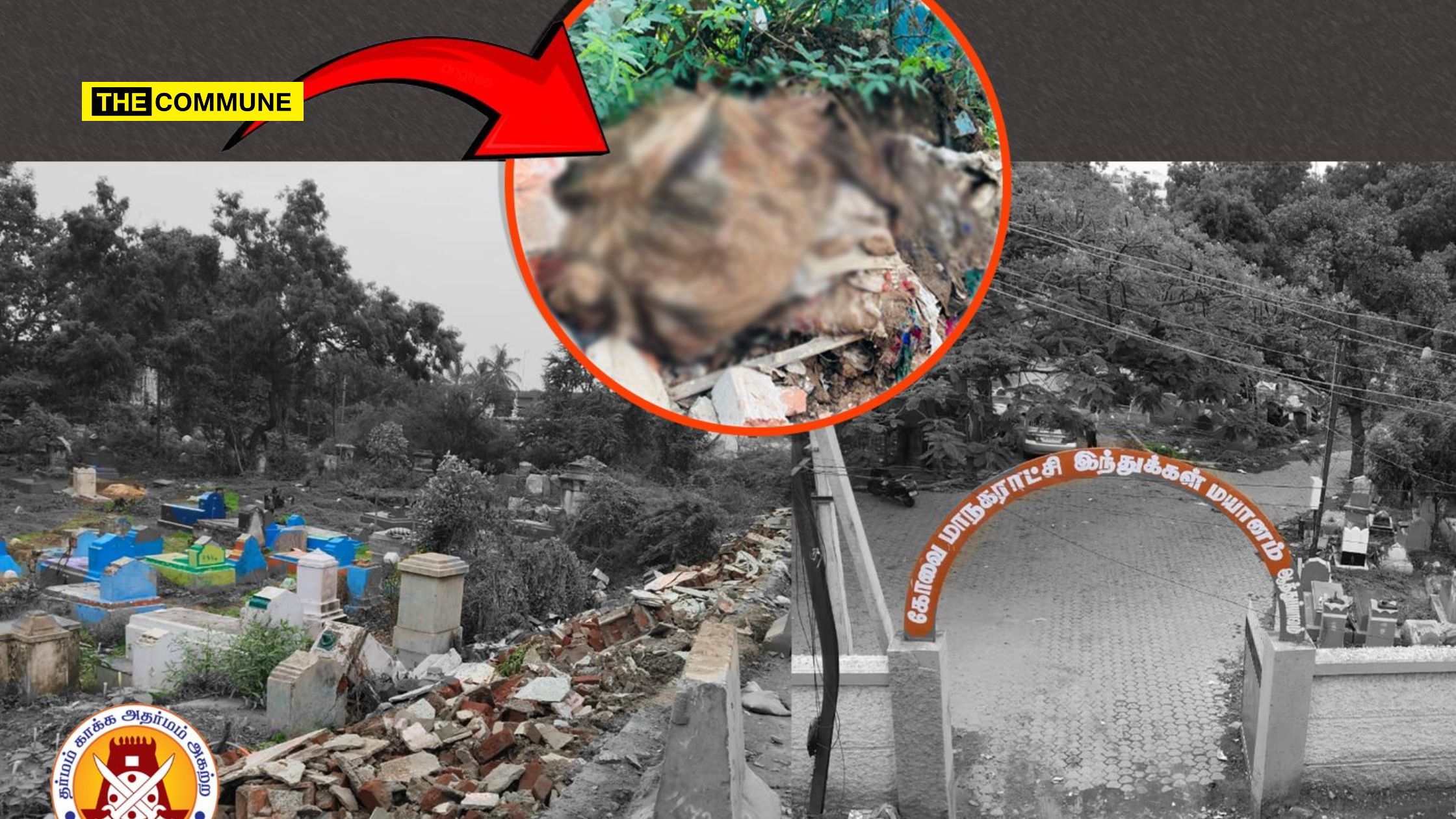
Hindu Munnani Demands Action Against Officials For Allegedly Demolishing Crematorium Used By Hindus In Coimbatore

Hindu Munnani State President Kadeshwara Subramaniam has released a statement demanding that a case be registered against the highways officials responsible for demolishing the compound wall and tombs at the Athupalam crematorium in Coimbatore.

The statement read, “The Hindu crematorium at Athupalam in Coimbatore has been operational for many years. Recently, due to the construction of a flyover in the Athupalam area, the highways department officials demolished the crematorium’s compound wall to lay a sewer pipeline. This unannounced operation resulted in the demolition of over five mausoleums and the exhumation of a recently buried corpse. Upon learning of this, members of the Hindu Munnani immediately visited the site and demanded explanations from the highway and police officials. Consequently, the sewer pipe installation work has been temporarily halted. Officials have promised to rebuild the crematorium’s compound wall and ensure no further graves are disturbed. The destruction of graves under the pretext of laying sewers is deeply condemnable. Hindus hold the burial of their dead and the construction of tombs in high regard, and such actions are a serious breach of trust.

He has also added, “In the same area, there is a longstanding statue of E.V. Ramasamy, which the Highways Department officials carefully preserved during the flyover construction. Additionally, a small dargah, where Muslims worship, exists along the route from Sundarapuram to the bridge. However, the graves within the Hindu crematorium were demolished without any prior notice. The question arises whether the same highway department would approach Christian or Muslim graveyards similarly for public works. In the past, Muslims in the Vandavasi municipality area staged a significant protest when a stone was removed from a mosque’s doorstep to clear a sewer blockage. The Tamil Nadu government has allocated land for several Christian cemeteries, yet it fails to provide facilities for Hindu cremation grounds, and instead, graves are being desecrated.

He requested the police to file case, “According to Section 297 of the Indian Penal Code (IPC), it is an offense to trespass into a crematorium, damage graves, or insult funeral rites. Therefore, the Hindu Munnani demands that a case be registered against those responsible for the damage at the Athupalam crematorium and appropriate action be taken.

Subscribe to our channels on TelegramWhatsApp, and Instagram and get the best stories of the day delivered to you personally. 

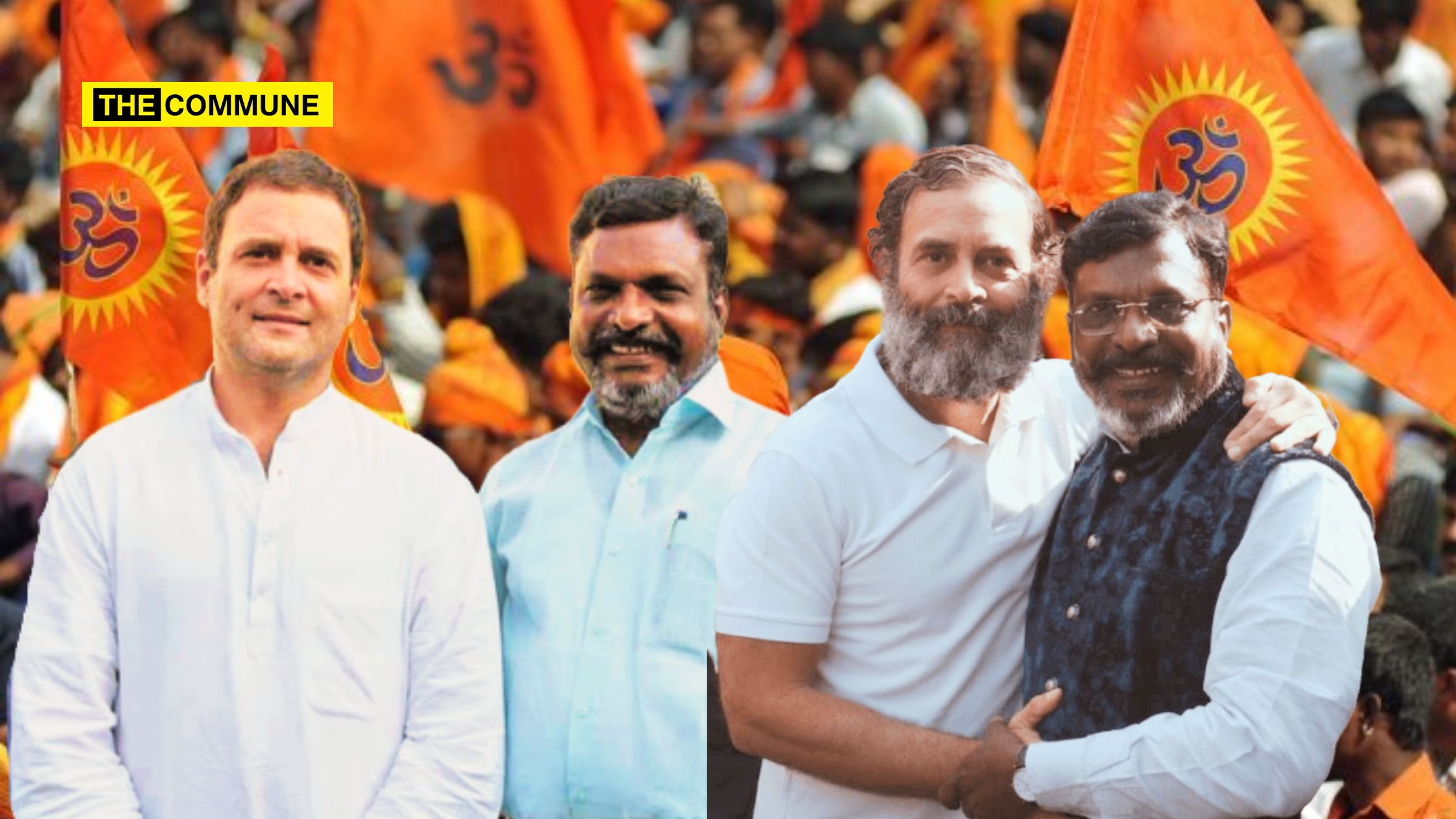
“Sanatana Terrorists Are Moving Freely With Weapons, On Stage, With Ministers”: I.N.D.I. Ally VCK Thirumavalavan Says

If the Congress had coined the term ‘Saffron Terror’ back in the day, its I.N.D.I. ally VCK now, has come up with the term ‘Sanatana Terrorists’ to refer to their ideological and political opponents.

Founder of the Viduthalai Chiruthaigal Katchi, Thol. Thirumvalavan, referred to the subscribers of Hindutva ideology as ‘Sanatana Terrorists’ while presenting the so-called ‘VCK Awards 2024’ in Chennai.

Thirumavalavan presented the annual ‘Ambedkar Sudar’ award to actor Prakash Raj. Additionally, various individuals such as Y. Subbarayulu, S.N. Sikkandar, advocate Arulmozhi, R. Mutharasan, Raj Gowthaman, and Ezra Sargunam received awards named ‘Semmozhi Gnayiru’, ‘Quaid-E-Millath Pirai’, ‘Periyar Oli’, ‘Marx Maamani’, ‘Ayotheethasar Adhavan’, and ‘Kamarajar Kathir’ respectively.

Speaking at the event, Thirumavalavan said “Sanatana terrorists will take any position. They will take any decision. Those belonging to the ML movement (referring to Communis Party of India – Marxist Leninist Liberation) carry weapons, hide in forests and live a life of clandestine. Sanatana terrorists are living within our house and roaming around with weapons. They’ve created a convenience where Sanatana terrorists can come to your house and kill you. A Marxist-Leninist person has to keep changing his name to remain absconding. He’ll be hiding in forests. For him to ‘finish a job’, things are not conducive. But Sanatana terrorists bear weapons and roam on stage in India. That’s important.

Referring to the killings of Gauri Lankesh, Kalburgi, Narendra Dhabolkar, Govind Pansare and, Thirumavalavan further he said that the establishment is staging such atrocities in the land.

They’re not running and hiding anywhere, and don’t live a life of clandestine. Like how Maoists hide in Andhra forests, they don’t hide. They’re on stage, with Ministers. They roam around with weapons. In such kind of a situation, people like Prakash Raj should be protected has been my concern. Even if he says that there’s no need of any award, I wanted to shake his hand, wish him and encourage him. I wanted to tell him to be careful, that’s why I took this initiative.“, Thirumavalavan said.

Subscribe to our channels on TelegramWhatsApp, and Instagram and get the best stories of the day delivered to you personally. 

The Great Indian Election: Narratives, Drama, Dialogues And Goof Ups

Indian elections have never been boring but I believe post 2014 with the advent of Narendra Damordas Modi they have been a roller coaster ride filled with sudden twists, masterstrokes, emotions and strategies. No wonder the TV news channels have something or the other to debate every single day and keep viewers pinned to their couches. It is super interesting to watch the narratives being built as narrative setting is equally important to win elections even though you might have worked hard with sincerity in the last 5 years for the public. In this article, I will take you through the narratives and counter narratives that parties tried out in this Lok Sabha election of 2024 and who got the upper hand.

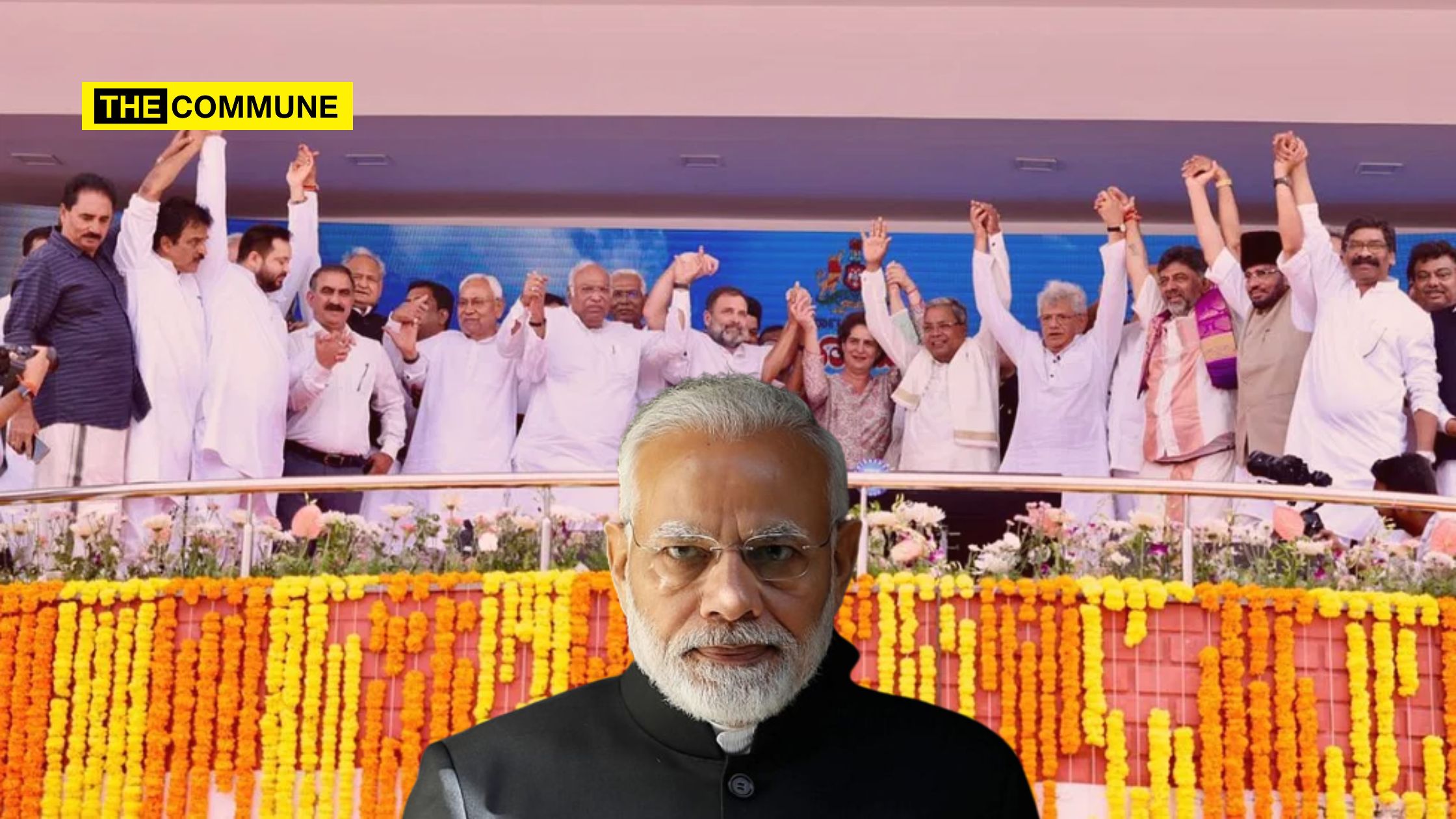
As always from 2014, Narendra Modi has been the first to set the electoral narrative for the elections. His announcement in parliament of Abki Baar 400 Paar set the ball rolling. All hell broke loose in the opposition camp. They went to the town challenging this and everyone started talking about whether NDA will cross 400 this time or not forgetting the fact for a few months that Modi needed only 272 seats to win and form the government. This was Modi’s two-pronged strategy to energize his cadres and shake them out of complacency but at the same time demoralize the opposition cadres and force them to believe that they have lost the battle before it began. The first narrative was set. It took some time for the opposition to sit back and stop themselves from running after this narrative.

The opposition, the INDI alliance, especially the big brother in that, the Congress party, who by now had a bit of experience with the Modi and were once bitten twice shy now thought of setting their own narrative. Their earlier narrative of democracy in danger, Modi will change the constitution if elected to power again and all institutions are being compromised, BJP washing machine etc. did not stick with public. They came up with their manifesto around early April in which they talked about caste census, socio-economic survey, reservation in contracts etc.

A couple of days later, Rahul Gandhi in a rally talked about wealth redistribution. The first phase of polling happened on 19 April 2024. A few days later, suddenly, Narendra Modi started speaking about the dangerous intent of the Congress party to take the wealth from some people (using the term Mangalsutra to make it more colloquial) and give it to Muslims and illegal immigrants. I thought Congress set the narrative this time and Narendra Modi, a very experienced politician that he is, understood the same quickly and put out his counter-narrative with his bold statement albeit it looked a bit reactive.

During that moment the opposition seemed to have a bit of the upper hand with the narrative. Every TV channel started debating about the wealth redistribution angle and its pros and cons, good or evil and some sympathisers of the Congress started talking about how Modi’s statement was anti-muslim and didn’t sound nice coming from the Prime Minister of the country etc. Rahul Gandhi had to say in a speech later that they didn’t intend to take immediate action. This along with Sam Pitroda’s subsequent remarks about Inheritance Tax and the looks of Indians pushed the Congress party to the backseat and Narendra Modi came quickly back to batting on the front foot in this narrative game and started giving interviews to every big TV channel which left the opposition camp just talking about the usual godi media rant and resorting to usual Modi abuse through their ecosystem. To me, the simple short term strategy that was playing with the wealth redistribution narrative was Congress wanted to split the Hindu votes and weaken Modi whereas Modi wanted to stop that and further consolidate them. We will come to know only on 4 June 2024 who succeeded in their strategy. Mani Shankar Aiyer’s video talking about Pakistan having an atom bomb and saying India should behave well with them did nothing but pushed the Congress further into back foot. After a few more phases of election behind us, we can observe that the shrill of the wealth redistribution and caste census narrative has died down although Rahul Gandhi still mentions it in his speeches but in a guarded generic way.

There were quite a few other narratives that were tried by the different parties. Suddenly Amit Shah spoke about this election being a direct fight between Modi and Rahul Gandhi. The opposition didn’t want to hear anyone projecting one face especially of Rahul Gandhi which they knew would create unwanted confusion in their alliance. They carefully remained silent and this faded away after a few phases too. From nowhere, Yogendra Yadav, put his psephologist hat again and came on TV channels and confidently said that BJP will not cross 272 on its own but given his minimum estimates it showed that NDA will cross the halfway mark which means still Modi will anyways come to power again. This narrative of the opposition ecosystem shows that they are happy to see Narendra Modi going down on the seats whether they come to power or not albeit Congress supporters like Sanjay Jha in his untiring rants with his 2 mins. videos on X  keeps mentioning that Modi will not come to power. Social media influencers on both sides have been trying hard to put out their narratives and counter-narratives. Prashant Kishor’s series of interviews on TV channels saying BJP will equal or do a bit better than their 2019 tally has come as a nullifying counter to the opposition narrative attempt which led their miffed ecosystem go after him forgetting that he was the one who led several of their allies to victory in their assembly elections.

Some time back, Rahul Gandhi suddenly talked about being a good chess player but other than getting a surprise sarcastic comment from the chess legend, Gary Kasparov, no serious narrative was set around this. In the series of TV channel interviews that Narendra Modi is giving now which some say is an act of nervousness and some say confidently leading from the front but not taking any chances, the recent program with India TV’s renowned journalist, Rajat Sharma, of Aap Ki Aadalat fame became quite a big hit. Rahul Gandhi is not giving such long interviews for known reasons but is continuing with his rallies and giving intermittent bytes but the Congress ecosystem is left picking up the statements of Narendra Modi and reacting to it sarcastically which doesn’t set too much of a narrative again to win elections. Other than Arvind Kejriwal trying to do some drama around his arrest in Delhi, I don’t see too much of a narrative setting happening there. The timing of the Swati Maliwal case has also dented his strategy a bit too.

With only the last phase of elections left on 1 June 2024 big game changing narratives are not coming through any more other than some “up in the air” statements like Akhilesh Yadav and Mamata Banerjee vouching that they will win all the seats in their respective states and everyone giving their own convenient predictions about the possible winner. Things are heading to a grinding pause slowly after a super ride of narratives, drama, masala and punch dialogues.

Based on all the above, Narendra Modi still seems to have an upper-hand on the narrative in this election too although it seemed he had to do more of a heavy lifting this time compared to 2014 and 2019. Winning elections for a third time is not going be that easy but the man is visibly out there, active, doing multiple rallies a day and also giving long interviews enthusiastically, present in every moment and leading from the front with the same passion. Let us wait for June 4th to know who emerges as the winner from all this dust, noise and hangama.

Ananth Mahadevan is a political commentator based in Bengaluru.

Subscribe to our channels on TelegramWhatsApp, and Instagram and get the best stories of the day delivered to you personally. 

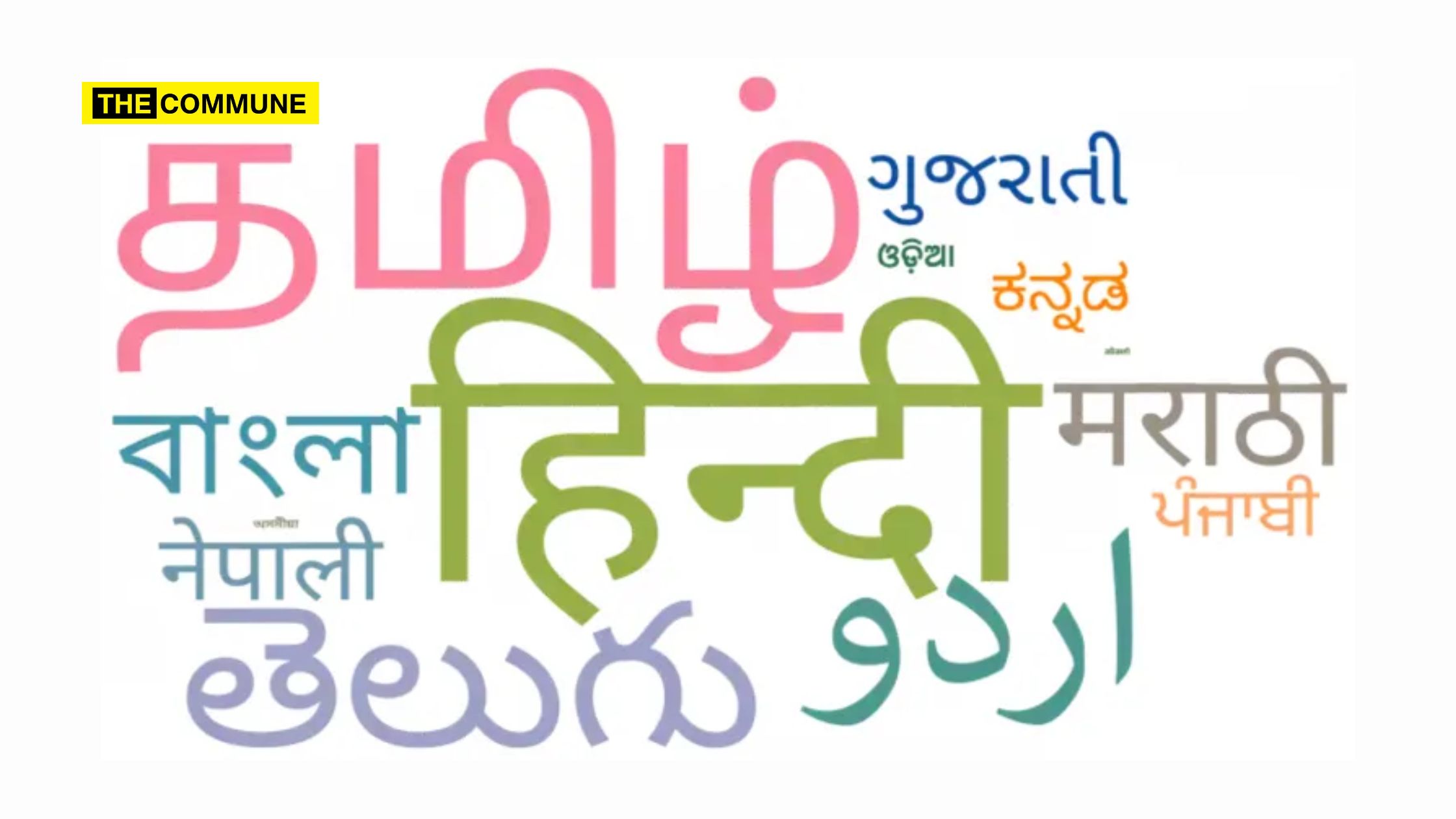
Why We Need A Four Language Formula

Prologue

We request our readers not to panic at the title even before start. We crave their indulgence to shed their prejudices, extricate themselves from the prevarications of pernicious politicians just for a few minutes, patiently go through the passage and at the end they are at perfect liberty to either concur with the caption or continue to carry a completely contrary conclusion, perhaps with greater conviction. Being conversant with the current contaminated scenario, we do not find fault even if they do not agree with the contents. On the other hand, we do not also guarantee that after going through this article, they will not change their mind and ask a counter question, ‘Why only four and not more?’ In this article we are going to analyse threadbare every aspect of our language formula as also the misconceptions about learning a language.

The Linguistic Richness Of Bharat

The ancient land of Bharat is a sui generic nation with lot of unique features, a kaleidoscopic spectacle of diversity that dazzles and baffles the world.

‘முப்பது கோடி முகமுடையாள் – உயிர் மொய்ம்புற வொன்றுடையாள் – இவள் செப்பு மொழி பதினெட்டுடையாள் – எனிற் சிந்தனை ஒன்றுடையாள்”

Mahakavi Bharati says: Bharatamata has thirty crores faces; still she has a single soul. She speaks in eighteen languages but the core of her thought is only one. [When Bharatiyar wrote this India’s population was around 30 crores. By the number 18, he indicates the major languages.]

Variety is the spice of life and in that aspect, our Bharat is the spiciest land on earth. Variety in religion, language, sects, food habits, topography, colour, culture, arts, fine arts, architecture, festivals, dynasty etc. Thus we, Bharatuyas, are proud of our variety in which language is also one. Each language carries with it the culture and values of each region. They are priceless treasures that our ancestors have bequeathed on us and such unique jewels only our nation proudly possesses. Prudence points to us that we nourish every one of them, thereby preserving and promoting our delectable diversity. The ancient name of India, ‘Rathna Garbha’ [repository of pearls] is not merely for the natural wealth alone but refers more to the gems of wisdom and scholarship easily available for all. Ample scope for learning many languages is one such exclusive gem.

Knowledge Of A Language: Interpretation

The basic misunderstanding starts at the beginning itself and that elemental error at the embryonic stage evolves itself into further excogitation of distressing and disturbing dimensions, casts away all cool, cordial and composed approach, enters into a domain of hysterical outbursts, after which there can be no room for discussion and deliberations, let alone concord and consensus.

What is meant by ‘knowledge’ of a language?

Let us take an example: It is an axiom that almost all the people of Tamil Nadu know the language Tamil. If we ask them, ‘Do you know Tamil?’ the answer invariably will be a definite ‘Yes’. They will retort with, ‘Why do you ask? Tamil is our mother tongue. We know it from our childhood.’ Therefore, we can say with confidence that more than ninety percent of people in Tamil Nadu know the language Tamil. But, if you ask anyone of them a few questions such as

குற்றியலுகரம் என்றால் என்ன? or ஈறுகெட்ட எதிர்மறைப் பெயரெச்சம் – எடுத்துக்காட்டு கூறு.

[These are all questions in Tamil grammar at the school level.]

they will not answer and instead will look at you in a weird fashion as if you are some abnormal person raising arcane questions. Forget such high level questions; If you enter a college in Tamil Nadu and ask an elementary question like ‘How many alphabets Tamil language has? Can you tell them in the correct sequence?’ each one will come out with different answer and almost all of them will be wrong. It is strange but true if you repeat such simple questions to those political leaders of Tamil Nadu who feign in all fora as if they are congenital champions of Tamil and vociferously forbid study of Hindi, they will also not fare any better at all.

Here we are confusing between two things: Erudition and expertise in a language is different from equipping oneself with an elementary knowledge for expressing with ease in that language. They are like chalk and cheese. By studying a language, therefore, we do not imply, ipso facto, producing in plenty any pedagogic pundits but are only enabling the tiny tot to comfortably negotiate in his future life, vocal transactions among different states and different sections in our nation. Is it a burden in the later life of the lad or is it factually a facilitating factor? We request our reader to deliberate deeply and dispassionately on this aspect.

Historical Perspective

There are a few dogged, dogmatic irrational imbeciles among us even now, who continue to harbour the idiotic idea that it was the British who created our nation as one singe state, India. Far from it. Our Bharat Varsha existed from time immemorial with different names like Rathna Garbha, Ajanabha Varsha, Aryavarta, Jambudwipa etc. People travelled from one corner to the opposite, crisscrossing the entire nation, with consummate ease, comfortably communicating with the common folk. Also, they need not bother about food and shelter which were freely available to them thanks to the tenets of our Sanatana Darma. It is a historical fact that Adi Shankara peregrinated from Kerala in the south to Kashmir in the north, discussed and debated with erudite scholars and established his doctrine of Advaita. For easy communication, local languages and link languages like Samskitam, Prakritam [Pali] were there and people were quite comfortable with all of them, since concord and consonance were the cardinal criteria of all Bharatvasis.

The Needless Fear Factor

Once, when the late C N Annadurai was told that one can easily learn Hindi in three months, he retorted with his customary wisecrack, ‘Yes, I agree. what is there to learn beyond three months in that language?’ Although his remarks were meant to be sarcastic, he has perforce admitted the truth that learning a language is not at all a difficult task.

For that matter, one can easily and effortlessly gain conversational skills in any language in just thirty days. It is like learning cycling or swimming. Initially, there will be hick-ups but later, once certain amount of fluency is acquired, it will be an enjoyable experience. Have we not noticed a kid, once he learns cycling or swimming, getting addicted to it and never leaves it?

Example Of Samskrita Bharati

Samskrita Bharati, an organisation that promotes use of simple Samskritam in everyday conversation asserts that thirty days are too much. ‘We can do it in just ten days’, they claim. And they actually do it!

For those who want a design to teach a language in the incredibly easiest method, Samskrita Bharati shows a unique way. It is nothing less than a magic! One need not have any prior knowledge of Samskritam. No proper textbook, no lessons, no writing, just listen, that is all. Listen just two hours a day for ten days. The classes are not a serious coaching sessions, but, indeed a lively avocation, quite an enjoyable evening, a playful pastime. At the end of the third day, you will be wondering at yourself! Yes, what has happened to you? You will yourself start speaking simple sentences in Samskritam. On the tenth day, you will be delivering a talk in Samskritam to your own friends in the group. Nothing less than magic!

Their modus operandi is down-to-earth practical, in consonance with human aptitudes. Listening first; speaking next; encouraging at every moment; no reading, no writing.

The reader need not take the above statements for granted. He is invited to test it himself. No fees. It is free for all. No restrictions whatsoever. What is expected of you is just two hours of active listening, or to be more precise, actively enjoying the time for ten days. Periodical courses are conducted throughout the country at every nook and corner, details of which are available in the net.

Those linguists who want to teach other languages can also learn from them the techniques and adopt them in spreading their own languages; it will be quite useful.

Unfortunately, one Bishop Robert Caldwell (1814 –1891) a missionary of London Missionary Society, who came to India with the single purpose of spreading Christianity, observed to his chargin that we, the entire Bharatiyas are a closely knit class in terms of culture, consanguinity, concordance and compatibility. He found that the language Samskritam played a powerful role in this. So, he ingeniously invented a new interpretation of the word, ‘Dravidian’ with the infernal intention of creating linguistically a wedge between the north and south and was unfortunately successful in his attempt. His toxiferous theory is still being continued by certain disruptive elements to isolate the south and create animosity against Samskritam. On the contrary, if we look at many of the famous literary works in Tamil, we will find that all those authors had exhibited deep knowledge of Samskritam in their works. Kambar had scrupulously scanned every verse Valmiki as could be seen in his Ramayana. Tiruvalluvar could not have written many verses without a deep understanding of Upanishads and other great works in Samskritam. Some of his kurals are verbatim translations of slokas in Samskritam. Of course, as the saying goes, great minds think alike.

The Stock Objection

The recalcitrant polemicist proceeds to his next protestation, proclaiming, ‘why should we be burdened with additional languages that are not ours?

This is sheer opportunism, a chameleon-like posture that cannot hold water. It is strange that the very same persons who come up with that objection are seen to possess knowledge of many languages which they had learnt for their professional progress. Readers would readily recognise those celebrities who mint millions with their own multilingual talents and, simultaneously spurred by sinister motives, voicing vociferously objection to others learning and misusing their popularity in misleading the masses. For instance, Kamal Haasan, who is quite vociferous in opposing Hindi, himself speaks Tamil, Malayalam, Kannada, Telugu, Hindi, Marathi, and English, reaping for himself boundless benefits of a polyglot.

Benefits Of Learning Many Languages

Let us, on the other hand, look at the benefits of knowing many languages.

Research indicates that people who speak more than one language develop a better memory, talent for problem-solving, ability to concentrate, and tendency to be creative than those who speak only one language. A well-known example is our former Prime Minister
P.V.Narasimha Rao, hailed as modern Chanakya, who brought lot of innovative sweeping reforms. He was a scholarly linguist and could speak as many as nine Indian languages [Telugu, Hindi, Oriya, Bengali, Gujarati, Kannada, Samskritam, Tamil and Urdu] and eight foreign languages [English, French, Arabic, Spanish, German, Greek, Latin and Persian]

Language is the easiest way to understand and appreciate the culture of a region. Children who study an additional language in addition to their mother tongue respect the culture associated with that language and exhibit empathy, affinity and warmth, which enhance their sociability to a wider circle.

Travelling becomes a pleasurable pastime, an enchanting experience, a joyous delight, since one can interact with lot of people, forge friendship and exchange pleasantries.

Other economic advantages like wider avenues for career developments, opportunities to participate in newer forums and contributing one’s skills worldwide etc. are obvious.

Conclusion

Opposition to learning many languages stems not from any genuine concern for the children but from a deeper malevolent motive of forging in the young mind psychological seclusion, since inability to express oneself with his counterpart in other states will detach one from the main stream of national activities. This will further breed hatred and hostility towards one’s own brethren in other states which feeling, if not nipped in the bud, will develop fissures in the nation’s camaraderie and result in ultimate fragmentation, the very plan and purpose of those anti-national forces.

Any situation can be viewed from different angles. Either the tumbler is half full or half empty. Both phrases represent a single fact. Life provides us either stepping stones or stumbling blocks. It depends on our approach. Ultimately if we think, ‘we can’, we can. The formula for happiness and success is after all, within us only.

It is the bounden duty of those dedicated to national unity, welfare and progress to counter the poisonous propaganda of the hostile elements, expose them in their true colours and sow seeds for a solid, strong stable nation with all the citizens identifying themselves as Bharatiyas and not with a lop-sided, limited loyalty based purely on language or region.

Parasuram Sharma is a retired bank officer and an octogenarian whose interests include Sanathana Dharmam, Samskritam, history and politics.