The first time I got curious about the Tamil month of Aadi was when I heard an Illayaraja song that never made it to the movie it was recorded for! The tea shop in Tirunelveli Town at the junction of Amman Sannidhi Street and East Car Street used to play this every morning, of course, after a round of Seerkazhi Govindarajan, TMS, and LR Eshwari.
Adippattam Thedi ChenNel Vidhai Pottu (“ஆடிப்பட்டம் தேடி செந்நெல் விதைபோட்டு”) was the song. I asked my grandfather, a retired Headmaster, the million-dollar question: Why do they sow in Aadi month? Because that is what the song says: “Wait for Aadi to sow your paddy.” My grandfather explained that Aadi is the month that signals the start of the rains, the monsoon. Therefore, what is sown in Aadi gets ready for harvest in time for Thai, the first day of which is Makara Sankranti or Thai Pongal.
Then came my second question: I understand why we sow during Aadi month. Why is it significant for all Amman temples?
On a lighter note, in those days, down south, Aadi was also called the LR Eshwari month because we invariably woke up every morning to her beautifully rendered Amman songs played on the loudspeaker in one nearby temple or the other.
Here is what I understood from my grandfather and a bit more.
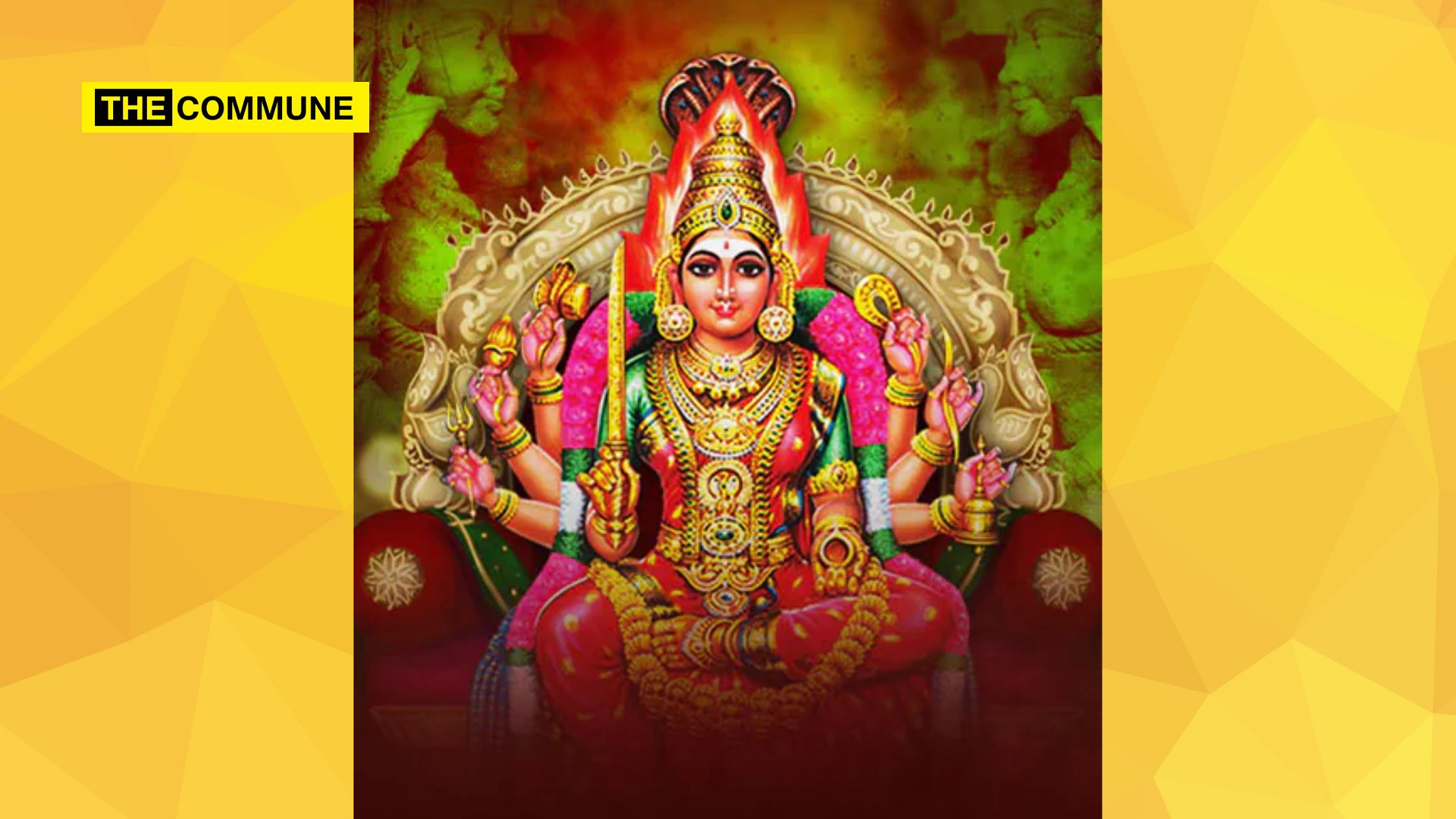
Why Is Aadi Significant To Devi?
The Hindu calendar is divided into two Ayanas based on the movement of the Sun: Dakshinayana, the period when the sun begins to move southward in the earth’s sky, is also called the summer solstice, and Uttarayana when the sun moves northward, is also called the winter solstice.
Aadi signals the start of the Dakshinayana period when Surya’s chariot moves from the North to the South. During this period, days are shorter, and nights are longer. During this period, Surya enters Kataka (Cancer) rashi, the rashi of Chandra, the Moon. Surya is the Amsa or manifestation of Ishwara, and Chandra is the Shakti Amsa. As this is the month when the Ishwaramsa enters Shaktiamsa, this month assumes a greater significance when worshipping the Mother, Shakti.
Aadi – A Month Full Of Festivals
Aadi is a month full of action, starting with Adipperukku when the farmers worship the water bodies/ rivers. It is also when freshwater flows in after the season’s first rains. Married women pray to the Devi to bless them as Deerga Sumangais, leading a happy and prosperous married life with their husbands.
Then comes the Aadi Ammavasya – the day every significant for the Pitrus or forefathers. We also have Aadi Pooram, Naga Panchami, Varalakshmi Vratam, Aadi Thapasu (a very famous festival in Sankarankovil, Tamilnadu), Maha Sankatahara Chaturthi, Hayagriva Jayanti and Aadi Kirtigai. Andal of Srivilliputtur and Bhoomadevi were born in Aadi. Women worship the Tulsi plant at their houses on Suklapaksha Dwadasi for health and prosperity in their families.
All the Tuesdays and Fridays of this month are considered to be the most auspicious. Women in Tamil Nadu gather at temples to perform Thiruvilakku Poojai or worship the lamp. During the month of Aadi, people propitiate village gods, Kuladeivam (family gods) and Kavaldeivam (protectors of our villages, towns, and cities).
Weddings In Aadi
In Tamil Nadu, weddings are not conducted during the Aadi month. During Aadi, the bride is sent to her mother’s home while the groom remains at his place. So why do we not marry or consummate in Aadi?
What is a year for us human beings is a day in Devaloka. Aadi typically falls in the Sandhi or twilight. Sandhya Kalam is the time for penance and introspection. It is said to be the best time to meditate. Therefore, we avoid getting married while the Gods meditate to not disturb them by calling them to bless the married couple.
Another reason we don’t get married in Aadi is because a union in Aadi (July-August) may result in a birth in Chittirai (April-May). Chittirai is peak summer, which would be trouble for both the mother and the infant.
Aadi In Kerala
In Kerala, Aadi (Kaṟkkaṭakam in Malayalam) is called Ramayana Maasam or the month of Ramayana. This is the month the Keralites read Adhyatma Ramayana by Thunchaththu Ezhuthachan, the father of modern Malayalam literature. The temples in Kerala also do a paarayana (devotional reading) of Adhyatma Ramayana every morning of the Kaṟkkaṭakam month.
How Did Aadi Become A “Discount” Month In TN?
For today’s consumer, Aadi is a dream month. It is the month of discounts when everything from a paperclip to a diamond necklace is on sale. There is a history to this. Our economy has traditionally been agrarian. We saw earlier that this is the month when the seeds are sown. Therefore, the farmer would have spent all his resources preparing his field and buying and sowing the seeds required. Hence, our ancestors thought it was prudent not to charge full price for anything that the farmer might need till his situation stabilises, and they gave things at a discount to the farmers. Today’s consumer economy has continued the ‘discount’ albeit on a larger scale, making it a month of discounts.
Five are the householder’s duties: offering oblations to the dead, performing sacrifices to the Gods, offering hospitality, rendering help unto relations, and looking after oneself.
The Kural or The Maxims of Thiruvalluvar by VVS Iyer
What better month than Aadi to action what Tiruvalluvar wants us to do?
PS: Adippattam Thedi ChenNel Vidhai Pottu (“ஆடிப்பட்டம் தேடி செந்நெல் விதைபோட்டு”) was recorded for Michael Madana Kama Rajan (1990). But this beautiful song was never used in the movie and only remained in the audio cassette.
Raja Baradwaj is a marketing communications professional who works with a leading technology multinational company. He is an avid reader, history buff, cricket player, writer, and Sanskrit and Dharma Sastra student.
Subscribe to our channels on Telegram, WhatsApp, and Instagram and get the best stories of the day delivered to you personally.
In India, despite being the majority, Hindus have been subjected to slaughter and violence by Islamic extremists. Their struggles often remain unnoticed, overshadowed by political agendas and the focus on minority groups. It’s crucial to bear in mind that Hindus have a history of enduring violence on their land for choosing to stay within their Dharmic fold, a fact that should never be forgotten.
With this troubling context in mind, let’s explore the significant anti-Hindu massacres that have taken place in August over the last 100 years.
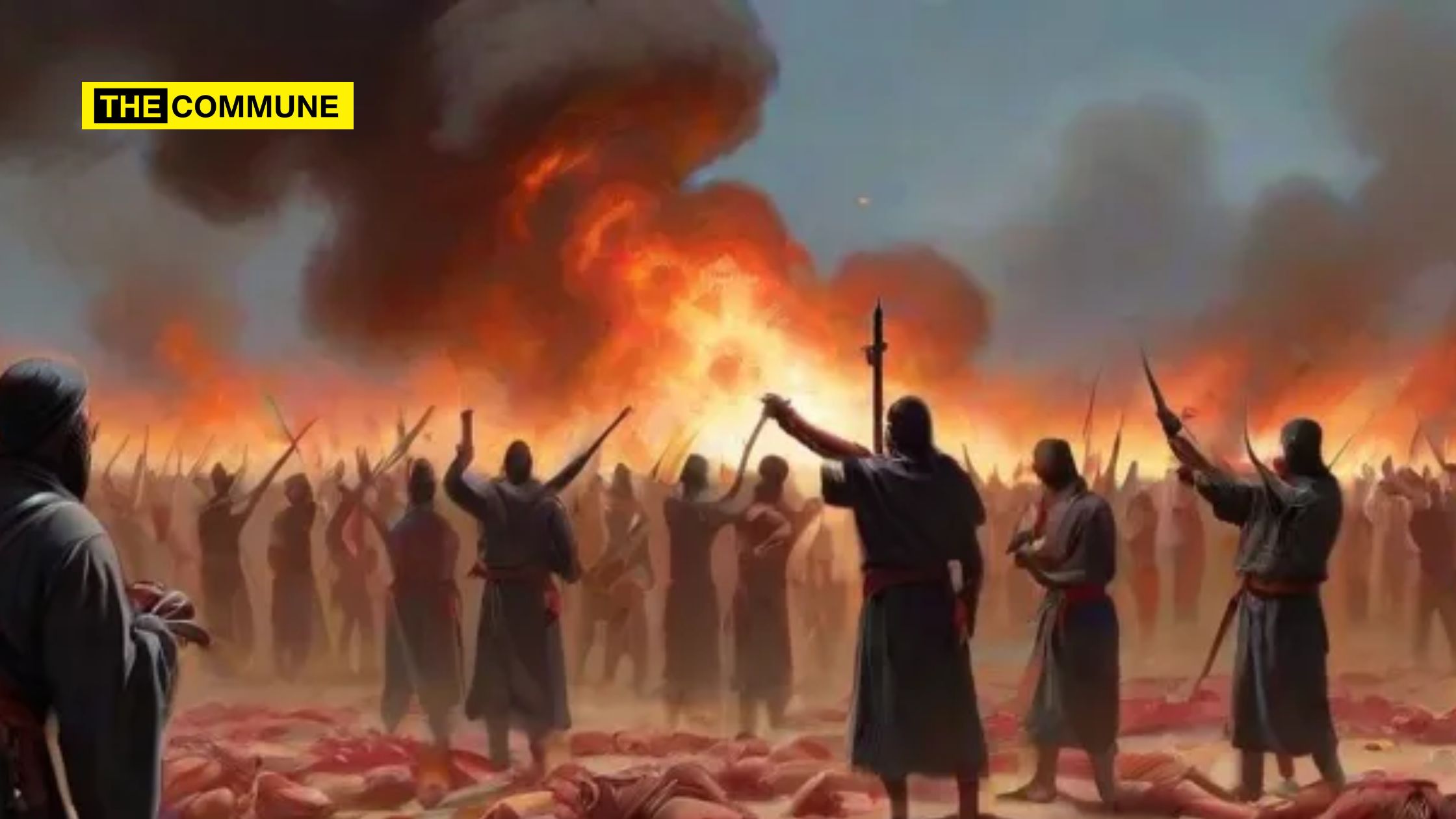
Moplah Massacre Of Hindus In Kerala – 20 August 1921
The Moplah Rebellion, which began on 20 August 1921, is often referred to as the first jihad against Hindus in India. This date is marked as a black day in the history of Kerala. The massacre, which initially started as an uprising against British rule after the fall of Caliphate, took on a communal dimension. During the unrest, Moplah Muslims killed thousands of Hindus, raped Hindu women, and forcibly converted many Hindus to Islam. The Moplah Massacre of Hindus remains a contentious topic in Kerala, particularly among political parties.
It coincided with the Khilafat Movement, which aimed to restore the Ottoman Caliphate after Turkey’s defeat in World War I. The British had deposed the Caliph, angering Muslims worldwide. The Khilafat Movement, supported by prominent figures like Abul Kalam Azad, Zafar Ali Khan, and Mohammad Ali, sought to reinstate the Caliphate. Mahatma Gandhi supported this movement, hoping to unite Hindus and Muslims against British rule.
In Kerala, Moplah Muslims, who were mainly small farmers and traders, were influenced by radical clerics. They worked as sharecroppers or tenants for upper-caste Hindu landlords who controlled land and businesses. Initially targeting the British, the rebellion shifted focus to the Hindu landlords. This, driven by grievances over low wages and poor working conditions, escalated into violence against upper-caste Hindus.
The Moplah Massacre of Hindus saw severe violence, including the burning of police stations and looting of government treasuries. The violence extended to attacking wealthy Hindus, resulting in numerous deaths and widespread suffering. Thousands of Hindus were killed, women were raped, and many were coerced into converting to Islam. In response, the Arya Samaj initiated a purification movement to reconvert these individuals back to Hinduism, and its leader, Swami Shraddhanand, was assassinated in December 1926.
Ultimately, the Moplah Massacre of Hindus failed due to its communal turn and the ensuing violence. The legacy of the rebellion continues to be a point of contention, with ongoing blame directed at the Muslim community for the events.
Calcutta Riots In West Bengal – 16 August 1946
The Calcutta Riots of 1946, often referred to as the “Great Calcutta Killing,” were a series of intense and violent confrontations between Hindus and Muslims in Calcutta (now Kolkata), Bengal, from 16 to 19 August, 1946. This tragic episode is among the most notorious massacres of the 1946-47 period, with estimates suggesting between 5,000 and 10,000 people were killed and around 15,000 were injured. The events remain deeply controversial, with various perspectives from Britain, India, Pakistan, and Bangladesh offering differing accounts and assigning blame.
These riots erupted amid growing tensions between the Congress Party, which primarily represented Hindus, and the Muslim League, which advocated for the interests of Muslims. As India approached independence, a transition announced by British Prime Minister Clement Attlee in March 1946, the two groups had divergent visions for the country’s future. The Muslim League, which had been pushing for the creation of Pakistan since 1940, rejected a British proposal for an interim government in May 1946 and declared 16 August as “Direct Action Day.” This decision led to widespread violence.
In Bengal, the situation was particularly complex. Muslims constituted a majority (54%) in the province, with a significant concentration in Eastern Bengal (now Bangladesh). The province was governed by a Muslim League administration led by Chief Minister Hussain Suhrawardy, a highly contentious figure. Calcutta, with its Hindu majority (73%) and a substantial Muslim minority (23%), became the epicentre of the violence. The Hindu Marwari community, which dominated the city’s economy, contrasted sharply with the largely impoverished Muslim population.
The question of who was responsible for the violence remains hotly debated. Accusations have been directed at the Muslim League, and particularly Suhrawardy, for allegedly inciting the violence. Controversy surrounds Suhrawardy’s role, including his presence in the Police Control Room and his supposed encouragement of the Muslim League crowds. Governor Burrows also faces criticism for his perceived failure to act decisively; however, he contends that any intervention might have triggered a broader political crisis and took action as soon as possible. The exact number of casualties remains uncertain, but the violence was exceptionally brutal, involving mutilation and rape. The majority of the victims were poor Muslims, underscoring the socio-economic disparities. Both communities suffered from the violence, which also included casualties from police and military actions.
Reliable accounts of the events are limited. An official inquiry led by Sir Patrick Spens was established but never published its findings. The Great Calcutta Killing remains a poignant memory for those who lived through it, yet it is notably absent from official historical narratives in India and Bangladesh. This omission is partially due to political considerations and a focus on nation-building after independence. While the event began to receive renewed scholarly attention in the 1990s, it continues to be a relatively marginal episode in the broader history of Bengal.
Jagdev Kalan massacre in Punjab – 06 August 1987
The 1987 Jagdev Kalan massacre took place amid the turmoil of the Khalistan separatist movement in Punjab, India. Sikh militants executed 12 individuals, coercing them to chant “Long Live the Sikh Nation.” This violent episode was part of a broader conflict that resulted in the loss of thousands of lives in the struggle for an independent Sikh state.
Kishtwar Massacre (1) In Jammu & Kashmir – 14 August 1993
The 1993 Kishtwar massacre occurred on 14 August 1993, when Muslim militants targeted 16 to 17 Hindu bus passengers in the Sarthal area of Kishtwar district, part of the former state of Jammu and Kashmir in India. This event marked the beginning of a series of communally driven attacks against Hindu civilians during the insurgency in the region.
On that day, three militants armed with AK-47s hijacked a local bus. After forcing women and children off the bus, they took the remaining male passengers to a meadow and separated them into two groups. The militants then opened fire, killing 14 individuals on the spot and two more later in a local hospital.
In the aftermath, the imam of a Kishtwar mosque condemned the killings and called for a strike to curb potential inter-community violence in a town with a mixed Hindu and Muslim population. The attack was denounced by groups such as the JKLF and Hizbul Mujahideen, and a curfew was imposed across the Jammu region. The massacre led to some Hindus fleeing the area and marked the spread of insurgent violence from the Kashmir Valley into the Jammu region. Political reactions included protests and rallies, and local militias known as Village Defence Committees (VDCs) were established to prevent further migrations similar to those of Kashmiri Hindus from the Kashmir Valley. Indian intelligence agencies have alleged that Pakistani militant Muhammad Sajjad Khan, also known as Sajjad Afghani, orchestrated the massacre. As of 2023, no one has been tried or convicted for this attack.
Chamba Massacre In Himachal Pradesh – 3 August 1998
The 1998 Chamba massacre occurred on 3 August 1998, when Hizbul Mujahideen militants killed 35 Hindus in the Chamba district of Himachal Pradesh, India. The attack was carried out by Pakistan-trained terrorists who targeted mainly labourers. The violence unfolded in two separate incidents: one in the Kalaban area, where 26 people were killed and eight were injured, and another in Satrundi, where five were killed and three were wounded.
The massacre came to light when two injured survivors from Kalaban, Dhian Singh and Beli Ram, managed to walk eight kilometres through dense forests to report the incident to the nearest Mansa police station. The killings led to tensions between Muslim Gujjars and Hindu Gaddis.
In the aftermath, top Hizbul Mujahideen operative Billu Gujjar was apprehended by Punjab Police in Pathankot a few days later in connection with the massacre.
Amarnath Pilgrimage Massacre In Jammu & Kashmir – 01 August 2000
The Amarnath pilgrimage attack, which occurred on 1st and 2nd August 2000, resulted in the deaths of at least 89 to 105 people and injuries to at least 62 others. This series of coordinated assaults by Islamist militants took place in Anantnag and Doda districts of Indian-administered Kashmir.
On 2 August, 32 people were killed in a massacre at the Nunwan base camp in Pahalgam. The victims included 21 Hindu pilgrims, 7 local Muslim shopkeepers, and 3 security personnel, with 7 others injured. The total number of fatalities across the attacks ranged from 89, according to official counts, to 105 as reported by PTI.
The attacks also targeted various locations on 2 August that year, including:
Mirbazar-Qazigund and Sandoo-Acchabal in Anantnag district, where at least 27 migrant laborers from Uttar Pradesh, Bihar, and Madhya Pradesh were killed.
A remote village in Doda district, where at least 11 unarmed civilians were killed in a pre-dawn attack.
A village in Kupwara, where terrorists killed 7 unarmed civilians, including members of a family related to a surrendered former militant.
Kayar village in Doda district, where 8 unarmed civilians were killed and 2 more were injured in an ambush on a Village Defence Committee patrol.
Following the attacks, then-Prime Minister Atal Bihari Vajpayee accused Pakistan of attempting to undermine democracy in Jammu and Kashmir.
Kishtwar Massacre (2) In Jammu & Kashmir – 3 August 2001
The 2001 Kishtwar massacre – 2 occurred on 3 August 2001, when Lashkar-e-Taiba militants killed 17 Hindu villagers in the village of Ladder, near Kishtwar in the Doda District of Jammu and Kashmir. A group of 10 militants targeted the village, forcibly removing 20 Hindu men from their homes. They were taken to a nearby rocky area where they were shot. Additionally, five villagers were injured in the assault.
The massacre was a major topic of discussion in the Indian parliament, with opposition parties criticizing the government’s response. Three days later, security forces killed Lashkar-e-Taiba terrorist Mujib-ur-Rahman, who had noted in his logbook, dated 3rd August, “The warriors of the Lashkar-e-Taiba have killed 19 unbelievers. This is our challenge to the Indian government.” In response to the killings, Jammu observed a complete bandh the following day. Protesters in Jammu, Kathua, and Udhampur burned Pakistani flags and effigies of General Pervez Musharraf as part of their demonstrations against the massacre.
Muzaffarnagar Riots In Uttar Pradesh – 27 August 2013
The Muzaffarnagar riots of 2013, which erupted in the Muzaffarnagar district of Uttar Pradesh, India, resulted in significant violence between the Jat and Muslim communities. The clashes led to the deaths of at least 93 people, displaced over 50,000 individuals, and injured more than 50 people. By 17 September, the curfew was lifted across the affected areas, and the army was withdrawn.
Described as “the worst violence in Uttar Pradesh in recent history,” these riots prompted the deployment of the army in the state for the first time in two decades. The Supreme Court of India, reviewing the situation, found the Akhilesh Yadav-led Samajwadi Party prima facie negligent in preventing the violence and instructed immediate arrests of all accused, regardless of their political affiliations. The Court also criticized the Central government for its failure to provide timely intelligence to the Samajwadi Party administration.
On 21 August 2013, communal clashes broke out in Muzaffarnagar, leading to police cases against 150 individuals and the arrest of 14. The conflict between the Jat and Muslim communities escalated by 27 August that year. The origins of the riots when Shahnawaz Qureshi sexually harassed a woman from the Jat community. In retaliation, the woman’s brothers, Sachin and Gaurav, murdered Shahnawaz on 27 August 2013. The next day, Shahnawaz’s brothers ensuing violence led to the deaths of two brothers, Sachin and Gaurav Singh, who were lynched by a Muslim mob. Following the killings, both communities began attacking each other. Despite the police’s intervention, the violence continued, leading to further clashes and numerous casualties.
On 7 September, the situation worsened with the Jauli Canal incident, where a large group of Hindus returning from a Panchayat meeting were ambushed by a Muslim mob, leading to numerous casualties. Reports suggested that many bodies were dumped into the canal, though the exact number of deaths remains unclear.
Despite a curfew and military deployment, violence continued for several days, with casualties rising to 43 by 12 September. The violence included cases of sexual assault, with 13 rape cases reported and 111 individuals named in these incidents by mid-November 2013, though no arrests had been made at that time.
A Mahapanchayat held in Sardhana on 29 September turned violent, leading to further unrest. On 30 October, additional clashes occurred, resulting in more casualties and prompting increased police and military presence.
Approximately 1,000 troops were deployed, with additional forces from the Provincial Armed Constabulary (PAC), Central Reserve Police Force (CRPF), and Rapid Action Force (RAF). The police made around 10,000 to 12,000 preventive arrests, seized 2,000 arms, and canceled 2,300 arms licenses.
By 31 August, five FIRs had been registered, and eleven individuals were arrested, including political leaders accused of inciting violence. The Uttar Pradesh government announced a judicial commission led by retired Justice Vishnu Sahay to investigate the violence, and several senior officials were removed for their inadequate handling of the situation.
Subscribe to our channels onTelegram, WhatsApp, and Instagram and get the best stories of the day delivered to you personally.
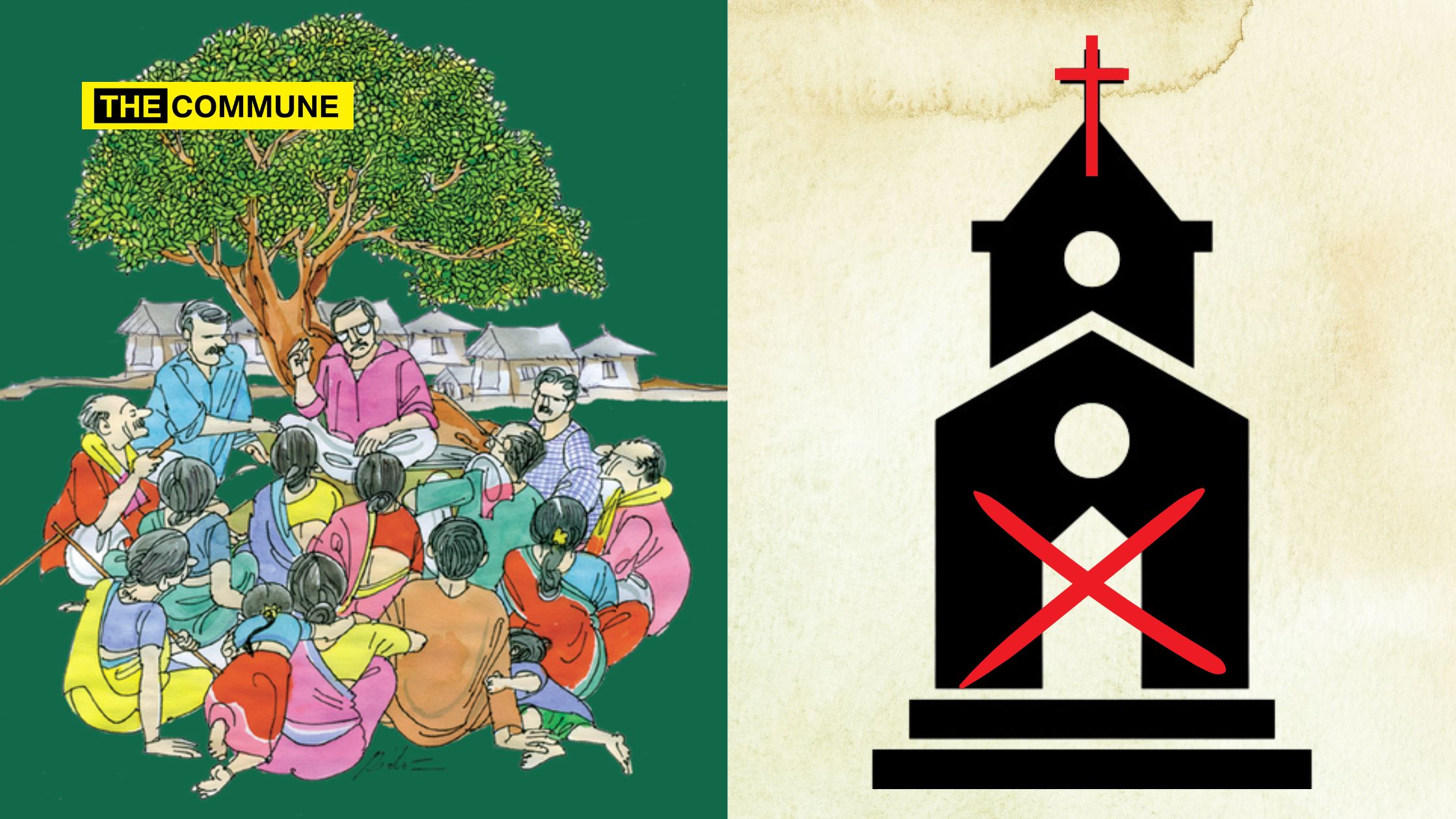
To exercise their constitutional rights, the villagers of Yadgarpalli Gram Panchayat have formally petitioned the District Collector of Medchal-Malkajgiri District, seeking an injunction against the illegal construction of a Christian Prayer Hall in their village. The petition, submitted on 1 August 2024, asserts that the construction is part of a conspiracy to incite unrest and promote religious conversions in a town with no Christian population.
Yadgarpalli, a peaceful village in Keesara Mandal, has a population of approximately 5,000, all adhering to the Hindu faith. The villagers have expressed concerns that the construction of the Christian Prayer Hall, initiated by a Christian pastor named Banoth Israel Naik, is an attempt to convert residents, particularly those from the Scheduled Caste community.
According to the petition, Naik began building the prayer hall at plots nos 48 and 49 of Survey No. 243 without securing the necessary permissions from the Gram Panchayat. Furthermore, he is not a resident or native of Yadgarpalli. The petitioners allege that Naik has also violated noise pollution guidelines by using loudspeakers, disregarding regulations set by the Supreme Court of India.
The villagers argue that the prayer hall serves no practical purpose for the community, which does not benefit from the establishment in terms of village development or employment opportunities. They have repeatedly voiced their objections to the Gram Panchayat, culminating in formal complaints on 2 October 2021 and subsequent resolutions passed during Gram Sabha meetings on 2 October 2021 and 18 June 2022.
The resolutions, passed by an overwhelming majority, explicitly oppose the prayer hall’s construction and the facility’s continued operation without proper permissions. The Panchayat Secretary officially recorded these resolutions in the Minutes Book.
The villagers’ petition underscores their belief that the project is a deliberate attempt to disrupt the harmony of their community and urges the District Collector to respect the local governance decisions and halt the construction of the prayer hall. The ongoing dispute reflects broader tensions regarding religious and cultural practices in the region, and the villagers are calling for immediate action to preserve their community’s peaceful coexistence and autonomy.
Subscribe to our channels onTelegram, WhatsApp, and Instagram and get the best stories of the day delivered to you personally.
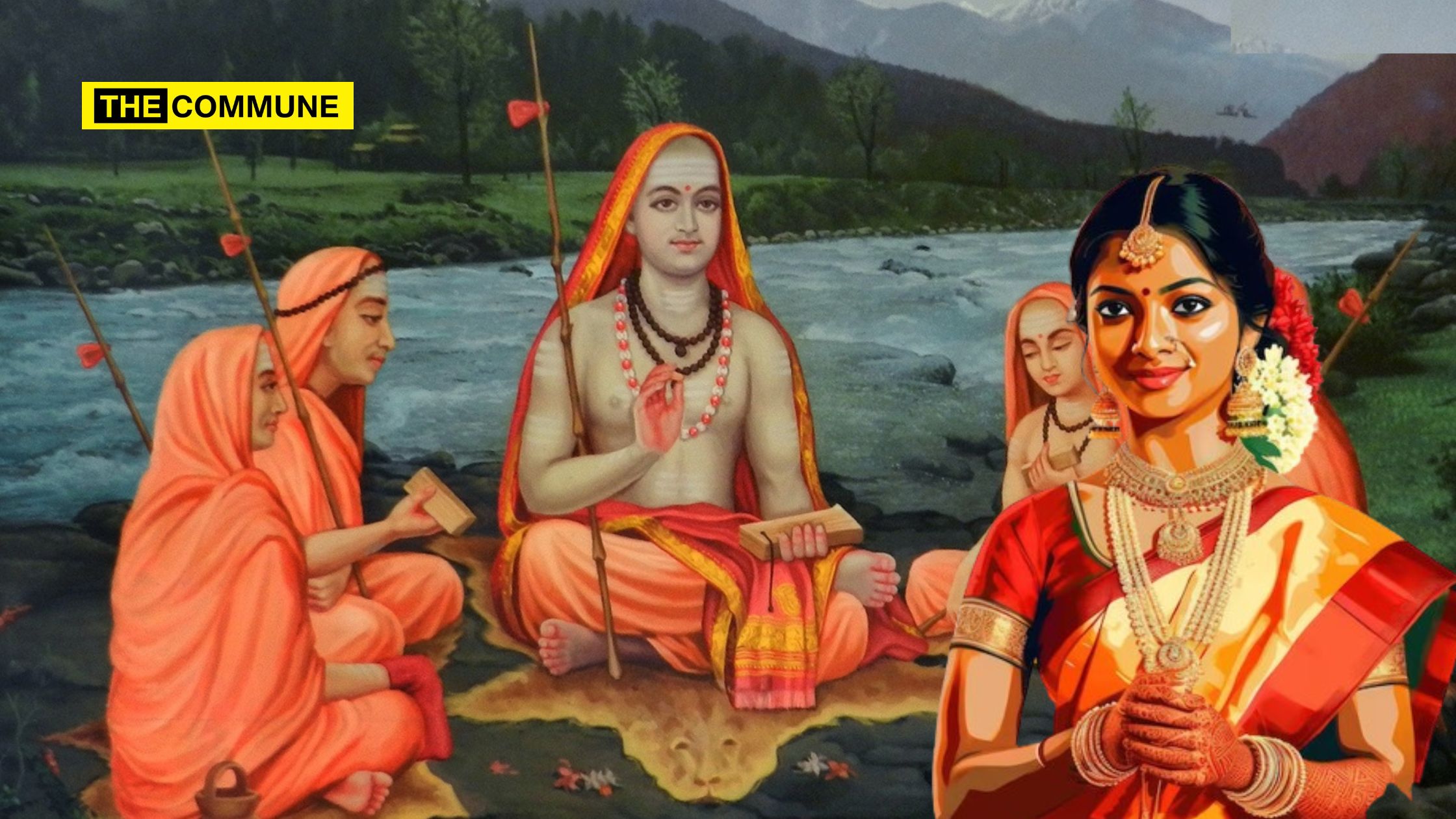
Adi Shankaracharya’s influential role in revitalising the Vedic religion and his unwavering commitment to the respectful treatment of women demands attention in contemporary discussions on women’s rights. His teachings provide a compelling framework for upholding the dignity and honouring the contributions of women within the family, community, and workplace, offering essential principles for today’s society to uphold.
In the context of Sanatana Dharma or Hinduism, it is often propagated that women are not respected and their rights are denied. This raises questions: Are women genuinely oppressed in our culture? If so, since when?
Adi Shankaracharya played a significant role in the religious revival across India. He revitalized the Vedic religion and is recognized as the founding teacher of Shanmata (6-Sects). As a Jagadguru, he established monasteries throughout India to promote Vedic traditions. He composed devotional hymns and encouraged people to follow the path of devotion. He established temple worship practices nationwide and performed significant religious ceremonies to stabilize and develop the religion.
In the 2,500 years since Adi Shankaracharya’s time, Hinduism has not experienced a decline. No force, whether by sword or politics, has been able to diminish it. Jagadguru Adi Shankaracharya’s foundation for this religion plays a crucial role, including his treatment of women.
Contemporary advocates for women’s rights reference three main areas: family, community, and workplace. All three areas reflect Adi Shankaracharya’s treatment of women as a guiding example.
Adi Shankaracharya, dedicated to asceticism, sought permission from his mother before pursuing his spiritual practices. Despite renouncing worldly life, he did not abandon his duties to his mother and remained committed to fulfilling them. He demonstrated the love and respect a son should show to his mother. For instance, when his mother expressed a wish to bathe in the holy Alwaipuzhai River but was unable to walk due to mobility issues, he made the river flow through their village to fulfil her wish. This respect towards his mother indicates his broader directive to honour women within the family.
Adi Shankaracharya’s influence reached beyond just religious practice and extended to societal concerns. As a celibate student, he lived the life of a beggar, or bhikshuk, as part of his spiritual discipline. On one occasion, while seeking alms, he visited the home of a very impoverished woman who offered him a few amlas (Indian gooseberries) for his bowl. Moved by her dire situation, Shankaracharya composed a prayer called ‘Sri Lakshmi Kanakadhara Stotra’. Miraculously, his heartfelt prayer led to a sudden and bountiful rain of gold, transforming her impoverished condition. He believed that poverty, even when due to one’s occupation, should not undermine the dignity and respectful treatment of individuals. He argued that a woman of kind disposition should not suffer and demonstrated through his actions that compassionate treatment of women is a moral duty.
Additionally, Adi Shankaracharya’s interactions show how women should be treated in society and the workplace. He debated with various scholars across India to establish the Advaita philosophy of the Vedas. During one such debate with Mandana Mishra, Adi Shankaracharya accepted Mandana Mishra’s wife, Ubhaya Bharati, a renowned scholar, as the judge. Recognizing and valuing Ubhaya Bharati’s erudition exemplifies overcoming patriarchal bias and appreciating women’s intellectual capabilities.
In another notable incident, while debating in Kashmir, Adi Shankaracharya honoured a knowledgeable woman by awarding her a ‘Tarangam’ or crown-like turban, recognizing her scholarly achievements. This continues in the tradition of acknowledging women’s excellence in knowledge. Adi Shankaracharya also gave precedence to female deities in the monasteries he established, reinforcing the idea of Shakti (female divine energy) and the belief that the world is incomplete without feminine power.
People in modern India still follow the practices and hymns established by Adi Shankaracharya, and his approach towards treating women with dignity remains relevant. Returning to these principles could contribute to a better future, while modern discourses on women’s rights can benefit from reflecting on these traditional values. Today’s women, inheriting a legacy of knowledge and wealth, are encouraged to consider these perspectives.
The Kuladevata serves as a unifying force, providing a shared identity to the family.
In Hinduism, the concept of worship revolves around devotion (bhakti) towards various deities, each of whom represents different aspects of the divine. Hinduism is often described as polytheistic because it acknowledges a multitude of gods and goddesses (Devas and Devis). However, it also embraces the idea of a single, formless divine reality (Brahman) from which all gods and goddesses emerge. Thus, Hindus can be both monotheistic (believing in one ultimate reality) and polytheistic (worshipping multiple deities).
The principality is the Trimurti, or the three principal deities: Brahma (the creator), Vishnu (the preserver), and Shiva (the destroyer and transformer). Together, they form the Trimurti, representing the cycle of creation, preservation, and destruction in the universe.
Haven’t we been informed about the significance placed on the kuladevata or ancestral Clan Deity, as our elders have advised veneration of these clan protectors who hold the blessings passed on from other prominent deities? Indeed, many of us have. Hinduism incorporates a wide range of beliefs and rituals, with the kuladevata holding a central role among the deities.
Kuladevata
So, who exactly is the kuladevata? It is the deity revered by our paternal grandparents, tracing back to a lineage known as ‘Gotram’. Women from different lineages would become life partners in this lineage, ensuring no intermarriage within the same gotra. This demonstrates the interconnectedness of the Rishi lineage and the importance of this practice.
There are thousands of temples worldwide, but visiting them is not always guaranteed. However, before we even understood the concept of bhakti, our parents took us to the temple of our kuladevata for rituals like the first hair offering and ear piercing. Standing in the kuladevata’s sannidhi (sanctum) connects us to our ancestral lineage. This connection is unique and cannot be replicated elsewhere. Often, we do not know more than two generations of our paternal grandmothers, highlighting the importance of this lineage.
Worshiping the kuladevata allows us to build bundles of good deeds, even if we have committed sins. Our forefathers bless us as pitrus (ancestors) when we stand before this deity. This system is far-sighted and well-designed.
The Power of Kuladevata
The Kuladevata protects the clan and is considered the most powerful deity. Worshipping the family deity brings grace and the benefits of worshipping other deities. Although often seen as a minor deity, its power is immeasurable and should not be ignored. Even Yama, the god of death, requires the permission of one’s family deity to take a life.
Kuladevatas are pious souls who have become deities in our ancestry. These holy souls protect their clans and loved ones, so they are called family deities. They are also capable of removing karma. Those with too many karmas may not even know their family deity. Fortune tellers can call upon the family deity to provide details about us, but they cannot do so arbitrarily. Sorcerers performing deeds must control the clan deity with a magical bond. Some deities, not bound by magical shackles, can destroy witches.
Worship Practices
Women are unique worshipers of two clan deities: one from their birth house and one from their marital house. After marriage, they start worshipping the family deity of their husband’s house. Yearly worship of the family deity of the birth house protects them throughout their lifetime. Worshipping the family deity of the marital house gives them strength to overcome struggles. If the family deity of the birth house has not been worshipped before, it should be done during festivals.
Worshiping the clan deity is crucial for the clan’s prosperity. Without the grace of the kuladevata, the blessings of other gods are not available. Powerful rituals and temple visits may not yield the expected results without the family deity’s favour. Regular visits to the family deity’s temple, performing abhishekam, and arranging pujas are essential for a prosperous life.
Scientific Perspective
According to divine laws, each dynasty can have a maximum of 13 continuous generations worshipping their clan deity. Scientifically, the determination of a child’s gender lies in the father’s chromosomes, highlighting the significance of inter-gotra marriages to avoid genetic implications.
Our ancient wisdom prohibits marriages within the same gotra due to the genetic implications, with individuals sharing the same gotra considered siblings. This understanding stems from the genetic significance of X and Y chromosomes in determining gender. The male offspring, in turn, receives Y chromosomes from the father, as it is through them that the lineage continues. Understanding the lineage and heritage through generations is evident in the passing down of traits from stepfather to son, grandson, and even great-grandson. Our ancestors recognized the significance of male offspring, leading to a focus on their importance.
Contrary to the transmission of x chromosomes from mother to daughter and father to daughter, y chromosomes only pass from father to son. This natural phenomenon prevents females from inheriting male y chromosomes, which tend to weaken over time. Y chromosomes deteriorate with each generation, becoming ineffective after approximately 13 iterations, ultimately leading to a lack of male successors. In order to prevent further weakening and the persistence of genetic disorders, marriages between blood relatives are discouraged.
In today’s world, scientists can unearth a small bone from someone who passed away a century ago, analyze its DNA in a laboratory, and match it with your own DNA to confirm, “This was your grandfather.” This incredible ability to trace ancestry spans thousands of years, where people meticulously preserved their genetic lineage without mixing, ensuring the well-being of future generations. This continuity not only maintains genetic integrity but also establishes an energetic connection along this ancestral track.
When someone visits a temple, they aren’t just praying to a distant deity. They are affirming their identity: “This is me, this is my lineage, my lineage’s origin (gotra), my star (nakshatra), and my clan (kula).” They are essentially invoking their DNA and seeking divine assistance in a scientifically profound manner. This approach not only respects tradition but also reflects a deep understanding of life’s interconnectedness.
Moreover, modern medical science is moving in a similar direction by tailoring treatments based on genetic profiles. Discovering effective treatments for specific DNA types benefits everyone sharing that genetic heritage. Thus, maintaining and honoring these genetic lines isn’t merely a cultural or religious practice—it’s a scientific foundation that respects and harnesses the power of our ancestral lineage for the benefit of all connected to it.
Schumy Vanna Kaviyangal: A Mouthpiece Of Hate Spreading Vulgarity & Divisive Propaganda
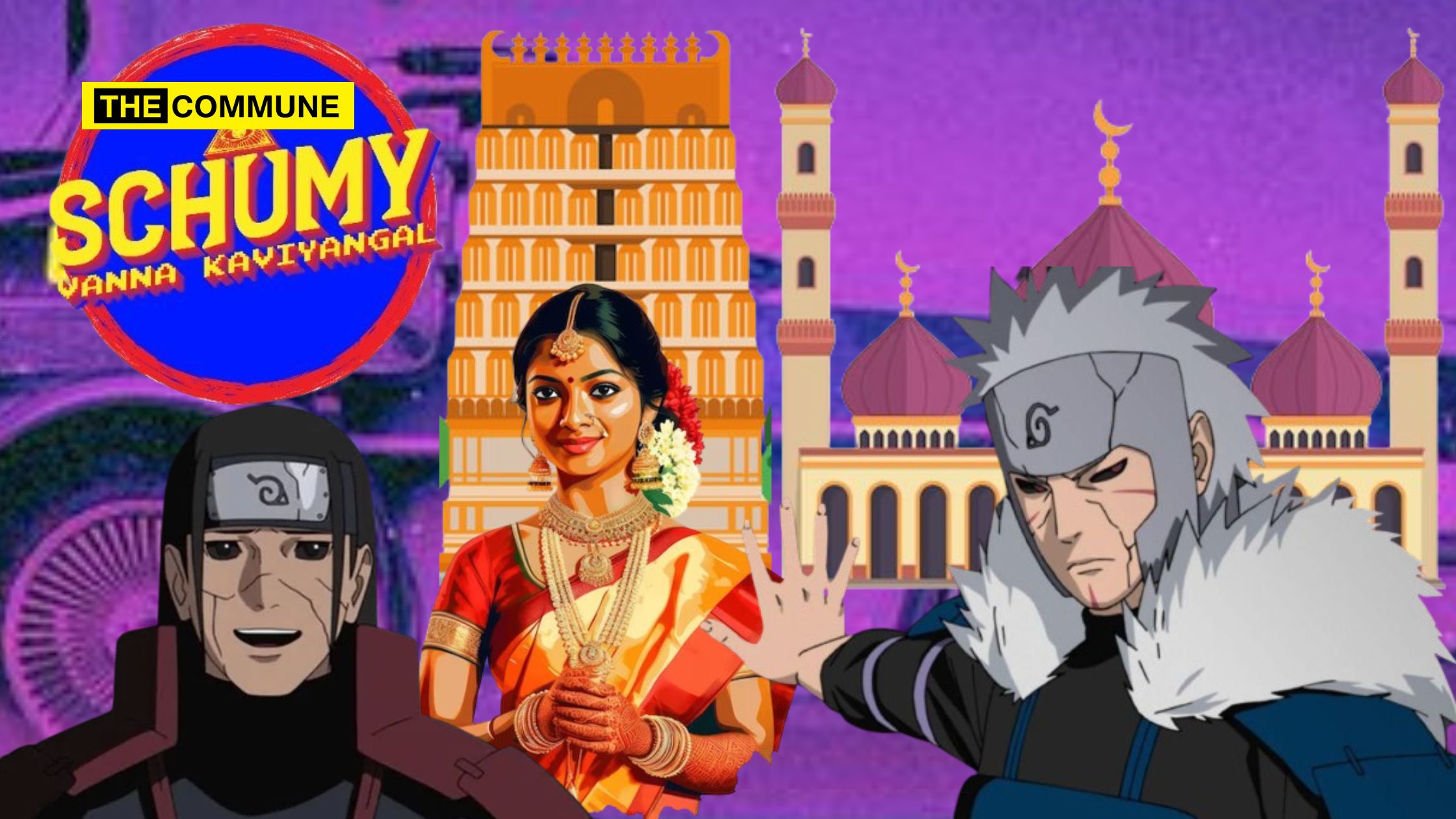
Schumy Vanna Kaviyangal (SVK) is a Tamil podcast channel that began as a lighthearted and candid discussion on various topics, including comic satire. Over time, it has evolved into an unofficial propaganda outlet for the DMK, frequently attacking opposition parties and targeting specific castes and political groups. The show’s hosts are men who use character names from the anime Naruto as their aliases.
Their worst vocabulary and most hateful messages target Hindu deities, Hindu Women and Brahmins. They also speak about Islam in derogatory terms. They also make vulgar claims about women working in films and media.
Notably, they have no comments about Christianity, the state’s second-largest religion. The only Christian they seem to have a problem with is Shalin Maria Lawrence, the Scheduled Caste activist who openly criticises casteism and misogyny in DMK ranks.
Schumy Vanna Kaviyangal – Ideological Leanings
Since their podcast began on the Spotify platform in September 2019, they have been openly critical of the BJP, frequently using abusive language under the guise of advertisements. In their debut episode, “Superhero Genre in India ft. Uchiha Madara,” they subtly reveal their anti-BJP stance and later ridicule Seeman and Hindutva.
This bias becomes evident when the host, Haashiramaa Senju, voices an ad saying, “This episode is co-sponsored by: Are you a Sanghi? Drink Cow Urine Fizz immediately. Now, with gas!” This remark indicates their opposition to BJP ideology, with “Sanghi” known to be used as a derogatory term for BJP supporters.
In the second episode, titled “Conspiracy Theory – A Perspective ft. Uchiha Madara,” another person named after a character from the Naruto series, Tobirama Senju, is introduced as a fan of ‘Paari Saalan‘. In this episode, Hashirama Senju makes a degrading remark against the Brahmin community. He uses the term “Paarpaan,” a derogatory word used by EV Ramasamy Naicker, hailed as Periyar in Tamil Nadu, to ridicule the Brahmin community.
In the third episode, guests such as YouTurn Iyan Karthikeyan, a fact-checker YouTuber who now works for the government as the Mission Director of the TN government’s “Fact Checking Unit” and who also allegedly favours the DMK, and Sarvs, a provocative speaker from the YouTube channel Plip Plip, made appearances. Their ideologies were evident from this point. A voice ad featuring Haashiramaa Senju included the remark, “If you’re a fan of Maridhas, Poda P**da,” providing another clue to their stance. In the episode, they all mocked YouTuber Maridhas for his explanation and support for the National Education Policy (NEP). From the abovementioned instances, any listener can easily infer that Schumy Vanna Kaviyangal’s inclination leaned heavily towards the Dravidian ideology.
In the first season, other episodes remained largely neutral, primarily due to the co-host, Uchiha Madara, who maintained a neutral stance and avoided aligning the show with any political affiliations, particularly with the DMK. However, this approach didn’t sit well with Haashiramaa Senju, the podcast’s protagonist. From the second season onwards, Schumy Vanna Kaviyangal fully embraced Dravidian ideologues and individuals promoting hatred against the Hindu belief and BJP as the co-hosts and guests.
Schumy Vanna Kaviyangal – Derogatory Remarks On Hinduism
In Season 2, Episode 11, titled “S.A.N.G.H.I. (Softcore Assembly of Nibbas in a Gang of Hot Ignition)”, Hashirama Senju and the hate-monger of Brahmins and Vanniyar caste, Tobirama Senju, join forces to ridicule Hindus under the guise of attacking the BJP, unleashing their long-held vehemence. In this episode, Hashirama declares that Tobirama is like a brother to him, mirroring the two characters’ relationship in the Naruto anime.
Here, they discuss various baseless allegations and lies about Hindu scriptures, inciting hatred among their followers.
Right from the start, they implant their hardcore Dravidian ideology to influence the audience’s mindset, claiming that the BJP’s efforts to unite Hindus are futile as all Hindus prioritise caste. Throughout the podcast, one can witness/hear vulgarity, the normalisation of porn, and abusive language – these are hallmarks of the podcast. Tobirama asserts there is no scientific basis for caste, but Hashirama contradicts him, stating that the caste system was initially created as a competitive spirit but later went wrong.
They then turn to attack Lord Brahma. Hashirama argues, “Brahma did not create people equally. He also created a rule book called Manu Dharma with the help of rishis, a manual for discrimination. Anyone can download it, buy it online, and read it in the original translation. The creator claimed we are not all the same. But I’m saying that a god created me, Hashirama, and Tobirama and then created others to be beneath us, with the upper two being one caste, the middle another, and the bottom two low castes. If this is creation, it’s akin to an orgy and gangbang.“
Unsurprisingly, SVK eventually directed all blame of social injustice towards the Brahmins, exploiting their vulnerability and following the narrative created by E.V. Ramasamy Naicker. Similarly, the podcast accuses the Brahmins of “exploiting the innocence of other castes” to maintain control. They perpetuate the same blatant lies as their Dravidian stalwarts, claiming that Brahmins prevented other castes from getting an education and stating that today, they were able to question Manu Dharma because they had the opportunity to study.
Thankfully, as they recorded the podcast in 2020, they did not claim, “Because of the Dravidian model, we have been able to study.”
In the narrative they set in the episode, they claim that BJP is simply against Muslims and Dalits. They justified and bolstered the concept of love jihad, questioning whether a girl who marries is unaware of her choices. They asserted that the distinctions within Muslim groups like Marakkars and Labbays or Christian denominations like Protestants and Pentecostals are not categorisations like caste in Hindus. Speaking of Kamal Haasan, they described the logo of his party, Makkal Needhi Maiam, which features six hands interlinked, as a symbol of a “circle jerk.“
Later in the Season 3, Episode 06: Godmen ft. Tobirama Senju and Kakashi Hatake speak on the Hindu epic Ramayana and discuss whether Ravana was a Brahmin. Tobirama vulgarly denigrated the revered goddess Sita, saying, “Ravana abducted Sita, Rama’s wife, and f**ked her; they call Ravana an evil character. So how could he possibly be a Brahmin?”
Further escalating his abusive comments, Tobirama states, “In the original Ramayana, when Rama describes Sita, ‘Her back bu**ocks are beautiful and lifted, and her breasts are swollen.‘” Kakashi then interjects, asking, “To whom is he saying this?” Tobirama replies, “He’s talking to his brother.” Kakashi continues, “He makes his brother and Hanuman sit down and then sends him (Hanuman) by identifying her.” Tobirama chimes in with a husky tone, adding, “She will be very beautiful and plump.”
At this point, the host, Haashiramaa, joins in with a double entendre, saying, “He’s saying, ‘Don’t poke her with the Gada—for that he replies the Gada is there, sir.'” (All were laughing understanding it)
Tobirama then continues, reflecting a similar sentiment to what Haashiramaa mentioned, asserting, “Now you said that the thought of Hanuman’s c*ck poking, right? You were implying that, weren’t you?” He adds, “If the writers of the scriptures, like the Noolandi (Brahmins), they might have written that, ‘Hanuman’s sperm reached the sky and rained down.’ This was just the story they chose to write about being horny, and they wrote whatever came to their minds.”
Later, Kakashi and Tobirama derided Hanuman’s portrayal as a Brahmachari by drawing a homosexual connection to Lord Ram. He says, “Now, he has sent Hanuman by saying that, ‘My wife is a super figure having her back lifted and hips well-defined,’ but when Hanuman visited Sita and showed her the signet ring (Soodamani),”
Kakashi continues, “What Valmiki Ramayana says is that Ravana used many magic tricks to try and seduce her.” Tobirama interjects, “But she went there willingly, right?”
Kakashi responds, “No, She was dragged by her hair unwillingly. We should speak on the original Valmiki Ramayana, not the Atlee model Kamba Ramayana version.” Further said, “He (Ravana) grabbed Sita by the hair and dragged her away. Hence, Sita suspected that Hanuman might be another of Ravana’s tricks. Immediately he (Hanuman) said, ‘No! Rama sent me. I’ve seen Rama; his p*nis is smooth and lengthy, and his balls are hanging.’ – G*tha, when did you see his? Isn’t that a bit awkward or not?” He continues, “He (Rama) came to the forest after his recent marriage, and (Ravana) carried away his wife. Meanwhile, Hanuman is muscled and has well-developed thighs from his training.”
Schumy Vanna Kaviyangal – Ridiculing Hinduism On Their Social Media Handle
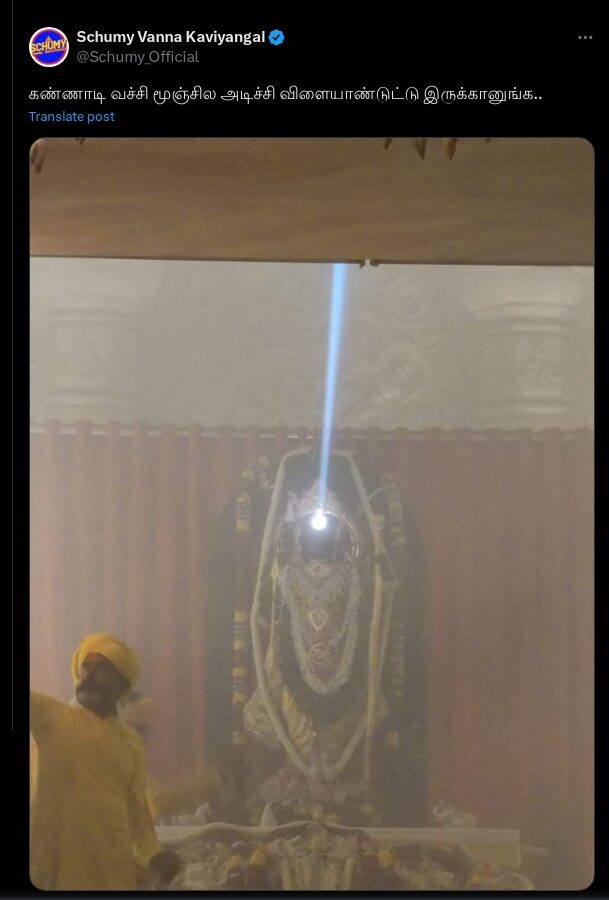
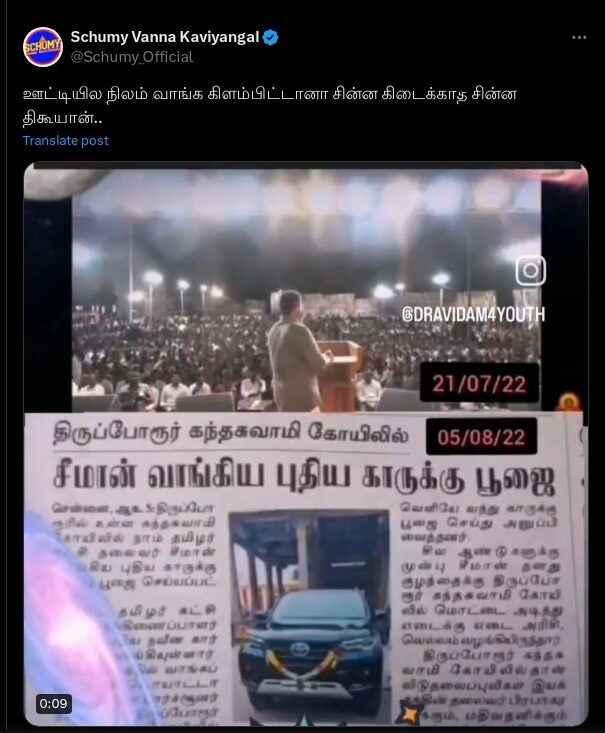
On the official X account of SVK, they mocked the “Surya Tilak” ceremony at Ayodhya on Ram Navami, where sunlight is directed onto Sri Ram Lalla’s forehead using an opto-mechanical system developed by the Indian Institute of Astrophysics (IIA). They derisively commented, “You are playing with mirrors and shining light on a face.”
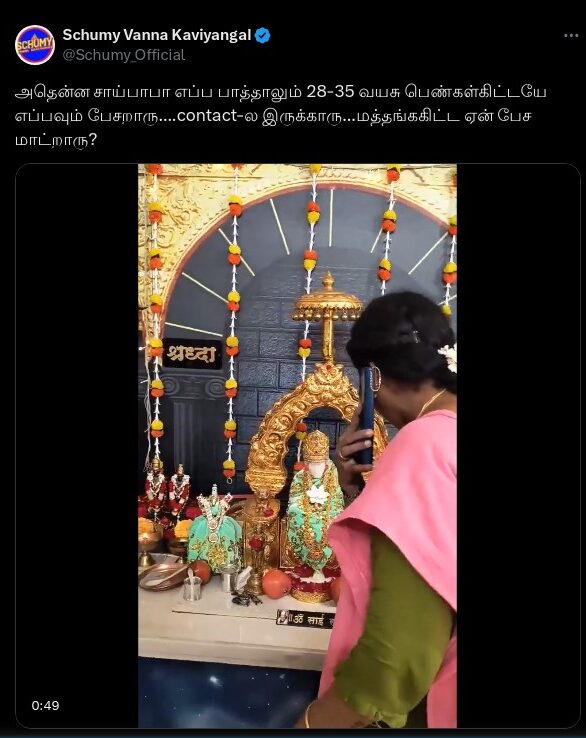
In another post, Schumy Vanna Kaviyangal ridiculed a devotee who used her phone to call her ill mother at a Sai Baba temple, stating, “Why does Sai Baba always talk to women aged 28-35? He is always in contact with them. Why doesn’t he talk to others?”
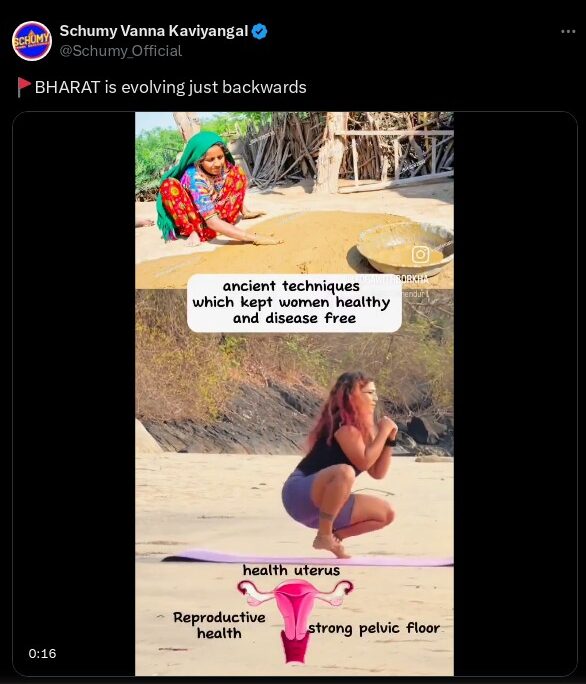
In another post, SVK criticised women who advocate yoga for modern-day women, aiming to enhance pelvic floor strength, uterine health, and reproductive wellness. While acknowledging these exercises were traditionally part of daily routines, SVK derided them, remarking, “Bharat is evolving backwards.”
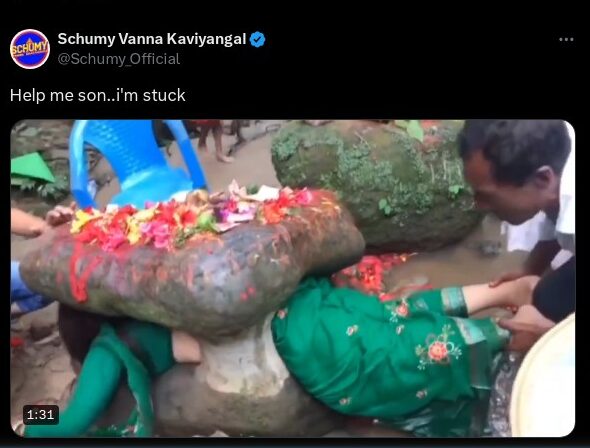
In a subsequent post shared by Schumy Vanna Kaviyangal, there is a disturbing depiction that demonstrates their susceptibility to pornography and their objectification of women. The post portrays a woman attempting to pass through a crevice in a rock, a ritual believed in some cultures to absolve unintentional sins and initiate spiritual renewal at the soul level.
For instance, in the inner sanctum of the Sri Kailasanathar Temple in Kanchipuram, Tamil Nadu, individuals must traverse a passage that narrows before exiting through a small opening, symbolising a symbolic return to the maternal womb for purification and emergence with a cleansed spirit and outlook, committed to righteousness. Nonetheless, SVK chose to ridicule the woman stuck in a pornographic context, insensitively remarking, “Help me, son. I’m stuck.”
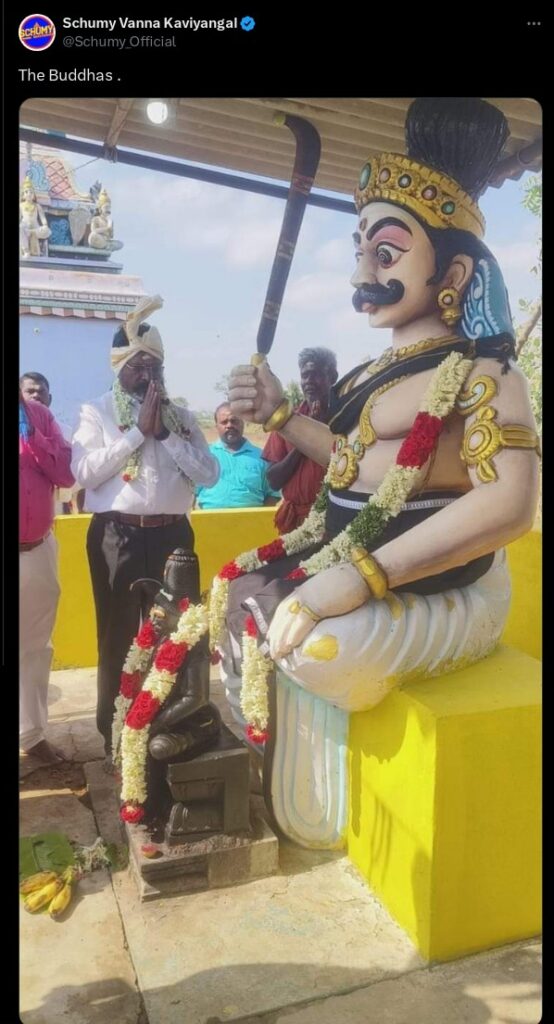
In the subsequent post, the podcast’s supporters do not like to witness the downfall of their beloved leaders, and their core belief system revolves around atheism and mockery of Hinduism. However, before the 2024 Lok Sabha election, their leader abandoned this ideology and opted to worship at a temple.
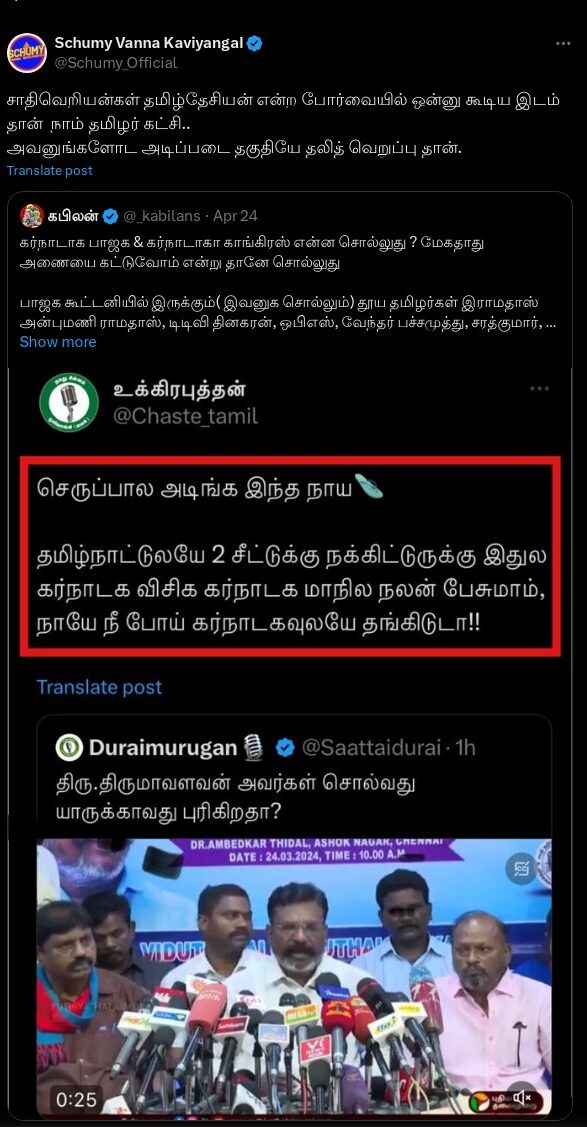
Similarly, Viduthalai Chiruthaigal Katchi (VCK) chief Thirumavalavan chose to visit his hometown and pay respects to the local deity, sparking immediate public discussion. Quickly, SVK intervened, clarifying that the god he worshipped was Buddha.
Schumy Vanna Kaviyangal – Derogating The Muslim Community
Just as they ridiculed Hindus and Hindu culture, Schumy Vanna Kaviyangal podcasters, like their Dravidianist peers, enjoy ridiculing former President Abdul Kalam for reading the Bhagavad Gita. They even equated him to pigs, which are forbidden (haram) in Islam.
In a podcast, Hashirama further asserted that some Muslims ate pork when they went abroad. Hashirama replied, “One thing I don’t understand is that according to Islamic law, they shouldn’t eat pork, but if he goes abroad, some will say, ‘It’s bacon and eggs, bro.’ What is bacon and eggs? Bacon is pork meat, usually roasted. He eats this abroad but calls it haram here. He changes according to the area but still talks foul-mouthed. Son of a b*tch.”
In Season 3, Episode 6 of Godmen, featuring Tobirama Senju and Kakashi Hatake, the hosts take their ridicule to an extreme. Tobirama sarcastically asks, “Is it true that they say Allah is gay?” Kakashi responds, explaining that the Quran states Allah is neither male nor female but a transcendent figure (Aruvuruvam). He points out the contradiction in saying Allah is neither male nor female while also claiming Allah created everything, implying a male figure.
Later in the same episode, Kakashi mocks the Quranic notion that Allah grants every boon and tests one’s character. He questions, Am I just a joke to God, subjected to tests? And asks why so many imams use Islam verses to justify killing all non-believers (kafirs).
Kakashi remarked, “The Qur’an states that humans were created as civilised beings to be tested by God to prove their truthfulness, honesty, and self-control to earn a place in heaven. Work less… Do we look like Kirukku K**thi? Are we toys K*na p*nda for these tests? Is there no work for God?” Later he said, “If we speak the truth honestly, many imams now buttress to justify terrorism and boast about killing non-believers (kafirs).”
He advised Muslims to treat women with respect and dignity rather than boasting that their religion was the first to grant land rights to women. He also criticised the Jamaat’s regressive stance on women’s rights, pointing out that they wouldn’t even allow their women to speak to a panipuri seller because he wasn’t Muslim.
Then Kakashi stressed, “Like other religious leaders, these Pacha Sanghis also embezzle money. As, their activities are on a smaller scale it is less visible, they are involved in many poisonous practices.”
Later, Tobirama asserted, “If today, the Pacha Sanghi strength is 10 members and Hindus are divided by caste with strength of 30 members, then if we increase the Pacha Sanghi to 40 members, their atrocities will escalate to next level.” Kakashi also questioned the reasons behind jihad, noting that its purpose is to kill non-believers. He remarked that while Muslim Sanghis might argue that Allah didn’t command such actions and that there’s been a misunderstanding, they often remain silent in defending their fundamentalist counterparts without challenging them directly.
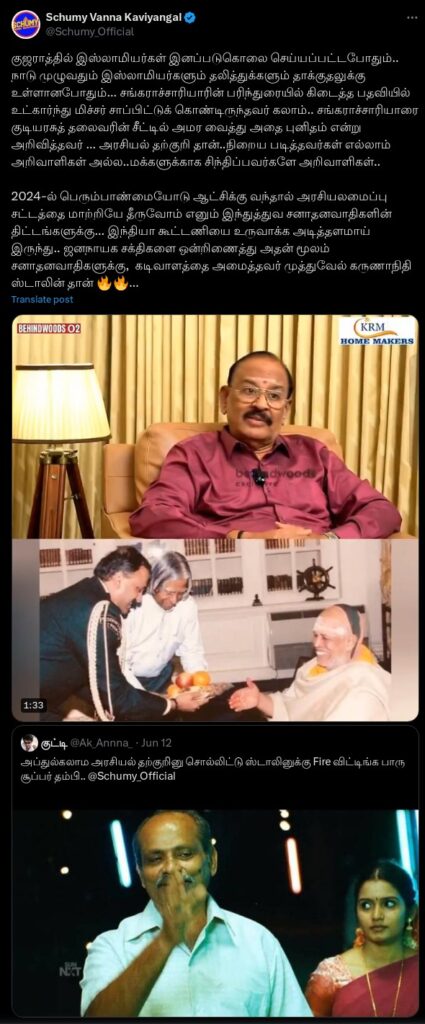
Previously, in Season 2, Episode 11 of the podcast S.A.N.G.H.I, Tobirama referred to former President Abdul Kalam as a “Superior Sanghi.” Hashirama explained this by saying, “Despite being a Muslim, a Sanghi still recites the Bhagavad Gita in its ideal form.” Tobirama countered by stating that if Kalam was a scientist, he should have acted as one. He criticised Kalam for allegedly being idle in his position, likening it to “sitting like pig shit.“
In the official X account of SVK, they provided a detailed explanation for their disdain towards Abdul Kalam. They criticised him for being idle (eating a mixture) during a time when Muslims were allegedly facing violence in Gujarat and when Dalits and Muslims were under attack nationwide.
SVK ridiculed Kalam’s secularism by criticising both him and the Shankaracharya, stating the post was a recommendation from the Shankaracharya and describing Kalam as politically naive for allowing the Shankaracharya to sit on the president’s seat. Then, they lamented that many educated individuals lack true intellectualism, contrasting intellectuals who prioritise the welfare of the people.
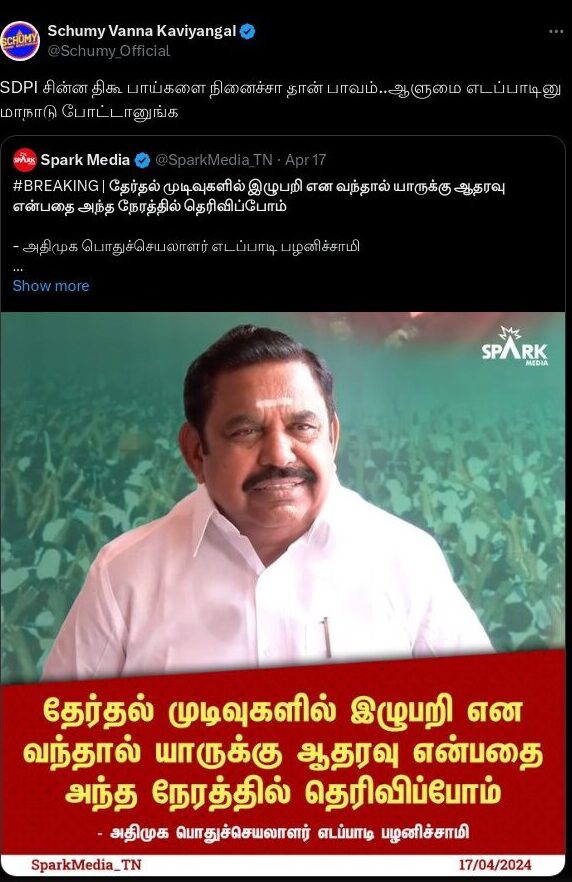
In another post, SVK ridiculed the SDPI, a Muslim political party, for aligning with the AIADMK in the Lok Sabha elections. Using a derogatory Tamil term, SVK expressed pity towards them and stated, “Thinking of this Chinna K**thiyan Bhai (thegeneral term to call Muslims) is pity. They have put forth a convention thinking Edappadi (EPS) as a personality.”
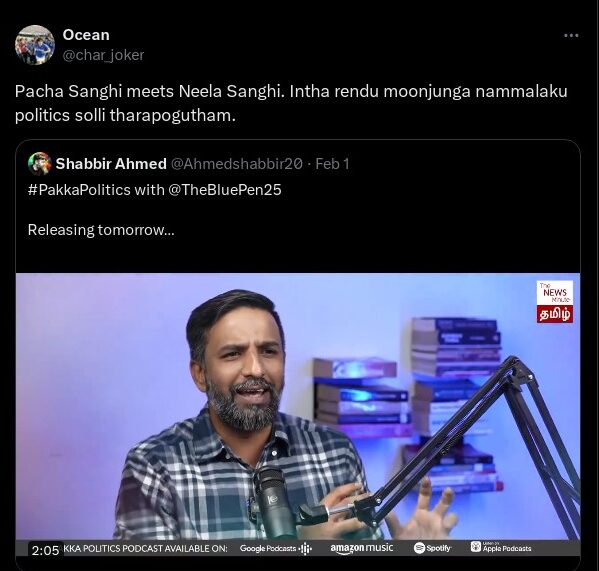
SVK refers to Muslims who oppose the Dravidian ideology or align themselves with nationalist ideologies as “Pacha Sanghi or Pure Sanghi.” This label was exemplified with a recent post where a Dravidianist referred to TNM’s Shabbir Ahmed as a “Pacha Sanghi.”
SVK’s Perspective On Women
In a rather crude manner, Haashiramaa Senju, displaying a narrow-minded perspective, remarked in Season 2 Episode 8 on nepotism that it is a well-known fact that despite the prevalent casting couch issue, numerous women are willing to engage in casting couch favours regardless of their personal preferences. Haashiramaa Senju said, “The well-known fact that even if there is a big casting couch problem here, many women (feel) it doesn’t matter if I am prevented from acting just because of that (casting couch), there are women who are ready to participate in it without liking it.”
It’s important to highlight that the term “casting couch” refers to the practice of soliciting sexual favours from job applicants in exchange for employment, particularly in the entertainment industry, specifically for acting roles. However, in this context, the podcaster Haashiramaa Senju shamelessly claims that women in the Tamil film industry are willing to engage in such acts to secure acting opportunities.
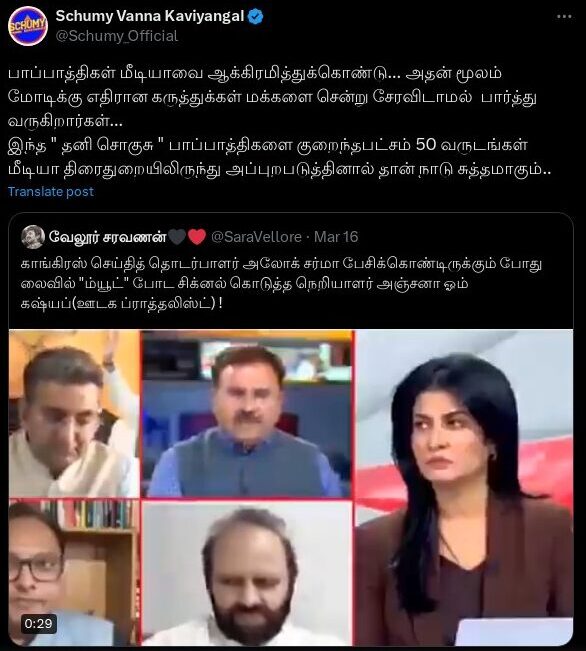
In the official X account of Schumy Vanna Kaviyangal, they harassed Aaj Tak anchor Anjana Om Kashyap by calling her a casteist slur, “Paapathi” (derogatory word for Brahmin women) that EV Ramasamy Naicker invented.
SVK stated, “Paapathis (Brahmin women) occupy the media and thereby ensure that anti-Modi views do not reach the people. The country will be cleansed if these ‘private luxury’ Paapathis are removed from the media industry for at least 50 years.”
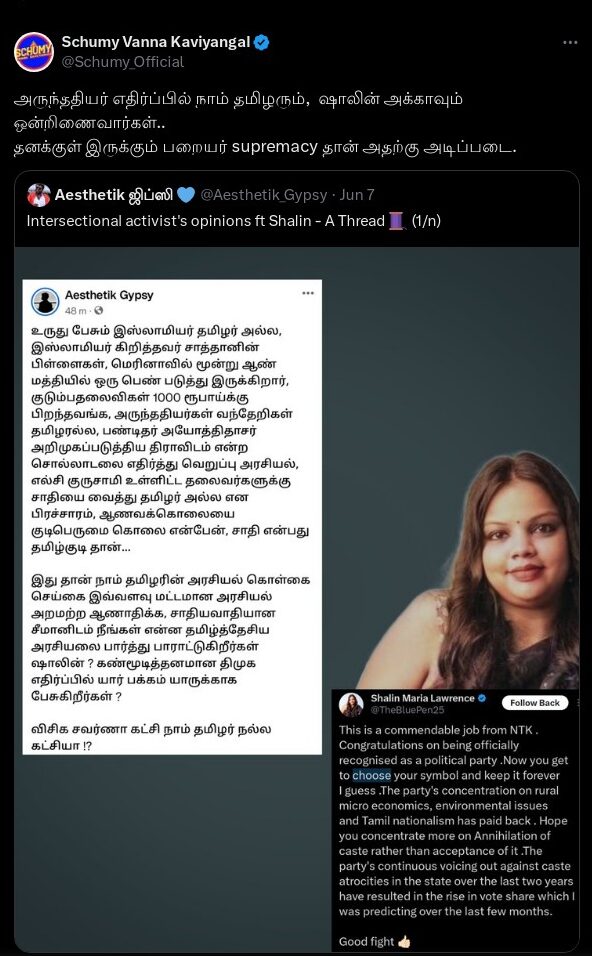
SVK’s harshest criticisms have been aimed at Shalin Maria Lawrence, a Scheduled Caste activist. The sustained attacks on her can be attributed to her independent stance against political affiliations and her consistent opposition to anyone acting against Scheduled Caste interests. Despite SVK’s advocacy for Dravidian and Scheduled Caste rights, they have chosen to bolster the DMK and VCK. Consequently, SVK has subjected Shalin Maria Lawrence to relentless online bullying, often referring to her as a “Blue Sanghi,” indicating a Scheduled Caste activist aligned with the BJP.
Whenever SVK quotes Shalin Maria Lawrence, they deliberately emphasise her caste, referring to her as “Paraiyar”, denoting her background and caste.
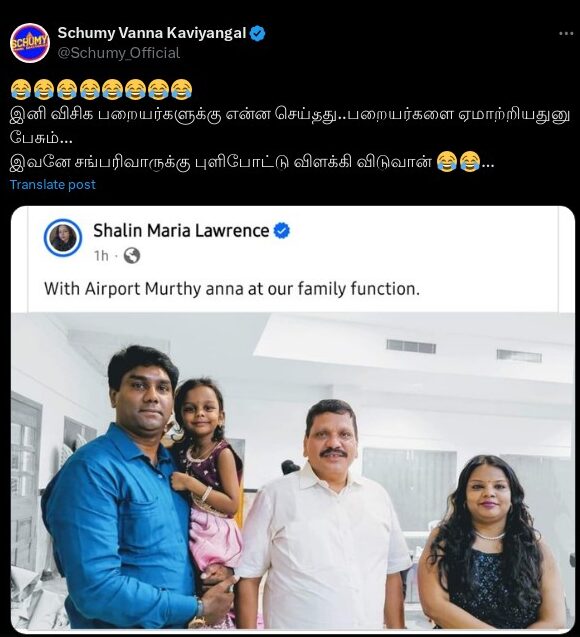
In a recent post, SVK mocked a meeting between Shalin Maria and Airport Murthi, another Scheduled Caste leader and critic of VCK, stating, “She will criticise what VCK did for Paraiyars and claim they betrayed them…”
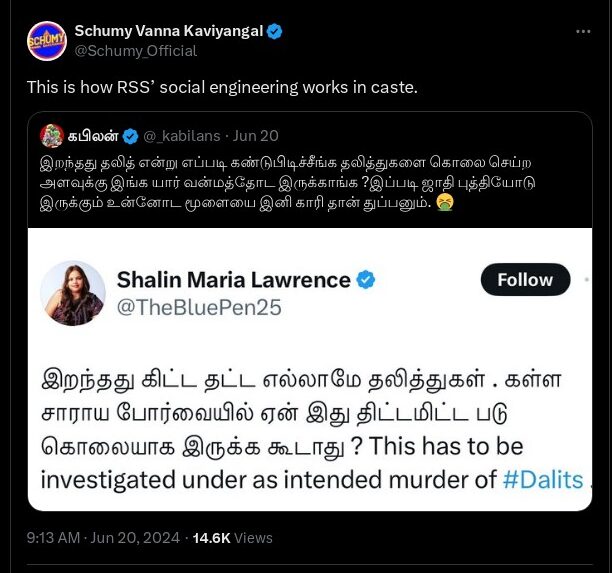
When activist Shalin Maria questioned the DMK government about the Kallakuruchi Hooch tragedy on 20 June 2024, which resulted in 47 reported deaths, she emphasised that all the deceased were from Scheduled Castes and called for an immediate investigation under murder charges. SVK and other Dravidianists swiftly responded to her post, alleging that her statements reflected “RSS-driven caste-based social engineering”, shielding the DMK from any criticism.
However, they often claim that EV Ramasamy Naicker educated and enlightened the “oppressed” castes, promoted respect for women, and worked for the abolition of caste. Yet, whenever they encounter someone, they label them by their caste—whether Vanniyar, Thevar, Paraiyar, Brahmin, etc. Such hypocrites conceal themselves within the ruling party’s influence and consistently propagate hatred between communities through their fabricated narratives.
Seeman, Naam Tamilar Katchi & Muthuramalinga Thevar
One episode of their podcast was entirely dedicated to criticising Naam Tamilar Katchi (NTK) chief Seeman – Episode 12 of Season 3 was titled “T.H.A.M.B.I.S (Tharudhalai Humanoids and Moolai Baathikkapatta Imbecible Sons): Oru Rollercoaster Discussion ft. Fake ID Aravind.” In this episode, Haashiramaa labelled the party cadres as an “Assortment of Idiots “, literally meaning a collection of fools espousing conspiracy theories and those who are heavily influenced by Illuminati theories. They are described as pro-Tamil but sceptical of modern science.
During the conversation, as evidenced by an incident where Haashiramaa’s friend, a Tamil nationalist (aligning with Seeman), refused modern medicine despite its mere cost, dismissing it as purely commercial. Haashiramaa also said this friend also expressed disapproval of E.V. Ramasamy Naicker, citing several reasons, such as the Manjolai massacre. Haashiramaa then asked him to suggest two alternative leaders, to which the friend mentioned MaPoSi and Pasumpon Muthuramalinga Thevar.
Haashiramaa then discussed the history behind the death of Immanuel Sekaran, explaining that he was murdered due to caste violence rooted in his lower caste status by the Thevar community. Haashiramaa said in the podcast, “I asked him to tell me two alternative names for Periyar, he said MaPoSi okay right. Then he said another name of a leader I forgot it. Thirdly, he said another name …he said Pasumpon Muthuramalinga Thevar (the other podcast guest laughs, and one of them says, “Take the slipper”). Then I asked, do you know Immanuel Sekaran died because of him?” the Haashiramaa continued, “The problem was because he sat before Muthuramalinga Thevar crossing one leg over the other stating, ‘You have let a low caste man sitting crossing his legs’ right?.”
Continuing further, another guest remarked that the violence was sparkedsimply because they did not offer him a chair to sit on, dismissing it as sheer brutality. Haashiramaa concluded the discussion by recounting how, when he explained this perspective to his friend, the friend insisted that Muthuramalinga Thevar was not responsible for instigating the murder. Consequently, Haashiramaa resolved that in the future, he would be cautious about befriending Tamil nationalists, using the derogatory term “Salli Ko**hi” to express his frustration.
Further in the podcast Haashiramaa and others ridiculed the cadres of Seeman – it is noteworthy that Seeman promotes and accepts Tamil cultures like practicing the ‘valari’ traditional weapon, primarily used by the Tamil people in war. In the episode, Tobirama Senju addresses NTK chief Seeman with a cuss word, “Chinna K**dhiyan.“
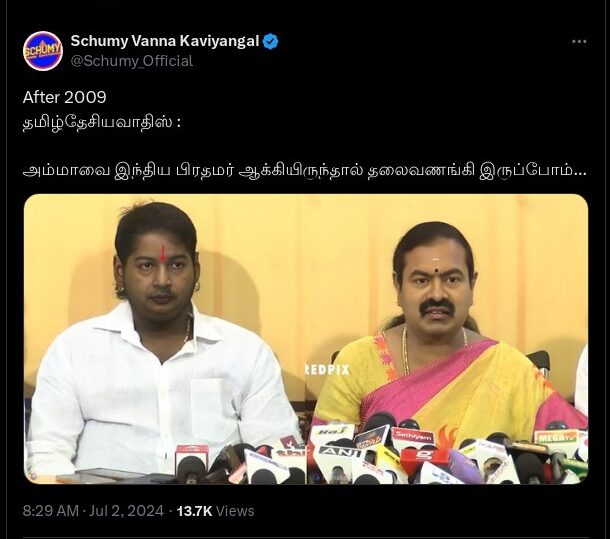
This is also evident from Schumy Vanna Kaviyangal’s (SVK) official X account, where he consistently criticises NTK and Seeman. In a recent post, SVK shared edited images depicting Premalatha (DMDK leader) and her son as men, resembling the late AIADMK leader Jayalalitha and Seeman as women. The caption ridiculously referenced Tamil nationalists post-2009, suggesting that Seeman is perceived as aligned with AIADMK, implying he is a part of their “B-team.”
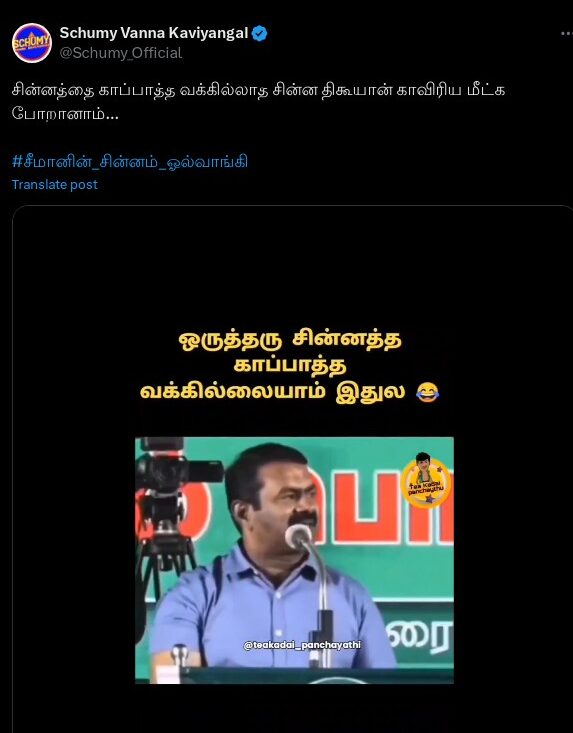
In another post, SVK used slur words to mock NTK leader Seeman for forgetting to apply for the election symbol. The post questioned, “Is this chinna k**thi who couldn’t even secure election symbols going to retrieve Kaveri?”
In another post, SVK again employed the derogatory Tamil slur against Seeman and questioned, “Has the chinna k**thi who couldn’t even secure an election symbol now gone Ooty to purchase land?”
SVK explained in another episode that NTK is a coalition where caste supremacists have united under the banner of Tamil nationalism and that their fundamental eligibility is hatred towards Dalits.
In conclusion, although Schumy Vanna Kaviyangalclaims to discuss politics and various other topics, it is just a garb to spread vicious propaganda. The podcast is characterised by vulgarity, the normalisation of porn, and abusive language throughout each episode, season after season. This is the consequence of unchecked media freedom, which ensnares the younger generation in an abyss, planting the seeds of vehemence and hate ideas through unfounded claims and encouraging the worship of false heroes. The young generation being influenced by these sadist influencers, who promote an ideology of violence, is a worrying sign of societal regression.
Subscribe to our channels onTelegram, WhatsApp, and Instagram and get the best stories of the day delivered to you personally.
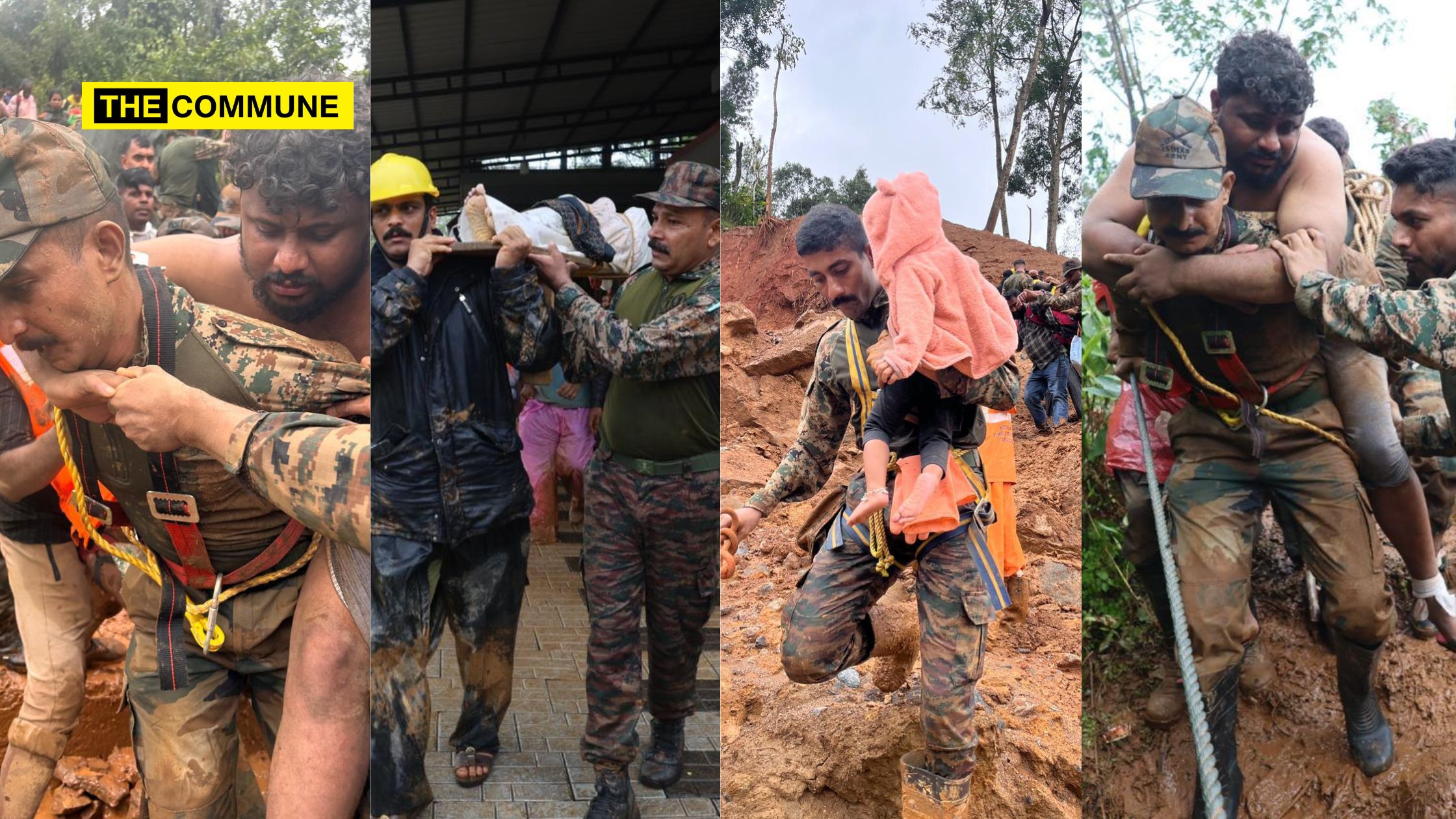
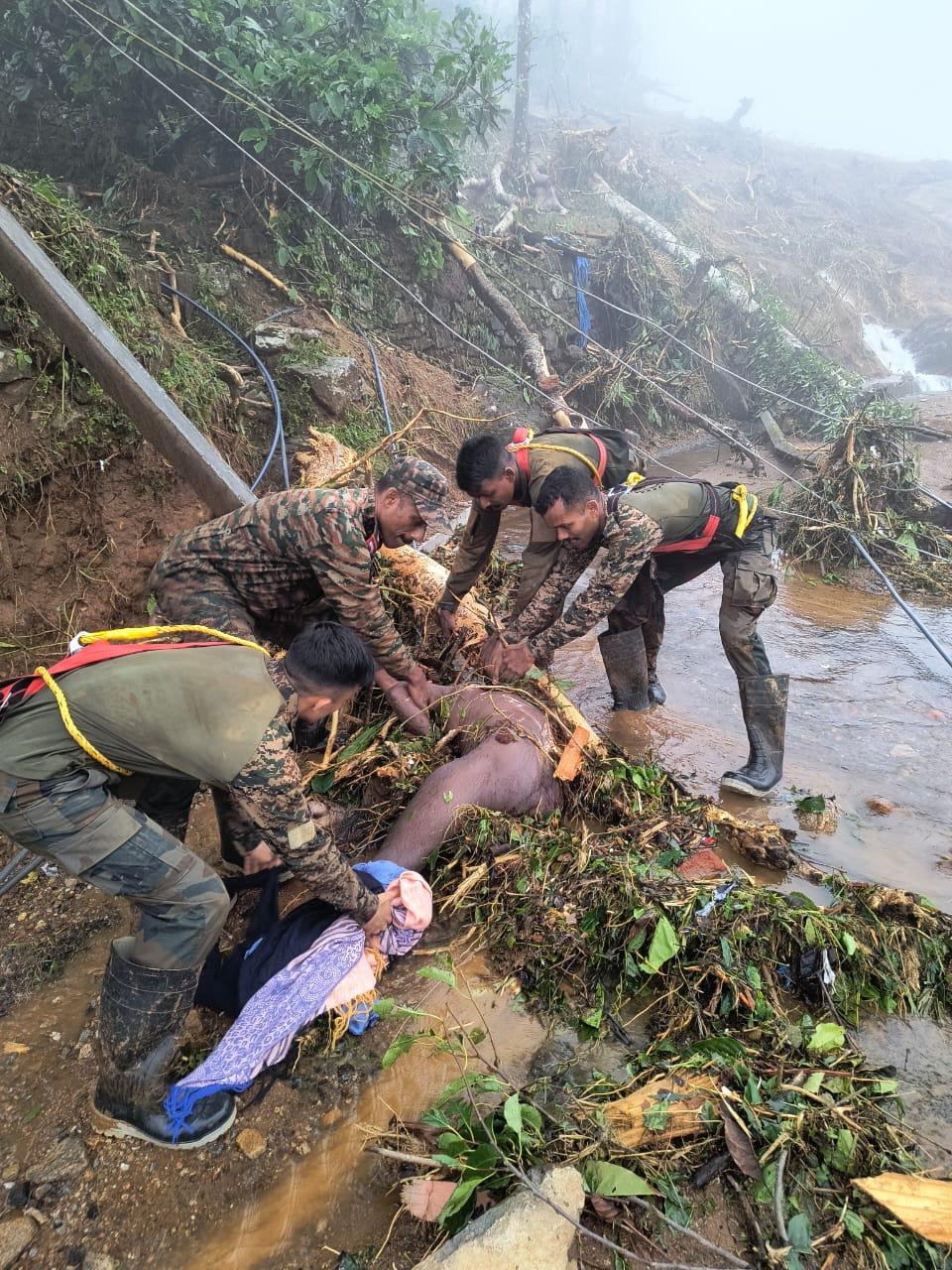
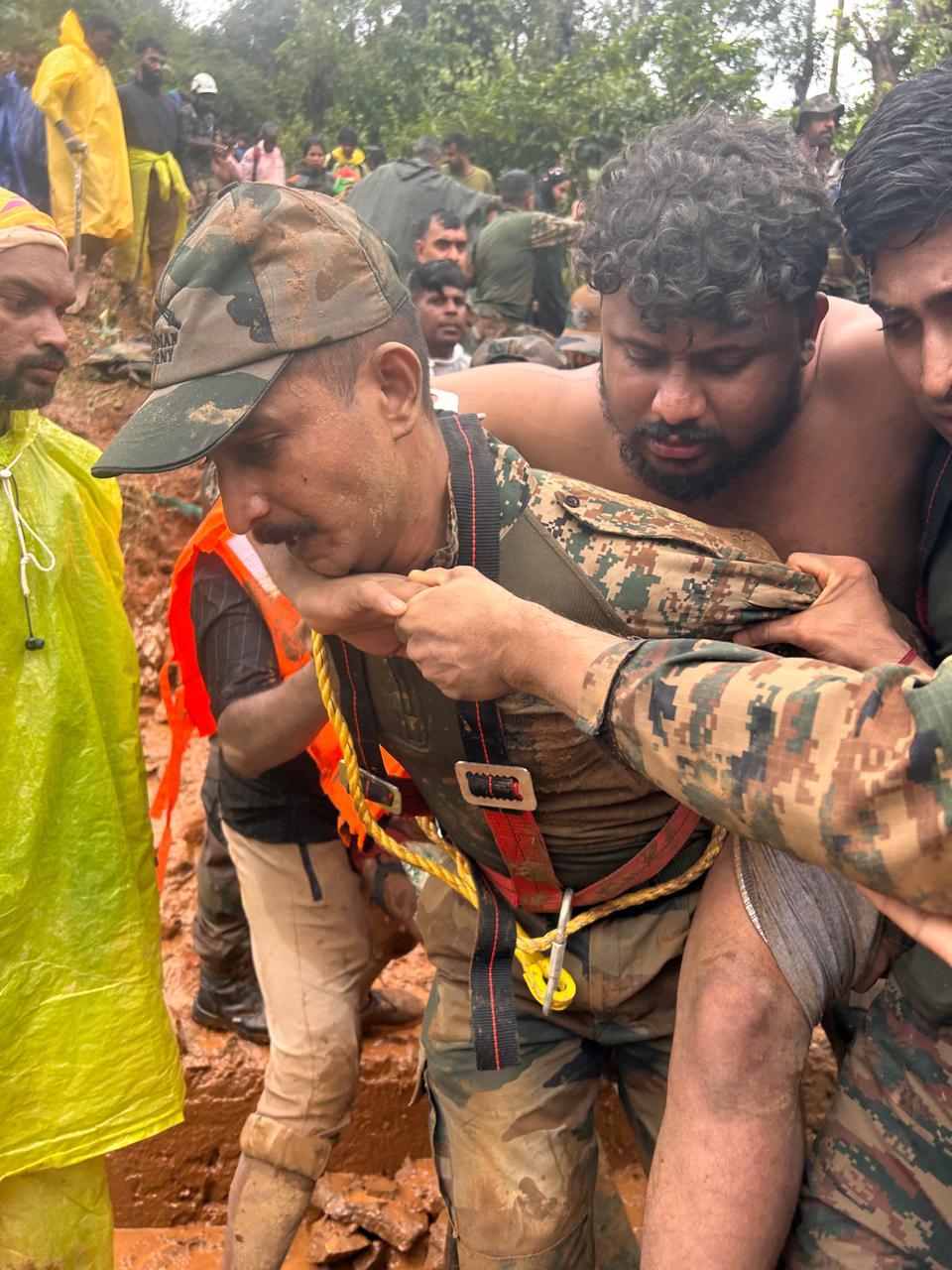
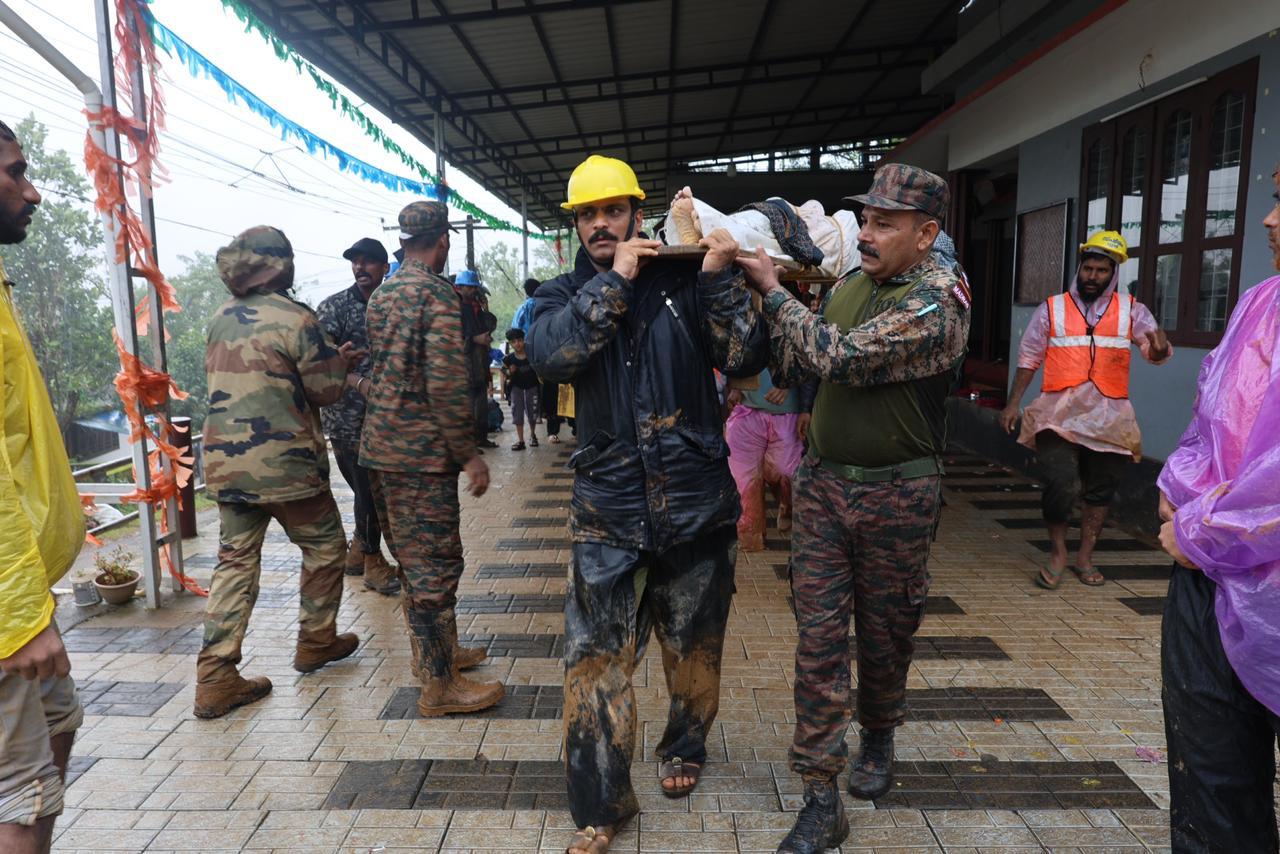
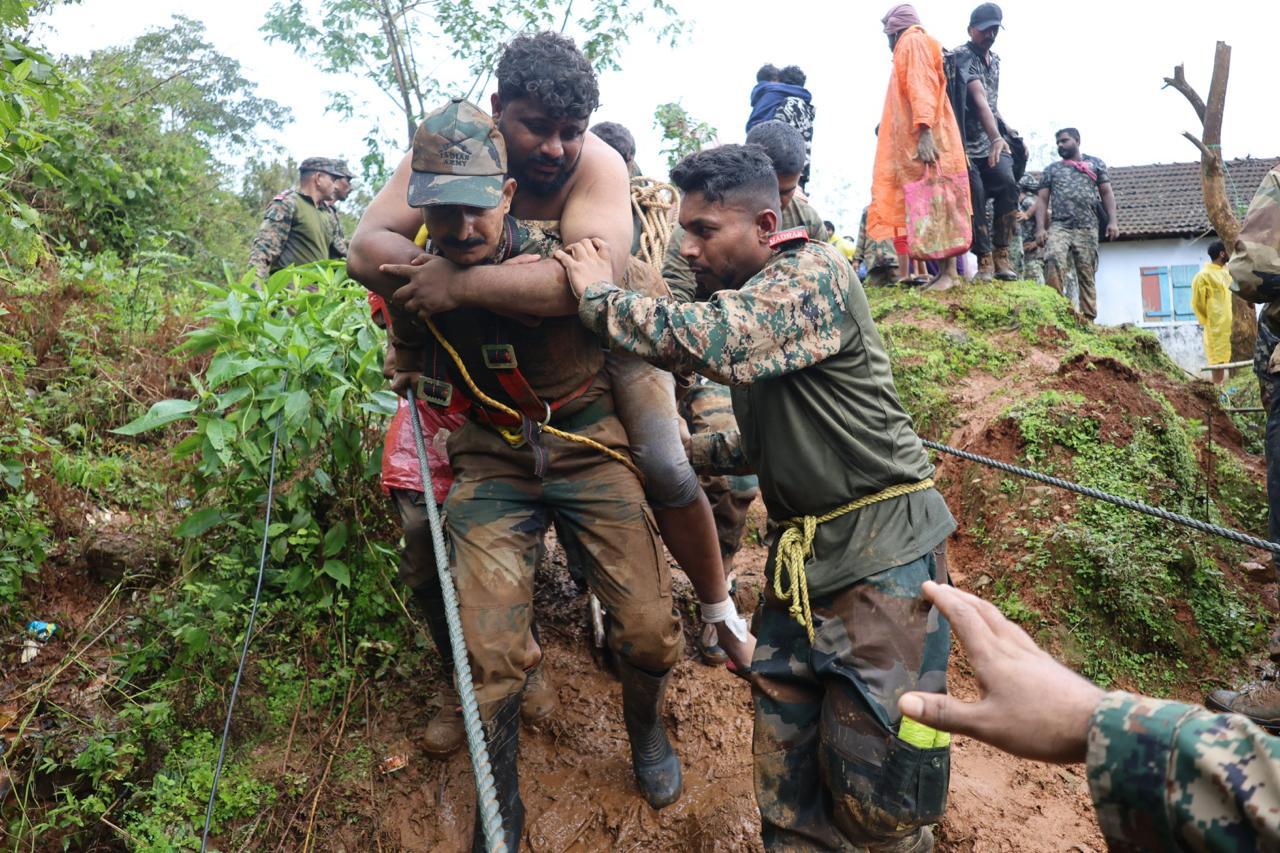
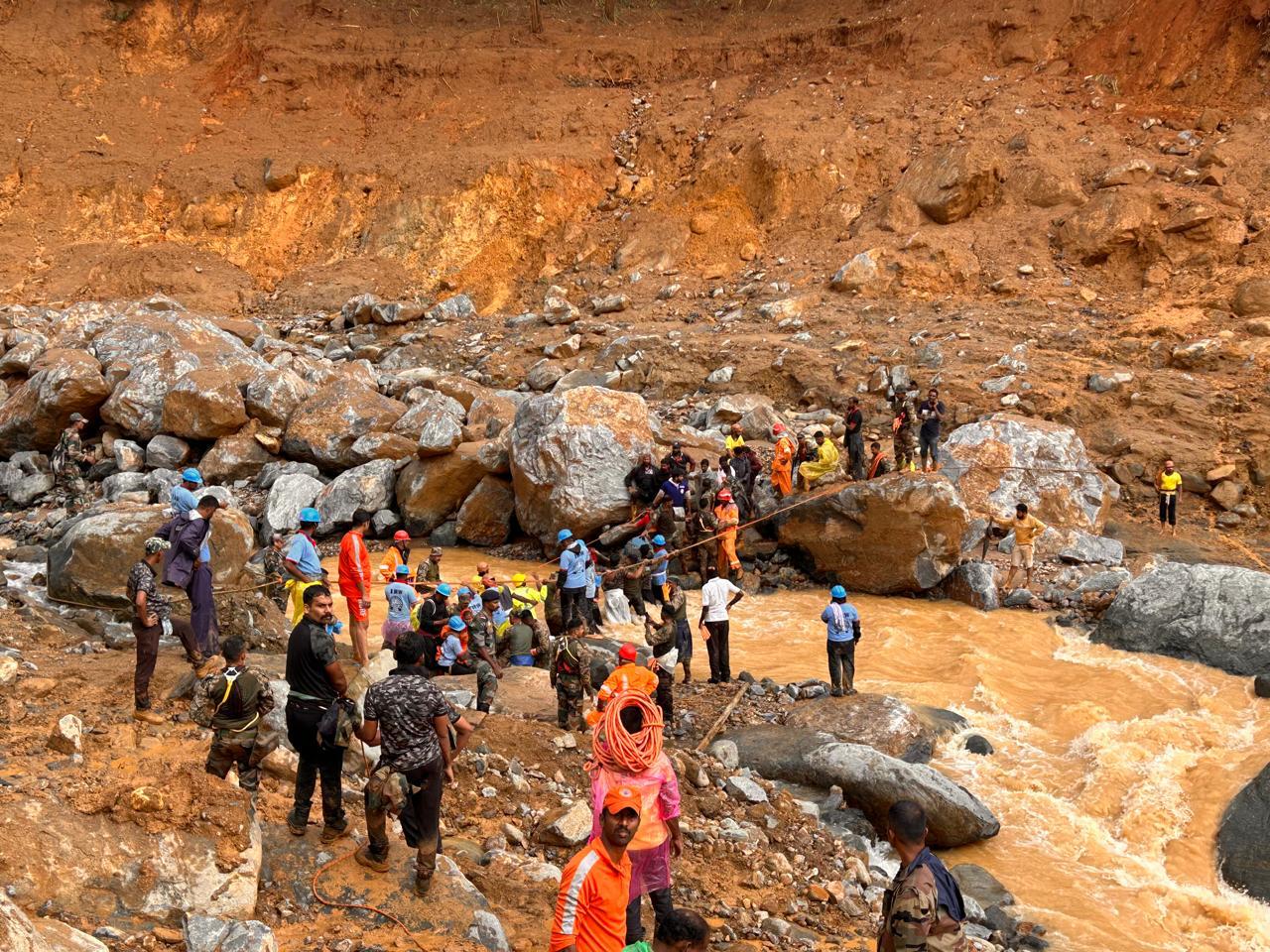
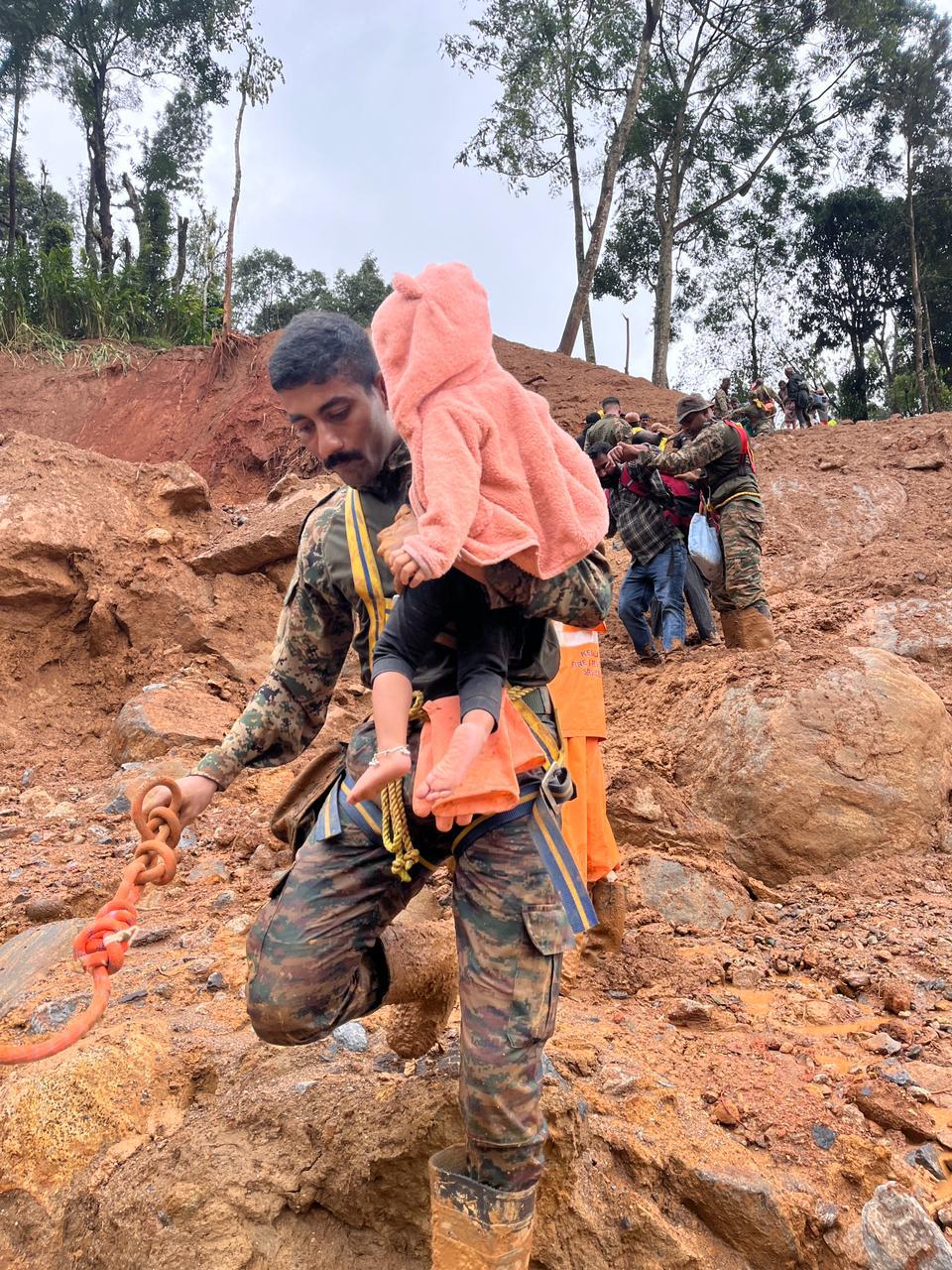
The Madras Regiment demonstrated unparalleled bravery and selflessness in rescue operations following the catastrophic landslides at Chooralmala and Mundakkai in Wayanad, Kerala. From forging makeshift ropeways to navigating hazardous terrains, their unwavering dedication illustrates the regiment’s time-tested heroism and resilience.
As of 2 August 2024, the death toll from the landslides at Chooralmala and Mundakkai has reached 333, with ongoing search efforts by the army, NDRF, and navy uncovering additional bodies. Officials are concerned that the number may increase, as 281 people remain missing.
Search operations halted prematurely on the evening of 1 August 2024 and resumed the next morning. Ground reports indicated that a thermal scanner detected a heat source under the debris in Mundakkai. However, the NDRF suspended the search after finding no signs of life, though a shop was located at the signal’s origin, raising concerns that a person or animal might be trapped.
The search area has been divided into six zones in Wayanad:
Punchirimattom
Mundakkai
School area
Chooralmala town
Village area
Downstream
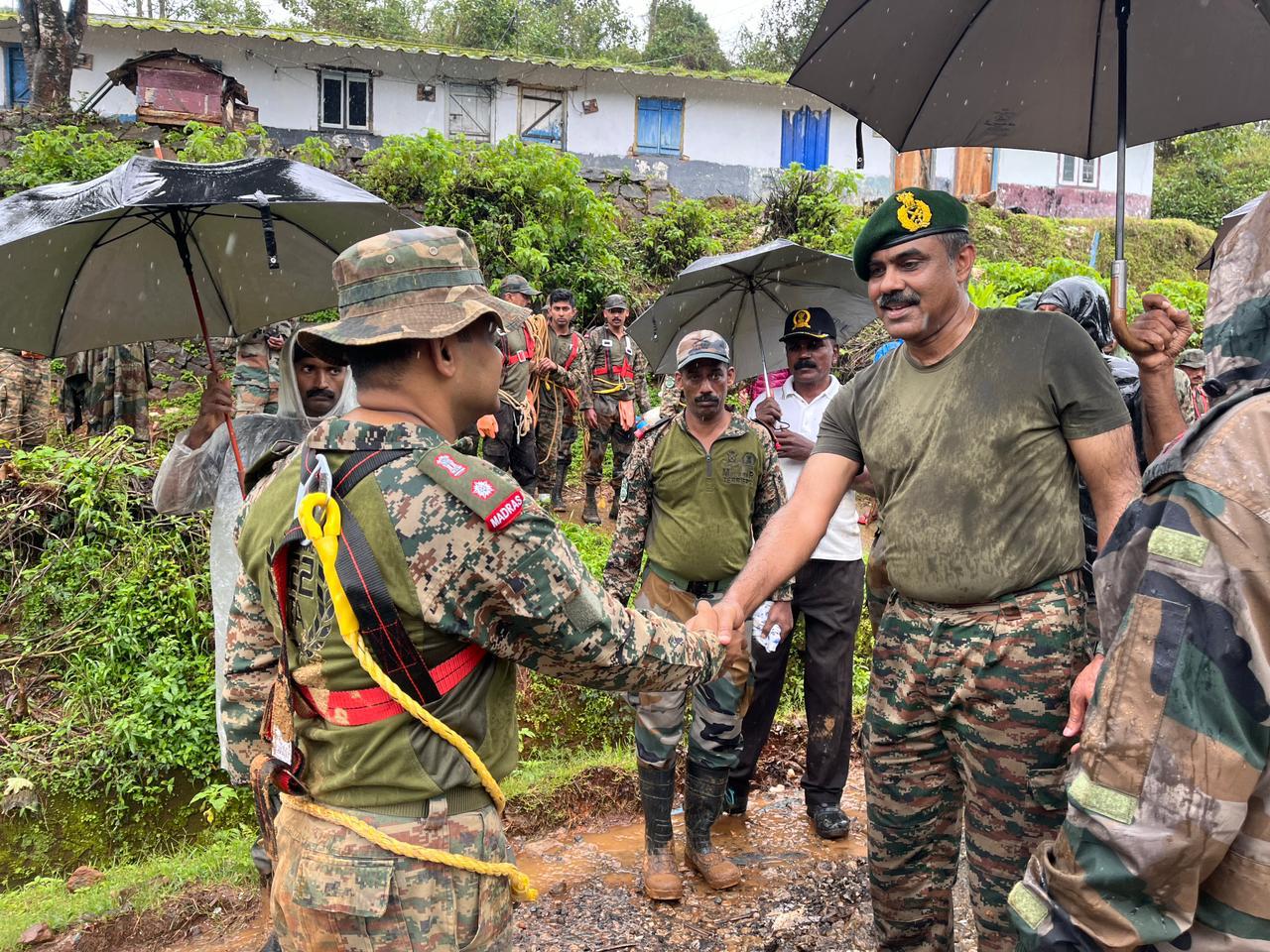
The Indian Army is responsible for search and rescue in Zones 1, 2, 3, 5, and 6. On 30 July 2024, the 122 Territorial Army (TA) MADRAS, led by Lt Col Vishwanathan, was deployed for the rescue operation. By 8 a.m., the team, including 2 officers, 2 Junior Commissioned Officers (JCOs), and 40 Other Ranks (ORs) with a Regimental Medical Officer (RMO), was on-site by noon.
Team led by Subedar Gijil: This team created makeshift ropeways across the Iruvanipuzha River, which had lost its bridge in the landslide. They transported essential supplies and bodies to the other side of the river for ambulance transport and provided critical aid to stranded civilians in Mundakkai.
Team led by Naib Subedar Anil Kumar: This team navigated a hazardous four-kilometre detour to reach a cut-off section of Mundakkai. They coordinated with Sub Gijil’s team in Mundakkai, rescuing around 200 survivors, including injured individuals, elderly, and young children.
By 31 July 2024, 122 Infantry Battalion (TA) MADRAS had recovered over 20 bodies and continued operations in isolated areas like Eala Resort and Vana Rani Resort, where they rescued 19 additional civilians using makeshift bridges and human chains.
As of 1 August 2024, the 122 Infantry Battalion (TA) MADRAS has a team of 3 officers, 5 JCOs, and 60 ORs, including the Commanding Officer (CO), actively engaged in search and rescue efforts. Their swift response, strategic execution, and dedication underscore the crucial role of the armed forces in disaster relief and humanitarian aid.
Chennai Preacher Moses Chelladurai Accused Of Serial Exploitation By Daughter
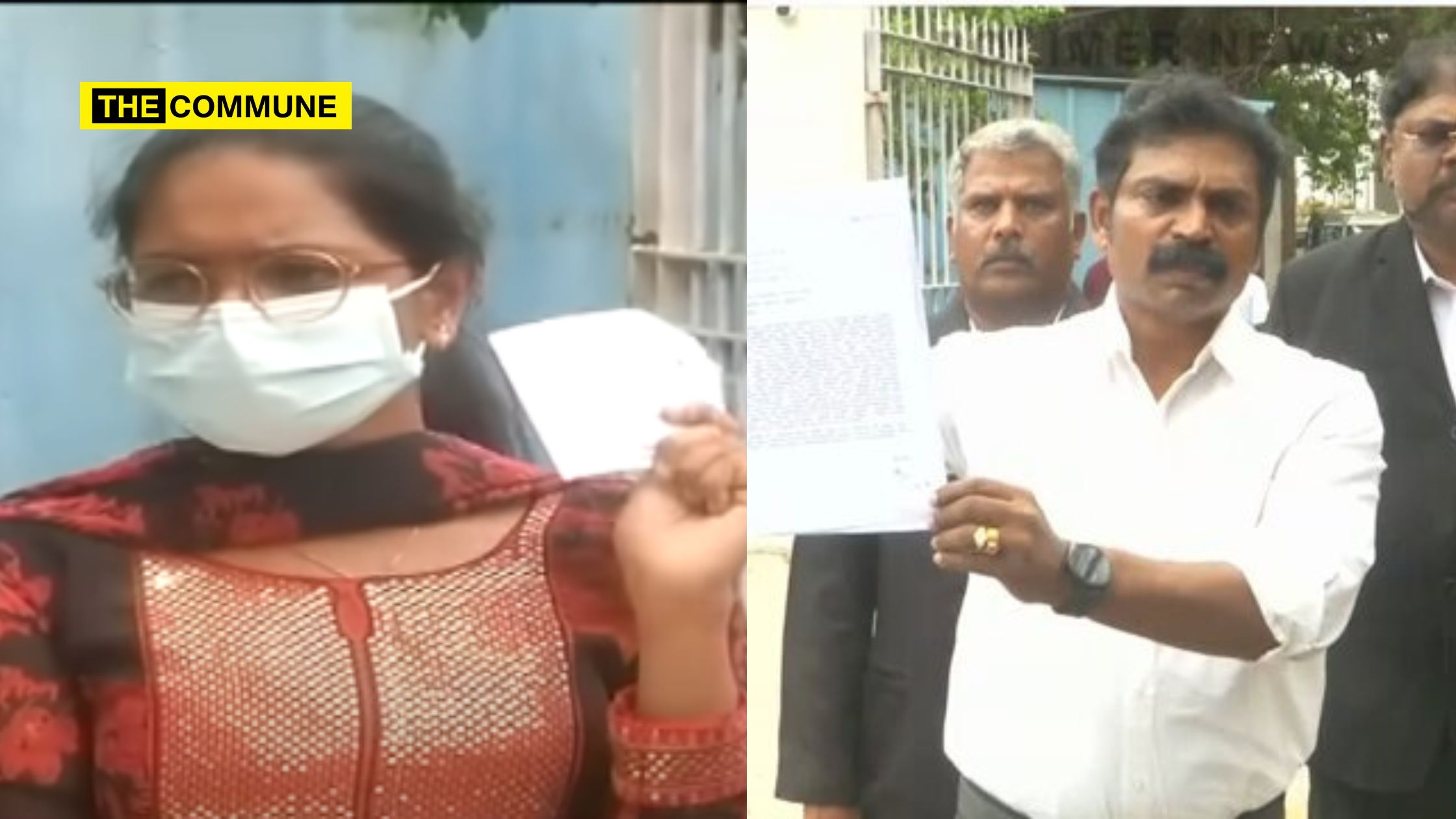
Moses Chelladurai, a lawyer and self-proclaimed preacher, has been accused of deceiving numerous women under the guise of religious piety and impregnating them. His 20-year-old daughter disclosed these charges in a complaint against him in Annanagar, Chennai.
The young woman’s complaint details a troubling family history. According to her, her parents, who were married out of love, experienced significant problems throughout their marriage. Her father, Moses Chelladurai, operates his organisation while posing as a preacher. He has exploited his position to deceive and have illicit relationships with several women. Despite numerous instances of infidelity, the family had forgiven him multiple times.
The situation worsened when her father married another nun while taking a pastorship course, leading to her mother leaving him. However, the separation wasn’t formalised.
The complainant reveals that her father, taking advantage of his legal profession, was approached by her friend’s family for legal assistance. She claims that her father used his authority to exploit the situation further. He took advantage of one of her friends, a 24-year-old woman, resulting in more illicit relationships and children with her, too.
The daughter asserts that Moses Chelladurai has manipulated his status as a pastor, buying a fake pastor’s certificate for 30,000 rupees. Since her mother’s departure, he has continued his affairs, taking advantage of the women’s fear of coming forward. The daughter, determined to seek justice, has now taken the bold step of filing a complaint, demanding that her father be arrested to prevent further exploitation of other women.
In response, Moses Chelladurai denies the allegations, accusing his daughter of filing the complaint to extort 25 lakhs from him.
கல்யாணம் பண்ண சொன்ன கடவுள்.. கர்ப்பமாக்குவதே முழுநேர வேலை – சென்னை பாஸ்டரின் அந்தரங்க லீலைகள்
Reservation limits to the first generation. If they got benefits, the second generation shouldn't receive them, the court observed.
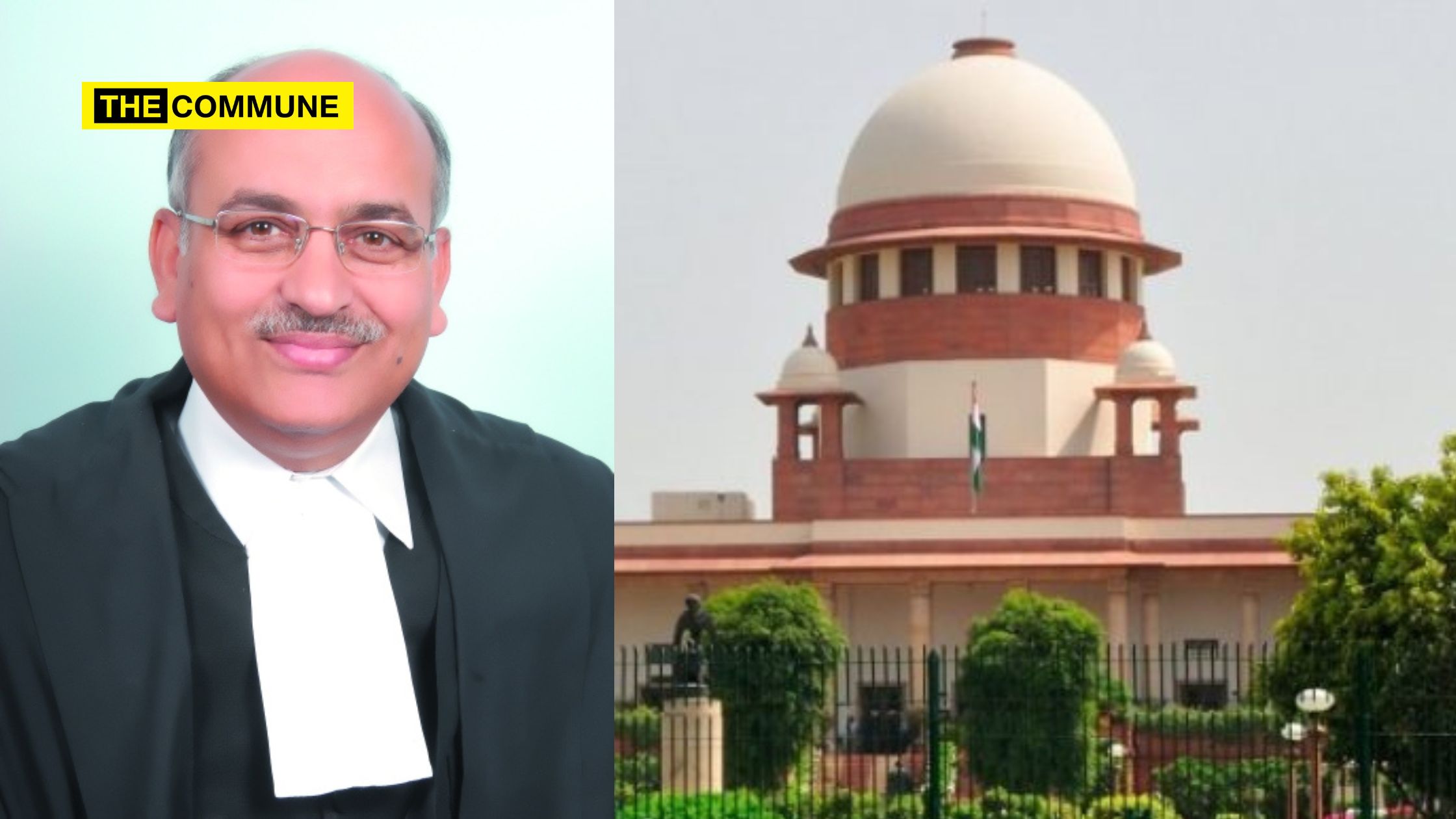
On 1 August 2024, the Supreme Court ruled that it is permissible to sub-classify within the Scheduled Castes (SC) and Scheduled Tribes (ST). Justice Pankaj Mithal emphasized that reservations should ideally benefit only the first generation within these categories, and a periodic review should assess whether the second generation has integrated with the general category.
The 7-judge constitution bench, with a 6:1 majority, determined that sub-classifying reserved category groups is lawful. Justices N Santosh Hegde, SN Variava, BP Singh, HK Sema, and SB Sinha, who had previously ruled in the EV Chinnaiah case that castes listed in the Presidential Order under Article 341(1) formed a homogeneous group and could not be further divided, have been overruled by this decision.
Justice Pankaj Mithal noted that both pro-reservation and anti-reservation protests have frequently become violent, disrupting national peace and stability. However, he clarified, “In mentioning these disturbances, violence, litigation, and issues, I am not suggesting that the effort to uplift the downtrodden should cease or that the reservation policy should be abandoned. Instead, the focus should be on how to effectively implement measures for equality and development, how to identify the truly disadvantaged classes, and what actions should be taken for their upliftment.”
Justice Mithal highlighted that statistical evidence shows the benefits of reservation are not reaching the most disadvantaged. For instance, about 50% of students from the most backward classes drop out before completing Class V, and 75% before completing Class VIII, with the dropout rate rising to 95% at the high school level. Consequently, only the children of more affluent or urbanized castes benefit from higher education and reservation policies. He observed, “The better-off among the backward classes often occupy most of the reserved seats, leaving the most disadvantaged with little access to these benefits.”
Justice Mithal remarked that ancient India did not have a caste system but instead had a system based on people’s professions, talents, qualities, and nature. He said, “I am not a religious scholar, nor do I claim deep knowledge of scriptures, although I have read the Bhagavad Gita and Ramcharit Manas. From my understanding, there was no caste system in primitive India; rather, there was categorization based on profession, talent, and characteristics”
Over time, the varna system was misconstrued as a caste system. This social defect emerged as varnas became associated with birth rather than individual qualities, contradicting the teachings of the Gita.
He wrote, “There was no caste system in ancient India. The varna system was misconstrued over time as a caste system. With the adoption of the Constitution, we aimed to create a casteless society, but in our efforts to uplift the depressed and backward classes, we inadvertently perpetuated the caste system.”
Justice Mithal argued that while reservation aims to uplift the downtrodden, its implementation often reinforces casteism. He said, “Reservation is intended to help improve the status of OBCs, SCs, and STs. However, suggesting alternative methods of support for these groups often results in accusations of being ‘Anti-Dalit.”
He cited a passage from Nani Palkhivala’s autobiography, which critiques caste-based reservations for perpetuating caste divisions, noting, “At the risk of being labelled ‘Anti-Dalit,’ I reference Palkhivala’s criticism, which aligns with my view that reservation policies may perpetuate casteism.”
He summarized that,
The reservation policy, as established by the Constitution and its amendments, needs a re-evaluation. New methods should be developed to assist and uplift SC/ST/OBC communities. Until such methods are in place, the current reservation system can continue, including the possibility of sub-classification.
The Constitution does not support a caste system, and society has largely moved toward being casteless. However, reservations are provided for SC/ST/OBC groups for specific purposes. Any support should be based on economic status, living conditions, or vocation rather than caste.
Reservation benefits should be limited to the first generation. If a family member has already benefited and improved their status, the second generation should not receive these benefits.
There should be periodic reviews to ensure that those who have benefited from reservations and achieved parity with the general category are no longer included in the reservation system.
Chief Justice of India DY Chandrachud highlighted that historical evidence shows the SCs are a heterogeneous group, not a homogeneous one. Article 14 permits sub-classification if it is supported by rational and empirical data, especially given the systemic discrimination faced by SCs and STs.
The court’s majority decision now permits sub-classification within reserved categories, overturning the EV Chinnaiah case ruling. SCs and STs are acknowledged as heterogeneous rather than homogeneous groups, so sub-classification must be backed by solid data. The Centre and States are authorised to identify and designate the most backward classes within the SC/ST categories.
Kerala Reverses Gag Order on Scientists Visiting Wayanad Landslide Zone Following Backlash
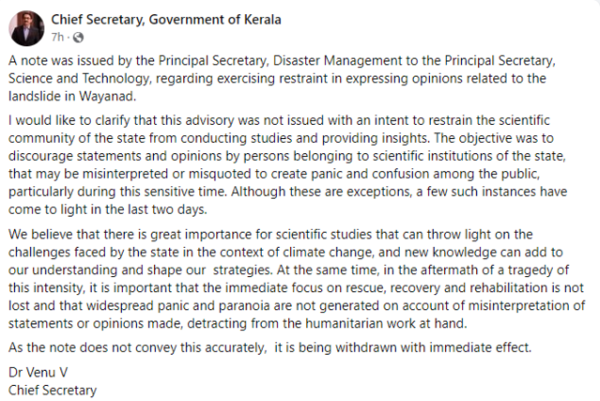
Shortly after the Kerala government imposed a gag order prohibiting the scientific community from visiting the landslide zone in Wayanad and sharing their findings with the media, the Pinarayi Vijayan-led Communist administration reversed the decision with “immediate effect.”
The government clarified that the intent behind the original gag order notification was not to prevent scientific institutions from conducting research or sharing their insights. Initially, the order requested that all Science and Technology institutions in Kerala refrain from field visits to Meppadi Panchayath in Wayanad, an area declared disaster-affected, and from communicating their observations or reports to the media.
Officials later explained that the notification’s purpose was to prevent potentially alarmist or misinterpreted statements from scientific institutions that could cause panic and confusion among the public. In the aftermath of such a severe disaster, the government emphasised the importance of focusing on rescue, recovery, and rehabilitation efforts without letting misinformation exacerbate the situation.
They acknowledged that the original notification failed to communicate this message, prompting its immediate withdrawal. Rescue operations continue in Wayanad, where the landslide has claimed over 300 lives.
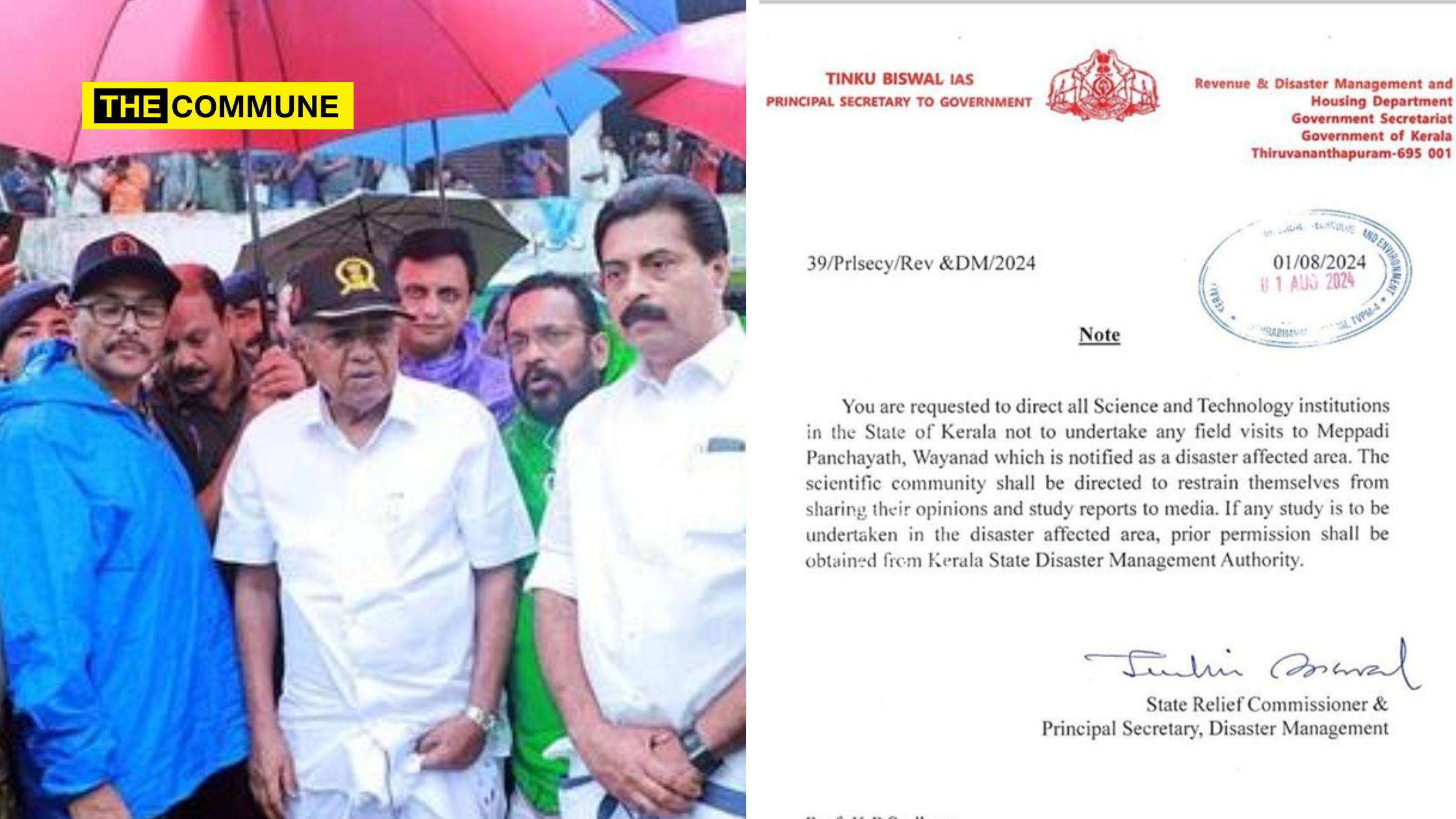
Previously, the Communist government in Kerala issued an order on 1st August 2024 by Tinku Biswal, the state relief commissioner and principal secretary of Kerala State Disaster Management. The Principal Secretary of the Department of Science and Technology has been instructed to ensure that no scientific institutions undertake field visits to Meppadi Panchayat in Wayanad, which is designated as a disaster zone.
The order also mandates that the scientific community refrain from sharing their opinions or study reports with the media. Any research in the disaster area must receive prior approval from the Kerala State Disaster Management Authority. The order stated, “You are requested to direct all science and technology institutions in the State of Kerala not to undertake any field visits to Meppadi panchayat, Wayanad, which is notified as a disaster-affected area.The scientific community shall be directed to restrain themselves from sharing their opinions and study reports with the media. If any study is to be undertaken in the disaster-affected area, prior permission shall be obtained from Kerala Disaster Management Authority.”
The landslides have resulted in at least 296 deaths and over 200 injuries, and approximately 240 people remain missing.