Home Blog Page 684

Hindu Munnani Accuses DMK Govt Of Misusing Temple Lands For Commercial Purposes

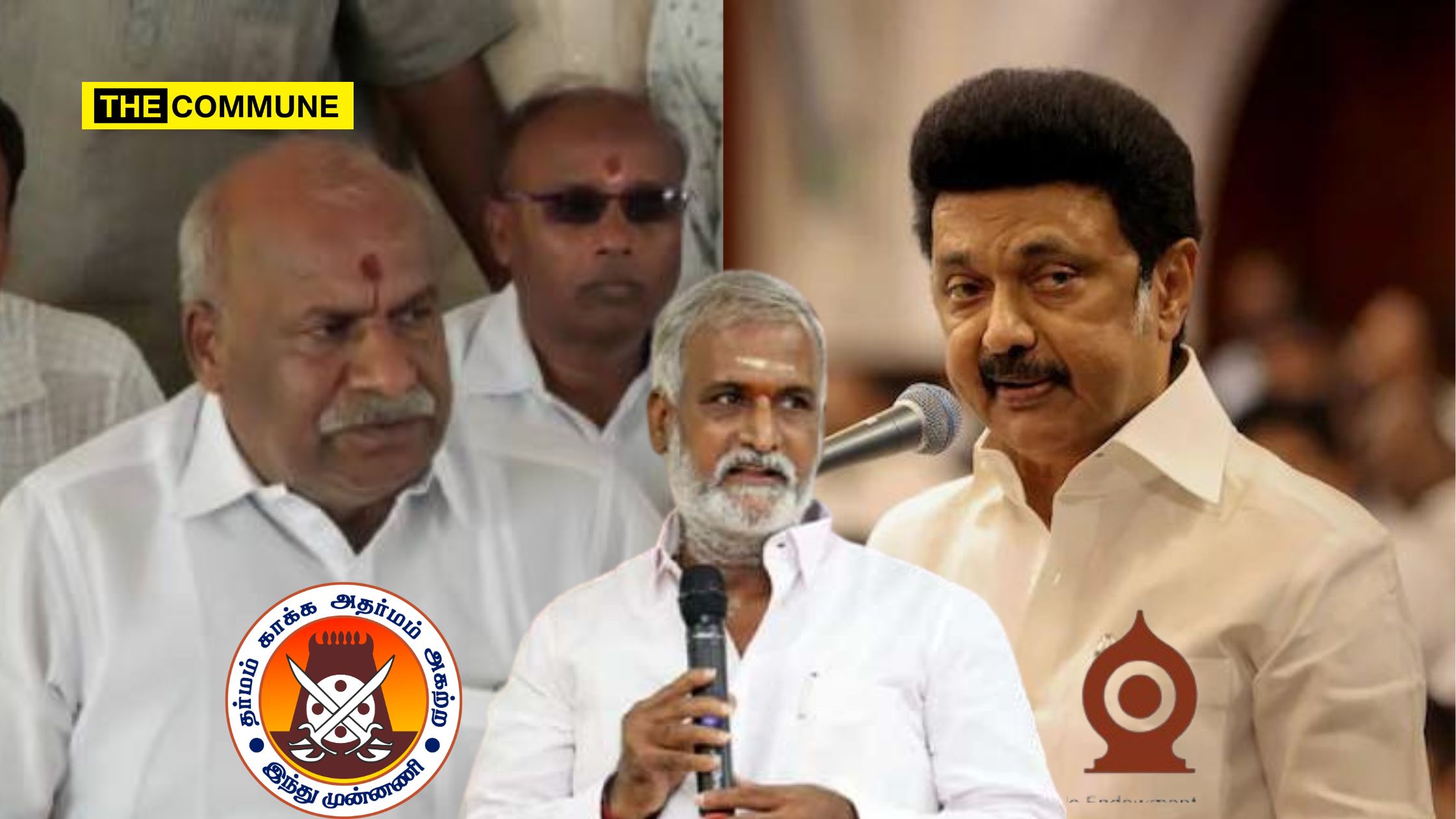
Hindu Munnani, Sekar Babu and MK Stalin
Hindu Munnani protestors harassed by TN Police as they criticized DMK-led regime for mismanaging Hindu Temples

Kadeswara Subramaniam, the state president of the Hindu Munnani, has publicly criticized the Tamil Nadu government, accusing it of systematically misusing temple lands. He raised concerns about a fish market being built on land belonging to Ayanavaram Agatheeswarar temple in Chennai, questioning if it violates court rulings that temple lands should be used strictly for religious purposes.

Tamil Nadu Ministers have recently visited the site of the Kolathur fish market, which is located on a 4-acre plot belonging to the Ayanavaram Agatheeswarar temple in Chennai. Despite a legal challenge from devotees arguing against using temple land for government projects, the court dismissed the case, focusing only on commercial interests, Subramaniam said in a press release.

Subramaniam questioned whether this move contradicts the Madras High Court’s previous rulings that mandate temple lands be used solely for religious purposes and devotees’ needs. He also asked whether establishing a fish market aligns with spiritual objectives or benefits the temple.

He accused the atheistic DMK government of systematically planning and executing measures to seize temple property. For instance, when the Kallakurichi Collector’s office acquired temple land, the court required it to pay market rent and an advance due to protests from devotees. However, he argues that the government has been aggressively taking over temple lands for various uses, such as bus stands and courts, instead of respecting their spiritual significance.

Appropriating Vaishnava Saint Thirukachi Nambi’s lands

Subramaniam cited specific examples, like the Poonamallee bus stand, which he claims is on land originally belonging to Thirukachi Nambi, a Vaishnava saint, but now bears the name Arignar Anna Bus Station. He questioned why the bus stand is named after Anna instead of saint Thirukachi Nambi and what rent the Poonamallee municipality has paid for that property.

Additionally, he criticized the Hindu Religious and Charitable Endowments Department (HR&CE) for renting out and subsequently destroying Tirukkachi Nambi’s house to a fertilizer godown. He also mentioned a case where a Muslim individual in Kolathur was given temple land for a gas station but later sued for unpaid rent.

Subramaniam expressed concern that the current government is treating temple lands with negligence, acquiring them for road expansions and metro projects without offering suitable compensation or alternatives. He called for the HR&CE to adhere to the Madras High Court’s directives and ensure temple properties are maintained properly and used solely for their intended spiritual purposes. He also urged the department to publicly list those occupying temple properties without paying rent at each temple entrance to promote transparency.

Contents of the Press Statement

In the letter he stated, “Tamil Nadu Ministers have visited the construction of Kolathur fish market on a 4 acre land belonging to the Ayanavaram Agatheeswarar temple in Chennai. Devotees have filed a case against taking the temple property for government projects but the court has dismissed the case considering only the commercial purpose. The people’s have a question, ‘What kind of mentality is this?

Isn’t this against the Madras High Court’s earlier ruling that temple sites should be used for temple use and for the needs of devotees? Is setting up a fish market a spiritual mission? Will this benefit the temple?,” He questioned

“Since assuming power, the atheist DMK government has been planning and implementing various ways to expropriate the temple property. When the Kallakurichi Collector’s office acquired the temple land, the court ordered it to pay the market rent and the corresponding advance due to the devotees’ protest,” He declared.

Similarly, the government has in various ways expropriated the temple lands and (utilized for)  bus stand, court, collector’s office. For example, the Poonamallee bus stand is the property of Thirukachi Nambis, a Vaishnava saint. But the name of that bus station is Arignar Anna Bus Stand. Why did the government named it Anna?

What is the rent paid by Poonamallee municipality till date for that place?  the Hindu Religious and Charitable Endowments Department has rented out Tirukkachi Nambi’s birth house to fertilizer god-down and the HR&CE exerting its power only in the destruction of the historic spiritual site”.

A Muslim man in Kolathur, Chennai was given a temple land as rental for a gas station, a few years later, it sued for non-payment of rent. Like this, anyone can enjoy the lands worth hundreds of crores but HR&CE minister Shekhar Babu proudly says that it has been rescued from occupation. How many temples have this government demolished saying it is on the government land? Lands belonging to temples are being acquired stating that road expansion and metro projects. But it doesn’t insist on acquiring the right alternative place and manages it carelessly without taking any compensation. There are hundreds of similar examples. Devotees should understand the true face of DMK rule.” He said.

“Is the temple lands are for a fish market? DMK is working with commercial motive against the purpose for which the devotees have donated 4 acres of land in spiritual charity. Even if the fish market is set up, the people who are going to benefit from there will belong to the ruling party. If this regime goes, the next who comes to power will give it to the people they want and make its benefits in their favor. Therefore temple property should be used only for the convenience of devotees for proper maintenance of temple property and for spiritual work.” he added

“The Hindu Religious and Charitable Endowments Department was not established to hand over temple properties to the government. Therefore, the Hindu Munnani insists that the Hindu Religious and Charitable Endowments Department should follow the instructions given by the Madras High Court bench to maintain the temple properties. Also, on behalf of the Hindu Munnani, we request the the Hindu Religious and Charitable Endowments Department to display the list of those occupying the temple properties without paying rent displayed at the entrance of each temple.” He finally said.

Subscribe to our channels on TelegramWhatsApp, and Instagram and get the best stories of the day delivered to you personally.

Debunking Common Myths On RSS: Understanding RSS’s Role In Indian Independence And Beyond

In Tamil Nadu, Dravidianists often discredit the Rashtriya Swayamsevak Sangh (RSS) using Joseph Goebbels’ propaganda technique: “Repeat a lie often enough, and it becomes the truth.” However, these efforts consistently fall flat, as their baseless distortions of historical facts and inaccuracies have been debunked numerous times.

For example, just after the 78th Indian Independence Day, Dravidianists launched accusations against the RSS, claiming it was opposed to Indian independence; it was against the national flag. They claimed it opposed the constitution, labelling it as a fake nationalist organization. 

These claims are based on distorted historical interpretations reminiscent of Goebbels’ Marxist historiography. They falsely attribute a range of actions and statements to the RSS, including the below allegations:

  • Hedgewar declared that the RSS would not join the Salt Satyagraha in 1930.
  • The RSS urged its followers to join the British Imperial Civil Guard in December 1940.
  • Hedgewar announced that the RSS would avoid the Quit India Movement in August 1942.
  • That RSS’s publication, Organiser,denigratedthe national flag and asserted that Hindus would never respect or own it.
  • Nathuram Godse, an RSS member, assassinated Gandhi on 30 January 1948.
  • The RSS was banned across India in February 1948
  • The RSS objected to the Indian Constitution on 30 November 1949
  • RSS opposed the Hindu Code Bill

In this article, we will debunk these historical lies with accurate context and let the truth slap these distorted narratives. 

Hedgewar Declared RSS Would Not Join Salt Satyagraha 1930

To understand Keshav Baliram Hedgewar’s role in the Indian independence struggle, it’s important to recognize his alignment with a more radical view, similar to Lokmanya Bal Gangadhar Tilak.

Unlike the moderates who petitioned the British for concessions, Like Bal-Pal-Lal, Hedgewar advocated for more direct and confrontational methods. From 1885, when the Indian National Congress was founded, until 1907, moderate petitioners dominated the political landscape, resisting radical change. However, from 1905 to 1920, opposition to British policies and Western values intensified, leading to draconian measures to suppress revolutionary activities. As Gandhi and Nehru’s influence grew, the British found the moderate approach more manageable, as it had not challenged their rule significantly since 1915.

Hedgewar charted his course in the independence movement. Expelled from school in 1908 for chantingVande Mataram,he was influenced by S. Malik, a principal at the National Medical College who combined Western education with a strong commitment to cultural roots. Hedgewar joined the Congress Party and was inspired by Lokmanya Tilak in Nagpur, where he became involved with the Rashtriya Mandal. In 1921, he was imprisoned for sedition due to his speeches in Katol and Bharatwada, and as a member of the Anusheelan Samiti, he supplied arms and literature to revolutionaries.

Hedgewar came under British surveillance in August 1908, and this scrutiny continued after he founded the RSS in 1925. By 1926, the RSS shakhas were established in Nagpur and Wardha. During this period, a plan was initiated to return revolutionary colleagues from Central Provinces stranded in Punjab. This operation, led by Hedgewar’s associates Dattatraya Deshmukh, Abhad, and Motiram Shravane, was executed with Ganga Prasad Pande in charge. After Pande fell ill in Wardha in 1927, a pistol he had for protection was seized by a friend. In 1928, a failed attempt to raid a government treasure chest in Hinganghat involved this pistol, which was traced back to Pande. To avoid detection, Hedgewar and his associate Hari Krishna Joshi intervened to retrieve the pistol and escape.

Following these events, Hedgewar and Joshi were subjected to intense surveillance, extending to their activities in the RSS shakhas. In early 1930, the Deputy Superintendent of Police interrogated Joshi, questioning his commitment to non-violence due to his association with Hedgewar and the RSS. Joshi’s response eased the surveillance, but it was crucial for Hedgewar to demonstrate a shift away from revolutionary activities.

In February 1930, Joshi informed Hedgewar of his decision to join the satyagraha, to which Hedgewar initially responded with caution. After further discussions and the conclusion of the Sangh’s Officer Training Camp, Hedgewar agreed to participate in the satyagraha, marking a significant step in his political engagement (Sangh archives, Hedgewar papers)

RSS Urged Followers To Join British Imperial Civil Guard In 1940

History often becomes distorted when contemporary ideological biases shape interpretations of the past. The narratives put forth by Marxist and Nehruvian historians regarding the Rashtriya Swayamsevak Sangh (RSS) do not align with the factual record.

According to the Home Department’s 1939-40 report, the RSS had an estimated strength of around 150,000 members across various age groups nationwide. During World War II, the British government launched recruitment drives for the army, ARP, and Civic Guards. Hindu organizations, including the Hindu Mahasabha and Nathuram Godse’s Hindu Rashtra Sena, seized this opportunity to militarize their cadres for a potential struggle against the British. They actively organized camps and recruited members.

In contrast, the RSS firmly rejected this approach, a stance that did not go unnoticed by the British authorities. In June 1939, the Home Department suggested that the Central Provinces government use Section 16 of the Criminal Law Amendment Act (XIV of 1908) to ban the RSS, which was then a prominent organization in the province.

However, Chief Secretary GM Trivedi reported on 22 May 1940, that such a move would likely lead to significant unrest. During the 1930s, even attempts to use softer measures against the RSS resulted in government embarrassment. The RSS’s participation in the Civil Disobedience Movement countered the perception that it was merely an extension of the Hindu Mahasabha. The CP & Berar police’s reports noted that Hedgewar’s involvement energized the movement, leading to his imprisonment for a year.

Hedgewar Announces RSS Would Avoid Quit India Movement In 1942

On 5 August 1940, the central government, under the Defence of India Rules, issued an ordinance banning drills, uniforms, and exercises. However, this did little to deter the RSS, as hundreds of volunteers were arrested for defying the order. The RSS’s involvement in the Quit India movement was a significant concern for the British authorities. In August 1942, RSS members led Congress processions and attacked police stations in Chimur and Ashti, resulting in severe government reprisals. The RSS’s integration with the movement alarmed the British, who feared a potential armed coup in collaboration with the Indian National Army (INA).

The British had valid reasons for their concerns. Reports indicated that RSS volunteers had infiltrated various government departments, raising fears of a coordinated effort to capture administrative centers when the time was right. The Home Department’s note from GA Ahmed on 13 December 1943, revealed a strategic intent to prohibit all organizational camps to undermine the RSS, which relied heavily on these camps for training.

Despite participating in Gandhian movements, the RSS maintained its revolutionary zeal and ambition to overthrow colonial rule. The RSS’s real shortcoming is not its lack of involvement in the freedom struggle but the limited intellectual engagement among its scholars.

Organiser Denigrated National Flag

In December 1929, during the Lahore Session of the Indian National Congress, the goal of Purna Swaraj, or Complete Independence, was adopted, and on 26 January 1930, was designated as Purna Swaraj Day.

Before this, the Congress had aimed for Dominion Status. Keshav Baliram Hedgewar, a staunch advocate for complete independence, was thrilled by this development. On 21 January 1930, he issued a directive to all RSS shakhas, instructing them to hold meetings on 26 January to salute the national flag, the Bhagwa, and to explain the concept of freedom to the swayamsevaks. He emphasized the importance of keeping the goal of independence in mind. He concluded the directive by congratulating the Congress for its commitment to achieving independence (Sangh archives, Hedgewar papers, A Patrak by Dr. Hedgewar to the swayamsevak – 21 Jan 1930).

On 26 January 1930, all shakhas of the Rashtriya Swayamsevak Sangh should hold meetings of all swayamsevaks of their respective shakhas at their respective Sanghasthans  and salute the national flag that is the Bhagwa, explain through lectures what is freedom and how it is the duty of every Indian to keep this objective before oneself and conclude the programme by congratulating the Congress for championing the goal of Independence Hedgewar 

RSS Member Nathuram Godse Assassinated Gandhi 

Although Nathuram Godse was responsible for the assassination of Mahatma Gandhi on 30 January 1948, the RSS itself had no involvement in the crime. Godse shot Gandhi three times at close range. Despite repetitive claims to the contrary that would make Goebbels proud, there is no evidence linking the RSS as an organization to the assassination.

Goebbels famously said, ‘Propaganda works best when those being manipulated are confident they are acting on their own free will.’ This is precisely the kind of manipulation used against the RSS to mislead public perception after Gandhi’s assassination.

RSS Was Banned Across India

Following the assassination of Mahatma Gandhi by Nathuram Godse, the Indian government imposed a ban on the Rashtriya Swayamsevak Sangh (RSS) on 4 February 1948. The government announced that this action was necessary toeliminate the forces of hate and violencein the country.

The official statement alleged that members of the RSS had engaged in violent acts such as arson, robbery, dacoity, and murder, and had amassed illegal arms and ammunition. They were accused of distributing leaflets promoting terrorist tactics, encouraging the collection of firearms, inciting disaffection against the government, and undermining the police and military.

The government explained that although individual members had been addressed previously, the continuedobjectionableactivities and the violence linked to the RSS, culminating in the assassination of Gandhi, necessitated a ban. The government declared that, in response to the resurgence of violence, the RSS had to be designated as an unlawful association.

Challenging Goebbels’ propaganda techniques requires a steadfast commitment to truth, as seen in the efforts of swayamsewaks to correct the distorted portrayals of the Sangh Parivar.

The RSS contested the ban, with then-Sarsanghchalak MS Golwalkar meeting with Home Minister Sardar Vallabhbhai Patel and writing to both Patel and Prime Minister Jawaharlal Nehru. When these negotiations failed, swayamsevaks initiated a satyagraha on 9 December 1948, demanding the removal of the ban. The ban was lifted on 11 July 1949 via a government communiqué stating that the RSS leadership had no connections.

RSS Objected To the Indian Constitution

These quotes highlight the RSS’s dissatisfaction with the Indian Constitution and their preference for the Manusmriti, but their context cannot be independently verified.

Editorial from Organiser: The RSS’s publication, Organiser, published an editorial on 30 November 1949 critiquing the Indian Constitution, claiming that it was devoid of any Indian essence. The editorial argued that the Constitution ignored ancient Indian legal traditions and praised the Manusmriti, stating that its laws had been admired globally for centuries. The article suggested that the Indian Constitution lacked the revered principles found in Manusmriti.

M.S. Golwalkar’s Critique: M.S. Golwalkar, the second sarsanghchalak of the RSS, echoed similar sentiments in his book Bunch of Thoughts. He argued that the Indian Constitution contained no original Indian elements and was a mere amalgamation of principles from the United Nations Charter and Western Constitutions. Golwalkar highlighted the statue of Manu in Siam (modern-day Thailand) as a symbol of respect for ancient Indian legal traditions, contrasting it with what he perceived as the Constitution’s lack of Indian roots.

V.D. Savarkar’s Perspective: V.D. Savarkar, a prominent figure in the Hindu Mahasabha and a philosopher for the RSS, also advocated for the Manusmriti to replace the Indian Constitution. He believed that the Manusmriti should form the basis of India’s legal and cultural framework. Savarkar’s perspective reflects a broader critique that the Indian Constitution was too heavily influenced by foreign models rather than embracing India’s unique cultural heritage.

 Opposing Hindu Code Bill

RSS opposed the Hindu Code Bill, and for the right reason. They opposed it primarily because of its secular approach, which they felt was inconsistent with their view of Hindu traditions. They argued that the bill aimed to impose uniform civil laws on Hindus, thereby undermining the diverse and traditional personal laws within the Hindu community. 

Sangh supporters were concerned that the bill’s secular intent was a disguised attempt to promote secularism at the expense of Hindu values and customs.

They also viewed the bill as a move by the government to secularize Hindu personal laws while avoiding similar reforms for other religions, such as Islam and Christianity.

In Conclusion

The persistent use of Goebbels’ propaganda techniques by Dravidianists to discredit the RSS reflects a deliberate attempt to rewrite history and distort the truth.

Despite the best efforts of Goebbels’ followers, factual records consistently prove that RSS is a nationalist organisation rooted in Bharatiya values. By revisiting historical events with accurate context, it becomes evident that these allegations are fabricated narratives designed by Dravidianists to manipulate public perception against the social organisation.

Just as Goebbels believed that repeating a lie would eventually make it accepted as truth, these false narratives have been perpetuated with the hope of erasing the RSS’s contributions to India’s independence. However, the truth is clear: the RSS’s role in preserving India’s cultural and national identity is undeniable. Be it Goebbels or any other Marxist, no propaganda creator can erase the RSS’s legacy of patriotism, commitment, and sacrifice for the nation.

What many of these Draviadianst stock conveniently forget to read is that Goebbels also said that ‘the truth is the greatest enemy of the State.” In his own words, ultimately, the truth prevails and it will expose the hollowness of any length of Goebbels-ian distortions.

Subscribe to our TelegramWhatsApp, and Instagram channels and get the best stories of the day delivered to you personally.
‘Police Remain Mute Spectators’: Madras HC Lambasts Law Enforcement, Hands Land Grabbing Case To CBI

Madras High Court criticised Chennai police

In a significant development, the Madras High Court has directed the Central Bureau of Investigation (CBI) to investigate a case of alleged land grabbing on East Coast Road (ECR) involving individuals reportedly assisted by police personnel from the Greater Chennai City Police.

Justice G. Jayachandran, who presided over the case, issued a strongly worded judgment, expressing concern over the state of law enforcement in Tamil Nadu. He remarked, “It is indeed painful to note that the investigation agencies in this State have repeatedly exposed their inability to investigate cases dispassionately, effectively, and truly. If this sordid state of affairs continues, the poor and innocent public will have no protection from the police and as a sequel, they will lose their faith in the policeThey may take shelter under powerful politicians and rowdy elements.”

The judge further criticized the police for their perceived inaction and complicity in land-related crimes, stating, “The court cannot be a mute spectator for all this lawlessness. It is high time the court takes note of the way in which the police functions in this State, more particularly of the violent incidents, including murder, which have happened in the last few months, which center around land grabbing with the help of rowdy elements and politicians.”

The case was brought to the court by petitioner T. Karthik, who sought police protection for his life and his property—a valuable 18.25 cents of land on ECR. Senior Counsel V. Raghavachari, representing Karthik, claimed that the petitioner was in possession of the land until 14 May 2024 when it was forcibly taken over by henchmen associated with an individual named Gopalakrishnan. The trespassers allegedly demolished existing structures on the land, with the police turning a “blind eye” to the incident.

Raghavachari also accused the Inspector of Neelankarai police station, Anandbabu, of supporting the trespassers. Despite complaints to higher authorities, an internal inquiry conducted by the Neelankarai Range Assistant Commissioner of Police allegedly resulted in a “farcical” investigation, clearing the Inspector of any wrongdoing.

Justice Jayachandran expressed deep concern over this pattern of behavior, noting that “the entire episode clearly indicates that the prime property lying alongside the ECR has been grabbed with the support of police. This is not the first occasion that this court comes across this sort of a case. It has become a routine affair and every alternate day allegations are levelled against the police joining hands with rowdy elements and making heyday thereby depriving lawful owners of their properties.”

He also highlighted the involvement of political elements in these cases, stating, “To make things worse, since political elements also are involved in these cases, the police remain mute spectators.” Given the circumstances, the court deemed it appropriate to transfer the investigation to the CBI. The central agency has been directed to form a special team to investigate Karthik’s complaint filed on 14 May 2024 and submit a final report within four months.

(With inputs from The Hindu)

Subscribe to our channels on TelegramWhatsApp, and Instagram and get the best stories of the day delivered to you personally.

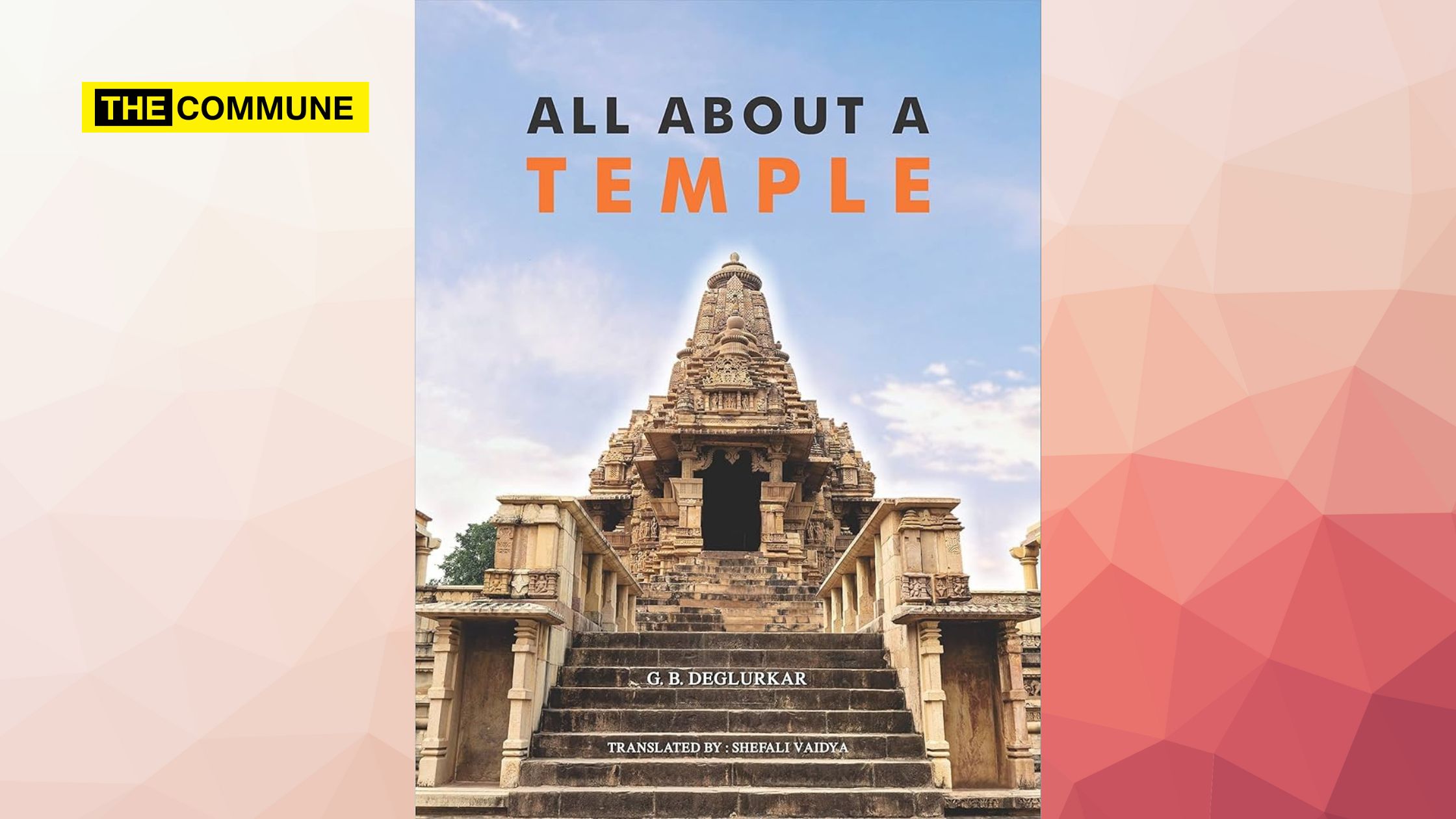
Book Review: All About A Temple By Dr GB Deglurkar – A Comprehensive Guide To India’s Sacred Architecture

Temples in India are an integral part of everyone’s life, directly or otherwise. They hold a prominent significance in the socio-cultural and economic fabric of the community and country. Many books have been written to describe the architecture of the temples, but some are truly scholarly. In the pantheon of such pedagogic works, this specific book does rank very highly in terms of the richness of the content as well as the finely nuanced balance between the breadth and depth of the topics.

All about a Temple is the English translation of G. B. Deglurkar’s widely renowned book “Mandir Case Pahave” (मंदिर कसे पहावे). The translation by Shefali Vaidya is one of the very best I have read in the recent past. The English version does highlight all the key points of the topic, while not necessarily anglicising the terminology. Using Indic words to describe the various aspects of the temples or their key components is very judicious decision and enhances the reading experience.

In the prologue section, Deglurkar highlights the various aspects of the temple, yet perhaps misses one key significance. Temples are also the source of food to many, whether destitute or travellers, and have always upheld this tradition across centuries. In the chapter “In quest of a Temple”, the author’s statement about the manifestation of the culture is one of the finest.

In the description of the Vastu-Purusha-Mandala, Deglurkar refers to a specific Purana that would have been very beneficial for interested readers. However, it does need to be highlighted that he has provided very specific references to Puranas and other literary works throughout the book. This is definitely one of the standout features of this work.

Reference to Srimad Bhagwad Gita

Throughout the book, starting from the chapter on the concept of a temple and rituals, there are ample references to one specific verse from Srimad Bhagwad Gita.

पत्रं पुष्पं फलं तोयं यो मे भक्त्या प्रयच्छति |
तदहं भक्त्युपहृतमश्नामि प्रयतात्मन: || 9.26||

Temples manifest the timeless wisdom advocated by Sri Krishna, that Bhakti is far more important than materialistic offerings to the supreme power. Deglurkar has described how this aspect is followed in daily rituals in a very simple yet effective manner. In the same vein, a brief description of the shodashopachara rituals would have been more enriching.

Another highlight of the book is the excellent illustrations and very fine photographs. Though the photos are monochromatic, the details are preserved excellently and do not hamper the reader to relate the description to the photographs. The description of the temple plans and the methodology of identifying Shivaite vs Vaishnavite temples using the wall projections are very well captured.

One of the best sections of the book is on Surasundaris. The explanation of each of these forms and their relevance in the meta-physical space is excellent. The section on the symbolism of Surasundaris and why they are depicted on the outer walls of the temple is very important to understanding the thought process of our ancestors. The origins of Ganga and Yamuna carvings on the doorway and their significance and relationship to the period in which they were started is an intriguing read. As one enters a temple, we observe the dwarapalas on either side of the door. However, more often than not, we miss the finer details in the carvings. The spiritual significance of these carvings is very well explained at multiple junctures in this book.

On page 43, the author rightly criticises the Indian populace who marvel at the paintings of the West, yet don’t even acknowledge or appreciate the rich brilliance and artistry of our own ancestors. Even ceilings have a lot of scientific and spiritual significance as explained by the author in this context. The section on Hemadpanti temples is also very informative and quite well-detailed. The story of Kirtimukha (another aspect of our temples that is often overlooked) is very well explained and I would highly recommend the readers not to miss this interesting section.

One of the very best chapters of this book is Spirituality and Temple. I couldn’t help but compare this work with the iconic work of Prof. S. K. Ramachandra Rao. Though of the same genre, their approach to the subject is slightly different, yet very similar. The author has referred to the works of many Maharashtrian saints which is another highlight of this book. This would enable the readers to gain an insight into the teachings of these divine souls and perhaps seed an idea to read more about them.

In the chapter on ”The meaning of Murti”, the author outlines the very few locations where Shiva is worshipped in Murti form. Among the list, one more location should have been added. The depiction of Uma Maheshwara in Bhoga Nandishwara Temple near Bengaluru is in Murti form. Considering that this temple is more than 1000 years old, this should also have been a part of the list. In the same chapter, the iconographic details of Brahma are very informative.

Deglurkar skillfully highlights the role of a temple as a socio-cultural institution and the intricate role it plays in everyday life. The temple also plays a role in capturing Eco-Cultural history through various depictions on the wall. An excellent example of this concept is highlighted through the depiction of Odisha’s merchants gifting their King with an animal similar to a Giraffe. The book concludes with another excellent chapter on the must-visit places of India.

Overall, Deglurkar has written an excellent book that packs a lot of information on every page. This book is very beneficial to understanding the significance and symbolism of every single aspect of a temple and helps one to appreciate the enhanced knowledge of our ancestors to have come up with such magnificent structures. VERY HIGHLY RECOMMENDED READ.

Gee Vee is an engineer and avid fan of itihasas, puranas and books.

Subscribe to our channels on TelegramWhatsApp, and Instagram and get the best stories of the day delivered to you personally.

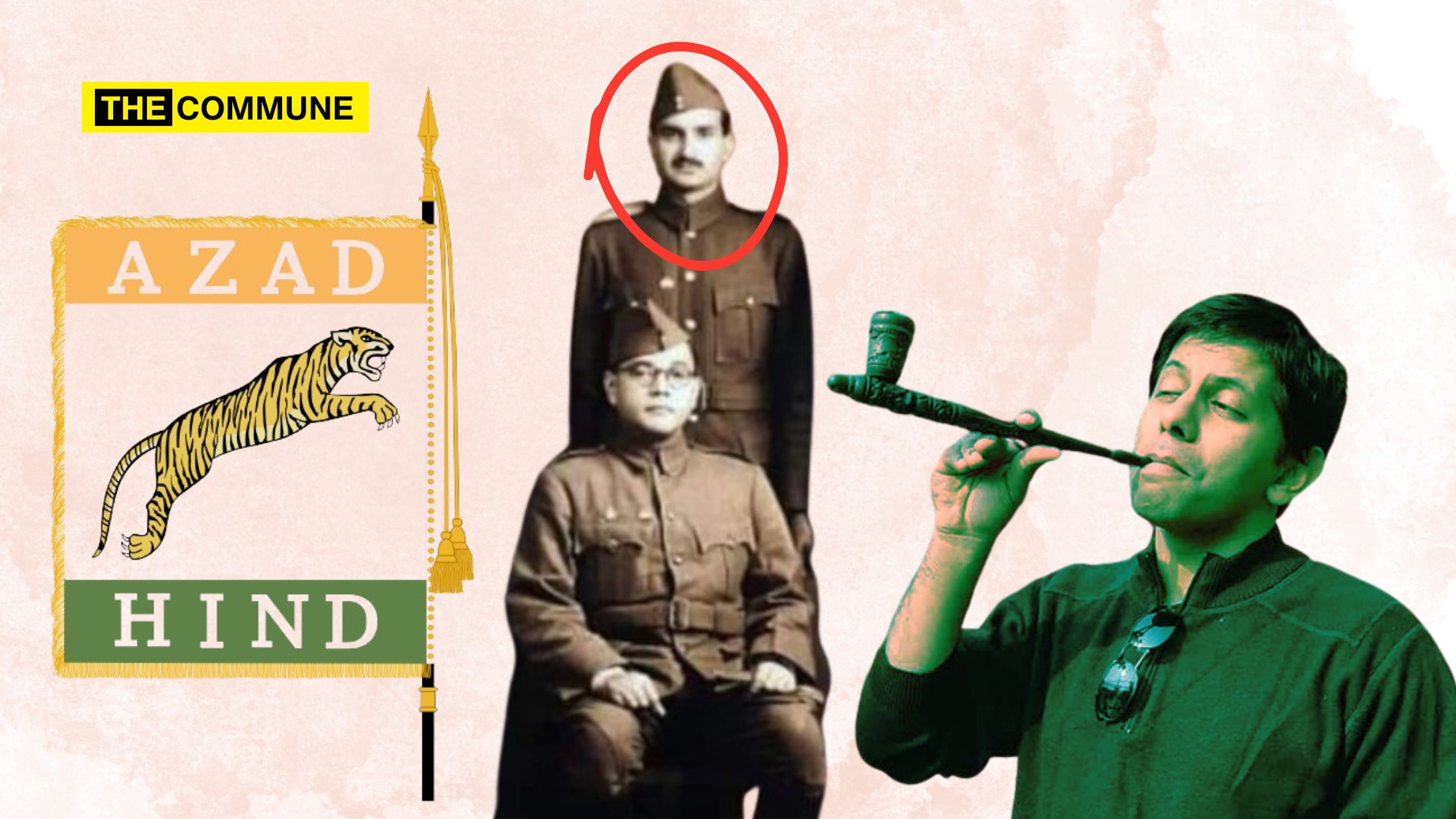
The DeshBhakt’s Akash Banerjee Peddles Half-Truths About Netaji SC Bose’s Aide, Zaman Kiani & INA – Here’s The Full Picture

YouTuber Akash Banerjee spreads lies about Netaji,

YouTuber Akash Banerjee, known for his channel The DeshBhakt, is accused of spreading misleading narratives about Netaji Subhas Chandra Bose, the Azad Hind Fauj and the national anthem. In a video, he inaccurately linked Netaji’s rejection of a temple event to his secular views against Hindutva. He also suggested that “Tipu Sultan’s rebellion” inspired the Fauj’s tiger emblem.

The YouTuber also claimed that Bose introduced Gurudev Rabindranath Tagore‘s “Bharoto Bhagyo Bidhata” as the Azad Hind Fauj’s anthem. These distortions are part of a broader pattern of leftist narratives that aim to present Bose as a secular figure opposed to Hindutva.

He went a step ahead to contort the reality of Zaman Kiyani, Netaji’s close aide who betrayed his ideals by aligning with Pakistan’s anti-India efforts after partition. Banerjee desperately promotes Kiyani’s value for Netaji, perhaps to whitewash the Hindu-hating realities of a man who orchestrated the 1948 Kashmir raid for Liaqat Ali Khan.

“The Deshbhakt” has consistently peddled fake narratives. It is concerning that his 4.93 million subscribers are falling for his propaganda.

Akash Banerjee’s video on Netaji

In a video released about six months ago, he discussed how Netaji was anti-Hindutva. His narrative also includes a fib on how the national anthem came into being.

He starts with some random, seemingly unconnected tidbit of information on Netaji.

“1943, Singapore. World War II was at its peak. Japanese troops had driven British out of Singapore. Netaji Subhash Chandra Bose’s Azad Hind army was present in Singapore. They declared war on British rule. Netaji Bose’s Azad Hind, provisional government of free India was established. Chettiars, a Tamil Hindu trading caste from Singapore invited Netaji to a grand function at a temple, for a fundraising event for the provisional government. The Chettiar community were already the main financers. So, the money and funding used to come from here. Despite this, Netaji Bose rejected the invitation.

He said that he will not go to the temple where caste and religion are discriminated against. Netaji believed that religion and matters of state do not mix and that is why he did not want to give a religious angle. The priests clarified that this event is not for any religion or caste. It is a nationalist event. In the end, Netaji accepted the invitation and entered the temple.

Here is where the lying gets worse. Akash Banerjee talks about Netaji being  with Zaman Kiyani

But interestingly, he was with his two close friends, who were senior officers in his army. Abid Hasan and Zaman Kiyani. Scholars believe that there was a clear message that a provisional government will have religious unity, and no one will be seen from any lens.”

Indian National Anthem

Then, “the Deshbhakt” goes on to fib about the Indian national anthem written by Rabindranath Tagore.

Banerjee says that the Congress sang Vande Mataram as an anthem. Since Vande Mataram sounded like a song praising a goddess, it did not “fit a nationalist gathering”, as quoted by Bose.

Tipu Sultan’s “rebellion” inspired Bose?

The content creator also claimed that Azad Hind Fauj members’ army uniform had a patch with an emblem of a jumping tiger in the middle of the Tiranga, “remembering Tipu Sultan’s rebellion”. This is a false claim. There is no proof that Bose was a “fan” of Tipu Sultan and was inspired by him to use the springing tiger as an emblem.


Here is some clarification on the so-called secular icon Tipu Sultan. He was the most barbaric of Islamic tyrants, who took pride in inflicting unspeakable cruelties on Hindus.

Tipu Sultan waged a jihad against Hindus, especially in the Malabar region and Kodagu, where his forces destroyed numerous villages, forcibly converted thousands, and depopulated the area. His invasion led to significant loss of life, destruction of temples, and long-lasting damage to Hindu communities, with survivors fleeing or being forced into conversion. The impact of his conquests is still felt today, as seen in the continued absence of Deepavali celebrations among the Mandyam Iyengars and the remnants of temple destruction.

Azad Hind Fauj’s anthem

Then he comes back to how Bose inaugurated the German Indian Society in Hamburg on 11 September 1942, where he introduced a 55-second version of Tagore’s Bharoto Bhagyo Bidhata. The Chamber Orchestra of Radio Hamburg performed it.

Since it was written in difficult Bangla, Netaji asked Captain Abid Hasan to translate it into simple Hindustani. Captain Abid Hasan translated the song. This became the national anthem of the Azad Hind Fauj.”

Then he peddles his narrative of Bhakti, bigotry, secularism, and all that jazz.

It is noteworthy that the lies about the springing tiger, the INA’s motto in Urdu, and Netaji speaking in “eclectic Hindustani” has been peddled by all the leftist mouthpieces, including Akash Banerjee, the NewsClick, The Wire etc.

Who Was Zaman Kiyani?

Now let’s take a look at Netaji’s close aides, who these leftists have been praising, especially Zaman Kiyani.

Zaman Kiyani, also known as Zaman Kiani, was a senior officer in the INA. He was originally from the British Indian Army and later joined the INA under Bose’s leadership.

Kiyani was a trusted commander in the INA and played a key role in the INA’s military campaigns against the British forces in India. His military experience was valuable to Bose, who relied on Kiyani to execute operations and maintain discipline within the ranks. After the end of World War II and the disbandment of the INA, Kiyani’s fate diverged from that of many INA members.

Interestingly, after the partition, Zaman Kiani returned to Rawalpindi in 1947. In September of that year, Pakistani PM Liaquat Ali Khan and Punjabi Minister Shaukat Hayat Khan appointed him to lead the southern wing of Pakistan’s efforts to challenge the rule of the Maharaja of Jammu and Kashmir. Kiani established the General Headquarters, known as GHQ Azad, in Gujrat City, in the Pakistani province of Punjab, where he organized and directed operations along the Kashmir border. His forces coordinated raiding activities and supported the Kashmiri ‘rebels’ in Poonch, which resulted in the formation of PoK.


In Conclusion

Had Bose been alive at the time of partition, would he not have felt backstabbed by the same Kiani whom he thought was his loyalist and close aide?

Banerjee constantly peddled lies about the INA to establish that Bose was inherently very secular. The false propaganda that Netaji denounced “Hindutva” is a clear sign of trying to brainwash the next generation. It’s important to critically evaluate such claims, especially when they attempt to simplify or distort complex historical realities.

Subscribe to our TelegramWhatsApp, and Instagram channels and get the best stories of the day delivered to you personally.
“CIA May Use Andhra Baptist Church To Make Chandrababu Naidu Switch Sides”: Russian State Media Sputnik Reports US Diplomats Engage India’s Opposition Leaders

Sputnik reports that CIA May Use Andhra Baptist Church To Make Chandrababu Naidu Switch Sides

The U.S. is reportedly trying to destabilize the PM Narendra Modi-led government in India by using the Andhra Baptist Church and various opposition parties to sever Andhra Pradesh Chief Minister Chandrababu Naidu from the ruling alliance. A report by Russian news agency Sputnik raises concerns about a potential “no-confidence motion” against the NDA government. It implies U.S. support for groups trying to stir up unrest in India.

Sputnik India

Sputnik India, a Moscow-based news agency, recently raised concerns about a series of meetings between U.S. diplomats and Indian opposition leaders. These interactions can potentially undermine India’s internal stability and political landscape. It comes when India, under Prime Minister Narendra Modi and his BJP government in its third term, continues to showcase its significant soft power and maintain political and economic stability in Asia.

Indian intelligence sources have raised alarms about recent interactions between U.S. Consul General Jennifer Larson, who leads the American mission in Hyderabad, and key Indian opposition figures. On 12 August 2024, Larson met with Asaduddin Owaisi, the All India Majlis-e-Ittehadul Muslimeen (A.I.M.I.M) leader and a Member of Parliament from Hyderabad.

This meeting, which was the second in recent weeks, has prompted a backlash on Indian social media over the potential motives behind it.

Larson has also engaged with Telangana Chief Minister Revanth Reddy and Andhra Pradesh Chief Minister N. Chandrababu Naidu, who is also the head of the Telugu Desam Party (T.D.P).

Chandrababu Naidu and the BJP

Naidu’s support was crucial in securing Modi’s third term in office following the recent Lok Sabha elections, as TDP’s 16 M.P.s backed Modi’s coalition government. However, Naidu has opposed the B.J.P-supported “Unified Waqf Management, Empowerment, Efficiency and Development Act,” which seeks to regulate properties managed by Islamic Waqf boards. This opposition, especially since the bill is under scrutiny by the Joint Parliamentary Committee (JPC), has caused concern within BJP circles.

Sputnik reported that Intelligence sources had expressed worries about internal political discussions that may have surfaced during conversations with American diplomats, suggesting the possibility of a “no-confidence motion” against the government over disagreements regarding the Waqf law. There are also concerns that American support could potentially influence Andhra Baptist Church as a tool against Naidu.

Sputnik sources revealed that “They (American diplomats) may also use the Andhra Baptist Church, under the patronage and financial support of the American Baptist Church, to apply pressure on the CBN to switch sides. The Andhra Baptist Church is the biggest tool in the CIA’s pocket right now to be used against the CBN.

While meetings between opposition leaders and foreign diplomats are not unusual, given the strong I.T. ties and people-to-people connections between Andhra-Telangana and the United States, recent developments have raised some serious concerns.

Why are such meetings suspicious?

Dr Abhinav Pandya, Founder and Director of the Usanas Foundation, expressed “genuine apprehensions” about perceived U.S. support for groups seeking to incite unrest in India. He pointed to a strong perception within B.J.P-R.S.S circles that the U.S. may have interfered in the Lok Sabha elections to undermine Modi’s foreign policy stance.

Pandya also suggested that foreign forces might be involved in fueling domestic unrest or political discord in India, drawing parallels with alleged U.S. interventions in other countries such as Pakistan and Bangladesh.

He highlighted that while there is no concrete evidence, the widespread perception of foreign interference, particularly by U.S. diplomats meeting with opposition figures, remains a cause for concern.

Sputnik’s report states that U.S. diplomats have engaged with political and social media figures who are critical of the Narendra Modi government.

In July 2024, the U.S. Embassy in India announced an “Influence to Impact” programme featuring Congress propagandist and half-truths peddling YouTuber Akash Banerjee

The U.S. Embassy in India had also nominated divisive figures like RJ Sayema in the past as their “Equality Ambassador”, who ironically indulges heavily in mocking Hindu festivals/rituals and practices and speaking anti-national words.

(With Inputs From Sputnik India)
Subscribe to our TelegramWhatsApp, and Instagram channels and get the best stories of the day delivered to you personally.
The Print’s Sreyashi Dey Deletes X Handle Fearing Mamata Govt’s Police After Posting Victim Family’s Alleged Petition

The Print's Sreyashi Dey deleted her X account after sharing details about the Kolkata rape-murder.

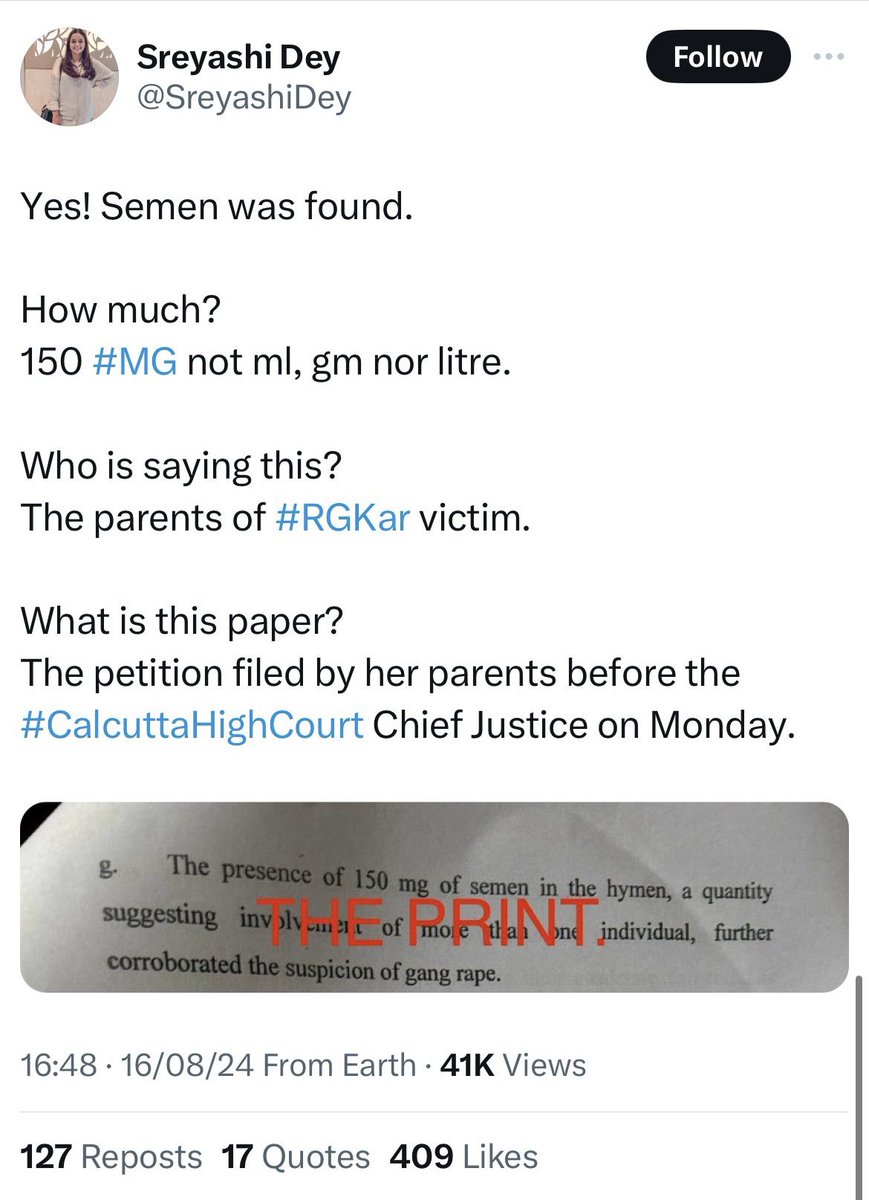
Sreyashi Dey, a journalist with The Print, deleted her X account after she posted a snapshot of the alleged petition filed by the family of the Kolkata doctor who was raped and murdered at the RG Kar Medical College and Hospital.  Her retreat underscores the mounting pressure on critics of the Mamata Banerjee government as Kolkata Police’s intimidation silences dissent.

In her X post, Dey shared details saying that the doctors found 150 mg of semen in the victim’s body.

The presence of 150 mg of semen in the hymen, a quantity suggesting the involvement of more than one individual, further corroborated the suspicion of gang rape.”

A News 18 report quoting forensic experts noted that the 150 mg mentioned in the autopsy report is the weight of the inner genitalia or the uterus and not that of any fluid.

Sreyashi Dey deleted her X account, reportedly fearing action from the Kolkata Police, sending notices and intimidating voices who speak about the incident on social media.

According to BJP leader Amit Malviya, Kolkata Police had earlier threatened her for reporting on the vandalism in the hospital.

Many on social media slammed the TMC government and Mamata Banerjee, saying, “This is what dictatorship looks like”.

TMC using police to suppress dissent

The shadow of fear cast by TMC-controlled Kolkata Police’s intimidation tactics is growing darker. It envelops not just Sreyashi Dey but also prominent figures like author Shefali Vaidya and journalist Barkha Dutt.

Vaidya received a notice from Kolkata Police for criticising the TMC government’s handling of the horrific incident. In an X post, she questioned the government’s lack of action in ensuring justice. The post had an image card that alleged the involvement of TMC ministers’ sons in the crime. Police demanded she delete the post, threatening strict legal action.

Vaidya, who is not a member of any political party, deleted the post and expressed fear of harassment. She also condemned the WB government for using police power to curb the free speech of private citizens.

Similarly, when Dutt posted on X that the hospital’s emergency room was vandalized, Kolkata Police warned her against spreading false information. The police said from their X handle that the crime occurred in the seminar room, which remained intact.

They threatened legal action against Dutt, even though she specifically mentioned the emergency room, not the seminar room.

Dutt later subtly adjusted her narrative to deflect the threat. While maintaining a confident front, she claimed she had referred to the entire hospital as the crime scene, not just the emergency room.

Subscribe to our TelegramWhatsApp, and Instagram channels and get the best stories of the day delivered to you personally.
From Blaming Victims To Maintaining Silence: Mamata Banerjee’s Stance On Rape And Women Safety Over The Years

mamata banerjee rape

Even as West Bengal reels from a surge in brutal violence against women, from the atrocities in Sandeshkhali to the tragic rape and murder of a trainee doctor in Kolkata, the silence of Chief Minister Mamata Banerjee, who often claimed to be a guardian of women’s rights, speaks louder than words.

While her party members sing her praises, Banerjee’s lethargy speaks volumes, leaving many to question: where was the fierce leader West Bengal’s women promised, and how long can this silence last as the state’s daughters cry out for justice?

WB state police are silencing anyone questioning the Chief Minister’s apparent inaction in addressing such grave issues, especially given her position and status as a woman. However, it isn’t the first time her controversial stance on similar matters has been questioned.

2012

In 2012, Banerjee made a casual statement suggesting that the increase in rape cases in India was due to the more open interaction between men and women. She remarked, “Earlier, if men and women held hands, they would be caught and reprimanded by their parents, but now everything is so open. It’s like an open market with open options.”

The Trinamool Congress chief did not stop there. Their chief also accused a segment of the media of suppressing facts and engaging in “news pollution” by emphasizing a few rape incidents in the state.

Every day, rape cases are highlighted as if the entire state has become a haven for rapists,” she said.

She criticized the media for allegedly glorifying rape and claimed that such negative journalism only serves to harm. Mamata further claimed that certain news channels targeted her government with “fabricated and exaggerated negative news” to tarnish its image. She accused these media outlets of spreading falsehoods and distorting her statements. She also suggested that some news items were manipulated to serve business interests and criticized the media for focusing on sensationalism rather than highlighting her government’s positive contributions. According to her, this bias aims to undermine Bengal’s cultural integrity.

Shortly after assuming office as Chief Minister, Mamata Banerjee made careless statements regarding rape, and her handling of such cases has remained contentious.

In a case in 2012, a woman was raped on Park Street in Kolkata. Banerjee’s response at the time involved questioning the validity of the crime, blaming the victim, and suggesting political motivations. Kamduni became another example of her controversial approach to such incidents.

2013

In 2013, the brutal gang-rape, mutilation, and murder of a young college student in Kamduni, West Bengal, shocked the nation. The victim, known as Aparajita, became a symbol of the state’s issues with violence against women. Banerjee’s visit to Kamduni came a full ten days after the locals discovered the girl’s body. She faced criticism and heckling from the public.

In response, Banerjee questioned the victim’s character, hinted at conspiracies, and accused political opponents of stirring unrest.

She didn’t fulfil her promise to secure the death penalty for the perpetrators within a month, and the investigation, led by Special IGP CID Vineet Goel, concluded that only one man was involved, contrary to the claims of gang rape.

Just a week after the Kamduni case, two more tragic incidents occurred in Murshidabad the gang rape and murder of a 12-year-old girl in Ranitala, and the rape and murder of a middle-aged woman in Kharjula. In both cases, police responses were criticized. There were also allegations of mishandling and denial of rape.

In 2013, a 16-year-old girl in Madhyamgram was raped twice by the same men, who later set her on fire to prevent her from testifying. The case initially faced denial and slow investigation until the High Court intervened. Banerjee’s response was dismissive, claiming the judicial process was beyond her control and criticizing the media for negative reporting.

By 2014, rape cases continued to emerge. A 15-year-old Scheduled Caste girl was raped and murdered in Dhupguri after protesting the humiliation of her father by a local council. A 20-year-old tribal girl in Birbhum also faced sexual violence. These cases faded from public memory.

2022

By 2022, Banerjee had developed a routine for addressing such cases, deflecting blame, questioning the victims, and attributing violence to political conspiracies. After the rape and murder of a 14-year-old in Hanskhali, Banerjee maligned the victim’s personal life rather than focusing on the crime itself.

Will you call it rape, or was she pregnant? Was it (the fallout of) a love affair? Have you enquired about these? It is an unfortunate incident. You (the girl’s family) also conducted the last rites of the body. I am talking as a layman. From where will they (police) get the evidence of whether she was raped or she was pregnant, or there was any other reason, such as she was slapped by someone after which she fell ill. I do not have any words to sympathise with the family,” she said.

The year 2022 saw a spate of violent incidents, including the gang rape and attempted murder of a 40-year-old woman in Namkhana, where the accused poured kerosene into the woman’s private parts and tried to set her on fire. The state also saw the rape of a 15-year-old tribal girl in Shantiniketan and the rape and murder of a 21-year-old student in Pingla.

Cases from Deganga, Bansdroni, and Englishbazar further highlighted the ongoing crisis.

2024

When reports on rape and violence against women in Sandeshkhali emerged in 2024, Banerjee claimed the issue was not new and blamed external factors for unrest.

Her statement suggested a pattern of deflecting responsibility and attributing problems to political conspiracies. The recurring themes in Banerjee’s responses, along with the similarities in police and state handling of these cases, suggest a troubling consistency in the state’s approach to addressing sexual violence. This pattern has become evident to many observing the unfolding events in Kolkata and the rest of West Bengal.

Left-leaning liberals and TMC MPs, who were vocal about high-profile cases like Bilkis Bano, Hathras, Kathua, and incidents of harassment in Manipur, now seem to choose silence over the recent rape and murder of a trainee doctor. Surprisingly, even the INDI alliance had opted for silence on this issue.

Some TMC MPs have gone so far as to express solidarity rather than push for justice despite their party being in power. This silence underscores a troubling trend in West Bengal, where the government appears to minimize the severity of rape by attributing it to shifting social norms. This pattern of downplaying critical issues and remaining silent on recent spikes in harassment and violence raises severe doubts about the government’s commitment to addressing these serious concerns. The TMC’s actions blatantly disregard the dignity of women, reducing them to mere commodities.

(With inputs from News 18)

Subscribe to our TelegramWhatsApp, and Instagram channels and get the best stories of the day delivered to you personally.
Foreign Media Distorting The Kolkata Rape & Murder Case To Tarnish India’s Image?

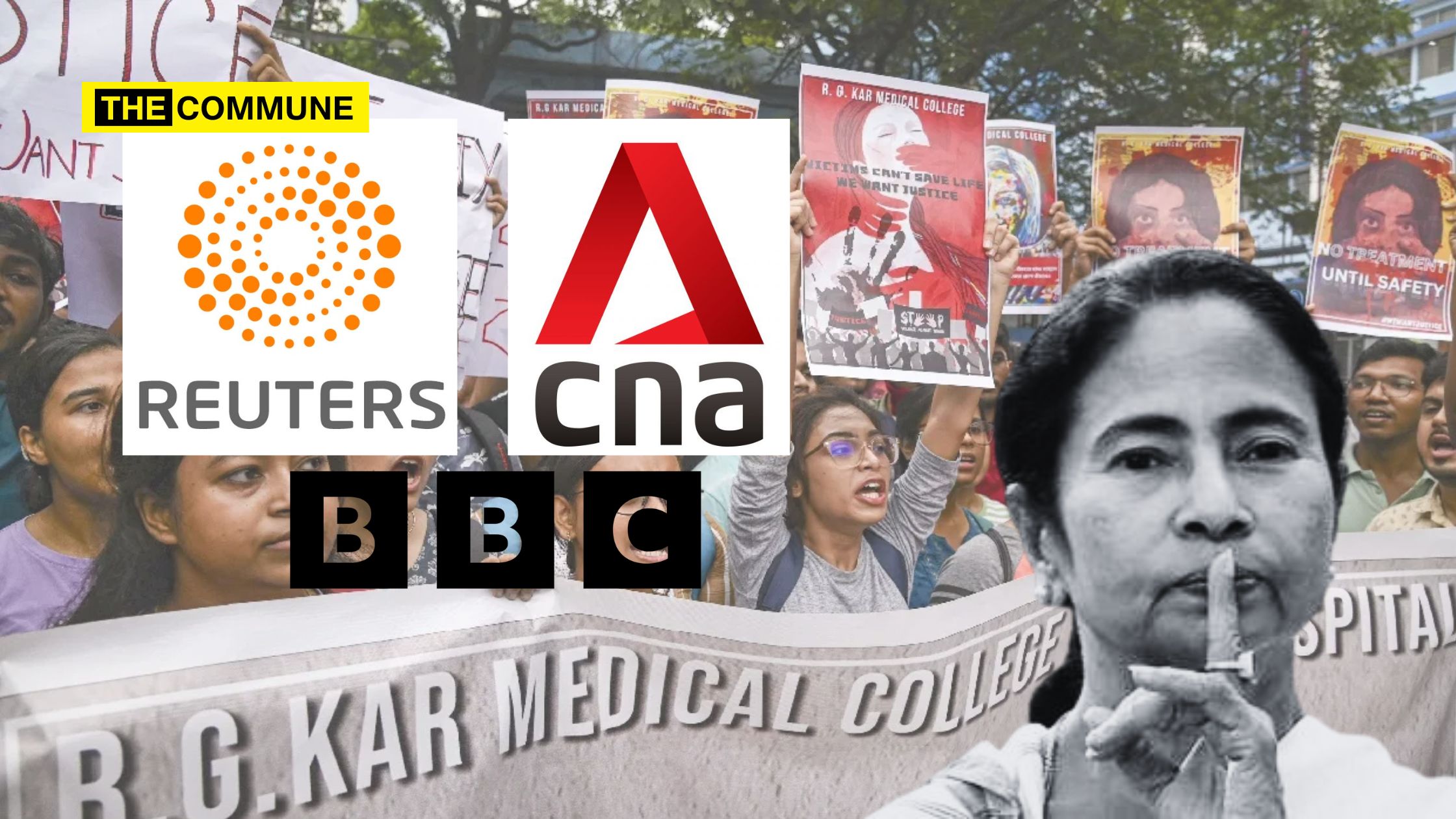
Even as the brutal rape and murder at a Kolkata hospital ignited nationwide protests, the foreign press seems busy piggybacking on this tragedy to tarnish India’s image. Their pixelated reporting deflects the blame from Chief Minister Mamata Banerjee-ruled West Bengal to the rest of India.

Here are some examples of how international media outlets are trying to tarnish India’s image globally as an unsafe country for women.

News Asia

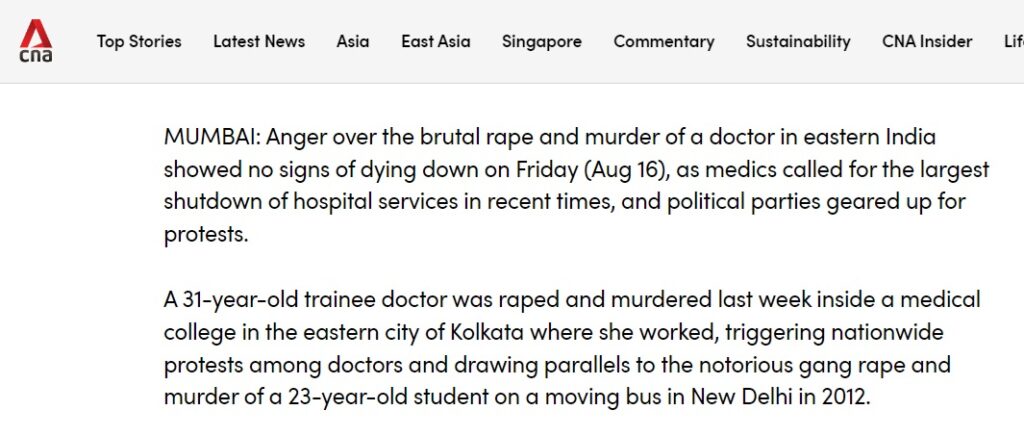
Singapore’s Channel News Asia has seemingly whitewashed the reporting by stating that the horrific incident occurred in “eastern India“.

Why should other eastern states share the shame of the WB law and order mess? 

They then go on to report on the massive nationwide protests that the Indian Medical Association (IMA) has called for, and without context. They reproduce the IMA’s press release, which says, “It is for the authorities to provide for the safety of doctors inside hospitals and campuses,”

The IMA’s press release made vague statements about who was responsible for doctors’ safety.

Reuters

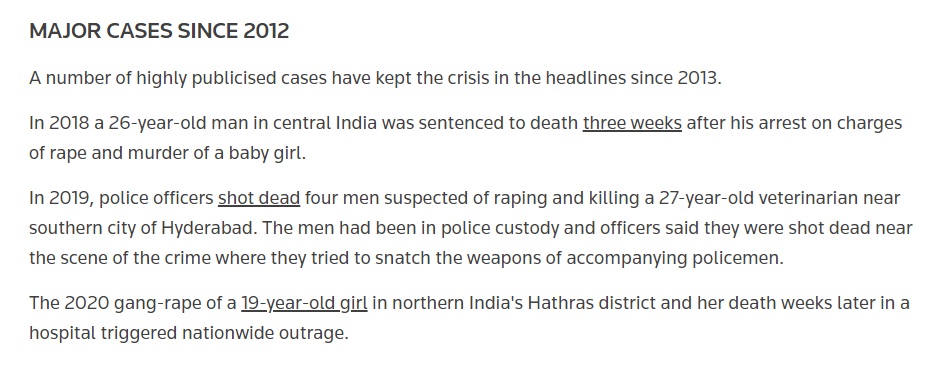
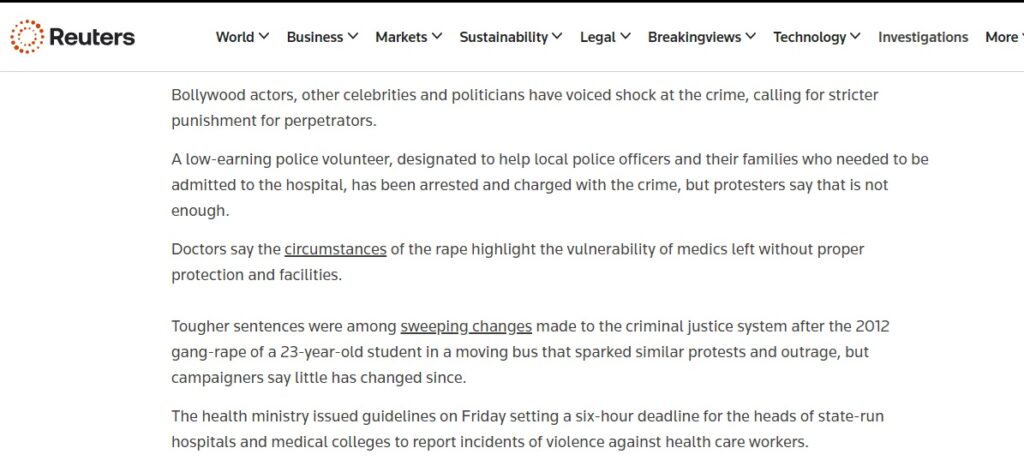
Reuters, on the other hand, made it a point to emphasise more on the “safety of women” in India by mentioning rape cases from the past.

The report seems to shift the focus to India’s broader safety record for women, instead of examining West Bengal’s record. Any reader would believe that India is the rape capital of the world after reading this report, even though it didn’t use that exact phrase.

They then reminded the reader about the “tough laws” brought in after the Nirbhaya rape case in 2012. However, they also make it a point to emphasise that these tough laws were useless in India anyway.


BBC

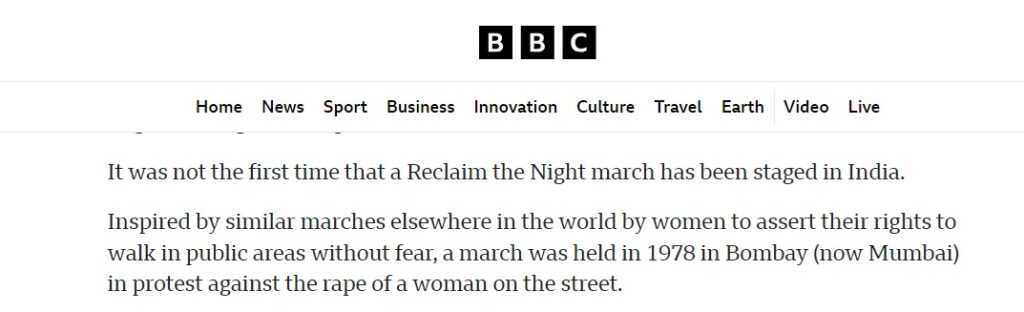
BBC, while focusing on Kolkata, very subtly inserts the point that India has been a country that has seen women stand up to rape perpetrators, seemingly pushing the idea that India is unsafe as a country.


Why Is This Problematic?

These reports omit key details like the involvement of West Bengal authorities, focusing only on the broader “happening in India” narrative while seemingly blaming the central government when the issue had not been handled properly by the TMC-led Mamata Banerjee government. The selective reporting appears to be influenced by deeper global agendas that aim to obscure the situation’s specifics.

The strike announced by IMA seems to come at a time when there was no other reason for protest. We have seen farmers’ protests, anti-CAA protests, and wrestlers’ protests, to name a few. But another protest is necessary to create a sense of unrest and instability. We all know what happened when the “student-led” protests boiled over in neighbouring Bangladesh

This rape and murder case seems to have come at the opportune moment for certain players. Even though there are protests, only time will tell if such reports will tarnish India’s image on the global stage.

(Subscribe to our TelegramWhatsApp, and Instagram channels and get the best stories of the day delivered to you personally.)

Suriya’s 2D Entertainment In Soup For Hiring 155 Russian Tourists Without Work Permit

Suriya's 2D Entertainment In Soup For Visa Violations

Suriya’s 2D Entertainment is under investigation by Nilgiris police for employing 155 Russian tourists and some Afghan students without the required work permits in a film directed by Karthik Subbaraj in Ooty.

Employment without Work Visa

According to immigration regulations, only individuals on business or work visas can take on paid employment there. Reports have confirmed that the agent who arranged the foreign nationals and the film’s executive producer have appeared before local authorities for questioning.

The film, currently being shot in Ooty, is directed by Karthik Subbaraj and works at the Nawanagar Palace in Aramby Ridge. The shoot, which has been ongoing for over 20 days, is expected to conclude in the coming days. It is claimed that 155 Russian nationals were granted tourist visas on the 27th to participate in a film shoot. They are currently filming at three well-known private hotels in Ooty.

Typically, when foreigners stay in Ooty, hotel management must notify both the local police station and the district superintendent of police (SP) office. However, the hotels involved have not provided the required details about the Russian nationals.

Tourists Sent Back

The filming was paused last week after actor Suriya sustained an injury. Subsequently, 42 of the 155 Russians returned to Russia.

Currently, 113 Russians remain in Ooty. The Nilgiris District Special Division Police have issued notices to the involved hotels, demanding explanations for the lack of proper reporting of the Russian nationals to the district SP office. This scrutiny arises from foreign nationals not being permitted to enter on tourist visas and participate in film shoots. Following police requests for the film crew to appear for questioning over the past few days, a team met with police officials on 14 August 2024 and reportedly explained.

A crew member, speaking anonymously to TOI stated, “We hired the foreign nationals through a well-regarded agent who has previously arranged for foreigners in other films. Many of these foreigners have previously worked in movies and have been residing in Tamil Nadu and Kerala. The agent was unaware of the strict enforcement of these rules, as they had not been strictly applied before.” 

The film, tentatively titled “Suriya 44”, is a joint production of Karthik Subbaraj’s Stone Bench Creations and actor Suriya’s 2D Entertainment.

(With inputs from Dinamalar)

Subscribe to our channels on Telegram, WhatsApp, and Instagram and get the best stories of the day delivered to you personally.