Home Blog Page 683

Former TNCC Leader Aswathaman Confesses To Plot Against TN BSP Chief Armstrong; Father-Son Duo Back In Prison, Dravidianist Media Maintain Pin-Drop Silence

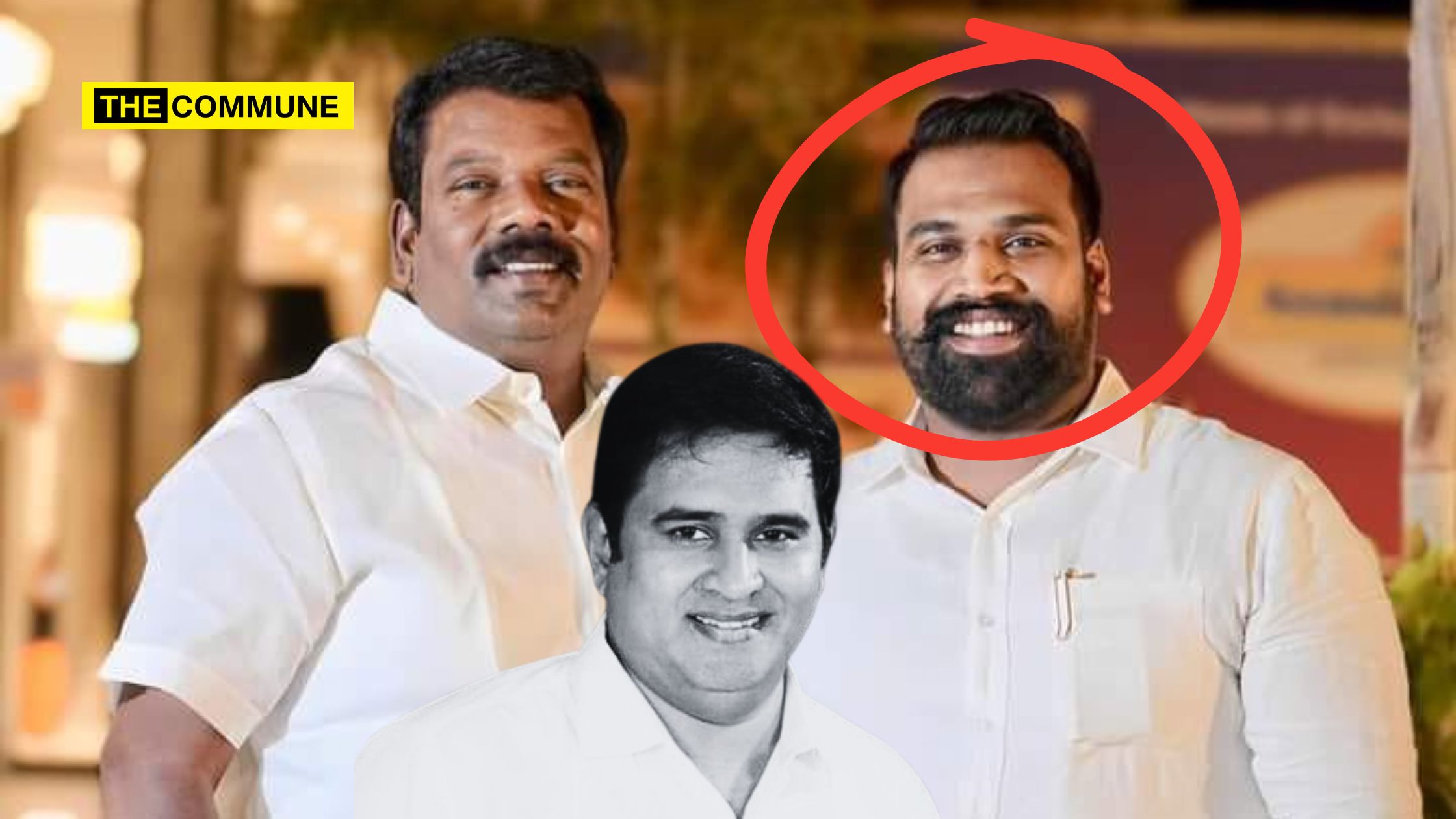
TN Youth Congress Leader N Aswathaman Arrested In BSP Chief Armstrong Murder Case, Aswathaman

Aswathaman, a former Tamil Nadu Youth Congress leader, reportedly admitted to his involvement in the murder of Bahujan Samaj Party state president K. Armstrong over personal grievances, including political disputes and Armstrong’s interference in land matters. His father, Nagendran, a life convict, refused to cooperate with authorities. Both were sent to their respective prisons from the police custody.

While the investigation uncovers disturbing evidence of organised crime in Tamil Nadu, there has been little to no coverage in the media channels known for their Dravidianist leanings.

Father-Son In Prison

Aswathaman, a former State General Secretary of the Tamil Nadu Youth Congress and a practising lawyer spent four days in police custody. At the same time, his father, Nagendran, a life convict, was held for three days. Both have returned to Poonamallee Jail and Vellore Central Prison, respectively.

During the investigation, Aswathaman revealed his connection to Armstrong and allegedly admitted to his involvement in the plot to murder him. He claimed that his agreement to Armstrong’s killing stemmed from personal grievances, including Armstrong’s interference in land disputes. Armstrong also instigated a police complaint against him and falsely included Nagendran in a separate murder case.

Nagendran has refused to cooperate with the police. However, Aswathaman, despite initially claiming friendship with Armstrong, has disclosed that he was motivated by several issues, including a belief that Armstrong jeopardised his political future. According to Aswathaman, he was approached by Arul with the murder plan and, after discussing it with his father, consented to the act in hopes of resolving these personal conflicts.

In the broader context of the investigation, several individuals linked to the case, including five lawyers, have been arrested. Police are still seeking Sambo Senthil, a suspect believed to be in Thailand. The investigation is ongoing, with the police recording statements and scrutinising connections to the murder.

Investigations

On 14 August 2024, the Egmore Magistrate Court authorised the police to question Aswathaman regarding unresolved aspects of the 5 July 2024 murder. Then the police transported Aswathaman to the anti-gangster squad office in Pudupet, where he was interrogated about his involvement in the conspiracy to kill K Armstrong. To date, 22 individuals have been arrested concerning the case, including Ponnai Balu, the brother of gangster Arcot Suresh, and their cousin, lawyer Arul.

Additionally, K. Thiruvengadam, a suspect in the murder, was shot dead by the police during an early morning encounter. The investigation into Armstrong’s murder has uncovered disturbing evidence of kangaroo courts operating in the city. The motive behind the murder is linked to Armstrong’s growing influence and efforts to curb his power. Aswathaman, a close associate of TNCC chief K Selvaperunthagai, is among those arrested for the murder of K Armstrong.

Bahujan Samaj Party President Armstrong

K Armstrong was brutally murdered on 5 July 2024 evening near Perambur in Chennai. He was attacked by a gang of six assailants while chatting with friends and supporters near his residence. The attackers, armed with machetes and sickles, threatened anyone who tried to intervene, causing Armstrong’s friends to flee. His family rushed to the scene upon hearing his cries. They found him grievously wounded and lying in a pool of blood. They quickly took him to a nearby private hospital, where doctors pronounced him dead.

The police are exploring the possibility of a rivalry with a criminal from North Chennai, currently incarcerated, as a motive for the murder. In August 2023, Arcot Suresh and his associate Madhavan were assaulted by a gang near Pattinampakkam in Chennai.

During the incident, Arcot Suresh tragically lost his life, while Madhavan survived. Five months later, Madhavan died in another attack by a separate gang. Ponnai Balu, the brother of Arcot Suresh, has been implicated in the murder of BSP leader Thennarsu back in 2015. His other brother, known as bomb Saravanan, is suspected in the murder of Arcot Suresh last year, according to police sources.

Currently, Ponnai Balu is accused in the murder case of BSP leader Armstrong. He is the sibling of Arcot Suresh, a notorious criminal who was slain by a rival gang in Chennai the previous year. Chennai police have arrested Arcot Balu, along with seven others, in connection with Armstrong’s murder, a senior police official confirmed.

Armstrong, a lawyer, had a troubled past with previous criminal cases, though his legal troubles reportedly ceased a decade ago. So far, 22 people have been arrested by the police in connection to the crime.

Despite the gravity of the revelations surrounding the murder of K. Armstrong, Dravidianist media stays silent. This silence raises questions about their selective reporting of issues that challenge their narrative.

(With inputs from OneIndia)

Subscribe to our TelegramWhatsApp, and Instagram channels and get the best stories of the day delivered to you personally. 

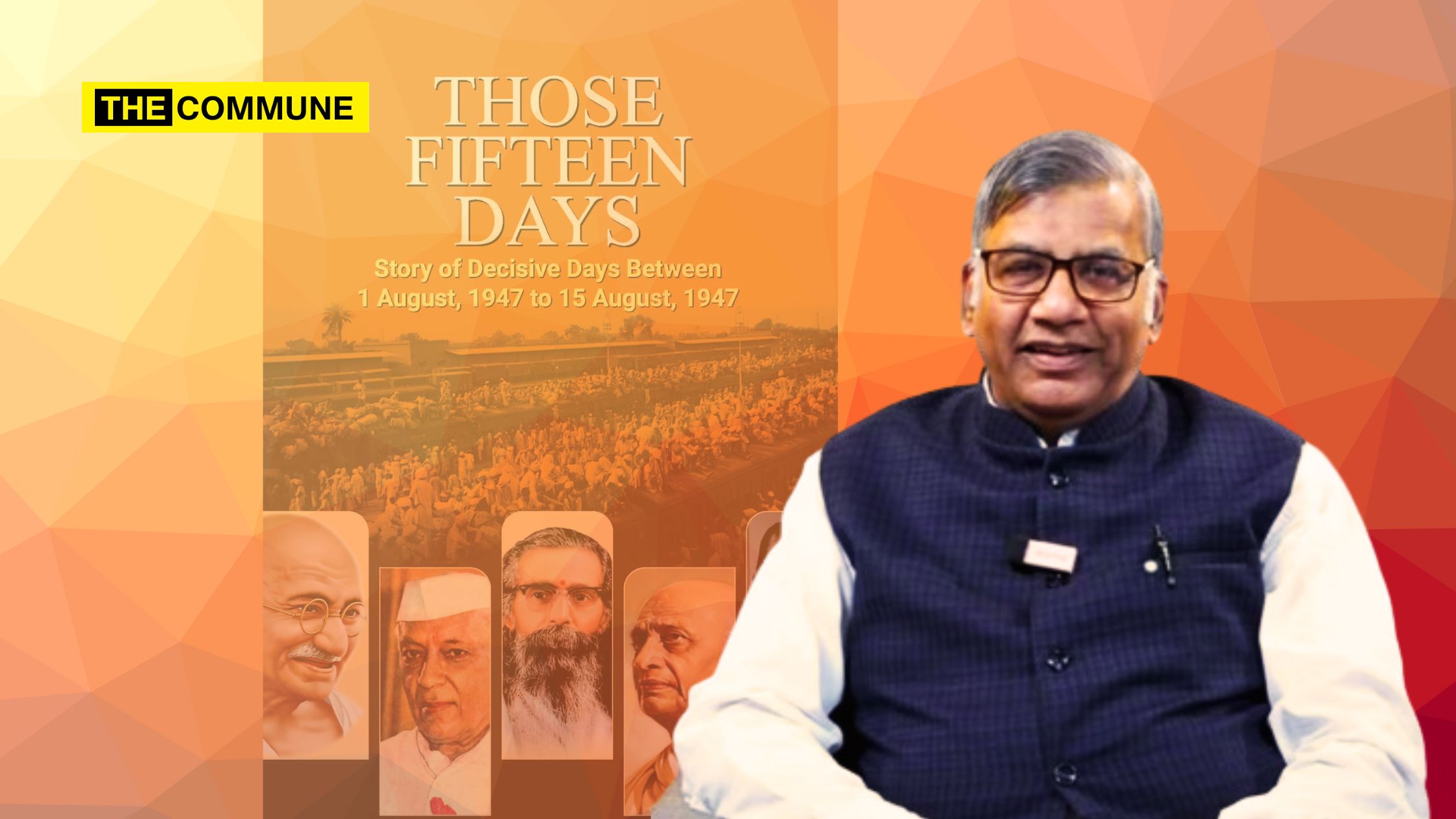
Forging A United Future: Prashant Pole Speaks To The Commune On Why India’s Strength & Stability Depends On Hindu Unity

Prashant Pole Interview: Why India's Strength Depends On Hindu Unity.

Prashant Pole is a man of fascinating contrasts – an engineer by training who harbours a deep passion for history. His journey from leading research and development in electronics to becoming a successful IT consultant might seem far removed from the world of historical research. Yet, precisely this unique background brings a fresh perspective to his exploration of India’s past.

Pole’s approach to history is marked by an unwavering commitment to uncovering the “real history” – events and narratives that have been overlooked or misrepresented in mainstream accounts. His most notable work, “Those 15 Days,” delves into the critical period leading up to India’s independence with meticulous detail and a quest for factual accuracy that borders on obsession.

As we delve into Pole’s thoughts on history, technology, and India’s future, we get a glimpse of a mind that constantly seeks connections between the past and the present, always with an eye towards building a stronger future for his beloved Bharat. Read on.

The Commune: Could you share a bit about your professional background?

Prashant Pole: Certainly! I started as an engineer and have held various positions across multiple sectors. Early in my career, I led research and development at Maharashtra Electronics Development Corporation (Meltron). Afterward, I worked with several corporate and multinational companies. At one point, I served as Vice President of an Indo-American joint project. Eventually, I ventured into entrepreneurship, establishing my own IT consultancy and company. Today, I primarily focus on consulting for telecom and IT companies, as well as providing IT solutions for several cooperative banks.

The Commune: As a technologist, what sparked your interest in history?

Prashant Pole: History has always been a passion of mine, even from a young age. I grew up reading a lot of historical books, mainly in Marathi and Hindi. While my career is rooted in technology, my fascination with history never waned. When I began writing, I realized many aspects of history haven’t been fully revealed or understood—what I call the “real history.” My interest lies in uncovering what truly happened, supported by references and actual facts. This quest for truth has heavily influenced the content of most of the books I’ve written, which are largely based on historical events.

The Commune: What inspired you to focus onThose 15 Daysas a topic?

Prashant Pole: It all began around 1990 or 1991 when I started writing a small piece about the partition of India during Independence Day. As I delved into it, I realized there was so much about the partition that I didn’t know, which was surprising given the magnitude of the event. It’s a unique and tragic moment in world history—1.5 million people lost their lives, and over 120 million were displaced, leaving behind their homes, fields, and everything they knew. The lack of detailed information about such a significant event intrigued me, so I started researching more deeply. I discovered that by focusing on the last 15 days leading up to independence, from 1 August to 15 August 1947, we could truly understand the decisions and actions of the leaders of that time. Capturing those crucial days, factually and pictorially without injecting personal opinions, would allow readers to see the reality of who we entrusted with our nation. That’s how the concept of “Those 15 Days” was born.

The Commune: You initially publishedThose 15 Daysas a series of articles. What made you decide to turn it into a book?

Prashant Pole: The series originally appeared in a Marathi magazine called Ekata, which was published in Pune. Every month, a new episode covering one day from those 15 critical days leading up to Independence was published, and the readers began to engage with it. Their positive feedback encouraged me to explore the idea further.

Some friends suggested releasing the series on social media during the first half of August, and the response was overwhelming—it went viral quickly. I shared it in both Marathi and Hindi, which expanded its reach even further. Seeing its success, my publisher, who had previously published my book Treasure Trove of Indian Knowledge (Bharatiya Gyan Ka Khajana), proposed turning the series into a full book. That’s how the book Veh Pandra Din came to be in Hindi, Those 15 Days in English, and Veh Pandra Divas in Marathi. Initially, it was published in these three languages, and today, it’s available in nine languages.

The Commune: In India, where there is no shortage of secular sources, how challenging was it to conduct research for your book?

Prashant Pole: That’s a very insightful question. When I had the concept for the book in mind, I knew the research would be challenging, but I didn’t anticipate just how difficult it would be to find reliable references. Most of the sources I encountered were either heavily biased, written with a non-historical, secular perspective, or overly emotional, lacking in factual accuracy. This made it incredibly hard to find authentic, factual references.

As I delved deeper into my research, I realized that many references available online, even on reputable platforms like Google, were incorrect. This meant that every single reference I used in the book had to be meticulously cross-checked. I can confidently say that every event and incident mentioned in the book is based on fact—there is absolutely no fiction involved. The process was long and painstaking; it took me over 10 to 15 years of research to write this book. In the final two years before I began writing, I immersed myself completely in that era. I even started thinking in terms of miles instead of kilometers, and I consulted historical records like the Panchang to ensure every detail was accurate. For example, if I mention that the sunrise on a particular day was at 6:17 AM, you can be certain that it was exactly at that time on that day. I took all possible precautions to ensure the historical accuracy of every detail in the book.

The Commune: You’ve provided a very vivid description of events inThose 15 Days.Can you elaborate on how you gathered and verified the details?

Prashant Pole: Absolutely. I made it a point to gather all the relevant information to accurately describe each incident or event in the book. Everything I’ve written is backed by solid proof, whether it’s testimonials or reliable references. For example, one significant event I highlighted was the visit of Lakshmibai Kelkar, the then Pramukh Sanchalika of the Rashtra Sevika Samiti, to Karachi on the very day Pakistan was born. This event hasn’t been properly acknowledged in our history.

Today, we often discuss women’s empowerment but imagine the courage it took 78 years ago for a woman to visit Karachi, which had just become the capital of Pakistan amidst widespread riots. It was an incredibly dangerous time, especially for women, given the circumstances we’re all aware of. Yet, Lakshmibai Kelkar had the bravery and confidence to go there, hold a meeting, and inspire the women of that time. This kind of courage should be highlighted and celebrated.

Similarly, the work that the RSS did during the partition was remarkable. Many RSS swayamsevaks sacrificed their lives to save others, and yet, this is not widely known. The RSS never seeks credit for these actions, but that doesn’t mean others shouldn’t recognize and talk about these sacrifices. The contributions made during those unstable days deserve acknowledgment and appreciation.

The Commune: What are your favorite topics to research and write about, and why?

Prashant Pole: As I mentioned earlier, I’m passionate about uncovering the actual history that often gets overlooked or misrepresented. One of my favorite areas of study is the Bhartiya Gyana Parampara – the Indian Knowledge System (IKS), as it’s commonly called these days. I spend a lot of time working on this because it represents a vast and rich tradition that’s crucial to understanding our heritage.

Additionally, I focus on various historical topics where the real story hasn’t been fully told. Much of what we’ve learned in schools and colleges has been distorted. I believe it’s essential for people to know the true history, backed by proper facts and figures. This drive to bring the authentic narrative to light is what I find most fulfilling and what I consider my favorite subject to explore.

The Commune: What lessons should modern-day Bharat learn from the events described in Those 15 Days, especially considering the current situation in Bangladesh?

Prashant Pole: This is an important question. When we reflect on the partition, we must ask if it was truly necessary. The answer is no. The partition was not inevitable but was largely the result of the Congress leadership surrendering to the demands of the Muslim League, particularly after the Direct Action Day and the horrific massacres that followed in Bengal and Noakhali in August 1946. Congress, at that time, failed to stand firm against these violent tactics, leading to the eventual partition.

Looking at today’s scenario, Pakistan is a fragile state, teetering on the edge of dysfunction. If it weren’t for China’s support, regions like Balochistan might already have gained independence. The creation of Pakistan was fundamentally flawed because it was not a country born out of logical reasoning but rather out of religious division. The fact that Bangladesh broke away from Pakistan in 1971 further underscores that religion alone cannot hold a nation together.

Dr. B.R. Ambedkar argued that partition might be necessary because he believed Hindus and Muslims were too different to coexist peacefully. However, he also insisted that if partition were to happen, all Hindus should migrate to India, and all Muslims should move to Pakistan. This migration did not occur as envisioned, leading to the ongoing persecution of Hindus in Bangladesh, as seen historically in 1947, during the 1971 war, and even now in 2024.

Today, we see that while the Hindu population in Pakistan and Bangladesh has dwindled drastically, the Muslim population in India has increased. This raises questions about the long-term stability of these regions. The lesson for Bharat today is clear: those who prioritize the nation must unite strongly. For India to remain strong and stable, Hindus must come together, ensuring that the country is fortified against internal and external challenges.

The Commune: What’s next on your agenda? What are you working on now?

Prashant Pole: I’m currently working on two books. The first is the second part of the Treasure Trove of Indian Knowledge (Bhartiya Gyan Ka Khajana). The first part of this book has been quite popular and is available in Marathi, Gujarati, Hindi, and English. The second part will also be released in these four languages soon.

My other project is a book titled Changing Bharat – Badalta Bharat. This book will also be available in the same four languages. In Badalta Bharat, I’m exploring the journey of India, from its glorious past to the challenges it faced due to invasions by Muslims and British colonizers. Despite the setbacks post-independence, we missed many opportunities, but in the last five to ten years, our country has been progressing rapidly. India is rediscovering its identity, and if we continue on this path, we’ll become a very strong nation in the world. That’s the essence of Badalta Bharat.

The Tamil translation of Vo Pandrah Din, Andha 15 Naatkal is available for purchase at the Vijayabharatham Prasuram website.

Subscribe to our channels on TelegramWhatsApp, and Instagram and get the best stories of the day delivered to you personally.
“Remove Temples Saying Encroachment But Concession For Church?”: Hindu Munnani Questions Double Standards Of TN Govt Over Alleged Illegal Church On Canal Land in Villupuram

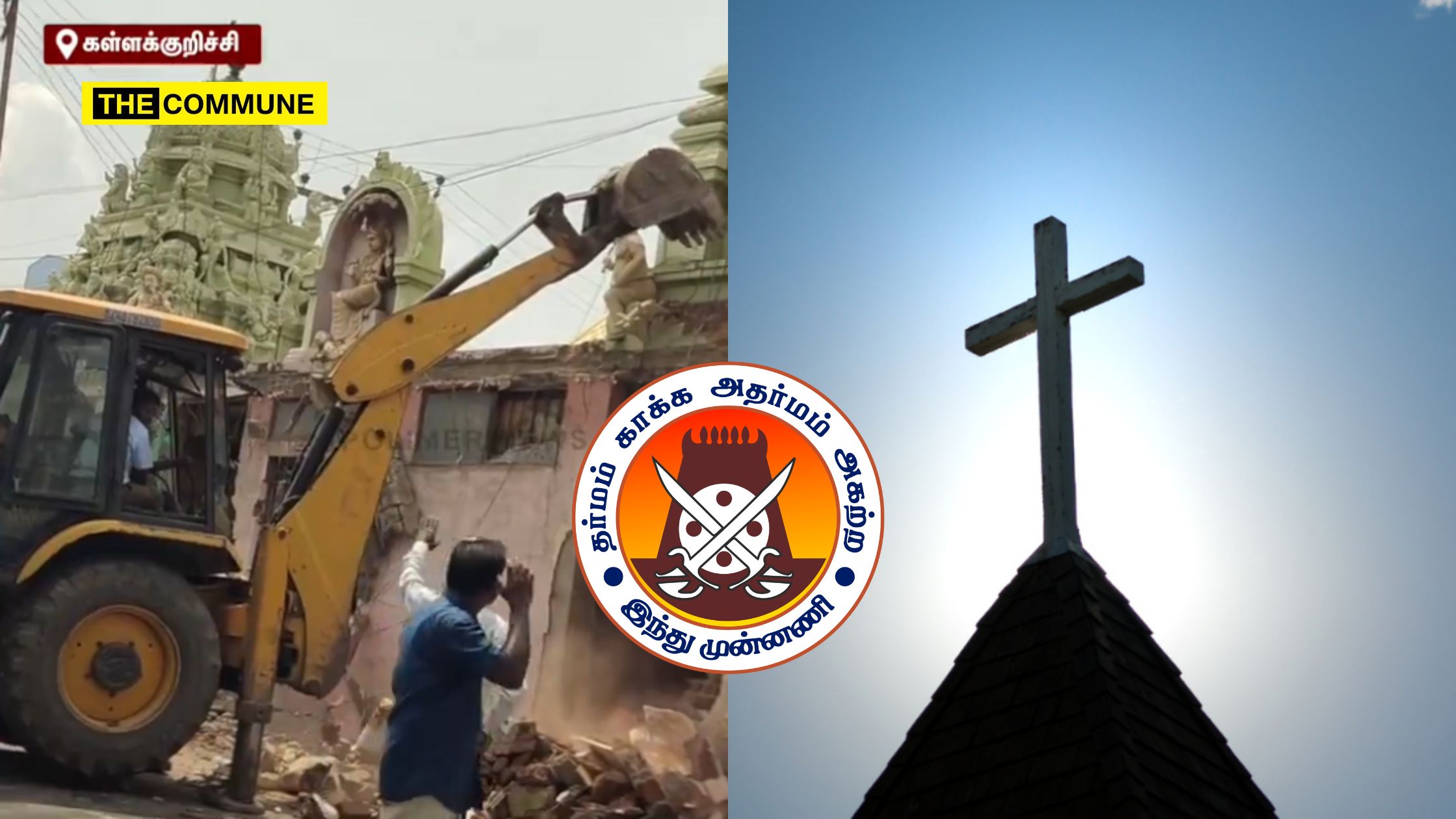
A church was allegedly constructed illegally on land belonging to the Public Works Department in Parukambattu village, Tiruvenney Nallur taluk, Villupuram district. While authorities face resistance from the local Christians in removing the structure, Hindu Munnani accused the Tamil Nadu government of applying different standards to religious structures.

The party said the DMK government has a history of demolishing Hindu temples, claiming that they were built on public land. However, these officials are reluctant to act against an illegal church built on a canal.

Villupuram Christians Protest For Illegal Church

In response to efforts to remove the structure, the local Christian community has staged protests at the district collector’s office, demanding that the church not be demolished. This protest has resulted in delays from the Villupuram district administration in addressing the issue.

The situation has sparked criticism, especially in light of the Tamil Nadu government’s earlier actions to demolish Hindu temples located in public spaces under the guise of enforcing regulations. However, there seems to be a reluctance to apply the same standards to Christian churches. This disparity has raised questions about fairness and consistency in the government’s approach.

Hindu Munnani

Hindu Munnani has questioned the government’s double standards in dealing with encroachments.

The Tamil Nadu government, which demolished Hindu temples in many places claiming they were in government land, refuses to dispose of the Church now. Why is the government refusing to demolish the church illegally built by encroaching a canal?” Hindu Munnani questioned.

There have been many instances where Hindu temples in Tamil Nadu have been taken down. Authorities claim that these temples were encroaching on public land.

DMK Demolished Antique Temples

In June 2024, authorities demolished a Pillaiyar (Vinayaka) Temple on Gandhi Road in Kallakurichi amid heavy police presence. They razed it down despite opposition from the local community. This act was backed by a Madras High Court order directing the removal of 36 encroachments, including several buildings and temples along the canal.

For over a decade, three temples—Angalamman, Kurathi Amman, and Periyayi Amman—had stood in the Vazhudareddy Colony area of Villupuram. Two years ago, these temples were constructed and consecrated with Kumbabhishekam ceremonies.

However, in May 2024,  authorities demolished the temples, which had been built allegedly infringing on a cemetery area, following a court order based on a case filed by one Argoiyasamy.

In April 2024, authorities demolished the half-century-old Nagathamman temple in Maduravoyal, Chennai, following a directive from the High Court.

The 400-year-old Ammani Ammal Mutt was reportedly razed down and destroyed by the Tamil Nadu HR&CE department in Tiruvannamalai on March 18, 2023, while clearing encroachments on Mutt-owned land.

The DMK government demolished a Shivan temple in Sriperumbudur because it was built on government land. However, a Church encroaching on the Kilkattalai surplus water canal, marked a few years ago by IAS officer Amudha, had still not been demolished by the government, because of which residents of the area suffered from water logging in 2021.

Subscribe to our TelegramWhatsApp, and Instagram channels and get the best stories of the day delivered to you personally.
BJP Supporters In Tamil Nadu Express Disappointment With Modi Govt’s Move To Honour Karunanidhi

PM Modi Hails Late DMK Patriarch Karunanidhi

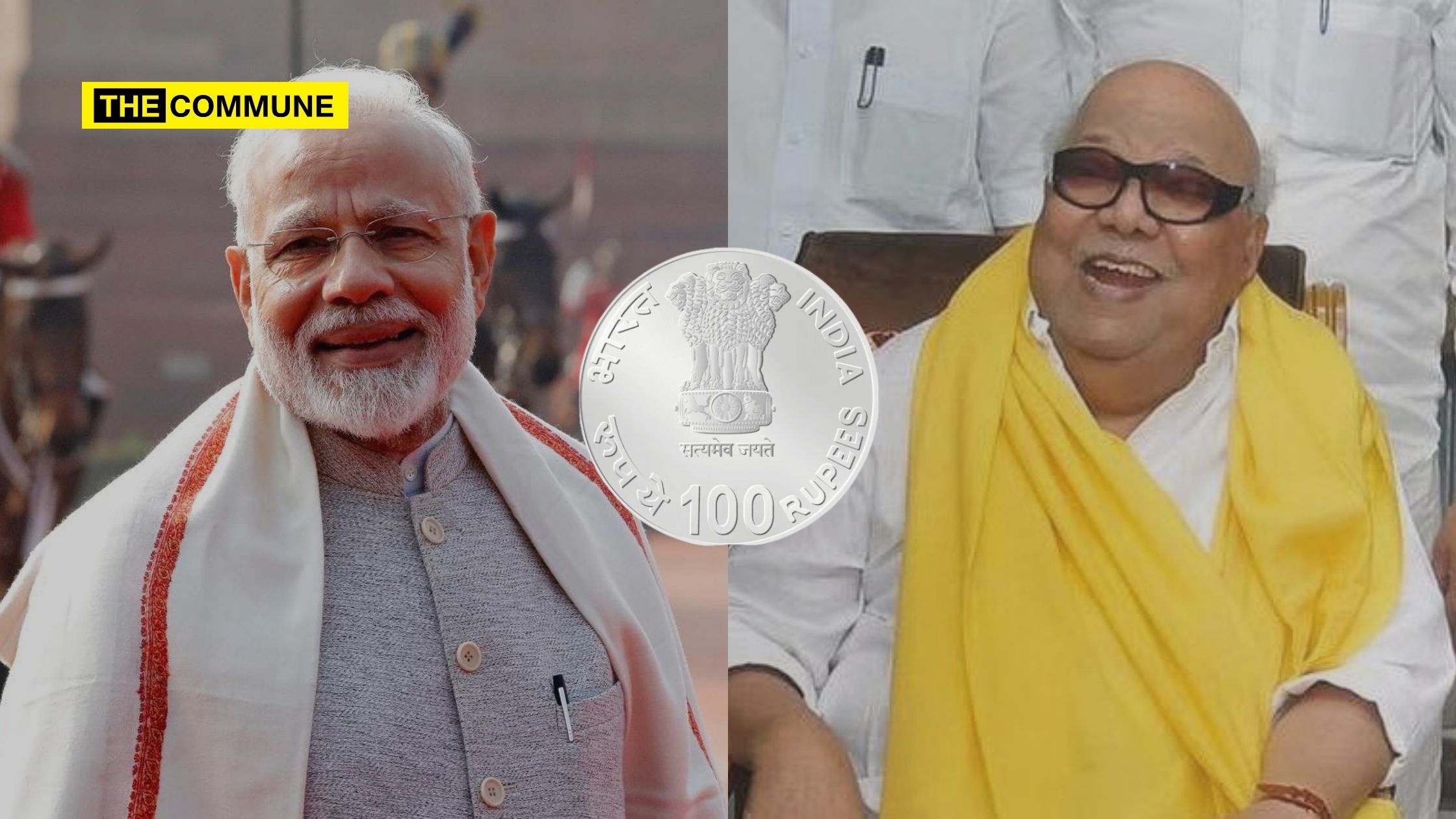
BJP supporters in Tamil Nadu expressed disappointment after Prime Minister Narendra Modi honoured the late DMK leader Karunanidhi with a centenary coin and praised him. Many BJP loyalists questioned the move, pointing to Karunanidhi’s controversial views on Hinduism. As the BJP strives to expand its influence in the state, this incident has left its supporters wondering if the party is compromising its core values for political gain.

BJP and DMK

In Tamil Nadu, the Bharatiya Janata Party (BJP) primarily faces ideological opposition from the Dravida Munnetra Kazhagam (DMK). The two parties have starkly different approaches: the BJP, under Narendra Modi’s leadership, emphasises anti-corruption, opposition to dynastic politics, and resistance to minority appeasement. These principles are contrary to the core tenets of DMK politics in the state.

Since 2014, the BJP has strategically positioned itself to strengthen its presence and has seen some success. However, Prime Minister Narendra Modi’s recent decision to commemorate the late DMK leader Karunanidhi with a centenary coin did not sit well with BJP supporters and local party cadres.

PM Modi Praised Karunanidhi

Heaping praises on Karunanidhi, PM Modi called him “one of India’s most illustrious sons” and a “multi-talented personality with a prolific pen”.

It is heartening to learn about the organisation of Muthamizh Arignar Kalaignar Centenary Commemorative Coin release ceremony. This is an important occasion to commemorate the centenary of one of India’s most illustrious sons, Thiru Kalaignar Karunanidhi Ji.“, PM Modi said in a letter.

A multi-talented personality with a prolific pen, Thiru Kalaignar Karunanidhi Ji’s efforts to promote the Tamil language and culture are still remembered by the people. His literary prowess shone through his works and earned him the affectionate title of ‘Kalaignar‘”, said PM Modi.

He also described Karunanidhi as a towering personality in Indian politics, literature, and society. The former CM was passionate about Tamil Nadu’s development and national progress, he said. He added that the release of the commemorative coin honours him and the ideals he stood for.

Netizens Criticize PM Modi

One netizen shared a photo featuring the late Chief Minister Karunanidhi, his son MK Stalin, and other DMK members. The image indirectly depicted a scene from a DMK event where a boy was performing a skit that mocked Hindu culture, dressing like a sage, with the audience—including Karunanidhi and others—laughing and applauding the boy’s performance.

The netizen questioned whether Prime Minister Modi was referring to this “Karunanidhi,” who ridiculed Hindu dharma and culture.

Another netizen questioned whether the recent praise for the DMK indicated the possibility of a no-confidence motion or a reunion similar to the 1998/1999 scenario. He described the late leader as a “towering personality in Indian politics,literature & society who was passionate about Tamil Nadu’s development & national progress adding that the release of the commemorative coin honours him & the ideals he stood for”

Another netizen remarked, “Wow never knew this .. thank you Modi ji for this.. Vote bank politics at full glory.

Another netizen raged, “What absolute bull f**kin crap He was a buddha pe*v nothing else, Modi won’t get lemurian votes with this he needs to get his shit straight and fire whoever is giving him these ideas.”

https://twitter.com/cudikudii/status/1825163788233904390

Amother netizen wrote, “To get votes they’ll do anything. (Votes ke liye kuch bhi karega)”

Another netizen expressed their views, saying, “One day, he’ll praise Mamata as the daughter Bengal needs. NaMo expects Hindus to accept him praising anti-Hindu and anti-India leaders to fit his ‘Virat’ image. No one disrespects his voters more than NaMo. The Padma Vibhushan awards to Mulayam and Pawar didn’t serve as a lesson.

Another netizen questioned, “After honoring Sharad Pawar and Mulayam with the Padma Bhushan, and now issuing a commemorative coin for Karunanidhi, it seems like everyone is being honored. You’re trying to include everyone, but why should voters stay loyal to you? What’s the reason behind this?”

Another netizen suggested, “The rumour about TDP is probably true. DMK is now BjPs back up plan.”

Another netizen remarked, “I said this many times. Modi = Gandhi + Nehru + Jinnah + Periyar.

Another netizen mocked the statements stating, “Next in line : Mamta”

Another netizen mocked, “Hahaha… Voters in Tamil Nadu might align with Modi, but the ‘andhbhakts’ are once again left in the lurch. On a deeper level, both the BJP/Sangh and the DMK share a common anti-Hindu temple-breaking ideology, making them natural allies.

Another netizen argued that ” they both follow the same ideology. One implemented it in Tamilnadu, and the other is implementing it at the pan-India level.”

Another netizen mockingly queried, “another padma or bharat ratna loading ?”

Prime Minister Narendra Modi’s criticism extended beyond BJP supporters on social media. It resonated within Tamil Nadu’s political landscape as well.

All India Anna Dravida Munnetra Kazhagam (AIADMK) General Secretary Edappadi K. Palanisamy labelled it a “hidden pact” between the ruling DMK and the BJP following the announcement of the centenary coin release.

Speaking to reporters at Coimbatore International Airport, he remarked, “I’ve mentioned this before. There have been claims about a secret relationship between the DMK and BJP, and even our administrators have suggested this. Now, the media is raising the same question, revealing that the BJP and DMK seem to have a covert relationship.”

About Karunanidhi

Karunanidhi, born Dakshinamurthy,  became the DMK president after its founder, CN Annadurai. He was a close follower of anti-Hindu bigot EV Ramasamy Naicker, who was hailed as “Periyar” by his followers.

Karunanidhi has, on several occasions, kept the flame of a separate “Dravida Nadu” alive. He led DMK’s Kovilpatti conference in 1951, outlining plans for a prolonged fight for an independent Dravida Nadu or South India.

During the centenary celebrations of the Dravidian movement in 2012, Karunanidhi asserted that the Dravidian ideology would be strengthened, and a Dravidian State would be achieved if possible.

Karunanidhi’s views on Hinduism

Karunanidhi’s ascension to the top post made the DMK a dynastic party under his family’s stranglehold. Karunanidhi has made several controversial statements regarding Hindus and Hinduism. In one such remark in 2002, he referred to Hindus as ‘thieves’.

At that time, Karunanidhi argued that all he said was that even those who supported the Hindu religion interpreted the word Hindu as a thief. “Maybe it means someone who steals the heart.”, he had said during the controversy.

Karunanidhi had called for the Sethusamudra project, which involves demolishing Ram Setu, which runs from Rameswaram in India to Mannar Island in Sri Lanka.

In 2007 the Sethusamudram project was withdrawn due to technical difficulties of shallow water. Against this backdrop, Karunanidhi rhetorically asked, “Who is this Raman? In which engineering college did he study and become a civil engineer? When did he build this so-called bridge? Is there any evidence for this?”

He also wrote short stories and sometimes employed Hindu deities as characters in his stories, often distorting and misrepresenting them with sexual perversion.

How did Karunanidhi treat his opponents?

Karunanidhi has also abused his political opponents. In several instances where the late former Chief Minister Karunanidhi insulted and mocked Kamaraj. During his tenure as Chief Minister, Karunanidhi mandated that all panchayat council chiefs be addressed as “Perunthalaivar.”

However, this directive was rescinded on 3 April 1987 after MG Ramachandran (MGR) assumed power. Several cartoons mocking Kamarajar (sometimes with racist and casteist insinuations) were published in DMK’s official mouthpiece.

Nonetheless, Prime Minister Narendra Modi called him a “towering personality” and “one of India’s illustrious sons”. This unexpected gesture has stirred unease within the party’s local ranks, raising concerns about its message to the BJP supporters in a state where the party has long struggled to gain a foothold.

Subscribe to our channels on TelegramWhatsApp, and Instagram and get the best stories of the day delivered to you personally.
Krishnagiri, TN: Girl Students Sexually Assaulted At Fake NCC Camp; 11 Arrested, NTK Member Suspect Still At Large

Police Hunt For Absconding Former DMK Union Secretary Accused Of Sexually Harassing Schoolgirls In Trichy

A 13-year-old girl was allegedly sexually assaulted by a Naam Tamizhar Katchi (NTK) functionary, during a fake National Cadet Corps (NCC) camp at a private school near Bargur in Krishnagiri district. Eleven people, including the school principal and teachers, were arrested, but the main accused is absconding.

The three-day camp, from August 5 to 9, was held at a private school with no official connection to the NCC. They hosted 41 students, including 17 girls, for the fake NCC camp.

The case came to light after the victim complained to the police about being assaulted by a camp trainer despite several threats from school authorities. Police then arrested eleven people, including the camp organiser, school principal, two teachers, and a correspondent. The main accused, a 30-year-old man named Sivaraman, remains absconding.

Fake Camp Trainer Molests Student

During the camp, girls stayed on the first floor of the school auditorium, while boys were housed on the ground floor. No teachers were assigned to supervise them.

On the night of August 8, Sivaraman, who was a trainer at the fake camp, allegedly coerced a 13-year-old girl to come out of her accommodation and assaulted her. He was the district youth wing secretary of the NTK political party, which expelled him in the wake of this incident.

Investigations revealed that Sivaraman was also accused of sexually harassing 13 other girls during the camp.

After a week of the alleged crimes, one of the girls reported the assault by calling the police control room, leading to an investigation. Medical examinations of the girls have been conducted, and the District Child Welfare Committee has initiated action.

It was revealed that the school management, including the principal and two teachers, were aware of the sexual offences but chose to suppress the information rather than report it to the authorities. The students were allegedly instructed not to take the incidents seriously.

Sivaraman Booked Under POCSO Act

In the aftermath, the Bargur All-Women’s Police booked Sivaraman under the Protection of Children from Sexual Offences (POCSO) Act, and authorities are currently searching for him. The school’s correspondent, principal, and several others, including members of the fake NCC group, have been arrested.

The investigation also uncovered that the school needed to conduct proper background checks on the individuals organising the camp. The Tamil Nadu government and child rights activists have called for stringent action against the school management for failing to protect the students and not reporting the crime promptly.

The Krishnagiri Superintendent of Police, P. Thangadurai, confirmed that the police are investigating whether the group behind the fake NCC camp has conducted similar operations at other schools. The District Child Welfare Committee has initiated further actions, including performing medical examinations of the affected girls and seeking accountability from the school authorities.

Subscribe to our TelegramWhatsApp, and Instagram channels and get the best stories of the day delivered to you personally.
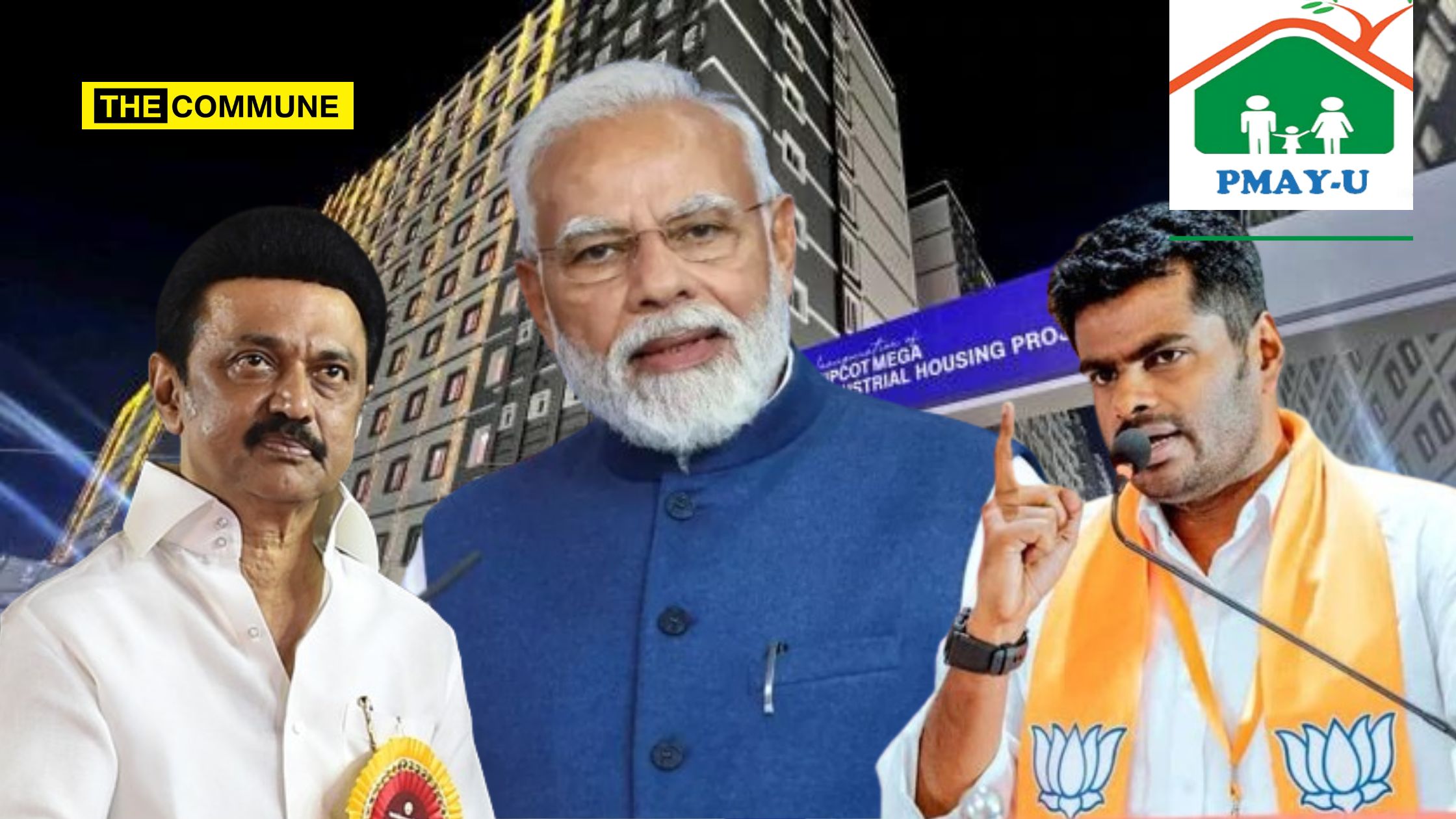
TN BJP Chief Annamalai Fact-Checks MK Stalin For Overlooking Centre’s Role In ₹700 Crore Housing Project

Today, Tamil Nadu BJP  President K. Annamalai criticised Chief Minister M.K. Stalin for deliberately overlooking the central government’s contribution to a major infrastructure initiative. This project, located at the Industrial Housing Facility at SIPCOT Industrial Park Vallam Vadagal in Sriperumbudur, will provide safe housing for 18,720 working women.

Foxconn in Tamil Nadu

Chief Minister MK Stalin and Foxconn Hon Hai Chief Young Liu inaugurated a state-of-the-art housing complex in Sriperumbudur, Kancheepuram district, Tamil Nadu, on 17 August 2024. The ₹700 crore facility aims to offer a secure, clean, and comfortable environment for 18,000 women workers employed by Foxconn, an iPhone manufacturer.

The complex spans ten floors and 13 blocks and has amenities such as kitchens, dining areas, CCTV surveillance, UPS systems, ETPs, and recreational spaces. Foxconn will cover the rent on a per-bed basis. Highlighting Tamil Nadu’s significant presence in Foxconn’s operations in India, Young Liu remarked, “This represents a new beginning, and we are proud to support sustainability.”

This development follows a 2021 protest by Foxconn workers who complained about poor food and unhygienic living conditions, leading to allegations of food poisoning and subsequent scrutiny from Apple.

The CM boasted the project as “pioneering,” emphasising Tamil Nadu’s role as home to 42% of India’s industrial female workforce and entirely a state initiative. He outlined several women’s empowerment initiatives and stated that the state aims to become a leader in South Asia. Stalin also highlighted Tamil Nadu’s ambition to become a $1 trillion economy by 2030.

In his official X account, Chief Minister MK Stalin stated that “Tamil Nadu is the No. 1 state in India, with 42% of the nation’s total working women. For the first time in India, we have constructed and inaugurated a mega infrastructure project offering safe housing for 18,720 working women—the #SIPCOT Industrial Housing Facility in Thiruperumpudur. Thanks to @SIPCOTTN and @HonHai_Foxconn!”

Centre’s Role

The state government’s SIDCO (Small Industries Development Corporation) invested ₹170 crore, borrowed ₹500 crore, and utilised ₹30 crore from the central government’s affordable housing scheme for this project.

Responding to MK Stalin on X, the BJP chief pointed out that the state government failed to acknowledge Centre’s contributions. He noted that the Affordable Rented Housing Complexes (ARHCs) scheme, launched under PMAY-U in July 2020, included the Sriperumbudur and Chennai projects sanctioned to Tamil Nadu in September 2021 by Prime Minister Narendra Modi. Annamalai highlighted that the ₹707 crore project included a ₹37.44 crore central grant and a ₹498 crore loan from the State Bank of India. He expressed confidence that Chief Minister Stalin was aware of these details.

Annamalai stated, “The Affordable Rented Housing Complexes (ARHCs) scheme under PMAY-U was launched in July 2020, and the housing project in Sriperumbudur and Chennai was among the five ARHC projects Sanctioned to TN by our Hon PM Thiru @narendramodi avl in September 2021. Built at a cost of ₹707 Crore, the 18,720-bed dormitory in Vallam-Vadagal has a component of a Central Govt grant of ₹37.44 Crore & a term loan of ₹498 Crore from the State Bank of India. We are sure that TN CM Thiru @mkstalin is aware.”

Affordable Rental Housing Complexes

The Affordable Rental Housing Complexes (ARHCs) scheme was launched by the Ministry of Housing and Urban Affairs (MoHUA) in July 2020 as a sub-scheme of Pradhan Mantri Awas Yojana – Urban (PMAY-U).

The scheme aims to provide dignified and affordable rental housing for urban migrants and the poor near their workplaces. By offering better housing options close to their employment sites, it seeks to improve living conditions for these groups.

Implementation Model-1 involves converting existing government-funded vacant houses, built initially under Jawaharlal Nehru National Urban Renewal Mission (JnNURM) and Rajiv Awas Yojana (RAY), into ARHCs. This conversion is carried out either through Public-Private Partnerships (PPP) or by Public Agencies.

Model 2 focuses on the construction, operation, and maintenance of new ARHCs by public or private entities on their own vacant land. The housing facility in Sriperumbudur is part of the ARHC provided under Model 2 of the scheme, where construction, operation, and maintenance of ARHCs are done by Public or private Entities on their own vacant land.

In Tamil Nadu, several such projects with a total of 57,364 units were sanctioned by the Centre in cities including Chennai, Sriperumbudur, and Hosur alone, Kaushal Kishore, Minister of State for Housing & Urban Affairs, informed so in a written reply in the Rajya Sabha on March 2022.

Subscribe to our TelegramWhatsApp, and Instagram channels and get the best stories of the day delivered to you personally.
 

Far-Left British Propaganda Media BBC Diminishes Atrocities Against Hindus in Bangladesh, Blames Influencers In India For Violence

BBC Diminishes Atrocities Against Hindus In Bangladesh, Blames Influencers In India For Violence

Far-left British propaganda media outlet British Broadcasting Corporation (BBC) seems to be downplaying the severity of attacks on Bangladeshi Hindus through selective fact-checking and shifting blame onto India’s pro-Hindu voices. It accused Indian netizens of fear-mongering while justifying the violence in Bangladesh as a consequence of political tensions rather than religious animosity.

What is happening in Bangladesh?

Ever since Sheikh Hasina’s government in Bangladesh was toppled and Mohammed Yunus took over as the Chief Advisor of the military regime, the Hindu minorities in the Islamist country have been facing targeted attacks, with their temples being razed down and people getting killed.

According to the Bangladesh Hindu Buddhist Christian Oikya Parishad, there have been more than 205 attacks on Hindu businesses, temples, and shops since 5 August 2024.

How does the BBC downplay it?

BBC has been attempting to diminish the torment faced by Bangladeshi Hindus at the hands of Islamists through selective fact-checking while blaming the ‘far-right’ in India for the violence.

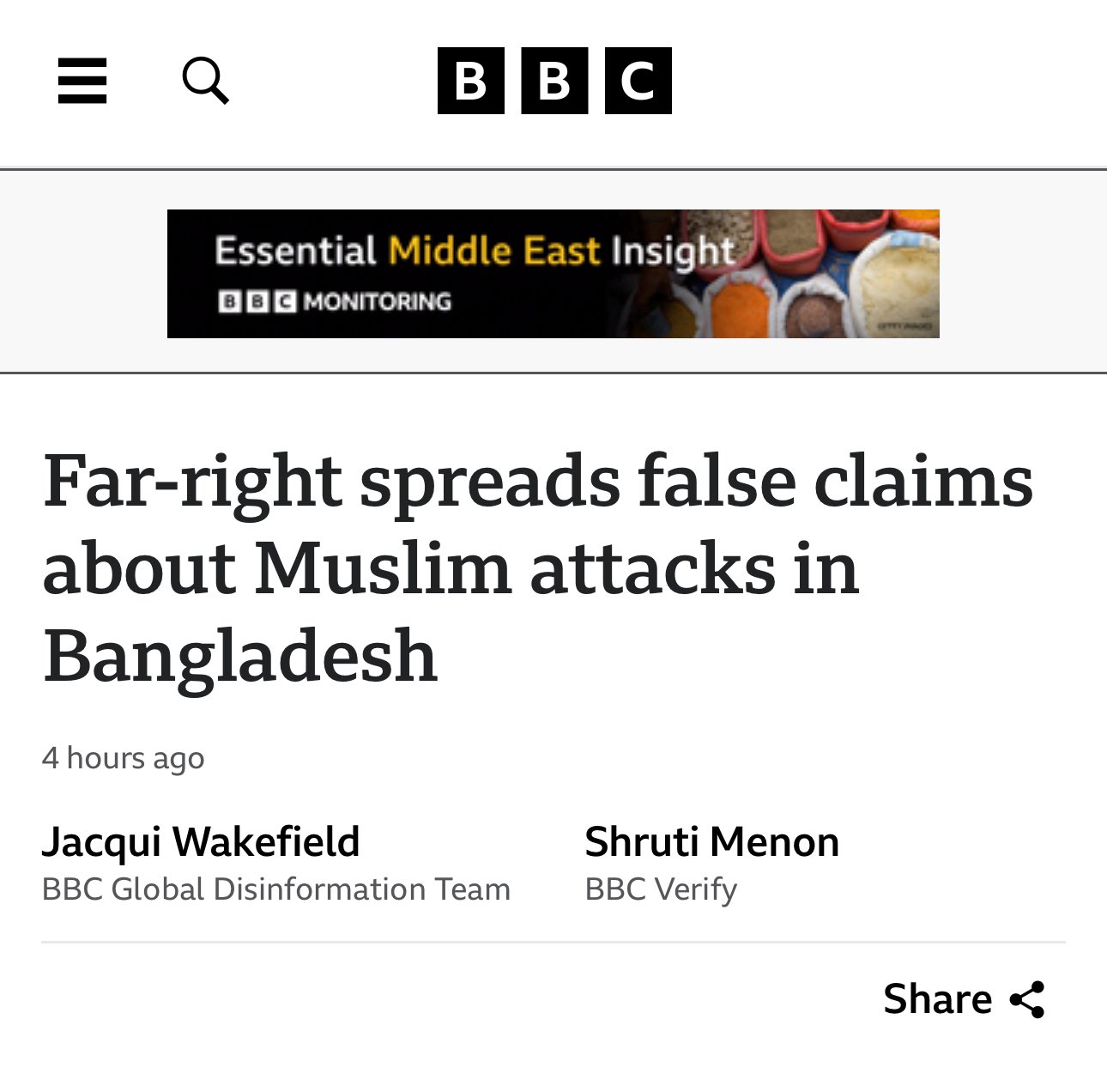
In its article titled “Far-right spreads false claims about Muslim attacks in Bangladesh”, the BBC said that the far-right influencers in India shared “false videos and information” that gave a “misleading view of the events”.

The BBC asserted that many of the claims circulating online were false. It claimed that the ruling Awami League party, which includes both Hindu and Muslim members, was a primary target. This portrayal subtly justified the violence as a consequence of political tensions rather than religious animosity.

By presenting the situation in this way, the BBC effectively set the stage for dismissing concerns raised globally about the Hindu community’s plight in Bangladesh.

BBC’s biased experts

The BBC also brought in expert Sayeed Al-Zaman to support its narrative. It quoted him as saying that fear-mongering by certain influencers was exacerbating tensions. Despite widespread international support for the Hindu victims, the UK broadcaster persisted in downplaying the religious aspect of the violence. It even suggests that political affiliation, rather than religious identity, was the reason behind the attacks on Hindus.

The broadcaster cited sources suggesting that the attacks on Hindus were politically motivated, as many Hindus supported the ruling Awami League. However, the far-left propaganda outlet failed to explain why Hindu temples, rather than mosques, were predominantly targeted if the violence was purely political. Moreover, while emphasising instances of Muslims guarding Hindu temples, the article overlooked the religious identity of those responsible for the attacks, creating an incomplete narrative of the situation.

(With inputs from OpIndia)

Subscribe to our TelegramWhatsApp, and Instagram channels and get the best stories of the day delivered to you personally.
Congress MP Karti Chidambaram Fulfills Temple Vow With Giant 20.5-Foot Machete Offering

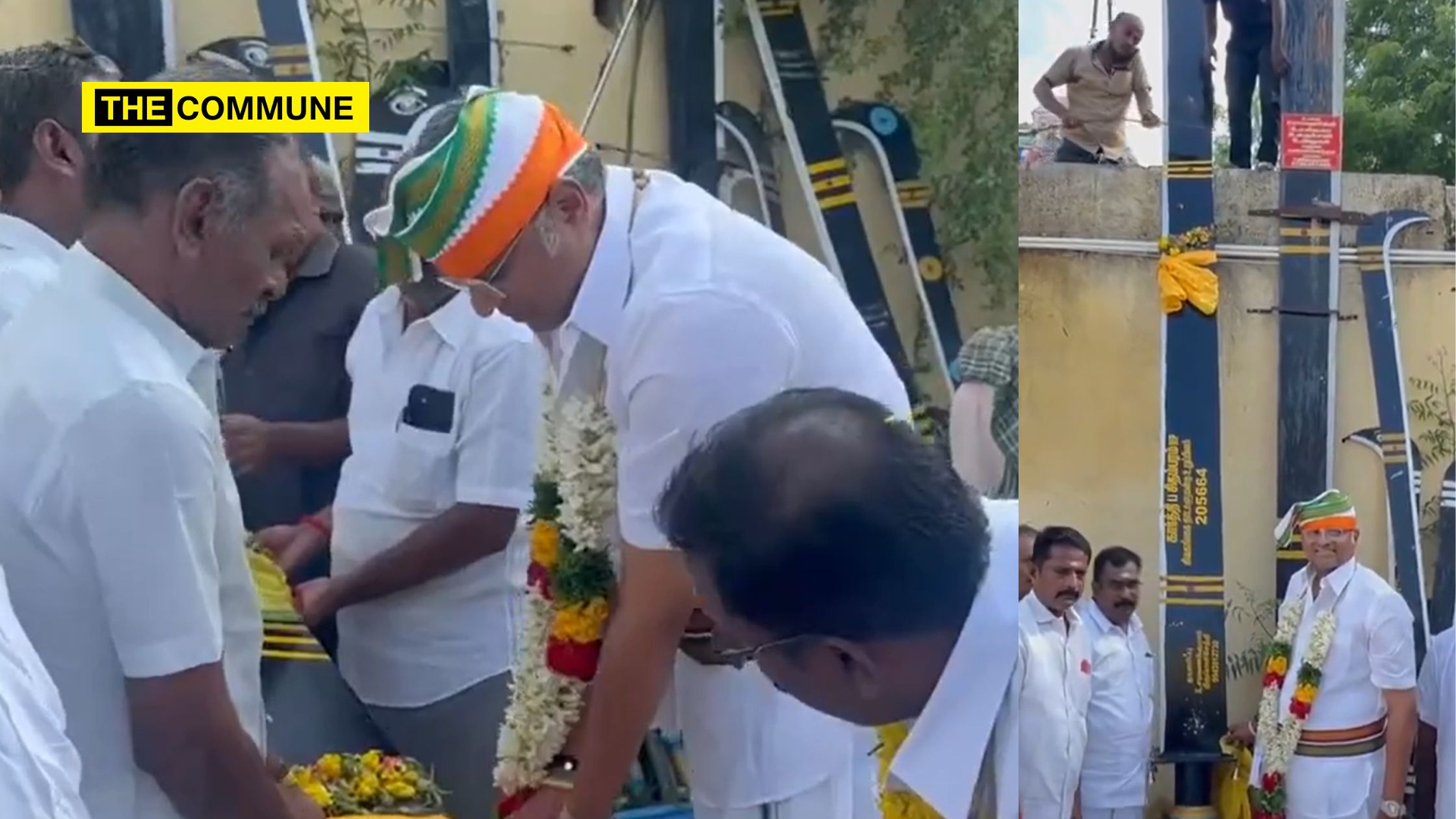
Congress MP Karti P. Chidambaram donated a 20.5-foot-long machete to the Maranadu Karuppar Temple in Sivaganga district, Tamil Nadu to fulfill a vow for election victory. This gesture fulfilled his promise after winning the Lok Sabha elections by a margin of 205,664 votes.

The massive machete, locally known as an ‘Aruval,’ measures approximately one foot wide. The offering was made to honour the deity worshipped at the temple, reflecting a common cultural practice in the region where people make such offerings to fulfil vows or express gratitude for personal achievements.

Chidambaram shared the news of his machete offering on his official X handle, stating, “Offered a 20.5 ft Aruval to the Maranadu Karuppar Temple in lieu of my 205,664 margin of victory in the LS election from Sivaganga.”


Netizens praised Karti Chidambaram for the gesture.

Some others also questioned and asked him to do something for his constituency.

MP Karti Chidambaram won the Sivaganga Lok Sabha constituency in June, securing 4,27,677 votes. He defeated his closest competitor, Xavier Dass of the AIADMK, by a margin of 2,05,664 votes. AIADMK polled 2,22,013 votes, while BJP’s Dhevanathan Yadav received 1,95,788 votes, and NTK’s Ezhilarasi got 1,63,412 votes.

His father, senior Congress leader P. Chidambaram, was the Union Finance Minister twice in the UPA government under Manmohan Singh.


Subscribe to our TelegramWhatsApp, and Instagram channels and get the best stories of the day delivered to you personally.

Establish National Agency To Address Horrific Crimes Against Women: Sadhguru Adds His Voice Following Kolkata Rape-Murder Incident

Establish National Agency To Address Horrific Crimes Against Women: Sadhguru Adds His Voice Following Kolkata Rape-Murder Incident

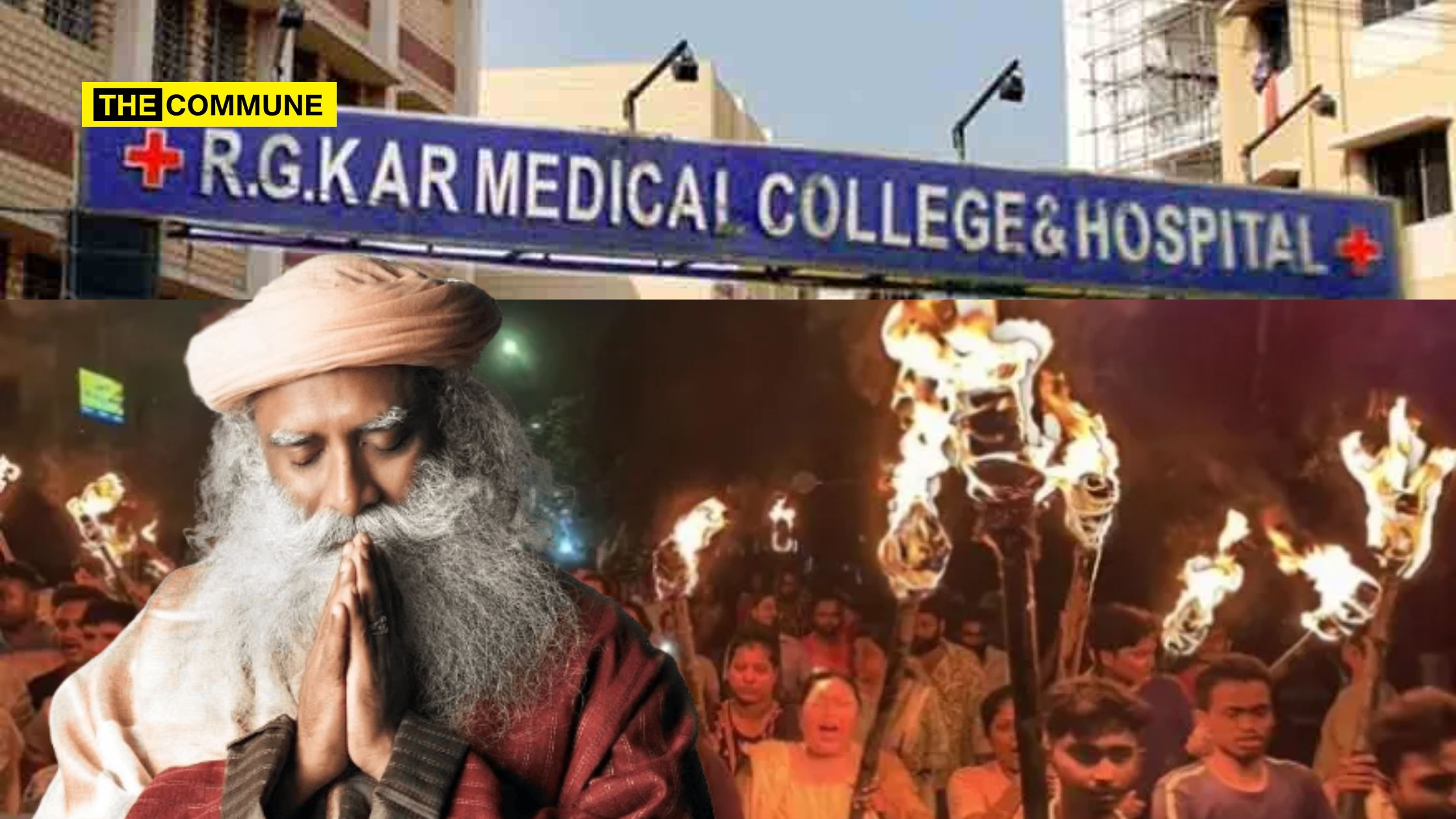
In the wake of a horrific rape and murder incident of a doctor in Kolkata, spiritual leader Sadhguru has called for the establishment of a national agency dedicated to addressing crimes against women. His statement comes amidst growing public outrage and demands for more stringent measures to protect women in India.

In a strongly-worded post on X about the Kolkata rape and murder, Sadhguru stated, “It is time that there is a National agency to address the most horrific crimes against Women in this country, beyond state agencies, as what is happening right now is a cruel joke on the Nation.

“No citizen with a beating heart in Bharat can just watch this go by. Action Now,” emphasised Sadhguru.

As the country grapples with the aftermath of yet another brutal crime, the demand for systemic change is growing louder. A centralised body with the authority to intervene in such cases will ensure swifter justice and better protection for women nationwide.

Background

A tragic event unfolded at Kolkata’s RG Kar Medical College, where a second-year postgraduate trainee doctor was found brutally raped and murdered on August 8.

The victim’s father raised severe concerns, pointing to signs of rape and accusing the hospital of delaying the investigation. In response, postgraduate doctors ceased work in all departments except for emergency services, demanding immediate action. Student groups also organised protests, calling for a thorough investigation. Opposition leaders urged for an independent inquiry led by a magistrate.

Due to the slow progress and mishandling of the case, the Kolkata High Court transferred the investigation to the Central Bureau of Investigation (CBI).

Protests erupted across the city, with a mob forcibly entering RG Kar Medical College during demonstrations. Police had to use lathi charges and tear gas to disperse the crowd.

Several doctors who reviewed the autopsy report suggested the involvement of multiple assailants. The report also revealed numerous injuries, such as broken bones and bleeding, indicating a violent death. Evidence suggests the victim’s nose and mouth were covered, and head forcibly pressed against a surface to stifle her cries. The crime seems to have occurred between 3 am and 6 am, with signs of strangulation and smothering.


Subscribe to our TelegramWhatsApp, and Instagram channels and get the best stories of the day delivered to you personally.
PM Modi Hails Late DMK Patriarch Karunanidhi As ‘One Of India’s Most Illustrious Sons’, Honours Him With A Commemorative Coin ‘To Honour What He Stood For’, Here’s What Karunanidhi Stood For

PM Modi Hails Late DMK Patriarch Karunanidhi

Prime Minister Narendra Modi praised former Tamil Nadu Chief Minister Karunanidhi as “one of India’s most illustrious sons,” while the Centre issued a commemorative coin marking the centenary of the late DMK patriarch’s birth.

The Union Finance Ministry approved issuing a commemorative coin “honouring” the late DMK patriarch M. Karunanidhi, following a request from the DMK government in Tamil Nadu. They issued a notification for the same in July 2024.

PM Modi Praised Karunanidhi

Heaping praises on Karunanidhi, PM Modi called him “one of India’s most illustrious sons” and a “multi-talented personality with a prolific pen”.

It is heartening to learn about the organization of Muthamizh Arignar Kalaignar Centenary Commemorative Coin release ceremony. This is an important occasion to commemorate the centenary of one of India’s most illustrious sons, Thiru Kalaignar Karunanidhi Ji.“, PM Modi said in a letter.

A multi-talented personality with a prolific pen, Thiru Kalaignar Karunanidhi Ji’s efforts to promote the Tamil language and culture are still remembered by the people. His literary prowess shone through his works and earned him the affectionate title of ‘Kalaignar‘”, said PM Modi.

He also described Karunanidhi as a towering personality in Indian politics, literature, and society who was passionate about Tamil Nadu’s development and national progress, adding that the release of the commemorative coin honours him and the ideals he stood for.

However, here’s what Karunanidhi stood for.

About Karunanidhi

Karunanidhi, born Dakshinamurthy,  became the DMK president after its founder, CN Annadurai. He was a close follower of anti-Hindu bigot EV Ramasamy Naicker, who was hailed as “Periyar” by his followers.

Karunanidhi has, on several occasions, kept the flame of a separate “Dravida Nadu” alive. He led DMK’s Kovilpatti conference in 1951, outlining plans for a prolonged fight for an independent Dravida Nadu or South India.

During the centenary celebrations of the Dravidian movement in 2012, Karunanidhi asserted that the Dravidian ideology would be strengthened, and a Dravidian State would be achieved if possible.

Karunanidhi’s views on Hinduism

Karunanidhi’s ascension to the top post made the DMK a dynastic party that came under his family’s stranglehold. Karunanidhi has made several controversial statements regarding Hindus and Hinduism. In one such remark in 2002, he referred to Hindus as ‘thieves’.

At that time, Karunanidhi argued that all he said was that even those who supported the Hindu religion interpreted the word Hindu as a thief. “Maybe it means someone who steals the heart.”, he had said during the controversy.

Karunanidhi had called for the Sethusamudra project, which involves demolishing Ram Setu, which runs from Rameswaram in India to Mannar Island in Sri Lanka.

In 2007 the Sethusamudram project was withdrawn due to technical difficulties of shallow water. Against this backdrop, Karunanidhi rhetorically asked, “Who is this Raman? In which engineering college did he study and become a civil engineer? When did he build this so-called bridge? Is there any evidence for this?”

He also wrote short stories and sometimes employed Hindu deities as characters in his stories, often distorting and misrepresenting them with sexual perversion.

How did Karunanidhi treat his opponents?

He has also abused his political opponents.

There are several instances where the late former Chief Minister Karunanidhi insulted and mocked Kamaraj. During his tenure as Chief Minister, Karunanidhi mandated that all panchayat council chiefs be addressed as “Perunthalaivar.”

However, this directive was rescinded on 3 April 1987 after MG Ramachandran (MGR) assumed power. Several cartoons mocking Kamarajar (sometimes with racist and casteist insinuations) were published in DMK’s official mouthpiece.

Nonetheless, Prime Minister Narendra Modi called him a “towering personality” and “one of India’s illustrious sons”.

Subscribe to our channels on TelegramWhatsApp, and Instagram and get the best stories of the day delivered to you personally.