Home Blog Page 553

Is Parandur Airport Needed For Chennai?
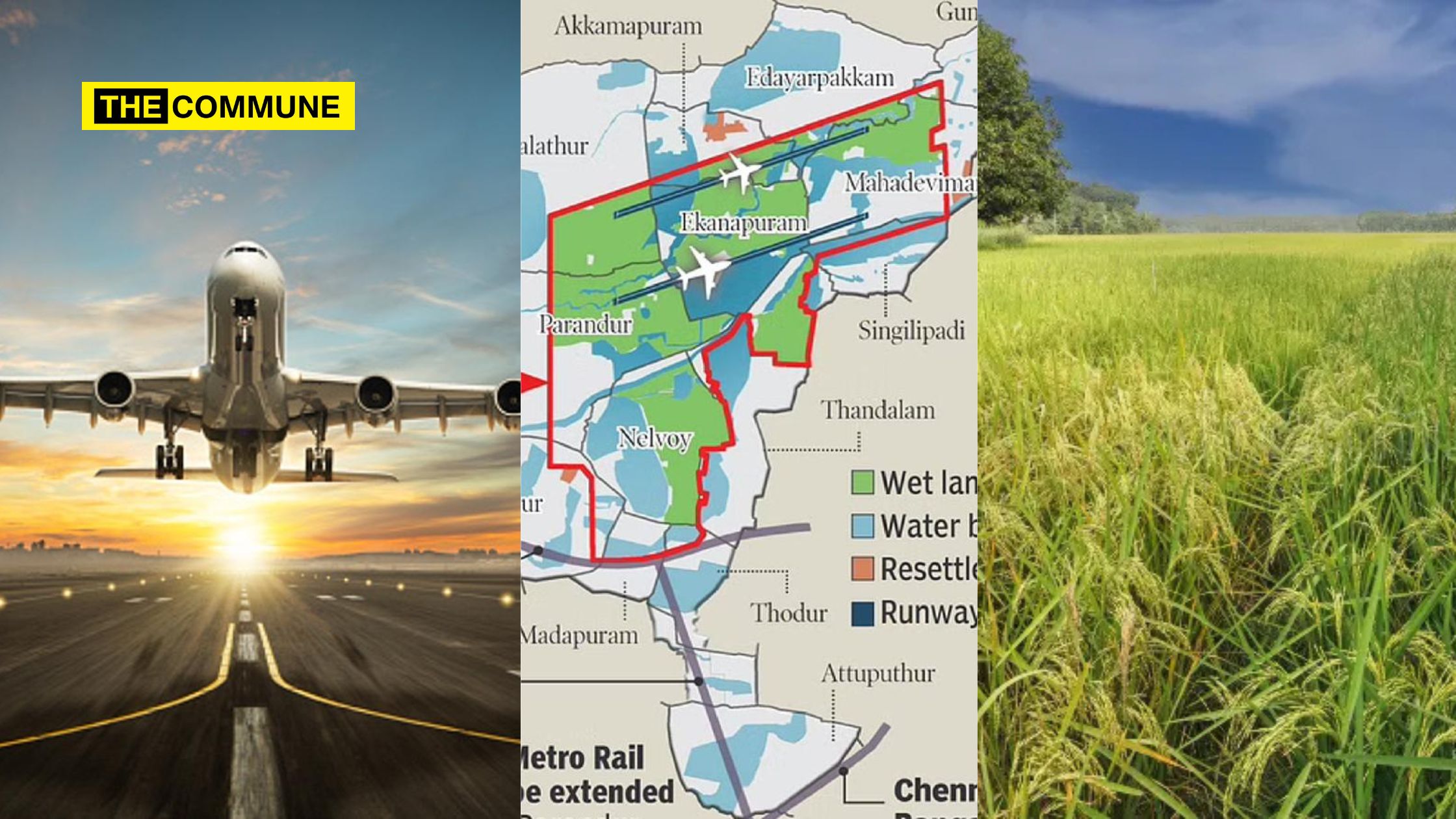
After Kollywood actor-turned-politician Vijay recently unveiled the resolutions of his Tamizhaga Vetri Kazhagam (TVK) party on 3 November 2024, one of the key demands—scrapping the Parandur Airport project—has reignited the debate among supporters and opponents. This issue has polarized social media, with some viewing the airport as a vital opportunity for development, while others see it as a potential disaster for a region rich in agricultural resources and water sources, and also recognised as a”rice bowl” due to its paddy cultivation. In this context, this article aims to explore both the positives and negatives of the Parandur Airport project, examining why it may be essential for Chennai and the reasons for opposition.

Chennai is at a critical juncture when it comes to aviation infrastructure. The proposed Parandur Airport project is not just a necessity; it’s a strategic move to ensure that the city can keep pace with its growing demands. Here’s an in-depth look at why this new airport is vital.

Addressing Capacity Constraints

Chennai’s existing airport at Meenambakkam has reached its limits. With a maximum capacity of 35 million passengers annually (MPA), it falls short compared to other major airports in India:

Comparative Capacity: Airports in Bengaluru and Hyderabad can handle 70 MPA, while Mumbai and Delhi are constructing second airports to meet rising demands.
Logistics and Connectivity: An expanded airport at Parandur would strengthen Chennai’s logistics ecosystem, crucial for economic growth and competitiveness.

Challenges With Expanding Current Airport

The existing airport has several operational constraints:

Land Acquisition Issues: Expanding the current site is not feasible, particularly due to the difficulty in acquiring land from the adjacent OTA and the high costs associated with other nearby locations like Gerugambakkam.
Physical Limitations: The airport’s layout is hindered by a river and narrow access routes, leading to inefficiencies, especially for cargo operations, which are crucial for business.

Supporting Future Growth

India’s aviation market is poised for significant growth. Reports indicate that the next decade will see a surge in air travel among Indians. To accommodate this:

Fleet Expansion: Airlines have over 1,000 aircraft on order, creating an urgent need for more airport infrastructure.
Job Creation: The new airport will catalyze a wide array of industries, including logistics, warehousing, hotels, and maintenance, repair, and overhaul (MRO) services, generating employment for millions.

Site Selection And Environmental Considerations

The decision to develop the airport at Parandur wasn’t arbitrary. It followed extensive studies evaluating multiple sites. Factors in favor of Parandur include:

Land Availability: Securing 4,000+ acres is challenging in the Chennai area, especially without agricultural land or water bodies.
Environmental Management: The project includes plans for managing local water bodies, with commitments to create new artificial lakes to mitigate flooding risks.

Economic Benefits For Displaced Communities

One of the most pressing concerns about any large infrastructure project is the impact on local communities. For Parandur, the government has committed to:

Fair Compensation: Landowners will receive 3-4 times the market value for their land, ensuring they are adequately compensated for their loss.
Alternate Housing: The provision of alternative housing adjacent to the project site is a significant benefit, helping to minimize disruption.
Employment Opportunities: Promises of government jobs for displaced individuals further underline the commitment to supporting those affected by the project

However, critics argues that areas like Parandur and Ekanapuram play a crucial role in the agricultural landscape, especially when we consider Thanjavur, often referred to as the “rice bowl” of Tamil Nadu due to its fertile soil. While Thanjavur relies on the riverbed and the Mettur Dam, along with the Cauvery River, these villages have developed a unique resilience. They can sustain themselves through lake irrigation, cultivating around 2,000 acres of paddy land without depending solely on government support, rainfall, or river water. This independent irrigation system highlights the area’s agricultural significance beyond its reliance on larger water bodies.

Historical Context And Heritage Sites

These areas have a rich historical context, dating back to the Pallava kings. Notably, there are two significant lakes, one of which is Vayal Eri, created by King Kambavarman. His intention was to create a lake that would provide water year-round. After rainfall, any excess water from the lake would flow into nearby ponds, which would then feed into streams, ultimately ensuring a consistent and reliable water source for agriculture.The canals that distribute this water are known as Kamban Canals. The canal runs for 85 Kms and along these canals, there are 85 ponds, pools, and streams, with the Kamban Canal eventually flowing into the Kosasthalaiyar River, starting from the Palar River.

The local people have traditionally utilized a method akin to step cultivation, allowing water from the lake to flow naturally through their fields. However, the proposal for a new airport threatens to erase the name of the town “Nelvoy,” which means “paddy fields,” along with the agricultural heritage that it represents.

In the village, there is an 11th-century Chola Shiva temple, notable for its architecture resembling a sitting elephant. Additionally, there is a large lake called Idayatru Mangalam, named for the travelers who once stopped there to rest. This area is recognized as a heritage site.

Community Concerns

As the project progresses, community leaders express deep concern. One of the village heads, discussing the village’s characteristics, mentioned that it has five fields dedicated to agriculture, covering 650 acres. Known as “Nelvoy,” the village focuses exclusively on paddy cultivation. The lake stretches up to 7 kilometers, with water from the Palar River feeding it. However, since the announcement of the airport, the villagers have been unable to access water from the lake because the Tamil Nadu government is not allowing water from the dam to flow into it.

A Question of Sustainability

The saddest part is that the government has proposed an airport runway on this historical lake, which has sustained the entire village for many years. This raises the question of sustainability—how can we prioritize development while jeopardizing our own agricultural heritage, often referred to as the “rice bowl”? Another shock is that the entire airport is set to be built on 12 lakes.

The proposed Parandur Airport is positioned as a crucial step toward modernizing Chennai’s aviation infrastructure and meeting the demands of a growing population. However, the plan raises significant concerns about the impact on local communities, agricultural heritage, and the environment. While the government has pledged economic benefits and employment opportunities for those displaced, critics emphasize the importance of the region’s historical and agricultural significance. With the potential to disrupt vital water sources and erase longstanding cultural identities, the project poses a profound question: how can Chennai balance the need for development with the preservation of its rich agricultural landscape?

The Solution

The land where highways now stretch and factories operate was once farmland. Infrastructure requires land, but the focus should always be on providing fair, prompt compensation to those affected. Compensation delays are common, and promised government jobs often don’t materialize. These issues should be urgently addressed whenever land is acquired. However, halting projects entirely undermines the broader welfare of the state’s people. industrialists who create job opportunities, tourists who boost the economy, and local businesspeople all rely on airports. Investment decisions heavily factor in connectivity, and Chennai risks falling behind both Bangalore and Hyderabad without progress. The priority for political parties should be in ensuring timely compensation. But to call for the complete dropping of the project is foolhardy.

Subscribe to our TelegramWhatsApp, and Instagram channels and get the best stories of the day delivered to you personally.
Tamil Nadu Celebrates Deebavali In Grand Style Despite Restrictions And Opposition From Dravidianist Parties

Tamil Nadu Celebrates Deebavali In Grand Style Despite Restrictions And Opposition From Dravidianist Parties

This Deebavali, Tamil Nadu witnessed an enthusiastic celebration, with Hindus across the state lighting up the festival despite opposition from the Dravidian Kazhagam (DK) and restrictions imposed by the ruling DMK government. While the government urged people to limit firecracker use to a two-hour window and promoted eco-friendly celebrations, the state saw a remarkable surge in firecracker sales and festivities, especially in key districts like Sivakasi, the hub of India’s fireworks industry.

The Dravidian Kazhagam, led by K Veeramani, issued statements questioning the historical and cultural roots of Deebavali, suggesting it was a product ofcultural invasion. The DK argued that Deebavali did not appear in Tamil Nadu’s traditions until the 13th century, asserting that the festival is based on fabricated legends brought in by Aryan influence. Veeramani’s message encouraged people tore-evaluatethe festival’s origins and refrain from celebrations.

In addition to these calls, the Tamil Nadu government also set unreasonable limitations. In adherence to a 2018 Supreme Court ruling, the government restricted firecracker bursting to two one-hour periods: between 6 AM and 7 AM, and 7 PM and 8 PM. It also mandated using green crackers and warned against bursting crackers near sensitive areas such as hospitals. A government release added a plea to celebrate in anenvironment-friendlymanner.

Yet, reports from across Tamil Nadu indicate that people celebrated Deebavali with great fervor, bypassing the limitations and spending more on crackers than in previous years. In Sivakasi, home to most of India’s firework manufacturers, sales soared, totaling over ₹6,000 crore, a 5% to 7% increase from last year. According to T Kannan, General Secretary of the Indian Fireworks Manufacturers Association (TIFMA), demand for aerial fireworks was particularly high, as people embraced the traditional spirit of Deebavali despite rising raw material costs and restrictions on certain firecracker types.

However, cracker shop owners and traders across the state reported mixed results, with some temporary sellers noting unsold stock due to delays in license issuance and restricted selling times. As reported in TNIE, Alagu Raj, a retailer in Meesalur, noted that while sales were strong, economic factors played a role. He observed that people were spending less than last year since Deebavali fell on the last day of the month. He added that purchases were generally more cautious than in previous years.

The celebration, however, stood as a clear testament to the enduring popularity of Deebavali among Tamil Nadu’s Hindu population. Many embraced traditional rituals, ignoring the cultural debates and restrictions, and showcased a festive spirit marked by family gatherings, prayers, and vibrant fireworks displays.

Subscribe to our TelegramWhatsApp, and Instagram channels and get the best stories of the day delivered to you personally.
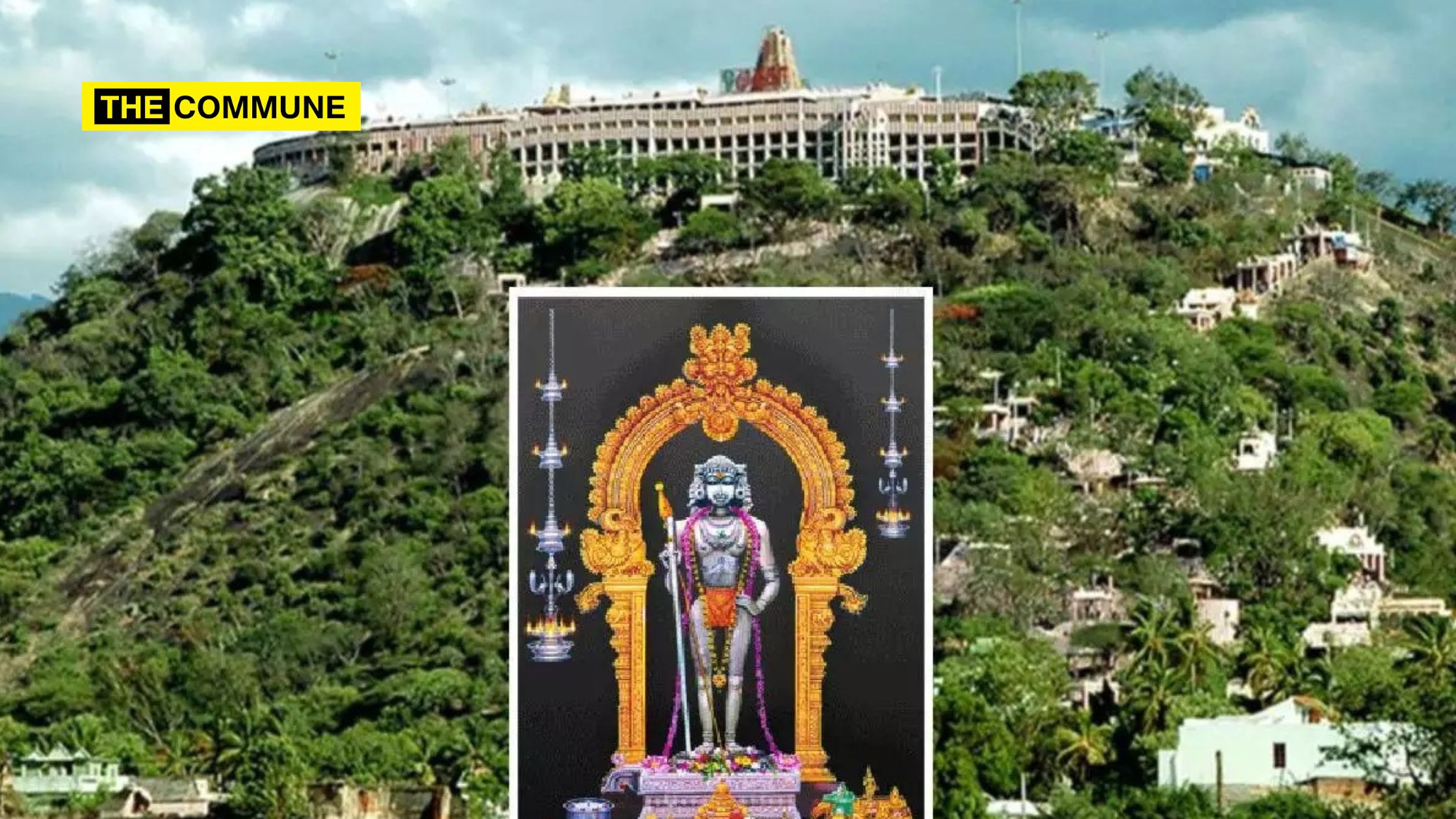
Palani Municipality Councillors Demand 25% Share Of Murugan Temple Offerings For Healthcare And Infra Initiatives

Palani Municipality Councillors Demand 25% Share Of Murugan Temple Offerings For Healthcare And Infra Initiatives

During a recent Palani Municipality meeting, councillors voiced their demand for 25% of the revenue from offerings at the Palani Murugan Temple to be allocated to health initiatives within municipal areas. The meeting, presided over by Municipality President Uma Mageshwari (DMK) and Vice President Kandasamy (CPI-M), also saw active discussions on infrastructure and administrative concerns.

Discussions And Demands

Councilor Pushpalatha (AIADMK) highlighted urgent water supply issues, reporting that a broken saltwater pipeline was causing shortages in her ward. President Uma Mageshwari assured us that swift action would be taken to resolve the issue.

Suresh of the DMK raised concerns over the ongoing discussions to merge nearby Sivagiri Patti and Gothaimangalam panchayats with the municipality, requesting clarification on the proposal’s status. He further addressed alleged encroachment by a hair donation centre near Thiruavinankudi on municipal property and inquired about the ownership of the nearby Dandapani station, a site under temple jurisdiction. Town Planning Officer Bhuvaneshwaran responded, stating that the hair donation centre is undergoing court proceedings. At the same time, the land for Dandapani station is registered as government-owned, with a separate land title under Chatram.

Suresh also raised concerns about a workforce shortage, noting that only 80 of 400 sanctioned sanitation worker positions were filled. President Umamakeshwari confirmed efforts are underway to fill these vacancies.

Councilor Deenadayalan (DMK) proposed that the Palani municipality receive financial support from temple offerings, similar to the arrangement for Lower Tirupati Municipality. He emphasized that a 25% share of the temple’s revenue could significantly improve health infrastructure and services in Palani.

The meeting concluded with promises of follow-up on these issues, as councillors emphasized the need for administrative transparency and improved public services across wards.

(With inputs from Dinamalar)

Subscribe to our TelegramWhatsApp, and Instagram channels and get the best stories of the day delivered to you personally.
Former SDPI Worker Hasan Badhusha Arrested In Coimbatore For Allegedly Attempting Conversion And Assault

Former SDPI Worker Hasan Badhusha Arrested In Coimbatore For Allegedly Attempting Conversion And Assault

Hasan Badhusha, a 45-year-old former worker of the Social Democratic Party of India (SDPI), was arrested on Saturday for allegedly attempting to convert a woman and her daughter to Islam and making derogatory remarks about Hinduism. The arrest was made following a complaint filed by D Sathyamoorthy, a 42-year-old resident of Kollampalayam in Erode district.

According to Sathyamoorthy’s complaint, Badhusha, a childhood friend of his wife, M. Arthi, had grown close to her over the years, frequently visiting her at their home. During these visits, Badhusha allegedly attempted to convince Arthi and her 14-year-old daughter to convert to Islam by giving them a Quran and speaking negatively about Hinduism. He also allegedly tried to create a rift between the couple, making disparaging remarks about Sathyamoorthy and urging Arthi to divorce him with marriage promises.

The situation reportedly escalated on June 8, when Sathyamoorthy, who had recently moved with his family from Thudiyalur to Kollampalayam, returned to Thudiyalur with his wife. During this visit, Badhusha allegedly assaulted Sathyamoorthy and repeated his provocative statements against Hinduism.

The Thudiyalur police registered a case against Badhusha under several sections of the Indian Penal Code, including Sections 294 (obscene acts and songs), 323 (voluntarily causing hurt), 153 (provocation with intent to cause riot), 298 (deliberate intent to wound religious feelings), and 506 (2) (criminal intimidation). Badhusha was subsequently arrested and remanded in judicial custody.

Following the arrest, the SDPI issued a statement clarifying that Badhusha had been removed from all responsibilities and membership in the party six months prior.

(With inputs from Times of India)

Subscribe to our TelegramWhatsApp, and Instagram channels and get the best stories of the day delivered to you personally.
The Loyola Syndicate: How Vijay’s Early Films Are Allegedly Linked To The College Fund Misappropriation Claims And His Uncle Xavier Britto

The Loyola Syndicate: How Vijay's Early Films Are Allegedly Linked To The College Fund Misappropriation Claims And His Uncle Xavier Britto.

Tamilaga Vettri Kazhagam chief and actor-turned-politician Vijay faces serious accusations from whistleblowers in Tamil Nadu, including charges of Loyola syndicate influence, benami transactions, and fraudulent illicit money activities. These accusations arise against the backdrop of Vijay’s statements about eradicating corruption in Tamil Nadu, raising questions about his integrity given the charges levelled against him.

Whistleblowers trace these allegations back to the early days of Vijay’s acting career, starting with films like Naalaiya Theerpu (1992), Senthoorapandi (1993), Rasigan (1994), and Deva (1995), except for his first film, produced by Vijay’s father, Chandrasekhar, under VV Creations, all the others were made by XB Film Creators, owned by Xavier Britto, Vijay’s uncle. Britto has not mentioned this relationship in his PR despite producing these films.

This raised suspicions that led to further investigation, which led to another of Vijay’s uncles, Xavier Alphonse, who served as principal of Loyola College from 1992 to 1995. It is alleged that he embezzled or misappropriated society funds amounting to ₹2 crores, which were then allegedly funnelled into movie studios to kickstart their ventures. All of this supposedly occurred with the knowledge of SA Chandrasekhar, Vijay’s father.

All these allegations emerged in the context of an RTI request made by Mary Rajasekaran regarding the committee inquiry report that led to the dismissal of Vijay’s uncle, Xavier Alphonse, from Loyola College. She sought access to the related documents, but there has been no response—only a simple denial.

Whistleblowers allege that the issues extend beyond lobbying and the creation of syndicates, with numerous accusations surfacing regarding harassment of women, financial mismanagement, tax evasion, benami transactions, and a religion conversion mafia linked to the Society of Jesus.

They highlight that Vijay intentionally evaded disclosing an additional income of ₹15 crore during the financial year 2015-16, only revealing it under pressure in court later. Furthermore, until the release of his movie Mersal in 2017, he made statements under the heading “Jesus Saves,” raising doubts about his sudden advocacy for secularism, which many view as hypocritical.

Subscribe to our TelegramWhatsApp, and Instagram channels and get the best stories of the day delivered to you personally.
1984 Anti-Sikh Riots: The Orchestrated Pogrom That Shook India

1984 Anti-Sikh Riots: The Orchestrated Pogrom That Shook India

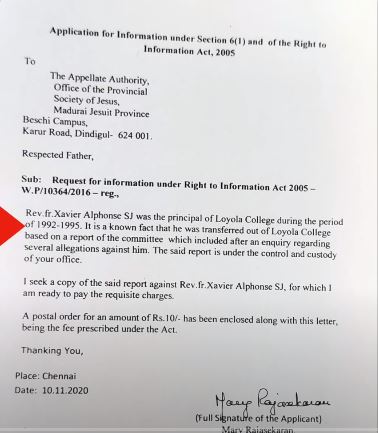
This day is marked by the ghastly violence unleashed against the Sikh community in the capital metro city and many parts of our country. It left behind a deep, unhealed wound in the minds of the victims’ families. Yes, it was on 1 November 1984 witnessed widespread attacks on members of the Sikh community across the country. While official records of the casualties were never adequately maintained or disclosed, different sources estimate that the death count surpassed 10,000 people.

According to official records, 2,733 Sikhs were killed in cold blood in Delhi alone, though human rights organizations place the number nearer to 4,000. The numbers in the rest of Bharat continue to defy documentation. This apart, many Gurdwaras (Sikh Temples) were damaged; properties, shops, and other businesses run by the Sikhs were subjected to arson and plundering. Lumpen elements ‘showed off their bravery’ in molesting the women.

Why This Tragedy?

To know the reason, we must go back to 1977-80. That was when the Janata Party government headed by Morarji Desai was in power. In 1979, Jarnail Singh Bhindranwale started gaining control Khalistani Movement. His influence grew daily, and he occupied Har Mandir Saheb, known as the Golden Temple, the most sacred place of worship for the Sikh community.

In 1979, Morarji’s government fell, and Charan Singh led a caretaker government for six months. In 1980, Indira Gandhi returned to power. The years 1980-83 witnessed several tragic incidents of terrorist acts in Punjab and Delhi. Initially, the weak-kneed approach of the Punjab State and Central governments made Bhindranwale a law unto himself. Finally, the Central government courageously sent the Armed Forces to Har Mandir Sahib.

This Operation Blue Star, despite the utmost restraint by our Army, managed to finish Bhindranwale and his men once and for all. However, many parts of the Golden Temple suffered colossal damage. The Central Government assured us that the repair and refurbishment would be completed immediately. However, the Sikh community felt hurt and alienated.

A section of Khalistanis was still active, and they schemed to assassinate the Prime Minister and the Army Officials who carried out Operation Blue Star. They made several unsuccessful attempts on the life of the PM, and finally, on 31 October 1984, the then Prime Minister of India, Prime Minister Indira Gandhi, met a tragic end when her security personnel turned against her at her official residence in New Delhi. Two of her bodyguards, Satwant Singh and Beant Singh, both members of India’s Sikh community, carried out the assassination. The incident occurred as she walked through the garden of her home on Safdarjung Road.

Hell Broke Out

As said in the beginning, after the assassination, as the nation was struggling to come to terms with the unfortunate tragedy, a catastrophe of unimaginable proportions started building up.

The violence was carried out with shocking brutality, as attackers used crude weapons, including knives and clubs. Many victims faced horrific deaths through savage beatings, while others were set ablaze and burned to death. One particularly cruel method of torture involved using burning automobile tyres to inflict a slow and agonizing death on Sikh victims. This method became symbolic of the shocking inhumanity displayed during the violence.

The madness continued for several days as the law-enforcing machinery refused to intervene. Holding onto the voter list and ration card details, a group of men carried out attacks on the Sikh population, locality by locality, in a targeted manner.

Several neighbourhoods in Delhi bore the brunt of the violence, particularly the areas of Shahadara, Trilokpuri, Mongolpuri, Nand Nagri, Sultanpuri, and Geeta Colony. Reports indicate that approximately 20,000 people were forced to flee the capital city, while more than a thousand were left homeless. The violence spread beyond Delhi, with Sikh communities facing attacks across multiple northern states, including Himachal Pradesh, Haryana, Rajasthan, Madhya Pradesh, and Uttar Pradesh.

Was It Spontaneous?

There have been efforts to portray the violence as a spontaneous outburst by people grieving their prime minister’s death. However, closer examination reveals evidence of a carefully crafted and organized plan aimed at “teaching the Sikhs a lesson.”

Former union ministers Kamal Nath and HKL Bhagat, Congress leaders Jagdish Tytler, and Congress lawmakers Sajjan Kumar, Lalit Makan, and Dharam Das Shastri were some of the key accused in riot cases for instigating mobs. As reported by Sudip Mazumdar, a Journalist (eyewitness) who deposed in the Nanavathy Commission subsequently said that Jagdish Tytler was found dictating to the Delhi Police Commissioner. The same was the case with other Congress MPs and leaders of Delhi.

Epilogue

It is unfortunate that as a nation, we have failed to render justice to the affected families. To rub salt in the wounds, Prime Minister Rajiv Gandhi, on 19 November 1984, in his speech, said, “Some riots took place in the country following the murder of Indiraji. We know the people were outraged, and for a few days, it seemed India had been shaken. But when a mighty tree falls, it is only natural that the earth around it does shake a little.”

The riots and the orchestrated pogrom against the Sikh community left a deep divide between the Hindus and Sikhs. The riots were held up as excuses to revive, and the violence ruled Punjab for over two decades, though Bhindranwale was removed from the scene in mid-1984, the Khalistani movement was revived citing the Riots. Unfortunately, the justice has not been meted out to the Sikh Community.

Keeping politics away, Rashtriya Swayamsevak Sangh focuses on bringing both communities together in the nation’s interests.

Jambunaathan is a journalist and content writer who specializes in national and social development stories and, as part of a national magazine’s editorial team and mentors young writers.

Subscribe to our TelegramWhatsApp, and Instagram channels and get the best stories of the day delivered to you personally.
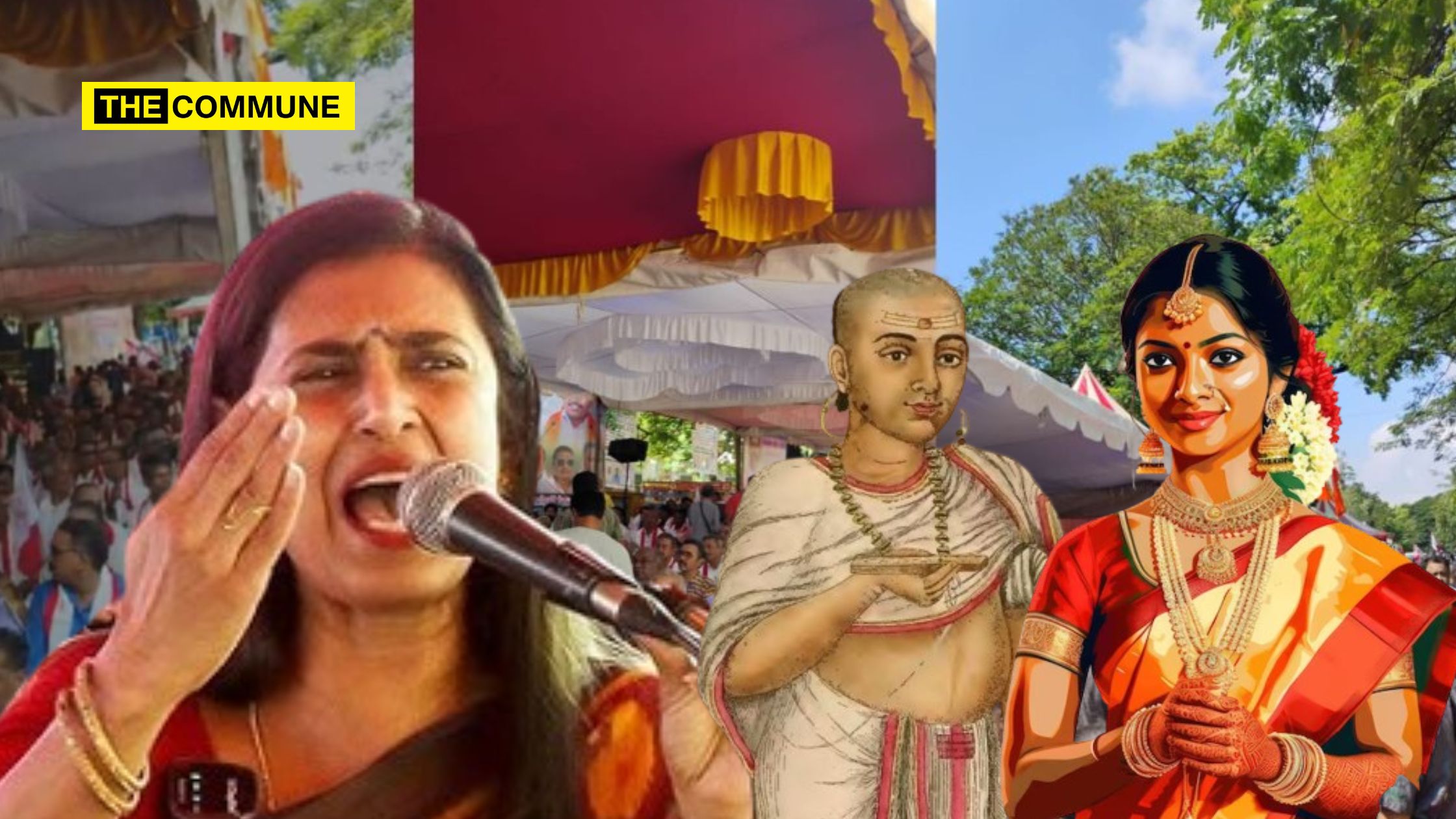
‘Not Just Kashmir, TN’s 60-Year Brahmin Hate Is Genocide Too’, Actress Kasthuri Shankar Calls Out Hate Against Brahmins By Dravidianists

Actress Kasthuri Shankar has blasted the ruling DMK government in Tamil Nadu for promoting a divisive ideology that incites hate and abuse against Hindus, particularly targeting the Brahmin community through name-calling and ridicule. Her fierce speech took place during a recent protest rally organized by Indu Makkal Katchi (IMK) Chief Arjun Sampath. The rally called for the creation of legislation to safeguard the Brahmin community, akin to the Protection of Civil Rights (PCR) Act that exists for Scheduled Caste communities. This event on 3 November 2024, at Rajarathinam Stadium in Egmore, Chennai, was a response to the rising hate speech and hostility directed at Brahmins in the state by Dravidianist and other anti-Hindu elements.

Kasthuri began her speech by thanking IMK Chief Arjun Sampath for organizing the protest to protect and support the Brahmin community, as well as expressing gratitude to the members of other communities who attended to show their solidarity. She then shared her experiences in her profession, revealing that despite being a well-known actress and a skilled orator, she has been repeatedly excluded from TV debates and discussions. She alleged that television networks deny her participation due to pressure from above, highlighting the systemic obstacles she faces.

Kasthuri then criticized the Dravidianist agenda in films, pointing out how they fail to overcome existing lobbies. She referenced a scene from the movie “Pariyerum Perumal”, acknowledging it as a good film but criticizing a particular moment where a man sits with his shirt open in a bar, in order to specifically show that he is a Brahmin by focusing on the sacred thread (janeu). She argued that this was a deliberate attempt to ridicule Brahmins, as she noted there were no similar depictions of religious symbols from other communities, such as a man wearing a Taqiyah (Muslim skullcap) or a Christian depicted with a cross. She emphasized that this scene served no relevance to the film’s narrative and was merely intended to mock the Brahmin community.

Actress Kasthuri said, “There is a bar scene in “Pariyerum Perumal” where the hero, a young man from the Scheduled Caste, goes to drink in an attempt to resolve his depression for once. In that scene, everyone is drinking, but only one person is shown without a shirt. Why is that? It’s to highlight the sacred thread (janeu). As I watched, I looked around the bar, if anyone else was depicted wearing a skullcap, a cross, or any other community symbols. But there was no one. Not even someone with a big moustache. Yet, they chose to establish him shirtless in that particular scene because they could not speak of brahmin hate anywhere.”

She also criticized the hypocrisy of these films, citing another example to take a jab at the lobbyists. She referenced “Soorarai Pottru“, where the hero, who in real life is from the Brahmin community, is portrayed under the name Maaran, suggesting a different community. In contrast, the villain is depicted as coming from the Brahmin community, highlighting the skewed representation and agendas at play in these narratives.

Kasthuri then asserted that the genocide in Kashmir is not a standalone incident; she argued that the ongoing hate against the Brahmin community in Tamil Nadu for the past 60 years is also a form of genocide. She emphasized that this sustained hostility is eroding their sense of belonging and identity, constituting a gradual destruction of their community.

Kasthuri then attacked the Dravidianists agenda by stating, “Denial of existence of God (Atheism) is the fundamental principle for Dravidianists, for that they have taken stand animosity toward Brahmins. It is because, if they say there is no god who will believe when there is someone in the temple devoutly engaged in bhakti follows all rules and regulation, thus the Hindu community will be united right. It’s akin to the story of the four bulls: when four of them stand together, no one can harm the Hindu community.”

She continued by highlighting how Dravidianists plot against one another, pitting individuals against each other while oppressing others. They create false narratives that even some Iyers and Iyengars have bought into, thinking they will gain inclusivity. However, she warned that they are merely being used as pawns in a scheme to ridicule their community.

Then blasting the entire Dravidian ecosystem by stating, “They are ridiculing our community by name-calling, using variety of terms like Paapan, Noolibaan, and Ibrahim brother had said and went that they even refer them as Brahmin Adi Varudi and Sombu etc. At least for them, Adivarudi and Sombu, then think of my situation. Because I am an actress and a woman, they will directly go to only one thing and stop there. There is a certain word for it, but the words they use are not a worse cuss word than ‘Dravidiyas’. Even if they refer to me with that word, I will happily say that my work is better and I am putting in my own hard work, not like you who is divisive c*ck and unjust p*mp.” 

She also mocked Suba Veerapandian, General Secretary of Dravida Iyyakka Tamilar Peravai, for ridiculing Brahmins by questioning how many have died for a cause. In response, she suggested he watch today’s situation, highlighting the Pulwama incident and a recent movie portraying a Brahmin soldier who died for the nation. She pointed out that it would be equally valid to ask how many from your community have not profited from making movies about these tragedies

Kasthuri then asked, “Who is Aryan Vandheri (immigrants/settlers)? Tamils have been engaged in spiritual practices and worshiping deities in temples since the era of Sangam literature. Vanniyars and Devas are alongside Kshatriyas, while Chettiyars, Mudaliyars, and Velalars are recognized as Vaishyas. Similarly, Shivacharyas, Iyers, Iyengars, Saivapillais, and Pandarams who worked in temples are classified as Brahmins.”

Then she asked, “Who are you to claim that there is no Tamil identity? Three hundred years ago, those who came to serve the king and those who attended to the royal household spoke Telugu. Now, when you assert that Tamils are your people, who are you to say that Tamils are not Brahmins? That’s why no movement can be called Tamilar Munnetra Kazhagam; instead, they create the term ‘Dravidam.'”

She also emphasized that this is not about unity for Brahmins, but a unity for all Hindus.

Furthermore, she noted that while E.V. Ramasamy was playing Goli and peeling onions, many Brahmins were actively engaged in social reforms and the freedom struggle. She named several individuals, including Subramaniya Siva, Vanginathan, Bharathiyar, and Srinivasa Iyengar, as well as women like Colonel Lakshmi and Sister Subalakshmi.

Subscribe to our channels on TelegramWhatsApp, and Instagram and get the best stories of the day delivered to you personally.

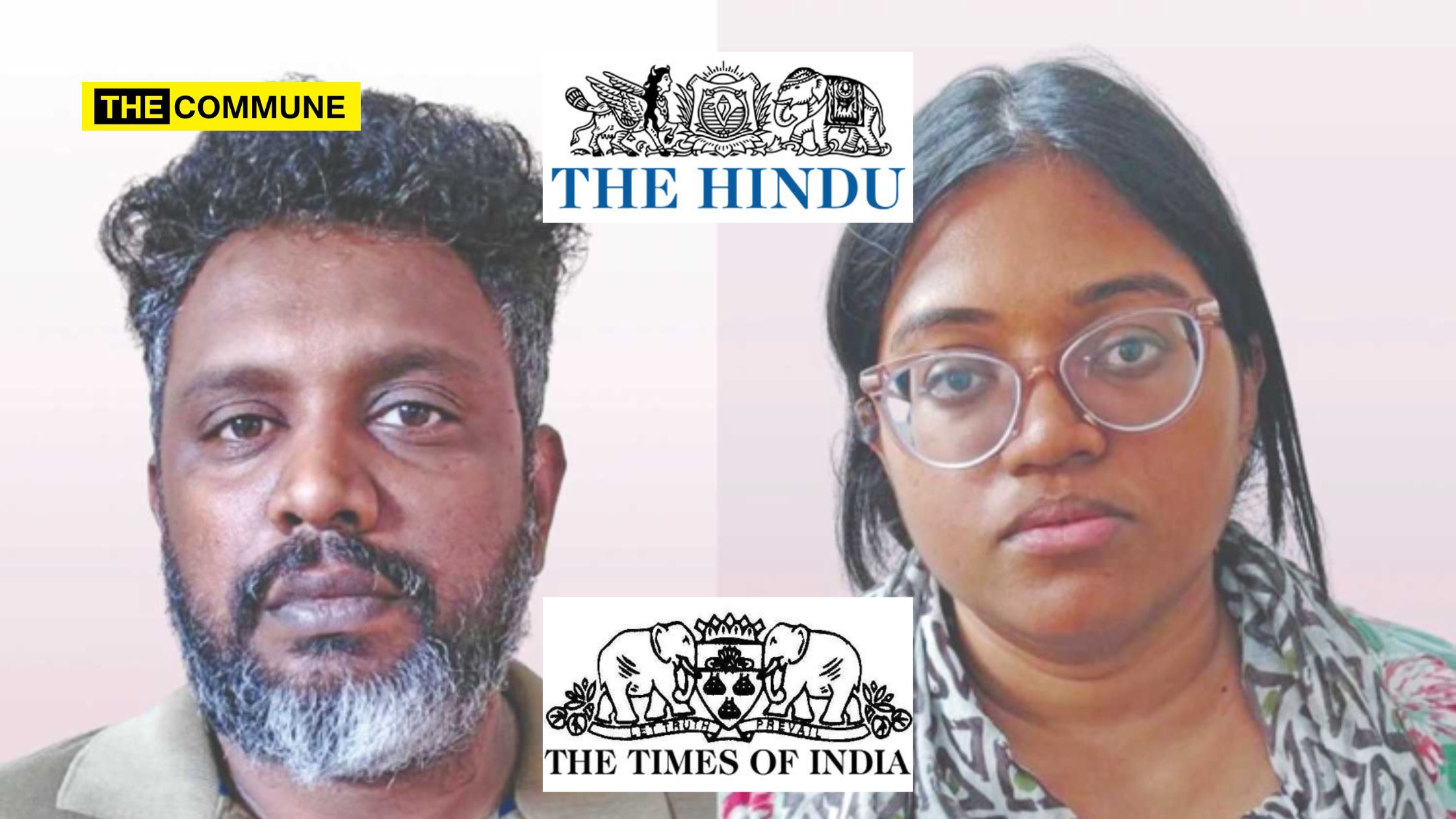
TOI, The Hindu Secularize Chennai Couple Mohd Nishad, Nazia Murder Of Minor Dalit House Help On Deepavali Day

TOI, The Hindu Secularize Chennai Couple Mohd Nishad, Nazia Murder Of Minor Dalit House Help On Deepavali Day.

The brutal killing of a 16-year-old Dalit domestic worker in Chennai has shocked the city and sparked widespread condemnation. Initial reports and police statements indicate that the young girl, employed by an Islamist businessman’s family in Aminjikarai, faced sustained abuse and torture, culminating in her tragic death. However, varying accounts of the incident have emerged in media coverage, with some publications omitting names and providing differing details of the crime.

The victim, a Dalit from Thanjavur, had been brought to Chennai to work as a domestic help for a Muslim businessman, 36-year-old Mohammed Nishad, and his wife, Nazia. The family, along with others alleged to have been complicit, now faces charges including murder and violations under the SC/ST Prevention of Atrocities Act and the Protection of Children from Sexual Offences (POCSO) Act, as law enforcement authorities work to unravel the details behind this shocking case.

Alleged Motives And Confessions

According to a confession provided by Nazia, the victim was targeted after suspicions arose that her husband had developed a personal interest in the young Dalit girl. In her statement, Nazia admitted that jealousy and fear of her husband’s potential interest led her to begin abusing the girl, with accounts indicating that she subjected her to physical violence, including burning her body with an iron.

This abuse escalated over time, with Nazia allegedly involving her husband’s sister, Seema Begum, friends Lokesh and his wife, Jayashakti, and another maid, Maheshwari, in what has been described as a calculated campaign of abuse and dehumanization of the 16-year-old Dalit domestic help.

On 31 October 2024, during the Deepavali celebrations, the situation reportedly took a horrifying turn when the group accused the girl of stealing, verbally and physically assaulting her in response. Witnesses in the household claimed that the girl collapsed after being kicked by Lokesh, after which she was left unattended in the bathroom, unconscious. Upon realizing that she was unresponsive, the family locked up the residence and fled, without notifying anyone about her death.

A Grim Scene Uncovered

The Dalit girl’s body was discovered on 1 November 2024 when the owner of the apartment complex, Sarfuddin, alerted the police after noticing a foul odor and a locked, unattended apartment. The police broke into the unit to find the girl’s body lying in the bathroom. Initial investigations by the Aminjikarai police confirmed visible signs of torture, including burn marks and signs of strangulation.

Authorities quickly searched for the suspects, who had gone into hiding. They were ultimately apprehended from a friend’s Coimbatore residence, where they sought refuge after the incident.

Times Of India, The Hindu’s Secular Approach

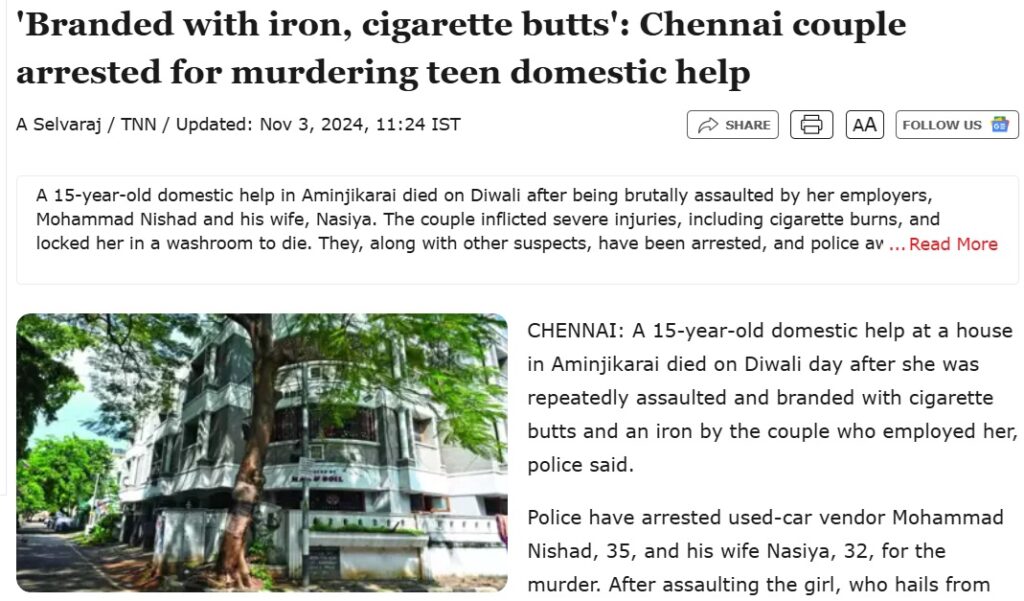
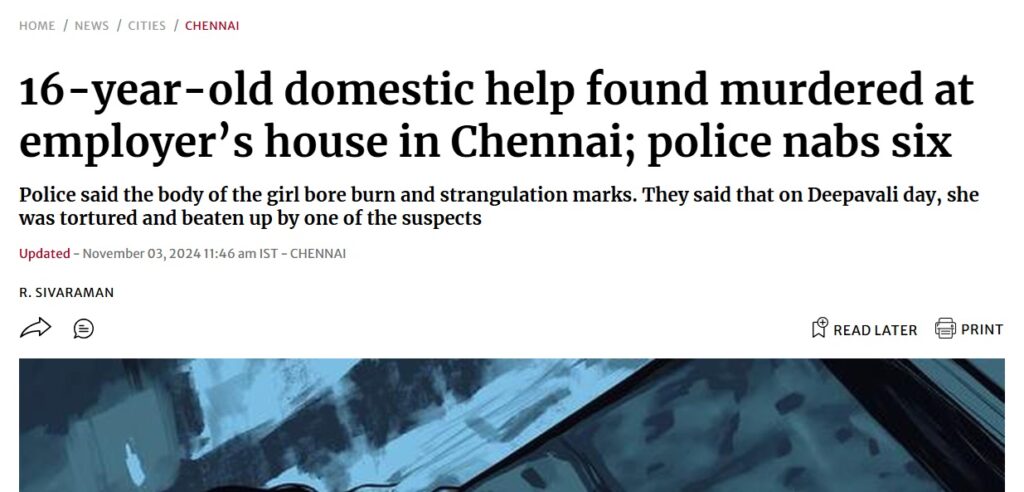
Mainstream media such as The Times of India and The Hindu took a more secularist approach, omitting the names of the accused and focusing on the crime in their headlines.

While the article mentions details of the perpetrators in the paragraphs, it left this detail in the headline that grabs the most attention. This type of narrative setting is prevalent in reportage by leftist mouthpieces like The News Minute and The Wire, which ensure the secularisation of crimes is done to a tee. The Hindu & TOI have also joined the bandwagon of such secular mouthpieces.

Legal Implications Of Murder

In response to the case, the National Federation of Indian Women (NFIW) condemned the alleged torture and killing of the young Dalit girl. The NFIW’s statement emphasized the need for a thorough investigation and called for strict punishment for those involved. The case is being prosecuted under the POCSO Act, a law that addresses crimes against children, though police have clarified that there was no evidence of sexual assault.

The girl’s mother, who reportedly lacked the financial resources to transport her daughter’s body back to her hometown, has received support from local authorities to conduct a cremation in Chennai.

Subscribe to our TelegramWhatsApp, and Instagram channels and get the best stories of the day delivered to you personally.
A Christian State To Divide North-East India? Mizoram CM’s US Speech Echoes Hasina’s Warnings

A Christian State To Divide North-East India? Mizoram CM's US Speech Echoes Hasina's Warnings

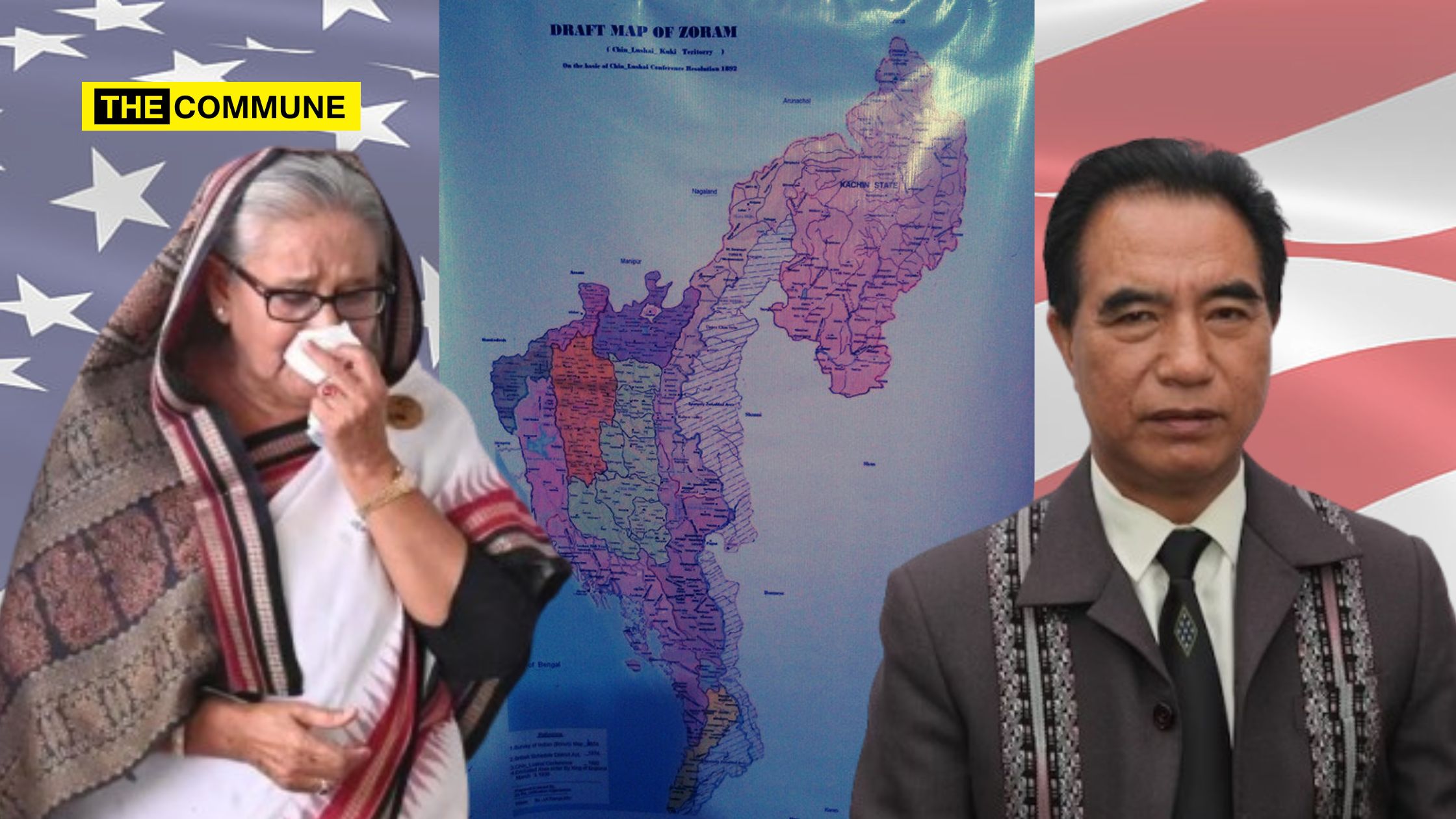
On 4 September 2024, Mizoram’s Chief Minister PU Lalduhoma delivered a “seemingly” powerful speech in Indianapolis, USA, advocating for the unity of the Chin-Kuki-Zo people—ethnic communities spread across India, Myanmar, and Bangladesh. His remarks called for these tribes to unite under a shared cultural and religious identity, transcending the national borders currently dividing them.

Lalduhoma’s message, urging “one leadership to achieve our destiny of nationhood,” emphasized their vision of a single homeland for the Chin-Kuki-Zo people, a notion that has raised concerns about a possible separatist movement with far-reaching implications for regional stability.

Lalduhoma’s address centered on the idea that these communities were “unjustly divided” across three countries and must come together to reclaim their “destiny of nationhood.” For many, his rhetoric went beyond a cultural message, suggesting a political unity that challenges existing boundaries in South Asia. His appeal to shared religious and ethnic bonds carries significant implications, particularly given the region’s history of ethnic tensions and separatist movements.

He said, “It’s just like a two-way traffic. As far as we are concerned, we shall never ever accept the division of our people into 3 countries. This will never be acceptable. The boundaries are imposed boundaries by the British government. In that committee, we are never represented, we are never consulted. Therefore, it is an imposed boundary and will never accept it. We will never accept construction of a border fencing between us.”

This vision for a unified Chin-Kuki-Zo nation has set off alarm bells among observers who worry it could encourage separatist sentiment and destabilize the region. Lalduhoma’s speech has raised questions about whether external powers might be supporting this movement, echoing recent statements by former Bangladeshi Prime Minister Sheikh Hasina, who warned of alleged foreign interference aiming to reshape South Asia’s geopolitical landscape.

Hasina’s comments, made just before her removal from office in a political coup on 5 August 2024, highlighted concerns about Western intentions to support the establishment of a Christian-majority state in the region. According to Hasina, a Western official had explicitly outlined plans to carve out an independent Christian nation from parts of Bangladesh, Myanmar, and India—a proposal Hasina compared to the East Timor model. Hasina suggested that this “Christian state” project could exploit the ethnic and religious divisions in South Asia, destabilizing the area to serve strategic interests.

Following Lalduhoma’s Indianapolis speech, Hasina’s statements have gained new relevance. The former Prime Minister had suggested that Western influence, potentially aligned with church groups in the United States, could be backing aspirations for a “Zo” homeland. This proposed homeland, commonly called “Zoram,” would cover areas of Bangladesh, Myanmar’s Chin State, and India’s Mizoram and Manipur states, where the Chin-Kuki-Zo people predominantly reside. The push for this unified state has reportedly garnered support from various church organizations in the U.S. and is being championed by the Zo Reunification Organization (ZRO) in Mizoram, which has political backing from local parties like the Zoram People’s Movement (ZPM) and the opposition Mizo National Front (MNF).

The Chin-Kuki-Zo tribes’ movement, which has been gaining momentum, is not without militarized factions. Groups such as the Chin National Army (CNA) in Myanmar, the Kuki National Front (KNF) in India, and other affiliated factions have been actively seeking autonomy, with violent actions occurring in their respective regions. Lalduhoma’s speech in the U.S. has fueled apprehensions that Western powers could be taking advantage of these separatist sentiments to push for broader geopolitical interests.

Hasina’s revelation about alleged foreign intentions to establish a Christian state underscores existing concerns about sovereignty and national integrity. Her statement that a U.S. official had sought permission for an American air base on Bangladesh’s St. Martin’s Island in exchange for Western support in her administration indicates deeper regional interests. Although she rejected the offer, Hasina’s warnings highlight the broader strategy that some analysts suggest underpins Lalduhoma’s call for a unified Chin-Kuki-Zo nation.

The Northeast region of India, where Mizoram and Manipur are located, has long been a hotspot of ethnic diversity and political fragility. Observers fear that Lalduhoma’s Indianapolis speech, with its appeal for a Christian-majority state, might resonate with existing ethnic militancy and lead to intensified demands for autonomy. Combined with Hasina’s claims of Western-backed agendas, this narrative points to a strategic interest that could have ramifications for India, Myanmar, and Bangladesh alike.

The coincidence of Lalduhoma’s call for unity among the Chin-Kuki-Zo people and Hasina’s warnings about Western ambitions to redraw borders are extremely concerning.

Subscribe to our channels on TelegramWhatsApp, and Instagram and get the best stories of the day delivered to you personally.
Gandhi Family’s Petty Politics: Silence On Bibek Debroy’s Death Reveals Deep-Rooted Grudges

Gandhi Family's Petty Politics: Silence On Bibek Debroy's Death Reveals Deep-Rooted Grudges

On 1 November 2024, Bibek Debroy—renowned economist, prolific author, and former Niti Aayog member—passed away, leaving a profound impact on India’s economic and intellectual circles. Yet, amidst the tributes from various political leaders and public intellectuals, a noticeable silence came from the Congress party’s leaders, including the leader of the opposition in Parliament, Rahul Gandhi, who neither issued a statement nor expressed public condolences. This silence has sparked debate, especially given Debroy’s own controversial history with Congress leadership over intellectual autonomy and freedom of expression. Was this the reason why the Gandhi family did not condole his death?

Debroy vs Sonia Gandhi

Debroy, an eminent economist, had a reputation for speaking truth to power. During his tenure as the director of the Rajiv Gandhi Institute for Contemporary Studies (RGICS), as reported in India Today, he encountered political interference firsthand. Originally established as an independent think tank, RGICS was often viewed as an intellectual arm of the Congress party, with Sonia Gandhi serving as its chairperson. Debroy’s tenure was marked by attempts to make the institute self-financed and independent, a move that faced resistance from within. He argued that for RGICS to succeed as a credible, self-sustaining institution, it needed to shed its image as a Congress-aligned entity. This approach, however, often put him at odds with Congress leaders, who, according to Debroy, sought control over the institute’s intellectual direction.

In an interview with journalist Karan Thapar, Debroy recounted instances of political intervention, such as when he invited Dr. Seshadri Chari, the editor of the right-leaning Organiser newspaper, to a conference on Indian society, politics, and reform in 2002. Debroy stated that he faced pushback from those aligned with Sonia Gandhi, who advised him to rescind the invitation. He held firm, allowing Chari to participate, but recalled, There were people who spoke on behalf of Mrs. Gandhi and said,Please do not invite Seshadri Chari.I stuck to my guns.This incident underscored what Debroy saw as a culture of intellectual intolerance within Congress-aligned circles, and it would not be his last encounter with such pressures.

A more severe clash occurred in 2005 when Debroy and colleague Loveesh Bhandari published a report ranking Gujarat as the top state in India for economic freedom. At the time, Gujarat was led by then-Chief Minister Narendra Modi, a controversial figure for Congress. The report’s findings, published just before the Gujarat municipal elections, sparked significant backlash. Debroy recounted receiving a directive on official Congress stationery, signed by Sonia Gandhi herself, mandating that all future RGICS publications undergo political vetting. This was not acceptable to me, Debroy said. Shortly after, he resigned from RGICS.

Debroy’s criticisms extended beyond his personal experiences at RGICS. He highlighted a pattern of intellectual intolerance that, in his view, had persisted for decades in Indian academia. He cited several examples, such as economist Jagdish Bhagwati, who reportedly left the Delhi School of Economics under pressure due to his differing viewpoints, and Dr. Bellikoth Ragunath Shenoy, a member of the committee evaluating India’s Second Five-Year Plan who faced ostracization for opposing the economic policies favored by the then-government. According to Debroy, Dr. Shenoy was effectively blacklisted, unable to secure work in India, and eventually had to move to Sri Lanka.

Debroy’s Outspoken Nature

His outspoken nature also extended to defending others. In a notable instance, he criticized how the Ministry of Finance treated economist Jean Dreze after Chief Economic Adviser Arvind Subramanian invited him to the Delhi Economic Conclave, only to rescind the invitation abruptly while Dreze was en route to Delhi. Debroy publicly suggested that Subramanian apologize, highlighting a need for greater transparency and respect within government processes.

Debroy also spoke of a broader historical context for intolerance, stating that it was not a recent issue but an ingrained problem in Indian society. Intolerance has always existed, and we would be foolish not to recognize it, he remarked in an interview with The Times of India. He pointed to academic examples, such as textbook restrictions that selectively highlight certain historical narratives over others, particularly those related to southern Indian dynasties versus the Mughal era. Debroy argued that an ideological monopoly in Indian intellectual discourse maintained through political networks had created a climate where dissenting voices were unwelcome.

India’s political and intellectual circles have long grappled with the delicate balance between state influence and intellectual independence, and Debroy’s passing underscores these issues. In recent years, a growing number of the Award-wapsi gang of scholars expressed concerns aboutideological hegemony“, including more than 100 Indian and international academics who signed statementscondemning rising intolerance“. Debroy’s views offer a counter-narrative, emphasizing that such intolerance is not new and has manifested across political regimes.

The absence of a condolence message from the top Congress leaders, barring the only message by senior leader Jairam Ramesh upon Debroy’s death, has prompted questions about whether unresolved ideological divides are behind their silence.

For many, this episode reflects deeper concerns about how political influence shapes responses to intellectual figures in India and whether ideological conflicts limit acknowledging an individual’s contributions based on political alignments.

Subscribe to our TelegramWhatsApp, and Instagram channels and get the best stories of the day delivered to you personally.