
Home Blog Page 505

“Let The Past Not Haunt The Future”: Supreme Court To Hear Challenges To Places Of Worship Act
"Let The Past Not Haunt The Future": Supreme Court To Hear Challenges To Places Of Worship Act supreme court allahabad high court panchayat recount vantara waqf amendment posh babri masjid facebook post

The Supreme Court has notified a three-judge Special Bench to hear a clutch of petitions challenging the validity of certain provisions of Places of Worship (Special Provisions) Act, 1991. The Act prohibits filing of a lawsuit to reclaim a place of worship or seek a change in its character from what prevailed on 15 August 1947. As per the causelist published on the website of the apex court, a Special Bench headed by CJI Sanjiv Khanna and comprising Justices Sanjay Kumar and KV Viswanathan will hear the matter on 12 December 2024.

In March, 2021, a Bench headed by then CJI S.A. Bobde had sought the Centre’s response on the plea filed by advocate Ashwini Upadhyay challenging the validity of certain provisions of the law. The plea said, “The 1991 Act was enacted in the garb of ‘Public order’, which is a State subject (Schedule-7, List-II, Entry-1) and ‘places of pilgrimages within India’ is also State subject (Schedule-7, List-II, Entry-7). So, the Centre can’t enact the Law. Moreover, Article 13(2) prohibits the State to make a law to take away fundamental rights but the 1991 Act takes away the rights of Hindus, Jains, Buddhist, Sikhs, to restore their ‘places of worship and pilgrimages’, destroyed by barbaric invaders.

It further added, “The Act excludes the birthplace of Lord Rama but includes the birthplace of Lord Krishna, though both are incarnations of Lord Vishnu, the creator and equally worshiped throughout the word, hence it is arbitrary.”

Meanwhile, the Managing Committee of Varanasi’s Gyanvapi Mosque has moved the Supreme Court, seeking the dismissal of the petitions against the Places of Worship Act, saying that consequences of declaring the 1991 Act unconstitutional are bound to be drastic and will obliterate the rule of law and communal harmony.

It said that an Article 32 petition challenging a legislative enactment must indicate the unconstitutionality of the provisions based on constitutional principles and the rhetorical arguments seeking a sort of retribution against the perceived acts of previous rulers cannot be made the basis for a constitutional challenge.

The Parliament, in its wisdom, enacted the legislation as a recognition of secular values of the Constitution. The applicant humbly submits that while this Hon’ble Court considers this challenge to the 1991 Act, the petition may be dismissed as being devoid of merits,” the application added.

It said that it was only after thorough deliberation and debate that the Parliament, in its wisdom and legislative competence, enacted the 1991 Act as a conscious decision to let the past not haunt the future of the country and the 1991 Act is a legislation recognising the preambular values of secularism and fraternity. “Almost three decades from the enactment of the 1991 Act, the petitioner seeks to lay a challenge to the same by way of petition that is replete with rhetorical and communal claims which cannot be entertained by this Hon’ble Court,” the application stated.

It added that “the consequences of the declaration sought by the petitioner are bound to be drastic. As seen recently in Sambhal, Uttar Pradesh where a court permitted a survey of the Shahi Jama Masjid by allowing an application for appointment of Survey Commissioner the very day when the suit was presented, in ex parte proceedings, the incident led to widespread violence and has claimed, as per reports, at least six citizens’ lives. The declaration sought by the petitioner would mean such disputes rising their head in every nook and corner of the country and ultimately obliterate the rule of law and communal harmony.

The Managing Committee of the Gyanvapi Mosque has been made the subject of a litany of cleverly drafted suits filed seeking the right to have worship within the mosque, terming it as an old temple, said the application, adding that some of the suits seek removal of the mosque’s structure and for injunction against Muslims to use the mosque.

“However, a common thread that runs through all the cases is the said suits being under the interdict of Sections 3 & 4 of the 1991 Act. Therefore, the applicant is a crucial stakeholder in the challenge and seeks to assist this Hon’ble Court by way of the present intervention,” the application stated.

Further, it said that at present, as many as 20 suits are pending before different Varanasi courts seeking to nullify the protection accorded by the 1991 Act and to convert the character of the Gyanvapi Mosque and prevent access of Muslims to the mosque.

-IANS

Subscribe to our channels on Telegram, WhatsApp, and Instagram and get the best stories of the day delivered to you personally.
“You Have ₹677 Crore, Yet No Clarity”: Kerala HC Slams Pinarayi Government Over SDRF Utilisation In Wayanad Landslide Case

"You Have ₹677 Crore, Yet No Clarity": Kerala HC Slams Pinarayi Government Over SDRF Utilisation In Wayanad Landslide Case

The Kerala High Court reprimanded the Pinarayi Vijayan-led government on 7 December 2024 for failing to provide clarity on the use of the State Disaster Response Fund (SDRF). This comes a day after Union Home Minister Amit Shah criticized the state for not submitting a detailed memorandum on the damages caused by the Wayanad landslide that devastated four villages.

The state government has publicly blamed the Centre for delays in sanctioning a special package for Wayanad. However, the Congress-led opposition has hit out at both the Centre and the state government for failing to act swiftly in the aftermath of the July disaster.

The High Court, during a suo motu hearing on compensation related to the Wayanad landslide, questioned the state’s lack of transparency on SDRF utilisation. Despite a reported balance of 782.99 crore in the SDRF, the state informed the Court that it could not access central funds for immediate relief without demonstrating that at least 50 per cent of the SDRF had been utilised.

The Court expressed frustration when the Finance Officer of the Disaster Management Department revealed that 677 crore remained in the SDRF but was unable to specify what portion could be allocated for disaster relief in Wayanad.

“You have ₹677 crore in your SDRF account, yet you cannot specify how much is available for immediate use. Any reasonable person should have at least some idea of available funds. If you are not able to give us a statement, even on the approximate amount, no point in having this discussion that we have not got this money, we don’t have this money,” the Court remarked.

The Court emphasized that without clear details on SDRF usage, it could not order the Centre to release additional funds. “You must first clarify your own resources before requesting further assistance,” it stated. Highlighting the delay, the Court said, “The landslide occurred in July, and it’s now December. People’s needs should take precedence. Article 21 concerns the right to life, and such delays shift focus from real issues.” The Court has directed the state government to submit a detailed report on SDRF utilisation by Thursday.

State BJP President K. Surendran criticized both the state government and the opposition for shifting blame to the Centre. “It’s shameful that instead of addressing these issues, the state and Congress-led opposition are blaming the Centre. The real problem lies in the lack of accountability and clarity at the state level,” Surendran said.

-IANS

Subscribe to our channels on Telegram, WhatsApp, and Instagram and get the best stories of the day delivered to you personally.
West Bengal Consumes 67% of National Kerosene Supply: BJP Alleges Rampant Black Marketing And Misuse

West Bengal Consumes 67% of National Kerosene Supply: BJP Alleges Rampant Black Marketing And Misuse.

With figures surfacing about the exorbitant percentage of kerosene consumption in West Bengal compared to the national average, demands are being raised for the scrutiny of kerosene distributed through Public Distribution System (PDS) in the state.

According to BJP Rajya Sabha member from West Bengal Samik Bhattacharya, based on whose questions the Union Ministry of Petroleum & Natural Gas presented the statistics showing West Bengal alone consuming 66.38 per cent of the national kerosene consumption, the event of selling kerosene meant for distribution through PDS in the open market is rampant in West Bengal.

“There are many who do not purchase kerosene distributed through the PDS system. That entire stick is sold in the open market and part of it is even sold in neighbouring Bangladesh illegally. This is what is happening in Bangladesh in relation to kerosene which is provided at a subsidised rate by the Union government,” Bhattacharya said.

On 6 December 2024, BJP’s IT cell chief and the party’s special observer for West Bengal Amit Malviya made a statement that despite saturated coverage of LPG, West Bengal consumes nearly 67 per cent of the national kerosene, and this makes it clear that Chief Minister Mamata Banerjee is going to leave the state in ruins. “What could be the reason? Poverty, black marketing or large numbers of illegal migrants, doubling up as vote banks for the ruling TMC?” Malviya questioned.

As per rule, only valid PDS card holders are entitled to purchase kerosene and that too up to a certain limit. The district administration and the state Enforcement Branch are supposed to conduct periodical checks to ensure that the kerosene is being sold only to the right persons with valid PDS cards.

In fact, in June this year, the Union government had sent a communiqué to the West Bengal government to take actions on the misuse of kerosene in the state. There had been complaints of kerosene often being mixed with petrol and diesel and that adulterated products are sold in the open market.

-IANS

Subscribe to our channels on Telegram, WhatsApp, and Instagram and get the best stories of the day delivered to you personally.
Former SC Justice Nariman Rants About 2019 Ayodhya Verdict, Calls It A “Mockery Of Justice” At Ahmadi Foundation Lecture

Former SC Justice Nariman Rants About 2019 Ayodhya Verdict, Calls It A "Mockery Of Justice" At Ahmadi Foundation Lecture

On December 6, 2024, former Supreme Court Justice Rohinton Nariman criticized the 2019 Ayodhya verdict, calling it a “mockery of justice” and an insult to secularism. Speaking at the Ahmadi Foundation’s inaugural lecture, Nariman alleged that the judgment undermined the nation’s secular fabric and emboldened communal disputes. However, his critique ignores the Supreme Court’s rigorous reliance on historical evidence and legal precedent, recognising the Ram Janmabhoomi site’s centuries-old significance to Hindus while providing alternative land for a mosque.

In 2019, the Supreme Court of India delivered a landmark verdict resolving the protracted Ayodhya Ram Janmabhoomi dispute. The ruling affirmed that the disputed land belonged to the Ram Janmabhoomi Temple Trust, recognizing it as the birthplace of Lord Ram for centuries. The Court further directed the Trust to construct a temple at the site. This decision, though welcomed by many, drew criticism from certain leftist and liberal factions, who alleged judicial bias. Five years later, the Ram Temple in Ayodhya stands as a monumental structure, drawing millions of Hindu devotees, but debates over the judgment persist.

Speaking at the inaugural lecture of the Ahmadi Foundation, established in honor of Justice Aziz Mushabber Ahmadi, Justice Nariman raised concerns about the communal implications of the judgment. He highlighted the surge in legal suits involving not only mosques but also dargahs, warning that such disputes could lead to increased societal disharmony, contrary to the ideals of the Constitution and the Places of Worship Act.

Justice Nariman referred to the 2019 Constitution Bench’s interpretation of the Places of Worship Act, emphasizing that the Act prohibits changes to the religious character of places of worship as of 15 August 1947. He stated that any attempt to alter this status quo should be dismissed to uphold the secular fabric of the nation. He also criticized the origins of the Ram Janmabhoomi movement, describing the karseva initiative by the Vishwa Hindu Parishad in 1984 as a “dictatorial” and “tyrannical” demand for temple construction.

Drawing from his experience with cases arising from the Babri Masjid demolition in 1992, Justice Nariman noted the prolonged delay in processing two FIRs—one against the karsevaks and the other against political leaders allegedly involved in inciting the events. He remarked that no significant progress was made until 2017 when he and Justice Pinaki Chandra Ghose addressed the matter.

Justice Nariman accused sections of the Hindu community of acting unlawfully in the Ram Janmabhoomi case. However, historical records suggest otherwise, as the Hindu side pursued their claim through legal channels, progressing from the British judiciary to the Supreme Court. They consistently sought justice within the legal framework, even amid allegations that their deity was imaginary. The fact that the Babri Masjid stood until its demolition in December 1992 further challenges the narrative of unlawful action by Hindus.

Nariman also expressed disappointment over the failure to reconstruct a mosque at the site after the Babri demolition, calling it a “travesty of justice” and suggesting it would have served as appropriate compensation. However, this perspective disregards the centuries of injustice experienced by Hindus, for whom the construction of the Ram Temple represents true restitution.

Criticizing the Supreme Court judgment, Nariman argued that secularism had been compromised, implying that it could only be upheld if Hindus had relinquished their claims without protest. He also voiced concerns over the growing number of petitions challenging the construction of mosques and dargahs on sites allegedly built over demolished temples. Describing these petitions as “hydra heads,” he warned that they could exacerbate communal tensions.

Concluding his lecture, Justice Nariman called for the strict enforcement of the Places of Worship Act of 1991, asserting that tolerance and communal harmony could only be achieved by preventing legal challenges to historical religious vandalism. He maintained that the law should restrict Hindus from addressing the destruction of their sacred sites.

Justice Nariman’s criticisms of the Ayodhya verdict align with earlier comments by his father, Fali S. Nariman, a distinguished lawyer who expressed discomfort with a Hindu monk becoming the Chief Minister of Uttar Pradesh. Rohinton Nariman himself has made controversial statements regarding the status of women in Hindu traditions, citing the Rigveda. It raises a pertinent question: how would such remarks be received if directed at texts from other religions? This remains a vital test of the tolerance and secularism he advocates.

(With Inputs From OpIndia)

Subscribe to our channels on Telegram, WhatsApp, and Instagram and get the best stories of the day delivered to you personally.
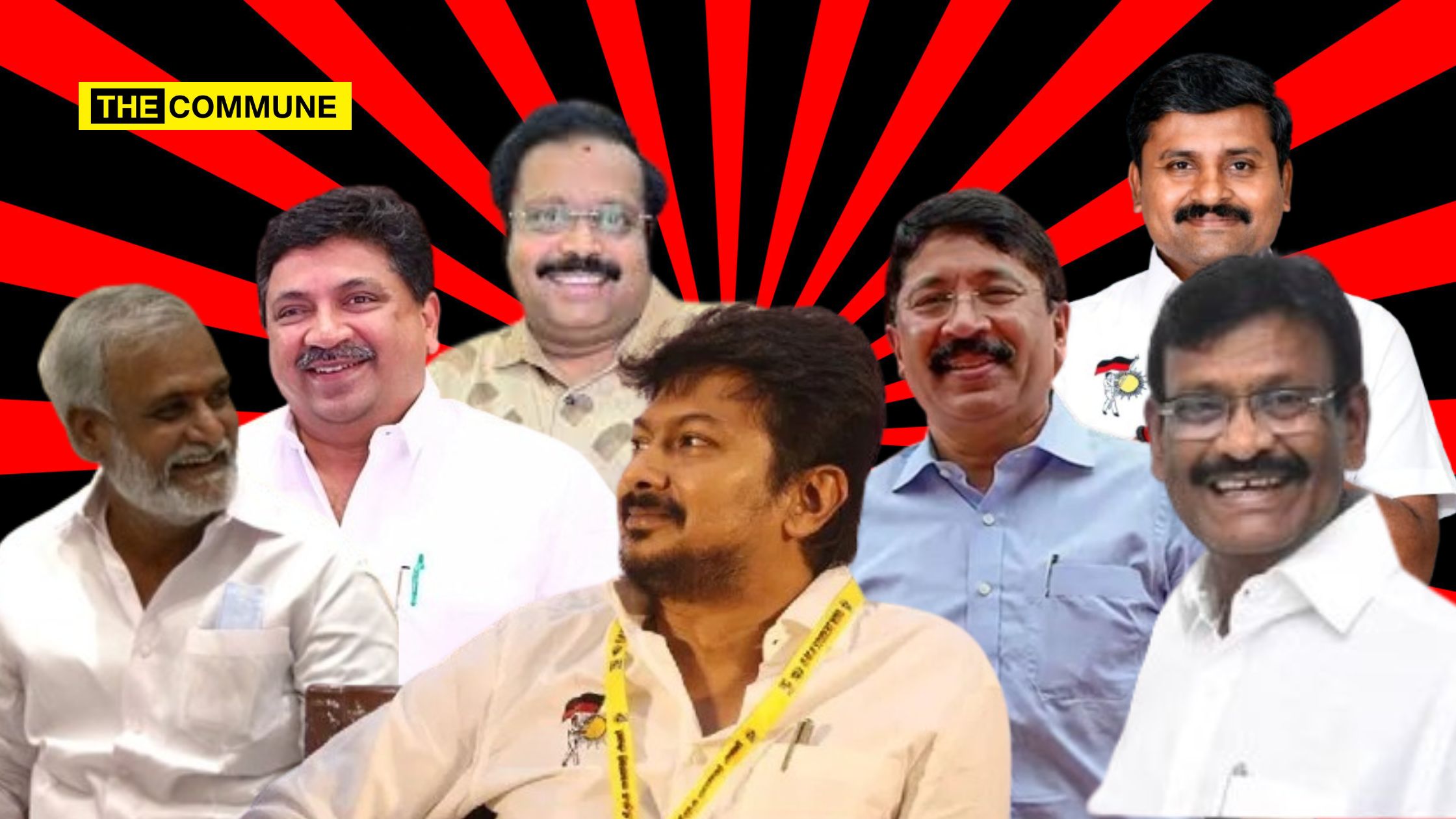
Dravidian Model Sycophancy: How DMK Leaders Outshine The Other To Sing Paeans For DMK Scion Udhayanidhi Stalin

Dravidian Model Sycophancy: How DMK Leaders Outshine The Other To Sing Paeans For DMK Scion Udhayanidhi Stalin

In Tamil Nadu, it appears there is an unspoken practice among ministers to lavish praise on DMK scion and Deputy Chief Minister Udhayanidhi Stalin to maintain their standing within the cabinet. It has become a norm for DMK ministers to commend Udhayanidhi whenever they address a gathering. From his time as an MLA to his current role as Deputy Chief Minister, every leader in the DMK, from the founding figures to the second-generation leaders, has consistently praised him at every opportunity, eager to stay in his good graces. This reflects the state of political dynamics in Tamil Nadu.

Singing praises seems to be a very important skill if one needs to be noticed by the party heads in the Dravida Munnetra Kazhagam. In the list of many who sang praises, below is a compilation of ministers, MLAs, and even MPs offering their praise for DMK scion and Deputy Chief Minister Udhayanidhi Stalin.

DMK Minister for Minorities S. M. Nasar

In a recent DMK meeting, Avadi MLA and Minister for Minorities and Non-Resident Tamils Welfare, S. M. Nasar, lauded Udhayanidhi Stalin for his contributions to Tamil cinema and highlighted his significant efforts for the party, likening his dedication to that of previous DMK leaders, from Annadurai to M. K. Stalin.

Speaking at a DMK event, S. M. Nasar remarked, “This is the Honorable Deputy Chief Minister’s birthday celebration. as far as he is concerned, if Kalaignar leaped 8 feet, his son, our Honorable Chief Minister Stalin, leaps 16 feet. And if he leaps 16 feet, our Deputy Chief Minister surpasses that by leaping 32 feet. He is such a compassionate individual you cannot find other than a smile on his face. Even our leader might show anger or reprimand us, but whatever the problem is, he (Udhayanidhi) has the ability to resolve issues with a smile.”

Drawing a parallel between M. K. Stalin’s efforts to revive the DMK and bring it back to power during the MGR era through the formation of the party’s youth wing, S. M. Nasar likened Stalin’s dedication to that of his son, Udhayanidhi, and remarked, “After leaders like Anna, Kalaignar, and Stalin, the only leader capable of mobilizing party cadres for events such as meetings, protests, or demonstrations is our Honorable Deputy CM Udhayanidhi Stalin. I sincerely thank the Chief Minister for appointing such a capable individual as the Deputy Chief Minister, recognizing his potential not only as the Organizing Secretary but also as a guiding force for the next generation.”

Praising Udhayanidhi Stalin’s efforts in the NEET abolition campaign, S. M. Nasar remarked, “I don’t know what’s the connection between him and stone. If you see, many renowned filmmakers have made numerous movies—some flopped, and others generated great revenue—but he produced a movie ‘Oru Kal Oru Kannadi,’ which sparked a revolution. Even in that, there’s a stone. Similarly, when Union Prime Minister Modi laid a foundation stone for AIIMS in Madurai, Udhayanidhi used it as a metaphorically challenged the decade old government and pushed back. That pride belongs to Udhayanidhi and he did that with one stone. Just as how Kannagi brought down the autocratic Pandya reign with a single anklet, Udhayanidhi, with one stone, has driven away the darkness of tyrant government. That remarkable achievement belongs to Udhayanidhi Stalin.”

DMK HR &CE Minister PK Sekar Babu

In an undated video of an event that seems to have taken place in the backdrop of the cyclone, Sekar Babu is seen saying, “There is no person who does not know Raja Raja Cholan. He created structural wonders. Yes, if Raja Raja Cholan is our dearest Thalapathi, Rajendra Chola, his brother, our brother Udhayanidhi. In our Puranas, there is a story. When it rained, Lord Gopalakrishna held Govardhana Mountain as an umbrella. If it is raining today, it won’t be wrong to say that our dearest Thalaivar Thalapathi gives his hard work as an umbrella and shelters the people.

The weather department failed to detect the path of the cyclone this time. Even when thunder and lightning came together, our leader, brother Udhayanidhistood on the field as a leader who protected the thunder and lightning.”

DMK IT Minister PTR Palanivel Thiagarajan

Ahead of DMK scion Udhayanidhi Stalin’s birthday, DMK IT Minister PTR Palanivel Thiagarajan went above and beyond to express his admiration. While other ministers opted for modest one-page advertisements or even a celebratory song, PTR took it a step further with an elaborate two-page spread. His grand gesture of loyalty stands out even in a party renowned for its public displays of allegiance. The advertisement creatively uses each vowel in the Tamil language as a framework to convey his tribute, making a distinct statement for each.

November 27 is the day of the dawn of the vowel (uyir ezhuthu)

The one who was born to rule Mother Tamil Nadu!

The illustrious Dravidian son who won against Aryanism

The icon of youth uprising/rebellion!

An unparalleled success story!

The life painting of siblings!

A hero of policy that the town admires!

He is one for everyone!

He is an uplifting hero!

Five-letter mantra! (Udhayanidhi)

Hope for all Tamils!

The Dravidian generation of restless hard work!

You are full of authority!

May you live for many years….

The advertisement is signed as follows:

P.T.R. Palanivel Thiagarajan

Minister of Information Technology and Digital Services

In your path as long as I am alive

Even during the contentious PTR audio leak, he sought support from the entire DMK family, particularly emphasizing Udhayanidhi Stalin’s importance, through his praises, saying, “Our Hon’ble Chief Minister is not only the guiding light of Tamil Nadu but the hope of our country. Hon’ble Sports Minister Udhayanidhi is our hope for the next generation, who has received a great reception from the Tamil people. Of the many who urged his elevation to the state cabinet, based on his appeal as a youth icon, I was the foremost. His outstanding performance as the minister has surpassed all our expectations. He is also a hands-on and grassroots-level administrator, very much keeping up with the style of the Hon Chief Minister. He is making Tamil Nadu the center of attention of the international sports world. how is it possible that I could say anything negative about this outstanding performer.”

DMK MP Took Oath In Parliament Hailing DMK Scion Udhayanidhi Stalin

When all other newly elected MPs took their oaths in Parliament in various languages like Sanskrit, Tamil, Malayalam, Kannada, etc. In previous oath-taking ceremonies, each MP would battle it out for saying the best slogan of them all – praising the motherland or their favourite deity.

Standing out from the rest in 2024 were the 24 DMK MPs from Tamil Nadu. Most of them ended their vows with praises and uttered slogans in praise of DMK scion Udhayanidhi Stalin.

Coimbatore MP Ganapathy Rajkumar who won against TN BJP chief Annamalai concluded his oath by saying, “Long live our future Udayanidhi Stalin.”

Central Chennai MP Dayanidhi Maran ended his oath with “Long live Tamil, Long live Kalaignar, Long live Periyar, Long live Anna, Long live Muthuvel Karunanidhi Stalin, Long live Udhayanidhi”

Kanchipuram MP Selvam ended with “Sing praises of Periyar, Anna, Kalaignar, Long live Thalaivar Thalapathy, Long live youth leader Udhayanidhi Stalin

Arakkonam MP S Jagath Rakshakan said, “Long live Tamil, long live leader Kalaignar, Long live Thalapathy”

Salem MP TM Selvaganapathy, Kallakurichi MP Malaiyarasan Arani MP Tharaniventhan, and Tiruvannamalai MP CN Annadurai ended their oaths similarly with, “Long live Kalaignar, our CM, our future Udhayanidhi” while also thanking a few DMK ministers.

Thanjavur MP Murasoli, Perumbalur MP Arun Nehru, Pollachi MP Easwarasamy, Erode MP KE Prakash, Vellore MP Kathir Anand said, “Long live Tamil Nadu, may DMK win, long live Thalapathy, our future Udhayanidhi

Dharmapuri DMK MP A Mani, North Chennai MP Kalanidhi Veerasamy, South Chennai MP T Sumathi alias Tamizhachi Thangapandian ended her oaths with praises to Karunanidhi, MK Stalin and Tamil.

Tenkasi MP Rani Srikumar had a list of names she said slogans for – these included Karunanidhi, Periyar, MK Stalin, Kanimozhi, KKSSR, as well as DMK scion Udhyanidhi Stalin!

Senior DMK Leader Duraimurugan

In 2021, the DMK’s most senior leader and current Tamil Nadu Water Resources Minister and DMK General Secretary Duraimurugan, who has witnessed the party’s leadership since its inception, made a notable statement during a public event in Chennai ahead of the April 2021 Assembly elections. He remarked, “I was part of Karunanidhi’s Cabinet, I will be part of Stalin’s Cabinet, and I wouldn’t mind being part of Udhayanidhi’s Cabinet as well.”

Subscribe to our channels on Telegram, WhatsApp, and Instagram and get the best stories of the day delivered to you personally.
TN BJP Chief Annamalai Calls For De-escalation Between NTK Leader Seeman And Trichy SP Varun Kumar

TN BJP Chief Annamalai Calls For De-escalation Between NTK Leader Seeman And Trichy SP Varun Kumar

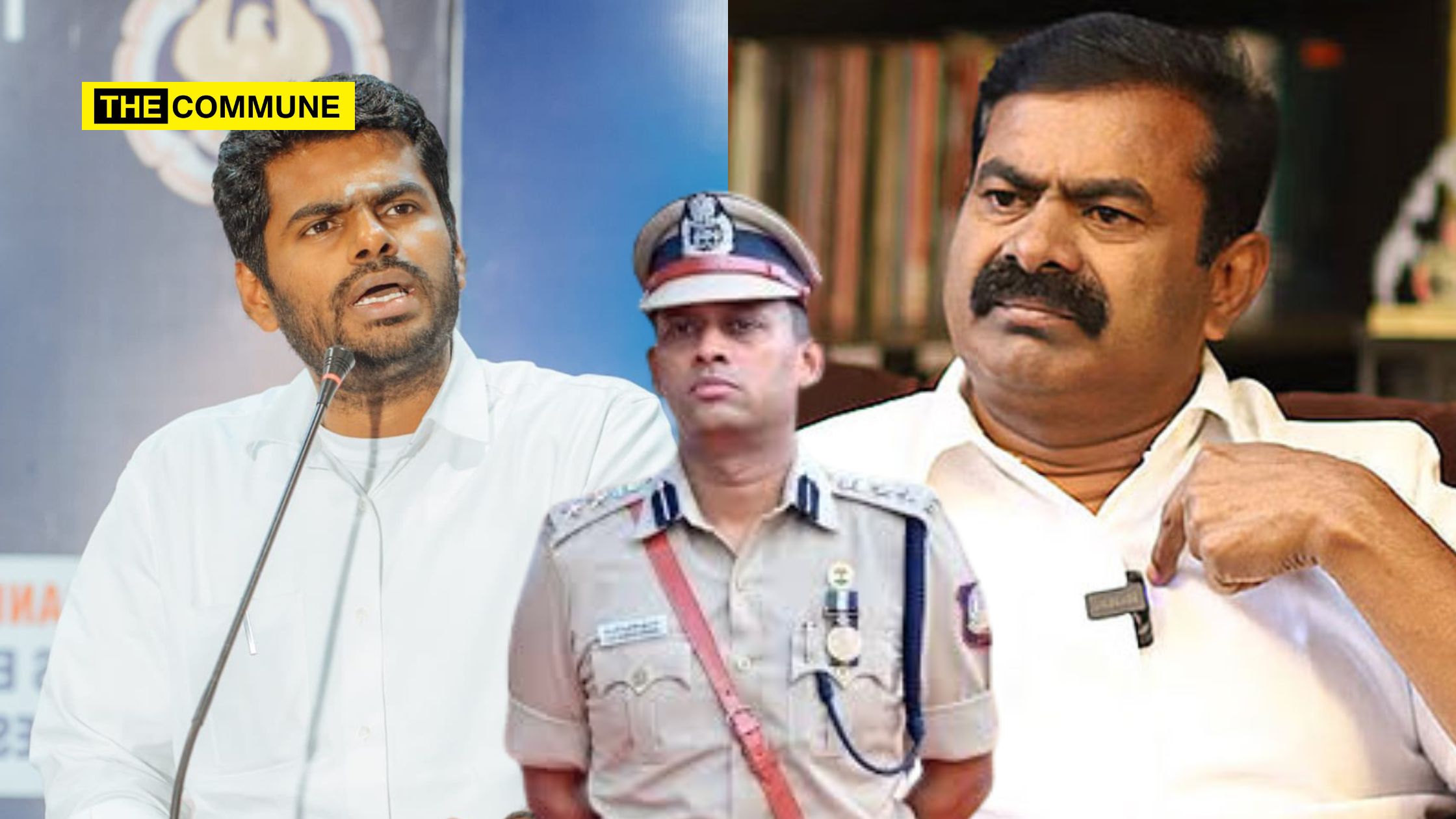
Tamil Nadu BJP President K Annamalai has urged Naam Tamilar Katchi (NTK) Party leader Seeman to avoid inflating the ongoing conflict between him and Trichy Superintendent of Police Varun Kumar. This appeal comes amidst a growing altercation, with NTK cadres allegedly targeting the IPS officer’s family and cyberbullying through social media posts. In response, Varun Kumar recently labelled the NTK as a secessionist group.

Speaking to reporters in Palladam, Tiruppur district, Annamalai stated, “I trained with IPS officer Varun Kumar. Seeman is a significant political figure in Tamil Nadu, and IPS officers often express personal opinions during meetings. I have attended many such discussions myself. His views may reflect his personal stance, but they do not represent the opinion of the state police.”

Annamalai emphasized that Seeman, as a political leader, is entitled to his views, but stressed, “Brother Seeman is an important political party leader. I would not call them a separatist movement. They are presenting their ideology to the public, and it’s up to the people to decide whether to recognize it or not. The Election Commission has recognized them, there are no court cases against them. As far as Naam Tamilar Katchi is concerned, they have adopted a ideological approach to politics. I see this as a unique, emerging issue in Tamil Nadu. Political parties usually stay out of police matters and refrain from naming police officers, because whoever maybe they hold a position. Brother Varun is on one side being a police officer, and let he do his job, while Brother Seeman is a great leader and an important figure. So, Seeman need not exaggerate this matter. In police department someone simply expressing his opinion, that’s all.”

Annamalai further added, “Hence, this issue not being turned into police department versus political parties. Let the police carry out their duties, while we, as a political party, be their fortress and guardians.”

Recently, Trichy SP Varun Kumar, speaking at the 5th IPS Officers’ Conference in Chandigarh, described the ‘Naam Tamilar party’ as a secessionist movement that requires monitoring. He further stated, “I and my family have been severely affected by that party,” which sparked a political uproar.

In response to Varun Kumar’s remarks, Seeman fired back, “What does Varun Kumar mean by calling us separatists? Are Tamils and Tamil Nadu separatists? When the National Intelligence Agency conducted a raid, were they unaware it was a separatist movement? How long will you stay in the khaki uniform? Eventually, you’ll come down, but we’ll remain here. It’s just a matter of time. You want a fight. Come, let’s fight.”

(With inputs from Kamadenu)

Subscribe to our channels on Telegram, WhatsApp, and Instagram and get the best stories of the day delivered to you personally.
Karnataka BJP Slams Siddaramaiah Govt For Double Standards, Questions Action Against Vokkaliga Seer But Not Muslim Leader Disrespecting Judiciary

Karnataka BJP Slams Siddaramaiah Govt For Double Standards, Questions Action Against Vokkaliga Seer But Not Muslim Leader Disrespecting Judiciary

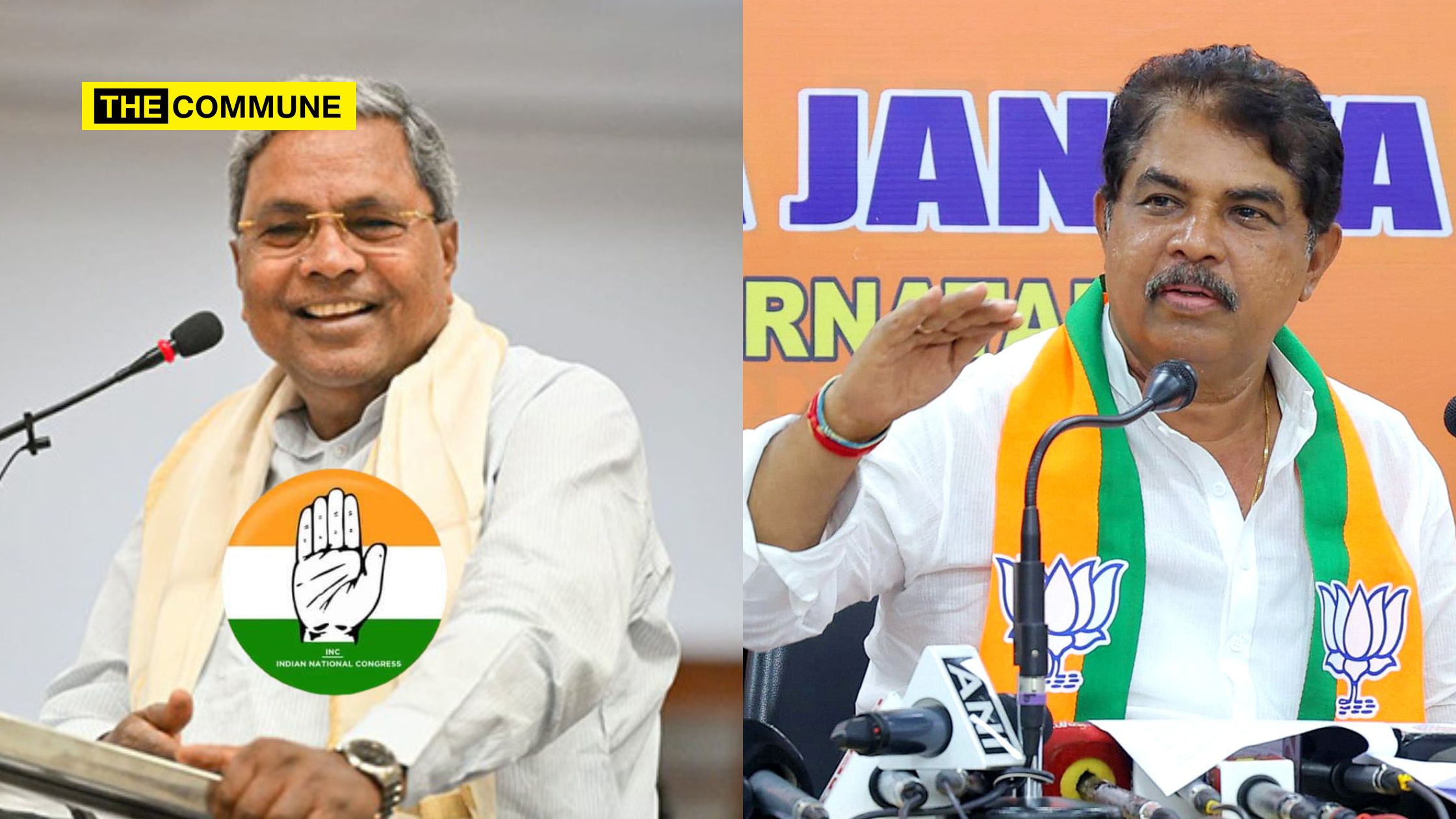
Opposition leader in the Karnataka Assembly, R Ashoka, on 6 December 2024, criticised the state government, questioning why action was taken against a Vokkaliga seer who demanded disenfranchisement of Muslims while no action was taken against a Muslim leader who disrespected the judiciary.

Speaking at a press conference in Bengaluru, he said, “The government quickly took action against Kumara Chandrashekaranatha Swami, the pontiff of the Vishwa Vokkaligara Mahasamsthana Math, for expressing his anguish over Waqf land encroachment. However, despite Maulana Abu Talib Rahmani of the All India Muslim Personal Law Board openly stating that he disrespects Parliament and the judiciary, no action has been taken against him.”

Rahmani had stated during a meeting in Bengaluru, organised to challenge the central government’s proposed Waqf Bill, “We will not beg before courts. If the Parliament is yours, the streets are ours?” Referring to Shivakumar’s statement issued after the cooker blast incident in 2022 in Mangaluru city, Ashoka claimed, “This shows Deputy Chief Minister D.K. Shivakumar’s bias in favour of the ‘cooker brothers,’ as he refuses to act against them.

Ashoka stressed that his support for the Vokkaliga seer is unwavering. “Dy CM Shivakumar swings between favouring Muslims and Vokkaligas as per his convenience. Home Minister G. Parameshwara is reportedly upset over Dy CM Shivakumar’s comments on the Chief Minister’s position and power sharing,” he remarked.

Vokkaliga seer Kumara Chandrashekaranatha Swami had proposed the disenfranchisement of Muslims and later regretted his statement. The Karnataka government has filed an FIR against the seer and issued a notice summoning him for questioning. The BJP had warned that the government will face consequences if the seer is troubled. Ashoka also criticised the state government and accused it of showing double standards.

He claimed, “The person who vandalised the statue of the revered seer late Shivakumara Swamiji in Bengaluru could also be considered a ‘brother’ by the Congress. If this is the state of affairs, one wonders about the plight of Hindus. While Muslim leaders say they don’t trust the judiciary, Congress leaders hold up Dr. B.R. Ambedkar’s Constitution as a show. Law and order in the state have completely deteriorated,” he alleged.

Ashoka also lashed out at the state of Bengaluru’s infrastructure, calling it the “city of potholes.” “There is not a single road in the city without potholes. BBMP commissioners claim they have filled lakhs of potholes, only to later report a different count again. Congress should disclose how much funding BBMP has received under the Brand Bengaluru project, instead of just harping on ‘our taxes, our rights’ slogan and targeting the central government. Each Assembly constituency in Bengaluru should receive Rs 100 crore in funding,” he demanded.

-IANS

Subscribe to our channels on Telegram, WhatsApp, and Instagram and get the best stories of the day delivered to you personally.
Union Minister Sarbananda Sonowal Highlights Northeast’s Transformation, Lauds Modi For 300% Budget Boost In A Decade

Union Minister Sarbananda Sonowal Highlights Northeast's Transformation, Lauds Modi For 300% Budget Boost In A Decade

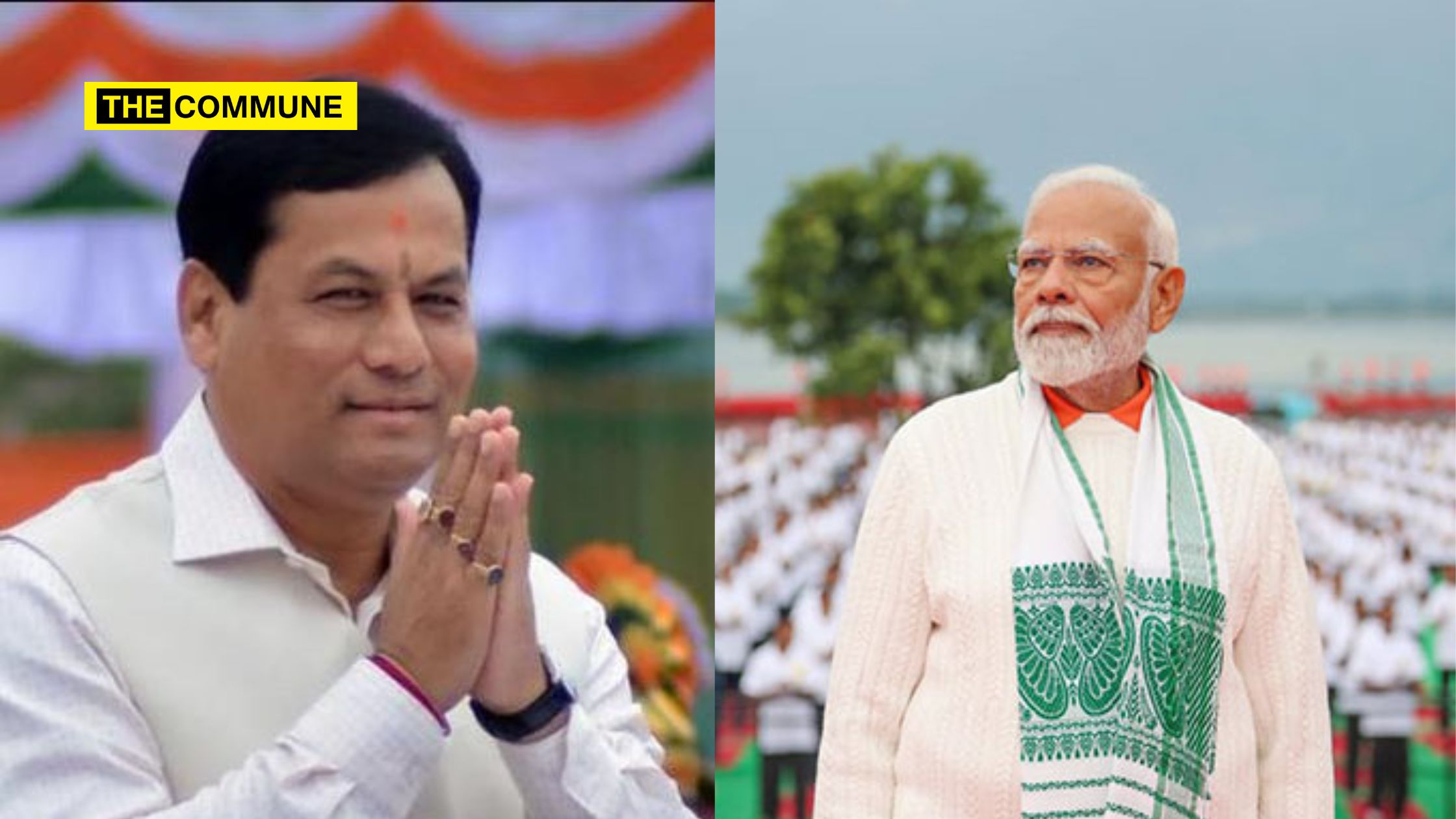
Union Minister Sarbananda Sonowal on 6 December 2024, asserted that the entire northeastern region has undergone a transformation under the leadership of Prime Minister Narendra Modi and the budget of the northeast has increased by 300 per cent in the last one decade.

Highlighting some major developments in the region, Sarbananda Sonowal said: “The Northeast has remained a priority for the NDA government led by PM Narendra Modi. Since 2014, the region has received an increase of more than 300 per cent in the budget outlay. From ₹36,108 crore in 2014, the budget outlay for the region has reached ₹94,680 crore in FY 2023-24. In terms of infrastructure, a remarkable rise of 28 per cent in expansion of National Highways has been registered. Till 2014, the region had 80 National Highways (NHs) which jumped to 103 NHs by 2023. A whopping 26 times increase in infra development scheme outlays from a meager ₹94 crore to ₹2,491 crore.”

Railways also expanded within the region improving communications with more than 193 km of rail lines being commissioned every year. The railway budget for the region has increased by 370 per cent. We have also achieved 100 per cent electrification of broad gauge in the region,” he added.

Targeting the Congress, Sarbananda Sonowal said that in 60 years of governance under the grand old party, the region had only 9 operational airports. In less than a decade under PM Narendra Modi, the region now boasts of 17 operational airports. He said: “As a result, the people from the region have boosted the aviation sector with 113 per cent increase in flights per week. In terms of delivery of welfare schemes to the people from the remotest corners of the region, more than 7,000 villages have access to piped drinking water. In this decade, the region has also witnessed a 39 per cent increase in the number of universities.”

The Union Minister said: “Our beautiful region of the Northeast has been blessed by Mother Nature but was ignored for far too long by the successive governments at the Centre, until the NDA came to power. Under the dynamic leadership of Prime Minister Narendra Modi, the region has undergone a major transformation in the last one decade, when compared to decades of inertia by governments stuck in inaction, corruption, and ignorance. This decade of transformation has sparked new energy in the Northeast.

The genius strategy to rejuvenate the Northeast as the Growth Engine of India employed by PM Modi centres around good governance and developmental politics. These twin approaches with a penchant for success with clear intention and hard work have paid off as people, from the remotest corners of the region, enjoy the delivery of welfare services at their doorstep. This was unthinkable for most people of the Northeast before 2014. With a view to promote organic farming, more than 1.55 lakh hectare land utilised for organic farming. More than 4,016 km of road projects are ongoing while 4G connectivity has reached almost all parts of the Northeast.

-IANS

Subscribe to our channels on Telegram, WhatsApp, and Instagram and get the best stories of the day delivered to you personally.
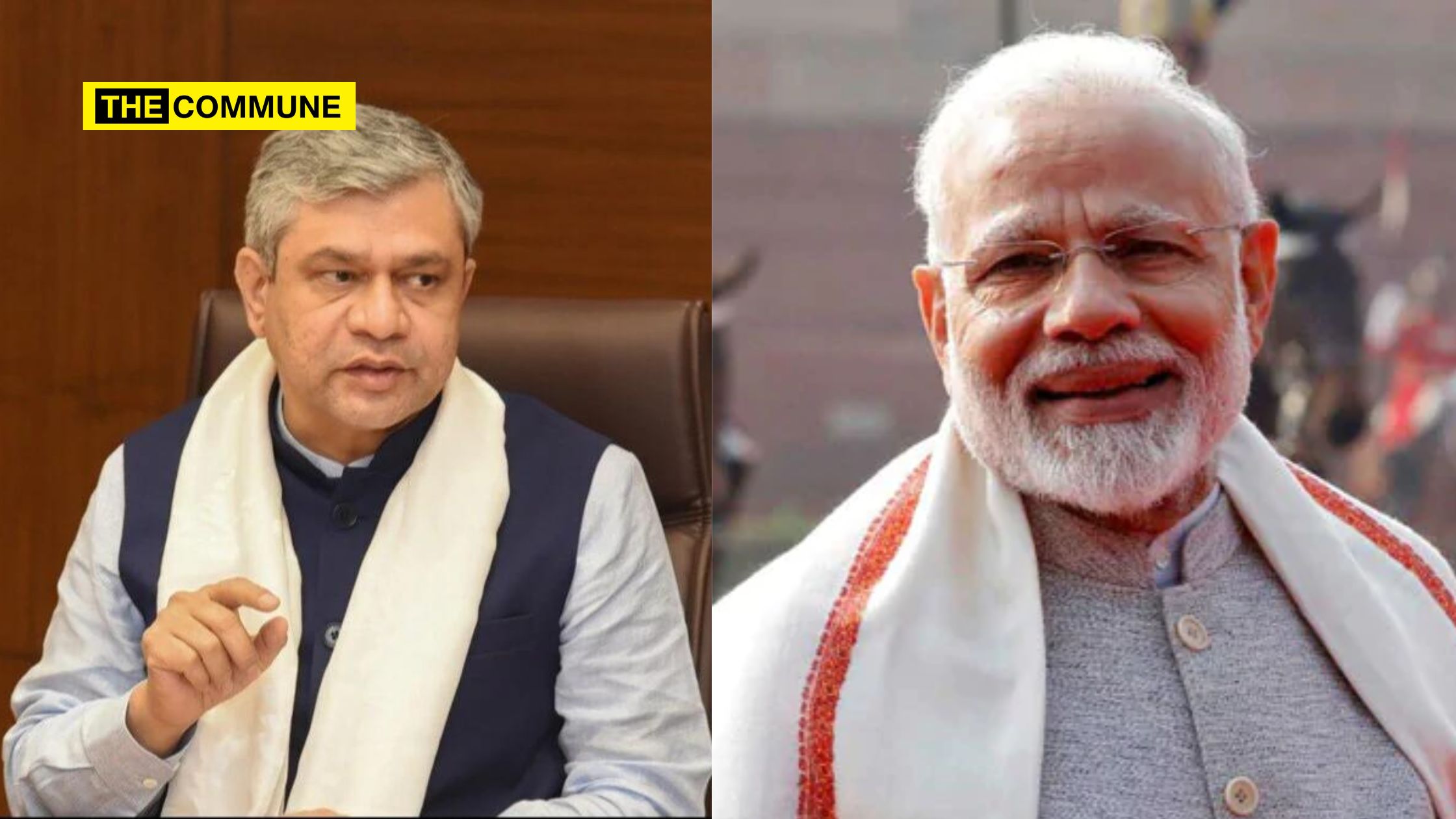
Ashwini Vaishnaw Highlights PM Modi’s Four-Pillar Strategy As Key To India’s Growth Amid Global Uncertainty

Ashwini Vaishnaw Highlights PM Modi’s Four-Pillar Strategy As Key To India’s Growth Amid Global Uncertainty

Amid global turmoil and geopolitical tensions, the world hopes India will be a bright spot. One key reason for this is the country’s growth story, which is being driven by Prime Minister Narendra Modi’s four-pillar strategy, Union Minister Ashwini Vaishnaw said on 6 December 2024.

Delivering the keynote address at the NDTV Indian of The Year, Ashwini Vaishnaw, who holds the Railways, Information and Broadcasting, and Electronics and Information Technology portfolios, said: “It is not a coincidence that we are growing at a sustained rate of 6-8 per cent.” “PM Modi’s considered thought process and a clearly laid out plan, which rests on four pillars, are behind India’s consistent growth and moderate inflation,” Union Minister Vaishnaw said as he explained PM Modi’s four-pillar strategy.

Elaborating on the first pillar of investments, the Minister said India’s capital expenditure has grown from roughly ₹3.5 lakh crore 10 years ago to ₹11 lakh crore in the current fiscal, which is “humongous and unheard of in Independent India”.This is leading to productivity improvement and employment growth in practically every sector. Airports have doubled and 31,000 km of railway lines have been constructed, which is more than Germany’s entire network. In the last year alone, 5,300 km of railway lines have been built, more than the network of Switzerland. AIIMS and IITs have also been doubled in the past ten years,” Ashwini Vaishnaw pointed out.

Speaking about the democratisation of e-payments and how even street vendors use them, the Union Minister cited an example, and said he was asked by a man from “one of the richest countries” at an international forum since India has moved so far ahead, when does it plan to do something for other nations that have been left behind. “So, the feeling now is that India is a leader in several fields of technology, unlike the past, when it used to be a follower,” Ashwini Vaishnaw said.

On innovation and manufacturing, the Union Minister said India has 1.2 lakh startups, up from 300-400 ten years ago, and over 100 unicorns, which make the country one of the world’s top three startup ecosystems. The ‘Make In India’ scheme, he said, has impacted everything from the engineering goods sector to the defence sector. The third pillar of inclusive growth, Vaishnaw, said it was very important to address the economic inequality that arose because of the policies which were followed for 50-60 years. He said PM Modi made inclusive growth an integral part of every policy and this benefited everyone, especially those at the bottom of the pyramid.

As many as 54 crore bank accounts were opened, half of which are held by women. The number is significant because the entire population of Europe is 45 crore. So, bringing a population that is higher than the population of Europe into the banking system was an unimaginable task but it was made possible,” the Minister pointed out.

“Nearly 4 crore people have got new houses and the cooking habits of 11 crore people have changed to gas — the entire population of Japan is 11 crore, Germany’s population is 8 crore. The Prime Minister’s inclusive policies have benefited more people than the population of many countries,” he said. Simplification, the Railways Minister said, was brought about by policies like getting rid of colonial laws that have no relevance now.

India’s telecom sector was regulated using a law from 1885 – the Telegraph Act. As many as 1,500 laws have been removed from the statute books. New laws have been made. Steps were also taken towards compliance reduction – for instance, getting permission for a telecom tower earlier took 217 days on average, which has been reduced to seven days because of a reform brought in by PM Modi in 2021. Even among these, 89 per cent are such that you get the permissions the moment you press the ‘Enter’ button,” he said.

Ashwini Vaishnaw said the scale and scope of work has expanded and PM Modi is focused on the poor and the middle class. “Because of all this, we can say with a high degree of confidence that India will continue to grow at 6-8 per cent real growth, 10-14 per cent nominal growth and a very moderate inflation for the coming five years. That’s the reason why when there is anti-incumbency across the world, a vibrant and vocal democracy like India has elected a government and a Prime Minister for three consecutive terms for the first time. This is because people have seen a change and transformation in their lives,” he added.

-IANS

Subscribe to our channels on Telegram, WhatsApp, and Instagram and get the best stories of the day delivered to you personally.

TTD Seals Shop In Tirumala Tirupati For Selling Bracelets With Christian Symbols

TTD Seals Shop In Tirumala Tirupati For Selling Bracelets With Christian Symbols

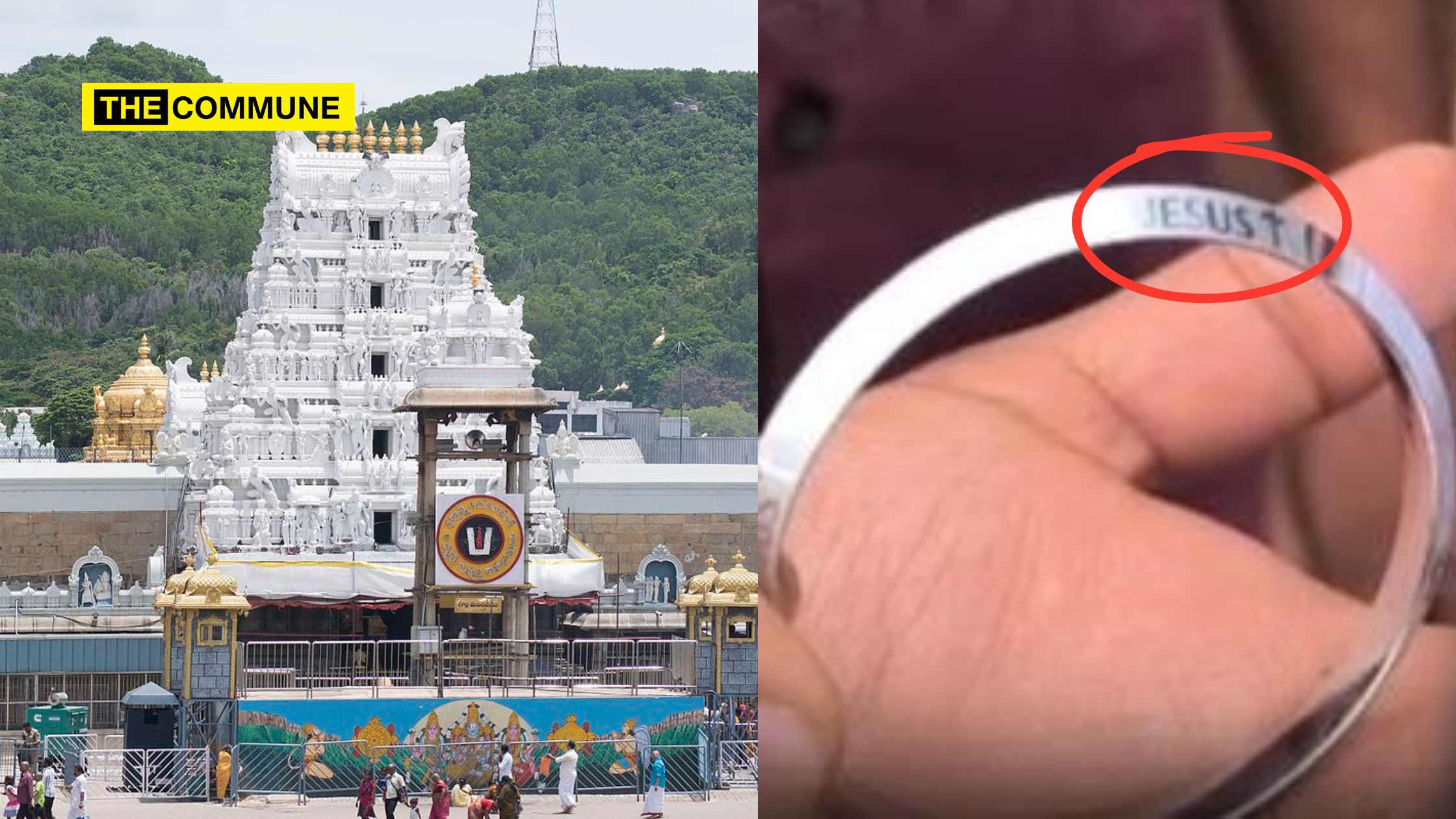
The Tirumala Tirupati Devasthanams (TTD) vigilance team has sealed a shop within the premises of the Sri Venkateswara Swamy Temple in Tirumala. The action was taken after it was found that the store was selling fancy items, such as bracelets and chains, featuring symbols from religions other than Hinduism. The TTD has enforced a strict policy prohibiting the display or use of religious symbols not associated with Hinduism at the Tirumala temple complex.

The store was inspected following a complaint alleging that it was selling bracelets engraved with the ‘Jesus’ name and cross on them. These cross-shaped bracelets were indeed found.

https://twitter.com/sunnewstamil/status/1864903888996020291

This follows a similar incident on 27 June 2023, when it was reported that a teacup at a shop on Tirupati Hill was printed with a symbol resembling a Christian cross. Devotees raised concerns about this shop, prompting TTD officials to investigate. The inspection revealed that cups with cross-shaped patterns were being used at a tea shop near the BSNL office, leading to the confiscation of the cups and the shop’s closure. Temple authorities also warned that no religious symbols other than Hindu ones should be used or displayed on Tirupati Hill.

After a year without similar incidents, this recent issue has resurfaced. The temple authorities have reiterated their warnings to all shops in the area to comply with the guidelines.

Subscribe to our channels on Telegram, WhatsApp, and Instagram and get the best stories of the day delivered to you personally.