Home Blog Page 450

After Probe Reveals DMK Man & Anna Univ Sexual Assault Culprit Gnanasekaran Encroaching Temple Land, HR&CE Jumps In To Initiate Action

Gnanasekaran Allegedly Built House Illegally On Temple Land

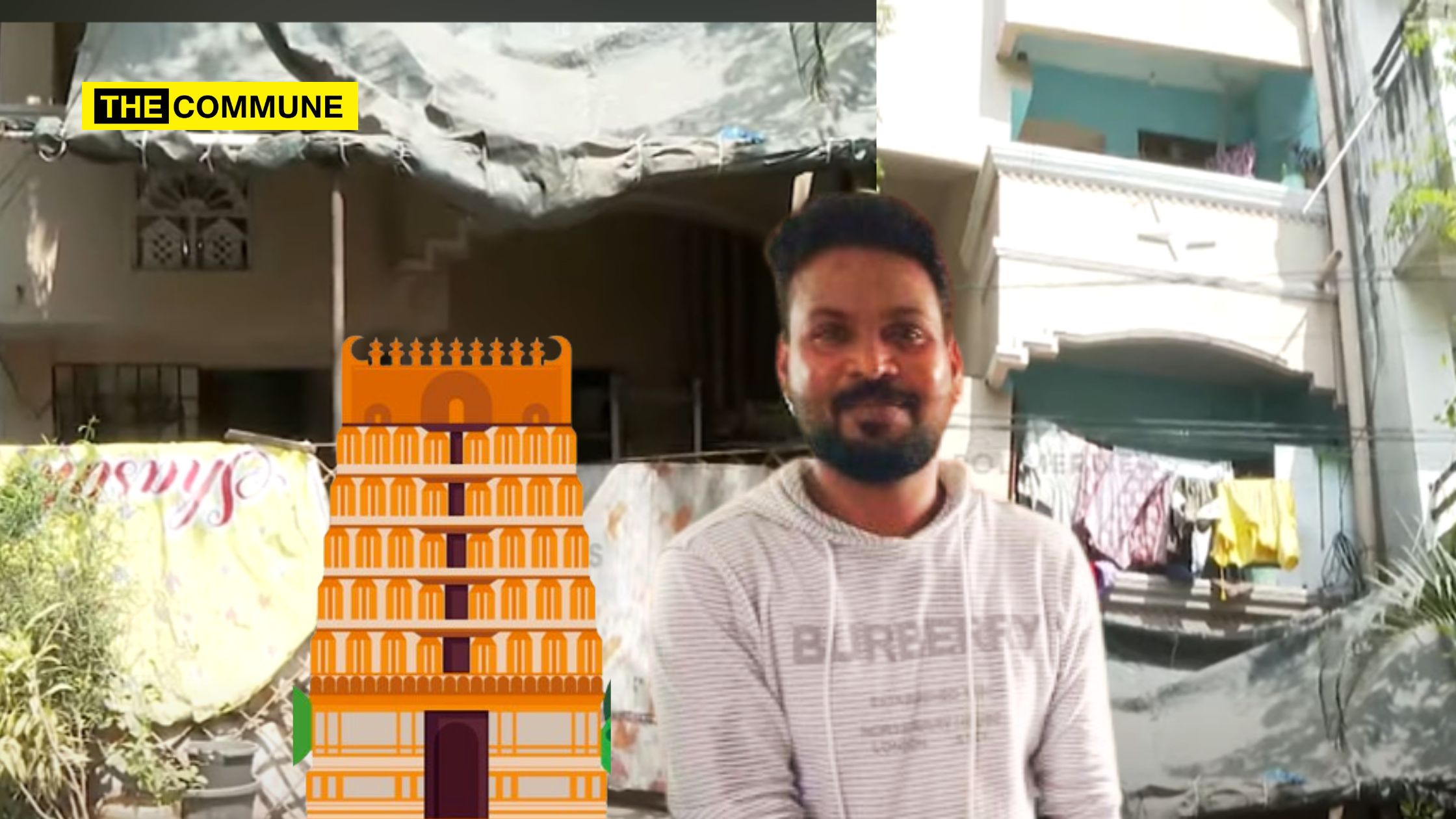
The HR&CE (Hindu Religious and Charitable Endowments) department, in collaboration with the revenue department, has initiated action to reclaim land belonging to the Prassana Venkatesa Perumal temple, which was illegally encroached upon by Gnanasekaran, a suspected DMK functionary and the accused in the Anna University sexual harassment case. As the investigation progressed, the Revenue Department and HR&CE discovered that not only was the land encroached upon by Gnanasekaran, but 26 buildings had also been unlawfully constructed on the temple land. The departments have begun measuring the land, and the assessment work is currently ongoing.

Reports indicate that during an investigation conducted by the Special Investigation Team (SIT), it was discovered that Gnanasekaran, the accused in the Anna University on-campus sexual harassment case and reportedly a DMK functionary, had illegally constructed a three-story building on land belonging to a temple without obtaining legal permissions.

Gnanasekaran is alleged to have led a double life, engaging in various illegal activities, including committing burglaries at night, participating in political party affairs during the day, running a biryani shop in the afternoon, and sexually harassing students in the evening. Known for his involvement in over 20 criminal cases, he reportedly used intermediary funds to acquire properties and build structures. As part of the investigation, the SIT attempted to seize his properties. It was revealed that his three-story residence, where he lives with his two wives, was constructed on land owned by the Prasanna Venkatesa Perumal temple. While this property was not included in the criminal case, the HR&CE department was informed about the encroachment.

Following this, HR&CE officials carried out inspections on Mandapam Road and Kottur Erikarai Street, where Gnanasekaran’s house is located. A review of the land records revealed that 1 acre and 17 cents of the land belonged to the temple. The inspection, led by Guindy Tahsildar Manimekalai, involved a detailed measurement of the property.

Further inspections were conducted by HR&CE officers, including Tahsildar Thiruvenkadam and Temple Administration Officer Narayani, who went door-to-door. They uncovered that 26 other families were also occupying temple land and building structures. Authorities have now begun the process of removing these encroachments and reclaiming the temple property.

Subscribe to our channels on Telegram, WhatsApp, and Instagram and get the best stories of the day delivered to you personally.

Seven Bangladeshi Nationals Arrested In Erode For Illegal Stay Amidst Rising Concerns Over Border Infiltration

Seven Bangladeshi Nationals Arrested In Erode For Illegal Stay Amidst Rising Concerns Over Border Infiltration
Image Source: Anshul Saxena Facebook

Seven Bangladeshi nationals were arrested in Perundurai, Erode, for staying without valid documentation following a police raid on Sunday (5 January 2025) night. Acting on a tip-off, the Perundurai police, along with the Central Intelligence Wing, searched a house in Vallipurathanpalayam and found the individuals, who were engaged in construction work, lacking proper travel documents.

A case was registered against them under Section 3(2)(e) r/w 14 of the Foreigners Act, 1946. They were produced in court and subsequently lodged in Puzhal Central Prison in Chennai the next day.

Police and central agency officials also conducted surprise raids in nearby areas, including Veppampalayam and other parts of Perundurai taluk, targeting workers from northern India and Bangladesh. The arrested individuals are being interrogated to determine if they were involved in any criminal activities.

Similar Arrest In June 2024

In June 2024, Erode district police arrested seven Bangladeshi nationals in Panikkampalayam, Perundurai, for residing in India without valid documents. Acting on a tip-off about undocumented foreign workers among laborers in the SIPCOT industrial complex, police conducted a probe and detained 13 individuals, including two women.

Following an investigation, seven individuals were confirmed to lack essential documents such as passports or visas and were subsequently arrested. The remaining six claimed to possess proper documentation and were given time to produce them.

The arrested individuals, employed as daily wage laborers in a private company, were also found with confiscated Aadhaar cards issued in India.

Assam CM Warning

On 1 January 2025, Assam Chief Minister Himanta Biswa Sarma warned about a surge in illegal infiltration of Bangladeshi workers into India, driven by the collapse of Bangladesh’s textile industry following political unrest and the fall of the Sheikh Hasina government. Sarma accused sections of Tamil Nadu’s textile industry of incentivizing this influx by employing low-wage Bangladeshi laborers. Highlighting daily detections of infiltrators at Assam and Tripura borders, Sarma called for stricter action against industrial houses exploiting the situation. He revealed that the issue had been discussed with Home Minister Amit Shah and emphasized Assam’s pushback policy to curb illegal migration.

Subscribe to our channels on Telegram, WhatsApp, and Instagram and get the best stories of the day delivered to you personally.
SIT Arrests Police Inspector, AIADMK Member in Anna Nagar Minor Sexual Assault Case

(SIT) probing the sexual assault of a minor has arrested a woman police inspector and an AIADMK ward secretary on allegations of misconduct in handling the case.

The Special Investigation Team (SIT) probing the sexual assault of a minor has arrested a woman police inspector and an AIADMK ward secretary on allegations of misconduct in handling the case. The arrests, announced on 7 January 2025, highlight ongoing concerns over the investigation’s integrity.

The Greater Chennai Police (GCP) had earlier detained two others, including a relative of the victim, in connection with the case. The arrested inspector has been identified as Raji, while the AIADMK functionary was named Sudhakar. Authorities have yet to reveal the legal sections under which the duo was charged.

Inspector Raji has been accused of mishandling the investigation and allegedly assaulting the victim’s family. Sudhakar is said to have acted in favor of the main accused, Sathish, a 31-year-old water can supplier and neighbor of the victim, by misleading the inquiry.

Background And High Court’s Findings

The disturbing case centers on the brutal sexual assault of a 10-year-old girl in Chennai, which remained hidden for almost a week before coming to light on 29 August 2024. The incident was revealed when the child’s mother, a cook by profession, sought medical attention for her daughter, who was suffering from severe stomach pain. At Kilpauk Medical College, doctors discovered signs of repeated sexual assault, triggering the filing of a First Information Report (FIR) at the Anna Nagar all-women police station on 30 August 2024. The police named a 31-year-old water delivery man, Satish, as the primary suspect in the case.

Despite the gravity of the crime, there were serious delays and lapses in the police investigation. The accused, Satish, was not arrested until 12 days later after media reports brought attention to the case. This delay fueled allegations that the authorities were attempting to downplay the case and avoid public scrutiny. In the wake of these accusations, the victim’s mother came forward with shocking claims that she had been mistreated by the police during the investigation, including allegations of physical assault by a police inspector named Raji.

The Madras High Court, on 10 September 2024, took suo motu cognizance of a case involving the repeated sexual assault of a 10-year-old girl in Tamil Nadu, following allegations of police misconduct and procedural violations. The victim’s mother claimed police assaulted her and that her daughter’s statement was recorded improperly, breaching POCSO Act guidelines. The court criticized the police for targeting YouTuber Maridhas and journalist A. Selvaraj with FIRs over leaked case details, instead of investigating the source of the leak, calling it an attack on press freedom.

On 1 October 2024, the Madras High Court had ordered a CBI probe, citing delays and police harassment of the survivor’s family. Despite the severity of the crime, which involved repeated sexual assault of the minor, the primary suspect was arrested 12 days after the incident. The court condemned police procedural violations in handling the victim’s statement, noting breaches of the POCSO Act. The child was interrogated late at night in a hospital without her mother, and no trauma-informed forensic interview was conducted, risking the integrity of her testimony by failing to ensure a child-friendly environment.

The victim’s mother subsequently filed a habeas corpus petition in the Madras High Court, which condemned the audio leak and ordered the case to be handed over to the Central Bureau of Investigation (CBI).

The Supreme Court on 18 November 2024, formed a three-member Special Investigation Team (SIT) to investigate the sexual assault of a 10-year-old girl in Chennai’s Anna Nagar on 29 September 2024. The SIT, led by DIG Saroj Kumar Thakur and two senior women IPS officers, replaces a Madras High Court order transferring the case to the CBI, a move contested by Tamil Nadu. The bench, comprising Justices Surya Kant and Ujjal Bhuyan, emphasized the need for a timely probe, directing weekly progress reports to the High Court.

Tamil Nadu’s DGP was instructed to partially relieve SIT members of other duties. The court also ordered ₹75,000 compensation for the survivor’s mother for litigation expenses. Addressing political exploitation concerns, the bench urged restraint but refrained from making binding comments. The Chief Justice of the Madras High Court was asked to monitor the SIT’s progress.

(With inputs from The New Indian Express)

Subscribe to our TelegramWhatsApp, and Instagram channels and get the best stories of the day delivered to you personally.

Muslim Cleric Shahabuddin Razvi Barelvi Claims Prayagraj Kumbh Mela Site Is Waqf Property

Muslim Cleric Shahabuddin Razvi Barelvi Claims Prayagraj Kumbh Mela Site Is Waqf Property

Just one week before the Maha Kumbh Mela begins in Prayagraj, a controversy has arisen following claims by a Muslim cleric that the event is being held on land owned by the Waqf Board. Maulana Shahabuddin Razvi Barelvi, the president of the All India Muslim Jamat, has asserted that 55 bighas of Waqf land are being utilized for the Hindu religious gathering.

In a video message, Barelvi acknowledged the generosity of the Muslim community in Prayagraj, who, he said, had allowed the Kumbh Mela to take place on Waqf land. He called on Hindus to reciprocate by permitting Muslims to enter the Kumbh Mela. He also criticized the All India Akhara Parishad’s demand to restrict entry to non-Hindus at the event.

Barelvi remarked, “The Akhara Parishad, Naga Sanyasis, swamis, and babas have called for banning Muslims from the Kumbh Mela. On the other hand, a Muslim named Sartaz from Prayagraj has pointed out that the land used for Kumbh preparations belongs to the Waqf, and it is owned by local Muslims. Yet, despite this, Muslims have shown great tolerance by not objecting to the 55 bighas of Waqf land being used for the Mela.” He further stated that while Muslims have demonstrated tolerance, some Hindu groups are showing intolerance by denying Muslims entry into the Kumbh Mela.

Additionally, there are local Muslim claims that the K.C. Pant Institute in Prayagraj, where the Kumbh Archive Center has been established, is also Waqf property.

Maulana Barelvi’s comments, however, have drawn strong criticism from BJP leaders. Union Minister Giriraj Singh condemned the remarks, calling them an attempt to provoke Hindus and incite communal tensions. He emphasized that the Kumbh Mela predates the birth of Islam and is a deeply respected cultural and religious tradition. “Such statements are aimed at provoking Hindus,” Singh said, also questioning the silence of political leaders like Rahul Gandhi, Uddhav Thackeray, Lalu Prasad Yadav, and Akhilesh Yadav, implying that their silence might suggest an endorsement of such divisive comments.

Singh accused radical elements of distorting historical and cultural facts to disrupt India’s harmony. “The Kumbh Mela is not just a religious event; it is a cultural heritage of India, respected around the world,” he added.

BJP leader Amit Malviya also shared the video of Barelvi’s comments on social media, criticizing the cleric’s statements and suggesting that the Waqf law had become a growing problem.

Hindu leaders have rejected Barelvi’s claims. Hindu Mahasabha President Swami Chakrapani Maharaj strongly condemned the cleric, stating that Barelvi must be backed by forces like Pakistan and others with a “terrorist mindset.” He accused the cleric of attempting to disrupt the Maha Kumbh and called for an investigation into his remarks. “Immediate action should be taken against people who spread such divisive rhetoric. An FIR should be lodged, and they should be arrested to maintain peace,” he said.

The Maha Kumbh, a massive religious event of Hindus, attracts millions of devotees from around the world. This year, it is taking place after 12 years, and the main bathing rituals, known as Shahi Snan (royal baths), will occur on 14  January (Makar Sankranti), 29 January (Mauni Amavasya), and 3 February (Basant Panchami). The Kumbh area is divided into 25 sectors, with 14 of them located in Jhunsi, approximately 9 kilometers from the city of Prayagraj.

Subscribe to our channels on Telegram, WhatsApp, and Instagram and get the best stories of the day delivered to you personally.
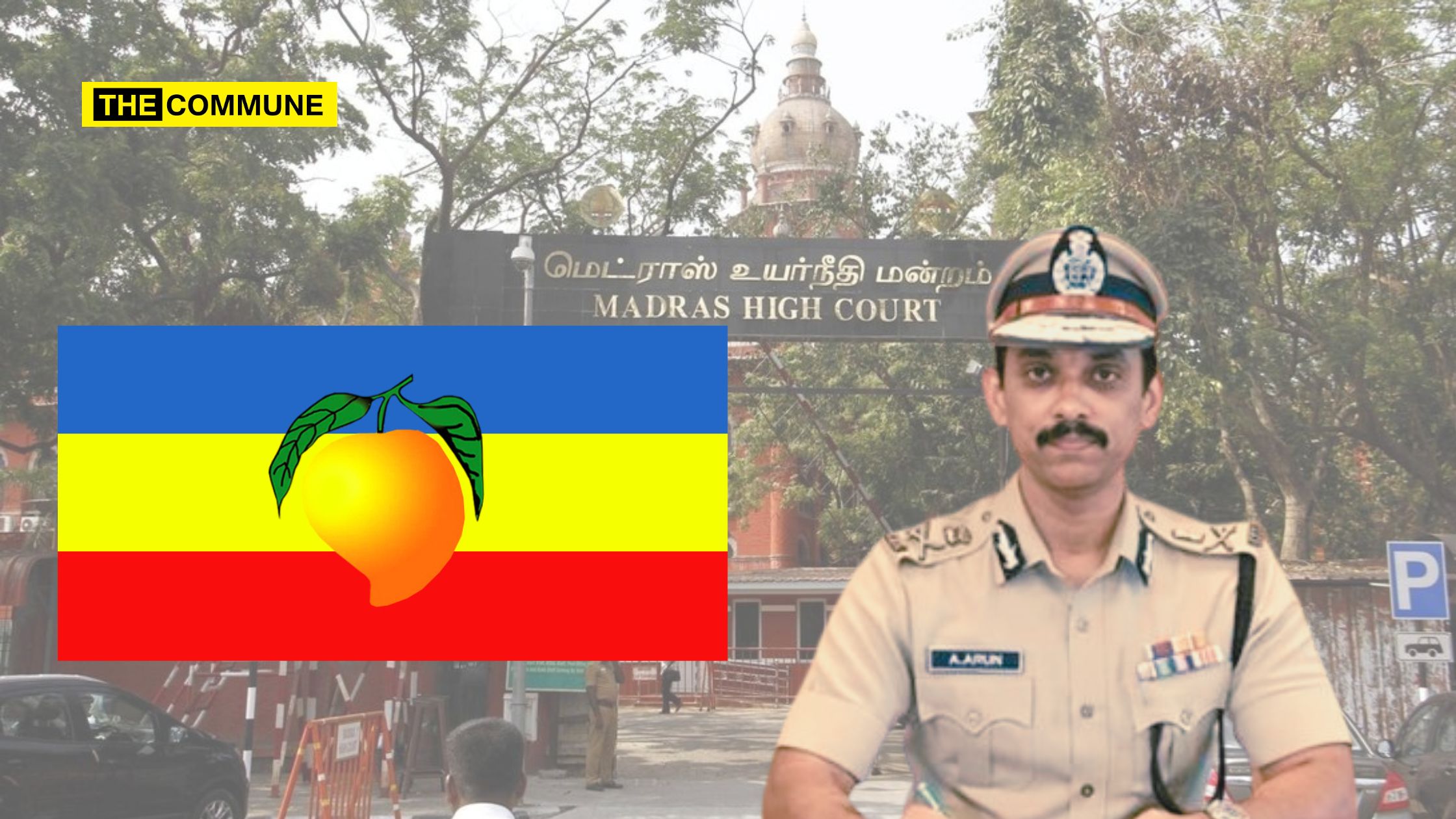
PMK Takes Chennai Police Commissioner Arun To Court Over DMK’s ‘Fast-Track’ Protest Approval While Denying Opposition Protest Requests

PMK Takes Chennai Police Commissioner Arun To Court Over DMK's 'Fast-Track' Protest Approval While Denying Opposition Protest Requests

The Pattali Makkal Katchi (PMK) has filed a petition in the Madras High Court against the Chennai Police Commissioner, A Arun, questioning the decision to grant permission exclusively to Dravida Munnetra Kazhagam (DMK) members for protests against Tamil Nadu Governor RN Ravi, alleging a violation of established rules.

On 2 January 2025, the PMK women’s wing, led by Soumiya Anbumani, attempted to stage a protest at Valluvar Kottam against the sexual assault of a student at Anna University. The Chennai police denied them permission, citing the absence of an application submitted five days in advance. The protesters were subsequently arrested.

In response, the PMK sought relief from the High Court. However, the judge dismissed the appeal and admonished all political parties against politicizing sensitive issues.

DMK Protest Granted Immediate Permission

In contrast, the DMK announced a statewide protest on the evening of 6 January 2025, set to take place the following morning (7 January 2025), condemning TN Governor R.N. Ravi. Despite the short notice, the Chennai police granted permission for the protest, allegedly bypassing the five-day rule. This decision enabled DMK members, including prominent leaders Kanimozhi, Dayanidhi Maran, and R.S. Bharathi, to participate in demonstrations across the state, including one at Saidapet, which reportedly caused significant traffic congestion.

Legal Action By PMK

The PMK’s legal counsel, K. Balu, challenged the police’s actions in the High Court, accusing them of partiality. “The police violated their own rules by granting immediate permission to the DMK while consistently denying opposition parties the same right,” he argued. Balu demanded action against the Chennai Metropolitan Police Commissioner and other officials involved.

High Court Judge P Velmurugan stated that if the petition is filed and numbered, it will be heard on Wednesday.

Subsequently, PMK propaganda secretary PK Sekar filed another petition targeting senior officials, including the Chief Secretary to the Tamil Nadu government, the Tamil Nadu DGP, the Chennai Metropolitan Police Commissioner, and the Saidapet Police Inspector. The petition emphasized the disparity in permissions granted and highlighted the DMK’s exemption from the five-day application requirement.

“The DMK’s protest caused severe traffic congestion and contravened police regulations. Action must be taken against the officials responsible for this bias,” the petition stated.

The High Court is expected to hear the PMK’s petitions on 8 January 2025.

(With inputs from Hindu Tamil)

Subscribe to our channels on Telegram, WhatsApp, and Instagram and get the best stories of the day delivered to you personally.

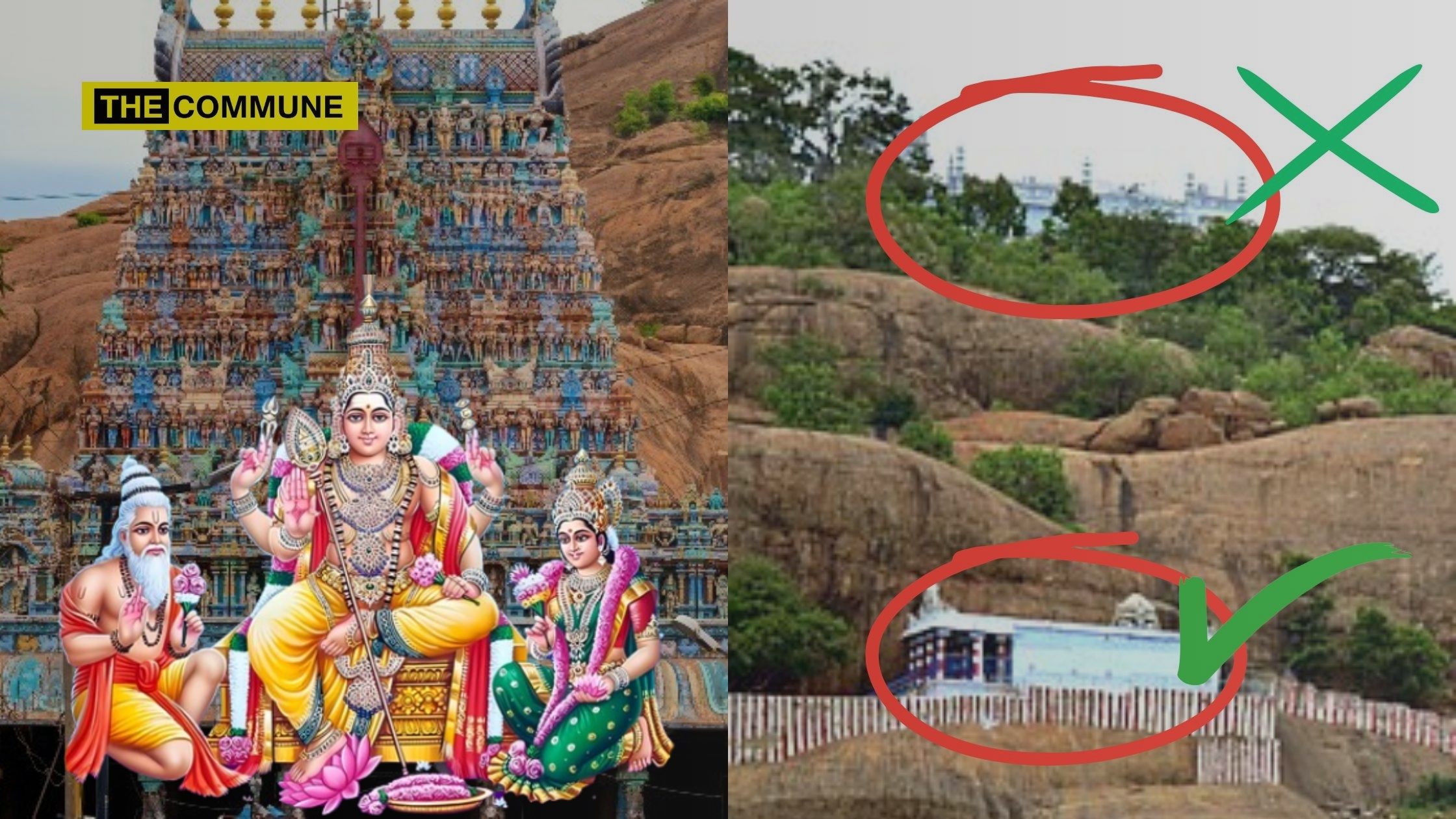
Thiruparankundram Hills: A Sacred Hindu Site Dedicated To Lord Murugan Or ‘Sikandar’ Hills? Here’s The Truth

Thiruparankundram Hills: A Sacred Hindu Site Dedicated To Lord Murugan Or 'Sikandar' Hills? Here's The Truth

Thiruparankundram hill, along with its adjoining temple, is home to one of Tamil Nadu’s oldest and most revered temples, dedicated to Lord Shiva and Lord Murugan. The Thiruparankundram Sri Subramania Swamy Temple, located in Madurai, is the first among the Aattrupadai Veedu (Six abodes of lord Murugan) temples, as sung by the famous Sangam poet Nakkeerar. Additionally, this temple is a Tevara Sthalam, a revered site in the Tamil Shaiva tradition.

There have recently been claims and counterclaims concerning the alleged rights of Muslims over the sacred hill of Thiruparankundram in Madurai. A group of Muslim protesters assembled in large numbers at Thiruparankundram Hills demanding permission to offer prayers at the uphill mosque claiming the sacred hills as ‘Sikandar Hills‘, a controversy erupted with police arrested the protesters for defying the denial of permission. This incident sparked a heated debate on social media, with many questioning the historical and cultural significance of Thiruparankundram Hills to Muslims. The region, steeped in history dating back to the Sangam era, has long been associated with Hindu religious practices. Notably, the sacred hills are linked to Lord Muruga, and the Thevaram hymns dedicated to Lord Shiva were sung in the area.

Delving deeper into the issue, it becomes clear that Muslim claims to the hilltop mosque are not a recent phenomenon, but have been ongoing since the 19th and 20th centuries. On both occasions, the legal system upheld the historical and religious ties of the Hindu community to the site. The courts ruled that Thiruparankundram Hills and its temple remain the rightful domain of Hindus, with Lord Muruga being the primary deity of the region.

What Did Privy Council 1931 Say About Claim of ‘Sikandar Hills’?

To trace the claim that the hills are referred to as ‘Sikandar Hills,’ one must look back at the judgment delivered by the Privy Council on 12 May 1931, reported in 1931. In this ruling, a five-member panel of Lords of the Privy Council addressed the issue, affirming that the Thiruparankundram Temple had demonstrated its continuous possession of the unoccupied portion of the hill. The temple authorities had treated this land as their property for time immemorial.

The matter before the Privy Council was whether the confiscation of endowed villages could be used to draw any presumption regarding the temple’s ownership of the waste land located within the Ghiri Veedhi (the pilgrims’ path) and part of the Malaiprakaram. Notably, it was acknowledged that the village of Thiruparankundram, where the temple is located, was part of this endowment.

Here are some excerpted paragraphs from the judgment of the Privy Council, “The question at hand is whether any presumption should be drawn from the confiscation of the endowed villages concerning the property rights in the waste land situated within the Ghiri Veedhi, which forms part of the Malaiprakaram. It is admitted that the village of Thiruparankundram, where the temple is located, was part of this endowment.”

The Thiruparankundram Temple is one of the most famous rock temples in Southern India, situated at the base of a 500-foot hill. Dedicated to Subramanya, the son of Lord Shiva, the inner shrine of the temple is carved directly from the rock of the hill. The image of the deity is also carved within this rock structure. Around the base of the hill, a nearly two-mile pilgrim’s path exists, where devotees perform the pradakshinam (circumambulation) with the right shoulder continuously presented to the deity. The image of the deity is an integral part of the hill, making it clear that the act of pradakshinam involves walking around the entire hill itself.

This pathway, also used for temple processions on ceremonial occasions, is called the Ghiri Veedhi, and it has been claimed as the temple’s property. Documents dating back to 1144 refer to it as the Malaiprakaram of the temple. The Subordinate Judge clarifies that ‘prakaram’ is a Sanskrit word meaning the outer precincts of a temple or fort, while ‘malai’ simply means hill.

On the whole, their Lordships were of the opinion that the Thiruparankundram Temple had proven its historical possession of the unoccupied portions of the hill, treating it as its property for generations. They agreed with the conclusion of the Subordinate Judge, which had found no grounds to disturb the findings. As a result, they humbly advised His Majesty to allow the appeal, set aside the decree of the High Court, and restore the decree of the Subordinate Judge dated 25 August 1923. The Secretary of State was ordered to pay the appellant’s costs in the High Court and before the Privy Council. This judgment underscores the long-standing historical ties and ownership of the hill and its surrounding areas by the Thiruparankundram Temple.

No Evidence Of Interference By Mahomedan Invaders With Thiruparankundram Hill

The historical record does not indicate any interference by Mahomedan invaders with the sacred hill of Thiruparankundram, despite the presence of other predatory forces that periodically established themselves in Madura. It is acknowledged that such invaders may have seized revenue-generating lands, which were part of the joint endowment for the temples. This could have included the cultivated and assessed lands within the Ghiri Veedhi (the pilgrim’s path). However, there is no evidence to suggest that the Thiruparankundram Temple or any of its adjuncts ever passed into secular hands during these periods of Mahomedan rule.

While some mosques and Mahomedan houses were constructed during intervals of Mahomedan dominance, it seems that these were an imposition on the Hindu occupants of the hill, who may have been forced to endure this development. Despite this, the rights the temple asserted were consistent with those granted by the East India Company, which recognized the temple’s ownership over the land.

The Appellant demonstrated that this claim could be supported by a government document, which could further clarify the issue. However, the local government declined to produce the document or offer any explanation regarding it. Nevertheless, the Subordinate Judge established that, at the time the document was created, government officials considered the entire hill to be temple property.

Moreover, the Appellant successfully showed that the unoccupied portion of the hill had been in the possession of the temple from time immemorial and had been consistently treated by the temple authorities as their own property. Based on this, the decree of the High Court dismissing the Appellant’s suit was found to be incorrect and was set aside. The appeal was thus allowed.

Ratio Decidendi (Legal Principle): A presumption may be drawn regarding the proprietary rights of lands from the confiscation of endowed villages, especially if those lands included cultivated and assessed lands within the villages.

Original excerpt reads, “There was no trace in historical works to which had been referred of any interference by Mahomedan invaders with sacred hill – They and other predatory forces which established themselves from time to time in Madura, no doubt seized revenue-producing lands which formed joint endowment of all temples, and these could have included cultivated and assessed lands within ghiri veedhi – However, but there seems to be no suggestion that Thiruparan-kundram Temple or any of its adjuncts passed at any time into secular hands – During some interval of Mahomedan domination that mosque and some Mahomedan houses were built, but this was an infliction which Hindu occupants of hill could have been forced to put up with. Thus, rights which temple could assert against Respondent were rights which East India Company granted to them – Further, Appellant established that document could be elucidated by certain – Government order , and called upon Local Government to produce it, but they declined to do so, nor did they offer any explanation of document at all – Subordinate Judge showed that at date of its preparation, at all events, whole hill was regarded by Government officials as temple property – Moreover, Appellant had shown that unoccupied portion of hill had been in possession of temple from time immemorial and had been treated by temple authorities as their property – Therefore, decree of High Court dismissing Appellant’s suit liable to set aside – Appeal allowed. “Ratio Decidendi” Presumption shall be drawn from confiscation of endowed villages as to proprietary rights if lands have included cultivated and assessed lands within villages.”

Subscribe to our channels on Telegram, WhatsApp, and Instagram and get the best stories of the day delivered to you personally.
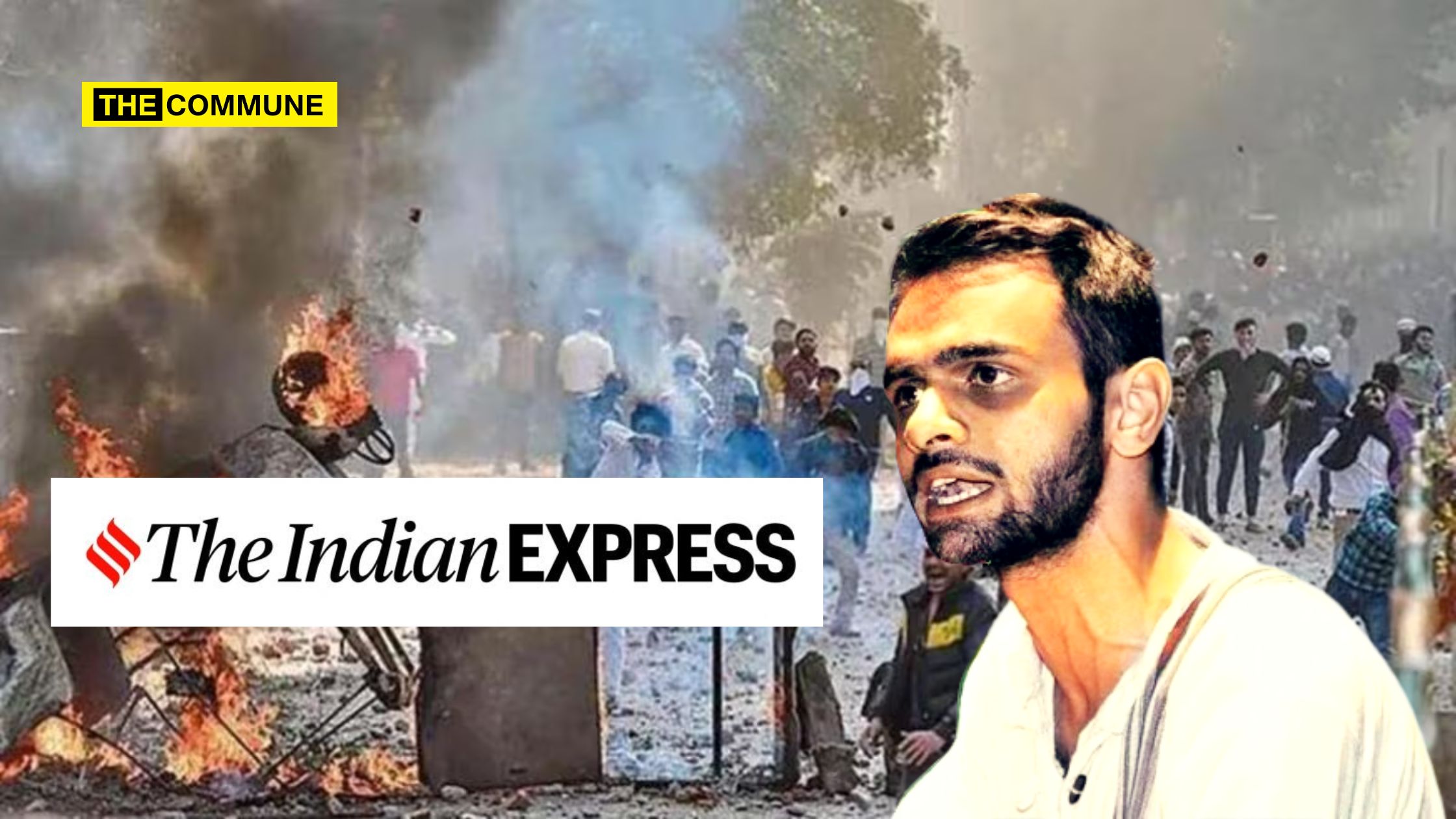
The Indian Express Humanizes 2020 Delhi Riots Accused Umar Khalid – An Attempt At Shaping Whitewashing?

The Indian Express Humanizes 2020 Delhi Riots Accused Umar Khalid.

The Indian Express article titled When Umar Khalid came home” exemplifies a troubling trend in journalism where individuals facing serious charges of violence and sedition are portrayed in an overly sympathetic light. By romanticizing the personal details of Umar Khalid’s life during his interim bail period, the article shifts focus away from the grave allegations against him, which include conspiracy in the 2020 Delhi riots that led to 53 deaths and left over 200 injured.

Problematic Quotes From The Article

Let’s take a look at some of the problematic quotes in the Indian Express article.

“How can staying in a cage for four years be easy for someone who loves being out in the public all the time?”

The use of the term cage paints Khalid as a victim rather than someone facing trial for orchestrating violence. It subtly undermines the gravity of the charges under the Unlawful Activities (Prevention) Act (UAPA).

“He was savouring every ray of sunlight. It was as if he had returned to the city from a cave in a jungle.”

This poetic depiction trivializes the accusations of being part of alarger conspiracythat led to communal violence and death.

“She cooked non-vegetarian food for him every dayhe’s very fond of mutton. His friends got burgers, pizzas, and cakes for him. He also likes cold drinks a lot.”

This focus on food and personal preferences risks trivializing the allegations and making Khalid appear relatable or sympathetic.

“There is a conception among others in jail that my son is a terrorist. It is not easy to convince them otherwise…”

This quote frames Khalid as a misunderstood victim, rather than addressing the evidence or allegations against him.

“The people who spent years in jail would have already lost their social identity and real lives by then.”

This sentiment, while valid in discussions on justice reform, glosses over the suffering of riot victims and the legal proceedings that led to Khalid’s incarceration.

Overall, getting such quotes from the family and publishing them in a national daily ensures that the narrative of portraying him as innocent to the public is established.

Let’s take a look at how such humanization and romanticization of terrorists is a common thread that runs across the world of journalism globally.

Romanticizing Terrorists And Those Accused Of Violence & Terror: A Pattern InJournalism”

This isn’t the first instance where media outlets have softened public perceptions of individuals accused of heinous crimes. Some notable examples include:

Osama bin Laden

The New York Times described Osama Bin Laden as arich young millionaireand focused on him beinga tall and handsome man“. They even published an elaborate obituary humanizing a terrorist.

Omar Sheikh

The Guardian reported terrorist Omar Sheikh being aneccentric, good-humoured schoolboyof Forest School and a member of the British arm-wrestling squad.

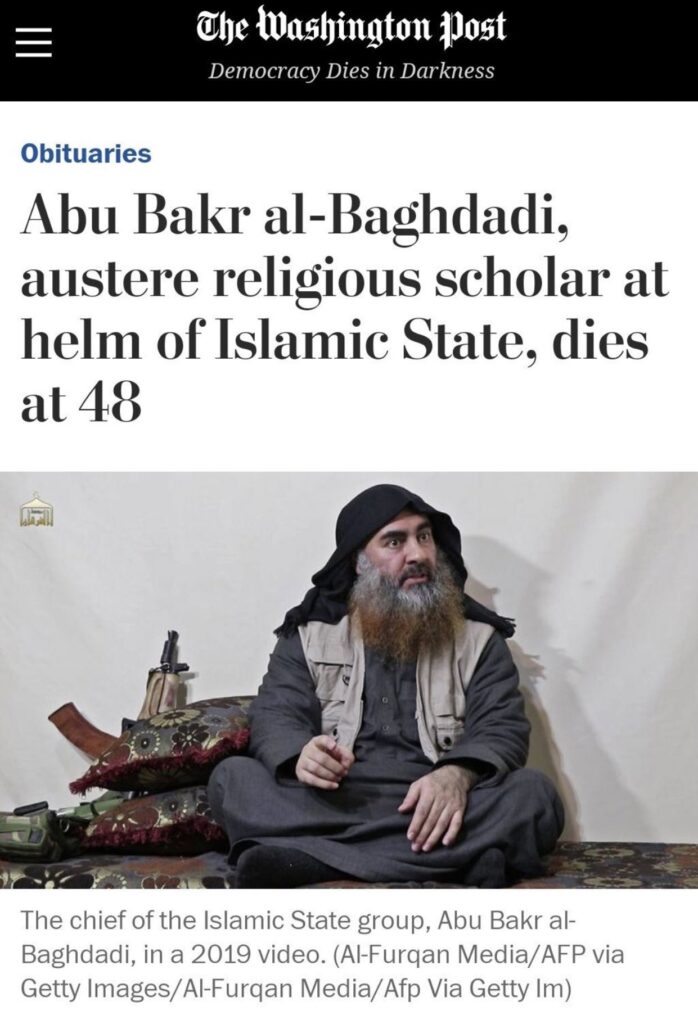
Abu Bakr al-Baghdadi

Washington Post referred to terrorist and Islamic State leader Abu Bakr al-Baghdadi asAustere Religious Scholarin its obituary.

Ajmal Kasab

BBC portrayed 26/11 Mumbai attack terrorist Ajmal Kasab as a village boy by publishing a video report after visiting his village.

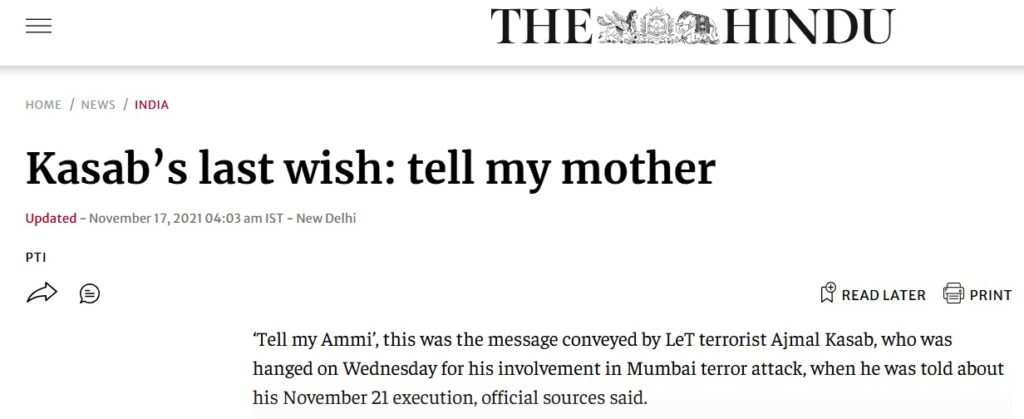
During the trial of Ajmal Kasab, the lone surviving terrorist of the 2008 Mumbai attacks, some media outlets focused on his youth and background, with headlines likeKasab’s Last Wishwhich humanized a mass murderer.

Boston Bomber

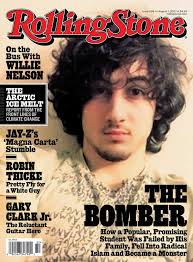
Multiple media outlets such as Rolling Stone described the Boston Marathon bomber (2013) as ahandsome young manandpromising student“.

Burhan Wani

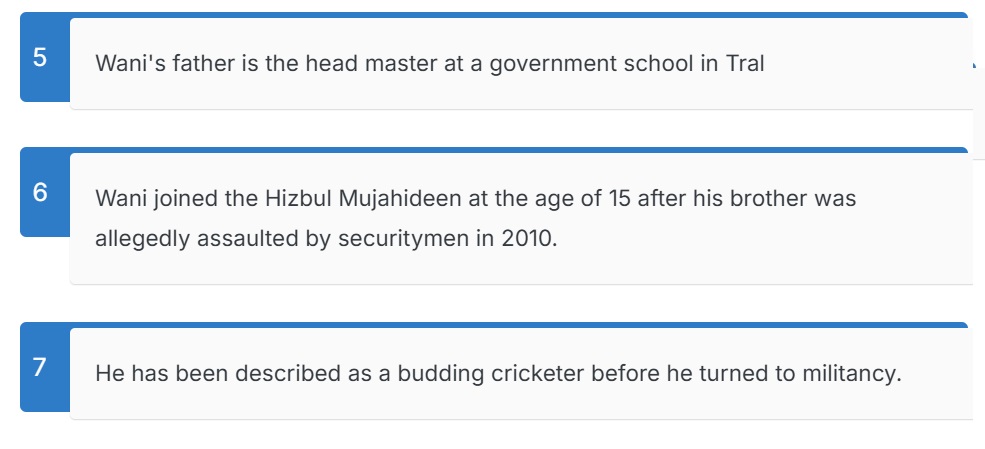
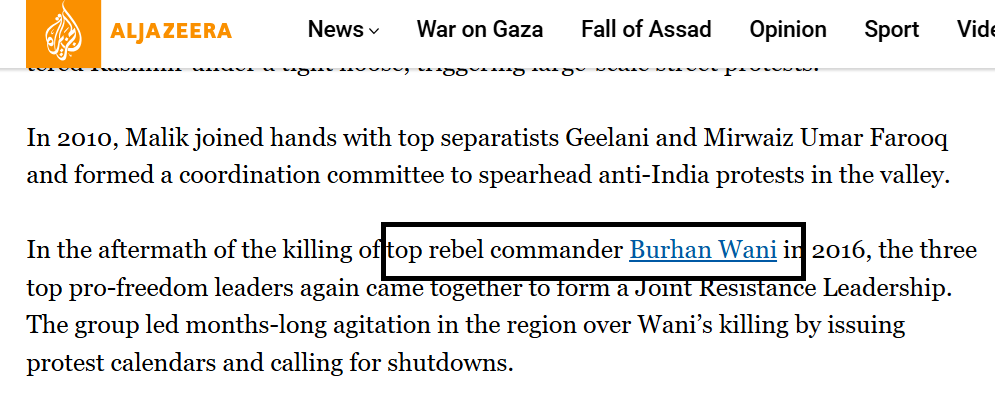
After the killing of Burhan Wani, a Hizbul Mujahideen commander, some Indian journalists such as Barkha Dutt and her media outlet NDTV referred to him as ason of a headmasterand abudding cricketeror sometimes astop rebel commanderfocusing on his background and qualities rather than his role in violence and terrorism.

Afzal Guru

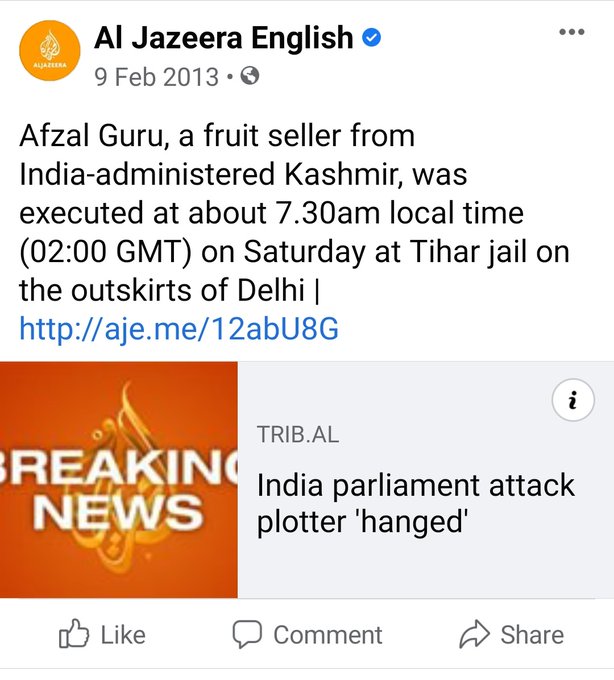
Afzal Guru, convicted for his role in the 2001 Parliament attack, was referred to as aformer fruit seller“, sometimes as afamily manorvictim of systemic injusticeby certain sections of the media, downplaying his involvement in the attack.

Yasin Malik

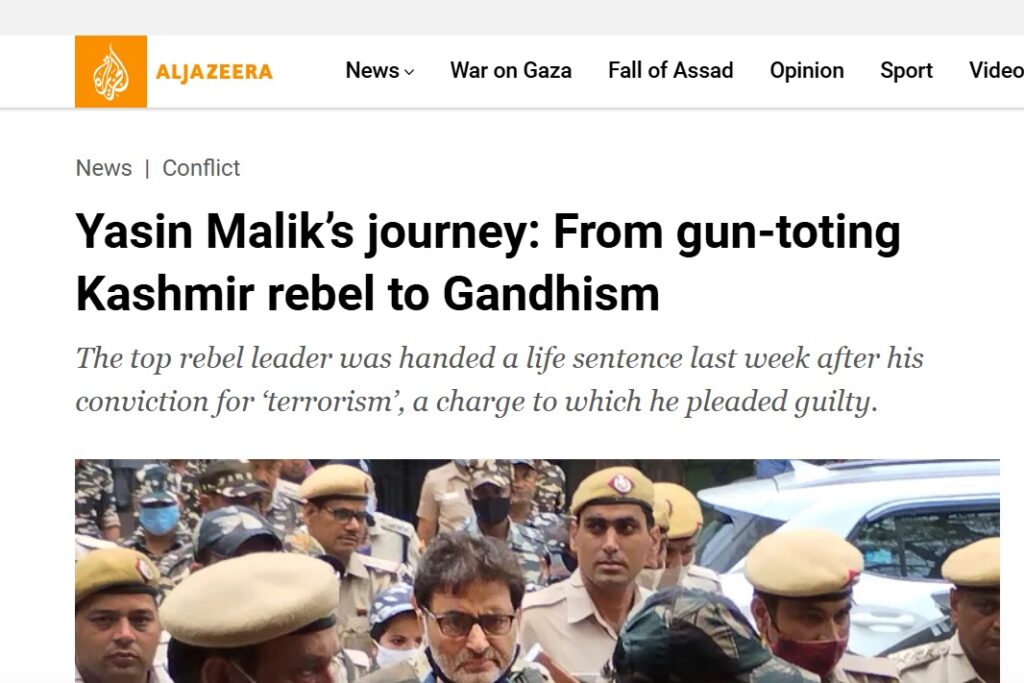
Yasin Malik, a terrorist who murdered four Indian Air Force officers in broad daylight at point-blank range, has often been described as atop rebel leaderby certain media outlets, despite his involvement in violence and terrorism. Al Jazeera even wrote gloriously about how hegave up arms and became a Gandhian“.

Romanticizing those accused of inciting or perpetrating violence undermines the seriousness of their alleged crimes and risks creating public sympathy for actions that have led to significant harm. In Khalid’s case, the Delhi riots left over 50 dead and hundreds injured, with property destroyed and communities traumatized. Instead of highlighting the suffering of the victims, articles like the one published by The Indian Express shift the narrative to the accused’s personal hardships and detach him from the crime.

Subscribe to our channels on Telegram, WhatsApp, and Instagram and get the best stories of the day delivered to you personally.
Puthiya Tamilagam Chief Dr Krishnasamy Exposes DMK’s Constitutional Hypocrisy Over National Anthem Row

Puthiya Tamilagam Chief Dr Krishnasamy Exposes DMK's Constitutional Hypocrisy Over National Anthem Row

Puthiya Tamilagam party chief Dr K Krishnasamy has accused the ruling DMK government of hypocrisy regarding the National Anthem controversy, particularly targeting Tamil Nadu Governor RN Ravi. He criticized the government’s stance, which opposed singing the National Anthem in the Assembly, a practice followed nationwide.

Krishnasamy pointed out the government’s inconsistency, stating that while they claim to uphold the Constitution with one hand, they are simultaneously violating it with the other. He expressed his frustration with the government’s adamant refusal to sing the anthem, which contradicts their professed commitment to constitutional values.

Stating his party’s official handle, K Krishnasamy criticized the DMK government, saying, “Why is the DMK government still adamant about refusing to sing the national anthem? States are formed based on the provisions of the Indian Constitution. Accordingly, the Madras Presidency was formed in 1956; later it was renamed ‘Tamil Nadu’. The Constitution of India guides the formation of the Tamil Nadu Legislative Assembly and its functions. The Governor serves as the head of the state’s administration. When it is a practice across India to sing the ‘National Anthem’ before and after every legislative session, it is not right to violate that practice in Tamil Nadu. A state legislative assembly cannot operate against the Constitution while claiming ‘Long live the Constitution’. No governor can accept a violation of the rule that the national anthem must be played at the start of a session. It was inevitable that the Governor walked out today after the Tamil Nadu legislative assembly refused to sing the national anthem at the beginning of the session.”

Subscribe to our channels on Telegram, WhatsApp, and Instagram and get the best stories of the day delivered to you personally.
BJP TN President Annamalai Slams DMK Govt Over Healthcare Failures Following Death In Ramanathapuram PHC

BJP TN President Annamalai Slams DMK Govt Over Healthcare Failures Following Death In Ramanathapuram PHC

Tamil Nadu BJP President K Annamalai has sharply criticized the state’s health department and healthcare infrastructure, accusing the DMK-led administration of failing to appoint sufficient doctors in government hospitals, leading to avoidable deaths. His remarks were prompted by the recent death of an individual named Pandithurai, who died after being electrocuted in Ramanathapuram. The tragedy occurred when no doctor was available to administer first aid, highlighting the shortage of medical staff in the region.

In a post on his official X (formerly Twitter) account, Annamalai expressed his shock over the incident, stating, “The news that Pandithurai, who came for emergency treatment after being electrocuted at the R.S. Mangalam Primary Health Center in Ramanathapuram district, died without even receiving first aid due to the absence of a doctor is very shocking. I express my deepest heartfelt condolences to his family. The number of deaths in the health sector has increased significantly throughout Tamil Nadu. The fundamental reason for this is the failure to appoint enough doctors. It has been revealed through a recent Right to Information Act query that 1,467 vacant doctor posts across Tamil Nadu have not been filled. Despite the fact that vacancies across various government sectors not being filled, the fact that even enough doctors being appointed even in the health sector, who are responsible for the lives of the public shows that the DMK government takes the lives of poor, ordinary citizens seeking treatment at government hospitals as trifle.”

Annamalai further criticized Health Minister Ma. Subramanian, questioning his inaction in addressing the crisis. “We are losing at least one life a week in Tamil Nadu’s healthcare system. Instead of addressing this, what important work is the minister doing in health sector? After lives are lost, will the relief theatrics you perform bring those lost lives back?” he said.

Subscribe to our channels on Telegram, WhatsApp, and Instagram and get the best stories of the day delivered to you personally.
North Korea Claims Successful Test Of New Intermediate-Range Hypersonic Missile

North Korea Claims Successful Test Of New Intermediate-Range Hypersonic Missile.

North Korea said on Tuesday that it has successfully test-fired a new intermediate-range ballistic missile (IRBM) tipped with a hypersonic warhead, claiming that the weapons system will reliably deter any rivals in the Pacific region.

But the South Korean military said the North’s claimed success of a hypersonic missile launch could be “deception,” raising questions about its flight distance and other specifications.

North Korea said the missile flew some 1,500 kilometres at 12 times the speed of sound the previous day during the testing overseen by leader Kim Jong-un via a monitoring system, Yonhap news agency reported quoting the Korean Central News Agency (KCNA).

The South’s Joint Chiefs of Staff (JCS) said on Monday that the North’s suspected hypersonic missile, fired from the Pyongyang area, flew about 1,100 km before falling into the East Sea.

The North Korean leader said the development of such a missile was aimed at bolstering the country’s nuclear war deterrent by “making the weapon system to which no one can respond the linchpin of strategic deterrence.”

“The hypersonic missile system will reliably contain any rivals in the Pacific region that can affect the security of our state,” Kim was quoted as saying by the KCNA. “The system can deal a serious military strike to a rival while effectively breaking any dense defensive barrier,” he added.

The North’s latest missile launch, the first provocation in about two months, came about two weeks before US President-elect Donald Trump assumes office on January 20.

It also came amid political turmoil in South Korea sparked by President Yoon Suk Yeol’s botched martial law imposition last month and his subsequent impeachment by the National Assembly.

“North Korea probably intended to flex its muscle against the United States. As it said the latest launch was a test-firing, the weapons system does not appear to be completed, pointing to demand (to further develop) in terms of military technology,” an official at South Korea’s unification ministry told reporters.

A hypersonic missile is usually hard to intercept with existing missile defence shields. It travels at a speed of at least Mach 5 — five times the speed of sound — and is designed to be manoeuvrable on unpredictable flight paths and fly at low altitudes. The KCNA said the hypersonic glide vehicle atop the new IRBM reached its first peak at a height of 99.8 km and the second at 42.5 km while making a 1,500-km-long flight as scheduled before hitting a designated target point at sea.

But the South Korean military dismissed the North’s claim as a “deception,” saying there was no second peak. “The flight range analysed by South Korea, the US and Japan was around 1,100 km and (the missile) did not reach a second peak,” JCS spokesperson Col. Lee Sung-un told a regular press briefing, noting the North has a track record of “exaggerating.” North Korea also claimed a new compound of carbon fibre was used in manufacturing the engine body of the hypersonic missile, and an unspecified “comprehensive and effective” method was introduced for the flight and guidance control system.

Experts said the North appeared to fire the upgraded version this week of a hypersonic missile that it launched in April last year. Pyongyang then claimed the IRBM loaded with a hypersonic glide vehicle flew 1,000 km. The South’s JCS then said the missile flew 600 km, calling the North’s claims partially “exaggerated,” although it said Pyongyang appears to have made some technological progress in its hypersonic weapons program.

“As the North has claimed it has acquired technology that is ‘by no means easy,’ there could be a technical improvement of its own. But it is also hard to exclude the possibility of technical cooperation from Russia,” Hong Min, a senior research fellow at the Korea Institute for National Unification, said.

North Korea and Russia have been deepening military cooperation under a mutual defence treaty signed in June, with the North accused of sending more than 11,000 troops to Russia to support its war against Ukraine.

Hypersonic missiles, nuclear-powered submarines, spy satellites, and solid-fuel intercontinental ballistic missiles are among the sophisticated weapons Kim vowed to develop during a key party congress in 2021.

At a year-end party meeting, the North’s leader said his country would carry out the “toughest” counteraction strategy toward the US and claimed that military cooperation among South Korea, the US and Japan has expanded into a “military bloc for aggression.”

–IANS

Subscribe to our channels on TelegramWhatsApp, and Instagram and get the best stories of the day delivered to you personally.