Home Blog Page 386

“What Bro! Practice What You Preach Bro”: Annamalai Gives Befitting Reply To Part-Time Politician Vijay Who Runs CBSE School That Teaches Hindi But Wants 2 Language Policy In Govt Schools

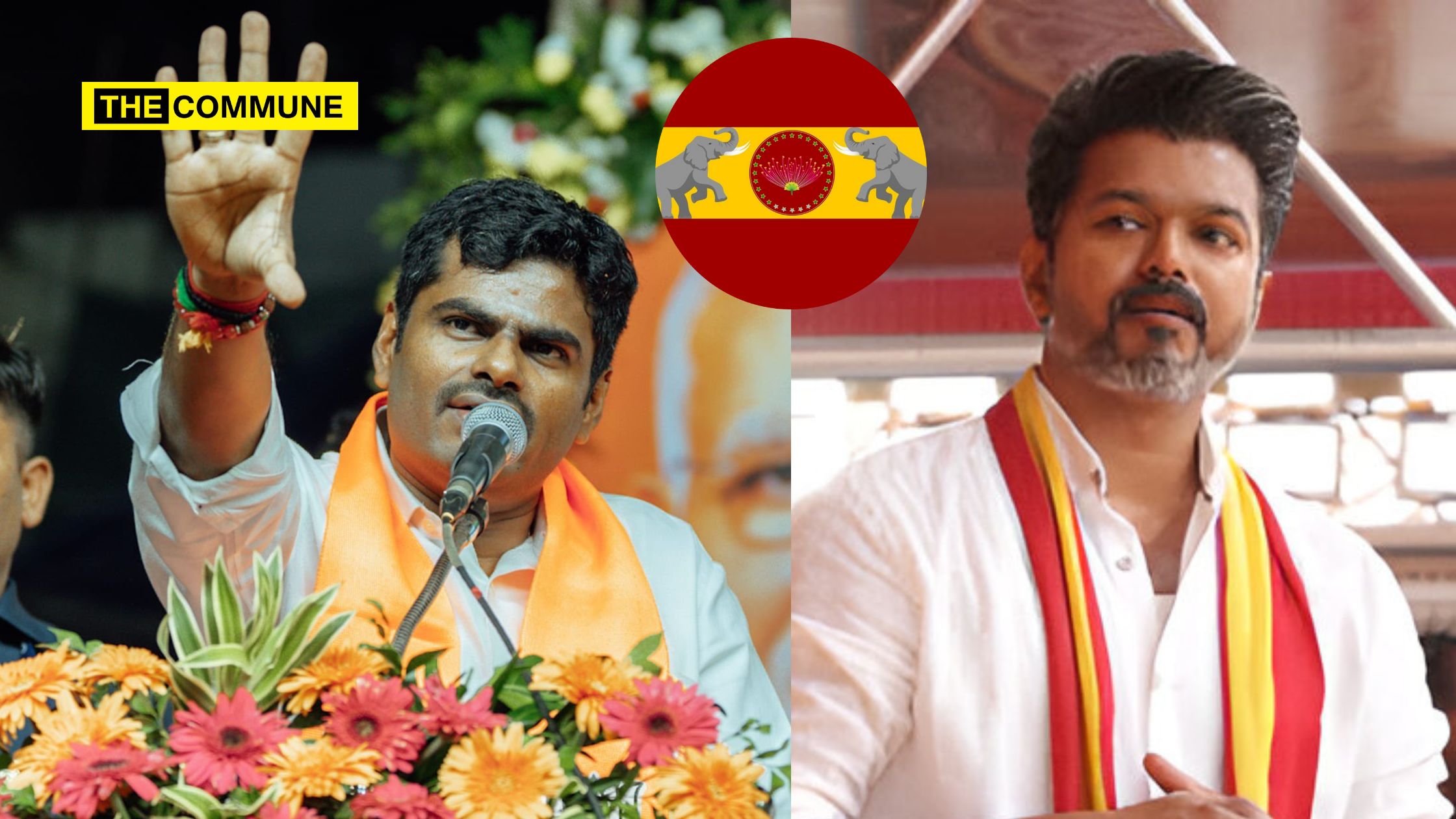
Tamil Nadu BJP President K. Annamalai took a swipe at part-time politician Vijay for his inconsistent position on the language policy, especially after he once again opposed the idea of introducing a third language during his party’s second anniversary celebration. Speaking to a crowd in Coimbatore, Annamalai questioned why Vijay’s children and the school he runs, Vijay Vidhyashram, follow a three-language policy, while his party (Tamilaga Vettri Kazhagam) cadres are expected to study under a two-language system.

Annamalai remarked, “I want to tell Vijay, practice what you preach, bro. Why bro are you spreading lies? Your children study three languages, and your school Vijay Vidhyashram follows a three-language policy. But the children of TVK party cadres are expected to study just two languages? What bro? Practice what you preach bro!”

This criticism followed Vijay’s involvement in the ongoing language debate between the DMK-led Tamil Nadu government and the BJP-led Centre. During TVK’s first-anniversary event, Vijay targeted both the state and central governments, accusing them of misleading the public while pretending to have differences on the issue. He also ridiculed the Centre’s position on the National Education Policy (NEP), comparing the political dispute to a childish argument.

Vijay also mocked the BJP and DMK’s social media clashes over the language issue, saying, “They’re just playing on social media with hashtags, pretending to fight, and expect us to buy it. What bro, that’s really wrong, bro.”

Annamalai didn’t stop there, also taking aim at Vijay’s involvement in the #GetOut campaign, launched at TVK’s anniversary event. Vijay, along with party leaders Aadhav Arjun and N Anand, signed a board with the message “Get Out,” but Annamalai pointed out that political strategist Prashant Kishor, who played a significant role in the 2021 DMK victory, did not sign the board.

(With inputs from India Today)

Subscribe to our channels on TelegramWhatsApp, and Instagram and get the best stories of the day delivered to you personally.

“Don’t Impose Another Language”: Says TVK Chief Vijay Who Runs A CBSE School Vijay Vidyashram That Teaches Hindi

The Tamilaga Vettri Kazhagam’s second-year commencement celebration took place in Chengalpattu district on 26 February 2025 morning. Party president, part-time politician, and full-time actor Vijay criticized both the state and central governments, accusing them of engaging in political maneuvering over the three-language policy issue.

Speaking to the cadre he said, “Now they have just raised a new problem, the three-language policy, that is if this is not implemented here, they will not give this education fund to our state government. You know how these LKG-UKG kids fight, they are doing the same thing. It is their (centre) duty to give, and it is their (DMK) right to take, but do they even realize how serious this problem is? These two people are our fascism, our payasam – our political enemy and our principle enemy. What are these two people doing? Both of them discuss among themselves, do all this “setting“, and then play with hashtags on social media. What is going on here? These two pretend to beat each other up and they expect us to believe them. They expect the people to believe it. What bro, it’s very wrong, bro. We do not have to explain all this to the people. They know how big a deception this is. Our land is a land of self-respect. We respect everyone, but we will not give up self-respect for anyone or anything. We respect all languages. There are no two ways about it. Personally, anyone can study in any school they want. You can learn any language you want, whenever you want, whenever you feel like it. That’s all their personal right. But if you violate the federal principle and question the language policy of a state government and forcefully impose another language, that too politically, impose another language, what is this bro? Therefore, on behalf of our Tamilaga Vettri Kazhagam, we will reject all this false propaganda and firmly oppose this.”

Vijay Runs A CBSE School Near Chennai That Offers Hindi As Part Of Curriculum

The hypocrisy of actor and part-time politician C. Joseph Vijay has been exposed, as it has come to light that he operates a CBSE school in Chennai that adheres to the very three-language policy his party claims to oppose. While his party vehemently opposes the three-language policy introduced through the National Education Policy (NEP), it has now come to light that Vijay himself runs a CBSE school in Chennai that follows the very policy he condemns.

Vijay Vidyashram, an English-medium CBSE school located in Padur near Chennai, follows the three-language policy.

A flyer seeking applications for teachers for Hindi and a few other subjects was shared on social media following his anti-Hindi and anti-NEP remarks. The flyer advertised vacancy for teachers for the subjects English, Maths, Hindi, Science, Computer Science, Social Studies, and PT.

Some videos of the students at the school have been circulating on social media. These are most likely from the school’s Instagram handle. In one such video is a Hindi play performed by Class 3 students.

This is from a performance for Hindi Diwas.

In another post, we find a picture of two students on the occasion of of Hindi Pariyojana Diwas.

The post caption reads, “Echo of Hindi tradition! We had a lively celebration of Hindi culture on our Project Day, where students showcased their talents through music, dance and art. We are grateful to have this opportunity to preserve and promote our cultural heritage! #ProjectDay #हमारीमूलतत्त्व #हिंदीसंस्कृति (HindiCulture) #हिंदीभाषा (HindiLanguage) #हिंदीकला (HindiArt) #हिंदीकविता (HindiPoetry) #हिंदीगीत (HindiSongs) #हिंदीप्रेरणा (HindiInspiration) #हिंदीकहानी (HindiStory) #हिंदीसंवर्धन (HindiPromotion) #हमारीहिंदी (OurHindi) #हिंदीपारंपरिकता (HindiTradition)”

The school literally celebrates Hindi language and conducts several programmes around the subject in conjuction with the prescribed NEP syllabus.

From opposing Hindi to NEP, Vijay has exposed his hypocrisy blatantly – do one thing and preach something else for the general public to gain political traction.

Evidence Of Vijay’s Link To Vijay Vidyashram

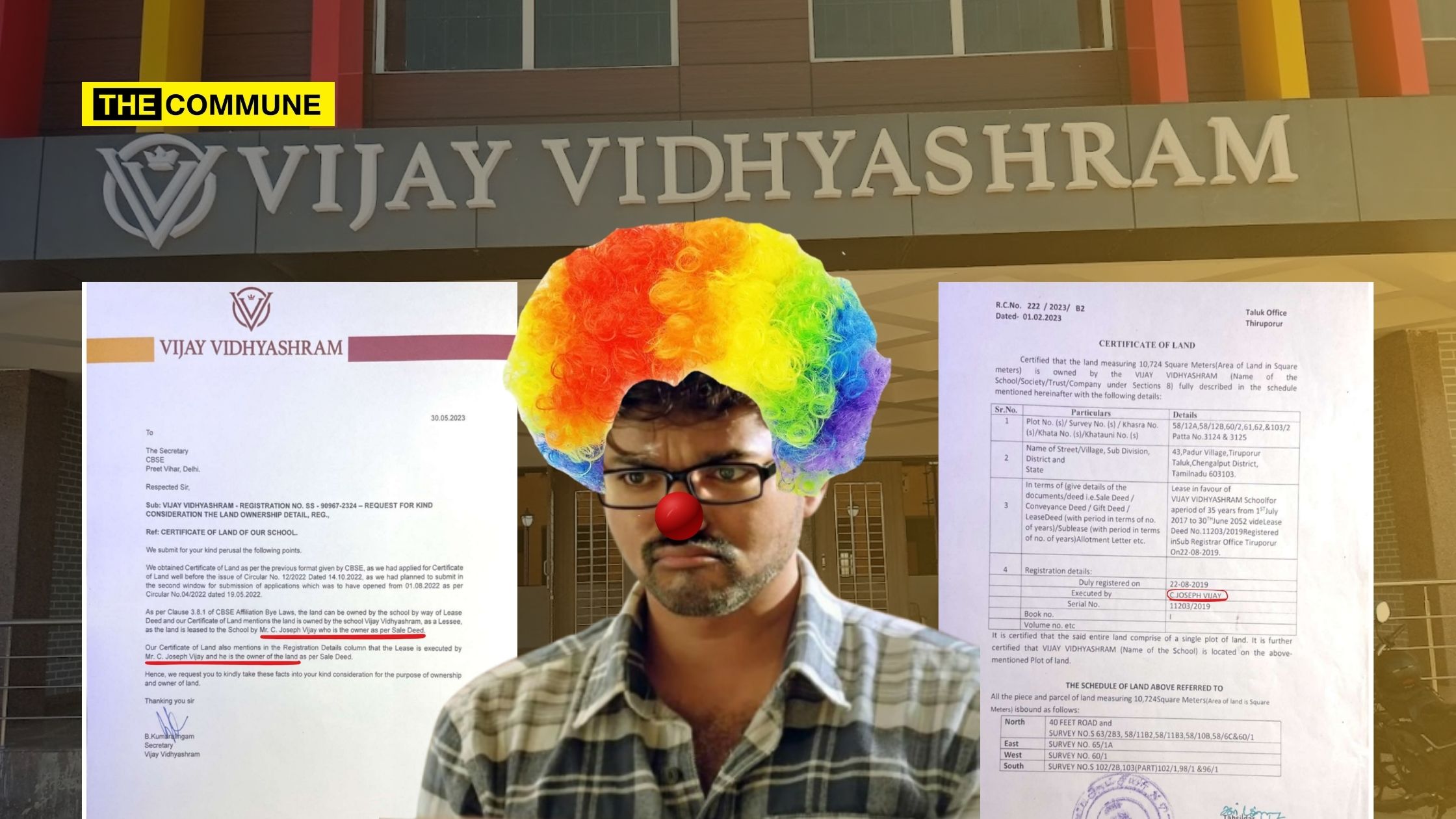
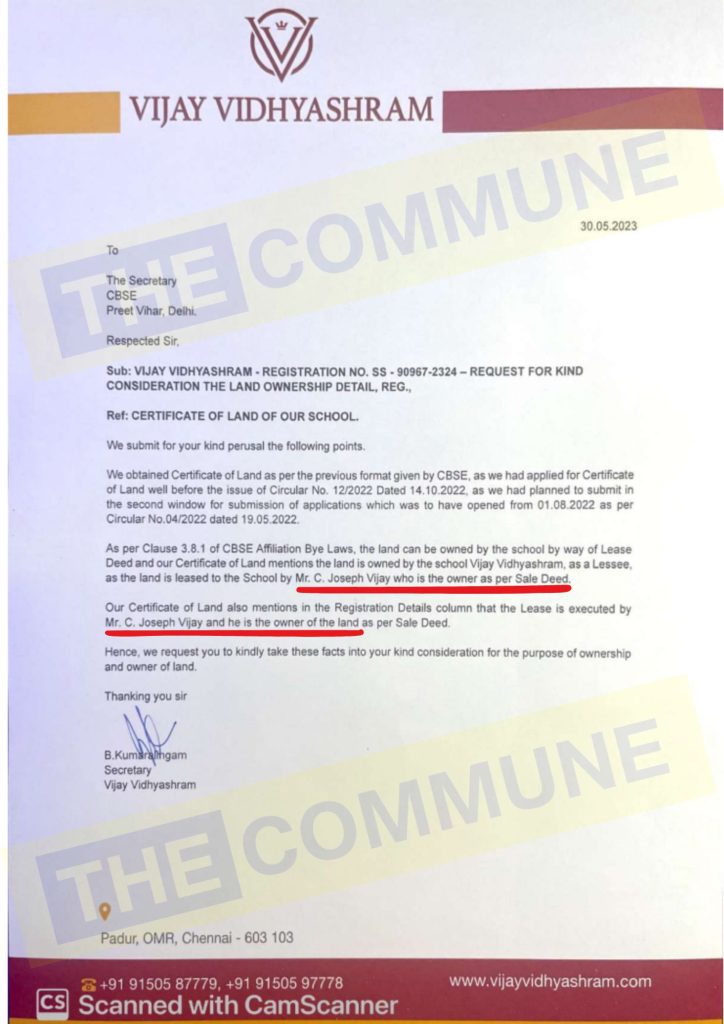
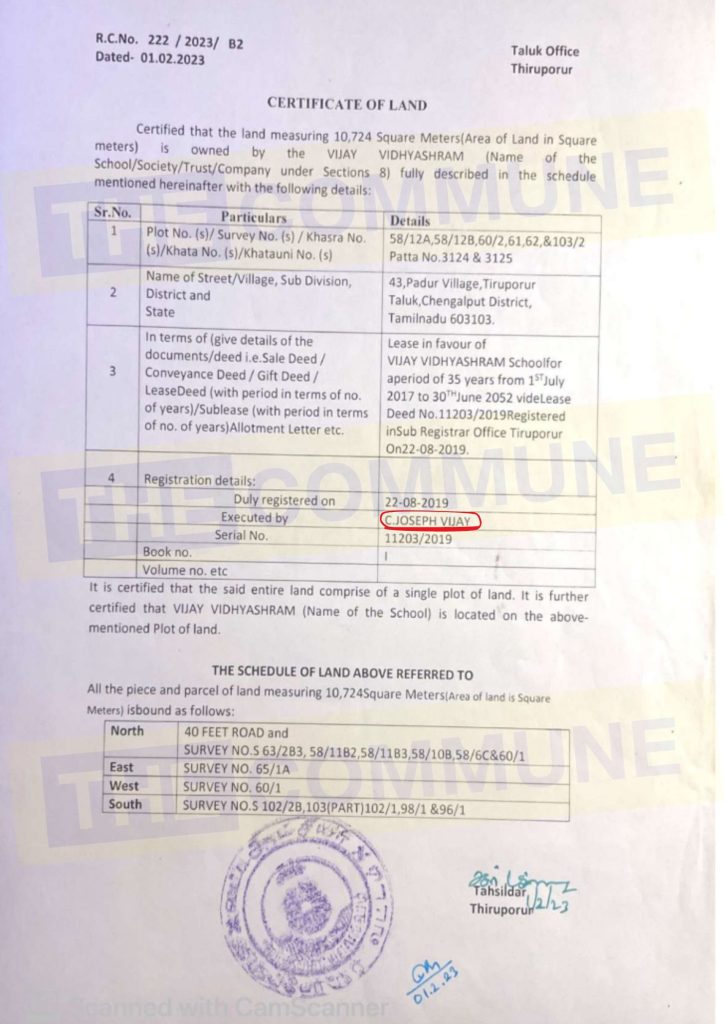
Here are documents accessed by The Commune that prove that the school is linked to part-time politician Vijay.

The land on which Vijay Vidyashram is built is owned by C. Joseph Vijay, as documented in the Sale Deed. He has leased the 10,724-square-meter property to the school. The Certificate of Land confirms that Vijay Vidyashram holds the land, and the lease agreement was made in favor of the school by Joseph Vijay.

The blatant hypocrisy of C. Joseph Vijay cannot be ignored. While he vocally criticizes the three-language policy and presents himself as a champion of Tamil, the inconvenient truth is that he runs a CBSE school in Chennai that directly follows the very policy he claims to oppose. His attempt to position himself as a defender of Tamil language rights crumbles in the face of this exposed contradiction.

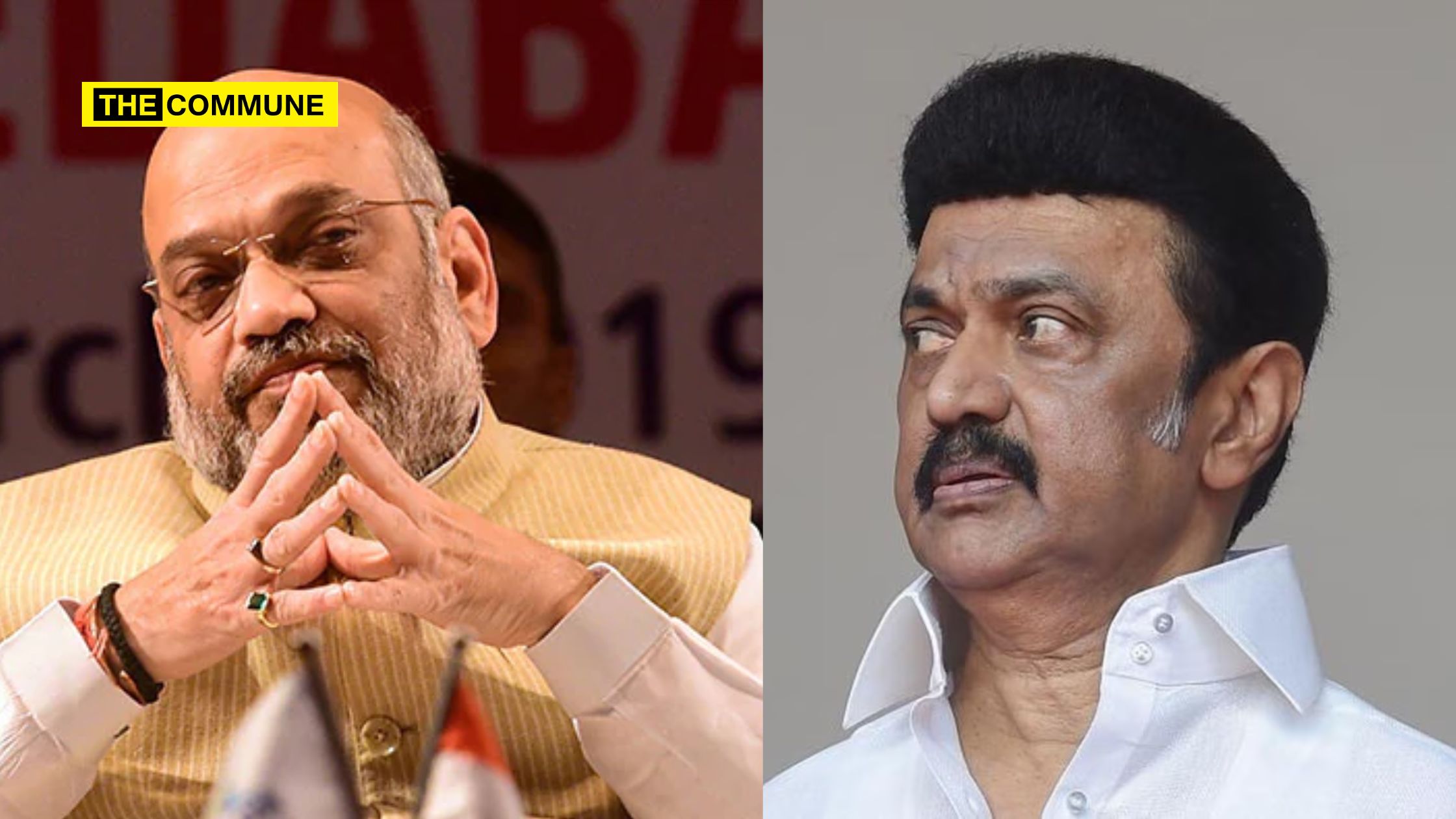
“Time Has Come To Eradicate The Corrupt And Anti-National DMK Govt”: Home Minister Amit Shah Trains Guns On MK Stalin

amit shah stalin dmk

Union Home Minister Amit Shah arrived in Coimbatore on 25 February 2025 night on a special flight from Bhopal. On the morning of 26 February 2025, he inaugurated the BJP’s district headquarters in the city before heading to the Isha Yoga Foundation to participate in the Maha Shivaratri celebrations.

Speaking at a public meeting in Coimbatore, Shah said, “In 2024, we have formed the govt in Odisha with a full majority for the first time. After a long time, Andhra Pradesh now has the NDA government. Haryana, Mumbai/Maharashtra and Delhi, the hattrick of victories has proved that the people’s faith lies with the BJP. The year 2025 began with the victory in Delhi, and 2026 will begin with the victory of NDA in Tamil Nadu. I have come to give a clarion call to all the karyakartas of BJP in Tamil Nadu. Time has come to remove the anti-national and corrupt DMK government of Tamil Nadu.”

He also said that all the forces that are anti-national in nature and against nationalism will be uprooted by 2026. Shah continued to enumerate the schemes and pro-Tamil actions taken by Prime Minister Modi.

Training his guns at TN CM Stalin and spitting facts, he said, “Compared to the entire country, the state of law and order is the worst in Tamil Nadu. Women are unsafe even in Universities. The culprits of Vengaivayal have not been punished yet. The perpetrators of the 1998 bomb blasts were given protection during their funeral. Synthetic drugs mafia is working in cahoots with the ruling party, so is the mineral and sand mining. DMK leaders have done master’s degree in corruption. One leader is caught in cash for jobs scam, another is caught in coal scam, one is caught in CRIDP scam, one is in the 2G scam, one is caught in illegal mining scam. DMK seems to make such corrupt people as its members.”

He further said, “Tamil Nadu CM always says that Modi govt has done injustice to the state, I am here to tell him – if you are truthful, reply to what I am asking in front of the people of the state. UPA government was there from 2004 to 2014, and it gave ₹1,52,901 crores in the form of grant-in-aid and devolution to the state, whereas the Modi government gave ₹5,08,337 crores in 10 years. In addition to that, the Modi government also gave ₹1,43,000 crore for infrastructure development.”

Subscribe to our channels on Telegram, WhatsApp, and Instagram and get the best stories of the day delivered to you personally.

Tamil Nadu’s ₹5,882 Crore Mineral Mining Scam: Sri Kari Sastha Karudaiyar Temple Lands Exploited, Devotees Seek ₹1,000 Crore Royalty For Temple

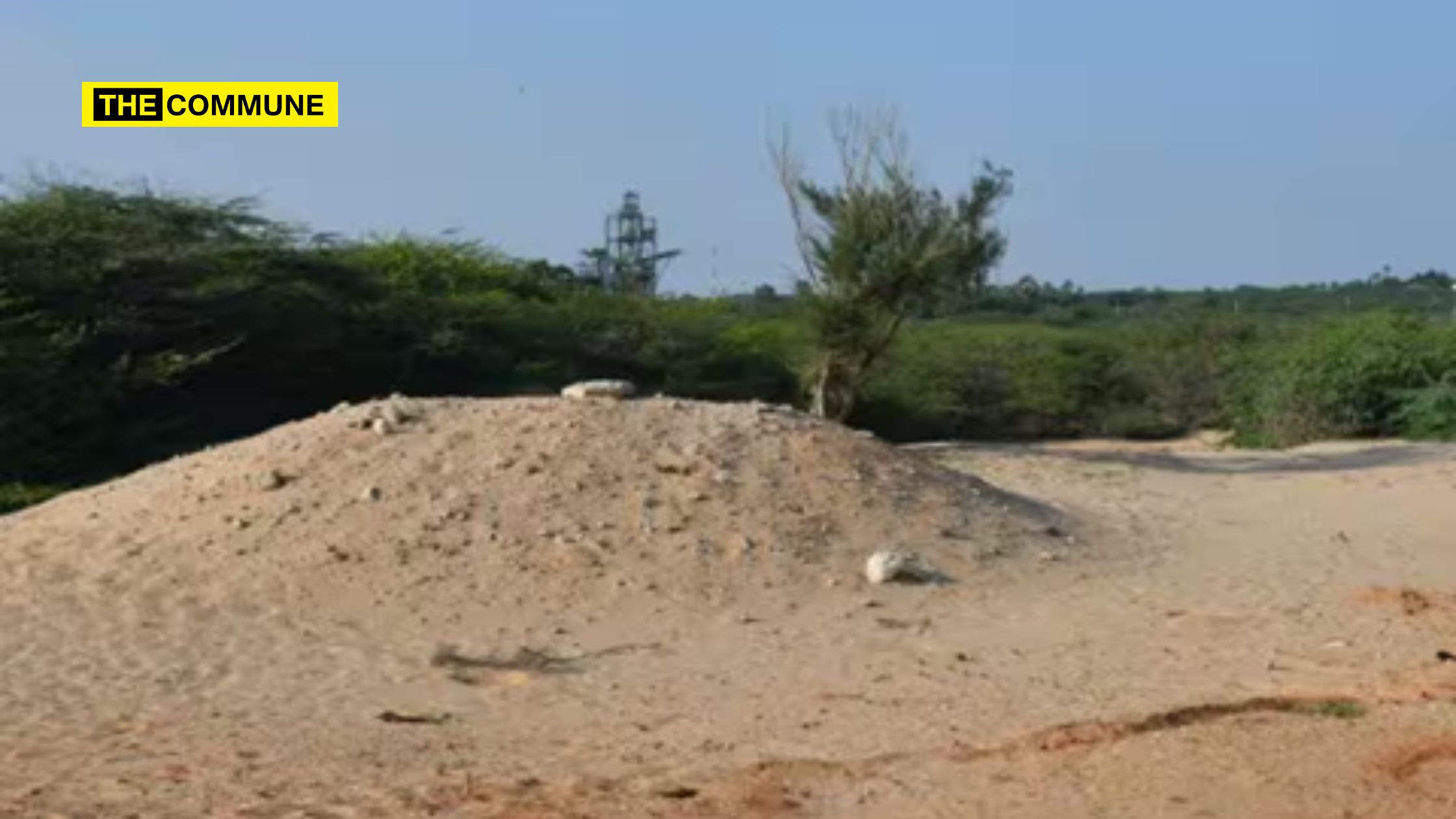
The Madras High Court has ordered a Central Bureau of Investigation (CBI) probe into the large-scale illegal mining of beach sand minerals (BSM) in Tamil Nadu, which has been taking place since 2000-01. The order was issued on 17 February 2025, by a bench comprising Hon’ble Justice S.M. Subramanian and Hon’ble Justice M. Jothiraman. The court has directed the CBI to investigate potential collusion between politicians, government officials, and private mining companies in the illicit extraction of minerals, including garnet and thorium, from the state’s coastal areas.

Following the court’s order, the Tamil Nadu government has issued notices to several companies demanding royalties for the illegally mined minerals. The companies and the amounts sought from them are as follows:

  • V.V. Minerals – ₹913 crore
  • TVL Industrials – ₹276 crore
  • Transworld Garnet – ₹196 crore
  • Beach Mineral Sand Company and its sister concern – ₹425.64 crore
  • Ocean Garnet Sands – ₹191 crore

The government has estimated a total revenue loss of ₹5,882 crore due to unauthorized mining operations in the districts of Tuticorin, Tirunelveli, and Kanyakumari. Officials have stated that in Tuticorin district alone, the revenue loss amounts to ₹2,002 crore.

The issue has also drawn attention from devotees and temple organizations. The president of the Temple Worshipers’ Association, TR Ramesh, has alleged that several lakh tons of mineral sand were illegally extracted from thousands of acres of land belonging to the Sri Kari Sastha Karudaiyar Temple in Navaladi Panchayat, near Vetiyaanvilai in Tirunelveli district. He has demanded that the temple administration receive at least ₹1,000 crore in compensation from the illegally mined revenue.

Ramesh has further stated that the extracted minerals, particularly garnet and thorium, were exported abroad without permission, raising concerns over national security. He cited a past case filed in the courts by an individual named Kannadasan, who later withdrew it due to alleged political pressure. He has urged the CBI to conduct a thorough investigation into the illegal sand mining from temple lands and to take strict action against those involved.

The Tamil Nadu government has stated that district collectors have been instructed to collect the amounts due from the companies involved. The administration has assured that it will fully cooperate with the CBI investigation and provide all necessary records.

Activists and legal experts have reiterated that the large-scale illicit extraction of thorium poses a threat to national security. They have urged the authorities to ensure strict enforcement of mining regulations and to take decisive action against those responsible for the extensive environmental and economic damage caused by these illegal operations.

(With inputs from Dinamalar)

Subscribe to our channels on Telegram, WhatsApp, and Instagram and get the best stories of the day delivered to you personally.
Dravidianist Media Uses Children To Peddle DMK’s Anti-Hindi Propaganda

When the ruling DMK persists in its efforts to provoke the people of the state by claiming their linguistic rights were under threat through the National Education Policy, it continues to fail miserably, receiving no public support. Now, the DMK and Dravidianist media are desperately attempting to set a new narrative, claiming that children in Tamil Nadu are donating to the Chief Minister’s Fund to match the amount the central government refused to provide for a scheme that the state was not ready to implement. However, this too has turned out to be another fabricated initiative. It was exposed when it was revealed that the donations were actually made by the children of DMK functionaries, not ordinary citizens.

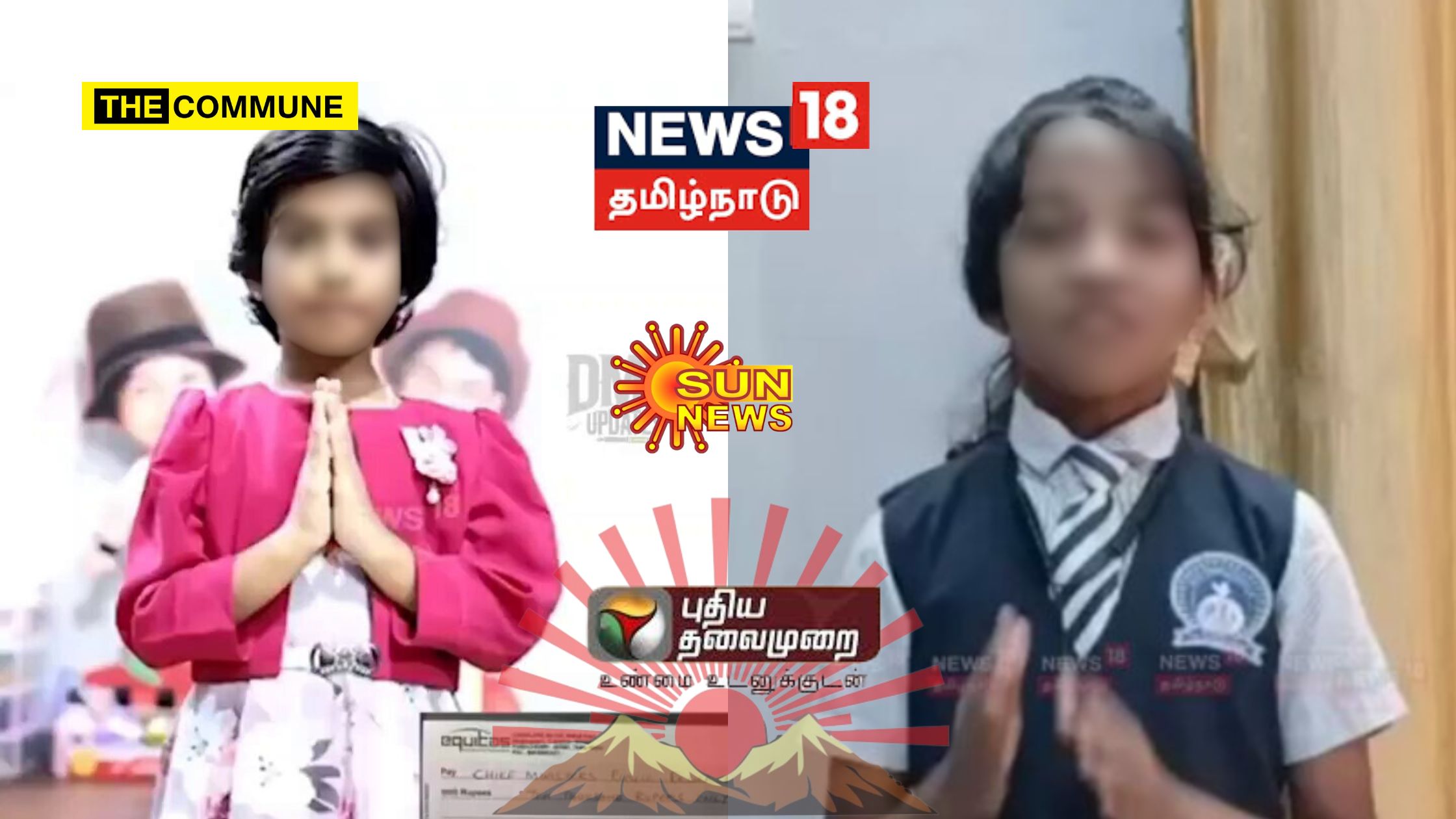
In a series of two videos that surfaced in recent days, the latest features a child claiming to donate ₹5,000 from her savings to the Chief Minister’s Fund to compensate for the funds denied by the central government. In the video, she also mocks Hindi as an “orphan language,” despite allegedly being a student in a CBSE school, which allows the choice of learning multiple languages within its curriculum. However, the DMK insists that such flexibility will not be allowed for government school students. Following the release of the second video, public outrage grew, with many people questioning why the DMK has resorted to exploiting children for its political campaign.

In the video, the child says, “Greetings, my name is Dafline Rose. I am studying in 5th grade, and I hail from Kanyakumari district. Can the orphan language Hindi think of ruling over my ancient language, Tamil? We will always oppose Hindi. Tamil is also called nectar — Tamil is the delight of our lives, Tamil is virtue, Tamil is life. What if the Union government is supposed to provide Tamil Nadu with education funds does not provide them? I am giving ₹5,000 from my little savings to the Tamil Nadu Education Department with happiness. Long live Tamil!”

Interestingly, this child seems to be studying in a CBSE school in Kanyakumari as can be deduced with her uniform and school logo.

Before this, the Dravidianist media promoted another video featuring a child who came forward to donate funds to the Chief Minister to compensate for the central funds under PM Shri Scheme. However, that narrative also collapsed when it was revealed that the child was the offspring of a DMK functionary.

What’s peculiar about this case is that while the Dravidianist media was quick to promote videos of children from DMK functionaries or those studying comfortably in CBSE schools, it was unwilling to give a voice to government school children who were asking the Chief Minister why they were being prevented from learning a third language.

Students Want 3-Language Policy

Another video that went viral featured girl students from Paramakudi Government School in Ramanathapuram district. The students were appealing to Chief Minister Stalin to implement the central government’s trilingual education scheme. “Don’t government school students have the right to study trilingual education, Chief Minister? Please allow poor students like us to utilize this opportunity,” they said in unison.


View this post on Instagram


A post shared by Vinoj P Selvam (@vinojbjp)

Subscribe to our channels on TelegramWhatsApp, and Instagram and get the best stories of the day delivered to you personally.

From Kedarnath To Kashi Vishwanath: How PM Modi’s Devotion To Lord Shiva Translated Into Development

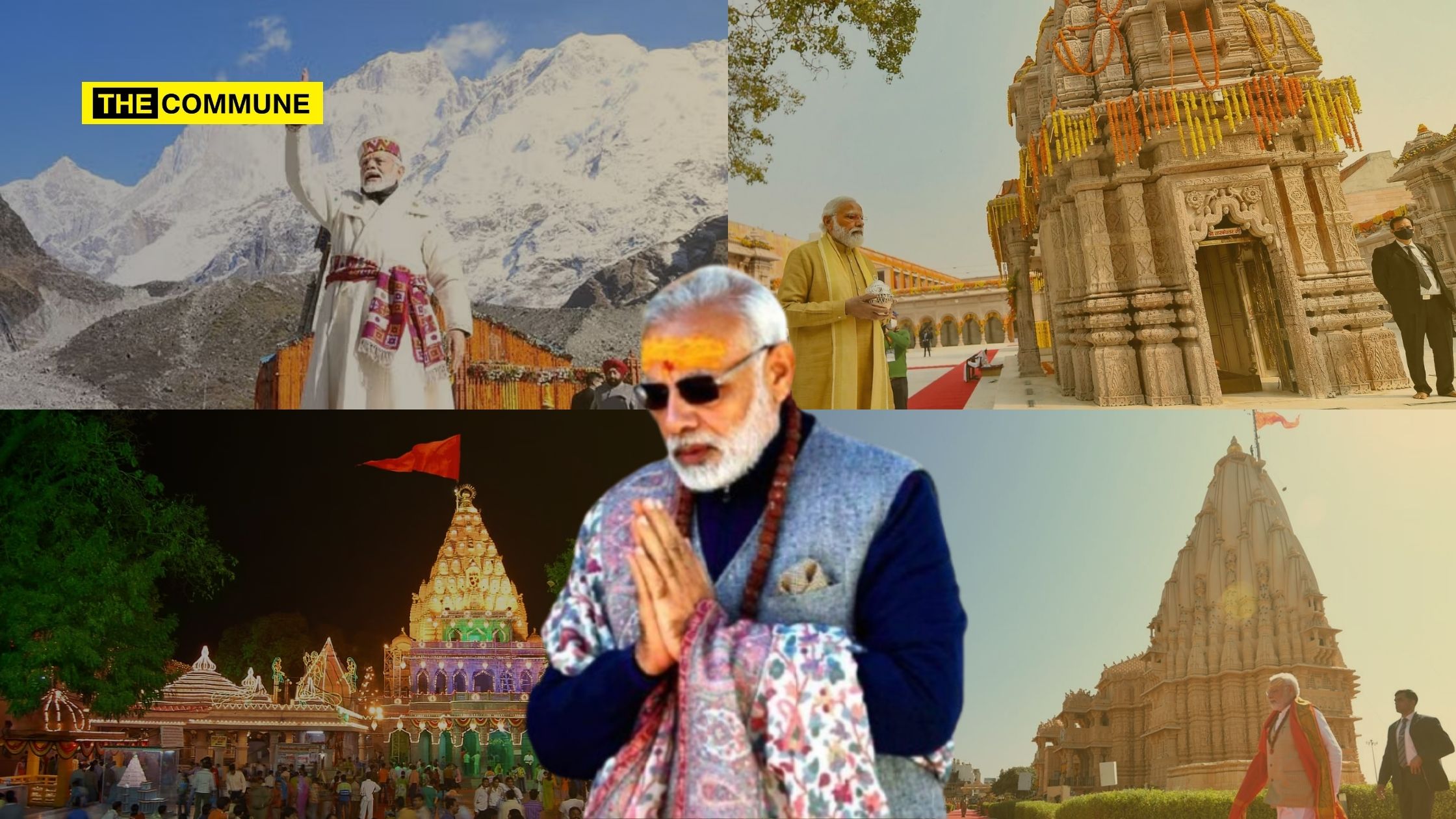
Since assuming office in 2014, Prime Minister Narendra Modi has undertaken significant steps for the conservation and restoration of major Lord Shiva temples across the country, enhancing their grandeur and ensuring better facilities for devotees.

From developing world-class amenities to improving connectivity and launching iconic projects like the Kashi Vishwanath Corridor and Mahakal Lok Corridor, PM Modi’s dedication to preserving the heritage of Lord Shiva’s temples is evident.

Among the most notable efforts is the restoration of Kedarnath Temple, one of the 12 Jyotirlingas, nestled in the Garhwal Himalayan range of Uttarakhand. The temple and its surroundings were severely damaged in the devastating flash floods of June 2013, which wiped out the town.

However, the temple itself miraculously remained intact due to a massive rock that got lodged behind it, protecting it from destruction. Following the disaster, PM Modi initiated extensive reconstruction work in Kedarnath, reinforcing flood-resistant walls and expanding pathways. Connectivity was vastly improved through the Char Dham Highway project, all-weather roads, and ropeway facilities, ensuring a seamless pilgrimage experience.

Additionally, the Adi Shankaracharya Samadhi, near the temple, was reconstructed under the PM’s leadership. In Varanasi, his Lok Sabha constituency, the Kashi Vishwanath Corridor project was launched, connecting the temple to the Ganga River.

The temple complex was expanded from a mere 3,000 square feet to an extensive five lakh square feet, providing modern amenities for pilgrims. Over 40 ancient temples within the vicinity were also restored as part of this massive rejuvenation effort. Another milestone in temple restoration was the development of the Mahakal Lok Corridor at the Mahakaleshwar Temple in Ujjain, Madhya Pradesh.

The 900-metre-long corridor expanded the temple premises from three hectares to 47 hectares, incorporating new pathways and upgraded facilities to enhance the spiritual experience for devotees. The Somnath Temple in Gujarat, one of the most revered Jyotirlingas, also saw significant upgrades under PM Modi’s leadership.

The temple complex was revitalised with a 1.48 km promenade and an exhibition centre. Restoration efforts ensured better connectivity, preserving the temple’s historical and spiritual significance.

In Uttarakhand’s Almora district, the ancient Jageshwar Dham also underwent a transformation under the BJP’s ‘double-engine government.’ Over 100 ancient stone temples surrounding the temple were conserved and restored, with enhanced connectivity and integration into a broader religious circuit to facilitate pilgrim access.

Through these large-scale restoration and development projects, PM Modi has not only safeguarded India’s rich spiritual and cultural heritage but has also made these revered temples more accessible and convenient for devotees from across the world.

–IANS

Subscribe to our channels on TelegramWhatsApp, and Instagram and get the best stories of the day delivered to you personally.

Cell Phone – Slammer & Virtue-Signalling Actor Suriya’s Father Sivakumar Says EVR Was The Only Leader Responsible For Oppressed To Become IAS, IPS, Here’s Proof Showing ‘Cell-Thatti’ Sivakumar Is Wrong

Virtue-signalling actor Suriya’s father actor Sivakumar who is famous for pushing away and slamming cell phones preventing fans from taking selfies with him, is back with another controversy.

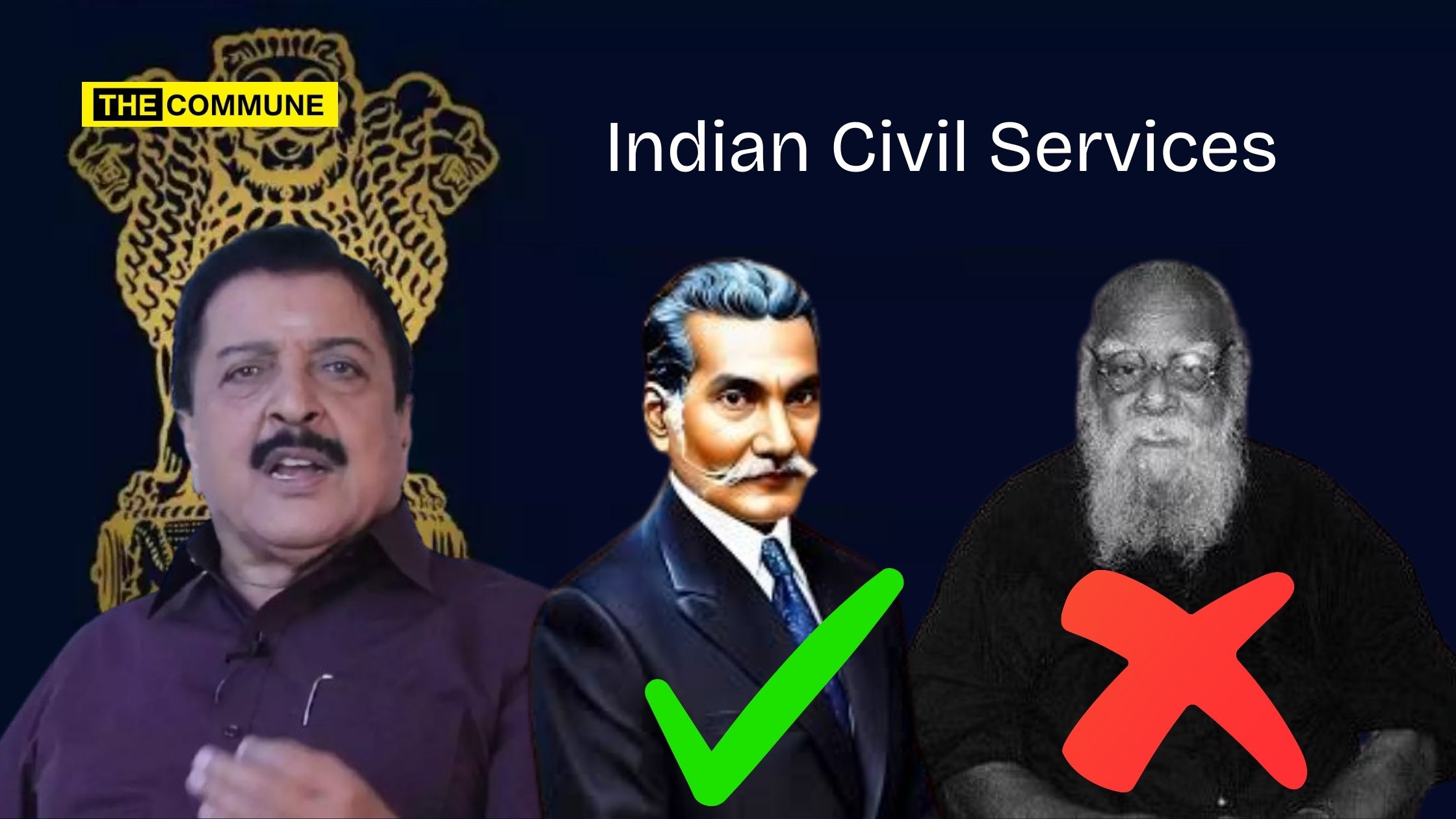
Speaking at a private college in Tiruvannamalai where his portrait of EV Ramasamy Naicker was released, he made a claim about EV Ramasamy Naicker (hailed as Periyar by Dravidianists) stating that he was the reason why IAS and IPS officers emerged from oppressed backgrounds. He said, “Today, there is a caste system – upper and lower castes and divided into Brahmana, Kshatriya, Vaishya and Shudra (like cobblers etc). When the lower castes were humiliated the maximum, the oppressed people today are able to become IAS IPS because of the struggle of one man – Periyar. All the oppressed castes were able to become IAS IPS because of the protests and struggle of this man. I painted this painting in 2007 and I did not paint after that. MDMK leader Vaiko told me that if my paintings have to be complete, I must draw Periyar’s image. So I drew this in 2007. “

This statement, like many other misattributed historical claims, conveniently ignores the real pioneer. The credit for opening the doors of civil services to oppressed communities, particularly Dalits and Shudras, goes to Rettamalai Srinivasan and the Paraiyar Mahajana Sabha, whose efforts predate Periyar’s activism by decades. Let’s set the record straight.

The Historical Context: British India And Civil Services  

To understand why Sivakumar’s claim is misleading, we must revisit the late 19th century, a time when the Indian Civil Services (ICS) were dominated by British officers. The ICS was the backbone of British administration in India, and entry into this elite service was through competitive examinations held exclusively in London. This system posed significant barriers for Indians, especially those from oppressed communities, due to the high costs of travel and the caste restrictions on crossing the seas.  

Between 1862 and 1875, only 40 Indians managed to appear for these exams, and most of them were from privileged upper-caste backgrounds. The Indian National Congress, which was dominated by upper-caste elites, began advocating for the exams to be held simultaneously in India and London. On the surface, this seemed like a progressive move, but Dalit leaders like Rettamalai Srinivasan saw it as a ploy to further entrench upper-caste dominance in the bureaucracy.  

Rettamalai Srinivasan And Paraiyar Mahajana Sabha  

Rettamalai Srinivasan, a prominent Dalit activist from the Madras Presidency, founded the Paraiyar Mahajana Sabha in 1892 and the newspaper Paraiyan in 1893. He was a visionary leader who understood that allowing civil service exams to be held in India would enable Brahmins and other upper castes to monopolize administrative positions, leaving Dalits and Shudras further marginalized.  

In 1893, Srinivasan and the Sabha organized a massive meeting at the Wesley Mission Hall in Madras, where they drafted a petition signed by 3,412 people. This petition vehemently opposed the demand for simultaneous exams in India, arguing that it would only benefit the upper castes. The petition highlighted the systemic oppression faced by Dalits, including their exclusion from educational institutions and public spaces dominated by Brahmins.  

The Sabha’s petition was forwarded to the British government, and it played a pivotal role in influencing their decision. On 19 April 1894, Secretary of State for India John Wodehouse announced in the House of Commons that the British government would not conduct civil service exams in India, citing “insuperable objections.” This decision was a direct result of the Sabha’s efforts, as documented in the India Office records of the British Library.  

Where was Periyar in 1893? He was barely a 15-year-old school dropout at the time. His political activism didn’t even begin until much later. To claim that he was responsible for opening up the bureaucracy to oppressed communities is historically inaccurate and an insult to the real pioneers of social justice.

Post-Independence – Dr BR Ambedkar

If Sivakumar was talking about post-Independence India, the oppressed classes were able to make it to the civil services because of Ambedkar.

Dr. Ambedkar firmly believed that the inclusion of Scheduled Castes in the civil services and government administration was crucial for their empowerment and for ensuring that their rights were protected. He argued that having individuals from marginalized communities in positions of power would help address the discrimination and injustices they faced. By joining the administration, Scheduled Castes could influence policies and decisions that directly impacted their communities, thereby creating a more equitable society.

As the Chairman of the Drafting Committee of the Constituent Assembly, Dr. Ambedkar played a pivotal role in shaping the Indian Constitution. He ensured that the Constitution included provisions for the protection and upliftment of Scheduled Castes, such as:

  1. Reservations: Articles 15(4) and 16(4) provided for reservations in educational institutions and public employment for Scheduled Castes and Scheduled Tribes.
  2. Abolition of Untouchability: Article 17 abolished the practice of untouchability and made it a punishable offense.
  3. Fundamental Rights: Articles 14 to 18 guaranteed equality before the law and prohibited discrimination on the grounds of caste, religion, race, or sex.

Dr. Ambedkar encouraged Scheduled Castes to join the civil services and government not only to secure their own futures but also to act as representatives of their communities. He believed that their presence in the administration would:

  1. Ensure Fair Implementation: SC officers could help ensure that laws and policies benefiting marginalized communities were implemented fairly and effectively.
  2. Challenge Discrimination: Their presence would challenge the entrenched caste biases within the bureaucracy.
  3. Inspire Future Generations: Seeing individuals from their communities in positions of power would inspire younger generations to aspire to similar achievements.

So, either way, EVR did not play any great role in ensuring oppressed communities were able to enter the civil services in the country.

(With inputs from Economic & Political Weekly)

Subscribe to our channels on Telegram, WhatsApp, and Instagram and get the best stories of the day delivered to you personally.
Industrialists And Corporates From Tamil Nadu Advocate 3 Language Policy And Hindi

Language wars are heating up all across the country and more so in Tamil Nadu. Industrialists and business owners have spoken up about the importance of learning Hindi. Zoho founder Sridhar Vembu weighed in on the issue and emphasized its importance.

On his X handle, Vembu wrote, “As Zoho grows rapidly in India, we have rural engineers in Tamil Nadu working closely with customers in Mumbai and Delhi – so much of our business is driven from these cities and from Gujarat. Rural jobs in Tamil Nadu depend on us serving those customers well. Not knowing Hindi is often a serious handicap for us in Tamil Nadu. It is smart for us to learn Hindi. I have learned to read Hindi haltingly in the last 5 years and I can now understand about 20% of what is spoken. As India is a fast growing economy, engineers and entrepreneurs in Tamil Nadu will be smart to learn Hindi. Ignore the politics, let us learn the language! ஹிந்தி கற்றுக் கொள்வோம்! आइये हिंदी सीखें!”

Another business owner Deepan Shanmugasundaram, who spoke about his steel business also shared his thoughts on the issue. In a long thread on X, Shanmugasundaram discussed the business challenges in Tamil Nadu due to the language barrier, particularly in the steel wholesale sector. He highlighted how Jain and Patel businesses thrived by bridging the Hindi-Tamil gap. He stressed that language proficiency was crucial for business growth, citing his own struggles in hiring Hindi-speaking staff. He advocated for multilingual education, suggesting Tamil, English, and an additional language for broader opportunities. Reflecting on his missed chances in Japan and Italy due to language constraints, he supported NEP’s multilingual approach, urging Tamil Nadu to embrace practical language learning instead of rejecting it for political reasons.

Background

The controversy over Hindi imposition reignited after the Tamil Nadu government accused the Centre of withholding funds due to the state’s non-implementation of the National Education Policy (NEP). However, Union Education Minister Dharmendra Pradhan dismissed these allegations, asserting that the NEP does not enforce Hindi or any other language on Tamil Nadu students.

Speaking in Delhi, Pradhan emphasized that multilingual education—including Tamil, English, and other Indian languages—benefits students. He accused Tamil Nadu’s ruling DMK of politicizing the issue, reaffirming the Centre’s commitment to nationwide NEP implementation while adhering to its stipulated conditions.

Taking the protests to an all-new low, DMK cadre indulged in defacing boards written in Hindi – these include railway station nameboards, Post office boards etc.

In December 2024, former Anna University Vice-Chancellor E. Balagurusamy urged Tamil Nadu to adopt a three-language policy, arguing that the current two-language system disadvantages underprivileged students while wealthier students gain multilingual skills. He emphasized that learning Hindi, India’s most widely spoken language, could enhance job prospects, foster national unity, and promote integration. Balagurusamy criticized political leaders for opposing the policy while their own children study Hindi. He cited C.N. Annadurai’s progressive mindset, suggesting he would have reconsidered the policy today. He urged Tamil Nadu to embrace linguistic diversity as an asset for social and economic progress rather than a political issue.

Subscribe to our channels on Telegram, WhatsApp, and Instagram and get the best stories of the day delivered to you personally.
“In US, President’s Mental State Is Checked, Beginning To Doubt If CM Stalin Is Fit”: BJP TN Chief Annamalai Questions MK Stalin’s Leadership Amid DMK’s Delimitation Row

Tamil Nadu BJP president K. Annamalai launched a scathing critique of Chief Minister MK Stalin, questioning his leadership abilities. Drawing a comparison to the United States, Annamalai pointed out that the American President undergoes an annual mental health evaluation to ensure their fitness for office. This comment came amidst the ongoing controversy over the Centre’s three-language policy, which the DMK has opposed.

Annamalai commented, “If you’ve seen the U.S. President, mental health check-up with a doctor once a year. I’m not saying anything wrong about the Chief Minister. A doctor certifies and publishes a document stating that the U.S. President is fit to lead America. Today, after seeing the Chief Minister’s Facebook post, I’m beginning to doubt whether he is fit to lead Tamil Nadu. When no one has given instructions, spoken about, or expressed an opinion on this matter, why is an all-party meeting being called?”

Annamalai then shared a video of Prime Minister Narendra Modi speaking in Andhra Pradesh and Telangana, where he criticized the Congress’s delimitation policy, which he argued would result in southern states losing more parliamentary seats. Annamalai continued, “In the Congress model of delimitation, 100 seats will be lost by southern states. I will not accept that. Why is Congress spreading rumors? This was during the Lok Sabha election. So why is the Congress party spreading these rumors? This was the official opinion of the Prime Minister. But when neither the Prime Minister, nor the BJP, nor the NDA, nor our Parliamentary Affairs Minister in Parliament has talked about delimitation, why is the Chief Minister creating such a sham drama? It’s because they lost the battle on the three-language policy, and now they want to change the focus. The public in Tamil Nadu didn’t support the DMK; only a handful of people are running around with paint cans. What’s even more ridiculous is that in Sankaran Koil, the people who are painting don’t even know Hindi or English—they’re painting in English. That’s why I’m telling DMK cadres to please go to school and study. Another DMK member even said, ‘Brother, Hindi is on top, this is English.’ After that he was painting on Hindi.”

This criticism follows Tamil Nadu Chief Minister MK Stalin’s recent call for an all-party meeting scheduled for 5 March 2025 to address the contentious issue of delimitation. Stalin warned that the state is at a crucial point where it must take action to safeguard its rights.

In his announcement, Stalin revealed that invitations had been sent to 40 political parties registered with the Election Commission to discuss the potential impact of constituency delimitation. He referred to the issue as a “sword hanging over Tamil Nadu.

Speaking after a Cabinet meeting, Stalin emphasized that Tamil Nadu’s successful family planning policies had placed the state at a disadvantage in this context. He explained, “If delimitation is carried out based on the population census, Tamil Nadu stands to lose eight parliamentary seats, which would diminish its representation in Parliament.”

In a series of posts on his official X account, Tamil Nadu Chief Minister MK Stalin expressed his concerns, stating, “As the Chief Minister of Tamil Nadu, I would like to bring to everyone’s attention that the process of delimiting the Lok Sabha constituencies based on the 2026 census is very dangerous. Tamil Nadu and other southern states have done a great job in controlling population growth. But how can it be justified if that is the reason why our strength in Parliament is reduced and our voice is suppressed? Our argument is not that no steps should be taken to improve representation in a democratic manner. For that, there is no room for compromise in the representation of Tamil Nadu! We ask that a fair and transparent process be followed in a manner that preserves the principles of federalism. In this context, I call upon all registered political parties in Tamil Nadu to deliberate on this very important issue that affects the future of Tamil Nadu. To protect the future of our mother, Tamil Nadu, let us unite as one, transcending party differences! Let us overcome the surrounding danger with our unity!”

In another post, Stalin emphasized, “Delimitation isn’t just about Tamil Nadu—it affects all of South India. A democratic process should not penalise states that have successfully managed population growth, led in development, and made significant contributions to national progress. We need a fair, transparent, and equitable approach that upholds true federalism. #FairDelimitationForTN”

Subscribe to our channels on TelegramWhatsApp, and Instagram and get the best stories of the day delivered to you personally.
Tamil Nadu Govt Employees Stage Mass Casual Leave Protest; JACTO-GEO Warns Of Electoral Consequences If DMK Fails To Address Demands

Tamil Nadu witnessed a large-scale protest by government employees and teachers on 25 February 2025, as members of the Joint Action Council of Tamil Nadu Teachers Organisation and Government Employees Organisation (JACTO-GEO) staged demonstrations across all district headquarters. Participants took casual leave en masse to condemn the state government’s failure to address their long-pending demands.

M. Srinivasan, state coordinator of JACTO-GEO, stated in Chennai that reports from 37 districts indicated that 4.22 lakh employees and teachers took part in the demonstrations. The absence of staff disrupted work in several government offices and schools across the state, though operations at the secretariat in Chennai remained unaffected.

Sources from the elementary education department confirmed that out of 1,21,239 teachers, 53,166 availed of casual leave. Teachers’ associations estimated that 40% to 50% of postgraduate teachers and headmasters of high and higher secondary schools joined the protests. However, the state government did not release any official data on the number of employees who participated or the extent of the impact on work.

JACTTO-GEO coordinator Mayavan warned of an escalation, stating that their next phase of agitation would be a total strike of work, with a final decision to be taken soon. The protest followed failed discussions on 24 February 2025 between JACTO-GEO leaders and a four-member group of ministers.

A key demand of the protesters is the restoration of the old pension scheme, a promise made by the ruling DMK during its election campaign. Mayavan stated that even after four years in office, the government had not fulfilled its commitment, and warned that if the employees were deceived, the DMK government would face repercussions in the 2026 Assembly elections.

He further criticized the government’s handling of the negotiations, stating that ministers engaged in discussions for over two-and-a-half hours on 24 February 2025 and assured union leaders they would consult the Chief Minister. However, despite the Chief Minister’s presence at the secretariat, the ministers left without meeting the waiting union representatives. Mayavan described this move as “backstabbing” the employees.

He also dismissed the government’s request for four weeks to address their concerns, calling it an attempt to weaken employee unity and delay action on their demands.

In Krishnagiri, the JACTO-GEO staged a large protest near the new bus stand on 25 February 2025 following failed talks with the State government the previous day. A key demand in their 10-point charter was the repeal of the New Pension Scheme and the reinstatement of the Old Pension Scheme.

Despite a directive from the Madurai bench of the Madras High Court against the protest, hundreds of members gathered in the open arena near the bus stand.

In Dharmapuri, JACTO-GEO protests were also held, with the Tamil Nadu Teachers Organisation and the Government Employees Organisation leading demonstrations to reiterate their demands.

(With inputs from The New Indian Express)

Subscribe to our channels on Telegram, WhatsApp, and Instagram and get the best stories of the day delivered to you personally.