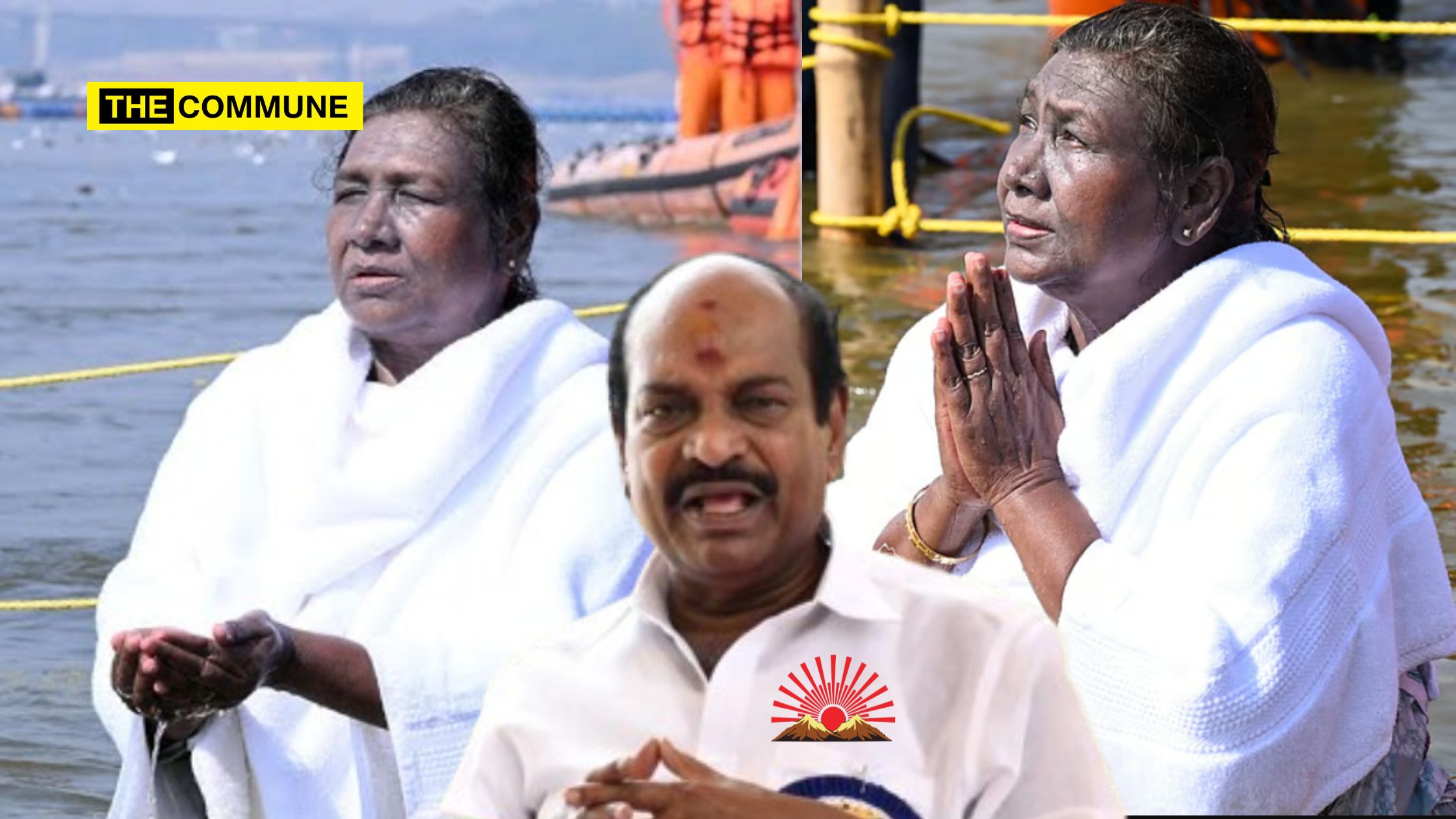
DMK MP S. Jagathrakshakan has stirred controversy after falsely claiming that India’s President, Droupadi Murmu, was barred from attending the Maha Kumbh in Prayagraj due to her Scheduled Tribe background. His statement has drawn criticism, as the President did, in fact, participate in the festival on 10 February 2025.
The incident took place during a DMK event organized by the Saidapet DMK unit. While addressing the gathering, Arakkonam MP S. Jagathrakshakan remarked, “Mahamaham took place, and I went there. Everyone attended—the Prime Minister, all the ministers—but the President of our country did not. She was not allowed because she belongs to a lower caste. She was not allowed there and I don’t understand why. It is regrettable that no leader like Thanthai Periyar was born there.”
His comments quickly sparked controversy, as they were factually incorrect. Many criticized the MP for spreading misinformation, especially since President Murmu had indeed attended the event.
The news of President Droupadi Murmu’s participation in the Maha Kumbh on 10 February 2025, was widely reported by newspapers in both English and regional languages, with some even featuring it on their front pages. Reports highlighted that she took a sacred dip at Triveni Sangam in Prayagraj, performed puja, and prayed to Maa Ganga for the peace, prosperity, and well-being of all. Additionally, she visited Hanuman Mandir for darshan and puja. Even the official social media pages of the President documented her participation in these rituals.
Despite this, DMK MP S. Jagathrakshakan falsely claimed that she was barred from attending due to her Scheduled Tribe background. His statement attempted to paint North India in a negative light, alleging that caste oppression still prevails, even though many states have actively worked to break such barriers and are collectively striving to empower SC and ST communities. His remarks have since sparked criticism for misrepresenting facts and spreading misinformation.
Subscribe to our channels on Telegram, WhatsApp, and Instagram and get the best stories of the day delivered to you personally.
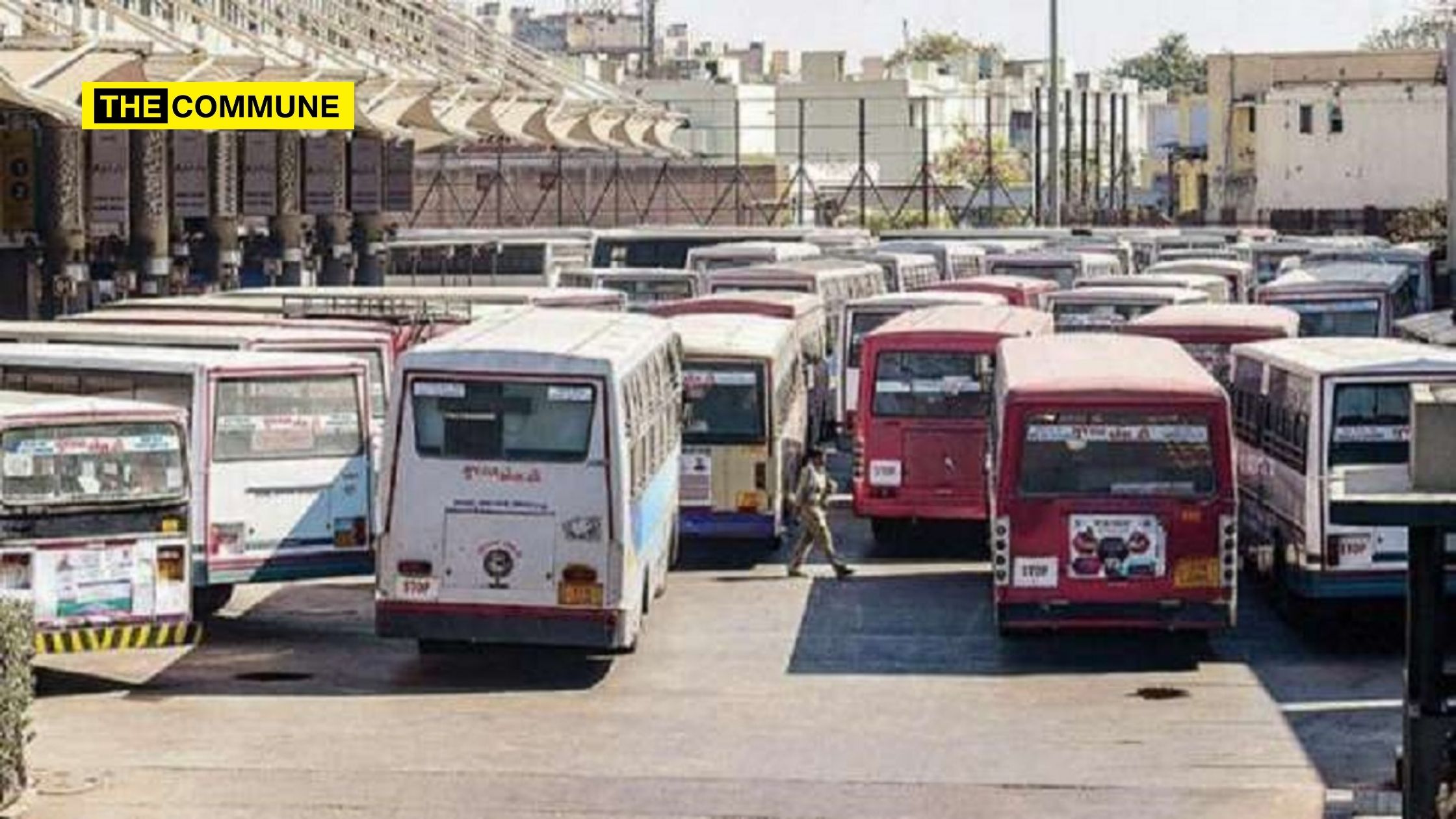
After nearly two decades, Madhya Pradesh is set to revive its road transport system, primarily to benefit rural communities. The Bharatiya Janata Party-led state government, under the leadership of then Chief Minister Babulal Gaur, had previously ordered the cessation of the State Road Transport Corporation, which operated buses across the state.
The decision was attributed to the significant financial losses incurred by the Corporation. “A team of officials is working on it and it would come up in any next Cabinet meeting,” a government official told IANS. The decision of the earlier government had created a vast gap in the road transportation network in the state.
Despite the arrival of private bus operators, only select routes are available to commoners, particularly majority of villages and rural masses remained bereft of any form of public conveyance. The restoration of the transport facility, especially in rural areas, is set to revitalise economic activities in tier-II towns and villages.
Additionally, it will provide essential connectivity to medical facilities and educational institutions, ensuring access and opportunities for the rural populace. Within the bounds of Madhya Pradesh, only the cities of Bhopal and Indore are privileged to possess urban bus services. The rest of the state in rural areas relies on private operators, who pick only profitable select routes.
“It is also a matter of equity, for the less privileged have as much entitlement to travel the state’s thoroughfares as those who possess automobiles,” the officials said. Chief Minister Mohan Yadav had already granted an in-principle approval and asked the relevant departments to devise an appropriate model that may be institutionalised, which, upon receiving the approbation, will be presented to the Cabinet for execution.
In this endeavour, the departments of Transport, Finance, Public Works (PWD), and Rural Development were engaged in a comprehensive study. Madhya Pradesh besides Chhattisgarh and Jharkhand stand unique in India as these states lack state-owned or state-sponsored public road transportation network. According to the official there are three models on drawing board.
The first entails the state government both owning and operating a transport corporation; the second involves the state owning the buses and infrastructure while outsourcing the operations. The third and most probable option is the enlistment of private operators to extend their services to unprofitable routes through a Viability Gap Funding model, thereby covering all districts of the state.
–IANS
Subscribe to our channels on Telegram, WhatsApp, and Instagram and get the best stories of the day delivered to you personally.
The ruling DMK, known for its strong opposition to the three-language policy—particularly the inclusion of Hindi—has sparked controversy after one of its ministers was seen casually speaking in Urdu, a language closely linked to Hindi. This incident has ignited online criticism, with many pointing out the apparent contradiction in the party’s stance, as DMK has consistently resisted the implementation of Hindi as a third language while simultaneously giving special consideration to Urdu.
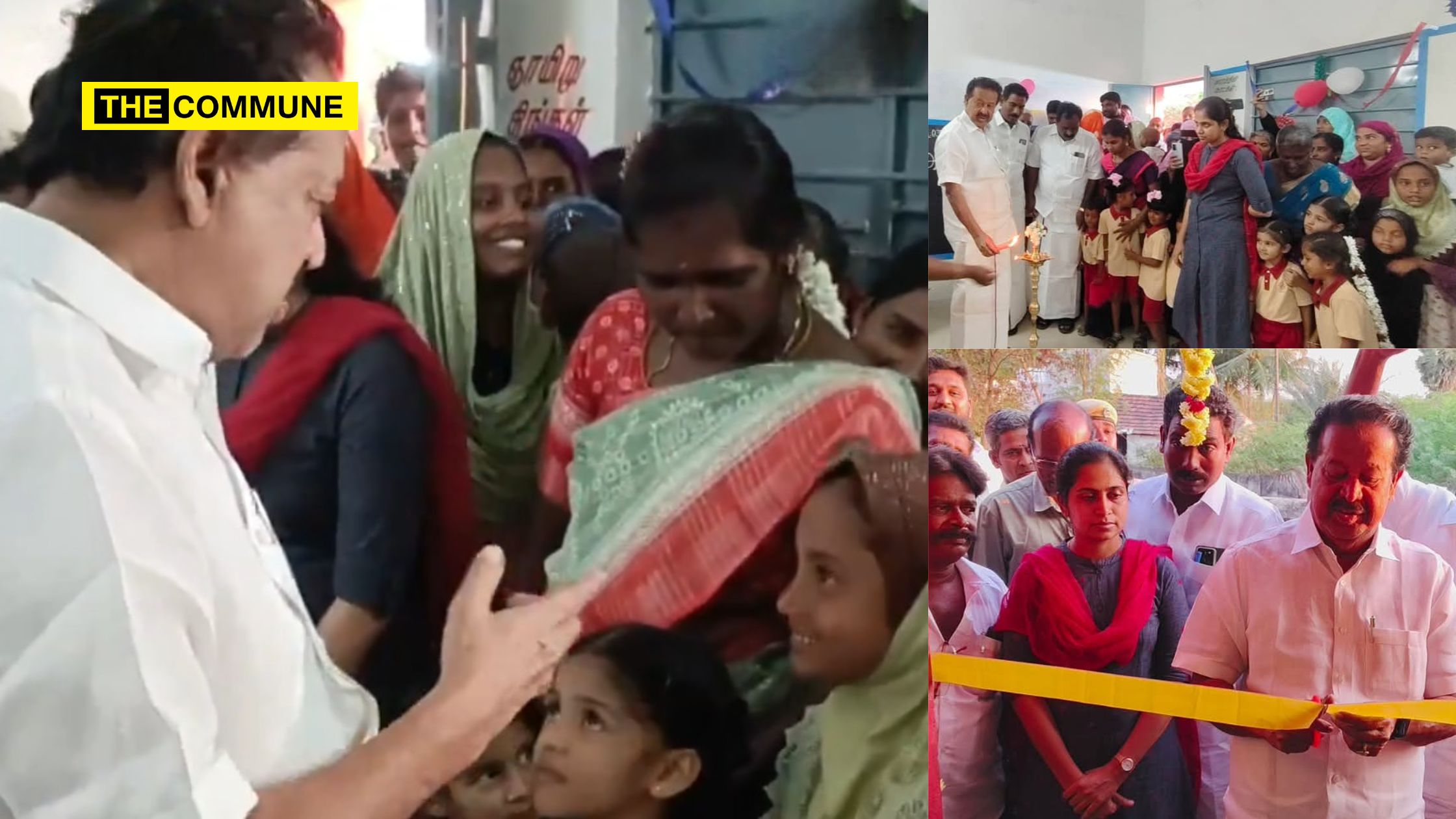
The event took place in Villupuram, where DMK’s Minister for Forests, K. Ponmudy, attended multiple programs organized by the DMK in celebration of Chief Minister M.K. Stalin’s birthday. Among these was an Iftar gathering hosted by the Muslim community in Edapalayam, followed by the inauguration of an Anganwadi school in the same village, located in Koliyanur Block of Villupuram district.
During the Anganwadi inauguration, Ponmudy noticed a group of Muslim children and asked them, “Urdu maalum? Bolo” (Do you know Urdu? Speak). He then followed up with “Achha hai” (It’s good) and shook hands with them. The children responded with excitement, but the moment soon went viral, fueling a debate on social media. Critics accused the DMK of hypocrisy, questioning why the party opposes Hindi as a third language yet allows Urdu, which shares linguistic similarities with Hindi, to flourish in the state.
"குழந்தைகளிடம் உருது மொழியில் பேசிய அமைச்சர் பொன்முடி".. அங்கன்வாடி மையம் திறக்கும் நிகழ்ச்சியில் மகிழ்ச்சி..!
This is not the first time DMK’s approach toward Urdu has come under scrutiny. Earlier, Education Minister Anbil Mahesh, another vocal critic of the three-language policy, was seen writing his name in Urdu on a classroom board while visiting an Urdu-medium school. On 10 October 2024, DMK Minister Anbil Mahesh Poiyamozhi conducted a surprise inspection at the government-aided Mazharul Uloom Urdu Higher Secondary School in the Ambur constituency. He participated in an Urdu language class to observe the teaching and learning process. To the delight of the Urdu students, he wrote his name, “Anbil,” in Urdu and asked them to read it aloud. The Urdu teacher then wrote the minister’s full name in Urdu, expressing gratitude and congratulations to him.
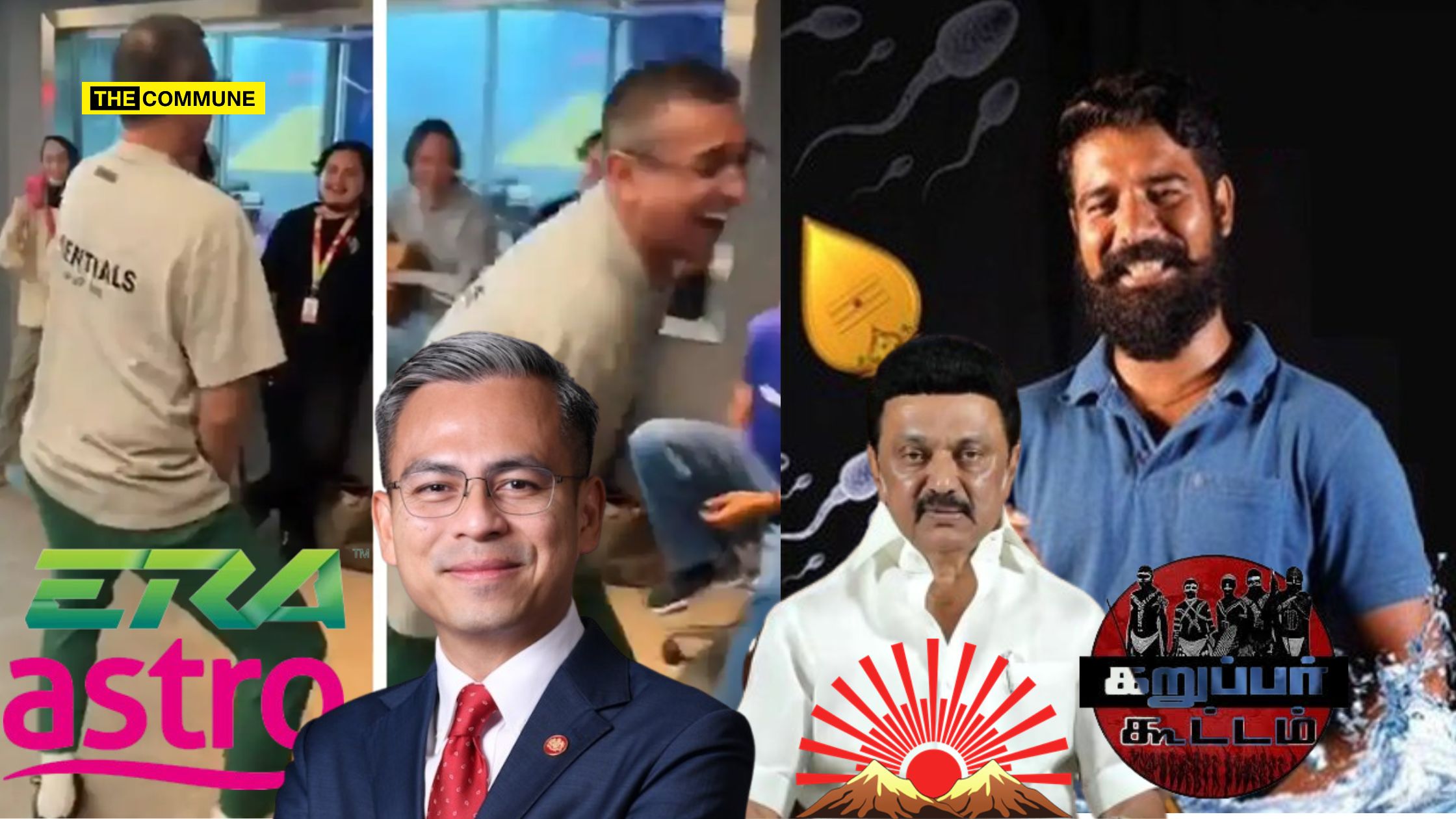
Astro Audio has suspended three Era FM radio hosts following backlash over a video in which they appeared to mock the Thaipusam kavadi ritual, a sacred Hindu practice. Two other staff members have also been suspended as the company conducts an internal investigation.
The video, which aired on Era FM’s social media platforms, showed the hosts of the 3 Pagi Era breakfast show—Nabil Ahmad, Azad Jazmin John Louis Jeffri, and Radin Amir Effendi—laughing while chanting “Vel Vel,” a phrase used by devotees during Thaipusam. Azad was seen mimicking the way devotees enter a trance while carrying a kavadi, a sacred offering to Lord Muruga. The video was widely condemned as disrespectful, leading to public outrage.
Astro Audio, in a statement, expressed deep regret over the incident, acknowledging the distress caused. The company reaffirmed its commitment to adhering to content guidelines and regulations. It also confirmed that its CEO and senior management had met with officials from the Malaysian Communications and Multimedia Commission (MCMC) to discuss the matter.
Following public backlash, the three radio hosts issued a video apology, admitting their mistake and acknowledging the insensitivity of their actions. “Our antics have hurt the feelings of some parties and our Indian friends,” said Nabil. “We will ensure that such incidents do not happen again,” added Radin. Azad also emphasized their openness to feedback, saying, “We deeply apologise for our mistake, which we did unknowingly.”
Netizens called this apology “insincere” and called for stricter action.
Communications Minister Fahmi Fadzil directed MCMC to summon Astro and Era FM’s management for an explanation, stating that a thorough investigation would be conducted to determine appropriate action under existing regulations.
Digital Minister Gobind Singh Deo also condemned the video, calling it “highly offensive and deeply concerning.” He urged Astro Radio to take swift action against those responsible, emphasizing that “any form of mockery or disrespect towards religious practices is unacceptable.”
Former Penang deputy chief minister P. Ramasamy has called for a police investigation into the incident, arguing that it falls under 3R (race, religion, and royalty) offences. He stated that an apology alone was insufficient and announced that his organization, Urimai, would file police reports in multiple states—including Penang, Selangor, Perak, Negeri Sembilan, and Johor—to ensure accountability.
The controversial video has since been removed from Era FM’s platforms, but the backlash continues, with authorities and community leaders pushing for concrete measures to prevent similar incidents in the future.
How DMK Reacted When Karuppar Kootam Derogated Lord Murugan
To jog our readers’ memories, let’s go back a few years into the past. A YouTube channel named Karuppar Kootam made a sensational entry into everybody’s minds – how you ask – by derogating and speaking lies and filth about Hindu prayer dedicated to Lord Murugan, the Kanda Shashti Kavacham.
Karuppar Kootam, a YouTube channel run by ‘Periyarists’ with links to the DMK set off a storm by abusing Kandha Sashti Kavasam, a hymn dedicated to the Hindu God Murugan, the DMK has been feeling the heat for its anti-Hindu politics that it had been doing since its inception.
While the party and its leaders had tried to distance themselves from the rabid YouTube channel, evidences clearly show that senior leaders belonging to the DMK were in bed with the nefarious elements all along. Even if they deny their links now, it must be noted that both the DMK and the Karuppar Koottam subscribe to the same school of thought, the one that idolizes the anti-Hindu bigot E.V. Ramasamy Naicker (known as ‘Periyar’ by his followers).
For the uninitiated, here is some context. Karuppar Koottam was a YouTube channel run by a group of ‘Periyarists’, Communist ideologues and DMK sympathizers. They had indulged in targeted attacks against Hindus posting videos abusing Hindu Gods, Hindus and Brahmins for a long time under the garb of ‘rationalism’.
In the series titled “Aabasa Puranam” (Porn Puranam), members of the Karuppar Kootam had used vulgar language against Hindu Gods like Murugan, Saraswathi, Brahma, etc.
In one of the videos, they abused Lord Murugan revered in Tamil Nadu as the Tamil God, by making derogatory references to Kandhasashti Kavasam, a hymn dedicated to Lord Muruga that echoes in every Hindu’s home and temples in Tamil Nadu.
The videos have been removed from the channel following public outrage.
On 15 July 2020, one Senthilvasan Muthusamy was arrested by the Central Crime Branch after cases were registered from different quarters for their vile and abusive video on Hindu God Murugan.
Surendar Natarajan of Karuppar Koottam had surrendered at the Ariyankuppam police station in Puducherry on 16 July that year and was charged under the Goondas Act.
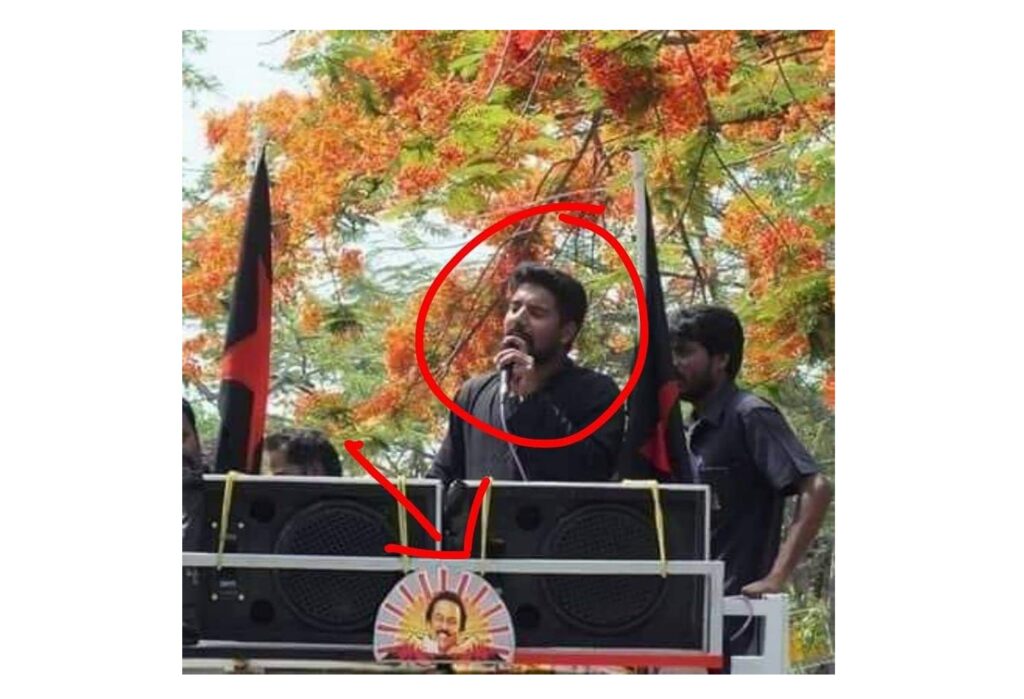
It is noteworthy that Surendar Natarajan, the host of the show ‘Aabasa Puranam’ can be seen on top a campaign vehicle holding a mic and canvassing votes for the DMK.
Namesake Arrest & Set Free Thanks To His ‘Connections’
Surendar Natarajan, alias ‘Naathigan’ of the Karuppar Koottam YouTube channel, was released from jail after DMK’s rise to power. He was jailed for eight months for posting derogatory content against Hindu gods, including a video mocking the devotional hymn ‘Kandha Sashti Kavasam.’ In an interview, Naathigan defended his actions and vowed to continue speaking against Hindu beliefs. Allegations persist that Karuppar Koottam enjoyed DMK’s patronage, with evidence showing Naathigan campaigned for DMK in the 2019 elections (as above)
In February 2021, the Madras High Court quashed the Goondas Act charges against Karuppar Koottam members Surendar Natarajan and Senthilvasan, citing a delay in issuing the arrest warrant. Surendar was arrested for derogatory videos against Hindu gods, while Senthilvasan was detained by the Central Crime Branch. Surendar’s wife, Krithika, petitioned against his detention, arguing it violated free speech and was politically motivated. The court rejected the Crime Branch’s argument that multiple cases were not required for the Goondas Act.
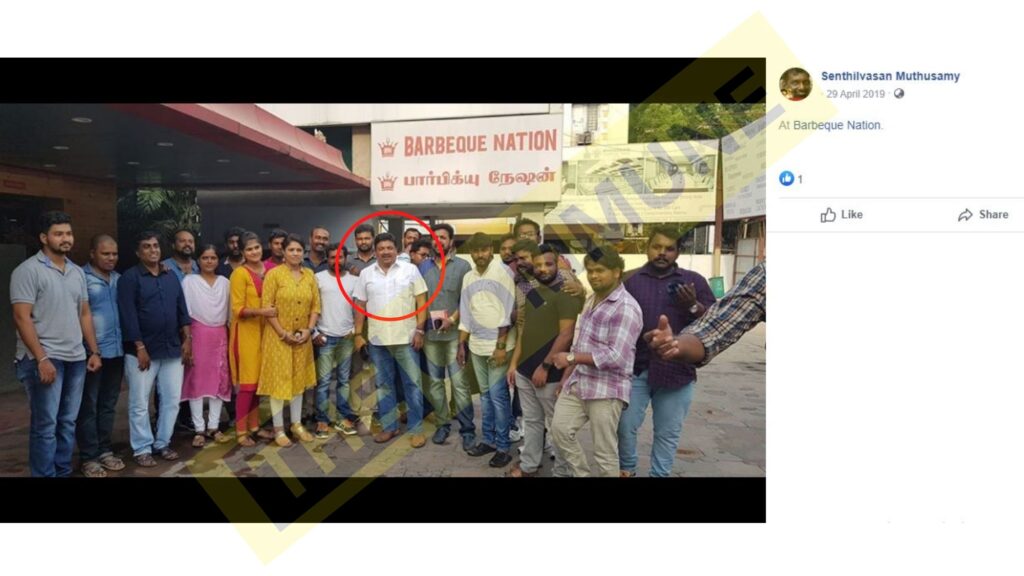
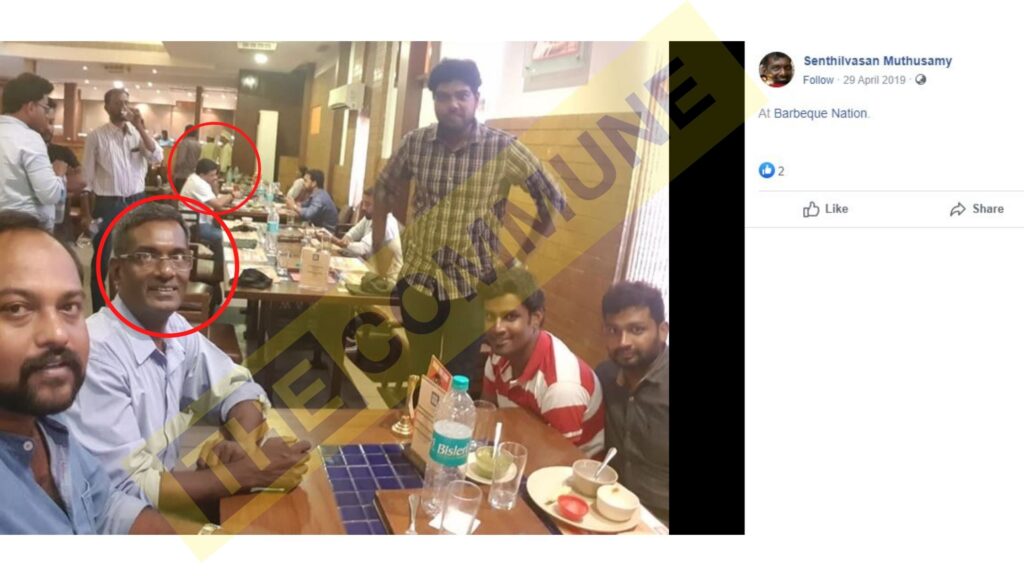
However, pictures which emerged during the controversy clearly establishes the close relationship shared by Karuppar Koottam and the DMK. In fact, it had led to questions if whether the DMK IT wing was behind the channel itself.
Palanivel Thiagarajan DMK MLA from Madurai Central constituency and the head of DMK’s IT wing can be seen having a luncheon with some of the members of the Karuppar Koottam. This picture was uploaded in social media on 29th April 2019, ten days after the 2019 Lok Sabha General Elections in Tamil Nadu by none other than arrested member of the Karuppar Koottam gang Senthilvasan Muthusamy.
DMK MLA Palanivel Thiaga Rajan with some members of the Karuppar Koottam
A state which calls itself the land of “Tamil God” Murugan and a party which claims to be the guardian of this same Tamil was unable to take any action against the very same people who derogated the deity. However, when one looks at a Muslim country such as Malaysia, even such derogations are strictly handled.
Even today, the channel Karuppar Kootam continues to exist although the content seems to have disappeared just to erase it from public memory.
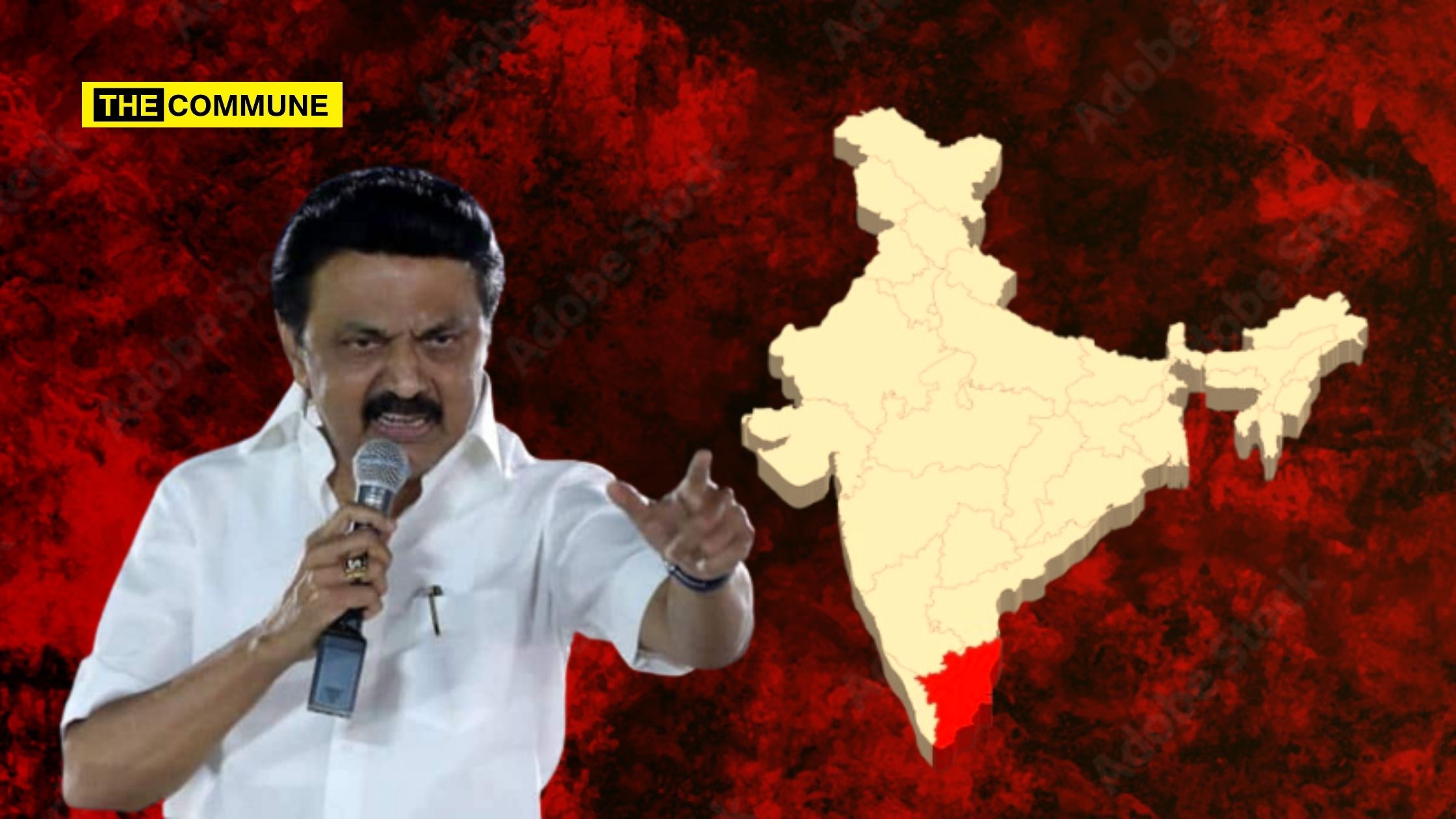
MK Stalin is at it again—manufacturing outrage and reviving the tired old North vs. South debate, all under the guise of “resisting” an imaginary Hindi imposition. While Tamil Nadu faces real governance challenges like crumbling infrastructure, corruption, and lawlessness, the DMK supremo seems more interested in fearmongering over language politics to divert attention from his government’s failures.
On 4 March 2025, he wrote on his X handle about the lack of an “Uttar Bharat Tamil Prachar Sabha” in the North of India. His post read,“A century has passed since the Dakshin Bharat Hindi Prachar Sabha was set up to make South Indians learn Hindi. How many Uttar Bharat Tamil Prachar Sabhas have been established in North India in allthese years? Truth is, we never demanded that North Indians must learn Tamil or any South Indian language to ‘preserve’ them. All we ask is to #StopHindiImposition on us. If BJP-ruled states want to teach 3 languages or even 30, let them! Just leave Tamil Nadu alone!”
A century has passed since the Dakshin Bharat Hindi Prachar Sabha was set up to make South Indians learn Hindi.
How many Uttar Bharat Tamil Prachar Sabhas have been established in North India in all these years?
Now that Stalin has taken up the subject of the Hindi Prachar Sabha in TN and the absence of an “Uttar Bharat Tamil Prachar Sabha – here’s the real question – What’s stopping the Tamil Nadu government from establishing Tamil Prachar Sabhas across India?
Stalin’s statements, though seemingly aimed at protecting Tamil pride, expose a glaring inconsistency in his approach to language promotion and cultural preservation.
Stalin’s rhetorical question— “How many Uttar Bharat Tamil Prachar Sabhas have been established in North India?”—is a clever diversion from the real issue: his owngovernment’s failure to actively promote Tamil outside Tamil Nadu. If the Chief Minister is so deeply concerned about the preservation and propagation of Tamil, why hasn’t his government taken concrete steps to establish Tamil learning centers across India? After all, Tamil Nadu has a dedicated Tamil Development Ministry with substantial funds. What exactly is stopping Stalin from using these resources to set up Tamil Prachar Sabhas in North India?
Victim Card?
The answer lies in the political convenience of playing the victim card. By framing the issue as one of “Hindi imposition,” Stalin conveniently shifts the blame to the central government and BJP-ruled states, while absolving himself of any responsibility. This is not the first time a Tamil Nadu leader has used the language debate to stoke regional sentiments and consolidate votes. However, Stalin’s approach is particularly disingenuous because it lacks any genuine effort to promote Tamil beyond the borders of Tamil Nadu.
Moreover, Stalin’s argument that Tamil Nadu has never insisted on North Indians learning Tamil is a red herring. The issue isn’t about forcing anyone to learn a language; it’s about creating opportunities for cultural exchange and mutual respect. If Stalin truly believes in the richness of Tamil culture and language, why doesn’t he take the initiative to promote it nationally? The Tamil Development Ministry, with its allocated funds, could easily spearhead such efforts. But instead of using these resources to establish Tamil learning centers or cultural hubs across India, the ministry’s work remains confined to token gestures within the state.
Hindi Prachar Sabha
The Hindi Prachar Sabha, founded in 1918 by Mahatma Gandhi, was envisioned as a bridge to foster national unity through language. The intent was to create a common linguistic thread in a diverse country. Stalin’s criticism of the Sabha ignores its historical context and reduces it to a symbol of “Hindi imposition.” But if Hindi promotion is seen as an imposition, why isn’t Tamil promotion viewed as an opportunity?
The truth is, thatStalin’s rhetoric is less about protecting Tamil and more about scoring political points. By framing the language debate as a battle against Hindi imposition, he taps into the deep-rooted linguistic pride of Tamilians, while deflecting attention from his government’s failures. It’s a classic case of political opportunism, where rhetoric takes precedence over action.
If Stalin is genuinely committed to the cause of Tamil, he must move beyond empty speeches and take concrete steps to promote the language nationwide. Setting up Tamil Prachar Sabhas in North India, leveraging the Tamil Development Ministry’s funds, and fostering cultural exchanges are just a few ways he can turn his words into action. Until then, his criticism of Hindi imposition will remain nothing more than a hollow political ploy, aimed at masking his own inaction and hypocrisy.
In the end, the language debate shouldn’t be about pitting one language against another or stoking regional divides. It should be about celebrating India’s linguistic diversity and creating opportunities for mutual understanding. Unfortunately, Stalin’s approach does neither. Instead, it perpetuates division and distracts from the real issue: his government’s failure to walk the talk on Tamil promotion.
Subscribe to our channels on Telegram, WhatsApp, and Instagram and get the best stories of the day delivered to you personally.
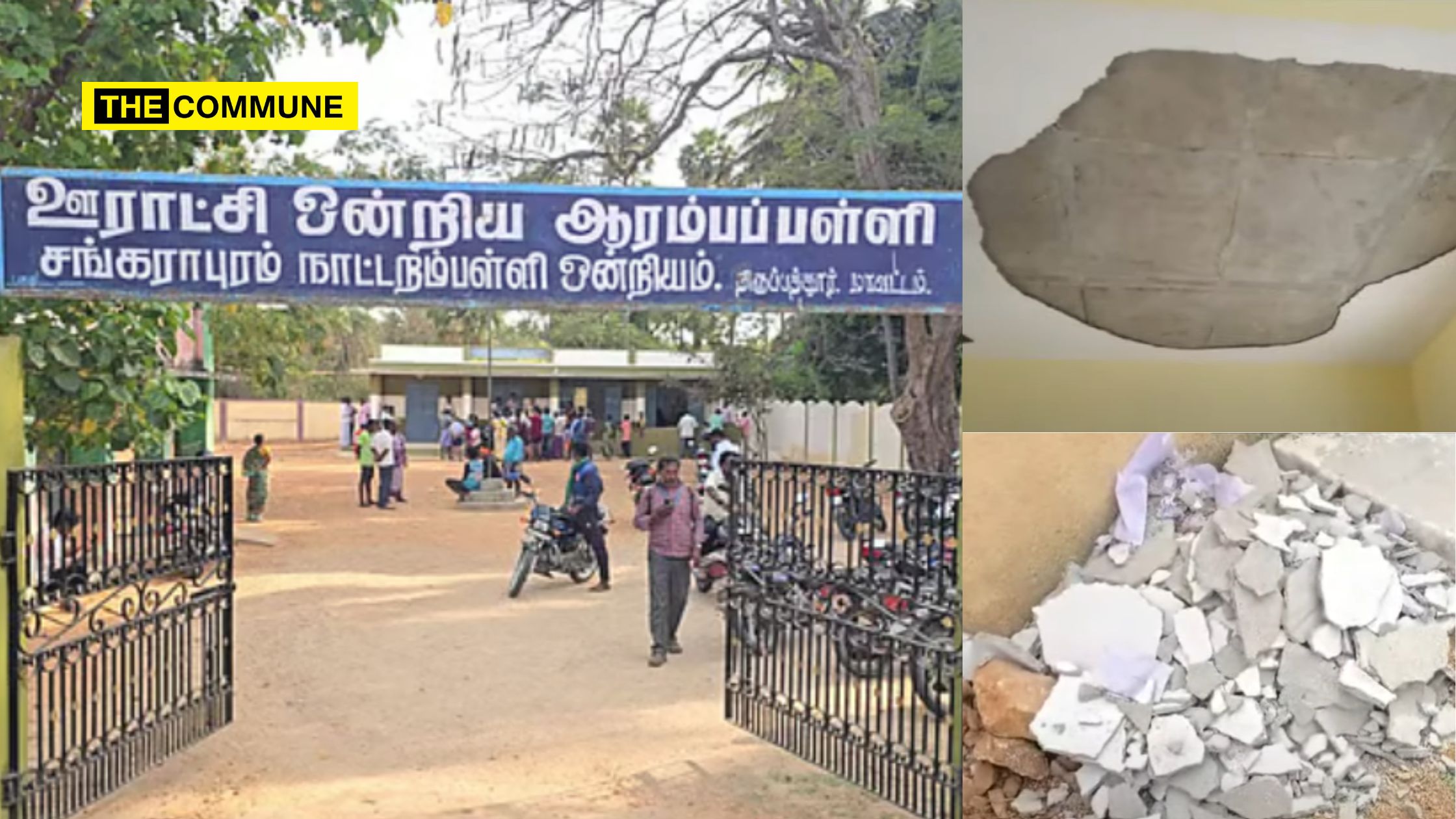
Three students from a government school near Vaniyambadi suffered serious injuries when the roof of a newly inaugurated classroom collapsed. The incident occurred at a panchayat union primary school in the Shankarapuram area of Vaniyambadi, Tirupattur district.
In the 2023-2024 financial year, two new classrooms were constructed at a cost of ₹21 lakh, funded by Vaniyambadi AIADMK MLA Senthilkumar through the Rural Development and Local Government Department. The new building was inaugurated in late August 2024.
On 4 March 2025, while 33 students from classes 1 to 5 were attending lessons, the roof suddenly collapsed, injuring Class 1 student Praneeth, Class 3 student Sudarsan, and another student, Vishek. Teachers and local residents swiftly rescued the injured students and transported them to a private hospital in Vaniyambadi.
Vaniyambadi Deputy Superintendent of Police Vijayakumar, along with officials from the police and revenue departments, conducted an on-site investigation at the school. Following this, Natrampalli District Education Officer Saravanan inspected the school, declared a holiday, and ordered that the building should not be used by students and teachers. The incident has caused significant concern in the area.
This is not an isolated incident; similar cases of government school ceilings collapsing on students have been recurring over the past few years under the DMK government.
On 27 August 2024, three students were injured when a section of the ceiling plaster fell on them during class at a government-run school in Krishnagiri. The accident raised significant concerns about the safety and structural integrity of the building, which had only been opened two months ago with MPLADS fund. In another similar incident July 2024, a ceiling of a newly constructed Panchayat Union Middle School near Kanchipuram collapsed, where the building, completed three months prior.
In August 2024, anotherceiling of a classroom at a government school in Thiruporur collapsed, injuring five female students and sparking protests from parents who questioned the quality of the construction.
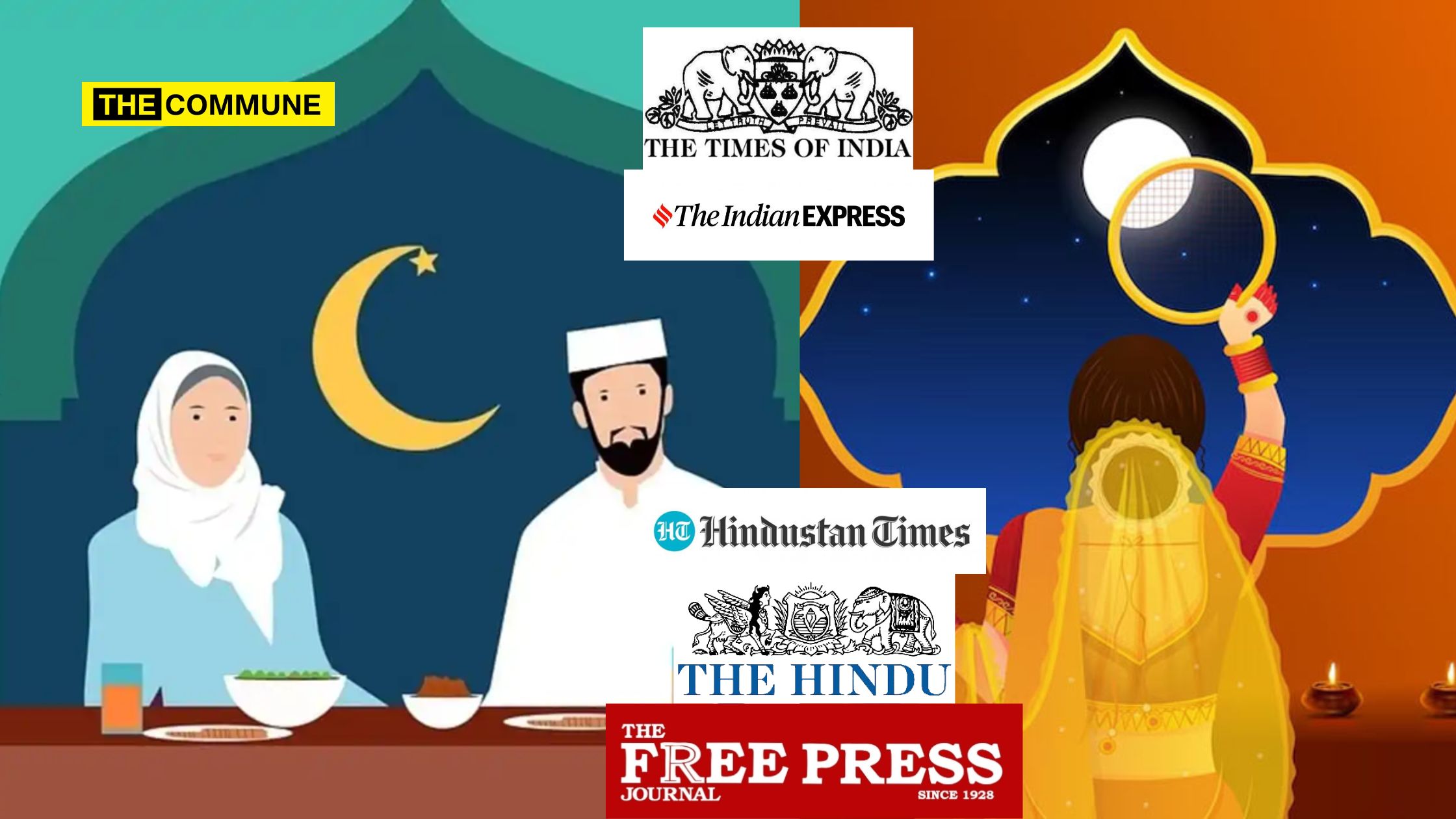
As the fasting season of Ramzan began, several screenshots of news articles from the past started surfacing on social media. These screenshots contrasted the narratives of news media when it came to presenting Ramzan and Karwa Chauth. Let’s take a look at the many instances of such blatant hypocrisy and negative narrative setting by media especially when denouncing Hindu fasts/rituals while glorifying those of Muslim festivals.
The Hindu
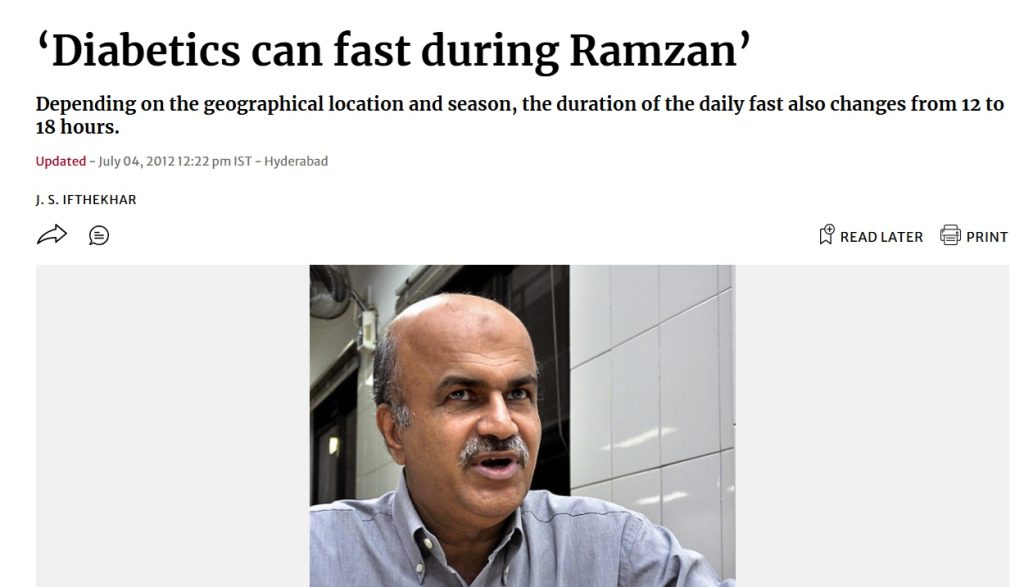
The Hindu had come up with articles promoting the positive effects of fasting during Ramzan, especially for diabetics.
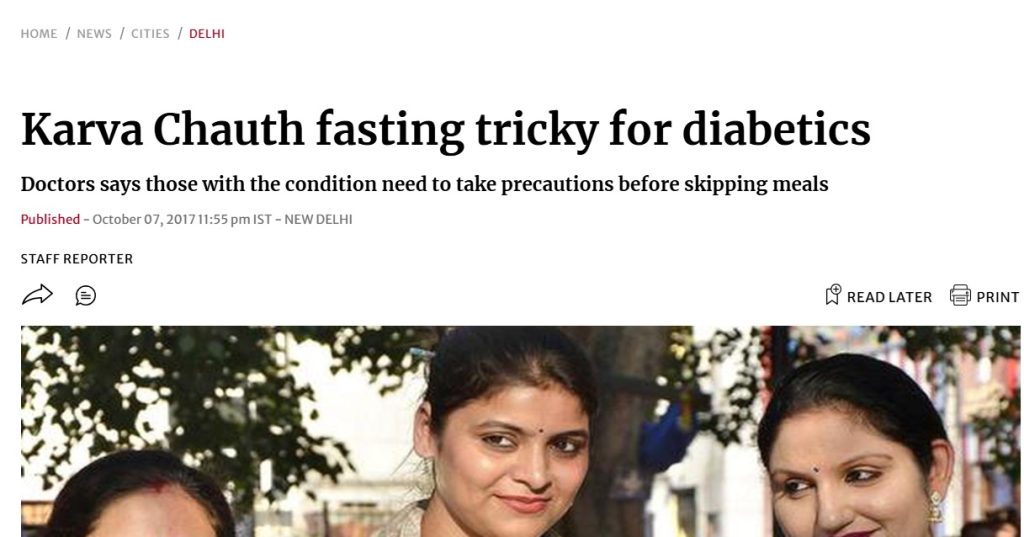
However, the same publication called fasting “tricky” for diabetics when done during Karwa Chauth!
Hindustan Times
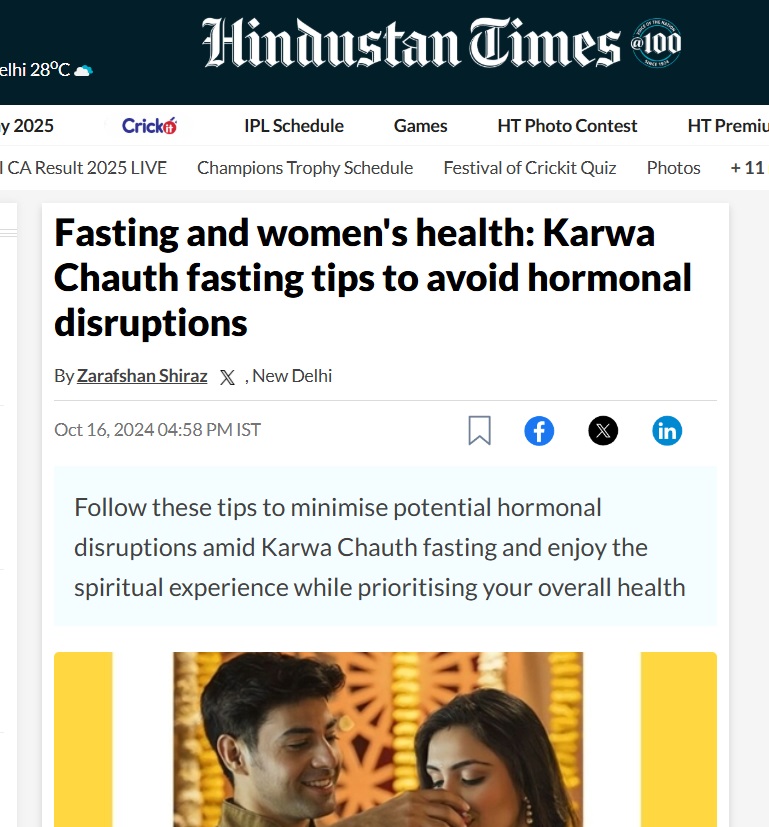
Hindustan Times is known for amplifying anti-Hindu voices as we have been seeing for quite some time. Take the case of Naomi Barton, leftist journo who had problems with Deepavali fireworks or purchasing non-veg during Shivaratri, it was all reported by Hindustan Times. So will they be far behind when it comes to Karwa Chauth and Ramzan? Here are some samples – Fasting during Karwa Chauth could lead to hormonal disruptions so they give tips to women to “avoid” it.
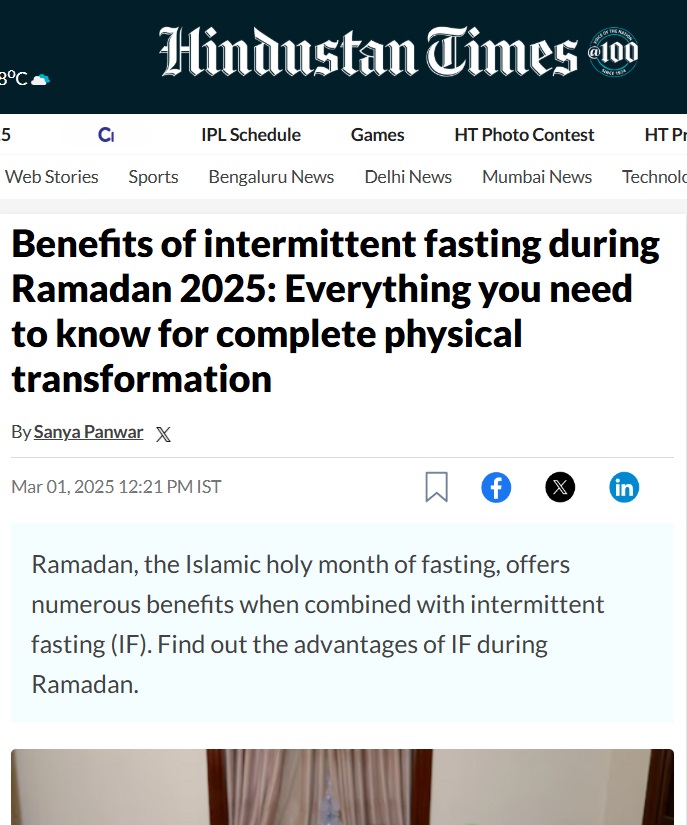
But for Ramzan, the tables turn. Intermittent fasting is beneficial especially when done Ramzan style!
Indian Express
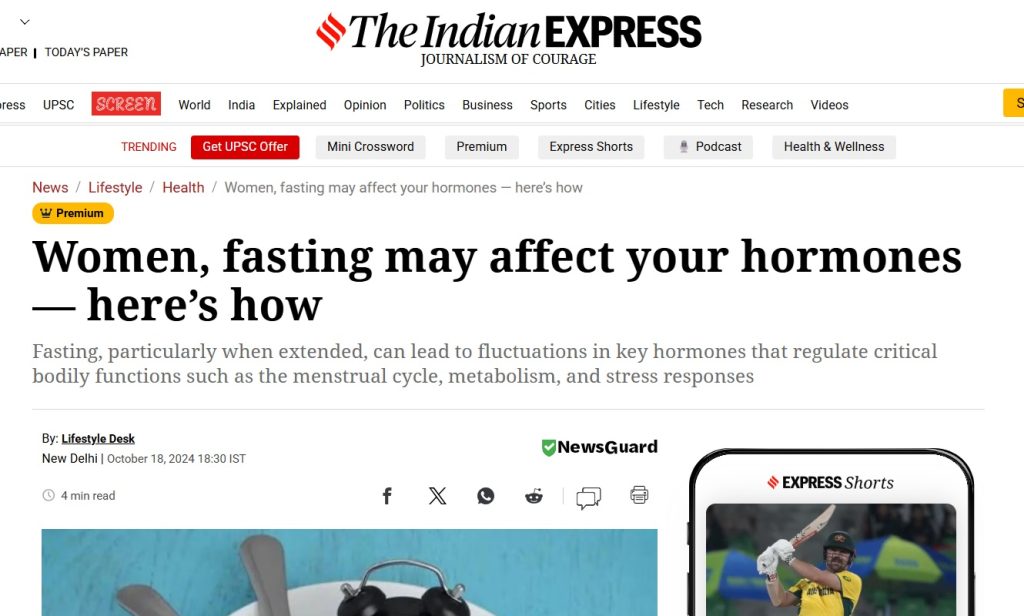
Even Indian Express had indulged in fear mongering during Karwa Chauth – they said that women fasting during the festival would face hormonal issues. Here’s what they wrote.
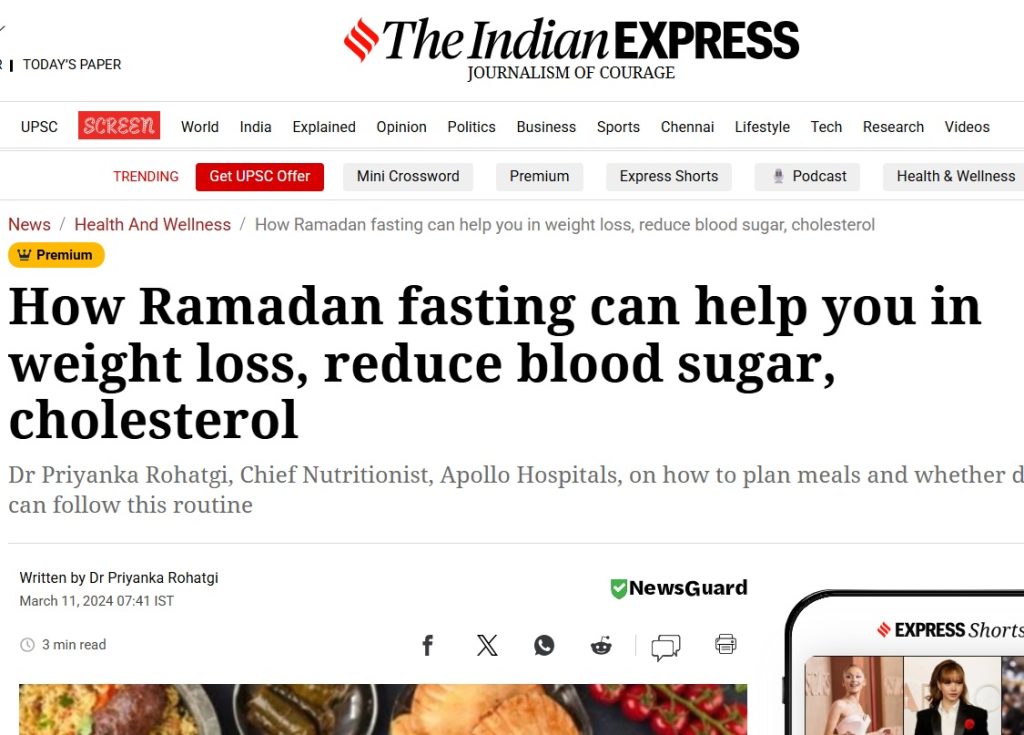
And as if Ramzan fast is observed by men alone, the problem of hormonal imbalance or other hormone related problems vanish for Indian Express. Fasting during Ramzan becomes beneficial and helps to lose weight, reduce blood sugar, and cholesterol. Oh what a miracle!
Free Press Journal
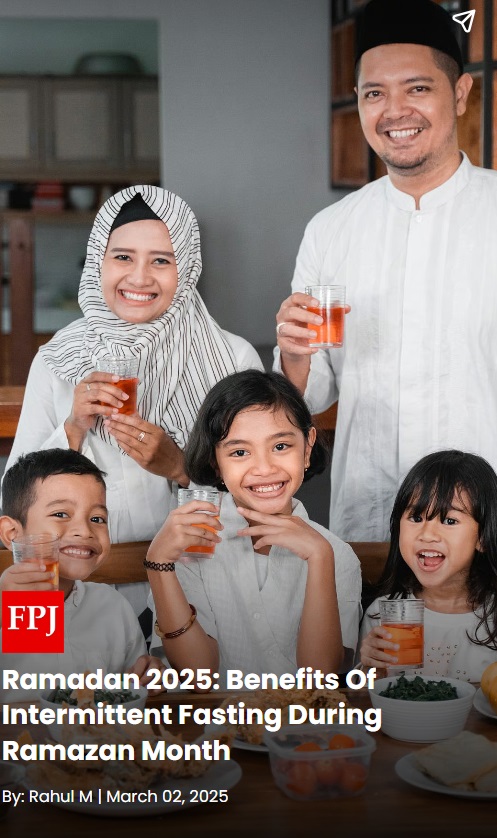
The Free Press Journal shares images of a Malay family fasting and comes up with several slides proving Ramzan fasting is a great thing, a very beneficial thing to do.
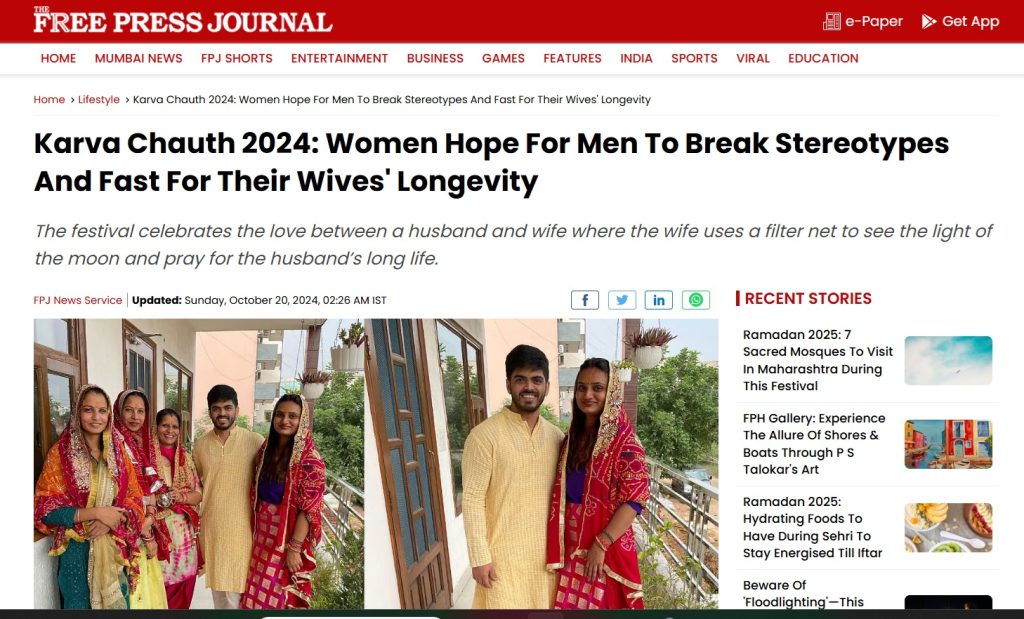
However, fasting during Karwa Chauth is all about breaking stereotypes, encouraging men to fast and all the feminist trope one can come up with!
Times of India
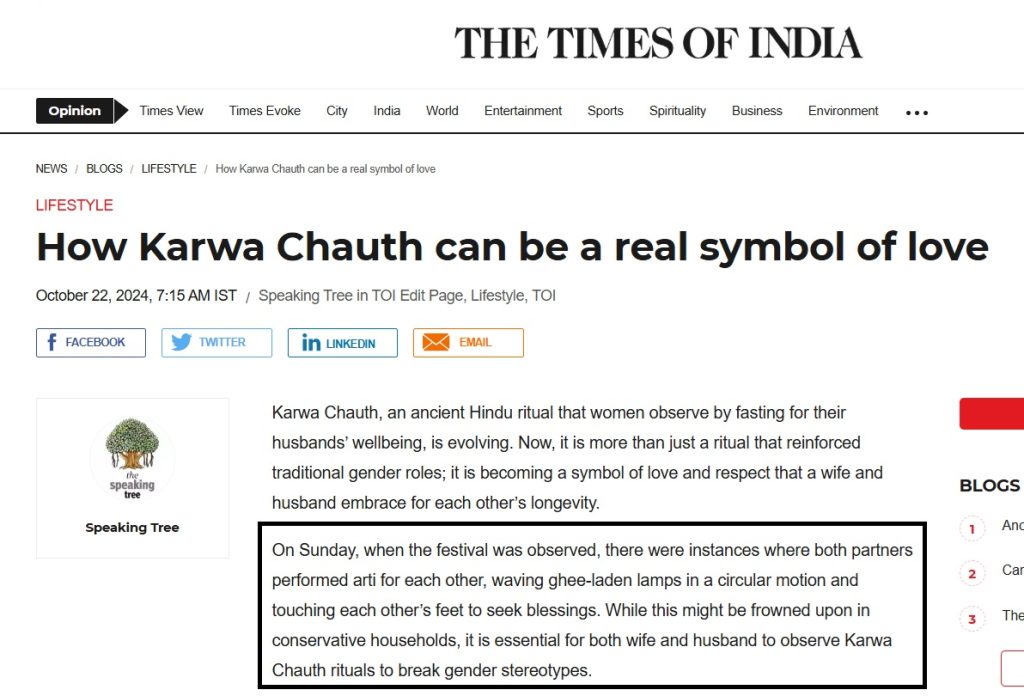
Similar to The Free Press Journal, for Times of India, Karwa Chawth is all about gender equality, breaking norms, conservativeness etc.
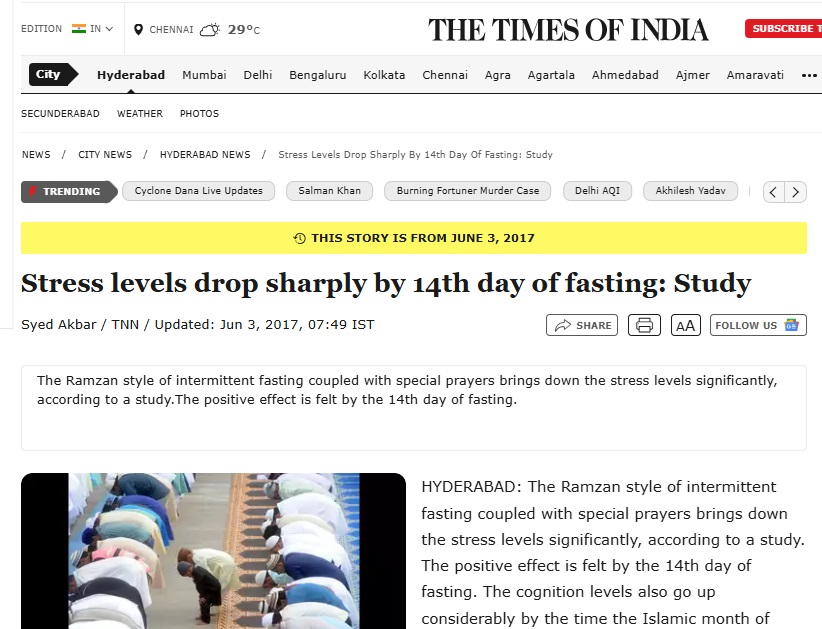
But fasting during Ramzan is all about stress management, great stress reducer!
India TV News
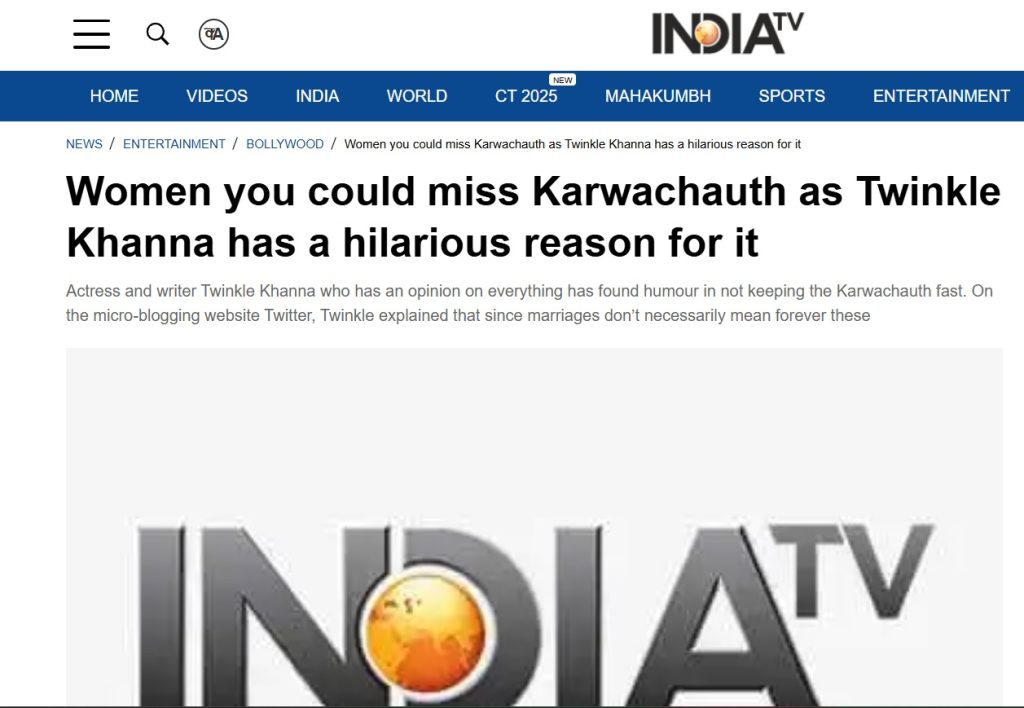
For India TV News, Karwa Chauth fasting is a matter of fun, joke and mockery.
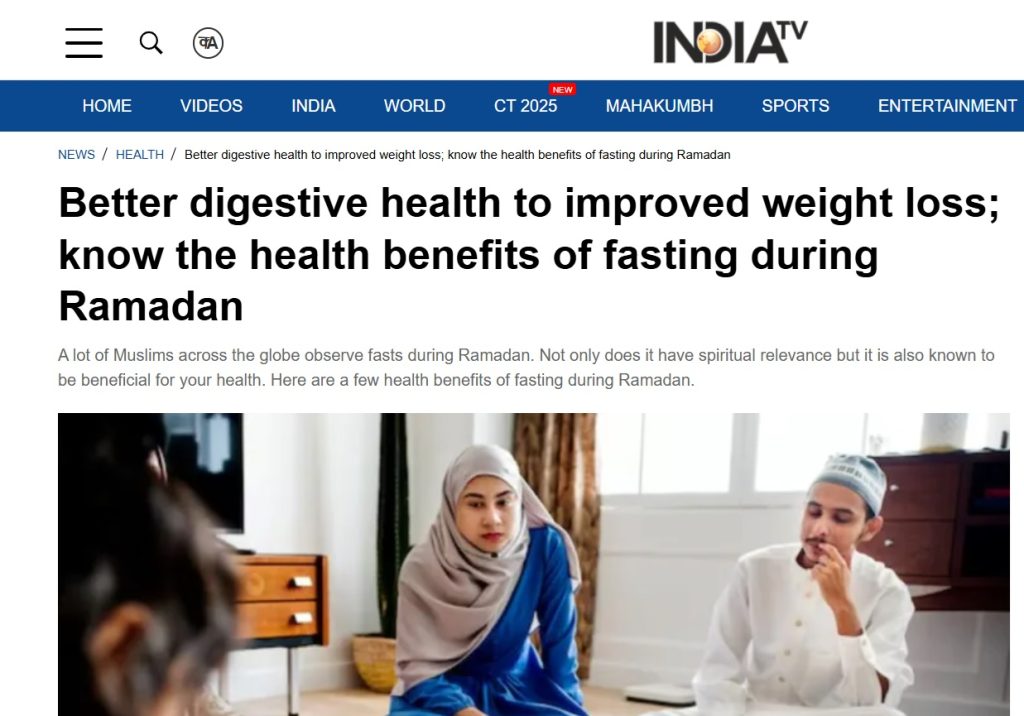
But when it comes to Ramzan, they turn all serious and push the “health benefits” narrative.
Even health-related websites followed the same pattern. Here are a couple of examples.
The Health Site
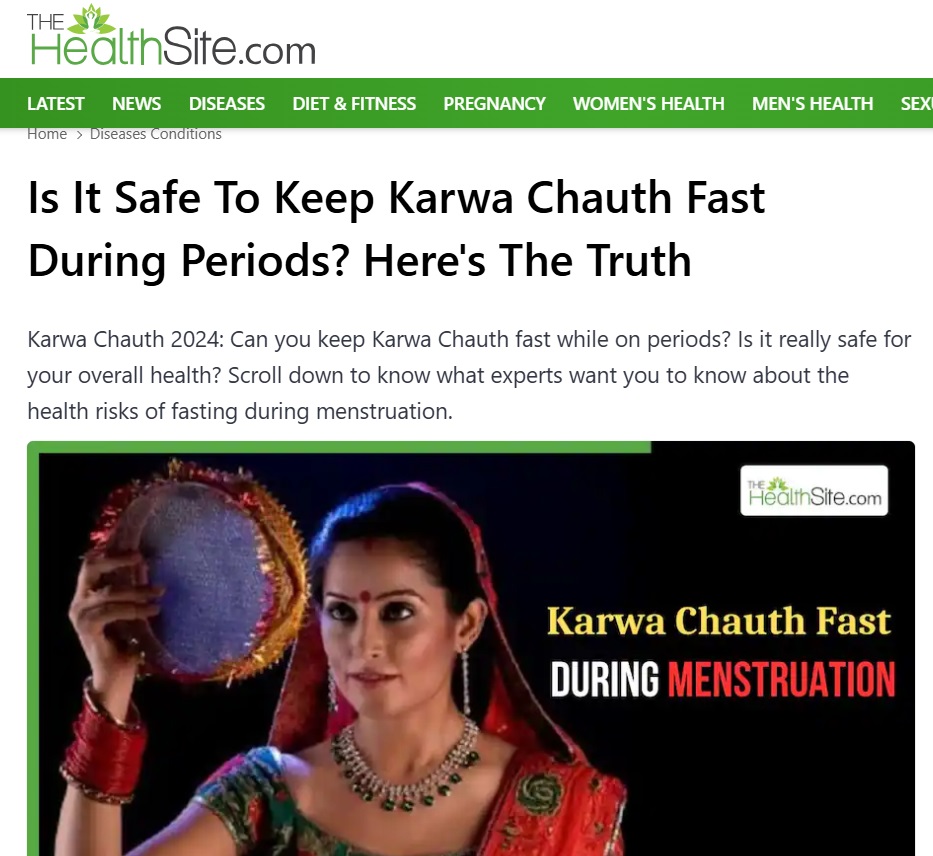
Fear mongering about Karwa Chauth and periods is a given for even health websites when it comes to the Hindu festival.
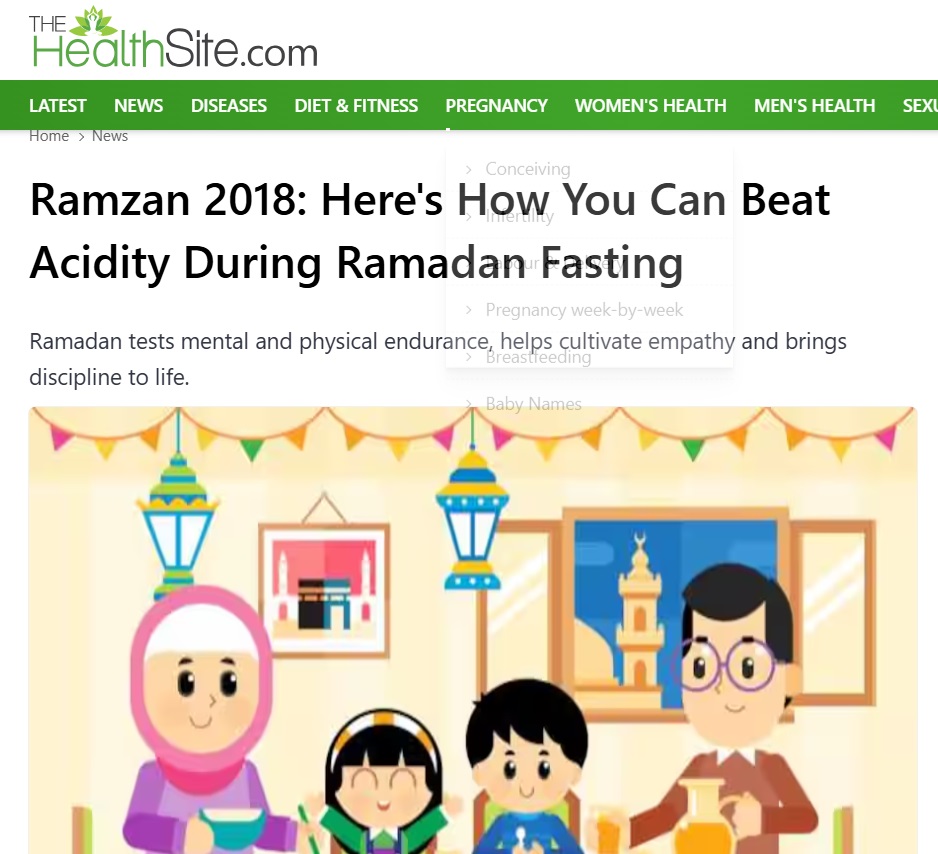
But on the other hand, you can beat acidity during fasting with their tips!
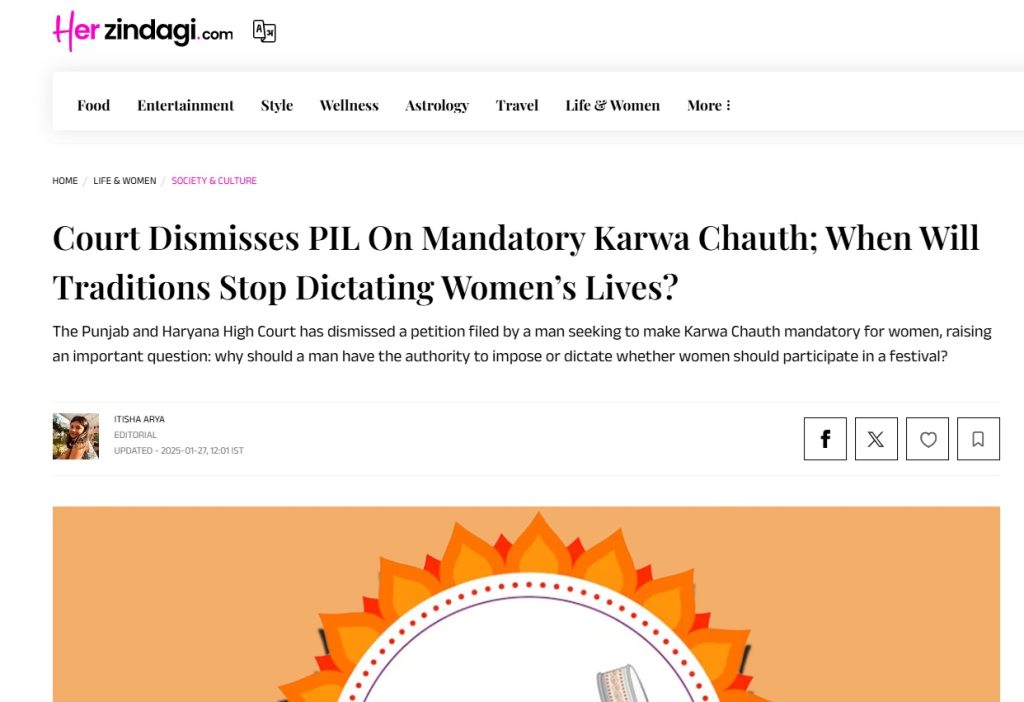
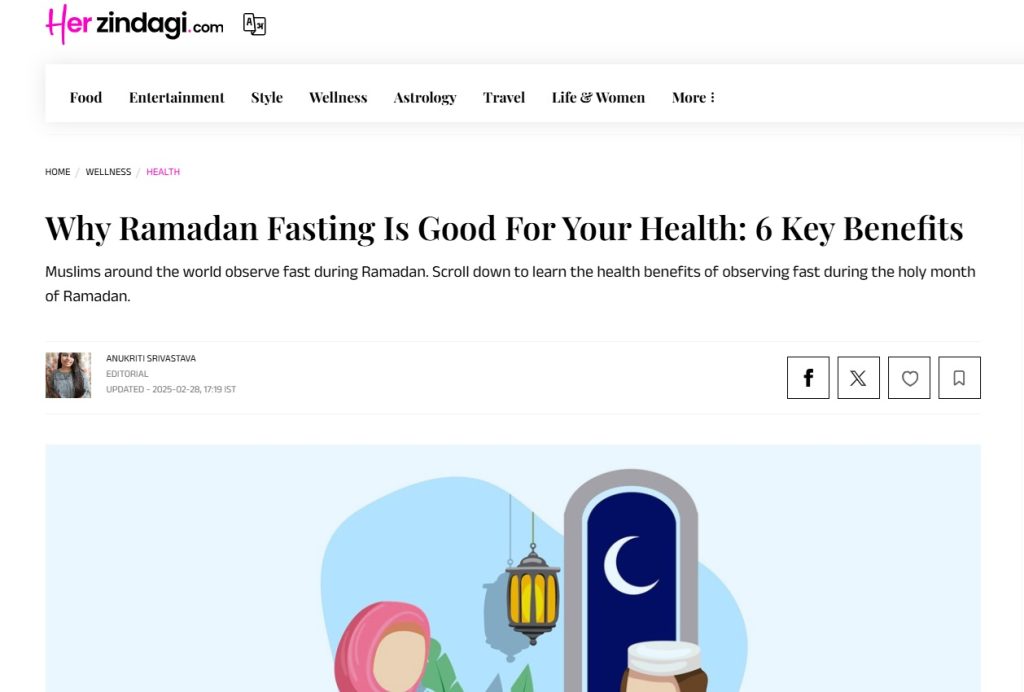
Her Zindagi
This website Her Zindagi.com seems to be a woman-oriented website and talks about revolution and breaking gender stereotypes, tradition, etc.
But Ramzan fasting is good for health! There need not be any rebellious streak attached to Ramzan fasting because – good for health yo!
The contrasting narratives presented by mainstream media outlets regarding Ramzan and Karwa Chauth fasting reveal a troubling pattern of bias and hypocrisy. While Ramzan fasting is often glorified for its health benefits, spiritual significance, and communal harmony, Karwa Chauth is frequently subjected to skepticism, fear-mongering, and feminist critiques. This double standard not only undermines the cultural and religious practices of Hindus but also highlights the media’s tendency to cater to specific agendas. Such selective reporting fosters division and perpetuates stereotypes, rather than promoting understanding and respect for diverse traditions.
Subscribe to our channels on Telegram, WhatsApp, and Instagram and get the best stories of the day delivered to you personally.
A video of a DMK councillor attempting to remove the bangle of the municipal chairperson in Coonoor has gone viral on social media, sparking widespread criticism.
The incident occurred during an oath-taking ceremony held across Tamil Nadu to mark Chief Minister M.K. Stalin’s birthday. In Coonoor, the event took place near the Anna statue and was attended by municipal chairperson Sushila, councilors, and the party’s environmental team leader and chief spokesperson, Zakir Hussain, among others.
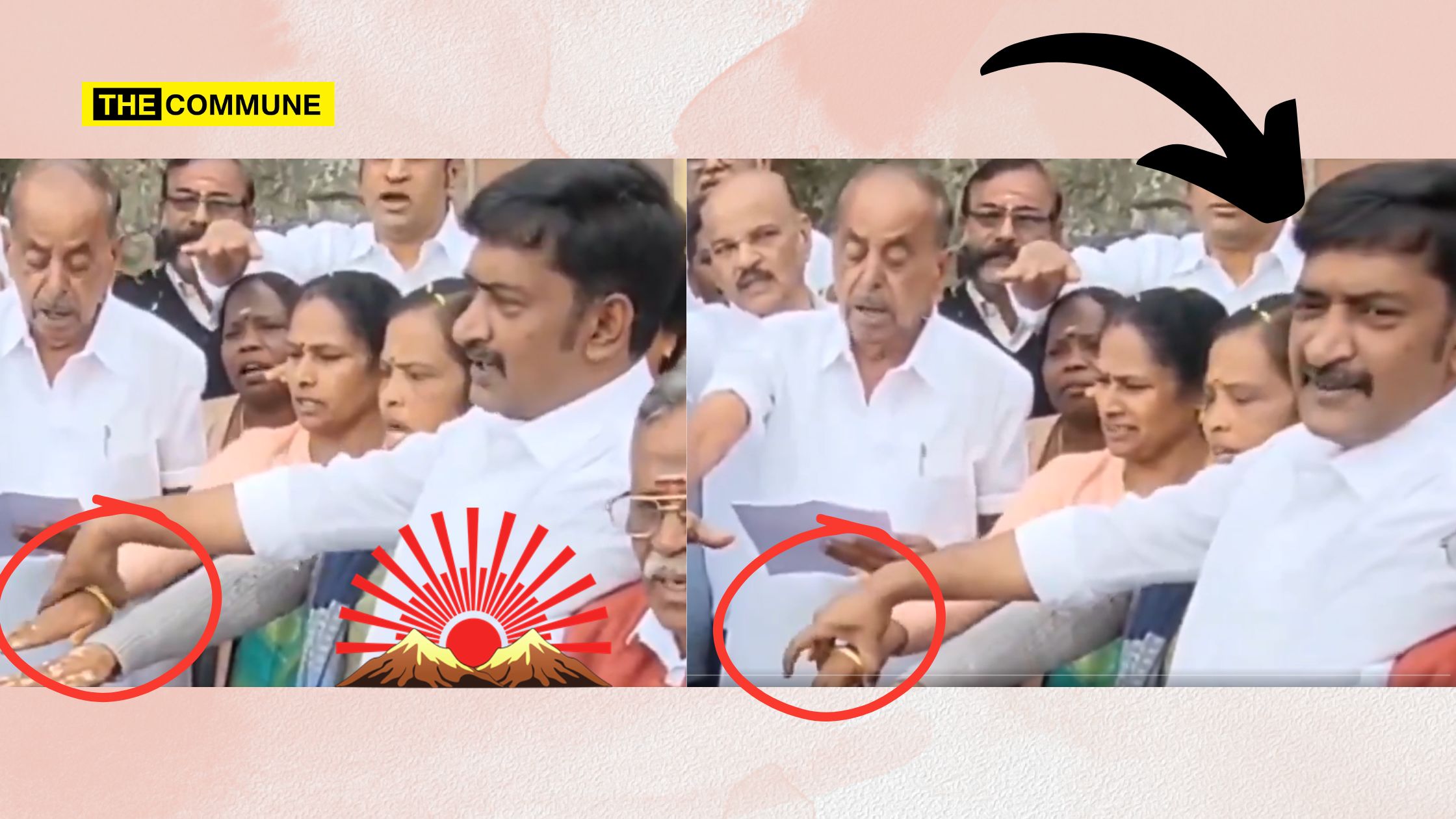
During the oath-taking, Zakir Hussain was seen attempting to remove the bangle from municipal chairperson Sushila’s hand. A nearby official noticed the action and slapped his hand away. However, within seconds, Hussain again placed his hand on Sushila’s wrist and tried to take off the bangle. Sushila promptly withdrew her hand to prevent the act.
Bystanders captured the incident on video and shared it on social media, where it quickly gained traction. The footage has triggered a backlash against the DMK, with many condemning the behavior.
What sickness!
DMK Councillor Zakir Hussain constantly keeps touching a woman's hand, even trying to remove her bangle while ostensibly taking a pledge against Hindi language.
Tamil Nadu BJP President K. Annamalai reacted strongly to the incident, sharing the viral video on his ‘X’ social media account. He criticized the councilor, stating,“DMK Councilor of Ward 25 of Coonoor Municipal Council, Mr. Zakir Hussain, who steals bangles under the guise of anti-Hindi. Theft and DMK can never be separated!”
இந்தி எதிர்ப்புப் போர்வையில், வளையலைத் திருடும் குன்னூர் நகர்மன்ற 25-வது வார்டு திமுக கவுன்சிலர் திரு ஜாகிர் உசேன்.
The Israeli army has killed a senior Qassam Brigades commander and another Palestinian during a large-scale military operation in the eastern neighbourhood of the northern West Bank city of Jenin.
According to Palestinian security sources and eyewitnesses, the Israeli forces, backed by large reinforcements, surrounded several residential buildings in the eastern neighbourhood of Jenin, which led to violent clashes that resulted in the killing of Aysar al-Saadi and another young man, Xinhua news agency reported.
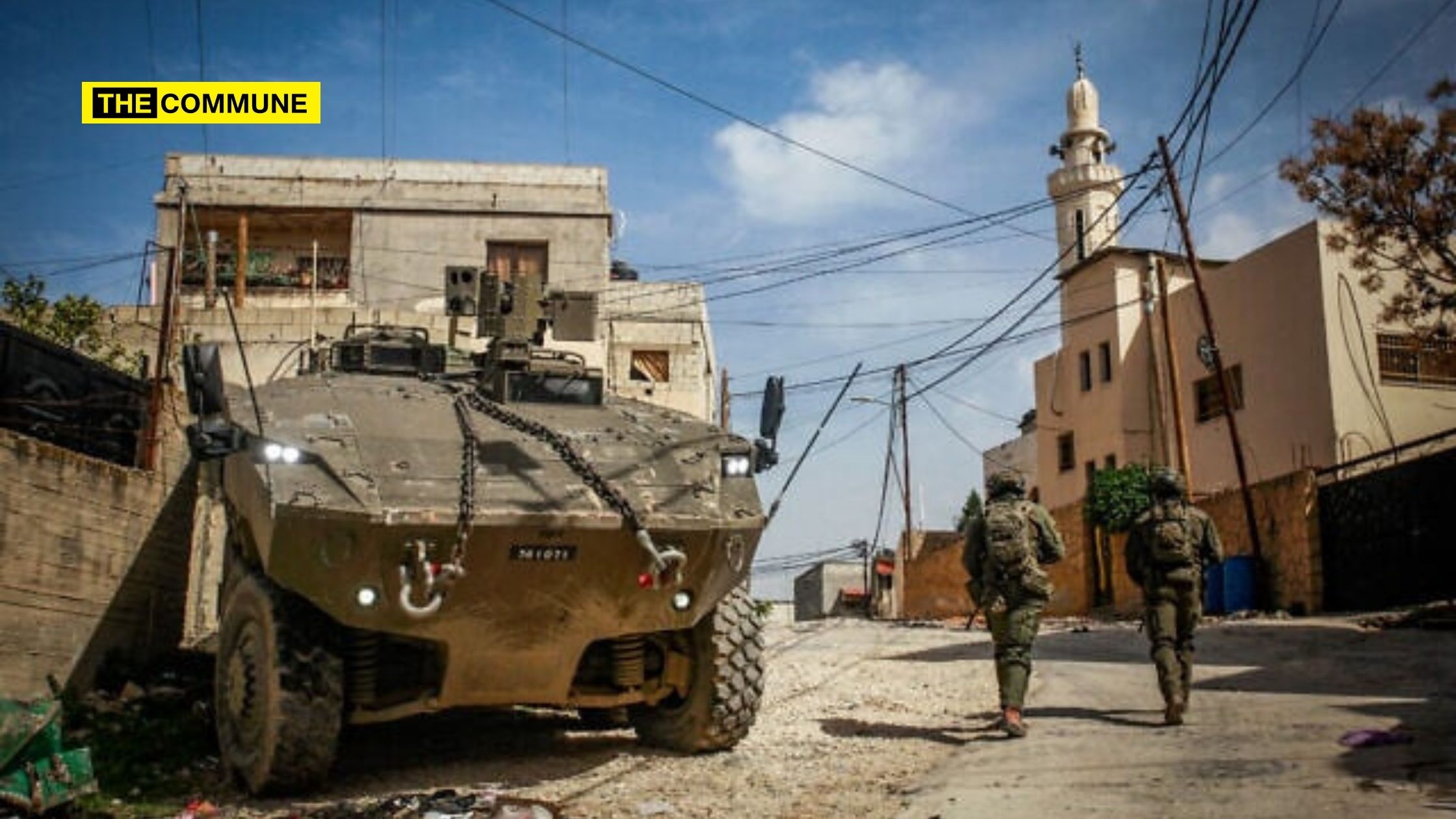
The incident came as the Israel Defense Forces (IDF) expanded its ongoing counterterrorism raid, dubbed “Operation Iron Wall,” in the northern West Bank to additional neighbourhoods of Jenin. In a first, troops were using “Eitan” armoured personnel carriers in Jenin amid the operation, which are more heavy duty than the APCs normally deployed in the West Bank.
On Tuesday morning, as part of the expanded operation, Border Police officers along with IDF troops attempted to arrest the commander of Hamas’s terror network in Jenin, Aysar al-Saadi, following information on his whereabouts provided by the Shin Bet. Following an exchange of fire, Saadi and another gunman were killed, and three wanted Palestinians were detained, according to the IDF, police, and Shin Bet.
Hamas mourned the death of Saadi, accusing Israel of resorting to “assassinations after failing to confront the resistance on the ground”. In a statement, the Israeli army confirmed the killing of Saadi, alleging that he was responsible for planning attacks against Israeli targets. The Israeli troops found an assault rifle, handgun, and several other weapons during scans of the building where Saadi was holed up.
Another gunman was killed in a separate exchange of fire in the same area, the IDF added. On Tuesday, a Palestinian man who approached Israeli forces at a checkpoint near the West Bank settlement outpost of Homesh while brandishing a knife was shot dead by troops, according to a military source. The statement also claimed that the second Palestinian killed “posed a threat” to Israeli forces in the area.
The army emphasised that military operations would continue in Jenin to pursue what it described as “terrorist elements”. Jenin governor Kamal Abu al-Rub said that two Palestinians were killed, “and many young men were arrested,” while the Palestinian Health Ministry identified one of the dead as Aysar al-Saadi, saying the 21-year-old’s body was taken away by troops after he was shot.
The head of the Jenin government hospital, Wisam Baker, told media that a man identified as Jihad Alawneh was declared dead on arrival at the facility early on Tuesday.
Baker said that Alawneh, 25, had bled out after being shot in the thigh. Governor Abu al-Rub said the raid had caused “devastation and massive destruction” in Jenin’s eastern neighbourhood, “which has not experienced an Israeli assault like this before.”
He said that the main electricity line was cut off, dozens of families were forced to leave, and army bulldozers had left behind a trail of damage. More than 40,100 Palestinians have left their homes since the launch of Operation Iron Wall, according to the United Nations Relief and Works Agency (UNRWA) figures from mid-February.
The IDF has said troops have killed more than 75 Palestinian terror operatives and detained some 450 amid the major ongoing counter-terrorism operation. The military has also acknowledged mistakenly killing several civilians during the operation, including a toddler and a pregnant woman. Troops have also seized nearly 200 weapons.
–IANS
Subscribe to our channels on Telegram, WhatsApp, and Instagram and get the best stories of the day delivered to you personally.
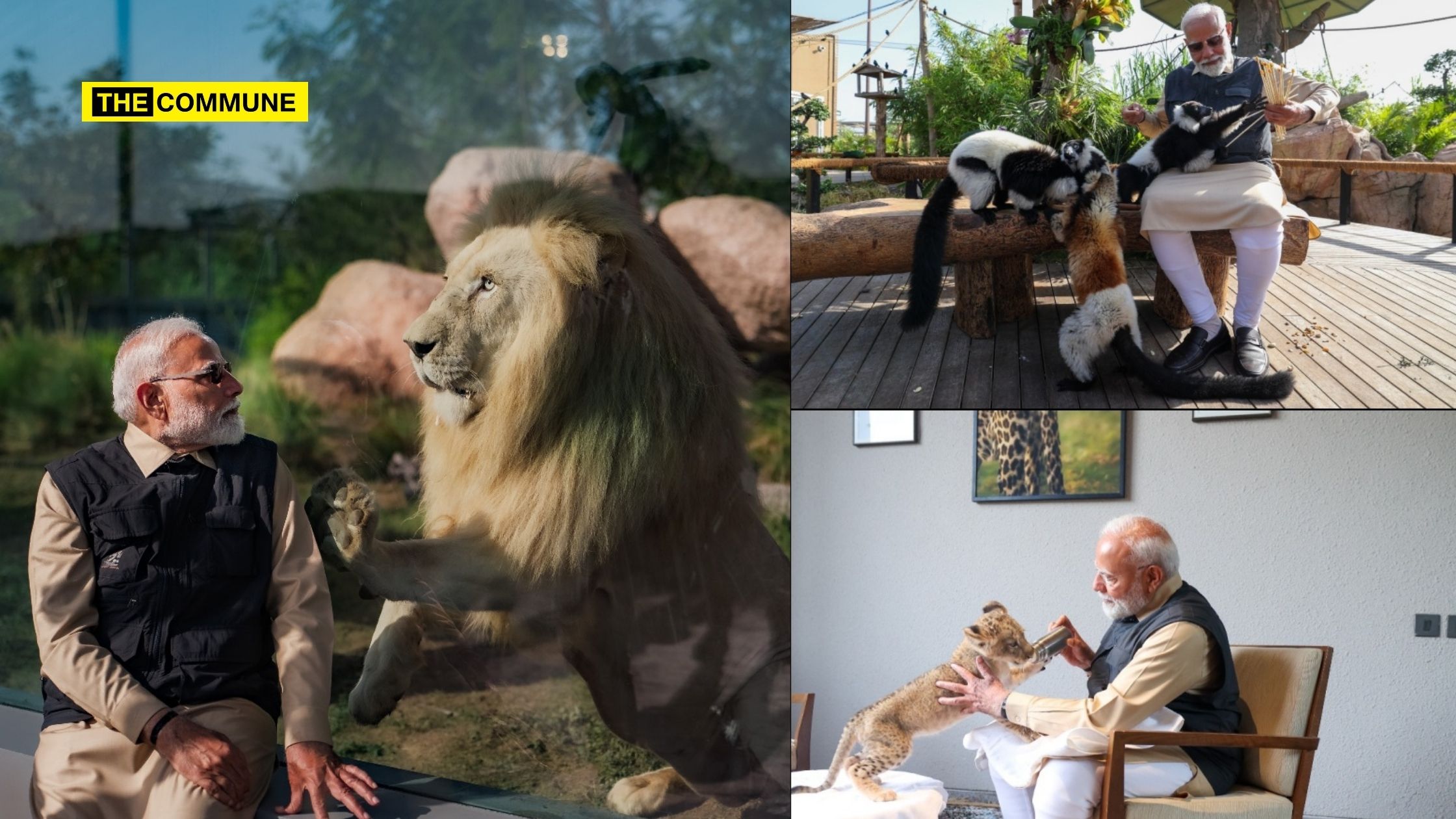
Prime Minister Narendra Modi’s affection for animals is well-known, and his love for them is not something new. Even before assuming office as Prime Minister, he had a deep bond with animals. Recently, Modi Archive ‘X handle’ shared old photos of PM Modi with animals, captioning them, “He loves animals, and they love him right back!”
The pictures show him sitting with a tiger, feeding an animal, and even holding a small animal in his lap, highlighting how his love for animals has been a long-standing passion.
This affection has been rejuvenated through his visit to Vantara in Gujarat on Sunday. During his time at Jamnagar’s Vantara, PM Modi spent some time with various wildlife, playing with Asiatic lion cubs, white lion cubs, clouded leopard cubs, and caracal cubs, among others. Prime Minister Narendra Modi inaugurated the Vantara animal rescue and rehabilitation centre in Jamnagar.
He remarked, “Inaugurated Vantara, a unique wildlife conservation, rescue, and rehabilitation initiative, which provides a safe haven for animals while promoting ecological sustainability and wildlife welfare. I commend Anant Ambani and his entire team for this very compassionate effort.” The visit included memorable moments as PM Modi fed lion cubs and admired an okapi. Vantara houses over 2,000 species and more than 1.5 lakh rescued, endangered, and threatened animals. Throughout the visit, PM Modi displayed affection for several animals, including feeding lemurs and engaging with seals.
Vantara spans 3,000 acres and features advanced veterinary facilities with enclosures designed to replicate the animals’ natural habitats. PM Modi also visited the wildlife hospital at Vantara, which is equipped with MRI, CT scans, and ICUs. During his visit, the Prime Minister witnessed an Asiatic lion undergoing an MRI and also visited the Operation Theatre where a leopard was receiving lifesaving surgery after being rescued from a highway accident.
Vantara offers specialised care with various departments, including Wildlife Anesthesia, Cardiology, Nephrology, Endoscopy, Dentistry, and Internal Medicine.
–IANS
Subscribe to our channels on Telegram, WhatsApp, and Instagram and get the best stories of the day delivered to you personally.