Home Blog Page 361

Law And Order Goes For A Toss In Appa’s Dravidian Model: 7 Chain Snatching Incidents Reported In One Hour Across Chennai
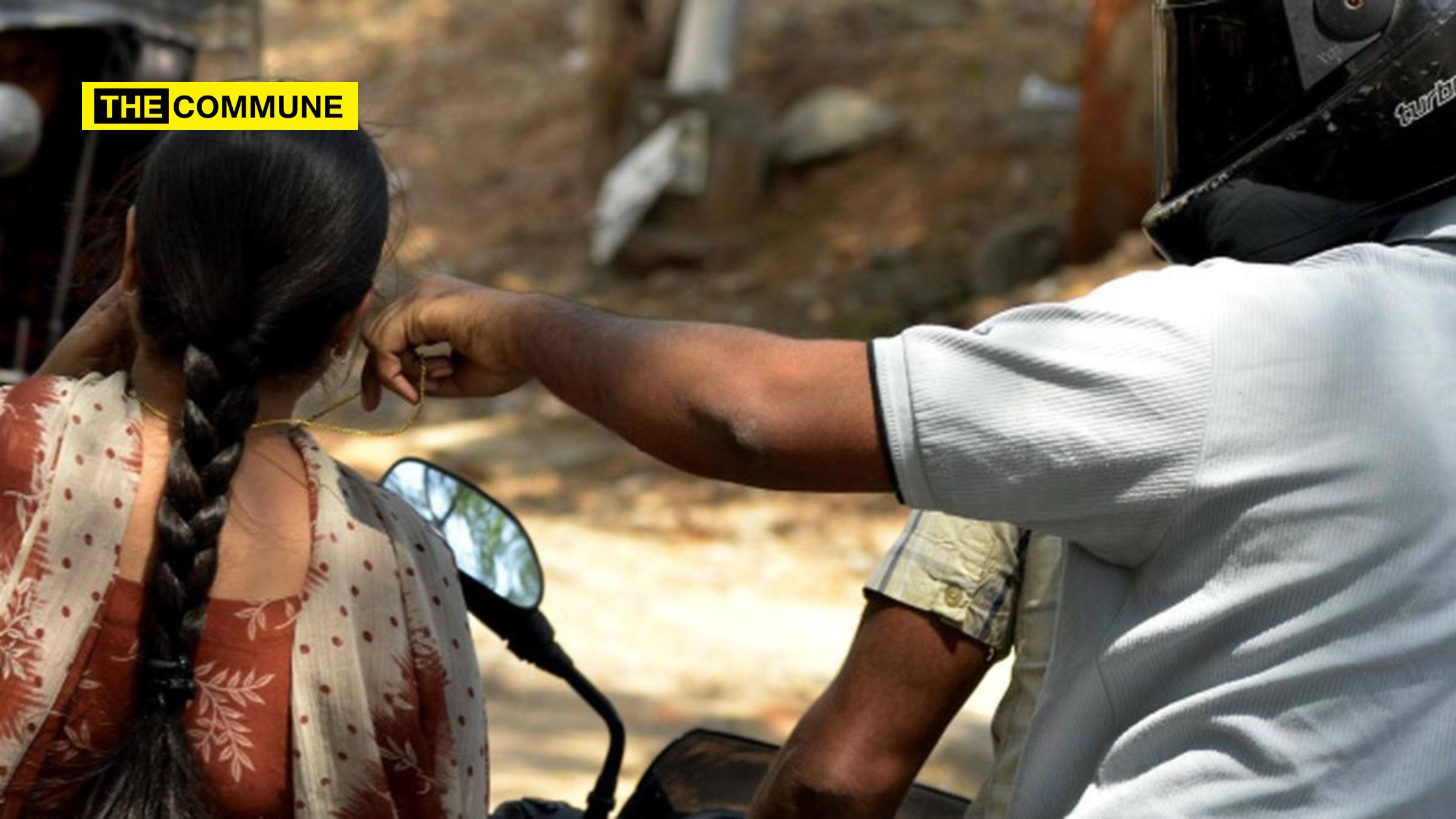
While crimes like murder, robbery, and drug trafficking continue to rise across Tamil Nadu, a shocking wave of chain snatching incidents in Chennai on 24 March has left residents alarmed. Seven separate cases of jewelry theft were reported in a single day in a single hour, sparking concerns about public safety and law & order in the state.

Many have accused the police of focusing more on arresting activists and opposition members critical of the government rather than tackling criminal activities.

A One-Hour Crime Spree Across Chennai

The series of chain snatchings took place between 6 AM and 7 AM in multiple locations, including Thiruvanmiyur, Besant Nagar, Guindy, Saidapet, Velachery, and Pallikaranai. Victims included

  • A woman in Indira Nagar, Thiruvanmiyur, lost 5 sovereigns of gold jewelry while heading to work.

  • Another woman in Shastri Nagar, who was undergoing training, was robbed of half a sovereign.

  • A pedestrian near the Guindy MRC Ground had 5 sovereigns stolen.

  • A woman on her way to work in Saidapet lost 1 sovereign of jewelry.

  • Two other women in Velachery and Pallikaranai also fell victim to the snatchers.

The rapid succession of these crimes has created widespread fear among the public.

Police Investigation Underway

Initial investigations suggest that all seven incidents were executed within an hour by two individuals riding the same two-wheeler. Reports indicate that the gang moved from Pallikaranai through Adyar and Velachery before vanishing.

Cases have been registered at multiple police stations, and authorities are actively investigating. However, the sheer scale of the coordinated thefts—resulting in the loss of over 15 sovereign of jewelry—has raised serious concerns about law enforcement’s ability to maintain public safety.

(With Inputs From Maalai Malar)

Subscribe to our channels on TelegramWhatsApp, and Instagram and get the best stories of the day delivered to you personally.
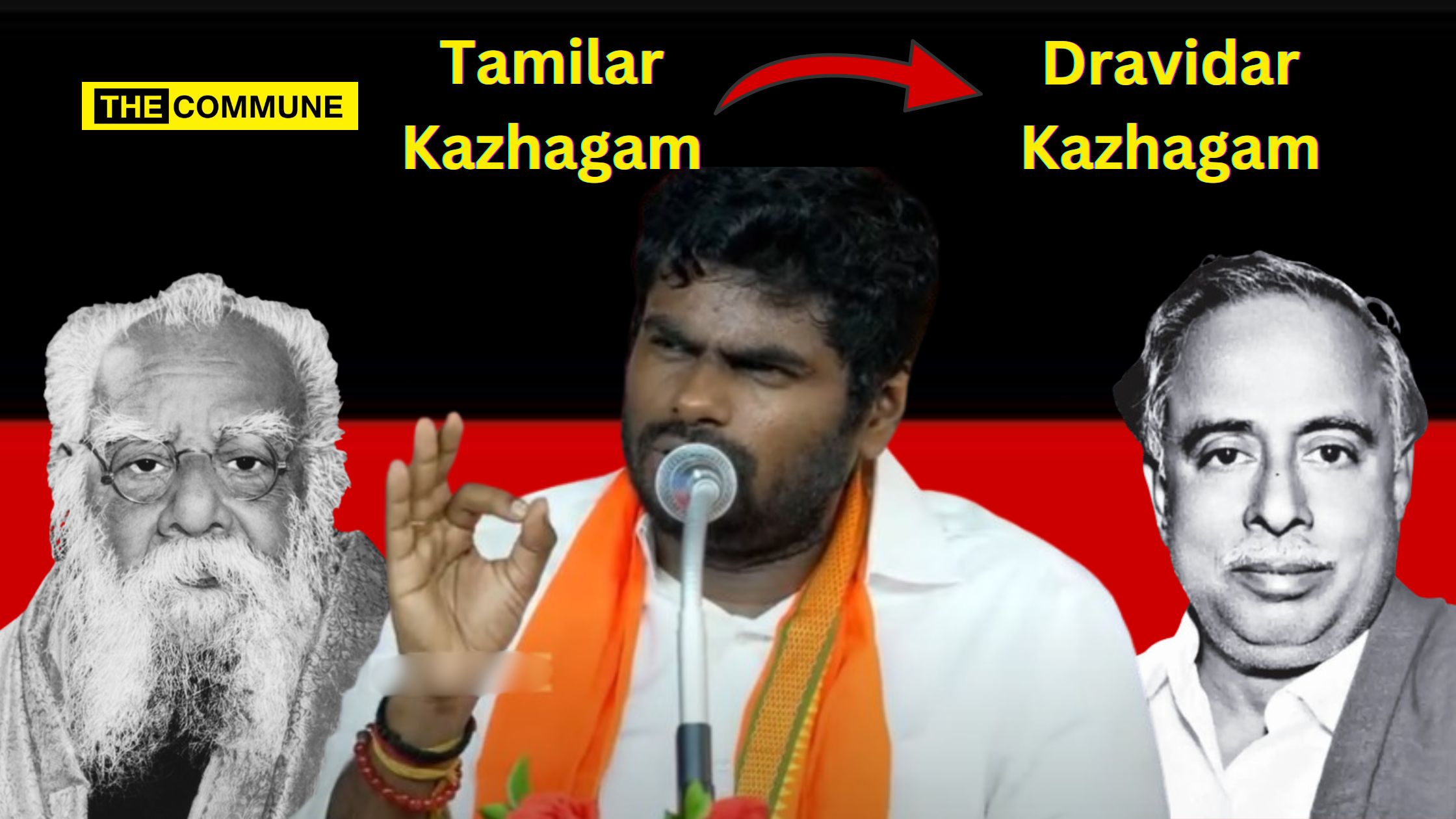
Annamalai Exposes DMK’s ‘Dravidian’ Facade: Tamil Leaders Favored ‘Tamilar Kazhagam’ But EVR And Annadurai Insisted On ‘Dravidian’ For Political Survival

Tamil Nadu BJP President K. Annamalai has criticized the ruling DMK’s claim of championing Tamil identity, revealing that key Tamil leaders of the Justice Party’s revival in 1944 wanted to rename it as “Tamilar Kazhagam.” However, E.V. Ramasamy (EVR) and C.N. Annadurai pushed for “Dravidar Kazhagam” to maintain political relevance.

Speaking at a public meeting in Trichy on 23 March 2025, organized by the Tamil Nadu BJP to discuss the new education policy, Annamalai recounted the events of the 1944 Salem conference, where efforts were made to revive the Justice Party after its decline. He stated that prominent leaders such as Thiyabe Viswanathan Pillai, Soundarapandian Nadar, novelist Somasundara Bharathi, and Annal Thango proposed renaming the party as “Tamilar Kazhagam” to better represent Tamil identity and discard the broader “Dravidian” label.

He said, “In 1944, a major conference was held in Salem. What kind of conference was it? A conference to restore the Justice Party. The Justice Party which had lost power. At this conference, K. A. P. Viswanatham Pillai, Periyar, Annadurai, Soundarapandia Nadar, Navalar Somasundara Bharathi, and Annal Thango were present. These were all great leaders. Everyone came together at the conference to name it. They decided to start a new party and restore the Justice Party. The name they chose to the party was ‘Tamilar Kazhagam.’ That’s the name.”

Despite this, only two individuals—Periyar and Annadurai—insisted on the name “Dravidar Kazhagam.” Annamalai argued that this decision was not rooted in genuine Tamil nationalism but rather in a strategic move to sustain political influence. He also criticized the DMK’s inconsistency, accusing them of selectively invoking Tamil identity while operating under the broader Dravidian banner.

 Annamalai remarked, “Periyar objected, stating, ‘If we name it Tamilar Kazhagam, we will be forced to pack up. Instead, we name it Dravidar Kazhagam. Only then can we play politics.’ In 1944, Mr. K. A. P. Viswanatham Soundarapandia Nadar, Somasundara Bharathi, and Annal Thango firmly insisted on naming it Tamilar Kazhagam. Only two people spoke in the meeting saying they did not want the name Tamilar Kazhagam, and suggested naming it Dravidian Kazhagam. Those two people were Periyar and Perarignar Anna.All this is history. So, if they want Dravidian, then it will be Dravidian. If they do not want it, then they will say Tamilian. I am telling the DMK leaders to either stand on that side or the other, but if you stay in the middle, you will be hit by a truck and die. When they call all the CMs, it’s the Dravidian race, but when they teach the language, it’s the Tamil race. We are watching this drama.”

Subscribe to TelegramWhatsApp, and Instagram channels and get the best stories of the day delivered personally.

Three Maoists Killed On Dantewada-Bijapur Border In Chhattisgarh

In another blow to Maoist insurgents in Chhattisgarh, security forces have neutralised three Naxalites in a fierce gunfight near the Dantewada-Bijapur border.

The encounter, which reportedly took place along the banks of the Indravati River, marks another significant success in the ongoing battle against extremism in the region. Gaurav Rai, Superintendent of Police, Dantewada district confirmed the development and told IANS, “Three Naxalites were killed early Tuesday morning, and their bodies have been recovered.”

He added that the forces have established a commanding presence in the area, with operations continuing to ensure complete control. According to other police sources, intelligence reports about the presence of hardcore Maoists prompted the deployment of troops into the core area early Tuesday morning.

Gunfire has been raging since 8 a.m., with the Maoists reportedly surrounded. However, the full scope of the operation will only be available once the encounter concludes and search efforts are completed.

This latest clash comes just days after a major offensive in the same region. Four days ago, security forces eliminated 30 Maoists in two separate encounters — 26 on the Dantewada-Bijapur border and four in Kanker.

The operation, however, concluded with an irreparable loss as a brave soldier from the District Reserve Guard lost his life; while two others, including a deputy superintendent of police, sustained severe injuries. Both are now out of danger. The Maoists also detonated an improvised explosive device on Sunday targeting a vehicle carrying security personnel.

The blast narrowly missed its mark, occurring moments after the vehicle passed through the area in Bijapur district. Two jawans and the civilian driver suffered minor injuries from the shockwaves. The Maoists have faced their most significant setbacks during their Tactical Counter Offensive Campaign (TCOC) month. Sources indicate that recent operations were guided by critical intelligence, underscoring the strategic precision of the forces in dismantling Maoist strongholds.

–IANS

Subscribe to our channels on TelegramWhatsApp, and Instagram and get the best stories of the day delivered to you personally.
Fascist ‘Appa’ Shenanigans: Activist And Ex-BJP Worker Exposes Poor Quality Of Newly Built Toilets At Tiruchendur Temple Complex, Dravidian Model Police Knocks On His Doors At 4 AM For Arrest

A video showing police attempting to arrest a social activist in the early hours of the morning, claiming he made derogatory remarks about the Tiruchendur temple authorities, has gone viral and sparked outrage. However, the activist did not insult anyone; instead, he raised concerns about Shiv Nadar, who contributed ₹200 crores and built toilets for the devotees inside the temple complex. Prithviraj alleged that the pipes and other infrastructure installed in the temple were damaged and stolen.

Prithviraj, 50, a resident of Kamaraj Salai in Tiruchendur and a BJP member, operates a furniture shop and leads an organization called ‘Ungalil Oruvan.’ He is known for his videos addressing social issues and the lack of basic facilities at the temple. On 23 March, at 4:00 am, police from the Tiruchendur temple station arrived at his home, stating they needed to take him in for questioning regarding a case against him.

When the police arrived, Prithviraj’s family informed them that he was not at home and refused to open the door. A video showing an argument between the police and Prithviraj’s family has since gone viral on social media. His family has accused the police of trespassing and attempting to arrest him without presenting any legal documents related to the case.

In this regard, the Tamil Nadu BJP condemned the attempt to arrest the activist through its official X account, stating, “Your anarchy is bound to be collapse, Mr. @mkstalin! Your police is trying to forcibly arrest the BJP executive who proved to the public with evidence what the true nature of the toilets built by your government at the Subramania Swamy Temple in Tiruchendur. What is the need to go and arrest him at 4 am, Is he a corrupt individual like you who has looted crores of rupees, or a sex offender who is under government surveillance preyed on a university student? Why such a rush? Are you unsettled because he has exposed the fact that your government, which is looting in all sectors from toilets to TASMAC, has not spared the Hindu Religious and Charitable Endowments Department either? Moreover, the Tamil Nadu Police, which remains “silent” mode whenever heinous crimes are committed in Tamil Nadu, is going out of its way to suppress and oppress BJP members who expose your corruption, without regard for time or place. This is shameful and strongly condemnable.”

(With Inputs From Dinamalar)

Subscribe to our channels on TelegramWhatsApp, and Instagram and get the best stories of the day delivered to you personally.


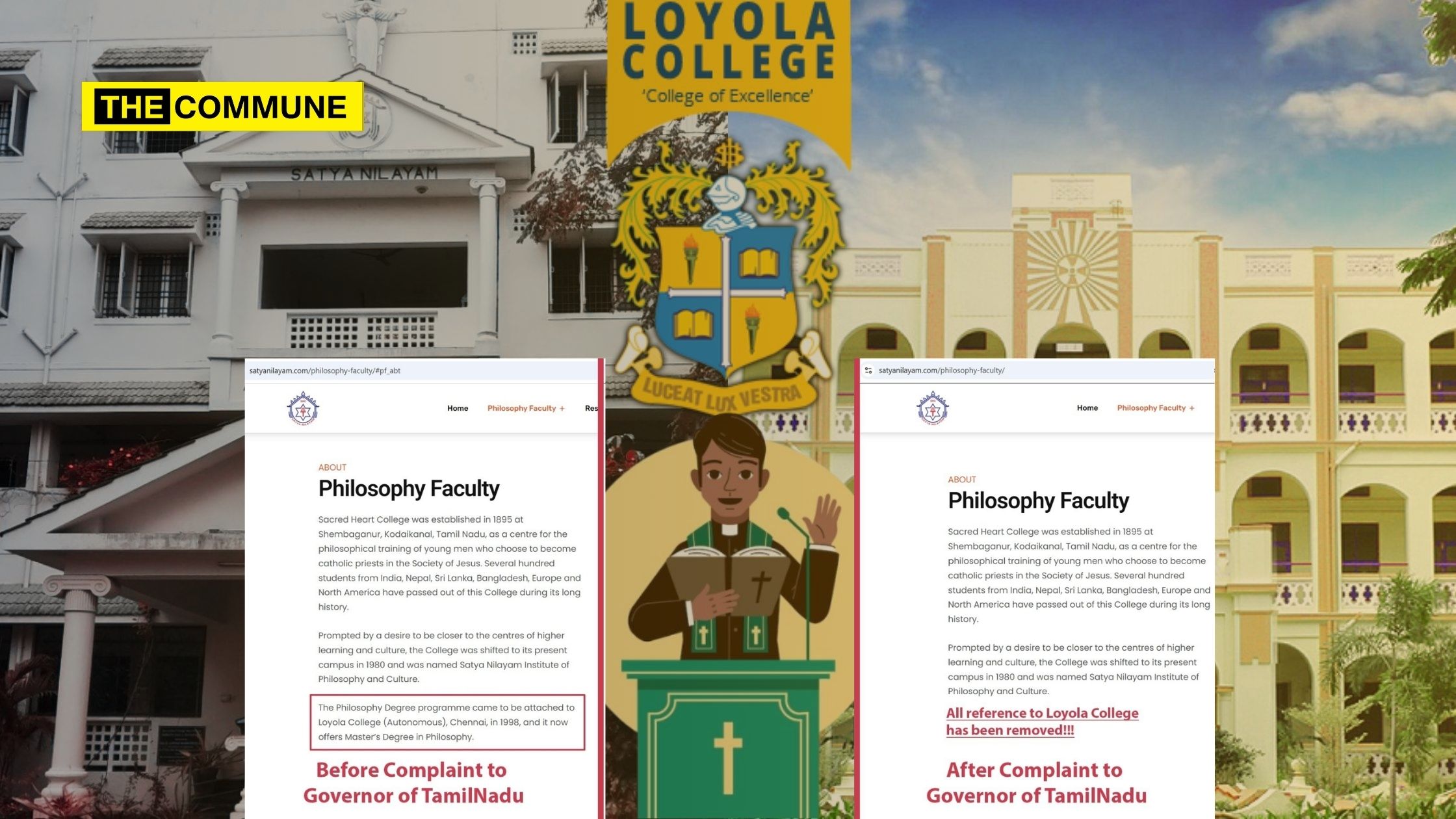
Loyola College’s Satya Nilayam Scandal: Unauthorized Catholic Priest Training Centre Removes Loyola College Reference From Website After Expose By The Commune And LRPF

In the hallowed halls of Chennai’s Loyola College, a quiet scandal has been unfolding—one that exposes how prestigious minority institutions exploit their autonomy while flouting the very laws designed to protect them. At the heart of this controversy is Satya Nilayam, an off-campus center operating 20 kilometers away from Loyola’s main premises, where an unauthorized MA Philosophy program has been running for years under the nose of the University of Madras.

Despite repeated warnings and even intervention from Tamil Nadu Governor R.N. Ravi, the program continues unabated, shielded by institutional impunity and a glaring lack of accountability. The violations are egregious. The University of Madras never approved Satya Nilayam as an extension campus, yet Loyola College has been using its affiliation to grant degrees to students trained exclusively at this remote facility—many of whom are foreign Jesuit missionaries from Nepal, Sri Lanka, Kenya, Europe and other countries. This blatant misuse of a secular university’s credentials for what is essentially a religious training program constitutes academic fraud.

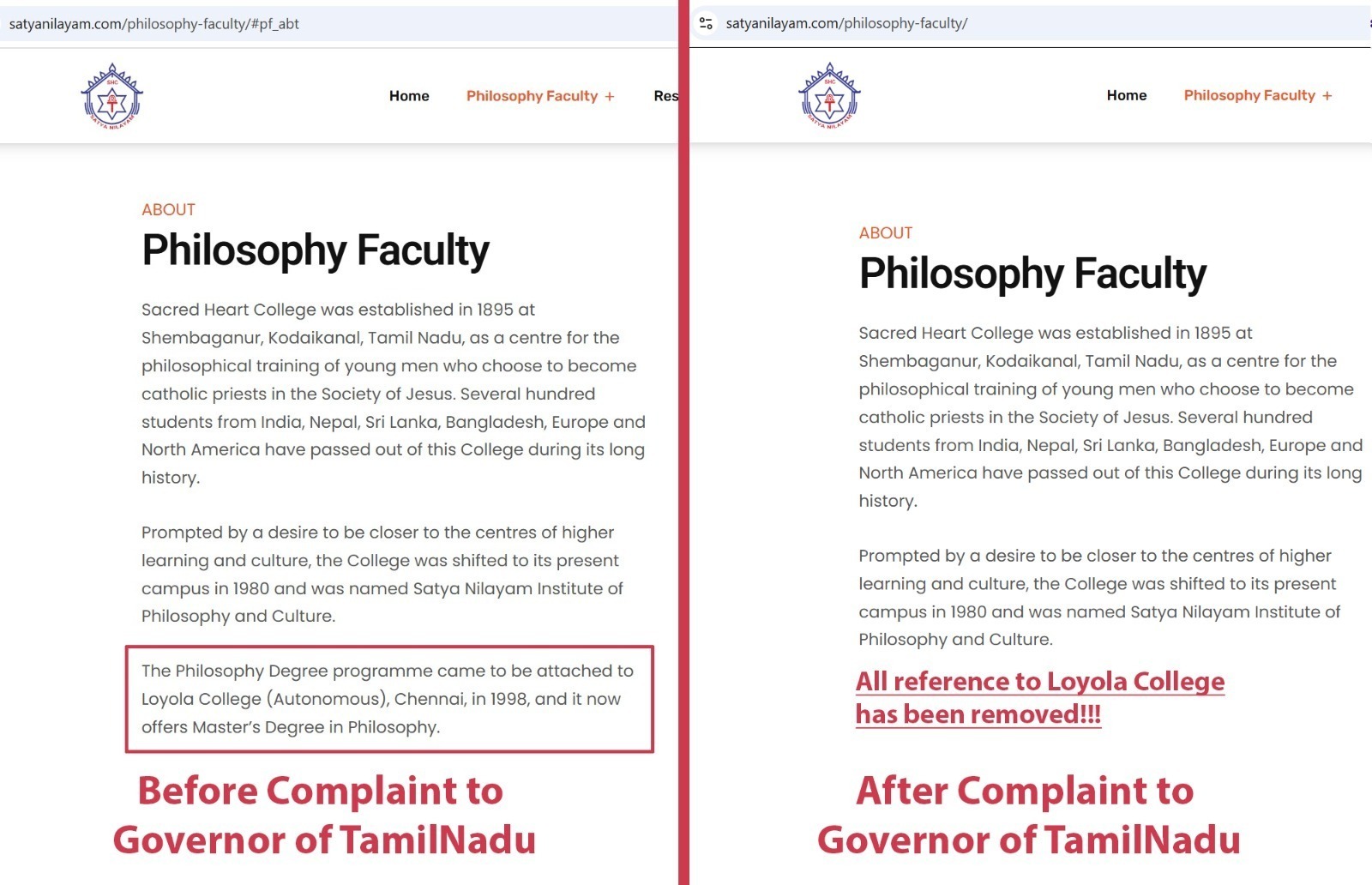
Worse, evidence suggests that admissions at Satya Nilayam systematically favor Jesuit seminarians while excluding non-Christian candidates, violating the University of Madras’s non-discrimination policies and India’s constitutional commitment to equitable education. When the Legal Rights Protection Forum (LRPF) filed a formal complaint, Satya Nilayam’s website suddenly disappeared, only to resurface with all references to Loyola College and the University of Madras scrubbed clean.

This clumsy cover-up only deepens suspicions: if the program were legitimate, why the secrecy? Why the refusal to comply with basic affiliation rules for over 27 years? The answer is simple—because Loyola College, like many elite minority institutions, believes it can operate outside the rules, using its minority status as both a shield and a weapon.

https://x.com/lawinforce/status/1904037145435845062

The University of Madras’s inaction is equally damning. Despite multiple warnings since 2019, it has failed to cancel Loyola’s affiliation, conduct surprise inspections, or impose meaningful penalties. This raises disturbing questions: Is there political pressure at play? Are university officials turning a blind eye to maintain cozy relationships with powerful religious institutions? Or is this yet another example of how India’s education system tolerates different standards for different communities?

The implications extend far beyond one college. This case tests whether minority-run institutions, under the protective cloak of Article 30, can willfully undermine national education policies while demanding taxpayer-funded autonomy. If a Hindu or Muslim institution attempted something similar, would the silence be so deafening? Would the regulatory response be so lethargic? The time for empty warnings is over. The Governor’s office must escalate this into a full investigation.

The University of Madras must revoke affiliations and blacklist Satya Nilayam. And the Jesuits—who built their legacy in India on the ideals of intellectual rigor and ethical integrity—must answer why they now betray those very principles. If India’s education system is to have any credibility left, this scandal cannot end with a quietly edited website and business as usual. It must end with consequences.

Subscribe to TelegramWhatsApp, and Instagram channels and get the best stories of the day delivered personally.

Kerala High Court Mulls Mandatory Mentoring Of Young Lawyers

No Criminal Charges For Pre-2013 Waqf Property Occupation: Kerala High court wayanad

The Kerala High Court on Monday suggested that younger members of the Bar should get mandatory mentoring for at least first five years of their practice. The division bench of Justices A.K.Jayasankaran Nambiar and S. Easwaran asked Kerala High Court Advocates Association (KHCAA) President Yeshwanth Shenoy if the association can provide mentoring to the younger members of the Bar.

Justice Nambiar orally said: “Can you evolve a policy where junior members, if they have to continue membership, must mandatorily undergo training sessions… Make this a condition for continuing membership…As a condition for maintaining standards in the profession, you can make it a condition for the junior Bar for the first five years. To expect it beyond that will be unreasonable. But at least for the first five years, let them undergo some kind of mentoring.”

“You organise these training sessions periodically and make it like earning credits for attending those. A junior member of the Bar for the first five years… he or she must get so many credit points every year for continued membership of the Association or they don’t get the membership. Think of something like that because ultimately the object is noble.”

The court observed that while junior advocates may possess adequate knowledge, they lack experience. KHCAA President Shenoy was also concerned at the situation, pointing out that juniors are not continuing with a senior even for a period of three months, and rather rely on information that is available digitally. Incidentally, with the turn of the century when the professional education sector was opened up, quite a few number of law colleges started in the private sector, while earlier, there were very few colleges offering courses in law. Following this expansion, the number of lawyers enrolling for the bar also increased.

–IANS

Subscribe to TelegramWhatsApp, and Instagram channels and get the best stories of the day delivered personally.

44% Rise In Domestic Tourism In 2023; UP, TN Top Two Destinations

Domestic tourist visits across the country increased by 44 per cent to 250 crore in 2023 over the previous year with Uttar Pradesh and Tamil Nadu leading the list as the top two destinations, the Parliament was informed on Monday.

Minister of Tourism and Culture, Gajendra Singh Shekhawat, in a written reply in Lok Sabha on Monday said that 250.96 crore domestic tourist visits were recorded in 2023 as compared to 173.10 crore in 2022.

Home to one of the ‘Wonders of the world’, Taj Mahal, Uttar Pradesh emerged as the most visited state by domestic tourists at 47.85 crore in 2023. This was followed by Tamil Nadu with 28.60 crore, Karnataka 28.41 crore, Andhra Pradesh 25.47 crore, Maharashtra 16.13 crore and Gujarat 17.80 crore. In 2023, the national Capital of Delhi received 3.94 crore tourists.

Among the hill states, Uttarakhand recorded the highest number of domestic tourist visits at 5.81 crore. Jammu and Kashmir recorded 2.06 crore and Himachal Pradesh received 1.59 crore tourists.

The desert state of Rajasthan hosted 17.90 crore domestic tourists in 2023, the minister said. The Ministry of Tourism launched the ‘Dekho Apna Desh’ initiative in January 2020 for promotion of domestic tourism in the country.

Under this initiative, the Ministry promotes tourism destinations and products of India through various activities such as webinars, pledges, seminars, tourism promotional events, Fam tours, roadshows, websites, social media etc.

Under this initiative, the ministry has launched ‘Dekho Apna Desh People’s Choice’ poll to engage with citizens to identify most preferred tourist attractions in the country.

The Ministry of Tourism has launched the revamped version of www.incredibleindia.gov.in, wherein information pertaining to various tour programmes and package tours are being provided in collaboration with stakeholders.

Increased domestic tourist visits to various destinations, under this initiative, are expected to boost local economies, create employment opportunities, and support hospitality services, thereby promoting sustainable tourism growth.

–IANS

Subscribe to TelegramWhatsApp, and Instagram channels and get the best stories of the day delivered personally.

Gujarat: Banaskantha Residents Benefit From Solar Pumps, Installed Under PM-KUSUM Scheme

The Pradhan Mantri Kisan Urja Suraksha Evam Utthaan Mahabhiyan (PM-KUSUM) was launched in 2019 with an objective of providing energy security to farmers while also honouring the country’s commitment to increasing its share of electric power to about 49 per cent by 2030.

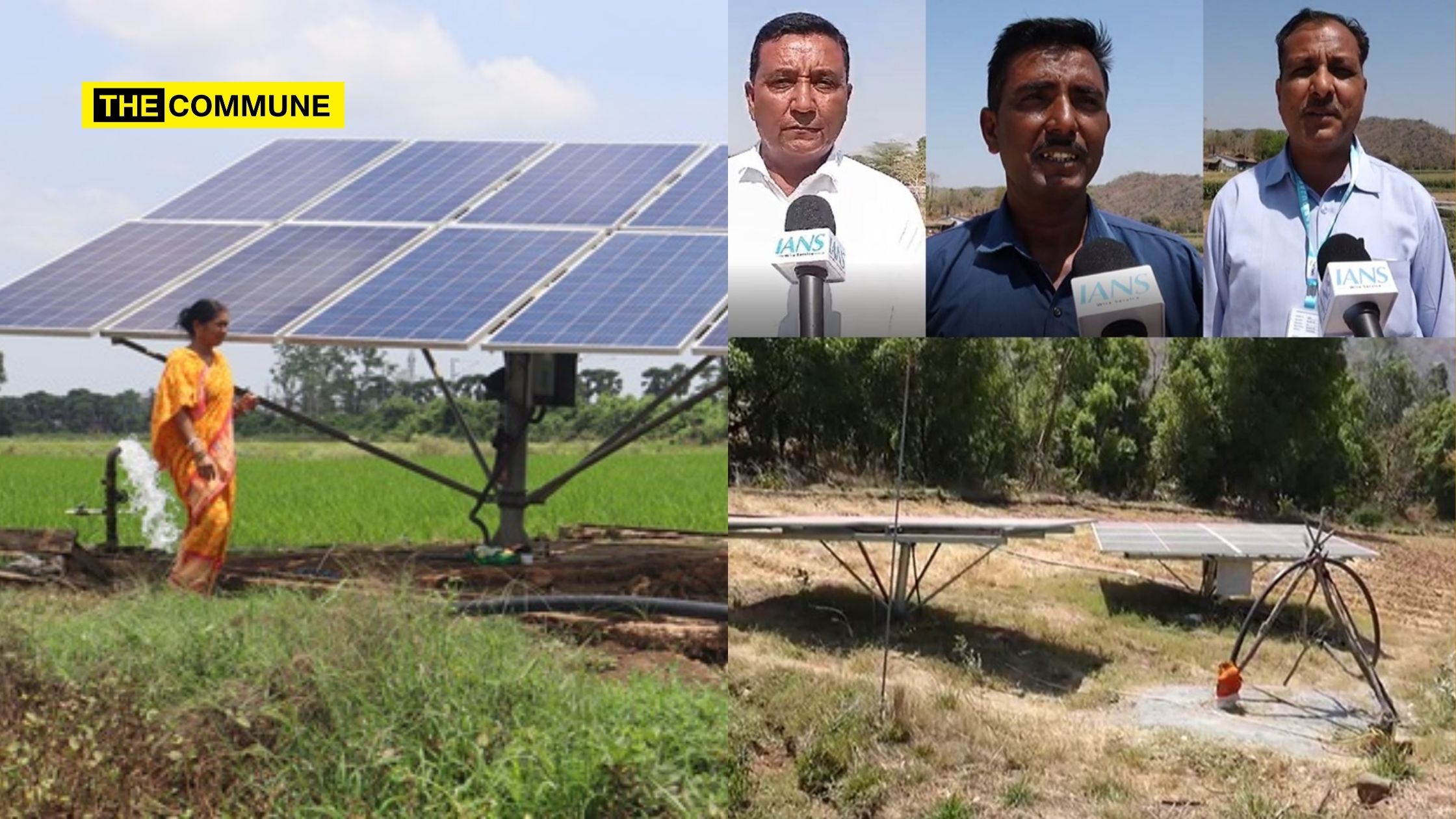
Today, many farmers are taking advantage of the PM-KUSUM scheme and saving loads of electricity by ‘migrating’ to solar farming. The farmers of Danta taluka in Gujarat’s Banaskantha district are among the first to take the initiative forward and also helping others to take lessons from. For Bachhubhai, a farmer of Banaskantha, solar pump has become a new source of energy. Earlier, Bachhubhai had to divert water at night due to irregular power supply.

But, when he came to know about PM-Kusum Yojana, he applied for it online. His solar pump became operational in just 3 months, and now it runs from 8 a.m. to 6 p.m., allowing him to farm comfortably during the day. The biggest advantage is that the electricity bill, which earlier costed around Rs 10,000 has now become zero.

He also got a 25-year warranty on the solar panel. Meghraj is another farmer, drawing similar benefits under the PM-KUSUM scheme. There are a total of 116 villages in Data taluka of Banaskantha. Out of this, solar pumps have been installed in 30 villages. Many farmers have installed solar pumps in their fields at moderate investment and now, they are doing farming in winter, summer as well as rainy seasons without any interruptions.

They are also saving a lot on electricity expenses. Under the PM-KUSUM Scheme, the Central government provides subsidy of up to 30 or 50 per cent for the installation of standalone solar pumps and also for the solarisation of existing grid-connected agricultural pumps. Farmers also get the privilege of installing grid-connected solar power plants up to 2MW under the scheme on their barren land.

–IANS

Subscribe to TelegramWhatsApp, and Instagram channels and get the best stories of the day delivered personally.

Ajay Seth Appointed As New Finance Secretary

Ajay Seth, a 1987 batch IAS officer of the Karnataka cadre, was designated as the new Finance Secretary on Monday, according to an official order. Seth is currently the Secretary of the Department of Economic Affairs in the Finance Ministry.

The Appointments Committee of the Cabinet has approved designating Seth as the Finance Secretary, said the order issued by the Personnel Ministry.

As per the convention, the senior-most secretary in the Union Finance Ministry is designated as the Finance Secretary. Earlier this month, Seth was given the additional charge of Revenue Secretary.

A B.Tech graduate in Mechanical Engineering from IIT Roorkee and holding an MBA from Ateneo de Manila University, he took over as Secretary, Department of Economic Affairs, in April 2021.

He has over three decades of expertise in public finance and social sector administration. His experience spans budgeting, tax policy, foreign investments, bilateral and multilateral financial cooperation, development financing, and public-private partnerships.

Seth has also gained recognition for his work in streamlining Karnataka’s commercial tax administration, receiving the Prime Minister’s Award for Excellence in Public Administration in 2013.

The Finance Secretary’s post fell vacant after the appointment of Tuhin Kanta Pandey as the Chairman of the Securities and Exchange Board of India (SEBI) recently.

Pandey concluded his tenure as the Finance Secretary and Secretary of the Department of Revenue which saw him playing a key role in the formation of the Union Budget that undertook the bold initiative of exempting all those earning up to Rs 12 lakh a year from paying income tax to boost demand and drive growth in the economy.

He also played an important role in drafting the new Income Tax Bill, based on global best practices, to simplify the language and structure of the Income-tax Act, 1961, reducing the Act’s volume by close to 50 per cent.

–IANS

Subscribe to TelegramWhatsApp, and Instagram channels and get the best stories of the day delivered personally.

FATF Forum In India To Discuss Global Priorities For Financial Inclusion, Cyber Threats

Reaffirming India’s responsible leadership in global efforts to combat money laundering and terrorist financing, the Financial Action Task Force (FATF) Private Sector Collaborative Forum (PSCF) 2025 is slated to be organised in Mumbai from March 25-27, the government said on Monday.

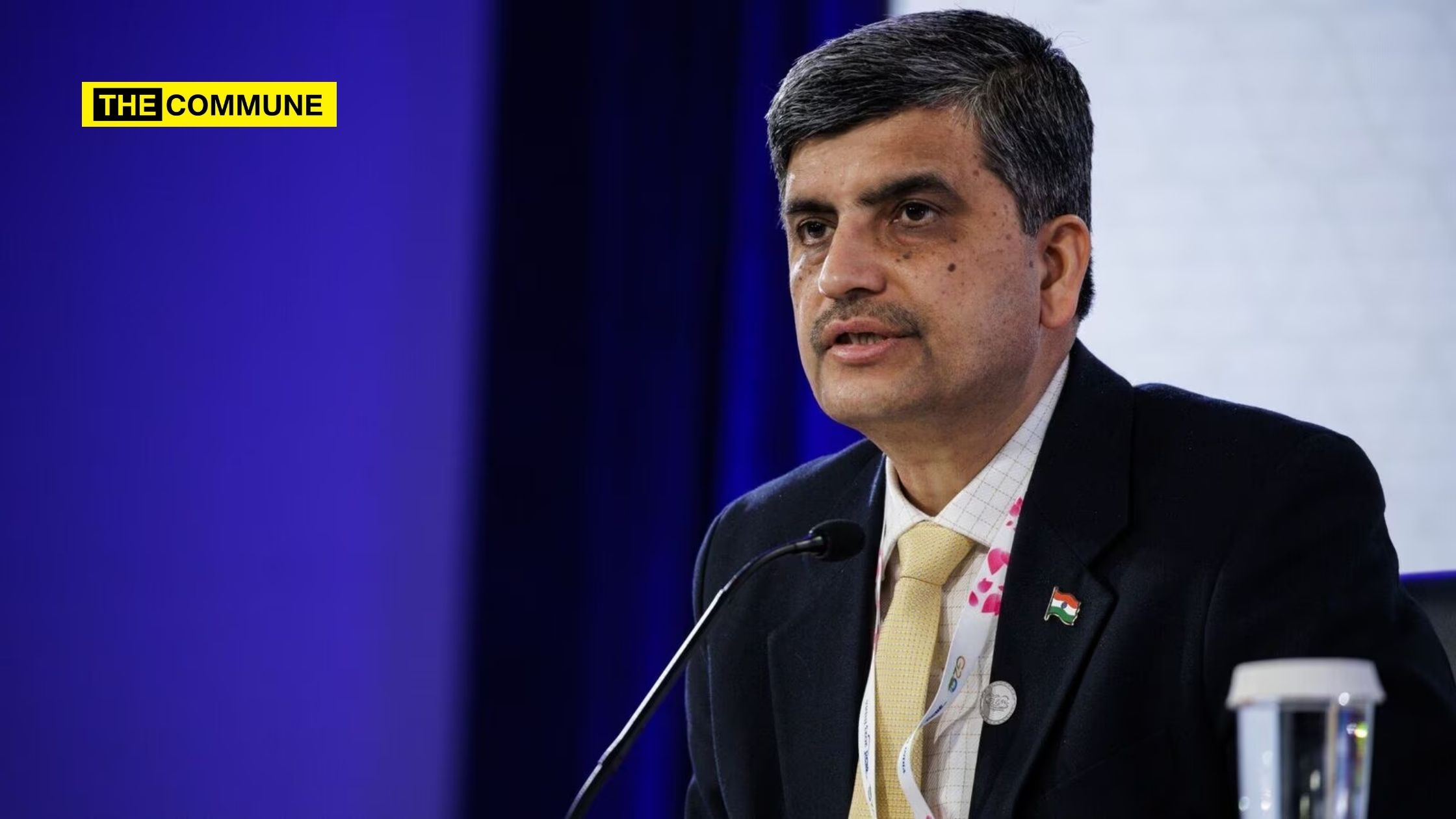
Hosted by the Reserve Bank of India (RBI) and the Department of Revenue, Ministry of Finance, the ‘PSCF 2025’ reflects global priorities, including payment transparency, financial inclusion and digital transformation of financial systems FATF President Elisa de Anda Madrazo will formally inaugurate the ‘PSCF 2025’ on March 26, with RBI Governor Sanjay Malhotra presiding over the event.

The Indian delegation to PSCF is a multi-disciplinary team led by Vivek Aggarwal, Additional Secretary (Revenue), Ministry of Finance. India is a member of steering group of FATF and also co-chairs a working group on risks, trends and methodologies work group. In November last year, India hosted the plenary of Eurasian Group on Combating Money Laundering and Financing of Terrorism (EAG) in Indore.

Earlier in June, India’s FATF Mutual Evaluation Report was tabled at the FATF Plenary in Singapore and subsequently released in September. The country achieved the best possible outcome by being placed in ‘regular follow-up,’ a status that only a few countries have attained in their mutual evaluations, according to the ministry.

The report highlighted the country’s advanced fintech ecosystem, innovations like the Unified Payments Interface (UPI) and Aadhaar-enabled digital identity verification, and proactive inter-agency coordination. This year’s forum will see participation from countries across FATF’s global network, along with representatives from financial institutions, designated non-financial businesses and professions (DNFBPs), virtual asset service providers (VASPs), international organisations and academia.

Participants will explore how FATF can continue to address evolving threats while promoting financial inclusion through robust, risk-based supervision of regulated entities. “Information-sharing practices within the private sector will be evaluated to identify ways to better address emerging financial crime threats,” said the ministry.

–IANS

Subscribe to TelegramWhatsApp, and Instagram channels and get the best stories of the day delivered personally.