Home Blog Page 339

Work-From-Home Politician Vijay Is So Dumb That He Gets The Waqf Act Year Wrong, Is Clueless About His Own Case & Lawyer, And Steals Owaisi’s Credit
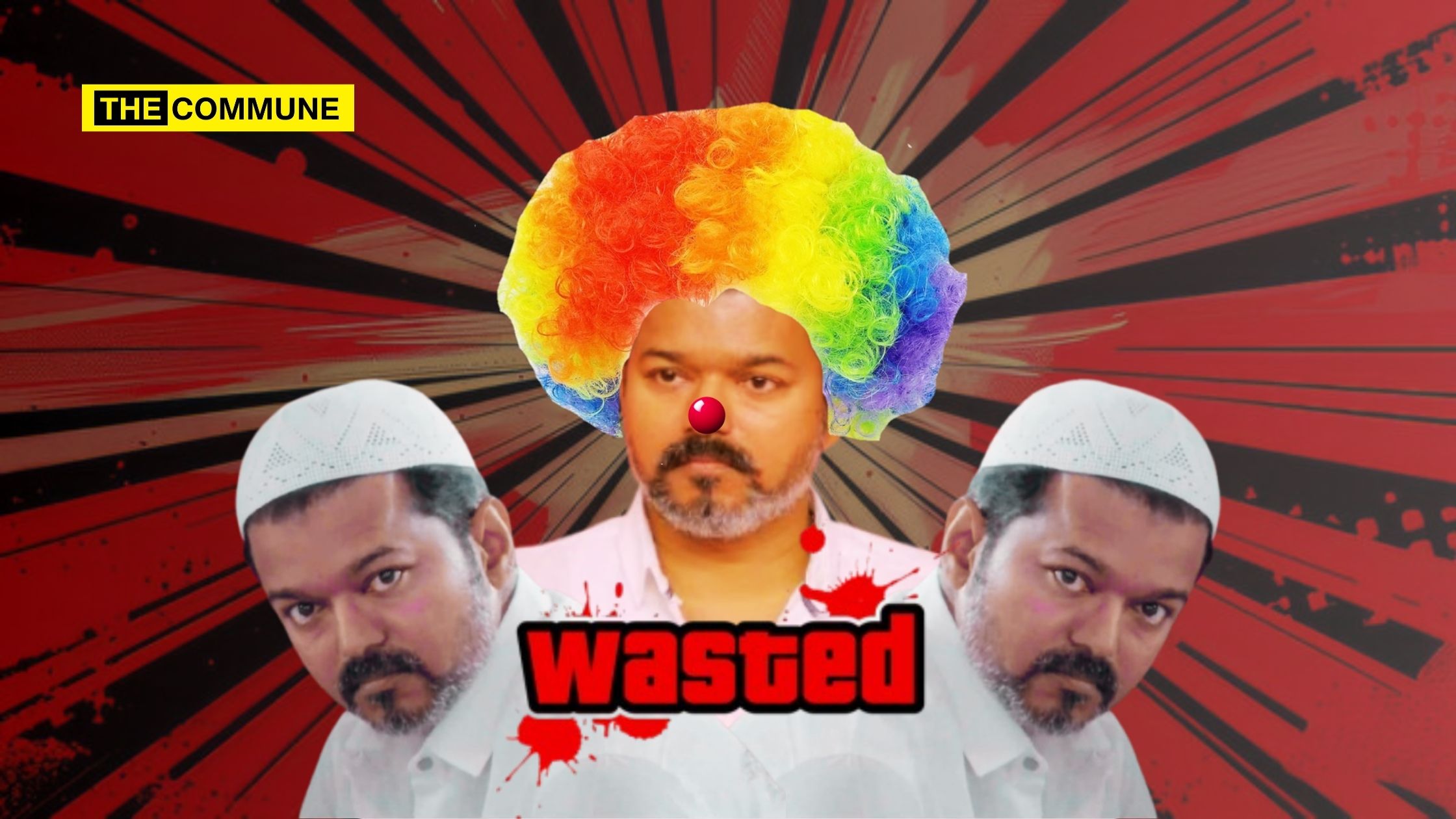
On April 17, 2025, the president of Tamilaga Vettri Kazhagam (TVK) took to X to celebrate a supposed “victory” in the Supreme Court regarding the Waqf (Amendment) Act. The only problem? The entire post is a colossal mess of falsehoods, inaccuracies, and delusions of grandeur that expose Vijay as a political novice who can’t even get his facts straight. Let’s break this down and see just how deep this rabbit hole of embarrassment goes.

Error #1: The Waqf (Amendment) Act You’re Opposing Is Of 2025, Not 2005

First off, Vijay proudly declares his gratitude to the Supreme Court for its ruling on the Waqf Amendment Act, which he claims is from 2005. Wrong. The Waqf (Amendment) Act in question was passed in 2025, as confirmed by multiple sources, including the Indian Lok Sabha records and Wikipedia. This isn’t just a “typo” as some of his die-hard fans might claim—it’s a fundamental error that shows Vijay doesn’t even know the basic timeline of the legislation he’s supposedly fighting against. For someone who’s trying to position himself as a serious political leader, this is beyond laughable. It’s as if he googled “Waqf Act,” saw the first date that popped up, and ran with it without a second thought. Is this the kind of leadership Tamil Nadu deserves? A man who can’t tell 2005 from 2025?

Error #2: Vijay’s Case Wasn’t Even Heard

Here’s where things get even more pathetic. Vijay’s post claims that the Supreme Court issued an order on TVK’s petition, halting key provisions of the Waqf (Amendment) Act. Newsflash, Vijay: your petition hasn’t even been heard yet! According to the Supreme Court’s own records, TVK’s petition (Diary Number 19435/2025) was filed on April 13, 2025, and is scheduled for a hearing on April 24, 2025—if it even makes the cut. The court has explicitly stated that only five petitions will be taken up, and there’s no guarantee yours will be one of them. The interim order Vijay is gloating about actually pertains to a different petition filed by Asaduddin Owaisi on April 4, 2025 (Diary Number 17837/2025). So, while Owaisi and others were actually in the ring fighting, Vijay was busy taking credit for a match he didn’t even show up for. How utterly shameless.

Error #3: Abhishek Singhvi Isn’t Your Advocate 

Vijay goes on to thank Senior Counsel Dr. Abhishek Manu Singhvi for “arguing on behalf of our party Tamilaga Vettri Kazhagam for two days successfully.” This might sound impressive—except for the tiny detail that Singhvi isn’t even representing TVK. According to the Supreme Court’s records, TVK’s advocate is Sudarshan Lamba, not Singhvi. Singhvi might be involved in other petitions challenging the Waqf Act, but he’s certainly not Vijay’s knight in shining armor. This isn’t just a minor mix-up; it’s a blatant attempt to piggyback on someone else’s credibility to make TVK look more legitimate. Vijay, if you’re going to name-drop, at least make sure the person is actually on your team. Otherwise, you just look like a desperate wannabe trying to impress the grown-ups at the table.

‘Tharkuri Vijay Kazhagam’: Vijay’s Political Incompetence On Full Display

Let’s step back for a moment and consider what this fiasco reveals about Vijay as a political figure. Vijay can’t even get the year of a major piece of legislation right, can’t tell the difference between his own pending case and someone else’s victory, and can’t even correctly identify his own legal team. How do you justify a leader who can’t even fact-check a single tweet before hitting “post”?

Not The First Time His Tharkuriness Has Got Exposed

The two elephants in Vijay’s flag do not essentially look like Asian elephants but African elephants. Additionally,  the BSP’s Tamil Nadu branch has issued a warning demanding the immediate removal of the elephant imagery from Vijay’s flag. They have threatened to file a complaint with the Election Commission and pursue legal action if their demands are unmet.

The logo also features a pink flower, which is said to be the Vaagai flower (Siris tree/Albizia lebbeck).

However, the team seems to have mistaken the Monkeypod tree (Raintree/Samanea saman) flower for the original Vaagai flower. Soldiers wore garlands of Vaagai flowers after a victory during ancient times. Colloquially, the monkeypod tree is called ‘Thoongumoonji Maram’ which in Tamil translates to “Drowsy Face Tree”, as the tree’s leaves droop when the sunshine is less. Its bright pink flower resembles the white Vaagai flower.

His party anthem video were full of spelling mistakes in Tamil, with the party ironically being named “Tamilaga Vettri Kazhagam”.

When he announced his party through a press release, many pointed out the grammatical error in the Tamil name of the party. It should’ve been Tamilaga Vettrik Kazhagam instead of Tamilaga Vettri Kazhagam. He later rectified the mistake with the party’s general secretary approaching the ECI for name correction.

A Message To Vijay: Do Better Or Step Aside

Vijay, if you’re reading this—and let’s hope you are, because someone needs to knock some sense into you—here’s some advice: politics isn’t a movie set. You can’t just show up, deliver a heroic dialogue, and expect the audience to clap. If you’re serious about Tamilaga Vettri Kazhagam and the people of Tamil Nadu, then stop embarrassing yourself with these childish blunders. Get your facts straight, surround yourself with advisors who actually know what they’re doing, and maybe—just maybe—think twice before you tweet. Because right now, the only thing you’re winning is the award for the most clueless political debutant of the year.
AIADMK Slams DMK Govt For Placing A Temple Gopuram Replica On Karunanidhi’s Burial Site

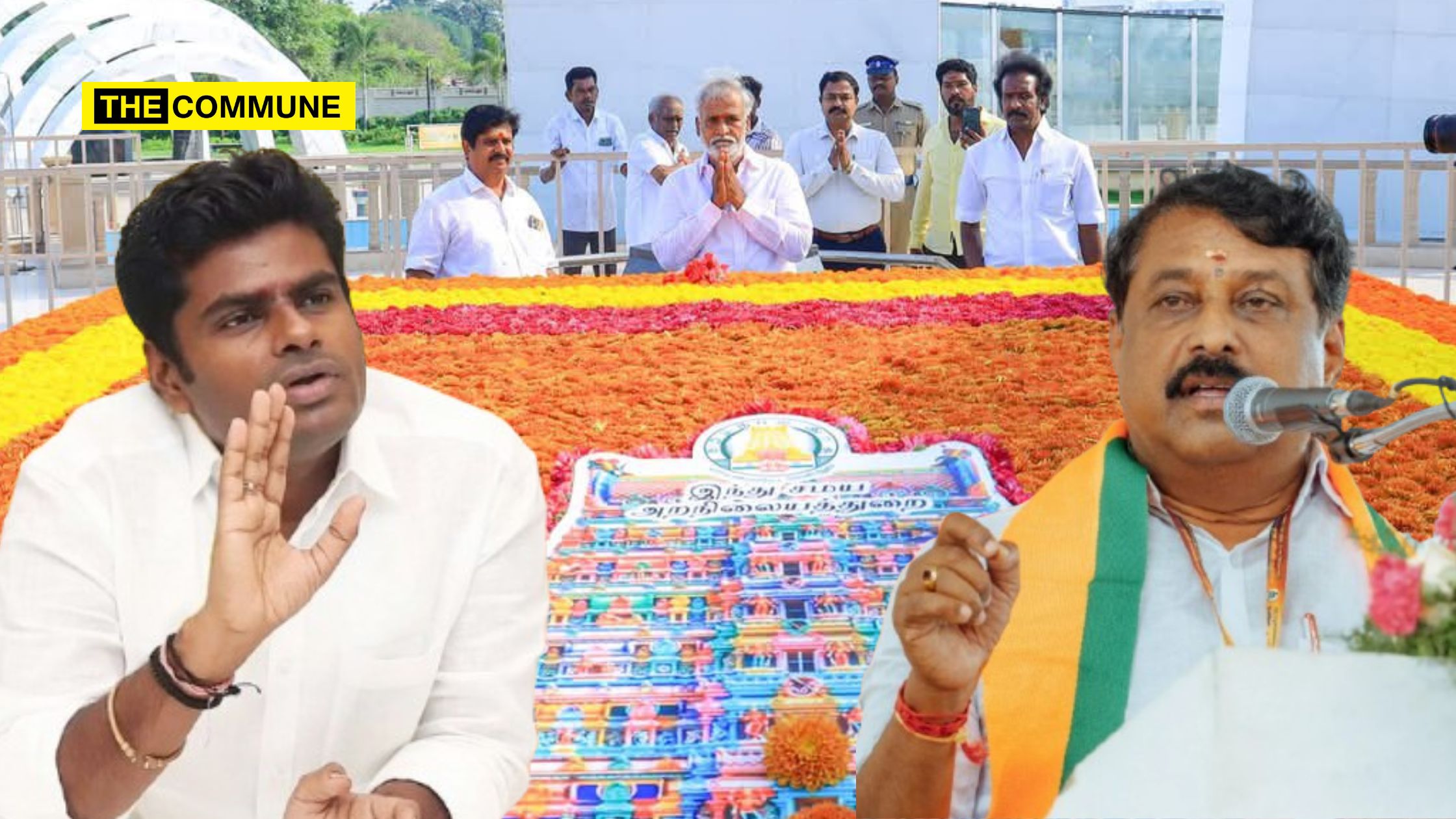
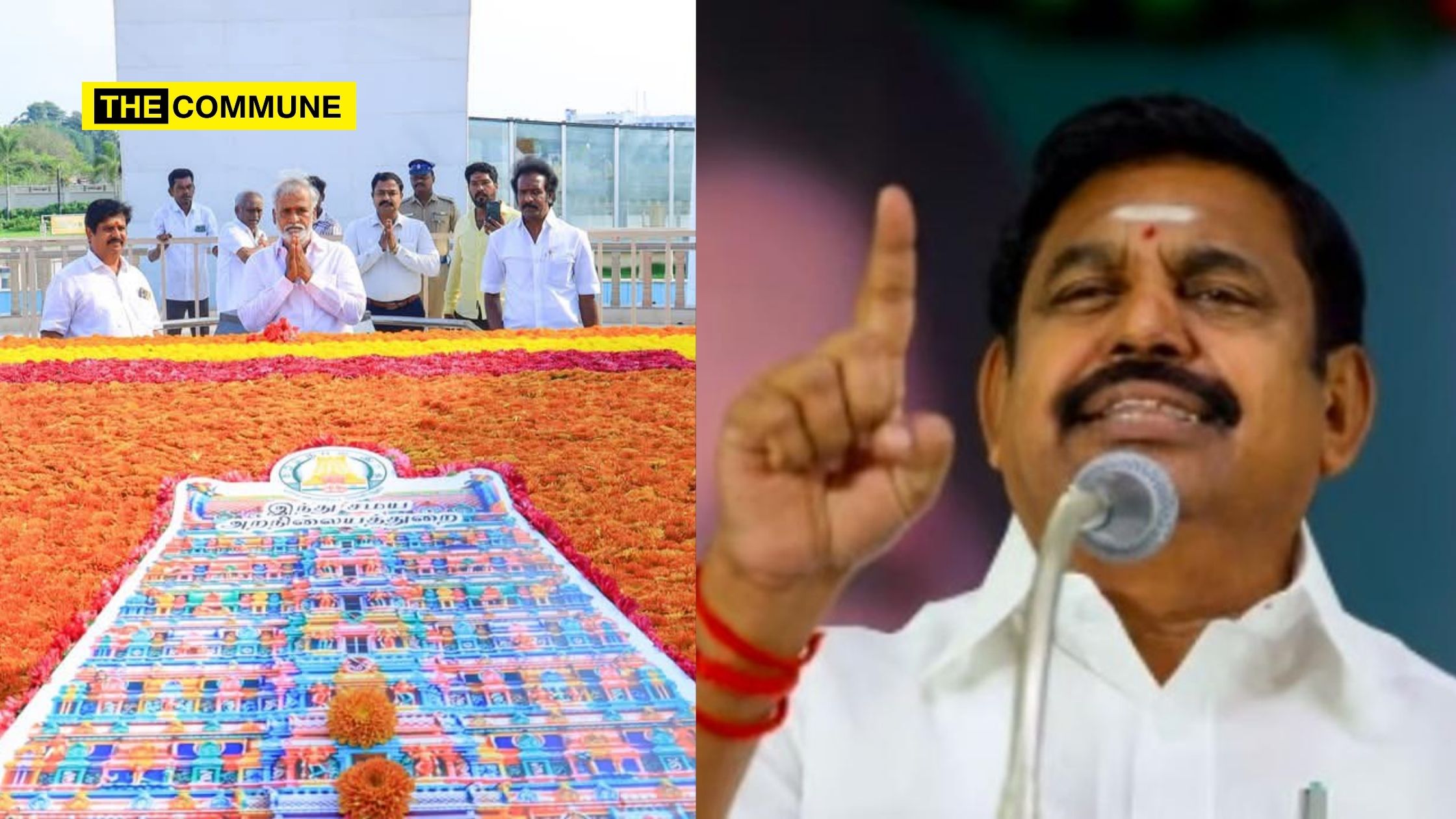
The AIADMK slammed the ruling DMK government in Tamil Nadu for placing a temple-style ‘gopuram’ structure over the burial site of former Chief Minister M. Karunanidhi at Marina Beach. In a strongly worded statement, the AIADMK accused the DMK, led by Chief Minister M.K. Stalin, of disrespecting the sentiments of millions of people and violating Hindu traditions.

The controversy erupted after images surfaced showing a floral arrangement at Karunanidhi’s memorial, depicting a colorful gopuram—a traditional South Indian temple tower—crafted with vibrant flowers, including marigolds and roses, laid out in front of the memorial structure. The memorial, located at Chennai’s Marina Beach, features a modern architectural design with a curved white canopy and a large portrait of Karunanidhi in the background. The floral gopuram, surrounded by a sea of orange and yellow flowers, has drawn sharp criticism from the BJP and AIADMK.

The AIADMK IT Wing stated, “A Temple Gopuram Atop Karunanidhi Samadhi – Stalin Govt Disrespects People’s Sentiments” and added, “Would anyone with basic knowledge place a gopuram over a deceased person’s samadhi? To please your leader and prove loyalty to family overlords, are you belittling the sentiments of crores of people, @PKSekarbabu?”

The AIADMK IT Wing also invoked the legacy of Dravidian movement founder C.N. Annadurai (Anna), quoting his famous saying, “Ondre Kulam, Oruvane Thevan” (One community, one God), to argue that the DMK’s actions contradict Anna’s principles. The post accused the DMK of engaging in “blasphemy” by placing a temple structure at what they described as a “burial ground of evil forces,” calling it a betrayal of both religious values and the people’s faith in God.


Subscribe to our channels on TelegramWhatsApp, and Instagram and get the best stories of the day delivered to you personally.

‘Ayushman Cards’ To Be Launched In Delhi For All Income Groups Aged Above 70 By April End

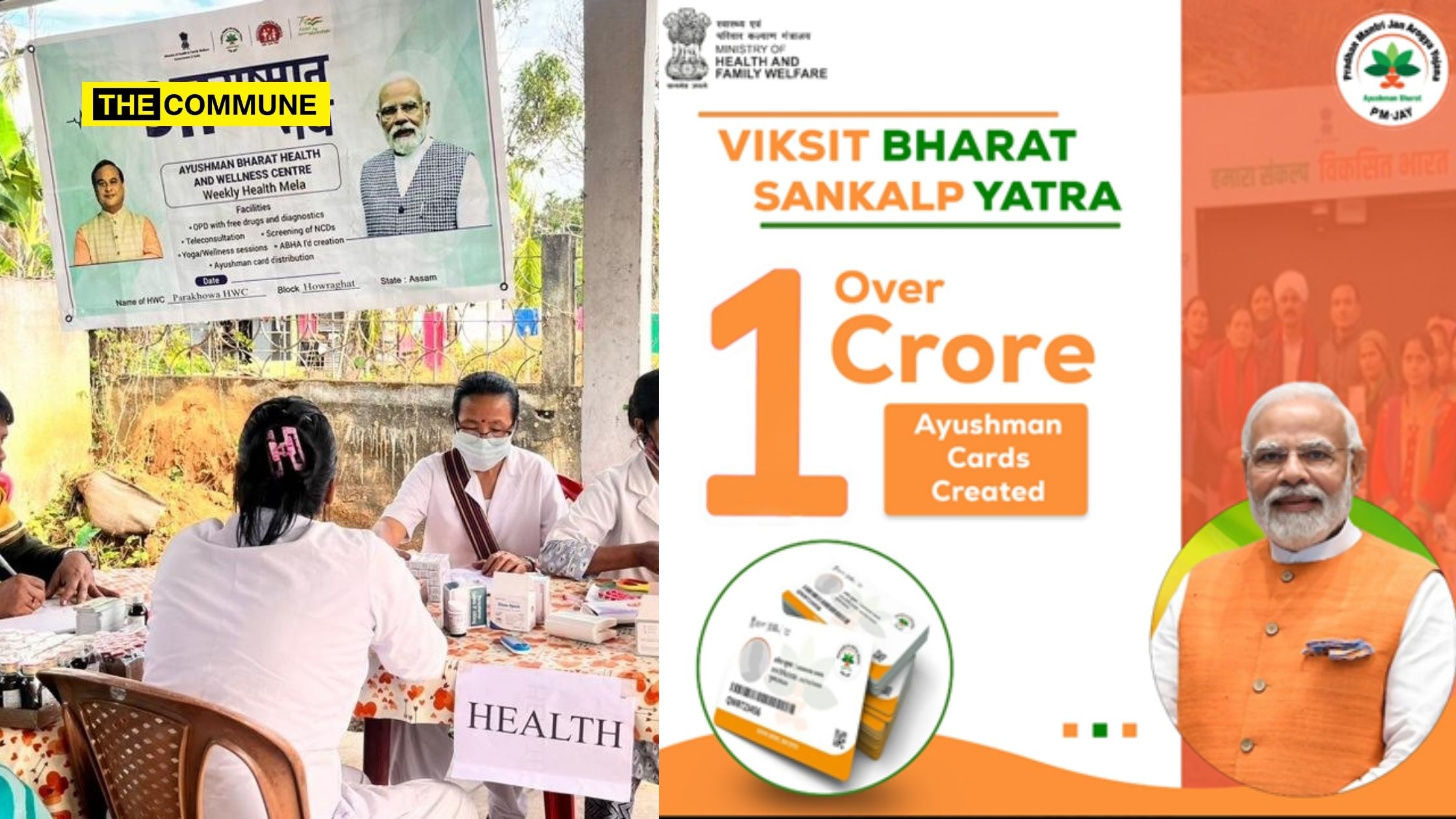
The Delhi government will launch ‘Ayushman Cards’ for all income groups aged above 70 years by the end of April 2025. Delhi Chief Minister Rekha Gupta, along with other Cabinet Ministers, on Wednesday chaired a meeting at which MLAs and officials from the state and Central governments were present.

This initiative is part of the Ayushman Bharat Pradhan Mantri Jan Arogya Yojana (AB-PMJAY), which aims to provide health insurance coverage of up to Rs 5 lakh per family per year for secondary and tertiary care hospitalisation. The meeting aimed to focus on implementing and distributing Ayushman cards and Opening Arogya Mandir in the national capital. “To implement Ayushman Bharat (scheme), which Delhi has received after years of waiting, we held a meeting today to ensure that all the cards are made and reach the public as soon as possible. All the MLAs have been assigned the task.

Efforts are underway to extend benefits to senior citizens aged above 70 years. Work should start immediately to identify the location of 1,139 Arogya Mandirs to be opened in every corner of Delhi, because Delhi has suffered a lot due to the time wasted by the previous governments. We do not want more time to be wasted. Our government will start working on this today,” said Chief Minister Gupta. Senior citizens aged 70 years and above from all income groups are eligible for the Ayushman Card.

The card provides health insurance coverage of up to Rs 5 lakh per family per year, covering 1500+ medical procedures. The Delhi government plans to open 1,139 Arogya Mandirs across the city. These will offer healthcare services that are different from those offered by Mohalla clinics in structure and operation. The MLAs have been tasked with coordinating with District Magistrates to distribute existing Ayushman Cards and work on opening Arogya Mandirs.

“The MLAs have been directed to coordinate with District Magistrates (DMs) to distribute the existing Ayushman Cards as quickly as possible and also to work on the opening of Arogya Mandirs in all parts of the state,” said Delhi CM Gupta. Meanwhile, Delhi Health Minister Pankaj Singh reiterated that the government will build 1,139 Ayushman Arogya Mandirs for the people of Delhi.

“Our target is to build 1,139 Ayushman Arogya Mandirs for the people of Delhi, and we will achieve this target. This was a matter of discussion. It was discussed how we can provide this facility to the elderly above 70 years of age as soon as possible. Our Arogya Mandirs will be totally different from Mohalla clinics, you will see the difference in structure and working. The people of Delhi will like it,” he said.

A memorandum of understanding between the Delhi government and the Union Ministry of Health and Family Welfare for implementing Ayushman Bharat Pradhan Mantri Jan Arogya Yojana was signed on April 5 2025, in New Delhi. After signing the MoU, the Delhi government officially launched PM ABHIM and started distributing Ayushman Bharat cards under PMJAY on April 10, 2025.

–IANS

Subscribe to our channels on TelegramWhatsApp, and Instagram and get the best stories of the day delivered to you personally.

DMK HR&CE Ministry Keeps Temple Gopuram Replica On Karunanidhi’s Samadhi, TN BJP Slam Dravidian Model Govt

Tamil Nadu BJP President Nainar Nagenthiran and BJP leader K Annamalai have sharply criticized DMK Minister for Hindu Religious and Charitable Endowments (HR&CE), P.K. Sekar Babu, for styling the memorial of late DMK leader M. Karunanidhi to resemble a temple tower (gopuram). The design choice has triggered widespread backlash, with many condemning it as a deliberate affront to Hindu religious sentiments.

Nainar Nagenthiran condemned the actions of DMK Minister Sekar Babu and demanded a public apology, stating, “The act of the @arivalayam government which has painted the image of the Srivilliputhur temple tower—an iconic symbol of Tamil Nadu—on the memorial of the late Mr. Karunanidhi is highly condemnable. Is it not enough for the DMK government has so far disrespected Hindu beliefs enough by saying, ‘Don’t keep bindi, erasing holy ash, and insulting names? Must the sanctity of Hindu temples also be tarnished by painting temple towers onto a grave? Furthermore, @PKSekarbabu, who is the Minister of Hindu Religious and Charitable Endowments, must issue an immediate public apology for acting with such a mindset that deeply hurts the sentiments of Hindus. I also urge Chief Minister @mkstalin to promptly order the removal of this objectionable decoration.”

Former Tamil Nadu BJP president Annamalai slammed the move, accusing Sekar Babu and other DMK ministers of trying to outdo each other in showing who is the best slaves to Chief Minister M.K. Stalin’s family. In a statement shared on his official X account, Annamalai did not hold back, “In a bid among DMK ministers to prove who is the best ‘slave’ to the Chief Minister’s family, Minister Sekar Babu is acting has crossed all limits in a business competition by designing the memorial of the late DMK leader Karunanidhi to resemble a temple tower. The DMK, despite claiming to be atheists, have long made it their business to hurt the beliefs of Hindus. There is a limit to public patience. Minister Sekar Babu should stop misusing the Hindu Religious and Charitable Endowments Department for his business competition. If he holds such deep admiration for his late leader, then Minister Shekar babu should keep his (Karunanidhi) photo in his home’s puja room and worship him. If he continues the act and insult the Hindu belief under the guise of atheism, the people will deliver a fitting lesson to him.”

Subscribe to our channels on TelegramWhatsApp, and Instagram and get the best stories of the day delivered to you personally.

“If They Don’t, I’ll Initiate Suo Motu”: Madras HC Demands FIR Against DMK Min Ponmudy’s Derogatory Speech About Hindus And Women

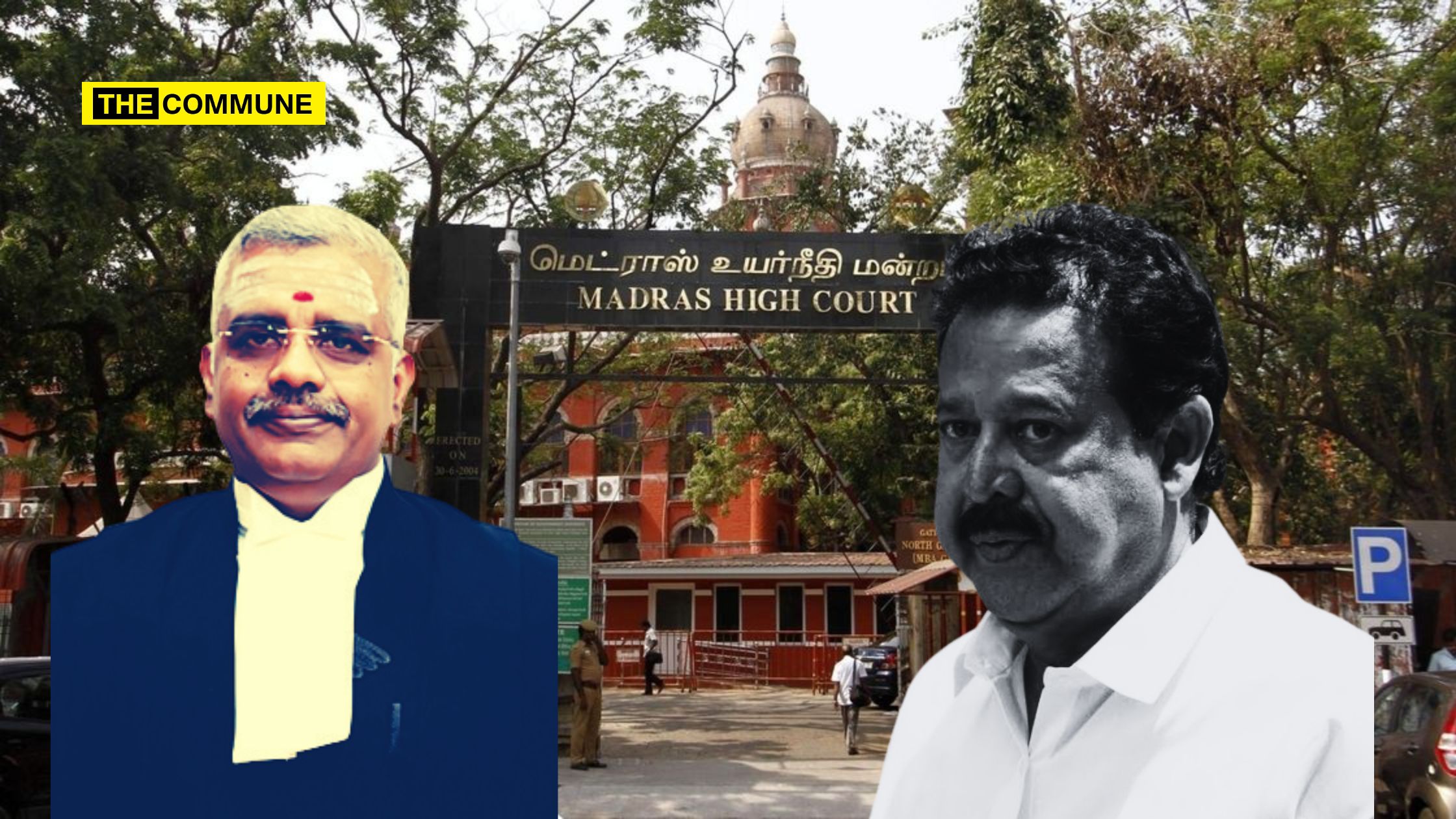
The Madras High Court on Thursday came down heavily on Tamil Nadu Forest Minister K. Ponmudy over his controversial public remarks targeting Saivites, Vaishnavites, and women. Justice N. Anand Venkatesh, who is hearing a suo motu revision petition against the Minister’s acquittal in a disproportionate assets case, questioned the Tamil Nadu government on the inaction over the speech and sought a clear update on whether an FIR had been registered.

Referring to video clips of the Minister’s remarks circulated on social media, Justice Venkatesh observed that the statements were not accidental. “The person who made the comment is accepting the comment,” he said, rejecting the notion that the matter could be resolved with a mere apology.

Calling the remarks “damaging content,” the judge said, “It cannot just go on and on. We don’t know when it’ll flare up. This is a cognisance taken by court. The moment I enter into this, it’ll get a different colour. I don’t want that to happen.”

He directed Advocate General P.S. Raman to verify with the Director General of Police by Thursday evening regarding the action taken so far. Emphasizing the seriousness of the issue, Justice Venkatesh said the state must act, failing which he would be compelled to take suo motu action. “If they don’t [register an FIR], then I’ll initiate suo motu,” he warned.

The court made it clear that only one FIR needed to be filed and instructed the government to proceed. “At least in future, somebody should not venture to make such spurious statements like this, holding a position of that stature,” the judge said.

He stressed that the law must apply equally, regardless of political affiliation. “Somebody must hesitate to do that in future. They shouldn’t think — when I belong to some other party, I will be held, but if I belong to the ruling party, I can talk anything. That impression should never be given. Law is for everybody,” he stated.

Justice Venkatesh also noted that when the government takes swift action on hate speech by opposition members or critics, it must apply the same standards to those within its own ranks. “It’s not some ordinary thing which he uttered. We all heard it,” he said.

The High Court has now directed the state to report by 23 April 2025 whether an FIR has been filed against Minister Ponmudy based on the complaint.

(With inputs from The Hindu)

75 Organizations Slam DMK Govt Over Extrajudicial Killings In Tamil Nadu, Call For Accountability

extrajudicial killing

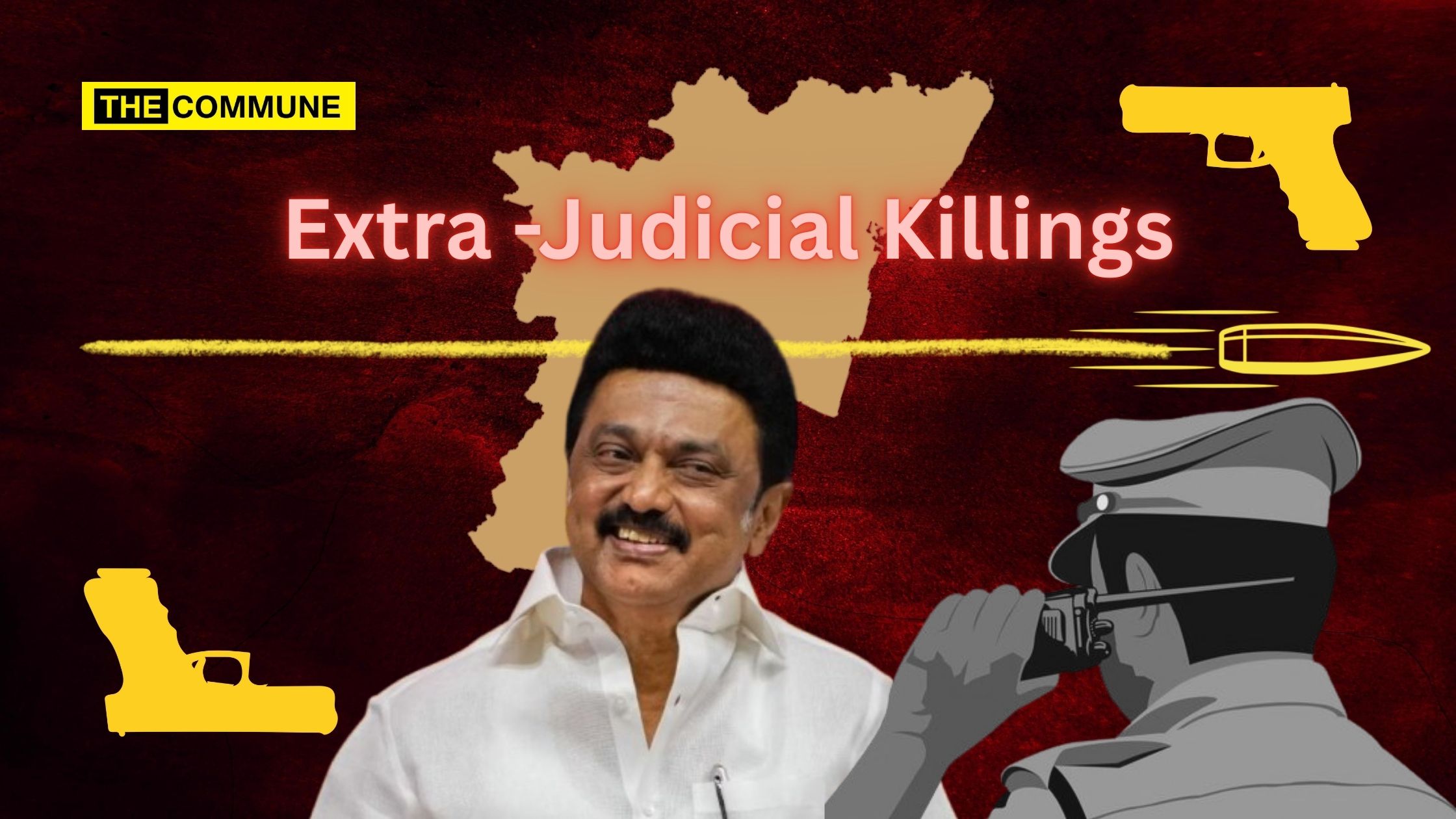
In a strong statement, 75 human rights activists and members from various organizations have condemned the DMK-led Tamil Nadu government over a rising number of alleged extrajudicial killings. The joint statement criticizes the growing trend of police shooting suspects after arrest—calling it a dangerous form of authoritarianism. The signatories highlighted that 21 people have been killed in 19 police encounters under the current regime.

Allegations of Fake Encounters

The statement cites several incidents in March and April 2025 where individuals were fatally shot by the police after arrest:

  • March 18: Three murder suspects killed in Erode.

  • March 19: Mohammed Tawfiq (alias Krishnamoorthy) shot in Tirunelveli.

  • March 20: Stephen killed in Chidambaram.

  • March 23: Ponvannan shot in Theni.

  • March 25: Jafar Ghulam Hussain killed in Chennai.

  • March 28: Ashok killed in the forests of Chengalpattu.

  • March 31: Subhash Chandra Bose shot in Madurai.

  • April 1: 19-year-old Mutta Vijay killed in Cuddalore.

According to the statement, at least six suspects were shot after arrest in recent weeks, and three died in police custody. While acknowledging the importance of prosecuting those involved in crimes, the signatories emphasized that only courts—not the police—can deliver justice.

Concerns Over Abuse of Power

The joint statement accuses the Tamil Nadu police of operating with impunity, especially during the legislative session, a period when law enforcement is typically more restrained due to public scrutiny. Instead, the activists allege that the DMK regime has enabled a surge in police brutality and human rights violations, including staged encounters and custodial abuse.

The statement warns that unchecked police violence threatens the rule of law and could erode public trust in democratic institutions. The silence of both opposition parties and ruling coalition partners in the Assembly has further fueled concerns.

The signatories argue that using the police as an extrajudicial force undermines democracy and risks setting a dangerous precedent. Tamil Nadu, which aspires to model progressive politics, now faces accusations of sanctioning state-sponsored violence.

They urge the state to reject retaliatory violence as a method to control crime. While countries around the world are moving away from capital punishment, Tamil Nadu police appear to be bypassing legal procedures altogether.

Demands for Action and Transparency

The statement calls on the authorities to take immediate and transparent action by suspending and prosecuting police officers involved in encounter killings. It further urges that investigations be entrusted to judicial magistrates to ensure impartiality and transparency. The State Human Rights Commission is encouraged to independently take up these cases, while the State Legal Aid Authority is urged to initiate suo motu proceedings under Section 12 of the Protection of Human Rights Act, thereby reinforcing accountability and access to justice.

Political Inaction by DMK

The activists reminded the public of Chief Minister M.K. Stalin’s earlier assurances after the 2022 custodial death of Vignesh in Chennai, where he pledged an end to police brutality. They call on Stalin to directly intervene and uphold this commitment. Failing which, they warned, public protests and people’s movements may intensify across the state to demand justice and democratic accountability.

Among the 75 signatories are prominent voices like S.V. Rajadurai, Kolathur Mani, Nellai Mubarak, Thirumurugan Gandhi, A. Marx, Christina Samy, Sudha Ramalingam, and Prabha Kalvi Mani.

(With Inputs From Vikatan)

Subscribe to our channels on TelegramWhatsApp, and Instagram and get the best stories of the day delivered to you personally.

Milords, India Is a Democracy, Not a Judiciocracy: As Waqf Encroaches Lands, The Judiciary Encroaches Powers

The Supreme Court of India, revered as the guardian of the Constitution, has increasingly morphed into an overreaching behemoth, trampling the delicate balance of powers that underpins our democracy. Its recent order to maintain the status quo on Waqf properties, as it hears challenges to the Waqf (Amendment) Act, 2025, is yet another brazen display of judicial hubris. This directive, issued on April 16, 2025, not only undermines the will of the people as expressed through Parliament but also exposes the judiciary’s growing penchant for encroaching on the domains of the legislature and executive. The Court’s sanctimonious posturing as the sole arbiter of justice is not just hypocritical—it’s a dangerous assault on the democratic edifice of this nation.

Let’s begin with the Waqf order itself. The Waqf (Amendment) Act, passed by the Lok Sabha with 288 votes in favor and 232 against, and by the Rajya Sabha with 128 for and 95 against, represents a hard-fought legislative effort to address longstanding issues in the management of Waqf properties. These properties, spanning millions of acres, have often been mired in disputes, with entire villages claimed as Waqf land, leaving countless citizens in legal limbo. The Act, backed by six BJP-ruled states and informed by 98.2 lakh memorandums and 38 parliamentary sittings, sought to bring transparency, curb arbitrary declarations, and ensure accountability. Yet, the Supreme Court, led by Chief Justice Sanjiv Khanna, has chosen to freeze its implementation, effectively stalling a law that reflects the democratic will. Why? Because the Court, in its infinite wisdom, believes it must “ensure the situation as it exists now is not disturbed.” This vague, paternalistic reasoning reeks of judicial overreach, as it substitutes the Court’s whims for the legislative process.

This is not an isolated incident but part of a disturbing pattern. The judiciary has repeatedly flexed its muscles to encroach on the powers of the other pillars of democracy. Take, for instance, its recent rulings on the role of Governors and the President’s assent to bills. The Court has waded into the executive’s domain, dictating timelines and procedures as if it were an administrative overseer. In doing so, it has conveniently ignored its own inefficiencies—millions of pending cases pile up in courts across the country, with litigants waiting decades for justice, while judges enjoy leisurely vacations. The Supreme Court’s summer breaks and festival holidays are sacrosanct, but it has no qualms lecturing the executive on adhering to strict timelines. This double standard is not just galling; it’s an insult to the millions who languish in the judicial quagmire.

Perhaps the most egregious example of judicial overreach is the Court’s 2015 decision to strike down the National Judicial Appointments Commission (NJAC). Passed with near-unanimous support in Parliament—367 MPs in the Lok Sabha and 179 in the Rajya Sabha voted in favor, with only one dissenting voice—the NJAC sought to make judicial appointments more transparent and inclusive by involving the executive and eminent citizens alongside judges. The amendment was ratified by 16 state legislatures, a testament to its democratic legitimacy. Yet, the Supreme Court, in a 4:1 ruling, declared it unconstitutional, arguing that it violated the “basic structure” of the Constitution by undermining judicial independence. The Court’s real fear? Losing its monopoly over appointments through the opaque collegium system, where judges appoint judges in a closed-door process that reeks of nepotism and insularity. By nullifying the NJAC, the Court not only spat in the face of Parliament’s near-unanimous mandate but also asserted itself as the ultimate arbiter of constitutional propriety, above the elected representatives of the people.

The Waqf order is cut from the same cloth. By halting the implementation of a law that seeks to reform a system plagued by misuse—where Section 40 of the Waqf Act allowed boards to declare any land as Waqf with near-unassailable authority—the Court is effectively preserving a status quo that benefits vested interests. Solicitor General Tushar Mehta rightly pointed out that “lakhs and lakhs of representations” highlighted how vast swathes of land, including entire villages, were being claimed as Waqf, creating chaos for ordinary citizens. The Act’s provisions, such as scrapping Section 40 and empowering collectors to verify claims, were designed to protect property rights and curb arbitrary conversions. Yet, the Court, swayed by petitioners like Asaduddin Owaisi and Mahua Moitra, has chosen to prioritize abstract notions of “Waqf by user” over the practical need for reform.

The irony is palpable. The same judiciary that lectures the executive on accountability operates with impunity, answerable to no one. Its orders, often laced with moral grandstanding, betray a disconnect from the realities faced by ordinary Indians. The Court’s concern about “grave ramifications” if Waqf properties are denotified rings hollow when it ignores the ramifications of its own inaction—decades-long delays in justice delivery, a collegium system that breeds cronyism, and a propensity to meddle in matters best left to elected representatives.

The Supreme Court’s defenders may argue that it is merely upholding the Constitution. But this is a convenient fiction. The Constitution envisages a balance of powers, not a judicial dictatorship. When the Court strikes down laws passed by Parliament, dictates executive procedures, or freezes reforms like the Waqf Act, it is not protecting democracy—it is subverting it. The judiciary’s role is to interpret the law, not to rewrite it or stall its implementation on a whim. By positioning itself as the ultimate authority, the Court mocks the very people it claims to serve.

In that case, why even bother with elections or Parliament when the judiciary acts as an unelected dictator?

It’s time to call out this judicial overreach for what it is: a power grab that threatens the foundations of our republic. The Supreme Court must be reminded that it is not above the Constitution or the will of the people. Parliament, as the voice of the electorate, and the executive, as its implementer, deserve respect, not judicial disdain. If the Court continues to act as an unelected super-legislature, it risks eroding the public’s faith in the very institution it claims to uphold. The Waqf status quo order is not just a misstep—it’s a symptom of a judiciary that has lost its way, drunk on its own power and oblivious to the democratic ideals it is duty-bound to protect.

Kaushik is a freelance writer.

Subscribe to our channels on TelegramWhatsApp, and Instagram and get the best stories of the day delivered to you personally.

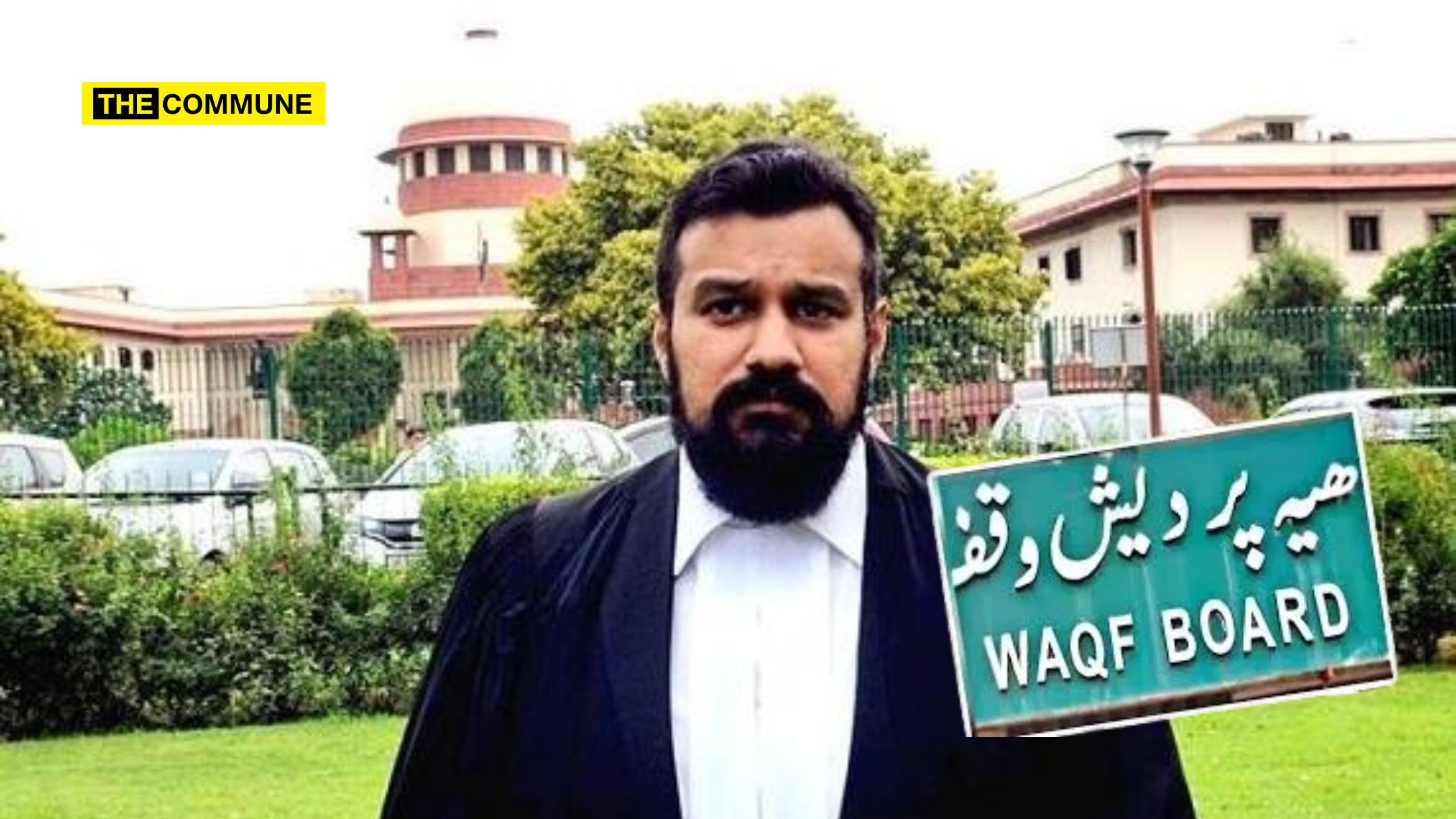
“Waqf Cases Heard In SC, Hindu Petitions Sent To High Courts”, Adv Vishnu Shankar Jain Questions Supreme Court’s Prioritization Of Waqf Petitions

As the Supreme Court begins hearing over 70 petitions challenging the Waqf Amendment Act, advocate Vishnu Shankar Jain has raised serious questions over what he calls “inconsistent judicial standards” when it comes to religious endowment laws in India.

Speaking ahead of Thursday’s (17 April 2025) hearing before a bench comprising Chief Justice Sanjiv Khanna, Justice PV Sanjay Kumar, and Justice KV Vishwanathan, Jain pointed to a stark disparity in how the top court has handled petitions related to Hindu and Muslim religious institutions.

“When we filed a petition in the Supreme Court regarding the Waqf Board, the Court asked us why we came directly to the Supreme Court and suggested we go to the High Court,” said Jain. “We did not even get interim relief, despite more than 140 related petitions pending in various High Courts. But now, when others file Waqf-related cases, not only are they heard in the Supreme Court, but interim orders are also discussed. What is the standard here?”

Supreme Court Questions Government on Waqf Provisions

During a two-hour-long hearing on Wednesday (16 April 2025), the Supreme Court heard arguments from both sides and raised key concerns over the provisions of the Waqf Act. The bench questioned the government on:

  • Why properties claimed as government land cannot be classified as Waqf.
  • The lack of representation of non-Muslims in Waqf Boards and the Waqf Council.
  • The broad powers granted to Waqf Boards over land, which many argue have been exercised without adequate due process.

The court has sought a detailed reply from the government and will continue hearing the matter.

“Create A Constitutional Bench In A High Court,” Suggests Jain

Jain further pointed to the Supreme Court’s recent decision to transfer long-pending cases related to the Hindu Religious Endowment Acts of four states to the respective High Courts. “For 13 years, the Supreme Court heard matters related to the state control of Hindu temples, only to recently say these belong in the High Courts,” he noted.

“My suggestion is that all petitions regarding the Waqf Amendment Act be sent to one High Court and heard by a constitutional bench, with a clear timeline of six months for resolution,” Jain said.

The remarks have triggered renewed debate about the judiciary’s approach to religious matters. While Hindu temple management and endowment laws have often been redirected to lower courts, the Waqf Act—a law affecting vast tracts of land and thousands of properties—continues to receive attention at the highest level.

Critics argue this reflects an imbalance in how religious issues are handled, especially given the wide-reaching powers that Waqf Boards enjoy under current legislation.

(With inputs from Jagran)

Subscribe to our channels on Telegram, WhatsApp, and Instagram and get the best stories of the day delivered to you personally.

Malayalam Actor Shine Tom Chacko Caught Fleeing Hotel Room Before Drug Raid: Actress Vincy Aloshious Files Sexual Misconduct Complaint

Actor Shine Tom Chacko is once again at the center of a major controversy after a dramatic drug raid at a hotel in Kochi and new allegations of sexual misconduct surfaced, reigniting longstanding concerns about substance abuse in the Malayalam film industry.

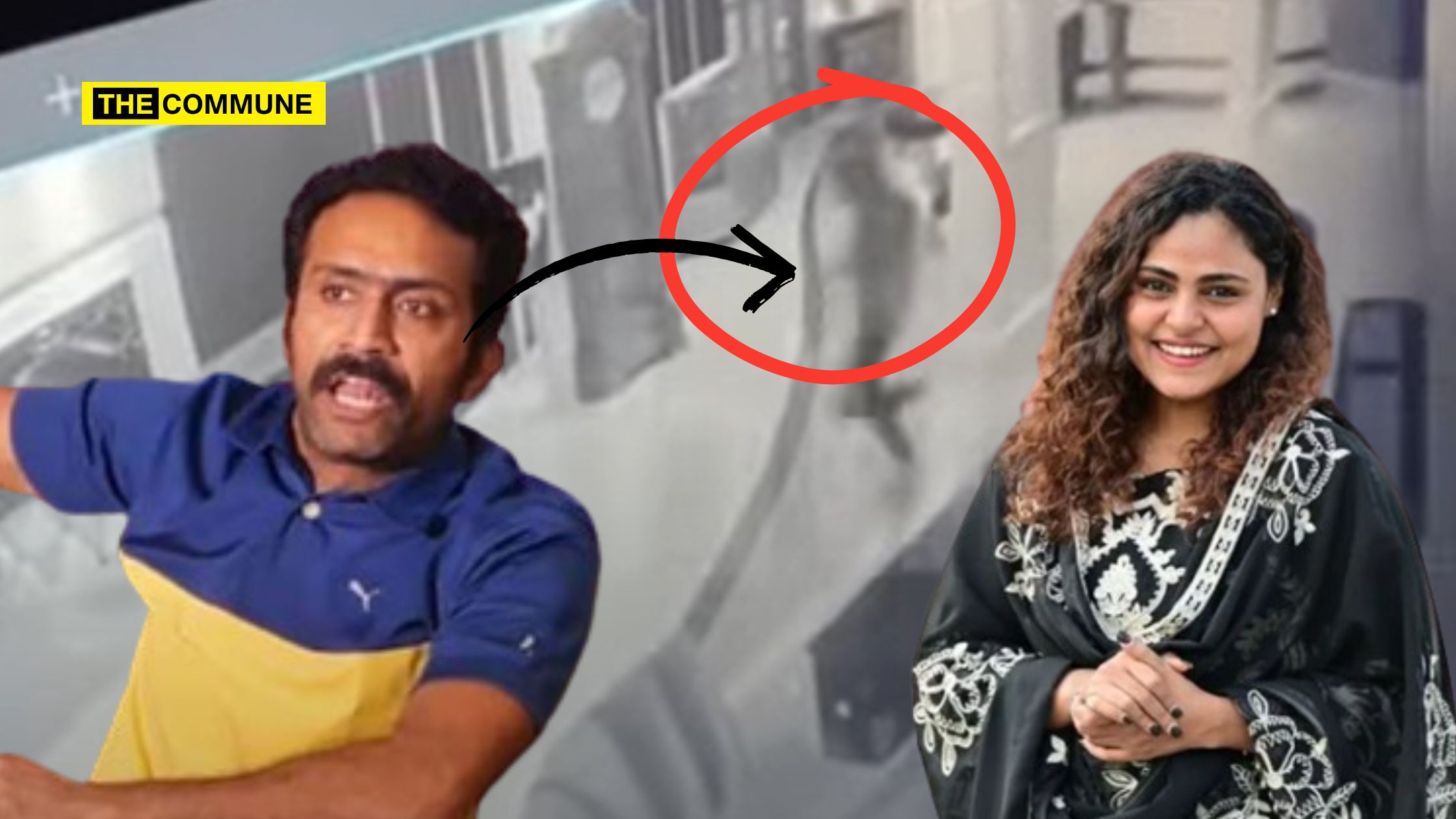
On Wednesday (16 April 2025) night around 11 PM, Shine Tom Chacko was reportedly caught on CCTV fleeing his hotel room moments before a police raid. The raid was carried out by the District Anti-Narcotics Special Action Force (DANSAF) at a hotel in Ernakulam district, following revelations made by actress Vincy Aloshious.

According to police sources, Shine allegedly spotted the officers approaching Room 314 and escaped through a window, rushing down the stairs as caught on surveillance footage. The search operation was reportedly triggered by statements Vincy made about his alleged drug use and erratic behavior during a recent film shoot.

Vincy Aloshious Files Formal Complaint

Actress Vincy Aloshious had earlier filed a written complaint with the Association of Malayalam Movie Artists (AMMA), detailing Shine Tom Chacko’s alleged inappropriate and unprofessional conduct during the shoot of Soothravakyam. In her complaint, Vincy stated that Shine, allegedly under the influence of drugs, made sexually suggestive remarks on set and even offered to “fix her costume” in front of the crew, causing discomfort and embarrassment.

The complaint also claims that Shine was visibly intoxicated during filming, with bulging eyes and erratic behavior forcing shooting schedules to be halted. Vincy noted that this was not an isolated incident, and that similar patterns of misconduct had been observed throughout the production.

In an Instagram video shared earlier, Vincy addressed backlash over her stance against drug use in the film industry. “I have the courage to admit I’m waiting for meaningful work. But this is about drawing boundaries at the workplace, not personal gain,” she stated. She emphasized that she would not work with actors known to abuse narcotics and called for stronger industry regulations and accountability.


View this post on Instagram


A post shared by vincy_sony_aloshious (@iam_win.c)

Legal History And Industry Silence

This is not Shine’s first brush with controversy. In 2015, he was arrested in connection with a cocaine party in Kochi, although he was acquitted in February 2025 after the case collapsed due to police procedural lapses and contradictions in witness statements. Despite his legal victory, rumors and visual signs of continued drug use have followed the actor over the years.

The Malayalam film industry has largely remained silent on Shine’s conduct. Neither the AMMA nor the Kerala Film Chamber had previously taken concrete action. Vincy’s new complaint has renewed public pressure on these organizations to respond.

In response to the recent complaint and hotel raid, the Kerala Film Chamber has assured that it will examine the allegations. There is growing demand within and outside the industry for stricter enforcement of anti-drug policies and for actors facing serious allegations to be barred from film projects unless cleared of wrongdoing.

The police investigation into Shine Tom Chacko’s recent actions is ongoing. With new CCTV evidence and a formal complaint in hand, authorities are now expected to determine whether legal proceedings will be initiated once again against the actor.

Shine Tom Chacko is known for his performances in films like the recent Ajith-starrer Good Bad Ugly, Malayalam movies like Ee Adutha Kaalathu, Annayum Rasoolum, Masala Republic, and Jigarthanda DoubleX.

(With inputs from News18)

Subscribe to our channels on Telegram, WhatsApp, and Instagram and get the best stories of the day delivered to you personally.

Kerala: Communist Govt Files Case Over RSS Founder Hedgewar’s Portrait Being Displayed At Pooram Festival In Kollam; No Case For Displaying Terrorist Portraits?

The Communist-led Kerala government is facing heavy criticism after registering a case under the Religious Institutions Act over the display of Indian nationalist and RSS founder Dr. K.B. Hedgewar during a Hindu festival—while taking no action against the public display of Hamas leaders, despite their designation as terrorists previously. The move was widely amplified on social media by Left-leaning media outlets and supporters of Congress and CPI(M).

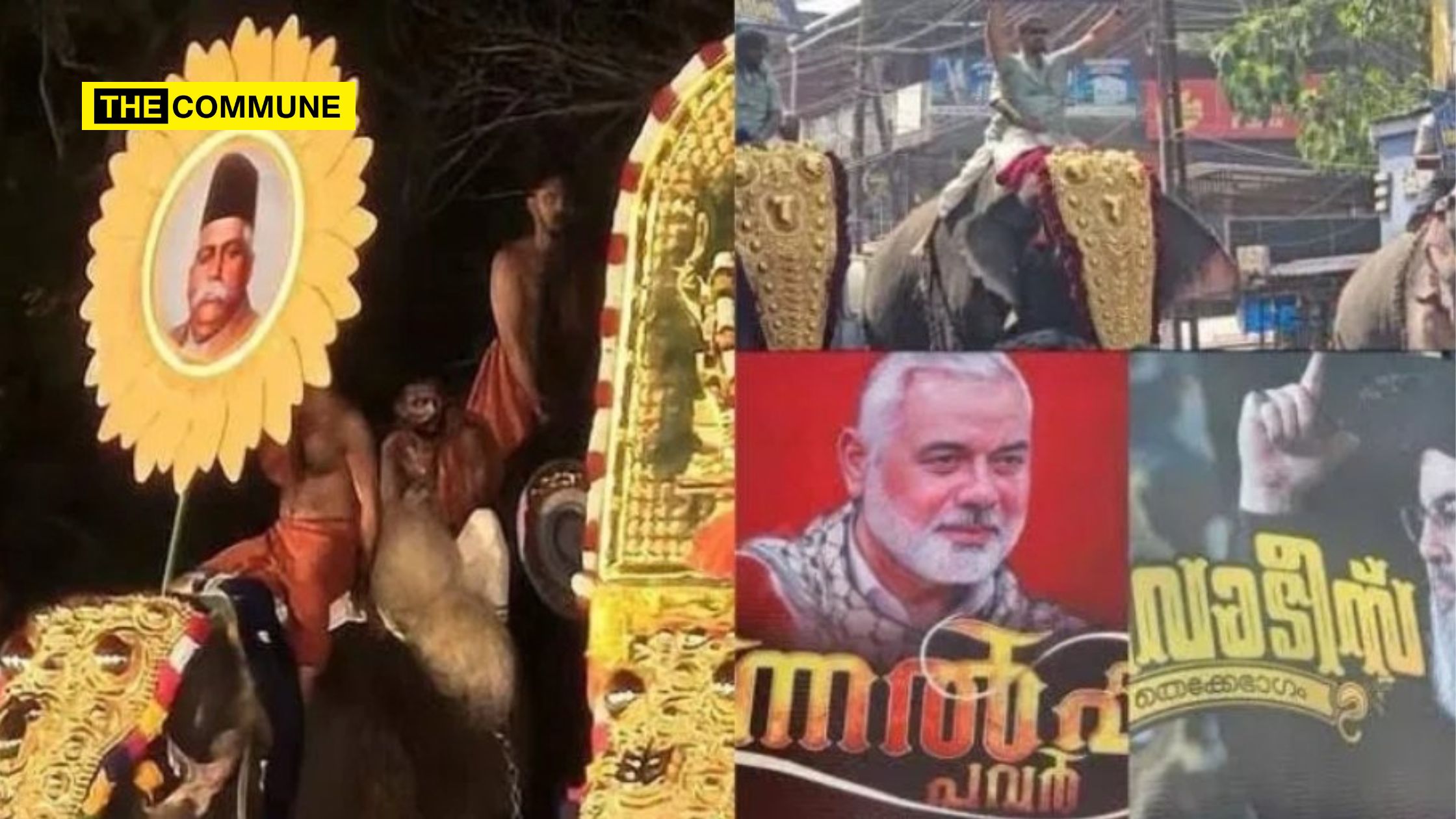
The incident took place during the annual Pooram festival at the Ashramam Sree Krishna Temple in Kollam, where a portrait of Dr. Hedgewar was featured on an umbrella used in the elephant parade. This festival is a vibrant cultural competition between the Puthiyakavu Bhagavathi Temple—managed by an RSS-inspired trust—and the Thamarakkulam Ganapati Temple. Both temples traditionally parade 15 decorated elephants each, with changing umbrella designs (Kutamattam) that display images of deities, national icons, social reformers, scientists, and even global sports stars like Messi and Ronaldo.

This year, the display of Dr. Hedgewar’s image did not initially spark backlash. However, after media coverage and criticism from some Congress and left-wing figures, the issue escalated. The Youth Congress State Vice President filed a complaint, resulting in the Pandalam City Police registering a case under Sections 3, 4, and 5 of the Religious Institutions Act. The portrait, notably, was displayed alongside icons such as Swami Vivekananda, Sreenarayana Guru, and Dr. Ambedkar.

Despite the temple not being under the control of the CPM-led Travancore Devaswom Board, media attention intensified, framing the incident as politically motivated. Local RSS supporters, however, downplayed the matter, suggesting that the controversy was artificially fueled.

Critics have pointed out a stark contrast in the state’s response to another incident during the Uroos festival in Thrithala, Palakkad, earlier in February. Banners displaying Hamas leaders Yahya Sinwar and Ismail Haniyeh—figures associated with a group designated as a terrorist organization by the U.S., European Union, and others—were paraded atop elephants in front of thousands, including children. Despite the event’s visuals circulating widely online, no case was registered, and no official action was taken. CPI(M) Minister M.B. Rajesh and Congress leader V.T. Balram reportedly attended the event.

This perceived inconsistency in the government’s actions has reignited accusations of political bias. BJP leaders, including former State President K. Surendran, have strongly criticized the ruling government. “It’s troubling that nationalist figures face legal cases, while public displays featuring globally recognized terrorist leaders are ignored,” he stated.

This isn’t the first instance where alleged pro-Hamas sentiment has stirred controversy in Kerala. In 2024, the Kerala University Youth Festival was forced to change its name from “Intifada” due to backlash over its militant implications. A year earlier, former Hamas leader Khaled Mashal delivered a virtual speech at a rally in Malappuram organized by the Solidarity Youth Movement, intensifying concerns over extremist affiliations.

The contrasting handling of the two incidents—one involving a national figure and another involving internationally designated terrorists—has prompted a wider debate over law enforcement impartiality and accusations of appeasement politics within Kerala’s left-leaning governance.

(With inputs from Organiser)

Subscribe to our channels on TelegramWhatsApp, and Instagram and get the best stories of the day delivered to you personally.