Home Blog Page 336

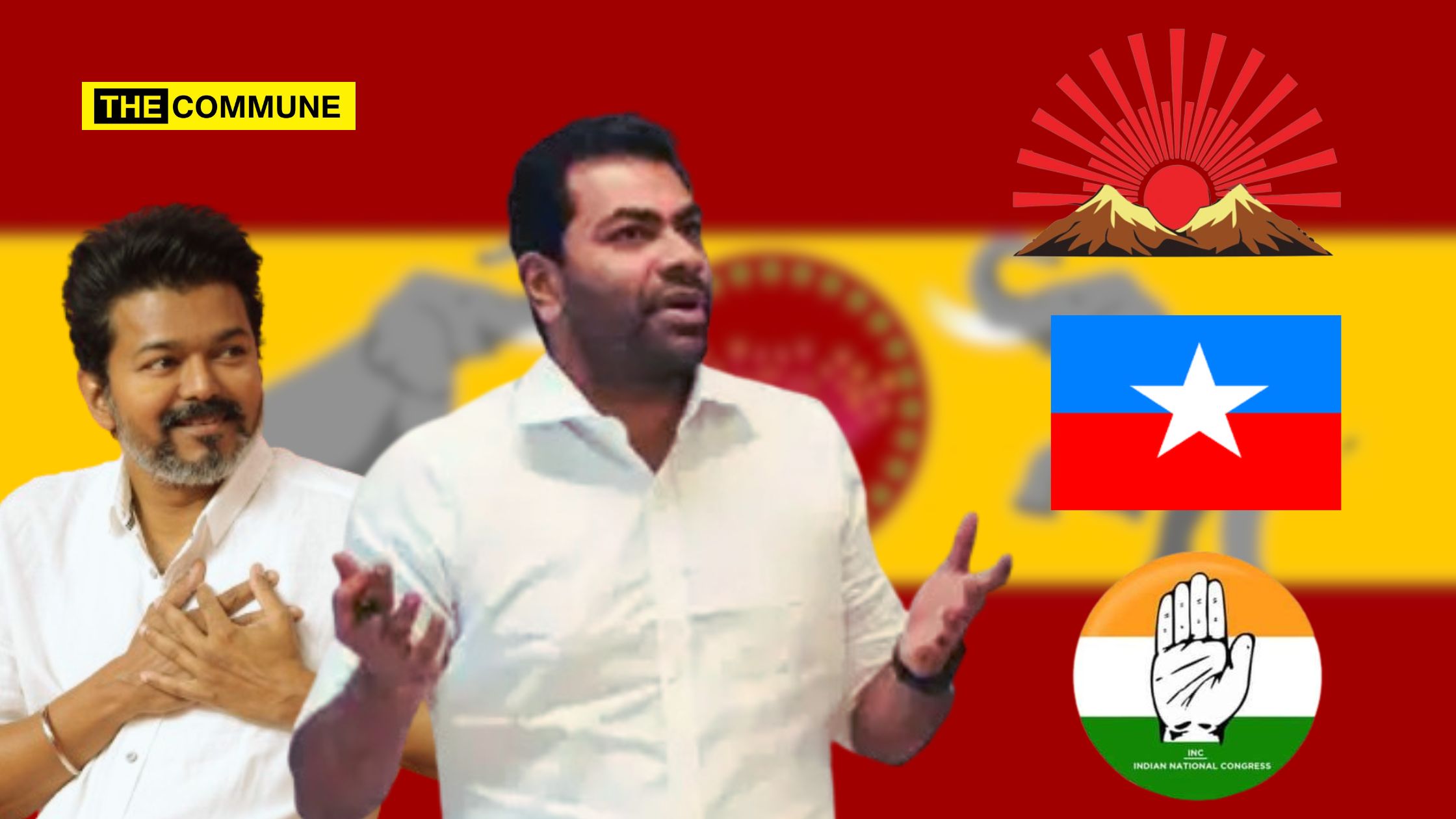
“There’s No Big Difference Between DMK And TVK”: Wannabe Prashant Kishore Of TVK Aadhav Arjuna Reveals

Aadhav Arjuna, the General Secretary of Election Campaign Management for the Tamilaga Vettri Kazhagam (TVK), has stirred controversy by claiming that there is little to no ideological difference between TVK and the DMK—despite the latter being considered a political rival by TVK chief and part-time politician Vijay. He further stated that parties like the Congress and Viduthalai Chiruthaigal Katchi (VCK) also align ideologically with TVK.

These remarks come in the context of the AIADMK reuniting with the BJP, rekindling their strong alliance under the NDA ahead of the 2026 Tamil Nadu Assembly elections. TVK, which had been eyeing a potential alliance with the AIADMK, seems to have missed its chance. Now, the party appears to be turning its focus toward attracting one of the DMK’s key allies in a bid to gain momentum.

In a recent interview with a private news channel, Aadhav Arjuna reiterated his party’s stance, saying that there are no major ideological differences between the DMK, Congress, or VCK, and emphasized that TVK stands firmly against the BJP.

He said, “There is no significant difference between the policies of DMK and TVK. DMK’s policy was established by Anna (C.N. Annadurai), who created it for Tamil Nadu. It is a policy centered on Tamil Nadu and is neutral; it promotes the ideology that everyone is equal and supports state autonomy without a union government in India. This is a policy for Tamil Nadu, not for DMK alone. We cannot claim that this policy belongs solely to DMK; it is also followed by the Tamilaga Vettri Kazhagam. If the policy fails or if there are issues concerning the elected Chief Minister, TVK also voices its concerns. We are not different in any way.”

Later, he said, “There is no significant difference between our policies and those of Congress. Additionally, there is no substantial difference between the policies of the VCK and ours. We have firmly proved that we will not join the BJP under any circumstances. When we approach the Supreme Court regarding the Waqf Act, we want to emphasize the extent of our ideological commitment. Therefore, I want to reiterate that any alliances will not be formed without demonstrating our strength and engaging with the people, and this decision will be made final stages. This is not the right time for that.”

Subscribe to our channels on TelegramWhatsApp, and Instagram and get the best stories of the day delivered to you personally.

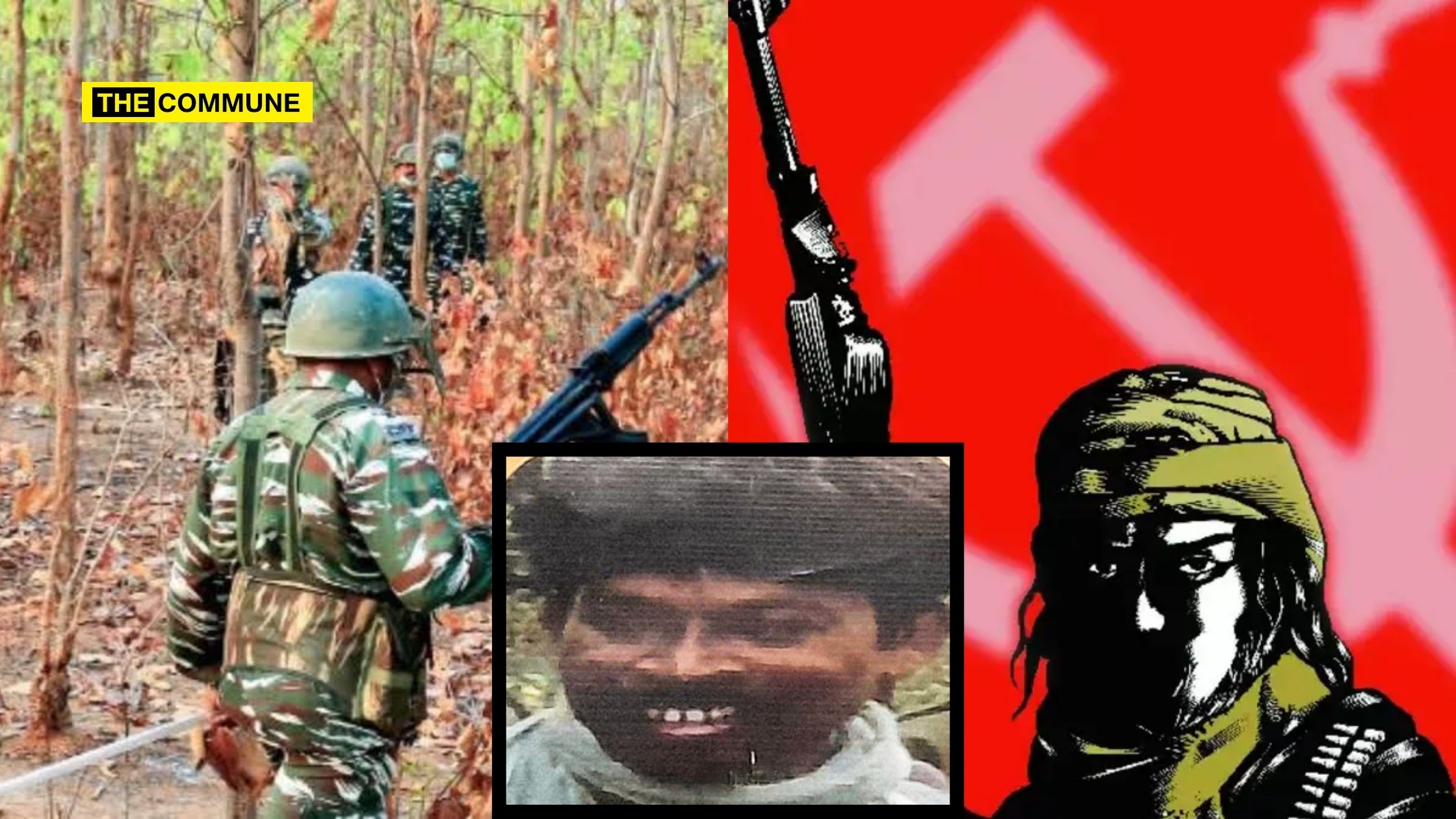
Top Maoist Commander Prayag Manjhi With ₹1 Crore Bounty Among 8 Killed In Jharkhand

At least eight Maoists, including senior commander Prayag Manjhi — who carried a bounty of Rs 1 crore on his head — were killed in an ongoing encounter with security forces in the Lugu hill area of Lalpania in Bokaro district, officials said. The gun battle began around 5.30 a.m. on Monday and was still underway, with intermittent firing reported from both sides.

Officials said the number of casualties could rise further. One of those killed was identified as Prayag Manjhi, a central committee member of the CPI (Maoist). Known by multiple aliases — Vivek Da, Phuchna, Nago Manjhi, and Karan Da — he was active in the Parasnath hills and surrounding areas of Giridih over the past few months.

Manjhi, originally a resident of Dalbudha in Tundi (Dhanbad district), was a key Maoist figure wanted in over 100 incidents across Jharkhand, Bihar, Chhattisgarh, and Odisha. In Giridih district alone, he was wanted in more than 50 cases. An official statement from the CRPF released on Monday morning initially confirmed the killing of four Maoists.

The number has since increased to eight. The earlier statement said: “The Central Reserve Police Force, in a joint operation with the state police, killed four Maoists in an encounter in the Lugu hills of Bokaro district this morning. One SLR and one INSAS rifle have been recovered. No injuries to security personnel have been reported so far. Intermittent firing continues.”

The joint team, comprising personnel from the CRPF’s 209 Commando Battalion for Resolute Action (CoBRA) and Jharkhand Police, had launched a search operation in the forested foothills of Lalpania police station area when they came under fire from Maoists.

The forces retaliated, leading to the gunfight which is still going on. So far this year, 13 Maoists have been killed in encounters with security forces in Jharkhand.

Police have set a target to make the state completely Maoist-free by the end of 2025. According to Jharkhand Police data, 244 Maoists have been arrested this year, while nine were killed in encounters prior to this operation.

Additionally, 24 Maoists — including four zonal commanders, one sub-general commander, and three area commanders — have surrendered and joined the mainstream of society. –IANS snc/skp

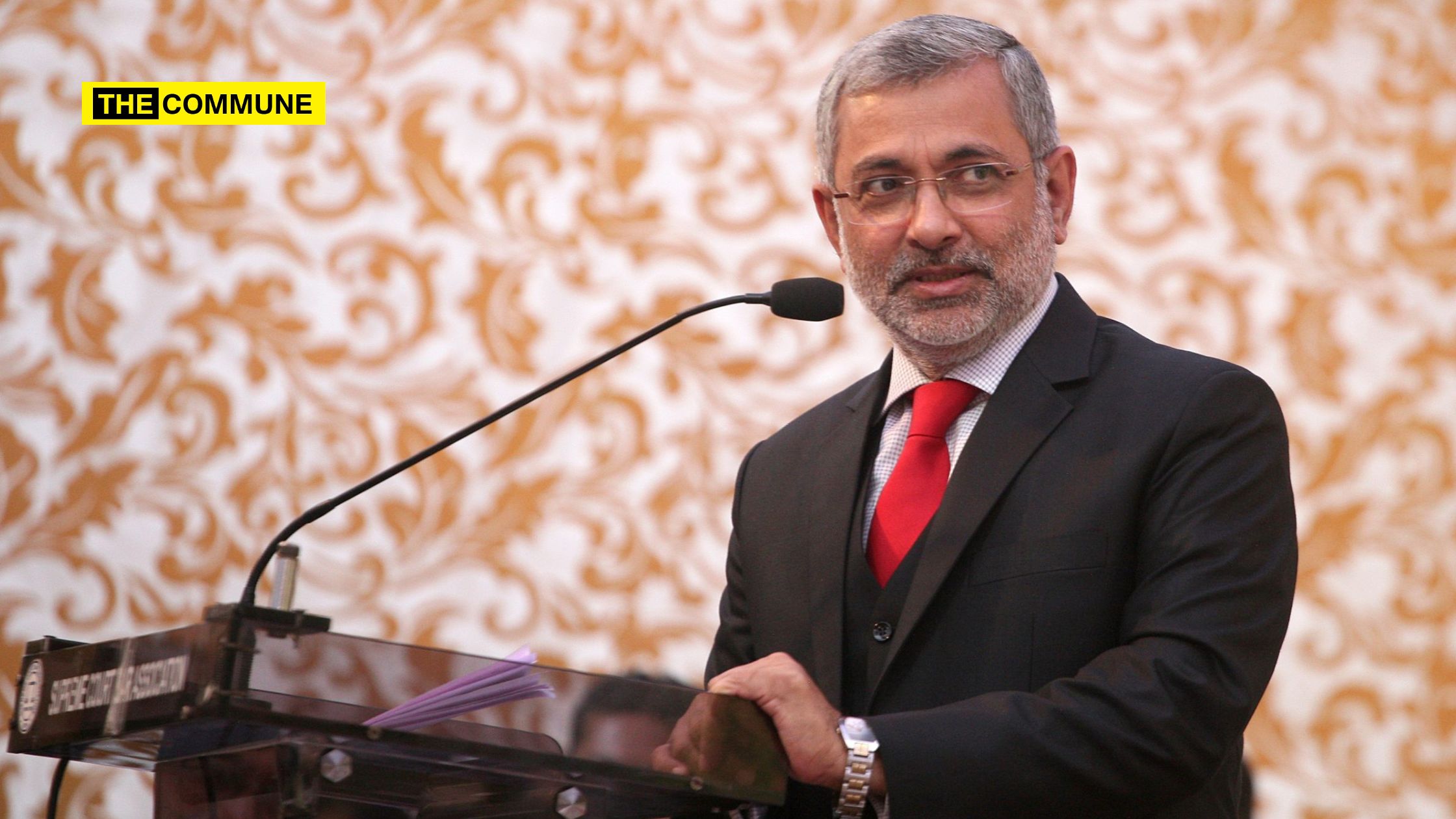
Gems Of Retired Justice Kurian Joseph: A Look Into His Contradictions And Hypocrisy

Retired Justice Kurian Joseph’s name was mentioned in the news just as TN Chief Minister MK Stalin announced the formation of a committee to examine state autonomy and center-state relations. Once a prominent figure in India’s judiciary, has often been hailed for his outspoken views and his willingness to challenge the status quo. But a deeper look at his actions, statements, and post-retirement behavior paints a portrait of contradictions and selective morality. This article explores how the judge’s own track record at times undercuts the ideals he claimed to uphold.

Religious Bias Masquerading As Secularism

Triple Talaq Verdict For Applause, Good Friday Boycott For Faith

Justice Kurian Joseph played a pivotal role in the landmark Triple Talaq case, voting to strike down the practice as unconstitutional. He declared it “against the tenets of the Quran”, thereby questioning its religious legitimacy. However, this decision was widely argued progressive, also subtly positions the judiciary as an interpreter of religious texts—a role it is not constitutionally bound to perform. Moreover, Kurian Joseph, a Christian judge, ruling on a sensitive Islamic issue, faced questions about whether his theological interpretation crossed ethical boundaries.

But the same Judge Kurian Joseph refused to attend a conference called by the Chief Justice on Good Friday, stating it was a violation of India’s secular fabric. While this ‘secular’ judge sees no issue in interpreting and ruling on the religious practices of others in the name of secularism, critics questioned why attending a routine meeting on a Christian holiday would suddenly be seen as a threat to India’s secular fabric.

Questions Hindu Roots In Court Motto, Yet Equates Catholic Church And Pope With Constitutional Ideals

At a forum hosted by the left-leaning outlet The Wire, Justice Kurian Joseph took issue with the Supreme Court’s Sanskrit motto — “Yato Dharmastato Jayah”, meaning “Where there is Dharma, there will be Victory.” This phrase appears multiple times in the Mahabharata and reflects a broader philosophical ideal rooted in Indian tradition.

Justice Joseph questioned why the Supreme Court couldn’t adopt a more “secular” phrase like “Satyameva Jayate,” which is used by various High Courts. But this argument falls flat when one considers the actual context, the Supreme Court, as the apex judicial body, has a distinct identity and thus a unique motto — one that symbolizes a higher moral and ethical pursuit of justice (Dharma) that transcends mere legal technicalities.

His discomfort with a motto rooted in Hindu philosophy starkly contrasts with his ease in invoking Christian doctrine in public forums. While he questioned the Supreme Court’s Sanskrit motto drawn from the Mahabharata, he had no hesitation in comparing the Catholic Church to the Indian Constitution, stating, ‘The Catholic Church is one that has always assimilated in itself all the traditions and cultures brought in by the believers from all over the world. This is similar to the preamble of our Constitution, which starts with the word ‘We’.” He even glorified the Pope as a unifying force, portraying him as the symbolic head who binds the Church together as a single entity. Such selective reverence raises questions about consistency in upholding secular principles.

This inconsistency raises a fundamental question, is secularism just a shield to selectively critique Hindu cultural elements while glorifying others? It’s not about Sanskrit, religion, or even the Mahabharata — it’s about consistency and fairness. And in this case, Justice Joseph’s views appear heavily tilted, not toward secularism, but toward a selective, biased narrative.

The “No Retirement Posts for Judge” Pledge – In Letter, Not In Spirit

In 2018, just a day after his retirement from the Supreme Court, Justice Kurian Joseph made a striking public statement: former judges, he said, should not accept post-retirement posts from the government if these are offered as a form of “charity.” The only exception, he clarified, would be when a government “honourably” requests a judge’s service in a way that preserves institutional integrity and independence.

His remarks came at a time of intense scrutiny of judicial-government relations, shortly after he and three other senior judges had held an unprecedented press conference raising concerns about the functioning of the judiciary and its autonomy.

Fast forward to 2025, and Justice Kurian Joseph finds himself at the head of a high-level committee announced by Tamil Nadu Chief Minister M.K. Stalin. The panel has been tasked with examining Centre-State relations and recommending measures to protect the rights of states under India’s federal structure. It includes former IAS officer Ashok Vardhan Shetty and economist M. Naganathan, both with long-standing ties to the DMK government.

The timing and context of the appointment raise questions about how Justice Joseph now interprets his earlier position on post-retirement roles.

The Collegium U-Turn

Similarly, in January 2018, Justice Kurian Joseph, alongside three senior judges, held a historic press conference warning of a judicial crisis and accusing then-Chief Justice Dipak Misra of irregularly allocating sensitive cases. The move was framed as a bold act of institutional conscience, aimed at safeguarding judicial independence.

Yet, in a puzzling turn after retirement, Justice Joseph gave a series of conflicting interviews. He initially denied any political interference, only to later admit that “external influences” and “remote control” had impacted the Chief Justice’s actions. These abrupt flip-flops—just days apart—sparked skepticism: was this genuine concern for the judiciary, or a strategic narrative driven by personal grievance?

This pattern of reversal wasn’t isolated. While on the bench, Justice Joseph staunchly defended the opaque collegium system—where judges appoint judges—and helped strike down the NJAC (National Judicial Appointments Commission), which aimed to bring transparency and public accountability.

Yet once outside the system, he admitted that rejecting the NJAC may have been a mistake. This sudden change of heart, coming only after stepping down, raises a familiar question: was it delayed wisdom, or an opportunistic repositioning free from institutional responsibility?

Other Hypocrisies

The Yakub Memon Case

Much like in the Triple Talaq case, Justice Kurian Joseph drew controversy for siding with death row convict Yakub Memon’s last-minute petition, citing alleged procedural lapses by the Supreme Court. Yakub Memon, convicted for financing the devastating 1993 Bombay bombings, was not only a key figure in the attacks but also the brother of prime accused Tiger Memon. Critics questioned whether Justice Joseph’s intervention reflected a genuine concern for due process—or a selective display of sympathy in a high-stakes terror case

While due process is critical, some viewed his intervention as opportunistic, timed for maximum media attention. It seemed to cater more to the public sentiment around judicial activism than to any consistent principle—especially since he had not made similar procedural protests in other death penalty cases.

Publicly Called Out By National Commission For Minorities

In a rare and scathing indictment, George Kurien, then Vice-Chairman of the National Commission for Minorities, openly branded Justice Kurian Joseph a hypocrite. He questioned the judge’s claim of contributing to minority representation in the judiciary, pointing out that such decisions are collective ones made by the collegium.

Further, the NCM Vice-Chairman criticized Justice Joseph for undermining the dignity of his high office with selective narratives and opportunistic claims. This public rebuke didn’t come from political rivals—but from a fellow Christian and senior minority representative, making it all the more significant.

Subscribe to our channels on TelegramWhatsApp, and Instagram and get the best stories of the day delivered to you personally.

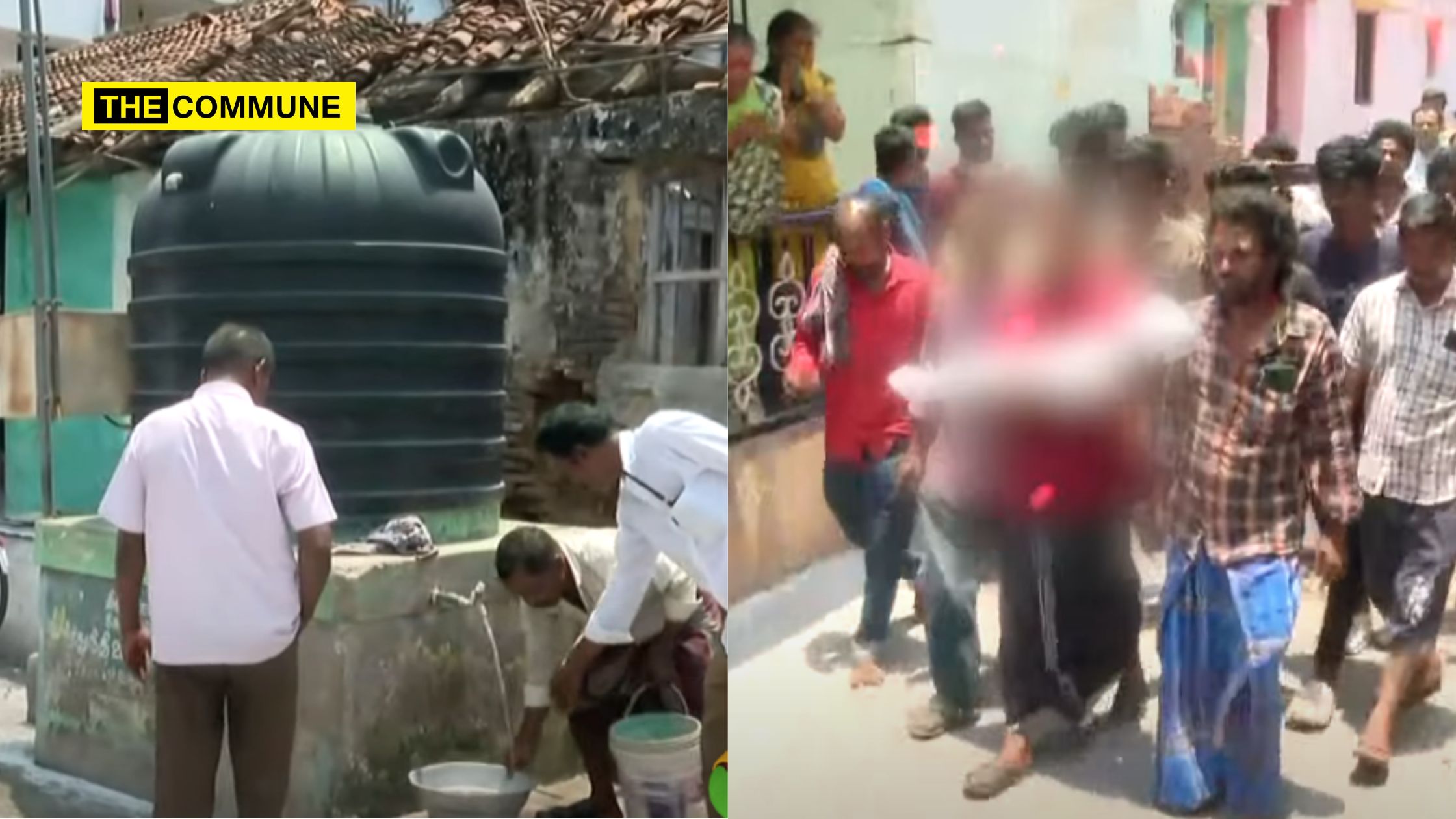
Dravidian Model: Sewage-Contaminated Drinking Water Kills Three, Including Child In Trichy, Residents Blame Civic Negligence

In a deeply distressing incident that has shaken the Tiruchirappalli (Trichy) Corporation in Tamil Nadu, more than 30 residents have been admitted to the hospital following the consumption of drinking water reportedly contaminated with sewage. Tragically, two individuals, including a four-year-old girl, have lost their lives.

According to reports, multiple residents of Panickan Street and Minnappan Street, including a young girl, have recently fallen sick, showing symptoms such as diarrhoea and vomiting. It is believed that the girl’s family initially turned to traditional treatments, but her condition worsened and sadly led to her death.

The incident has sparked widespread anger among residents, who are blaming municipal negligence for the tragedy. Locals claim that they had previously raised concerns about potential sewage contamination in the drinking water but allege that these warnings were repeatedly ignored by the civic authorities.

Trichy Corporation Commissioner V. Saravanan confirmed that a thorough inspection of the primary drinking water pipeline in Woraiyur is currently underway. He also announced that special health camps will be organized on Sunday to address community concerns.

In addition to water contamination, officials are also looking into the possibility that food served during recent festival celebrations may have contributed to the outbreak of illness. The Food Safety Department has been called in to conduct a detailed investigation. Meanwhile, clean drinking water is being distributed to the affected areas in wards 8 and 10 via tanker trucks until further notice.

Reacting strongly to the incident, former BJP Tamil Nadu president K. Annamalai criticized the ruling DMK party through a statement on his official X (formerly Twitter) account. He expressed shock over the loss of lives, particularly the death of the child in Uraiyur, a locality under the Trichy Corporation. He condemned the authorities for their inaction despite repeated public complaints about contaminated water. He said, “It is truly shocking that three lives, including that of a four-year-old girl, have been lost due to sewage-contaminated drinking water supplied by the Corporation in Uraiyur, under the Trichy Corporation.  Many others are reportedly undergoing treatment in hospitals. Residents have been complaining for days about sewage mixing with the drinking water, yet no one, neither the council member nor Corporation officials have taken any action. The DMK government’s ongoing pattern of covering up such incidents without action against the wrongdoers continues.”

Annamalai also referenced a similar tragedy in Pallavaram, Chennai, accusing the DMK-led government of concealing facts and failing to release test results at that time as well. He said, “In Pallavaram, Chennai, three lives were lost due to sewage contamination in the drinking water. Even then, the DMK government denied any contamination of sewage mixed in drinking water and also failed to release the test reports. Even now, the same narrative is being presented. Has the public life become so cheap to you?”

Then strongly criticized the DMK government, stating, “This incompetent DMK administration model, which is unable to provide even the most basic necessity clean drinking water to the public must stop spreading lying and immediately provide appropriate relief to the families of the deceased. Those currently undergoing treatment must receive proper medical care. Medical camps should be set up without delay in the affected areas, and testing must be conducted. I also urge to take adequate measures to ensure such tragic incidents do not happen again.”

(With Inputs From Times Of India)

Subscribe to our channels on TelegramWhatsApp, and Instagram and get the best stories of the day delivered to you personally.

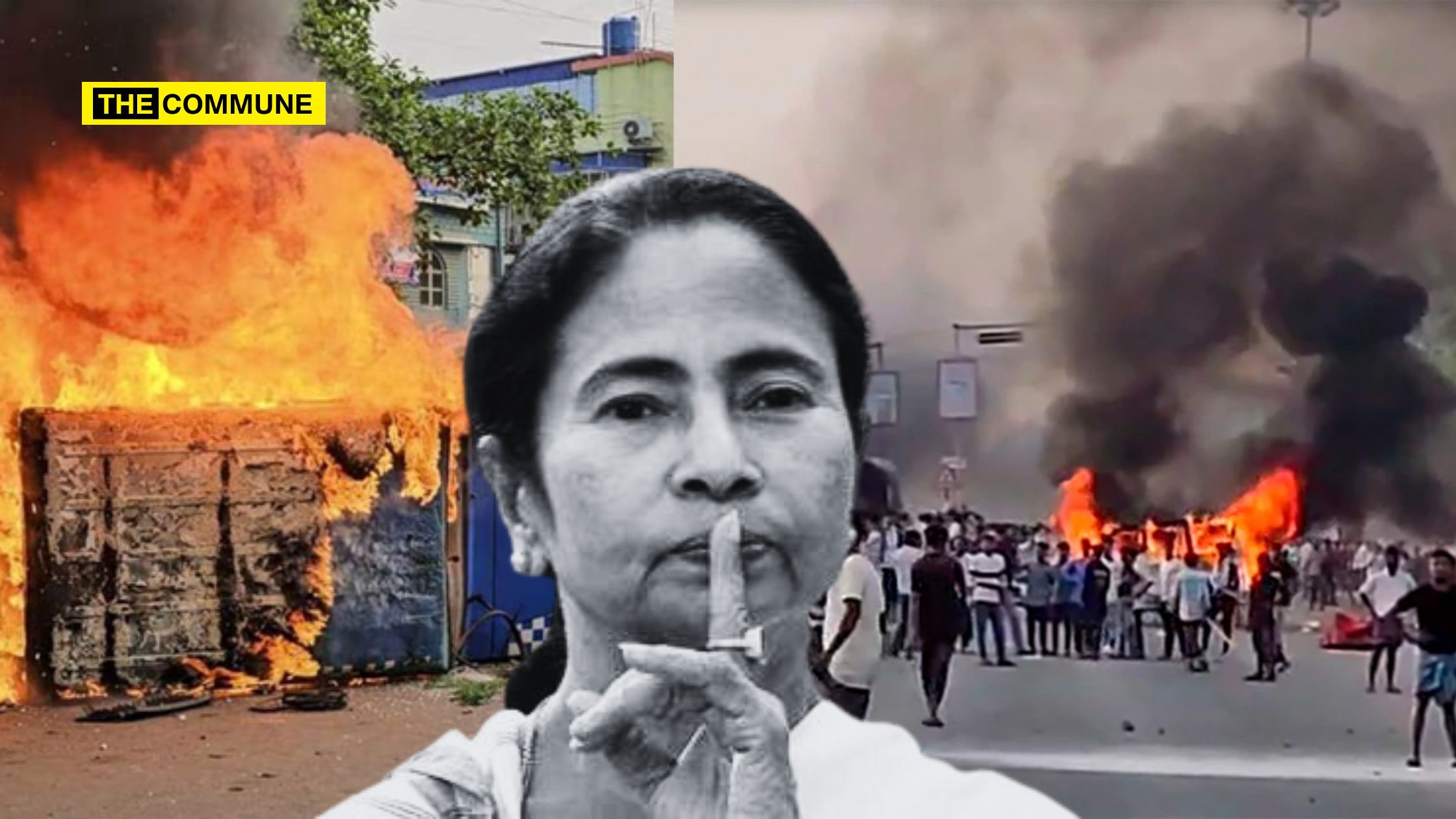
59% West Bengal Residents Support President’s Rule After Murshidabad Violence, 58% Believe Mamata Banerjee’s Image Damaged Among Hindus, Says Survey

A majority of West Bengal residents believe that President’s Rule should be imposed in the state following the recent Islamist-led violence in the name of Waqf Amendment Act in Murshidabad, according to a large-scale IVRS survey conducted by InkInsight. The survey, conducted over phone calls with 8,954 respondents across various districts of Bengal, revealed that 59% support the implementation of President’s Rule. Only 28% opposed the idea, while 13% remained undecided.

The survey comes amid rising political and communal tensions in the state, with Chief Minister Mamata Banerjee facing renewed criticism over her handling of the Murshidabad incident. The violence has shaken the faith of a significant portion of the Hindu population in her leadership.

When asked whether the Murshidabad violence had dented Mamata Banerjee’s image among Hindus, 58% of the respondents answered in the affirmative. Only 22% said her image remained unaffected, while 20% were unsure.

Regional And Gender-Wise Breakdown

The demand for central intervention was particularly strong in North Bengal and the Jangalmahal region:

  • North Bengal:
    • 80.85% said Mamata Banerjee has lost the trust of Hindus.
    • 70.73% supported President’s Rule.
  • Jangalmahal:
    • 57.14% believed CM Banerjee’s image among Hindus has been damaged.
    • 65.52% supported President’s Rule.

In the Presidency region, which includes Kolkata and its surroundings:

  • 54.29% agreed her image among Hindus was affected.
  • 55.29% backed President’s Rule.

In Bardhaman:

  • 55.88% believed the violence affected Hindu trust in Banerjee.
  • 52.38% supported imposing President’s Rule.

Gender-wise, support for President’s Rule and concern over the CM’s image was higher among men:

  • 61.24% of male respondents felt that Mamata Banerjee had hurt Hindu sentiments.
  • Female respondents showed slightly lower but still significant levels of concern and support.

(With inputs from TV9 Kannada)

Subscribe to our channels on Telegram, WhatsApp, and Instagram and get the best stories of the day delivered to you personally.

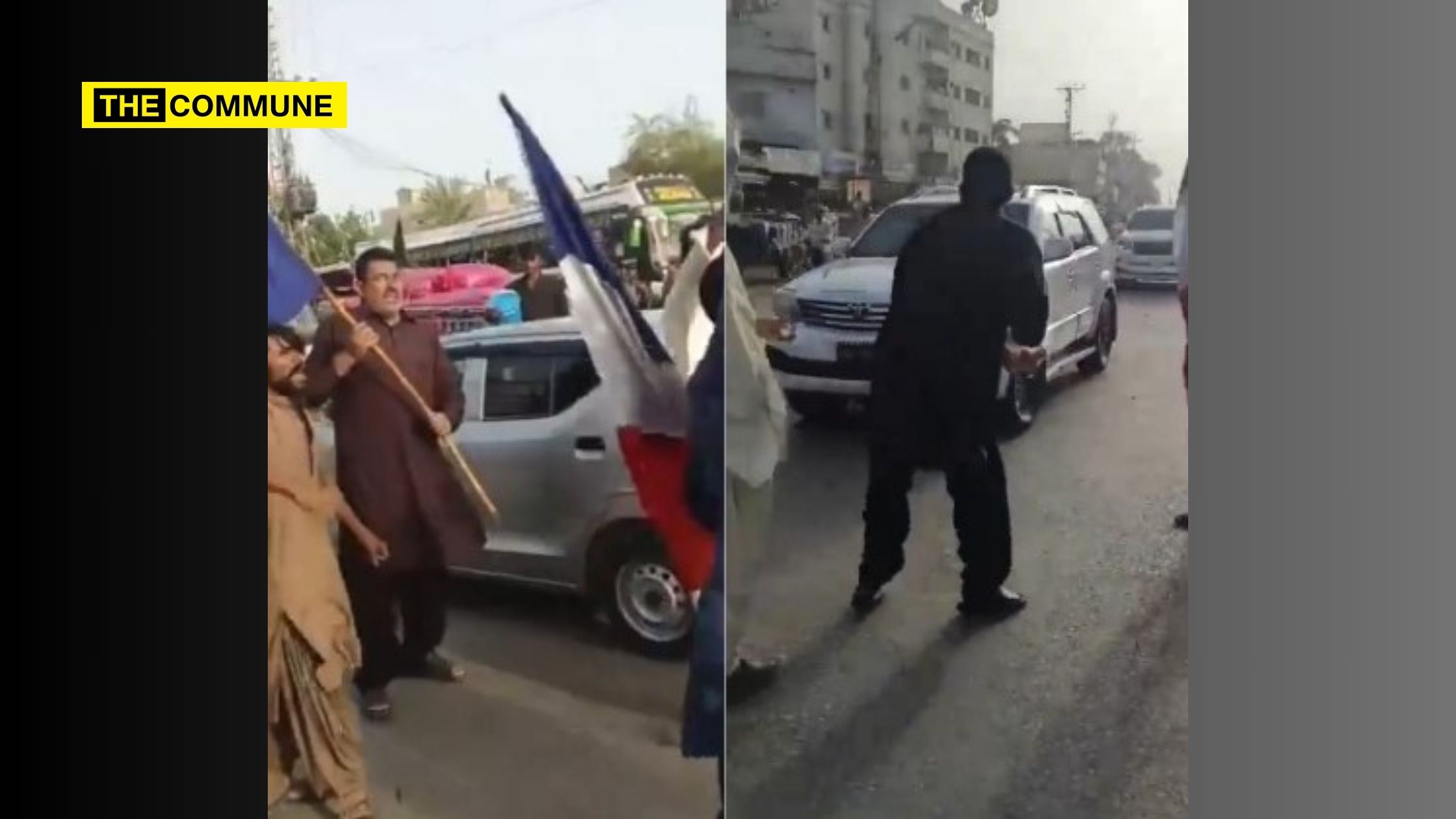
Protestors Block Train, Road Routes In Sindh Against Pakistan Govt’s Canals Project

A large number of protestors blocked Railway traffic near Khairpur city in Pakistan’s Sindh province, cutting off all routes towards the Punjab province, as part of their ongoing demonstration against the government’s plans to build at least six new canals on the Indus River.

The Pakistani government’s Cholistan project to irrigate South Punjab’s lands has triggered nationwide protests by political parties, including its coalition partner, the Pakistan People’s Party (PPP), which has expressed strong reservations against the project and warned of toppling the Shehbaz Sharif government if the proposed project is not cancelled.

On Sunday, a large number of protestors and activists from some nationalist parties extended their ongoing protest and blocked train traffic near Khairpur city.

Protestors and political party leaders in Sindh province have been staging massive public gatherings and protest sit-ins and slamming the Shehbaz Sharif government, along with its coalition partners PPP, for what they call a conspiracy to turn Sindh’s fertile land into a desert.

The nationwide protests against the canals project were also supported by the lawyers’ community, who staged their sit-in protest, in the Sindh province for the third consecutive day.

In the latest protest, the train tracks were later restored after being blocked for several hours by the protestors. However, the protests and ongoing rallies against the project have paralysed the whole province.

Shutter down protests have been reported in major cities and town including Jamshoro, Larkana, Naushehro Feroz, Sujawal, Nawabshah, and Ghotki.

The protests have disrupted traffic between Sindh and Punjab province as roads and the National Highway has been blocked at several places. “In Larkana, shopkeepers, petrol pumps, and markets remained closed, while business activities have come to a complete halt in Ratodero, Baqrani, Dokri and Badah.

Commercial activities in Jamshoro and Nawabshah are suspended, while similar reports are coming from Sujawal, Kandhkot, Shahdadkot, Kashmore, and other districts where markets and other public services have been shut down,” said Hanif Shamon, a resident of Mithi, Tharparker district of Sindh.

“People believe that this is the biggest agitation in the history of Sindh. All roads leading to Punjab and other regions have been blocked for the past three days due to protest sit-ins against irrigation canals. Massive protests have erupted in most parts of Sindh,” he added.

These protests surfaced after Pakistan’s Army Chief General Asim Munir and Punjab Chief Minister Maryam Nawaz Sharif inaugurated the Cholistan project on February 15, 2025. Immediately after the launch of the project, strong reservations and concerns were raised by the Sindh provincial government of PPP, which passed a unanimous resolution against the project in March.

Since then, nationwide protests by political parties including PPP, PTI and others have been witnessed, with voices against the contentious project titled ‘Green Pakistan Initiative (GPI)’ becoming louder with protests intensifying with every passing day.

The $3.3 billion GPI launched by the government aims to develop six canals to irrigate at least 1.2 million acres of barren land in South Punjab. PPP Chairman Bilawal Bhutto Zardari has given an open warning and threat to the federal government under the ruling party Pakistan Muslim League-Nawaz (PML-N) to not go down the path of confrontation with Sindh over the issue of new canals on the Indus River.

“I want to make it clear that our party will not go along with the federal government if it does not shelve the controversial project, even after acknowledging PPP’s objections,” said Bilawal Bhutto Zardari.

On the other hand, the government has finally decided to resolve the contentious canals project issue through dialogue as PML-N’s founder and former Prime Minister Nawaz Sharif and present PM Shehbaz Sharif directed ministers to have table talks with PPP over the matter.

“Premier Shahbaz Sharif and PML-N supremo Nawaz Sharif have instructed me to alleviate Sindh’s concerns regarding the canal issue. We believe in the fair distribution of resources, including water, among all units,” said Rana Sanaullah, Advisor to the Prime Minister for Inter-Provincial Coordination. However, the opposition party, the PTI has accused the PPP of opposing the canal project in the open while secretly supporting the plan as it is part of the federal government.

“PPP is a partner of the ruling government. Asif Ali Zardari is the president of Pakistan. And the president is supporting the canals project,” said Haleem Adil Sheikh, provincial president of PTI in Sindh. “PPP cannot make a fool out of us all. We will not let anyone steal what is rightfully ours. The federal government and the Punjab government will fail. People of Sindh should get prepared for a big struggle against the canals project,” he added.

–IANS

Subscribe to our channels on TelegramWhatsApp, and Instagram and get the best stories of the day delivered to you personally.

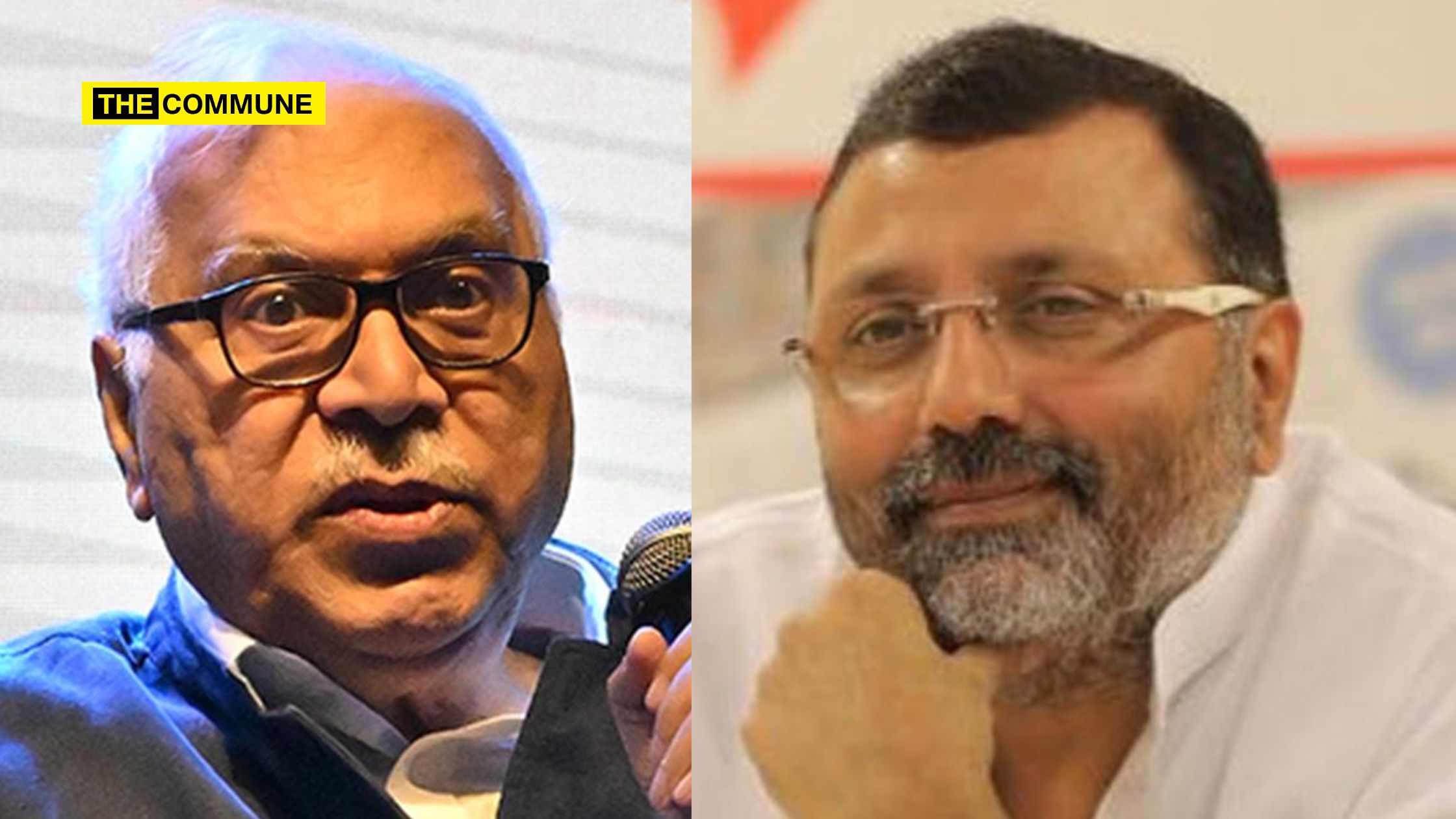
“You Were Not An Election Commissioner, You Were A Muslim Commissioner”: BJP MP Nishikant Dubey Slams Former CEC Quraishi For Supporting Waqf Board

BJP MP Nishikant Dubey has sparked a national debate with his bold stance on the Waqf (Amendment) Act and concerns over judicial activism. In a pointed response to former Chief Election Commissioner S Y Quraishi’s criticism of the Act, Dubey defended the government’s position, calling out what he described as communal bias and historical injustice in land ownership.

Quraishi, in a post on his X handle, had labelled the Waqf Act a “sinister and evil plan to grab Muslim lands.” He wrote, “Wakf Act is undoubtedly a blatantly sinister/evil plan of the govt to grab Muslim lands. I’m sure SC will call it out. Misinformation by the mischievous propaganda machine has done its job well.”

https://twitter.com/DrSYQuraishi/status/1912895820871205366

Dubey responded to this sharply, accusing the former CEC of acting with religious bias during his tenure. “You were not an election commissioner, you were a Muslim commissioner,” he posted on X, further alleging that large numbers of Bangladeshi infiltrators were added to voter rolls in Jharkhand’s Santhal Pargana under Quraishi’s watch.

Dubey also invoked historical context to question the legitimacy of expansive Waqf claims, stating that lands before the advent of Islam in India in 712 CE belonged to Hindus, tribals, Jains, and Buddhists. Citing his own village’s destruction by Bakhtiyar Khilji in 1189, and the legacy of the ancient Vikramshila University, he urged citizens to “unite this country” and revisit real Indian history.

The MP’s remarks came amid a larger controversy involving the judiciary’s interpretation of constitutional powers. A day earlier, Dubey questioned the Supreme Court’s recent directives that impose timelines on constitutional authorities like the President and Governors. He warned that judicial overreach was threatening the constitutional balance of powers. He said, …Supreme Court is responsible for inciting religious wars in the country. The Supreme Court is going beyond its limits. If one has to go to the Supreme Court for everything, then Parliament and State Assembly should be shut…”

He further questioned, “How can you give direction to the appointing authority? The President appoints the Chief Justice of India. The Parliament makes the law of this country. You will dictate that Parliament?… How did you make a new law? In which law is it written that the President has to take a decision within three months? This means that you want to take this country towards anarchy. When the Parliament sits, there will be a detailed discussion on this…”

He also blamed the CJI, “Chief Justice of India, Sanjiv Khanna is responsible for all the civil wars happening in this country”

While the BJP officially distanced itself from Dubey’s comments, with party president J P Nadda clarifying they were personal opinions, Dubey stood by his statements and said he had not consulted the party before making them.

Supporters of Dubey have praised him for raising questions that others shy away from — particularly on issues of land rights, judicial accountability, and the under-representation of marginalised communities in the higher judiciary. In his comments, he also highlighted the domination of upper-caste judges and the minimal presence of SC, ST, and OBC communities in the justice system.

Now in his fourth term as Lok Sabha MP from Godda, Jharkhand, Dubey has once again positioned himself as an outspoken advocate for constitutional clarity, historical justice, and a more balanced democratic process.

(With inputs from Hindustan Times)

Subscribe to our channels on Telegram, WhatsApp, and Instagram and get the best stories of the day delivered to you personally.

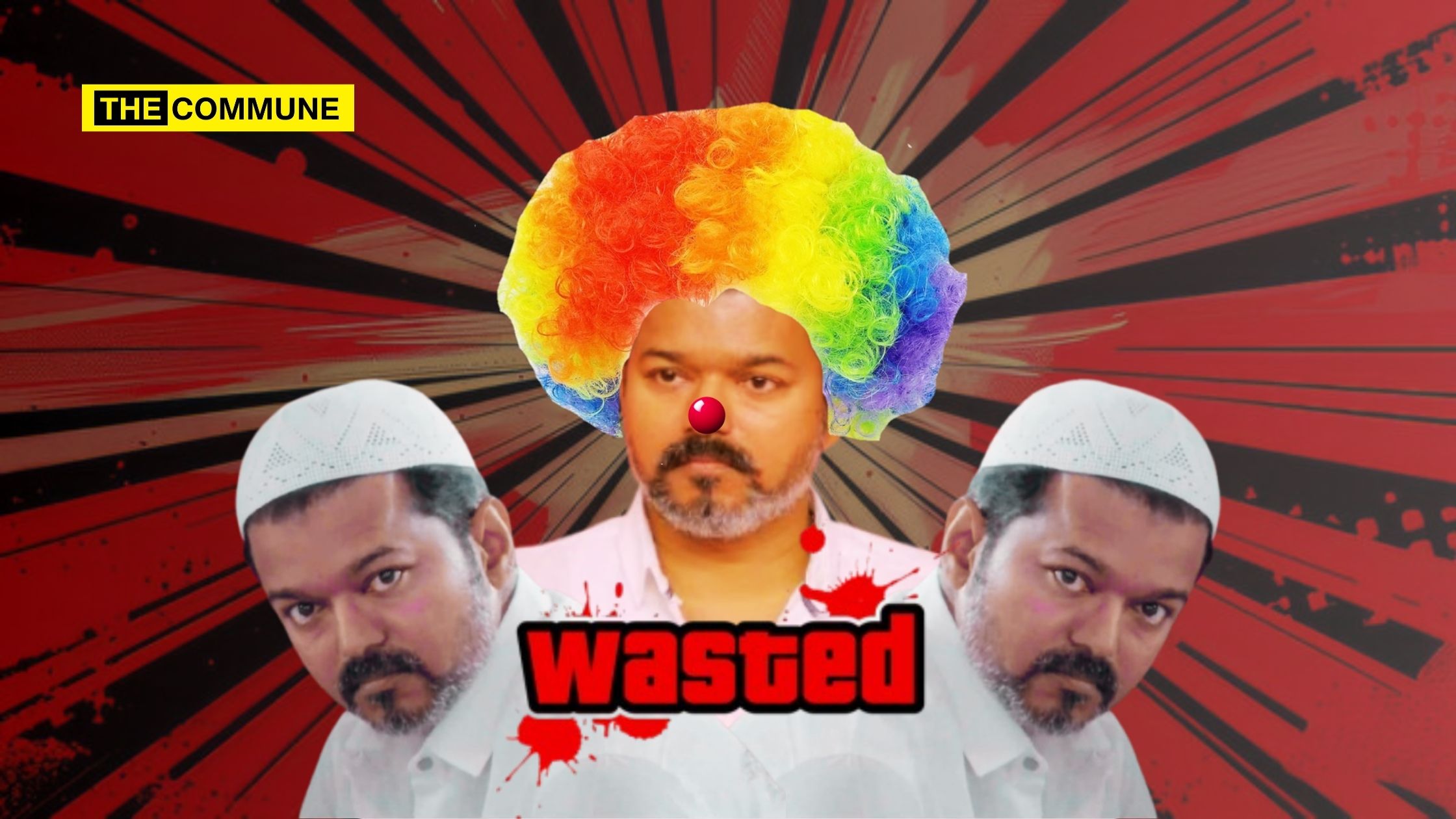
Calling Out Part-Time Politician TVK Vijay’s Shameless Hypocrisy On Waqf Lands Vis-à-Vis Hindu Temple Lands

Tamilaga Vettri Kazhagam (TVK) leader Thiru. Vijay, a self-proclaimed champion of Tamil pride, stands exposed as a hypocrite while Tamil Nadu’s heritage burns under the weight of Waqf Board overreach. Despite TVK’s much-touted legal challenge against the Waqf Amendment Act, 2025, which Vijay hailed as a victory for constitutional justice, his silence on the Waqf Board’s insidious land grabs targeting Hindus, Christians, and Muslims alike is nothing short of a betrayal. As a Tamil citizen, I confront Vijay with five piercing questions that lay bare his selective activism and demand answers—answers that Tamil Nadu’s beleaguered citizens deserve.

Temple Lands Under Siege: Where Is Your Voice, Vijay?

Why has Vijay turned a blind eye to the Waqf Board’s illegal encroachments on temple lands, such as Kanchipuram’s 5,000 acres or Madurai’s Meenakshi Temple estates? Court orders for reclamation have languished, yet Vijay, who claims to champion Tamil heritage, remains mute. If the Waqf Board can overreach, what stops the HR&CE Department from asserting control over 36,000 Tamil Nadu temples—an act that violates the same principles Vijay claims to defend? His silence on this strangulating grip on Hindu sanctuaries is a slap in the face to Tamil Nadu’s spiritual legacy.

HR&CE’s Overreach and DMK’s Cultural Assault: Why No Outrage?

The HR&CE Department’s control over Tamil Nadu temples isn’t the only assault on the state’s identity. The DMK’s amendments to seize temple arts colleges and properties—vital to Tamil Nadu’s cultural heritage—have sparked no outrage from Vijay. Why does he remain silent while the DMK erodes Tamil Nadu’s spiritual legacy? His inaction contrasts starkly with his vocal opposition to the Waqf Amendment Bill, revealing a cherry-picked activism that prioritizes optics over substance.

Double Standards on Temple Boards: Hypocrisy Laid Bare

Vijay decried non-Muslims on Waqf Boards as unconstitutional, yet he has nothing to say about government-appointed non-practicing Hindus, Christians, and Muslims managing temple boards—a clear violation of religious self-governance. In Andhra Pradesh in 2018, 44 non-Hindu employees, including Christians, were found working in the sacred Tirumala Tirupati Devasthanams (TTD). In 2015, a Muslim served on the TTD Board, outraging devotees. These appointments flout TTD’s Hindu-only policy, yet Vijay, who claims to stand for justice, has offered no condemnation. His selective outrage mirrors the Waqf Board issue he opposes, exposing a glaring double standard.

Waqf’s Land Grabs: A Selective Crusade?

Has Vijay ever scrutinized the Waqf Board’s disproportionate land claims, annexing properties without transparent notification? Section 40 of the Waqf Act, 1995, empowered Waqf Boards to unilaterally declare any property as Waqf based on mere “reason to believe,” without requiring documentary proof. This unchecked power, fueled by the “Waqf by user” provision, enabled Waqf Boards to claim private, ancestral, and public lands, often ignoring legal titles and sparking communal tensions. Between 1913 and 2025, Waqf land holdings ballooned from 18 lakh to 39 lakh acres, with 21 lakh acres added post-2013 due to Section 40’s draconian reach. Critics, including Union Minister Kiren Rijiju, have called it “draconian,” yet Vijay’s crusade against the Waqf Amendment Bill ignores these prior abuses. Why this selective activism?

Three Egregious Cases Vijay Ignored

Section 40’s misuse fueled some of the most shameful Waqf claims, yet Vijay, the self-styled champion, remained mute:
Munambam, Kerala (2019): The Waqf Board claimed 400 acres in Munambam, Ernakulam, including a 300-year-old temple, homes, and schools, based on a flimsy 1950s donation claim. Over 600 families holding pattas since the 1960s were declared “encroachers” without a hearing, leaving them in despair. A temple predating the Waqf claim was targeted—an affront to Hindu heritage. Vijay, where was your outrage for Munambam’s Hindus?

Kattukollai, Vellore, Tamil Nadu (April 2025): Ancestral lands in Kattukollai were snatched by the Waqf Board, claiming them as Waqf property since 1954 under Section 40. The Syed Ali Sultan Shah Dargah issued eviction notices to 150 families with registered deeds, ordering them to pay rent or vacate. The Board’s inquiry ignored documentation, sparking protests and communal discord. Vijay, you tout constitutional fairness—why no word for Kattukollai’s Tamils?

Thiruchendurai, Tiruchirappalli, Tamil Nadu (2022): The Tamil Nadu Waqf Board claimed 1,500-year-old Chola-era Sundareswarar Temple land in Thiruchendurai, along with 480 acres, under Section 40. Farmer Rajagopal, seeking to sell his 1.2-acre plot, was told to get Waqf approval based on a 245-page circular claiming the village as an 18th-century “inam” gift. Villagers’ pattas and the temple’s sanctity were dismissed. Vijay, if Waqf’s overreach is unconstitutional, why no defense of this Hindu shrine?

A Legacy of Opportunism

Vijay’s crusade on Waqf Boards rings hollow when he ignores non-Hindus managing Hindu temples—Christians and Muslims in TTD and Bengal, where Mamata Banerjee appointed a Muslim to head the Tarakeshwar Temple Development Board, prioritizing politics over faith. Munambam, Kattukollai, and Thiruchendurai suffered under Waqf’s arbitrary claims, enabled by Section 40’s corruption, yet Vijay cherry-picks his battles. His selective activism fractures Tamil unity and betrays the heritage he claims to protect.

If Vijay truly stands for justice, he must confront all wrongs—non-Hindu temple appointees, Waqf’s overreach, and the DMK’s cultural seizures—with equal zeal. Otherwise, his legacy will be one of opportunism, cheering one victory while Tamil Nadu’s soul bleeds. The shame of his hypocrisy demands an answer.

S Sundar Raman is a Chartered Accountant and the Vice President of BJP Tamil Nadu’s Thinker’s Cell

Subscribe to our channels on TelegramWhatsApp, and Instagram and get the best stories of the day delivered to you personally.

DMK’s Federalism Push Through Kurian Joseph Committee: Stalin’s Soft Secessionist Gambit Disguised As Constitutional Reform?

Tamil Nadu Chief Minister MK Stalin recently announced the formation of a high-level committee headed by retired Supreme Court Justice Kurian Joseph to examine state autonomy and center-state relations. The panel includes former bureaucrat Ashok Vardhan Shetty, economist M. Naganathan, and official T.S. Tirunavukkarasu. Ostensibly created to “safeguard the rights of states” and “rebalance” India’s federal structure, the move reveals more about the DMK’s electoral strategy than any genuine desire for reform.
The committee is expected to submit its report by January 2026—just ahead of the Lok Sabha elections. This timing is no coincidence. The DMK appears to be laying the groundwork for a campaign narrative centered on “defending Tamil rights” against perceived central overreach.

Historical Context: The Rajamannar Legacy

Stalin explicitly referenced the Rajamannar Committee of 1969, established by his father and former Chief Minister M. Karunanidhi. That committee, headed by former Madras High Court Chief Justice P.V. Rajamannar, proposed a radical overhaul of India’s federal system, including the abolition of All India Services, dismantling of the Planning Commission, and deletion of constitutional provisions such as Articles 356, 357, and 365.

These weren’t prudent reforms but a blueprint for fragmentation – a systematic attempt to weaken central authority to the point of creating a confederation rather than a federation. Unsurprisingly, the Central government rejected these proposals as both impractical and dangerously divisive, recognizing them for what they were: not a strengthening of federalism but a fundamental assault on the Union itself.

Identity Politics Disguised As Federalism

Stalin’s metaphor in the Assembly—that “only a mother knows what to feed her child, not someone from Delhi”—resurrects the old Dravidian binary of Tamil Nadu versus India. His strategic highlighting of grievances—GST compensation, NEET, and funding disputes—is not about governance efficacy. It’s about recasting routine federal friction as existential victimhood.

Most revealing is Stalin’s portrayal of the impending delimitation process as a “punishment” for Tamil Nadu’s population control success. This mischaracterization frames a constitutional necessity as ethnic or regional persecution, further stoking Tamil exceptionalism. Every disagreement becomes a symbol of oppression; every policy debate is turned into a cultural grievance.

Political Motivations And Timing

It can be argued the committee’s formation is more about political positioning than constitutional reform. With the report due just before the 2026 Lok Sabha elections, the DMK seems to be setting up a potent campaign narrative centered on “defending Tamil rights” against perceived central overreach.

The political context is significant: the opposition AIADMK has aligned with the BJP, creating an opportunity for the DMK to position itself as the sole defender of Tamil interests against national parties. By establishing this committee with judicial backing, Stalin can elevate policy disagreements to constitutional grievances.

The Judiciary Cover

The appointment of Justice Kurian Joseph as committee chair adds a layer of judicial legitimacy—but also controversy. Joseph has publicly questioned the Supreme Court’s motto, “Yato Dharmastato Jayah,” suggesting instead “Satyameva Jayate.” His recent statements hint at ideological sympathies with the DMK’s framing of center-state issues. This bolsters the perception of a predetermined outcome: a panel set up to validate an already scripted political narrative.

What Powers Do States Actually Lack?

It’s worth asking: what autonomy do states genuinely lack today? Local governance remains under state control. State governments already enjoy significant powers over service appointments, legislation, and education. As with the recent Supreme Court orders, we can see that the President and Governors are increasingly being compelled to assent to state laws within specific time durations (which is not mentioned in the Constitution itself), and vice chancellor appointments in universities dictated by state governments. Now, the DMK wants more influence over judicial appointments too.

Ironically, decentralization at the panchayat and municipal levels—constitutionally mandated—has been weak, not because of central overreach, but due to state apathy. So, this latest push for autonomy appears less about empowering the people and more about concentrating symbolic power at the state level.

So, what exactly is this new demand for “autonomy”? If anything, the states have gained more institutional clout over time—despite the DMK’s portrayal of being cornered.

Soft Secessionism Under The Federalism Mask

This isn’t merely a demand for fiscal reform or local empowerment. It is soft secessionism—a rhetorical strategy that seeks to redefine Tamil Nadu not as a member of the Indian Union but as an exceptional entity forced to “tolerate” the Centre. It repackages secessionist sentiment in constitutional garb. Even the committee’s language—“rightful entitlements of states”—mirrors the Rajamannar era’s push for a confederal structure. This is not federal reform; it’s a slow drift toward parallel sovereignty.

This also exposes a deeper political irony. The DMK, allied with Congress, frequently accuses the BJP of trying to undermine the Constitution.

If the DMK accuses the BJP of undermining the Constitution, a question naturally arises: Who actually started eroding state rights? During the Emergency, it was the Congress—now a DMK ally—that moved education from the State List to the Concurrent List. If Rahul Gandhi claims the BJP wants to change the Constitution, how does he explain that his own party already did it when it suited them?

And now, Stalin—who regularly invokes Ambedkar’s legacy—is launching a campaign that implicitly critiques Ambedkar’s Constitution for giving the Centre too much power. The contradiction is clear: Is this about restoring federalism, or reinterpreting the Constitution to suit regionalist ambitions?

Constitutional Reform Or Campaign Strategy?

Let’s call this what it is: an election strategy dressed up as constitutional reform. With the AIADMK aligned with the BJP, the DMK is angling to portray itself as the lone Tamil bulwark against “Hindi heartland” domination. By using a committee led by a retired judge, the party preempts criticism—“It’s not us; the committee found the Centre is overreaching.”

But behind this legalistic smokescreen lies a stark political truth: this is not a movement to defend Ambedkar’s Constitution—it’s a plan to reinterpret, dilute, and eventually rewrite it through regional exceptionalism.

So the question remains: Who is truly threatening the spirit of the Constitution? The BJP with its centralizing instincts? The Congress, which mutilated federalism during the Emergency? Or the DMK, repackaging secessionist impulses as state rights advocacy?

Subscribe to our channels on TelegramWhatsApp, and Instagram and get the best stories of the day delivered to you personally.

After Saying “I’ll Urinate On Brahmins”, Left-Leaning Director Anurag Kashyap Offers Hollow Apology

The shameless Bollywood director Anurag Kashyap, who has openly expressed hostility toward the Hindu Brahmin community, has offered a half-hearted apology after facing backlash for his remark about urinating on Brahmins. In response to the outrage, he claimed the statement was taken out of context, though it appeared to stem from a long-standing resentment he harbors against the community.

In a recent Instagram post, Kashyap attempted damage control by writing, “This is my apology, not for my post but for that one line taken out of context and the brewing hatred.” He also said that due to the backlash, his daughter, relatives, and friends were receiving threats. His apology, however, was far from sincere. Kashyap himself admitted that if an apology was expected, then that would be it—an evidently reluctant and dismissive statement.
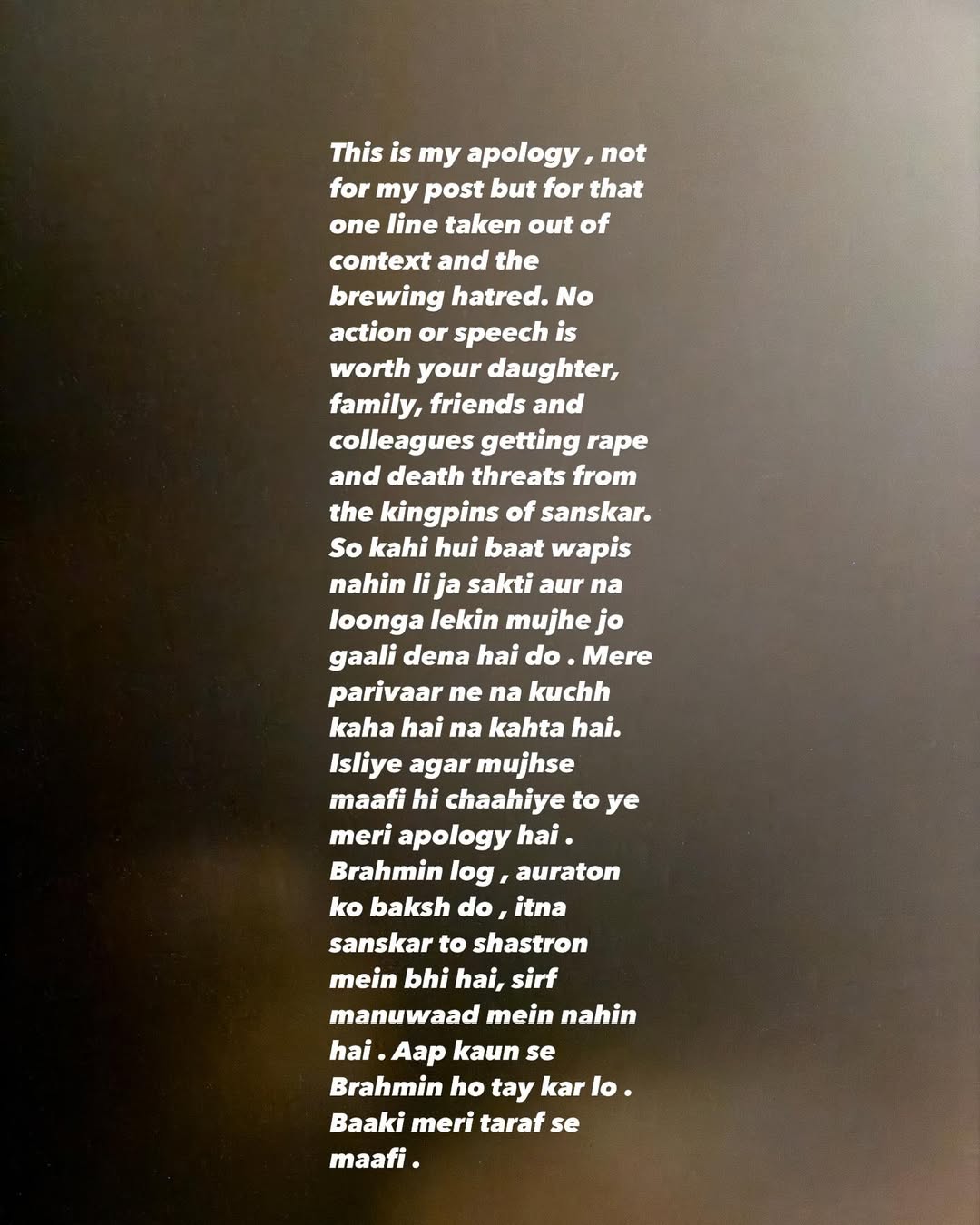
 

View this post on Instagram


A post shared by Anurag Kashyap (@anuragkashyap10)

The controversy erupted on 17 April 2025, after Kashyap took to Instagram to vent his frustration about the delay in releasing Phule, a film directed by Ananth Mahadevan and featuring Prateek Gandhi and Patralekha as Jyotiba and Savitribai Phule. The delay, reportedly influenced by objections from some Maharashtrian Brahmin groups, led to a heated rant by the filmmaker.

In his Instagram story, Kashyap recounted that his first theatrical performance was based on Jyotiba and Savitribai Phule. He criticized caste-based inequality in India and questioned why Brahmins were offended by a film addressing such issues. His language was laced with expletives and contempt, accusing Brahmin communities of either being ashamed or living in denial about casteism in the country.

He further lambasted the film certification process, questioning how certain groups managed to access unreleased films. Kashyap accused the system of being corrupt and said that films addressing uncomfortable social realities, such as Punjab 95 and Dhadak 2, often faced unwarranted censorship. He claimed the government was too ashamed to face its own reflection and lacked the courage to confront the issues these films expose.

In a long instagram story, Kashyap wrote, “Meri zindagi ka pehla natak Jyotiba aur Savitribai Phule pe tha. Bhai agar casteism nahin hota is desh mein toh unko kya zaroorat thi ladne ki. Ab ye Brahmin log ko sharam aa rahi hai ya wo sharam mein mare ja rahe hain ya phir ek alag Brahmin Bharat mein jee rahe hain jo hum dekh nahin paa rahe hain, ch****a kaun hai koi to samjhave. (The first play I ever did in my life was on Jyotiba and Savitribai Phule. If casteism didn’t exist in this country, why would they have needed to fight against it? Now these Brahmin groups either feel ashamed, are dying of shame, or perhaps they’re living in some alternate Brahmin-only India that we’re unable to see. Someone please explain—who’s the real fool here? My question is, when the film goes for censoring, there are four members in the board. How the f**k the groups and the wings get access to films until and unless they are given access to it? The whole f**king system is rigged.”

He also lamented that, “I don’t know how many other films are blocked that exposes the agenda of this casteist, regionalist, racist government… so ashamed to see their own face in the mirror. So ashamed that they can’t even openly talk about what it is about the film that bothers them. f**king cowards.”

He also made a post on his Instagram where he wrote, “During the screening of Dhadak 2, censor board told us that Modiji has eradicated the caste system in India. On the same grounds, Santosh couldn’t be released in India either. Now, Brahmins are objecting to Phule. Brother, if there’s no caste system, how can you be a Brahmin? Who are you? Why are you getting worked up?” he questioned.


View this post on Instagram


A post shared by Anurag Kashyap (@anuragkashyap10)

In a particularly aggressive response to a commenter who referred to Brahmins as Kashyap’s forebears, the director allegedly replied, “I’ll urinate on Brahmins… got a problem?” This crude and offensive comment has been widely condemned as hate speech and reflective of deep-seated hostility toward the Brahmin community.
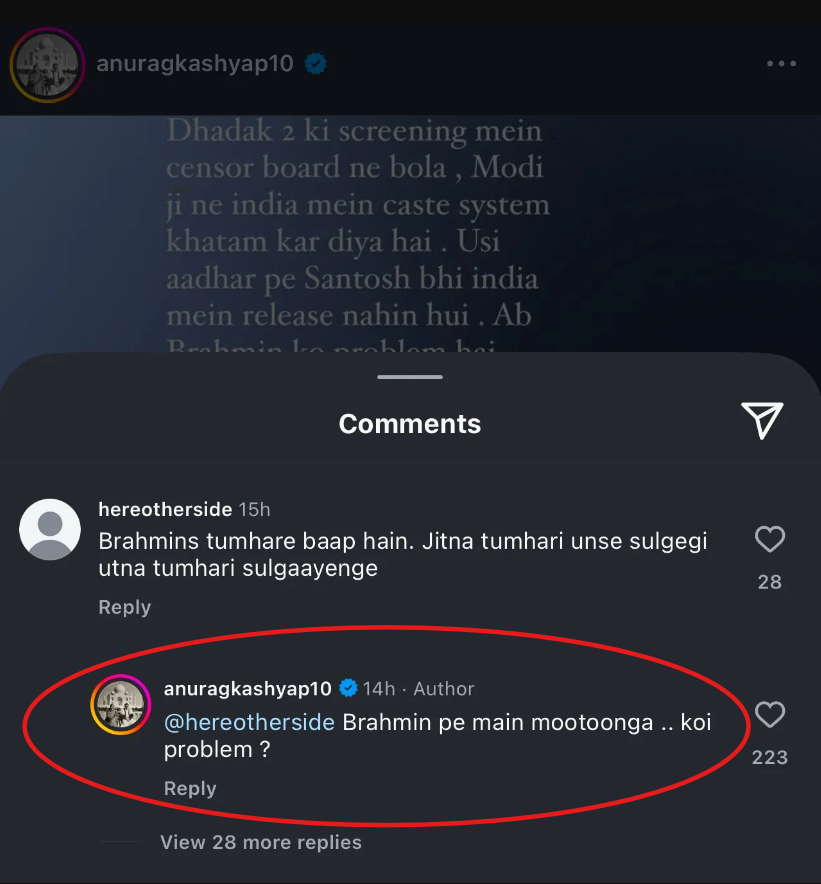
(Image Credits: OpIndia)

Critics argue that Kashyap’s rhetoric goes beyond artistic dissent and veers into open hostility. Rather than fostering constructive dialogue on caste issues, his statements are seen as vilifying an entire community, reinforcing harmful stereotypes, and encouraging hatred. The film Phule itself, based on its trailer, is seen by some as offering a one-sided portrayal, casting Brahmins as the sole antagonists while ignoring their historical contributions to reform and education.

Moreover, Kashyap’s criticism of the BJP government—calling it casteist, regionalist, and racist—seemed to draw a line between present political ideologies and historical social issues, conflating the two to support his narrative. He questioned how a Brahmin identity can exist if casteism has supposedly been eradicated, citing a censor board comment claiming Prime Minister Modi had ended caste-based divisions in India.

The Bad Girl Connection

This isn’t the first time Anurag Kashyap has faced allegations of harboring anti-Hindu sentiments. Back in 2017, after filmmaker Sanjay Leela Bhansali was assaulted during the filming of Padmavat, Kashyap referred to the attackers as “Hindu terrorists.” Yet, he has remained conspicuously silent when it comes to religious extremism from other communities. But did his anti-Brahmin rhetoric end there? Not at all. The shameless director has continued to spread his animosity through different platforms. Most recently, he co-produced Bad Girl, a film by Vetri Maaran—another filmmaker who pushes Communism and anti-Brahmin agenda. The movie, like much of their work, seems to single out Brahmins as the sole villains. How convenient for these so-called ‘social justice warriors’ to mask targeted hate as progressive cinema.

Some observers have pointed out that criticism of Brahmins has increasingly become mainstream, particularly in Maharashtra, where Brahmins are often portrayed negatively despite being a minority. The history of anti-Brahmin sentiment in the state includes violent incidents like the 1948 Chitpavan Brahmin attacks and more recent social media-driven hate campaigns. Critics believe this pattern continues in modern cinema and political discourse, contributing to an environment where Brahmins are vilified for historical injustices they had no part in.

This pattern of targeting Brahmins isn’t limited to Maharashtra. In Tamil Nadu, Brahmins have faced hostility dating back to the mid-20th century, including symbolic acts like cutting the sacred thread (poonool). Political parties such as the DMK have made strong anti-Sanatana Dharma statements, which many interpret as veiled attacks on Brahminical traditions.

Despite being a relatively small community, Brahmins are increasingly subject to ridicule, stereotyping, and reverse discrimination. Their cultural identity, including practices such as vegetarianism and wearing the Janeu, is frequently mocked under the guise of progressive criticism.

A Marxist-Historian Myth Debunked Time and Again

Is what they preach against Brahmins actually true, or is it just a repetition of long-debunked narratives driven by bias and historical distortion? It’s exhausting to keep dismantling the same Marxist historian myths that have already been exposed over and over again. What’s ironic is that they likely know the truth themselves—but they continue to recycle colonial-era distortions, especially those pushed by the British to enforce their “Divide and Rule” policy.

One of the most compelling rebuttals to these falsehoods comes from the Gandhian thinker, historian, and political philosopher Dharampal. In his seminal work, The Beautiful Tree: Indigenous Indian Education in the Eighteenth Century, Dharampal meticulously studied original records from British colonial archives—surveys commissioned by the East India Company and preserved across the UK. His decade-long research uncovered a reality that flies in the face of the Brahmin-villain narrative.

His findings documented a vibrant and inclusive indigenous education system across the Madras and Bengal Presidencies and Punjab, with a curriculum that was far more advanced and accessible than what is commonly portrayed. In fact, nearly 30% of children aged 6–15 attended school daily. Surprisingly to many, students from so-called “lower” castes—including Shudras and those considered below them—made up a significant portion of the student body. In places like Kerala, even Muslim girls were well-represented in these institutions.

Anurag Kashyap’s claim that “Brahmins didn’t allow others to study” is flatly contradicted by this evidence. Data from the Madras Presidency and Bihar clearly shows that the majority of students were from non-Brahmin castes. The British records even show that Brahmins were a minority in many schools. While they did dominate fields like theology and law—understandably so, given those were areas of traditional scholarly focus—subjects like astronomy and medicine were studied and practiced by individuals from various communities. For example, in Malabar, out of 808 students learning astronomy, only 78 were Brahmins; similarly, out of 194 studying medicine, only 31 were Brahmins. Even barbers were recognized by British officials as the most skilled surgeons of the time.

https://twitter.com/vedant_bangad/status/1913224705990939127

This data dismantles the idea that Brahmins monopolized knowledge or oppressed others by restricting access to education. Yet, despite overwhelming evidence, people like Kashyap continue to push the same tired narratives, now repackaged through films and pop culture. And why? Because keeping Brahmins in a perpetual negative light is a lucrative formula—it sells outrage, attracts funding, and fuels a political agenda. It’s no coincidence that Kashyap co-produced Bad Girl by Vetri Maaran—another director often accused of peddling anti-Brahmin, far-left Communist rhetoric.

It seems the goal isn’t social justice but targeted vilification—distorting history, silencing nuance, and demonizing an entire community for profit and ideological gain.

In conclusion, Anurag Kashyap’s recent tirade is seen by many as less about advocating for social reform and more about perpetuating a hostile narrative against Brahmins. While caste-based inequality is a reality that must be addressed, critics argue that vilifying an entire community in the name of progress only deepens divisions. Kashyap’s language and attitude, especially his comment about urinating on Brahmins, have turned what could have been a meaningful discussion into an ugly and divisive controversy.

(With inputs from OpIndia)

Subscribe to our channels on TelegramWhatsApp, and Instagram and get the best stories of the day delivered to you personally.