Over a decade after being arrested in multiple sexual harassment cases filed by students, Professor Anand Viswanath, a retired academic who once headed the Economics Department at Government College, Munnar, has been acquitted of all charges. The Thodupuzha Additional Sessions Court, in its ruling, observed that he was falsely implicated following an incident in which he caught students committing malpractice during an examination.
Viswanath (61), who also served as the additional chief superintendent of examinations at the college, had been chargesheeted in four separate cases in which women students alleged he sexually harassed them during the M.A. Economics second semester examinations held between August and September 2014.
In 2021, the Chief Judicial Magistrate Court at Devikulam sentenced him to three years’ imprisonment in two cases, while acquitting him in the other two. He was subsequently suspended from service. Challenging the conviction, he approached the Thodupuzha Sessions Court, which has now overturned the verdicts and acquitted him in all cases.
Court’s Observations
Judge Laijumol Sherif, who delivered the verdict, said the testimonies of the four students were riddled with contradictions, omissions, and embellishments. These inconsistencies were not corroborated by evidence from independent witnesses. The court held that while the testimonies were insufficient to prove the allegations, they were strong enough to demonstrate that the professor had been falsely implicated.
The court also noted that “no action was taken on the malpractice of the four students, and instead there occurred a conspiracy at the party office of the CPI(M) to rope in the professor.”
The Malpractice Incident
According to court records, Viswanath had caught five students, said to be activists of the CPI(M)’s student wing, the SFI, copying during the postgraduate examination in 2014. He reported the matter to the invigilator and handed over the seized manuscripts. However, his complaint was allegedly suppressed following political intervention. One month later, the same students lodged complaints with the Education Minister and the State Women’s Commission, accusing him of sexual harassment.
This led to the registration of four separate FIRs, resulting in four charge sheets and four trials, with the same group of students alternating between roles as victims and witnesses in different cases.
Defence Arguments
Advocate S. Ashokan, appearing for Viswanath, pointed out that the prosecution failed to produce any independent witnesses and did not even examine the invigilator present during the exams. “In all the cases, the same girls were the witnesses. If one of the girls was listed as a victim in a case, the others were made witnesses. In the other cases, their roles were interchanged. The court has rightly found that these cases were politically motivated,” he said.
The Professor’s Ordeal
For Viswanath, the acquittal comes after more than a decade of personal and professional turmoil. “For the last 11 years, I had to face humiliation. I was forced to send my daughter and son for higher secondary education in Tamil Nadu due to these cases. After the FIRs were registered, I went into hiding for a month fearing arrest, and returned home only after getting anticipatory bail,” he said.
Following his suspension, he was transferred first to Malappuram and later to Chittoor in Palakkad. He retired from service in 2021 but continues to receive only 75% of his pension due to the departmental inquiry initiated against him in connection with the cases.
Viswanath also filed a complaint against the college principal, alleging that he had conspired to falsely implicate him and suspend him from service. While an FIR was registered, the police later closed the matter. He has now challenged the closure report in court.
The BJP has intensified its attack on the Congress party on the issue of ‘voter theft campaign‘. After revealing Congress national spokesperson Pawan Khera’s two voter IDs, the BJP on 3 September 2025, targeted his wife, also a Congress leader, for also holding “two active EPICS”.
BJP leader and its IT cell chief Amit Malviya on social media platform X, stated that Pawan Khera’s wife Kota Neelima, who contested from the Khairatabad segment in Telangana, also holds two active EPICs one in Khairatabad and another in New Delhi. He also shared the details of the two cards EPIC Number: TDZ2666014 Assembly: 60-Khairatabad, which was active in 2023 and 2025; EPIC Number: SJE0755975 Assembly: 40-New Delhi. Malviya questioned Rahul Gandhi’s silence over the issue.
“Rahul Gandhi held a press conference and, without adequate due diligence, targeted and tarnished honest voters – even putting them at risk by revealing their identities without consent. He doxxed young, upwardly mobile professionals and poor daily wagers who had moved cities in search of better opportunities,” he said on X.
While attacking Rahul Gandhi, Malviya said that it was quite obvious that Congress leaders hold multiple EPIC numbers and are registered voters in more than one place, which was no coincidence. “Those indulging in Vote Chori are the very ones maligning common citizens for exercising their democratic rights and weakening our institutions. The rot isn’t limited to Pawan Khera and family. It goes back to the top – when Sonia Gandhi, an Italian, managed to get her name included in the voter list in 1980,” wrote the BJP leader.
Malviya said, “No wonder Congress and the INDI Alliance go out on a limb to defend illegal migrants and non-Indians while castigating our own people. This is not about defending democracy. It is about defending their vote bank – which should not be on the Indian voter list at all.”
The BJP leader said that Rahul Gandhi “cannot extricate himself from these acts of criminality within his own ranks, particularly involving people aspiring for public office and members of his inner coterie”. Malviya demanded that Rahul Gandhi speak on this, and the Election Commission of India (ECI) must investigate. The fresh attack by the BJP comes after poll authorities in Delhi issued a notice to Pawan Khera on Tuesday for allegedly getting himself registered in the electoral roll of more than one constituency. The district election officer of the New Delhi district shared a copy of the notice issued to Khera on X.
The Congress leader has been directed to reply to the notice by 11 a.m. on 8 September. After Malviya’s revelations, Khera said in a post on X, “… Yet another confirmation of how the @ECISVEEP functions to support the ruling regime. While our complaints of Vote Chori are disregarded, the EC rushes to act against opposition members.”
-IANS
Subscribe to our channels on Telegram, WhatsApp, and Instagram and get the best stories of the day delivered to you personally.
Tianjin bonhomie could rejuvenate RIC amid tariff tensions with US. The Russia-India-China (RIC) initiative is rooted in former Russian Prime Minister Yevgeny Primakov’s ideas and vision of having a powerful troika. He detested the United States’ unipolarity in the post-Cold War era. The US viewed Russia as a declining regional power, especially when compared to its primary strategic competitor China. It is relevant to point out that Primakov was the first top-ranking leader among the P-5 nuclear weapon states to visit India in December 1998, since Pokhran-II in May 1998. While Russia maintains attributes of a great power, such as a large nuclear arsenal and permanent United Nations Security Council (UNSC) membership, its status as a global competitor has significantly diminished in the eyes of US officials.
The modern Russian Federation positions itself as a great power that seeks to protect and promote its interests in the international arena, unlike the former Soviet Union, which aimed to cast the world in its own image. In June this year, Russian Foreign Minister, Sergei Lavrov highlighted the importance and potential of the Special Privileged Strategic Partnership with India and the role played by former Primakov. “The legacy of Yevgeny M. Primakov is also well known. It was he who many years ago came up with the initiative to form such a non-bureaucratic ‘troika’ – RIC (Russia, India and China). Since then, it has met regularly over the past few years. Now we are on a break. First, the pandemic intervened, and then the escalation on the border between India and China served as a ‘brake’. Now, given the reports that these escalations are easing, we expect that the work of RIC will be restored,” Lavrov stated in Moscow.
RIC grouping has had at least 18 meetings of its Foreign Ministers and held three informal leader-level summits, the last of which took place in June 2019 in Saint Petersburg. The group occupies 19 per cent of global landmass and contributes 33 per cent of global GDP. All three countries are members of the BRICS, SCO and G-20 groupings. All three countries also oppose unilateralism and support the idea of a multipolar global governance model thereby offering an alternative perspective on global issues, advocating for equity and reforms in global institutions.
Additionally, RIC acts as the voice of Global South transforming the Western-dominated world through South-South Cooperation. At the SCO Summit in China’s Tianjin on Monday, the three major world powers cemented their strategic partnership and presented a unified image notwithstanding all three having some sort of friction with the US. Each country has its own perceptions and approaches to critical issues, such as multipolar world order, counter-terrorism and cooperation. The three countries are likely to solidify their ties based on mutual trust. Further, the three regimes serve national interests based on pragmatism and flexibility. All three countries are also responsible nuclear powers with Russia and China being permanent UNSC members. On connectivity and integration projects, this troika has noteworthy competence and expertise. As three leaders huddled and mingled at the Tianjin SCO Summit, President Putin’s words, “We three friends…” has delivered a definite signal to the world of modification and reshaping of RIC.
The combined population of these three countries exceeds three billion people, representing nearly 37 per cent of the world’s population. India has surpassed China to become the world’s most populous country. India’s share of global GDP in 2025 is estimated at 10.0 per cent, and it’s projected to reach 11.3 per cent by 2030. Relations between the US and India have experienced a significant downslide over Trump’s tariffs of 50 per cent on goods to penalise Delhi for buying Russian oil and weapons. Simultaneously, a thaw, including discussions on border de-escalation after the violent 2020 Galwan Valley skirmishes, has been initiated in the Sino-Indian relations though underlying territorial disputes remain.
This shift could be a strategic move by China to limit India’s alignment with the US or a hedge by India against US unpredictability. However, this pivot may not be absolute; it is a tactical rebalancing reflecting India’s pursuit of ‘strategic autonomy’ amidst a topsy-turvy geopolitical landscape. For the RIC to mature, a successful reboot of the RIC format would require substantial efforts to rebuild a foundation of mutual trust, respect, and sensitivity between China and India to allow for meaningful cooperation on regional and global challenges. China and India must overcome a fundamental trust deficit rooted in unresolved border disputes, strategic rivalries, and competing regional interests. While recent bilateral talks show a willingness to reset relations, historical suspicions continue to constrain the RIC’s potential.
In Tianjin, Prime Minister Modi stated to the Chinese President that both countries are development partners and pitched for improving trade and investment amidst global tariff ambiguity. PM Modi underscored that India will address the burgeoning bilateral trade deficit of USD $99.2 billion and emphasised the need to maintain peace and tranquility at the disputed border. India’s engagement in the RIC will further strengthen its policy of multi-alignment and its bargaining power with the US. As a ‘swing power‘ within the RIC, India needs to leverage its position to advance its own interests in the Eurasian heartland, particularly by balancing Beijing’s influence.
However, India’s path is fraught with both significant opportunities and deep challenges due to competing interests among the three nations. In other words, RIC should reaffirm and intensify conflict-free cooperation in the world of competitive authoritarianism. The Trump administration’s activities have caused confusion and disorder in the international geopolitical arena which urgently requires attention particularly in energy coordination, climate policy, regional connectivity and non-disruptive supply chains.
-IANS
Subscribe to our channels on Telegram, WhatsApp, and Instagram and get the best stories of the day delivered to you personally.
Umar Khalid, one of the main accused in the 2020 Delhi riots case, was denied bail by Delhi High Court yet again. However, the leftists and their media channels portray it as if the problem is with the courts – documents show otherwise – that it was an intentionally engineered tactic to delay facing trial.
His “comrades” have tried to paint Umar Khalid as a victim, a harmless academic persecuted by an authoritarian state. Petitions, op-eds, and international platforms have repeated the same script: Khalid is an “innocent” voice of dissent silenced by the government. But when we step away from the propaganda and examine Khalid’s own speeches, especially his 2016 address on Kashmir, a very different picture emerges.
This is not the voice of an innocent. This is the rhetoric of a man who openly challenges India’s sovereignty, delegitimizes democratic institutions, normalizes violence, and works to unite separatist and insurgent movements under a single banner. In the speech, he makes several secessionist statements, praises the “periyarite” movement, calls stone pelting a form of Gandhian protest, portrays the Army as the villains and others Indians from Kashmir. He also says that there will be peace if we let go of Kashmir. Let’s now take a deeper look at the statements he makes in his 42-minute speech.
Not Free Speech, But Sedition
Khalid’s speech is not an example of free speech, it is a manifesto of sedition. Here are the most damning statements that build an incontrovertible case for why he represents a clear and present danger to the integrity and security of the nation.
Kashmir Is Illegally Occupied By India
In a video that is now viral on social media, he says, “I am against the occupation of Kashmir by the Indian state and I make it very apparent here, I am not from Kashmir.”
“Kashmir is illegally occupied by India” – Umar Khalid
Explicit Denial of Indian Sovereignty over Kashmir
Khalid does not mince words in his 2016 speech when it comes to his stance on Jammu and Kashmir. He explicitly echoes and endorses the secessionist position while invoking Dravidianist ideologue EV Ramasamy Naicker (Periyar). He says, “Periyar very eloquently and very straightforwardly said that Kashmir neither belongs to India. Kashmir neither belongs to Pakistan. Kashmir belongs only to the people of Kashmir.”
He then bemoans the fact that stating this position in Delhi would incite a “lynch mob,” establishing that he is fully aware that this view is a direct challenge to the constitutional framework of India. He isn’t advocating for a political discussion within the Indian Union; he is advocating for its dissolution in the region.
Advocacy for Plebiscite and Secession
Going beyond a mere opinion, Khalid champions a specific action that is the cornerstone of separatist and Pakistani policy: a plebiscite. Invoking BR Ambedkar, he said, “What Babasaheb Ambedkar said in his last speech after resignation of the cabinet that there should be a plebiscite in Kashmir…”
By championing a plebiscite, an idea India has legally and diplomatically rejected for decades, Khalid aligns himself with forces that seek to break the country apart. His grievance is that he cannot openly call for this division in Delhi without consequence. He speaks the language of self-determination – not within the Indian Union, but outside it.
When someone insists that Kashmir is “occupied” and that India is no different from a colonial oppressor, they are not engaging in democratic debate. They are advancing the very separatist agenda that fuels militancy and terrorism in the Valley.
Moral Equivalence and Sympathy for Terrorists
Perhaps the most grotesque part of Khalid’s speech is his attempt to humanize and rationalize the path of terrorism. Speaking about slain Hizbul Mujahideen commander Burhan Wani, he asks, “Do we go and tell the Kashmiris that many of them who might be thinking of going the same path as Burhan that please don’t pick up the gun. Please participate in the next elections.”
This is an apology. He dismisses democratic participation as futile due to “rigged elections,” thereby implicitly justifying armed insurgency as a logical alternative. He creates a false binary where Kashmiris only have the choice between a “corrupt” election and picking up a gun, completely ignoring the peaceful citizens and the development efforts within the Union Territory.
Siachen Presence Is Troubling Him
What was even more shocking was when he mentioned Siachen and claimed that if we left Siachen, there will be peace. He said, “Why have you posted the army and every year army men are being killed not because of militants’ bullet not because even from a bullet coming from Pakistan but because of the ecological conditions that the ecological conditions such that living there is very difficult. Even Lance Naik Hanumanthappa did not die out of a bullet, Lance Naik Hanumanthappa died out of a natural calamity and that natural calamity the more the army stays that the more these natural calamities will happen, so you please don’t tell us about Lance Naik Hanumanthappa because you have the blood of Lance Naik Hanumanthappa on your hands, not us. At the same time by occupying that glacier of Siachen they’re leading our country and this entire region of South Asia towards an ecological catastrophe; if that glacier melts, where are we headed and what will happen, so for the geopolitical interest of India of the nation states of India and Pakistan they continue to militarize this region, they continue to fool a starving population that it’s in their interest that it’s happening and we keep believing them.”
Normalizing Violent Resistance
Perhaps most dangerously, Khalid’s speech normalizes the turn to arms. He openly entertains the question of whether “revolutionary violence” is justified against state repression. He paints Kashmiri youth taking up the gun as an “inevitable” and “rational” response to India’s presence.
He also justifies stone pelting saying, “Do I tell him that don’t take violent forms of protest because you’re going to die and it’s a self-destructive form of protest, take to some Gandhian form of protest, at the most you can do stone pelting, but don’t do this thing because that person can very well reply to me that I don’t need to be even be a stone pelter to be killed the way CRPF is barging into houses and killing people.”
This is intellectual cover for terrorism. By framing violence as natural and unavoidable, Khalid lends ideological legitimacy to the killing of soldiers, police, and civilians in Kashmir. Under India’s Unlawful Activities (Prevention) Act (UAPA), such justification qualifies as support to terrorism.
Building a Radical Conspiracy
Khalid’s rhetoric does not stop at Kashmir. He draws connections between Kashmir, Bastar (Maoist insurgency), Dalit struggles, Rohith Vemula’s suicide, and even international causes like Balochistan and Palestine. He speaks of “17–18 universities” linked in solidarity networks.
He said, “But there is one place that is becoming very much like Kashmir in our own country and that place is Bastar in terms of militarization in terms of atrocities in terms of no information coming out in terms of attack on civil libertarians in terms of attacks on lawyers. An entire war is being waged once again, and similar news is coming out. It’s very important for us to understand that the same forces which are oppressing the people of Kashmir are oppressing the most oppressed people of this country as well and the people of Kashmir struggle is actually in our favor.”
This is exactly what the Delhi Police and NIA have alleged: a deliberate attempt to build a nationwide radical front that binds together separatists, Maoists, and identity-based grievances into one anti-state movement. Far from being a lone dissenter, Khalid casts himself as an architect of a broader conspiracy.
Country’s Defence Spends Are Unjustified
Khalid then makes a case for lowering defence spends for the army and protection in Kashmir. He says, “At one level this entire argument about taxpayers’ money was given in our country as per one government report, 77% of the people live on less than 20 rupees a day. Many parts of the country are worse than subsaharan Africa. Medical facilities and health are in shambles. Higher education. We all know what higher education what is happening to higher education. In the midst of all of this, our defence expenditure and especially on Kashmir to occupy a piece of land forcefully, to keep so many troops there and to invest so much of money year after year and to keep increasing that money with each unrest and to keep sending more troops in India to Kashmir while there are people dying out of hunger and malnutrition in this country while people are dying at child birth because there are not enough health facilities here That money needs to be spent here. Those who are concerned about taxpayers’ money should ask for demilitarization of Kashmir that money is being wasted there. People who said that we actually by talking about Kashmir we are disrespecting the Indian army. Well, what the Indian army is doing in Kashmir and the kind of things that they have done in Kashmir. Let me not get into that because then can it can become controversial. However, who are you to say that?”
Demonizing the State, Delegitimizing Institutions
Khalid does not merely criticize government policy; he calls India’s democracy a façade. The army is branded as a criminal force of rapists and murderers. His speech is replete with unverified, incendiary anecdotes presented as fact, mirroring Pakistani propaganda designed to incite hatred. He narrates stories such as that of “an 8-year-old boy who went out of his house to buy something or probably just went out of his house. It was curfew. That poor 8-year-old guy boy did not know what curfew is and what to be done and what not to be done. The CRPF gheraoed him from all directions and they beat him to death with bayonets that how dare you come out of this street, how dare you come out of the house.”
He adds one more story saying, “Two women in this place called Shopian in Kashmir. They go out of their house into the apple orchard. They are raped and killed by the army. Probably that’s the blasphemous thing to say today because I don’t know who might be sitting here and who might be recording and where it might be played and what meaning it will be given.”
Parliament and judiciary are portrayed as “Brahmanical tools”. He said, “This was the same government, the same people who after the Kargil war had done corruption even for the coffins of those who were killed in the Kargil war. They are the same people who after the recent Pampore attack, the same kind of Brahmanical forces, after the Pampore attack because the soldiers were lower class in Dalits they refused to even give them a proper funeral.”
Such language is not dissent. It is a systematic attempt to strip the state of all legitimacy, to portray India as a tyrannical occupier undeserving of loyalty or respect. In doing so, Khalid hands rhetorical ammunition to separatist and militant forces.
The Myth of the Innocent Activist
Khalid’s defenders constantly repeat that he is a “scholar,” a “Gandhian,” a “prisoner of conscience.” But his own words shred this façade. A Gandhian does not justify violence. A democrat does not question the very existence of democratic institutions. A constitutional activist does not argue that a part of India is “occupied territory.”
What remains is the truth: Khalid is a polished propagandist whose speeches echo the talking points of separatists and insurgents, giving them legitimacy among urban student circles.
Why Prison Is the Right Place
India is not wrong to jail Umar Khalid. On the contrary, it would be a dereliction of duty to ignore what he represents. His speeches fall squarely under provisions of the UAPA:
Section 15 & 18: Incitement and conspiracy to commit terrorist acts.
Section 39: Support, even intellectual or ideological, to terrorist organizations.
To release him on the grounds of “free speech” would be to ignore the lethal consequences of such rhetoric in a country already battling separatism and insurgency.
Umar Khalid is not a martyr. He is not a misunderstood intellectual. He is a man who has chosen to stand with separatism, militancy, and the delegitimization of the Indian state. His words provide ideological fuel for violence and disintegration.
For that, he deserves exactly where he is – in prison. And not a day less.
Subscribe to our channels on Telegram, WhatsApp, and Instagram and get the best stories of the day delivered to you personally.

Prime Minister Narendra Modi emphasised peace and stability along the border with China during his meeting with the Chinese President Xi Jinping in Tianjin on the sidelines of the Shanghai Cooperation Organisation (SCO) summit, in a setting where every gesture was carefully measured, a report cited on 2 September 2025.
It said that yet sixty thousand soldiers remain deployed, disengaged but alert, underscoring the enduring lack of mutual trust between India and China. “The Himalayan border unsettled and disputed has continued to cast its long shadow on this relationship of 2.8 billion people: the bitter conflict of 1962, the clashes of 1967, Tulung-La in 1975, Sumdorong Chu in 1986, Doklam in 2017, Galwan in 2020, and again in the subliminal distrust that still lingers under what is being sold as the new thaw in relations since October 2024,” wrote former Indian Foreign Secretary and distinguished Indian Foreign Service officer Nirupama Rao in India Narrative.
“Pilgrimages to Kailash-Manasarovar have resumed after a five-year hiatus. Direct flights are set to resume, and visa facilitation will be more streamlined. Meanwhile, India runs a deficit of $100 billion in imports of Chinese goods, exposing, inter alia, the harsh reality of our manufacturing (and pharmaceutical) industry’s dependence on Chinese inputs — thus defining the paradoxes of detente and dependency held in uneasy balance,” the expert added.
According to the report, in Tianjin, both China and India have committed to a partnership rather than rivalry in carefully crafted diplomacy. “The bow is drawn, the aim uncertain. More than being the elephant, as some refer to it, India is the archer standing on a thin iceberg. The slightest tremor can shift the balance. India must be prepared,” Rao asserted.
The report stressed that Asia’s future rests on whether its giants India and China can move beyond old disputes to shape a multipolar tomorrow guided by prudence, patience, and purpose.
According to the report, in Tianjin, Russian President Vladimir Putin pictured alongside PM Modi and Xi at the SCO Summit projected a troika of proximity bringing India, China, and Russia together in a single tableau. The cameras captured the symbolic gestures of handshakes, shared laughter, and moments of ease. The report highlighted that while Putin condemned Western “bullying“, Xi stressed the importance of multipolarity, and PM Modi reaffirmed India’s strategic autonomy, raised concerns about terrorism, and advocated a multipolar Asia.
“This stagecraft was not an accident. It reminded the world that Asia is no longer scripted by one superpower, that India will neither vanish into China’s embrace nor become a pawn of Washington, that Russia still breathes relevance even under sanctions. The imagery was powerful: Modi, Xi, Putin — three leaders, three trajectories, converging briefly in one frame,” the former Foreign Secretary opined.
-IANS
Subscribe to our channels on Telegram, WhatsApp, and Instagram and get the best stories of the day delivered to you personally.
While merchandise exports are projected to remain under pressure due to US tariffs, India’s services trade surplus is expected to hit a record $205–207 billion in FY26, a report showed on 3 September 2025.
The country’s current account deficit (CAD) narrowed sharply to $2.4 billion (0.2 per cent of GDP) in Q1 FY26, significantly lower than the $8.6 billion deficit (0.9 per cent of GDP) recorded in Q1 FY25. The outcome was also well below ICRA’s earlier forecast of 0.7 per cent of GDP, primarily aided by stronger-than-expected remittances and a higher services trade surplus. Earnings from invisibles rose 19.9 per cent (year-on-year) to $66.1 billion in Q1 FY26, offsetting the merchandise trade deficit of $68.5 billion. ICRA cautions that the CAD is set to widen in Q2 FY26 to $13–15 billion (1.5 per cent of GDP), driven by a sharp expansion in the merchandise trade deficit.
“The recently imposed 50 per cent US tariff on Indian goods is expected to exert significant pressure on India’s exports, particularly textiles, diamonds, seafood, and leather. Should these tariffs persist through the fiscal year, ICRA expects India’s CAD to exceed 1 per cent of GDP in FY26, compared with 0.6 per cent in FY25, the report projected. India witnessed net financial inflows of $8.1 billion in Q1 FY26, after outflows in H2 FY2025. However, reserve asset accretion moderated to $4.5 billion from $8.8 billion in Q4 FY25, the ICRA report mentioned. Forex reserves stood at $691 billion (as on August 22). The INR depreciated 3.2 per cent against the USD in 2025 (till 1 September). ICRA expects the USD/INR to trade in the 87.0–89.0 range in the near term. Commenting on the outlook, the report said the trajectory of the CAD will hinge critically on tariff-related developments with the US.
-IANS
Subscribe to our channels on Telegram, WhatsApp, and Instagram and get the best stories of the day delivered to you personally.
The Special Investigation Team (SIT) custody of complainant Chinnaiah, known as the “masked man“, ends on 3 September 2025. The SIT is preparing to produce him before the jurisdictional local court and seek an extension of his custody. Sources in the SIT stated that they will seek 10 days of custody for further investigation.
The police have already conducted searches and mahazar proceedings in Dharmasthala, Ujire, Belthangady, and Bengaluru. They are also preparing to take him to Mandya in Karnataka, Salem in Tamil Nadu, and the national capital, Delhi. The SIT is also preparing to question activists Mahesh Shetty Thimarodi, Girish Mattennavar, T. Jayanth, and YouTuber Sameer, who raised their voices against temple authorities and made direct allegations targeting the Dharmadhikari.
In addition, the SIT is interrogating Sujatha Bhat, a complainant who initially claimed that her daughter, Ananya Bhat, an MBBS student, had gone missing under suspicious circumstances. She later retracted her statement, saying she had no daughter, before going on to claim that she was blackmailed into making the allegation.
The SIT had arrested the unidentified complainant on charges of providing false information related to the Dharmasthala case. SIT officials, who interrogated him for more than 15 hours, concluded that he had been misleading the authorities. The sources revealed that he confessed to being lured by certain individuals to make allegations and press for a specific course of investigation.
On 11 July, the complainant claimed that he had been forced to bury the bodies of women and girls who were “raped” and “murdered” in Dharmasthala, and recorded his statement. Following the serious claims made by the complainant, authorities had carried out excavations at 17 different locations in the temple town of Dharmasthala.
In addition, the whistleblower reportedly submitted a skull, allegedly recovered from one of the burial sites, to the SIT. The authorities are awaiting the Forensic Science Laboratory and DNA analysis reports of the sand samples collected from the 17 excavated sites.
-IANS
Subscribe to our channels on Telegram, WhatsApp, and Instagram and get the best stories of the day delivered to you personally.
With viral fever cases steadily rising across Tamil Nadu in recent weeks, the State Health Department has issued a fresh public advisory urging citizens to adopt precautionary measures, including the use of masks in crowded areas. Officials have emphasised that while the situation is under control, proactive steps are essential to curb further spread.
The department has recommended that members of the public, especially those frequenting marketplaces, public transport, or religious gatherings, should wear face masks to reduce transmission risk. Health authorities have also urged vulnerable groups such as the elderly, children, and people with low immunity to exercise greater caution.
The advisory specifically requests senior citizens and those with chronic health conditions to avoid attending mass gatherings like weddings, cultural programmes, and other public events where exposure is high.
A senior official from the Health Department noted that the recent spike in fever cases has been reported from both urban and rural pockets. While hospitals are equipped to handle the seasonal increase, prevention remains the most effective tool. “We appeal to the public to follow basic hygiene practices, including frequent handwashing, drinking clean water, and avoiding self-medication,” the official said.
Doctors have observed that most patients exhibit symptoms such as high temperature, body ache, and fatigue, which, though not severe in most cases, can cause complications in vulnerable individuals. The department has also directed primary health centres and government hospitals to remain on high alert and ensure adequate stock of medicines. Medical experts have reminded the public that simple measures such as wearing masks, maintaining safe distance in crowded places, and ensuring good nutrition can significantly reduce infection risk.
Meanwhile, civic bodies across districts have been instructed to intensify mosquito control drives, as stagnant water often contributes to the spread of fever-related illnesses during this season. Local officials are also distributing awareness pamphlets and conducting health camps to educate residents about preventive care. The Health Department has reiterated that the public should not panic but remain vigilant. “This is a precautionary phase. If we act responsibly, we can easily prevent the spread of viral fever,” the advisory concluded.
-IANS
Subscribe to our channels on Telegram, WhatsApp, and Instagram and get the best stories of the day delivered to you personally.
The DMK and its alliance partners never miss an opportunity to frame misleading political narrative to create a conflict between the Centre and the state. A recent example is from a protest in Tiruppur, where Papanasam MLA and Manithaneya Makkal Katchi (MMK) President MH Jawahirullah alleged that the 50% tariff imposed by the United States on Indian goods is part of a deliberate conspiracy by former US President Donald Trump and Prime Minister Narendra Modi to cripple local industries of Tamil Nadu.
Speaking at a demonstration organized by the Secular Progressive Alliance to condemn the BJP-led central government’s alleged ‘inaction’ on the U.S. tariff hike, Jawahirullah made baseless claims linking the economic policy to political motives.
He stated, “People say Tamil Nadu is a state that provide a living for the people who come here. In reality, we can say that Tiruppur is the capital of Tamil Nadu that truly helps people make a living who come here. 75 lakh people are employed in the industries here, but this 50% customs duty imposed by the U.S. will immediately take away the jobs of around 30 lakh people. Our Secular Progressive Alliance is a powerful coalition that understands the suffering of the workers while also standing up against those in power. From this alliance, a strong voice rises in Tiruppur today, we must shatter the conspiracy of Trump and Modi. This should be just the beginning. We must continue to fight until we make both Modi and Trump yield to our demands.”
Subscribe to our channels on Telegram, WhatsApp, and Instagram and get the best stories of the day delivered to you personally.
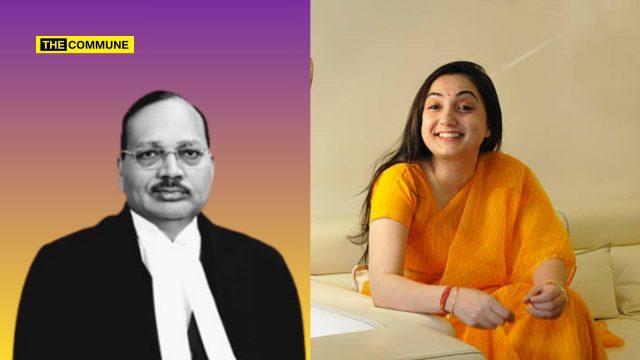
On 2 September 2025, the Delhi High Court once again denied bail to 2020 Delhi riots accused Umar Khalid, Sharjeel Imam and the seven others involved in the case. However, a compelling narrative, widely echoed in certain sections of the media and activist circles, claims that the indefinite incarceration of these accused in the Delhi riots larger conspiracy case is a “travesty of justice”, marked by a “sluggish judicial process” that has denied them bail unfairly.
Nonetheless, a detailed examination of court orders and the chronology of proceedings reveal a starkly different reality: the significant delay in commencing the trial was a calculated strategy employed by the accused themselves, particularly those out on bail, who then turned around to use this self-created delay as a ground for seeking liberty.
This strategy has now been explicitly called out and dismantled by the courts in a series of orders, the most recent being a judgement from the Delhi High Court in the Tasleem Ahmed case, which lays bare the tactics used to protract proceedings.
The High Court’s Damning Indictment: Paras 22, 23, and 38
The Delhi High Court, in its recent judgement, left no room for ambiguity. The order sheets of the trial court, upon a bare perusal, clearly indict the defence counsel for the accused.
In Para 22, the Court states, “A bare perusal of the order sheets clearly indicate that the learned Counsel for the accused have taken many adjournments during the course of arguments on charge. The order-sheets show that the learned Counsel for the accused were not ready to argue the matter on charge, thereby protracting the proceedings. The facts and order sheets reveal that the accused themselves have been responsible for delaying the trial at various points in time. The inordinate delay in trial, as alleged by the Appellant herein is not due to the inaction of the Respondent Agency or the Trial Court.”
Para 23 absolves the trial court of any blame, highlighting its efforts to ensure a speedy and structured process – “Material on record shows that at no point of time, the learned Trial Court has or has unnecessarily delayed the arguments on charge. In fact, to facilitate the proceedings properly and in a speedy manner, the learned Trial Court has ensured that the proceedings take place in a structured manner, wherein liberty was given to the accused persons to come to a consensus as to who will argue the case sequentially.”
Perhaps the most revealing observation comes from Para 38, which describes a clear dichotomy between accused who are in prison and those on bail, and a conspiracy of delay: “Material on record indicates that certain accused persons have got bail and some of the accused persons are in prison. Those accused persons who got bail are trying to delay the arguments on charge on the ground that the investigation is still pending. The arguments on charge are being delayed by the accused persons who are out on bail at the cost of those accused persons who are in prison. Despite orders from the Court directing the Counsels for the accused persons to decide amongst themselves as to how and in what order the arguments on charge will be advanced by the accused, there seems to be no consensus among them.”
The court rejected the argument from Umar Khalid’s counsel, Mr. Mehmood Pracha, that they were merely “waiting in queue patiently,” noting that the accused did not advance arguments despite the court’s requests.
The Umar Khalid Bail Saga: A Timeline of Self-Inflicted Delay
The chronology of Umar Khalid’s bail petitions further cements the pattern of deliberate delay:
October 2022: The Delhi High Court denies Khalid bail, finding a prima facie true case against him.
December 2022: Khalid secures a one-week interim bail to attend his sister’s wedding.
April 2023: Instead of immediately appealing the High Court’s order, Khalid waits for four months after his interim bail ends to finally file a Special Leave Petition (SLP) in the Supreme Court – a full six months after the High Court’s rejection.
The Supreme Court Adjournments: Between April 2023 and February 2024, Khalid’s SLP was listed 14 times. An analysis shows that his own legal team, led by Kapil Sibal, sought adjournments in seven of those 14 hearings. This period was also marked by alleged attempts at “forum shopping,” with lawyers like Prashant Bhushan writing to the Chief Justice to have the case moved to a different bench.
February 2024:Kapil Sibal abruptly withdraws Khalid’s SLP from the Supreme Court, citing “changed circumstances,” and stated he would “try his luck” back in the trial court. This withdrawal coincided with a crucial January 2024 Supreme Court judgment in Vernon vs. State of Maharashtra that reinforced the strict standards for granting bail under UAPA, making Khalid’s chances in the top court exceedingly slim.
Even former Chief Justice of India, DY Chandrachud endorses this.
Former CJI DY Chandrachud confirms what I had written about Umar Khalid’s bail application in SC. I had written that 7 times, it was Khalid who sought adjournment, ultimately withdrawing application. The cabal later played victim.
The most blatant example of coordinated delay occurred in September 2023. The trial court had fixed dates for day-to-day hearings on arguments for framing charges – the crucial step needed to finally begin the trial.
However, just as the prosecution was set to begin, several accused who were already out on bail, including Devangana Kalita and Natasha Narwal, filed applications demanding a complete status report on the investigation before the arguments could start. They argued, speculatively, that the prosecution might file more supplementary chargesheets to “cover up” gaps.
This application, with no firm legal footing, was swiftly adopted by other accused out on bail, including Meeran Haider, Asif Iqbal Tanha, and others. The Special Public Prosecutor, Amit Prasad, vehemently opposed this, arguing it was a “frivolous application” filed deliberately to “disrupt the entire proceeding” on the very day hearings were to begin. He noted they had waited 40 days to raise this non-issue.
Significantly, at the same time, Umar Khalid and Tahir Hussain (both in jail) were insisting the hearings should begin. This raised a critical question: why were those out on bail working to delay a trial that those still incarcerated were desperate to expedite? The Sessions Court, in its May 2024 order denying Khalid bail, answered this implicitly, noting that the delay was caused by the accused, not the prosecution.
The Legal Conclusion: Delay Cannot be a Self-Created Ground for Bail
The courts have consistently shut down the argument that delay is a valid ground for bail when the accused are the architects of that delay. The High Court in the Tasleem Ahmed case emphatically concluded in Para 28: “it must be emphasised that in the facts of this case, majority delay is attributable to the accused and not the inability on the part of the prosecution to speed up proceedings”.
Further, in Para 39, the court warned against the tactic of deliberately delaying a trial only to then use that delay to demand bail: “The provision..”can easily be circumvented by delaying trial on one hand and pressing bail applications on the other”.
The evidence from the court records presents an undeniable picture: the much-lamented “delay” in the Delhi riots conspiracy trial was not a failure of the system but a deliberate strategy employed by the defence. The courts have not only seen through this strategy but have also unequivocally recorded it in their orders, debunking the popular media narrative that the accused are merely victims of a protracted judicial process.
This article is based on an X thread by Nupur J Sharma.
Subscribe to our channels on Telegram, WhatsApp, and Instagram and get the best stories of the day delivered to you personally.