Home Blog Page 1808

Will the Kutch model work?
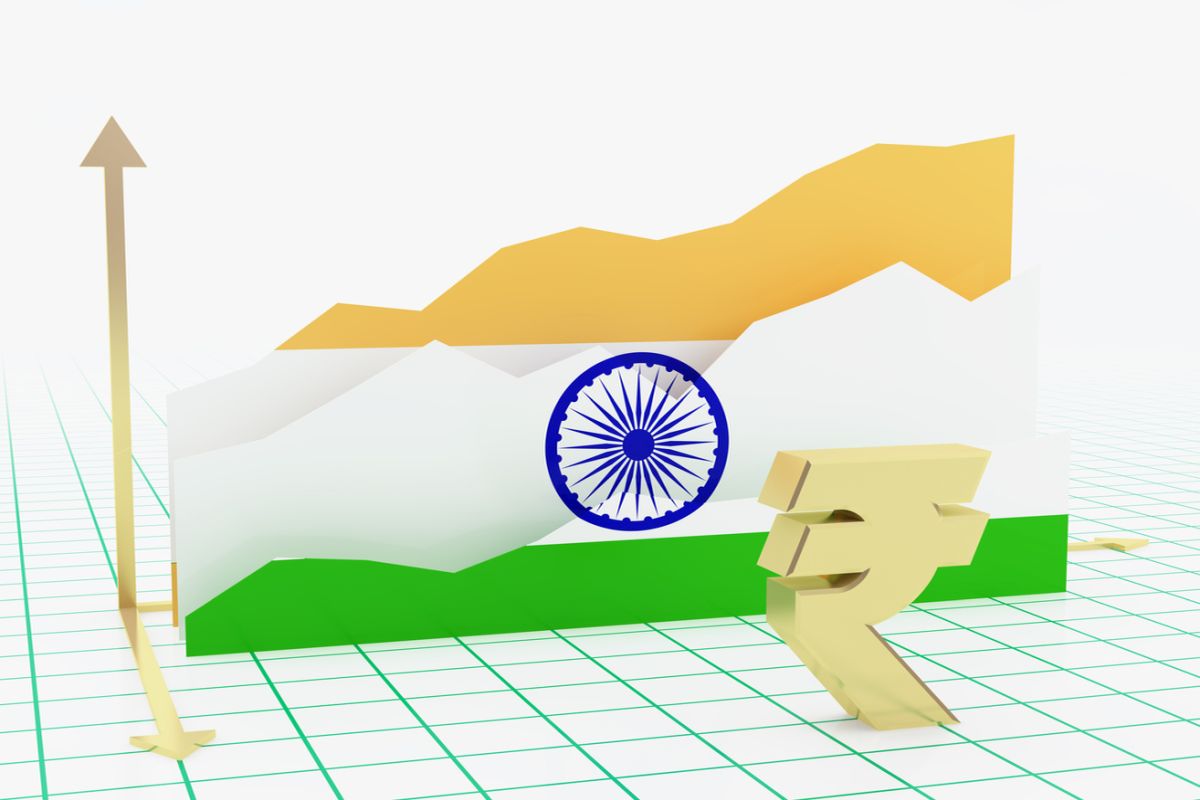
India economy growth bar graph with flag and currency symbol.

If one were to predict the nature of stimulus that this government was planning to give and the kind of recovery plan that they have in mind, it would be best to look at the Prime Minister’s speech highlighted by the Finance Minister in her tweet on 12th May 2020.

The next part of the clue was also in the same speech where the PM stressed on self-sufficiency with self-respect. The government’s handling of various reforms since 2014 had a singular tone to it – treats its citizens as people who deserve opportunities to improve their economic position, not as an alms seeker who is to be given doles to sustain his living. Yesterday’s announcement of the stimulus indicates that the government is firm in that direction. And yes, the recovery will not be immediate because no recovery is immediate. What we need is a gradual and complete recovery, which will take time.

Will It Work?

That is the million dollar question. As they say that the proof of the pudding is in the eating. We will never know till a year or two has passed. But if you ask the question as “Is there a good chance that it will work?”. The answer would be it has worked before and the recovery has stood the test of time.

As the PM and his colleagues draw from the experience of rebuilding the Kutch region after the disastrous earthquake in 2001, we will attempt to analyse the recovery model that is serving as the blueprint today.

The Kutch Model

Kutch was nothing more than a neglected backwater where the rains were pitifully low with little or no enterprise and those who wanted to start businesses moved to other regions of the state and country to make a living. Then, the earthquake struck. The magnitude of the event was such that many residents had to live in temporary accommodation for months.

Aid was received from across the globe and also from different governments. Rebuilding the houses and settlements were the first priority that used up a majority of that money. What the then state government did with the rest of the money is where the secret lies. These were not squandered in only giving out cash doles to the affected families and waiting for the local economy to recover. Rather the money was spent on building infrastructure, aiding entrepreneurs and making the region attractive for investment. The district headquarters, Bhuj was entirely rebuilt from scratch. It now has an airport, bustling shopping areas, excellent water supply and drainage systems and also footfalls from tourists across the globe. The success of the reconstruction effort could never have been sustained without this model of economic recovery.

10 Years Later

A BBC article clearly points out that the Indian government triggered a private investment boom by creating new investor friendly zones attracting almost Rs. 45,000 crores within 10 years of the disaster. An estimated 300 companies had established their businesses in Kutch and the Adani Group took up Mundra Port and made into a port almost as large as the Mumbai port handling thousands of tonnes of goods a day. Welspun, the company that produces the famous towels for the Wimbledon set up world’s biggest towel factory in the world near Anjar.

Lesson

The State government of Gujarat at that time went against popular opinion of doling out freebies to ease short term pain and focussed on long term recovery. The cycle of demand and economic growth is vicious either way. If there is lesser money in the hands of people, they will spend lesser resulting in lower demand for products and result in slowing down of the economy. On the other hand, if the government only focussed on cash doles through DBT, the demand will spur no doubt, but what after once the cash given by the government is finished? The demand will again slow down. So, how do you break this cycle? The only permanent solution seems to be to create jobs, use this disaster as a means to create more jobs and attract investment leading to thriving economic activity.

To break the Finance Minister’s speech into layman terms, here is what it is – save businesses that may cut down employees, support them and encourage fresh investment into the country that creates new jobs, get the economic engines (the MSMEs) running and the rest of the dominoes will fall one after the other.

Now, rephrasing the original question “Is there a good chance that encouraging businesses and creating / saving jobs will work better than high level of cash transfers through DBT?” Going by the example of how Kutch recovered from the disaster of unimaginable scale through enabling businesses to thrive, there is a good chance that it will work.
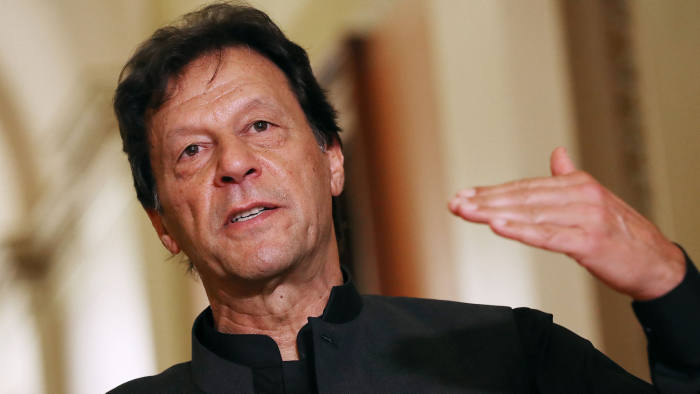
Pakistan lifts ban on import of lifesaving drugs from India over fears of shortage

The Economic Times reported that Pakistan has lifted the ban it had imposed on medicines from India and other raw materials fearing shortages over the same.

This comes against the backdrop of the country’s pharma industry demanding a review of the ban. A pharmaceutical body had also announced that the ban might hamper the country’s ability to treat COVID19 cases.

The country is currently importing various vitamins like B1, B2, B6, B12, D3 and zinc sulphate monohydrate, drugs and medicinal salts from India. Other imports include various vaccines for polio, tuberculosis and tetanus.

Pakistan had placed a blanket ban on all imports from India in the wake of India’s move to abrogate Article 370.

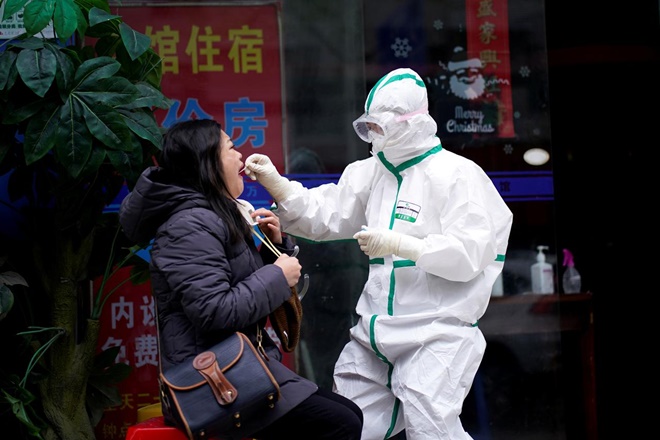
Wuhan gets ready to test 1 million people after new coronavirus cases

After the crop up of new cases in China, the Chinese government has drawn up a near-impossible testing of all the 11 million Wuhan residents. The city in Hubei province where the virus is said to have originated first, had very few to no cases recorded until this weekend.

China’s overall toll has been recorded at 84,000 cases and more than 4,600 deaths during the pandemic.

In the wake of this, the authorities of Wuhan have started drafting an action plan that could enable them to potentially test all the 11 million residents of the district. They have been given a 10-day ultimatum to hold a nucleic acid test, possibly between 13th and 20th May. They aim to complete the testing process by the 17th so as to have a three-day buffer to fill out any ‘missing gaps’. Caixin Global reported that the tests, spanning between this week and the next, will be carried out by hospital authorities as well as Disease Control professionals.

The possibility of a resurgence of the virus has triggered massive testing since it shares borders with Russia and North Korea. The former turned recorded the highest number of cases yesterday. There are also cities where people have returned from abroad and have been kept under strict lockdown to contain the spread.

New-borns among 24 others killed in Kabul hospital attack

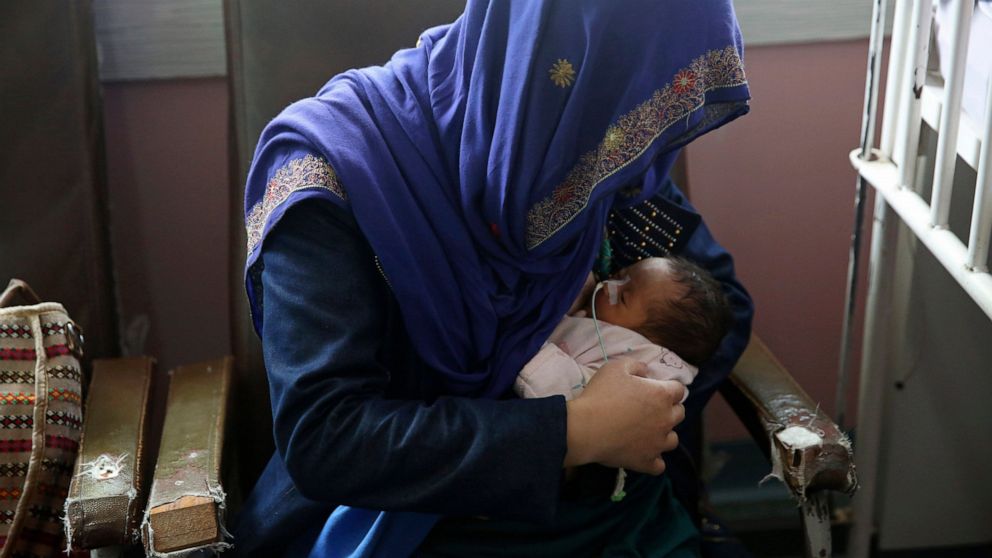
24 people including babies were killed as gunmen engaged in a shoot-out with the police in the western part of Kabul in a hospital’s maternity ward. The reason for the perpetrators to have chosen the maternity ward still remains a mystery as investigations are underway regarding the same.

Post this incident close to 80 mothers and children have been evacuated from the hospital, reportedly run by the Doctors without Borders organisation and the area has been cordoned off by security officials.

Having entered the building dressed as policemen, the attackers had reportedly fired bullets and hand grenades, causing destruction to life and property.

The hospital’s neighbourhood consists predominantly of the Hazara Muslims, a Shia minority community, which had already been the focal point for ISIL attacks, with the most recent one being an attack at a death ceremony of their leader in March.

While the ISIL has claimed responsibility for a few other attacks in the recent past, there is no conclusive evidence about the identity of the perpetrators of this attack. Soon after the attack, the Taliban’s spokesperson announced that it had nothing to do with the attack. However, President Ashraf Ghani has blamed both the Taliban and the Islamic State group.

The attack comes at a time when the Afghan government had been holding diplomatic talks with the Taliban about maintaining peace in the region in exchange for phased release of inmates belonging to their group.

Germany’s ‘R’ value drops below critical threshold

The coronavirus reproduction rate fell below the critical threshold in Germany falling from 1.4 to an estimated value of 0.94 as reported by the Robert Koch Institute (RKI) for public health and disease control.

This R number, which signifies the virus reproduction rate, gives the number of people who would be infected by 100 people who are COVID-19 positive. As indicated by the value, 0.94 means that on an average, about 94 people will be affected in a 24-hour period, showing that the effect of the virus was slowly wearing out after affecting in the first two days of the week.

According to RKI, the values of increase in the number of localised cases will have a more significant impact on the R number than the overall increase in number of cases reported. This is slightly disturbing, since hundreds of workers in German slaughterhouses – many from Eastern Europe – have tested positive and now thousands more tests are being done in that sector. One slaughterhouse alone – in Coesfeld, North Rhine-Westphalia – has seen 260 cases.

170,508 people have tested positive for Covid-19 in Germany and in the past 24 hours there were 933 new infections, while the death toll is at 7,533, which is relatively lesser than its European counterparts like the UK or Italy.

Since these statistics come only after a week since the lockdown relaxation, its chancellor Angela Merkel is being strongly criticised worldwide for this decision.

FM comes out with package for Atmanirbhar Bharat

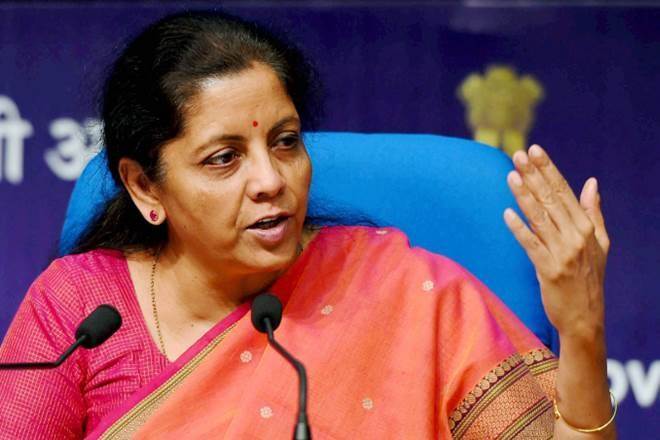
Finance Minister Nirmala Sitharaman on Wednesday announced an economic package titled “Atmanirbhar Bharat”, laying the roadmap for a self-reliant model for India’s growth and development in the post-COVID era. Here are the measures announced by the Finance Minister aimed at all sections – farmers, labourers, middle class, small and medium enterprises and industries.

  • 3 lakh collateral free automatic loans to enable more than 45 lakh MSME units to resume business and prevent job loss
  • ₹20,000 crore Subordinate Debt schemes for stressed NPAs for MSMEs
  • ₹50,000 crore equity infusion through MSME Fund of Funds with corpus ₹10,000 crore which will be operated by a Mother Fund and few Daughter Funds thus enabling MSMEs to expand in size and capacity
  • New definition for MSMEs – criteria has been shifted from a single index “investment in plant and machinery or equipment” to “investment and annual turnover”;  Micro enterprises (investment less than ₹1 crore and turnover less than ₹5 cr), Medium enterprises (investment less than ₹10 crore and turnover less than ₹50 crore), Medium enterprises (investment less than ₹20 crore and turnover less than ₹100 crore), these new definitions apply for both manufacturing and service sector enterprises
  • Global tenders to be disallowed in government procurement tenders upto ₹200 crores
  • e-Market linkages to replace trade fairs and exhibitions
  • Fintech to be leveraged for transaction based lending using data generated by e-market place
  • of India to pay Employee Provident Fund for another 3 months, 72 lakh employees to benefit, move to increase take home pay and increase spending and demand
  • Statutory EPF contribution reduced from 12% to 10% for 3 months, CPSEs to maintain EPF at 12%
  • ₹30000 crore liquidity support for NBFCs/HFIs/MFIs, Partial credit guarantee scheme announced which will further result in liquidity of ₹45000 crores
  • Power Finance Corporation and Rural Electrification Corporation to infuse 90000 crore liquidity for DISCOMs
  • Relief to contractors – central agencies (like Railways, Ministry of Road Transport & Highways, Central Public Works Dept) to extend deadline by 6 months without cost to contractor
  • Real estate – COVID19 to be treated as ‘force majeure’ (unforeseeable circumstance) under RERA, registration and completion date to be extended by 6 months for projects expiring on or after March 25, fresh Project Registration Certificates to be issued
  • TDS and TCS rate reduced – will infuse ₹50000 crore
  • Pending refunds to charitable trusts, non-corporate business, professions to be issued immediately
  • Date of filing income tax returns and tax audit deferred to 30th November, 2020 and 31st October, 2020 respectively
  • Vivad se Vishwas scheme (scheme to settle tax disputes to reduce litigation) deadline extended to 31st December

From now, only Made-In-India products will be sold in Central Armed Police Force canteens

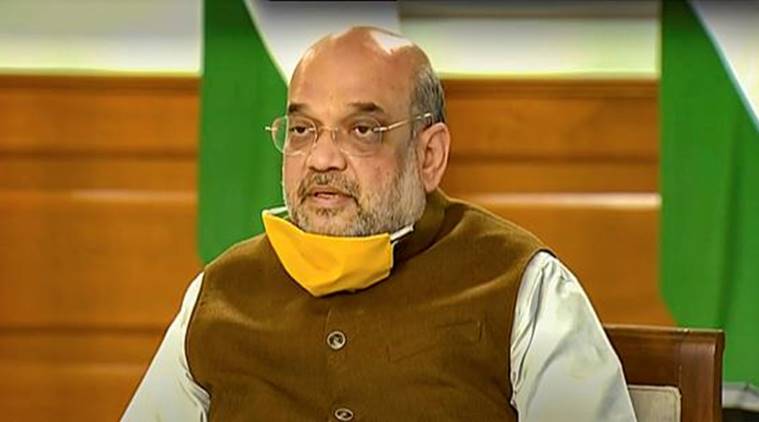
On Wednesday, Home Minister Amit Shah announced that only Made-in-India would be sold at CAPF canteens from June 1. The decision comes in the light of the Prime Minister’s speech about Atmanirbhar Bharat, the flagship initiative to make India self-reliant post-COVID.

This would mean that close to 50 lakh Indians that includes 10 lakh CAPF personnel will use indigenous products.

Prime Minister Modi on Tuesday in his address to the nation spoke about building a self-reliant India that stands on five pillars – economy, infrastructure, technology driven system, demography and demand.

He mentioned that self-reliant is different from being self-centred.

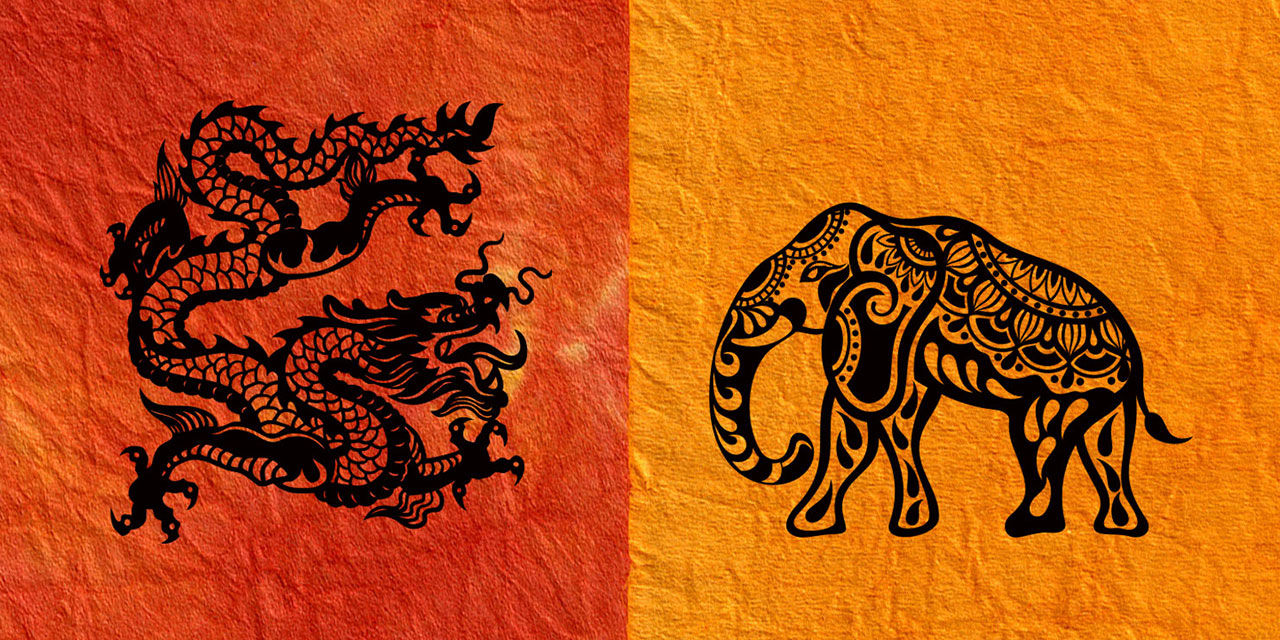
The Trojan Dragon and The Elephant

This is part 1 of the series of articles that will explore the long, twisted relationship between China and India. This is in the wake of the Dragon again coming bearing gifts, some of which may well turn out to be Trojan in the medium and long run.

The Dragon and the Elephant started as proverbial co-passengers in the late 1940s recovering after centuries of warfare, bloodshed and foreign occupations; but they both took divergent turns in History. One swung in the traditional way and experienced resurgence (after a massive purge) and the other took inspiration from what the Westerners preached (but didn’t practice) and is still trying to find its footing. Today the Dragon and the Elephant are overtly and covertly enemies, and this is their dance to the death.

China, under Jiang Zemin onwards (circa early 1990s), has achieved a near permanent strategic normalcy on its northern borders for the first time in over two millennia. In addition, it has had enormous economic growth for over four decades due to the quasi-alliance with the USA, which began in the late 1970s under the Nixon presidency and lasted till the end of the Obama presidency. The alliance and its perks were rewards for ending on the right side of the Cold War.

Today, we are entering the realm of fifth generation warfare, wherein the blur between public and private, war and peace, trade and gunboats has almost totally disappeared. A terrorist organisation is a weapon, and so is a media organisation or a social media organisation. It is here that China has taken a decisive lead vis-à-vis most nations. The genesis of this lies in the way the one-party dictatorship established by Mao, nurtured by Deng and now expanded by Xi behaves.

The Chinese Way

The Chinese students write an exam called The National College Entrance Examination (NCEE), informally called the Gaokao. This standardized test is a prerequisite for entrance into almost all higher education institutions at the undergraduate level and is the toughest exam in the world with maximum repercussions. It creates a chain of meritocratic leaderships dispersed liberally with CPC ideology and forms a formidable pyramid-hierarchy. Even if a few bricks crumble down now and then, the edifice remains strong as long as the majority of the constituents believe in the pyramid. Chinese hackers, who number around 100000 as per Foreign Policy magazine and human intelligence-gathering (HUMINT), have – as per the CIA and FBI itself – stolen almost all useful secrets in the last two decades out of the USA and smuggled them into China wherein they have used them to develop newer and better offensive & defensive weapons systems.

To paraphrase the Prussian general and military theorist Clausewitz, Cyber warfare is an extension of policy by actions taken in cyberspace by state actors (or quasi state actors) that constitute a serious threat to another state’s security.

The governments of USA, Canada, Australia, India as well as dozens of MNCs have witnessed first-hand the capabilities and prowess of the Chinese hacker army. Indians often wish our government also had the ability to retaliate online the way the Chinese or Russian hackers do, or even the ISI sponsored ones do, with their online anti-India propaganda using fake names and VPNs. Unfortunately, a democracy cannot attract or retain the talent needed to carry out such tasks unless it is a very wealthy one. Unlike India or even most other countries, the common applications such as Google, Facebook, Twitter etc which engage in data access and data mining are either downgraded or outright banned in China. Instead they have Baidu, Renren and Weibo. What this essentially means is that the “New-age Oil”, aka Data, is stored on Chinese servers located on mainland China and not farmed by servers in California. This results in a major advantage to the government at large and a minor disadvantage to law breaking citizens.

Modern China isn’t based on Communism or Maoism, to which it continues to pay lip service but on Han Ethno-Nationalism, Materialism and the promise to re-establish the semi-mythical Middle Kingdom.

The trade-off is that the ruling Oligarchy consistently delivers good economic growth with little inflation and very little turbulence. This in turn gives a massive advantage when it comes to information warfare, spying, technical espionage, hacking etc. Further, the Chinese communicating in Mandarin means even if the rivals are equipped with codes and hacks, they need to be equipped linguistically to decipher what they decode.

The nation that proudly claims that it’s the foremost IT hub and has revenues totalling nearly $200 Billion p.a. (over half of it from exports) has not managed to create even a single social or commercial APP which is even a national leader, leave alone world leader. The few like Flipkart have also been purchased by global cartels. The main reason why India lacks a homegrown internet ecosystem is due to lack of intent on part of the government, though the private sector is also to be blamed for resting too long on past laurels.

All economies and all major companies existing today have grown under the active protection of their national governments. So, the precedents exist for the Indian Government to create its own Internet based platforms and applications. The reason for the massive brain-drain of IT engineers is due to lack of home-grown opportunities for them, which is mainly due to lack of government support and private funding.

The Chinese Vassal Policy

In full blown laissez-faire capitalism, you get the piracy of the East India companies of Netherlands and England, which promptly is followed by Colonialism. The Chinese “vassal-policy” is just Colonialism with Chinese characteristics. Its usual modus operandi is giving a large loan to the “vassal” to build a colossal infrastructure project (which isn’t really required), then adding to the pomp and regalia of the ruling strongman with a few lollipops like a mansion or new weapons, and finally extracting usurious rates of interest from the “vassal” or taking over the said assets as military bases. This policy is rinsed and repeated at Gwadar of Pakistan, Coco Islands (formerly of India and now Myanmar’s), Hambantota of Sri Lanka (where a Rajapakse who is a China supporter is soon to return to power) and many others.

It is a well-known fact that the Chinese armed forces are the strongest in Asia and the second or third strongest in the world (after USA and maybe Russia). However, China’s strength lies in the fact that like Imperial Germany at the turn of the 20th Century, it has surpassed its two giant neighbours – Russia and India – in terms of manufacturing strength, industrial output and GDP. China is also a demographic powerhouse, unlike Imperial Germany which then feared Russia’s burgeoning demographics.

Western commentators often peddle two extremes, one that China will easily vanquish the USA and establish PAX SINA/PAX SINICA, and the other that China will collapse soon economically. Both these extreme opinions are just too farfetched. Even if we assume a Chinese economic collapse, the infrastructure is all state-built and state-controlled, as are most large manufacturing facilities. These will remain active, even if they become less profitable. But they can be potentially turned into weapons production centres quite easily.

A lot of commentators have paralleled the East Asian Scenario of the 21st Century as the repeat of the “Sleepwalkers of Europe” in the early 1900s, but they miss one key element – the modern reigning superpower doesn’t have a backup across the Atlantic to save itself if it lands in the soup. Furthermore, the USA itself is facing declining demographics and increasing chasms within due to the huge influx of migrants who have a different idea than the establishment’s idea of the PAX AMERICANA.

What lies in store

So, we come around to the key players of the upcoming potential conflict, on one side stands the resurgent Mr. Xi who has created a string of “vassals” and “puppets” in his quest to assure a secure supply of raw material for his country in times of conflict, and on the other side stand Mr. Trump who heads the world’s only Superpower and Mr. Modi. The undecided are the economic giant but militarily diminutive Europe, which is itself facing substantial demographic decline and potential economic disintegration, and the vast land power of Russia, which today has lesser citizens than the Tsar had in 1914. The swing players are the Islamist blocs of the Sunnis led by Saudi Arabia which mostly swings pro-USA and the Shia bloc led by Iran which mostly swings pro-Russia or pro-China. The unknown quantity is the African bloc. The tinder box is the Indo-Pacific region – the Indian Subcontinent, East Asia and South East Asia. All these factors are making for a very interesting and lively future ahead, though it may end up being terrifying.

Vedanta to go private in India, Anil Agarwal announces

Vedanta, the mining major will soon take the company private, the Chairman of the company announced on Wednesday.

As per the shareholding data for March end, the promoter holds 50.14% of the shares while 49.46% is held by public shareholders.

Vedanta will be offering 87.5 per share to buy the remaining 49% of the shares.

In a late evening stock exchange filing, the company said that its promoter group Vedanta Resources Limited will either individually or along with one or more subsidiaries would acquire all fully-paid equities of the company that are held by public shareholders.

As a result, the company closed 12.2% higher at 89.3 on the Bombay Stock Exchange.

Earlier in July 2018, Agarwal planned to delist the company from the London Stock Exchange. It was the first Indian company to get listed in the LSE in 2003. He completed the buyout in October 2018.

‘Corona bubbles’ introduced in Belgium to ease lockdown restrictions

Belgium has introduced the concept of ‘corona bubbles’, to help its citizens deal with the easing of social restrictions.

A ‘corona bubble’ essentially consists of two sets of four people, who can visit each other’s homes. No one else will be allowed to be part of one bubble.

Sophie Wilmès, Belgium’s Prime Minister, announced the plan last week, since the government had been accused of prioritising the economy over people’s wishes to be reunited with friends and family. This was implemented on last Sunday, Mother’s day. Wilmès said in a statement that “The physical separation from those whom we love has in some cases become unbearable”. She reiterated that the government expects guests to stay 1.5 metres apart and suggested that people meet in gardens or on terraces where possible.

However, there has been a lot of confusion about the letter of the policy, since many people did not realise that all four guests were meant to come from the same household, considering the fact that Belgians, especially large families are those where one or both parents have remarried.

Epidemiologists advising the government chose the number four because it matches current capacity to do contact tracing if someone falls ill. Pairing two households also reduces the risk-multiplier effect that would come from allowing more varied mixing, but epidemiological models do not square with how people socialise in real life.