Home Blog Page 1783

Netflix comes out with #BlackLivesMatter collection

The ‘Black Lives Matter’ movement has engulfed the west has been the most trending topic on the Internet since the death of George Floyd. Many websites and apps have expressed solidarity with the protest by turning their logos and pictures black. Netflix has gone one step ahead.

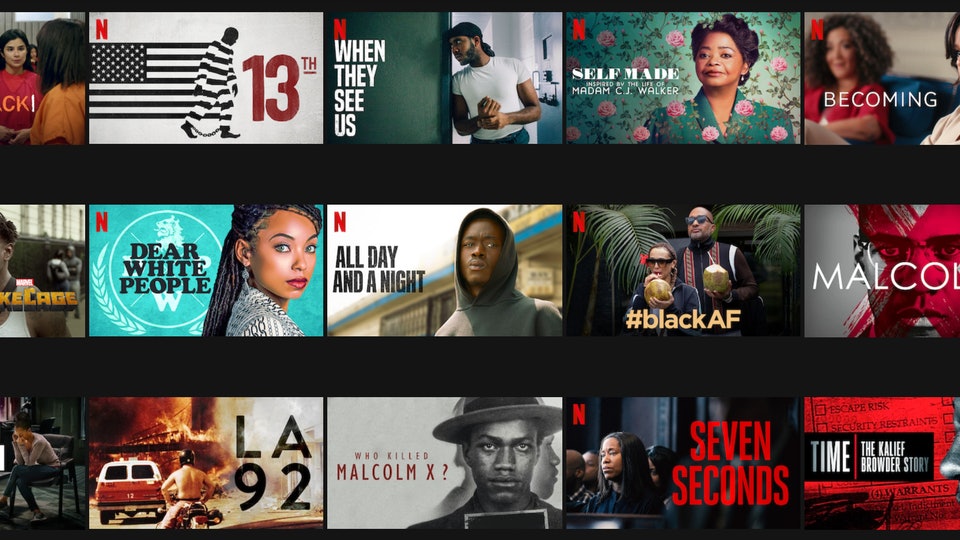
The OTT platform has curated more than 45 programs of entertainment in its new collection that talks about the racism faced by the African-Americans. This collection is made available to Netflix for American subscribers.

The list of the entertainment programs that are included under the ‘Black Lives Matter’ collection are-

  • Spike Lee’s ‘Da 5 Bloods’,
  • Ava DuVernay’s ’13th, and also ‘When They See Us’,
  • The most popular and hit series ‘Orange Is The New Black’, and
  • The Oscar-winning ‘Moonlight’.

These listings are highly trending on Netflix these days.

Netflix has also come up with a pop-up screen that flashes as soon as the user opens its application. This is a promotional idea carried out by Netflix to make the content reach its users. The online streaker also notifies the users about the respective content.

Netflix recently tweeted about its new ‘Black Lives Matter’ content and also added further that its users would be able to access the collection through the main menu or even through a drop-down menu.

The Need For Preventive Healthcare Is Now, Not Later

. . . for we are of the opinion that in combating diseases we can achieve more by attacking the cause of disease than by an attack on the living cells and organs. . . Until now we only know that even the best intended, direct attack on living cells and organs in order to animate or stimulate them into a state of modified activity, are more likely to harm the cells and organs, than to bestow upon them more health and resistance.

Von Behring

Von Behring said the above in his introduction to ‘Gessamelte Abhandlungen zur atiologische Therapie von ansteckenden Krankheiten’.‘Prevention better than cure’ is not merely a scientific fact, but also a principle dictated by common sense to the common man. Not just diseases, any undesirable event is better managed by taking precautions before it occurs, thus considerably reducing the time, money and effort required for damage control later. Hence, using prevention strategies in healthcare is but obvious. Thanks to the ever-evolving technology that is constantly deepening our understanding of diseases and giving us means to attack the causes, prevention is now much more than mere sanitation. Now one might naturally ask – why is it then, with all our knowledge and technology, with all the focus on preventive strategies like vaccination and life style modifications, that we are still battling a plethora of diseases and infirmities?

With this article I attempt to answer this question and shed light on the challenges faced by preventive medicine, or more broadly speaking, the challenges faced by the healthcare professionals in using ‘prevention’ as a weapon against ill health.

First – Primordial Prevention

‘Go back to the basics’, another set of words of wisdom passed on to us by elders, to deal with a difficult problem. Primordial prevention works on the same principle – preventing the occurrence of risk factors, thus preventing the disease. Which is why primordial prevention aims at achieving a safe environment free of anything or everything that can threaten the perfect harmony of the mind, body and soul. It means having a world free of harmful radiations from the Sun; clean land, air and water; a supportive and harmonious society to prevent mental illnesses; and of course, people with healthy eating habits exercising their way to a perfect health.

It also means great inter sectoral coordination, ironclad political commitment to healthcare, and the most important of all, community participation. Ironically enough, these means are in themselves the biggest challenges to practising primordial prevention. Especially in a resource poor country like India, the focus on preventive measures means compromising the focus on curative care, which doesn’t sit well with a population weighed down heavily by the triple burden of communicable, non-communicable diseases and trauma. Taking measures to prevent a disease that has not occurred requires farsightedness, which is a luxury for people struggling to make ends meet in their sickness; curing themselves of symptoms is the only acceptable form of medicine to them.

Second – The changing population dynamics

Change is the only constant, and unfortunately also a constant challenge to preventive medicine. An unprecedent increase in the geriatric population brings with it an unprecedented number of health-related issues owing their cause to aging, a process that is still more of enigma to scientists than a concept. It simply means that we can’t prevent what we can’t predict, and thus prevention strategies for the ill health of a geriatric population requires a deeper understanding of aging and its effects.

Third – The perception of people

‘Anti-vaxxer’, as defined by the Merriam-Webster dictionary, is a person who opposes vaccination or laws that mandate vaccination; and as defined by me, is the modern challenge to Preventive Medicine. Not just against vaccination, resistance in the population can be seen against a lot of preventive health strategies, especially if the strategy involves prophylactic drugs or screening tests. Thus, invasive tools in preventive medicine face a challenge of their own. Intuitively one would then suggest using non-invasive methods like lifestyle and dietary modification, but they come with the more practical challenge of lack of adherence in people. Again, taking the example of India, an advice of eating green-leafy vegetables to supplement iron might be too expensive a measure for a poor family, or exercising daily might be an impractical advice for a person living in a crowded city plagued by very poor air quality.

Fourth – The perception of the Scientific Community

The resistance against community medicine is not limited to the layman, even the scientific community is divided on its effectiveness and means used. Especially when the interests of pharmaceutical companies are factored in, the usage of preventive drugs needs better scientific evidence and more scrutiny. Also, some argue that the preventive drugs-spends of the apparently healthy in developed countries will better benefit the actual sick in developing countries.

Iatrogenic harms of preventive medicine, lack of proper evidence and anxiety induced by the fact that people may get sick if they don’t follow a particular lifestyle are other arguments given against preventive medicine.

Fifth – Genetic Diseases

The last one is, in my opinion, the trickiest one to solve. We have a limited understanding of human genome as it is, and our progress is further halted by the limitation of available technology required to further our understanding of the genetic basis of human health. Though we have been able to come up with solutions like premarital counselling (to screen the couple for thalassemia) and genetic screening on amniotic fluid (to look for disorders like Down’s syndrome in foetuses), the epigenetics and associated diseases still pose a big threat to success of preventive measures. Not to forget the cost and time that goes into screening out genetic disorders which might outweigh the benefits considering limited treatment options available for such diseases.

So, ‘prevention is better than cure’ is what we have learnt, but can it be better if it, in itself, is a tool that faces so many challenges? Maybe not. Thus, it is imperative to rectify these problems. Few solutions are –

P4 Medicine – Developed countries are now aiming at democratizing healthcare by bringing a system of medicine that is Predictive, Preventive, Personalised and Participatory. It is a system that employs technology to collect data, and that data to inform the medicine, thus practicing an inclusive approach which is evidence based. I am of the opinion that such approaches, if not fully adopted, should at least be used as inspiration for priming of healthcare systems to make them as predictive and as preventive as possible.For example, the 21st Century Cures Act, passed in 2016 in USA, places additional focus on the use of ‘real world data’ to support regulatory decision making, including approval of new indications for approved drugs. Employing this data to gather evidence for preventive drugs can help us gather evidence that the scientific community demands.

Change of attitude in developing countries – Greater political commitment and a paradigm shift from major focus on curative to preventive care and public health is an indispensable step. Not just on the political front, but the medical fraternity also needs to give preventive medicine the due recognition it deserves. Especially in developing countries like ours, the demands of increase in number of hospitals should be replaced by demands for a better primary health care system that focuses on preventive health.

It will do us good as a country to realise the simple fact that we can’t keep mopping the floor to cure a problem; it makes more sense to turn the tap off and prevent it altogether from happening.

This article was republished from Standpoint India with permission. Read the original article here

Unmanned flight mission as part of Gaganyaan postponed

The ambitious human space flight mission of Indian Space Reasearch Organization (ISRO) has been affected by the COVID crisis as the first unmanned flight as part of the mission has now been postponed to 2021. It was scheduled to happen later this year in December.

ISRO had announced two trial flights without crew for December 2020 and July 2021. However, it is not confirmed whether the overall timeline of sending Indians to space by 2022 will face any delay.

Senior officials had told PTI that there may be a slight up and down in the schedule and that it is premature to say anything as the team was working on the project.

India plans to put Indians in space on the 75th anniversary of India’s independence.

Four Indian Air Force pilots are currently undergoing training at Moscow for the mission.

Vyommitra, the humanoid will be flying in the first unmanned mission.

Blackout in Karachi as Pakistan fears Balakot 2.0

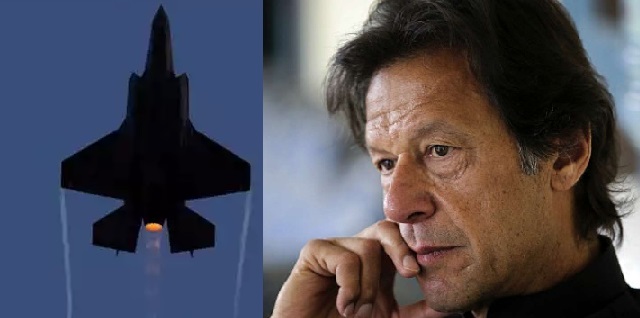
Ever since Balakot airstrike, Pakistan has become fearful of another action by the Indian Armed Forces inside their territory. This was evident when locals in Karachi mistook Pakistan Air Force jets to be Indian Air Force ones patrolling the area. Due to this, local authorities in Pakistan have enforced a “blackout” in Karachi.

Various social media users in Pakistan took to Twitter express their fear over another Indian Air Force action inside Pakistan.

https://twitter.com/salmanzit/status/1270452975262208004

Indian authorities have denied any such incident along the Pakistan border. Pakistan Armed Forces too has remained tight-lipped over the issue and its propaganda arm ISPR is yet to put any official statement over rumours of Indian Air Force jets crossing the LoC.

Few Pakistani journalists have clarified on twitter that it was actually PAF jets that was patrolling the Karachi area. One journalist named Kazmi said that it was after 27th Feb 2019 the night of Balakot airstrike, he was hearing PAF jets patrolling the sky and hoped that situation was not serious.

https://twitter.com/KazmiWajahat/status/1270436933890605057

Meanwhile Indian twitter users shared some hilarious reactions. Here is a look at some of them.

https://twitter.com/Gaurang09753273/status/1270547656427913221

https://twitter.com/fieb81/status/1270548046246547458


Tables turn: USCIRF team denied visa to India

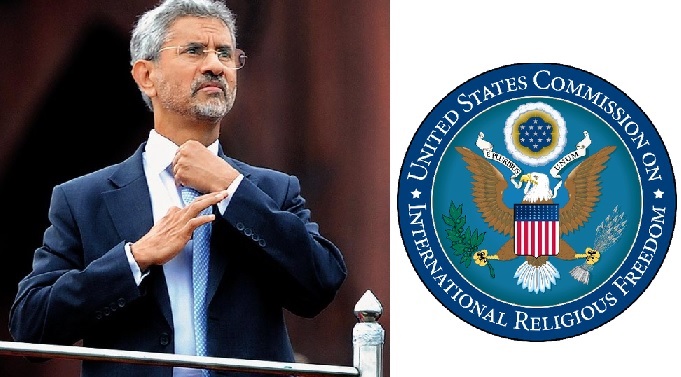
The team from the racist, bigoted and the highly deplorable body United States Commission for International Religious Freedom (USCIRF) has been denied entry into India, a letter to BJP MP Nishikant Dubey from External Affairs Minister S Jaishankar mentioned.

In the letter dated June 1, Minister Jaishankar wrote “We have denied visa to USCIRF teams that have sought to visit India in connection with issues related to religious freedom, as we do not see the locus standi of a foreign entity like USCIRF to pronounce on the state of Indian citizens’ constitutionally protected rights.”

“USCIRF has been known to make prejudiced, inaccurate and misleading observations regarding the state of religious freedom in India. We do not take cognisance of these pronouncements and have repudiated such attempts to misrepresent information related to India”, the External Affairs Minister wrote in his letter.

He also highlighted the fact that the MEA had earlier rejected USCIRF’s statements as ‘inaccurate’ and ‘unwarranted’ and assured the MP that India “will not accept any external interference or pronouncement on matters related to our sovereignty and the fundamental rights of our citizens that are guaranteed by the Constitution”.

The USCIRF had released a report in April in which it said that “religious freedom in India had taken drastic turn downward”. It cited the Citizenship Amendment Act 2019, the abrogation of Article 370 and 35A and Delhi riots and said that religious minorities in India were under assault and that there was rising “Islamophobia”.

It had recommended the Trump administration to impose targeted sanctions on India government agencies and officials responsible for severe violations of religious freedom by freezing those individuals’ assets and/ or barring their entry into the United States.

Earlier, it had partnered with Madras University to hold a Hinduphobic conference delusively titled “Conference in the Study of Religions of India”. The conference that was scheduled to happen between July 21 – 24, 2020 has now been ‘postponed until further notice’, in view of the pandemic.

9 member committee reconciling COVID death reports of GCC and DPH

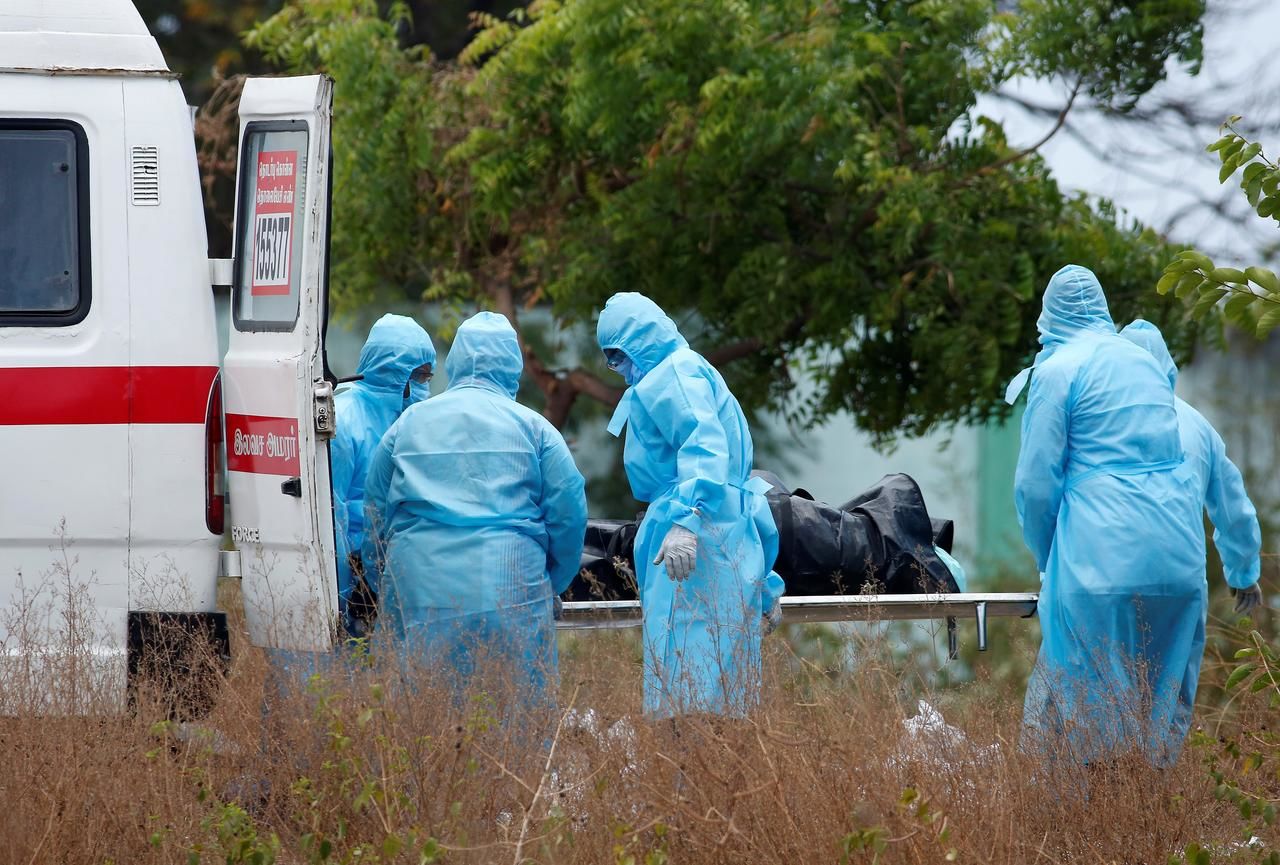
After Times of India came out with a report on Wednesday about mismatch in COVID deaths between Greater Chennai Corporation (GCC) and the state’s Department of Public Health (DPH), a nine member committee headed by Dr. P. Vadivelan, Director of Public Health and Preventive Medicine has been formed to reconcile the actual number of COVID deaths in the state.

As of June 8, the civic body had reported 460 deaths while DPH showed only 224, a difference of 236 deaths.

Going by the GCC data, the death rate stands at 1.5% as opposed to 0.7% mortality rate claimed by the state government.

The committee will compare mortuary reports, hospital data, and death certificates to get clarity on the city’s mortality rate. In light of this, the GCC has already started collating data from cremation/burial grounds.

The mismatch is attributed to miscommunication between different agencies and failing to update data on a daily basis.

T.S. Selvavinayagam has stated in an official communication to the Commissioner of GCC that all COVID19 deaths from March to till date be shared and added that all COVID19 deaths be shared on a daily basis to the DPH by identified officials such as city health officer.

In a report published by The News Minute, a committee member from DPH was quoted saying that private hospitals that fall under the GCC are directly informing the zonal officers of the Corporation about deaths and not the DPH. He said that the problem was with figures from private hospitals and home deaths as correct figures from government hospitals get reported since they come under the DPH’s jurisdiction.

The committee member adds that the civic body does not have the experience or expertise of handling a pandemic. “The priority of the civic body’s health department is only development and sanitation. This is the first time they are handling disease control and fumbled.”

However, a GCC official had reportedly said that they have no role in declaring COVID19 deaths and is not the corporation’s fault. He said that the DPH and Directorate of Medical Education collect reports directly from hospitals about deaths and assess the situation and decide if the death was due to COVID 19 or not. Regarding discrepancies in the data, he said that it could have been persons who were discharged and then died or people who and then later their test results emerge COVID positive.

This data discrepancy is not present in other parts of the state as it is handled by the DPH directly. Since the GCC is autonomous, the DPH is unable to get full control over the body. The committee member notes that either the GCC has to strengthen their system or let the DPH take over.

TN Temples doing their bit in times of COVID

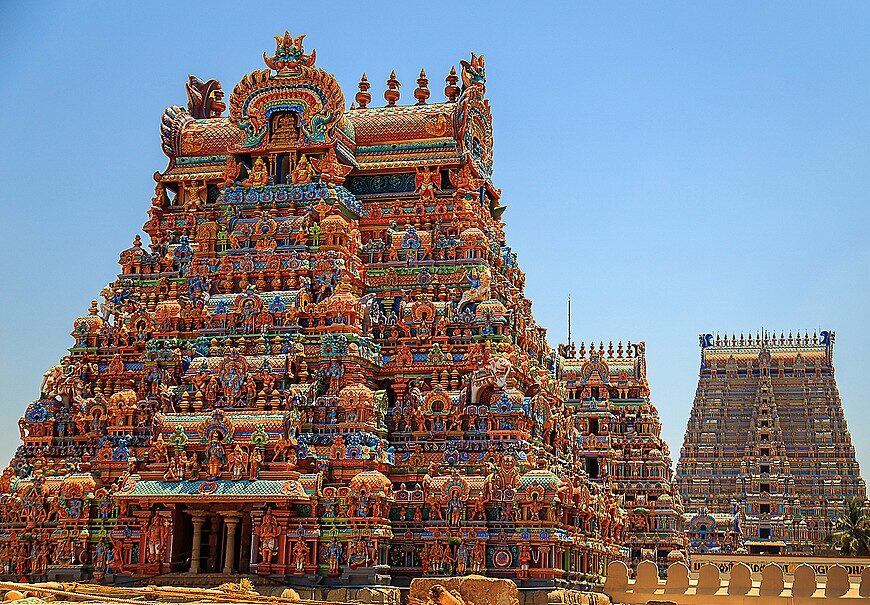
Temple of Sri Ranganathaswamy in Trichy Tamil Nadu state South India.

More than 13.5 lakh food packets have been distributed to the poor from Annadhanam kitchens attached to 54 temples in the State from March 30, The Hindu reported.

The food was cooked and supplied based on the requests from local revenue officials.

Around 2.25 crores have been spent on supplying food to those in need. Usually variety rice like lemon rice, tomato rice, tamarind rice, vegetable rice are provided as they are easy to cook, pack and distribute.

Quoting an official from HRCE, it was reported the demand for food packets went over 42,000 packets a day which has now stabilized at 23,000 and odd due to relaxation in lockdown.

This has benefitted those in villages who do not have jobs and many of whom are elderly.

The temples in Tamil Nadu serve Annadhanam to thousands of people every day.

BJP’s Omampuliyur Jayaraman recalls late MLA Anbazhagan’s association with Sangh and its causes

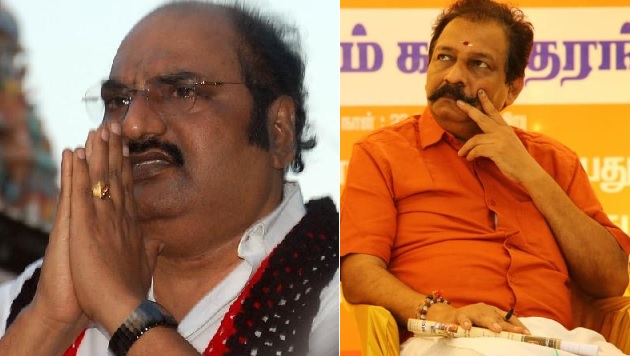
Senior BJP leader Omampuliyur Jayaraman in a lengthy Facebook post reminisced about the late DMK MLA J. Anbazhagan and the latter’s relationship with the Sangh, who had unfortunately passed away on June 10 due to COVID 19. Mr. Jayaraman mentioned about how Mr. Anbazhagan despite being poles apart politically, lent support to crucial causes at crucial times.

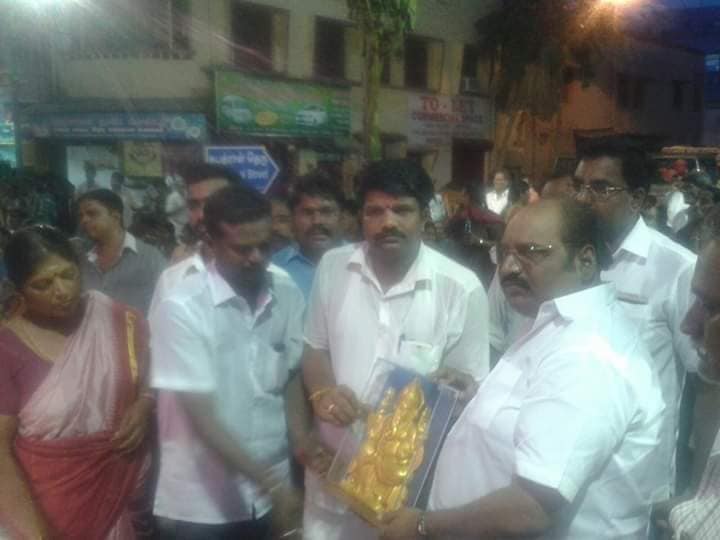
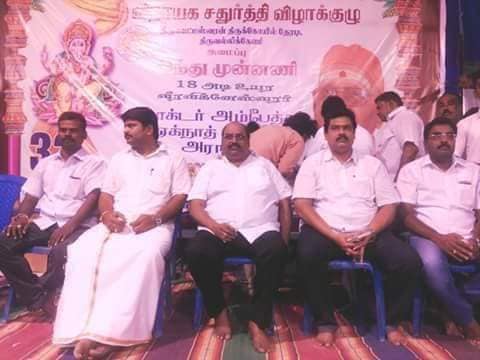
He narrates a peculiar incident that happened in the year 1993, when Swayamsevaks along with Muthukrishnan, Thangavelu, Pazhakadai Saravanan, Suresh were making arrangement for erecting pandal and installing a statue of Lord Ganesh for Vinayaka Chaturthi at Brindavan Street in T.Nagar. They had run into trouble with some DMK men of the area. But Jayaraman was not aware of the trouble. He had assigned the work to the local cadres and went about making preparations for the Visarjan day. For the first day procession, Jayaraman had arranged for notices with the names of DMK’s Kutty alias Karunanidhi, ADMK’s then block secretary and a Congress leader. Kutty was said to be a close friend of Jayaraman. When he was informed of the problem, Jayaraman with a few of his men went to see the DMK men. The men gave them tea and left without speaking to them. The next day, during Ganapathi Homam, the men came to make peace and asked the Swayamasevaks to not take their behaviour to heart and the Visarjan was conducted with great pomp and show with the presence of all parties cutting across castes.

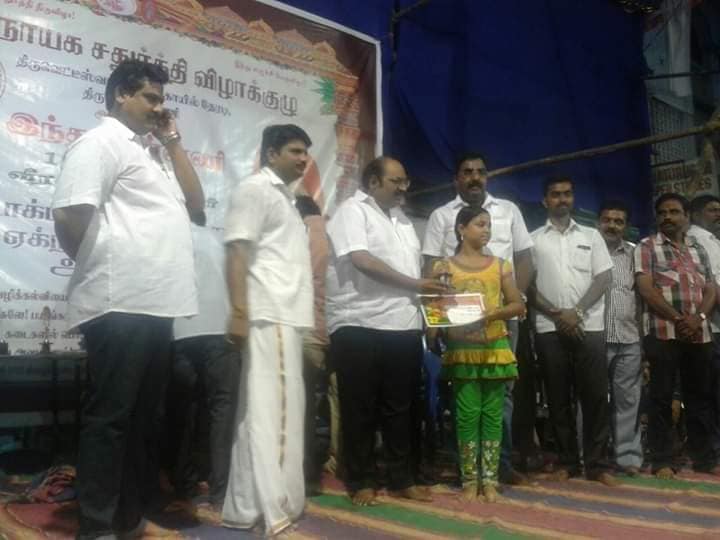
Mr. Jayaraman mentioned that he had invited Mr. Anbazhagan to inaugurate the Visarjan procession at T. Nagar Venkatnarayana Road in 1994. He noted that many had told him that the latter wouldn’t come. However, to everybody’s surprise the then DMK secretary for the area had come and flagged off the procession with a saffron flag.

It is to be noted that Vinayaga Chaturthi procession were banned by the Karunanidhi Government in 1996. However, that did not stop Anbazhagan from coming to the pandals and praying.

Mr. Jayaraman mentioned that back when the DMK and BJP were in alliance they had worked together during 1999 Parliament elections, 2001 Assembly elections and local elections. He notes that on all occasions Mr. Anbazhagan had given due respect to the BJP and its cadres

He recalled how Anbazhagan lent his support to H.Raja’s call in the Assembly for restoring the Vengeeswarar temple tank when Mr. Raja was Karaikudi MLA.

Mr. Jayaraman in his facebook post mentions that although the alliance drifted apart, Mr Anbazhagan continued his associations with Hindu organizations. During the 2011 and 2016 Assembly election he had got the support of Hindu Munnani and was even open about it. Jayaraman added that he visited the Thiruvatteeswaranpettai Pillaiyar Temple atleast once every year.

In 2001, when Mr. Stalin while responding to the question about the next DMK President remarked that the DMK was not a ‘Sankara Mutt’, Mr. Jayaraman and Kutty Ganesan had gone to see Anbazhagan to convey their displeasure over Stalin’s comments. Mr. Anbazhagan had conveyed the same Mr. Stalin who then clarified in the press that the comment was not intentional.

In 2006, a petrol bomb was thrown at the Ayodhya Mandapam located in Arya Gowda Road in T.Nagar. Mr. Jayaraman had organized a protest to condemn the dastardly act in which Anbazhagan and his cadres had participated and expressed his solidarity. When a commercial complex near Usman Road was being tried by Muslims to convert into a Mosque in 2007, Anabazhagan along with a Bahujan Samaj Party cadre who had left the party came out and opposed the act.

Anabazhagan also shared great respect towards ‘Veera Thuravi’ Gopalan ji. He frequently inquired of his wellbeing whenever they met.

Mr. Jayaraman notes in his post that Anabazhagan had once asked Karunanidhi to come out with a special scheme for economically weak Brahmins to which Karunanidhi is said to have responded jovially saying “You, Kosi Mani and only 2 other people want to win the elections, is it?”

Jayaraman said that Anabzhagan was a simpleton and an accessible leader. He said how he always respected and never hurted sentiments for mere votes despite being a political adversary.

Africa tests 200,000 positive cases after Burundi’s President death is suspected due to COVID-19

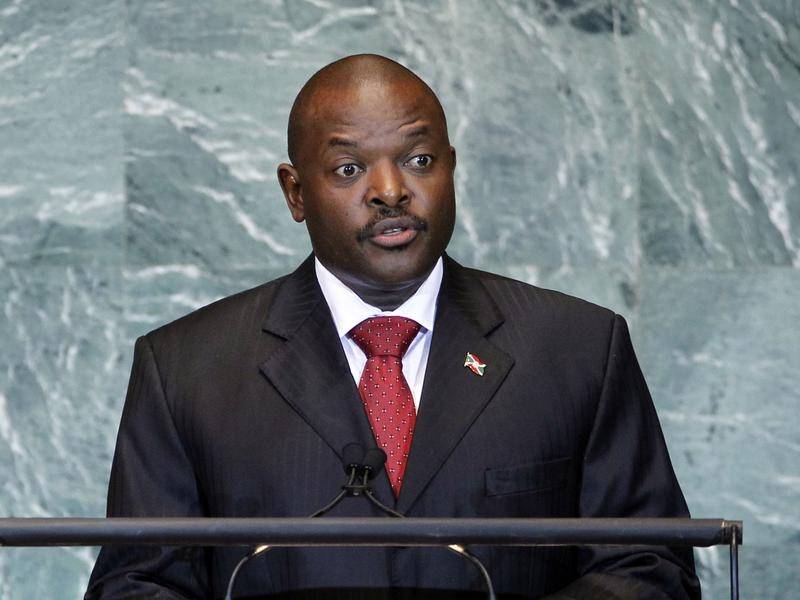
The outgoing president of Burundi has died of a sudden illness, suspected by many to be Covid-19. The cause of Pierre Nkurunziza’s death was described as a heart attack in a government statement. The 55-year-old was due to stand down in August following elections last month. It was unclear exactly when he died.

Burundi did not follow suit with other African nations in imposing a lockdown and even expelled a WHO expert team who had been working there for coronavirus research. The nation of 11 million people has reported 83 cases of Covid-19 and officials have cited divine protection for Burundi’s ostensibly low infection rate and urged citizens to go about their daily lives without fear.

The cause of Nkurunziza’s death is tied to COVID-19 infections, although the official press release said that he died of a cardiac arrest.

Following this, the UN Health Agency released statistics saying that there have been over 200,000 positive across its 54 countries. According to the WHO’s embassy in Africa, the continent has tested 201,457 positive cases.

NASA astronaut becomes the first person to have visited both Space and Ocean’s end

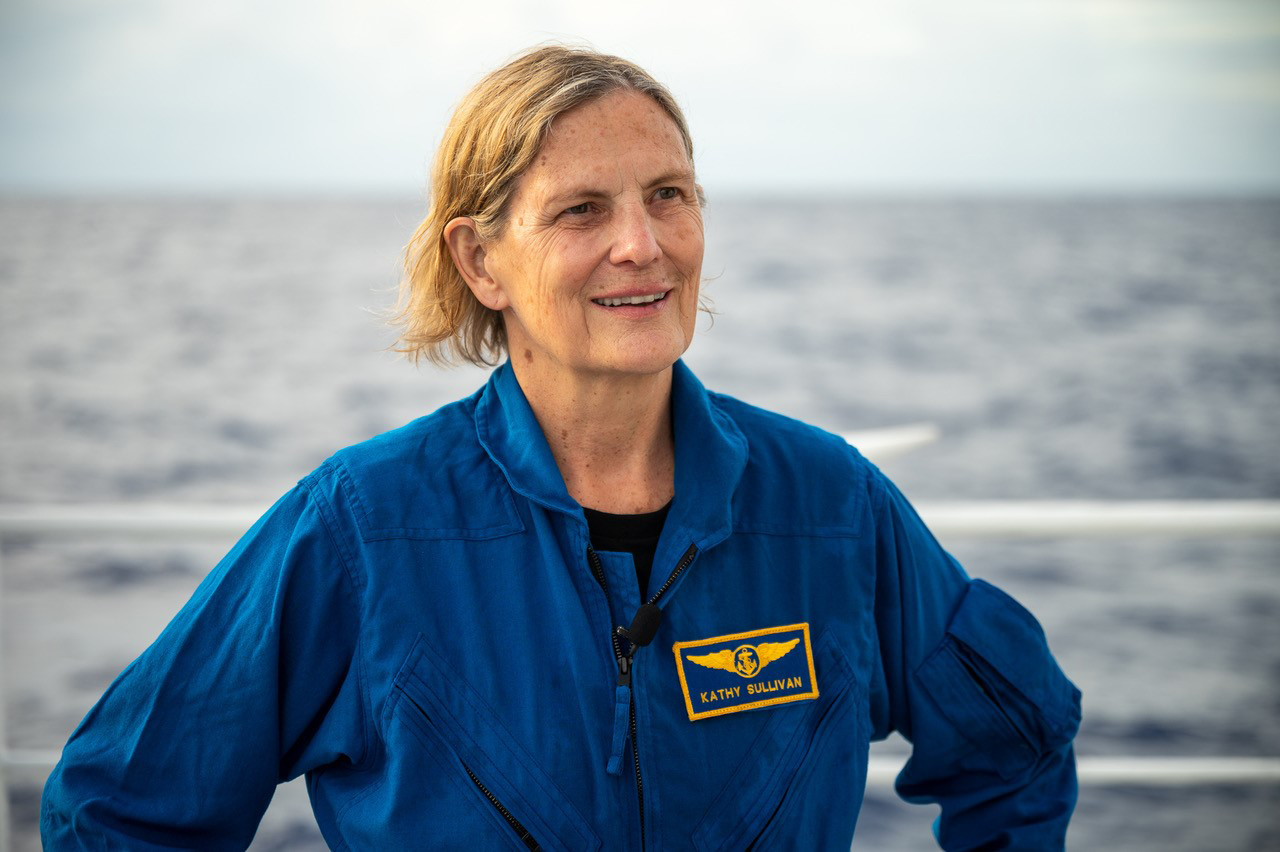
Kathy Sullivan, a former NASA astronaut has become the first person in the world to have visited Challenger Deep, the deepest point on earth as well as the space. This is a feat that has been achieved by no one so far.

On Sunday, she ventured into the Challenger Deep, which is at a depth of 35,853 feet in the Western Pacific Ocean, as part of the Ring of Fire expedition by the bespoke adventure company EYOS. They had called three ‘mission specialists’ months prior to the expedition to venture into the Mariana Trench, where the Challenger Deep lies. Leading up to the dives, the three explorers underwent full briefs on the mission, schedule and research initiatives.

Sullivan is the first of three explorers to finish the roughly 10-hour mission, with two more to follow this week. While talking about it, she said, “I know (Challenger Deep) as a bathymetric feature on a chart, a tectonic feature, and a seismic feature … but that’s all data-based understanding. To see it in person — it makes all the difference in the world.”

Much like outer space and distant galaxies, the ocean is still relatively unknown to humans — like the last frontier.