Home Blog Page 1773

Bomb threat at Superstar Rajinikanth house, police comb premises

An unidentified person had reportedly called the police control room at 10:30 AM and informed that a bomb was planted at Rajinikanth’s Poes Garden residence and cut the call immediately.

A bomb squad was sent to the location and the premises searched thoroughly. It was found that the threat was a hoax.

The police are on the process of tracing the call and nabbing the person.

Super star Rajinikanth’s next project is with Siruthai Siva and is titled Annaatthe. The film also stars Nayanthara, Keerthy Suresh, Khushboo and Meena.

China-backed controversial city project to be probed by Myanmar

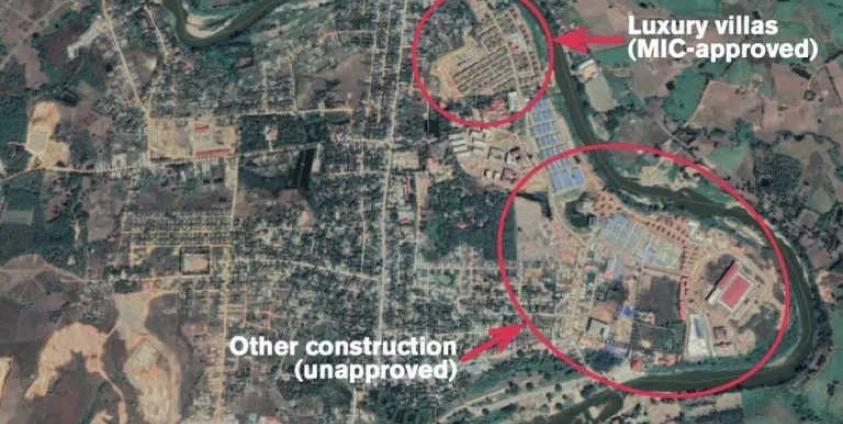
The city project backed by China which has been mired under a lot of controversies is to be probed by Myanmar. The government of Myanmar has recently set up a tribunal team that would probe the project.

The project is being implemented by Yatai International Holdings group of China along with the BGF, the latter being reportedly supported by Myanmar’s military.

U Tin Myint, the Deputy Minister of Union Government Office in Naypyidaw on Monday stated that he had been selected to Chair the committee. This committee will investigate the Shwe Kokko city project which is 15 kms north of Myawaddy.

This project was started in the year 2017. It involved a small amount of 22.5 million dollars. This amount was allotted to construct 59 villas at Shwe Kokko. But, later on, it was reported that this project started to be carried out at a much higher scale as a ‘small international city’ than the one that was actually approved to be carried out. The company planned to construct casinos, hotels, airports, and tourism related spread over an area of 30,000 acres.

The project then got halted temporarily in 2019 as it breached investment regulations and allegations of illicit activity and lack of transparency propped up.

The Deputy Minister U Tin Myint said that Myanmar never approved any casino in the project as a part of it and this resulted in an investigation.

Media reports also cited that the project displaced many local families. The materials for the project were sourced from China or Thailand. Instead of utilizing the local workforce of Myanmar, Chinese workers have been brought in.

The Karen state has faced ethnic unrest with militant groups being active in this area.

How Data-Driven Governance Is Quietly Transforming Our Cities

A layman’s imagination of a smart city is often inspired by science-fiction cinema, a consequence of which is, most urban residents feel their cities are stagnating, for lack of a better adjective. However, in the recent years, plenty of geeky but fascinating changes have found their way under the hood. The launch of e-buses, pay-as-you-go cycles and dedicated smart city apps are just the tip of the iceberg, suggesting a larger shift in the way local administrations comprehend governance.

The conception

For long, stakeholders in administration, academia, corporations and civil societies have acknowledged that data collection, storage and harmonisation is the fundamental challenge faced by urban spaces today. Since then, the need for a substantial effort beginning with Urban Local Bodies (ULBs) for process change and building a ‘culture of data’ has been felt.

The evolution of data-driven governance has been gradual in most developed countries. In India, cities began progressing in that direction with the launch of Smart Cities Mission by the Ministry of Housing and Urban Affairs (MoHUA), which will mark its 5th anniversary on June 24, 2020.

The task

Among many issues being monitored through real-time data analytics at the MoHUA, air quality, women’s safety, smart parking, city GDP and municipal waste management are few that cut across multiple sections of society. It is unfortunate that poor air quality is not limited to metropolitan cities anymore but has spread to surrounding regions too. For instance, Cuddalore, which is located 200 kms away from Chennai, is one among the 43 critically polluted industrial areas of India. While Chennai is equipped with three monitoring stations, Cuddalore has been in the process of receiving one since 2015.

Safety is a crucial factor that determines liveability, but multiple stakeholders need to work in sync to maintain optimum levels of safety across cities. Currently, India lacks a unified system to create an indigenous Safety Perception Score of its cities. However, Pune Smart City is trying to change that with its pilot project – Women’s Safety Perception Index, which is based on the Pune Urban Data Exchange (PUDX).

Most ULBs in India are unable to meet their own costs, making them dependant on grants from the State/Union government. As a result, there is little control over how funds are spent locally, leaving less or no room for a city’s unique requirements. It does not take an expert to understand that leveraging big data in cities can help identify leakages, cut costs and optimize spending, culminating in a better quality of life for its residents.

The boom

Officials in the Smart Cities Mission are working hard with a clear focus on securing data availability and consolidation. Moreover, improved processes are now helping create a culture of evidence-based decision making. Under the DataSmart Cities strategy, the administration is focussed on creating a positive impact in all the three domains – People, Processes and Platforms.

For a while now, all hundred smart cities have been regularly uploading data, etching closer to completing the work on India Urban Data Exchange, which is an open source data exchange platform for Indian cities. A Data Maturity Assessment Framework has also been devised to assess cities’ performance in implementing the DataSmart Cities strategy. At a time when minimalism is vital, this ensures that cities collect only that data which provides critical insights for policy decisions.

The India Urban Observatory (IUO) has been set up in collaboration with leading names in technology, sciences and urban planning, serving as a repository of insights derived from on-ground knowledge of mobility, water, sanitation, waste management, housing, environment, education and health among many others. It creates powerful visualisations of different data sets and establishes correlations that help in making evidence based decisions.

The promise

Poles that measure air quality in real time, software that uses satellite imagery to identify crime hotspots and a city GDP approach for boosting the informal sector economy are few among many initiatives that prove the Smart Cities Mission is invariably breaking barriers and redefining what was considered possible.

Inclusivity is now a part of urban design, be it gender, specially abled, or old age. It is fascinating to note that increasing citizen engagement through participation in local body elections can help enhance the quality of candidates in some regions.

In a separate incident in Thane, residents who achieved ‘net zero waste’ requested the Thane Municipal Corporation to reduce property taxes for their households since they have significantly reduced their solid waste management burden through composting.

The road ahead

Given the crucial role that smart cities stand to play in India’s growth story, many proactive measures need to be adopted to further strengthen the Smart Cities Mission. Even restricting our focus to the set of issues covered above, there are a slew of measures which, if undertaken, can undoubtedly fast-track the rate at which the smart cities are developing.

For instance, increasing the weightage of data quality and dataset completion in the National Smart City rankings can help improve the quality of data collection, storage and harmonisation. The city of Indore has both revenue surplus and a near 100% efficiency in waste management, which can be emulated by other cities to usher a shift from ‘excess waste, less money’ to ‘excess money, less waste’.

Smartening our cities is a continuous process involving learning, unlearning and relearning. It requires involvement of various government bodies, citizens and corporates to ensure its success. There are many green shoots so far, but a forest is what we need.

This article is based on a report made by the author along with Vinay Venkatraman (project director, VVU)Vignesh Venkatachalam, (data scientist and tech policy enthusiast)Neha Nagpal (assistant manager, Invest India) and Shivam Patel (president, alumni committee, Vision India Foundation) as part of their hands-on project at the Public Policy Program for Executives hosted by Vision India Foundation. 

This article was republished from Standpoint India with permission. Read the original article here

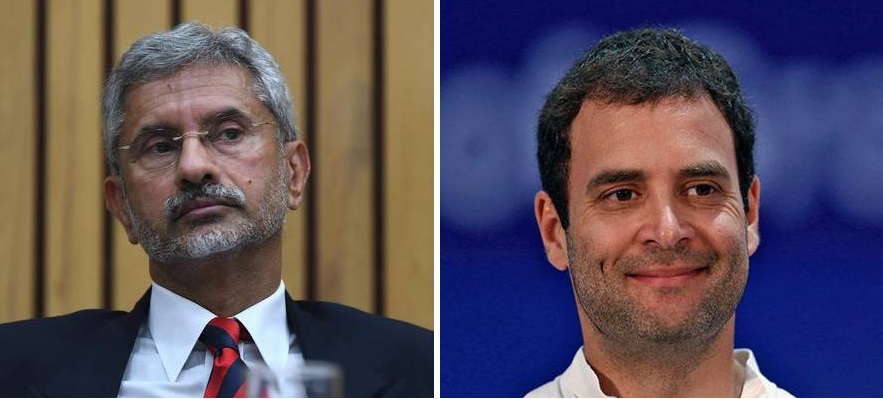
Minister Jaishankar responds to RaGa’s questions

Congress leader and Wayanad MP Rahul Gandhi had earlier today posted a tweet with a video with the caption “How dare China kill our UNARMED soldiers? Why were our soldiers sent UNARMED to martyrdom?”with the emphasis being on the word ‘unarmed’.

Mr. Rahul Gandhi again in a separate video message with the caption “kaun jimmedaar hain?” (Who is responsible?) questioned the government on why the soldiers were sent unarmed to deal with the Chinese Army.

Responding to Mr. Rahul Gandhi’s allegations, External Affairs Minister Jaishankar replying to the earlier tweet said that “All troops on border duty always carry arms, especially when leaving post”, breaking Mr. Rahul Gandhi’s narrative about our army men being without arms.

He added that the soldiers at Galwan too had arms with them.

He said that it was a long-standing practice as per the 1996 and 2005 agreements to not use firearms during faceoffs.

On the intervening night of June 15 and 16, a violent skirmish broke off between the Indian and Chinese Army at the Galwan Valley that ended in 20 Indian soldiers getting martyred and reportedly 43 casualties on the Chinese side.

DMK’s propaganda channel peddles fake narratives on India-China dispute

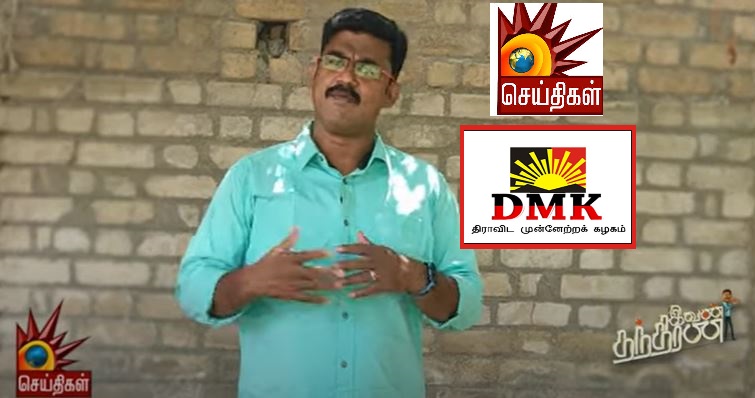
Kalaignar Seidhigal, the mouth-piece of DMK has come out with absurd claims claiming to be the background of the escalation of ties between India and China.

Varavanai Senthil Kumar, the host of the show “Ivan Thandhiran” says that it is after India “split Jammu and Kashmir into 3 states” and made Ladakh a Union Territory that China decided to take over Ladakh. (Jammu and Kashmir was reorganized into 2 Union Territories and not 3 states)

He goes on to say that the Modi government took worse decisions than Vajpayee’s government. He says that “Vajpayee kept talking about revoking Article 370 but never did by listening to opposition but Modi went ahead and did it as part of his RSS agenda and has created problems for India”.

He claims that the “background politics” behind the move was to make Ladakh and Himachal Pradesh a Jewish settlement to get Israel’s and USA’s support. He goes on to peddle that there has been “informal meetings” over the same. He says that “Jews from America are looking for other destinations to settle down as America’s politics has been changing”

“It is in light of this that Ladakh was made a Union Territory which has been found out by China”, he says.

He even goes on to claim that more than 10,000 people have bought lands and settled in Himachal Pradesh of which 8000 had come during Modi’s regime post 2014. He says that “Modi’s plan” is to use Jews so that it becomes Israel’s and America’s problem too.

“It is because China knew about this plan that it acted”, Varavanai Senthil Kumar says.

While such claims evoke laughter, it is appalling to see such fake narratives peddled by the newsoutlet of a party that has representation in both the houses of the Parliament.

Also, just a question to the people at Kalaignar TV – What do you guys smoke?

Here is the link to the video.

List of 52 Chinese apps deemed unsafe by Intel agencies, remove them now

Social Media
ECommerce
Photo Editing
File Sharing
Browsers
News Aggregator
Xiaomi
Tencent
Tools
TikTok ClubFactory Beauty Plus SHAREit UC Browser UC News Mi Video Call QQ International Vault-Hide
Vigo Video ROMWE Photo Wonder Xender APUS Browser NewsDog Mi Community QQ Launcher VivaVideo
Bigo Live SHEIN YouCam Makeup CM Browser NewsPoint Mi Store QQ Security Centre Virus Cleaner (Hi Security Lab)
Weibo Perfect Corp DU Broser QQ Player DU recorder
WeChat SelfieCity QQ Music Baidu Translate
Helo Wonder Camera QQ Mail

QQ NewsFeed

Baidu Map
LIKE We Sync Mail Master
Parallel Space
DU Privacy
360 Security
DU Battery Saver
DU Cleaner
DU Privacy
Clean Master – Cheetah
CacheClear DU apps studio
Clash of Kings
ES File Explorer

Intel agencies warn against the use of 52 Chinese apps

52 mobile applications linked to China have raised concerns of national security as they end up extracting a large amount of data outside India. The Indian intelligence agencies have asked the government to block or advise people to stop the use of these apps.

They include video conferencing app Zoom, short-video app TikTok, file sharing apps like SHAREit, game apps like Clash of Clans, and other utility and content apps such as UC browser, Xender, SHAREit and Clean-Master. As of now, all these 52 apps are available in Google Play Store and iOS App Store.

Senior government official said the recommendation of the intelligence agencies had recently been supported by the National Security Council Secretariat, which felt that these could be detrimental to India’s national security.

On the recommendation of the national cybersecurity agency – Computer Emergency Response Team of India (CERT-in), the home ministry had issued an advisory on the use of Zoom this April. The Ministry of Home Affairs had deemed Zoom as an unsafe platform and advised users of the app to adhere to certain security settings to safeguard themselves from malicious attackers.

India wasn’t the first country to ban use of Zoom by government agencies and officials. Taiwan has banned government agencies from using Zoom, the German Foreign Ministry restricts its use of Zoom to emergency situations on personal computers while the United States Senate has advised members to use other platforms.

500-years-old submerged temple resurfaces in Odisha’s Nayagarh

A 500-year-old temple submerged in river Mahanadi has resurfaced in Pamavati village in Odisha’s Nayagarh. The local people believe that the temple is atleast 400-500 years old and that it got submerged during the flood in the year 1933.

The Indian National Trust for Art and Cultural Heritage (INTACH) had recently noted that they had discovered an old and ancient temple that has been submerged in the Mahanadi upstream from Cuttack.

Quoting a villager, the ANI reported “The temple was submerged very long back but around 11 years ago, the temple started emerging again. Now, the temple is visible a little bit above the water level. A research team is also working on it.”

Deepak Nayak, a local heritage enthusiast had located the temple earlier and had been aware of its existence as its submerged top became visible during summers.

Mr. Anil Kumar Dhir and his project assistant Deepak Kumar Nair of Indian National Trust for Art and Cultural Heritage (INTACH) located the temple. According to Mr. Anil, this temple which is 55-60 feet long belongs to Lord Gopinath, an avatar of Lord Vishnu, and dates back to the late 15thor early 16th century. The region where the temple was found was earlier known as ‘Satapatana’. The Padmavati village was part of Satapatana, an agglomeration of 7 villages. The river had changed its course due to flooding and the village was submerged during the 1933 flood.

It is said that the Lord Gopinath idol from this temple was taken from here to another temple. Mr. Dhir is working on documenting Mahanadi valley and was supposedly in search of this temple.

He says that there are around 65 temples in the area that are under water.

Man beaten up and forced to drink urine in Rajasthan

In Sirohi, Rajasthan, a man was allegedly beaten and forced to drink urine. Police said the incident took place on Tuesday and six people in connection with incident have been arrested.

The incident occurred on June 11 when the victim went to meet his uncle residing at Sumerpur. FIR has been lodged against 8 persons and 6 have been arrested.

It is said that the incident occurred allegedly over his affair with a woman.

ASP Rahul Koteki said, “The incident took place on 11th June in the Sirohi area. Out of eight names given by the victim, six accused have been nabbed. Appropriate action will be taken against them.”

He further said the victim was a resident of Sirohi area and was staying with a relative.

“When the victim came, we registered an FIR and rounded up the six accused that, who as it is being informed, beat the victim and also made him drink urine.”

The incident came to light as the video of the same went viral on social media.

Film Director Anurag Kashyap demeans India and Indian Army in India-China standoff

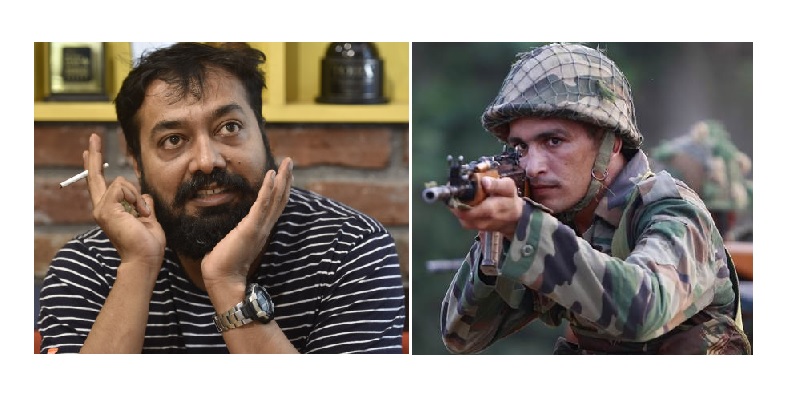
Popular film director Anurag Kashyap known for his movies like Gangs of Wasseypur, Dev D and Black Friday and the Netflix series Sacred Games on Wednesday (June 17) tweeted asking whether surgical strike was not allowed in China.

He tweeted in Hindi “Ek sawaal tha – yeh China mein surgical strike allowed nahi hai kya?” (I have a question – This surgical strike is not allowed in China is it?)

His tweet came across as a sly dig at the 2016 surgical strike that followed the Uri attack on the Indian army.

Prior to this, Kashyap on June 16 tweeted in Hindi “Darpok hona buri baat nahi hai, Lekin darr ko sveekaar kar lena badi baat hai” (Being a coward is not a bad thing. But accepting fear is a big deal.)

While the above tweet does not have direct reference to the Indian Army, the tweet came as news of violent faceoff between India and China made headlines.

Both the above tweets have not gone well with netizens as it tries demean the India and Indian Army. It is to be noted that Anurag Kashyap did not put out a single tweet in condolence of the soldiers martyred. Here are some of the responses to his tweet that is being called out for its insensitivity.

https://twitter.com/SumitkadeI/status/1273334408087363584

https://twitter.com/orthodontistra2/status/1273469493210222597

Anurag Kashyap is known for making statements against Prime Minister Modi and the BJP. He had supported demonstrations against the Citizenship Amendment Act 2019 that sought to fasttrack citizenship process for persecuted religious minorities from Pakistan, Bangladesh and Afghanistan. He had earlier asked in 2016 as to why PM Modi hasn’t apologized for meeting then Prime Minister of Pakistan Nawaz Sharif in December 2015.

India carried out surgical strike across the Line of Control in Pakistan in 2016 on the basis of intelligence input about terrorist camps that were planning to carry out attacks in India. China on the other hand does not harbour terrorist outfits and camps. The dispute between India and China along the Line of Actual Control has been due to the difference in perception of the border.